How we got to an $850 billion Pentagon budget – “independent” think tanks are funded by weapons corporations.

Speaking Security Newsletter | Note n°173 | 16 September 2022, Stephen Semler
Situation
The Senate might vote on the fiscal year 2023 military budget this month. Or it might not; nobody’s sure. What’s for certain is that the bill the Senate considers will have at least as much as $850 billion for the Pentagon. In other words, we’re staring down a $72 billion year-to-year increase in military spending with this legislation: The FY2022 version of the same bill (National Defense Authorization Act, or NDAA) licensed $778 billion for the Pentagon.
How we got to an $850 billion Pentagon budget
In March, Joe Biden proposed increasing annual military spending by $35 billion—to $813 billion—as part of his FY2023 budget request. In June, the House Armed Services Committee (HASC) added another $37 billion on top of that before advancing the $850 billion bill to the House floor for approval.
This decision was reportedly a matter of course for the committee. According to one HASC member, there was “almost no debate” on dumping another $37 billion on top of Biden’s own proposed increase. An overlooked reason why the committee’s move was so automatic was the ‘expertise’ that made a $72 billion year-to-year increase seem appropriate or even natural.
Think tanks are said to be free from the ugly forces that bias in-house policy planning—namely, all the lobbying and campaign cash that encourage members of Congress to make decisions based on parochial interests and not the public’s. The problem is that establishment think tanks are corrupted by the same monied interests members of Congress are. In this case, we’re talking about the arms industry.
Every think tank represented in a House Armed Services Committee hearing to provide expert testimony from January 1, 2020 through September 16, 2022 that disclosed its donors received funding from military contractors (the one that didn’t disclose its donors was the hawkish American Enterprise Institute).
The result? Military contractors were able to launder their profit-driven interests through ostensibly non-political institutions, while powerful lawmakers on the HASC got their parochially-driven policy positions validated by ostensibly unbiased ‘expertise’.
Pentagon opens sweeping review of clandestine psychological operations
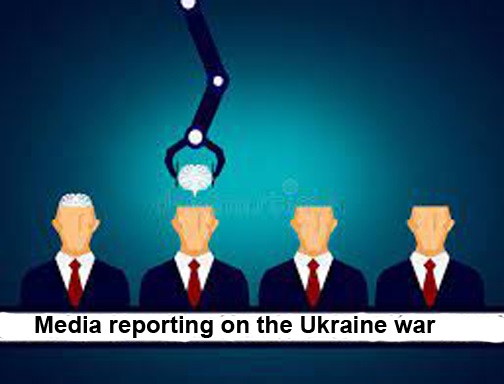
Ellen Nakashima, The Washington Post, Mon, 19 Sep 2022
The Pentagon has ordered a sweeping audit of how it conducts clandestine information warfare after major social media companies identified and took offline fake accounts suspected of being run by the U.S. military in violation of the platforms’ rules.
Colin Kahl, the undersecretary of defense for policy, last week instructed the military commands that engage in psychological operations online to provide a full accounting of their activities by next month after the White House and some federal agencies expressed mounting concerns over the Defense Department’s attempted manipulation of audiences overseas, according to several defense and administration officials familiar with the matter.
The takedowns in recent years by Twitter and Facebook of more than 150 bogus personas and media sites created in the United States was disclosed last month by internet researchers Graphika and the Stanford Internet Observatory. While the researchers did not attribute the sham accounts to the U.S. military, two officials familiar with the matter said that U.S. Central Command is among those whose activities are facing scrutiny. Like others interviewed for this report, they spoke on the condition of anonymity to discuss sensitive military operations.
The researchers did not specify when the takedowns occurred, but those familiar with the matter said they were within the past two or three years. Some were recent, they said, and involved posts from the summer that advanced anti-Russia narratives citing the Kremlin’s “imperialist” war in Ukraine and warning of the conflict’s direct impact on Central Asian countries. Significantly, they found that the pretend personas — employing tactics used by countries such as Russia and China — did not gain much traction, and that overt accounts actually attracted more followers.
…………………………. The U.S. government’s use of ersatz social media accounts, though authorized by law and policy, has stirred controversy inside the Biden administration, with the White House pressing the Pentagon to clarify and justify its policies. The White House, agencies such as the State Department and even some officials within the Defense Department have been concerned that the policies are too broad, allowing leeway for tactics that even if used to spread truthful information, risk eroding U.S. credibility, several U.S. officials said.
…………. ..A spokeswoman for the National Security Council, which is part of the White House, declined to comment.
Kahl disclosed his review at a virtual meeting convened by the National Security Council on Tuesday, saying he wants to know what types of operations have been carried out, who they’re targeting, what tools are being used and why military commanders have chosen those tactics, and how effective they have been, several officials said.
…………………… Congress in late 2019 passed a law affirming that the military could conduct operations in the “information environment”
……The measure, known as Section 1631, allows the military to carry out clandestine psychological operations without crossing what the CIA has claimed as its covert authority, alleviating some of the friction that had hindered such operations previously.
The first defense official recalled:
“Combatant commanders got really excited. They were very eager to utilize these new authorities. The defense contractors were equally eager to land lucrative classified contracts to enable clandestine influence operations.”
………………………………… https://www.washingtonpost.com/national-security/2022/09/19/pentagon-psychological-operations-facebook-twitter/
Zelensky and NATO plan to transform post-war Ukraine into ‘a big Israel’.
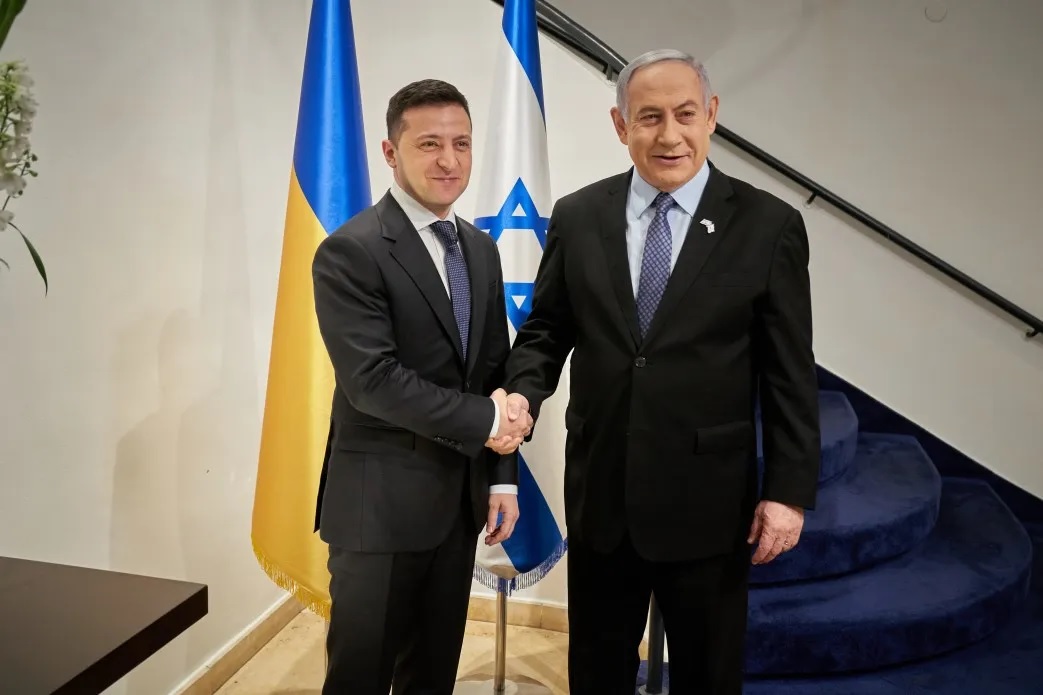
https://thegrayzone.com/2022/09/17/zelensky-nato-ukraine-big-israel/— ALEXANDER RUBINSTEIN·SEPTEMBER 17, 2022
The NATO-backed Atlantic Council has proposed apartheid Israel as a blueprint for a hyper-militarized Ukraine. The paper was authored by Obama’s former ambassador to Tel Aviv, now an Israeli spy-tech consultant.
Just forty days after Russia’s military campaign began inside Ukraine, Ukrainian President Vlodymyr Zelensky told reporters that in the future, his country would be like “a big Israel.” The following day, one of Israel’s top promoters in the Democratic Party published an op-ed in NATO’s official think tank exploring how that could be executed.
Zelensky made his prediction while speaking to reporters on April 5, rejecting the idea that Kiev would remain neutral in future conflicts between NATO, the European Union, and Russia. According to Zelensky, his country would never be like Switzerland (which coincidentally abandoned its Napoleon-era tradition of nonalignment by sanctioning Russia in response to its February invasion).
“We cannot talk about ‘Switzerland of the future,’” the president informed reporters. “But we will definitely become a ‘big Israel’ with its own face.”
For those wondering what a “big Israel” would actually look like, Zelensky quickly elaborated on his disturbing prophecy.
“We will not be surprised that we will have representatives of the Armed Forces or the National Guard in all institutions, supermarkets, cinemas — there will be people with weapons,” Ukraine’s president said, predicting a bleak existence for his citizens. “I am sure that our security issue will be number one in the next ten years.”
Though the web post was based on comments Zelensky made to reporters, the president’s office mysteriously excised a section of his remarks in which he declared a future Ukraine would not be “absolutely liberal, European.” Instead, along with his vision for a heavily militarized Ukraine, the post emphasized Zelensky’s readiness to join NATO “already tomorrow.”
For NATO’s power brokers, however, Zelensky’s intimated willingness to join the military alliance was perhaps the least remarkable aspect of his statement. Instead, within 48 hours of his comments, the Atlantic Council – NATO’s semi-official think tank in Washington – published a “road map” exploring how to transform Ukraine into “a big Israel.”
Authored by Daniel B. Shapiro, the former US Ambassador to Israel under President Barack Obama, the document posited that “the two embattled countries share more than you might think.”
Just as former US Secretary of State Alexander Haig presented Israel as “the largest American air craft carrier in the world that cannot be sunk,” Shapiro put forward a vision of Ukraine as a hyper-militarized NATO bastion whose national identity would be defined by its ability to project US power against Russia.
Despite Israel’s reluctance to join the Western sanctions campaign against Russia, it has aided Ukraine’s militarily, sending two large shipments of defensive equipment since February of this year. In the past, however, Israel’s support for Ukraine in its fight against Russia has been more than defensive.
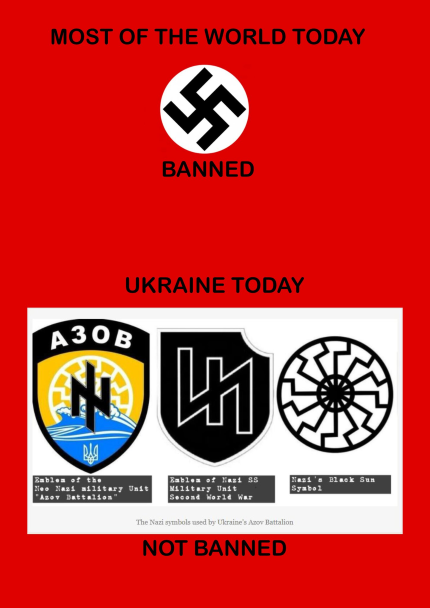
Back in 2018, over 40 human rights activists petitioned the Israeli High Court of Justice to stop arming Ukraine after members of the neo-nazi Azov Battalion were caught brandishing Israeli-made weapons. As Israel’s Ha’aretz noted at the time, “The militia’s [Azov] emblems are well-known national socialist ones. Its members use the Nazi salute and carry swastikas and SS insignias… One militia member said in an interview that he was fighting Russia since Putin was a Jew.”
Zelensky, a Ukrainian Jew, was apparently unperturbed by Israel’s alleged arming of Nazi elements in his country. One year after his 2019 election, he made a pilgrimage to Jerusalem to launch what he called a “prayer for peace,” and to attend an event entitled “Remember the Holocaust to fight anti-Semitism.” Ahead of the junket, Zelensky heaped praise on Israeli society, remarking in an interview that “Jews managed to build a country, to elevate it, without anything except people and brains,” and that Israelis are a “united, strong, powerful people. And despite being under the threat of war, they enjoy every day. I’ve seen it.”
Caitlin Johnstone: Ukraine crawling with CIA & Co

https://johnmenadue.com/caitlin-johnstone-ukraine-crawling-with-cia-co/ 17 Sept 22
The previously unthinkable idea that the U.S. is at war with Russia has been gradually normalised, with the heat turned up so slowly that the frog doesn’t notice it’s being boiled alive.
The New York Times reports that Ukraine is crawling with special forces and spies from the U.S. and its allies, which would seem to contradict earlier reports that the U.S. intelligence cartel is having trouble getting intel about what’s happening on the ground in Ukraine.
This would also, obviously, put the final nail in the coffin of the claim that this is not a U.S. proxy war.
In an article headlined “Commando Network Coordinates Flow of Weapons in Ukraine, Officials Say,” anonymous Western officials inform us of the following through their stenographers at The New York Times:
“As Russian troops press ahead with a grinding campaign to seize eastern Ukraine, the nation’s ability to resist the onslaught depends more than ever on help from the United States and its allies — including a stealthy network of commandos and spies rushing to provide weapons, intelligence and training, according to U.S. and European officials.
Much of this work happens outside Ukraine, at bases in Germany, France and Britain, for example. But even as the Biden administration has declared it will not deploy American troops to Ukraine, some C.I.A. personnel have continued to operate in the country secretly, mostly in the capital, Kyiv, directing much of the massive amounts of intelligence the United States is sharing with Ukrainian forces, according to current and former officials.
At the same time, a few dozen commandos from other NATO countries, including Britain, France, Canada and Lithuania, also have been working inside Ukraine.”
he revelation that the C.I.A. and U.S. special forces are conducting military operations in Ukraine does indeed make a lie of the Biden administration’s insistence at the start of the war that there would be no American boots on the ground in Ukraine. And the admission that NATO powers are so involved in operations against a nuclear superpower means, we are closer to seeing a nuclear exchange than anyone should be comfortable with.
This news should surprise no one who knows anything about the usual behaviour of the U.S. intelligence cartel, but interestingly it contradicts something we were told by the same New York Times not three weeks ago.
“American intelligence agencies have less information than they would like about Ukraine’s operations and possess a far better picture of Russia’s military, its planned operations and its successes and failures,” The New York Times told us earlier this month. “U.S. officials said the Ukrainian government gave them few classified briefings or details about their operational plans, and Ukrainian officials acknowledged that they did not tell the Americans everything.”
It seems a bit unlikely that U.S. intelligence agencies would have a hard time getting information about what’s happening in a country where they themselves are physically located. Moon of Alabama theorised at the time that this ridiculous, “We don’t know what’s happening in our own proxy war” line was being pushed to give the U.S. plausible deniability about Ukraine’s failures on the battlefield, which have only gotten worse since then.
So why are they telling us all this now? Well, it could be that we’re being paced into accepting an increasingly direct role of the U.S. and its allies in Ukraine.
The other day Antiwar’s Daniel Larison tweeted, “Hawks in April: Don’t call it a proxy war! Hawks in May: Of course it’s a proxy war! Hawks in June: It’s not their war, it’s our war!”
This is indeed exactly how it happened. Back in April President Joe Biden told the press the idea that this is a proxy war between the U.S. and Russia was “not true” and Defence Secretary Lloyd Austin said “It’s not, this is clearly Ukraine’s fight” when asked if this is a proxy war. The mainstream media were still framing this claim as merely an “accusation” by the Russian government and empire spinmeisters were regularly admonishing anyone who used that term on the grounds that it deprives Ukrainians of their “agency.”
Then May rolled around and all of a sudden we had The New Yorker unequivocally telling us that the U.S. is in “a full proxy war with Russia” and hawks like U.S. Rep. Seth Moulton saying things like,
“We’re not just at war to support the Ukrainians. We’re fundamentally at war, although somewhat through a proxy, with Russia, and it’s important that we win.”
And now here in June we’ve got war hawks like Max Boot coming right out and saying that this is actually America’s war, and it is therefore important for the U.S. to drastically escalate it in order to hand the Russians “devastating losses.”
So, the previously unthinkable idea that the U.S. is at war with Russia has been gradually normalised, with the heat turned up so slowly that the frog doesn’t notice it’s being boiled alive. If that idea can be sufficiently normalised, public consent for greater escalations will likely be forthcoming, even if those escalations are extremely psychotic.
Back in March when I said the only “agency” Ukraine has in this conflict is the Central Intelligence one, empire loyalists jumped down my throat. They couldn’t believe I was saying something so evil and wrong. Now they’ve been told that the Central Intelligence Agency is indeed conducting operations and directing intelligence on the ground in Ukraine, but I somehow doubt that this will stir any self-reflection on their part.
U.S. Finally Admits Ukraine Bombs Zaporizhzhia’s Nuclear Power Plant.

The Duran, by Eric Zuesse, September 15, 2022, Unnamed American officials, according to the New York Times, have admitted that the explosives fired against Ukraine’s nuclear power plant in Zaporizhzhia have been fired against the plant by Ukraine’s Government, not by Russia’s Government, and furthermore these officials make clear that Ukraine’s attacks against the plant are a key part of Ukraine’s plan to win its U.S.-backed-and-advised war against Russia, on the battlefields of Ukraine, using Ukrainian soldiers.
Zaporizhzhia is a city in Ukraine that is in Russian-controlled territory, and Ukraine’s strategy is to destroy the ability of the plant to function, so that areas controlled by Russia will no longer be able to benefit from that plant’s electrical-power output. The United States Government helped Ukraine’s Government to come up with this plan, according to the New York Times.
This information was buried by the Times, 85% of the way down a 1,600-word news-report they published on September 13th, titled “The Critical Moment Behind Ukraine’s Rapid Advance”, in which it stated that, “Eventually, Ukrainian officials believe their long-term success requires progress on the original goals in the discarded strategy, including recapturing the nuclear power plant in Zaporizhzhia, cutting off Russian forces in Mariupol and pushing Russian forces in Kherson back across the Dnipro River, American officials said.”
When IAEA inspectors arrived at that plant on September 1st, after a lengthy period of trying to get there to inspect it but which was blocked by Ukraine’s Government, and the IAEA started delivering reports regarding what they were finding at the plant, no mention has, as-of yet, been made concerning which of the two warring sides has been firing those bombs into the plant.
Even when the IAEA headlined on September 9th “Director General’s Statement on Serious Situation at Ukraine’s Zaporizhzhya Nuclear Power Plant”, and reported that the plant’s ability to operate “has been destroyed by shelling of the switchyard at the city’s thermal power plant, leading to a complete power black-out in” the entire region, and that “This is completely unacceptable. It cannot stand.”, and closed by saying they “urgently call for the immediate cessation of all shelling in the entire area,” no mention was made as to which of the two sides was shooting into the plant in order to disable it, and which of the two sides was firing out from the plant in order to protect it against that incoming fire.
Previously known was only that the city of Zaporizhzhia has been and is under Russian control ever since March 4th. Consequently, all news-media and reporters have known that (since Russia was inside and Ukraine was outside) Russia has been defending the plant and Ukraine has been attacking it, but until “American officials” let slip, in this news-report, the fact that this has indeed been the case there, no Western news-medium has previously published this fact — not even buried it in a news-report.
So, although nothing in this regard may yet be considered to be official, or neutral, or free of fear or of actual intent to lie, there finally is, at the very least, buried in that news-report from the New York Times, a statement that is sourced to “American officials,” asserting that this is the case, and the Times also lets slip there that this “shelling” of that plant is an important part of the joint U.S.-Ukraine master-plan to defeat Russia in Ukraine.
It is part of the same master-plan, which the U.S. Government recommended to Ukraine’s Government, and which also included the recent successful retaking by Ukraine of Russian-controlled land near the major Ukrainian city of Kharkov, which city’s recapture by Ukraine is also included in the master-plan. Both operations — the shelling of the nuclear power plant, and the recapture of that land near Kharkov — were parts of that master-plan, according to the New York Times.
The Times report asserts that
Long reluctant to share details of their plans, the Ukrainian commanders started opening up more to American and British intelligence officials and seeking advice. Jake Sullivan, the national security adviser, and Andriy Yermak, a top adviser to Mr. Zelensky, spoke multiple times about the planning for the counteroffensive, according to a senior administration official. Gen. Mark A. Milley, the chairman of the Joint Chiefs of Staff, and senior Ukrainian military leaders regularly discussed intelligence and military support.
And in Kyiv, Ukrainian and British military officials continued working together while the new American defense attaché, Brig. Gen. Garrick Harmon, began having daily sessions with Ukraine’s top officers.
Ukraine cracks downs on civilians – official

Amazingly, this is reported also in the Washington Post – article headed:
“Ukraine hit squads are killing Russian occupiers and collaborators“
(I can’t read this – as it’s behind a paywall.)
https://www.rt.com/russia/562619-ukraine-crackdown-kharkov-russia/ 12 Sept 22, Kiev’s forces “are shooting people” in the north of Kharkov region, pro-Russian local authorities claim.
The Ukrainian military has unleashed repressions on the civilian population in Kharkov region, with mercenaries executing people on the streets to frame Russia, a local official claimed on Monday.
“The Ukrainian Armed Forces have occupied settlements in the north of the Kharkov region. They have started repressive actions,” Vitaly Ganchev, the head of pro-Russian administration, said.
Speaking to Russian media, he said local residents who managed to escape from the areas retaken by Kiev’s forces, described Ukrainian “mercenaries that are driving around and shooting people while filming it on camera.”
“As I see it, they want to cleanse these towns, and to portray it as if the Russian troops are behind it, to allege that it was them who had committed these atrocities,” he said.
He added that in many cases residents could no longer cross the Russia-Ukraine border due to the Ukrainian military presence, with many civilians forced into hiding.
Nevertheless, according to Ganchev, more than 5,000 people have been evacuated to Russia in recent days, with local authorities doing their best to fast-track the process.
Ganchev’s comments echo remarks made by Leonid Pasechnik, the head of the Lugansk People’s Republic (LPR), who claimed on Sunday that Kiev’s forces were cracking down on the civilian population in areas from which Russian forces had retreated.
“The Ukrainian authorities have confirmed their neo-Nazi nature. In Kharkov region, in a number of cases Ukrainian intelligence services set up purges and repressions against the civilian population“, he claimed.
The comments came after Ukraine’s State Bureau of Investigations said last week it would conduct a “filtration” of civilians in Balakleya, a town in Kharkov region that’s been retaken by Kiev’s forces.
The purpose of these efforts is to “prevent the subversive activities of the Russians and their allies” and retaliate against those “who cooperated with aggressors,” the agency said at the time.
Russia sent troops into Ukraine on February 24, citing Kiev’s failure to implement the Minsk agreements, designed to give the regions of Donetsk and Lugansk special status within the Ukrainian state. The protocols, brokered by Germany and France, were first signed in 2014. Former Ukrainian President Pyotr Poroshenko has since admitted that Kiev’s main goal was to use the ceasefire to buy time and “create powerful armed forces.”
In February 2022, the Kremlin recognized the Donbass republics as independent states and demanded that Ukraine officially declare itself a neutral country that will never join any Western military bloc. Kiev insists the Russian offensive was completely unprovoked.
Western media continues to ignore Ukraine’s public ‘kill list’ aimed at those who question the Kiev regime
Ukraine has a list ( Myrotvorets) of people, giving addresses and contact numbers, – people considered as enemies of the state, – able to be killed by extreme nationalists. The Ukraine government does nothing to stop this.
“There are so many people in Ukraine who want to push for peaceful negotiations with Russia. But if anybody in Ukrainian society wants to stand up and push this line, they’re most likely going to be put on that list. Myrotvorets is very much a symbol of the extremist elements in Ukraine at the moment.”
https://ingaza.wordpress.com/2022/09/11/western-media-continues-to-ignore-ukraines-public-kill-list-aimed-at-those-who-question-the-kiev-regime/ September 10, 2022, -by Eva K Bartlett
The Myrotvorets list is an issue trending in independent and Russian media, but not in the mainstream international press
This week, a number of international and Russian journalists convened in Moscow – with more joining by video link – to discuss the now-infamous Ukrainian Myrotvorets “kill list.” Many of them are included themselves.
While some don’t take it seriously, the horrific car-bombing murder of Darya Dugina on August 20 and the subsequent marking on her Myrotvorets entry as “liquidated” makes it fairly clear the people behind the list do, in fact, want people dead.
The same thing happened to the entry of Russian photojournalist Andrei Stenin and many others listed and subsequently killed, including the Italian Andrea Rocchelli.
What it feels like to be on the list
The head of the Foundation to Battle Injustice, Mira Terada, who convened the panel, noted that of the thousands of names entered on the site, 341 are journalists and, shockingly, 327 are minors.
“Publishing personal data on minors is a crime. It’s like a menu for pedophiles or people doing human trafficking.”
While her concern is for the children, journalists, activists, political figures and even ordinary Ukrainians who have somehow angered the Kiev regime and those behind the list, Terada now needs to exercise some caution after she herself was added to the database.
An hour and a half after a July 21 press conference about children being placed on Myrotvorets, Mira found herself listed. “This changed my life. I have to be vigilant 24/7,” she said.
Christelle Néant, a French war correspondent reporting from Donbass for the past six and a half years, mentioned to me before the panel began that some of the information on the site is not disclosed to the general public, and is password-locked.
Néant, who said she’s been receiving death threats for years, spoke of how it impacts her: “Every time I use my car, I check underneath it for any unpleasant surprise,” referring to a potential car bomb. “I don’t publish any photos with people I live with or love. I have to be vigilant at all times.”
“I’m not a terrorist, not a criminal, I’m just a correspondent. This list must be closed and all of those involved must be held accountable.”
German journalist Thomas Röper rightly noted that Western media outlets prefer to look the other way. “They could have reported on this, but they’re saying nothing.”
He also pointed out the silence of the German government, even when asked at press conferences.
“A state has a duty to protect its citizens, but I haven’t seen anything from my government to condemn the fact that Germans are on this list and one German national has been killed.”
And, in fact, rather than protect German journalists, the government is persecuting them, as is the case with Alina Lipp, whose bank account, and that of her mother, was closed after the German government launched a criminal case against her for her reporting from Donbass.
Russian journalist Veronika Naydenova, originally from Crimea but living in Germany, was added to the list in January, also after raising the inclusion of children, including 13-year-old Faina Savenkova, from the Lugansk People’s Republic.
The same day my article was published, I was added to the list. But this hasn’t stopped me, I’ve written many articles since.”
She highlighted an additional, very real, threat: that of the refugees who’ve come to Germany from Ukraine, it isn’t possible to know who is merely a refugee and who holds Ukrainian nationalist extremist views. This is a very real fear for Naydenova, whose address is listed on Myrotvorets.
The same happened with Syrians who entered Germany and other countries as refugees. Some of them had affiliations to, or were members of, terrorist groups in Syria, and posed very real threats to supporters of Syria in Germany. As I wrote in a previous article, Kevork Almassian, a Syrian living in Germany, was chased, smeared, harassed and even physically attacked multiple times by the sympathizers of the Free Syrian Army (FSA) and other terrorist groups.”
Dutch journalist Sonya van den Ende likewise fears returning home. “I’m labeled an ‘enemy of the state’ now in the Netherlands. I cannot go back, it’s very dangerous for me to do so.”
Janus Putkonen, a Finnish journalist who has been living in Donbass since 2015, pointed out how the risk extends globally.
“Because the Myrotvorets kill list has not been stopped, people around the world are now in danger of falling victim to the state terrorism of Ukrainian Nazism, comparable to ISIS terrorism.”
But, most of all, it threatens Ukrainians within Ukraine, something British journalist Johnny Miller emphasized.
“If you’re a journalist, blogger, political figure, or a citizen in Ukraine who wants to criticize extremism in Ukraine, which there is a lot of, or if you want to criticize Ukrainian government policies, most likely you’re going to be put on that list. And be under serious threat of death.”
Miller, who has reported from areas of western Ukraine, raised another important point:
“There are so many people in Ukraine who want to push for peaceful negotiations with Russia. But if anybody in Ukrainian society wants to stand up and push this line, they’re most likely going to be put on that list. Myrotvorets is very much a symbol of the extremist elements in Ukraine at the moment.”
For myself, I’ve been on the list since 2019, after going to Crimea and reporting from areas of the DPR where civilians were being terrorized by Ukrainian shelling, houses destroyed “street by street” as a local told me.
It’s not okay for grown adults to say the Ukraine invasion was “unprovoked”
The US Army-commissioned paper details how the empire can use proxy warfare, economic warfare and other cold war tactics to push its longtime geopolitical foe to the brink without costing American lives or sparking a nuclear conflict. It mentions Ukraine hundreds of times, and it explicitly discusses the same economic warfare tactics we’re seeing today
Caitlin Johnstone, TheAltWorld, Wed, 07 Sep 2022
On a recent interview with the Useful Idiots podcast, Noam Chomsky repeated his argument that the only reason we hear the word “unprovoked” every time anyone mentions Russia’s invasion of Ukraine in the mainstream news media is because it absolutely was provoked, and they know it. Chomsky said:
“Right now if you’re a respectable writer and you want to write in the main journals, you talk about the Russian invasion of Ukraine, you have to call it ‘the unprovoked Russian invasion of Ukraine”. It’s a very interesting phrase; it was never used before. You look back, you look at Iraq, which was totally unprovoked, nobody ever called it ‘the unprovoked invasion of Iraq.’ In fact I don’t know if the term was ever used — if it was it was very marginal. Now you look it up on Google, and hundreds of thousands of hits. Every article that comes out has to talk about the unprovoked invasion of Ukraine.
“Why? Because they know perfectly well it was provoked. That doesn’t justify it, but it was massively provoked. Top US diplomats have been talking about this for 30 years, even the head of the CIA.”
Chomsky is of course correct here. The imperial media and their brainwashed automatons have spent half a year mindlessly bleating the word “unprovoked” in relation to this war, but one question none of them ever have a straight answer for is this: if the invasion of Ukraine was unprovoked, how come so many western experts spent years warning that the actions of western governments would provoke an invasion of Ukraine?
Because, as Chomsky notes, that is indeed the case. A few days after the invasion began this past February a guy named Arnaud Bertrand put together an extremely viral Twitter thread that just goes on and on and on about the various diplomats, analysts and academics in the west who have over the years been warning that a dangerous confrontation with Russia was coming because of NATO advancements toward its borders, interventionism in Ukraine, and various other aggressions. It contains examples like John Mearsheimer explicitly warning in 2015 that “the west is leading Ukraine down the primrose path, and the end result is that Ukraine is going to get wrecked,” and Pat Buchanan warning all the way back in 1999 that “By moving NATO onto Russia’s front porch, we have scheduled a twenty-first-century confrontation.”
Empire apologists love claiming that the invasion of Ukraine had nothing to do with NATO expansionism (their claims generally based on brazen misrepresentations of what Vladimir Putin has said about Russia’s reasons for the war), but that’s silly. The US war machine was continuing to taunt the possibility of NATO membership for Ukraine right up until the invasion, a threat it refused to take off the table since placing it there in 2008 despite knowing full well that this threat was an incendiary provocation to Moscow.
This is to say nothing of the US empire actively fomenting a violent uprising in 2014 which ousted Kyiv’s sitting government and fractured the nation between its more Moscow-loyal populations to the east and the more US/EU-friendly parts of the country. This led to the annexation of Crimea (overwhelmingly supported by the people who live there) and eight years of brutal warfare against Russia-backed separatists in the Donbas. Ukrainian attacks on those separatists are known to have increased exponentially in the days leading up to the invasion, and it has been argued that this is what provoked Putin’s final decision to commit to invading (which was a last-minute decision according to US intelligence).
The US power alliance could very easily have prevented this war with a few low-cost concessions like enshrining Ukrainian neutrality, rolling back its war machinery from Russia’s borders and sincerely pursuing detente with Moscow instead of shredding treaties and ramping up cold war escalations. Hell, it could likely have prevented this war just by protecting President Zelensky from the anti-Moscow far right nationalists who were openly threatening to lynch him if he began honoring the Minsk agreements and pursuing peace with Russia, as he was originally elected to do.
Instead it knowingly chose the opposite course: continuing to float the possibility of formal NATO membership for Ukraine while pouring weapons into the nation and making it more and more of a de facto NATO memberwith closer and closer intimacy with the US war machine, and then either ordering, encouraging or tolerating Ukraine’s aggressive assault on Donbas separatists.
Why did the empire opt for provocation over peace? Congressman Adam Schiff gave a pretty good answer to that question in January of 2020 as the road to war was being paved: “so that we can fight Russia over there, and we don’t have to fight Russia here.” If you relinquish the infantile idea that the US empire is helping its good friend Ukraine because it loves the Ukrainian people and wants them to have freedom and democracy, it’s not hard to see that the US sparked a convenient proxy war because it was in its geostrategic interests to do so, and because it wouldn’t be their lives and property getting laid to waste.
Brian Berletic put out a good video a few days ago about a Pentagon-funded 2019 Rand Corporation paper titled “Extending Russia – Competing from Advantageous Ground,” which is exactly what it sounds like. The US Army-commissioned paper details how the empire can use proxy warfare, economic warfare and other cold war tactics to push its longtime geopolitical foe to the brink without costing American lives or sparking a nuclear conflict. It mentions Ukraine hundreds of times, and it explicitly discusses the same economic warfare tactics we’re seeing today like sanctions and attacking Russia’s energy interests in Europe (the latter of which Berletic points out is also being used to bolster US dominance over its vassals in the EU).
Continue readingKiev spreading ‘propaganda by fear’ – French ex-presidential candidate
 |
https://www.rt.com/russia/562148-kiev-spreading-propaganda-fear/1 4 Sept 22, Segolene Royal has faced backlash after questioning Ukrainian accounts of events in Bucha and Mariupol.
A former French presidential candidate has accused Ukrainian leader Vladimir Zelensky of using ‘war propaganda’ as a tool to obstruct the peace process. Veteran politician Segolene Royal also called on the UN and media associations to fight against such tactics.
Royal’s suggestion, that some of the “war crimes” Kiev blames on Russian troops were part of ‘propaganda,’ has made her a target for widespread criticism.
Speaking to BFMTV earlier this week, Royal said that “everyone knows that there is war propaganda by fear.”
As an example, she cited the alleged shelling of a maternity hospital in Mariupol – the story which made headlines in Western media in early March. Zelensky blamed Russia for the incident that, as local authorities claimed, killed three people, including a child. The Russian military denied targeting the medical facility and insisted the whole thing was a “completely staged provocation” by the Ukrainian side.
“You can imagine that if there had been any victim, any baby with blood, in the age of cell phones we would have seen [their photos],” Royal stressed.
The authenticity of the photos presented by Kiev as proof of the claimed Russian attack were questioned by many online. Marianna Vyshemirskaya, one of the pregnant women featured in the images that appeared on the front pages of many major outlets, later claimed that there had been no Russian airstrike on the hospital. She insisted that she told AP journalists about this, but they decided not to mention it in their reportage.
Royal, who used to be a long-term partner of France’s former president Francois Hollande, also commented on the events of April in the town of Bucha near Kiev, after which Zelensky claimed that negotiations with Russia became impossible. Ukrainian authorities accused the Russian forces of multiple atrocities against civilians in the town, including the rape of children. Moscow firmly denied the allegations of war crimes, insisting it was “yet another provocation” by Kiev.
“The stories of child rape for seven hours under the eyes of the parents: but it’s monstrous to go and spread things like that only to interrupt the peace process,” the veteran French politician stated, without elaborating.
She also claimed that Zelensky used accounts of alleged torture of Ukrainian soldiers by Russian troops – which Moscow also vehemently denies – not only to impede any peace process but also to “remobilize” troops. She argued that as “there’s been enough horror of war and casualties” and that “Ukrainian propaganda” should be stopped “under the aegis of the UN and media organizations.”
After BFMTV tweeted a fragment of her interview with a caption “Segolene Royal questions certain war crimes in Ukraine,” the politician responded that this was “false,” as she’d “never denied war crimes.”
On Saturday, Royal published the final part of her remarks which, as she said, was cut by the television network. In this fragment she says that “there is a form of one-upmanship in the description of the horror, to encourage arms deliveries and to refrain from setting up negotiation and peace processes.”
“To plead for peace is to act for the end of the suffering of the Ukrainian people and of Russian aggression,” she wrote in a caption to the video.
Royal’s interview was condemned by some politicians as well as by many social media users. The Stand With Ukraine group representing the victims and the families of victims of “Russian aggression” even announced that it was considering filing a complaint against Royal in order to defend “the honor of disappeared.”
Meanwhile, the president of the party The Patriots, Florian Philippot, criticized “the aggressive and crazy reactions” to Royal’s remarks and said that she “has every right, and an intellectual duty” to question war propaganda.
If people take part in referendums in Donbass region, Ukraine government will prosecute them as criminal offenders
Kiev threatens pro-Russia Ukrainians with jail terms. more https://www.rt.com/russia/562159-kiev-referendum-jail-time/ 4 Sept 22, Ukraine’s deputy prime minister warns that voting in referendums in Moscow-controlled territories is a criminal offence
Ukrainian citizens risk criminal prosecution and a jail time of up to 12 years if they participate in referendums on joining Russia, Ukrainian Deputy Prime Minister Irina Vereshchuk warned on Saturday.
“There are not and will not be any referendums on our Ukrainian land,” Vereshchuk stated during a national broadcast.
Pro-Russian authorities in the Zaporozhye, Kharkov and Kherson Regions, as well the Donetsk and Lugansk People’s Republics, previously spoke of potentially holding referendums on uniting with Russia, but so far no dates have been set.
“It’s all a farce and a circus. But for our citizens who will take part in this, there is actually an article of the Criminal Code,” Kiev’s deputy prime minister said.
“If collaboration is proven, or, for example, participation in the referendum or incitement to participate in the referendum, then people can receive up to 12 years with confiscation (of assets),” she warned.
Vereshchuk urged Ukrainians who remain in Russia-controlled territories to evacuate or avoid voting in any plebiscites, as “no pressure, no violent incitement, etc., can later justify the fact that a person went to the referendum.”
When asked, how many people potentially might take part in voting, Vereshchuk claimed the percentage is “tiny… not even 2%.”
The Ukrainian government previously warned that citizens who attempt to become Russian citizens could be punished with up to 15 years in prison.
Zelensky aide says UN nuclear watchdog should be mistrusted ‘by default’
RT.com, 2 Sept 22,
A top advisor to the Ukrainian president says he doesn’t expect a breakthrough from the IAEA mission to the Zaporozhye power plant.
International organizations including the International Atomic Energy Agency (IAEA) are “cowardly” and cannot be trusted, a senior aide to Ukrainian President Vladimir Zelensky has said.
“I don’t like international institutions and mediation missions in general. They look extremely ineffective, extremely cowardly and extremely unprofessional,” Mikhail Podolyak said in an interview on Thursday evening.
This applies “not only to the IAEA”, but also to the UN, Amnesty International, and the International Committee of the Red Cross, the Ukrainian official claimed, adding: “By default, you should not trust them.”
Podolyak’s remarks came as he criticized the IAEA mission to the Russia-controlled Zaporozhye nuclear power plant, which arrived earlier in the day. He expressed his low expectations from the mission, based on the positive remarks that Director General Rafael Grossi made after touring the facility in Ukraine.
The Ukrainian official said he was willing to give the IAEA inspectors the benefit of the doubt and wait for them make an official report that would “show the depth of their inner destruction”.
He explained his concerns, citing several aspects of Grossi’s visit. They include its relatively short duration, which Podolyak assessed was too short for a proper fact-finding mission. He also criticized the willingness of the IAEA chief to talk to a representative of the Russian atomic energy body Rosatom, who, Podolyak said, “delivered a strange long speech” to the UN official.
The IAEA experts arrived at the station from Kiev despite continued military action in its vicinity. Kiev and Moscow have accused each other of being behind the shelling and of trying to derail the inspection. Some members of the mission stayed behind to monitor the situation, while Grossi and others left.
Podolyak said the IAEA should blame Russia for attacks on the plant, and if their report fails to do so, only stating that inspectors witnessed evidence of strikes, his opinion about the organization will be vindicated.
President Vladimir Zelensky too has expressed skepticism about the IAEA visit to the Zaporozhye nuclear power plant………….https://www.rt.com/russia/562053-iaea-mission-podolyak-interview/
Moscow says – US Afraid Inhumane Acts Committed by Azov Terrorists Will Be Made Public
25 Aug 22, WASHINGTON (Sputnik) – Washington is afraid that crimes committed by Ukraine’s Azov* neo-nazi regiment would come to light during the international tribunal for war criminals in Mariupol, the Russian Embassy to the US said.
The Russian embassy noted that the upcoming tribunal against Ukrainian war criminals, which is being prepared by the DPR authorities, would hold Ukrainian Neo-Nazis accountable……………………………..
Donetsk People’s Republic (DPR) leader Denis Pushilin earlier said that the suspected war criminals captued by the Donbass militias would face international an tribunal, which is to be held in Mariupol. He noted that the DPR authorities would not delay the trial, adding that the Foreign Ministry is working to invite the international community to take part in the tribunal……………. The politician stated that among suspects are neo-Nazis and some troops who committed atrocities in Donbass over the past 8 years.
He noted that the DPR authorities would not delay the trial, adding that the Foreign Ministry is working to invite the international community to take part in the tribunal.
*Azov is a terrorist organisation banned in Russia https://sputniknews.com/20220825/us-afraid-inhumane-acts-committed-by-azov-terrorists-will-be-made-public-russian-embassy-says-1099967315.html
WikiLeaks founder Julian Assange files latest appeal in bid to stop extradition to United States
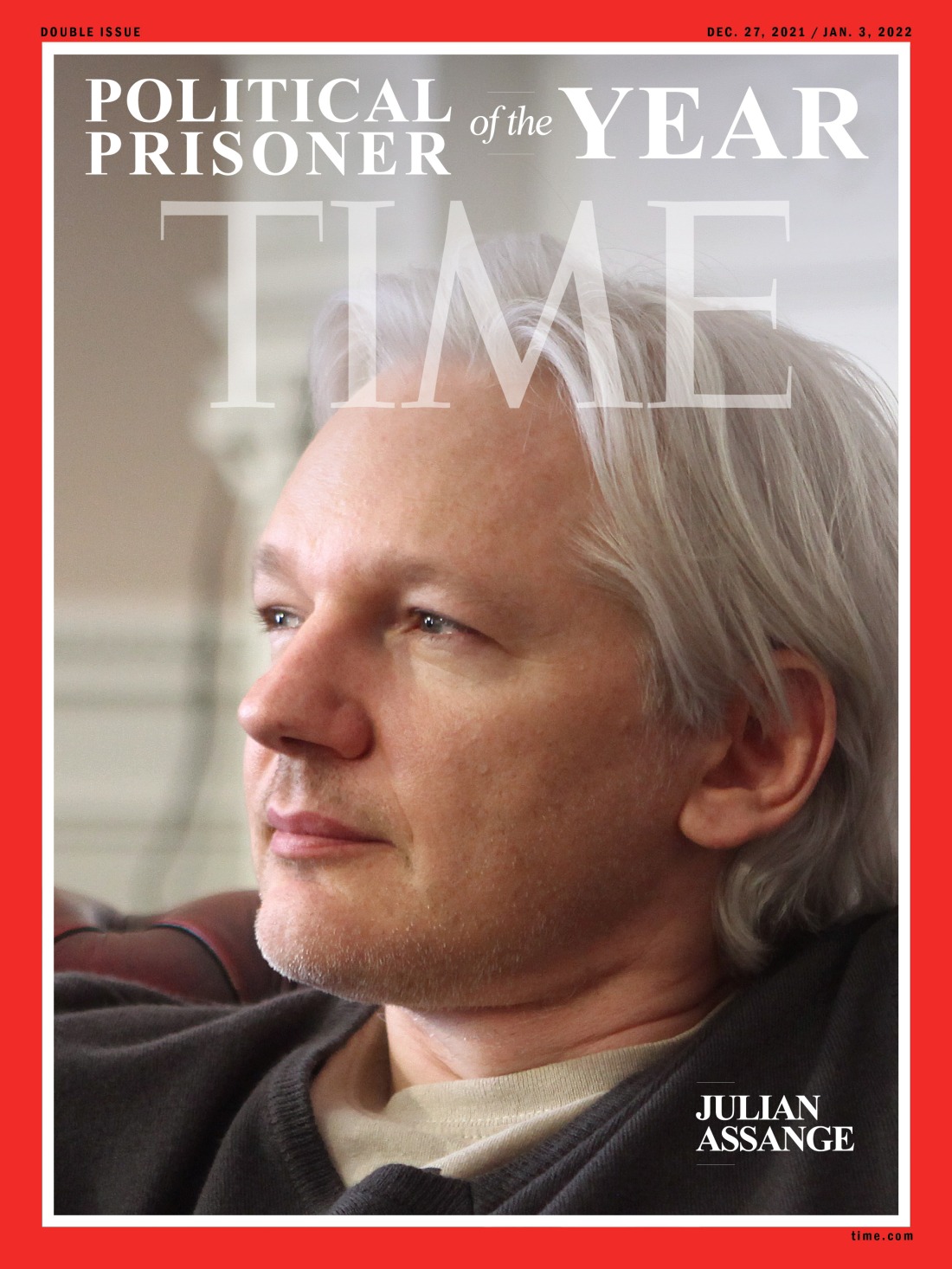
Julian Assange’s legal team has filed an appeal to Britain’s High Court in an effort to thwart his extradition to the United States to face espionage charges.
Key points:
- The appeal argues that Julian Assange is being prosecuted and punished for his political opinions and for protected speech
- Assange has been in custody since his was arrested in April 2019 and dragged out of the Ecuadorian embassy in London
- He is facing 17 espionage charges and one charge of computer misuse in the United States
British Home Secretary Priti Patel approved the extradition of the WikiLeaks founder in June after he was denied an appeal in the Supreme Court appeal back in March.
A public relations firm representing Assange said in a statement that the respondents to the appeal were Ms Patel and the government of the United States.
Lawyers for Assange will argue that he is being prosecuted and punished for his political opinions and for protected speech, and that the extradition request violates the US-UK Extradition Treaty and international law as it relates to what it calls political offences.
His lawyers will also argue that the US Government “misrepresented the core facts of the case” to the British courts and that the extradition request “constitute an abuse of process”.
“The Perfected Grounds of Appeal contain the arguments on which Julian Assange intends to challenge District Judge Vanessa Baraitser’s decision of 4 January 2021 and introduces significant new evidence that has developed since that ruling,” the statement read.
That January 2021 ruling saw Judge Baraister refuse the US Government’s extradition request on the basis that of Assange’s mental condition and the risk of suicide if he were held in a maximum-security prison.
But Judge Baraister rejected nearly all of the arguments put forward by Assange’s lawyers at the time, including that the charges against him were politically motivated and that he would not receive a fair trial in the US.
In December 2021 the US Government won an appeal against that decision in the UK’s High Court, with Judge Timothy Holroyde finding that the US had given assurances to the UK about Assange’s detention, including about his treatment in the US prison system and that the US would allow him to be transferred to Australia to serve any prison sentence.
Assange’s latest appeal also argues Ms Patel “erred in her decision to approve the extradition order on grounds of specialty” because the extradition request violated the US-UK Extradition Treaty.
US authorities have accused the 51-year-old of conspiring to hack government computers and of violating an espionage law in connection with the release of confidential cables by WikiLeaks in 2010-2011.
Assange is facing up to 175 years in prison over the 17 espionage charges and one charge of computer misuse over the leaks, but the US government has said that a sentence of between three and six years was more likely.
Stella Assange, Assange’s wife, said the pursuit of her husband was “criminal abuse”.
“Since the last ruling, overwhelming evidence has emerged, proving that the United States prosecution against my husband is a criminal abuse,” she said in a statement.
“The High Court judges will now decide whether Julian is given the opportunity to put the case against the United States before open court, and in full, at the appeal.”
Stop the Extradition! #FreeAssangeNOW
Julian Assange Files his Perfected Grounds of Appeal
Crowdfunder, Today, 26 August 2022, Julian Assange is filing his Perfected Grounds of Appeal before the High Court of Justice Administrative Court. The Respondents are the Government of the United States and the Secretary of State for the Home Department, Priti Patel.
The Perfected Grounds of Appeal contain the arguments on which Julian Assange intends to challenge District Judge Vanessa Baraitser’s decision of 4 January 2021, and introduces significant new evidence that has developed since that ruling.
The Perfected Grounds of Appeal concerning the United States Government include the following points:
- Julian Assange is being prosecuted and punished for his political opinions (s.81(a) of the Extradition Act);
- Julian Assange is being prosecuted for protected speech (Article 10)
- The request itself violates the US-UK Extradition Treaty and International law because it is for political offences;
- The US Government has misrepresented the core facts of the case to the British courts; and
- The extradition request and its surrounding circumstances constitute an abuse of process.
The Perfected Grounds of Appeal concerning the Secretary of State for the Home Department (SSHD) include arguments that Home Secretary Priti Patel erred in her decision to approve the extradition order on grounds of specialty and because the request itself violates Article 4 of the US-UK Extradition Treaty.
“Since the last ruling, overwhelming evidence has emerged proving that the United States prosecution against my husband is a criminal abuse. The High Court judges will now decide whether Julian is given the opportunity to put the case against the United States before open court, and in full, at the appeal,” said Julian Assange’s wife Stella Assange.
Background:……………………………………… more https://www.crowdfunder.co.uk/p/free-assange/updates/187543#startc—
The murder of Daria Dugina- by a Ukrainian neo-Nazi operative?
Nicolas Cinquini
senior intelligence analyst in the field of security risk management, I am a former lieutenant detective and intelligence officer within French State agencies, 24 Aug 22
Around 9:35 pm, on August 20, 2022, an explosion blows up in Moscow suburb the usual car of Alexandr Dugin, that his daughter, Daria Platonova, is driving alone. The 29-year-old woman is killed
Likely the intended target, her father was traveling in another car. On social networks, the Ukrainian nationalists are celebrating the attack. At 12:12 am, time in Paris, 1:12 am in Moscow, Eliot Higgins bullies on Twitter the father of the victim
43-year-old British national Higgins is a blogger and the founder of Bellingcat, the worst example of what the nerds are calling pompously open source intelligence (OSINT). Their analysis do not need to be reliable, they are supporting a political agenda in post-truth Western societies. That work is public and propaganda. Bellingcat is collaborating with atlanticist think tanks and Western intelligence agencies. Higgins and his fellows are morbid russophobic maniacs.
While Ukraine is losing the war on the battlefield, NATO is assessing an asymmetric strategy : threat of a nuclear catastrophe in Energodar, sabotages in Crimea and likely, political assassinations in Russia, which are terrorism.
60-year-old Aleksandr Dugin is a philosopher, was a dissident during the 80s in Soviet Union. In 1993, he co-founded the National Bolshevik Party (NBP), a scholarly mix of far-right and far-left, which opposed later Vladimir Putin -when Dugin had already left in 1998-, was suspected of preparing an armed uprising, was banned in 2007 as an extremist organization. He was the deputy head of the department of sociology of international relations at Moscow State University from 2009 to 2014, was finally not appointed head, while he was denouncing Maidan as a US coup and was calling for a Russian military involvement in Donbass. He has predicted that in Ukraine, the US would fight until the last Ukrainian. Some Ukrainians are fan of Dugin and Kiev democracy is cracking down on them. He is expressing his will to challenge the atlanticist empire, is pleading for eurasianism as a balance. Dugin is on a US sanctions list since 2014.
His daughter Daria was a journalist and an activist, on a US sanctions list since March 2022. She has written that the massacre in Bucha was staged. I am partly supporting this clear reality, think that the special purpose formations of the Ukrainian national police have also slaughtered collaborationists there.
On August 21, in a murder case so far, the investigators are still working on the site of the attack. In a criminal investigation, the first 48 hours are decisive, deserve a special attention. Little sleep for the detectives
In the afternoon, the authorities state
it has already been established that an explosive device was planted under the bottom of the car on the driver’s side
The understanding of the bomb will be a major step. Was it automatic, remotely controlled ? In the second hypothesis, the perpetrators would have finally decided themselves or received the order to trigger the explosion, despite Alexander Dugin was not onboard.
Spokeswoman of the Russian defense ministry, Maria Zakharova states
Russian law enforcement agencies are investigating the death of Daria Dugina. If the Ukrainian trace is confirmed – and this version was voiced by the head of the DPR Denis Pushilin, and it must be verified by the competent authorities – then we should talk about the policy of state terrorism implemented by the Kyiv regime. There have been plenty of facts accumulated over the years : from political calls for violence to the leadership and participation of Ukrainian state structures in crimes. We are waiting for the results of the investigation
Funny effect in Ukraine, where August 24 is also the day of independence since 1991. Media report that from August 22 to 26, all employees of the government neighborhood in Kiev have been recommended to work from home. I guess COVID is not the issue. Strikes on decision centers are feared and in the evening, large traffic jams appear at the exits of Kiev.
47-year-old Ilya Ponomarev is a wealthy businessman, whose political identity is winding, between communism, pan-slavism and social democracy, likely ambitious and opportunist. Then member of the State Duma, he opposed in 2014 the annexation of Crimea. He is living in exile between California and Kiev. Ukrainian nationalist, fan of historical Nazi leader Stepan Bandera, former president Petro Poroshenko has granted him the Ukrainian nationality in 2019. About 24 hours after the assassination of Daria Platonova, Ponomarev publishes a statement on his YouTube channel, February Morning, takes credit for the attack, on behalf of a so-called [Russian] national republican army (NRA). He states that Daria was indeed the target
As a clue of his intellectual integrity, I notice in his statement that Ponomarev is regarding the Ukrainian war crime in Yelenovka as a Russian attack. With so few scruples, he may be the optimal puppet for NATO and Ukrainian special operations in Russia.
………………………………………… 43-year-old Ukrainian national Natalia Shaban has entered Russia in July, rented an apartment in the victim’s building. She has attended the event where the bomb has been fixed under the victim’s car. After the assassination, she has left for Estonia, a NATO country. Last but not the least, while she is traveling with her 12-year-old daughter, Shaban is a Ukrainian operative, State security agency (SBU) or military intelligence (GUR)
Here is her card of the Ukrainian national guard, Nazi Azov regiment. Her call sign is Vovk [on original]
As a senior intelligence analyst in security risk management, I am watching for six months the Ukrainian PSYOPs and false flag crimes. No surprise, the Ukrainian authorities are denying that new terrorist action, their involvement in the assassination of Daria Platonova. They are denying summarily and do not risk to discuss the facts. No surprise, the US State Department and British media are supporting the Ukrainian deny. The Western communication is story-telling and disinformation.
The office of the United Nations High Commissioner for Human Rights believes that those responsible for murder of journalist Daria Dugina should be brought to justice. I agree, extrajudicial denazification should be an ultimate solution, if countries prevent the suspect from appearing before a Russian court.
………….. Russian news agency RIA Novosti reports that Natalia Shaban / Vovk entered Russia in July with a Kazakh passport under the false identity of Yulia Zayko, born on December 26, 1980……………… https://nicolascinquini.blog/2022/08/21/ukrainian-terrorism-in-moscow/
1 This Month

of the week – Shut Down Drone Warfare!


Tell the Ukrainian Government to Drop Prosecution of Peace Activist Yurii Sheliazhenko

Petition to revoke the licensing of the Near Surface Nuclear Disposal Facility (NSDF) at Chalk River. https://www.ourcommons.ca/petitions/en/Petition/Details?Petition=e-7247
To see nuclear-related stories in greater depth and intensity – go to https://nuclearinformation.wordpress.com
-
Archives
- April 2026 (19)
- March 2026 (251)
- February 2026 (268)
- January 2026 (308)
- December 2025 (358)
- November 2025 (359)
- October 2025 (376)
- September 2025 (257)
- August 2025 (319)
- July 2025 (230)
- June 2025 (348)
- May 2025 (261)
-
Categories
- 1
- 1 NUCLEAR ISSUES
- business and costs
- climate change
- culture and arts
- ENERGY
- environment
- health
- history
- indigenous issues
- Legal
- marketing of nuclear
- media
- opposition to nuclear
- PERSONAL STORIES
- politics
- politics international
- Religion and ethics
- safety
- secrets,lies and civil liberties
- spinbuster
- technology
- Uranium
- wastes
- weapons and war
- Women
- 2 WORLD
- ACTION
- AFRICA
- Atrocities
- AUSTRALIA
- Christina's notes
- Christina's themes
- culture and arts
- Events
- Fuk 2022
- Fuk 2023
- Fukushima 2017
- Fukushima 2018
- fukushima 2019
- Fukushima 2020
- Fukushima 2021
- general
- global warming
- Humour (God we need it)
- Nuclear
- RARE EARTHS
- Reference
- resources – print
- Resources -audiovicual
- Weekly Newsletter
- World
- World Nuclear
- YouTube
-
RSS
Entries RSS
Comments RSS
 nuclear-news