Secret Pakistan cable documents US pressure to remove Imran Khan
“All will be forgiven,” said a U.S. diplomat, if the no-confidence vote against Pakistan Prime Minister Imran Khan succeeds.
The Intercept, Ryan Grim, Murtaza Hussain, August 9 2023,
THE U.S. STATE DEPARTMENT encouraged the Pakistani government in a March 7, 2022, meeting to remove Imran Khan as prime minister over his neutrality on the Russian invasion of Ukraine, according to a classified Pakistani government document obtained by The Intercept.
The meeting, between the Pakistani ambassador to the United States and two State Department officials, has been the subject of intense scrutiny, controversy, and speculation in Pakistan over the past year and a half, as supporters of Khan and his military and civilian opponents jockeyed for power. The political struggle escalated on August 5 when Khan was sentenced to three years in prison on corruption charges and taken into custody for the second time since his ouster. Khan’s defenders dismiss the charges as baseless. The sentence also blocks Khan, Pakistan’s most popular politician, from contesting elections expected in Pakistan later this year.
One month after the meeting with U.S. officials documented in the leaked Pakistani government document, a no-confidence vote was held in Parliament, leading to Khan’s removal from power. The vote is believed to have been organized with the backing of Pakistan’s powerful military. Since that time, Khan and his supporters have been engaged in a struggle with the military and its civilian allies, whom Khan claims engineered his removal from power at the request of the U.S.
The text of the Pakistani cable, produced from the meeting by the ambassador and transmitted to Pakistan, has not previously been published. The cable, known internally as a “cypher,” reveals both the carrots and the sticks that the State Department deployed in its push against Khan, promising warmer relations if Khan was removed, and isolation if he was not.
The document, labeled “Secret,” includes an account of the meeting between State Department officials, including Assistant Secretary of State for the Bureau of South and Central Asian Affairs Donald Lu, and Asad Majeed Khan, who at the time was Pakistan’s ambassador to the U.S.
The document was provided to The Intercept by an anonymous source in the Pakistani military who said that they had no ties to Imran Khan or Khan’s party. The Intercept is publishing the body of the cable below, correcting minor typos in the text because such details can be used to watermark documents and track their dissemination………………………………………………………………………………………………………………………………………………
The Intercept has made extensive efforts to authenticate the document. Given the security climate in Pakistan, independent confirmation from sources in the Pakistani government was not possible. The Pakistan Embassy in Washington, D.C., did not respond to a request for comment……………………………………………………………………………………………………………………
more https://theintercept.com/2023/08/09/imran-khan-pakistan-cypher-ukraine-russia/—
Atomic Bombing of Japan Was Not Necessary to End WWII. US Gov’t Documents Admit It
US government documents admit the atomic bombing of Hiroshima and Nagasaki was not necessary to end WWII. Japan was on the verge of surrendering. The nuclear attack was the first strike in Washington’s Cold War on the Soviet Union.
By Ben Norton / Geopolitical Economy Report August 10, 2023 https://scheerpost.com/2023/08/10/atomic-bombing-of-japan-was-not-necessary-to-end-wwii-us-govt-documents-admit-it/
It is very common for Western governments and media outlets to tell the rest of the world to be afraid of North Korea and its nuclear weapons, or to fear the possibility that Iran could one day have nukes.
But the reality is that there is only one country in human history that has used nuclear weapons against a civilian population – and not once, but twice: the United States.
On the 6th and 9th of August, 1945, the US military dropped atomic bombs on the Japanese cities of Hiroshima and Nagasaki. Around 200,000 civilians were killed.
Today, nearly 80 years later, many US government officials, journalists, and educators still claim that Washington had no choice but to nuke Japan, to force it to surrender and thus end World War Two. Some argue that this horrifying atrocity was in fact a noble act, that it saved even more lives that would have been lost in subsequent fighting.
This narrative, although widespread, is utterly false.
US government documents have admitted that Japan was already on the verge of surrendering in 1945, before the nuclear strikes. It was simply not necessary to use the atomic bomb.
The US Department of War (which was renamed the Department of Defense later in the 1940s) conducted an investigation, known as the Strategic Bombing Survey, analyzing its air strikes in World War II.
Published in 1946, the Strategic Bombing Survey stated very clearly, “Japan would have surrendered even if the atomic bombs had not been dropped”:
… it seems clear that, even without the atomic bombing attacks, air supremacy over Japan could have exerted sufficient pressure to bring about unconditional surrender and obviate the need for invasion.
Based on a detailed investigation of all the facts, and supported by the testimony of the surviving Japanese leaders involved, it is the Survey’s opinion that certainly prior to 31 December 1945, and in all probability prior to 1 November 1945, Japan would have surrendered even if the atomic bombs had not been dropped, even if Russia had not entered the war, and even if no invasion had been planned or contemplated
The nuclear strikes on Japan represented a political decision taken by the United States, aimed squarely at the Soviet Union; it was the first strike in the Cold War.
In August 1945, the USSR was preparing to invade Japan to overthrow its ruling fascist regime, which had been allied with Nazi Germany – which the Soviet Red Army had also just defeated in the European theater of the war.
Washington was concerned that, if the Soviets defeated Japanese fascism and liberated Tokyo like they had in Berlin, then Japan’s post-fascist government could become an ally of the Soviet Union and could adopt a socialist government.
The atomic bombs dropped on Hiroshima and Nagasaki, therefore, were not so much aimed at the Japanese fascists as they were aimed at the Soviet communists.
This expressly political decision to use nuclear weapons against Japan was in fact opposed by several top US military officials.
As one of the most famous generals in US military history, Dwight Eisenhower led operations in the European theater of the war and oversaw the subsequent occupation of what was formerly Nazi Germany.
Eisenhower later became president of the United States, following Harry Truman, the US leader who had nuked Japan.
Eisenhower is renowned worldwide for his leadership in the fight against fascism in Europe. But what is little known is that he opposed the US nuclear attacks on Japan.
After leaving the White House, Eisenhower published a memoir titled Mandate for Change. In this 1963 book, the former top general recalled an argument he had in July 1945 with then US Secretary of War Henry Stimson.
Stimson had notified him that Washington was planning to nuke Japan, and Eisenhower criticized the decision, stating that he had “grave misgivings” and was convinced “that Japan was already defeated and that dropping the bomb was completely unnecessary”.
The incident took place in [July] 1945 when Secretary of War Stimson, visiting my headquarters in Germany, informed me that our government was preparing to drop an atomic bomb on Japan. I was one of those who felt that there were a number of cogent reasons to question the wisdom of such an act. … But the Secretary, upon giving me the news of the successful bomb test in New Mexico, and of the plan for using it, asked for my reaction, apparently expecting a vigorous assent.
During his recitation of the relevant facts, I had been conscious of a feeling of depression and so I voiced to him my grave misgivings, first on the basis of my belief that Japan was already defeated and that dropping the bomb was completely unnecessary, and secondly because I thought that our country should avoid shocking world opinion by the use of a weapon whose employment was, I thought, no longer mandatory as a measure to save American lives. It was my belief that Japan was, at that very moment, seeking some way to surrender with a minimum loss of “face”. The Secretary was deeply perturbed by my attitude, almost angrily refuting the reason I gave for my quick conclusions.
These “completely unnecessary” nuclear attacks on Hiroshima and Nagasaki killed some 200,000 civilians. But they had a political goal, aimed at the Soviet Union.
The political reasons behind the atomic bombing of Japan have been publicly acknowledged by the US Department of Energy’s Office of History, which runs a website with educational information about the Manhattan Project, the scientific initiative that developed the bomb.
The US government website conceded that the Truman administration’s decision to nuke Japan was politically motivated, writing:
After President Harry S. Truman received word of the success of the Trinity test, his need for the help of the Soviet Union in the war against Japan was greatly diminished. The Soviet leader, Joseph Stalin, had promised to join the war against Japan by August 15th. Truman and his advisors now were not sure they wanted this help. If use of the atomic bomb made victory possible without an invasion, then accepting Soviet help would only invite them into the discussions regarding the postwar fate of Japan.
Other historians argue that Japan would have surrendered even without the use of the atomic bomb and that in fact Truman and his advisors used the bomb only in an effort to intimidate the Soviet Union.
…
Truman hoped to avoid having to “share” the administration of Japan with the Soviet Union.
Mainstream historians have acknowledged this fact as well.
Ward Wilson, a researcher at the establishment London-based think tank the British American Security Information Council, published an article in Washington’s elite Foreign Policy magazine in 2013 titled “The Bomb Didn’t Beat Japan. Stalin Did”.
“Although the bombs did force an immediate end to the war, Japan’s leaders had wanted to surrender anyway and likely would have done so before the American invasion planned for Nov. 1. Their use was, therefore, unnecessary”, he wrote.
Wilson explained:
If the Japanese were not concerned with city bombing in general or the atomic bombing of Hiroshima in particular, what were they concerned with? The answer is simple: the Soviet Union.
…
Even the most hard-line leaders in Japan’s government knew that the war could not go on. The question was not whether to continue, but how to bring the war to a close under the best terms possible.
One way to gauge whether it was the bombing of Hiroshima or the invasion and declaration of war by the Soviet Union that caused Japan’s surrender is to compare the way in which these two events affected the strategic situation. After Hiroshima was bombed on Aug. 6, both options were still alive. … Bombing Hiroshima did not foreclose either of Japan’s strategic options.
The impact of the Soviet declaration of war and invasion of Manchuria and Sakhalin Island was quite different, however. Once the Soviet Union had declared war, Stalin could no longer act as a mediator — he was now a belligerent. So the diplomatic option was wiped out by the Soviet move. The effect on the military situation was equally dramatic.
When the Russians invaded Manchuria, they sliced through what had once been an elite army and many Russian units only stopped when they ran out of gas.
…
The Soviet invasion invalidated the military’s decisive battle strategy, just as it invalidated the diplomatic strategy. At a single stroke, all of Japan’s options evaporated. The Soviet invasion was strategically decisive — it foreclosed both of Japan’s options — while the bombing of Hiroshima (which foreclosed neither) was not.
Attributing the end of the war to the atomic bomb served Japan’s interests in multiple ways. But it also served U.S. interests. If the Bomb won the war, then the perception of U.S. military power would be enhanced, U.S. diplomatic influence in Asia and around the world would increase.
…
If, on the other hand, the Soviet entry into the war was what caused Japan to surrender, then the Soviets could claim that they were able to do in four days what the United States was unable to do in four years, and the perception of Soviet military power and Soviet diplomatic influence would be enhanced. And once the Cold War was underway, asserting that the Soviet entry had been the decisive factor would have been tantamount to giving aid and comfort to the enemy.
Thus, before World War II was even over, the United States launched a Cold War against its ostensible “ally”, the Soviet Union – and against the potential spread of socialism anywhere around the world.
US spy agencies began recruiting former fascists and Nazi collaborators. US officials freed Class A Japanese war criminals from prison, some of whom went on to lead the government in Tokyo.
Many of these figures were involved in founding the right-wing Liberal Democratic Party (LDP), which has essentially run Japan as a one-party state since 1955 (excluding a mere five years of opposition rule).
A textbook example of this was Nobusuke Kishi, a notorious war criminal who ran the Japanese empire’s Manchukuo puppet regime and oversaw genocidal atrocities in collaboration with the Nazis. He was briefly imprisoned, but later pardoned by US authorities and, with Washington’s support, rose to become prime minister of Japan in the 1950s.
Kishi’s fascist-linked family still commands significant control over Japanese politics. His grandson, Shinzo Abe, was the longest-serving prime minister in the East Asian nation’s history.
Today, it remains important to correct widespread myths about this history, because they have a profound impact on popular culture.
In July 2023, Hollywood released a blockbuster film, “Oppenheimer”, by award-winning director Christopher Nolan. The movie was a huge commercial success, but was also criticized for its politics.
The film humanized the eponymous physicist who directed the Manhattan Project’s Los Alamos laboratory, J. Robert Oppenheimer, commonly known as the “father of the atomic bomb”.
Later in life, Oppenheimer came to regret the role he played in developing the weapon, and he campaigned against nuclear proliferation.
Ironically, Oppenheimer also became a victim of the US government’s McCarthyism, and was persecuted for his links to left-wing groups.
But while the movie was celebrated for depicting Oppenheimer’s complex internal struggles, it was accused of whitewashing the brutality of the US atomic bombings of Hiroshima and Nagasaki.
The Japanese civilians who lost their lives in these totally unnecessary attacks were eerily absent from the film.
By incessantly repeating the falsehood that nuking 200,000 people was the only way to get Japan to surrender, US officials have normalized this erasure of the civilian victims of its unnecessary, politically motivated war crimes.
…
The nuclear arms race’s legacy: Toxic contamination, staggering cleanup costs and a culture of government secrecy
Advocates for a full Hanford cleanup warn that without such a commitment, the site will become a “national sacrifice zone,” a place abandoned in the name of national security.
By William J. Kinsella, 6 Aug 23, https://japantoday.com/category/features/opinions/the-nuclear-arms-race’s-legacy-at-home-toxic-contamination-staggering-cleanup-costs-and-a-culture-of-government-secrecy
RALEIGH, North Carolina
Christopher Nolan’s film “Oppenheimer” has focused new attention on the legacies of the Manhattan Project – the World War II program to develop nuclear weapons. As the anniversaries of the bombings of Hiroshima and Nagasaki on Aug. 6 and Aug. 9, 1945, approach, it’s a timely moment to look further at dilemmas wrought by the creation of the atomic bomb.
The Manhattan Project spawned a trinity of interconnected legacies. It initiated a global arms race that threatens the survival of humanity and the planet as we know it. It also led to widespread public health and environmental damage from nuclear weapons production and testing. And it generated a culture of governmental secrecy with troubling political consequences.
As a researcher examining communication in science, technology, energy and environmental contexts, I’ve studied these legacies of nuclear weapons production. From 2000 to 2005, I also served on a citizen advisory board that provides input to federal and state officials on a massive environmental cleanup program at the Hanford nuclear site in Washington state that continues today.
Hanford is less well known than Los Alamos, New Mexico, where scientists designed the first atomic weapons, but it was also crucial to the Manhattan Project. There, an enormous, secret industrial facility produced the plutonium fuel for the Trinity test on July 16, 1945, and the bomb that incinerated Nagasaki a few weeks later. (The Hiroshima bomb was fueled by uranium produced in Oak Ridge, Tennessee, at another of the principal Manhattan Project sites.)
Later, workers at Hanford made most of the plutonium used in the U.S. nuclear arsenal throughout the Cold War. In the process, Hanford became one of the most contaminated places on Earth. Total cleanup costs are projected to reach up to US$640 billion, and the job won’t be completed for decades, if ever.
Victims of nuclear tests
Nuclear weapons production and testing have harmed public health and the environment in multiple ways. For example, a new study released in preprint form in July 2023 while awaiting scientific peer review finds that fallout from the Trinity nuclear test reached 46 U.S. states and parts of Canada and Mexico.
Dozens of families who lived near the site – many of them Hispanic or Indigenous – were unknowingly exposed to radioactive contamination. So far, they have not been included in the federal program to compensate uranium miners and “downwinders” who developed radiation-linked illnesses after exposure to later atmospheric nuclear tests.
On July 27, 2023, however, the U.S. Senate voted to extend the Radiation Exposure Compensation Act and expand it to communities near the Trinity test site in New Mexico. A companion bill is under consideration in the House of Representatives.
The largest above-ground U.S. tests, along with tests conducted underwater, took place in the Pacific islands. Meanwhile, the Soviet Union and other nations conducted their own testing programs. Globally through 2017, nuclear-armed nations exploded 528 weapons above ground or underwater, and an additional 1,528 underground.
Estimating how many people have suffered health effects from these tests is notoriously difficult. So is accounting for disruptions to communities that were displaced by these experiments.
Polluted soil and water
Nuclear weapons production has also exposed many people, communities and ecosystems to radiological and toxic chemical pollution. Here, Hanford offers troubling lessons.
Starting in 1944, workers at the remote site in eastern Washington state irradiated uranium fuel in reactors and then dissolved it in acid to extract its plutonium content. Hanford’s nine reactors, located along the Columbia River to provide a source of cooling water, discharged water contaminated with radioactive and hazardous chemicals into the river through 1987, when the last operating reactor was shut down.
Extracting plutonium from the irradiated fuel, an activity called reprocessing, generated 56 million gallons of liquid waste laced with radioactive and chemical poisons. The wastes were stored in underground tanks designed to last 25 years, based on an assumption that a disposal solution would be developed later.
Seventy-eight years after the first tank was built, that solution remains elusive. A project to vitrify, or embed tank wastes in glass for permanent disposal, has been mired in technical, managerial and political difficulties, and repeatedly threatened with cancellation.
Now, officials are considering mixing some radioactive sludges with concrete grout and shipping them elsewhere for disposal – or perhaps leaving them in the tanks. Critics regard those proposals as risky compromises. Meanwhile, an estimated 1 million gallons of liquid waste have leaked from some tanks into the ground, threatening the Columbia River, a backbone of the Pacific Northwest’s economy and ecology.
Radioactive trash still litters parts of Hanford. Irradiated bodies of laboratory animals were buried there. The site houses radioactive debris ranging from medical waste to propulsion reactors from decommissioned submarines and parts of the reactor that partially melted down at Three Mile Island in Pennsylvania in 1979. Advocates for a full Hanford cleanup warn that without such a commitment, the site will become a “national sacrifice zone,” a place abandoned in the name of national security.
A culture of secrecy
As the movie “Oppenheimer” shows, government secrecy has shrouded nuclear weapons activities from their inception. Clearly, the science and technology of those weapons have dangerous potential and require careful safeguarding. But as I’ve argued previously, the principle of secrecy quickly expanded more broadly. Here again, Hanford provides an example.
Hanford’s reactor fuel was sometimes reprocessed before its most-highly radioactive isotopes had time to decay. In the 1940s and 1950s, managers knowingly released toxic gases into the air, contaminating farmlands and pastures downwind. Some releases supported an effort to monitor Soviet nuclear progress. By tracking deliberate emissions from Hanford, scientists learned better how to spot and evaluate Soviet nuclear tests.
In the mid-1980s, local residents grew suspicious about an apparent excess of illnesses and deaths in their community. Initially, strict secrecy – reinforced by the region’s economic dependence on the Hanford site – made it hard for concerned citizens to get information.
Once the curtain of secrecy was partially lifted under pressure from area residents and journalists, public outrage prompted two major health effects studies that engendered fierce controversy. By the close of the decade, more than 3,500 “downwinders” had filed lawsuits related to illnesses they attributed to Hanford. A judge finally dismissed the case in 2016 after awarding limited compensation to a handful of plaintiffs, leaving a bitter legacy of legal disputes and personal anguish.
Cautionary legacies
Currently active atomic weapons facilities also have seen their share of nuclear and toxic chemical contamination. Among them, Los Alamos National Laboratory – home to Oppenheimer’s original compound, and now a site for both military and civilian research – has contended with groundwater pollution, workplace hazards related to the toxic metal beryllium, and gaps in emergency planning and worker safety procedures.
As Nolan’s film recounts, J. Robert Oppenheimer and many other Manhattan Project scientists had deep concerns about how their work might create unprecedented dangers. Looking at the legacies of the Trinity test, I wonder whether any of them imagined the scale and scope of those outcomes.
Australian MPs Blast Blinken Over Assange

The MPs called the U.S. secretary of state’s remarks that Julian Assange threatened U.S. national security “nonsense” and said the U.S. is only bent on revenge, reports Joe Lauria.
SCHEERPOST, By Joe Lauria / Consortium News August 2, 2023
Three Australian members of Parliament have dismissed U.S. Secretary of State Antony Blinken’s strong statement in support of prosecuting imprisoned WikiLeaks publisher Julian Assange as “nonsense.”
Independent MP Andrew Wilkie told The Guardian‘s Australian edition that Assange was “not the villain … and if the US wasn’t obsessed with revenge it would drop the extradition charge as soon as possible.”
“Antony Blinken’s allegation that Julian Assange risked very serious harm to US national security is patent nonsense,” Wilkie said.
“Mr Blinken would be well aware of the inquiries in both the US and Australia which found that the relevant WikiLeaks disclosures did not result in harm to anyone,” said Wilkie. “The only deadly behaviour was by US forces … exposed by WikiLeaks, like the Apache crew who gunned down Iraqi civilians and Reuters journalists” in the infamous Collateral Murder video.
Speaking at a press conference with Australian Foreign Minister Penny Wong in Brisbane on Saturday, Blinken said he understood Australians’ concerns about their imprisoned citizen, but took a hard line against any move to end his persecution. Blinken said:
“…………………………………………………….Mr Assange was charged with very serious criminal conduct in the United States in connection with his alleged role in one of the largest compromises of classified information in the history of our country.
The actions that he is alleged to have committed risked very serious harm to our national security, to the benefit of our adversaries, and put named human sources at grave risk of physical harm, grave risk of detention…………”
As was shown conclusively by defense witnesses in his September 2020 extradition hearing in London, Assange worked assiduously to redact names of U.S. informants before WikiLeaks publications on Iraq and Afghanistan in 2010. U.S. Gen. Robert Carr testified at the court martial of WikiLeaks‘ source, Chelsea Manning, that no one was harmed by the material’s publication.
Instead, Assange faces 175 years in a U.S. dungeon on charges of violating the Espionage Act, not for stealing U.S. classified material, but for the First Amendment-protected publication of it.
The Meaning of ‘National Security’
WikiLeaks has indeed threatened “national security” if the “nation” is defined as merely its rulers. If “national security” however is meant to be the security of the entire nation, then Blinken’s obsession with continuing the war in Ukraine with the risk of nuclear conflict is truly a threat to the nation’s security.
Liberal MP Bridget Archer, another co-chair of the pro-Assange parliamentary group, said: “He continues to suffer mentally and physically, as does his family, and the government should redouble their efforts to secure his release and return to Australia.”
………………………..Labor MP Julian Hill, also part of the Bring Julian Assange Home Parliamentary Group last week called on Assange to take a plea deal, which should not reflect badly on him. In the meantime, Hill said improving prison conditions “should not be difficult to do even while argument continues about resolution of this matter.”
A recent opinion poll shows that 79 percent of Australians want Assange released and bought home. https://scheerpost.com/2023/08/02/australian-mps-blast-blinken-over-assange/—
US rejects Australian plea to drop Assange case

29 July 23, https://www.rt.com/news/580512-blinken-rejects-assange-australia/
Secretary of State Antony Blinken insisted that the WikiLeaks founder caused “serious harm” to US national security
US Secretary of State Antony Blinken has confirmed that Australia has raised the case of Julian Assange’s continued prosecution, but declared that Washington will not cease seeking the extradition of the former WikiLeaks boss and intends to try him for espionage.
Speaking alongside Australian Foreign Minister Penny Wong in Brisbane on Saturday, Blinken said that while he understands “the concerns and views of Australians,” Assange’s alleged actions “risked very serious harm to our national security, to the benefit of our adversaries, and put named human sources at grave risk – grave risk – of physical harm, and grave risk of detention.”
Assange, he said, was “charged with very serious criminal conduct” and had allegedly taken part in “one of the largest compromises of classified information in the history of our country.”
An Australian citizen, Julian Assange is currently being held in London’s Belmarsh Prison. He is fighting extradition to the US, where he faces 17 charges under the Espionage Act and potentially a 175-year prison sentence. Human-rights and press-freedom activists have demanded his release, citing his deteriorating mental and physical health, while Australian Prime Minister Anthony Albanese said in May that he was “working through diplomatic channels” to press the US into dropping the case.
The charges against Assange stem from his publication of classified material obtained by whistleblowers, including Pentagon documents detailing alleged US war crimes in Iraq and Afghanistan, and more than 250,000 diplomatic cables exposing US efforts to – among other things – spy on its allies and influence foreign elections.
While Assange did not personally steal these documents, he is nevertheless being prosecuted for espionage. He and his supporters argue that WikiLeaks’ publication of this material is protected by the First Amendment of the US Constitution.
“We have made clear our view that Mr Assange’s case has dragged on for too long,” Foreign Minister Wong said on Saturday. “We’ve said that publicly and you would anticipate that that reflects also the position we articulate in private.”
The extradition of Assange from Britain to the US was approved in 2020 by then-UK Home Secretary Priti Patel. The publisher lodged his final appeal against the decision in June, after all eight grounds of a previous appeal were rejected by a British High Court judge.
Responding to Blinken’s comments on Saturday, Assange’s brother, Gabriel Shipton, said that it is now up to Prime Minister Albanese to make a public appeal for Assange’s freedom, during his upcoming visit to the US.
Trident nuclear project can’t be delivered, says watchdog.
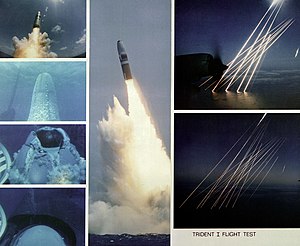
“The veil of secrecy surrounding nuclear spending is a desperate attempt by the UK Government to hide how outrageously unaffordable these weapons have become”
The Ferret, Rob Edwards, 27 Jul 23
Delivery of nuclear reactors to power a new fleet of Trident submarines on the Clyde has been branded as “unachievable” for the second year running by a UK Government watchdog.
The Infrastructure and Projects Authority (IPA) has given a £3.7 billion reactor-building project run by Rolls Royce for the Ministry of Defence (MoD) a “red” rating for 2022-23. The project was also assessed as red in 2021-22, as reported by The Ferret.
According to the IPA, red means that “successful delivery of the project appears to be unachievable”. This is because of “major issues” that do not appear to be “manageable or resolvable”.
The 2022-23 rating for another scheme crucial to renewing the Trident nuclear weapons system — a £1.9bn construction project at the Faslane and Coulport nuclear bases near Helensburgh — has been kept secret. In 2021-22 it was assessed as red.
The planned date for the final delivery to the Clyde of the new Dreadnought-class submarines, armed with Trident nuclear warheads, has also been classified as confidential by the MoD “for the purpose of safeguarding national security”.
The Scottish National Party (SNP) accused the UK Government of desperately trying to hide how “outrageously unaffordable” the Trident programme had become. The Scottish Greens described the programme as “a grotesque money pit”.
Campaigners criticised the MoD for “rewarding failure” by throwing money at nuclear projects, and for concealing the truth about the problems and delays. They warned of “everyday harms” from the risks of radiation leaks, as well as “catastrophic accidents”.
………………………………………The IPA’s latest annual report for 2022-23 assessed the feasibility of 52 military projects costing a total of £255.4bn. Eleven were related to the UK’s nuclear weapons programme and together cost more than £57bn, though the overall costs for three of them were kept secret.
The manufacture of nuclear reactors at a Rolls-Royce factory in Derby was the only project to be publicly rated as red. The reactors are to drive four new Trident-armed Dreadnought submarines due to start replacing existing Vanguard submarines at Faslane “in the early 2030s”.
…………………………………………………………….. Another previously mysterious project called Aurora was rated as amber. It is to make the plutonium components for new nuclear bombs at Aldermaston in Berkshire and is reckoned to cost between £2bn and £2.5bn.
The planned completion date for Aurora has been kept secret, along with the end dates for four other nuclear projects, including the Dreadnought and Astute submarine programmes. The dates were withheld under a freedom of information law exemption meant to protect national security.
2022-23 assessments for two other nuclear projects have also been classified as confidential so as not to prejudice international relations and the defence of the UK. One, Teutates, is a collaboration on nuclear weapon safety with France and the other is called “Clyde Infrastructure”.
The Clyde project is to build a series of new facilities at Faslane and Coulport to support nuclear submarine operations. It was rated as red by the IPA in 2021-22, and amber in 2020-21 and 2019-20.
The cost of the Clyde project has increased 19 per cent from £1.6bn to £1.9bn in the last year. According to the IPA, this is because of “challenges in delivering in a nuclear and operational environment”.
Trident ‘a moral abomination’
The SNP lambasted the UK Government for writing “blank cheques” to maintain the Trident programme. “The veil of secrecy surrounding nuclear spending is a desperate attempt by the UK Government to hide how outrageously unaffordable these weapons have become,” said the party’s Westminster defence spokesperson, Dave Doogan MP.
“The hollowing-out of the armed forces to pay for the ever-expanding nuclear vanity-weapons budget has led the UK to possess just 0.1 per cent of the world’s nuclear warheads — but at eye-watering cost while conventional capabilities atrophy.”
The Green MSP Ross Greer described nuclear weapons as a “moral abomination” that had no place in Scotland. “As these figures show, they are also a grotesque money pit that is swallowing up billions of pounds and giving huge handouts to international arms dealers,” he said.
“The Scottish Greens are proud to have secured the Scottish Government’s support for the international treaty banning nuclear weapons, already signed by 92 other countries.”
MoD ‘trying to hide’ Trident delays
The Nuclear Information Service, which researches and criticises nuclear weapons, pointed out that the MoD had been repeatedly given additional billions for its nuclear programme. “But there’s no sign that throwing money at the problem is having any effect beyond rewarding failure,” the group’s director, David Cullen, told The Ferret.
The Scottish Campaign for Nuclear Disarmament attacked the nuclear industry for its “big back catalogues” of cost escalations and time over-runs. “The nuclear propulsion of the nuclear weapon system only adds to the repertoire of everyday harms from radiation leaks and opportunities of catastrophic accidents,” said campaign chair, Lynn Jamieson……………………………………………………………….. https://theferret.scot/trident-nuclear-project-watchdog/
If Albanese’s such a buddy of Biden’s, why is Assange still in jail?

An initial refusal from Biden is only an invitation to ask a second time, in a firmer voice
Bob Carr Bob Carr was NSW’s longest-serving premier and is a former Australian foreign affairs minister. 27 jul 23, https://www.theage.com.au/politics/federal/if-albanese-s-such-a-buddy-of-biden-s-why-is-assange-still-in-jail-20230721-p5dqci.html
Julian Assange is in his fourth year in Britain’s Belmarsh prison. If the current appeal fails, he will be shackled and driven off in a prison van and flown across the Atlantic on a CIA aircraft for a long trial. He faces likely life imprisonment in a federal jail, perhaps in Oklahoma.
In 2021, then opposition leader Anthony Albanese said, “Enough is enough. I don’t have sympathy for many of his actions, but essentially, I can’t see what is served by keeping him incarcerated.”
As prime minister, Albanese said he had already made his position clear to the Biden administration. “We are working through diplomatic channels,” he said, “but we’re making very clear what our position is on Mr Assange’s case.”
So we can assume that at one of his seven meetings with US President Joe Biden he has raised Assange, even on the fringes of the Quad or at one of two NATO summits. Or perhaps in San Diego when they launched AUKUS, under which Australia will make the largest transfer of wealth ever made outside this country. This $368 billion is a whopping subsidy to American naval shipyards and to the troubled, chronically tardy British naval builder BAE Systems.
But it clinches Australia’s reputation as a deliriously loyal, entirely gullible US ally. It gives President Biden the justification for telling Republicans or Clinton loyalists in his own party that he had no alternative but to end the pursuit of Assange. “Those Aussies insisted on it. They’re doing us all these favours … we can’t say no.”
In addition to the grandiose AUKUS deal, Biden could list other decisions by the Albanese government that render Australia a military stronghold to help US regional dominance while materially weakening our own security.

Candid words, but they aren’t mine. They belong to Sam Roggeveen of the Lowy Institute in this month’s edition of Australian Foreign Affairs. In a seminally important piece of analysis, Roggeveen nominated Australia’s decision to fully service six American B52 bombers at RAAF Tindal, in the Northern Territory, as belonging on that list. It is assumed these are aimed at China’s nuclear infrastructure such as missile silos. “It is hard to overstate the sensitivity involved in threatening another nation’s nuclear forces,” Roggeveen writes.
In his article, he reminds us we’ve also agreed to host four US nuclear subs on our west coast at something to be called “Submarine Rotational Force-West”. Their mission would be destroying Chinese warships or enforcing a blockade of Chinese ports.
The east coast submarine base, planned most likely for Port Kembla, will also directly support US military operations. It’s another nuclear target. As Roggeveen says, all these locations raise Australia’s profile in the eyes of the Chinese military planners designing their response in the event of war with the US.
In this context, I can’t believe the US president is not on the point of agreeing to the prime minister’s request to drop charges against Assange.
Apart from the titanic strategic favours, two killer facts help our case. One, former US president Barack Obama commuted the sentence of Chelsea Manning, who had supplied Assange with the information he published. The Yank is free, the Aussie still pursued.
Two, the crimes Manning and Assange exposed involved US troops on a helicopter gunning down unarmed civilians in Baghdad. They are directly comparable to the alleged Australian battlefield murders in Afghanistan we are currently prosecuting.
An initial refusal from Biden is only an invitation to ask a second time, in a firmer voice.
It’s possible to imagine an Australian PM – Fraser, Hawke, Keating, Howard or Rudd – being appropriately forceful with a US president. There would be an inflection point in their exchange – prime minister to president – when the glint-eyed Australian says, “Mr President, it’s gone on too long. Both sides of our politics are united. Your old boss commuted Chelsea Manning, an American, in the same case.”
A pause. A beat. Then the killer summation. “Mr President, I speak for Australia.”
Surely this counts.
I don’t believe the president can shake his head and say, “nope”, given all we have gifted – the potent symbolism of B52s, nuclear subs and bases on the east and west coast. It would look like we have sunk into the role of US territory, as much a dependency as Guam or Puerto Rico.
US counter-intelligence conceded during court proceedings there is no evidence of a life being lost because of Assange’s revelations. Our Defence Department reached the same view.
If Assange walks out the gates of Belmarsh into the arms of his wife and children it will show we are worth a crumb or two off the table of the imperium. If it’s a van to the airport, then making ourselves a more likely target has conferred no standing at all. We are a client state, almost officially.
CIA-Linked Security Company Targeted Former Ecuador President Who Granted Assange Asylum
By Kevin Gosztola / The Dissenter 23 Jul 23
In addition to targeting WikiLeaks founder Julian Assange, a CIA-linked private security company based in Spain allegedly spied on former Ecuador president Rafael Correa.
Spanish newspaper El País reported that UC Global director David Morales instructed his employees to collect information from Correa’s 2018 meetings with Latin American leaders that included the “former presidents of Argentina, Brazil and Uruguay—Cristina Fernández de Kirchner, Luiz Inácio Lula da Silva, Dilma Rousseff, and José Mujica.”……………………………………………………………………..
News media that partnered with Assange and WikiLeaks on the publication of documents at issue in the U.S. case—the New York Times, the Guardian, Der Spiegel, and Le Monde—have ignored what has been learned about UC Global and the CIA.
But the uncovered evidence is important and relevant to the U.S. Justice Department’s unprecedented effort to pursue an Espionage Act trial against a journalist and publisher.
Europe’s black hole: How much of the more than $185 billion given by the West to Ukraine has been stolen?

Rt.com By George Trenin, 20 Jul 23
The fate of huge amounts of aid sent to the country is uncertain amid endemic corruption and a lack of accountability.
As a result of last week’s NATO summit in Vilnius, the US-led military bloc promised Ukraine fresh tranches of financial and military aid. This was despite the fact that by the beginning of the summer, Kiev had already received a total of €165 billion ($185.6 billion) from Western countries. Meanwhile, as the spending increases, the number of US and EU citizens who are willing to sacrifice their own comfort for the sake of Kiev appears to be steadily decreasing.
One of the reasons for this is corruption in Ukraine, which – despite some lofty promises – seems to be as bad now as it was before the Western-backed 2014 ‘Maidan’ coup. If not worse.
Moral compensation
The NATO summit, despite Ukraine’s hopes, did not bring it a long-awaited timeframe for membership. Instead, Western leaders announced new military aid packages for Kiev.
According to the French newspaper Le Monde, French President Emmanuel Macron promised to give Ukraine a “substantial number” of SCALP missiles that can hit targets at a distance of 250 kilometers. According to France24, each costs €850,000.
Berlin announced a package amounting to €700 million. Germany plans to supply Ukraine with launchers for the Patriot missile defense system, Marder-type infantry fighting vehicles, UAVs, Leopard 1 A5 tanks, and artillery shells. However, for Berlin, this is not even close to a record gift value. On May 21, the German Foreign Ministry announced the transfer of military aid to Ukraine worth €2.7 billion.
On July 7, US Under Secretary of Defense for Policy Colin Kahl spoke about a new package of aid from the US which includes cluster munitions – which are banned in 120 countries. The cost was $800 million.
This is the 42nd delivery of aid that Ukraine has received from the US in the past year and a half. Since the beginning of Russia’s offensive, the US Congress has approved military and economic assistance to Ukraine amounting to over $70 billion – and that’s only counting direct expenses.
According to July data from the Kiel Institute (which tracks the volume of aid allocated to Ukraine), total direct subvention provided by the US and its allies in the period from February 24, 2022 to May 31, 2023 topped €165 billion.
The rate at which new tranches are allocated increases every month. For example, at the end of April, the total amount of aid was €15 billion less than it is now – according to NATO Secretary General Jens Stoltenberg, it was then €150 billion. ……………………………………………………………………………..
the risk of corruption exists not only within state borders but that fraud can also occur when concluding contracts in the US. Furthermore, the theft of weapons or other aid may happen as it travels to the war zone through Europe.
Another official involved in criminal investigations at the Pentagon also told Defense One that his department is “concerned about the potential diversion or legal export, or theft for that matter, of the goods.”
Many American businesses do not trust the Ukrainian authorities either and believe that aid is being stolen. According to US Secretary of Commerce Gina Raimondo, private businesses doubt that the funds allocated to Ukraine for reconstruction will be safe from corruption.
nternal games
The corruption issue is acknowledged in Ukraine as well. This spring, the ex-adviser of the office of the president of Ukraine, Aleksey Arestovich, said on his YouTube channel that his old boss, Vladimir Zelensky, has not been able to deal with corruption in Ukraine.
“Ukraine needs only one thing… To have someone come to power who won’t steal. Someone who won’t do it himself and won’t allow others to do so. Unfortunately, so far we haven’t been lucky,” he said.
…………………………………………….. “The Ukrainian president and many in his entourage have been skimming untold millions from the American dollars earmarked for diesel fuel payments. One estimate by analysts from the Central Intelligence Agency put the embezzled funds at $400 million last year, at least,” – American investigative journalist Seymour Hersh stated that Ukrainian President Vladimir Zelensky and his entourage illegally appropriated at least $400 million from funds that were allocated to Kiev for the purchase of diesel fuel.
…………….. Moreover, Hersh says that CIA Director William Burns was displeased with Zelensky because of the possible theft of Western aid, since “he was taking a larger share of the skim money than was going to the generals.” ……………… more https://www.rt.com/russia/579897-europes-black-hole-ukraine/
Corruption In Ukraine & The U.S. Mutually Rewarding
The Pentagon failed its 5th consecutive audit last year, appearing to lose track of 61% of its $3.5 trillion in assets.
Substack, LISA SAVAGE, JUL 20, 2023
“…………………………………………………………………………………………. Ukraine’s leaders are so over the top that it’s becoming impossible to ignore. Add in the fact that they have been enriched by U.S. taxpayers more or less directly despite crumbling infrastructure, catastrophic homelessness, apartheid healthcare, and a host of other problems that the U.S. could address with adequate funding.
From RT (whose editor-in-chief, Margarita Simonyan, just survived a second assassination attempt):
On July 7, US Under Secretary of Defense for Policy Colin Kahl spoke about a new package of aid from the US which includes cluster munitions – which are banned in 120 countries. The cost was $800 million.This is the 42nd delivery of aid that Ukraine has received from the US in the past year and a half.[emphasis mine] Since the beginning of Russia’s offensive, the US Congress has approved military and economic assistance to Ukraine amounting to over $70 billion – and that’s only counting direct expenses..
“Ukraine needs only one thing… To have someone come to power who won’t steal. Someone who won’t do it himself and won’t allow others to do so. Unfortunately, so far we haven’t been lucky,” [Aleksey Arestovich, former advisor to President Zelensky] said.
Ok, so Arestovich has a motive for trashing the government that used to include him. How about Pulitzer Prize-winning U.S. investigative journalist Seymour Hersh? Hersh does not approve of Russia’s entry into the war but he nonetheless published a piece on rampant corruption in Ukraine, “Trading with the Enemy,” back in April.
Zelensky has been buying fuel from Russia, the country with which it, and Washington, are at war, and the Ukrainian president and many in his entourage have been skimming untold millions from the American dollars earmarked for diesel fuel payments. One estimate by analysts from the Central Intelligence Agency put the embezzled funds at $400 million last year, at least; another expert compared the level of corruption in Kiev as approaching that of the Afghan war………………………………
Then there is President Zelensky, elected on pledges to end corruption and, incidentally, the war on the Donbas.
Pre-2022, i.e. when corporate media headlines about Ukraine did a 180, even The Guardian found he was part of the problem and not likely to be part of the solution.
Neither is the U.S. government likely to be part of the solution. The Pentagon failed its fifth consecutive audit last year, appearing to lose track of 61% of its $3.5 trillion in assets……………………….. more https://went2thebridge.substack.com/p/corruption-in-ukraine-and-the-us?utm_source=post-email-title&publication_id=1580975&post_id=135301485&isFreemail=true&utm_medium=email_medium=email
A Scott Ritter Investigation: Agent Zelensky – Part 2
In the intelligence business, every agent is assigned tasks by his or her handlers. In the case of Agent Zelensky, I’ve identified ten obligations that define his relationship with his foreign intelligence masters. Once you’ve examined each of these, it becomes clear why Zelensky the comedian said one thing, and Zelensky the President did another. What are the true reasons behind the current situation in Ukraine today? What kind of operation has the CIA been running in Ukraine over the course of many years? You will find the answers to these and other questions in Part 2 of my investigative documentary film, “Agent Zelensky.” Click here to watch Part 1.
Julian Assange Is “Dangerously Close” to Extradition for Revealing US War Crimes

This is the first time a publisher has been charged under the Espionage Act for disclosing government secrets.
By Marjorie Cohn , TRUTHOUT, July 15, 2023 https://truthout.org/articles/julian-assange-is-dangerously-close-to-extradition-for-revealing-us-war-crimes/?utm_source=Truthout&utm_campaign=75553d1810-EMAIL_CAMPAIGN_3_20_2023_13_41_COPY_01&utm_medium=email&utm_term=0_bbb541a1db-75553d1810-650192793&mc_cid=75553d1810&mc_eid=73e1cd43d0
or nearly five years, publisher and journalist Julian Assange has fought extradition to the United States where he faces 175 years in prison for revealing evidence of U.S. war crimes.
Instead of protecting freedom of the press, to which he pledged allegiance at the White House Correspondents’ Dinner in April, Joe Biden is continuing Donald Trump’s prosecution of Assange under the infamous Espionage Act. Journalist James Ball is one of at least four journalists that the Department of Justice (DOJ) and FBI are pressuring to cooperate with the prosecution of Assange, Ball wrote in Rolling Stone.
Biden’s DOJ is apparently attempting to bolster its prosecution of Assange in the event he is extradited to the United States. Ball said that all three of the other journalists being pressured to provide a statement told him they have no intention of helping the prosecution.
Assange, who is in frail physical and mental health after years of confinement, is contesting the U.K. High Court’s rejection of his appeal. If he loses in the U.K., Assange’s last resort is to the European Court of Human Rights to litigate several violations of the European Convention on Human Rights (ECHR).
But even if the European court issues an injunction against extradition, the U.K. courts may not honor that ruling. Assange is “dangerously close” to extradition, according to his family and observers.
“Julian Assange and Wikileaks were responsible for the exposure of criminality on the part of the U.S. Government on a massive and unprecedented scale,” including “torture, war crimes and atrocities on civilians,” Assange’s Perfected Grounds of Appeal states.
“Assange’s work, dedicated to ensuring public accountability by exposing global human rights abuses, and facilitating the investigation of and prosecution for state criminality, has contributed to the saving of countless lives, stopped human rights abuses in their tracks, and brought down despotic and autocratic regimes,” his appeal papers say. Human rights defenders who expose state crimes suffer “political retaliation and persecution from the regimes whose criminality they expose. Julian Assange is no exception.”
The War Crimes That Assange and WikiLeaks Exposed
In 2010, U.S. Army intelligence analyst Chelsea Manning provided WikiLeaks with documents containing evidence of U.S. war crimes. They included the “Iraq War Logs,” which were 400,000 field reports describing 15,000 unreported deaths of Iraqi civilians, as well as systematic rape, torture and murder after U.S. forces “handed over detainees to a notorious Iraqi torture squad.” They contained the “Afghan War Diary,” 90,000 reports of more civilian casualties by coalition forces than the U.S. military had reported. And they also included the “Guantánamo Files” — 779 secret reports with evidence that 150 innocent people had been held at Guantánamo Bay for years, and 800 men and boys had been tortured and abused, which violated the Geneva Conventions and the Convention Against Torture and Other Cruel, Inhuman or Degrading Treatment or Punishment.
Manning also furnished WikiLeaks with the notorious 2007 “Collateral Murder Video,” which shows a U.S. Army Apache attack helicopter targeting and killing 11 unarmed civilians, including two Reuters journalists, as well as a man who came to rescue the wounded. Two children were injured. The video reveals evidence of three violations of the Geneva Conventions and the U.S. Army Field Manual.
This is the first time a publisher has been prosecuted under the Espionage Act for disclosing government secrets. In December 2022, The New York Times, The Guardian, Le Monde, El País and Der Spiegel signed a joint open letter calling on the U.S. government to dismiss the Espionage Act charges against Assange for publishing classified military and diplomatic secrets. “Publishing is not a crime,” the letter says. “This indictment sets a dangerous precedent, and threatens to undermine America’s First Amendment and the freedom of the press.”
Extradition Initially Denied on Mental Health Grounds
On January 4, 2021, U.K. District Judge Vanessa Baraitser ruled that Assange could not be extradited to the United States because of the repressive prison conditions in the U.S. and the threat that imprisonment would pose to his mental health, including the likely risk of suicide. The Biden administration’s DOJ appealed.
The U.K. High Court reversed Baraitser’s ruling after the DOJ presented questionable “assurances ” that Assange would be held in humane conditions if extradited.
Assange asked the High Court to consider his other grounds of appeal which Baraitser had rejected when she denied extradition for mental health reasons.
On June 8, 2023, British Judge Sir Jonathan Swift rejected Assange’s appeal in a cursory three-page denial with almost no analysis of the issues raised in Assange’s 150-page submission.
Assange appealed Swift’s ruling to the U.K. High Court and his appeal is pending.
The U.K.-U.S. Extradition Treaty Prohibits Extradition for Political Offences
The Espionage Act charges in the indictment include the following:
- Conspiracy to obtain, receive and disclose national defense information (Count 1);
- Unauthorized obtaining and receiving of national defense information (Counts 3 to 9); and
- Unauthorized disclosure of national defense information (Counts 10 to 18).
In addition, Assange is charged with “conspiracy to commit computer intrusion” with intent to “facilitate Manning’s acquisition and transmission of classified information related to the national defence of the United States.”
Article 4(1) of the U.K.-U.S. Extradition Treaty provides that “extradition shall not be granted if the offence for which extradition is requested is a political offence.” In their appeal, Assange’s lawyers note that espionage is a “pure political offence” as it is an offence against the state.
As Assange’s legal team wrote, “The gravamen (and defining legal characteristic) of each of the charges is thus an alleged intention to obtain or disclose US state secrets in a manner that was damaging to the security of the US state,” which makes them political offences.
In his denial, Swift wrote that the 2003 Extradition Act trumps the binding treaty between the U.S. and the U.K. The act doesn’t include the “political offences” bar to extradition.
The Extradition Request Was Made for Ulterior Political Motives and Not in Good Faith
Article 4(3) of the Extradition Treaty forbids extradition if the request was “politically motivated.”
The legally unprecedented and selective nature of the prosecution in focusing on leaked national security information speaks to the political character of the prosecution and request for extradition, the appeal says.
Assange’s lawyers wrote that “this prosecution is motivated by matters other than the proper and usual pursuit of criminal justice. It is motivated instead by a concerted intent to destroy or inhibit the publishers of evidence of state criminal ability, and thereby put a stop to the process of investigating, prosecuting and preventing such international crimes in the future.”
The appeal papers point out that Assange is being prosecuted for exposing “wholescale abuse and war crimes” committed by the United States. If instead he had “exposed war crimes or crimes against humanity committed by a state such as the Russian Federation,” the defense lawyers write, “there can be no doubt that his prosecution for such revelations would be regarded as both a political offence (within the Treaty) and an impermissible prosecution motivated by a desire to punish him for his political opinions/acts.”
“While the leakers of such materials have been prosecuted albeit selectively, no prosecution for the act of obtaining or publishing state secrets has ever occurred,” the appeal says.
That is “[b]ecause the First Amendment protects the free press and it is vital that the press expose rather than ignore … not because journalists are somehow privileged but because the citizenry has a right to know what is going on,” Mark Feldstein, journalism professor at University of Maryland, testified at Assange’s extradition hearing.
Extradition Would Violate Freedom of Expression Guaranteed by the ECHR
Article 10 of the ECHR protects freedom of expression.
Columbia Law Professor Jameel Jaffer testified that the indictment is focused “almost entirely” on things that national security journalists do “routinely and as a necessary part of their work,” including “cultivating sources, communicating with them confidentially, soliciting information from them, protecting their identities from disclosure, and publishing classified information.”
The conviction of Assange would chill journalists from fulfilling their function as watchdog for the public. The appeal quotes the 1996 case of Goodwin v. the United Kingdom:
Press freedom assumes even greater importance in circumstances in which State activities and decisions escape democratic or judicial scrutiny on account of their confidential or secret nature. The conviction of a journalist for disclosing information considered to be confidential or secret may discourage those working in the media from informing the public on matters of public interest. As a result, the press may no longer be able to play its vital role as “public watchdog” and the ability of the press to provide accurate and reliable information may be adversely affected.
There Is New Evidence Not Considered by the District Judge
The ECHR protects the right to life (Article 2) and forbids torture and cruel, inhuman or degrading treatment (Article 3). The appeal argues that there is a real risk of violation of Article 2 and/or Article 3 if Assange is extradited.
In September 2021, a Yahoo! News report revealed that while Assange was living in the Ecuadorian embassy in London under a grant of asylum, senior CIA and Trump administration officials asked for “sketches” and “options” for assassinating him. Trump himself “asked whether the CIA could assassinate Assange and provide him ‘options’ for how to do so.”
“If these state agencies were prepared to go to these lengths whilst he was under the protection of an embassy and located in the UK, there must be a real risk of similar extra-judicial measures or reprisals if he is extradited to the US,” the appeal says.
The High Court’s ruling on Assange’s appeal could be issued any day.
The War on Journalism: the Case of Julian Assange
Real Change Is Impossible While Our World Is Shrouded In Secrecy, Caitlin Johnstone, 15 Jul 23
I saw a video clip of Julian Assange speaking in London in 2010 where he made an important observation while explaining the philosophy behind his work with WikiLeaks. He said that all our political theories are to some extent “bankrupt” in our current situation, because our institutions are so shrouded in secrecy that we can’t even know what’s really going on in the world.
“We can all write about our political issues, we can all push for particular things we believe in, we can all have particular brands of politics, but I say actually it’s all bankrupt,” Assange said. “And the reason it’s all bankrupt, and all current political theories are bankrupt and particular lines of political thought, is because actually we don’t know what the hell is going on. And until we know the basic structures of our institutions — how they operate in practice, these titanic organizations, how they behave inside, not just through stories but through vast amounts of internal documentations — until we know that, how can we possibly make a diagnosis? How can we set the direction to go until we know where we are? We don’t even have a map of where we are. So our first task is to build up a sort of intellectual heritage that describes where we are. And once we know where we are, then we have a hope of setting course for a different direction. Until then, I think all political theories — to greater and lesser extents of course — are bankrupt.”
……………………………………………………………………….The fact that all the most important aspects of our civilization’s operation are hidden, manipulated and obfuscated by the powerful makes a joke of the very idea of democracy, because how can people know what government policies to vote for if they can’t even clearly see those policies? How can people know what to vote for when everything about their understanding of the world is being actively distorted for the benefit of the powerful?
We can’t form solid political theories while everything’s hidden from us, and even if we could we’re unable to organize any means to put those theories into action for the same reason. The fact that the nature of our world is being so aggressively obfuscated from our view keeps us from knowing exactly what needs to change, and keeps us from effecting change.
For this reason I often argue that our most urgent priority as a civilization is rolling back all the secrecy and obfuscation, because until that happens we’ll never get change, and we’ll never know what should be changed. I have my ideological preferences of course, but I’m just one person taking their best guess at what needs to happen in a world where so many of the lights are switched off. Not until our society can actually see the world as it really is will we have the ability to begin, as Assange says, “setting course for a different direction.”
And those who benefit from our current course are lucidly aware of this. That’s why we’re not allowed to see what they’re up to behind the veils of secrecy, that’s why our entire civilization is saturated in nonstop propaganda, that’s why the internet is being increasingly censored and manipulated, and that’s why Julian Assange is in prison.
We can only begin fighting this from where we’re at. None of us individually have the power to rip the veil of secrecy away from the empire, but we do each individually have the ability to call out its lies where they can be seen and help wake people up to the fact that we’re being deceived and manipulated. Every pair of eyelids you help open is one more pair of eyes looking around helping to get an accurate picture of what’s going on, and one more pair of eyes helping to open the eyes of others.
Once we have enough open eyes, we will have the potential for a real course of action. https://caityjohnstone.medium.com/real-change-is-impossible-while-our-world-is-shrouded-in-secrecy-89ea0126821
China says Japanese govt’s fund subsidizing local fishing industry ‘hush money’
The Chinese Embassy in Japan said the fund the Japanese government has set aside to subsidize the fishing industry in Fukushima area is “hush money,” which shows the Fukushima discharge plan is really “problematic.”
It’s reported that Japan has set up a special fund of 80 billion yen (around $581 million) to subsidize the fishing industry in Fukushima, which will be damaged by the discharge of nuclear-contaminated water.
It must be pointed out that the Japanese side’s move only compensates the affected domestic industries and ignores the safety and interests of its neighbors and the people of Pacific island countries, said a spokesperson for the Chinese Embassy in Japan, according to an announcement on the embassy’s website on Thursday.
“This will surely arouse stronger doubts and condemnation from the international community,” said the embassy spokesperson.
The Japanese side should immediately halt the Fukushima discharge plan, consult with all stakeholders and the international community, dispose of nuclear-contaminated water in a scientific, transparent and safe manner, and stop transferring the risk of nuclear pollution to all mankind, the embassy spokesperson said.
FBI colluded with Ukraine in social media crackdown – lawmakers
https://www.rt.com/news/579523-fbi-ukraine-meta-twitter/ 11 July 23
The bureau failed to properly vet information provided by Kiev, the US House Judiciary Committee says
The FBI cooperated with Ukraine’s Security Service (SBU) to clamp down on social media accounts disseminating alleged “Russian disinformation,” but ended up flagging pages run by the US State Department and American journalists, a report by the House Judiciary Committee has revealed.
Released on Monday, the report accused the FBI of not properly vetting lists of accounts provided to it by the SBU before sending them to the likes of Meta, Google, and Twitter.
As a result, the two agencies “flagged for social media companies the authentic accounts of Americans, including a verified US State Department account and those belonging to American journalists,” and requested that those pages be deleted, the document read.
On some occasions, the FBI followed up to ensure that “these accounts were taken down,” according to the report, which was based on documents subpoenaed from Meta and Alphabet in February.
In one of the SBU’s lists forwarded by the FBI to Meta, the official Russian-language Instagram account of the US State Department was described as “distribut[ing] content that promotes war, inaccurately reflects events in Ukraine, justifies Russian war crimes in Ukraine in violation of international law,” the report stated.
CNN pointed out that Meta, which owns Instagram and Facebook, apparently did not comply with the request to delete the State Department page.
Another moderation request filed to Facebook by the US domestic security agency included a roster of 5,165 accounts, the House Judiciary Committee said.
The report cited an email by a senior Twitter employee who indicated to the FBI that “a few accounts of American and Canadian journalists” were on one of the lists sent to the company by the agency.
Alphabet platforms Google and YouTube were also approached about censoring alleged pro-Russian accounts. A high-ranking member of Google’s cybersecurity team told the authors of the report that the company had been “deluged with various requests” for the removal of content, mainly from “the Ukrainian government, other Eastern European governments, the European Union, and the European Commission.”
The House Judiciary Committee suggested that the FBI had “violated the First Amendment rights of Americans and potentially undermined our national security” through its partnership with the SBU, claiming that the latter had been “infiltrated by Russian-aligned actors.”
The author of the paper noted the purge within the SBU by Ukrainian President Vladimir Zelensky last summer, which saw the agency’s head sacked and hundreds of criminal cases launched against employees on treason charges.
The report was released ahead of FBI Director Christopher Wray’s testimony before the House Judiciary Committee, which is scheduled for Wednesday.
A Judiciary Committee aide told CNN that the Republicans on the panel are planning to question Wray about the content of the paper and use it to claim that the FBI interferes in free speech.
1 This Month

of the week – Shut Down Drone Warfare!


Tell the Ukrainian Government to Drop Prosecution of Peace Activist Yurii Sheliazhenko

Petition to revoke the licensing of the Near Surface Nuclear Disposal Facility (NSDF) at Chalk River. https://www.ourcommons.ca/petitions/en/Petition/Details?Petition=e-7247
To see nuclear-related stories in greater depth and intensity – go to https://nuclearinformation.wordpress.com
-
Archives
- April 2026 (7)
- March 2026 (251)
- February 2026 (268)
- January 2026 (308)
- December 2025 (358)
- November 2025 (359)
- October 2025 (376)
- September 2025 (257)
- August 2025 (319)
- July 2025 (230)
- June 2025 (348)
- May 2025 (261)
-
Categories
- 1
- 1 NUCLEAR ISSUES
- business and costs
- climate change
- culture and arts
- ENERGY
- environment
- health
- history
- indigenous issues
- Legal
- marketing of nuclear
- media
- opposition to nuclear
- PERSONAL STORIES
- politics
- politics international
- Religion and ethics
- safety
- secrets,lies and civil liberties
- spinbuster
- technology
- Uranium
- wastes
- weapons and war
- Women
- 2 WORLD
- ACTION
- AFRICA
- Atrocities
- AUSTRALIA
- Christina's notes
- Christina's themes
- culture and arts
- Events
- Fuk 2022
- Fuk 2023
- Fukushima 2017
- Fukushima 2018
- fukushima 2019
- Fukushima 2020
- Fukushima 2021
- general
- global warming
- Humour (God we need it)
- Nuclear
- RARE EARTHS
- Reference
- resources – print
- Resources -audiovicual
- Weekly Newsletter
- World
- World Nuclear
- YouTube
-
RSS
Entries RSS
Comments RSS
 nuclear-news