MOX nuclear fuel – the secret and so dangerous ingredient in the Fukushima No 4 nuclear cooling pond
The un-irradiated rods inside the Unit 4 spent-fuel pool are, in all probability, made of a new type of MOX fuel containing highly enriched plutonium.
 Why TEPCO is Risking the Removal of Fukushima Fuel Rods. The Dangers of Uncontrolled Global Nuclear Radiation, Global Research, 24 Nov 13 By Yoichi Shimatsu
“…….Mystery of MOX super-fuel A Mainichi Shimbun editorial mentions in passing that the Reactor 4 pool contains 202 fresh fuel assemblies.(3) The presence of new fuel rods was confirmed in the TEPCO press release, which described the first assembly lifted into the transfer cask as an “un-irradiated fuel rod.” Why were new  rods being stored inside a spent-fuel pool, which is designed to hold expended rods? What threat of criticality do these fresh rods pose if the steel frame collapses or if crane operators drop one by accident onto other assemblies, as opposed to a spent rod?
Against the official silence and disinformation, a few whistleblowers have come forward with clues to answer these questions. Former GE nuclear worker Kei Sugaoka disclosed in a video interview that a joint team from Hitachi and General Electric was inside Reactor 4 at the time of the March 11, 2011 earthquake. By that fateful afternoon, the GE contractors were finishing the job of installing a new shroud, the heat-resistant metal shield lining the reactor interior.(4)
TEPCO inadvertently admitted to the presence of foreign contractors at Fukushima No.1 up until March 12, 2012, when the management ordered their evacuation in event of a massive explosion during the rapid meltdown of Reactor 2. So far, leaks indicate the presence of the GE team and of a Israeli nuclear security team with Magna BSP, a company based in Dimona.(5)
Another break came in April 2012, when a Japanese humor magazine published a brief interview of a Fukushima worker who disclosed that radioactive pieces of a broken shroud were left inside a device-storage pool at rooftop level behind the Reactor 4 spent-fuel pool.(6) This undoubtedly is the used shroud removed by the GE-H workers in February-March 2011.
A curious point here is that the previous shroud had been in use for only 15 months. Why would TEPCO and the Japanese government expend an enormous sum on a new lining when the existing one was still good for many years of service?
Obviously, the installation of a new shroud was not a mere replacement of a worn predecessor. It was an upgrade. The refit of Reactor 4 was, therefore, similar to the 2010 conversion of Reactor 3 to pluthermal or MOX fuel. The same model of GE Mark 1 reactor was being revamped to burn MOX fuel (mixed oxide of uranium and plutonium).
The un-irradiated rods inside the Unit 4 spent-fuel pool are, in all probability, made of a new type of MOX fuel containing highly enriched plutonium. If the frame collapses, triggering fire or explosion inside the spent-fuel pool, the plutonium would pulse powerful neutron bursts that may well possibly ignite distant nuclear power plants, starting with the Fukushima No.2 plant, 10 kilometers to the south…..
The upgrade of the Reactor 4 shroud may well have involved the test-fitting of some MOX rods, which abandoned on the floor next to the reactor when the tsunami reached shore. In other words, in early March 2011 crane operators completely filled space inside the spent-fuel pool with new MOX rods and then simply left casks of assemblies on the roof and lowered more into the basement. That is the simplest explanation for the damage to the structural integrity of the reactor building. GE is not about to disclose its role in this disaster………. http://www.globalresearch.ca/why-tepco-is-risking-the-removal-of-fukushima-fuel-rods-the-dangers-of-uncontrolled-global-nuclear-radiation/5359188…..http://www.globalresearch.ca/why-tepco-is-risking-the-removal-of-fukushima-fuel-rods-the-dangers-of-uncontrolled-global-nuclear-radiation/535918
The censorship of the true effects of depleted uranium
 A factor rarely mentioned is the potential effects of DU on children yet to be born to U.S. Iraq war veterans, who served in places like Fallujah, Basra and Najaf.
HORRIFIC EFFECTS OF DEPLETED URANIUM STILL CENSORED BY U.S. MILITARY, MEDIA HTTPS://AMERICANFREEPRESS.NET/?P=13599 NOVEMBER 03, 2013 BY RICHARD WALKER In a move seen by medical experts worldwide as an effort to suppress the truth about the horrors of depleted uranium (DU) munitions, the United Nations (UN) health arm, the World Health Organization (WHO), along with the Ministry of Health of Iraq (MoH) on September 13, 2013, produced a report that was not even authored, meaning no experts attached their names to it, on birth defects among Iraqi babies in which DU was not even considered a factor.
The report was published on the WHO website at a time when birth defects among Iraqi babies have been rising steadily, especially in areas like Najaf and Fallujah, where DU shells were used indiscriminately, killing and injuring large numbers of civilians. Some estimates for the 2003 death toll in Iraq put the civilian casualties in Fallujah as high as 75% to 80%. Continue reading
Hanford cracks down on safety whistleblowers
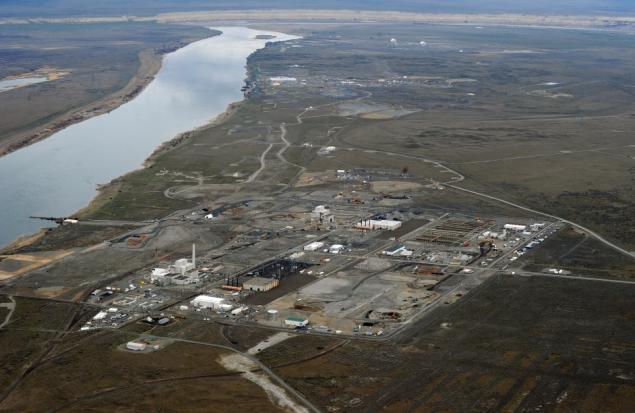 Hanford nuclear site clean-up: The mess gets worse NBC News Investigations, By Rebecca LaFlure, The Center for Public Integrity 18 Nov 13 “……….In addition to the cost increases, construction delays and critical reports, employees and independent agencies have said DOE and contractor officials overseeing the project created a workplace climate that discourages employees from raising technical and safety concerns.
The most prominent of the plant’s whistleblowers is Walter Tamosaitis, the project’s former research and technical manager for URS, the prime subcontractor to Bechtel.
Tamosaitis’s troubles began after a 2010 meeting with Bechtel and URS managers, at which he turned over a list of technical issues that he said could affect plant safety, including continuing uncertainties about how the wastes should be kept mixed to stop them from settling into a critical mass and causing a chain reaction. If that happened, the resulting explosion would release deadly radiation.
Two days later, on July 2, URS, acting under orders from a Bechtel executive, pulled him from the project, according to a federal court complaint Tamosaitis filed in November 2011. He was reassigned to a basement office and stripped of supervisory responsibilities…….
Other technical managers have also alleged retaliation for expressing safety concerns. Donna Busche, a URS employee and the plant’s manager of environmental and nuclear safety, filed a lawsuit against Bechtel and URS in February claiming the companies treated her as a “roadblock to meeting deadlines.” URS and Bechtel officials excluded her from meetings and belittled her authority, she alleged. The companies deny it.
Busche said her troubles escalated after she questioned DOE’s judgment at an Oct. 7, 2010, safety board hearing about how much radiation might escape in the event of an accident at the plant. Board officials had expressed concern that DOE’s calculations may underestimate the threat, but Ines Triay, then DOE’s assistant secretary for environmental management, defended the calculations…….http://investigations.nbcnews.com/_news/2013/11/18/21482804-hanford-nuclear-site-clean-up-the-mess-gets-worse?lite
Japan’s new legislation could make it a crime to reveal truth about Fukushima conditions
 Censorship and Dispossession in Japan http://majiasblog.blogspot.jp/2013/11/censorship-and-dispossession-in-japan.html Developments in Japan are concerning: First, according to The Asahi Shimbun, Japan’s Nuclear Regulatory Authority (NRA) is trying to accelerate returning people to
  Fukushima prefecture by measuring citizen exposure levels using individual dosimeters instead of official air sampling. The Asahi notes dosimeters have much lower readings than official air sampling and that the NRA’s draft policy has no discussion of health impacts.
The proposed exposure level for returning evacuees is 20 millisieverts based on dosimeter readings alone (no inclusion of estimates of exposure from contaminated food, water, and bio-accumulation).
Second, anti-nuclear groups in Japan have been subject to denial of service attacks since September. I had heard rumors this was occurring. I’m grateful The Asahi Shimbun reported it.
I am reminded that Japan is trying to pass new whistle-blower laws that criminally prosecute any whistle-blower who reveals corporate or government secrets (seehttp://rt.com/news/japan-state-secrets-law-712/)
The new whistleblower law and the concerted attacks against anti-nuclear groups together indicate pretty clearly that elements of the Japanese state/industry are reacting fascistically to deteriorating conditions at Daiichi.
That fascistic mindset is what is driving efforts to push evacuees back into very contaminated areas. Daiichi hasn’t been stable since March 9 2011 and cold shutdown is a myth spun by TEPCO and the global nuclear mafia. In truth, the Daiichi site is getting hotter, rather than cooling, and the NRA is trying to push people back, while new legislation could make it a crime to reveal real plant conditions, and anti-nuclear groups are being censored through denial of service attacks.
You should be worried because your nation could be next.
Japan’s Designated Secrets Bill’ threatens journalists
 Foreign Correspondents’ Club calls for abolition of ‘secrets protection’ bill November 12, 2013 http://www.japan-press.co.jp/modules/news/index.php?id=6621
The statement expresses deep concern that provisions of the bill along with ruling bloc lawmakers’ remarks in regard to the bill indicate the potential of prosecution and imprisonment of journalists.
The statement points out that to uncover secrets about hidden activities of government and politicians and informing the public of such secrets is the very essence of investigative journalism. It stresses, “Such journalism is not a crime, but rather a crucial part of the checks-and-balances that go hand-in-hand with democracy.”
Nevertheless, the bill hints that the freedom of the press is “no longer a constitutional right, but merely something for which government officials must show ‘sufficient consideration’,” the statement states.
Criticizing the bill banning news gathering with the use of “inappropriate methods”, the statement states, “Such vague language could be, in effect, a license for government officials to prosecute journalists almost as they please.”
The statement urges the government to abolish the bill, or “to redraft it so substantially that it ceases to pose a threat to both journalism and to the democratic future of the Japanese nation.” On the same day, eight well-known TV journalists at a press conference at the Nippon Press Center building said that the government should abandon the new legislation for secrets protection.
One of the eight journalists, Torigoe Shuntaro said, “I will do everything possible to get the bill scrapped.”
The nuclear priesthood keeps Fukushima health facts a secret
 Gundersen: Health effects from Fukushima are being hidden — Japan not publishing data on stillbirths, spontaneous abortions, cancers, and more since 3/11 — Indicates they’re afraid to release it (VIDEO) http://enenews.com/gundersen-fukushima-health-effects-being-hidden-japan-publishing-data-stillbirths-spontaneous-abortions-cancers-311-indicates-theyre-afraid-release-audio
Fairewinds Podcast, Nov. 14, 2013 (at 15:45 in): If we leave it to the nuclear priesthood, they’ll circle the wagons and not tell us everything that’s going on there. I’m particularly concerned about he dose people in Fukushima prefecture are receiving and the health effects that are being presently hidden. […] Citizen oversight is the key […] The nuclear priesthood does not want information released. And I know that you appreciate this because you’re watching these videos. You can help us to continue to be that beacon in the fog in 2014. A donor stepped forward and has offered us $2 for every $1 that other people give us. That means that you’re $1 donation makes $3 when it’s matched by this donor. It’s an incredible opportunity.
Watch the Fairewinds video here
Fairewinds Chief Engineer Arnie Gundersen, Coast to Coast AM with John B. Wells, Nov. 9, 2013 (at 37:15 in): Before the accident, they had excellent statistics, prefecture by prefecture, about cancers and stillbirths and spontaneous abortions, and all that kind of stuff. They haven’t published anything in 2011 and 2012. So that’s an indication that the information’s out there, and they’re just afraid to release it. Full broadcast for subscribers here – Now available on YouTube here
Sinister dangers from Japan’s “Nuclear Village”
if Hirose and others like him outside of the ‘‘nuclear village’’ are right in their warnings, then we in other countries will need more information, not less, as Japan debates putting its reactors back online
GREG RAY: Beware nuclear village Newcastle Herald, By Greg Ray Nov. 14, 2013 “I’M a Japanese woman from Kyoto,” last night’s surprise email began…..
….I bought a copy of Japan-based Australian journalist Mark Willacy’s book, Fukushima, hoping it would help me cut through some of the myths and lies about the nuclear accident. It did that, and more, alerting me to much wider issues in Japan’s nuclear industry.
Willacy criticised Japan’s “nuclear village”, a club of politicians, scientists, journalists and business people who tightly control information about the atomic energy industry in Japan. Journalists and others who dare to disagree with the village-approved line risk being ostracised and ridiculed, Willacy wrote.

 So I sought books by Japanese writers from outside “the village”, and found Fukushima Meltdown, by Takashi Hirose.
Even allowing for the possibility of a certain amount of overstatement – Hirose’s book is rather emotional behind its facts and figures – the descriptions of Japan’s 50-plus nuclear power plants make scary reading. Hirose itemises their locations relative to geological faults and volcanoes, their various levels of preparation for predictable disasters and their histories of accidents and problems.
In addition to the “normal” nuclear power plants (off-line since the Fukushima melt-downs), Japan also has a fast-breeder reactor with a terrible accident history, some reactors that use deadly plutonium as well as uranium for fuel and the Rokkasho Village nuclear fuel reprocessing facility. Continue reading
In USA nuclear whistleblowers are at risk
 Nuclear Regulatory Commission Strips Whistleblower Protection by grtv 14 Nov 13, In sworn testimony in Monroe, Michigan, the NRC admitted that it has stripped whistleblower protection from the licensing of new nuclear power plants.
By flip-flopping on what it means to be an applicant, the whistleblowers who are truly looking to protect the public health and safety are having their lives and livelihoods jeopardized.
Fairewinds Chief Engineer Arnie Gundersen discusses what this means as utilities look for short cuts and cheaper ways to build new nukes.Arnie http://tv.globalresearch.ca/2013/11/nuclear-regulatory-commission-strips-whistleblower-protection?utm_source=rss&utm_medium=rss&utm_campaign=nuclear-regulatory-commission-strips-whistleblower-protection
Trans Pacific Partnership under a cloud, as people wake up to this corporate rot
The WikiLeaks release comes as developments in the US put the Trans Pacific Partnership under a cloud. More than 20 Republican Congressmen have written to President Barack Obama threatening to withdrawing the ”fast track” negotiating authority that allows him to close a deal. An influential group of Democrats is about to do the same.

Australia backs the US at every turn against its own consumers The Age, November 14, 2013 Peter Martin Economics correspondent, In public the Australian government is on the side of consumers. Yet behind closed doors it is siding with the US government to block them at every turn.
The extraordinarily detailed information on negotiating positions released by WikiLeaks shows Australia repeatedly backing the interests of the US against the objections of countries including Canada, New Zealand, Japan, Singapore and Vietnam on questions involving intellectual property. Australia is often the only one of the 12 parties to the Trans Pacific Partnership negotiations to do so…….. Continue reading
Wikileaks reveals Trans Pacific Partnership’s secret deals to benefit big corporations, not the pub;ic
Australian Greens spokesman on communications and the digital economy Scott Ludlam said the treaty was ”hugely dangerous” and people should be ”deeply concerned about what is being negotiated”.
The full transcript of the leaked negotiating text can by found at www.wikileaks.org.
 Australians may pay the price in Trans-Pacific Partnership free trade agreement The Age, November 14, 2013 Philip Dorling A leaked draft of the Trans-Pacific Partnership deal looks to have worrying intentions.Australians could pay more for drugs and medicines, movies, computer games and software, and be placed under surveillance as part of a US-led crackdown on internet piracy, according to details of secret trade negotiations exposed by WikiLeaks.
 A leaked draft of a controversial chapter of the Trans-Pacific Partnership free trade agreement reveals the negotiating positions of 12 countries including Australia on copyright, patents and other intellectual property issues, with a heavy focus on enforcement measures against internet piracy.
Intellectual property experts are critical of the draft treaty, which they say would help the multinational movie and music industries, software companies and pharmaceutical manufacturers to maintain and increase prices by reinforcing the rights of copyright and patent owners, clamping down on online piracy, and raising obstacles to the introduction of generic drugs and medicines.
The leaked treaty text also reveals new US and Japanese proposals designed to enhance the ability of pharmaceutical manufacturers to extend and widen their patents on drugs and medicines……… Continue reading
Only one seventh of true radiation is measured by dosimeters
|
Japan’s plan to make radiation readings come out looking better
Plan to lower radiation readings OK’d JIJI NOV 12, 2013 Japan Times, 12 Nov 13 To facilitate the return of evacuees, the Nuclear Regulation Authority has approved a change in the way radiation doses are monitored around the crippled Fukushima No. 1 nuclear power station that will effectively result in lower readings, but observers warn this could raise public mistrust. Continue reading
Japan blocks interviews with Fukushima residents
 Top nuclear official blocks interviews with people over Fukushima exposures; Only allowed to talk to “friendly” gov’t leaders — Reuters: “No matter how hard they try, radiation isn’t going down” -Resident (VIDEO) http://enenews.com/top-nuclear-official-blocks-interviews-with-people-over-fukushima-exposures-only-allowed-to-talk-to-friendly-govt-leaders-reuters-no-matter-how-hard-they-try-radiation-isnt-going-down
The Mainichi, Nov. 11, 2013: NRA chairman blocks interviews with Fukushima residents over exposure doses […] NRA Chairman Shunichi Tanaka intervened to limit such interviews to friendly local government leaders, the Mainichi Shimbun has learned. Tanaka’s action is igniting a chorus of protests from members of the NRA’s expert panel […] The panel under NRA Commissioner Kayoko Nakamura’s leadership started deliberations in September by inviting five outside experts, including those in charge of emergency radiation medicine. […] However, when NRA Chairman Tanaka learned of the proposal in late October he rejected it […] Masafumi Yokemoto, professor of environmental policy at Osaka City University […] criticizes NRA Chairman Tanaka for meddling in the expert panel’s deliberations and blocking interviews with evacuees to draw a foregone conclusion that the repatriation of evacuees is the only viable option. […]
Reuters, , Nov. 11, 2013: […] Some had hoped the decontamination project employing thousands of temporary workers to strip trees, spray roads and remove topsoil would be enough […] 90 percent of the projected reduction in radiation comes from natural decay of radioactive particles over time.[…] “No matter how hard they try to decontaminate, radiation isn’t going down. So even though we have decided to go back, we can’t,” said Keiko Shioi, a 59-year-old housewife from Naraha, near the nuclear plant. […]
NHK WORLD, Nov. 11, 2013: Experts call for change in radiation measuring […] A panel of experts is urging the Japanese government to change the way it measures radiation exposure for evacuees from the Fukushima nuclear accident when they return home. […] To date, officials have estimated exposure based on radiation levels in the environment. But the panel says they should measures exposure by equipping individuals with radiation monitors called dosimeters. Radiation measurements made by dosimeters tend to be one-third to one-seventh of readings estimated through environmental monitoring. […] The panel also calls for assigning local government officials and health nurses as advisors in each community. […]
NHK Newsline, Nov. 11, 2013 (h/t Anonymous tip): […] The proposal comes at a time when the government is aiming to lift the evacuation advisory for areas where annual radiation doses are estimated at 20 millisieverts or lower. […] The new method is expected to help promote returns of evacuees as well as reduce costs for decontaminating areas tainted by radioactive fallout.
NHK Newsline, Nov. 11, 2013 (at 0:45 in): Readings on such devices [personal dosimeters] tend to be one-third to one-seventh lower than estimates based on environmental monitoring. […] Radiation measurements made by dosimeters tend to be one-third to one-seventh of readings estimated through environmental monitoring. […] “Individual monitor readings don’t necessarily reflect different radiation levels in a household.” -Fukushima evacuee
Watch NHK’s broadcast here
Japanese safety experts secretly funded by nuclear industry
 Experts commissioned by nuclear watchdog fail to report ¥40 million in funding, Japan Tmes, JIJI NOV 9, 2013 At least 10 university experts commissioned by the Nuclear Regulation Authority to discuss safety rules failed to report over ¥40 million they received in donations and research funding from the atomic energy industry, sources said Saturday.
They received the undeclared money from power companies, nuclear plant makers and other related entities and had not declared this total as of late October, according to documents reviewed by Jiji Press based on the information disclosure law.
The NRA commissions experts to discuss nuclear safety standards and other regulations, and asks them to disclose the amount of money provided to them since fiscal 2009. The industry watchdog does not verify reports of such funds.
Of the experts who failed to report part of the funding they received, five took part in discussions about new safety measures, two participated in talks on regulatory systems and another two attended meetings on the Fukushima disaster.
According to materials provided by universities to which they belong, Yutaka Abe, a professor at the University of Tsukuba, had the highest unreported amount, at around ¥13.14 million…… http://www.japantimes.co.jp/news/2013/11/09/national/experts-commissioned-by-nuclear-watchdog-fail-to-report-%C2%A540-million-in-funding/#.UoE3r3Bwo7p
Computer worm Stuxnet ‘badly infected’ Russian nuclear power plant
 Stuxnet infected Russian nuclear plant By Darren Pauli on Nov 8, 2013 Jumped airgap, Kaspersky boss says. http://www.scmagazine.com.au/News/363578,stuxnet-infected-russian-nuclear-plant.aspx Stuxnet had ‘badly infected’ the internal network of a Russian nuclear plant after the sophisticated malware caused chaos in Iran’s nuclear facilities in
  Natanz.
The malware, widely considered to have been developed by the US Government as a means to disrupt Iran’s nuclear enrichment plans, had crossed a physically separated ‘air-gapped’ network in the Russian plant after it was carried across on a USB device.
Eugene Kaspersky, the charismatic boss of the Russian antivirus company bearing his name, said a staffer at the unnamed nuclear plant informed him of the infection. “[The staffer said] their nuclear plant network which was disconnected from the internet … was badly infected by Stuxnet,” Kaspersky said.
“So unfortunately these people who were responsible for offensive technologies, they recognise cyber weapons as an opportunity.” But USB devices were used to ferry malware cross a far greater air-gap: Russian astronauts had carried a virus on removable media to the International Space Station infecting machines there, Kaspersky said.
In a presentation given at the Canberra Press Club designed to give mainstream journalists a broad overview of the state of information security, the chief executive offered his view of the state of online crime and state-sponsored espionage. “All the data is stolen,” Kaspersky said. “At least twice.”
He said sophisticated malware like Gauss, Flame and Red October were rare and would require around $10 million to build.
Such malware had infected Saudi Aramco knocking it offline for two weeks, Kaspersky noted. Half of all malware was written in Chinese, according to Kaspersky. About a third was written in Spanish or Portuguese, followed by Russian-coded malware that was less prevalent but the most sophisticated in the world, he said.
He said Chinese malware appeared to ‘not care’ about operational security because researchers regularly found personal photos and social networking accounts on servers used in attack campaigns.
1 This Month
26 April – Chernobyl: Inside the Meltdown airs on National Geographic on Sunday 26th April from 4pm
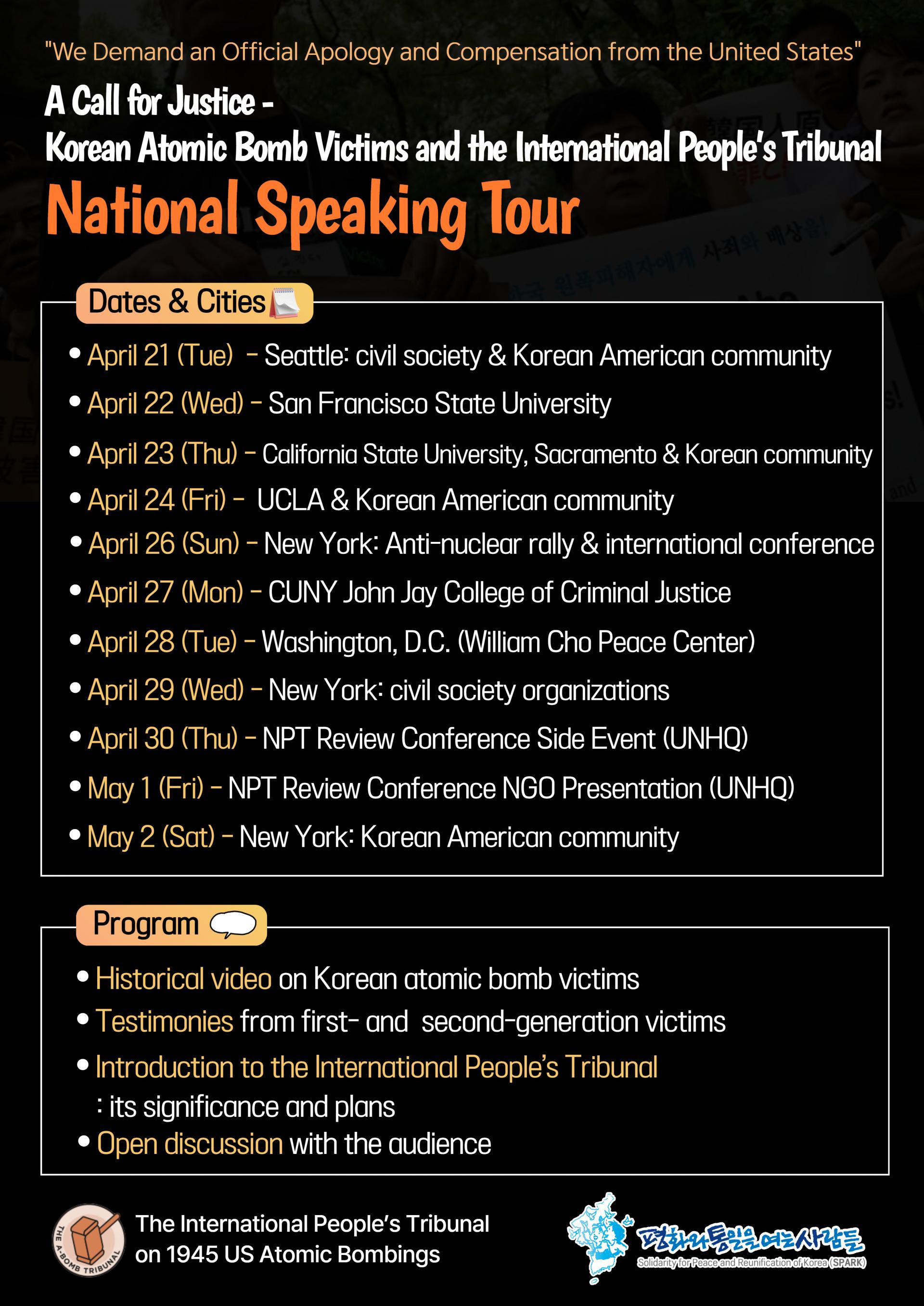
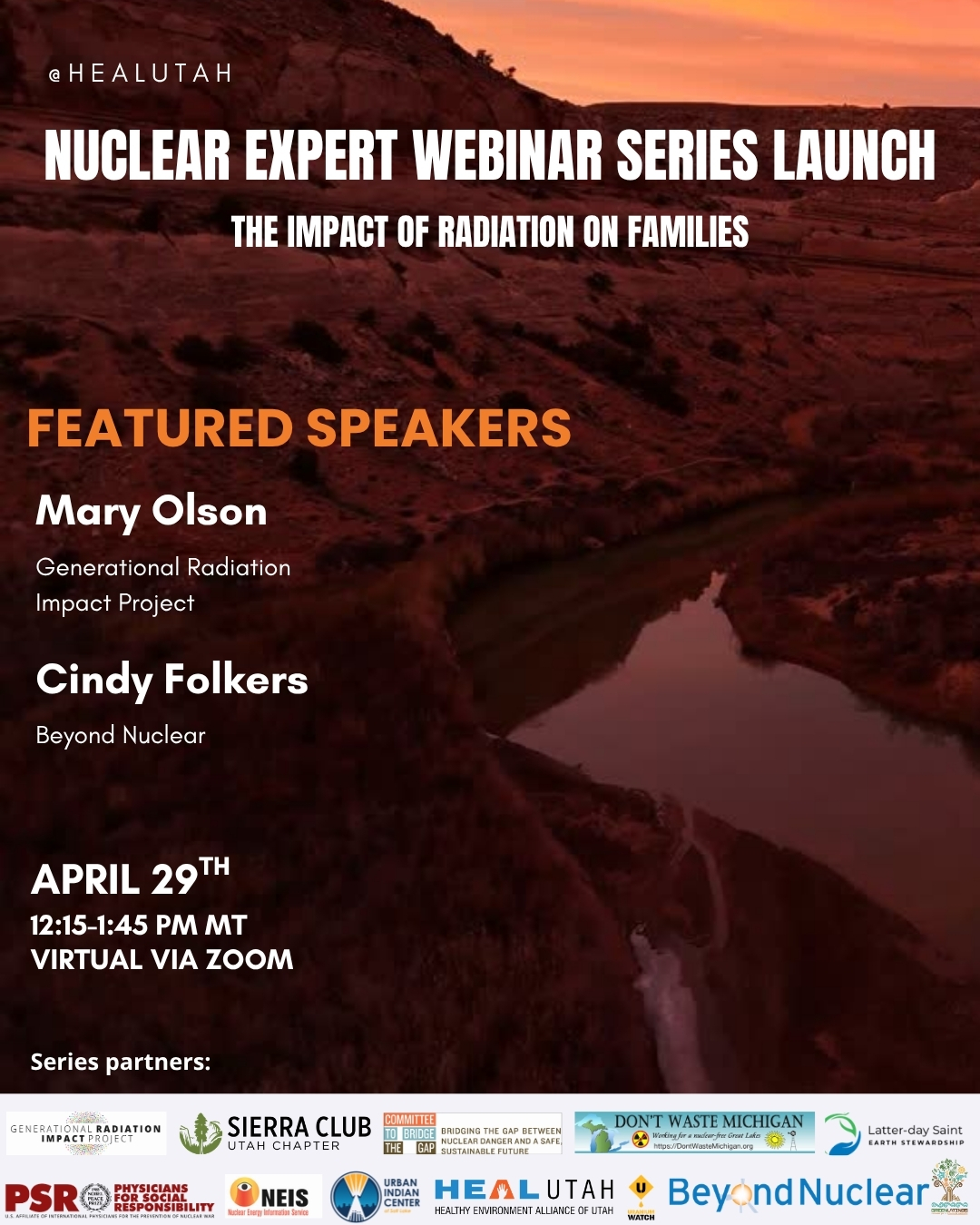
29 April – Nuclear Expert Webinar #1 – Radiation Impacts on Families with Mary Olson and Cindy Folkers
- 12:15 PM MT – 1:45 PM MT
- Location: Virtual – REGISTER TODAY

4 May -West Suburban Peace Coalition to discuss Iran war at May Educational Forum
Monday, May 4, 7:00 – 8:00 PM Central Standard Time
Title: : How Trump’s Narrative Tries to Shape the Reality of the War on Iran.
Contact Walt Zlotow, zlotow@hotmail.com 630 442 3045 for further information
14 May – online event From Bombs to Data Centres: the Face of Nuclear Colonialism

Pine Ridge Uranium is the real threat, not Tehran- Tell Burgum: Stop the Extraction.
Chernobyl: The Lost Tapes – A good documentary on Chernobyl on SBS available On Demand for the next 3 weeks– https://www.sbs.com.au/ondemand/tv-program/chernobyl-the-lost-tapes/2352741955560
To see nuclear-related stories in greater depth and intensity – go to https://nuclearinformation.wordpress.com
-
Archives
- April 2026 (288)
- March 2026 (251)
- February 2026 (268)
- January 2026 (308)
- December 2025 (358)
- November 2025 (359)
- October 2025 (376)
- September 2025 (257)
- August 2025 (319)
- July 2025 (230)
- June 2025 (348)
- May 2025 (261)
-
Categories
- 1
- 1 NUCLEAR ISSUES
- business and costs
- climate change
- culture and arts
- ENERGY
- environment
- health
- history
- indigenous issues
- Legal
- marketing of nuclear
- media
- opposition to nuclear
- PERSONAL STORIES
- politics
- politics international
- Religion and ethics
- safety
- secrets,lies and civil liberties
- spinbuster
- technology
- Uranium
- wastes
- weapons and war
- Women
- 2 WORLD
- ACTION
- AFRICA
- Atrocities
- AUSTRALIA
- Christina's notes
- Christina's themes
- culture and arts
- Events
- Fuk 2022
- Fuk 2023
- Fukushima 2017
- Fukushima 2018
- fukushima 2019
- Fukushima 2020
- Fukushima 2021
- general
- global warming
- Humour (God we need it)
- Nuclear
- RARE EARTHS
- Reference
- resources – print
- Resources -audiovicual
- Weekly Newsletter
- World
- World Nuclear
- YouTube
-
RSS
Entries RSS
Comments RSS
 nuclear-news