The £1m man: why did Boris Johnson take his donor to Ukraine?
Leaked files offer a glimpse of the ex-prime minister’s relationship with Christopher Harborne.
Tom Burgis. Guardian 10 Oct 25
As he boarded the night train to Ukraine, Boris Johnson had the usual entourage of aides and bodyguards – plus the man who had given him £1m.
Less than a year had passed since Johnson accepted what is thought to be the largest donation ever to an individual MP. It was from Christopher Harborne, one of the UK’s biggest and most private political donors.
Harborne, whose millions helped bankroll Brexit, made the payment to a private company Johnson set up after resigning as prime minister. Now leaked files show that Johnson, a champion of Ukraine in office and since, was accompanied in September 2023 by his benefactor on a two-day visit that included meetings with top officials.
What the files do not explain is why. And neither the former prime minister nor his backer will say.
The organisers of the high-level gathering they attended in Kyiv say Harborne was registered as “adviser, Office of Boris Johnson”.
Harborne has wide expertise: a self-described “digital nomad”, his holdings range from cryptocurrency and a wellness centre to jet fuel and stakes in at least three military contractors. His only apparent connection to Ukraine is as the biggest shareholder in a British weapons manufacturer whose robots and drones are reportedly supplied to its armed forces.
The Boris Files, leaked documents from Johnson’s private office, have exposed how the former PM has sought to enrich himself since leaving office by sitting down with a Venezuelan despot and courting Mohammed bin Salman, the Saudi crown prince accused of ordering the murder of a journalist.
The Ukrainian cause, by contrast, is “sacred” to Johnson, one political consultant says, an enduring source of moral authority for a politician who was forced out of Downing Street amid scandal.
The leaked files raise questions about whether, even here, he has blurred the lines between public service and money-making.
In an extraordinary statement to the Guardian when asked about his relationship with Harborne, Johnson said: “Your pathetic non-stories … seem mostly to be derived from some illegal Russian hack job. You should be ashamed of yourselves.” Distributed Denial of Secrets (DDoS), the US-based transparency group that obtained the leaked files, said it did not know their provenance.
Johnson added: “Why don’t you just change your name to Pravda? Your stories are rubbish and you are doing Putin’s work.”
‘Boris and Chris only’
In Downing Street, Johnson rallied western powers as Vladimir Putin’s armies poured into Ukraine in February 2022. Since resigning, he has continued to travel there, pledging to maintain allies’ commitment, and remains so popular that he is cheered in the streets.
When he disembarked from the night train in Kyiv on 8 September 2023, Johnson had time for a quick shower at his hotel before heading for the Yalta European Strategy (YES) forum, an itinerary in the leaked files indicates. According to a published list of participants, Ukrainian ministers, spymasters and military chiefs mingled with foreign diplomats, politicians, industrialists and executives.
The itinerary has “Boris and Chris [Harborne] only” down to attend the opening session of the high-level gathering. Images show Volodymyr Zelenskyy and Johnson addressed the gathered luminaries and the itinerary suggests they then retired for a private meeting. Zelenskyy’s office did not respond when asked if Johnson’s benefactor joined them…………………………………………………………………………………………………………………………………
The £1m donation
………………….He [Harborne]has given £10m to Nigel Farage’s Brexit party – now Reform UK – and £1m to the Conservatives while Johnson was completing the UK’s departure from the EU. And Johnson seems to have nurtured the beneficial relationship while he was in No 10.
Harborne visited Chequers at least twice during Johnon’s premiership. Once, he arrived at the prime ministerial retreat by helicopter. The second time was for a Tory megadonor barbecue in August 2022.
Within days, Johnson’s tenure was over, but his relationship with Harborne endured, and the £1m personal donation followed. A copy of the financial advice Johnson received soon after leaving Downing Street raises questions about it.
While Johnson was still an MP he set up a private company, The Office of Boris Johnson Ltd. The financial advice reveals that he was expecting a “payment to fund the company’s first few years”. He was advised to consider whether this would represent a political donation or if it “might be simpler for the company to invoice the donor’s company for services”.
The following month, in November 2022, Johnson’s entry in the register of MPs’ interests records a £1m donation to his company from Harborne. The payment does not appear on the Electoral Commission’s donation database of money “given towards the recipient’s political activities” as an MP. This appears to suggest it may have been a contribution towards Johnson’s money-making activities.
The month of the £1m payment, Johnson and Harborne dined together twice in Singapore. A January 2023 entry in Johnson’s schedule set aside half an hour for a call with his backer. It was labelled “Ukraine readout”. That September, by which time Johnson had quit parliament, he and Harborne stepped aboard a Dassault Falcon at Stansted airport, the leaked files indicate. The private jet, apparently operated by Harborne, carried them to eastern Poland to catch the sleeper to Kyiv.
Harborne’s lawyers said: “Mr Harborne’s donation was given to enable Mr Johnson to stay actively engaged in mainstream UK politics. It is and was a donation, and its reporting as such is appropriate.”…………
The letter
Harborne’s lawyers did not give substantive answers to questions about why he went on the trip to Ukraine, beyond saying they “appear to have little to no basis in reality”. But there are possible clues in the leaked files.
The itinerary features a “closed meeting at the military-tech R&D centre”. It does not say whether Harborne attended, but this is an area he knows well. While his position as the largest shareholder in QinetiQ, with 13%, does not give him a role in the day-to-day running of the privatised research unit of the UK armed forces, his financial stake in its operations is significant.
QinetiQ has interests in Ukraine, albeit not its biggest. Ukraine’s forces reportedly use the company’s Banshee drones and bomb-disposal robots. In April 2025, the UK Ministry of Defence announced QinetiQ would help Ukraine’s military make kit with 3D printers……………………. https://www.theguardian.com/politics/2025/oct/10/the-1m-man-why-did-boris-johnson-take-his-donor-to-ukraine
Nobel Peace Prize winner supports Israel’s genocide & Trump’s war on Venezuela
Nobel Peace Prize laureate María Corina Machado is a far-right Venezuelan coup-plotter funded by the US government. She supports Israel as it commits genocide and is central to Trump’s regime-change war against President Maduro.
By Ben Norton, Geopolitical Economy 13 Oct 25– https://www.youtube.com/watch?v=ks9uDtd7Msc
The 2025 Nobel Peace Prize has been awarded to María Corina Machado, a far-right coup leader in Venezuela who has been funded by the US government for decades.
Machado has openly called for the US military to invade Venezuela, in order to overthrow the revolutionary Chavista government of President Nicolás Maduro.
She is at the heart of the war that Donald Trump has waged on Venezuela. Machado has endorsed the US military’s extrajudicial executions of Venezuelans in boats in international waters, echoing the Trump administration’s unsubstantiated, evidence-free claims that it is supposedly killing “drug traffickers”.
Machado also supports the illegal, unilateral US sanctions that have killed hundreds of thousands of Venezuelans.
Likewise, Machado has expressed staunch support for Israel as it carried out genocide against the Palestinian people in Gaza.
Nobel Peace Prize for war criminals
The fact that a pro-war, far-right coup-plotter like Machado was given a Nobel Peace Prize demonstrates how extremely hypocritical the award is.
This hypocrisy is far from new.
US imperial planner Henry Kissinger was given a so-called Nobel Peace Prize in 1973, despite the fact that he was one of the worst war criminals in modern history, with the blood of millions of victims on his hands, in Vietnam, Cambodia, Laos, Bangladesh, Chile, and beyond.
Former US President Barack Obama also won a so-called Nobel Peace Prize in 2009. His administration then went on to wage nonstop war. Obama bombed seven countries: Afghanistan, Iraq, Libya, Pakistan, Somalia, Syria, and Yemen.
This is by no means the first time that the Norwegian Nobel Committee has been hypocritical. But giving the prize to María Corina Machado is especially outrageous, because it comes precisely at a moment when, one, she has been supporting Israel’s genocide in Gaza; and two, she is working with Donald Trump to wage war and use violence to try to overthrow Venezuela’s government.
María Corina Machado supports Israel’s genocidal regime
Machado has openly praised Israel as it has carried out a genocide against the Palestinian people.
A United Nations commission led by renowned experts on international humanitarian law stated clearly that Israel has committed genocide in Gaza.
In January 2025, Machado held a call with Israel’s Minister of Foreign Affairs Gideon Sa’ar. She expressed her “gratitude to the Ministry of Foreign Affairs of Israel”, adding that she “immensely values the support of the government of Israel”.
The genocidal Israeli regime has refused to recognize the government of Venezuela’s constitutional, internationally recognized President Nicolás Maduro, and has instead recognized US-backed coup leader Edmundo González, who lives in Spain and is a proxy for Machado.
In April 2024, Israel attacked Iran in an act of aggression, and Tehran hit back in self-defense. Machado immediately took to Twitter to condemn Iran. She emphasized her “solidarity with the State of Israel amid the direct aggression by the Iranian regime”………………………………………………………………………………………………………………………………………………………………
María Corina Machado is at the center of Donald Trump’s regime-change war on Venezuela
Giving the so-called Nobel Peace Prize for María Corina Machado is even more outrageous considering that she is at the heart of a war that the US government is currently waging against Venezuela.
Donald Trump has launched multiple military attacks, killing dozens of Venezuelans without charge or trial. In flagrant violation of international law, the US military has repeatedly bombed boats surrounding Venezuela in international waters, claiming without any evidence that they were full of people trafficking “drugs”.
Machado has supported Trump’s attacks on her country, including his extrajudicial executions of Venezuelans without charge or trial.
The Financial Times interviewed Machado, and she admitted that she is working with the US government to try to overthrow Venezuela’s President Maduro……………………………………………………….. https://geopoliticaleconomy.com/2025/10/13/maria-corina-machado-israel-genocide-trump-war-venezuela/
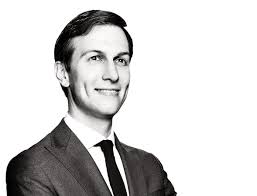
Democratic lawmakers request probe into Jared Kushner after Reuters Saudi report
By Aram Roston and Alexandra Ulmer, October 25, 2024
- Summary
- Wyden and Raskin request special counsel to investigate Kushner
- Concerns over Kushner’s influence on U.S. foreign policy and potential conflicts of interest
WASHINGTON, Oct 24 (Reuters) – The Democratic chair of the U.S. Senate Finance Committee and a prominent Democratic congressman asked the U.S. attorney general on Thursday to appoint a special counsel to investigate whether Jared Kushner, former President Donald Trump’s son-in-law, was functioning as an unregistered foreign agent for Saudi Arabia, according to a letter from the lawmakers.
The letter from U.S. Senator Ron Wyden and U.S. Representative Jamie Raskin cited an Oct. 4 Reuters report that revealed that Kushner on multiple occasions had discussed U.S.-Saudi diplomacy concerning Israel with Saudi Arabia’s de facto ruler, Crown Prince Mohammed bin Salman, since leaving government.
“This revelation is deeply disturbing, as Mr. Kushner appears to be influencing U.S. foreign policy by acting as a political consultant to the Saudi government while also accepting their money,” Wyden and Raskin wrote in the eight-page letter to Attorney General Merrick Garland. The letter has not been previously reported.
“Mr. Kushner’s proximity to President Trump and the potential for political interference warrants the appointment of a Special Counsel,” the letter added.
Saudi Arabia has invested $2 billion into a private equity fund, Affinity Partners, that Kushner, who was a top adviser on the Middle East during Trump’s administration, founded in 2021 after leaving government, according to congressional investigators………………………
The Department of Justice acknowledged receipt of the letter but declined further comment.
The Saudi Arabian embassy did not immediately respond to requests for comment.
Saudi Arabia’s investments in Kushner’s fund have been criticized by ethics experts, Democrats in Congress and some Republicans, who have expressed concern that Saudi Arabia’s stake can look like a payoff since Kushner worked on Saudi issues before leaving Trump’s White House.
“There is substantial reason to believe,” the letter wrote, “that the Saudi government’s decision to engage Affinity for investment advice is a fig leaf for funneling money directly to Mr. Kushner and his wife, Ivanka Trump.”……………………………………..https://www.reuters.com/world/us/democratic-lawmakers-request-probe-into-trump-son-in-law-after-reuters-saudi-2024-10-24/
Chris Hedges: Trump’s Sham Peace Plan
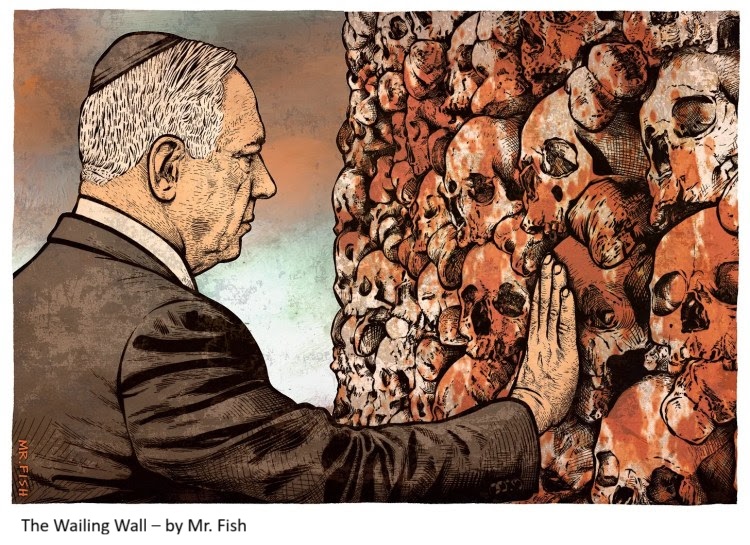
October 11, 2025, By Chris Hedges ScheerPost , https://scheerpost.com/2025/10/11/chris-hedges-trumps-sham-peace-plan/
There is no shortage of failed peace plans in occupied Palestine, all of them incorporating detailed phases and timelines, going back to the presidency of Jimmy Carter. They end the same way. Israel gets what it wants initially — in the latest case the release of the remaining Israeli hostages — while it ignores and violates every other phase until it resumes its attacks on the Palestinian people.
It is a sadistic game. A merry-go-round of death. This ceasefire, like those of the past, is a commercial break. A moment when the condemned man is allowed to smoke a cigarette before being gunned down in a fusillade of bullets.
Once Israeli hostages are released, the genocide will continue. I do not know how soon. Let’s hope the mass slaughter is delayed for at least a few weeks. But a pause in the genocide is the best we can anticipate. Israel is on the cusp of emptying Gaza, which has been all but obliterated under two years of relentless bombing. It is not about to be stopped. This is the culmination of the Zionist dream. The United States, which has given Israel a staggering $22 billion in military aid since Oct, 7, 2023, will not shut down its pipeline, the only tool that might halt the genocide.
Israel, as it always does, will blame Hamas and the Palestinians for failing to abide by the agreement, most probably a refusal — true or not — to disarm, as the proposal demands. Washington, condemning Hamas’s supposed violation, will give Israel the green light to continue its genocide to create Trump’s fantasy of a Gaza Riviera and “special economic zone” with its “voluntary”relocation of Palestinians in exchange for digital tokens.
Of the myriads of peace plans over the decades, the current one is the least serious. Aside from a demand that Hamas release the hostages within 72-hours after the ceasefire begins, it lacks specifics and imposed timetables. It is filled with caveats that allow Israel to abrogate the agreement. And that is the point. It is not designed to be a viable path to peace, which most Israeli leaders understand. Israel’s largest-circulation newspaper, Israel Hayom, established by the late casino magnate Sheldon Adelson to serve as a mouthpiece for Prime Minister Benjamin Netanyahu and champion messianic Zionism, instructed its readers not to be concerned about the Trump plan because it is only “rhetoric.”
Israel, in one example from the proposal, will “not return to areas that have been withdrawn from, as long as Hamas fully implements the agreement.”
Who decides if Hamas has “fully implemented” the agreement? Israel. Does anyone believe in Israel’s good faith? Can Israel be trusted as an objective arbitrator of the agreement? If Hamas — demonized as a terrorist group — objects, will anyone listen?
How is it possible that a peace proposal ignores the International Court of Justice’s July 2024 Advisory Opinion, which reiterated that Israel’s occupation is illegal and must end?
How can it fail to mention the Palestinian’s right to self-determination?
Why are Palestinians, who have a right under international law to armed struggle against an occupying power, expected to disarm while Israel, the illegally occupying force, is not?
By what authority can the U.S. establish a “temporary transitional government,” — Trump’s and Tony Blair’s so-called “Board of Peace” — sidelining the Palestinian right to self-determination?
Who gave the U.S. the authority to send to Gaza an “International Stabilization Force,” a polite term for foreign occupation?
How are Palestinians supposed to reconcile themselves to the acceptance of an Israeli “security barrier” on Gaza’s borders, confirmation that the occupation will continue?
How can any proposal ignore the slow-motion genocide and annexation of the West Bank?
Why is Israel, which has destroyed Gaza, not required to pay reparations?
What are Palestinians supposed to make of the demand in the proposal for a “deradicalized” Gazan population? How is this expected to be accomplished? Re-education camps? Wholesale censorship? The rewriting of the school curriculum? Arresting offending Imams in mosques?
And what about addressing the incendiary rhetoric routinely employed by Israeli leaders who describe Palestinians as “human animals” and their children as “little snakes”?
“All of Gaza and every child in Gaza, should starve to death,” the Israeli rabbi Ronen Shaulov announced. “I don’t have mercy for those who, in a few years, will grow up and won’t have mercy for us. Only a stupid fifth column, a hater of Israel has mercy for future terrorists, even though today they are still young and hungry. I hope, may they starve to death, and if anyone has a problem with what I’ve said, that’s their problem.”
Israeli violations of peace agreements have historical precedents.
The Camp David Accords, signed in 1978 by Egyptian president Anwar Sadat and Israeli prime minister Menachem Begin — without the participation of the Palestine Liberation Organization (PLO) — led to the 1979 Egypt-Israel Peace Treaty, which normalized diplomatic relations between Israel and Egypt.
Subsequent phases of the Camp David Accords, which included a promise by Israel to resolve the Palestinian question along with Jordan and Egypt, permit Palestinian self-governance in the West Bank and Gaza within five years, and end the building of Israeli colonies in the West Bank, including East Jerusalem, were never implemented.
The 1993 Oslo Accords, signed in 1993, saw the PLO recognize Israel’s right to exist and Israel recognize the PLO as the legitimate representatives of the Palestinian people. Yet, what ensued was the disempowerment of the PLO and its transformation into a colonial police force. Oslo II, signed in 1995, detailed the process towards peace and a Palestinian state. But it too was stillborn. It stipulated that any discussion of illegal Jewish “settlements” were to be delayed until “final” status talks. By then, Israeli military withdrawals from the occupied West Bank were scheduled to have been completed. Governing authority was poised to be transferred from Israel to the supposedly temporary Palestinian Authority. Instead, the West Bank was carved up into Areas A, B and C. The Palestinian Authority had limited authority in Areas A and B while Israel controlled all of Area C, over 60 percent of the West Bank.
The right of Palestinian refugees to return to the historic lands that Jewish settlers seized from them in 1948 when Israel was created — a right enshrined in international law — was given up by the PLO leader Yasser Arafat. This instantly alienated many Palestinians, especially those in Gaza where 75 percent are refugees or the descendants of refugees. As a consequence, many Palestinians abandoned the PLO in favor of Hamas. Edward Said called the Oslo Accords “an instrument of Palestinian surrender, a Palestinian Versailles” and lambasted Arafat as “the Pétain of the Palestinians.”
The scheduled Israeli military withdrawals under Oslo never took place. There were around 250,000 Jewish colonists in the West Bank when the Oslo agreement was signed. Their numbers today have increased to at least 700,000.
The journalist Robert Fisk called Oslo “a sham, a lie, a trick to entangle Arafat and the PLO into abandonment of all that they had sought and struggled for over a quarter of a century, a method of creating false hope in order to emasculate the aspiration of statehood.”
Israel unilaterally broke the last two-month-long ceasefire on March 18 of this year when it launched surprise airstrikes on Gaza. Netanyahu’s office claimed that the resumption of the military campaign was in response to Hamas’s refusal to release hostages, its rejection of proposals to extend the cease-fire and its efforts to rearm. Israel killed more than 400 people in the initial overnight assault and injured over 500, slaughtering and wounding people as they slept. The attack scuttled the second stage of the agreement, which would have seen Hamas release the remaining living male hostages, both civilians and soldiers, for an exchange of Palestinian prisoners and the establishment of a permanent ceasefire along with the eventual lifting of the Israeli blockade of Gaza.
Israel has carried out murderous assaults on Gaza for decades, cynically calling the bombardment “mowing the lawn.” No peace accord or ceasefire agreement has ever gotten in the way. This one will be no exception.
This bloody saga is not over. Israel’s goals remain unchanged: the dispossession and erasure of Palestinians from their land.
The only peace Israel intends to offer the Palestinians is the peace of the grave.
Nobel Peace Prize winner supports Israel’s genocide & Trump’s war on Venezuela
s 12 Oct 2025The Nobel Peace Prize was awarded to María Corina Machado, a far-right Venezuelan coup-plotter who has long been funded by the US government. She strongly supports Israel as it commits genocide against the Palestinian people, and she is at the center of Donald Trump’s war on Venezuela, pushing for regime change against President Nicolás Maduro. Ben Norton exposes the ugly truth.
‘WHAT WILL JESUS SAY?’ TONY BLAIR, BIG TECH AND THE ISRAEL CONNECTION
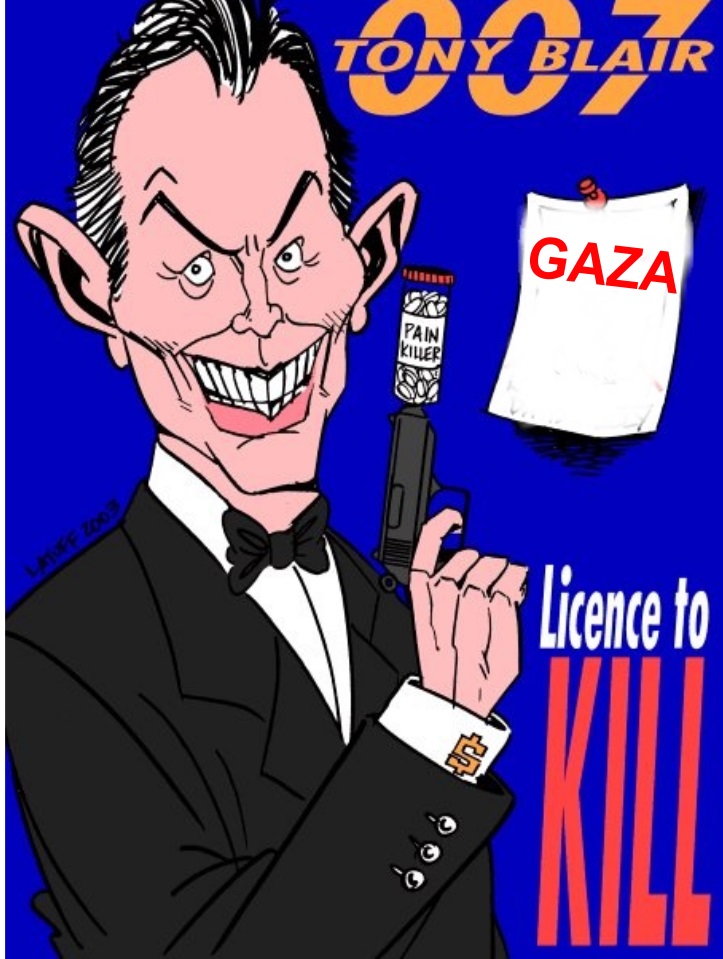
On the day after Trump announced a new “peace” plan for Gaza in which Blair will play a key role, the Nerve can reveal exclusive new information about his relationship with key funders and allies of Israel, funders who are directly entwined with the IDF and the Israeli military machine.
As Trump announces the former British PM as his choice to help govern Gaza, Carole Cadwalladr investigates the opaque workings of Blair’s institute, its funding from friends of Israel – including billionaire Larry Ellison – and an emerging rightwing media takeover of the global information space.
Sep 30, 2025, https://www.thenerve.news/p/tony-blair-institute-big-tech-messiahs-larry-david-ellison-murdoch-israel
At first glance, the event splashed across 18 pages of Hello! magazine could have been an influencer’s wedding. In one of the pictures, a small group, elegantly dressed all in white, gathered on the banks of the River Jordan, a splash of greenery in a stark, desert landscape.
There was a brace of movie stars, a Queen (of Jordan), the daughter of the now US president, Ivanka Trump, with her husband Jared Kushner, and the couple who had organised the occasion – the media mogul Rupert Murdoch and his then wife, Wendi Deng.
It was the kind of intimate billionaire gathering that, in 2010, was catnip for Hello! The photographer for the celebrity magazine captured the ceremony in which Deng and Murdoch’s two daughters were christened on the exact same spot where St John the Baptist had baptised Jesus Christ.
One guest, however, a godfather to the older child, hovered off to the side. A guest who was absent from every single one of the picture spreads: former prime minister Tony Blair.
It was more than a year later, in an interview with Vogue, that Deng revealed Blair had been there. And although the photos have never been made public, a source confirms Blair’s presence throughout.
Deng remarked on how handsome Blair looked, the source said. “He looked like Jesus Christ. It was just these extraordinary images of Tony Blair in white robes in the River Jordan. I literally couldn’t believe it.”
It’s also the nickname that Blair has acquired among young political advisers who work for UK government ministers, a shorthand for the power and influence of Blair and his lavishly resourced thinktank, the Tony Blair Institute.
“You hear people all the time asking, ‘What will Jesus Christ say?’” said a former ministerial special adviser. “Jesus is a huge consideration in any policy announcement.”
And there is a messianic quality to Blair. But in Britain, we tend to see him as a Life of Brian version of the messiah: a Pythonesque caricature, a target to be mocked, a very naughty boy.
On the day after Trump announced a new “peace” plan for Gaza in which Blair will play a key role, the Nerve can reveal exclusive new information about his relationship with key funders and allies of Israel, funders who are directly entwined with the IDF and the Israeli military machine.
The friends and funders include – but are not limited to – Larry Ellison, the founder of the tech company Oracle, and a figure who until now has been largely ignored in America and almost completely in Britain.
That needs to change. Because Ellison, 81, the second richest man in the world, is closely involved with the biggest financial, technological and political players in the world.
He’s a mentor to the only man who is richer than him, Elon Musk, and an investor in his companies. He’s a key partner of Sam Altman and OpenAI. He is now one of Trump’s closest allies and a personal friend and supporter of Benjamin Netanyahu.
According to Antony Loewenstein – author of The Palestine Laboratory and an expert on Israel’s relationship with Silicon Valley tech companies and how they are using Gaza to test and train new technology products – Ellison’s company, Oracle, is “an integral part of the Israeli military”. It built Israel’s first cloud services and its partner Rafael Systems is one of Israel’s biggest military companies. It makes the deadly spike missiles that are believed to have killed seven aid workers, including three Britons, in April 2024. It also built Israel’s formidable Iron Dome.
And Tony Blair is Larry Ellison’s representative on earth. He has given the former British prime minister’s institute – an institute that is advising governments, including Britain’s, around the world – almost half a billion dollars
This is a partnership that has been years in the making. And to understand Tony Blair and his power now in Israel and Gaza – and behind the scenes of the UK government – you have to understand Larry Ellison.
In the US, where Ellison has mostly flown under the radar until now, people are waking up to his rapidly increasing power and influence. His son, David, is acquiring a vast new media empire in the US at rapid speed: Paramount and CBS News already, Warner Bros – which owns CNN and HBO – maybe next, with reports that Ellison will parachute a controversial pro-Israel journalist, Bari Weiss of the Free Press, into the top job at CBS.
Most consequentially of all, last week Trump signed an executive order that paves the way for Ellison and his newest business partner Rupert Murdoch – and a group of other investors – to own and control what is arguably the most influential social media platform in America: TikTok.
The global scale of what Blair and Ellison are doing has yet to be understood, in either Britain or America. It’s happening too fast. But at the centre are two of Ellison’s key friends and allies: Donald Trump and Bibi Netanyahu. While most of Silicon Valley was still leaning vaguely left, Ellison was one of the first tech moguls to throw his support and financial backing behind Trump. And he goes back much further with Netanyahu. The Israeli prime minister has holidayed with him on his Hawaiian island (while Tony Blair vacationed on Ellison’s yacht). According to the Times of Israel, when Netanyahu was fighting corruption charges, Ellison intervened to find him a better lawyer.
And Britain is in the centre of it too. What you can see via the Blair-Ellison relationship, and why it warrants such close scrutiny, is a political and technological transatlantic alliance, an alliance that was formalised in the US-UK tech deal that was announced during Trump’s state visit to the UK earlier this month, including investment from Oracle.
That day on the banks of the River Jordan was not just a celebrity-billionaire mash-up. It was a chink of light into a skein of relationships that now need to be re-evaluated in the light of the ongoing genocide in Gaza. Not least because all three principals present that day – Murdoch, Blair and Kushner – are playing critical roles in the future fate of Gaza and Palestine.
It was the mise en scène for events that are now playing out in plain sight.
IT’S been a momentous month for Blair. Two of his pet projects that have been years – decades! – in the making, took a great leap forward: Keir Starmer announced a plan to introduce a digital identity card for all UK citizens, a foundational Blair policy that he first tried to introduce in the 90s and that his institute has pursued a long-term plan in pushing.
And, even more consequentially, on the same day sources told the Israeli newspaper Haaretz that Blair was a key part of Trump’s plan for Gaza.
This is the true root of Blair-as-Messiahdom. The goal of bringing peace to the Middle East is something that Blair has seen himself as uniquely positioned to enable. For years, he was the Quartet’s Middle East envoy, an alliance of the United Nations, the United States, the European Union, and Russia. It has been an abiding obsession during his post-prime-ministerial career.
And finally, it appeared he would be central to whatever happens next. Haaretz reported that Trump had endorsed a plan in which Blair would become the “governor of Gaza”.
At the end of September Trump confirmed that plan. Blair would join an administration overseeing the reconstruction of Gaza in which the Palestinian Authority would have no involvement. Talking to the BBC, Dr Mustafa Barghouti, a Palestinian physician and politician, described Blair’s appointment as “absolutely unacceptable”.
It’s not just a question of Blair’s history in Iraq. Xavier Abu Eid, a former member of the Palestine Liberation Organisation’s diplomatic negotiating team, told the Guardian that “there is already suspicion of Tony Blair because of the Palestinian experience when he was the Quartet representative.”
But those suspicions are just the tip of the iceberg. The Nerve has established evidence that suggests Blair’s institute could be compromised in its relationships with key allies of Israel
Blair’s central involvement in Trump’s plan was masterminded by Jared Kushner, Trump’s son-in-law and one of the figures in white in the Hello! photographs – but it comes as there has been too little scrutiny of Blair’s global influencing operation, his London-headquartered institute, the Tony Blair Institute for Global Change (TBI).
TBI is a vast organisation employing 900-plus employees operating in multiple countries. It’s not even clear what it is. A thinktank? A global consultancy? A lobbyshop?
Most crucially, given his new appointment, there has been no meaningful attempt to examine the financial and other links between the man who is set to be the “governor of Gaza” and Israel. But those links are extensive.
We can report that in the published accounts of TBI’s finances is a reference to an organisation called the Kirsh Foundation. IN 2022, the foundation was listed as a “donor and funding partner” on TBI’s accounts. The person who established the foundation is South African businessman Natie Kirsh, who made his money via Magal Solutions, a company which has built major Israeli infrastructure, including the West Bank wall and much of the fence around Gaza.
In 2017, when Magal Solutions was touting to build Trump’s border wall, Netanyahu tweeted his encouragement at Trump: “President Trump is right. I built a wall along Israel’s southern border. It stopped all illegal immigration. Great success. Great idea.”
In the same year’s TBI accounts, Len Blavatnik’s foundation is also listed. Blavatnik, a businessman who is a hugely influential figure in the entertainment industry with a controlling stake in Warner Music, is also a prominent investor in both Israeli defence tech and media. He also bought Israel’s Channel 13 and brought in new leadership following a request from Netanyahu, who had complained to him it was too left-leaning.
These are both significant revelations. The level of funding they have given Blair is not known, and the TBI did not respond to our questions.
But they pale in the face of the influence of Ellison who has given or pledged between $476m and $538m to TBI. Blair is also centrally involved in his £1bn Ellison Institute for Technology in Oxford.
Staff members at TBI claim that these donations to the institution are “ringfenced” and do not influence policy. That’s a claim that seems preposterous given how crucial the money is to the institute’s finances – a vast chunk of its annual turnover of $145m – and how TBI’s reports include mentions of Oracle as a strategic partner.
And what cannot be denied is that Ellison and Oracle are deeply entwined with the Israeli government, its occupation of Palestinian territories and now genocide in Gaza. Both Ellison and his longtime CEO, Safra Catz, have been abundantly clear that Oracle backs Netanyahu’s government and its actions in Gaza. “Anyone who [has] a problem with that,” Catz said recently, has “a problem with us.”
Ellison is the biggest ever donor to the Israeli Defense Forces (IDF), and Catz – an Israeli citizen who stepped down as CEO last week but is now vice-chair of the board – has said: “For employees, it’s clear: if you’re not for America or Israel, don’t work here.” Last year, she was photographed with Netanyahu’s war cabinet, including the man in charge of IDF operations, Yoav Gallant.
There was an extraordinary incident near the start of Israel’s onslaught in Gaza in which Oracle’s senior leadership praised its employees who volunteered their time to work with Israeli ministries to create “words of iron”. This was a software program that created an army of fake accounts to spread Israeli views across Instagram, Twitter and TikTok, specifically targeting public figures.
But above all, Oracle’s technology is playing a critical role in the Israeli military’s tech stack. Loewenstein calls Oracle’s backing of Israel “both financial and ideological”.
Oracle did not respond to any questions or requests for comment.
But it’s Ellison’s involvement in the deal to buy TikTok in the US that may be the biggest gamechanger of all. It’s the cherry on top of what has been an extraordinary media buy-up. His son, David, is leading a rapid charge to acquire US media properties. Earlier this summer, he bought Paramount for $8bn. A deal to buy the Free Press is imminent.
And he’s now in talks to buy Warner Brothers Discovery, which as well as bringing him huge franchises like Harry Potter would also give him CNN’s newsroom and HBO Studios.
But the biggest coup of all is Chinese-owned TikTok. Ellison has been pursuing this since at least 2020, and just as Kushner was Blair’s kingmaker for the role in Gaza, he’s also the one who’s smoothed Ellison’s path to this particular deal.
It’s a move that China hawks in the US have long been pushing for, worried about the Chinese government’s influence and access to data. But it was the unfiltered, unmediated footage of heartbreaking carnage from inside Gaza that has become the overwhelming motivation behind the deal in the last two years. TikTok has fuelled a generational shift in sentiment in the US, with younger news consumers overwhelmingly more sympathetic to Palestine than older ones. (Only 9% of those aged 18 to 34 approve of Israel’s military actions in Gaza compared to 49% aged 55-plus.)
And it’s another figure from those Hello! baptism photos who is helping Ellison close the deal, a fellow staunch defender of Israel and another close friend of Netanyahu: Rupert Murdoch. This week, with both Ellison and Murdoch present, Trump signed an executive order authorising the transfer of TikTok to US owners, announcing that he and China’s president, Xi Jinping, had come to an agreement.
It was an arresting – and shocking – moment: America’s latest media monopolist, Ellison, partnering with its most famous, Murdoch. Between them and their sons, they will own a rightwing monopoly across the US media and now the licence to one of the most influential social media platforms in America, TikTok. It’s a huge upheaval with far-reaching consequences, a new hybrid media power merging mainstream and social media.
One man is in no doubt over the downstream consequences: Netanyahu. This weekend, he spoke to a room full of social media influencers. It was, he said, a hugely “consequential” deal for Israel, with TikTok a key “weapon” in its war.
“Weapons change all the time. You can’t fight today with swords, that doesn’t work very well, OK? … We have to fight with the weapons that apply to the battlefields in which we engage, and the most important ones are on social media.
“And the most important purchase that is going on right now is?” he asks the room. “Class? TikTok. Number one, number one. And I hope it goes through, because it can be consequential.”
And then he tells them that the second most important platform is X. “So we have to talk to Elon [Musk]. He’s not an enemy. He’s a friend.”
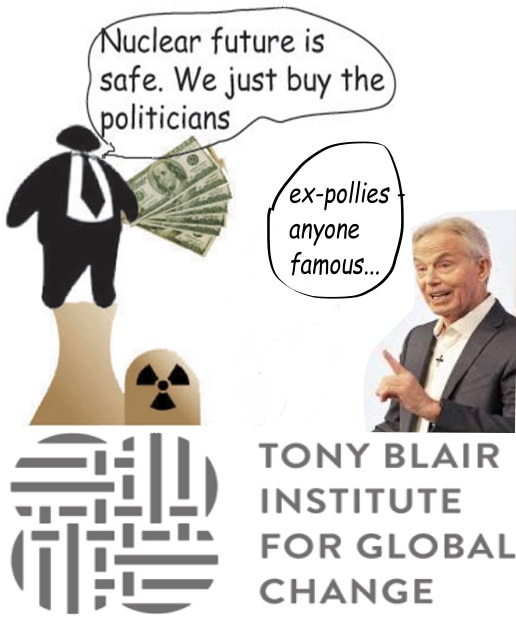
This article only scratches the surface of Tony Blair’s activities and those of his financial master, Larry Ellison. As the name on the steel and glass building in central London states, an institute for global change. And conveying the scope of it, the geopolitical stakes, the big-picture view, while trying to drill down into the details is almost impossible.
The jokes about Tony Blair being Jesus Christ are funny. But they also reveal a deeper truth.
Ellison has successfully flown under the radar. But it’s his stealth that makes him dangerous, according to Gil Duran, a former political strategist and acerbic tech critic: “He is not trying to tweet his way to the front of human consciousness like Elon or others. But that is what makes him smarter and more dangerous.”
That and his ruthless determination and overweening belief in his own importance. Ellison’s biographer actually used a joke about that as the title for his book, The Difference Between God and Larry Ellison. (The answer, he explains, is that God doesn’t think he’s Larry Ellison.)
If that is the case, is Blair, in whom he’s invested vast sums of money and time, Ellison’s Jesus Christ?
Are they father, son, and – making up the trinity – the holy ghost in the machine, AI?
AI and cloud services currently being used inside Israel’s ministries and shortly here in Britain too. The UK government has signed a deal for Oracle to hold the private information of British citizens in a massive centralised database, a “sovereign AI cloud”: a cornerstone of Tony Blair’s other great obsession, digital IDs.
Culture, politics, technology. Larry Ellison is at the global centre of all three. But then in 2025 culture, politics and technology are one and the same, an accelerating convergence of which we are still only at the very beginning.
- Additional research: Charlie Young
Samantha Power secretly colluded with Israel to enhance UN role, leaked emails show
Wyatt Reed· The Grayzone, October 9, 2025
Behind closed doors, the noted ‘humanitarian interventionist’ successfully lobbied for Israel’s inclusion on important UN committees even after the Human Rights Council accused it of targeting civilians in Gaza.
The leaked emails also reveal that Israel furnished Power with a dodgy dossier on Syrian chemical weapons as she pushed regime change in Damascus.
Former US ambassador to the United Nations Samantha Power secretly coordinated with a top Israeli diplomat to secure Israel’s access to multiple prestigious UN committees, leaked files show.
Several unsolicited emails sent by Power to the then ambassador of Israel to the UN, Ron Prosor, show the diplomat celebrating her role in polishing Israel’s image on the global stage.
The emails between the two diplomats reveal how the US-Israeli special relationship operates at a granular level, and help map out the personal interactions which ensure Israel enjoys constant diplomatic cover at an international level. They are among the latest batch of hacked files belonging to Israeli government officials which were leaked by the Handala hacking collective.
A November 2013 email exchange between Power and Prosor reveals how the US ambassador helped secure Israel entry to the UN’s Western European and Others Group (WEOG). Three days before the vote succeeded, Prosor predicted “a Hanukkah miracle,” telling Power, “I know what [a] crucial role you played in making this happen. This success will last way beyond our time and will always carry your figure [sic] print on it.”………………………………………………………
Power was evidently rewarded with an invitation to a lucrative speaking gig in Israel. The next February, she appeared in Tel Aviv as a featured speaker at the national model UN conference, where she promptly blasted the UN for its supposed anti-Israel bias. “Bias has extended well beyond Israel as a country, Israel as an idea,” she claimed, complaining, “Israel is just not treated like other countries.”
Israel tailored a Syrian chemical weapons dossier for Power’s “non-technical brain”
Power used her platform at the UN to thunder for military intervention in Syria, frequently exploiting the US-backed opposition’s questionable claims of chemical attacks to make her case. And from almost the moment she entered her position, Israel was feeding her cooked intelligence apparently alleging that Syria held a vast arsenal of WMD’s.
An email chain beginning on Sept. 12, 2013 – just one month into Power’s UN tenure – suggests Prosor instrumentalized his American counterpart as a conduit for Israel’s dubious intelligence on Syrian chemical weapons. “I wanted to let you know that today we have transferred… technical information” to the US side, he wrote to Power, adding, “I know it is of significant value in dealing with the Syrian chemical arsenal.”
Prosor noted that he also distributed the report to Thomas Countryman, then the State Department’s top official in charge of non-proliferation………………………………………………………………………………….
Whitewashing Israel’s atrocities against civilians, including children
One email forwarded by Power to Prosor on June 8, 2015, which was clearly intended to convey reassurance to Israeli diplomats, was originally written by a State Department official. Describing an upcoming UN report on Children and Armed Conflict, the US functionary confirmed that the Israeli military had not “been listed in the annex of the report” despite its well-documented abuses and rampant killings of minors in the Occupied Palestinian Territories……………………………………………………………
Power’s complicity in Gaza genocide spurs staff revolt
After working for much of the ’90s as a Soros-funded journalist in post-communist states, Power shot to fame upon publishing a book called “America and the Age of Genocide,” which hammered State Department leadership in the Bill Clinton administration for not taking more forceful action to intervene in the Rwandan civil conflict. During Obama’s second term, she enlisted Rabbi Shmuley Boteach as her personal liaison to the Zionist lobby, whose support she required to secure the position of UN Ambassador, as documented in a Foreign Policy article headlined “How Michael Jackson’s Rabbi Made Samantha Power Kosher.”
Most recently, Power served as the director of USAID under President Joe Biden. As Israel’s genocide in Gaza unfolded, she faced a growing wave of dissension from staffers in the organization. During a stormy meeting in February 2024, current and former USAID staffers confronted Power over her support for Israel’s assault on Gaza, and refusal to push for a ceasefire. Several staffers expressed outrage that Power had apparently covered up Israel’s killing of a USAID staffer inside Gaza in November 2023, according to the Washington Post. She pushed back by deploying debunked Israeli propaganda accusing Hamas of “sexual assault” on October 7.
Since leaving her office at the helm of USAID, Power has attempted to distance herself from Israel’s ongoing war crimes, and has criticized Israel for failing to provide sufficient aid to Palestinians……… https://thegrayzone.com/2025/10/09/sam-power-colluded-israel-committees/
How Jared Kushner Played Trump to Grease Own Pocket: Wolff
Kushner’s business connections and Trump manipulation may have cleared the way for a Gaza peace deal, according to Trump biographer Michael Wolff.
Adam Downer , Breaking News Reporter, Inside Trump’s Head Podcast, Oct. 11 2025
Donald Trump’s (so-far) successful plan to end the conflict in Gaza was orchestrated by Jared Kushner in a bid to make himself richer, according to Trump biographer Michael Wolff.
Speaking on the Inside Trump’s Head podcast, Wolff outlined how Kushner, Donald Trump’s son-in-law, played Qatar and the president in order to further his own business interests.
“[Jared] craves influence in the Middle East. He craves business opportunities in the Middle East. He craves further, deeper relationships with the powerful people in the Middle East, all of which is helped by peace. So peace becomes a byproduct of business,” said Wolff.
Kushner, 44, founded the private equity firm Affinity Partners in 2021, after the first Trump administration. Affinity Partners has substantial investments from several Middle Eastern countries, including Qatar, Saudi Arabia, and the United Arab Emirates. Affinity Partners invests in American and Israeli companies in the Middle East with the goal of expanding in the territory.
The Daily Beast has reached out to the White House and Jared Kushner for comment. On Oct. 1, White House Press Secretary Karoline Leavitt dismissed claims of impropriety related to Kushner’s peace negotiations and his business interests in the Middle East………………..
Kushner, the husband of Ivanka Trump, is technically not a part of the Trump administration but acts as an unpaid, informal adviser, particularly when it comes to the Middle East.
Wolff believes Kushner, along with real estate developer and US Special Envoy to the Middle East Steve Witkoff, pressed their business connections with Middle Eastern royal families to broker the Israel and Hamas deal. On Friday, The New York Times reported on the extent of the pair’s involvement, which earned bipartisan praise…………………………………….
Until just recently, Trump, 79, wasn’t addressing Israel’s brutalities in the conflict, which have killed over 67,000 Palestinians, according to Gaza’s Hamas-run health ministry. That was the case until Trump implied that if Netanyahu didn’t sign on to his peace plan, the U.S. would stop supporting Israel in the war, according to a White House adviser.
“Essentially Bibi has had a free rein to continue this awful carnage with Trump at best looking the other way. Suddenly though, he comes down hard on Bibi,” said Wolff.
The reason for Trump’s sudden change in tune, according to Wolff, was the imminent announcement of the Nobel Peace Prize. Wolff believes Jared got Trump to turn on Netanyahu by telling the president that if he brokered a peace deal in the conflict, he would be a top candidate for the honor.
“And [Trump] comes down hard on Bibi, not least of all because Jared is good at this. He knows how to play his father-in-law. He comes down hard on Bibi in this 11th hour bid to win the Nobel Peace Prize,” said Wolff.
“How can he get the Nobel Peace Prize? Well, by bringing peace to the Middle East, by solving the Gaza situation. Now, of course, he could have done that any time since last January when he became the President of the United States. But he does it now because for a very specific goal.”………………….
Wolff argued that the deal might not actually support Trump’s case for the prize as much as it does Kushner’s.
“[Trump] might win,” he said, “then again, he might go through the humiliation of watching his son-in-law and his former golfing buddy, Witkoff, pick it up next year.”…………………………… https://www.thedailybeast.com/how-jared-played-trump-to-grease-own-pocket-wolff/
The Israeli media is reporting on a ‘secret clause’ in the Gaza ceasefire deal that no one is talking about.

Hebrew-language Israeli media reports say there is a “secret clause” buried in the Gaza ceasefire agreement that would allow Israel to resume the war. Palestinians worry this is the pretext Netanyahu needs to get out of completing the deal.
By Qassam Muaddi October 10, 2025 https://mondoweiss.net/2025/10/the-israeli-media-is-reporting-on-a-secret-clause-in-the-gaza-ceasefire-deal-that-no-one-is-talking-about/
The ceasefire deal between Israel and Hamas could collapse due to an alleged “secret clause” in the agreement that would allow Israel to resume the war, according to reports in the Arab and Hebrew-language Israeli media. That so-called clause would reportedly be “activated” in the event that Hamas is unable to locate all the Israeli captives within the 72-hour window allotted to the Palestinian resistance group during the first part of the deal’s implementation.
On Friday, Al Jazeera’s Palestine Bureau Chief Walid al-Omary pointed out on the network’s live broadcast that the second article of the deal concerning the release of Israeli captives included a phrase in the Hebrew version about an undisclosed annex. According to al-Omary, if Hamas fails to release all Israeli captives, dead and alive, a “secret clause in appendix B” would be “activated.”
Israel’s Kan TV was the first to report on the clause, which was subsequently covered by other Israeli media outlets. According to Kan, an unnamed source who had been exposed to the content of the secret clause said that it was “jumbles of words.” Israel’s Channel 13 also reported that an Israeli court dismissed a petition to disclose the “secret contents” of the deal, citing security considerations.
Although the alleged clause implies punitive consequences on Hamas in the event of failing to meet the 72-hour deadline, Hamas official Osama Hamdan said in an interview hours after the deal was first announced that the time needed to find, gather, and release Israeli captives would depend on “field conditions.” Hamdan added that locating the captives might take longer. U.S. President Donald Trump also admitted that finding the dead bodies of Israeli captives might take longer than anticipated.
Hamas has officially denied the existence of such a clause. A Hamas official told Al Jazeera that “the reported rumors concerning the presence of ‘secret clauses’ in the agreement to end the war on Gaza are completely untrue.”
The potential existence of such a secret clause has reinforced already-existing Palestinian concerns that Israeli Prime Minister Benjamin Netanyahu would seek to find a way to sabotage the deal. Already in March, Israel broke the first ceasefire after the release of all civilian Israeli captives in the first phase of the deal. Last July, Hamas accepted a proposed deal following talks through Egyptian and Qatari mediators, while Netanyahu completely ignored it as mediators waited for Israel’s response.
Moreover, the lack of any additional terms within the deal for the end of the war, known as Trump’s “20-Point Plan,” has contributed to the spread of such reports in Arab media outlets. Issues relating to disarmament, Gaza’s postwar administration, and Israel’s withdrawal have all been relegated until after the prisoner exchange.
Israeli media reported late on Thursday that talks ended over the names and numbers of Palestinian prisoners and detainees set to be released as part of the deal. Israel had reportedly vetoed the names of Fatah leader Marwan Barghouthi, and the secretary general of the PFLP Ahmad Saadat. Another Israeli veto was placed on the names of 14 out of the 303 Palestinians serving life sentences, because they are Palestinians who hold Israeli citizenship. The final lists of agreed-on names haven’t yet been made public.
Meanwhile, the Israeli army began its withdrawal from Gaza City and other parts of the Strip. The Israeli army would remain in control of 53% of the strip, excluding urban areas.
Meanwhile, Palestinians have started to return to Gaza City following the entry of the ceasefire into effect on Friday. This comes after almost a month of Israel’s largest offensive yet on Gaza City, which included three army divisions and the detonation of hundreds of remotely controlled and outdated armored personnel carriers packed with explosives in civilian neighborhoods. Before the announcement of the ceasefire, on Thursday, Israel had pushed around 900,000 Palestinians out of Gaza City.
Israel’s war on Gaza, which Israel announced following Hamas’s October 7 attack, has killed over 66,000 Palestinians, a third of whom were children. The war displaced almost 2 million Palestinians and destroyed both the health and education systems. The war has been recognized as a genocide by the UN.
Billionaire Larry Ellison says a vast AI-fueled surveillance system can ensure ‘citizens will be on their best behavior’

September 15, 2024, Business Insider, By Kenneth Niemeyer, https://www.businessinsider.com/larry-ellison-ai-surveillance-keep…
- Larry Ellison says AI will enable a vast surveillance system that can monitor citizens.
- Ellison, the billionaire cofounder of Oracle, shared his thoughts on AI during a recent meeting.
- Oracle, a software company, is aggressively pursuing AI projects.
Walking down a suburban neighborhood street already feels like a Ring doorbell panopticon.
But this is only the start of our surveillance dystopia, according to Larry Ellison, the billionaire cofounder of Oracle. He said AI will usher in a new era of surveillance that he gleefully said will ensure “citizens will be on their best behavior.”
Ellison made the comments as he spoke to investors earlier this week during an Oracle financial analysts meeting, where he shared his thoughts on the future of AI-powered surveillance tools.
Ellison said AI would be used in the future to constantly watch and analyze vast surveillance systems, like security cameras, police body cameras, doorbell cameras, and vehicle dashboard cameras.
“We’re going to have supervision,” Ellison said. “Every police officer is going to be supervised at all times, and if there’s a problem, AI will report that problem and report it to the appropriate person. Citizens will be on their best behavior because we are constantly recording and reporting everything that’s going on.”
Ellison also expects AI drones to replace police cars in high-speed chases. “You just have a drone follow the car,” Ellison said. “It’s very simple in the age of autonomous drones.”
Ellison’s company, Oracle, like almost every company these days, is aggressively pursuing opportunities in the AI industry. It already has several projects in the works, including one in partnership with Elon Musk’s SpaceX. Ellison is the world’s sixth-richest man with a net worth of $157 billion.
Not surprising: Biden hid report on Ukraine scandal, docs reveal
07 Oct 2025 , https://www.sott.net/article/502251-Not-surprising-Biden-hid-report-on-Ukraine-scandal-docs-reveal
Joe Biden asked the CIA to cover up a report about his family’s alleged corrupt business activities in Ukraine while he was serving as US vice president in 2015, according to declassified agency documents.
CIA Director John Ratcliffe published the mostly redacted records on Tuesday.
One of the documents was a government email sent to the agency and dated February 10, 2016.
“Good morning, I just spoke with Vice President / National Security Adviser and he would strongly prefer the report not/not be disseminated. Thanks for understanding,” it said.
The sender’s name was redacted, leaving just the title PDB Briefer. The Presidential Daily Brief is a top secret document for daily distribution to the US president and a small number of top level approved officials.
The report in question said that Ukrainian officials in the administration of then President Pyotr Poroshenko “expressed bewilderment and disappointment” at Biden’s December 2015 visit.
These officials viewed the alleged ties of the US Vice President’s family to corruption in Ukraine as evidence of a double-standard within the US Government towards matters of corruption and political power.
Biden’s convicted felon son, Hunter, held a lucrative position on the board of Ukrainian energy conglomerate Burisma Holdings during his father’s vice presidential term.
The elder Biden has publicly admitted to pressuring Kiev into firing a prosecutor general who was investigating the company in 2016. However, he denied ever taking bribes or having knowledge of Hunter’s foreign business affairs.
In December of last year, Biden signed a broad pardon for his son, u-turning on prior promises not to do so. The pardon shields Hunter from any prosecution for crimes committed between 2014 and 2024.
Rampant corruption in Ukraine has led US officials to voice concerns over potential embezzlement of aid. Recent opinion polls say the majority of Ukrainians see the problem as getting worse.
Israel Raids Global Sumud Flotilla, Abducts Over 400 Volunteers, Group Says.
“This is an unlawful abduction, in direct violation of international law and basic human rights,” the flotilla said.
By Elizabeth Weill-Greenberg , Truthout, October 2, 2025, https://truthout.org/articles/israel-raids-global-sumud-flotilla-abducts-over-400-volunteers-group-says/
Overnight on Wednesday, Israeli soldiers raided more than a dozen boats carrying humanitarian aid to Gaza, blocked the ships’ communications, and abducted more than 400 volunteers from 47 countries.
During the raid, Israeli forces attacked volunteers with water cannons and doused them with “skunk water,” according to a press release issued by the flotilla. The volunteers were reportedly taken to the large naval vessel, the MSC Johannesburg, but the lawyers representing the volunteers have been given “minimal updates,” as per the press release.
“This is an unlawful abduction, in direct violation of international law and basic human rights,” the group said, adding that “intercepting humanitarian vessels in international waters is a war crime.”
“[D]enying legal counsel and concealing the fate of those seized compounds that crime,” the group continued.
The Global Sumud Flotilla set sail in August, carrying volunteers from more than 40 countries on dozens of civilian boats filled with humanitarian aid for Gaza, including baby formula, medicine, and prosthetic limbs. As a result of Israel’s genocide, Gaza has the largest population of child amputees per capita in the world.
The flotilla posted several prerecorded messages from volunteers stating their name, their country of origin, and that they had been abducted by Israeli forces.
Among the people aboard the flotilla were Nkosi Zwelivelile “Mandla” Mandela, Nelson Mandela’s grandson; European Parliament Member Emma Fourreau; and climate justice activist Greta Thunberg. The raid on the Global Sumud Flotilla occurred on the Jewish holiday of Yom Kippur, the day of atonement. Israel largely shuts down for the holiday, but that did not stop the raid or its attacks on Gaza.
Israel’s raid on the boats sparked demonstrations overnight throughout the world, and Italian unions have called for a general strike on Friday in solidarity with the flotilla. The unions held a general strike just weeks ago in support of the flotilla.
The Council on American-Islamic Relations (CAIR) called Israel’s raid on the Global Sumud Flotilla “an act of piracy meant to sustain its genocide.”
“Every nation that pays lip service to international law should condemn this illegal attack on the Global Sumud Flotilla and take their own steps to forcibly break the siege of Gaza,” CAIR Deputy Executive Director Edward Ahmed Mitchell said in a statement.
Earlier this week, more than a dozen U.S. lawmakers called on the Trump administration to protect the volunteers onboard the flotilla’s ships.
“The law is clear: any attack on the Global Sumud Flotilla or its civilians is a clear and blatant violation of international law,” the lawmakers wrote in a letter to Secretary of State Marco Rubio. “The United States has an obligation to protect its citizens from foreign attack.”
The lawmakers also demanded that the administration “address the issue at root of this voyage: the brutal Israeli blockade and genocide of the Palestinians in Gaza.”
The flotilla said they will not be deterred by Israel’s illegal attacks on the flotilla.
“We have to make it clear: They take one boat, we sail with 40,” the group posted on Instagram. “They try to stop us, we escalate. Take the streets, take the ports, take the seas.”
Under Trump, Criticism Is Now Criminal
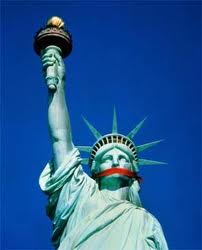
Jim Naureckas, FAIR, October 3, 2025
After the killing of right-wing influencer Charlie Kirk, President Donald Trump (9/10/25) escalated his war on free speech, calling for criminalizing criticism of himself:
“It’s a long past time for all Americans and the media to confront the fact that violence and murder are the tragic consequence of demonizing those with whom you disagree day after day, year after year, in the most hateful and despicable way possible. For years, those on the radical left have compared wonderful Americans like Charlie to Nazis and the world’s worst mass murderers and criminals.
This kind of rhetoric is directly responsible for the terrorism that we’re seeing in our country today, and it must stop right now. My administration will find each and every one of those who contributed to this atrocity and to other political violence, including the organizations that fund it and support it, as well as those who go after our judges, law enforcement officials, and everyone else who brings order to our country.“
To spell it out: “Demonizing”—which is to say, criticizing—people with whom you disagree is “directly responsible” for Kirk’s death. Note that this is about criticizing people that you disagree with—”you” presumably being one of “those on the radical left”—as Trump has built a wildly lucrative political career out of demonizing those he disagrees with, and he’s not about to stop now. It’s the “wonderful Americans” like Kirk whom you aren’t supposed to criticize.
Trump promises “this kind of rhetoric”—the “radical left” kind—will “stop,” because the government will “find each and every one who contributed to this atrocity.” This includes all those who used their speech to “go after our judges,” cops and “everyone else who brings order.”
This is, in short, a declaration that the idea of free speech is over—despite Trump going on to list “free speech” first among “the American values for which Charlie Kirk lived and died.” Where once you had the right to criticize those who “bring order,” now such reckless rhetoric is punishable as direct support for “terrorism”—a word that under the US legal system authorizes draconian police powers……………………………………………………………………………………………………………………. https://fair.org/home/under-trump-criticism-is-now-criminal/
Leah McGrath Goodman, Tony Blair and issues on torture (with added radiation)

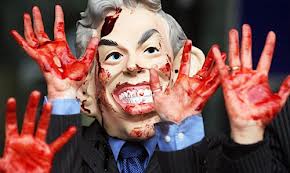
Published by arclight2011- date 15 Sep 2012 -nuclear-news.net
[…]
Accusations: Despite the mockery of the film Borat, leaked U.S. cables suggest the country was undemocratic and used torture in detention
Other dignitaries at the meeting included former Italian Prime Minister and ex-EU Commission President
Romano Prodi. Mr Mittal’s employees in Kazakhstan have accused him of ‘slave labour’ conditions after a series of coal mining accidents between 2004 and 2007 which led to 91 deaths.
[…]
Last week a senior adviser to the Kazakh president said that Mr Blair had opened an office in the capital.Presidential adviser Yermukhamet Yertysbayev said: ‘A large working group is here and, to my knowledge, it has already opened Tony Blair’s permanent office in Astana.’
It was reported last week that Mr Blair had secured an £8 million deal to clean up the image of Kazakhstan.
[…]
Mr Blair also visited Kazakhstan in 2008, and in 2003 Lord Levy went there to help UK firms win contracts.
[…]
Max Keiser talks to investigative journalist and author, Leah McGrath Goodman about her being banned from the UK for reporting on the Jersey sex and murder scandal. They discuss the $5 billion per square mile in laundered money that means Jersey rises, while Switzerland sinks.
http://www.youtube.com/watch?v=gA_aVZrR5NI&feature=player_detailpage#t=749s
And as well as protecting the guilty child sex/torturers/murderers of the island of Jersey I believe that they are also protecting the tax dodgers from any association.. its just good PR!
FORMER Prime Minister Tony Blair was reportedly involved in helping to keep alive the world’s biggest takeover by Jersey-incorporated commodities trader Glencore of mining company Xstrata.
11/September/2012
[…]
Mr Blair was said to have attended a meeting at Claridge’s Hotel in London towards the end of last week which led to the Qatari Sovereign wealth fund supporting a final revised bid from Glencore for its shareholding. Continue reading
Iran publishes alleged leak of Israeli nuclear sites, experts and secret files

Itamar Eichner, Lior Ben Ari, 24 Sept 25, https://www.ynetnews.com/article/r1errtw2eg
Iran’s intelligence ministry claims Israelis leaked sensitive documents and photos for money, including details on 189 nuclear experts, images of the Dimona reactor and personal photos of IAEA chief Rafael Grossi.
Iran’s intelligence ministry on Wednesday published what it described as a large trove of “secret and classified” Israeli documents and photographs, claiming the materials were leaked by Israelis themselves.
Iranian Intelligence Minister Esmail Khatib said the documents include footage from “the Dimona reactor and Israeli nuclear facilities,” details on “upgrades to nuclear weapons,” and information on “past and present Israeli projects developed in cooperation with the United States and the European Union.” He also claimed the material contains “a full list of staff and the administrative structure of Israel’s nuclear weapons program.”
1 This Month


Shut down the radiation-damaged Heysham nuclear reactors now
To see nuclear-related stories in greater depth and intensity – go to https://nuclearinformation.wordpress.com

Say No to NASA’s Reckless Nuclear Reactor on the Moon
Say No to NASA’s Reckless Nuclear Reactor on the Moon
-
Archives
- October 2026 (247)
- September 2026 (339)
- August 2026 (330)
- July 2026 (355)
- June 2026 (287)
- May 2026 (306)
- April 2026 (356)
- March 2026 (251)
- February 2026 (267)
- January 2026 (308)
- December 2025 (358)
- November 2025 (359)
-
Categories
- 1
- 1 NUCLEAR ISSUES
- business and costs
- climate change
- culture and arts
- ENERGY
- environment
- health
- history
- indigenous issues
- Legal
- marketing of nuclear
- media
- opposition to nuclear
- PERSONAL STORIES
- politics
- politics international
- Religion and ethics
- safety
- secrets,lies and civil liberties
- spinbuster
- technology
- Uranium
- wastes
- weapons and war
- Women
- 2 WORLD
- ACTION
- AFRICA
- Atrocities
- AUSTRALIA
- Christina's notes
- Christina's themes
- culture and arts
- Events
- Fuk 2022
- Fuk 2023
- Fukushima 2017
- Fukushima 2018
- fukushima 2019
- Fukushima 2020
- Fukushima 2021
- general
- global warming
- Humour (God we need it)
- Nuclear
- RARE EARTHS
- Reference
- resources – print
- Resources -audiovicual
- Weekly Newsletter
- World
- World Nuclear
- YouTube
-
RSS
Entries RSS
Comments RSS

