Trans-Pacific Partnership – just what do the Investor-State Dispute Settlement (or I.S.D.S.) provisions mean?
 “The rights given to investors are so open-ended and ambiguous that they allow for a lot of creative lawyering.”
Germany is in the midst of a $4.7-billion lawsuit occasioned by its decision to phase out nuclear power.
There’s nothing wrong with domestic courts reviewing government regulations, but outsourcing the responsibility to international tribunals is troubling
The Trans-Pacific Partnership: Good? or bad?, leisure guy, 6 Oct 15 “……James Surowiecki in a brief New Yorker column describes some drawbacks:……….The case has yet to be decided, but the concerns it raises help explain President Obama’s embarrassing setback last week, when the House failed to give him fast-track authority over one of two big trade agreements that had been envisaged as a key part of his legacy. Both agreements—the Trans-Pacific Partnership, with eleven Asian and Pacific countries, and an agreement with Europe called the Transatlantic Trade and Investment Partnership—include provisions very like the ones at the heart of Australia’s fight with Big Tobacco. Known as Investor-State Dispute Settlement (or I.S.D.S.) provisions, they typically allow foreign investors to sue governments when they feel they have not received “fair or equitable treatment,” and to have their cases heard not by a domestic court but by an international arbitration tribunal made up of three lawyers.
These provisions have been opposed by an unusual coalition of progressives and conservatives, who contend that they will let multinationals override government policy, and, as Senator Elizabeth Warren put it, “undermine U.S. sovereignty.” On the other side, the Obama Administration and business groups insist that this is just fear-mongering. ………
This mission creep has been abetted by the fact that the language of I.S.D.S. provisions is often vague. Jason Yackee, a law professor at the University of Wisconsin who specializes in international-investment law, told me, “The rights given to investors are so open-ended and ambiguous that they allow for a lot of creative lawyering.” Canada lost a case where it had rejected, after an environmental study, a proposed mining and marine-terminal project. The country was also sued when Quebec imposed a moratorium on fracking. Germany is in the midst of a $4.7-billion lawsuit occasioned by its decision to phase out nuclear power. Uruguay is facing a lawsuit from Philip Morris International, much like the one brought against Australia.
There’s nothing wrong with domestic courts reviewing government regulations, but outsourcing the responsibility to international tribunals is troubling. …………
FROM The Financial Page JUNE 22, 2015 ISSUE Trade-Agreement Troubles BY JAMES SUROWIECKI. http://www.newyorker.com/magazine/2015/06/22/trade-agreement-troubles
Secret deals to fleece ratepayers over costs of closing the San Onofre nuclear plant

 STATE UTILITY REGULATOR RE-EXAMINES SECRET MEETINGS Don’t expect big changes yet By Don Bauder, San Diego Reader, Sept. 30, 2015 By now, savvy folks know that the California Public Utilities Commission has to clean up its act — thoroughly. Commissioners and staff members used illegal, back-channel communications with Southern California Edison to fleece ratepayers over costs of closing the San Onofre nuclear plant. Similarly, commission members were secretly helping Pacific Gas and Electric in its attempt to get a light penalty for its negligence leading to the 2010 San Bruno gas pipeline explosion that killed eight people and incinerated a neighborhood.
But the commission is not giving itself a thorough bath. It’s taking a cowboy bath at best.
Example: at the same time that the utility regulator was not turning over documents requested in a search warrant from the state’s attorney general, it was gathering legal opinions on how it could restore public confidence. Hmmm…
Strumwasser report
The utilities commission paid the law firm of Strumwasser & Woocher to make recommendations on the ex parte (one-sided) meetings between regulatory officials and utilities that led to the anticonsumer actions over San Onofre and San Bruno. It also had a staff lawyer, Ed O’Neill, prepare a report on both the secrecy and necessity of bringing efficiency to the decision-making process. O’Neill, who had worked for the commission before representing energy and telecom firms, was hired to “modernize” the commission’s decision-making process.
This “modernizing” involved suggested changes in the California Bagley-Keene Open Meeting Act, even though the original purpose of that act was to sacrifice efficiency in favor of the public’s knowledge of and participation in commission decisions.
Generally speaking, the Strumwasser recommendations are considered sound. …….. http://m.sandiegoreader.com/news/2015/sep/30/citylights-california-utility-drop-secret-meetings/
Ukraine’s Nuclear Truth: No Free Speech

 Ukraine’s Nuclear Truth: No Free Speech
Nuclear safety activists in Kiev are facing defamation charges in court, for doing nothing more than telling the truth about Ukraine’s nuclear reactors.
If you live in a neighbouring country like Bulgaria, Hungary, Romania, Slovakia, Poland, etc. you have a legal right to have your say about Ukraine’s nuclear plans. But the government in Kiev wants to ignore you, just like it doesn’t want to listen to activists at home.
Ukraine’s government is planning to extend the operations of its ageing and unsafe nuclear reactors. The lawsuit against Bankwatch’s member group National Ecological Centre of Ukraine (NECU) is an attempt to silence criticism and avoid public scrutiny.
UKRAINE’S NEIGHBOURS HAVE A RIGHT TO BE INVOLVED IN THIS DECISION.
Ukraine is obliged through international conventions to inform and consult its neighbouring countries about its plans. This hasn’t happened so far.
BUT WE WON’T BE SILENCED OR IGNORED!
Organisations in five EU countries have joined the campaign to demand that citizens in Ukraine’s neighbourhood are fully informed about these risky nuclear plans and have a say in the process.
SIGN UP TO BE PART OF OUR CAMPAIGN.
HELP CONVINCE UKRAINE TO RESPECT ITS CITIZENS AND ITS NEIGHBOURS.”
http://bankwatch.org/nucleartruth#more (CC-BY-SA-3.0, Bankwatch.org; Emphasis our own.) Sign for updates-more at link
The Chernobyl disaster taught that most of Europe is a “neighbouring country” in the event of an Ukrainian nuclear accident. In the UK and Norway, far, far away from the Ukraine, livestock-reindeer remain dangerously contaminated with both intermediate (Caesium 137) and long-lived radionuclides. http://www.environment.no/Goals-and-indicators/Goals-and-indicators/Radioactive-pollution/Limit-radiation/Geographical-distribution-of-caesium-137-in-soils-in-Norway-/Caesium-137-in-wild-reindeer-/ Impacts in Europe were splotchy in nature. Radioactive fallout impact from nuclear accidents depends on factors such as wind-direction, rain, and geography (e.g. mountains).
Under the Espoo-Aarhus Conventions there is to be meaningful participation within the Ukraine, and in potentially impacted (transboundary) countries, for environmental impacts.
Maybe we should start speaking of death-extensions of ageing nuclear reactors, rather than life-extensions?
Storage of radioactive debris on beach near San Onofre nuclear facility!
NBC: Radioactive debris on beach at California nuclear plant — Magazine: Bombshell report reveals radiation cover-up — Experts: “Unbelievable what they’re doing there”… “We still don’t know how high those levels were” (VIDEO)http://enenews.com/nbc-radioactive-debris-beach-california-nuclear-plant-magazine-bombshell-report-reveals-radiation-cover-experts-unbelievable-theyre-doing-dont-high-levels-video?utm_source=feedburner&utm_medium=email&utm_campaign=Feed%3A+ENENews+%28Energy+News%29
East County Magazine, Sep 26, 2015 (emphasis added): NBC TV Investigation Finds Evidence Of Radioactive Debris On Beach At San Onofre — An investigation by KNSD-TV Channel 7 , the NBC affiliate in San Diego, has dropped a bombshell regarding efforts to cover-up lax handling of nuclear waste and radiation leaks at the San Onofre Nuclear Generating Stations… NBC’s investigation found high radiation levels endangered Southern California employees in trailers, including radiation levels so alarming that Nuclear Regulatory inspectors at times refused to perform routine radiation surveys… Hundreds of pieces of contaminated radioactive equipment were stored on both sides of Interstate 5, which bisects the San Onofre nuclear waste dump now under construction… Nuclear power expert Joe Hopenfeld told NBC 7 that San Onofre was “very, very sloppy, very very careless in handling radioactive material.”… Some have reportedly been pressured to sign non-disclosure agreements to prevent negative information from being made public… NBC reported that SDG&E did not respond to its requests for comments, nor did the Marines… Due to secrecy shrouding the San Onofre high nuclear readings… [Charles Langley is a former public advocate at the Utility Consumers’ Action Network who was terminated for being a whistleblower] observes, “We still don’t know how high those radiation levels were. And if Edison gets its way, we will never know… The answer is probably worse than we think.”
NBC San Diego, Sep 23, 2015: Documents Detail How Nuclear Material Was Handled at San Onofre Nuclear Generating Station… The documents were released to individuals involved with the secret negotiations about the current condition and future handling of the 25-acre property… According to the source, the team representing the utilities has told all involved they want nondisclosure agreements signed so no one can go public with any information disclosed during the negotiations [and] the utilities are reluctant to provide full disclosure on what has occurred on the property since they took possession of it… Joe Hopenfeld, an expert on the nuclear power industry, said, “It was unbelievable what they were doing there“… The report says it was determined the cubicle was “responsible for most of the radiation measured on the beach.”… The other document NBC 7 Investigates received is dated April 10, 2014… This document was provided by the utilities to “identify those locations at the Mesa that were affected by the inappropriate presence of radioactive materials.”… After reading in the report about a steam generator system pipe that was “hot,” Hopenfeld said, “You have hot spots, you don’t know what they are.”… “This is an indication of the mentality and the culture at the time at SONGS,” he said. [Former San Onofre Safety Officer Vinrod Arora ] said the plant grounds should be thoroughly inspected by an independent third party and not by SCE or SDGE or any of their subcontractors. “Be very careful of the goods they accept from Edison with the blessings of the NRC,” Arora warned. The concern, he said, is not just for the land but for those that might someday use it.
NBC4 investigates cover-up of Southern California nuclear disaster
“The radiation in that building got so high, it went clear off the scale,” Pace recalled to NBC4. “They were not able to contain the radiation that was leaking from the reactor.”
 As NBC4 documents, “Pace says that dangerous radiation was released for weeks and went whichever direction the wind was blowing. Pace says the large door in the reactor was opened so they could vent the radiation from inside the building. He also remembers that the exhaust stack of the reactor was opened so that radiation could be released from inside the damaged reactor straight into the atmosphere.”
“Each time they started and stopped the reactor . . . radiation from the reactor was released,
Pace said he and all of the other workers were “sworn to secrecy” and his boss “[got] right in his face” to make it clear. He says he and his coworkers were “just following orders.” “Nobody knows the truth of what actually happened,”
The Atomic Energy Commission reported to the public six weeks after the incident that a “fuel element failure” — a minor accident — had occurred but that no radiation had leaked to surrounding communities
The Worst Nuclear Disaster in US History That You’ve Never Heard About http://theantimedia.org/the-worst-nuclear-disaster-in-us-history-that-youve-never-heard-about/ Carey Wedler September 28, 2015 (ANTIMEDIA) Los Angeles, CA — The United States government deliberately hid “the worst nuclear disaster in U.S. history,” according to experts and an in-depth investigationby NBC4 Southern California. Whistleblowers have also come forward to expose the little-known catastrophe, which occurred north of Los Angeles in 1959 and leaked over 300 times the allowable amount of radiation into surrounding neighborhoods. That contamination is now linked to up to a 60% increase in cancer in the area, but the government still refuses to acknowledge its colossal mistake.
The ongoing tragedy was driven by America’s darkest demons, from dogmatic militarism to aggressive corporatism, and ongoing government and corporate efforts to cover-up the disaster are nothing short of staggering. Continue reading
Medical and Media Manipulation by Boeing, in cover-up of USA Nuclear Disaster
America’s worst nuclear disaster happened in 1959, two years before President Dwight D. Eisenhower warned of an emerging military-industrial complex that would entangle the nation in endless war. While he was still president, corporations were laying a foundation of corporatocracy and militarism that would allow Boeing to amass monumental power throughout the 20th century. It is that power and influence, fueled by war and the profits it yields, that has made a full cleanup impossible.
After countless lies, cover ups, and overwhelming collusion, however, instead of taking responsibility for the cleanup, Boeing has added insult to injury by moving to construct a recreational park near SFFL

 Boeing Helped Government Cover Up Worst Nuclear Disaster in US History , Carey Wedler September 28, 2015 (ANTIMEDIA) Los Angeles, CA — A year long, two-part investigation by NBC affiliate NBC4 Southern California revealed last week that the United States government hid what experts call “the worst nuclear disaster in U.S. history.” Part 1 detailed how the catastrophe occurred and how the leaked radiation might be affecting the health of nearby residents. Part 2 investigates how in 1996, the Boeing Company — a behemoth corporation with deep roots in America’s military industrial-complex — acquired ownership of the Santa Susana Field Laboratory (SSFL). And how since, the corporation has resorted to bribery, manipulation, and deceit — all to avoid cleaning up a mess it is legally obligated to remedy. Continue reading
 Tick of approval for NRC’s decision to Restore Public Access to Information
 The NRC’s decision continues to protect against radiological sabotage while restoring public access to many records
NRC Restores Public Access to Information Dave Lochbaum, director, Nuclear Safety Project http://allthingsnuclear.org/nrc-restores-public-access-to-information/ September 22, 2015
In July 2014, UCS learned that the Nuclear Regulatory Commission had for nearly a decade been blanket withholding all documents it received from nuclear plant owners about fire protection and emergency planning.
In November 2014, I wrote the NRC Chairman on behalf of UCS, Beyond Nuclear,Greenpeace, Nuclear Information and Resource Service, and Enformable.com requesting that the Commission revisit this policy and revise it to restore the public’s access to non-sensitive information.
The blanket withholding policy had been adopted in the wake of the 9/11 tragedy as one of the measures intended to protect against the successful sabotage of U.S. nuclear power plants. The fire protection and emergency planning documents might contain information useful to potential saboteurs. The documents probably lacked such information, but the NRC opted to err on the side of caution.
Our group letter pointed that that during the intervening years, the NRC and the nuclear industry had made considerable progress identifying the kinds of information that should not be publicly available. Additionally, the NRC had established a process for plant owners to use when submitting documents to the NRC that contained this sensitive information.
We requested that the NRC discontinue the blanket withholding policy and instead rely on the common understanding the agency had reached with nuclear plant owners about sensitive information and the process developed by the NRC for handling such information.
The NRC staff revisited the issue, but did so from the wider perspective of information withholding practices in general. Whereas we had narrowly asked that the policy as applied to fire protection and emergency planning documents for operating nuclear power reactors be revised, the NRC staff reassessed its document withholding policies more broadly. Following this reassessment, the NRC staff in March 2015 asked its Commission for approval to restore public access to many documents but restrict access to documents containing sensitive information. The Commission voted unanimously in June 2015 to approve the NRC staff’s request.
Bottom Line
UCS appreciates the NRC granting our request and restoring public access to fire protection and emergency planning documents submitted to it by nuclear plant owners.
UCS is even more appreciative of the NRC reassessing its document withholding policies holistically and revising them globally. As a result, not only will the public regain access to fire protection and emergency planning documents, but also to appropriate documents spanning the NRC’s wide range of responsibilities.
The NRC’s decision continues to protect against radiological sabotage while restoring public access to many records. In late 2004 when the blanket withholding policy was adopted, “sensitive information” was like beauty in that it was subjectively in the eyes of the beholder. And even had “sensitive information” been objectively discernible to all parties, the NRC lacked a process for plant owners to use when submitting documents containing this information. With both of these issues long since resolved, the NRC can restore public access to the majority of documents lacking “sensitive information” while withholding from ne’er do wells the few documents containing “sensitive information.”
The UCS Nuclear Energy Activist Toolkit (NEAT) is a series of post intended to help citizens understand nuclear technology and the Nuclear Regulatory Commission’s processes for overseeing nuclear plant safety.
South Africa’s Treasury kept its nuclear work secret
 Treasury’s work on nuclear energy being kept secret – David Maynier Politics Web | 27 September 2015DA MP says dept has clearly done work on the feasibility, financing and assessment of alternative energy options The Minister of Finance, Nhlanhla Nene, has not disclosed the fact that the National Treasury conducted and completed extensive work on the proposed nuclear build programme in the 2014/15 Financial Year.
Up until now the Minister has claimed the National Treasury had only recently been invited into the process of decision-making on the financing of the nuclear build programme; and that, although work was being done on the nuclear build programme, the work had not been completed.
However, a careful reading of the National Treasury’s 2014/15 annual report tells a very different story. The National Treasury in fact:
– conducted and completed extensive work on nuclear energy during the 2014/15 Financial Year;
– some of the work was included in the decision-making process and submitted to the Department of Energy during the 2014/15 Financial Year; and
– an official, or officials, from the National Treasury, received training, at an estimated cost of R500 000, in nuclear finance, which was sponsored by South Korea……… We cannot sit back and allow the nuclear build programme to go ahead in secret given the massive financial implications for South Africa. http://www.politicsweb.co.za/politics/treasurys-work-on-nuclear-energy-being-kept-secret
Former Los Alamos worker counters the disinformation from the nuclear lobby
Cancer, Coverups and Contamination: The Real Cost of Nuclear Energy 27th September 2015 Andreas Toupadakis Ph.D Contributing Writer for Wake Up World
“When the Chernobyl accident happened some of the iodine went around the world several times. In fact, you, I, everyone – we all have a piece of Chernobyl in our body…” ~ Theoretical physicist and author Michio Kaku
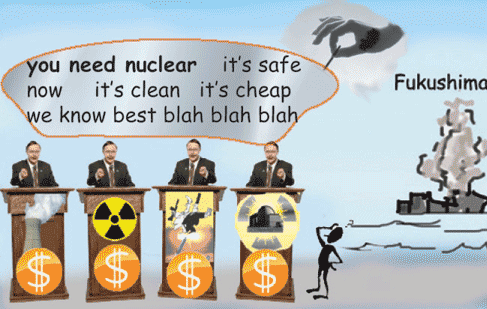 Disinformation is a component of any propaganda. The highly paid technocrats and advocates of “peaceful uses of the atom” increasingly use disinformation to repress and control public protest against nuclear pollution and environmental injustice.
As a former employee of two US national nuclear labs, Lawrence Livermore National Laboratory and Los Alamos National Laboratory, and after having seen what I have seen, NO, I am NOT an advocate of nuclear power. Unfortunately, most so-called experts on these issues talk in front of a blackboard, but that is not what nuclear materials are; they are not theory and calculations on paper, as most academics around the world seem to think, but destructive beasts that kill people without any discrimination. Let them go and get dressed like astronauts with breathing masks, and experience nuclear accidents, and be contaminated first hand, and see after that if they will still favor nuclear energy.
I was trained as a handler of nuclear materials, and I experienced how easy it is for contamination to occur and how difficult it is to clean up. I experienced the brainwashing and deception by the nuclear system advocates. During training, we were told that nuclear radiation is just like the light from sun, but when a “little accident” did occur, my co-workers were brought to the hospital immediately for treatment and then fired from the job within one month. Technical equipment of hundreds of thousands of dollars had to be trashed due to contamination. I witnessed explosions, and virtually all instances were due to human error. I worked side by side with the designers of storage cans for nuclear waste, I did research on the behavior of nuclear waste, and I have published a number of technical reports on MOX (mixed oxide), Uranium and Plutonium. I have worked for hundreds of hours in two nuclear labs and my eyes have seen a lot.
When I realized that within the Lab, environmental or nonproliferation work was but an illusion, I decided to resign. My conscience simply does not allow me to work for the development or maintenance of nuclear weapons, particularly in such a dangerous environment.
A few months after I resigned, I received a letter from LLNL with the title: “Beryllium Medical Surveillance Testing for Former LLNL Employees”. In that letter, I was asked to participate in voluntary blood screening for possible Chronic Beryllium Disease, a disease that causes scarring of the lung tissue after a person inhales dust or fumes of beryllium, a toxic and relatively rare element that is created through nuclear fusion reactions. I was shocked to read that the same letter was sent to 28,000 other former LLNL workers. The reason I was shocked is that one of my friends was trying to win his legal case against the lab for beryllium exposure, but the Department of Energy (which oversees the national laboratories) had refused to accept his medical results, which were positive.
What happened as a result? A court decision was finally made. But that is the overarching ethos of the nuclear industry: contaminate people because of profit, refuse to admit it, and then contest it in court until there is no other choice but to finally admit it.
What Are The Financial Costs of Nuclear Energy? ……….http://wakeup-world.com/2015/09/27/cancer-coverups-and-contamination-the-real-cost-of-nuclear-energy/
Japan’s draconian new secrecy laws linked to Fukushima and nuclear radiation
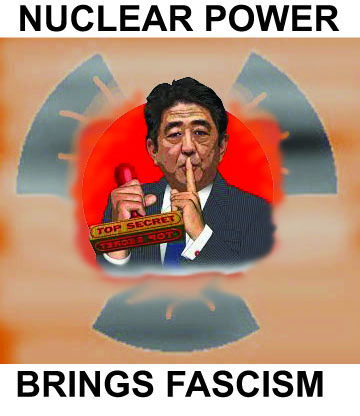 Fukushima Disaster Aftermath: Japanese Government Has Something to Hide. Sputnik News 24 Sept 15 Commenting on the aftermath of Fukushima disaster, US climate journalist Robert Hunziker suggests that the Japanese government has something to hide; “it must be really big,” the journalist notes, referring to the hard-hitting new secrecy law Tokyo has adopted.
The British Government is spreading untruths about the price of renewable energy.
What does all this add up to? The government, its Treasury department, its Chancellor George Osborne and its energy department, DECC, are grossly and presumably knowingly misrepresenting the relative costs of renewable energy and nuclear power.
And it’s all part of plan to force upon us a new generation of hyper-expensive nuclear power plants that will cost energy users through the nose until 2060 and beyond, putting the country on a ‘back to the future’ path to the 1950s, while wiser nations reap the benefits of cheap, clean renewable energy.
They must be stopped. And shame upon them!
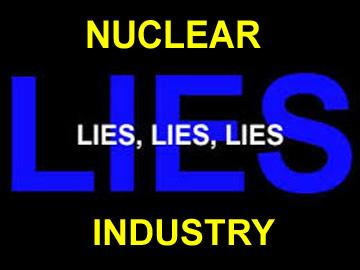
 Nuclear Lies About Renewable Energy http://www.counterpunch.org/2015/09/24/nuclear-lies-about-renewable-energy/ by OLIVER TICKELL There’s no doubt about it. The British Government is spreading untruths about the price of renewable energy.
Is it deliberate? One can only assume so owing to the consistency of the pattern and the equally consistent refusal to explain or correct its misleading statements.
The context is also significant: it’s always in the context of supporting nuclear power over renewable energy sources. Continue reading
Fukushima Disaster Aftermath: Japanese Government Has Something to Hide
 Commenting on the aftermath of Fukushima disaster, US climate journalist Robert Hunziker suggests that the Japanese government has something to hide; “it must be really big,” the journalist notes, referring to the hard-hitting new secrecy law Tokyo has adopted.
There is something sinister about the Japanese government’s optimistic claims that the notorious Fukushima Prefecture is largely safe for habitation, Los-Angeles based climate journalist Robert Hunziker notes, warning that scientific data published by third-party NGOs shows otherwise.
“The immediate direct exposure of radiation over population centers at Chernobyl was significantly more than Fukushima, where 80% drifted out into the Pacific Ocean. However, that may be slight solace because, horrifyingly, nobody knows where the Fukushima melted cores are located; it’s absolutely true, nobody knows whether the molten cores are within the containment vessels, outside of the vessels, deep in the ground, or cataclysmically traversing towards the water table,” Hunziker elaborated in his article for CounterPunch.
Meanwhile, Japan’s Prime Minister Abe’s government is encouraging people to move back into former restricted zones, claiming that “a whole lot of the mess outside of the immediate meltdown” has already been cleaned up.
Alas, it’s nearly impossible to give such an optimistic signal, since the Fukushima contamination still remains out of control, the journalist emphasized.
Citing nuclear expert Eben Harrell, the journalist underscored that some of the isotopes released during a nuclear catastrophe remain radioactive for tens of thousands of years. Remarkably, when asked in 2011 when the Chernobyl site would be inhabitable again, Igor Gramotkin, General Director of the Chernobyl Nuclear Power Plant, answered laconically: “At least 20,000 years.”
“One of the issues in trying to assess the dangers, as well as timing of recovery, for Fukushima is believability. Who can be trusted? In that regard, the Abe government’s enactment of strict extraordinarily broad secrecy laws, similar to WWII, with the threat of prison sentences up to 10 years for any violators of indeterminately wide-open secrecy laws undermines confidence in believability of the Japanese government, by definition,” Hunziker pointed out.
The journalist called attention to the latest radiation survey carried out by Greenpeace Japan, that has indicated that the Japanese government plans to move people to the areas where they could receive radiation doses of up to 20mSV annually for many years to come.According to international radiation protection standards, the recommended public exposure limit should not exceed 1mSv/year or less in non-post accidental situations.
“The radiation limit that excluded people from living in the 30km zone around the Chernobyl nuclear plant exclusion zone was set at 5mSV/year, five years after the nuclear accident. Over 100,000 people were evacuated from within the zone and will never return,” Greenpeace Japan’s report read.
The question arises why the Japanese government turns a blind eye to the fact that Fukushima residents would be exposed to 20mSV/year of radiation regardless of international norms and practices.
“Continued exposure to low-level radiation, entering the human body on a daily basis through food intake, is of particular consequence,” The Green Cross International 2015 Fukushima Report warned, as quoted by the journalist.
But that is not all, Hunziker stressed, referring to a worrisome report released by the National Institute of Radiological Science/Japan. The scientists are beating the environmental drum over the “strange growth patterns” of fir trees observed in Fukushima.About 98 percent of inspected fir trees within a 3.5 km zone surrounding Fukushima’s damaged nuclear power stations “have severe defects,” the journalist highlighted.
Furthermore, two hundred US sailors of the USS Reagan which participated in Operation Tomodachi (“Friends”), providing assistance to the infamous prefecture when it was struck by the earthquake and tsunami in March 2011, have filed a lawsuit against TEPCO, General Electric, EBASCO, Toshiba and Hitachi.
“The lawsuit includes claims for illnesses such as leukemia, ulcers, gall bladder removals, brain cancer, brain tumors, testicular cancer, dysfunctional uterine bleeding, thyroid illnesses, stomach ailments and a host of other complaints unusual in such young adults,” Hunziker underscored, elaborating that the sailors were most likely affected by radiation.
Inexplicably though, the Fukushima disaster still remains shrouded in secrecy. Moreover, the Abe government’s draconian new secrets law allows Japanese bureaucrats to conceal information from public and imprison journalists for “soliciting information that is classified a secret.”
It is obvious that Tokyo has something to hide and it must be really big, the journalist stressed, asking rhetorically: “Why else adopt a hard-hitting secrecy law on the heels of the worst disaster to hit Japan since America dropped A-bombs on Hiroshima and Nagasaki in 1945?”
How the USA govt covered up a nuclear meltdown, and radiation pollution in Southern California
Six weeks after the meltdown, the Atomic Energy Commission issued a press release saying that there had been a minor “fuel element failure” at Area Four’s largest reactor in July. But they said there had been “no release of radioactive materials” to the environment………
In 2012, the U.S. Environmental Protection Agency completed a $40 million soil test of the site and found 423 hot spots — places contaminated with high levels of man-made radiation.
 LA’s Nuclear Secret: Part 1 Tucked away in the hills above the San Fernando and Simi valleys was a 2,800-acre laboratory with a mission that was a mystery to the thousands of people who lived in its shadow 4 Southern California By Joel Grover and Matthew Glasser, 22 Sep 15 The U.S. government secretly allowed radiation from a damaged reactor to be released into air over the San Fernando and Simi valleys in the wake of a major nuclear meltdown in Southern California more than 50 years ago — fallout that nearby residents contend continues to cause serious health consequences and, in some cases, death.
LA’s Nuclear Secret: Timelines, Documents, FAQ
Those are the findings of a yearlong NBC4 I-Team investigation into “Area Four,” which is part of the once-secret Santa Susana Field Lab. Founded in 1947 to test experimental nuclear reactors and rocket systems, the research facility was built in the hills above the two valleys. In 1959, Area Four was the site of one of the worst nuclear accidents in U.S. history. But the federal government still hasn’t told the public that radiation was released into the atmosphere as a result of the partial nuclear meltdown.
Now, whistleblowers interviewed on camera by NBC4 have recounted how during and after that accident they were ordered to release dangerous radioactive gases into the air above Los Angeles and Ventura counties, often under cover of night, and how their bosses swore them to secrecy.
In addition, the I-Team reviewed over 15,000 pages of studies and government documents, and interviewed other insiders, uncovering that for years starting in 1959, workers at Area Four were routinely instructed to release radioactive materials into the air above neighboring communities , through the exhaust stacks of nuclear reactors , open doors, and by burning radioactive waste.
How It Began Continue reading
Clusters of Cancer – the shameful nuclear secret of Santa Susana Field Lab’s “Area Four,”
 LA’s Nuclear Secret: Part 1 Tucked away in the hills above the San Fernando and Simi valleys was a 2,800-acre laboratory with a mission that was a mystery to the thousands of people who lived in its shadow 4 Southern California By Joel Grover and Matthew Glasser, 22 Sep 15
“………..Researchers inside and out of government have contended that the radiation and toxic chemicals from Santa Susana might have caused many cancer cases. “The radiation that was released in 1959 and thereafter from Santa Susana is still a danger today,” Dr.Dodge said. “There is absolutely a link between radiation and cancer.”
The I-Team tracked down dozens of people diagnosed with cancer and other illnesses who grew up in the shadow of Santa Susana — in Canoga Park, West Hills, Chatsworth, Thousand Oaks, Simi Valley. Many of them believeh their cancers were caused by radiation and chemicals from the field lab.
Kathryn Seltzer Carlson, 56, and her sisters, Judy and Jennifer, all grew up in Canoga Park around the time of the nuclear meltdown and for years after, and all have battled cancer. “I played in the water, I swam in the water, I drank the water” that ran off the Santa Susana Field Lab, said Carlson, who finished treatment for ovarian cancer earlier this year and is now undergoing chemotherapy for lymphoma. “I’ve had, I don’t know how many cancers.”
Bonnie Klea, a former Santa Susana employee who has lived in West Hills since the 60s, also battled bladder cancer, which is frequently linked to radiation exposure. “Every single house on my street had cancer,” Klea said. A 2007 Centers for Disease Control study found that people living within two miles of the Santa Susana site had a 60 percent higher rate of some cancers.
“There’s some provocative evidence,” said Dr. Hal Morgenstern, an epidemiologist who oversaw the study. “It’s like circumstantial evidence, suggesting there’s a link” between the contamination from Santa Susana and the higher cancer rates.
Silence From the Government
For more than two months, the I-Team asked to speak with someone from the U.S. Department of Energy (DOE), the federal agency that’s responsible for all nuclear testing, to ask why workers were ordered to release dangerous radiation over Los Angeles, why the DOE has never publicly admitted this happened, and what it plans to do to help get the site cleaned up.
The DOE emailed the I-Team, “We will not have anyone available for this segment.”
So the I-Team showed up at a public meeting this month about Santa Susana and asked the DOE’s project manager for the site, Jon Jones, to speak with us. He walked away and wouldn’t speak.
Will the Contamination Ever Be Cleaned Up?
Community residents, many stricken with cancer and other radiation-related illnesses, have been fighting for years to get the government and the private owners of the Santa Susana Field Lab to clean up the contamination that remains on the site.
But efforts in the state legislature and state agencies that oversee toxic sites have, so far, stalled. But residents, with the support of some lawmakers, continue to fight for a full cleanup. “People are continuing to breathe that (radiation) in and to die,” Chatsworth resident Arline Mathews said.”See that this is done immediately, before more lives are lost.” http://www.nbclosangeles.com/investigations/LA-Nuclear-Secret-327896591.html
The real reason the Nuclear Regulatory Commission cancelled its cancer research
 Nuclear power kills! The real reason the NRC cancelled its nuclear site
  cancerstudy http://www.theecologist.org/News/news_analysis/2985492/nuclear_power_kills_the_real_reason_the_nrc_cancelled_its_nuclear_site_cancer_study.html Chris Busby 19th September 2015
The US’s Nuclear Regulatory Commission just cancelled its study into cancer near nuclear plants citing the ‘excessive cost’ of $8 million, writes Chris Busby. Of course that’s rubbish – similar studies in the UK have been carried out for as little as £600 per site, and in any case $8 million is small change for the NRC. The real reason is to suppress the unavoidable conclusion: nuclear power kills.
After spending some $1.5 million and more than five years on developing strategies to answer the question of increases of cancer near nuclear facilities, the US Nuclear Regulatory Commission (NRC) last week reported that they would not continue with the process. They would knock it on the head [1].
This poisoned chalice has been passed between the US National Academy of Sciences (NAS) and the NRC since 2009 when public and political pressure was brought to bear on the USNRC to update a 1990 study of the issue, a study which was widely seen by the public to be a whitewash.
Dr Chris Busby at the Royal Society on Scientific Dishonesty
The NCR quickly passed the unwelcome task up to the NAS. It requested that the NAS provide an assessment of cancer risks in populations living ‘near’ the NRC-licenced nuclear facilities that utilize and process Uranium. This included 104 operating nuclear reactors in 31 States and 13 fuel cycle facilities in operation in 10 States.
The NRC request was to be carried out by NAS in two phases. Phase 1 was a scoping study to inform design of the study to be begun in Phase 2 and to recommend the best organisation to carry out the work.
The Phase 1 report was finished in May 2012. The best ‘state of the art’ methods were listed and the job of carrying out the actual study, a pilot study, was sent to: Guess who? The NRC. The poisoned chalice was back home. The NRC was now in a corner: what could they do?
If you don’t like the truth … suppress it Continue reading
1 This Month
26 September – International Day for the Total Elimination of Nuclear Weapons





PLEASE OPPOSE HR 8255 AND S.3639 – bills would accelerate satellite deployment, with no environmental review or safeguards – https://ncstd5li.quorum.us/campaign/169331/
To see nuclear-related stories in greater depth and intensity – go to https://nuclearinformation.wordpress.com
-
Archives
- September 2026 (281)
- August 2026 (330)
- July 2026 (355)
- June 2026 (287)
- May 2026 (306)
- April 2026 (356)
- March 2026 (251)
- February 2026 (267)
- January 2026 (308)
- December 2025 (358)
- November 2025 (359)
- October 2025 (375)
-
Categories
- 1
- 1 NUCLEAR ISSUES
- business and costs
- climate change
- culture and arts
- ENERGY
- environment
- health
- history
- indigenous issues
- Legal
- marketing of nuclear
- media
- opposition to nuclear
- PERSONAL STORIES
- politics
- politics international
- Religion and ethics
- safety
- secrets,lies and civil liberties
- spinbuster
- technology
- Uranium
- wastes
- weapons and war
- Women
- 2 WORLD
- ACTION
- AFRICA
- Atrocities
- AUSTRALIA
- Christina's notes
- Christina's themes
- culture and arts
- Events
- Fuk 2022
- Fuk 2023
- Fukushima 2017
- Fukushima 2018
- fukushima 2019
- Fukushima 2020
- Fukushima 2021
- general
- global warming
- Humour (God we need it)
- Nuclear
- RARE EARTHS
- Reference
- resources – print
- Resources -audiovicual
- Weekly Newsletter
- World
- World Nuclear
- YouTube
-
RSS
Entries RSS
Comments RSS

