Witnesses say the Israeli army is using facial recognition technology in its assault on north Gaza
Witnesses told Mondoweiss that after the army scans people’s faces, most people are detained for field interrogations. During these encounters, soldiers use what Ishaaq al-Daour describe as “psychological tactics” to unsettle the people being questioned, claiming that they know everything about their lives and that if they lie in their answers, “they will be killed.”
Witness testimony from northern Gaza shows that Israel is using facial recognition technology to organize how it conducts mass arrests and forcible displacement. Some Palestinians say the technology is also being used to carry out field executions.
By Tareq S. Hajjaj October 31, 2024
Ishaaq al-Daour, 32, was sheltering with his family at the UN-run Abu Hussein School in Jabalia refugee camp when the Israeli army stormed the shelter on October 20, forcing over 700 hundred people out of the school and leading them into a large ditch that had been dug in advance by the military.
“They made all of the men go down into the ditch first,” al-Daour told Mondoweiss from the Remal neighborhood in Gaza City. “Then they ordered us to climb out of the ditch one by one and stood each of us in front of a camera that had been installed nearby.”
The army made the men stand in front of the “camera” for at least three minutes per person, al-Daour said, long enough for the cameras to scan their faces and reveal personal data seemingly already stored in the Israeli military’s system. After the scans, al-Daour said the soldiers would reveal information about each individual, including their “name, age, work, family members and names, place of residence, and even their personal activities.”
“When they suspected someone, they took him away [to an unknown location” al-Daour said. As for those who had relatives who belonged to Palestinian resistance movements or who personally belonged to resistance factions, al-Daour speculated that “their fate was immediate death,” citing stories he had heard from others in Gaza, whose friends and relatives were taken at checkpoints and had not been seen again, or who returned to Gaza in body bags.
Al-Daour is one of the thousands of people who were expelled from the Jabalia refugee camp in northern Gaza and ordered to move south at gunpoint by the Israeli army. The forced exodus of thousands out of Jabalia is part of an Israeli offensive on northern Gaza that started on October 5. Its objective is to implement a proposal put forward by a group of senior Israeli generals that aims to empty northern Gaza of its inhabitants through starvation and bombardment, the so-called “Generals’ Plan.”
Survivors from Jabalia like al-Daour report that the Israeli army is using facial recognition technology to screen residents in the ongoing assault, often identifying people from long distances and picking them out from a crowd.
Witnesses say that the Israeli army has set up security checkpoints throughout northern Gaza where the facial recognition technology is being deployed. The military is also reportedly using this technology when it storms shelters for the displaced. Witnesses report that in these cases Israeli forces will corral people in enclosed places, usually ditches dug by military bulldozers, and process them individually.
Mondoweiss spoke to several survivors from Jabalia, who said that the Israeli army is using quadcopter drones to “identify people immediately from a distance,” and that soldiers are stopping people at checkpoints to conduct “camera scans” that lasts for several minutes. Witnesses say these were particularly unnerving as they stood awaiting an uncertain fate. Witnesses also report that the army picked people out of a crowd at checkpoints using what they described as a “red laser pointer” that was either mounted on a tank or on a soldier’s rifle.
Witnesses told Mondoweiss that after the army scans people’s faces, most people are detained for field interrogations. During these encounters, soldiers use what Ishaaq al-Daour describe as “psychological tactics” to unsettle the people being questioned, claiming that they know everything about their lives and that if they lie in their answers, “they will be killed.”
The questions are typically wide-ranging, al-Daour said. “They ask us about our relatives, our neighbors, the movements of the resistance fighters on the ground, who we know from them, and who they are. They convince us that they already know everything about us by mentioning intimate details about our lives, and then they threaten us with killing if we lie.”
Israel’s use of facial recognition throughout the war
While Mondoweiss could not independently verify the nature of the “cameras” being described by witnesses, the use of facial scanning and facial recognition technology by the Israeli army has been well documented.
Facial recognition technology used by Israel pulls from a database of information about Palestinians that has been built up over the years, including on Palestinians in the West Bank. One of those databases is called Wolf Pack, which according to Amnesty International, contains extensive information on Palestinians in the West Bank and Gaza, “including where they live, who their family members are, and whether they are wanted for questioning by Israeli authorities.”
In the old city of Hebron in the southern West Bank, Israeli surveillance cameras use a facial recognition system called Red Wolf on Palestinians who pass through checkpoints in the city. “Their face is scanned, without their knowledge or consent, and compared with biometric entries in databases which exclusively contain information about Palestinians,” Amnesty described in a May 2023 report.
It is unclear whether the facial recognition technology used throughout the ongoing assault on northern Gaza is the Red Wolf system or the other systems that the Israeli army has been reported to have used throughout the war on Gaza. In March, the New York Times reported that Israel’s cyber-intelligence division Unit 8200 used facial recognition technology developed by Corsight, an Israeli company, in combination with Google Photos. Together, these technologies enabled “Israel to pick faces out of crowds and grainy drone footage,” the Times said.
Likewise, it’s unclear whether these facial recognition systems are drawing upon data from Wolf Pack or another Israeli database, but media attention has recently focused on how that data is being processed and generated through a number of controversial AI programs to identify potential targets. Programs like “Lavender,” “The Gospel,” and “Where’s Daddy” have pushed Human Rights Watch to warn against their use of “faulty data and inexact approximations to inform military actions.” Several media exposés have also shown how some of these AI systems loosely identify civilians as targets for assassination or alert the Israeli army to target members of Hamas when they are with their families.
Testimonies gathered by Mondoweiss for this report and in previous reporting confirm that the brutal Israeli invasion in northern Gaza is utilizing these technologies as a means of organizing how it conducts mass arrests, field executions, and ethnic cleansing.
‘It was the most terrifying moment in my life’
Hiba al-Fram is one of the displaced people who passed through the army’s checkpoints during the Jabalia invasion. She says she was subjected to a facial and retinal scan, an experience she described as terrifying.
“Everyone was standing in the line, men and women, and everyone held up their IDs in their hands. Soldiers were using lasers to check our ID cards from a distance before we reached them,” she told Mondoweiss. Mondoweiss could not confirm what lasers the military was using.
Al-Fram said that the army picked people out of the queue using a “laser” pointer affixed to a tank. She described the army shining the laser on the ID cards and calling on people to advance towards the checkpoint, where the soldiers set up a camera.
“The soldiers arrested over 100 men in front of my eyes; they arrested them in front of their wives, and they were beating them, cursing them, and threatening to kill them and their families. Many wives saw their husbands in this situation.”
“The soldiers were telling the women: ‘We will kill you by a sniper bullet, we will run over your skulls with tanks, we will stone you to death, we will make you bleed to death,’” al-Fram continued. “The women were terrified and thought they would be killed.”
Then, the soldiers would gather five women at a time and walk them to a security check or a scan of the face or eye. “They arrested two women in front of me from the crowd based on their face scans. People later said they were relatives of people known to be members of armed factions, but they were women. They were carrying children.”
“The soldiers ordered them to give their children to other women. The mothers started to panic like crazy. They looked around frantically for any woman they knew to give their children to,” al-Fram continued.
“We would walk towards the face-scanning point in utter terror in our hearts, walking between dozens of tanks and soldiers pointing their weapons at us. And we would stand there for 3 or 5 minutes. They were the worst minutes of my life. A person’s fate was decided based on that scan: either arrest, beating and humiliation, or release them and force them to leave towards the south.”
After the soldiers take the face scan, the questions about neighbors and relatives begin. “They asked us where they are, where we can find them, when we last saw them. We did not know anything about these details, so we did not lie when we said we did not know. They would threaten us that if we lied, they would uncover the lie and shoot us immediately.”
Of all the terrifying moments experienced by residents of northern Gaza, many say that they experienced their most terrifying moments when they were stopped at an Israeli checkpoint.
“The most terrifying and frightening moments were the moments when you stand in front of the camera to get your face scanned,” Abdul Karim al-Zuwaidi, a journalist in northern Gaza, told Mondoweiss.
Before al-Zuwaidi reached the facial recognition point on his way toward Gaza City, he saw many young men being arrested by the army. As a Palestinian journalist working in the Gaza Strip, he like many of his colleagues is at particular risk of being targeted.
“The minutes we stand in front of the camera feel like years,” al-Zuwaidi said. “As a journalist conveying our message to the world, I was terrified.”
Al-Zuwaidi said that during their march south, many Jabalia residents would attempt to avoid upcoming checkpoints, often to no avail. “We had heard the stories about the checkpoints and how they were arresting people, so we tried in whatever way possible to avoid passing through them, but there was no way of escaping.”
“When we are examined, and the scan shows that one of us will be arrested, the soldiers start beating and cursing them before they take them away and they disappear. We saw this scene play out in front of us for dozens of young men.” Al-Zuwaidi did not see himself what information was revealed to the soldiers by the scans, but he said the soldiers would repeat aloud what details they were seeing on their screens, including peoples’ personal information, names, relatives, and more.
While people were waiting for the scan, al-Zuwaidi said that soldiers would curse at and beat the young men. The army severely beat al-Zuwaidi while he was standing and waiting for his turn. “They were dirty in their treatment of us,” he said. “But what can we say in response to a military armed with all these weapons and ready to kill?”
“They used every humiliating method against ordinary people,” he added.
Literary Institutions Are Pressuring Authors to Remain Silent About Gaza
Requiring authors remain silent about war at the risk of losing their livelihoods is not only ironic but also sinister.
By Lisa Ko , Truthout, October 25, 2024
When writer and disability justice activist Alice Wong received a MacArthur Fellowship earlier this month, she shared a statement about accepting it “amidst the genocide happening in Gaza.” The backlash was swift, with a deluge of posts on X attacking Wong’s character and accusing her of antisemitism.
This conflation of opposition to Israel’s military action with hatred of Jewish people is only one part of a broader wave of political and social repression that is attempting to silence writers speaking out against the war. In the past month alone, authors who have criticized Israel’s ongoing bombardment of Gaza — which is funded largely by the U.S. — have been labeled extremists, been suspended and fired from faculty jobs, and targets of defamation and harassment.
I had my own recent experience with the latter following an incident with the New York State Writers Institute’s Albany Book Festival. ………………………………………………………………………………………………………………………………….. more https://truthout.org/articles/literary-institutions-are-pressuring-authors-to-remain-silent-about-gaza/
Finally Free, Assange Receives a Measure of Justice From the Council of Europe
In the U.S., “the concept of state secrets is used to shield executive officials from criminal prosecution for crimes such as kidnapping and torture, or to prevent victims from claiming damages,” the resolution notes. But “the responsibility of State agents for war crimes or serious human rights violations, such as assassinations, enforced disappearances, torture or abductions, does not constitute a secret that must be protected.”
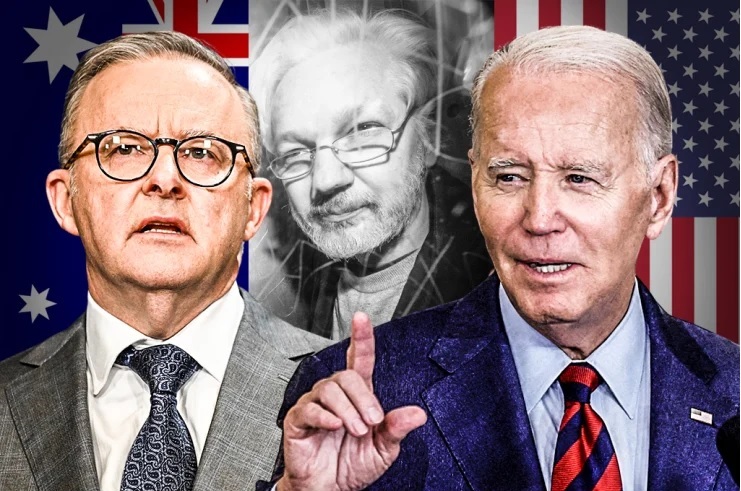
In his first public statement since his release, Assange said, “I’m free today … because I pled guilty to journalism.”
By Marjorie Cohn , Truthout, October 4, 2024
he Parliamentary Assembly of the Council of Europe (PACE), Europe’s foremost human rights body, overwhelmingly adopted a resolution on October 2 formally declaring WikiLeaks founder Julian Assange a political prisoner. The Council of Europe, which represents 64 nations, expressed deep concern at the harsh treatment suffered by Assange, which has had a “chilling effect” on journalists and whistleblowers around the world.
In the resolution, PACE notes that many of the leaked files WikiLeaks published “provide credible evidence of war crimes, human rights abuses, and government misconduct.” The revelations also “confirmed the existence of secret prisons, kidnappings and illegal transfers of prisoners by the United States on European soil.”
According to the terms of a plea deal with the U.S. Department of Justice, Assange pled guilty on June 25 to one count of conspiracy to obtain documents, writings and notes connected with the national defense under the U.S. Espionage Act. Without the deal, he was facing 175 years in prison for 18 charges in an indictment filed by the Trump administration and pursued by the Biden administration, stemming from WikiLeaks’ publication of evidence of war crimes committed by the U.S. in Iraq, Afghanistan and Guantánamo Bay. After his plea, Assange was released from custody with credit for the five years he had spent in London’s maximum-security Belmarsh Prison.
The day before PACE passed its resolution, Assange delivered a powerful testimony to the Council of Europe’s Committee on Legal Affairs and Human Rights. This was his first public statement since his release from custody four months ago, after 14 years in confinement – nine in the Ecuadorian Embassy in London and five in Belmarsh. “Freedom of expression and all that flows from it is at a dark crossroads,” Assange told the parliamentarians.
A “Chilling Effect and a Climate of Self-Censorship”
The resolution says that “the disproportionately harsh charges” the U.S. filed against Assange under the Espionage Act, “which expose him to a risk of de facto life imprisonment,” together with his conviction “for — what was essentially — the gathering and publication of information,” justify classifying him as a political prisoner, under the definition set forth in a PACE resolution from 2012 defining the term. Assange’s five-year incarceration in Belmarsh Prison was “disproportionate to the alleged offence.”
Noting that Assange is “the first publisher to be prosecuted under [the Espionage Act] for leaking classified information obtained from a whistleblower,” the resolution expresses concern about the “chilling effect and a climate of self-censorship for all journalists, editors and others who raise the alarm on issues that are essential to the functioning of democratic societies.” The resolution also notes that “information gathering is an essential preparatory step in journalism” which is protected by the right to freedom of expression guaranteed by the European Court of Human Rights.
The resolution cites the conclusion of Nils Melzer, UN Special Rapporteur on torture and other cruel, inhuman or degrading treatment or punishment, that Assange had been exposed to “increasingly severe forms of cruel, inhuman or degrading treatment or punishment, the cumulative effects of which can only be described as psychological torture.”
Condemning “transnational repression,” PACE was “alarmed by reports that the CIA was discreetly monitoring Mr. Assange in the Ecuadorian embassy in London and that it was allegedly planning to poison or even assassinate him on British soil.” The CIA has raised the “state secrets” privilege in a civil lawsuit filed by two attorneys and two journalists over that illegal surveillance.
In the U.S., “the concept of state secrets is used to shield executive officials from criminal prosecution for crimes such as kidnapping and torture, or to prevent victims from claiming damages,” the resolution notes. But “the responsibility of State agents for war crimes or serious human rights violations, such as assassinations, enforced disappearances, torture or abductions, does not constitute a secret that must be protected.”
Moreover, the resolution expresses deep concern that, according to publicly available evidence, no one has been held to account for the war crimes and human rights violations committed by U.S. state agents and decries the “culture of impunity.”
The resolution says there is no evidence anyone has been harmed by WikiLeaks’ publications and “regrets that despite Mr Assange’s disclosure of thousands of confirmed — previously unreported — deaths by U.S. and coalition forces in Iraq and Afghanistan, he has been the one accused of endangering lives.”
Assange’s Testimony
The testimony Assange provided to the committee was poignant. “I eventually chose freedom over realizable justice … Justice for me is now precluded,” Assange testified. “I am not free today because the system worked. I am free today after years of incarceration because I pled guilty to journalism.” He added, “I pled guilty to seeking information from a source. I pled guilty to obtaining information from a source. And I pled guilty to informing the public what that information was.” His source was whistleblower Chelsea Manning, who provided the documents and reports to WikiLeaks. “Journalism is not a crime,” Assange said. “It is a pillar of a free and informed society.”………………………………………………………………………………
PACE Urges US to Investigate War Crimes
The resolution calls on the U.S., the U.K., the member and observer States of the Council of Europe, and media outlets to take actions to address its concerns.
It calls on the U.S., an observer State, to reform the Espionage Act of 1917 to exclude from its operation journalists, editors and whistleblowers who disclose classified information with the aim of informing the public of serious crimes, such as torture or murder. In order to obtain a conviction for violation of the Act, the government should be required to prove a malicious intent to harm national security. It also calls on the U.S. to investigate the allegations of war crimes and other human rights violations exposed by Assange and Wikileaks.
PACE called on the U.K. to review its extradition laws to exclude extradition for political offenses, as well as conduct an independent review of the conditions of Assange’s treatment while at Belmarsh, to see if it constituted torture, or inhuman or degrading treatment.
In addition, the resolution urges the States of the Council of Europe to further improve their protections for whistleblowers, and to adopt strict guidelines to prevent governments from classifying documents as defense secrets when not warranted.
Finally, the resolution urges media outlets to establish rigorous protocols for handling and verifying classified information, to ensure responsible reporting and avoid any risk to national security and the safety of informants and sources.
Although PACE doesn’t have the authority to make laws, it can urge the States of the Council of Europe to take action. Since Assange never had the opportunity to litigate the denial of his right to freedom of expression, the resolution of the Council of Europe is particularly significant as he seeks a pardon from U.S. President Joe Biden. https://truthout.org/articles/finally-free-assange-receives-a-measure-of-justice-from-the-council-of-europe/
Unrealisable Justice: Julian Assange in Strasbourg
October 2, 2024, by: Dr Binoy Kampmark, https://theaimn.com/unrealisable-justice-julian-assange-in-strasbourg/
It was good to hear that voice again. A voice of provoking interest that pitter patters, feline across a parquet, followed by the usual devastating conclusion. Julian Assange’s last public address was made in the Ecuadorian Embassy in London. There, he was a guest vulnerable to the capricious wishes of changing governments. At Belmarsh Prison in London, he was rendered silent, his views conveyed through visitors, legal emissaries and his family.
The hearing in Strasbourg on October 1, organised by the Committee on Legal Affairs and Human Rights of the Parliamentary Assembly of the Council of Europe (PACE), arose from concerns raised in a report by Iceland’s Thórhildur Sunna Ævarsdóttir, in which she expressed the view that Assange’s case was “a classic example of ‘shooting the messenger’.” She found it “appalling that Mr Assange’s prosecution was portrayed as if it was supposed to bring justice to some unnamed victims the existence of whom has never been proven, whereas perpetrators of torture or arbitrary detention enjoy absolute impunity.”
His prosecution, Ævarsdóttir went onto explain, had been designed to obscure and deflect the revelations found in WikiLeaks’ disclosures, among them abundant evidence of war crimes committed by US and coalition forces in Iraq and Afghanistan, instances of torture and arbitrary detention in the infamous Guantánamo Bay camp facility, illegal rendition programs implicating member states of the Council of Europe and unlawful mass surveillance, among others.
A draft resolution was accordingly formulated, expressing, among other things, alarm at Assange’s treatment and disproportionate punishment “for engaging in activities that journalists perform on a daily basis” which made him, effectively, a political prisoner; the importance of holding state security and intelligence services accountable; the need to “urgently reform the 1917 Espionage Act” to include conditional maliciousness to cause harm to the security of the US or aid a foreign power and exclude its application to publishers, journalists and whistleblowers.
Assange’s full testimony began with reflection and foreboding: the stripping away of his self in incarceration, the search, as yet, for words to convey that experience, and the fate of various prisoners who died through hanging, murder and medical neglect. While filled with gratitude by the efforts made by PACE and the Legal Affairs and Human Rights Committee, not to mention innumerable parliamentarians, presidents, prime ministers, even the Pope, none of their interventions “should have been necessary.” But they proved invaluable, as “the legal protections that did exist, many existed only on paper or were not effective in any remotely reasonable time frame.”
The legal system facing Assange was described as encouraging an “unrealisable justice”. Choosing freedom instead of purgatorial process, he could not seek it, the plea deal with the US government effectively barring his filing of a case at the European Court of Human Rights or a freedom of information request. “I am not free today because the system worked,” he insisted. “I am free today because after years of incarceration because I plead guilty to journalism. I plead guilty to seeking information from a source. I plead guilty to informing the public what that information was. I did not plead guilty to anything else.”
When founded, WikiLeaks was intended to enlighten people about the workings of the world. “Having a map of where we are lets us understand where we might go.” Power can be held to account by those informed, justice sought where there is none. The organisation did not just expose assassinations, torture, rendition and mass surveillance, but “the policies, the agreements and the structures behind them.”
Since leaving Belmarsh prison, Assange rued the abstracting of truth. It seemed “less discernible”. Much ground had been “lost” in the interim; truth had been battered, “undermined, attacked, weakened and diminished. I see more impunity, more secrecy, more retaliation for telling the truth and more self–censorship
Much of the critique offered by Assange focused on the source of power behind any legal actions. Laws, in themselves, “are just pieces of paper and they can be reinterpreted for political expedience.” The ruling class dictates them and reinterprets or changes them depending on circumstances.
In his case, the security state “was powerful enough to push for a reinterpretation of the US constitution,” thereby denuding the expansive, “black and white” effect of the First Amendment. Mike Pompeo, when director of the Central Intelligence Agency, simply lent on Attorney General William Barr, himself a former CIA officer, to seek the publisher’s extradition and re-arrest of Chelsea Manning. Along the way, Pompeo directed the agency to draw up plans of abduction and assassination while targeting Assange’s European colleagues and his family.
The US Department of Justice, Assange could only reflect, cared little for moderating tonic of legalities – that was something to be postponed to a later date. “In the meantime, the deterrent effect that it seeks, the retributive actions that it seeks, have had their effect.” A “dangerous new global legal position” had been established as a result: “Only US citizens have free speech rights. Europeans and other nationalities do not have free speech rights.”
PACE had, before it, an opportunity to set norms, that “the freedom to speak and the freedom to publish the truth are not privileges enjoyed by a few but rights guaranteed to all”. “The criminalisation of newsgathering activities is a threat to investigative journalism everywhere. I was formally convicted, by a foreign power, for asking for, receiving, and publishing truthful information about that power while I was in Europe.”
A spectator, reader or listener might leave such an address deflated. But it is fitting that a man subjected to the labyrinthine, life-draining nature of several legal systems should be the one to exhort to a commitment: that all do their part to keep the light bright, “that the pursuit of truth will live on, and the voices of the many are not silenced by the interests of the few.”
Assange to Testify at Council of Europe
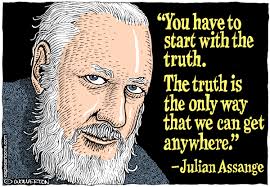
The freed publisher will appear in person in Strasbourg on Oct. 1 to address the Council of Europe, WikiLeaks said today.
September 24, 2024, By Joe Lauria, Consortium News
WikiLeaks publisher Julian Assange, who was released from prison in June, will address the Council of Europe in Strasbourg, France on Oct. 1 after he was granted Status as a Political Prisoner by a rapporteur of the Parliamentary Assembly of the Council of Europe (PACE), WikiLeaks said today.
It will be the first time Assange will speak in public since his hearing in U.S. federal court on the North Mariana islands in June, at which he was granted his release after a plea deal.
Assange will give evidence before the Committee on Legal Affairs and Human Rights of the Parliamentary Assembly of the Council of Europe (PACE), which will meet from 8.30am to 10am at the Palace of Europe, WikiLeaks said.
It follows the PACE inquiry report into Assange’s case, written by Rapporteur Thórhildur Sunna Ævarsdóttir.
“The report focuses on the implications of his detention and its broader effects on human rights, in particular freedom of journalism,” WikiLeaks said in a press release published on X. “The report confirms that Assange qualifies as a political prisoner and calls on the UK [to] conduct an independent review into whether he was exposed to inhuman or degrading treatment.”
Ævarsdóttir called Assange’s case a “high profile example of transnational repression.” Her report “discusses how governments employ both legal and extralegal measures to suppress dissent across borders, which poses significant threats to press freedom and human rights,” said WikiLeaks.
Still Recovering
Assange is “still in recovery following his release from prison,” it said. He will travel to France because of “the exceptional nature of the invitation and to embrace the support received from PACE and its delegates over the past years”………………………………………………………. more https://consortiumnews.com/2024/09/24/assange-to-testify-at-council-of-europe/
Rich countries silencing climate protest while preaching about rights elsewhere, says study

Report says governments in global north increasingly using draconian measures while criticising similar tactics in global south
Matthew Taylor, Tue 10 Sep 2024 https://www.theguardian.com/environment/article/2024/sep/10/climate-rights-report-draconian-measures-protest
Wealthy, democratic countries in the global north are using harsh, vague and punitive measures to crack down on climate protests at the same time as criticising similar draconian tactics by authorities in the global south, according to a report.
A Climate Rights International report exposes the increasingly heavy-handed treatment of climate activists in Australia, Germany, France, the Netherlands, Sweden, the UK and the US.
It found the crackdown in these countries – including lengthy prison sentences, preventive detention and harassment – was a violation of governments’ legal responsibility to protect basic rights to freedom of expression, assembly, and association.
It also highlights how these same governments frequently criticise regimes in developing countries for not respecting the right to protest peacefully.
“Governments too often take such a strong and principled view about the right to peaceful protest in other countries – but when they don’t like certain kinds of protests at home they pass laws and deploy the police to stop them,” said Brad Adams, director at Climate Rights International.
Across Europe, the US and the UK, authorities have responded to non-violent climate protests with mass arrests and draconian new laws that have resulted in long prison sentences. In some instances those who have taken part have been labelled as hooligans, saboteurs or ecoterrorists by politicians and the media.
Senior human rights advocates and environmental campaigners have raised concerns about the crackdown and called on governments to protect the right to non-violent protest.
“These defenders are basically trying to save the planet, and in doing so save humanity,” Mary Lawlor, the UN special rapporteur on human rights defenders, told the Guardian last year. “These are people we should be protecting, but are seen by governments and corporations as a threat to be neutralised. In the end it’s about power and economics.”
The escalating climate crisis has resulted in record-breaking temperatures around the world in 2024, driving food shortages, mass movements of people and economic hardship – as well as deadly fires and floods.
But the report found that rather than taking urgent measures to rapidly reduce the use of fossil fuels and halt ecological collapse, many relatively wealthy countries have instead focused on those trying to stop those raising the alarm by taking part in protests and civil disobedience.
“You don’t have to agree with the tactics of climate activists to understand the importance of defending their rights to protest and to free speech,” said Adams. “Instead of jailing climate protesters and undermining civil liberties, governments should heed their call to take urgent action to address the climate crisis.”
The report’s authors highlighted several examples of developed countries lauding the importance of the right to protest on the international stage at the same time as undertaking harsh and punitive crackdowns at home.
Welcoming a UN report in July this year, the UK government said: “These rights [to peaceful assembly and protest] are essential to the functioning of society, providing a platform for citizens to advocate for positive change. Nonetheless, civic space is increasingly contested as authoritarian governments and actors, who feel vulnerable to scrutiny and accountability, seek to silence dissent.”
Tuesday’s report also found:
- Record prison sentences for non violent protest in several countries including the UK, Germany and the US.
- Preemptive arrests and detention for those suspected of planning peaceful protests.
- Draconian new laws passed to make the vast majority of peaceful protest illegal.
- Measures to stop juries hearing about people’s motivation for taking part in protests during court cases, which critics say fundamentally undermines the right to a fair trial.
Climate Rights International called on democratic governments around the world to halt the authoritarian crackdown and protect people’s rights to protest.
“Governments should see climate protesters and activists as allies in the fight against climate change, not criminals,” said Adams. “The crackdown on peaceful protests is not only a violation of their basic rights, it can also be used by repressive governments as a green light to go after climate, environmental, and human rights defenders in their countries.”
UK arrests TWO prominent anti-genocide journalists under ‘anti-terrorism’ laws, as West ramps up attacks on dissenters

Human rights activist Sarah Wilkinson arrested by UK police
Her arrest follows the detention of Syrian-British journalist Richard Medhurst in London and Telegram founder Pavel Durov in Paris
News Desk, AUG 29, 2024, https://thecradle.co/articles-id/26634
British human rights activist and social media influencer Sarah Wilkinson was arrested by UK police on 29 August, reportedly over “content she posted online.”
“The police came to her house just before 7.30am. [Twelve] of them in total, some of them in plain clothes from the counter-terrorism police. They said she was under arrest for ‘content that she has posted online.’ Her house is being raided, and they have seized all her electronic devices,” Jack Wilkinson is quoted as saying by the social media account Suppressed News.
“The pro-genocide UK regime has arrested [MENAUncensored’s] roving reporter and Human Rights Activist Sarah Wilkinson for supporting the Palestinian resistance and relaying what is really happening in Gaza and the West Bank to the world,” MENA Uncensored announced via social media, alleging Wilkinson was accused of supporting “terrorism.”
UK police did not issue a statement about Wilkinson’s arrest at the time of publication.
The British activist and reporter has been an outspoken critic of the Israeli genocide of Palestinians in Gaza. Earlier this year, she took part in the “Freedom Flotilla Coalition,” an international initiative that tried to deliver humanitarian aid directly into Gaza.
Wilkinson’s arrest comes two weeks after Syrian-British journalist Richard Medhurst was detained and questioned by UK police upon his arrival at Heathrow Airport under the Terrorism Act, Section 12.
“I believe I’m the first journalist to be arrested under this provision of the Terrorism Act. I feel that this is a political persecution and hampers my ability to work as a journalist,” Medhurst explained.
Other British journalists who have reported critically on Israeli, UK, and US foreign policy have also been detained and harassed upon returning to their home country, including The Cradle contributor Kit Klarenberg and Vanessa Beeley.
Last week, Telegram founder Pavel Durov was arrested in Paris and faces being indicted on 12 different charges, including refusing to “share information or documents with investigators when required by law” and “complicity in managing an online platform to allow illicit transactions by an organized group.”
Durov’s messaging app has played a significant role in the ongoing information war surrounding the genocide in Gaza. Supporters of the Palestinians have been able to use the app to freely share information exposing ongoing Israeli war crimes while highlighting the efforts of Hamas, Hezbollah, Yemen, and Iran to resist Israel.
It just seems crazy what is happening. It reminds me of the Birmingham six. The fact that traditional UK media is ignoring both Medhurst and Wilkinson is shocking.
Never Forget Julian Assange
SCHEERPOST, JULY 19, 2024
Although Julian Assange is free and home in his native Australia, his story and decade-long suffering at the hands of the U.S. government must never be forgotten for the sake of the survival of the First Amendment. In this episode of the Scheer Intelligence podcast, host Robert Scheer is joined by Kevin Gosztola, who runs The Dissenter newsletter and has been reporting on the Assange case and whistleblowers in the U.S. for more than a decade. Together, they underscore the significance of the Assange case and delve into the details explored in Gosztola’s recent book, “Guilty of Journalism.”
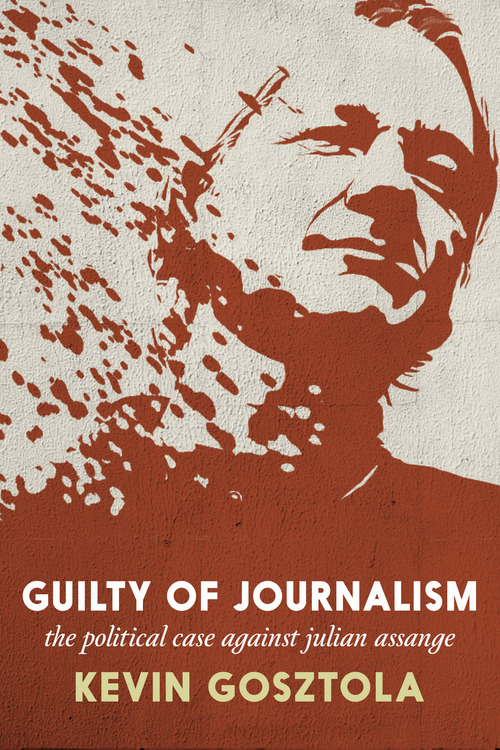
Gosztola makes clear one of the main points of the whole ordeal, which is the inconsistency in the U.S.’s interpretation of its own laws. “The First Amendment and the Espionage Act are in conflict in this country. You can’t reconcile the two, at least the way that the Justice Department wants to use the Espionage Act against people who aren’t even just U.S. citizens. They’re trying to apply U.S. law to international journalists,” Gosztola told Scheer.
The U.S. response to the internet age and the powerful journalistic revelations of Assange and WikiLeaks was to criminalize such actions, sending a clear message: anyone attempting to blow the whistle or expose the U.S. government’s crimes would face severe punishment, including the use of the Espionage Act, which could imprison someone for life.
“Unlike Daniel Ellsberg, [Chelsea] Manning didn’t have to sit there at a Xerox machine making copies. [She] just sent the copies of the documents to WikiLeaks, and then WikiLeaks had all these files that they could share with the world,” Gosztola said.
Despite the online journalism revolution, many in the media space still remained quiet throughout the Assange debacle both because of their ties to government officials and their lack of professional rigor. Gosztola posed several questions to them:
“Where were you? Why weren’t you doing the investigations to uncover these details? Why did this WikiLeaks organization come along and reveal these details about Afghanistan, the Iraq War, the nature of US foreign policy? Why do you accept that all of this information that was classified should be classified?”
TRANSCRIPT – ……………………………………………………………………………. , https://scheerpost.com/2024/07/19/never-forget-julian-assange/
The State Failed to Break Assange

Julian Assange has not been freed, passive voice, the beneficiary of decisions taken by the American and British judiciaries — and almost certainly in the Biden regime’s upper reaches. Julian Assange has achieved his freedom, actively. Even during the darkest moments of his years under house arrest, in asylum at Ecuador’s London embassy, and at Belmarsh, he never surrendered his sovereignty. He remained ever the captain of his soul, and never did he allow his captors entry onto his ship.
SCHEERPOST, JULY 1, 2024 Patrick Lawrence
After apparently lengthy negotiations via Julian Assange’s attorneys, the WikiLeaks founder agreed to plead guilty to one felony charge of illegally obtaining and publishing U.S. government documents of various kinds — many standing as evidence of war crimes and human rights abuses, others exposing the Democratic Party’s corruptions during the presidential campaign of Hillary Clinton in 2016.
Assange was sentenced Wednesday to a term of five years and two months, precisely the time he spent at Belmarsh, the maximum-security prison in southeast London. It was from Belmarsh that Assange fought requests for his extradition to the U.S., where he would have faced multiple charges and a lengthy sentence under the 1917 Espionage Act. When he departed for Australia at the conclusion of the proceeding in Saipan, the largest of the Northern Marianas and also the capital city, he became a free man for the first time in 14 years, counting from his time under house arrest in 2010.
Let us take the utmost care with our diction at this surprising and welcome turn. This will enable us to fathom the moment clearly.
Julian Assange has not been freed, passive voice, the beneficiary of decisions taken by the American and British judiciaries — and almost certainly in the Biden regime’s upper reaches. Julian Assange has achieved his freedom, actively. Even during the darkest moments of his years under house arrest, in asylum at Ecuador’s London embassy, and at Belmarsh, he never surrendered his sovereignty. He remained ever the captain of his soul, and never did he allow his captors entry onto his ship.
It was for this, most fundamentally, that Assange has suffered these past years, especially the five he spent in a cell at Belmarsh. The project was precisely to destroy his sovereignty, to break him one way or another, and he refused to break. His will — and I simply cannot imagine the awesome muscularity of it — has seen him through to victory.
When news of his impending freedom arrived with us last Monday evening, I reacted without hesitation, “It is not a bad deal. Everyone knows the truth and worth of what Assange did. Nothing lost. A good man’s life hung in the balance — this a gain.”
“Everyone” seems already an overestimation, but I will get to this in a moment.
Among the curious details of Assange’s plea is the choice of the federal courthouse in the Northern Marianas, a U.S. possession, for the denouement of his case. Assange’s legal team requested this peculiar location, let us not miss. It is remote from the U.S. mainland but close to his native Australia. There are two things to surmise from this, I think.
One, it is likely Assange’s attorneys thought it a very bad idea for their client to set foot on American soil anywhere near the court in Washington’s environs where cases of this kind, national-security cases, are customarily tried — tried before jurors drawn from a pool well populated with active and retired national security operatives, bureaucrats and assorted apparatchiks.
That the locale for the final settlement was negotiated away from the District Court of Eastern Virginia indicates that Assange’s lawyers remained mistrustful of U.S. assurances of a fair treatment under the law even while their talks proceeded.
Two, and the larger point here, moving the case to so out-of-the-way a courtroom indicated that Assange and his legal defense almost certainly had considerable leverage in determining the terms under which he achieved his freedom. This tells us something important about the years Assange spent at Belmarsh subjected to disgracefully punitive conditions and the circus various judges, Vanessa Baraitser high among them, made of the British courts.
I have long assumed, as many others may have, that the Biden regime and its predecessor simply did not want Assange extradited because it did not want to take up a trial that would more or less automatically lead to a sentence of 170 years. Too potentially messy, too politically risky, too harsh a light on this administration’s hypocrisies in the matter of press freedom and its indifference to, if not its approval of, the British authorities’ inhumane treatment of a man whose organization exposed war crimes.
How else to explain the lengthy delays in the London courts these past five years? And I cannot but think with something close to conviction that the corporate press in America, chiefly The New York Times, had some modest voice in the decision to negotiate a plea that reflects to some extent the Assange side’s terms?
The Times has avoided serious reporting of the Assange case for years. Embarrassing it would have been for the paper to report proceedings in Eastern Virginia, as it would have been obliged to do. We all remember that The Times made full use of WikiLeaks releases until, in April 2017, Mike Pompeo denounced Assange as “a state actor of Russia.” It was at that point Washington turned frontally against the organization and its founder, and the corporate press dutifully followed the lead of Trump’s egregious secretary of state.
The Biden regime has managed at last to drop a hot potato, but it is a stretch to assume it has not burned its fingers. As others have remarked, it could have vacated its case entirely and, indeed, gone so far as to offer Assange compensation for his suffering while facing unjust charges.
That would have marked a dramatic redemption. Instead, it leaves the door still wide open to pursuing cases such as Assange’s whenever a reporter’s truths are similarly inconvenient. This is self-inflicted damage atop years of self-inflicted damage, in my read. The Biden government’s exit from this case more or less mutilates any claim it will henceforth assert to respect press freedom and First Amendment rights.
Sheer Endurance
I measure the magnitude of Julian Assange’s triumph not in passing political terms, although the politics of his achievement of freedom are important. I view it in more personal terms. His greatest victory lies in the strength and sheer endurance he summoned and consistently displayed as the machinery of two sovereign states attempted to destroy him.
Several years ago, readers will recall, Nils Melzer testified in Baraitser’s court that Assange’s treatment met official definitions of psychological and physical torture. Not long after the U.N.’s special rapporteur on torture gave his testimony, I began an essay on the Assange case for Raritan, the cultural and political journal. It came to me as I wrote “Assange Behind Glass,” which I reproduce here from my web site archives, that we had to see it in the context of the “total domination” Hannah Arendt explored in The Origins of Totalitarianism, her look back, in 1951, at the horrors of the 20th century’s first half. “Its intent is to strip humanity of all identity and individuation,” I wrote of Arendt’s theme. And from her text:……………………………………………………………………………………………………………………….
…………….Are there undisclosed codicils attaching to the Assange’s camp’s plea agreement? Will his professional activities henceforth be curtailed by agreement? These are inevitable questions, even if one does not care to pose them. The answers are unclear and may never be clear. Out of respect and admiration for a man who has just won his freedom after paying a very high price in his fight for it, I leave these matters to him and those around him. https://scheerpost.com/2024/07/01/patrick-lawrence-the-state-failed-to-break-assange/
Assange Is Free, But US Spite Will Chill Reporting for Years
ARI PAUL, 26 June 24 https://fair.org/home/assange-is-free-but-us-spite-will-chill-reporting-for-years/
In some ways, the nightmare for WikiLeaks founder Julian Assange is coming to an end. After taking refuge at the Ecuadorian embassy in London in 2012, he was arrested in 2019 by Britain, who have since been trying to extradite him to the United States on charges that by publishing official secrets he violated the Espionage Act (FAIR.org, 12/13/20; BBC, 6/25/24). Once he enters a guilty plea, he will be sentenced to time served and walk away a free man (CBS, 6/25/24).
Assange’s case has attracted the attention of critics of US foreign policy, and those who value free speech and a free press. His family has rightly contended that his treatment in prison was atrocious (France24, 11/1/19; Independent, 2/20/24). A group of doctors said he was a victim of “torture” tactics (Lancet, 6/25/20). In 2017, Yahoo! News (9/26/21) reported that the “CIA plotted to kidnap the WikiLeaks founder, spurring heated debate among Trump administration officials over the legality and practicality of such an operation” and that CIA and Trump administration insiders “even discussed killing Assange, going so far as to request ‘sketches’ or ‘options’ for how to assassinate him.”
His supporters noted that the charges against him came after he harmed the US imperial project, particularly by leaking a video showing US troops killing Reuters journalists in Iraq (New York Times, 4/5/10). Under his watch, WikiLeaks also leaked a trove of diplomatic cables that the New York Times (11/28/10) described as an “unprecedented look at back-room bargaining by embassies around the world, brutally candid views of foreign leaders, and frank assessments of nuclear and terrorist threats.”
Press freedom and human rights groups like the International Federation of Journalists and Amnesty International had long called for his release. Several major news outlets from the US and Europe—the New York Times, Guardian, Le Monde, Der Spiegel and El País—signed a letter calling for his release (New York Times, 11/28/22). They said his “indictment sets a dangerous precedent and threatens to undermine America’s First Amendment and the freedom of the press.
Hostility toward press freedom
Assange’s loved ones and supporters are certainly glad to see him come home (Guardian, 6/25/24). But let’s be perfectly clear-eyed: The entire ordeal and his plea deal are proof of a hostile climate toward a free press in the United States and the wider world, and its chilling effect on investigative journalism could substantially worsen.
Assange’s deal has echoes of the end of the West Memphis Three case, where three Arkansas men were wrongfully convicted as teenagers of a heinous triple homicide in 1993 (Innocence Project, 8/19/11). The three re-entered guilty pleas in exchange for time served. They won their freedom, but their names were still attached to a terrible crime, and the state of Arkansas was able to close the case, ensuring the real killer or killers would never be held accountable. It was an imperfect resolution, but no one could blame the victims of a gross injustice for taking the freedom grudgingly offered.
Something similar is happening with Assange. It compounds the persecution already inflicted on him to force him to declare that exposing US government misdeeds was itself a high crime.
“On a human level, we’re thrilled that he’s out of prison, including the time in the embassy,” said Chuck Zlatkin, a founding member of NYC Free Assange, a group that has held regular protests calling for his release. “We’re thrilled for him personally.”
But the deal shows how eager the US government is to both save face and remain a threatening force against investigative reporters.
‘Criminalization of routine journalistic conduct’
As Seth Stern, the director of advocacy at the Freedom of the Press Foundation (6/24/24), said in a statement:
It’s good news that the DoJ is putting an end to this embarrassing saga. But it’s alarming that the Biden administration felt the need to extract a guilty plea for the purported crime of obtaining and publishing government secrets. That’s what investigative journalists do every day.
The plea deal won’t have the precedential effect of a court ruling, but it will still hang over the heads of national security reporters for years to come. The deal doesn’t add any more prison time or punishment for Assange. It’s purely symbolic. The administration could’ve easily just dropped the case, but chose to instead legitimize the criminalization of routine journalistic conduct and encourage future administrations to follow suit. And they made that choice knowing that Donald Trump would love nothing more than to find a way to throw journalists in jail.
And that is all happening while threats against leakers and journalists remain. Edward Snowden, the source in the Guardian’s investigation (6/11/13) into National Security Agency surveillance, still resides in Russia in order to evade arrest. I recently wrote about the excessive sentencing of the man who leaked tax documents to ProPublica and the New York Times showing how lopsided the tax system is in favor of the rich (FAIR.org, 2/2/24). NSA contractor Reality Winner was sentenced to five years in prison for leaking documents to the Intercept on the issue of Russian interference in the 2016 US election (Vanity Fair, 10/12/23)
Laura Poitras, one of the journalists who brought Snowden’s revelations about NSA surveillance to light, said that Assange’s conviction could silence reporters doing investigative reporting on the US government (New York Times, 12/21/20). Chelsea Manning, Assange’s source for these investigations, spent only seven years in prison out of the 35 years of her sentence thanks to presidential clemency, but that is still a harrowing experience (NPR, 5/17/17).
‘Not transparency’ but ‘sabotage’
Worse, some in the so-called free press have rallied behind the government. The Wall Street Journal editorial board (4/11/19) cheered the legal crusade against Assange, arguing that the leaks harmed national security. “Assange has never been a hero of transparency or democratic accountability,” the Murdoch-owned broadsheet proclaimed.
The neoconservative journal Commentary (4/12/19) dismissed the free press defenders of Assange, saying of Wikileaks’ investigations into US power: “This was not transparency. It was sabotage.”
And the British Economist (4/17/19) said, in support of Assange’s extradition to the US:
WikiLeaks did some good in its early years, exposing political corruption, financial malfeasance and military wrongdoing. But the decision to publish over 250,000 diplomatic cables in 2010 was malicious. The vast majority of messages revealed no illegality or misdeeds. Mr. Assange’s reckless publication of the unredacted versions of those cables the following year harmed America’s interests by putting its diplomatic sources at risk of reprisals, persecution or worse.
Unsurprisingly, Murdoch outlets gave the plea deal a thumbs down. “Don’t fall for the idea that Mr. Assange, the founder of WikiLeaks, is a persecuted ‘publisher,’” the Wall Street Journal editorial board (6/25/24) warned.
The New York Post editorial board (6/25/24) disparaged Assange’s motives, saying he “wasn’t interested in justice or exposing true abuse; he simply relished obtaining and releasing any secret government or political material, particularly if US-based.” Alleging that the documents he published were sensitive, the paper argued in favor of government secrecy: “Uncle Sam needs to keep some critical secrets, especially when lives are on the line.”
In reality, US intelligence and military officials have never been able to trace any deaths to WikiLeaks‘ revelations (BBC, 12/1/10; Guardian, 7/31/13; NPR, 4/12/19)—and certainly have never identified any damage anywhere nearly as serious as the very real harms it exposed. (NPR did quote a former State Department lawyer who complained that WikiLeaks‘ exposes “can really chill the ability of those American personnel to build those sorts of relationships and have frank conversations with their contacts.”) Alas, some publications side with state power even if journalistic freedom is at stake (FAIR.org, 4/18/19).
‘Punished for telling the truth’
Assange’s case is over, but he walks away a battered man as a result of the legal struggle. And that serves as a warning to other journalists who rely on brave people in high levels of power to disclose injustices. Stern is right: Another Trump administration would be horrendous for journalists. But the current situation with the Democratic administration is already chilling.
“All he was being punished for was telling the truth about war crimes committed by this country,” Zlatkin told FAIR.
And without a real change in how the Espionage Act is used against journalists, the ability to tell the truth to the rest of the world is at risk.
“We’re still not in a situation where we as a general population are getting the truth of what’s being done in our name,” Zlatkin said. “So the struggle continues.”
Journalist, critic of U.S. Ukraine policy, pulled off plane, U.S. seizes his passport
Judge Napolitano of Judging Freedom was also escorted off the plane according to some reports.
https://www.rt.com/news/598711-us-seizes-scott-ritters-passport/, 3June 24
The RT contributor was stopped from visiting Russia
The US State Department has seized the passport of former Marine and UN weapons inspector Scott Ritter, he told RT on Monday.
Ritter was on his way to Russia for the St. Petersburg International Economic Forum (SPIEF) when he was pulled off the plane and had his documents confiscated.
“I was boarding the flight. Three [police] officers pulled me aside. They took my passport. When asked why, they said ‘orders of the State Department’. They had no further information for me,” Ritter told RT. “They pulled my bags off the plane, then escorted me out of the airport. They kept my passport.”
“Was this done in accordance with the First Amendment, or the Fourth,” Russian Foreign Ministry spokeswoman Maria Zakharova said, commenting on the news. The first amendment to the US constitution protects freedom of speech, press and assembly, while the fourth bars the government from “unreasonable searches and seizures.”
Ritter is a former US Marine Corps intelligence officer, who later served as the US and UN weapons inspector in Iraq. He is also a RT contributor, writing about international security, military affairs, Russia, and the Middle East, as well as arms control and nonproliferation.
He most recently visited Russia in January, spending time in Chechnya, Moscow and St. Petersburg, among other places.
The most recent post on Ritter’s Telegram channel put the Clooney Foundation for Justice on notice for its alleged crusade against “Russian propagandists.”
“Here I am. In your face. If telling the truth about Russia makes me a propagandist in your book, then I accept the title,” he wrote. “Bring it on. I’ll school you on the First Amendment.”
“You have zero concept of what free speech is. Try and arrest me and you’ll find out. In spades. It’s war,” he added.
The Slow-Motion Execution of Julian Assange Continues .
Free speech is a key issue. If Julian is granted First Amendment rights in a U.S. court it will be very difficult for the U.S. to build a criminal case against him, since other news organizations, including The New York Times and The Guardian, published the material he released.
The ruling by the High Court in London permitting Julian Assange to appeal his extradition order leaves him languishing in precarious health in a high-security prison. That is the point.
CHRIS HEDGES, MAY 24, 2024, https://chrishedges.substack.com/p/the-slow-motion-execution-of-julian-986?utm_source=post-email-title&publication_id=778851&post_id=144930141&utm_campaign=email-post-title&isFreemail=true&r=ln98x&triedRedirect=true&utm_medium=email
The decision by the High Court in London to grant Julian Assange the right to appeal the order to extradite him to the United States may prove to be a Pyrrhic victory. It does not mean Julian will elude extradition. It does not mean the court has ruled, as it should, that he is a journalist whose only “crime” was providing evidence of war crimes and lies by the U.S. government to the public. It does not mean he will be released from the high-security HMS Belmarsh prison where, as Nils Melzer, the UN Special Rapporteur on Torture, after visiting Julian there, said he was undergoing a “slow-motion execution.”
It does not mean that journalism is any less imperiled. Editors and publishers of five international media outlets —– The New York Times, the Guardian, Le Monde, El Pais and DER SPIEGEL —– which published stories based on documents released by WikiLeaks, have urged that the U.S. charges be dropped and Julian be released. None of these media executives were charged with espionage. It does not dismiss the ludicrous ploy by the U.S. government to extradite an Australian citizen whose publication is not based in the U.S. and charge him under the Espionage Act. It continues the long Dickensian farce that mocks the most basic concepts of due process.
This ruling is based on the grounds that the U.S. government did not offer sufficient assurances that Julian would be granted the same First Amendment protections afforded to a U.S. citizen, should he stand trial. The appeal process is one more legal hurdle in the persecution of a journalist who should not only be free, but feted and honored as the most courageous of our generation.
Yes. He can file an appeal. But this means another year, perhaps longer, in harsh prison conditions as his physical and psychological health deteriorates. He has spent over five years in HMS Belmarsh without being charged. He spent seven years in the Ecuadorian Embassy because the U.K. and Swedish governments refused to guarantee that he wouldn’t be extradited to the U.S., even though he agreed to return to Sweden to aid a preliminary investigation that was eventually dropped.
The judicial lynching of Julian was never about justice. The plethora of legal irregularities, including the recording of his meetings with attorneys by the Spanish security firm UC Global at the embassy on behalf of the CIA, alone should have seen the case thrown out of court as it eviscerates attorney-client privilege.
The U.S. has charged Julian with 17 counts under the Espionage Act and one count of computer misuse, for an alleged conspiracy to take possession of and then publish national defense information. If found guilty on all of these charges he faces 175 years in a U.S. prison.
The extradition request is based on the 2010 release by WikiLeaks of the Iraq and Afghanistan war logs — hundreds of thousands of classified documents, leaked to the site by Chelsea Manning, then an Army intelligence analyst, which exposed numerous U.S. war crimes including video images of the gunning down of two Reuters journalists and 10 other unarmed civilians in the Collateral Murder video, the routine torture of Iraqi prisoners, the covering up of thousands of civilian deaths and the killing of nearly 700 civilians that had approached too closely to U.S. checkpoints.
In February, lawyers for Julian submitted nine separate grounds for a possible appeal.
A two-day hearing in March, which I attended, was Julian’s last chance to request an appeal of the extradition decision made in 2022 by the then British home secretary, Priti Patel, and of many of the rulings of District Judge Baraitser in 2021.
The two High Court judges, Dame Victoria Sharp and Justice Jeremy Johnson, in March rejected most of Julian’s grounds of appeal. These included his lawyers’ contention that the UK-US extradition treaty bars extradition for political offenses; that the extradition request was made for the purpose of prosecuting him for his political opinions; that extradition would amount to retroactive application of the law — because it was not foreseeable that a century-old espionage law would be used against a foreign publisher; and that he would not receive a fair trial in the Eastern District of Virginia. The judges also refused to hear new evidence that the CIA plotted to kidnap and assassinate Julian, concluding — both perversely and incorrectly — that the CIA only considered these options because they believed Julian was planning to flee to Russia.
But the two judges determined Monday that it is “arguable” that a U.S. court might not grant Julian protection under the First Amendment, violating his rights to free speech as enshrined in the European Convention on Human Rights.
The judges in March asked the U.S. to provide written assurances that Julian would be protected under the First Amendment and that he would be exempt from a death penalty verdict. The U.S. assured the court that Julian would not be subjected to the death penalty, which Julian’s lawyers ultimately accepted. But the Department of Justice was unable to provide an assurance that Julian could mount a First Amendment defense in a U.S. court. Such a decision is made in a U.S. federal court, their lawyers explained.
Assistant U.S. Attorney Gordon Kromberg, who is prosecuting Julian, has argued that only U.S. citizens are guaranteed First Amendment rights in U.S. courts. Kromberg has stated that what Julian published was “not in the public interest” and that the U.S. was not seeking his extradition on political grounds.
Free speech is a key issue. If Julian is granted First Amendment rights in a U.S. court it will be very difficult for the U.S. to build a criminal case against him, since other news organizations, including The New York Times and The Guardian, published the material he released.
The extradition request is based on the contention that Julian is not a journalist and not protected under the First Amendment.
Julian’s attorneys and those representing the U.S. government have until May 24 to submit a draft order, which will determine when the appeal will be heard.
Julian committed the empire’s greatest sin — he exposed it as a criminal enterprise. He documented its lies, routine violation of human rights, wanton killing of innocent civilians, rampant corruption and war crimes. Republican or Democrat, Conservative or Labour, Trump or Biden — it does not matter. Those who manage the empire use the same dirty playbook.
The publication of classified documents is not a crime in the United States, but if Julian is extradited and convicted, it will become one.
Julian is in precarious physical and psychological health. His physical and psychological deterioration has resulted in a minor stroke, hallucinations and depression. He takes antidepressant medication and the antipsychotic quetiapine. He has been observed pacing his cell until he collapses, punching himself in the face and banging his head against the wall. He has spent weeks in the medical wing of Belmarsh, nicknamed “hell wing.” Prison authorities found “half of a razor blade” hidden under his socks. He has repeatedly called the suicide hotline run by the Samaritans because he thought about killing himself “hundreds of times a day.”
These slow-motion executioners have not yet completed their work. Toussaint L’Ouverture, who led the Haitian independence movement, the only successful slave revolt in human history, was physically destroyed in the same manner. He was locked by the French in an unheated and cramped prison cell and left to die of exhaustion, malnutrition, apoplexy, pneumonia and probably tuberculosis.
Prolonged imprisonment, which the granting of this appeal perpetuates, is the point. The 12 years Julian has been detained — seven in the Ecuadorian Embassy in London and over five in high-security Belmarsh Prison — have been accompanied by a lack of sunlight and exercise, as well as unrelenting threats, pressure, prolonged isolation, anxiety and constant stress. The goal is to destroy him.
We must free Julian. We must keep him out of the hands of the U.S. government. Given all he did for us, we owe him an unrelenting fight.
If there is no freedom of speech for Julian, there will be no freedom of speech for us.
‘Bring Julian home’: the Australian campaign to free Assange
Assange’s supporters say what Wikileaks revealed about power and access to information is as relevant today as ever.
Aljazeera, By Lyndal Rowlands 19 May 2024
Melbourne, Australia – At home in Australia, Julian Assange’s family and friends are preparing for his possible extradition to the United States, ahead of what could be his final hearing in the United Kingdom on Monday.
Assange’s half-brother Gabriel Shipton, who spoke to Al Jazeera from Melbourne before flying to London, said he had already booked a flight to the US.
A filmmaker who worked on blockbusters like Mad Max before producing a documentary on his brother, Shipton has travelled the world advocating for Assange’s release, from Mexico City to London and Washington, DC.
Earlier this year, he was a guest of cross-bench supporters of Assange at US President Joe Biden’s State of the Union address.
The invitation reflected interest in his brother’s case both in Washington, DC and back home in Australia. Biden told journalists last month he was “considering” a request from Australia to drop the US prosecution.
Assange rose to prominence with the launch of Wikileaks in 2006, creating an online whistleblower platform for people to submit classified material such as documents and videos anonymously. Footage of a US Apache helicopter attack in Baghdad, which killed a dozen people, including two journalists, raised the platform’s profile, while the 2010 release of thousands of classified US documents on the wars in Afghanistan and Iraq, as well as a trove of diplomatic cables, cemented its reputation.
Shipton told Al Jazeera the recent attention from Washington, DC had been notable, even as his brother’s options to fight extradition in the UK appeared close to running out.
“To get attention there on a case of a single person is very significant, particularly after Julian’s been fighting this extradition for five years,” Shipton told Al Jazeera, adding that he hoped the Australian prime minister was following up with Biden.
We’re always trying to encourage the Australian government to do more.”
A test for US democracy
Assange’s possible extradition to the US could see freedom of expression thrown into the spotlight during an election year that has already seen mass arrests at student antiwar protests.
Shipton told Al Jazeera the pro-Palestinian protests had helped bring “freedom of speech, freedom to assembly, particularly in the United States, front of mind again”, issues he notes have parallels with his brother’s story.
While Wikileaks published material about many countries, it was the administration of former US President Donald Trump that charged Assange in 2019 with 17 counts of violating the Espionage Act.
US lawyers argue Assange is guilty of conspiring with Chelsea Manning, a former army intelligence analyst, who spent seven years in prison for leaking material to WikiLeaks before former US President Barack Obama commuted her sentence.
“It’s an invaluable resource that remains utterly essential to understand how power works, not just US power, but global power,” Antony Loewenstein, an independent Australian journalist and author, said of the Wikileaks archive.
“I always quote and detail [Wikileaks’s] work on a range of issues from the drug war, to Israel/Palestine, to the US war on terror, to Afghanistan,” Loewenstein said, noting that Wikileaks also published materials on Bashar al-Assad’s Syria and Vladimir Putin’s Russia.
“It’s just an incredible historical resource,” he said.
Loewenstein’s most recent book, the Palestine Laboratory, explores Israel’s role in spreading mass surveillance around the world, another issue Loewenstein notes, that Assange often spoke about.
“One thing that Julian has often said, and he’s correct, is that the internet is on the one hand an incredibly powerful information tool… but it’s also the biggest mass surveillance tool ever designed in history,” said Loewenstein……………………………………………. more https://www.aljazeera.com/features/2024/5/19/bring-julian-home-the-australian-campaign-to-free-assange
The Heroism of David McBride
By John Kiriakou https://consortiumnews.com/2024/05/16/john-kiriakou-the-heroism-of-david-mcbride/
By 2014 McBride had compiled a dossier into profound command failings that saw examples of potential war crimes in Afghanistan overlooked and other soldiers wrongly accused. On Tuesday he was sentenced to nearly six years in jail.
Sometimes a whistleblower does everything right. He or she makes a revelation that is clearly in the public interest. The revelation is clearly a violation of the law. And then he or she is even more clearly abused by the government. It would be great if these stories always had happy endings. Unfortunately, they don’t.
In this case, the whistleblower, the hero, Australian David McBride has been sentenced to five years and eight months in prison for telling the truth. He will not be eligible for parole for 27 months.
David McBride is former British Army officer and a lawyer with the Australian Special Forces who blew the whistle on war crimes committed by Australian soldiers in Afghanistan, specifically the killing of 39 unarmed Afghan prisoners, farmers, and civilians in 2012.
After failing to raise a response through official channels, McBride shared the information with the Australian Broadcasting Corporation (ABC), which published a series of major reports based on the material.
The ABC broadcasts in 2017 led to a major inquiry that upheld many of the allegations. Despite this, the ABC and its journalists themselves came under threat of prosecution for their work on the story.
The ABC offices in Sydney were raided by the national police, but in the end the government did not prosecute an ABC journalist because it was not in the public interest. McBride himself, however, was prosecuted for dissemination of official information.
Two Tours in Afghanistan
Let’s go back a few years. McBride at the time already was a seasoned attorney. After studying for a second law degree at Oxford University, he joined the British military and eventually moved back to Australia where he became a lawyer in the Australian Defence Forces (ADF). In that role he had two tours in Afghanistan in 2011 and 2013.
While on deployment, McBride became critical of the terms of engagement and other regulations that soldiers were working under, which he felt were endangering military personnel for the sake of political imperatives determined elsewhere.
By 2014 McBride had compiled a dossier into profound command failings that saw examples of potential war crimes in Afghanistan overlooked and other soldiers wrongly accused. His internal complaints were suppressed and ignored.
McBride’s reports also looked at other matters, including the military’s handling of sexual abuse allegations. After his use of internal channels had proven ineffective, McBride gave his report to the police. And eventually, he contacted journalists at ABC.
ABC’s Afghan Files documented several incidents of Australian soldiers killing unarmed civilians, including children, and questioned the prevalent “warrior culture” in the special forces. Subsequent to McBride’s disclosures, the behavior of other Coalition Special Forces in Afghanistan also came under sustained investigation.
In many ways, McBride’s reports went further than the issues identified by ABC. Amid prevalent rumors that Australian troops were responsible for war crimes, questionable deaths in Afghanistan had led to calls for investigations.
Report Vindicated McBride & ABC
In November 2020, the Brereton report (formally called the Inspector General of the Australian Defence Force Afghan Inquiry report) was published, utterly vindicating McBride and the ABC. Judge Paul Brereton found evidence of multiple incidents involving Australian personnel that had led to 39 deaths. Among his recommendations were the investigation of these incidents for possible future criminal charges.
There would be almost no criminal charges, however. At least, there would be only one eventual criminal charge against one single soldier in the murder of Afghan civilians. There have been no charges against the officers who covered up the war crimes.
Instead, though, there would be serious charges against McBride for “theft of government property” (the information) and for “sharing with members of the press documents classified as secret.” He faced life in prison.
McBride’s sentence illustrates the challenges that Australian whistleblowers face when reporting evidence of waste, fraud, abuse, illegality, or threats to the public health or public safety.
First, just like in the United States, there are no protections for national security whistleblowers. McBride took his career — indeed, his life — into his hands when he decided to go public with his revelations. But what else could he do?
Second, as in the United States, there is no affirmative defense. McBride, like Edward Snowden, Jeffrey Sterling, Daniel Hale and like me, was forbidden from standing up in court and saying, “Yes, I gave the information to the media because I witnessed a war crime or a crime against humanity. What I did was in the public interest.”
Those words are never permitted to be spoken in a court in the United States or Australia.
Recalling Nuremberg
Third, Australia is in dire need of some legal reforms. The judge in McBride’s case said at sentencing that McBride, “had no duty as an army officer beyond following orders.” That defense was attempted at Nuremberg and it failed. It’s time for the Australian judiciary to get into the 21st century.
There are a couple points of light in this whole fiasco. The Brereton Commission did indeed recommend that 19 members of the Australian Special Forces be prosecuted for war crimes. So far, one has been charged with a crime. He is accused of shooting and killing a civilian in a wheat field in Uruzgan Province in 2012.
Indeed, Andrew Wilkie, a former Australian government intelligence analyst-turned-whistleblower, and now member of Parliament, says that “the Australian government hates whistleblowers” and that it wanted to punish David McBride and to send a signal to other government insiders to remain silent, even in the face of witnessing horrible crimes. I would say exactly the same thing about the United States.
I’m proud to call David McBride a friend. I know exactly what he’s going through right now. But his sacrifice will not be in vain. History will smile on him. Yes, the next several years will be tough. He’ll be a prisoner. He’ll be separated from his family. And when he gets out of prison, well into his 60s, he’ll have to begin rebuilding his life. But he is right and his government is wrong. And future generations will understand and appreciate what he did for them.
John Kiriakou is a former C.I.A. counterterrorism officer and a former senior investigator with the Senate Foreign Relations Committee. John became the sixth whistleblower indicted by the Obama administration under the Espionage Act — a law designed to punish spies. He served 23 months in prison as a result of his attempts to oppose the Bush administration’s torture program.
And McBride will be allowed to appeal his conviction. Still any other light at the end of the tunnel is likely an oncoming train, rather than relief for the whistleblower.
But the bottom line is this. There is a war against whistleblowers in Australia just like there is in the United States.
Enforcing Silence on Genocide
The U.S. public should by now be realizing that instead of stopping genocide, U.S. institutional and media authority is actively stamping out cries to stop the mass murder being committed with U.S. complicity, writes Elizabeth Vos.
By Elizabeth Vos, Consortium News, May 4, 2024, https://consortiumnews.com/2024/05/04/enforcing-silence-on-genocide/
Developments on university campuses and in Congress this week showed that the U.S. government’s top priority is not protecting students or civilian lives in Gaza, but to protect Israel’s ability to continue its unimpeded slaughter.
Anti-genocide student protestors at Columbia University, demanding Columbia divest from Israel, occupied the campus’s Hamilton Hall on Tuesday and renamed it Hind’s Hall after Hind Rajab, a 6-year-old Palestinian girl killed by Israeli soldiers in Gaza earlier this year. The Columbia protest has inspired more than 40 other anti-genocide university encampments across the country and in other nations.
On the morning the students occupied Hamilton Hall, MSNBC’s Morning Joe co-host Mika Brzezinski compared the student protests to Jan. 6, calling for authorities to “just start arresting people.” Jonathan Greenblatt, the CEO of the Anti Defamation League, echoed the comparison in the same MSNBC segment. Other supporters of Israel also made the same Jan. 6 anaolgy on social media early Tuesday morning.
Former CNN anchor Don Lemon wrote on X that the Columbia protest “feels January 6th ish to me” because the protesters had occupied a building. Not a federal government building, but a university hall. Has Lemon not heard of a sit-in?
Missing was the most apt and obvious comparison: the occupation of the same Columbia hall took place 56 years to the day since it was the site of a police crackdown on an historic student occupation against the Vietnam War.
Columbia University itself commemorates the anti-Vietnam War occupation of the same building by student protesters in 1968 on their own website. Nonetheless, the NYPD descended on the Hall on Tuesday night at the direct request of Columbia University President Minouche Shafik.
[See: The Israeli Connection to the Raid on Columbia University]
All the comparisons to Jan. 6 came less than 24 hours before the brutal crackdown at Columbia University and the City College of New York by the NYPD Tuesday night, in which almost 300 people were arrested.
Following the New York City arrests, CNN’s Chief Political Correspondent Dana Bash argued on air that the protests were “harkening back to the 1930’s in Europe,” claiming some Jewish people in the U.S. “feel unsafe,” words that completely echoed those of Israeli Prime Minister Benjamin Netanyahu.
How unsafe did students at the University of Pennsylvania feel when a Zionist counter protester sprayed their belongings with an unknown substance?
How unsafe did students feel at multiple universities when police violently arrested professors trying to shield them? In one case in St. Louis, police broke the ribs of a 65-year-old Southern Illinois professor.
How safe did UCLA students feel when they were attacked with fireworks and bats by counter protesters?
In addition to the repulsive comparison with Nazis, Bash’s claim omits the context of previous legitimate antiwar protests that acted virtually identically to the current-era largely peaceful student actions.
These portrayals also excuse the police brutality that followed hours later and has continued since. Police reportedly allowed Zionist counter protesters to violently attack the UCLA encampment for hours without intervention on Tuesday night, only to clear the encampment the next evening using extreme force that included shooting students at close range with rubber bullets.
Bash and the rest of the talking heads focused on the feelings of Zionists in the U.S., deflecting from the horror taking place in Gaza, further dehumanizing civilians there.
The horror on the ground in Gaza is beyond imagination. We can’t say how many Palestinians have been killed, as the Gaza health authorities were forced to stop counting months ago when the healthcare system there collapsed under Israel’s assault. We’ve been using the ‘15,000 children have died’ number for months, there’s no telling how many have been killed, maimed, or orphaned to date.
The experience of witnessing this ceaseless genocide in the same moment that protests against it are violently put down was summed up by one social media user:
“I am watching a toddler die on a table in a field hospital in Rafah with half her face blown apart while listening to college students fight tears reporting on a police assault on their campus for protesting that, and I feel like I am losing my fucking mind.”
Also unmentioned by Morning Joe and Dana Bash is the fact that Israel’s prime minister is being actively shielded by the U.S. from being charged by the International Criminal Court.
It doesn’t stop there: corporate media and police are not the only parts of the establishment trying to silence students and wider criticism of Israel.
The U.S. House of Representatives passed a bill on Wednesday that, if made law, will codify a definition of anti-Semitism created by the International Holocaust Remembrance Alliance (IHRA) into Title VI of the Civil Rights Act of 1964, a federal anti-discrimination law.
This would change the current definition of anti-Semitism to include criticism of Israel as hate speech. The IHRA sets out 11 examples of anti-Semitism.
Critics argue that the bill’s language is vague and would reportedly allow the federal Department of Education to restrict funding and other resources to campuses perceived as tolerating so-called “anti-Semitism,” not to mention the disbarring of discourse on social media platforms by citing “hate speech.” Multiple human rights groups have decried the bill.
The latest House bill is an addition to the anti-BDS laws already in place across 38 states, many of which impact speech on university campuses. One example can be found in Arkansas, where a 2017 anti-BDS law forces speakers at the University of Arkansas to sign an anti-BDS pledge, or they will not be paid.
This resulted in legal action, but the Supreme Court ultimately refused to hear the case, allowing the law to stand in deference to the interests of a foreign nation.
Republican Senator Marsha Blackburn went further, calling for: “Any student who has promoted terrorism or engaged in terrorists acts on behalf of Hamas should be immediately be added to the terrorist watch list and placed on the TSA No Fly List.”
Congresswoman Ilhan Omar denounced Blackburn’s sentiments as “insanely dangerous.” But Blackburn wasn’t alone. House Speaker Mike Johnson also called on the F.B.I. to investigate protesters and suggested the National Guard should be deployed.
We’ve collectively realized that no one, no protective force nor institution of power is going to stop Israel’s violence.
The U.S. public should by now be realizing that instead of stopping genocide, U.S. institutional and media authority is actively stamping out cries to stop the mass murder being committed with U.S. complicity.
Covering for Israel is evidently more important to U.S. leaders than international law, than the lives of civilians or students, than freedom of speech, and even, it seems, their own re-election as they resist polls showing a majority of Americans want an end to the killing in Gaza.
Elizabeth Vos is a freelance reporter, co-host of CN Live! and regular contributor to Consortium News.
1 This Month
23-25 October – on Zoom – World BEYOND War’s annual global conferenc


Shut down the radiation-damaged Heysham nuclear reactors now
To see nuclear-related stories in greater depth and intensity – go to https://nuclearinformation.wordpress.com

Say No to NASA’s Reckless Nuclear Reactor on the Moon
Say No to NASA’s Reckless Nuclear Reactor on the Moon

-
Archives
- October 2026 (209)
- September 2026 (339)
- August 2026 (330)
- July 2026 (355)
- June 2026 (287)
- May 2026 (306)
- April 2026 (356)
- March 2026 (251)
- February 2026 (267)
- January 2026 (308)
- December 2025 (358)
- November 2025 (359)
-
Categories
- 1
- 1 NUCLEAR ISSUES
- business and costs
- climate change
- culture and arts
- ENERGY
- environment
- health
- history
- indigenous issues
- Legal
- marketing of nuclear
- media
- opposition to nuclear
- PERSONAL STORIES
- politics
- politics international
- Religion and ethics
- safety
- secrets,lies and civil liberties
- spinbuster
- technology
- Uranium
- wastes
- weapons and war
- Women
- 2 WORLD
- ACTION
- AFRICA
- Atrocities
- AUSTRALIA
- Christina's notes
- Christina's themes
- culture and arts
- Events
- Fuk 2022
- Fuk 2023
- Fukushima 2017
- Fukushima 2018
- fukushima 2019
- Fukushima 2020
- Fukushima 2021
- general
- global warming
- Humour (God we need it)
- Nuclear
- RARE EARTHS
- Reference
- resources – print
- Resources -audiovicual
- Weekly Newsletter
- World
- World Nuclear
- YouTube
-
RSS
Entries RSS
Comments RSS

