The Cold War near disasters at RAF Lakenheath could have left Suffolk as a nuclear wasteland

The Cold War near disasters at RAF Lakenheath could have left Suffolk as a nuclear wasteland https://www.suffolknews.co.uk/mildenhall/go-anywhere-just-get-away-from-here-how-suffolk-almost-9215663/ By Dan Barker – dan.barker@iliffepublishing.co.uk , 13 September 2021 During the height of the Cold War nuclear bombs were dotted across the country, ready to wipe the USSR off the face of the map at a moment’s notice: but, on two separate occasions, Suffolk almost became victim to the very weapons which were meant to protect it.
July 27, 1956 was like any other summer’s day. Across the country attention was glued to the Ashes fourth test at Old Trafford, and four American airmen were in a B-47 bomber, on a routine training mission from RAF Lakenheath. But, as they were practising touch-and-go landings, their bomber careered out of control and went off the runway.
it ploughed into an igloo containing three Mark-6 nuclear weapons, tearing the building apart.
The plane then
exploded, killing all four men on board, and showered the world-ending weapons with burning aviation fuel.
Most of A/C [Aircraft] wreckage pivoted on igloo and came to rest with A/C nose just beyond igloo bank which kept main fuel fire outside smashed igloo. “Preliminary exam by bomb disposal officers says a miracle that one Mark Six with exposed detonators sheared didn’t go. Firefighters extinguished fire around Mark Sixes fast.” – Telegram from RAF Lakenheath to Washington DC
Fortunately the atomic power of the bomb was missing that day, with the cores un-installed in all three for storage, but the explosives needed to trigger the deadly nuclear reaction were still in place.
With 8,000 pounds of high explosives combined with depleted uranium-238, they were a nuclear ticking time bomb as firefighters fought to put out the blaze.
Had they exploded the radioactive uranium would have been scattered over a wide area, and, depending on the wind, tens of thousands of people would have been at risk from the toxic dust across Suffolk.
Knowing the enormity of the situation base fire chief Master Sgt L. H. Dunn ordered his crew to ignore the burning wreckage of the bomber, and the airman inside, and douse the flames engulfing the nuclear storage building.
At the time it had been shrouded in secrecy, but decades later one senior US officer made it very clear how lucky Suffolk was to have narrowly missed out on a nuclear disaster. “It is possible that part of Eastern England would have become a desert,” the then former officer told Omaha World Herald in Nebraska, who revealed the potentially catastrophic incident in November 1979.
Another said that “disaster was averted by tremendous heroism, good fortune and the will of God”.
A top secret telegram sent to Washington DC from the base, which has since been revealed, told of the near miss. “Most of A/C [Aircraft] wreckage pivoted on igloo and came to rest with A/C nose just beyond igloo bank which kept main fuel fire outside smashed igloo.
Another said that “disaster was averted by tremendous heroism, good fortune and the will of God”.
A top secret telegram sent to Washington DC from the base, which has since been revealed, told of the near miss. “Most of A/C [Aircraft] wreckage pivoted on igloo and came to rest with A/C nose just beyond igloo bank which kept main fuel fire outside smashed igloo.
Suffolk was lucky this time, but the incident caused great alarm in the British government, and it was decided it would try and block US authorities from ordering base evacuations because of the concern of causing mass panic in the country.
But what would happen if word got out that its most important ally had, almost, accidentally, made a huge part of the United Kingdom a nuclear wasteland?
Simple: Its policy for decades, if the press ever caught wind of the near miss, was to just deny it. After the news was broken in the American press in 1979, only then was it acknowledged something happened.
On November 5 that year the US Air Force and the Ministry of Defence would only admit the B-47 did crash.
In fact it took until 1996, some four decades after the near disaster, for the British state to accept the true scale of the accident in public.
But that near miss wasn’t the only one.
For on January 16, 1961, an F-100 Super Sabre, loaded with a Mark 28 hydrogen bomb caught on fire after the pilot jettisoned his fuel tanks when he switched his engines on.
As they hit the concrete runway the fuel ignited and engulfed the nuclear weapon – a 70 kilotons – and left it “scorched and blistered”.
Suffolk was saved again by the brave work of base firefighters who brought the blaze under control before the bomb’s high explosive detonated or its arming components activated.
T
errifyingly it was later discovered by American engineers that a flaw in the wiring of Mark 28 hydrogen bombs could allow prolonged heat to circumvent the safety mechanisms and trigger a nuclear explosion.
Had it gone, thousands of people would be dead within seconds, and thousands more would have been injured. As with the first incident, as well as the immediate blast, radioactive debris could have fallen in towns as far away as Ipswich and Lowestoft, given the right wind direction, spreading the toxic dust across Suffolk.
Since Clement Attlee ordered the scientists to investigate the creation of a nuclear bomb in August 1945, the British state has known that being a nuclear power comes with risk as well as reward.
It also knew it paid to be part of a nuclear alliance,
NATO, and with it came American nuclear bombs and the risk they brought.
Beyond the maths of working out how large the explosion would have been, it is impossible to know the true implications.
RAF Lakenheath was listed as a probable target for Soviet attack according to now released Cold War era documents, and intelligence agencies and war planners expected two 500 kiloton missiles to hit the site if the West was under attack.
Disaster creates uncertainty. Nobody would have known it was an accident within the minutes and hours after a blast, they would have just been dragged into a nuclear bunker and told of a large explosion at an airbase in Suffolk.
Where would that have left a British prime minister, an American president, and the rest of NATO, thinking they have come under attack?
In July 1956, and again in January 1961, those firefighters didn’t just save Suffolk … they might have saved the world.
Earthquakes Stopped Fracking – So Why the Monstrous Silence On “Likely” Induced Seismicity Five Miles From Sellafield? Exactly Who is Protecting Who? — RADIATION FREE LAKELAND

Originally posted on Keep Cumbrian Coal in the Hole: The following letter has been sent to Cumbria County Council and the Planning Inquiry. Our trembling earth was the reason fracking was halted – the siesmic impacts from the Cumbrian Coal Mine are set to be far worse than that from fracking and yet there is…
Earthquakes Stopped Fracking – So Why the Monstrous Silence On “Likely” Induced Seismicity Five Miles From Sellafield? Exactly Who is Protecting Who? — RADIATION FREE LAKELAND
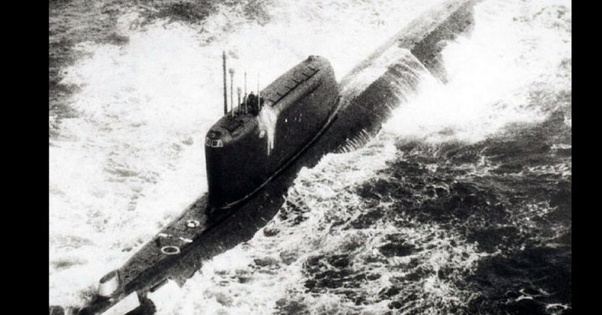
Nuclear ballistic missile submarine meltdown, 1961
August 24, https://www.quora.com/Has a nuclear submarine ever had a meltdown? Laurence Schmidt, Worked at Air Liquide America (1975–2010,
In the early Cold War Era, many Russian nuclear submarines had catastrophic engineering plant failures. These failures were caused by the soviet’s rush to equal the USN in its nuclear submarine ballistic missile program; they were poorly design and constructed, lack safety system redundancy and had haphazardly trained crews. But the crews of these boats were heroic in risking their lives to save their boats in stark life and death emergencies at sea.
One example is the case of the K-19, the first Russian nuclear powered ballistic missile submarine, nicknamed the “Hiroshima” boat, because of her numerous incidences.
On July 4, 1961, while at sea, one of its two nuclear reactors SCRAMMED. The primary cooling system had failed, flooding the reactor spare with radioactive water, and there was no backup system to cool the reactor core. As the reactor rods overheated, the engineering staff try a desperate plan to improvise a cooling system; to tie into the sub’s drinking water system. But it would require several men entering the highly radioactive reactor compartment to weld new piping to pumps and valves. The first jury-rigged attempt failed with 8 crewmen being horribly burnt by the high temperatures and exposed to lethal doses of radiation. They all soon died. After other attempts, the jury-rigged system finally worked, but other crew members too close to the reactor compartment would also soon die. The crew was evacuated to a nearby submarine, and the K-19 was towed back to base for repair. In total, 22 of the crew of 139 died of radiation sickness.
A section of the radiation contaminated hull was replaced, and a new power reactor unit was installed. The two original reactors, including their fuel rods, were dumped in the Kara Sea in 1965. A favorite dumping ground for Russian navy nuclear waste, including damaged nuclear reactors to whole ships.
Did the K-19 reactor meltdown? I would say yes.
Vested interests — controlling the news about nuclear safety

Who controls the truth about a nuclear disaster?
The end of the monopoly of these experts would allow a proper debate on the risks of nuclear energy. At a time when many voices are speaking out in favor of the development of atomic energy as the lesser evil in the face of climate change, such a debate is urgent.
How monolithic institutions decide what is safe for the rest of us, Beyond Nuclear, By Christine Fassert and Tatiana Kasperski, 12 Sept 21,
In December 2020, twenty years after the final closure of the Chernobyl nuclear power plant, the Ministry of Culture of Ukraine announced its intention to prepare an application to include certain objects in the exclusion zone around Chernobyl in the UNESCO World Heritage List….
The Chernobyl site would symbolize the long history of accidents that have marked the atomic age, from Kychtym and Windscale (1957), to Three Mile Island (1979) and Fukushima (2011), whose tenth anniversary we commemorated this year.
Moreover, the Chernobyl accident constitutes a particular moment in this history, namely the beginning of the institutionalization of the international management of the consequences of nuclear accidents, whose impact became fully apparent at the time of the Fukushima accident.
A small group of organizations
If the origins of accidents are most often explained by factors related to the development of the nuclear industry and its regulatory bodies at the national level, the “management” of their consequences gradually extends beyond national borders
In this respect, Chernobyl established the monopolization of the authoritative knowledge of ionizing radiation by a small group of organizations — the International Atomic Energy Agency (IAEA), the International Commission on Radiological Protection (ICRP) and the United Nations Scientific Committee on the Effects of Atomic Radiation (UNSCEAR).
Through a series of alliances and co-options, these organizations formed a monolithic bloc on the issue of radiological risk.
Relegated to a militant marginality
From that moment on, divergent points of view were de-legitimized and relegated to a form of militant marginality. These included the positions of such individuals as “dissident” scientist Keith Baverstock who directed the radiation protection program at the World Health Organization’s Regional Office for Europe, and those of such organizations as the International Association of Physicians for the Prevention of Nuclear War (IPPNW).
This monopoly translates into an internationalization of accident management that relies on a series of tools designed to establish a “normalization” of the post accident situation through the depoliticization of the management of risks related to radioactive fallout. They enshrine the power of experts close to international nuclear organizations to determine what sacrifices in terms of health and the environment are acceptable.
As physicists Bella and Roger Belbéoch point out:
“Far from calling into question the power they have secured for themselves in society, the nuclear disaster allows them to constitute themselves into a unified international body with even greater powers. It is at the moment when the scientific experts can no longer promise anything other than disaster management that their power inevitably takes hold.”
Fukushima
This monopoly over knowledge and management of an accident was very much present in Japan in 2011, when the Japanese authorities put in place measures, which, by largely referring to international standards, warded off objections: the accident was dealt with by the experts.
However, a shift occurred in this monopoly when a UN rapporteur, Anand Grover, severely criticized Tokyo’s management of the disaster.
At the same time, new conceptual tools proposed by the social sciences, such as the “production of ignorance”, offer a framework for analysis that makes it possible to extend the criticisms beyond the domain of a purely expert debate, opening the way to a re-politicization of the accident and its consequences.
Making nuclear accidents manageable
But, first of all, how can you make a nuclear accident manageable when, as was the case at Chernobyl and Fukushima, it causes very large releases of radioactive particles, spreading around the globe and causing long-term contamination of tens of thousands of square kilometers?
Hundreds of thousands of people have been evacuated or relocated from these territories, and hundreds of thousands of others continue to live in an environment affected by radioactivity.
Zoning, that is, the division of these territories into several “zones” according to the density of contamination and the necessary protective measures, was the first instrument that made it possible, in Japan and in the former Soviet Union, to make the accident manageable……
This zoning mechanism set up by the Japanese government is part of a regulatory framework established by the two major international nuclear institutions, the IAEA and the ICRP. The ICRP sets the dose limit for the public at 1 millisievert (mSv)/year. Since 2007, the ICRP has authorized government authorities to raise this threshold (from 1 to 20 mSv/year) in the case of a nuclear accident.
When the Japanese authorities, like the Soviet authorities in 1986, chose to raise the threshold following the accident, they justified it in terms of the virtual absence of any health risks.
The radiological threshold
The mechanism is based in particular on the choice of a radiological threshold from which the population will be evacuated.
In Japan, government officials consider that the risk of developing cancer from exposure to a dose of 100mSv or less is so low according to “the international (scientific) consensus, (that) it is made undetectable by the carcinogenic effects of other factors.”
Limiting evacuations and compensations
The sociologist and historian of science Sezin Topçu shows how this zoning mechanism, which has become an indispensable element of nuclear accident management, is above all a way of limiting evacuation and compensation for damage caused by an accident, since its costs (economic, political or social) would be prohibitive for the nuclear industry and the State.
This optimization approach is also enshrined at the international level in the recommendations issued by the IAEA and the ICRP.
For example, in the case of Japan, the threshold of 20 mSv/year appears to have been chosen in part to avoid evacuating the Naka Dori region and its major cities: the established zone borders made it possible to exclude such cities in the center of the prefecture, including Fukushima, from evacuation orders…………………………..
Mechanisms of ignorance production
More recently, however, various social scientists have proposed an analysis of the promotion of a reassuring stance on these dangers as part of the mechanisms of ignorance production.
The production of ignorance, which can be both involuntary and intentional, was initially studied for a number of risks, such as tobacco.
Approaching radiological risks in terms of the production of ignorance makes it possible to break with the “exceptionalism” with which the nuclear issue has long been associated, and to consider the dangers of ionizing radiation within the broader field of health risks and its banal issues of power.
Minimizing gravity
The internationalized management of nuclear disasters is in fact based on various mechanisms of ignorance production. For instance, the sociologist of science, Olga Kuchinskaya,- describes the “politics of invisibility” that were adopted after the Chernobyl disaster.
She points out that the public visibility of the effects of ionizing radiation depends on the existence of material infrastructures – such as measuring devices, information systems and equipment — but also institutional infrastructures (for example, following a cohort of people in order to make health effects visible depends on this articulation between material and institutional elements).
This infrastructure is very costly and, in the case of Chernobyl, has not been maintained over time. Moreover, the assessment of the effects of radiation was essentially taken care of by international institutions, while local doctors and researchers, for their part, revealed a completely different and much more alarming picture of the health situation.
Kate Brown describes how various international bodies, primarily the IAEA and WHO, worked to redefine the health effects of Chernobyl, to minimize their severity, and thus actively to produce “ignorance” about the impact of the disaster.
This non-knowledge was in fact a crucial instrument that made the disaster “manageable” and allowed, as Adriana Petryna points out, “the deployment of authoritative knowledge, especially when applied to the management of the exposed population”.
The monopoly of international experts, until when?
By addressing the “exceptional” character of nuclear energy and ionizing radiation, these criticisms, whether they are made within UN bodies or by social science researchers, open the way to questioning the monopoly of international nuclear institutions in assessing radiological risk and framing so-called “post-accident” policies.
A re-politicization of the management of accident consequences that brings the “management” of a nuclear accident into the broader framework of human rights therefore becomes possible.
When the next nuclear accident occurs, it is not a given that citizens will accept the “inevitability” of the power of international experts to decide, on their behalf, what constitutes an acceptable risk.
The end of the monopoly of these experts would allow a proper debate on the risks of nuclear energy. At a time when many voices are speaking out in favor of the development of atomic energy as the lesser evil in the face of climate change, such a debate is urgent.
This article was first published in The Conversation in French on April 26, 2021, as well as on Beyond Nuclear International. English translation provided by the authors.
Christine Fassert is a social anthropologist at Université Paris 1 Panthéon-Sorbonne. Tatiana Kasperski is a research associate– Department of Humanities at Universitat Pompeu Fabra https://beyondnuclearinternational.org/2021/09/12/vested-interests/
Radioactive water leak in Valencia, Spain
Environmentalists denounce radioactive water leak, The Portugal News
The Iberian Anti-Nuclear Movement (MIA) has denounced the existence of a “highly radioactive” water leak at the Cofrentes nuclear power plant, located in the Spanish province of Valencia, but the owner says there was no environmental or safety impacts.
By TPN/Lusa, 12 Sept 21,
In a statement sent to Lusa, MIA states that the information on the occurrence of this nuclear accident came from the Tanquem Cofrents platform, which is part of the Iberian movement and that brings together the main ecological groups and organisations of the Valencian civil society.
The accident was recorded on Thursday, with “a leak of highly radioactive water in the turbine of the plant, in the reactor’s primary circuit”……..
According to environmentalists, the Cofrentes plant “is old and deteriorated” which, together with the management policy “of maximising production at all costs, makes it more than predictable that accidents like this or more serious will be repeated.”
“The MIA has insisted that this plant be closed as it endangers all citizens, and that a rapid transition be made to a system based solely on renewable energy, that avoids catastrophic climate change and that will make it cleaner, safer and cheaper,” he concludes.
It also warns of the danger of extending the operation of the Almaraz nuclear power plant, located 100 kilometres from the border with Portugal and next to the Tagus River. https://www.theportugalnews.com/news/2021-09-11/environmentalists-denounce-radioactive-water-leak/62314
Earthquake risks for proposed coal mine in Cumbria, all too close to Sellafield nuclear site
Geotechnical experts have urged caution over claims from a campaign group
that the proposed Cumbrian coal mine could cause earthquakes. Before the
start of the public inquiry into the mine – which began yesterday –
campaign group Radiation Free Lakeland said that the development poses
induced earthquake and subsidence risk. The group believes that “mining
induced seismicity is likely to occur” at the coal mine, and also
emphasised that nuclear waste site Sellafield is 8km away.
“The majority
of anthropogenic-related earthquakes were caused by coal mining and the
decline in their numbers from the 1980s to the 2000s was concurrent with a
decline in UK coal production,” Radiation Free Lakeland said. “The coal
mine will induce earthquakes in the vicinity of the world’s riskiest
nuclear site – that is a given – let’s hope and pray that the massive
silence from NGOs over the nuclear elephant in the room does not give the
government (who are employing the coal boss) wriggle room to approve the
coal mine.
“We urge all those speaking against the mine at the public
inquiry to give at least a mention to the fact that this coal mine would
mine out voids faster than any previous coal mine in UK history and would
induce earthquakes and cause subsidence in the Irish Sea and Sellafield
area.” Geotechnical specialist Clive Edmonds said that “in principle,
mining can induce low magnitude, shallow depth earthquake activity”.
“Such activity has been noted in many former coal field areas where
several different depth coal seams underlying each other were extracted in
close proximity to fault lines,” he said.
However, Edmonds emphasised
that “whether and to what degree” the Cumbrian coal mine will cause
earthquake activity “will depend upon the specific mine design and
development plan over time taking account of the known regional structural
geology”.
New Civil Engineer 8th sept 2021
More issues at Bruce power station raise concerns about aging nuclear infrastructure
More issues at Bruce power station raise concerns about aging nuclear infrastructure, MATTHEW MCCLEARN, The Globe and Mail, 5 Sept 21,
Unexpectedly high levels of hydrogen in pressure tubes at a nuclear power plant in Ontario have renewed questions about how long Canada’s aging CANDU reactors can continue to operate safely.
At a meeting before the Canadian Nuclear Safety Commission (CNSC) on Friday, officials confirmed more pressure tubes at the Bruce Nuclear Generating Station on the eastern shore of Lake Huron were found to contain hydrogen concentrations in excess of regulatory limits, and above what the industry expected. Bruce Power disclosed in July that it had discovered two tubes that exceeded regulatory limits.
The cause has not been determined, nor is it clear how many other pressure tubes in Canadian reactors might also be affected. Bruce Power did not answer questions from The Globe late Friday on how many additional tubes were found to violate the station’s licensing requirements.
Pressure tubes are six-metre rods that contain fuel bundles of uranium, and are considered the major life-limiting component in CANDUs, the reactors in all of Canada’s nuclear power plants. Tubes containing high hydrogen concentrations are more vulnerable to fracturing if they have pre-existing cracks. If one ruptures, coolant could be lost, which could trigger a range of scenarios from a relatively minor incident contained by the plant’s safety systems to a catastrophe in which fuel overheats.
The issue is particularly a concern when the reactor is below normal operating temperatures, such as during shutdown or startup…………
The Bruce station has eight reactors, each containing 480 pressure tubes; the offending tubes were found in Units 3 and 6, neither of which is operating. One tube in Unit 6 exhibited readings of 211 parts per million, approaching double the regulatory limit, and far above Bruce Power’s prediction of 100 ppm. Bruce Power officials said all of the elevated readings were discovered in the same region, close to one end of the tube………
Frank Greening, a retired Ontario Power Generation chemist who worked in the company’s pressure tube group for the last decade of his career, warned that it’s possible the rate of hydrogen pickup may have accelerated in older tubes in the past few years.
“And if that’s true, then the rate at which it’s going in is scary,” he said.
He added: “There is something happening that’s quite serious. And they’re saying ‘We don’t know how or why it’s happening.’ It’s pathetic. I can’t accept that.”
A CNSC commissioner, Marcel Lacroix, said during the meeting that industry officials had not satisfactorily explained what might be causing the problem……….. https://www.theglobeandmail.com/canada/article-more-issues-at-bruce-power-station-raise-concerns-about-aging-nuclear/
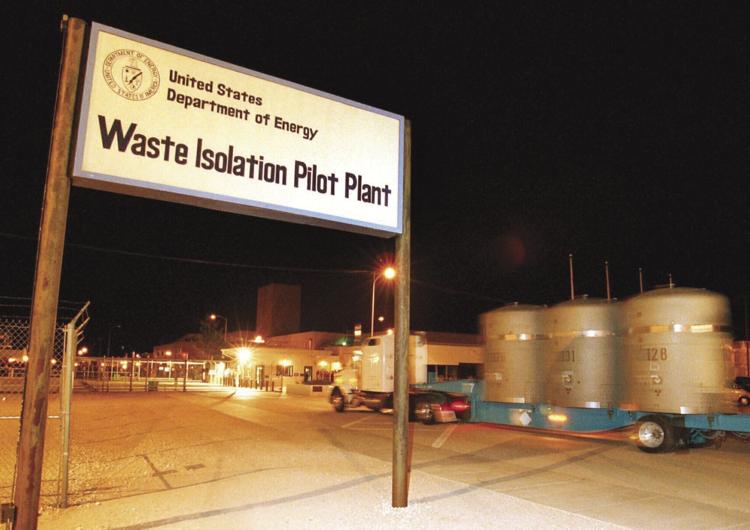
Highway safety concerns as DOE plans expanding nuclear waste transports to the Waste Isolation Pilot Plant (WIPP)
More nuclear waste may be heading to WIPP on US 285 Albuquerque Journal , BY ISABELLA ALVES / JOURNAL NORTH, SATURDAY, SEPTEMBER 4TH, 2021
Spanning the length of the state, U.S. Highway 285 is a major thoroughfare for truck transports and other traffic. This busy highway, nicknamed “Death Highway” due to the number of fatal accidents on it, may get busier.
Concerned citizens in Santa Fe County recently called out the U.S. Department of Energy’s Waste Isolation Pilot Plant for expanding its mission in a permit renewal application to include more nuclear waste being shipped along the 285 corridor.
Part of Highway 285 goes along the southern edge of the city of Santa Fe, and local activists are calling on local and federal leaders to halt this increase in nuclear waste transportation.
The permit application is requesting to add two nuclear waste storage panels to WIPP that would increase the waste volume in these areas. The permit renewal was filed July 30 and, if granted, wouldn’t increase the volume capacity of nuclear waste set by Congress in the Land Withdrawal Act for the plant.
“NMED is in litigation with the DOE for its failure to clean up legacy waste at Los Alamos National Laboratory. A successful resolution of the lawsuit is increased shipments of legacy waste from Los Alamos to WIPP,” James Kennedy, state Environment Department Cabinet secretary, said via email.
“The DOE and Nuclear Waste Partnership continuing to accept out-of-state waste streams or any new waste streams in lieu of cleaning up and shipping legacy waste from Los Alamos to WIPP is completely unacceptable,” he added.
At a recent Santa Fe County Town Hall, activist Cindy Weehler of 285 ALL said the U.S. Department of Energy made it clear that it’s going to expand its nuclear waste program, she said. She said she’s concerned about the new type of radioactive waste that would be traveling through the county, which would be diluted plutonium, instead of contaminated items.
This is consistent with a notice of intent published by the department in December 2020.
The Department of Energy’s (DOE) goal is to complete its missions safely and efficiently, including the continued reduction in the amount of transuranic waste at LANL and creating a safer environment for the surrounding communities,” a U.S. Department of Energy spokesperson said via email. “DOE notifies state authorities weeks in advance of all shipments to WIPP, which are done in strict accordance with federal rules and regulations and state law.”
On average, there are about seven waste shipments a week that travel to WIPP through Santa Fe County from the Los Alamos National Laboratory and the Idaho National Laboratory. In the coming months, pending any pandemic impacts, this number is expected to increase to 10 to 12 shipments per week.
“They have chosen a very unsafe way to deal with the surplus plutonium problem,” Weehler said. “It’s unsafe to our neighborhoods and I think, if people are going to be put at risk, like we are with this new mission, they deserve to know about it.”
Don Hancock, nuclear waste program director at the Southwest Research and Information Center, said the original type of waste being disposed of at WIPP were plutonium-contaminated items, such as gloves and other equipment that came into contact with the radioactive material.
Now, the plant is expected to dispose of the diluted plutonium, which is much more potent than contaminated material — and poses a greater safety risk. Hancock said they expect “a lot” of shipments to the plant and it’s hard to drill down an exact number.
This expansion is going to affect more than just Santa Fe County, it will impact people statewide, Weehler said. She said safety issues, such as preparing emergency responses for a nuclear waste spill if there’s an accident along the highway, will be left up to the local municipalities.
For Santa Fe County, this emergency response falls to its emergency management director who, Communications Coordinator Carmelina Hart said, has a background in these types of responses.
In the event of an emergency, the County’s role would be the initial evaluation, perimeter control and activation of all our state and federal partners who specialize in these responses,” Hart said in an email. “The County maintains relationships with the other agencies in the realm of emergency management. We have participated in full-scale exercises with the Department of Energy and local public safety teams.”
She said the county is reimbursed $15,000 annually by the Department of Energy’s WIPP program for emergency response preparations the county must maintain. The county also is working to identify additional training and equipment needs should nuclear waste transportation changes occur.
Santa Fe County Commissioner Hank Hughes said he has lived in Santa Fe before there was a WIPP project and has shared citizens’ concerns about nuclear waste transportation for many years. He said expanding WIPP’s mission might mean more nuclear waste traveling through Santa Fe County.
He said the county is as equipped as it can be to handle an accident. Since the transportation is considered classified information, local governments aren’t notified when nuclear waste is headed their way.
I think the concern is, while it’s very unlikely that there would be any leak of radioactive material — even if there was an accident — just increasing the number of trucks going through Santa Fe County raises that possibility,” Hughes said.
Since nuclear waste is handled on a federal level, it’s mostly out of the commission’s hands, he said. All the county can really do is make sure it’s prepared for an accident, and help its constituents express their concerns to the federal delegation.
And these worries haven’t gone unnoticed.
Maria Hurtado, spokeswoman for U.S. Rep. Teresa Leger Fernández, D-N.M., said the office has received a handful of constituent calls regarding the nuclear waste transportation…………. https://www.abqjournal.com/2426206/more-nuclear-waste-may-be-heading-to-wipp-on-us-285.htmladvertisement
Over 200kg uranium theft in India poses threats of nuclear terrorism.
Over 200kg uranium theft in India poses threats of nuclear terrorism, The News, 5 Sept 21, I SLAMABAD: The theft of over 200 kilograms of nuclear material during last two decades in India poses serious threats of nuclear terrorism, necessitating the global powers’ role to raise safety standards in the country.
The countries in the region including China and Pakistan have repeatedly called for strengthening regulations following repeated incidents of theft of nuclear material in India. Such incidents raised concerns about India emerged as a potential hotspot in illegal trade of nuclear technology and materials vital for a malicious nuclear supply chain for state and non-state actors.
According a timeline issued by The South Asia Strategic Stability Institute (SASSI), 18 nuclear material’s theft and lost incidents were reported in India from 1994 to 2021 involving over 200kg nuclear material.
The Indian authorities recovered 2.5kg uranium in 1994; 111kg in 1998, also involving an opposition leader; 59.1kg in 2000; 200 grams in 2001; 225 grams in 2003; 4kg in 2008; 5kg in 2009; 9kg in 2016; 1kg in 2018 and 13.75kg in 2021 in multiple incidents.
According to a research paper jointly issued by SASSI President Dr Maria Sultan and now Human Rights Minister Dr Shireen Mazari, the reports of Indian involvement in the theft of nuclear fissile material dates back to the early 1970s, the magnitude of the threat increased manifold in the 1980s and 1990s.
In the late 1980s, the CIA had concluded that India was trying to develop a sophisticated Hydrogen bomb. In 1994, on a tip-off, a shipment of beryllium was caught in Vilnius, worth $24 million. “The material could fall into the hands of extremists and terrorists in India with disastrous consequences. The out-of-control material could also be a cause of concern due to the proliferation reasons. It is also the responsibility of global organisations and India’s partners to raise the standard of nuclear safety and security in the country and investigate shortcomings for maintaining tight controls on nuclear and radioactive materials,” said Sarman Ali, an Islamabad-based defence analyst.
Pakistan had repeatedly called for thorough investigation of such incidents and measures for strengthening the security of nuclear materials to prevent their diversion.
Foreign Office spokesperson said in a recent statement that such incidents were a matter of deep concern as they point to lax controls, poor regulatory and enforcement mechanisms, as well as possible existence of a black market for nuclear materials inside India………….. https://www.thenews.com.pk/print/888297-over-200kg-uranium-theft-in-india-poses-threats-of-nuclear-terrorism
An EDF employee contaminated in the Cruas-Meysse nuclear power plant.
An EDF employee contaminated in the Cruas-Meysse nuclear power plant. The
Nuclear Safety Authority classified the incident at level 2 (out of 7) on
the INES severity scale. This type of incident is quite rare, only a few
cases occur each year.
Le Monde 4th Sept 2021
Virgin Galactic ‘ignored red warning light’ in Branson’s race against Bezos to be first billionaire to space

FAA currently investigating 11 July flight for veering off course https://www.independent.co.uk/space/virgin-galactic-branson-jeff-bezos-b1913228.html, Anthony Cuthbertson, 3 Sep 21,
Virgin Galactic is under investigation after veering off course and reportedly ignoring a red warning light during the 11 July flight that took billionaire Richard Branson to space.
The Federal Aviation Administration (FAA) noted that the space craft “deviated from its Air Traffic Control clearance as it returned to Spaceport America” during the Unity 22 flight.
A report in The New Yorker, which first drew attention to the FAA investigation, also claimed that a red warning light flashed due to the flight path being too shallow.
The Red Warning Light on Richard Branson’s Space Flight
The F.A.A. is investigating the ship’s off-course descent. more https://www.newyorker.com/news/news-desk/the-red-warning-light-on-richard-bransons-space-flight, By Nicholas Schmidle 3 Sept 21, On July 11th, nearly a minute into the rocket trip carrying Richard Branson, the British billionaire, to space, a yellow caution light appeared on the ship’s console. The craft was about twenty miles in the air above the White Sands Missile Range, in New Mexico, and climbing, travelling more than twice the speed of sound. But it was veering off course, and the light was a warning to the pilots that their flight path was too shallow and the nose of the ship was insufficiently vertical. If they didn’t fix it, they risked a perilous emergency landing in the desert on their descent.
Riding rockets is dangerous stuff. Around 1.4 per cent of Russian, Soviet, and American crewed spaceflight missions have resulted in fatalities. The foremost commercial space companies—Branson’s Virgin Galactic, Elon Musk’s SpaceX, and Jeff Bezos’s Blue Origin—must, over the coming years, bring that number down. Their profits depend on making frequent and safe human spaceflight a reality. “A private program can’t afford to lose anybody,” Branson has said.
And yet, perhaps more than any of its competitors, Branson’s company is already hard at work fashioning its identity as a luxury life-style brand. Virgin Galactic is marketing its space-tourism business but for the time being remains an experimental flight-test program. I’ve been covering this company for almost seven years, reporting on its triumphs and tragedies, and on the disconnect between its lofty rhetoric (“Virgin Galactic’s mission is to democratize space,” Branson has said) and its supersonic risks. This account was informed by discussions with eight people knowledgeable about the program.
Virgin Galactic’s space vehicle is unique among its competitors. Whereas SpaceX and Blue Origin operate traditional, vertical-launch rockets that are automated by engineers, Virgin Galactic uses a piloted, winged rocket ship. Every test flight is crewed, which makes each one a matter of life and death. (SpaceX, on the other hand, completed scores of launches before it flew with a human onboard; Blue Origin completed more than a dozen launches before it did the same.)
The success of Virgin Galactic’s program, therefore, will ultimately depend on its pilots, high-calibre but nonetheless fallible, making the right decisions and adjustments in specific moments—like when a yellow caution light comes on. Alerts on the console can be triggered by any number of issues. On the July 11th flight, with Branson on board, it was a trajectory problem, or what’s known as the “entry glide cone.” The ship uses rocket power to get into space, but glides back to Earth and lands on a runway, like the space shuttle would do. This method, mimicking water circling a drain, enables a controlled descent. But the ship must begin its descent within a specified, imaginary “cone” to have enough glide energy to reach its destination. The pilots basically weren’t flying steeply enough.
Not only was the ship’s trajectory endangering the mission, it was also imperilling the ship’s chances of staying inside its mandated airspace. The Federal Aviation Administration regulates the private space industry and sets aside airspace for each mission, seeking to prevent collisions with general air traffic, including commercial airliners, and to limit civilian casualties in the event of an accident. The regulator uses formulas detailed in a hundred-and-twenty-one-page document—including an equation for calculating expected casualties—to assess the safety of a given spaceflight. According to the F.A.A., an acceptable Ec, as the equation is called, involves no more than one expected casualty per ten thousand missions. The agency designates airspace for flights with that equation in mind.
The rocket motor on Virgin Galactic’s ship is programmed to burn for a minute. On July 11th, it had a few more seconds to go when a red light also appeared on the console: an entry glide-cone warning. This was a big deal. I once sat in on a meeting, in 2015, during which the pilots on the July 11th mission—Dave Mackay, a former Virgin Atlantic pilot and veteran of the U.K.’s Royal Air Force, and Mike Masucci, a retired Air Force pilot—and others discussed procedures for responding to an entry glide-cone warning. C. J. Sturckow, a former marine and nasa astronaut, said that a yellow light should “scare the shit out of you,” because “when it turns red it’s gonna be too late”; Masucci was less concerned about the yellow light but said, “Red should scare the crap out of you.” Based on pilot procedures, Mackay and Masucci had basically two options: implement immediate corrective action, or abort the rocket motor. According to multiple sources in the company, the safest way to respond to the warning would have been to abort. (A Virgin Galactic spokesperson disputed this contention.)
Aborting at that moment, however, would have dashed Branson’s hopes of beating his rival Bezos, whose flight was scheduled for later in the month, into space. Mackay and Masucci did not abort. Whether or not their decision was motivated by programmatic pressures and the hopes of their billionaire bankroller sitting in the back remains unclear. Virgin Galactic officials told me that the firm’s top priority is the safety of its crew and passengers. Branson, however, is known for his flamboyance and showmanship. On the morning of the flight, Branson, an outspoken environmentalist, appeared on the “livestream” arriving at the spaceport on a bicycle. But this turned out to be false: Branson did not pedal to work that day; the bike ride was filmed a week earlier and then made to look like it happened that morning. When Reuters called out the company, an anonymous official said, “We regret the error and any confusion it may have caused.”
Although Mackay and Masucci attempted to address their trajectory problem, it wasn’t enough. And now they were accelerating to Mach 3, with a red light glowing in the cockpit. Fortunately for Branson and the three other crew members in the back, the pilots got the ship into space and landed safely. But data retrieved from Flightradar24 shows the vehicle flying outside its designated airspace. An F.A.A. spokesperson confirmed that Virgin Galactic “deviated from its Air Traffic Control clearance” and that an “investigation is ongoing.” A Virgin Galactic spokesperson acknowledged that the company did not initially notify the F.A.A. and that the craft flew outside its designated airspace for a minute and forty-one seconds—flights generally last about fifteen minutes—but said that the company was working with the F.A.A. to update procedures for alerting the agency.
Virgin Galactic has faced close calls and calamities in the past. In 2011, with the company contracting its flight-test program to Scaled Composites, a boutique aviation firm, a crash was narrowly averted when the spaceship got into an inverted spin. And in 2014 an accident killed one pilot, badly injured another, and left their spaceship in ruins. Two recent episodes are perhaps more revealing.
In July, 2018, Mackay and Masucci were conducting a test flight thirty miles above the Earth when the ship got away from them, spinning and tumbling in the thin air. Virgin Galactic’s lead test pilot and flight-test director, Mark Stucky, was monitoring the flight from mission control, fearful that if Mackay and Masucci didn’t steady the ship soon, their off-kilter descent could seriously damage the vehicle and put the pilots in danger. They landed safely, though a post-flight inspection exposed manufacturing defects that required months of repairs.ctic has faced
Hurricane Ida Shuts Down One Nuclear Plant in Louisiana.
Hurricane Ida Shuts Down One Nuclear Plant in Louisiana. Simply Info , August 29, 2021
Hurricane Ida prepares to make landfall mid day in Louisiana. The storm is predicted to be the strongest hurricane to hit the state in history as a strong cat 4. Hurricane Katrina had dropped to a category 3 by the time it made landfall yet caused extreme damage. Sustained winds reported this morning were 150 mph.
Entergy shut down Waterford nuclear plant around 10am Sunday due to the expected wind speeds. Ed Lyman at the Union of Concerned Scientists documented the flood risk at the plant when combining the predicted storm surge and rainfall. The plant may not flood in the reactor block area but it could end up surrounded by water. Entergy, the company that operates the plant mentioned they have sequestered enough staff on site to conduct needed operations and restart the plant whenever that might be possible. In Ed Lyman’s twitter posts about this issue he also cited dry cooling towers used at the site and that they require sump pumps to keep them operational. Depending on the water inundation that system could be offline until water recedes………….http://www.simplyinfo.org/?p=19672
Nuclear Regulatory Commission finds cable issues in special inspection of Vogtle Unit 3
Nuclear Regulatory Commission finds cable issues in special inspection of Vogtle Unit 3, Augusta Chronicle Abraham Kenmore, 27 Aug 21, The federal Nuclear Regulatory Commission has finished its special inspection of the Plant Vogtle Unit 3 expansion. The report found several preliminary issues with how cables had been installed during the construction of the new nuclear power facility.
“The NRC inspectors found that Southern Nuclear did not adequately separate safety and non-safety-related cables for reactor coolant pumps and equipment designed to safely shut down the reactor,” according to a press release sent with the report. “They also found instances where the company did not identify and report construction quality issues related to the safety-related electrical raceway system and enter them into its corrective action program.”
Southern Nuclear, the company in charge of construction, can choose to accept the results of the inspection or provide additional information before a final determination is reached. Unit 3 currently has no fuel loaded into the reactor and the press release makes it clear there is no increased risk to the public from the safety issues. Southern Company will not be allowed to operate the reactor until construction is finished to standards……… www.augustachronicle.com/story/news/2021/08/27/plant-vogtle-unit-3-nrc-inspection-shows-cable-problems/5603644001/?fbclid=IwAR2O-5h1IDZhDUu4H5sVJ9tPRoQXDYv58lFDQK0LkyjBE_qekMjnpKo7Q34
Greater powers to be given to UK’s armed Civil Nuclear Constabulary – a threat to peaceful protest?

UK Government plan to give armed nuclear police more powers raises ‘profound concerns The Ferret, ’Billy Briggs
August 23, 2021
A UK Government plan to give an armed police force called the Civil Nuclear Constabulary (CNC) greater powers has raised “profound concerns” and been described as “deeply worrying”.
The CNC is a specialist force tasked with protecting civil nuclear sites in Scotland, England and Wales and nuclear materials in transit both in the UK and internationally.
Counter-terrorism is a major part of its policing and the force employs 1,500 police officers. The CNC guards nuclear sites at Torness, Hunterston and Dounreay in Scotland, among other places across the UK.
It’s remit is set out in the Energy Act 2004 but the UK Government has just held a consultation seeking views on a plan to expand and diversify the force’s role.
Anti-nuclear groups have voiced fears over the proposal, however, arguing that the CNC’s remit should be limited to civil nuclear sites. The Scottish Greens said that centralised control over an armed police force with new powers would be a “very concerning development”…………..
Those responding to the consultation included the UK and Ireland Nuclear Free Local Authorities (NFLA) which submitted a joint response with anti-nuclear groups – Blackwater Against New Nuclear Group, Together Against Sizewell C, CADNO, People Against Wylfa B, Stop Hinkley and Nuclear Waste Advisory Associates.
The NFLA argued that the CNC’s powers should be “limited to civil nuclear sites, as its title implies”. Any expansion to other roles and duties for the CNC, they argued, would “represent an expansion of nuclear police at expense of the civil police force”
Councillor David Blackburn, NFLA steering committee chair, said: “NFLA has joined with these six other campaigning groups to raise its profound concerns that an expansion of the Civil Nuclear Constabulary and an increase in its powers is moving it in the wrong direction. What is required rather is concerted efforts to reduce the risks of the UK’s nuclear legacy and to avoid developing new nuclear reactor sites.”
He argued that by making nuclear sites safer “there will become less of a need for an armed police force”.
“The concerning wider push for new laws which could reduce peaceful protest also greatly concerns us,” Blackburn said. “The proposals in this consultation move the CNC further into being an extensively armed police force, when we should instead be looking at ways to have a democratically controlled and accountable police force protecting the public in a measured way.”……… https://theferret.scot/uk-government-plan-to-give-armed-police-more-powers/
Los Alamos nuclear laboratory warns it might shoot down drones
Los Alamos Labs Threatens To Shoot Down Your Drone https://abq.news/2021/08/nuclear-lab-issues-warning-for-drone-fliers/
Lab Warns Against Hobbyist Drone Flights Updated August 23rd, 2021
LOS ALAMOS, N.M. (AP) — Drone pilots beware. Authorities at one of the nation’s top nuclear weapons laboratories issued a warning Monday that airspace over Los Alamos National Laboratory is off limits.
The birthplace of the atomic bomb, Los Alamos lab reported that recent unauthorized drone flights have been detected in restricted airspace in the area. Officials said if you fly a drone over the lab, you likely will lose it.
We can detect and track a UAS (unmanned aircraft system), and if it poses a threat, we have the ability to disrupt control of the system, seize or exercise control, confiscate or use reasonable force to disable, damage or destroy the UAS,” said Unica Viramontes, senior director of lab security.
The lab would not release any specifics about how the system works, citing security protocols. They also would not say how many unauthorized flights have occurred in recent months.
Lab officials also warned of the potential for “collateral interceptions” of normal commercial or hobbyist drone flights, saying pilots should stay well outside the lab’s restricted airspace and the additional no-drone zone designated by the Federal Aviation Administration.
According to the FAA, drones are prohibited from flying over sites designated as national security sensitive facilities. Aside from military bases and other Department of Defense sites, restrictions are in place for national landmarks and certain critical infrastructure such as nuclear power plants.
1 This Month



26 September – International Day for the Total Elimination of Nuclear Weapons


PLEASE OPPOSE HR 8255 AND S.3639 – bills would accelerate satellite deployment, with no environmental review or safeguards – https://ncstd5li.quorum.us/campaign/169331/
To see nuclear-related stories in greater depth and intensity – go to https://nuclearinformation.wordpress.com
-
Archives
- September 2026 (233)
- August 2026 (330)
- July 2026 (355)
- June 2026 (287)
- May 2026 (306)
- April 2026 (356)
- March 2026 (251)
- February 2026 (267)
- January 2026 (308)
- December 2025 (358)
- November 2025 (359)
- October 2025 (375)
-
Categories
- 1
- 1 NUCLEAR ISSUES
- business and costs
- climate change
- culture and arts
- ENERGY
- environment
- health
- history
- indigenous issues
- Legal
- marketing of nuclear
- media
- opposition to nuclear
- PERSONAL STORIES
- politics
- politics international
- Religion and ethics
- safety
- secrets,lies and civil liberties
- spinbuster
- technology
- Uranium
- wastes
- weapons and war
- Women
- 2 WORLD
- ACTION
- AFRICA
- Atrocities
- AUSTRALIA
- Christina's notes
- Christina's themes
- culture and arts
- Events
- Fuk 2022
- Fuk 2023
- Fukushima 2017
- Fukushima 2018
- fukushima 2019
- Fukushima 2020
- Fukushima 2021
- general
- global warming
- Humour (God we need it)
- Nuclear
- RARE EARTHS
- Reference
- resources – print
- Resources -audiovicual
- Weekly Newsletter
- World
- World Nuclear
- YouTube
-
RSS
Entries RSS
Comments RSS
 nuclear-news