UN nuclear watchdog says situation at Russian-occupied Ukrainian nuclear plant is ‘unsustainable’
May 3, 2022 by Charles Digges, The United Nations nuclear watchdog has warned that Russian troops are
putting “unbelievable pressure” on workers at the Zaporizhzhya nuclear
power plant – which is both the largest in Ukraine and Europe as a whole
– saying the situation is “unsustainable.” Russian forces seized the
plant during a dramatic assault on March 4, and they have since then forced
Ukrainian plant operators to manage the site under extreme conditions. The
UN’s International Atomic Energy Agency has also reported that eight
specialists from Rosatom, Russia’s state nuclear corporation, are also
onsite.
https://bellona.org/news/nuclear-issues/2022-05-un-nuclear-watchdog-says-situation-at-russian-occupied-ukrainian-nuclear-plant-is-unsustainable
Ukraine’s nuclear power plants caught in the Crossfire of War With Russia

Russia’s invasion of Ukraine has triggered fears of another nuclear power disaster in the region, 36 years after the world’s largest nuclear accident. The Revelator, May 2, 2022 – by Jordan Gass-Poore’
It took less than a minute after an unexpected power surge for one of the nuclear reactors at Chornobyl (Chernobyl in the Russian spelling) to explode on April 26, 1986, ripping the roof off and spewing dangerous chemicals into the air.
The event, and emergency cleanup that followed, left 30 workers dead, thousands exposed to cancer-causing nuclear material, and a legacy of radiation. Now, 36 years later and with war raging, Ukraine is desperate to prevent another nuclear disaster.
Nuclear reactors generate more than half of the country’s power. Ukraine is the first country with such a large and established nuclear energy program to experience war, according to the International Atomic Energy Agency.
The country’s 15 nuclear reactors, housed in four power plants, have layers of safeguards to prevent core meltdowns like the one that happened in 1986, when Chornobyl was part of the Soviet Union. But wartime is far from normal conditions, and experts warn that Russian military action poses numerous threats to these facilities.

Andrey Ozharovsky, a Russian engineer turned anti-nuclear activist, said Ukraine’s nuclear infrastructure is “quite vulnerable” to the chaos surrounding military attacks.
Chornobyl, Again
Those attacks have already begun.
The Chornobyl Nuclear Power Plant and the 20-mile exclusion zone around it, set up to limit further spread of radioactive material following the 1986 disaster, were captured by Russian forces on Feb. 24. It was in their control until they withdrew from the site on March 31.

Although Chornobyl is not an active nuclear power plant, the massive cap covering the reactor that exploded decades ago still needs to be maintained to prevent further radiation leakage.
Sensors put in place by the Ukrainian Ecocentre in case of an accident reported a spike in radiation levels shortly after the capture, likely due to Russian military vehicles stirring up radiation in the environment.
The IAEA said the rise wasn’t enough to pose a public health hazard.
Ozharovsky, who was one of the first to raise an alarm about the recent spike at Chornobyl, said he’s concerned that radioactive dust from the site could spread across the continent.
“The most dangerous thing is that they can bring radioactive particles in their hair, in their clothes and their boots,” he says………………………
Nuclear Plant Captured
Chornobyl isn’t the only concern. Ukraine’s active nuclear-power facilities are also at risk.
On March 4, Russian forces captured Europe’s largest active nuclear-power plant, Zaporizhzhia, located in southeastern Ukraine. During intense fighting one of the site’s buildings caught fire, but didn’t harm the plant’s six reactors, and no radiation was released.
Ukrainian technicians continue to monitor Zaporizhzhia, but the country’s regulators have claimed that Rosatom, Russia’s state nuclear power company, has engineers at the plant who are giving orders to staff. Further, Ukraine reports that plant management actions require approval from the Russian commander, according to the IAEA.
“Who is now in charge of the Zaporizhzhia Nuclear Power Plant?” asks Ozharovsky. “The Russian army is around, but armies aren’t nuclear engineers.”
Rosatom released a statement on March 12 and denied that they’re managing the operation of Zaporizhzhia. They characterized their staff’s presence at the plant as “consultative assistance” that takes place “on a regular basis.”
Grossi expressed “deep concern” about the situation in a statement last month.
Further Threats
Since then, there’s been more reason for alarm.
On April 16, three missiles flew over the South Ukrainian nuclear power plant, Yuzhnoukrainsk, according to Energoatom, Ukraine’s state-run nuclear power company.
Then on April 26 Energoatom reported that two cruise missiles flew over the Zaporizhzhia Nuclear Power Plant.
The flight of missiles at low altitudes directly above the Zaporizhzhia Nuclear Power Plant site, where 7 nuclear facilities with a huge amount of nuclear material are located, poses huge risks,” says Petro Kotin, Energoatom’s acting president, in a statement released on the company’s Telegram channel. “After all, missiles can hit one or more nuclear facilities, and this threatens a nuclear and radiation catastrophe around the world.”
The day before, Energoatom reported that Russia fired missiles over the cooling pond of the Khmelnytskyi Nuclear Power Plant in northwest Ukraine
Kosharna wrote in an email that if a missile would’ve hit one of the plants the consequences wwould have been “catastrophic” for the world.
Typically nuclear plants use back-up generators to maintain power with a grid disruption and keep the cooling systems functioning normally. In wartime fuel shortages are common, and this risks the stability of the generators. Ukraine’s current shortage is only getting worse, according to the Gas Transmission Operator of Ukraine, a gas pipeline operator
If the grid goes down and the generators are out of fuel and the cooling systems fail, there’s a last resort to prevent radiation from spreading. Containment structures around the reactors are designed to block any release of radiation, but they’re also vulnerable to missile attacks.
Reactor failure isn’t the only significant risk to the operation.
Staff operating facilities under extreme stress also poses a problem, Ozharovsky says, because any mistake they make on the job could be calamitous..

There are also other onsite dangers. Spent nuclear fuel storage pools that are a part of the waste-disposal system contain radioactive material. If they’re damaged the liquid could be released from containment, causing a massive spread of radiation. Japanese scientists considered this to be the “worst-case scenario” of the Fukushima Daiichi Nuclear Power Plant, which had a series of meltdowns after a tsunami struck the plant in 2011.
Ozharovsky said he doesn’t believe the Russian military would deliberately sabotage one of Ukraine’s nuclear power plants because it would threaten their interests. But he added that even the possibility that the nuclear power plants could be harmed accidentally should trigger worldwide alarm.
“For me it’s scary,” he says. “All the other nuclear power plants, like Khmelnytskyi, like Rivne, like South Ukraine (Yuzhnoukrainsk); they can be damaged during this war. And the international community needs to take care of that.”
Any attack on a nuclear plant is a breach of international humanitarian law. The Geneva Convention’s Article 56 considers attacking a nuclear power plant a war crime.
“I hope that many other countries who still have nuclear energy on their territory will rethink physical safety, military safety,” Ozharovsky says. “That’s a challenge no one country can solve.” https://therevelator.org/ukraine-war-nuclear-power/?utm_source=rss&utm_medium=rss&utm_campaign=ukraine-war-nuclear-power

Safety concerns about NuScam’s much touted ”small nuclear reactor”

U.S. nuclear power agency seeks staff documentation of NuScale’s quake protection, By Timothy Gardner, WASHINGTON, April 27 (Reuters) – An official with the U.S. nuclear power regulator has ordered staff to supply documents that could lead to a review of a 2020 approval of a new type of nuclear power reactor after an engineer raised concerns about its ability to withstand earthquakes, documents showed on Wednesday. Reporting by Timothy Gardner; Editing by Chris Reese, Kenneth Maxwell and Lisa Shumaker .
Dan Dorman, the executive director for operations at the Nuclear Regulatory Commission (NRC), reviewed a complaint by John Ma, an engineer at the agency, about its approval of the design of NuScale’s nuclear power plant.
NuScale, majority owned by construction and engineering company Fluor Corp (FLR.N), which got approval for the design of a 50-megwatt small modular reactor (SMR), is hoping to build the Carbon Free Power Project with multiple reactors at the Idaho National Laboratory, with the first coming online in 2029 and full plant operation in 2030.
Some see SMRs such as NuScale’s as a way to cut emissions from fossil fuels and to potentially reduce Europe’s dependency on Russian oil and gas. NuScale also wants to build the plants in Poland and Kazakhstan.
In an internal document Ma wrote to NRC officials soon after the 2020 approval, he alleged the design of the building intended to enclose the reactor units and its spent fuel pool did not provide assurance it could withstand the largest earthquake considered without collapsing and may be vulnerable to smaller earthquakes.
“Collapse of the reactor building … could potentially cause an early and large release of radioactive materials into the atmosphere and ground, which could kill people,” Ma wrote.
In February, Dorman wrote to Ma that he concluded the NRC’s basis for accepting NuScale’s measure of strength for the reactor’s building design “was not sufficiently documented,” documents posted on the NRC website on Wednesday showed.
Dorman ordered the agency’s Office of Nuclear Reactor Regulation to document its evaluation of NuScale’s “stress averaging approach” and, if necessary, to update the application and evaluate whether there are “any impacts” to the 2020 design approval.
It was uncertain whether the additional actions would affect the project’s timeline which has been delayed several times………….
A science advocacy group said the concerns Ma raised were troubling.
“NuScale’s business case is based on its assertion that it is a safer nuclear reactor. Now it’s time to prove it by addressing these safety concerns,” said Edwin Lyman, director of nuclear power safety at the Union of Concerned Scientists. https://www.reuters.com/world/us/us-nuclear-power-regulator-seeks-documents-nuscales-protection-against-quakes-2022-04-27/
Huge solar storm once almost triggered nuclear war between USA and Russia
 | |||
ED BROWNE , NewsWeek 29 Apr 22, ON 4/29/22 In May 1967, a solar storm brought the world to the brink of what could have been a nuclear war. With the sun now entering a period of increased activity as part of its 11-year solar cycle, experts have discussed whether or not we should be wary of a second such incident.
The world was in the grips of the Cold War in 1967 when the sun belched out one of the largest solar storms ever observed at the time, releasing a colossal radio burst that interfered with communication services here on Earth……………………… https://www.newsweek.com/sun-nuclear-cold-war-1967-repeated-possible-solar-flare-1702239
Russia’s Antiquated Nuclear Warning System Jeopardizes Us All
As the war in Ukraine’s pits Russia against the West, it’s time to look at Moscow’s weak satellite systems, which raise the chances of nuclear conflict. by David K. Shipler
Since Russian President Vladimir Putin announced a heightened nuclear alert level, much of the world has worried that he might go nuclear in his war against Ukraine. But there is another concern: a false alarm from Russian early-warning systems, which experts believe are dangerously vulnerable to errors.
The risk of a catastrophic mistake has been a threat since the outset of the nuclear age, but miscalculation becomes more likely in a period of heightened Russian-American tension. Leaders would have only minutes to make fateful decisions, so each side needs to be able to “see” clearly whether the other has launched missiles before retaliating. Ambiguity in a moment of “crisis perception,” the Rand Corporation has noted, can spark “conflict when one nation misinterprets an event (such as a training exercise, a weather phenomenon, or a malfunction) as an indicator of a nuclear attack.”
Russia and the United States are the most heavily armed of the nine nuclear powers, which include China, France, the United Kingdom, North Korea, Pakistan, India, and Israel. (Iran is poised to join the club.) But only the U.S. has comprehensive surveillance of the globe, provided by three active geosynchronous satellites, with two in reserve, whose infrared receptors can spot missile plumes. That data is supplemented by radar, which gives the U.S. the capacity to double-check that a launch has actually occurred.
Specialists call this verification by both satellite and radar “dual phenomenology.” The Russians don’t have it, at least not reliably. They lack adequate space-based monitoring to supplement their radar.
What they have is a “terrible and dangerous technology shortfall,” according to Theodore Postol, a professor of science, technology, and national security policy at MIT and a former scientific adviser to the chief of naval operations……………………… https://washingtonmonthly.com/2022/04/29/russias-antiquated-nuclear-warning-system-jeopardizes-us-all/
International Atomic Energy Agency very concerned at dangers at Ukraine’s Zaporizhzhia nuclear complex.

Atomic agency: Danger signs at ‘occupied’ nuclear site in Ukraine
Rafael Grossi tells AP the Zaporizhzhia facility requires repairs and the current situation there is ‘not sustainable’. Aljazeera,
The International Atomic Energy Agency’s (IAEA) director-general says the level of safety at Europe’s largest nuclear plant, which is currently under Russian military occupation in Ukraine, is like a “red light blinking” as his organisation tries in vain to gain access to the site.
Rafael Grossi said that the IAEA needs access to the Zaporizhzhia nuclear power plant in southern Ukraine so its inspectors can, among other things, reestablish the site’s connections with the Vienna-based headquarters of the UN agency.
Ukraine’s 15 nuclear reactors gives it one of the largest nuclear power capacities in the world, and Russia’s invasion has essentially turned parts of country into a nuclear minefield.
Again and again since the invasion, nuclear experts have watched in alarm as Russian forces have come uncomfortably close to multiple nuclear plants in Ukraine.
Grossi said the Zaporizhzhia plant requires repairs.
“There are two units that are active, in active operation … others that are in repairs or in cool down. And there are some activities, technical activities and also inspection activities that need to be performed,” Grossi said.
“So the situation as I have described it, and I would repeat it today, is not sustainable as it is,” he said.
“So this is a pending issue. This is a red light blinking.”…………
The IAEA chief said he is continuing to press Russia’s government for access to the Zaporizhzhia plant………
“There cannot be any military action in or around a nuclear power plant,” Grossi said, adding that he has appealed to Russia about this.
“This is unprecedented to have a war unfolding amidst one of the world’s largest nuclear infrastructures, which, of course, makes for a number of fragile or weak points that could be, of course, exploited wittingly or unwittingly,” he added.
“So this requires a lot of activity on our side and cooperation. Cooperation from the Russian side. Understanding from the Ukrainian side so that we can avoid an accident.”…………..
Russia’s invasion of Ukraine, along with US and European support for Ukraine in the conflict, have increased tensions between Russia and the West, but it’s “imperative for us to look for common denominators in spite of these difficulties”, Grossi said.
“We cannot afford to stop. We have to continue. It’s in the world’s interest,” he said of global nuclear safety. https://www.aljazeera.com/news/2022/4/27/un-nuke-chief-wants-ukraine-zaporizhzhia-plant
The 1983 Military Drill That Nearly Sparked Nuclear War With the Soviets
Fearful that the Able Archer 83 exercise was a cover for a NATO nuclear strike, the U.S.S.R. readied its own weapons for launch
Smithsonian, Francine Uenuma, History CorrespondentApril 27, 2022 In November 1983, during a particularly tense period in the Cold War, Soviet observers spotted planes carrying what appeared to be warheads taxiing out of their NATO hangars. Shortly after, command centers for the NATO military alliance exchanged a flurry of communication, and, after receiving reports that their Soviet adversaries had used chemical weapons, the United States decided to intensify readiness to DEFCON 1—the highest of the nuclear threat categories, surpassing the DEFCON 2 alert declared at the height of the Cuban Missile Crisis two decades prior. Concerned about a preemptive strike, Soviet forces prepared their nuclear weapons for launch.
There was just one problem. None of the NATO escalation was real—at least, not in the minds of the Western forces participating in the Able Archer 83 war game.
A variation of an annual military training exercise, the scenario started with a change in Soviet leadership, heightened proxy rivalries and the Soviets’ invasion of several European countries. Lasting five days, it culminated in NATO resorting to the use of nuclear weapons. Soviet intelligence watched the event with special interest, suspicious that the U.S. might carry out a nuclear strike under the guise of a drill. The realism of Able Archer was ironically effective: It was designed to simulate the start of a nuclear war, and many argue that it almost did.
“In response to this exercise, the Soviets readied their forces, including their nuclear forces, in a way that scared NATO decision makers eventually all the way up to President [Ronald] Reagan,” says Nate Jones, author of Able Archer 83: The Secret History of the NATO Exercise That Almost Triggered Nuclear War and a senior fellow at the National Security Archive.
Perhaps most concerning is that the danger was largely unknown and overlooked, both during the exercise and throughout that precarious year, when changes in leadership and an acceleration in the nuclear arms race ratcheted up tensions between the two superpowers. A since-declassified 1990 report by the President’s Foreign Intelligence Review Board (PFIAB) concluded, “In 1983 we may have inadvertently placed our relations with the Soviet Union on a hair trigger.”
Almost 40 years later, the Russian invasion of Ukraine has evoked comparisons with the Cold War, particularly when it comes to Russian President Vladimir Putin’s vaguely worded threats. At the onset of the war, Putin warned of “consequences you have never seen”—a declaration interpreted in some quarters as a nod to his country’s nuclear capabilities. More recently, U.S. President Joe Biden’s announcement of new weapons for Ukraine elicited an admonition from Moscow about “unpredictable consequences.” Biden has declined to send American troops and cautioned that “direct confrontation between NATO and Russia is World War III.”………………………………………
The Cold War is now three decades in the rearview mirror, and the invasion of Ukraine is a far cry from a fictional exercise. But while history doesn’t necessarily repeat itself, it does mutate—and once again, nuclear-tinged rhetoric is making headlines.
Geist considers the nuclear threat low risk at present but acknowledges that the mere specter of it still carries great influence. “It’s framing what is considered possible for basically all … foreign governments, including our own,” he says. “The idea of direct intervention would be much more seriously considered against a non-nuclear power.”
Common to this or any other chapter of the post-World War II nuclear world is the fact that no nuclear threat, whether vague or explicit, comes without a degree of risk. As Jones point out, “The danger of brinksmanship”—a foreign policy practice that pushes parties to the edge of confrontation—“is it’s easier than we think for one side to fall into the brink.” https://www.smithsonianmag.com/history/the-1983-military-drill-that-nearly-sparked-nuclear-war-with-the-soviets-180979980/
International Chernobyl Disaster Remembrance Day
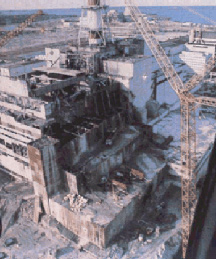
International Chernobyl Disaster Remembrance Day Date in the current year: April 26, 2022
Until recently, Memorial Day for the Victims of the Chernobyl Nuclear Accident was observed only in the countries directly affected by the accident (Ukraine, Belarus and Russia). This changed in 2016, when the United Nations General Assembly designated April 26 as International Chernobyl Disaster Remembrance Day
The Chernobyl accident, also referred to as the Chernobyl disaster, was a catastrophic nuclear accident that occurred in Ukraine (then the Ukrainian Soviet Socialist Republic). On April 26, 1986, Reactor No. 4 at the Chernobyl Nuclear Power Plant was completely destroyed by an explosion caused by a catastrophic power increase. The explosion resulted in radioactive contamination of large parts of the USSR, now the territories of Ukraine, Belarus and Russia. Over 8 million people in these countries were exposed to radiation.
Four years passed after the accident before the Soviet government reluctantly acknowledged the need for international assistance in mitigating the consequences of the disaster. In 1990, the UN General Assembly adopted a resolution that called for international cooperation in overcoming the consequences of the Chernobyl accident.
Since 2002, the main focus of the Chernobyl strategy has been a long-term developmental approach instead of emergency humanitarian assistance. In 2009, the International Chernobyl Research and Information Network was launched to provide support to programs that aim to contribute to the sustainable development of affected territories.
International Chernobyl Disaster Remembrance Day was inaugurated in 2016 to raise awareness of the consequences of the accident and to consolidate efforts to eliminate them. In Ukraine, it is one of the official remembrance days marked by memorial ceremonies and special lessons at schools. In addition, Ukraine observes Chernobyl Liquidators Day on December 14.
Is New Mexico’s Nuclear Waste dump right now affected by wildfires?
Emergency declaration for multiple wildfires in New Mexico SANTA FE, N.M. (AP) — New Mexico Gov. Michelle Lujan Grisham has signed emergency declarations as 20 wildfires continued to burn Sunday in nearly half of the state’s drought-stricken 33 counties.
One wildfire in northern New Mexico that started April 6 merged with a newer fire Saturday to form the largest blaze in the state, leading to widespread evacuations in Mora and San Miguel counties. That fire was at 84 square miles (217 square kilometers) Sunday and 12% contained. An uncontained wind-driven wildfire in northern New Mexico that began April 17 had charred 81 square miles (209 square kilometers) of ponderosa pine, oak brush and grass by Sunday morning north of Ocate, an unincorporated community in Mora County.
……….. https://www.tri-cityherald.com/news/nation-world/national/article260711157.html#storylink=cpy
Fire training, equipment lacking at US nuclear dump in New Mexico
KNAU News Talk – Arizona Public Radio | By Associated Press April 25, 2022 Independent federal investigators say there are significant issues related to fire training at the U.S. government’s nuclear waste repository in New Mexico.
The U.S. Energy Department’s Office of Inspector General also found that firefighting vehicles at the Waste Isolation Pilot Plant were in disrepair from years of neglected maintenance.
Federal officials say they’re making changes to address the issues.
The repository is the backbone of a multibillion-dollar program for cleaning up tons of Cold War-era waste from past nuclear research and bomb making.
The safety concerns come as New Mexico’s governor and others voice opposition to expanding the types of radioactive waste that can be shipped to the repository.
Playing with fire at Chornobyl — Beyond Nuclear International

Will we avoid a deadly sequel?
Playing with fire at Chornobyl — Beyond Nuclear International
After 36 years the nuclear site is again in danger https://beyondnuclearinternational.org/2022/04/24/playing-with-fire-at-chornobyl/
By Linda Pentz Gunter
For 36 years things had been quiet at Chornobyl. Not uneventful. Not safe. But no one was warning of “another Chornobyl” until Russian forces took over the site on February 24 of this year.
Russia’s invasion of Ukraine first took their troops through the Chornobyl Exclusion Zone, where they rolled armored vehicles across radioactive terrain, also trampled by foot soldiers who kicked up radioactive dust, raising the radiation levels in the area.
As the Russians arrived at the Chornobyl nuclear site, it quickly became apparent that their troops were unprotected against radiation exposure and indeed many were even unaware of where they were or what Chornobyl represented. We later learned that they had dug trenches in the highly radioactive Red Forest, and even camped there.
After just over a month, the Russians pulled out. Was this to re-direct troops to now more strategically desirable — or possibly more reasonably achievable — targets? Or was it because, as press reports suggested, their troops were falling ill in significant numbers, showing signs of radiation sickness? Those troops were whisked away to Belarus and the Russians aren’t talking. But rumors persist that at least one soldier has already succumbed to his exposure.
Plant workers at the nuclear site, despite working as virtual hostages during the Russian occupation and in a state of perpetual anxiety, where shocked that even the Russian radiation experts subsequently sent in, were, like the young soldiers, using no protective equipment. It was, said one, a kind of suicide mission.
What could have happened at Chornobyl — and still could, given the war is by no means over and the outcome still uncertain — could have seen history repeat itself, almost 36 years to the day of that first April 26, 1986 disaster.
Yet, Chornobyl has no operating reactors. So why is it still a risk? Doesn’t the so-called New Safe Confinement (NSC) structure protect the site?
The $2.3 billion NSC was built to cover over the original and crumbling old sarcophagus that had encased the lethal cargo left behind after the April 26, 1986 explosion of Unit 4.
Supposed to last just 100 years, that still inadequate timeframe was thrown into jeopardy as a reported firefight broke out prior to the Russian takeover. Fears arose that the shocks and vibrations of repeated shelling and artillery fire could cause the NSC to crack or crumble.
Housed inside the NSC is the destroyed Unit 4 as well as 200 metric tonnes of uranium, plutonium, irradiated dust, solid and liquid fuel, and a molten slurry of uranium fuel rods, zirconium cladding, graphite control rods, and melted sand.
The fuel lump from Unit 4, sitting inaccessible on a basement floor, remains unstable. In May 2021, there was a sudden and baffling escalation of activity there and a rise in neutrons, evoking fears of a chain reaction or even another explosion.
All of these volatile fuels and waste inventories still depend on cooling pumps to keep them cool. And those cooling pumps depend on power.
However, not everything at the site is within the NSC.
Units 1, 2 and 3 are not yet fully decommissioned and likely won’t be until at least 2064. Even though their fuel has been cooling for 20 years, it cannot go indefinitely without power. And managing it necessitates skilled, and unharried, personnel.
Loss of power threatens the ISF-1 spent nuclear fuel pool where much of the waste fuel is still stored. As nuclear engineer, Dave Lochbaum, described it in an email, “If forced cooling is lost, the decay heat will warm the water until it boils or until the heat dissipated by convective and conduction allows equilibrium to be established at a higher, but not boiling, point.
“If the pool boils, the spent fuel remains sufficiently cooled until the water level drops below the top of the fuel assemblies.”
At that point, however, adds Union of Concerned Scientists physicist, Ed Lyman, “a serious condition in the ISF-1 spent nuclear fuel pool” could occur. “However, because the spent fuel has cooled for a couple of decades there would be many days to intervene before the spent fuel was exposed.”
At the time of the invasion, workers at the site had been engaged in moving the full radioactive waste inventory from all 4 of the Chornobyl reactors, from the common fuel pool to the ISF-2 facility where it will be dismantled and put into long-term storage casks. It is unclear whether this operation was halted, but likely so.
Fire also remains a significant risk at the site. The massive 2020 wildfire that reached the perimeter of the Chornobyl plant site, occurred in April, well before the dry season. Military combat clearly invites the risk of igniting a lethal fire.
Indeed, the entire region, known as the Chornobyl Exclusion Zone, is a tinderbox. As Dr. Tim Mousseau and his research team discovered, dead wood and leaf litter on the forest floors is not decaying properly, likely because the microbes and other organisms that drive the process of decay are reduced or gone due to their own prolonged exposure to radiation.
As leaf litter and organic matter build up, the risk of ignition increases. There have been several hundred fires in the Zone already, sometimes, incomprehensibly, deliberately started. The explosions of war fighting could spark another. Indeed, stories did emerge about fires during the Russian occupation, their origin unclear.
But even without military attacks or destruction of the site, it was still at risk, especially when offsite power was lost, twice, raising fears of a potential catastrophe if emergency on-site power — consisting of diesel generators — did not work or ran out of fuel. Later reports revealed that plant workers had taken to stealing Russian fuel to keep those generators running.
Meanwhile, the State Nuclear Regulatory Inspectorate of Ukraine (SNRIU) had lost complete contact with its Chornobyl workforce. As days dragged into weeks, the SNRIU legitimately worried that an exhausted workforce, going without shift changes and operating under duress and potentially fear, could lead to mistakes that could prove deadly.
It was, after all, human error that had contributed to the first Chornobyl catastrophe.
On March 17, the SNRIU reported, “There is no information on the real situation at the Chornobyl NPP site, as there is no contact with the NPP personnel present directly at the site for the 22nd day in a row without rotation.”
Radiation monitors had remained off since the Russian occupation, leaving authorities and the public in the dark should there be any significant release of radioactivity as a result of damage at the site inflicted by military conflict or other causes.
Repeating a warning that had become a daily one on the SNRIU website, the agency concluded: “Given the psychological, moral, and physical fatigue of the personnel, as well as the absence of day-time and repair staff, maintenance and repair activities of equipment important to the safety of the facilities at the Chornobyl NPP site are not carried out, which may lead to the reduction of its reliability, which in turn can lead to equipment failures, emergencies, and accidents.”
Finally, a month into the occupation, a partial shift change was allowed. Workers could go home and rest. But almost immediately, the Russians attacked the nearby worker town of Slavutych, terrorizing the workforce and leaving at least three dead according to press reports.
Some personnel, including security guards, chose to stay on at the site. With good reason, they perhaps feared that the Russian occupying force would behave irresponsibly at a site that houses lethal cargos.
Sure enough, on March 24 stories emerged that Russian forces at Chornobyl may have “looted and destroyed a laboratory near the abandoned Chernobyl nuclear power plant that was used to monitor radioactive waste,” according to CNN and other news sources.
The laboratory, which conducts research into radioactive waste management, houses radioactive materials that may then have fallen into Russian hands.
The State Agency of Ukraine for Exclusion Zone Management, which announced the attack, went further in wishing “the enemy today…will harm himself, not the civilized world.”
And now here we are, just days away from the 36th commemoration of that terrible day in 1986. Still watching. Still waiting. Still holding our breath. The war is neither over, nor won by either side. The Chornobyl site, possibly now more radioactive than in the immediate past, sits like a ticking time bomb. Along with too many unanswered — and unanswerable — questions.
Who will protect it? Will it be spared further assault? And will the word Chornobyl come to mark a new nuclear catastrophe 36 years after the first?
Just how dangerous are the nuclear wastes at WIPP waste dump in New Mexico, and at Los Alamos National Laboratory?
Report: Some Los Alamos nuclear waste too hazardous to move via Santa Fe New Mexican, The Atomic Age, By Scott Wyland Oct 28 2017, https://lucian.uchicago.edu/blogs/atomicage/2021/08/04/report-some-los-alamos-nuclear-waste-too-hazardous-to-move-via-santa-fe-new-mexico/comment-page-2/
Los Alamos National Laboratory has identified 45 barrels of radioactive waste so potentially explosive — due to being mixed with incompatible chemicals — that crews have been told not to move them and instead block off the area around the containers, according to a government watchdog’s report.
Crews have worked to ferret out drums containing volatile compounds and move them to a more secure domed area of the lab after the Defense Nuclear Facilities Safety Board issued a scathing report last year saying there were possibly hundreds of barrels of unstable nuclear waste.
The safety board estimated an exploding waste canister could expose workers to 760 rem, far beyond the threshold of a lethal dose. A rem is a unit used to measure radiation exposure. In its latest weekly report, the safety board said crews at Newport News Nuclear BWXT Los Alamos, also known as N3B — the contractor in charge of cleaning up the lab’s legacy waste — have pegged 60 barrels with volatile mixtures and have relocated 15 drums to the domed area.
[…]
Officials at the U.S. Department of Energy’s environmental management office said they couldn’t comment on the report or on how the lab stores waste, citing lack of time to answer questions.
Volatile waste mixtures have received more attention since 2014 when a waste container from the Los Alamos lab packaged with a blend of organic cat litter and nitrate salts burst in an underground chamber of the Waste Isolation Pilot Plant near Carlsbad. The radioactive release contaminated the storage site so extensively it shut down for three years and cost $2 billion to clean up.
Hirsch noted some radioactive vapors escaped from WIPP’s underground site to the open air amid the leak. Federal reports have described a small amount of radioactivity slipping through exhaust vents that have since been sealed.
The fact that any radiation was emitted from below ground illustrates how destructive a waste barrel blowing up above ground could be, Hirsch said.
In the October report, the safety board said lab personnel had failed to analyze chemicals present in hundreds of containers of transuranic nuclear waste, making it possible for incompatible chemicals to cause a container to explode. Crews also never sufficiently estimated how much radiation would be released by such an event.
Waste with that kind of hair trigger should only be analyzed in a “hot cell,” with walls several feet thick, blast-proof glass and robotic arms that a technician operates to handle the materials, Hirsch said.
Read more at Report: Some Los Alamos nuclear waste too hazardous to move
Swiss population keen for nuclear bunkers, -but it’s doubtful that they’d be any use anyway.
‘A large-scale nuclear war would however be catastrophic, and no state would be able to guard against the effects.’
Companies are ‘overwhelmed with enquiries’ for NUCLEAR BUNKERS in Switzerland and reporting shortage of materials following Ukraine invasion
- Since 1960s, every Swiss municipality had to build nuclear bunkers for residents
- Residents are now contacting specialist companies to build or renovate shelters
- The bunkers are being viewed in a new light since Russia’s invasion of Ukraine
By RACHAEL BUNYAN FOR MAILONLINE and AFP 26 April 2022
Companies that build and repair bomb shelters are being ‘overwhelmed with enquiries’ for nuclear fallout bunkers in Switzerland, as Russian’s invasion of Ukraine has reawakened interest in the secure facilities.
Residents in Switzerland, where nuclear bunkers have been mandatory for every household since the 1960s, are now contacting the companies to build or renovate their shelters to make sure they can be protected in the event of bombings or nuclear war.
Demand is so high for the concrete nuclear bunkers that specialist companies are now facing shortages in raw materials required to build them………………………………………………………………….
Switzerland’s vast network of nuclear bunkers have a range of other day-to-day uses, including as military barracks or as temporary accommodation for asylum seekers. But Swiss authorities require that they can be emptied and reverted back to nuclear shelters within five days.
So far, Switzerland’s population has never been ordered down into the shelters, not even in the wake of the Chernobyl disaster.
Experts say the most likely scenario for needing to use them has always been a possible accident at one of Switzerland’s own nuclear power plants.
But now the conflict raging in Ukraine has added a new, urgent layer to the national nuclear anxiety.
With public concern growing, Swiss authorities have published overviews of the available shelter spots, and have urged households to always maintain a stock of food to last at least a week. ………………………………..
Experts caution though that the level of protection provided by the shelters in the case of actual nuclear weapons use would depend heavily on the intensity and proximity of the strikes.
‘The shelters could offer the population a certain level of temporary protection against radioactive events,’ Swiss defence ministry spokesman Andreas Bucher said.
‘A large-scale nuclear war would however be catastrophic, and no state would be able to guard against the effects.’ https://www.dailymail.co.uk/news/article-10751447/Companies-overwhelmed-enquiries-NUCLEAR-BUNKERS-Switzerland-following-Ukraine-invasion.html
Hungary receives nuclear fuel shipment by air from Russia

Gee, I hope they never have a crash.
https://www.power-technology.com/news/hungary-nuclear-fuel-shipment-air-russia/ April 8, 2022
The shipment arrived via the airspace of Belarus, Poland and Slovakia. Hungary has received its first shipment of nuclear fuel by air from Russia for its Paks nuclear power plant since the start of Russia’s invasion of Ukraine, which has made shipping of the fuel by rail unfeasible.
Hungarian Foreign Minister Peter Szijjarto announced the shipment in a Facebook video from Brussels, Belgium.
Szijjarto said: “Fuel (for the Paks plant) has always come from Russia by rail via Ukraine. Unfortunately, this is no longer possible, so we had to find an alternative way of shipping.”
Playing with fire at Chornobyl — Beyond Nuclear International
Will we avoid a deadly sequel?
Playing with fire at Chornobyl — Beyond Nuclear International
After 36 years the nuclear site is again in danger https://beyondnuclearinternational.org/2022/04/24/playing-with-fire-at-chornobyl/
By Linda Pentz Gunter
For 36 years things had been quiet at Chornobyl. Not uneventful. Not safe. But no one was warning of “another Chornobyl” until Russian forces took over the site on February 24 of this year.
Russia’s invasion of Ukraine first took their troops through the Chornobyl Exclusion Zone, where they rolled armored vehicles across radioactive terrain, also trampled by foot soldiers who kicked up radioactive dust, raising the radiation levels in the area.
As the Russians arrived at the Chornobyl nuclear site, it quickly became apparent that their troops were unprotected against radiation exposure and indeed many were even unaware of where they were or what Chornobyl represented. We later learned that they had dug trenches in the highly radioactive Red Forest, and even camped there.
After just over a month, the Russians pulled out. Was this to re-direct troops to now more strategically desirable — or possibly more reasonably achievable — targets? Or was it because, as press reports suggested, their troops were falling ill in significant numbers, showing signs of radiation sickness? Those troops were whisked away to Belarus and the Russians aren’t talking. But rumors persist that at least one soldier has already succumbed to his exposure.
Plant workers at the nuclear site, despite working as virtual hostages during the Russian occupation and in a state of perpetual anxiety, where shocked that even the Russian radiation experts subsequently sent in, were, like the young soldiers, using no protective equipment. It was, said one, a kind of suicide mission.
What could have happened at Chornobyl — and still could, given the war is by no means over and the outcome still uncertain — could have seen history repeat itself, almost 36 years to the day of that first April 26, 1986 disaster.
Yet, Chornobyl has no operating reactors. So why is it still a risk? Doesn’t the so-called New Safe Confinement (NSC) structure protect the site?
The $2.3 billion NSC was built to cover over the original and crumbling old sarcophagus that had encased the lethal cargo left behind after the April 26, 1986 explosion of Unit 4.
Supposed to last just 100 years, that still inadequate timeframe was thrown into jeopardy as a reported firefight broke out prior to the Russian takeover. Fears arose that the shocks and vibrations of repeated shelling and artillery fire could cause the NSC to crack or crumble.
Housed inside the NSC is the destroyed Unit 4 as well as 200 metric tonnes of uranium, plutonium, irradiated dust, solid and liquid fuel, and a molten slurry of uranium fuel rods, zirconium cladding, graphite control rods, and melted sand.
The fuel lump from Unit 4, sitting inaccessible on a basement floor, remains unstable. In May 2021, there was a sudden and baffling escalation of activity there and a rise in neutrons, evoking fears of a chain reaction or even another explosion.
All of these volatile fuels and waste inventories still depend on cooling pumps to keep them cool. And those cooling pumps depend on power.
However, not everything at the site is within the NSC.
Units 1, 2 and 3 are not yet fully decommissioned and likely won’t be until at least 2064. Even though their fuel has been cooling for 20 years, it cannot go indefinitely without power. And managing it necessitates skilled, and unharried, personnel.
Loss of power threatens the ISF-1 spent nuclear fuel pool where much of the waste fuel is still stored. As nuclear engineer, Dave Lochbaum, described it in an email, “If forced cooling is lost, the decay heat will warm the water until it boils or until the heat dissipated by convective and conduction allows equilibrium to be established at a higher, but not boiling, point.
“If the pool boils, the spent fuel remains sufficiently cooled until the water level drops below the top of the fuel assemblies.”
At that point, however, adds Union of Concerned Scientists physicist, Ed Lyman, “a serious condition in the ISF-1 spent nuclear fuel pool” could occur. “However, because the spent fuel has cooled for a couple of decades there would be many days to intervene before the spent fuel was exposed.”
At the time of the invasion, workers at the site had been engaged in moving the full radioactive waste inventory from all 4 of the Chornobyl reactors, from the common fuel pool to the ISF-2 facility where it will be dismantled and put into long-term storage casks. It is unclear whether this operation was halted, but likely so.
Fire also remains a significant risk at the site. The massive 2020 wildfire that reached the perimeter of the Chornobyl plant site, occurred in April, well before the dry season. Military combat clearly invites the risk of igniting a lethal fire.
Indeed, the entire region, known as the Chornobyl Exclusion Zone, is a tinderbox. As Dr. Tim Mousseau and his research team discovered, dead wood and leaf litter on the forest floors is not decaying properly, likely because the microbes and other organisms that drive the process of decay are reduced or gone due to their own prolonged exposure to radiation.
As leaf litter and organic matter build up, the risk of ignition increases. There have been several hundred fires in the Zone already, sometimes, incomprehensibly, deliberately started. The explosions of war fighting could spark another. Indeed, stories did emerge about fires during the Russian occupation, their origin unclear.
But even without military attacks or destruction of the site, it was still at risk, especially when offsite power was lost, twice, raising fears of a potential catastrophe if emergency on-site power — consisting of diesel generators — did not work or ran out of fuel. Later reports revealed that plant workers had taken to stealing Russian fuel to keep those generators running.
Meanwhile, the State Nuclear Regulatory Inspectorate of Ukraine (SNRIU) had lost complete contact with its Chornobyl workforce. As days dragged into weeks, the SNRIU legitimately worried that an exhausted workforce, going without shift changes and operating under duress and potentially fear, could lead to mistakes that could prove deadly.
It was, after all, human error that had contributed to the first Chornobyl catastrophe.
On March 17, the SNRIU reported, “There is no information on the real situation at the Chornobyl NPP site, as there is no contact with the NPP personnel present directly at the site for the 22nd day in a row without rotation.”
Radiation monitors had remained off since the Russian occupation, leaving authorities and the public in the dark should there be any significant release of radioactivity as a result of damage at the site inflicted by military conflict or other causes.
Repeating a warning that had become a daily one on the SNRIU website, the agency concluded: “Given the psychological, moral, and physical fatigue of the personnel, as well as the absence of day-time and repair staff, maintenance and repair activities of equipment important to the safety of the facilities at the Chornobyl NPP site are not carried out, which may lead to the reduction of its reliability, which in turn can lead to equipment failures, emergencies, and accidents.”
Finally, a month into the occupation, a partial shift change was allowed. Workers could go home and rest. But almost immediately, the Russians attacked the nearby worker town of Slavutych, terrorizing the workforce and leaving at least three dead according to press reports.
Some personnel, including security guards, chose to stay on at the site. With good reason, they perhaps feared that the Russian occupying force would behave irresponsibly at a site that houses lethal cargos.
Sure enough, on March 24 stories emerged that Russian forces at Chornobyl may have “looted and destroyed a laboratory near the abandoned Chernobyl nuclear power plant that was used to monitor radioactive waste,” according to CNN and other news sources.
The laboratory, which conducts research into radioactive waste management, houses radioactive materials that may then have fallen into Russian hands.
The State Agency of Ukraine for Exclusion Zone Management, which announced the attack, went further in wishing “the enemy today…will harm himself, not the civilized world.”
And now here we are, just days away from the 36th commemoration of that terrible day in 1986. Still watching. Still waiting. Still holding our breath. The war is neither over, nor won by either side. The Chornobyl site, possibly now more radioactive than in the immediate past, sits like a ticking time bomb. Along with too many unanswered — and unanswerable — questions.
Who will protect it? Will it be spared further assault? And will the word Chornobyl come to mark a new nuclear catastrophe 36 years after the first?
1 This Month

10 March A LIVE WEBINAR THE REAL EFFECTS OF NUCLEAR POWER
What the Industry Isn’t Telling Us
1:00 PM Mountain, 2 pm Central, 3 pm Eastern. Live on the Keepers of the Water Facebook page

18 March Webinar @ 1 PM EST: An Assessment of SMR Projects: The Case of Canada
register for the zoom:
https://us02web.zoom.us/webinar/register/WN_o8BIIOUvQ2ONJR1nta65DQ#/registration


of the week – STOP SMALL MODULAR REACTORS IN CANADA
To see nuclear-related stories in greater depth and intensity – go to https://nuclearinformation.wordpress.com
-
Archives
- March 2026 (9)
- February 2026 (268)
- January 2026 (308)
- December 2025 (358)
- November 2025 (359)
- October 2025 (376)
- September 2025 (258)
- August 2025 (319)
- July 2025 (230)
- June 2025 (348)
- May 2025 (261)
- April 2025 (305)
-
Categories
- 1
- 1 NUCLEAR ISSUES
- business and costs
- climate change
- culture and arts
- ENERGY
- environment
- health
- history
- indigenous issues
- Legal
- marketing of nuclear
- media
- opposition to nuclear
- PERSONAL STORIES
- politics
- politics international
- Religion and ethics
- safety
- secrets,lies and civil liberties
- spinbuster
- technology
- Uranium
- wastes
- weapons and war
- Women
- 2 WORLD
- ACTION
- AFRICA
- Atrocities
- AUSTRALIA
- Christina's notes
- Christina's themes
- culture and arts
- Events
- Fuk 2022
- Fuk 2023
- Fukushima 2017
- Fukushima 2018
- fukushima 2019
- Fukushima 2020
- Fukushima 2021
- general
- global warming
- Humour (God we need it)
- Nuclear
- RARE EARTHS
- Reference
- resources – print
- Resources -audiovicual
- Weekly Newsletter
- World
- World Nuclear
- YouTube
-
RSS
Entries RSS
Comments RSS
 nuclear-news