Fears of a radiation leak mount near Ukrainian nuclear plant
WHSV3 By PAUL BYRNE, Aug. 26, 2022 ,
KYIV, Ukraine (AP) — Authorities began distributing iodine tablets to residents near Ukraine’s Zaporizhzhia nuclear power plant Friday in case of a radiation leak, amid mounting fears that the fighting around the complex could trigger a catastrophe.
The move came a day after the plant was temporarily knocked offline because of what officials said was fire damage to a transmission line. The incident heightened dread of a nuclear disaster in a country still haunted by the 1986 explosion at Chernobyl.
Continued shelling was reported in the area overnight, and satellite images from Planet Labs showed fires burning around the complex — Europe’s biggest nuclear plant — over the last several days.
Iodine tablets, which help block the absorption of radioactive iodine by the thyroid gland in a nuclear accident, were issued in the Ukrainian-controlled city of Zaporizhzhia, about 45 kilometers (27 miles) from the plant. A woman and her small daughter were among those receiving the pills……………..
In Thursday’s incident, Ukraine and Russia blamed one another for the transmission-line damage that knocked the plant off the power grid………
The plant requires power to run the reactors’ vital cooling systems. A loss of cooling could lead to a nuclear meltdown.
Ukrenergo, Ukraine’s transmission system operator, reported Friday that two damaged main lines supplying the plant with electricity had resumed operation, ensuring a stable power supply.
Is Ukraine ready for another Chernobyl-like catastrophe? – Paul Dorfman
Russia and Ukraine have accused each other of shelling Zaporizhzhia. Now,
International atomic energy agency team will visit Zaporizhzhia. Still the
question arises, is Ukraine ready for another Chernobyl-like catastrophe?
Paul Dorfman at 3.57
WION 20th Aug 2022
Nuclear power not a realistic option for the Philippines, given the seismic and other disaster risks

“Just last month, we saw the impacts of a 7.1 magnitude earthquake (which) should serve as a warning. Exposure to unpredictable seismic events should make us think twice about having a nuclear power plant,” he said.
Nuclear power, Mr. Arances said, is not a solution to the climate and energy crises, adding that it does not guarantee lower electricity prices.
Safety regulations seen as ‘first step’ in nuclear power shift, https://www.bworldonline.com/economy/2022/08/21/469667/safety-regulations-seen-as-first-step-in-nuclear-power-shift/ By Alyssa Nicole O. Tan, Reporter
THE Philippines is running late with its regulatory preparations for a safe nuclear power transition, the head of the Senate energy committee said.
Senator Rafael T. Tulfo said a law is needed to lay down standards for the incorporation of nuclear power companies, the construction of power plants, and the their operation.
“We have not even made a first step and we’re overdue,” he told BusinessWorld in a Viber message. Safety standards are needed because the Philippines sits astride an area of high tectonic activity, he said, adding that disaster response capacity must be developed should anything go wrong with such plants.
According to the World Bank, the Philippines is vulnerable to earthquakes, volcanic eruptions, tropical cyclones, and floods, making it one of the most disaster-prone countries in the world.
“In regulating the nuclear energy sector, there must be stringent standards as to the minimum standards for facilities, minimum qualifications for the persons or entities operating it, considerations as to where and how to acquire nuclear material, contingencies in case of emergency scenarios, proper standards on nuclear fuel disposal, limitations on foreign influence in the nuclear industry, and how the LGU where the plant is situated should gain a just and equitable share of the plant’s profits,” he said.
Center for Energy, Ecology, and Development Executive Director Gerry Arances told BusinessWorld in an e-mail that it would take years to create a policy framework thorough enough to take into account all safety, environmental, and electricity price risks, and years more to build nuclear facilities.
“Even small modular reactors would take about three to five years to construct. That means nuclear energy cannot provide immediate solutions to today’s energy crisis. In that span of time, renewable energy facilities could already have been deployed,” he said.
Nuclear power, Mr. Arances said, is not a solution to the climate and energy crises, adding that it does not guarantee lower electricity prices.
“The price of fuel for nuclear energy like plutonium and uranium, neither of which can be sourced domestically, will put Filipino consumers at the mercy of global market prices and vulnerable to shocks,” he said. “We are already seeing this today with fossil fuel volatilities triggered by the Ukraine-Russia war.”
“In developing nuclear power, the Philippines will devote time and energy to figuring out where we can source nuclear fuel, how we will manage nuclear waste, and how we can prevent the possibility of our country turning into the next Fukushima or Chernobyl,” he added.
Even then, he said there is no assurance of eliminating the risk of nuclear accidents, given the country’s geographic location and the intensifying climate crisis.
“Just last month, we saw the impacts of a 7.1 magnitude earthquake (which) should serve as a warning. Exposure to unpredictable seismic events should make us think twice about having a nuclear power plant,” he said.
There were 10 deaths from the magnitude 7 earthquake that struck the northern Philippines, with more 300,000 people from about 82,000 families affected, according to the National Disaster Risk Reduction and Management Council.
The earthquake also damaged more than 21,000 houses, 302 of which were destroyed, the agency said. Damage to infrastructure was about P414 million in the Ilocos region, Cagayan Valley and Cordillera Administrative Region.
Mr. Arances said time and effort should instead be channeled to effecting a 100% transition to genuinely sustainable and safe renewable energy.
“We have an abundant supply of renewable energy just waiting to be developed at an increasingly affordable cost — case in point are the winning bidders of the GEA Reserve prices, of whom the lowest bid is P3.4 per kilowatt hour from solar,” he said.
We must never forget the risks nuclear stations pose to us all in conflict situations
The Herald, Isobel Lindsay, 19 Aug 22, CURRENTLY there are two different discourses going on in relation to nuclear power with no cross-over (“If Russia turns up the heat, could a nuclear winter follow?”, The Herald, August 17).
There is a cosy consensus among UK politicians and commentators that we should have more nuclear power stations and that this is supposed to be environmentally friendly. This message is, of course, actively promoted by commercial interests. Never mind the huge cost of both the build and the decommissioning, the legacy of radioactive waste we are leaving for future generations, the impact of rising water levels and drought on these plants and the long build time.
But the other discourse playing out is the huge vulnerability of nuclear power plants in conflict situations. Both Russia and Ukraine are playing “dare you” in relation to the Zaporizhzhia power plant. The Russians are using it as a base that is too dangerous to attack and Ukraine has been having a few shots at it to frighten the Russians and the rest of Europe in order to get more help. If the worst happens, it is the wind that will determine who suffers most, not state boundaries.
The threat is not just from war situations. While we have careful security measures, risk is always there. In 2017 a member of a far-right apocalyptic group in the US was arrested with weapons on his way to a nuclear power plant. One of those killed in the January 2021 storming of the US Capitol was an employee of a nuclear plant. In 2014 an insider at a Belgium reactor sabotaged one of the plant’s turbines, leading to months of shut-down. There are plants on earthquake and tsunami vulnerable areas.
We are not short of low-risk methods for the radical reduction in carbon emissions. We need to challenge those who are promoting high-risk choices, https://www.heraldscotland.com/news/20672345.letters-must-never-forget-risks-nuclear-stations-pose-us-conflict-situations/
Counting the cost of cracking at EDF’s nuclear reactors in France

Nuclear Engineering, 11 Aug, 22,
The full extent of stress corrosion cracking at EDF’s reactors in France has still to be determined. Nonetheless, lower production as plants are re-examined has come at the worst possible time for the company.
On 15 December 2021 EDF announced that it would temporarily shut down two reactors at the Civaux site. The move came after inspections undertaken as part of as Civaux 1’s 10-yearly in-service inspection revealed defect indications close to welds in pipes that formed part of the of the safety injection system (SIS). This back-up circuit allows borated water to be injected into the reactor core in order to stop the nuclear reaction and to maintain the volume of water in the primary circuit in the event of a loss of primary coolant accident.
The discovery illustrated the mixed blessings of a ‘series’ approach to nuclear build, as EDF decided that it should also investigate and, if needed, address the same problem at other reactors in the N4 series, notably at Chooz, where there are four similar reactors. It began an outage at Chooz 2 on 16 December and at Chooz 1 on 18 December.
At that time EDF said the extended outage at Civaux and the closure at Chooz would cost it about 1TWh in lost generation to the end of 2021. But since then the company has found the problem to be more widespread.
ASN (Autorite´ de Su^rete´ Nucle´aire), France’s nuclear safety authority, said analysis on parts of the pipes removed from Civaux 1 had revealed the presence of cracking resulting from an unexpected stress corrosion phenomenon on the inner face of the piping, close to the weld bead. There was worse news for EDF. The ultrasonic inspection, which had been carried out during the plants’ regular 10-yearly outages, is mainly used to detect cracking caused by thermal fatigue. It is less effective at detecting stress corrosion cracking (SCC). That raised the fear that SCC had been present in reactors that had previously been examined by ultrasound and indications of SCC had wrongly been classified as spurious. The re-examination of Chooz B1 and B2 indicated this was indeed the case and there was SCC that needed to be addressed.
All five of the reactors in the initial group have had to undergo additional checks to determine which areas and systems are affected by the stress corrosion phenomenon.
To make matters worse still, checks at Penly 1, during its third 10-yearly outage, revealed indications on the same pipes, which laboratory analysis showed to be SCC, albeit at a smaller scale than at Civaux 1. Unlike the Chooz and Civaux reactors, Penly is not one of the 1450MWe N4 series but a 1300MWe reactor in an earlier French series.
As a result, EDF has returned to the checks previously conducted on all of its reactors to re-examine the results, searching for indications then thought to be spurious but now seen as potential indications of stress corrosion.
May update
In early May, speaking at an investor meeting after the company published results for the three months to the end of March, Regis Clement, EDF’s Deputy Head of Nuclear Generation, provided an update to investors.
He said inspections and examinations had confirmed stress corrosion in sections of piping at Civaux 1, Chooz 1 and Penly 1, where the affected parts will be removed and replaced. EDF had already begun investigations at Civaux 2 and Chooz 2 and now that has been extended to seven more units – Chinon 3, Cattenom 3, Bugey 3 and 4, Flamanville 1 and 2, and Golfech 1. Of these units, Clement said: “Indications have been found during ultrasound inspection process but we are not yet able to establish whether these are minor flaws in the composition of the steel, traces of thermal fatigue or stress corrosion.” Laboratory tests are under way.
In the end, EDF will inspect all its reactors. It expects that process to be completed by the end of 2023 and largely to be carried out during scheduled maintenance outages. Clement said, “At this time more or less 20% of the fleet is undergoing examination” and EDF expected to have a “high level of requirements” in controlling or remedying the problem.
The overall cost of assessing and remedying the problem cannot yet be fully assessed, ……………………….https://www.neimagazine.com/features/featurecounting-the-cost-of-cracking-9919744/
IAEA reiterates need for all military action to stop near Zaporizhzya Nuclear PP
International Atomic Energy Agency director general Rafael Mariano Grossi
told the UN Security Council on 11 August that the IAEA’s presence at the
Zaporizhzya Nuclear PP in Ukraine, to allow it to carry out important
technical activities in nuclear safety, security and safeguards and at the
same time provide a stabilising influence, is now essential. In a session
to discuss the situation at the plant, which has been occupied by Russian
forces since March, Mr Grossi reiterated his call for all military action
to stop at the site, which came under shell fire on 5 and 6 August.
Modern Power Systems 16th Aug 2022
https://www.modernpowersystems.com/news/newsshelling-of-zaporizhya-npp-9931814
Zaporizhzhia nuclear plant: Analysing safety of nuclear power in conflict zones
Zaporizhzhia Nuclear Power Plant ‘not designed to withstand fighting’. A
scientist in Ukraine warns that the reactor at Europe’s largest nuclear
power station is designed to protect against some threats, but not
shelling. One nuclear scientist working in Ukraine, who asked to remain
anonymous, told New Scientist that the reactors at the ZNPP are built to a
more modern design – known as VVER-1000 – than those at the Chernobyl
nuclear power plant, with a better containment structure, but that there
are still risks from nearby fighting.
“Normally, the design of
containment should resist an external impact like the crash of an airplane.
The concrete shell of VVER-1000 containment is about 1.2 metres thick,”
he says. “However, the safety of a nuclear power plant is not only down
to the containment of the reactor itself; it’s also the work of auxiliary
equipment that ensures the cooling of the reactor and spent fuel. We have
to keep in mind that [a] loss of power caused the accident in Fukushima [in
Japan in 2011].”
Aside from the reactor, there is also liquid and solid
radioactive waste stored on site. If damaged during shelling, this could
cause a radiation leak to the environment, the nuclear scientist says.
“The plant is designed to be protected from terrorist threats, but not
[from] military fighting. All should be done to avoid any chance of
fighting, not only at the plant site, but in all the areas around,” he
says.
New Scientist 16th Aug 2022
In March, Russian forces took control of the Zaporizhzhia nuclear power
plant and its satellite town. Olexiy Kovynyev, independent expert, former
reactor operator and shift supervisor, reflects on the events and what it
meant for the safety of nuclear power in conflict zones.
NS Energy 16th Aug 2022
The Diablo Canyon nuclear plant: assessing the seismic risks of extended operation

Since the NRC has sole authority over the radiological safety aspects of Diablo Canyon, this means that the plant owner will not have to spend a penny to strengthen its seismic protection, no matter what the state of California wants
Arguably, however, the NRC is not doing enough to reduce the risk that a severe earthquake could cause a Fukushima-like core meltdown and radiation release at Diablo Canyon.
Nature, By Edwin Lyman | August 15, 2022, In 2016, Pacific Gas & Electric (PG&E) announced a historic agreement with labor and environmental groups to shut down the two-unit Diablo Canyon nuclear plant in California by 2025 and replace its roughly 2,200 megawatts of electricity with low- and zero-carbon renewable energy, energy efficiency, and storage. Today, that agreement is in serious jeopardy after an academic study (underwritten in part by the nuclear industry), combined with a sustained and vocal public relations campaign waged by Diablo Canyon supporters (including a Tik-Tok influencer), have succeeded in raising doubts about the viability of the power replacement plan.
Growing concerns about climate change-related impacts on the reliability of the electrical grid have also prompted California governor Gavin Newsom to reconsider his position and seek to keep the plant open, at least in the short term. The US Energy Department’s Office of Nuclear Energy is also doing its part to keep Diablo Canyon open by relaxing the original financial qualification criteria and extending the application deadline by more than three months for its recently established Civil Nuclear Credit Program. This will make it possible for PG&E to apply for a first round of federal subsidies aimed at helping utilities keep nuclear power plants open.
Although there is some basis for the criticism that PG&E and the State of California are not acting quickly enough to ensure that enough carbon-free power will be available to replace all of Diablo Canyon’s output, the California Public Utilities Commission’s historic decision last year to procure 11,500 megawatts of clean energy resources by 2026, along with 4,000 megawatts of new capacity (mostly battery storage) added to the grid in the last year, should help address that concern. A recent analysis by Gridlab and Telos Energy also found that renewable energy could replace Diablo Canyon and supply 85 percent of California’s electricity by 2030, while keeping the power on for its 40 million residents—even under stressful conditions such as low hydropower generation, retirements of fossil fuel-fired plants, and heatwaves similar to what caused rolling power outages in August 2020.
Nevertheless, the disagreement over the plant’s future has become a proxy for the larger debate over what role nuclear power should play in addressing climate change, given its safety and security risks. If PG&E’s original plan were to succeed, after all, it could undermine the nuclear advocates’ argument that nuclear power is an irreplaceable asset in all circumstances.
But if Diablo Canyon is to remain open beyond 2025, PG&E will have to address a number of difficult issues. First, the company will have to prepare a new 20-year license renewal application and submit it to the US Nuclear Regulatory Commission (NRC) before the expiration of Unit 1’s operating license in 2024. PG&E will also have to undertake extensive inspections and equipment upgrades that were indefinitely postponed after it made the decision to shut the plant, as discussed in a June 2022 meeting of the Diablo Canyon Independent Safety Committee. And finally, it must take a hard look at the vulnerability of the plant to earthquakes and consider the need to make seismic upgrades to minimize the risk to the public over the period of extended operation.
Conflicting information on the seismic question has been reported. A spokesperson for the California Public Utility Commission was quoted as saying that if PG&E were to resume the license renewal proceeding for the plant, it would need to make seismic upgrades. However, this statement is not consistent with the NRC’s current position. Following a review conducted in the aftermath of the 2011 Fukushima accident in Japan, the agency concluded that no seismic upgrades at Diablo Canyon or any other US nuclear plants were necessary, because the health and safety risks to the public were acceptable. Since the NRC has sole authority over the radiological safety aspects of Diablo Canyon, this means that the plant owner will not have to spend a penny to strengthen its seismic protection, no matter what the state of California wants.
Arguably, however, the NRC is not doing enough to reduce the risk that a severe earthquake could cause a Fukushima-like core meltdown and radiation release at Diablo Canyon (or, for that matter, other seismically vulnerable nuclear plants in the country). The agency, as part of its drive to transform into a more “risk-informed” regulator, cites the low calculated radiological risk to the public from nuclear plant accidents to justify not taking action to increase safety across a wide range of areas, including seismic protection. But there’s a major problem with this approach: Assessing the seismic risk involves understanding both the uncertainties associated with nuclear accidents and the even larger unknowns encountered in trying to predict earthquake behavior. These uncertainties raise doubts whether the seismic risks can be calculated with sufficient precision to support the NRC’s complacency.
Although other nuclear plants are also seismically vulnerable, according to current information, the potential peak ground motion that the Diablo Canyon site may experience from an earthquake occurring every 10,000 years on average is far higher than any other US plant…………………………………………………
NRC requirements for protection against earthquakes.……………………………………………
The complicated history of Diablo Canyon’s seismic evaluations……………………………………..
Fukushima seismic reevaluations. The 2011 Fukushima Daiichi accident showed the world what can happen when a nuclear plant experiences a natural disaster more severe than it was designed to handle. In response to the accident, the NRC convened a task force to evaluate whether its nuclear safety requirements needed to be strengthened. In its report, the task force noted that “available seismic data and models show increased seismic hazard estimates for some operating nuclear power plant sites” and recommended that the NRC “order licensees to reevaluate the seismic and flooding hazards at their sites against current NRC requirements and guidance, and if necessary, update the design basis and SSCs important to safety to protect against the updated hazards.”
Although the NRC did accept part of the task force recommendation by directing all nuclear plants to “reevaluate the seismic and flooding hazards at their sites using present-day NRC requirements and guidance,” it did not adopt the task force’s proposed remedy: ……………………………………………………………..
Likelihood of earthquake-induced core damage at Diablo Canyon……………………………………………………………………………
The best way to reduce the risk of a spent fuel pool fire is to transfer most of the densely packed stored spent fuel in the pools to dry storage casks. If the Diablo Canyon units are decommissioned, this will be accomplished within several years after the units are shut down. But the NRC insists that the risks of densely packed spent fuel pool storage are acceptable and has refused to require licensees to expedite spent fuel transfer to dry casks. If the reactors continue to operate, PG&E will have no regulatory mandate to procure and load the additional dry casks needed to thin out the pools, prolonging the period at which the spent fuel pools will pose undue risks.
Despite the fairly high risk of core damage that PG&E’s seismic probabilistic risk assessment found, after reviewing the study the NRC took the position that the risks are acceptable and that “no modifications are warranted … because a potential cost-justified substantial safety improvement was not identified.” …………………………………………………………………..
Consequences of a severe accident at Diablo Canyon. What is at stake if there were a seismically induced core damage accident at Diablo Canyon?…………………………………………………………………
Potential modifications to reduce seismic risk.………………………………………………………………….
more https://thebulletin.org/2022/08/the-diablo-canyon-nuclear-plant-assessing-the-seismic-risks-of-extended-operation/
The Watchdog: Nuclear Regulatory Commission flunks this public records test
By Dave Lieber The Dallas Morning News, 16 Aug 22,
I am a Three Mile Island baby.
What I mean is I was in college in 1979 when America’s first major nuclear plant accident occurred. I was 100 miles away. Had things gotten bad, and the wind changed …
Since then I’ve studied nuclear evacuation zones and how they are supposed to work.
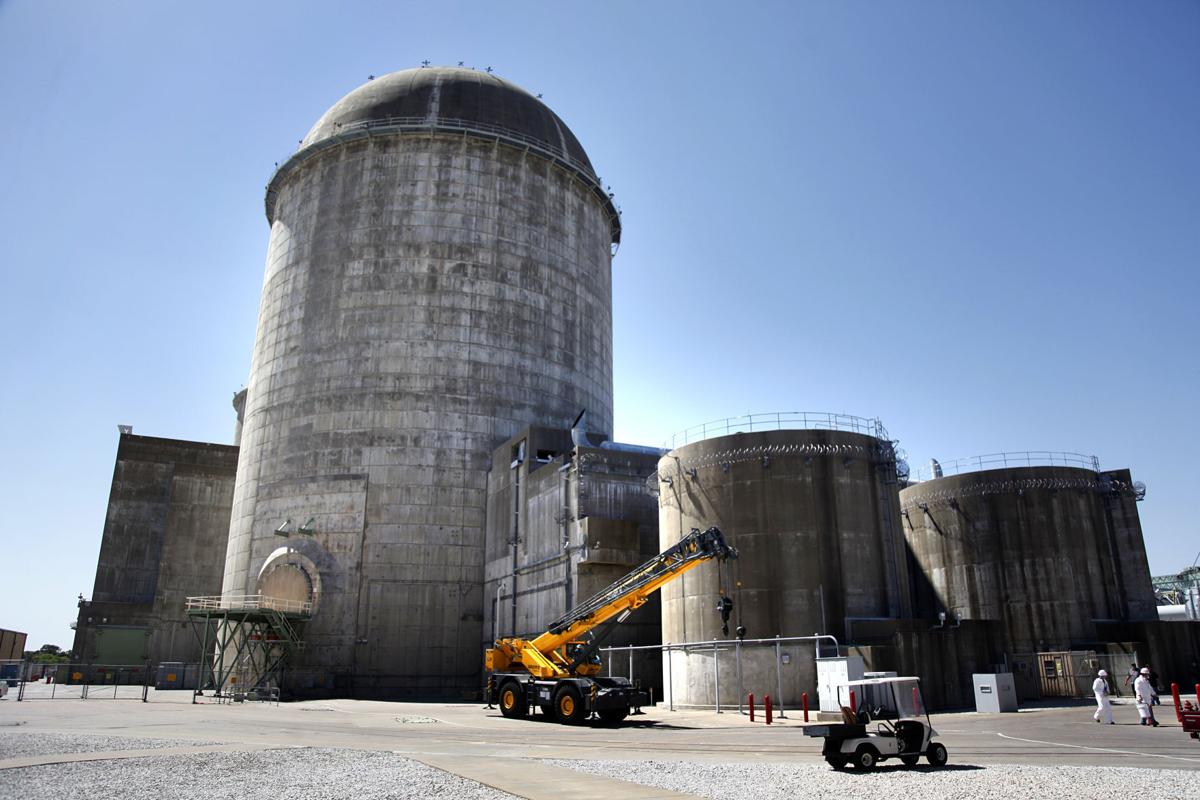
That’s why I filed a federal Freedom of Information request one year ago seeking records of a June 7, 2021, fire inside the Comanche Peak nuclear power plant. The reactor is outside the city limits of Glen Rose, 60 miles southwest of downtown Dallas.
I wanted to test the U.S. Nuclear Regulatory Commission’s response to an open records request. How forthcoming would this important but often overlooked federal agency be?
The answer is in. The NRC failed The Watchdog’s test. They ignored my request for a full year. It wasn’t until I contacted them last week and reminded that I had a year-old request that was unfilled that they reacted. Otherwise, I’m fairly certain that my request would have gone unanswered forever.
Grade? I give the NRC an “F” for this.
Original request
When I made the request on Aug. 23, 2021, some of the facts about the fire were already publicly known. There was a fire in the plant’s main transformer that was put out by the plant’s fire department. External fire departments were not called in.
After that, the plant’s Unit 2 was shut down for two weeks for repairs, and then it went back online.
Dallas Morning News reporter Marin Wolf did an excellent job covering the event in two stories.
What I didn’t know a year ago was that there would be a war between Russia and Ukraine, and that nuclear power plants would be used as strategic points of combat………………………………
Evacuation plans
The last study I made of the Comanche Peak evacuation plans was in 2011. I studied hundreds of pages of evacuation plans I received from the NRC through the Freedom of Information Act. Little details were somewhat alarming.
In the event of an evacuation, records stated that pets were not allowed in the “reception centers” outside the evacuation zones.
“Where possible, shelter livestock,” the plan stated. “Leave them with food and water.”
More advice: “Keep your car’s vents and windows closed while driving within 10 miles of the power plant. If you use your car air conditioning, set it on ‘inside’ or ‘maximum’ so it does not pull in outside air.”
“Residents are also advised to communicate with neighbors personally, rather than clogging phone lines.”
How would that happen if you’re in your car, with the vents closed, driving away?
It’s clear to me that chaos would ensue.
A bad battery
Four months after my initial FOIA request, I sent the NRC a note with the subject line “Missing in Action.”
“Hello, I’m wondering what happened to my August 2021 FOIA request — NRC-2021-000233.”
I received an acknowledgement of my letter — but no records.
Obviously, this could have gone on forever. Did the NRC forget me?
Finally, last week, I revealed my experiment to the NRC in a note: “It wasn’t so much that I was interested in the information as I was testing your obedience to the FOIA law. Well, the test is over.”
Only then did I receive 45 pages of records from the NRC’s regional office in Arlington.
Flipping through, I see the August 2021 fire is barely mentioned. The package does not contain any incident reports, which I had requested. The records sent to The Watchdog are about post-fire inspections.
One “non-cited violation” found that operators of the plant, which is owned by Vistra Energy, “failed to maintain batteries associated with the steam generator fill pumps.” Those pumps are part of the process used to create steam, which is converted into energy that ultimately yields electric power.
One battery was found to be dead, and the battery charger was missing, the inspection report stated.
That single violation was described in the report as being “of very low safety significance.”
Note that I requested any incident reports on the 2021 fire, but in the 45 pages, the word “fire” only appears 20 times……………….
This is yet another example of a federal agency failing to follow the tenets of the Freedom of Information Act. But how many federal agencies have their own evacuation plans designed to save lives in the event of a nuclear accident?
I’m a Three Mile Island baby, and this is serious stuff. In a world where nuclear plants become weapons of war, this is no time for secrets. https://dentonrc.com/news/the_watchdog/the-watchdog-nuclear-regulatory-commission-flunks-this-public-records-test/article_2bd07602-4a09-588a-9670-d323d752f350.html
How safe are nuclear power plants?
A new history reveals that federal
regulators consistently assured Americans that the risks of a massive
accident were “vanishingly small”—even when they knew they had
insufficient evidence to prove it.
Thomas Wellock, formerly a professor at
Central Washington University, became the historian of the U.S. Nuclear
Regulatory Commission (N.R.C.) more than a decade ago. He brought chops to
the job—training in engineering, experience testing nuclear reactors, and
a Ph.D. in history from Berkeley—and, in March of 2021, published the
sixth in a series of authorized volumes about how the agency, and its
predecessor, the U.S. Atomic Energy Commission (A.E.C.), has regulated
civilian nuclear power.
“Safe Enough? A History of Nuclear Power and
Accident Risk” is a refreshingly candid account of how the government,
from the nineteen-forties onward, approached the bottom-line question posed
in the book’s title. Technically astute insiders at the A.E.C. took it
for granted that “catastrophic accidents” were possible; the key
question was: What were the chances? The long and the short of it,
Wellock’s book suggests, is that, while many officials believed the
chances were very low, nobody really knew for sure how low they were or
could prove it scientifically.
Even as plants were being built, the numbers
used by officials to describe the likelihood of an accident were based on
“expert guesswork or calculations that often produced absurd results,”
he writes. The “guesswork” nature of such analysis was never candidly
acknowledged to either the public or the agency’s licensing boards, which
had the legal responsibility of determining that individual plants all
around the country were safe enough to be approved for operation.
New Yorker 13th Aug 2022
https://www.newyorker.com/science/elements/how-safe-are-nuclear-power-plants
Ukraine Plant Under Fire Showcases ‘Dangerous’ Nature of Nuclear Power, Experts Say
“Having reactors in a war zone is a nightmare waiting to become a grim reality,” said one critic.

https://www.commondreams.org/news/2022/08/08/ukraine-plant-under-fire-showcases-dangerous-nature-nuclear-power-experts-say KENNY STANCIL, August 8, 2022 Critics of atomic energy on Monday described the shelling of the Zaporizhzhia power station in southeastern Ukraine as “a warning that nuclear power plants are a liability, not an asset, especially under extreme conditions of war or climate change.”
While Kyiv and Moscow continue to trade blame for recent strikes on the largest nuclear power plant in Europe, advocates at Beyond Nuclear emphasized that regardless of who is at fault, damage to the six-reactor site could have deadly consequences “far beyond the war zone.”
“If even just one of the six operational reactors there suffered catastrophic damage and released its radioactive inventory we are talking about a humanitarian disaster that would dwarf Chernobyl,” Linda Pentz Gunter, international specialist at Beyond Nuclear, said in a statement.
Radioactive contamination from that 1986 nuclear accident in what is now Ukraine rendered an area of more than 1,000 square miles uninhabitable and caused the illnesses and deaths of potentially hundreds of thousands of people.
According to Beyond Nuclear, reactors at Zaporizhzhia “contain far more radioactivity, both in the working reactors and in the irradiated fuel pools, than was present at the relatively new Chernobyl Unit 4 when it exploded.”
“This situation brings home all too alarmingly just how dangerous nuclear power is as an energy source,” said Gunter. “We would not be having this conversation if we were dealing with solar panels or wind turbines.”
“The potential to cause a catastrophic accident even on a good day should have been enough to end the use of this technology,” she added. “Having reactors in a war zone is a nightmare waiting to become a grim reality.”
Beyond Nuclear is not alone in sounding the alarm about the dire consequences that could materialize following damage to Zaporizhzhia or any other nuclear power plants now at risk in Ukraine.
Last week, Shaun Burnie, senior nuclear specialist with Greenpeace, told Democracy Now! that “nuclear plants are extremely vulnerable to external attack in the context of a war zone.” He added, “You’re looking at potential massive releases of radioactivity, potentially even greater than Chernobyl.”
Buildings housing nuclear reactors are not designed to withstand missile attacks nor extreme weather events. In March 2011, a massive earthquake and tsunami led to a loss of power in three reactor buildings at Fukushima Daiichi in Japan, with calamitous results. As the fossil fuel-driven climate crisis supercharges storms, nuclear infrastructure is increasingly vulnerable to damage of that sort.
This is not the first time that nuclear engineers at Zaporizhzhia have found themselves under military assault. Russian shelling of the facility in early March sparked a fire.
None of the reactor buildings or fuel storage sites were affected then. “But after more than five months of fighting,” Beyond Nuclear explained Monday, “the site has become more perilous, given its proximity to the eastern regions that are at the heart of contention between the two countries.”
“The risk of fire is one of the most serious hazards at nuclear power plants on a routine basis,” said Paul Gunter, reactor oversight specialist at Beyond Nuclear. “A fire at Zaporizhzhia could spread to the irradiated fuel storage pools located outside primary containment and lead to explosions and meltdowns.”
“If the fuel pools are damaged and cooling water boils away, exposing the highly radioactive rods to air, we could see hydrogen explosions and the spread of radioactivity far worse than occurred at Fukushima,” he continued.
Winds would distribute radioactive gases across Europe and, depending on the scale of the disaster, beyond, potentially reaching as far away as the United States. A Greenpeace analysis published earlier this year warned that severe damage to Zaporizhzhia could render large swaths of Europe “uninhabitable for decades.”
Radioactive fallout from the facility could subject tens of millions of people to chronic or fatal health problems, with the effects of exposure lasting for years on end.
Thirty-six years after Ukraine’s first nuclear disaster, “people still living in Chernobyl-contaminated areas are showing increases in cardiovascular disorders, issues with sight and respiration, and significantly increased rates of birth defects and deformities,” said Cindy Folkers, radiation and health hazards specialist at Beyond Nuclear.
“Given the far greater amounts of radiation that could be released in the event of a major disaster at Zaporizhzhia, we would expect to see greater numbers of people seriously harmed and for far longer than the health impacts caused by Chornobyl,” Folkers said.
Russia summons session of UN Security Council over nuclear emergency
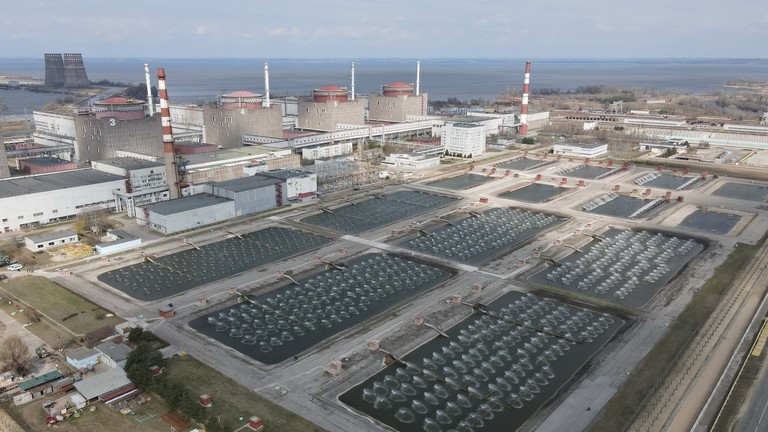
https://www.rt.com/russia/560576-zaporozhye-nuclear-plant-un/ 10 Aug 22, Moscow has accused Kiev of striking the Zaporozhye nuclear power plant, risking a repeat of the Chernobyl disaster
Russia has summoned an emergency session of the UN Security Council to discuss the situation at Ukraine’s Zaporozhye nuclear power plant, which has been the subject of regular shelling attacks. Moscow wants the chief of the UN nuclear watchdog, the International Atomic Energy Agency (IAEA), to brief the council on the situation.
The move, which was reported by Russian media on Tuesday, was confirmed by the deputy head of Russia’s mission to the UN, Dmitry Polyansky, who said the public needed to learn about “Ukrainian provocations.” The meeting is expected to take place on Thursday.
Russia has summoned an emergency session of the UN Security Council to discuss the situation at Ukraine’s Zaporozhye nuclear power plant, which has been the subject of regular shelling attacks. Moscow wants the chief of the UN nuclear watchdog, the International Atomic Energy Agency (IAEA), to brief the council on the situation.
The move, which was reported by Russian media on Tuesday, was confirmed by the deputy head of Russia’s mission to the UN, Dmitry Polyansky, who said the public needed to learn about “Ukrainian provocations.” The meeting is expected to take place on Thursday.
The IAEA has not had access to the site since before the Russian-Ukrainian conflict escalated in late February and relies on reports from Ukraine to assess the situation on the ground. The Zaporozhye plant is manned by Ukrainian nuclear workers despite being under Russian control.
On Saturday, Director General Rafael Mariano Grossi expressed the IAEA’s concern over the artillery strikes, stating that they underlined “the very real risk of a nuclear disaster that could threaten public health and the environment in Ukraine and beyond.”
“I condemn any violent acts carried out at or near the Zaporozhye nuclear power plant or against its staff,” he stressed.
Grossi is expected to lead an inspection of the facility for an independent assessment of the situation and verification that non-proliferation safeguards remain in place.
The Zaporozhye plant is the largest in Europe and stores tens of tons of enriched uranium and plutonium in its reactor cores and spent fuel storage, according to the IAEA. The watchdog chief earlier said he was alarmed that the security of the radioactive materials may be compromised amid Russian-Ukrainian hostilities.
Both Kiev and Moscow stated that they were eager for the proposed inspection to take place. However, it has yet to materialize due to security concerns. The Russian foreign ministry said on Tuesday that the delay played into Kiev’s hands by allowing it to continue its provocative attacks.
Moscow called on UN Secretary General Antonio Guterres to leverage his authority to speed up the IAEA visit. The UN Department of Safety and Security is acting irresponsibly by stalling the visit, foreign ministry spokesperson Maria Zakharova alleged in an interview on Wednesday.
Guterres last week said that “any attack to a nuclear plant is a suicidal thing.”
Russian diplomats and military officials stated that attacks on Zaporozhye power plant could result in a disaster worse than the Chernobyl reactor meltdown and steam explosion in 1986.
Very high radiation risks amid shelling at the Zaporizhzhia nuclear power plant.

The head of Ukraine ‘s state nuclear power firm has warned of “very high”
radiation risks amid shelling at the Zaporizhzhia nuclear power plant.
Energoatom’s chief, Petro Kotin, said it was vital Kyiv regains control
over the facility in the Russian-occupied south in time for winter.
He added that last week’s shelling had damaged three lines that connect the
plant to the Ukrainian grid and that Russia wanted to connect the facility
to its grid. Some of the shelling landed near storage facilities for spent
fuel, an area that has 174 containers of highly radioactive material, Kotin
said. He warned of the dangers of them being hit, saying: “This is…the
most radioactive material in all the nuclear power plant.
Mirror 10th Aug 2022
https://www.mirror.co.uk/news/world-news/ukraines-nuclear-chief-warns-very-27702181
“Shell” companies purchase radioactive materials, prompting push for nuclear licensing reform

Defense News, By Bryant Harris, 10 Aug 22,
WASHINGTON – Late last year, government employees forged a copy of a license to buy hazardous, radioactive material. They created shell companies, then placed orders, generated invoices and paid two U.S.-based vendors.
The scheme worked. The employees successfully had the material shipped, complete with radioactive stickers on the side, then confirmed delivery.
But the workers were actually investigators from the Government Accountability Office, the congressional watchdog, and they were testing the Nuclear Regulatory Commission’s ability to regulate the sale and procurement of dangerous materials.
The act, and a subsequent report from the GAO, alarmed Rep. Ritchie Torres, D-N.Y., who is now calling on the Nuclear Regulatory Commission to overhaul its licensing system as a way to avoid a national security disaster.
“Anyone could open a shell company with a fraudulent license to obtain dangerous amounts of radioactive material that could be weaponized into a dirty bomb,” Torres told Defense News in an interview on Wednesday. “Disperse radioactive material in a city as densely populated as New York, and it could cause catastrophic damage.”
The commission classifies radioactive material into five categories of risk. Only categories one and two currently are subject to its independent license verification system – a loophole that Torres and the GAO fear that an individual or group could exploit to wreak havoc by building a dirty bomb that combines combines conventional explosives with category three radioactive materials.
Torres, who sits on the House Homeland Security Committee, is pressing the NRC to immediately expand its independent license verification system to include category three quantities of radioactive materials. He formally made the licensing overhaul request in a letter seen by Defense News on Wednesday. This request is in line with the GAO’s recommendations in what Torres called an “alarming report.”………………………
more https://www.defensenews.com/congress/2022/08/10/shell-companies-purchase-radioactive-materials-prompting-push-for-nuclear-licensing-reform/
Attacking a nuclear plant ‘suicidal,’ UN chief tells journalists in Japan

- UN News, 8 Aug 2022 Relief Web
UN Secretary-General António Guterres condemned a recent attack on a nuclear power station in southern Ukraine during a meeting in Tokyo on Monday with the Japan National Press Club.
“Any attack to nuclear plants is…suicidal,” the UN chief said, adding that he hoped that the UN International Atomic Energy Agency (IAEA) would be able to access the plant for inspection.
Both Moscow and Kyiv have denied responsibility for the strike on the Zaporizhzhia plant over the weekend.
While Europe’s largest nuclear power site has been under Russian control since the early days of the war, Ukrainian technicians are still running it…………………………….
During Monday’s news conference, the UN chief reiterated his warning over the use of nuclear weapons, saying that if used, the UN would probably be unable respond because “we might all not be here anymore”.
Against the backdrop that the world currently has 13,000 nuclear bombs while continuing to make huge investments into modernizing atomic arsenals, Mr. Guterres warned that after decades of nuclear disarmament efforts, we are “moving backwards”.
“Stop it,” he appealed, underscoring that the billions of dollars being leveraged into the arms race need to be used in “fighting climate change, fighting poverty, [and] addressing the needs of the international community”.
The Secretary-General will next be traveling to Mongolia and South Korea to discuss ways to address North Korea’s nuclear development.
‘Common sense’ restraint
When asked about China’s massive military exercises around Taiwan, Mr. Guterres said the UN “abides by a resolution of the General Assembly, the so-called One China policy”.
The dispute was sparked by a visit last week to island by US House Speaker Nancy Pelosi.
“We all want that resolution to correspond to a peaceful environment,” he said, calling for common sense and restraint to allow for an “extremely important” de-escalation. https://reliefweb.int/report/ukraine/attacking-nuclear-plant-suicidal-un-chief-tells-journalists-japan
1 This Month

10 March A LIVE WEBINAR THE REAL EFFECTS OF NUCLEAR POWER
What the Industry Isn’t Telling Us
1:00 PM Mountain, 2 pm Central, 3 pm Eastern. Live on the Keepers of the Water Facebook page

18 March Webinar @ 1 PM EST: An Assessment of SMR Projects: The Case of Canada
register for the zoom:
https://us02web.zoom.us/webinar/register/WN_o8BIIOUvQ2ONJR1nta65DQ#/registration


of the week – STOP SMALL MODULAR REACTORS IN CANADA
To see nuclear-related stories in greater depth and intensity – go to https://nuclearinformation.wordpress.com
-
Archives
- March 2026 (9)
- February 2026 (268)
- January 2026 (308)
- December 2025 (358)
- November 2025 (359)
- October 2025 (376)
- September 2025 (258)
- August 2025 (319)
- July 2025 (230)
- June 2025 (348)
- May 2025 (261)
- April 2025 (305)
-
Categories
- 1
- 1 NUCLEAR ISSUES
- business and costs
- climate change
- culture and arts
- ENERGY
- environment
- health
- history
- indigenous issues
- Legal
- marketing of nuclear
- media
- opposition to nuclear
- PERSONAL STORIES
- politics
- politics international
- Religion and ethics
- safety
- secrets,lies and civil liberties
- spinbuster
- technology
- Uranium
- wastes
- weapons and war
- Women
- 2 WORLD
- ACTION
- AFRICA
- Atrocities
- AUSTRALIA
- Christina's notes
- Christina's themes
- culture and arts
- Events
- Fuk 2022
- Fuk 2023
- Fukushima 2017
- Fukushima 2018
- fukushima 2019
- Fukushima 2020
- Fukushima 2021
- general
- global warming
- Humour (God we need it)
- Nuclear
- RARE EARTHS
- Reference
- resources – print
- Resources -audiovicual
- Weekly Newsletter
- World
- World Nuclear
- YouTube
-
RSS
Entries RSS
Comments RSS
 nuclear-news