U.S. Nuclear Reactors Among The Oldest In The World

Forbes, Katharina Buchholz 21 Oct 22,
The latest edition of the World Nuclear Industry Status Report shows that U.S. nuclear power plants are among the oldest in the world. The country’s 92 reactors currently in operation have a mean age of 41.6 years. The only nuclear fleets in the world that are older are those of Switzerland (46.3 years) and Belgium (42.3 years). However, these programs are a lot smaller than the United States’, which is currently the largest in the world. Also older are the singular reactors in use in Armenia and the Netherlands.
The U.S. was among the first commercial adopters of nuclear energy in the 1950s, explaining the number of aging reactors today. A building boom between the 1960s and 1970s created today’s nuclear power plants in the United States. Of the five reactors completed in the 1990s and the one finished in 2016, all were holdovers of delayed construction projects from the 1970s experiencing roadblocks due to regulatory problems and mounting opposition to nuclear energy.
The opposition the nuclear power industry has faced as well as the nuclear accident at Three Mile Island in 1979 ultimately caused the fact that today, the most recent construction start date of a completed U.S. nuclear reactor is 1978. ………………………………………………
U.S. construction woes
The U.S. meanwhile remains one of only 15 countries which the World Nuclear Industry Status Report lists as actively pursuing nuclear energy. Two new reactors were started at Vogtle power plant in Georgia in 2013 but have not yet been completed. The approval process was lengthy in the aftermath of the Fukushima disaster and delays continued after the groundbreaking, culminating in the bankruptcy of the reactor construction company. The U.S. government stepped in with a loan so that the project would be finished. One of the units is expected to become operational shortly around 17 years after its initial proposal.
The construction of two reactors in Utah is scheduled to begin next year and finish in 2030, after the proposal had already been introduced in 2007. Additionally, company NuScale is expected to build six small reactors in Idaho by 2030 using a new modular technology. Looking at past delays, however, the accuracy of these timelines as well as the ability of nuclear power to remedy current energy woes quickly or significantly—in the U.S. and elsewhere—is likely limited. While opposition to nuclear energy has softened given the current crisis, large parts of the population continue to reject it and local opposition to new projects will doubtlessly be as fierce as ever. https://www.forbes.com/sites/christinero/2022/10/21/the-generational-divide-over-nuclear-power/?sh=5d8d990a6b13
Olkiluoto nuclear station – more delays due to damage to water feed pumps
Damage has been detected in the inner parts of the feed water pumps of the
turbine plant at Finland’s Olkiluoto 3 EPR reactor, plant owner-operator
Teollisuuden Voima Oyj (TVO) has said. “In connection with maintenance
and inspection work, damage has been observed in the inner parts of the
feed water pumps of the Olkiluoto 3 turbine plant. The matter will probably
have an impact on the progress of the trial operation of Olkiluoto 3 and
the start of regular electricity production,” TVO noted. According to
Siemens, which is part of the plant supplier consortium, the impact of
damage to the feed water pumps on the schedule is not yet known. Together
with the plant supplier, TVO actively participating in the investigation
work. The feed water pumps located in the turbine plant of the nuclear
power plant pump water from the feed water tank to the evaporators. Damage
to the pumps has no effect on nuclear safety.
Nuclear Engineering International 20th Oct 2022
https://www.neimagazine.com/news/newsmore-delays-to-ol3-10102381
Moscow says it now runs Europe’s largest nuclear plant, causing chaos and confusion
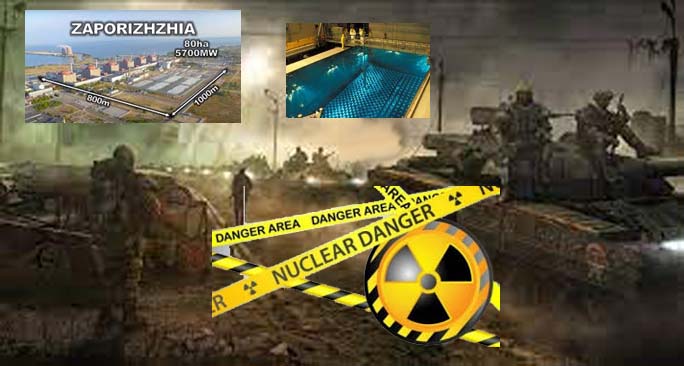
https://bellona.org/news/nuclear-issues/2022-10-moscow-says-it-now-runs-europes-largest-nuclear-plant-causing-chaos-and-confusion October 19, 2022 by Charles Digges,
In the days since Moscow held a forced vote annexing four regions in Ukraine, Russian President Vladimir Putin has declared that Europe’s largest nuclear power plant in the Zaporizhzhia oblast is now Russian property.
The residents of Enerhodar, the city built to house the Ukrainian workers at the Zaporizhzhia nuclear plant, would beg to differ. According to a September poll taken of the company town’s residents, only 6 percent favored becoming part of Russia.
Recent gains by Ukrainian troops in the Donestk, Luhansk and Kherson regions also belie Moscow’s claims to greater control. But battlelines in the Zaporizhzhia region have stagnated around the plant, with fears of hitting its six reactors and pools of spent nuclear fuel standing in the way of a Ukrainian counteroffensive.
Putin’s orders to bring the plant under Russian control are intensifying the quandaries faced by the Ukrainian employees who have worked throughout the war to prevent a nuclear catastrophe at the complex.
Directly following Moscow’s force referendums last month, Russian troops detained Igor Muratov, the Zaporizhzhia plant’s director, then released a video of him saying he was collaborating with Ukrainian intelligence. Then they and expelled him from Russian-held territory.
In the following days, the plant’s deputy director as well as its director of human resources were also detained by Russian forces. Both remain missing.
Following Putin’s order, Russia’s state nuclear corporation Rosatom created a subsidiary, with $2 billion of startup capital, called The Joint Stock Company Operating Organization of the Zaporozhye Nuclear Power Plant, using the Russian spelling for the location. At the same time, Petro Kotin, head of Energoatom, Ukraine’s nuclear power operator, has said he himself is now the plant’s director.
Kotin has also implored technicians at the plant not to sign any contracts with Russian occupiers in response to reports that plant employees are under pressure to start working for Rosatom — and threatened with conscription into Moscow’s army if they don’t.
However, should the technicians caught in this dilemma sign on with Rosatom, they face prosecution by Kyiv for collaborating with Russia’s invading forces, said Dmitry Gorchakov, a nuclear power analyst with Bellona.
“They’re in an almost hopeless situation,” Gorchakov said. “And this is the main problem, in addition to the nuclear safety issues, that should be discussed and not forgotten.”
The uncertainty over who is in charge further imperils the security of the plant as hostilities continue, Rafael Grossi, head of the UN’s International Atomic Energy Agency said in a statement last week.
“Staff at the plant are being forced to make a hugely difficult decision for themselves and their loved ones,” Grossi said. “The enormous pressure they are facing must stop.”
In a highly unusual move, Grossi also took a side in the conflict for the first time since Russian forces seized Zaporizhzhia in March. Grossi told reporters in Kyiv that “the position of the IAEA is that this facility is a Ukrainian facility.”
On Monday, it was reported that Rosatom had given the about 3,000 remaining staff members — down from 11,000 before the war — until Thursday, October 19, to make a choice: work for Rosatom or else.
“If they don’t sign the statement [to work for Rosatom], they won’t have a livelihood, to feed their family, children,” a worker who left the plant this summer and made his way to Ukrainian-held territory told the Wall Street Journal. “If they sign, they will be a traitor and a collaborator…it all stinks.”
Meanwhile, despite cycling down all six of the plant’s rectors into cold shutdown mode for safety reasons early September, both Energoatom and Rosatom are mulling restarting at least a few of them to gird against the coming cold months. It might be the one thing on which the two sides agree.
For reactors to restart, said Gorchakov, the safety of outside power lines bearing electricity for the plant’s critical cooling and safety systems must be assured.
That’s unlikely, given recent developments. For the past several days, energy infrastructure supplying the plant has been the focus of shelling, forcing technicians to power cooling and safety systems with diesel backup generators — a move widely seen by nuclear experts as the last defense against possible meltdown.
On Monday, Russian shells destroyed the only substation supplying the plant with electricity from the Ukrainian grid was damaged before dawn, again forcing the plant to rely on generators, presumably until the substation is repaired.
“I think that the fight against infrastructure is now the fight for the station in the miltary sense,” said Gorchakov. “It is terrible that at the same time the station is constantly shutting down, increasing the risk of an accident.”
Combined, Zaporizhzhia’s 20 diesel generators should keep cooling systems running for as long as 10 days — provided they have access to fuel, certainly not a given in the midst of a war zone.
IAEA safety chief hopes to return to Ukraine ‘soon’ over nuclear plant talks

https://www.reuters.com/world/europe/iaea-chief-hopes-return-ukraine-soon-over-nuclear-plant-talks-2022-10-19/ By Walter Bianchi and Miguel Lo Bianco BUENOS AIRES, Oct 18 (Reuters) – International Atomic Energy Agency (IAEA) chief Rafael Grossi expects to return “soon” to Ukraine, he told Reuters on Tuesday, amid negotiations to establish a security protection zone around the Russian-occupied Zaporizhzhia nuclear power plant.
Grossi has been the go-between from Moscow to Kyiv in an effort to establish a nuclear safety and security protection zone around the plant, which has been hit by power outages in the past weeks due to shelling of the site.
Earlier, the IAEA said it was deeply concerned by the detention of two Ukrainian staff from the Zaporizhzhia plant, which is in one of four Ukrainian regions Russia has proclaimed as annexed but only partly occupies. read more
“There is a possibility I will return to Ukraine and Russia, it is in fact what we have agreed in principle, at this moment we are continuing the consultations aimed at establishing the protection zone,” he told Reuters during a trip to Argentina.
“This implies an interaction where I receive answers and reactions from the two sides and I am looking for new ways to move forward and for that, at some point, probably very soon I will have to return.”
The talks are seen as key to defusing concerns that have mounted since August about the risks of shelling at or near Zaporizhzhia, Europe’s largest nuclear power station. Russia and Ukraine have both blamed each other for the shelling.
The head of the IAEA, the U.N. nuclear watchdog, said that separate Russian threats to use nuclear weapons in Ukraine could not be ruled out but that it was “not an immediate possibility”.
“I believe that the possibility of Russia using nuclear weapons is not an immediate possibility. Obviously nothing can be ruled out, I am not in the decision-making mechanism of that country, but I believe that it would be an extreme measure,” he said.
Grossi, asked about ongoing talks to revive an Iran nuclear deal, said that the negotiations were at a “stalemate”, adding that the IAEA lacked key information due to restriction on access to inspections in recent months.
The United States last week said that reviving the 2015 Iran nuclear deal was “not our focus right now”, adding Tehran had showed little interest in reviving the pact and that Washington was concentrating on how to support Iranian protesters. Reporting by Adam Jourdan; Editing by Himani Sarkar
Damage to feedwater pumps delays the operation of Finland’s massive new Olkiluoto nuclear reactor.
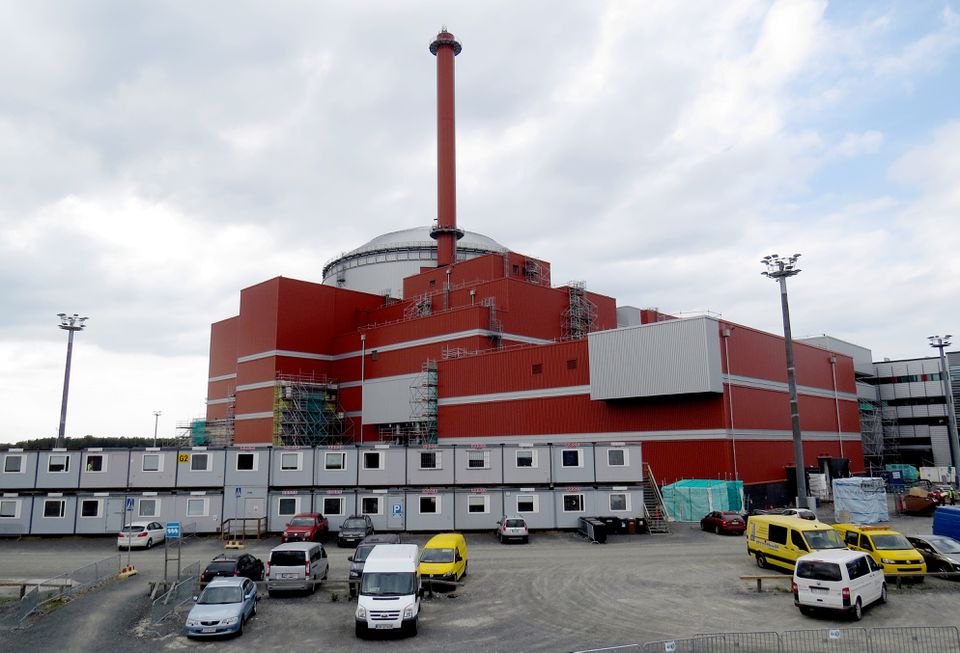
Damage has been detected in the feedwater pumps of Finland’s Olkiluoto 3
(OL3) nuclear reactor during maintenance work, which will likely delay the
commissioning of the plant and the startup of regular production, operator
TVO said on Tuesday.
The damage to Europe’s largest nuclear reactor is a
setback for Finland, where the national grid operator has warned of
potential power blackouts in the coming winter if OL3 could not reliably
supply electricity.
Imports of power to Finland from Russia stopped in May
after Russian utility Inter RAO said it had not been paid for the power it
sold, increasing Finland’s need for OL3’s output.
Under construction since
2005, OL3 was originally meant to start operation in 2009, but has faced
several technical mishaps, which sparked costly delays and a lengthy legal
battle. TVO said the latest problem had occurred in pumps located in the
so-called turbine island at the heart of the nuclear reactor’s power
production, where water from its feedwater tank is pumped into steam
generators.
Reuters 18th Oct 2022
Japan preparing the way for continued extension of the operating lifetime of its nuclear reactors

Amid an energy crunch that served a severe blow to Japan’s economy, the
government in Tokyo is considering extending the lives of the country’s
nuclear power plant fleet beyond the maximum current lifespan of 60 years.
According to local reports cited by Reuters, the plan is to remove the
limits on nuclear power plants’ lifetimes as a whole, which would open the
door to serial extensions of these lifetimes. The changes will need to be
approved by the Nuclear Regulation Authority.
Japan has 33 nuclearreactors, of which four have received approval to operate for a period of
60 years. This represents an extension on their original 40-year lifespans,
as stipulated in the current nuclear power regulation that was implemented
after the Fukushima tragedy. Currently, the regulations only allow one
20-year extension after the original 40-year period.
Oil Price 14th Oct 2022
Stockpiling iodine tablets in Europe, as fears rise over dangers in Zaporizhzhia nuclear station
The war in Ukraine has heightened fears about nuclear exposure – and
interest in iodine pills that can help protect the body from some
radiation. Concerns have grown in recent weeks over periodic power cuts to
the Zaporizhzhia nuclear plant that have increased the risk of a meltdown.
And threats from Russian President Vladimir Putin that he will use “all
means necessary” to win the war in Ukraine has raised the specter of
nuclear warfare.
Some countries in Europe have started stockpiling the
tablets and pharmacies in Finland began to run low on the pills after that
country’s health ministry recommended households buy a single dose in case
of emergency.
Daily Mail 13th Oct 2022
NYT: Senior Ukrainian official confirms Ukraine orchestrated truck bomb attack on Crimean Bridge
Chris Menahan, InformationLiberation, Oct. 09, 2022,
The New York Times reported Saturday evening that a “senior Ukrainian official” corroborated Russian reports that Ukraine was behind the truck bomb attack on the Crimean bridge which killed at least three civilians.
From The New York Times, “Blast on Crimean Bridge Deals Blow to Russian War Effort in Ukraine”:
The blast and fire sent part of the 12-mile Kerch Strait Bridge tumbling into the sea and killed at least three people, according to the Russian authorities. A senior Ukrainian official corroborated Russian reports that Ukraine was behind the attack. The official, speaking on the condition of anonymity because of a government ban on discussing the blast, added that Ukraine’s intelligence services had orchestrated the explosion, using a bomb loaded onto a truck being driven across the bridge.
[…] It was unclear if the driver of the truck, who died in the blast, was aware there were explosives inside. In video captured by a surveillance camera on the bridge, a huge fireball is seen, seeming to consume several vehicles. A small sedan and a tractor-trailer truck driving side by side appear at the epicenter of the blast. The explosion caused two sections of the bridge to partly collapse.
The truck driver was identified by Russian media as 51-year-old Mahir Yusubov of Azerbaijan.
Yusubov reportedly received an order to transport fertilizer through the internet and may have had his truck wired with explosives by Ukrainian special-ops units who used him as an unwitting suicide bomber.…………………………… more http://www.informationliberation.com/?id=63391
Ukraine’s ZNPP Must Be Urgently Protected, IAEA’s Grossi Says After Plant Loses All External Power Due to Shelling
https://www.iaea.org/newscenter/pressreleases/ukraines-znpp-must-be-urgently-protected-iaeas-grossi-says-after-plant-loses-all-external-power-due-to-shelling 8 Oct 22, Ukraine’s Zaporizhzhya Nuclear Power Plant (ZNPP) has lost its last remaining external power source due to renewed shelling and is now relying on emergency diesel generators for the electricity it needs for reactor cooling and other essential nuclear safety and security functions, Director General Rafael Mariano Grossi of the International Atomic Energy Agency (IAEA) said today.
The ZNPP’s connection to the 750 kilovolt (kV) power line was cut at around 1am local time today, Director General Grossi said, citing official information from Ukraine as well as reports from the team of IAEA experts present at the site of Europe’s largest nuclear power plant.
Sixteen of the plant’s diesel generators started operating automatically, providing its six reactors with power. After the situation stabilised, ten of the generators were switched off, leaving six to provide the reactors with necessary electricity.
“The resumption of shelling, hitting the plant’s sole source of external power, is tremendously irresponsible. The Zaporizhzhya Nuclear Power Plant must be protected,” Director General Grossi said. “I will soon travel to the Russian Federation, and then return to Ukraine, to agree on a nuclear safety and security protection zone around the plant. This is an absolute and urgent imperative.”
All the plant’s safety systems continue to receive power and are operating normally, the IAEA experts were informed by senior Ukrainian operating staff at the site. Although the six reactors are in cold shutdown, they still require electricity for vital nuclear safety and security functions. The plant’s diesel generators each have sufficient fuel for at least ten days. ZNPP engineers have begun work to repair the damaged 750 kV power line.
Zaporizhzhia on the brink: How deteriorating conditions at the nuclear power plant could lead to disaster
Bulletin, By Zakhar Popovych, Denys I. Bondar, M.V. Ramana | October 7, 2022, Soon after it started its invasion of Ukraine on February 24, 2022, the Russian military occupied the southern part of the Zaporizhzhia region. The occupied area includes the territory of the Zaporizhzhia Nuclear Power Plant (NPP), the largest in Europe. During the summer, the area around the Zaporizhzhia NPP was hit multiple times by missiles and artillery. These affected all high-voltage electric power lines that connect the facility to the grid, so the plant was forced to work for some time in island mode, using the minimal power produced by one of the reactors to maintain functions essential to the plant’s safety. After the International Atomic Energy Agency (IAEA), the UN’s nuclear watchdog, conducted its inspection on September 1st, Ukrainian maintenance teams were allowed by the Russian military to repair the power lines and refill the diesel fuel storage tanks needed for emergency power generators. This made it possible to supply the facility with external power for the reactor cooling and other maintenance systems.
On September 10, the three of us had a conversation via Zoom with Pavlo Oleshuk, a representative of Atomprofspilka, the nuclear energy and industry workers’ union of Ukraine. Oleshuk is an experienced member of the team that operates the Rivne NPP in northwest Ukraine. As an organizer with the union, he has been in close and constant contact with the employees who directly operate the Zaporizhzhia NPP.
Oleshuk’s descriptions gave us new insight into the working and living conditions of his colleagues at the beleaguered plant. Such details have been otherwise difficult to get as plant operators have avoided talking in public ever since Russian forces seized the plant. Our discussion with Oleshuk lasted for more than two hours, and we offer here the main insights.
At the time we talked to Oleshuk, one of the reactors at the Zaporizhzhia NPP was still operating. However, shortly after our conversation, EnergoAtom, the Ukrainian state nuclear power plant operator, decided to shut down all reactors there. Despite this decision, there is a continued risk of a major nuclear incident as the plant requires permanent cooling. Furthermore, as our discussion with Oleshuk reveals, other factors exacerbate the fragility of the situation at the Zaporizhzhia NPP.
Context. Oleshuk began with a description of Zaporizhzhia NPP and the city of Energodar, which means literally “the gift of energy.”………………………………………………….
Working under threats and intimidation. The Zaporizhzhia NPP, the city of Energodar, and the surrounding areas have all been under Russian occupation for the past few months. According to Oleshuk’s sources at the plant, Russian armed forces first took control of the nearby territory and peacefully approached the personnel of the power plant claiming that they would not intervene with the operations of the plant. But once the armed forces entered the plant’s premises, so did personnel from the FSB—Russia’s principal security agency and successor to the old KGB—and a couple of experts from Rosatom, the Russian state nuclear energy corporation. …………………
For their part, the FSB personnel, unlike regular soldiers, violated the rules about who can access different areas of the plant and went everywhere within the premises, including inside radiation-controlled zones. But rather than taking control over the plant’s operations, the FSB agents seem to have been tasked with finding the so-called “ringleaders” who are organizing protests against the occupation ………………..
Over time, many more nuclear power plant workers have left Energodar for other cities that are still under the control of the Ukrainian government, creating a shortage of personnel at the Zaporizhzhia NPP. Even though some nuclear power plant maintenance functions can be carried out remotely, most cannot. As a result, there are concerns about the safety of these reactors and their associated systems.
Living without supplies. Because it is in Russian-occupied territory, residents of Energodar can no longer get their supplies from Ukraine-controlled territories, although they are located just across the Dnipro River. Instead, they must get them from other occupied territories—which means that even the supply of basic groceries is intermittent, with some food products simply no longer available………………….
Another major problem for the residents of Energodar is the collapse of utilities. ………………………
The supply of water supply has also become a problem since it relies exclusively on electric pumps and there are no water towers in Ukraine because the electricity supply was always considered to be reliable and abundant. ……………….
Outlook. With winter coming, the future is grim for the workers of the Zaporizhzhia NPP who still live in Energodar. Like other satellite cities, Energodar relies on the Zaporizhzhia NPP for most of its energy needs, including for heating……………………..
If both nuclear and thermal power plants cannot resume operation, then Energodar’s inhabitants will not be able to heat their living premises. The Ukrainian winter is cold with temperatures often being less than 20 degrees Celsius below zero (-4 degrees Fahrenheit). Plant workers don’t know how they will survive the winter.
Making an already desperate situation worse, there has been a loss of leadership and governance. The mayor of Energodar, Dmytro Orlov, was initially arrested by the Russians, but later managed to flee the city. The occupying forces did try to take over the city hall, but effectively the local authority has largely collapsed. The inhabitants are now left on their own.
According to Oleshuk, the situation is simply no longer tenable for the plant workers who are exhausted and stressed out. …………………more https://thebulletin.org/2022/10/zaporizhzhia-on-the-brink-how-deteriorating-conditions-at-the-nuclear-power-plant-could-lead-to-disaster/
State ministry reports leak at German nuclear plant, experts investigating
State ministry reports leak at German nuclear plant, experts investigating | Reuters
BERLIN, Oct 5 (Reuters) – A leak occurred during flushing measures on a discharge line at the nuclear power plant in Brunsbuettel, northern Germany, on Sept. 28, the energy ministry of Schleswig-Holstein said on Wednesday.
The defective line is part of the concentrate treatment system and is located in the restricted area of the reactor building of the nuclear power plant, a statement said, adding that a small radioactive contamination was detected.
The reactor safety authority has tasked experts with conducting further supervisory reviews in the matter.
The Brunsbuettel nuclear power plant has already been permanently shut down since 2007. The decommissioning permit was issued at the end of 2018 and dismantling of the plant has begun.
Writing by Rachel More, Editing by Miranda Murray
The risk of nuclear disaster grows every day

From Three Mile Island to Chernobyl, the story of atomic energy is littered with catastrophes
https://www.prospectmagazine.co.uk/arts-and-books/the-risk-of-nuclear-disaster-grows-every-day By Oliver-James Campbell , October 6, 2022
Atoms and Ashes: From Bikini Atoll to Fukushima by Serhii Plokhy (RRP: £25).
In his new book, Ukrainian-born Harvard professor Serhii Plokhy tackles a topic that has greatly influenced his life: nuclear disaster. Atoms and Ashes, a must-have for anyone interested in the history of nuclear energy, details six major nuclear mishaps that have shaped how we view nuclear energy: Bikini Atoll in Oceania, Kyshtym in Russia, Chernobyl in Ukraine, Three Mile Island (TMI) in the US, Windscale in the UK and Fukushima in Japan. Despite the vast political and socio-economic differences between the countries responsible for these projects, Plokhy shows up the common thread of mismanagement.
The author sketches vivid pictures of the events that led up to—and resulted from—each incident, exploring the lives of those the disaster affected most, whether it’s an unfortunate power plant employee or an entire displaced community. But most striking is how much pressure the scientists, engineers and project managers faced—brought about by the Cold War arms race or other geopolitical fallouts—that resulted in subsequent disaster.
In his acknowledgements, Plokhy explains that Atoms and Ashes was written as a response to questions surrounding his earlier work, Chernobyl: History of a Tragedy. His intention was to show how project mismanagement and risk oversight were not specific to Chernobyl.
Nuclear disasters have, understandably, led to a rise in anti-nuclear sentiment. The world has since changed its tune. As Plokhy says, “Ukraine derives about half its electricity from nuclear reactors”—one of which, Zaporizhzhia, is the largest in Europe. It also happens to be caught between forces in Russia’s ongoing war in Ukraine. The UN has called for the demilitarisation of the reactor, as the risk of a catastrophic nuclear incident appears to grow larger every day.
Swiss Government wants command centre in case of ‘nuclear event’

Government wants command centre in case of ‘nuclear event’
The Swiss government on Friday laid out responsibilities in case of a nuclear attack or nuclear disaster linked to the war in Ukraine. September 30, 2022
While the defence ministry currently considers this unlikely, the government says it is necessary to be prepared and be able to react rapidly.
It has tasked the defence ministry to set up a Federal Strategic Command Staff if there were to be such an event or it looked likely. This Command Staff will be headed by the secretary-general of the defence ministry and include the secretary generals of all the ministries, the federal government spokesperson, heads of the federal health, civil defence, energy and other key offices as well as representatives of the army, police and fire brigade…………………..more https://www.swissinfo.ch/eng/politics/government-sets-chain-of-command-in-case-of–nuclear-event-/47943850
Amid increased threats to military and civilian targets, Sweden increases security around nuclear power stations
Sweden has stepped up security around two nuclear power stations after the
bombing of two subsea gas pipelines in the Baltic. The national security
agency said the threat to military and civilian targets had “broadened
and deepened” and that it was taking additional measures to protect the
reactors at Forsmark, north of Stockholm, and Ringhals, south of
Gothenburg.
Norway promised to make its armed forces “more visible”
around oil and gas installations after the suspected attack on the Nord
Stream 1 and 2 pipelines from Russia to Germany. This morning Nato said the
damage had been caused by “deliberate, reckless and irresponsible acts of
sabotage” after a fourth leak was detected in the waters of Sweden’s
maritime economic zone, meaning that all four pipelines along the Nord
Stream route have been disabled within days.
Times 29th Sept 2022
Zaporizhzhia Nuclear Power Plant: Energoatom denies fire in power unit 2
Yahoo News, Ukrainska Pravda, September 29, 2022, STANISLAV POHORILOV —
Energoatom, a Ukrainian state enterprise operating nuclear power stations in this country, has denied information about power unit No. 2 of the Zaporizhzhia Nuclear Power Plant (ZNPP) being on fire, and explained what has happened.
Source: press service of Energoatom
Quote: “Telegram channels are spreading false information about power unit No. 2 of the ZNPP being on fire. We hereby officially confirm that this is not true. As of 15:40, 29 September 2022, no fires have been detected in power units of the ZNPP.”
Details: Energoatom added that an emergency, not related to the fire, could occur due to a mine explosion, since the perimeter around the power plant is mined by occupiers, and explosions happen because of wild animals (boars, foxes, dogs) wandering around.
Today, there was an explosion on the perimeter, on a line of voltage supply to an oxygen station of power unit No. 6. The explosion damaged the line, and a power surge resulted in a short circuit in one of the voltage transformators, causing minor smoke.
There was no need to involve a fire brigade, which arrived at the scene.
Background:………………….. https://news.yahoo.com/zaporizhzhia-nuclear-power-plant-energoatom-134651082.html
1 This Month
Chernobyl: The Lost Tapes – A good documentary on Chernobyl on SBS available On Demand for the next 3 weeks– https://www.sbs.com.au/ondemand/tv-program/chernobyl-the-lost-tapes/2352741955560

of the week–London Campaign for Nuclear Disarmament

Tell the Ukrainian Government to Drop Prosecution of Peace Activist Yurii Sheliazhenko
To see nuclear-related stories in greater depth and intensity – go to https://nuclearinformation.wordpress.com
-
Archives
- April 2026 (139)
- March 2026 (251)
- February 2026 (268)
- January 2026 (308)
- December 2025 (358)
- November 2025 (359)
- October 2025 (376)
- September 2025 (257)
- August 2025 (319)
- July 2025 (230)
- June 2025 (348)
- May 2025 (261)
-
Categories
- 1
- 1 NUCLEAR ISSUES
- business and costs
- climate change
- culture and arts
- ENERGY
- environment
- health
- history
- indigenous issues
- Legal
- marketing of nuclear
- media
- opposition to nuclear
- PERSONAL STORIES
- politics
- politics international
- Religion and ethics
- safety
- secrets,lies and civil liberties
- spinbuster
- technology
- Uranium
- wastes
- weapons and war
- Women
- 2 WORLD
- ACTION
- AFRICA
- Atrocities
- AUSTRALIA
- Christina's notes
- Christina's themes
- culture and arts
- Events
- Fuk 2022
- Fuk 2023
- Fukushima 2017
- Fukushima 2018
- fukushima 2019
- Fukushima 2020
- Fukushima 2021
- general
- global warming
- Humour (God we need it)
- Nuclear
- RARE EARTHS
- Reference
- resources – print
- Resources -audiovicual
- Weekly Newsletter
- World
- World Nuclear
- YouTube
-
RSS
Entries RSS
Comments RSS
 nuclear-news