Costs of France’s Flamanville nuclear reactor blow out to over $14 billion as project delayed again.
Nuclear: the Flamanville EPR is another six months late and 500 million
euros in additional costs, EDF announced. The new delay is due to the
necessary revision of treatment procedures for some 150 “complex”
welds, within the main secondary circuit of the reactor, explained to the
press the director of the Flamanville 3 project,
The delay is now twelve years. EDF announced, Friday, December 16, six months of additional delay
for the commissioning of its EPR nuclear reactor in Flamanville (Manche),
which must now start by mid-2024 instead of the end of 2023. These six
additional months result in a new additional cost of 500 million euros,
increasing the total cost of the project, under construction since 2007,
from 12.7 to 13.2 billion euros.
Le Monde 16th Dec 2022
Electricite de France SA said Friday that the schedule for the Flamanville
3 nuclear reactor project in northern France has been further delayed and
that its estimated cost has increased. The French state-controlled utility
said nuclear fuel loading is now scheduled for the first quarter of 2024
from the second trimester of 2023.
The estimated cost of completion has
risen to 13.2 billion euros ($14.04 billion) from EUR12.7 billion. The
revised scheduled is mainly due to additional studies needed to establish a
new process for the stress-relieving heat treatment of some welds that have
been upgraded in the last two years, EDF said.
Market Watch 16th Dec 2022
Ukraine Crisis Highlights Security Needs Of Civilian Nuclear Power

[[Ed – “a secure environment for the proliferation of nuclear energy.”? Pigs might fly?]
Ariel Cohen, Forbes, 16 Dec 22,
On November 27-28 a conference in Paris addressed a broad spectrum of challenges humanity is facing. Renowned thinkers, including Nuriel Roubini and Jacob Frenkel, the former Chairman of JP Morgan International, and three central bankers from Iceland, Tunisia, and Armenia, warned about inflation and the growing mountain of debt threatening the global economy. The panel at which this author addressed civilian nuclear security was organized by Dialogue of the Continents, a project of the Astana Club, the brainchild of the Nazarbayev Foundation. The panel was chaired by the veteran nuclear policy expert Ambassador Kairat Abusseitov, the former First Deputy Foreign Minister of Kazakhstan.
Today the planet shudders at the prospect of Russia’s first use of nuclear weapons and its military attacks on Ukrainian nuclear reactors. The world faced nuclear crises before. On October 27th, 1962 Vasili Arkhipov, a former Vice Admiral in the Soviet Navy, prevented a nuclear war when he countermanded the orders of two other officers and prevented a nuclear attack against the US Navy during the Cuban Missile Crisis. In September 1983 Soviet Airforce Colonel Stanislav Petrov manually overrode a missile launch system that erroneously detected an American attack. Two months later in November 1983 the NATO military exercise Able Archer almost triggered World War III when the Soviets believed it to be a real attack. In 1995 a Norwegian weather missile almost triggered a Russian massive strike on the U.S., which President Yeltsin canceled.
In every instance, nuclear war was prevented by the judgment of individuals where systems had failed. This was possible as adversarial powers recognized the “rules of the game” and created an atmosphere of cooperation to avoid nuclear confrontation amidst other profound disagreements.
That atmosphere is gone, and the next time a Russian alert system goes off we may not have a Colonel Petrov to save us. And it won’t be the ballistic missiles that may be the cause of a massive nuclear disaster.
International law explicitly provides for the immunity of nuclear power plants during war. There are even measures that specifically plan for their safety. The International Atomic Energy Agency (IAEA) for instance has promulgated 16 legally binding conventions rand protocols under the international legal framework for nuclear security to prevent, detect and respond to threats to nuclear security within one state. Nevertheless, the international community has proven unable to stymy Russian actions [and Ukrainian] around Chernobyl and the Zaporizhzhia Nuclear Power Plants that amount to nuclear blackmail and flagrantly violate these laws.
Enforcing the existing international law is easier said than done. International law presupposes an agreement between state actors, which is sorely lacking today. Calling counter-terrorism instruments into action requires UN approval, created by an ad hoc committee……………..
Being a nuclear state under the non-proliferation treaty Russia is under no obligation to place the Zaporizhzhia plant under IAEA safeguards and given the likelihood that it will not recognize that the plant comes under Ukraine’s comprehensive safeguards agreement, IAEA may find access to the plant completely denied next fall.
This is not just a Russian or Ukrainian problem; this is an emerging structural problem of the international energy security system that will reoccur if nothing is done now……………………………………. The future ubiquity of civilian nuclear power means that currently lacking international frameworks must be overhauled – or civilian nuclear power would be un-investable and too risky.
……………. A false sense of security after the Cold War has dangerously numbed many to the existential threat that nuclear weapons represent, with polls repeatedly showing an alarming lack of concern towards these tools of extinction………………………………………………. more https://www.forbes.com/sites/arielcohen/2022/12/16/ensuring-the-security-of-civilian-nuclear-power/?sh=25e66be71f24
Russia installs sheild over Zaporizhzhia nuclear storage site
A shield is being set up over a storage site for spent nuclear waste at the
Zaporizhzhia nuclear power plant in southern Ukraine to protect it from
shelling and drones, a Russian-installed official said on Saturday. Video
footage published by Vladimir Rogov, a Russian-appointed official in
Ukraine’s Zaporizhzhia province, showed workers mounting a screen of what
appeared to be some kind of transparent sheeting on wires above dozens of
concrete cylinders about 5 metres (16 feet) high.
Reuters 17th Dec 2022
Japanese Power Plants Less Than 40 Years Old Are Experiencing Problems.
Due To Relatively Rapid Deterioration. A nuclear power plant that has been in operation for more than 60 years, there is no example in the world Design life is 40 years Piping breaks, holes due to corrosion … troubles occur one after another December 9, 2022, 06:00 ~ tokyo-np.co.jp https://www.tokyo-np.co.jp/article/218838...
Safety of Zaporizhzhia nuclear plant hangs in the balance
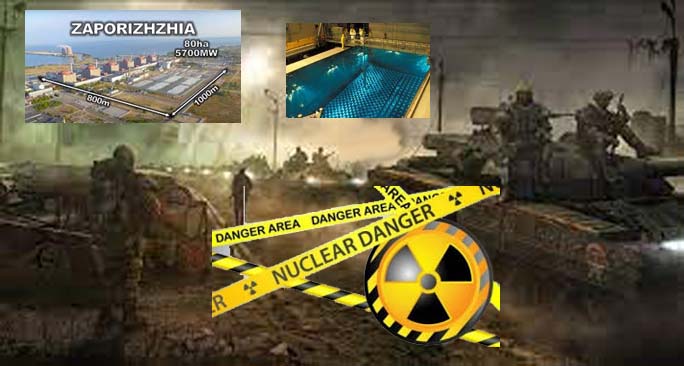
Guardian, Julian Borger 13 Dec 22,
Shelling near the six-reactor facility plus a shortage of workers and uncertain backup power could be making it the most dangerous place on Earth…….
The Zaporizhzhia nuclear plant’s silhouette – with its two fat cooling towers and the row of six squat blocks – has become globally familiar since it was dubbed the most dangerous place on Earth: six nuclear reactors on the frontline of a catastrophic war.
On a fairly typical night last week, the Russians on the left bank of the river fired 40 shells and rockets into Nikopol, a town on the Ukrainian-held right bank, falling on its rows of krushchevky, five-storey blocks of flats built for factory workers in the 1960s and named after the Soviet leader of the time.
After 10 months of war, the blocks are half empty, so there are fewer people to kill. The only reported casualty on this particular night was a 65-year-old man who was taken to hospital, and whose flat now afforded such a comprehensive view of the power plant.
By the next morning, the repairs had already begun. An electrician restored power to the rest of the building, and two men were in the remains of the apartment itself, sweeping up and putting chipboard in place of absent walls.
There were four loud bangs as the Ukrainian army guns on the nearby riverbank opened fire on Russian positions and, a few minutes later, Nikopol’s air sirens sounded in anticipation of a Russian response, though none was forthcoming that morning.
The basements of the krushchevky have been turned into shelters with beds and school desks but most of the remaining population are so inured to bombardment, they just carry on with their day.
The Ukrainians insist they are extremely careful about what they shoot at, even when they receive fire from the vicinity of the Zaporizhzhia plant. On Thursday, the Ukrainian nuclear power company, Energoatom, accused Russia of bringing Grad multiple launch rocket systems near reactor number 6, which is near the area of where spent nuclear fuel is kept. The likely aim, Energoatom alleged, was to shell Nikopol and the nearby town of Marzanets, using their position as cover.
The walls of the reactors are thick enough to withstand artillery fire, but a direct hit on the spent fuel containers could well lead to the release of radioactive material into the atmosphere. Since seizing control of the power station in March, the Russians have begun building a concrete shelter over the spent fuel, but Ukrainian officials say it is being done without following the normal international safety protocols.
Earlier in the week, Russia’s defence minister, Sergei Shoigu, accused Ukraine of “nuclear terrorism”, saying its armed forces had fired 33 large calibre shells at the Zaporizhzhia plant over the previous two weeks. The most recent report from the International Atomic Energy Agency (IAEA), which has four inspectors at the Russian-occupied site, said last Friday there had been no shelling of the plant since 20 November, although artillery fire had landed in the vicinity………………………………………..
It was not possible to verify Kotin and Orlov’s accounts of the shelling, or the counter-claims from Moscow. Satellite imagery however, has confirmed that the Russian army is storing military equipment inside the plant.
The IAEA inspectors on site could theoretically determine the trajectory of incoming rockets or shells but such detective work is not within their mandate. The agency is negotiating the creation of a security no-fire zone around the reactors, but Kyiv is insisting Russia must first withdraw all its weapons and armour from the power station, something Moscow has not so far agreed to.
Meanwhile there is a parallel safety threat from within the plant itself: the steady attrition of its workforce over the 10 months of the conflict. Many key workers have left because of the danger to their families or because they refused to work for the Russians. Of the 11,000-strong workforce before the full-scale invasion, just 4,000 are left. In an attempt to stop the exodus, the Russians have circulated lists of plant staff to all military checkpoints in the region with orders they are not be allowed to leave, but it has been too late to stop a major outflow.
“In some cases, there’s only three people to cover a seven or eight-person shift,” Orlov said. “People don’t have enough rest. It causes exhaustion.”
Operating under armed occupation adds to the stress. The workers still at the plant are under constant pressure to sign contracts with Rosatom, the Russian energy company, signifying acceptance of Moscow’s control.
Melynchuk said there were just enough staff left to maintain the plant in its current state of suspended animation, with all the reactors shut down, and two of them deliberately kept hot, to provide heating for Enerhodar.
But keeping reactors in this hot standby mode is a difficult and delicate process, adding to the burden on the operators. The situation could get worse still. The Zaporizhzhia plant is currently connected to the Ukrainian grid, but there have been times the transmission lines have been brought down by shelling, forcing the power station to fall back on diesel generators to keep the cooling system running and prevent the reactor vessel from meltdown.
If the connection to the grid was severed again, it would add to the pressure on the overstretched workforce and on the generators, which were only designed as a temporary backup. They will need maintenance and no one knows how much diesel fuel the plant has left. Once the diesel generators failed, meltdown would begin in a matter of hours……… https://www.theguardian.com/world/2022/dec/12/safety-of-zaporizhzhia-nuclear-plant-hangs-in-the-balance
US Nuclear Bomber Erupts In Flames After Emergency Landing; US Air Force Confirms Mishap With B-2 Spirit
https://eurasiantimes.com/us-nuclear-bomber-erupts-in-flames-after-emergency-landing/—ByAshish Dangwal, December 12, 2022
On December 10, a USAF B-2 Spirit stealth bomber made an emergency landing due to an in-flight emergency at Whiteman Air Force Base in Missouri.
The incident occurred at Whiteman AFB in Missouri, which serves as the primary base for the fleet of only 20 B-2s currently operating. The news first appeared on the internet and was subsequently verified by the US Air Force.
A fire broke out following the landing. However, the damage suffered by the aircraft is still unclear. A base spokesperson confirmed that Whiteman’s fire department suppressed the flames.
The 509th Bomb Wing Public Affairs office said, “A US Air Force B-2 Spirit experienced an in-flight malfunction during routine operations today and was damaged on the runway at Whiteman Air Force Base after it completed an emergency landing.”
Meanwhile, Whiteman Airbase recently released a video displaying the readiness of the B-2 bomber fleet. A few weeks ago, the Air Force also published images of an unprecedented “elephant walk” of eight B-2s taxiing on the runway.
The latest incident looks to be similar to a B-2 emergency landing that took place at the same base in September 2021. The B-2 involved in that incident had its left wing down on the ground after skidding off the runway during an emergency landing.
Why nuclear-powered France faces power outage risks

https://www.reuters.com/business/energy/why-nuclear-powered-france-faces-power-outage-risks-2022-12-09 PARIS, Dec 9 (Reuters) – France is bracing for possible power outages in the coming days as falling temperatures push up demand while state-controlled nuclear group EDF struggles to bring more production on line.
WHY CAN’T FRANCE MEET DEMAND?
France is one of the most nuclear-powered countries in the world, typically producing over 70% of its electricity with its fleet of 56 reactors and providing about 15% of Europe’s total power through exports.
However, EDF (EDF.PA) has had to take a record number of its ageing reactors offline for maintenance this year just as Europe is struggling to cope with cuts in Russian natural gas supplies used for generating electricity.
That has left France’s nuclear output at a 30-year low, forcing France to import electricity and prepare plans for possible blackouts as a cold snap fuels demand for heating.
WHAT ARE EDF’S MAINTENANCE PROBLEMS?
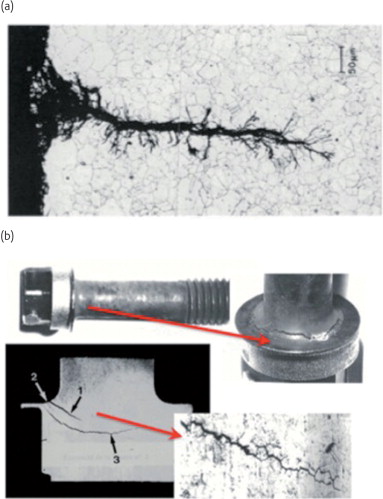
While EDF normally has a number of its reactors offline for maintenance, it has had far more than usual this year due to what is known as stress corrosion on pipes in some reactors.
At the request of France’s nuclear safety watchdog, EDF is in the process of inspecting and making repairs across its fleet since detecting cracks in the welding connecting pipes in one reactor at the end of last year.
Years of under-investment in the nuclear sector mean that there is precious little spare capacity to meet demand while reactors are offline for maintenance.
France also lacks specialised welders and other workers in sufficient numbers to be able to make repairs fast enough to get reactors back online.
WHAT IS BEING DONE?
In the very short term, there is little that can be done to get more reactors online faster, leaving the government to plan for voluntary cuts at peak demand periods and limited forced blackouts.
Meanwhile, EDF and others in the French nuclear industry are on a recruitment drive for the next generation of welders, pipe-fitters and boiler makers, going so far as to set up a new school to train them.
President Emmanuel Macron wants a new push in nuclear energy and has committed to building six new reactors at a cost his government estimates at nearly 52 billion euros ($55 billion).
As a first step, the government is in the process of buying out EDF’s minority shareholders and fully nationalising the debt-laden group, which it says is necessary to make the long-term investments in new reactors.
($1 = 0.9471 euros)
Finland warns of power outage risk over nuclear plant startup delay – Olkiluoto 3 reactor unreliable?
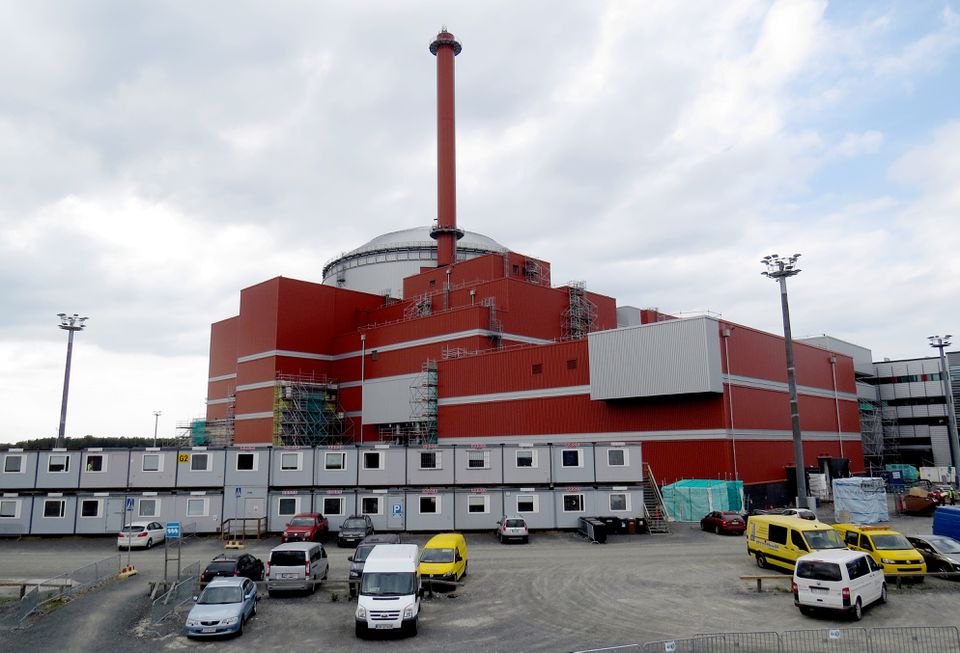
HELSINKI, Dec 9 (Reuters) – Finland faces a greater risk of power outages in coming months because of another delay in starting up the new Olkiluoto 3 (OL3) nuclear reactor, national grid operator Fingrid said on Friday.
Fingrid and the state energy authority have told citizens and companies to prepare for possible blackouts, particularly if OL3 does not prove reliable, as countries across Europe seek to curb energy usage, grappling with reduced Russian gas and other energy supplies because of the Ukraine war………………………………
In October, the operator said cracks were found in the OL3 reactor’s four feedwater pumps after test production, further delaying startup originally planned to be in 2009.
Test production has been postponed until Dec. 25 at the earliest, from Dec. 11, TVO said, while full production will begin on Feb. 6 at the earliest compared with Jan. 22.
“The investigation into the damage in Olkiluoto 3’s feedwater pumps has proceeded into its final stages. Once the investigation is complete, a decision will be made on the startup of the plant unit,” TVO said in a statement.
France: EDF extends nuclear outages by up to 42 days
EDF extends nuclear outages by up to 42 days (4.6 GW). EDF has extended
outages at its Chooz 2 (1.5 GW) and three other nuclear reactors in France
with a cumulative 4.64 GW capacity by up to 42 days.
Montel 5th Dec 2022
https://www.montelnews.com/news/1373972/edf-extends-nuclear-outages-by-up-to-42-days-46-gw
Slovakia’s new nuclear power plant delayed due to a technical fault
The newly built Mochovce nuclear power plant, the country’s third, will
have to delay electricity production due to a technical fault that could
cause financial hardship for the plant’s owner.
Technicians identified a
minor leak during stress tests a few days after the minimum controlled
output was reached. The reactor was already undergoing a fission chain
reaction, although the reactor power was very close to zero. “During the
re-pressurisation test, a minor leak was identified on the upper reactor
block.
After analysing the situation, we decided to reseal this part of the
technology,” Oľga Baková, spokeswoman for plant operator Slovenske
elektrárne a.s. told TV Markíza. “Next week we are continuing the unit
start-up and physical start-up tests. The first phasing and connection to
the grid are scheduled for about mid-January,” she added.
Euractiv 7th Dec 2022 https://www.euractiv.com/section/politics/news/new-slovak-nuclear-reactor-forced-to-delay-electricity-production/
US imposes sanctions on six Pakistan companies for unsafeguarded nuclear activities
The US on Thursday designated six companies based in Pakistan on its entity list for unsafeguarded nuclear and missile proliferation activities.
The US on Thursday designated six companies based in Pakistan on its entity list for unsafeguarded nuclear and missile proliferation activities.
The Department of Commerce added as many as 24 companies to the entities list including those from Pakistan, Latvia, Russia, Singapore, Switzerland and United Arab Emirates.
Companies based out of Pakistan are Dynamic Engineering Corporation, EnerQuip Private, Ltd., NAR Technologies General Trading LLC, Trojans, Rainbow Solutions, and Universal Drilling Engineers.
According to a federal register notification, Dynamic Engineering Corporation has been added to the ‘Entity List’ because it poses an unacceptable risk of using or diverting export control items to Pakistan’s unsafeguarded nuclear activities, contrary to the national security and foreign policy interests of the United States.
Same is the case with Rainbow Solutions, while EnerQuip Private, Ltd., and Universal Drilling Engineers have been added to the list based on their contributions to unsafeguarded nuclear activities and missile proliferation-related activities.
NAR Technologies General Trading LLC and TROJANS have been added to the Entity List under the destinations of Pakistan and the U.A.E., based on their actions and activities that are contrary to the national security and foreign policy interests of the United States.
Specifically, these companies have supplied and/or attempted to supply items subject to export control to Pakistan’s unsafeguarded nuclear activities and ballistic missile programme.
‘A form of self-destruction’: Japan weighs up plan to expand nuclear power
Japan’s prime minister is pushing for as many as 17 nuclear reactors to be switched back on, more than a decade on from the meltdown at Fukushima
Guardian, Justin McCurry in Onagawa, 30 Nov 22,
“…………………………………. In a sweeping change to the country’s energy policy, the prime minister, Fumio Kishida, has announced plans to build next-generation reactors and restart those left idle after the 2011 triple meltdown, in an attempt to end Japan’s dependence on imported fossil fuels and help meet its net zero target by 2050.
Kishida’s “green transformation”, which could include extending the lifespan of existing reactors beyond the current maximum of 60 years, underlines Japan’s struggle to secure an affordable energy supply as a result of the war in Ukraine and a power crunch that has triggered warnings of potential blackouts in Tokyo during this summer’s heatwave.
Most of Japan’s nuclear power plants have remained offline since the Fukushima meltdown, and previous governments indicated they would not build new reactors or replace ageing ones, fearing a backlash from a shaken and sceptical public.
Japan plans for nuclear to account for 20-22% of its electricity supply in 2030, compared with about a third before Fukushima. In 2020 the figure was less than 5%. Just 10 nuclear reactors among more than 30 have been restarted since the post-Fukushima introduction of stricter safety standards.
If Kishida gets his way though, seven additional reactors will be restarted after next summer, including the No. 2 unit at Onagawa, which sustained structural damage from the 2011 earthquake and tsunami but escaped a catastrophic meltdown despite being the closest atomic plant to the quake’s epicentre.
‘A threat to the safety of local people’
The restart has been approved by Japan’s nuclear watchdog and given “local consent” by Yoshihiro Murai, the governor of Miyagi – the prefecture where Onagawa is located.
But many residents argue that contingency plans for potential accidents would put lives at risk.
“The evacuation plans won’t work … they are a threat to the safety of local people,” says Masami Hino, one of 17 residents living within 30km of the plant who last year launched a legal action to block the restart, now scheduled for early 2024.
In the event of a serious accident, 1,000 residents living within 5km of the plant would leave immediately, while 190,000 people within a 30km radius would evacuate in stages, according to the official blueprint.
But many residents argue that contingency plans for potential accidents would put lives at risk.
“The evacuation plans won’t work … they are a threat to the safety of local people,” says Masami Hino, one of 17 residents living within 30km of the plant who last year launched a legal action to block the restart, now scheduled for early 2024.
In the event of a serious accident, 1,000 residents living within 5km of the plant would leave immediately, while 190,000 people within a 30km radius would evacuate in stages, according to the official blueprint.
“How can Tohoku Electric and the prefecture guarantee that an evacuation would go smoothly after something like a major earthquake? It’s impossible,” says Mikiko Abe, an independent member of the Onagawa town assembly who has spent 40 years campaigning for the plant’s closure.
“Instead of planning for an evacuation, wouldn’t it be better to live safely in a place where there’s no need to even think about fleeing our homes?”………………………………………….
While pro-nuclear members of the Miyagi prefectural assembly have helped resist calls for a referendum, a poll in April by the local Kahoku Shinpo newspaper found that 56% of residents were “strongly” or “somewhat” opposed the restart.
“All of Japan’s nuclear power plants are on the coast … and this is a country that has earthquakes, tsunamis and volcanoes,” says Tsuyoshi Suda, a member of local anti-nuclear group Kaze no Kai, as he looked at the plant – complete with a newly built 29-metre high seawall – from a nearby beach.
“For Japan to keep putting its faith in nuclear power plants is like a form of self-destruction.”
Workers at hazardous nuclear waste site test positive for drugs
Random testing has been carried out on 741 workers over the past year. Seven
workers at the hazardous Sellafield nuclear waste site have tested positive
for drugs over the past twelve months. Three have tested positive for
alcohol, raising questions over safety at the site Cumbria which manages
spent fuel from Britain’s nuclear reactors.
Four of the positive drugs tests and one of the positive alcohol tests followed random testing,
carried out on 741 workers between November 2021 and November 2022. The
others followed “for cause” testing, where a worker is suspected of
being impaired by drugs or alcohol, carried out on 36 people over the same
period.
The figures were released to The Telegraph following a Freedom of
Information request. It did not reveal what action had been taken against
those who tested positive. Sellafield is considered one of the most
hazardous nuclear sites in the world, according to the Office for Nuclear
Regulation, handling more radioactive material per square meter than any
site in Europe.
Telegraph 4th Dec 2022
‘Guinea Pig Nation’- Lax rules for new reactors deliberately endanger communities

“Make no mistake about it—while NRC is doing its part to serve nuclear industry needs, we should not lose sight of the fact that it is the aggressive pro-nuclear agenda of the Biden Administration that has unleashed a juggernaut of financial and PR support for new nuclear reactors. Everything from the tens of billions of dollars allocated for new nuclear in the Infrastructure Act and the IRA [Inflation Reduction Act, which establishes a nuclear power production tax credit], to the national dog-and-pony show [the recent U.S. tour promoting nuclear power] of Energy Secretary Jennifer Granholm, demonstrates the administration’s intentions to run roughshod over the objections of the public. We have a hard fight ahead of us.”
‘Guinea Pig Nation’ — Beyond Nuclear International NRC will weaken regulations for new “advanced” reactors says scientist
By Karl Grossman
“Guinea Pig Nation: How the NRC’s new licensing rules could turn communities into test beds for risky, experimental nuclear plants,” is what physicist Dr. Edwin Lyman, Director of Nuclear Power Safety with the Union of Concerned Scientists, titled his presentation last week.
The talk was about how the U.S. Nuclear Regulatory Commission is involved in a major change of its “rules” and “guidance” to reduce government regulations for what the nuclear industry calls “advanced” nuclear power plants.
Already, Lyman said, at a “Night with the Experts” online session organized by the Nuclear Energy Information Service, the NRC has moved to allow nuclear power plants to be built in thickly populated areas. This “change in policy” was approved in a vote by NRC commissioners in July.
For a more than a half-century, the NRC and its predecessor agency, the U.S. Atomic Energy Commission, sought to have nuclear power plants sited in areas of “low population density”—because of the threat of a major nuclear plant accident.
But, said Lyman, who specializes in nuclear power safety, nuclear proliferation and nuclear terrorism, the NRC in a decision titled “Population-Related Siting Considerations for Advanced Reactors,” substantially altered this policy.

The lone NRC vote against the change came from Commissioner Jeffery Baran who in casting his ‘no’ vote wrote “Multiple, independent layers of protection against potential radiological exposure are necessary because we do not have perfect knowledge of new reactor technologies and their unique potential accident scenarios….Unlike light-water reactors, new advanced reactor designs do not have decades of operating experience; in many cases, the new designs have never been built or operated before.”
He noted a NRC “criteria” document which declared that the agency “has a longstanding policy of siting nuclear reactors away from densely populated centers and preferring areas of low population density.”
But, said Baran, under the new policy, a “reactor could be sited within a town of 25,000 people and right next to a large city. For reactor designs that have not been deployed before and do not have operating experience, that approach may be insufficiently protective of public health and safety…And it would not maintain the key defense-in-depth principle of having prudent siting limitations regardless of the features of a particular reactor design—a principle that has been a bedrock of nuclear safety.”
That is just one of the many reductions proposed in safety standards.
“The central issue,” commented Lyman in an interview following his November 17th presentation, “is that the NRC is accepting on faith that these new reactors are going to be safer and wants to adjust its regulations accordingly, to make them less stringent—on faith.”
The key motivation, he said, behind the nuclear industry’s push to significantly weaken safety standards is that the line of smaller nuclear power plants the nuclear industry is now pushing—including what it calls the “small modular nuclear reactor”— are going to be “much more expensive” than the existing light-water nuclear power plants, the most common type of nuclear power plant, which are large and are cooled by plain water. Thus, he said, these “advanced” nuclear plants would be more costly to operate than using energy alternatives, “certainly wind and solar.”
And the NRC is complying with the nuclear industry.
It’s a demonstration of one of the alternatives for the acronym for the NRC—Nuclear Rubberstamp Commission.

The list of proposed safety reductions in the PowerPoint portion of Lyman’s presentation under “Cutting corners on safety and security to cut costs,” and what the nuclear industry “wants” in what the NRC calls its “Part 53” assemblage of changes, included, in addition to the already completed alteration of
siting criteria:
- Allowing nuclear power plants to have a “small containment—or no physical containment at all.” Containments are the domes over nuclear plants to try to contain radioactive releases in an accident.
- “No offsite emergency planning requirements.” The NRC has been requiring emergency planning including the designation of a 10-mile evacuation zone around a nuclear power plant.
- “Fewer or even zero operators.” The nuclear industry would like advanced nuclear plants to operate “autonomously.”
- Letting the plants have “fewer” NRC “inspections and weaker enforcement.”
- “Reduced equipment reliability reporting.”
- “Applications” for an advanced reactor “should contain minimal information.”
- “The NRC’s review standards should be lenient.”
- Letting the plants have “fewer inspections and weaker enforcement.”
- “Fewer back-up safety systems.”
- “Regulatory requirements should be few in number and vague.”
- “Zero” armed security personnel to try to protect an advanced nuclear power plant from terrorists.
What the industry wants
from Part 53
- Regulatory requirements should be few in number and vague. – details should go in non-binding guidance.
- Applications should contain minimal detail.
- The NRC’s review standards should be lenient.
- Fewer inspections and weaker enforcement.
The Nuclear Energy Information Service’s summary of his presentation stated: “Under the direction of Congress, the NRC is developing new regulations to facilitate licensing of experimental reactors by relaxing safety security standards and by relying on safety demonstrations that utilize computer simulations rather than experimental data. The major focus of this effort, known as ‘Part 53,’ is being written with an unprecedented level of industry involvement. If ‘Part 53’ is enacted, first-of-a kind reactors would be located in densely populated urban areas without any promise for emergency evacuation, planning, without security forces to protect against terrorist attack, and without highly trained operators—and all without meaningful opportunities for public input.”
These “are sometimes referred to as ‘advanced reactors.’ However, that is a misnomer for most designs being pursued today…largely descend from those proposed many decades ago,” the report continued.
“In part,” it went on, “the nuclear industry’s push to commercialize NLWRs is driven by its desire to show the public and policymakers that there is a high-tech alternative to the static, LWR-dominated status quo: a new generation of ‘advanced’ reactors. But a fundamental question remains: Is different actually better? The short answer is no. Nearly all of the NLWRs currently on the drawing board fail to provide significant enough improvements over LWRs to justify their considerable risks.”
In the report, Lyman extensively examines issues involving each of the NLWR (Non Light Water Reactors) or “advanced” reactors.
David Kraft, director of the Chicago-based Nuclear Energy Information Service, after Lyman’s talk said in an interview: “Dr. Lyman warns us all once again how largely beholden to the nuclear industry the NRC is. NRC is willing to twist and contort even reasonable safety regulations in ways that cater to nuclear industry desires to a degree that would rival a toy balloon-dog at a children’s party. It is this kind of almost institutionalized acquiescence to industry wants that has led many to believe that NRC stands for Not Really Concerned.”
Kraft continued: “Make no mistake about it—while NRC is doing its part to serve nuclear industry needs, we should not lose sight of the fact that it is the aggressive pro-nuclear agenda of the Biden Administration that has unleashed a juggernaut of financial and PR support for new nuclear reactors. Everything from the tens of billions of dollars allocated for new nuclear in the Infrastructure Act and the IRA [Inflation Reduction Act, which establishes a nuclear power production tax credit], to the national dog-and-pony show [the recent U.S. tour promoting nuclear power] of Energy Secretary Jennifer Granholm, demonstrates the administration’s intentions to run roughshod over the objections of the public. We have a hard fight ahead of us.”
Founded in 1981, Nuclear Energy Information Service is among the safe-energy, anti-nuclear organizations that are challenging the NRC’s effort to change its “rules” and “guidance” to boost “advanced” nuclear plants. It plans to soon post through its website a recording of Lyman’s Zoom presentation.
IAEA hoping to get a protection zone at the Zaporizhzia nuclear power plant
The International Atomic Energy Agency hopes to reach an agreement with
Russia and Ukraine to create a protection zone at the Zaporizhzhia nuclear
power plant by the end of the year, the head of the U.N. atomic watchdog
was quoted as saying.
Reuters 2nd Dec 2022
1 This Month
Chernobyl: The Lost Tapes – A good documentary on Chernobyl on SBS available On Demand for the next 3 weeks– https://www.sbs.com.au/ondemand/tv-program/chernobyl-the-lost-tapes/2352741955560

of the week–London Campaign for Nuclear Disarmament

Tell the Ukrainian Government to Drop Prosecution of Peace Activist Yurii Sheliazhenko
To see nuclear-related stories in greater depth and intensity – go to https://nuclearinformation.wordpress.com
-
Archives
- April 2026 (139)
- March 2026 (251)
- February 2026 (268)
- January 2026 (308)
- December 2025 (358)
- November 2025 (359)
- October 2025 (376)
- September 2025 (257)
- August 2025 (319)
- July 2025 (230)
- June 2025 (348)
- May 2025 (261)
-
Categories
- 1
- 1 NUCLEAR ISSUES
- business and costs
- climate change
- culture and arts
- ENERGY
- environment
- health
- history
- indigenous issues
- Legal
- marketing of nuclear
- media
- opposition to nuclear
- PERSONAL STORIES
- politics
- politics international
- Religion and ethics
- safety
- secrets,lies and civil liberties
- spinbuster
- technology
- Uranium
- wastes
- weapons and war
- Women
- 2 WORLD
- ACTION
- AFRICA
- Atrocities
- AUSTRALIA
- Christina's notes
- Christina's themes
- culture and arts
- Events
- Fuk 2022
- Fuk 2023
- Fukushima 2017
- Fukushima 2018
- fukushima 2019
- Fukushima 2020
- Fukushima 2021
- general
- global warming
- Humour (God we need it)
- Nuclear
- RARE EARTHS
- Reference
- resources – print
- Resources -audiovicual
- Weekly Newsletter
- World
- World Nuclear
- YouTube
-
RSS
Entries RSS
Comments RSS
 nuclear-news