‘Minor’ leak at nuclear submarine dock
At a glance
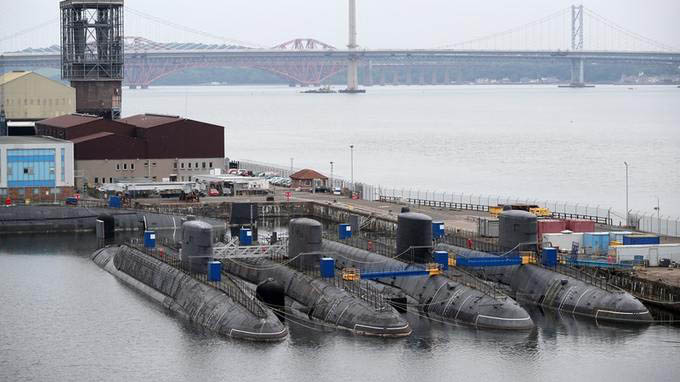
- There has been a “minor” seawater leak at a naval base in Plymouth where nuclear submarines are stored
- A £3m contract has been awarded to repair the leak
- Thirteen decommissioned nuclear submarines are stored at 3 Basin at Devonport dockyard
- The Ministry of Defence said there was no environmental risk from the leak
Jonathan Morris, BBC News, 8 June 2023 https://www.bbc.com/news/articles/cjejyq3e499o
HMS Valiant, a nuclear-powered attack submarine that was decommissioned in 1994, is set to be the first submarine in Devonport to undergo dismantling.
An MoD spokesperson said: “Work is planned at 3 Basin at HMNB Devonport to address minor seawater leakage from the basin and weathered stone edgings.
“The leak does not present an environmental risk and both the basin and entrance gate remain structurally sound.”
The MoD was criticised in 2019 over its failure to dispose of obsolete nuclear submarines.
It said it would dispose of them “as soon as practically possible”.
There are 20 decommissioned submarines in storage at Devonport and Rosyth.
The estimated cost of fully disposing of a submarine is £96m, the National Audit Office has said.
Water levels at Zaporizhzhia nuclear plant ‘critical’ after dam collapsesin Ukraine.
Water levels at Zaporizhzhia nuclear plant ‘critical’ after dam collapses
in Ukraine. Water levels have fallen below a critical point for being able
to supply cooling water to the Zaporizhzhia nuclear power station, the
operator of the Kakhovka dam in Ukraine has said.
Mirror 8th June 2023
https://www.mirror.co.uk/news/world-news/breaking-water-levels-zaporizhzhia-nuclear-30109697
The Zaporizhzhia nuclear plant used water from the destroyed Nova Kakhovka dam. What happens now?
By Felicity Ripper with wires, ABC, 9 June 23
One of the world’s largest nuclear power plants relies on a water reservoir linked to the destroyed Nova Kakhovka dam.
So what does that mean for the Zaporizhzhia Nuclear Power Plant?
What is the relationship between Nova Kakhovka dam and the Zaporizhzhia plant?
The main line of water used at the plant is pumped out of the reservoir above the dam, and up to the site.
This reservoir is currently draining because the downstream dam has collapsed………………………
But isn’t the plant in shutdown?
Zaporizhzhia was placed in a cold shutdown in September 2022.
While it doesn’t need the large amounts of water it would while operating normally, it still needs some supplies for cooling.
Dwindling water supplies also complicate any future prospects of restarting the power plant.
Has the plant lost its water supply from the dam reservoir?
Not yet.
International Atomic Energy Agency (IAEA) chief Rafael Grossi said water could still be pumped out for a few days after the dam’s collapse.
“The rate may reduce as the water lowers,” he said.
Mr Grossi on Tuesday said that the water in the reservoir was sitting at 16.5m, and once it reached 2.7m it could no longer be pumped out.
He said while there was no reason for panic, the plant was facing a serious situation. ………………………….. https://www.abc.net.au/news/2023-06-09/explainer-zaporizhzhia-nuclear-nova-kakhovka/102454194
Ukraine: Nuclear threat shows danger of small modular reactors
The National, By James Walker@James_L_Walker, Multimedia Journalist, 9 June 23
THE Kakhovka dam destruction – and the “immense” nuclear threat seen in Ukraine – could undermine the case for small modular reactors as a green energy solution, the SNP Campaign for Nuclear Disarmament (CND) convenor has warned.
On Tuesday, Ukraine accused Russian forces of blowing up the Kakhovka dam and hydroelectric power station, which Moscow has controlled for more than a year.
There are concerns that the damage to the dam could have broad consequences including depleted water levels upstream that help cool Zaporizhzhia nuclear power plant – Europe’s largest.
Bill Ramsay…….argued that the threat posed by Zaporizhzhia shows how the potential proliferation of small modular reactors could have important national security implications in the future.
It comes as Chancellor Jeremy Hunt confirmed plans in March to set up Great British Nuclear, a new body to oversee the revival of atomic energy and smooth the development of a new pipeline of power stations in the UK……………
“New nuclear power is expensive and will take years, if not decades, to become operational and has significant environmental concerns.”
Ramsay said that small modular reactors could also constitute a “longer-term danger”.
He said: “Reporting on the implications of the presence of a nuclear power plant in a dangerous war zone has been somewhat muted so far. But the threat is immense.
“From time to time, particularly as the war drags on, some stories around the Russian occupation of the Zaporizhzhia nuclear power plant have popped up, but then have disappeared again.
“In my view, this lack of focus on Zaporizhzhia has been deliberate, because it throws up a potentially much longer-term danger, the implications of the proliferation of Small Modular Reactors as a so-called solution to global warming.
“However, the statement by President Zelensky’s security chief makes it increasingly difficult to avoid speaking about the nuclear dimension not only in the current conflict but, potentially, of future conflicts caused by climate change.” https://www.thenational.scot/news/23580288.ukraine-nuclear-threat-shows-danger-small-modular-reactors/
Ukrainian dam collapse ‘no immediate risk’ to Zaporizhzhia nuclear plant
But IAEA says damage to Nova Kakhovka dam raises long-term concerns for power station’s future
Julian Borger in Kyiv, 6 June 23 https://www.theguardian.com/world/2023/jun/06/nova-kakhovka-ukraine-dam-collapse-zaporizhzhia-nuclear-plant-iaea
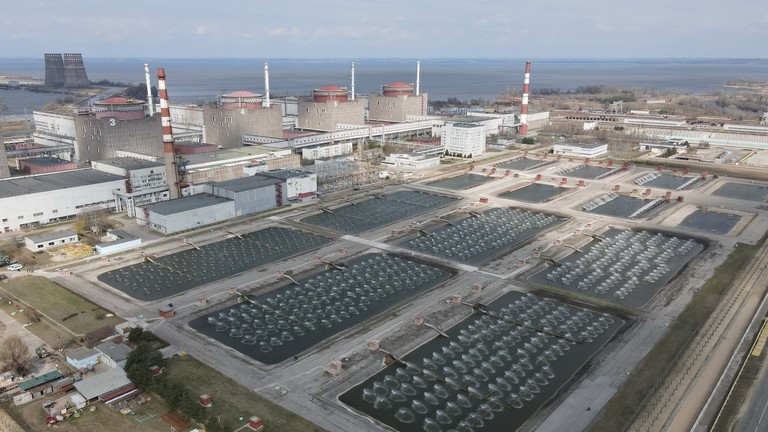
The collapse of the Nova Kakhovka dam and the draining of the reservoir behind it does not pose an immediate safety threat to the Zaporizhzhia nuclear power plant further upstream, but will have long-term implications for its future, according to Ukrainian and UN experts.
The Ukrainian nuclear energy corporation, Energoatom, put out a statement on the Telegram social media platform saying the situation at the plant, the biggest nuclear power station in Europe, was “under control”.
Rafael Mariano Grossi, the director general of the International Atomic Energy Agency, the UN’s nuclear watchdog, said in a statement: “our current assessment is that there is no immediate risk to the safety of the plant.”
But there are long-term concerns, both over safety and the possibility of the plant becoming operational again in the coming years. Oleksiy, a former reactor operator and shift supervisor at the plant, pointed out that all six reactors had been shut down since the plant found itself on the frontline after the Russian invasion.
Five of the reactors are in “cold shutdown”, turned off completely and being cooled, and one is in “hot shutdown”, kept at 200-250C so it would be easier to restart if conditions allowed, and to supply winter heating to the neighbouring town of Energodar.
Oleksiy, who left after Russian forces occupied the plant in March last year and is now elsewhere in Ukraine, said the last reactor should be shut down and that the plant had sufficient resources to keep all reactor cores cool.
“I think that the damage of the dam doesn’t impact the plant immediately, because they are being cooled by the safety systems located at the plant, which are spray systems,” he said. “The plant has a cooling lake, about two or three kilometres in diameter.”
The Energoatom statement said the cooling lake was filled and was at 16.6 metres (54.5ft), “which is sufficient for the power plant’s needs”
Mariana Budjeryn, a Ukrainian nuclear scientist, said: “The fact that there’s an artificial pond next to the ZNPP [Zaporizhzhia nuclear power plant] where water can be maintained above the reservoir level, and the fact that the reactors are in cold shutdown, offers some reassurance and increased time to respond if ZNPP starts getting affected.”
But Budjeryn, who is a senior research associate on the project on managing the atom at Harvard University, added: “The bigger problem – who is going to do it? ZNPP is already down-staffed to bare bones.”
Oleksiy said that over time water would evaporate from the cooling lake and if it could not be filled from the vast reservoir created upstream of the Nova Kakhovka dam, the turbines and the power plant could not be operated.
In his statement, Grossi said that the cooling pond should last “for some months” but it was imperative it was not damaged in fighting. The water is used to cool not just the reactor cores, but also the spent fuel and the diesel generators used for safety systems.
Kakhovka dam breach raises risk for Zaporizhzhia nuclear plant – receding waters narrow options for cooling

The Conversation June 7, 2023, Najmedin Meshkati, Professor of Engineering and International Relations, University of Southern California
A blast on June 6, 2023, destroyed the Kakhovka dam on the Dnieper River in eastern Ukraine. The rupture lowered water levels in a reservoir upriver at the Zaporizhzhia Nuclear Power Plant in the city of Enerhodar. The reservoir supplies water necessary for cooling the plant’s shutdown reactors and spent fuel, which is uranium that has been largely but not completely depleted by the fission reaction that drives nuclear power plants.
The International Atomic Energy Agency, which has inspectors on-site to monitor effects of the war at the plant, issued a statement saying that there was no imminent danger. Nevertheless, the destruction of the dam increases the risk of a disaster at the plant, a risk already heightened by ongoing combat in the area.
The Conversation asked Najmedin Meshkati, a professor and nuclear safety expert at the University of Southern California, to explain what the dropping water level means for the safety of the nuclear power plant and the ongoing risks to the plant’s spent fuel.
Why are dropping water levels a threat to the power plant?
The immediate situation is becoming very precarious. The dam is downstream from the plant, meaning that the flooding will not jeopardize the plant. But the plant draws water from a major reservoir on the river for its cooling system. This reservoir is draining because the downstream dam has been damaged.
The plant doesn’t need the massive amount of water it otherwise would because its six reactors are in cold shutdown. But the plant still needs water for three purposes: to reduce the residual heat from the shutdown reactors, to cool the spent fuel, and to cool the emergency diesel generators if the plant loses off-site power.
The plant’s operators pumped water from the reservoir into a cooling pond, which is why the IAEA said the plant has enough water for several months. But that’s the last resort, which is why the agency also said that it’s vital that the cooling pond remains intact. If the plant loses the cooling pond, the only hope would be to try something like they did at the Fukushima nuclear power plant after the earthquake and tsunami in Japan in 2011. They brought in huge water pumps to pump saltwater from the Pacific Ocean into the reactors to cool them down. The plant operators may need to try to pump water from the Dnieper River.
The two lifelines of any nuclear plant, whether operational or closed down, are water and electricity. The newly launched Ukrainian counteroffensive puts these two lifelines in further jeopardy. Since the Russian occupation, the plant has suffered a lot and lost off-site power seven times. My immediate concern is that if the plant loses its last remaining power line, which powers the cooling pumps, then it needs to rely on emergency diesel generators. There are 20 generators with on-site storage of only 10 to 15 days of fuel supply. Getting fuel while the counteroffensive is going on is another major challenge.
What does it mean to have a nuclear reactor in cold shutdown?………………………………………………………………..
What are the risks from the spent fuel at the plant?
The plant still needs a reliable source of electricity to cool the six huge spent fuel pools that are inside the containment structures and to remove residual heat from the shutdown reactors. The cooling pumps for the spent fuel pools need much less electricity than the cooling pumps on the reactor’s primary and secondary loops, and the spent fuel cooling system could tolerate a brief electricity outage.
One more important factor is that the spent fuel storage racks in the spent fuel pools at the Zaporizhzhia Nuclear Power Plant were compacted to increase capacity, according to a 2017 Ukrainian government report to the IAEA. The greater number and more compacted the stored spent fuel rods, the more heat they generate and so more power is needed to cool them.

These massive concrete cylinders store spent nuclear fuel rods. The Zaporizhzhia Nuclear Power Plant stores much of its spent fuel outdoors in casks like these. U.S. Nuclear Regulatory Commission
There is also a dry spent fuel storage facility at the plant. Dry spent fuel storage involves packing spent fuel rods into massive cylinders, or casks, which require no water or other coolants. The casks are designed to keep the fuel rods contained for at least 50 years. However, the casks are not under the containment structures at the plant, and though they were designed to withstand being crashed into by an airliner, it’s not clear whether artillery shelling and aerial bombardment, particularly repeated attacks, could crack open the casks and release radiation into the grounds of the plant.
………………………..This situation is rapidly evolving. And if something happens and there is a radiation release, it’s going to spread around the world. https://theconversation.com/kakhovka-dam-breach-raises-risk-for-zaporizhzhia-nuclear-plant-receding-waters-narrow-options-for-cooling-207192
Canadian Federal Court Upholds Alcohol and Drug Testing at Nuclear Facilities
Mirage News, 7 June 23
The Canadian Nuclear Safety Commission (CNSC) is pleased to confirm that on June 6, 2023, the Federal Court endorsed the Commission’s move to require pre-placement and random alcohol and drug testing of workers in safety-critical positions at high-security nuclear facilities, as mandated by CNSC regulatory document REGDOC-2.2.4, Fitness for Duty, Volume II: Managing Alcohol and Drug Use.
In early 2021, following the legalization of cannabis in Canada, the CNSC provided new regulatory requirements for the pre-placement and random testing of workers as part of a proactive approach to enhance nuclear safety and security at high-security nuclear facilities in Canada.
These new requirements were based on the results of extensive consultations with scientists and other experts, licensees of and workers at high-security nuclear sites, the Canadian Human Rights Commission, and the public.
Fitness for duty is one factor that affects human performance. An important element of being fit for duty is being free from the influence of alcohol, legal or illicit drugs, or performance-altering medication while at work………………… more https://www.miragenews.com/federal-court-upholds-alcohol-and-drug-testing-1022447/
Japan passes law to allow nuclear power stations to operate beyond 60 years
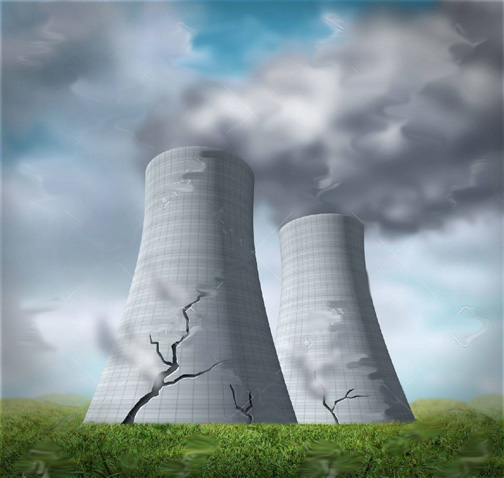
Japan’s parliament has passed legislation allowing the country’s nuclear
power operators to continue using reactors beyond their maximum lifespan of
60 years, by excluding the time spent on increased safety scrutiny in the
wake of the 2011 Fukushima nuclear disaster.
Argus Media 6th June 2023
https://www.argusmedia.com/en//news/2456784-tokyo-passes-law-to-extend-nuclear-reactors-lifespan
The AUKUS nuclear submarine deal is a nuclear proliferation danger

The plan to supply Australia with nuclear-powered submarines has met with anger from China and fears that it sets a dangerous precedent, writes Mike Higgins.
The AUKUS nuclear submarine deal is a challenge for the IAEA, Chatham House, 2 JUNE 2023, Mike Higgins
The trilateral security pact between the United States, the UK and Australia, known as Aukus, will be at the forefront of the International Atomic Energy Authority’s board of governors meeting in Vienna from June 5-9.
Rafael Grossi, the IAEA Director General, is due to present a report on the state of the negotiations governing the supply of new nuclear submarines to Australia. At issue is how arrangements for the supply of nuclear material will adhere to a never-before used article of the Treaty on the Non-Proliferation of Nuclear Weapons, or NPT.
Article 14 allows the use of nuclear material when not applied to weapons to be exempt from the usual safeguards and protocols under the NPT. By the early 2030s Australia will buy from the US up to five conventionally armed nuclear submarines and, a decade later, build a new class of nuclear-powered submarine with US and British technology. Approval from the IAEA watchdog is essential for these plans.
China has strongly criticized the agreement, saying, among other things, that the Aukus partnership ‘constitutes serious nuclear proliferation risks’, and that the alliance was forcing its own interpretations of Article 14 to suit its needs beyond the spirit of the NPT. ‘The international community has not reached any consensus on the definition of such military activity and there are huge divergences on the applicability of Article 14,’ said Wang Wenbin, China’s chief foreign ministry spokesperson, in March.
Grossi is expected to elaborate on the implications of the Aukus partnership at the IAEA’s board meeting.
At a Chatham House event in February, Grossi acknowledged the partnership required ‘a special arrangement’ between the Aukus partners and the IAEA, representing a ‘game changer’ for non-proliferation safeguards: ‘This is the beginning of a long road,’ he said.
A dangerous precedent?
…………………. some experts urge caution over the exercising of Article 14, claiming it sets a dangerous precedent which could lead to nuclear material being diverted into the making of nuclear weapons.
‘My concern is not that Australia is going to remove nuclear material from safeguards and build a nuclear bomb,’ said James Acton, co-director of the Nuclear Policy Programme at the Carnegie Endowment for International Peace. ‘But once you normalize the precedent that it’s OK to remove nuclear material from IAEA safeguards you create a much higher risk that other states are likely to do so.
‘For instance, if Iran and Russia were to announce naval cooperation that looked like Aukus, I don’t believe that the US, Britain and Australia would feel comfortable with that on non-proliferation grounds,’ he said.
Other challenges lie ahead for the IAEA in monitoring Aukus. Nuclear submarines at sea may remain out of reach of inspectors for months at a time and nuclear fuel for naval reactors is highly classified − the Aukus partners may be unwilling to give inspectors access to its design or confirm the exact amounts to be used…………. https://www.chathamhouse.org/publications/the-world-today/2023-06/aukus-nuclear-submarine-deal-challenge-iaea
Concern over low flying aircraft circling over Hunterston nuclear power station
Concerns have been raised with civil nuclear police over low flying
aircraft over Hunterston. Aircraft apps showed that a Pilatus PC-6/B2-H4
plane repeatedly circled the nuclear power plant – leading to the matter
being raised by a concerned resident at a public meeting this week.
West Kilbride community councillor John Lamb, who was attending the Hunterston
Site Stakeholders Group, asked the civil nuclear police if they were aware
that there was low flying aircraft over the power station zone.
The incident happened on May 25 and the fFlightradar app showed that the plane
travelled across Ayrshire before repeatedly circling Hunterston. Mr Lamb
asked if the Civil Aviation Authority had altered the guidance regarding
the ‘no flight zone’ over Hunterston. Inspector Paul Gilmartin of the Civil
Nuclear Police told the meeting that he was unaware of any reports of low
flying aircraft and the matter had not been flagged up to him.
Largs & Millport Weekly News 2nd June 2023
Bellona publishes new report on Ukraine’s besieged Zaporizhzhia nuclear plant
It’s something the world nuclear energy community never thought it would see — and thus never prepared for.
June 1, 2023 by Charles Digges https://bellona.org/news/nuclear-issues/2023-06-zaporizhzhia-nuclear-report
For a year and a half, the world has bourn witness to an unprecedented spectacle: the military occupation of a civilian atomic energy station.
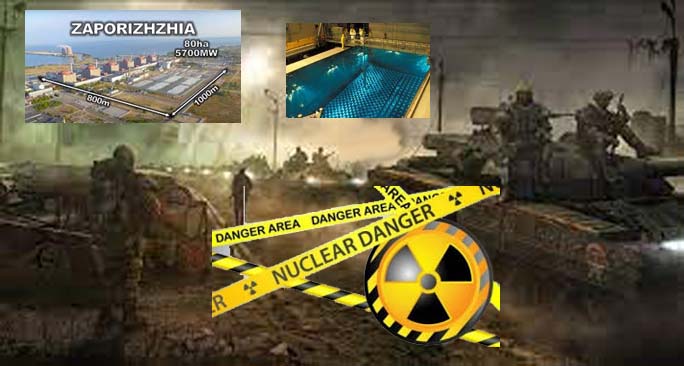
The March 2022 seizure by Russian troops of the Zaporizhzhia Nuclear Power Plant in Southeastern Ukraine has forced six nuclear reactors and pools of spent nuclear fuel onto the front lines of the biggest land war in Europe since World War II.
It’s something the world nuclear energy community never thought it would see — and thus never prepared for. As a result, the world has watched helplessly as heavy ordinance strikes nail-bitingly close to the plant on a regular basis, repeatedly severing outside power to the facility’s cooling and safety systems.
According to Rafael Grossi, who heads the UN’s atomic energy agency —and who has repeatedly beseeched Moscow and Kyiv to create a non-military safe zone around the plant — the situation is a gamble with radioactive stakes.
“We are rolling a dice and if this continues then one day our luck will run out,” he has said more than once.
Unfortunately, the time has come to ponder just what it would look like were that to happen.
This is the subject of a new Bellona report entitled “The Radiation Risks of Seizing the Zaporizhzhia Nuclear Power Plant.”
In it, we analyze a variety of war-time scenarios that could befall the plant and what the consequences of those might be.
What would happen if any of the plant’s six Soviet-built VVER-1000 nuclear reactors were struck by artillery? Or a missile? What about the spent nuclear fuel storage pools? What if those were struck? Where would the radioactive fallout from any of these events go?
And perhaps, in light of recent events, the most salient danger — what would happen if the plant was unable to maintain outside power to run reactor cooling systems? Would that amount to Fukushima redux?
We also present a number of recommendations that should be followed in order to keep the plant safe while it continues to be hostage to the aggression.
Among them, we urge the Russian and Ukrainians struggling for control of the plant to keep the reactors in shut-down mode, which would greatly reduce the severity of a radiological accident. We also recommend that no nuclear fuel be unloaded, packed for storage or transported. These are complex technical tasks that cannot be undertaken by a hostage workforce while a war rages on around them.
Above all, we urge a Russian withdrawal from the plant and Ukraine as a whole, for it is not until then that anything like safe operation of Europe’s largest nuclear power plant can be restored.
USA urged not to use bomb-grade uranium in nuclear power experiment
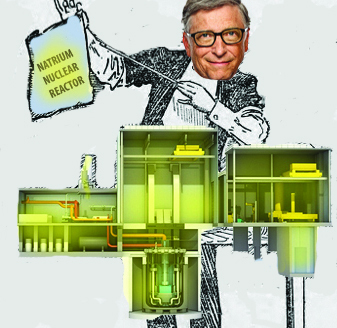
By Timothy Gardner May 31, 2023 https://www.reuters.com/world/us/us-urged-not-use-bomb-grade-uranium-nuclear-power-experiment-2023-05-30/
(Reuters) – Former U.S. State Department and nuclear regulatory officials on Tuesday urged the U.S. Energy Department to reconsider a plan to use bomb-grade uranium in a nuclear power experiment, saying that its use could encourage such tests in other countries.
The Energy Department and two companies aim to share costs on the Molten Chloride Reactor Experiment (MCRE) at the Idaho National Laboratory and use more than 1,322 pounds (600 kg) of fuel containing 93% enriched uranium.
Bill Gates-backed company TerraPower LLC, the utility Southern Co (SO.N) and the department hope the six-month experiment will lead to breakthroughs in reactors……….
But a group of former Nuclear Regulatory Commission members, including former Chairman Allison Macfarlane, and U.S. assistant secretaries of state responsible for nonproliferation, said MCRE could give other countries an excuse to enrich uranium to bomb-grade level in pursuit of new reactors.
“The damage to national security could exceed any potential benefit from this highly speculative energy technology,” the experts said in a letter to Energy Department officials. They fear an increase in such experiments boosts risks that militants looking to create a nuclear weapon could get hold of the uranium.
Rafael Grossi to brief UN Security Council on Zaporizhia nuclear situation
The International Atomic Energy Agency was on 30 May due to brief the UN
Security Council on his proposals for safeguarding Ukraine’s Zaporizhia NPP
(ZNPP). “IAEA director general Rafael Grossi is planning to brief the UN
Security Council on the nuclear safety and security situation” during a
meeting chaired by Switzerland, according to an official statement by the
Agency in advance of the meeting.
Director general Grossi has said he is
seeking to secure agreement on a set of principles to protect ZNPP during
the armed conflict, covering also the availability and security of external
power supplies at all times.
Mr Grossi’s plan consists of five principles:
a ban on the deployment of heavy military equipment and military personnel
at nuclear power plants, a ban on shooting from the territory and towards
the power plant, ensuring security, protecting all external power lines,
and monitoring compliance with these principles.
Modern Power Systems 30th May 2023
China halts floating nuclear power plan over security fears
Global Construction Review, David Rogers, 31.05.23
China’s plan to build a fleet of nuclear power reactors that would provide electrical power to islands on the South China Sea have been suspended over security concerns, the South China Morning Post reports.
As construction of the first units was about to begin, regulators announced that they were withholding approval.
The decision came as a surprise for the project’s scientists, who believed the technology was mature and that floating reactors were generally safer than those on land, since the ocean acts as a natural heat sink and is immune to seismic activity.
Writing in the journal Nuclear Power Engineering, Wang Donghui, a scientist at the National Energy Offshore Nuclear Power Platform Technology Research Centre, said safety and feasibility were the main concerns of authorities.
He said the decision was made in spite of a 10-year research project into floating plants, and the fact that China has advanced ship design capabilities, as well as domestic design and manufacturing units capable of building floating platforms.
It had been hoped that a floating nuclear power plant would provide power to support military and civilian activities on remote islands in the South China Sea, and China was envisaging the construction of a fleet of such vessels (see further reading)………………
n
One of the major safety concerns is that floating power plants could face attacks from sea and air, but also from underwater attacks, according to Wang.
An enemy submarine, for example, could attempt to sabotage the facility by planting explosives on its hull or damaging its cooling systems. Unmanned aerial vehicles could also fly over the plant and drop bombs or other projectiles on it.
According to Wang, protecting a floating nuclear power plant from “underwater divers, vessels, floating objects or airborne objects”, would require a comprehensive ship security system. https://www.globalconstructionreview.com/china-halts-floating-nuclear-power-plan-over-security-fears/
Neither Russia nor Ukraine committed to the IAEA’s 5 principles to protect Zaporizhzhia nuclear power plant.
Neither Russia nor Ukraine committed to respect five principles laid out
by International Atomic Energy Agency (IAEA) chief Rafael Grossi on Tuesday
(30 May) to try to safeguard Ukraine’s Russian-occupied Zaporizhzhia
nuclear power plant.
Grossi, who spoke at the UN Security Council, has
tried for months to craft an agreement to reduce the risk of a catastrophic
nuclear accident from military activity like shelling at Europe’s biggest
nuclear power plant.
His five principles included that there should be no
attack on or from the plant and that no heavy weapons such as multiple
rocket launchers, artillery systems and munitions, and tanks or military
personnel be housed there. Grossi also called for off-site power to the
plant to remain available and secure; for all its essential systems to be
protected from attacks or sabotage; and for no actions that undermine these
principles.
EU Reporter 1st June 2023
1
1 This Month
10 March A LIVE WEBINAR THE REAL EFFECTS OF NUCLEAR POWER
What the Industry Isn’t Telling Us
1:00 PM Mountain, 2 pm Central, 3 pm Eastern. Live on the Keepers of the Water Facebook page


18 March Webinar @ 1 PM EST: An Assessment of SMR Projects: The Case of Canada
register for the zoom:
https://us02web.zoom.us/webinar/register/WN_o8BIIOUvQ2ONJR1nta65DQ#/registration


of the week – STOP SMALL MODULAR REACTORS IN CANADA
To see nuclear-related stories in greater depth and intensity – go to https://nuclearinformation.wordpress.com
-
Archives
- February 2026 (256)
- January 2026 (308)
- December 2025 (358)
- November 2025 (359)
- October 2025 (376)
- September 2025 (258)
- August 2025 (319)
- July 2025 (230)
- June 2025 (348)
- May 2025 (261)
- April 2025 (305)
- March 2025 (319)
-
Categories
- 1
- 1 NUCLEAR ISSUES
- business and costs
- climate change
- culture and arts
- ENERGY
- environment
- health
- history
- indigenous issues
- Legal
- marketing of nuclear
- media
- opposition to nuclear
- PERSONAL STORIES
- politics
- politics international
- Religion and ethics
- safety
- secrets,lies and civil liberties
- spinbuster
- technology
- Uranium
- wastes
- weapons and war
- Women
- 2 WORLD
- ACTION
- AFRICA
- Atrocities
- AUSTRALIA
- Christina's notes
- Christina's themes
- culture and arts
- Events
- Fuk 2022
- Fuk 2023
- Fukushima 2017
- Fukushima 2018
- fukushima 2019
- Fukushima 2020
- Fukushima 2021
- general
- global warming
- Humour (God we need it)
- Nuclear
- RARE EARTHS
- Reference
- resources – print
- Resources -audiovicual
- Weekly Newsletter
- World
- World Nuclear
- YouTube
-
RSS
Entries RSS
Comments RSS
 nuclear-news
