The Global Crisis at the Zaporizhzhia Nuclear Site Demands Immediate United Nations Intervention
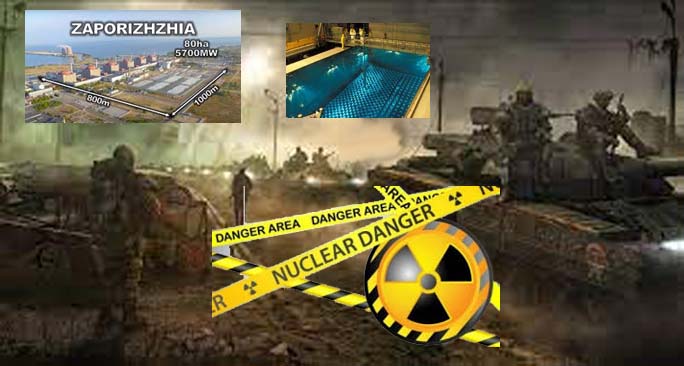
Some interests aligned with commercial reactors may wish to downplay the dangers to avoid tarnishing the industry’s image.
But the apocalyptic scope of a potential catastrophe at Zaporizhzhia is simply too great to let humankind tolerate inaction. There is no biological margin for later regrets.
BY HARVEY WASSERMAN – ET AL. 28 July 23 https://www.counterpunch.org/2023/07/28/the-global-crisis-at-the-zaporizhzhia-nuclear-site-demands-immediate-united-nations-intervention/
The global crisis at six Ukrainian atomic reactors and fuel pools has escalated to an apocalyptic threat that demands immediate action.
Protecting our lives on this planet now demands immediate deployment of a United Nations peacekeeping force to operate and protect this plant.
A petition is now circulating to help make that happen.
This week Russian occupiers threw the Zaporizhzhia site into deepening chaos by firing Unit 4 up to “hot shutdown.” Until July 25, Unit 4 had been in cold shutdown, along with Units 1,2,3 and 6. Unit 5 had been on hot shutdown to help power the plant.
But the Ukrainian nuclear agency Energoatom warns that putting Unit 4 up to hot shutdown is “a gross violation of the requirements of the license to operate this nuclear facility.”
The Russian military has occupied Zaporizhzhia since March, 2022.
It previously assaulted Chernobyl, whose melted Unit 4 core—-which exploded in 1986—-still poses grave dangers. Russian troops terrorized site workers and jeopardized operations that safeguard massive quantities of radiation still on site.
The six reactors and six fuel pools at Zaporizhzhia are burdened with far more potentially apocalyptic radiation than was released at Hiroshima, Nagasaki, Chernobyl or Fukushima. Without sufficient power and a constant supply of cooling water, the site could turn into a radioactive fireball powerful enough to send lethal radiation throughout the Earth’s eco-sphere, threatening all human life.
The Russians and Ukrainians have accused each other of acts that threaten such a catastrophe. Each has blamed the other for apparently random mining and shelling on and around the site. Just one such hit could lead to a meltdown and a series of catastrophic explosions from which our species might never recover.
On June 6, an attack widely attributed to Russia destroyed the Kakhovka hyroelectric dam, threatening vital power and cooling water supplies for Zaporizhzhia. Later that month, Ukrainian President Volodymyr Zelensky charged that the Russians had planted explosives at the site to precede a possible attack.
In 2001, 9/11 terrorists who took down the World Trade Center apparently contemplated attacking the Indian Point Nuclear Plant, 35 miles north of New York City. Such an assault could have blanketed much of New York, New England and the Atlantic Ocean in deadly radiation.
There have been other terrorist threats to atomic reactors and fuel pools. But the six at Zaporizhzhia are the first in history to endure the hostile instability of a hot war zone. on Monday IAEA inspectors spotted anti-personnel mines at the plant’s perimeter and still have not had access to reactor turbine halls or the roofs of reactors 3 and 4 to see what those new objects placed up there are.
The complex also recently lost access to its main power backup line.
With an under-skilled labor force attempting to work in an unpredictable state of terror, with at least two reactors now teetering on hot shutdown, and with six fuel pools vulnerable to loss of power and coolant, the dangers at Zaporizhzhia are on a scale never before experienced by the human race. Though all-out nuclear war might well release more radiation, the instability at these reactors and fuel pools poses as profound a threat to human survival as our species has ever experienced, at least since the Cuban Missile Crisis of 1962.
Such realities cry out for an armed, skilled, stabilizing global force.
The International Atomic Energy Agency, based in Geneva, has been providing vital expertise at the site, and does have the technical and human resources to take operational control. A peacekeeping force, such as the one deployed at Suez in 1956, must create a demilitarized zone capable of protecting the site from shelling and armed attack.
Some interests aligned with commercial reactors may wish to downplay the dangers to avoid tarnishing the industry’s image.
But the apocalyptic scope of a potential catastrophe at Zaporizhzhia is simply too great to let humankind tolerate inaction. There is no biological margin for later regrets.
The General Assembly of the United Nations must send an operational and peacekeeping force to manage and protect the Zaporizhzhia nuclear complex.
IMMEDIATELY!!!
Denys Bondar, Scott Denman, Karl Grossman, Howie Hawkins, Joshua Frank, Myla Reson, Harvey Wasserman and others are among the signees of this article, and of the petition asking the UN to send Peacekeepers to Zaophrizhzhia at https://www.change.org/p/stop-ukrainian-nuclear-disaster-unga-must-establish-dmz-at-zaporizhzhia-plant-now
The Dangerous and Frightening Disappearance of the Nuclear Expert
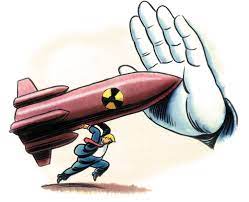
The vanishing profession of preventing nuclear war
More than a dozen experts across the ideological spectrum I spoke with — hawks and doves alike — agreed a renaissance is needed to rebuild lost muscle memory and fashion new strategies to deter increasingly belligerent nuclear peers and new wannabe nuclear states. And the emergence of artificial intelligence, some analysts fear, could enhance an aggressor’s nuclear first-strike capability or sow dangerous confusion among atomic adversaries.
Tensions among nuclear powers are rising, but decades of peace have resulted in a dearth of people trained to deal with the continuing threat.
Politico, By BRYAN BENDER, 07/28/2023
SANTA MONICA, Calif. — At the height of the Cold War, the RAND Corporation crackled with the collective energy of the best brains the Pentagon could find to tackle the biggest threat.
At lunchtime, an eclectic group of physicists, economists and social scientists would play Kriegspeil, a form of double-blind chess modeled on Prussian wargames in which players can’t see their opponent’s pieces and infer their moves from a referee sharing sparse information. Then they would spend the rest of the workday developing the military doctrine, deterrence theory and international arms control frameworks to prevent nuclear war — and if all else failed, how they might win one, or at least avoid total annihilation.
It’s been several decades since the likes of Herman Kahn, the alpha male of the so-called “Megadeath Intellectuals” whose famous book On Thermonuclear War casually contemplated the long-term prospects for a society that had endured the sudden extinction of more than 100 million people, roamed RAND’s halls. The favored lunchtime competition these days seems to be ping pong in the courtyard — if anyone’s around.
One recent morning, I visited RAND’s headquarters here on the scenic California coast. After being escorted past three layers of security, I found Ed Geist, the intellectual heir to those legendary Cold Warriors, holding down the fort in the “Coffee Cove” in the RAND library.
Geist, who holds a Ph.D. in Russian history and is author of the forthcoming book Deterrence Under Uncertainty: Artificial Intelligence and Nuclear Warfare, said the Pentagon-funded think tank’s team of dedicated nuclear policy experts and strategists, spread across half a dozen offices worldwide, could barely fill a couple tables in the lunchroom now. And many of the ones who are left, he said, are in the twilight of their careers.
“It is much, much reduced,” he said, framed by obscure periodicals with titles like North Korean Review, Phalanx and Strategic Policy. “We have more work than we can do.”……………………….
This summer, as the public is treated to a rare thriller about the development of the atomic bomb in director Christopher Nolan’s biopic Oppenheimer, the nation’s leading nuclear policy wonks like Geist are more concerned than ever about the specter of a nuclear war — and warn that we are far less prepared than during the Cold War to deal with a more expansive threat. As Oppenheimer reminds us, the bomb itself was the creation of a relatively small number of geniuses assigned to the New Mexico desert in the waning days of World War II. But once it was unleashed and other major powers followed, an entire nuclear complex employing thousands of weapons engineers and technicians, political and social scientists, and diplomats sprang up to harness a humanity-erasing technology and fashion strategies to prevent the unthinkable.
Over time, however, the pervasive fear that fueled that intellectual apparatus has ebbed — and with it the urgency to restock the ranks of experts. Three decades after the Cold War ended, RAND and the broader network of government agencies, national laboratories, research universities and think tanks are struggling to meet the demands of a new — and many contend, far more dangerous — chapter in the global nuclear standoff.
The discipline’s steady decline, which only accelerated following the Sept. 11 attacks when the military pivoted to the war on global terrorism, is compounded by reduced funding from some of the leading philanthropies that funded nuclear policy studies and the graying of the last generation of practitioners both in and out of government. As for government funding, most of it — to the tune of $75 billion a year over the next decade — is dedicated to overhauling the U.S. arsenal of nuclear-armed missiles, bombers and submarines, far eclipsing investments in the humans who manage them.
More than a dozen experts across the ideological spectrum I spoke with — hawks and doves alike — agreed a renaissance is needed to rebuild lost muscle memory and fashion new strategies to deter increasingly belligerent nuclear peers and new wannabe nuclear states. And the emergence of artificial intelligence, some analysts fear, could enhance an aggressor’s nuclear first-strike capability or sow dangerous confusion among atomic adversaries.
……………………………………………………………….
Joan Rohlfing has been sounding the alarm about the trend for years.
For the last 13 years, the former top nuclear adviser at the Departments of Defense and Energy and staffer for the House Armed Services Committee, has been president of the Nuclear Threat Initiative. The nonprofit, founded in 2001 by media mogul Ted Turner, is dedicated to reducing the dangers of weapons of mass destruction. And it has emerged as the standard bearer — and often lead funder — of training programs and policy work that is central to government nuclear strategies.
……………………………………. “That may sound alarming,” Rohlfing acknowledged, “but I have deep concerns that we are underestimating the dangers of the moment. There is a lot more complexity, with more nuclear weapons states, with more lethal weapons, with weapons that fly faster on hypersonic vehicles.
“And on top of all that,” she stressed, “there is a hot war in Europe with nuclear threats being made.”
……………………………………………………………………….. the arms control agreements that Washington and Moscow relied on for decades to bring some measure of stability and transparency to the world’s largest nuclear arsenals —including requiring reciprocal visits of each other’s weapons bases — have become another casualty of degrading relations between the United States and Russia in recent years.
…………………………………………………………………… The Pentagon has estimated that Beijing could quadruple its deployed warheads to 1,000 by 2030, uncomfortably close to the number of nuclear weapons that Moscow and Washington have deployed. But China is not party to any arms control agreements or international limits. “We have not built a good foundation for these discussions with the Chinese,” says Geist, the RAND nuclear expert.
Meanwhile, successive government studies and think-tank reports warn about the threat of cyber-attacks on nuclear command and control systems that could lead to deadly miscalculation.
Add to the mix the uncharted territory of AI, the race to develop new weapons that can destroy early warning or communications satellites in orbit, and the failure of the international community to prevent North Korea and Iran from building up their nuclear weapons complexes.
“All the ingredients are here for a catastrophe,” Rohlfing said. “I think there is a high degree of denial because we have gone so long without nuclear use. We are discounting the warning signs that are right in front of us. In the heat of the moment, all it takes is a miscommunication or miscalculation to create a series of events that spiral out of control.”
Yet the level of the threat is not matched by the brain power needed to confront it, she said.
Rohlfing pointed to a 2019 assessment of the nuclear arms control and disarmament community that painted a decidedly gloomy outlook for a field that was once vibrant.
………………………………………………………………………………………. “The capacity in the field is shrinking as the threat is expanding,” said Rohlfing. “Nuclear is woefully neglected.”
Mark Bucknam arrived at the National War College in 2010. He discovered the leading academic institution for training military, diplomatic and foreign leaders in national security strategy was bestowing masters degrees without any instruction on nuclear deterrence, which had been a pillar of the curriculum in the years before the 9/11 attacks.
………………………………………………………………………………………………………. Stephen Schwartz, a senior fellow at the Bulletin of the Atomic Scientists, which has been advocating for reductions in nuclear arsenals since the arrival of the nuclear age in 1945, believes the lack of experience and expertise is particularly acute in Congress, where few lawmakers or staff are steeped in arms control, nuclear strategy or deterrence theory.
The debates, in his view, “are almost solely on the cost of nuclear weapons and not their utility.”
…………………………………… Congress is about to get another wake-up call, however, in the form of the bipartisan commission’s upcoming report.
………………………………………………………………… In the meantime, the paucity of people with the expertise to do that instruction are the guardians of a knowledge that remains far too obscure. Like relics of a distant era.
Ahead of my visit, RAND officials culled some of their nuclear archives, including a palm-sized disc labeled “BOMB DAMAGE EFFECT COMPUTER,” a circa-1958 device that would have been in the desk drawer of anyone who needed to estimate the probable impacts of atomic weapons. Geist rotated the concentric dials that can estimate what a nuclear blast, ranging from a kiloton to 100 megatons, would produce in terms of crater size and “maximum fireball radius.”
These days, Geist sometimes feels like an artifact, too.
“I guess I’m on my own here,” he said. “We have some difficult theoretical and also practical questions that have to be addressed. We can’t just go into the stacks and pull out [the books of] Herman Khan and apply it to today.” https://www.politico.com/news/magazine/2023/07/28/nuclear-experts-russia-war-00108438
—
The misguided push to weaken nuclear safety standards is gaining steam
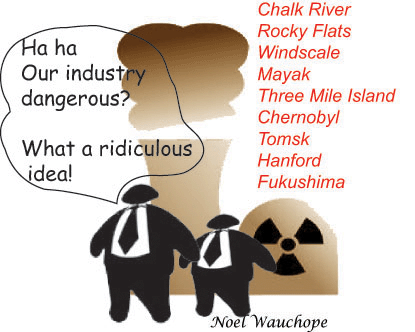
The Hill, BY EDWIN LYMAN, OPINION CONTRIBUTOR – 07/25/23
Imagine a future where experimental nuclear reactors are scattered across the U.S. landscape like so many Starbucks, in densely populated and rural areas alike. Also, imagine they are allowed to operate without thoroughly reviewed and validated safety analyses, highly trained personnel at the controls, the protection of armed security officers, any provisions for off-site emergency planning and robust containment structures that would help prevent the release of highly hazardous radioactive materials if the worst happens.
This is the future that many in the nuclear industry, along with their vocal supporters, are working overtime to achieve.
The only bulwark against the most dangerous proposals is the Nuclear Regulatory Commission, the independent federal agency in charge of protecting the public from the radiological hazards of civil nuclear facilities. However, the NRC is facing a coordinated, massive push by the industry to drastically weaken its safety and security regulations and speed up the implementation of its back-to-the-1950s dystopian vision.
NRC critics blame the agency for the slow pace of new nuclear reactor licensing and construction in the U.S. But the NRC should not be scapegoated for the nuclear industry’s own failures. These include repeatedly missing cost and schedule targets for the Vogtle-3 reactor in Georgia, or supplying technically deficient, inadequate applications, such as Oklo’s attempt to apply for a license for a “micro” nuclear reactor, which the NRC justifiably rejected, and NuScale’s application for a standard design approval for its small modular reactor, which the NRC found contained numerous gaps.
The industry’s ire has focused on the NRC’s development of the “Part 53” rule for so-called risk-informed licensing of new reactors, which proponents argue are so much safer than the currently operating fleet that they need far less regulatory oversight across the board. But the fundamental problem is that many of these reactor designs, which introduce new safety and security risks, only exist on paper or have had extremely limited (and not necessarily relevant) real-world experience………………………………………………………………………………………………………………….
Some may ask why nuclear power still requires stringent regulation given that proponents claim it is already the safest form of energy. But although some nuclear supporters attempt to gaslight the public by playing down the massive health, environmental and economic impacts of the 1986 Chernobyl and 2011 Fukushima disasters, the fact remains that, unlike renewable energy technologies, nuclear power generates vast amounts of uniquely hazardous and long-lived radioactive materials as they operate. Not only are these substances highly carcinogenic, but evidence of their role in cardiovascular disease is growing.
Keeping these materials isolated from the environment will remain a critical obligation of the nuclear power sector as long as reactors continue to run and nuclear waste persists. NRC’s statutory authority must remain focused on ensuring radiological safety and security……………… https://thehill.com/opinion/energy-environment/4116386-the-misguided-push-to-weaken-nuclear-safety-standards-is-gaining-steam/
Aware people in Suffolk are astonished that very few people or organisations are consulted about changes to Sizewell C Nuclear’s Emergency Plan

Sizewell C has quietly submitted its construction Emergency Plan to Suffolk
County Council (you need to accept the disclaimer statement to see the
application). This Plan lays out adaptations to the existing Emergency
Plan, to cope with a situation where there are thousands of construction
workers in the vicinity of Sizewell B.
Given that the Plan’s primary
purpose is to keep the public safe and therefore affects everyone in the
local area, we (Stop Sizewell C) are astonished that Suffolk County Council
is consulting very few individuals and organisations over a short time
period.
Suffolk County Council 25th July 2023
http://suffolk.planning-register.co.uk/Planning/Display?applicationNumber=SCC%2F0051%2F23SC%2FDOR
Nuclear power: An inherent potential for catastrophe
Nuclear energy should not be an “inalienable right” and isn’t
“peaceful”
This excerpt on nuclear power is taken from Reaching Critical Will’s 2023 NPT Briefing Book. The handbook is being released in advance of the first session of the Preparatory Committee for the 2026 Review Conference of the Parties to the Treaty on the Non-Proliferation of Nuclear Weapons (NPT), which will meet from July 31 to August 11 2023 at the Vienna International Centre in Vienna, Austria.
Nuclear weapons are not the only nuclear risk. Nuclear energy also has inherent risks and the capacity to unleash uniquely horrifying forms of devastation upon human bodies, the environment, and our socioeconomic infrastructure.
In 1953, just a few years after the United States used two nuclear weapons against Japan, US President Eisenhower launched his Atoms for Peace program at the United Nations.
It resulted in the spread of nuclear technology and materials around the world for so-called peaceful uses—energy, medicinal uses, and research. In reality, nuclear technology is anything but peaceful.
Nuclear power is the most expensive and dangerous way to boil water to turn a turbine. It contains the inherent potential for catastrophe. There is no such thing as a safe nuclear reactor. All aspects of the nuclear fuel chain, from mining uranium to storing radioactive waste, are devastating for the earth and all species living upon it. Radiation is long lasting and has inter-generational effects.
Nuclear energy is not a solution to the climate crisis. It not only is not carbon-neutral, but its other environmental impacts and risks of contamination through accidents and attacks pose grave risks to the world’s ecosystems and living beings. As hundreds of civil society groups said to the UN Climate Conference (COP26), nuclear power is “a dangerous distraction from the real movement on the climate policies and actions that we urgently need.”
Yet the nuclear industry and certain governments continue to promote nuclear energy as clean, safe, and reliable. This has everything to do with capitalism and nothing to do with protecting the planet or its people.
For the nuclear power industry, the primary motive for operation is profit. History shows us that increasing profit is often best achieved in ways that are not consistent with designing or operating the relevant equipment for the lowest risk to humanity or the planet.
Profit is less likely to be achieved by honestly exploring alternative sources of energy that might necessitate initial investments, or that might not be eligible for the same government (i.e. taxpayer-funded) subsidies as nuclear is in many countries.
Profit is also less likely to be achieved by designing economically efficient, need-oriented, and environmentally sound sources of energy. Scientists and activists alike have noted that nuclear power, which produces energy “in large, expensive, centralized facilities” is not useful “for solving the energy needs of the vast majority of [the world’s] population, much less so in a way that offers any net environmental gains.”
In the meantime, the spread of nuclear energy around the world since 1953 has enabled the development of nuclear weapons in several countries, and to the proliferation of nuclear materials and technology that are becoming susceptible to terrorist attack or accidents.
The situation at Zaporizhzhia………………………………………………………………………………………………..
Abolishing all nuclear materials and technologies
Within the NPT context, nuclear energy is upheld by most states as an “inalienable right”. This means that most states laud its perceived benefits and promote its expansion, regardless of the risks to humanity, the environment, and proliferation.
However, since 1945, many scientists, activists, and government officials have pointed out that nuclear material, technology, and facilities are dangerous whether they are in weapons form or for “peaceful uses”.
Eliminating all nuclear materials and technology, whatever its designated purpose, is the only way to ensure that it is does not result in catastrophe, by accident or design. A few states parties recognize these inherent risks and have chosen not to pursue or to phase out nuclear power as part of their energy mixes. The more states parties that follow this path, the better for us all.
Recommendations
- Delegations should raise concerns with the health, environmental, safety, and security impacts of nuclear power, including in the context of climate change. While the NPT indicates states can use nuclear power, this does not mean it’s in best interest of humanity or the planet.
- Delegations should support the 25 May 2011 declaration by the governments of Austria, Greece, Ireland, Latvia, Liechtenstein, Luxembourg, Malta, and Portugal, in which they argued that nuclear power is not compatible with the concept of sustainable development and called for energy conservation and a switch to renewable sources of energy worldwide.
- States should also support the February 2011 call from a group of Hibakusha for phasing out all sources of radiation—from uranium mining, nuclear reactors, nuclear accidents, nuclear weapons development and testing, and nuclear waste—and for investment in renewable, clean energy for a sustainable future.
- States should commit to working for a sustainable future by reducing the use of energy, investing in renewable and non-carbon emitting sources of energy, phase-out nuclear energy, and not further develop harmful, radioactive technologies.
- Delegations should call on all states that currently use nuclear energy to abide by all nuclear safety and nuclear security instruments and norms and to end the dangerous transshipment of radioactive waste and nuclear materials.
- Delegations should condemn armed conflict and military activities at or near nuclear power facilities and abide by and indicate support for the IAEA General Conference decision on the “Prohibition of armed attack or threat of armed attack against nuclear installations, during operation or under construction” (GC(53)/ DEC/13).
- States must not engage in armed conflict and military activities at or near nuclear power facilities. Russia should end its war against and occupation of Ukraine, along with the withdrawal of its armed forces from the Zaporizhzhia nuclear power plant and other related sites and cease military activities at or near nuclear facilities.
Reaching Critical Will is the disarmament programme of the Women’s International League for Peace and Freedom (WILPF), the oldest women’s peace organization in the world. https://beyondnuclearinternational.org/2023/07/23/an-inherent-potential-for-catastrophe/
Luck Is Not a Strategy for the Ukraine, The Germans Take the “Evidence-based” Path.
We Chat with Nuclear Expert Dr. Paul Dorfman
Hot Globe, STEVE CHAPPLE, JUL 20, 2023
“………………………………………………………………………………. HOT GLOBE: It’s always bothered me that Saudi Arabia because of the Trump administration has now got access to the beginnings of nuclear power, and to a future nuclear bomb. The idea of selling small nuclear reactors around the world raises a pretty problematic point.
DORFMAN: That’s absolutely true. Saudi has made no bones about its nuclear ambitions and I mean its military nuclear ambitions. Saudi diplomats have said quite clearly that they’re looking towards Iran and that they’re seriously thinking about both civil and military nuclear. So there’s a potential for an arms race, a military nuclear arms race in the Middle East region. It’s actually even more bad news for the Middle East because in a proxy war if say, for example, Russian and America wanted to have a bit of a go and they didn’t want to absolutely destroy each other’s country where would they be fighting their proxy nuclear war? The first region that comes to mind is the Middle East and Saudi and Iran.
The economies of small nuclear reactors depend absolutely on production to scale. It’s been proven time and time again that in order to make any money at all, to break even on small nuclear production, you need to sell them abroad. Now, selling them abroad to whom, for what reasons? You’d be selling them to developing nations who may or may not have the capacity to regulate, to protect, to defend in depth, and so therefore you would be significantly expanding the potential for military nuclear risk whether that means a dirty bomb or further nuclear development.
HOT GLOBE: A slightly different question here, but Germany had ongoing nuclear plants and even though they were still producing electricity, they’ve shut those down. That may be a little puzzling to some Americans. Can you explain that?
DORFMAN: First of all, what Germany does is evidence-based policy. Germany puts out its scientific, technological questions, its energy questions, to well-funded high level research units. They go away and do their research. They come back with their research. They give it to the government departments and then the government makes a decision. So it’s evidence-based policy making. Over the years Germany has said well, we want to get to net-zero and we’re kind of worried about nuclear. Now around 2011 when Fukushima happened–remember Chancellor Merkel is a PhD chemist. She realized like many of us that even in an advanced society things could go badly wrong since accidents are by definition accidental.
HOT GLOBE: Good line
DORFMAN: Yeah, who knew? [laughs] So when Fukushima happened, Merkel and many others in Germany said well, look, we can’t stand the pain of this. I was having supper with Naoto Kan, the premier of Japan at the time of Fukushima after we both spoke in Westminster. Even then I was shocked when he turned to me and said that if the wind had been in the wrong direction, they would have lost Tokyo. The majority of the pollution went out into the Pacific Ocean. Now to the point about Germany. It’s landlocked so the Germans looked at the possibility of an accident and they came up with the numbers. It would cost trillions and trillions and trillions of Euros if they had a nuclear accident and they said look, we really can’t be doing this. This is just crazy, basically, and so we’re going to do “the German energy transition.” We’re going to try to lead the world on this and we’re going to move stepwise into renewables-plus, that’s renewables solar wind energy storage, interconnection, demand site management, energy management, distributed grids and a significant centralized upgrade of grids, too.
Now clearly Germany has a core problem, a fossil fuel problem, but they didn’t want to go down the fissile fuel route so Germany has said well OK for the time being we’re going to rely on gas but then we’re going to move to a full renewable economy. Well, the war has speeded that up. Since the war Germany has burnt less coal and Germany has shuttered all its nuclear power plants. It’s done this because what Germany says it will do, it does, unlike many other states. It set upon a route to go renewables. Now there is no such thing as a free lunch. Everything costs and there’s no perfect solution to the energy crisis, but what Germany is trying to do is to lead the world in this so-called energy transition, and I won’t spout numbers but basically what has happened is you’ve just seen significant renewable deployment, significant storage and a water storage as it were deployment which is sort of integrated into the power system and also integrated into the democratic system whereby by local communities also own the local renewable aspects of the local renewable power generation. It’s basically saying well look yes we can do this rather like Americans, you know, we have a dream, we will try to do this, it will be difficult but we will do our best to get there since the costs and the risks of nuclear are far too great. Let’s find a realistic, sustainable, positive, constructive way through……..
more https://hotglobe.substack.com/p/nuclear-power-is-already-a-climate
The US should end its use of nuclear power plants – the intractible problem of dangerous spent fuel rods

Chicago Tribune, Jul 21, 2023 , Larry R. Eaton, Chicago
Fifty years ago, as chief of the Illinois attorney general’s Environmental Control Law Division, a relatively new field of law at that time, I had the occasion to tour an Illinois nuclear power plant. I was taken aback to see extensive pools of water containing bundles of spent nuclear fuel rods standing on end just beneath the surface of the water. I was advised that a pilot plant study had indicated that it would have an essentially closed-loop system that would not generate large amounts of spent fuel; however, once the full-scale plant became operational, the system failed to perform as anticipated. Plant workers were left with no good alternative but to store spent fuel rods in pools of water, at least temporarily, pending (hopefully) a better idea.
It appears that the nuclear power industry is still waiting for that better idea. A supporter of nuclear power production now maintains, in essence, that we have nothing to be concerned about regarding spent nuclear fuel because all we need to do is encase it in concrete and then open it up and repackage it in concrete every several decades. (In perpetuity, presumably; the radioactivity will remain unabated for a very long time indeed.) To understand how absurd this proposal is requires little more than to say it out loud.
Chernobyl and Three Mile Island were wake-up calls, but we do not appear to have fully awakened. It does not help that a nuclear power plant now sits near the front lines of a shooting war between Russia and Ukraine. Hopefully, we will somehow be lucky enough never to have a massive nuclear power plant disaster. But regardless of that, we will have radioactive spent fuel problems with us forever. We can no longer escape that fact. However, we can choose to stop making it worse.
Germany has decided to end its use of nuclear power. The U.S. should do the same. If there is anything worse than having an enormous carbon footprint, it has to be for that footprint to be radioactive too!
Almost forgotten? the Church Rock nuclear tragedy
On July 16, 1979, the worst accidental release of radioactive waste in U.S.
history happened at the Church Rock uranium mine and mill site. While the
Three Mile Island accident (that same year) is well known, the enormous
radioactive spill in New Mexico has been kept quiet. It is the U.S. nuclear
accident that almost no one knows about. Just 14 weeks after the Three Mile
Island reactor accident, and 34 years to the day after the Trinity atomic
test, the small community of Church Rock, New Mexico became the scene of
another nuclear tragedy.
Beyond Nuclear 16th July 2023
Safety lapses at Los Alamos National Laboratory

By Searchlight New Mexico
by Alicia Inez Guzmán, Searchlight New Mexico https://nmpoliticalreport.com/2023/07/17/safety-lapses-at-los-alamos-national-laboratory/
In a windowless corridor of PF-4, the Los Alamos National Laboratory’s plutonium processing facility, the deputy director of weapons stood among a cluster of journalists and National Nuclear Security Administration officials, all clad in anti-contamination lab coats and booties, safety goggles and dosimeters.
“It’s not that scary,” said Robert Webster, during a rare media tour of several rooms brimming with glove boxes, some almost as old as the Cold War-era building itself, others newly installed. “You just have to be careful.”
In these highly classified rooms, each task is the sum of its many protocols, a meticulous choreography that was palpable on a recent morning — June 22 — even in the absence of workers. The respirators, protective clothing, ventilation systems and dosimeters — fail-safes aimed, according to officials, at reducing or detecting the risk of exposure — are routine and required controls at “the plant,” as PF-4 is popularly known. Here, no task can be taken for granted and no movement unintended.
Five years ago, LANL began embarking on a controversial mission — to produce an annual quota of plutonium pits, the triggers for nuclear weapons. Matt Johnson, head of the lab’s Pit Technologies division, characterized it as “probably one of the safest places in New Mexico.”
A recent NNSA investigation portrays another version of the plant, a place cited for its “significant lack of attention or carelessness” in protecting workers and the public, as a Preliminary Notice of Violation read. Released on May 18, the findings detailed four “nuclear safety events” that took place over a five-month period in 2021, including one glove box breach, two floods, and an instance in which too much fissionable material was placed in one area.
The NNSA, as a result, withheld nearly $1.5 million from its 2021 contract award to Triad National Security, the organization that manages and operates the lab. (The NNSA, nonetheless, refrained from exacting additional civil penalties, which could have totalled an extra half a million dollars.)
Its 11-page report revealed an environment in which workers were either too underqualified to perform certain tasks or overburdened by too many tasks to perform them well. Another problem stemmed from faulty equipment, which had presented problems since 1990 and had not been replaced under Triad’s tenure, despite multiple requests.
The report emphasized that Triad routinely focused on “human errors rather than on the conditions that make those errors more likely.”
That particular oversight, in part, led to water entering a ventilation system for multiple rooms and glove boxes — the windowed, stainless-steel containers where radioactive materials are handled. According to the NNSA, it amounted to a violation of “criticality safety requirements.” Water has long been known to enhance fission and, in certain circumstances, cause plutonium to go critical, sending out a blast of blue light and radiation.
The four nuclear safety events cited by the NNSA represented only a small fraction of the many “process deviations” and compliance concerns around handling nuclear materials that have beset the plant since May 2018. That’s the same year the lab was recommended as one of two sites in the country to produce plutonium pits for nuclear warheads.
In an attempt to understand a fuller picture of risks at the plant, Searchlight New Mexico culled through the last five years of weekly reports by the Defense Nuclear Facility Safety Board (DNFSB), a federal watchdog that oversees the U.S. nuclear weapons complex and makes recommendations to the Department of Energy. An analysis like this has never been conducted before, according to the DNFSB.
Searchlight counted at least 100 process deviations at the plant during that period: a mix of safety incidents, emergency events and protocol violations. The examples were wide ranging — from construction accidents and small fires, to floods and worker contamination. Not all had the potential to be catastrophic, but at a facility like PF-4, the consequences can be much higher than in other workplaces.
In 2019, one worker was nearly felled by a 320-pound toxic nuclear waste container and, in 2020, another inhaled plutonium oxide powder — the most dangerous form of plutonium. There was a broken finger, a mysterious head injury and several instances in which containers of toxic waste were backlogged, up to 80 at one point, in a single storage room. The all-important protective gloves inside the glove boxes have on occasion become separated from their ports in the box wall; they’ve also torn on sharp objects or been worn down by tools or overuse. The DNFSB called glove box glove failures and floods “repeat events” — serious incidents they attribute to “poor conduct of operations.” Records show at least 20 such incidents in the last five years that resulted in several instances of skin contamination, though only 2 reports indicated an “uptake” — an absorption of plutonium into the body.
“NNSA is investing billions of dollars in production-related infrastructure at Los Alamos,” a DNFSB spokesperson wrote in an email to Searchlight, “and the Board is continuing to urge commensurate investment in the safety infrastructure needed to ensure workers and the public are adequately protected from potential accidents at PF-4.”
In the June 2020 glove box breach, the worker underwent chelation therapy for significant radiation — on hair, skin and by inhalation — when he “pulled out of the glovebox gloves after weighing and packaging plutonium-238 oxide powder.” As a soluble form of plutonium, oxide powder can begin to circulate in the bloodstream almost immediately and eventually end up in the liver and bones, according to reports. Fourteen other workers were also exposed in that same incident.
Searchlight found other incidents that could be considered outliers. In July 2021, for example, a 4.2 magnitude earthquake hit some 30 miles northwest of the lab, located within the Pajarito Fault System.
The plant’s new glove boxes have been built to withstand an earthquake, according to the DNFSB. But, there are “a large number of existing gloveboxes that do not meet current seismic standards,” the agency’s email to Searchlight made clear.
The worst possible scenario would be a cataclysmic earthquake that triggers a fire at the plant. For almost two decades, the DNFSB has argued that the building’s “passive confinement system” — essentially its capacity to prevent a release of radioactive material from leaking out and reaching the public — is insufficient. After years of back and forth on the matter, and piecemeal enhancements to the plant, the NNSA, in 2022, deemed significant upgrades, including to the ventilation system, were unnecessary — despite DNFSB’s strong recommendations to the contrary.
Another one-off event occurred in February 2019, when two electricians were “inadvertently locked inside a caged storage location” for 40 minutes. “During this time,” the DNFSB reported, “the workers would have been unable to properly respond to alarms associated with a nuclear criticality, an airborne radioactive material release, fire, or other emergency situations requiring egress.”
When asked about a recent spate of glove box and other safety matters at the plant, the lab responded with the following statement:
“PF-4 is one of the safest places in the country as a result of the many redundant safety and security measures in place to protect our workforce, the environment, and the community. We have ongoing programs to ensure the safe handling of materials at TA-55. In the case of glove box breaches, training and controls identified the breaches and allowed us to address them immediately. Employees’ personal protective equipment and the facility and room ventilation systems help keep workers safe at all times.”
Searchlight produced the interactive graphics in this story to help visualize the DNFSB reports. Searchlight’s counts are based on the findings of site inspectors and confirmed by the DNFSB. While there could be many reasons behind an incident, site inspectors categorized the events according to a complex set of procedures. The number of reported incidents in 2022 rose by 33 percent compared to the previous year. In 2022, Triad commenced round-the-clock operations.
Noah Raess contributed to the reporting of this story.
Safety Report Graph:
https://public.tableau.com/app/profile/christian.marquez/viz/Safety_Reports/Dashboard1
Searchlight New Mexico is a nonpartisan, nonprofit news organization dedicated to investigative reporting in New Mexico.
Novouralsk Nuclear Plant Blast—What We Know, as Russians Rushed to Hospital
More than 100 people have been hospitalized and one person was killed
after an explosion at a uranium enrichment plant in Russia’s Urals
region—the largest of its kind in the world—according to local media
reports.
Russia’s state nuclear corporation, Rosatom, which owns the Ural
Electrochemical Combine in Novouralsk, said a cylinder with depleted
uranium hexafluoride was “depressurized” at around 9 a.m. local time.
Russian media outlets often use euphemisms such as “loud bang” or
“depressurized” instead of “blast” or “explosion,” allegedly to avoid
sowing panic and maintain a favorable information landscape.
Newsweek 14th July 2023
https://www.newsweek.com/novouralsk-nuclear-plant-blast-uranium-russia-hospital-latest-1813022
Russia says West is sponsoring ‘nuclear terrorism’ after Ukrainian drone strike
By Andrew Osborn, July 14, 2023 https://www.reuters.com/world/europe/russia-says-west-is-sponsoring-nuclear-terrorism-after-ukrainian-drone-strike-2023-07-14/
MOSCOW, July 14 (Reuters) – Russia accused the West on Friday of sponsoring “nuclear terrorism” after authorities said a Ukrainian drone had struck the western Russian town of Kurchatov, where a nuclear power station similar to the ill-fated Chernobyl plant is located.
Roman Starovoit, the governor of Russia’s Kursk region which borders Ukraine, said the Ukrainian drone had struck a residential apartment building in Kurchatov, a Soviet-era town built on the banks of a cooling pond for the Kursk nuclear power station which is still in service.
A drone crashed in the town of Kurchatov overnight,” Starovoit said on the Telegram messaging app. “Fortunately, none of the residents were injured. Critical facilities were not damaged as a result of the drone crash and its subsequent detonation.”
The only damage was to the facade and glazing of one apartment building, he added, saying the authorities would help residents restore their homes.
There was no immediate reaction from Ukraine, which is regularly subjected to massed Russian drone attacks and seldom comments on its own suspected drone and sabotage attacks inside Russia.
RUSSIAN FURY
The incident, which comes after Russia said it had destroyed two Ukrainian drones near the Kremlin in May, drew a furious reaction from the Russian Foreign Ministry given the drone’s proximity to a nuclear power station.
“Are the countries that supply them (the drones) to the Kyiv regime planning to retire to Mars if there is a nuclear disaster? They won’t have time,” Foreign Ministry spokeswoman Maria Zakharova said sarcastically.
“People in NATO countries should realise that their governments are sponsoring nuclear terrorism by the Kyiv regime.”
Kremlin spokesman Dmitry Peskov said Russia’s air defence systems were working effectively amid unconfirmed social media reports that such systems had been used to repel the drone attack, but said it was obvious that Ukraine was continuing to try to strike targets inside Russia.
Russia’s FSB security service said in August last year that security around nuclear facilities had been beefed up after people it said were Ukrainian saboteurs destroyed electricity lines supplying the Kursk nuclear power plant, temporarily disrupting its functioning.
Alexei Likhachev, the head of Russia’s Rosatom state nuclear corporation, told state TV on Thursday that security at nuclear power plants was “under control” and that all necessary measures had been taken, including air defence capabilities.
Russia and Ukraine have long accused each other of risking a nuclear catastrophe at another facility – the Zaporizhzhia nuclear power plant on Russian-controlled territory in southern Ukraine – through shelling.
Reporting by Andrew Osborn Editing by Gareth Jones and Peter Graff
Uranium Plant Explosion in Russia Sparks Nuclear Radiation Fears
An explosion at a uranium enrichment plant in Russia’s Urals region on
Friday prompted Russia’s state nuclear corporation to publish a statement
to ease fears. At around 9 a.m. local time, a cylinder with depleted
uranium hexafluoride “depressurized” in a workshop at the Ural
Electrochemical Combine in Novouralsk, the statement from Rosatom, which
owns the plant—the largest uranium enrichment plant in the world—said.
Uranium hexafluoride is a chemical used during the uranium enrichment
process.
Newsweek 14th July 2023
https://www.newsweek.com/uranium-plant-explosion-russia-nuclear-radiation-fears-1812966
The Zaporizhzhia nuclear power plant is a ‘dirty bomb’ waiting to happen – a nuclear expert explains
The Conversation, Tilman Ruff July 13, 2023
After the explosion at the Kakhovka Dam in Ukraine last month, many Ukrainians feared the Zaporizhzhia nuclear power plant could be next.
These concerns have been heightened in recent weeks as both Ukraine and Russia have accused each other of planning an attack of the plant, which has been under Russian control since March 2022.
The International Atomic Energy Agency (IAEA) has not found any evidence of explosives in recent inspections, but also said it had yet to be granted access to all parts of the huge plant.
So, how serious are the risks of an attack at the power plant? And how disastrous would this be for Ukraine and the wider world?
Europe’s largest nuclear power plant
Construction of the Zaporizhzhia power plant began in 1981. Five reactors were commissioned between 1984-89, and a sixth in 1995. The reactors are more modern than the graphite-moderated reactors at Chernobyl, and are similar to the pressurised water reactors in widespread use in the United States and Europe.
The plant is Europe’s largest, built on the southern bank of the Kakhovka Reservoir on the Dnipro River, from which it draws its cooling water. Before the Russian invasion, Ukraine generated about half its electricity from 15 nuclear power reactors across four sites, with Zaporizhzhia generating almost half of this.
The plant has cooling ponds for spent nuclear fuel, which require continuous power and water (like the reactors themselves). It also has a dry cask storage facility for spent reactor fuel when it no longer requires continuous water cooling.
In 2017, Ukraine reported there were just over 2,200 tons of highly radioactive spent fuel at Zaporizhzhia, in the spent fuel pools and dry cask storage.
How quickly a meltdown could happen
Barely a week after the invasion began, Russian forces captured Zaporizhzhia. During heavy combat, a fire broke out in a training facility, while other parts of the plant were damaged.
In September 2022, the plant was fully disconnected from the electricity grid. Five reactors were put into cold shutdown. The sixth was maintained in hot shutdown at around 200 degrees Celsius, producing steam for the plant.
The Ukrainian nuclear regulator ordered a cold shutdown of this reactor last month, but this has not happened. Extensive maintenance work on the reactors is overdue.
The fuel inside nuclear reactors needs continuous, active cooling for many months after a reactor shutdown because of the heat that continues to be produced by the decay of hundreds of different fission products. The longer the fuel is inside a nuclear reactor, the more radioactive it becomes. That is why when fuel is removed from a reactor, it still requires continuous, active cooling for years.
The world saw in dramatic fashion in Fukushima, Japan, in 2011 what can happen when continuous, active cooling of nuclear reactors is disrupted.
More than 70% of the total radioactivity at the Fukushima power plant was in the spent fuel ponds, which have none of the carefully engineered containment layers that reactors typically have.
In his classic 1981 book Nuclear Radiation in Warfare, Nobel Peace Prize-winning physicist Joseph Rotblat documented how
in a pressurised water reactor, the meltdown of the core could occur within less than one minute after the loss of coolant.
The radioactivity released from damaged spent fuel ponds could be even greater than from a meltdown at the reactor itself, he wrote.
His study makes clear that a military attack on a reactor or spent fuel pond could release more radioactivity – and longer-lasting radioactivity – than even a large (megaton range) nuclear weapon.
As nuclear physicist Edwin Lyman makes clear, if the Zaporizhzhia reactor cooling was interrupted, there might be a day or two before the spent fuel began to overheat and degrade.
The melting reactor core would then collapse onto the floor inside its steel primary containment vessel and melt through to the floor of the building. Large amounts of radioactive gases and aerosols would be released into the environment, potentially explosively.
The radioactive release could possibly be at Chernobyl-scale or even larger amounts if multiple reactors and spent fuel ponds were involved. This could then spread across borders and continents with the wind, rivers and currents, and come down in hotspots in rain and snow.
A nuclear plant under continuous assault
The Russian invasion of Ukraine is the first time war has engulfed operating nuclear plants and, in a real sense, weaponised them as potential radiological weapons, or “dirty bombs”…………………………………………………………..
The other three nuclear power plants in Ukraine have also experienced interruptions to their electricity supply. In addition, other nuclear facilities have been shelled, struck by missiles or otherwise damaged.
A wake-up call to the dangers of nuclear power
Some nuclear experts have inappropriately downplayed the risk of deliberate or accidental breach of the containment structures at Zaporizhzhia.
However, the IAEA and independent experts have highlighted the very real risk of a catastrophe.
………………………………………………………………………. No other energy technology is associated with such extreme safety and security risks. If Zaporizhzhia were a wind farm or solar array, the risk of a severe accident with global and intergenerational consequences – not to mention weapons proliferation or intractable waste issues – would be precisely zero.
https://theconversation.com/the-zaporizhzhia-nuclear-power-plant-is-a-dirty-bomb-waiting-to-happen-a-nuclear-expert-explains-209236
Red alert at Zaporizhzhia?
The threatened deadly scenarios could not happen at a wind farm
By Linda Pentz Gunter, 10 july 23 https://beyondnuclearinternational.org/2023/07/09/red-alert-at-zaporizhzhia/
Amidst accusations from both the Russian and Ukrainian sides that the Zaporizhzhia nuclear power plant in southeastern Ukraine has been wired for detonation or could be deliberately attacked during the current war there, one absolute truth remains: nuclear power plants are inherently dangerous.
Whether the rhetorical threats are real or not remains subject for debate. What is incontrovertibly real is the danger a nuclear power plant poses. After all, that is why the two sides are making these threats in the first place: because the outcome would be so deadly. If Zaporizhzhia was a wind farm, it wouldn’t even be mentioned.
Each nuclear reactor contains a lethal radioactive inventory, in the reactor core and also in the fuel pools into which the irradiated fuel is offloaded and, over time, densely packed. Casks also house nuclear waste offloaded from the fuel pools.
Zaporizhzhia is the largest nuclear power plant in Europe with at least 2,204 tons of highly radioactive waste within the reactors and the irradiated fuel pools.
Depending on the severity of what transpires, any or all of this radioactive fuel could be ignited.
Amidst the confusion and unreliability of any pronouncements uttered through the “fog of war”, there remain several unanswered questions that have led to heightened rumor and speculation:
Has the Zaporizhzhia nuclear plant in fact been wired for detonation and whose interests would be served by blowing up the plant?
Why is there an exodus of both Russian and Ukrainian plant personnel?
Will the sabotage of the downstream Kakhovka dam that resulted in catastrophic flooding, also lead to an equally catastrophic loss of available cooling water supplies for the reactors and fuel pools?
Will the backup diesel generators, frequently turned to for powering the essential cooling each time the plant has lost connection to the electricity grid, last through each crisis, given their fuel must also be replenished, potentially not possible under war conditions?
None of these threats would make headlines if Zaporizhzhia was instead home to a wind farm or utility scale solar array. This perhaps explains the rush now to downplay the gravity of the situation, with claims in the press that a major attack on the plant would “not be as bad as Chornobyl” and that radioactive releases would be minimal and barely travel beyond the fence line.
This is an irresponsible dismissal of the real dangers. The measured assessment of Dr. Edwin Lyman at the Union of Concerned Scientists confirms that an attack on Zaporizhzhia could indeed be catastrophic.
The graphite moderator used at Chornobyl undeniably worsened the outcome of that explosion and its aftermath. The graphite fueled the fire and the smoke further suspended what became the radioactive fallout that traveled far and wide across the former Soviet Union and all of Europe.
The part played by the graphite moderator in increasing the severity of the Chornobyl disaster has led to an assumption that major fires and explosions at Zaporizhzhia would result in less serious consequences, given the reactors are not of the same design. All six at Zaporizhzhia are Russian VVERs, similar to the Pressurized Water Reactor used here in the United States. (Chornobyl was the older RBMK.)
However, while Zaporizhzhia may be a less primitive design, it is not harmless. (Absurdly, these 1980s reactors are described in the press as “more modern.”)
If the uranium fuel in the Zaporizhzhia reactors or irradiated fuel storage pools overheats and ignites, it could then heat up the zirconium cladding around it, which would ignite and burn fiercely as a flare at temperatures too hot to extinguish with water.
The resulting chemical reaction would also generate an explosive environment. The heat of the release and any subsequent detonations could breach concrete structures, then loft radioactive gas and fallout into the environment to travel on the weather.
Radioactive fallout could contaminate crucial agricultural land in Ukraine and potentially also in Russia should prevailing winds travel eastward at the time of the disaster. As we have learned from the Chornobyl fallout, this is an enduring harm that enters the food chain and human bodies and remains harmful in the environment indefinitely, as exemplified by the 1,000 square mile Chornobyl Exclusion Zone.
Who then consumes that food is also of critical importance. While Europe allows an already too high 600 becquerels per kilogram (Bq/kg) of radioactive cesium in food, contaminated food supplies from Ukraine that read at higher levels after a nuclear disaster could be exported to countries with even weaker standards, including the US where the limit is an unacceptable 1200 Bq/kg. But will those consuming such foodstuffs be counted among the victims of such a nuclear disaster? Likely not.
The true numbers of those harmed by the Chornobyl disaster will never be known due to institutional suppression and misrepresentation of the numbers and the absence of record-keeping in the former Soviet countries affected. Therefore, to suggest that a major nuclear disaster at Zaporizhzhia would be “not nearly as bad as Chornobyl” is too broad and speculative without looking at the specifics.
Those specifics depend on whether the disaster involves hydrogen explosions such as happened at Fukushima, or fires resulting from a bombing raid or missile attack, which could disperse more radioactivity further. It would also depend on whether all six reactors suffered catastrophic failures, whether all of the fuel pools were drained and caught fire and whether the storage casks were breached.
It would further depend on which way the wind was blowing, and if, when and where it subsequently rained out a radioactive plume, all factors that influenced where the Chornobyl radioactive fallout was deposited.
If Zaporizhzhia comes to harm, each side in the conflict will almost certainly hold the other responsible. But ultimately, the responsibility we all share is to reject the continued use of a technology that has the potential to wreak such disastrous consequences on humanity.
Nuclear power is the most dangerous way to boil water. It is unnecessary, expensive, and an obstacle to renewable energy development. It is intrinsically tied to the desire for — and development of — nuclear weapons, the use of which could be the other lethal outcome in this war.
Zaporizhzhia is in the news almost every day. The propaganda may be deliberately alarmist, but the basis for the alarm is very real or it would not be in the headlines in the first place.
It is time to see sense. Calling for a no-fire zone around Zaporizhzhia is not enough. We must call for no nuclear power at all.
Linda Pentz Gunter is the international specialist at Beyond Nuclear and writes for and curates Beyond Nuclear International.
Russia calls on NATO to discuss Ukraine nuclear plant
Canberra Times, 9 July 23
The leaders of the United States-led transatlantic NATO defence alliance should discuss Ukraine’s Zaporizhzhia nuclear plant at their summit, Russia’s Foreign Ministry spokeswoman Maria Zakharova says.
NATO leaders will meet in Vilnius on Tuesday and Wednesday to tackle a wide range of topics, from divisions over Ukraine’s membership bid and Sweden’s accession to boosting ammunition stockpiles and reviewing the first defence plans in decades.
Accusing Ukraine of “systematic infliction of damage” to the Zaporizhzhia nuclear plant, Zakharova said “the NATO summit’s key attention should be devoted to it”.
“After all, the vast majority of the alliance members will be in the direct impact zone” (if something were to happen at the plant), Zakharova said on the Telegram messaging app.
Vilnius is some 1000 kilometres from the nuclear plant, Europe’s largest.
Both Russia and Ukraine have accused each other of planning to attack the plant, which is located on Russian-held territory in Ukraine’s Zaporizhzhia region, near the front line of Russia’s conflict with Ukraine………….
The International Atomic Energy Agency experts based at the plant said they had yet to observe any indications of mines or explosives at the plant but needed more access to be sure. https://www.canberratimes.com.au/story/8263420/russia-calls-on-nato-to-discuss-ukraine-nuclear-plant/
1 This Month
Chernobyl: The Lost Tapes – A good documentary on Chernobyl on SBS available On Demand for the next 3 weeks– https://www.sbs.com.au/ondemand/tv-program/chernobyl-the-lost-tapes/2352741955560

of the week–London Campaign for Nuclear Disarmament

Tell the Ukrainian Government to Drop Prosecution of Peace Activist Yurii Sheliazhenko
To see nuclear-related stories in greater depth and intensity – go to https://nuclearinformation.wordpress.com
-
Archives
- April 2026 (126)
- March 2026 (251)
- February 2026 (268)
- January 2026 (308)
- December 2025 (358)
- November 2025 (359)
- October 2025 (376)
- September 2025 (257)
- August 2025 (319)
- July 2025 (230)
- June 2025 (348)
- May 2025 (261)
-
Categories
- 1
- 1 NUCLEAR ISSUES
- business and costs
- climate change
- culture and arts
- ENERGY
- environment
- health
- history
- indigenous issues
- Legal
- marketing of nuclear
- media
- opposition to nuclear
- PERSONAL STORIES
- politics
- politics international
- Religion and ethics
- safety
- secrets,lies and civil liberties
- spinbuster
- technology
- Uranium
- wastes
- weapons and war
- Women
- 2 WORLD
- ACTION
- AFRICA
- Atrocities
- AUSTRALIA
- Christina's notes
- Christina's themes
- culture and arts
- Events
- Fuk 2022
- Fuk 2023
- Fukushima 2017
- Fukushima 2018
- fukushima 2019
- Fukushima 2020
- Fukushima 2021
- general
- global warming
- Humour (God we need it)
- Nuclear
- RARE EARTHS
- Reference
- resources – print
- Resources -audiovicual
- Weekly Newsletter
- World
- World Nuclear
- YouTube
-
RSS
Entries RSS
Comments RSS
 nuclear-news