Radioactive water spills over after quakes hit Japan
By JIANG XUEQING in Tokyo | China Daily 3 Jan 24
Radioactive water from the fuel pools of two reactors at the Kashiwazaki-Kariwa Nuclear Power Plant in Japan’s Niigata prefecture spilled over after a magnitude 7.6 earthquake and multiple aftershocks rocked the country on New Year’s Day.
However, Tokyo Electric Power Company, which owns and operates the plant, said the reactors were offline before the quake hit and no abnormalities in operation had been detected……………………………………………………………………………………………
TEPCO said that about 10 liters of water containing radioactive materials spilled from the fuel pool of the No 2 reactor and about 4 liters from the fuel pool of the No 7 reactor at around 6:45 pm on Monday.
After the 2011 earthquake triggered a triple meltdown at the Fukushima Daiichi plant, Japan introduced a maximum operating life of 60 years for its nuclear reactors. However, the limit was scrapped in May as the nation shifted its policy to promote nuclear energy, aiming for an early restart of nuclear power plants, The Yomiuri Shimbun reported. https://www.chinadaily.com.cn/a/202401/03/WS65949a3ba3105f21a507a34e.html
Fears after warning of ‘rotting’ nuclear infrastructure on Clyde

By Xander Elliards
THE UK Government must “urgently” make a statement to parliament on whether Scots living near its nuclear bases remain safe after alarm bells were rung over “rotting” infrastructure, the SNP have said.
It comes after Dominic Cummings, Boris Johnson’s former chief adviser, claimed
there was a top-level cover-up of the poor state of the UK’s nuclear
provision. Cummings said that in 2022 Prime Minister Rishi Sunak had
approached him for help with the next General Election campaign, and he had
asked for several conditions in return.
One of these, he said, was
addressing the “fundamentally critical” issue of “the scandal of
nuclear weapons infrastructure which is a dangerous disaster and a budget
nightmare of hard-to-believe and highly classified proportions, and which
has forced large secret cannibalisation of other national security
budgets”.
Writing on social media, Cummings added that it was a
“fact that our nuclear weapons infrastructure is dangerously rotting and
is tens of billions secretly in the hole, with huge knock-on effects beyond
its destructive effects on MoD [Ministry of Defence] which has got *even
worse*”. HM Naval Base, Clyde, at Faslane on the west coast of Scotland is
home to the UK’s nuclear submarines. The nearby Royal Naval Armaments
Depot at Coulport is responsible for storing, processing, maintaining and
issuing key elements of the UK’s Trident nuclear missile system.
The National 2nd Jan 2024
https://www.thenational.scot/news/24023426.fears-warning-rotting-nuclear-infrastructure-clyde/
Hackers use LinkedIn to target UK nuclear waste firm

ITPRO, By Emma Woollacott, 2 Jan 24
Radioactive Waste Management said attackers have leveraged LinkedIn in a spear phishing campaign
Radioactive Waste Management (RWM), which is planning a huge underground nuclear waste store in the north of England, has been targeted by cyber criminals via LinkedIn, according to The Guardian.
Accounts for RWM filed at Companies House show that the organization has been targeted by cyber criminals using various methods, including the use of popular social network platforms to dupe staff.
RWM, which is part of Nuclear Waste Services (NWS), revealed that attacks have escalated in recent months, raising concerns over the risk of hackers gaining access to highly sensitive materials.
NWS chief executive, Corhyn Parr, said the government-backed organization has experienced “instances of potential exploitation of ownership change through specific attack vectors, predominantly LinkedIn targeting”…………………………………………………………………………..
The incident highlights a growing problem. Last month, for example, the UK’s National Cyber Security Centre (NCSC) and international partners warned that Russia-based hacking group Star Blizzard was using spear phishing techniques via email and social media to target defense and governmental organizations.
LinkedIn has been the method of choice in previous attacks on industry and infrastructure, according to Adam Pilton, cyber security consultant at CyberSmart.
Used by millions of professionals globally, the popular social network has become a key hunting ground for targets in recent years……………………………………………. more https://www.itpro.com/security/hackers-use-linkedin-to-target-uk-nuclear-waste-firm
Water Containing Radioactive Materials Spills Over at Kashiwazaki-Kariwa Nuclear Power Plant Due to Earthquakes
The Yomiuri Shimbun, 21:24 JST, January 1, 2024
Water from the fuel pools at the top floors of the No. 7 and No. 2 reactors at the Kashiwazaki-Kariwa nuclear power plant in Niigata Prefecture spilled over due to strong earthquakes, Tokyo Electric Power Company Holdings, Inc. announced Monday. No damage or leaks were confirmed.
According to TEPCO, when the company checked the fuel pools of reactors No. 1 through No. 7 at around 6:45 p.m., it found that water containing radioactive materials spilled from the pools. About 10 liters spilled from the No. 2 reactor and about 4 liters from the No. 7 reactor. TEPCO is measuring the radiation levels.
In Quake-Scarred Japan, 2011 Fukushima Disaster Still Looms Large
As another major quake struck Japan, the country was still reckoning with the nuclear crisis triggered by the 8.9-magnitude earthquake and a tsunami of 13 years ago.
By Emma Bubola, Jan. 1, 2024, https://www.nytimes.com/2024/01/01/world/asia/japan-fukushima-quake-tsunami.html
As Japan assesses the damage from Monday’s major earthquake, it is still reckoning with the devastating nuclear crisis triggered by an quake nearly 13 years ago, one that placed the name of Fukushima on par with Chernobyl’s and traumatized the nation.
In March 2011, an 8.9-magnitude earthquake and a tsunami devastated the northeast coast of Japan and knocked out cooling systems at three of the Fukushima Daiichi nuclear plant’s reactors, causing a triple meltdown that spewed radioactive fallout over large swaths of land around it.
The quake and tsunami killed more than 19,000 people, and the nuclear calamity, one of history’s worst, raised alarms around the world. Tens of thousands of people were evacuated from towns and farming villages around the plant, and a decade later some still had not returned.
The cleanup of the area around the Fukushima plant is still in an early phase. The government said the treated radioactive wastewater that was used to cool nuclear fuel rods would likely be released over a period of 30 years.
Last summer, the government announced that it would start releasing the treated water into the ocean. The International Atomic Energy Agency declared that the government’s plan had met the agency’s safety standards, but it still raised objections from some scientists, anxiety among fishermen who feared it would hurt their business, and tensions with the Chinese and South Korean governments.
All of Japan’s nuclear reactors were shut after the 2011 crisis, and much of its nuclear power program remains shuttered.
How Japanese earthquake has chilling echoes of 2011 tsunami disaster that killed at least 20,000 and caused nuclear meltdown
Daily Mail, By PERKIN AMALARAJ, 2 January 2024
Japan earthquake LIVE: Four countries now on tsunami ALERT
A devastating earthquake hit central Japan today with a preliminary magnitude of 7.6, prompting mass evacuations – in what will have been a chilling reminder for the country of its tsunami disaster in 2011.
A total of 21 quakes above 4.0 magnitude rang out shortly after 4pm local time (7am UK time) today, and videos shared on social media and broadcast on Japanese TV showed how buildings collapsed in Suzu, a city close to the epicentre of the largest quake, with huge cracks appearing in roads.
Other clips showed terrified shoppers thrown to the ground in department stores and flooding at a train station after water pipes burst, as tsunami waves began lashing the coastlines.
For many, it will have been a painful reminder of when tragedy struck on March 11, 2011…………………………………………………………………………………….
The ensuing meltdown of three of the Fukushima Daiichi nuclear plant’s reactors blanketed nearby areas with radiation, rendering some towns uninhabitable for years and displacing tens of thousands of residents.
Seawater flooded electrical grids in the area, and took out many of the power plant’s backup generators.
This meant there was no energy to cool down the reactors, leading to a catastrophic meltdown.
Heat built up, and hydrogen gas was generated, accumulating in the upper part of the refuelling hall.
Upon ignition, the roof of the refuelling hall exploded, spreading radioactive material everywhere.
Everyone within a 12 mile radius was evacuated, and the tens of thousands of people who left fearing radiation are still displaced. Around two percent of Fukushima remains off-limits.
Most of Japan’s nuclear reactors are still offline, and government plans to revitalise the sector are controversial………………….. https://www.dailymail.co.uk/news/article-12916139/How-Japanese-earthquake-chilling-echoes-2011-tsunami-disaster-killed-20-000-caused-nuclear-meltdown.html
Tsunami Waves Hit Japan After Massive Earthquake: Nuclear Power Plants On Alert; Evacuations Ordered
A massive, 7.6-magnitude earthquake hit Japan on January 1, leading to warnings of huge tsunami waves hitting the island nation. Wajima city in Ishikawa prefecture reported waves as high as 1 metre lashing the coast. Japanese media reports said the waves could go as high as 5 metres, or 16.5 feet. The developments brought back memories of the 2011 quake and tsunami which left 18,500 dead or missing in Japan. Watch the full video for more.
Nuclear concerns as a magnitude-7.6 earthquake hits north central Japan, prompting tsunami warnings
ABC News 1 Dec 24
A powerful earthquake struck central Japan on Monday, killing at least one person, destroying buildings, knocking out power to tens of thousands of homes, and prompting residents in some coastal areas to flee to higher ground.
Key points:
- It was the strongest quake in the region in more than four decades, according to the US Geological Survey
- The quake with a preliminary magnitude of 7.6 triggered waves of about 1 metre along Japan’s west coast
- Russia and North Korea also issued tsunami warnings for some areas
The quake with a preliminary magnitude of 7.6 triggered waves of about 1 metre along Japan’s west coast and neighbouring South Korea, with authorities saying larger waves could follow……………………………………………………………………………………………………………………………
Nuclear concerns
The quake comes at a sensitive time for Japan’s nuclear industry, which has faced fierce opposition from some locals since a 2011 earthquake and tsunami triggered nuclear meltdowns in Fukushima. Nearly 20,000 people were killed and whole towns devastated in the disaster.
Japan last week lifted an operational ban imposed on the world’s biggest nuclear plant, Kashiwazaki-Kariwa, which has been offline since the 2011 tsunami.
Japan’s Nuclear Regulation Authority said no irregularities have been confirmed at nuclear power plants along the Sea of Japan, including five active reactors at Kansai Electric Power’s Ohi and Takahama plants in Fukui Prefecture.
Hokuriku’s Shika plant in Ishikawa, the closest nuclear power station to the epicentre, had already halted its two reactors before the quake for regular inspections and saw no impact from the quake, the agency said……………………… more https://www.abc.net.au/news/2024-01-01/tsunami-warnings-issued-in-japan-after-earthquake/103277706
DRUGS IN THE NUCLEAR SPHERE: UNVEILING A TROUBLING NEXUS

Alastair philip wiper captures the unexpected connection between nuclear missiles and drugs
DesignBoom 31 Dec 23
“…………………………………………………………………………………………………………………As Alastair Philip Wiper explains in Drugs and Missiles, there is a compelling argument for the main danger posed by nuclear weapons: the unintended risk of self-destruction. History is full of declassified cases, from planes accidentally crashing with nuclear payloads to governments mistaking computer simulations of war for actual events. The accidental release of weapons through human error, such as pulling the wrong handle, and the explosion of missile silos underscore this vulnerability. ‘Once, a bear climbing the fence of an Air Force base was mistaken for Russian special forces beginning an invasion,’ shares the photographer. ‘And then there are the drugs.’
In Eric Schlosser’s book Command and Control, it’s revealed that of the individuals authorized to handle nuclear weapons in 1980, 1.5% lost their clearance due to drug abuse, totaling at least 1,728 individuals who were caught using drugs in proximity to nuclear weapons. Fast forward to 2016, a disconcerting reality unfolded as over a dozen Air Force members responsible for safeguarding nuclear missiles were convicted of both using and distributing substances such as LSD, ecstasy, cocaine, and marijuana. This juxtaposition underscores the persistent and concerning intersection between drug use and the guardianship of powerful weaponry……………………………….. more https://www.designboom.com/art/alastair-philip-wiper-unexpected-connection-nuclear-missiles-drugs-12-25-2023/
Cyber-hackers target UK nuclear waste company RWM.
Radioactive Waste Management says attempt was made to breach the business using LinkedIn
Guardian, Alex Lawson and Anna Isaac, 1 Jan 2024
Cyber-hackers have targeted the company behind a £50bn project to build a vast underground nuclear waste store in Britain, its developer has said.
Radioactive Waste Management, the company behind the Geological Disposal Facility (GDF) project, has said that hackers unsuccessfully attempted to breach the business using LinkedIn.
RWM is the government-owned entity behind a trio of nuclear bodies that merged last year to create Nuclear Waste Services (NWS). The new body brought together the GDF project, the long-established Low Level Waste Repository in west Cumbria and another body responsible for managing waste to develop a store expected to last 175 years.
In accounts for RWM filed at Companies House, NWS’s chief executive, Corhyn Parr, said of the merger that “we have seen instances of potential exploitation of ownership change through specific attack vectors, predominantly LinkedIn targeting”………………………..
Experts have warned that social media sites are used by hackers to break through security mechanisms in a number of ways. These include creating fake business accounts, deceptive messages to gather information or cause recipients to click on malicious links, as well as directly trying to steal users credentials for other secure logins……………………..
The government is in the process of finding a site for the GDF project, a subterranean network tunnels and vaults designed to house Britain’s highly radioactive nuclear waste. The project is forecast to cost between £20bn and £53bn, and expected to receive its first waste in the 2050s. It echoes similar deep repository projects in Finland and France.
Earlier this year, Allerdale in Cumbria was deemed geologically unsuitable for the facility, leaving two other sites in Cumbria and one on the Lincolnshire coast remaining on the shortlist. NWS is in the process of surveying each site and convincing communities to approve of a development, in the face of local opposition…………………………….
Digital security in the nuclear industry has been in focus since the Guardian revealed a string of problems with cybersecurity at the Sellafield site in Cumbria………….. https://www.theguardian.com/business/2023/dec/31/cyber-hackers-target-uk-nuclear-waste-company-rwm
50/50 chance of a major nuclear accident within the next 10 years

The Chances of Another Chernobyl Before 2050? 50%, Say Safety Specialists
And there’s a 50:50 chance of a Three Mile Island-scale disaster in the next 10 years, according to the largest statistical analysis of nuclear accidents ever undertaken. MIT Technology Review April 17, 2015 Given that most countries with nuclear power intend to keep their reactors running and that many new reactors are planned, an important goal is to better understand the nature of risk in the nuclear industry. What, for example, is the likelihood of another Chernobyl in the next few years?
Today, we get an answer thanks to the work of Spencer Wheatley and Didier Sornette at ETH Zurich in Switzerland and Benjamin Sovacool at Aarhus University in Denmark. These guys have compiled the most comprehensive list of nuclear accidents ever created and used it to calculate the likelihood of other accidents in future.
Their worrying conclusion is that the chances are 50:50 that a major nuclear disaster will occur somewhere in the world before 2050. “There is a 50 per cent chance that a Chernobyl event (or larger) occurs in the next 27 years,” they conclude.
Nuclear attack on Northern Ireland viewed as ‘possibility’ after 9/11.
Nuclear attack on Northern Ireland viewed as ‘possibility’ after 9/11.
There were calls for decontamination units to operate at capacity while
protective clothing and supplies of antidotes, needles and syringes must be
‘built up’, senior civil servant urged.
Irish Times 28th Dec 2023
South Carolina nuclear plant’s cracked pipes get downgraded warning from officials
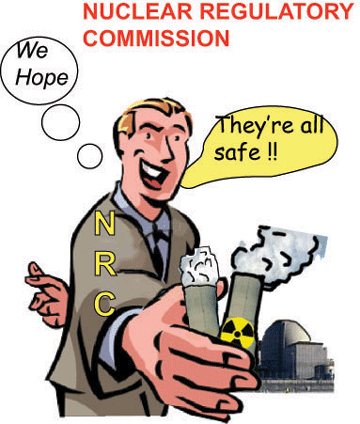
Federal regulators have lessened the severity of their warning about cracks discovered in a backup emergency fuel line at a South Carolina nuclear plant northwest of the state capital
VOA News, By The Associated Press, December 30, 2023
JENKINSVILLE, S.C. — Federal regulators have lessened the severity of their warning about cracks discovered in a backup emergency fuel line at a South Carolina nuclear plant northwest of the state capital.
The U.S. Nuclear Regulatory Commission downgraded its preliminary “yellow” warning for V.C. Summer Nuclear Station issued this October to a final “white” one after owner and operator Dominion Energy showed its generator could still run for six hours in an emergency, the agency announced Thursday.
That demonstration calmed officials’ concerns that Dominion Energy’s failure to maintain cracks and leaks — discovered at least five times over the past two decades — had neutralized the plant’s ability to cool down its reactors if electricity failed.
The new rating means that the generator is underperforming but still meeting its key targets.
“While not indicative of immediate risk, this finding underscores the need for continuous vigilance and improvement in the plant’s corrective action process,” NRC Region II Administrator Laura Dudes said in a statement………………………………..
Officials plan to complete another inspection to see if Dominion Energy fixes the ongoing issues. In a statement to The Associated Press on Friday, the company said it immediately replaced the piping and will install “more resilient piping” early next year………………………………………
The State Newspaper reported that a leader at a watchdog group said the length of the problem warranted the more serious finding. The risk is that fires could break out, according to Edwin Lyman, the director of nuclear power safety at the Union of Concerned Scientists. The changes from Dominion Energy seem to be “pencil-sharpening exercises that make a bad situation look better on paper,” Lyman told The State. https://abcnews.go.com/US/wireStory/south-carolina-nuclear-plants-cracked-pipes-downgraded-warning-105988939#:~:text=The%20U.S.%20Nuclear%20Regulatory%20Commission,emergency%2C%20the%20agency%20announced%20Thursday.
Japan Lifts Operational Ban on Fukushima Nuclear Plant Owners
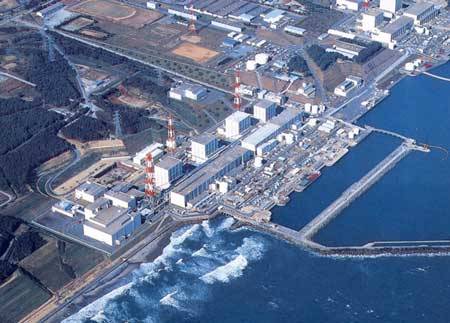
Japanese nuclear safety regulators lifted an operational ban Wednesday imposed on a nuclear plant owned by Tokyo Electric Power Company Holdings, the operator behind the Fukushima plant that ended in disaster, allowing the company to resume preparations for restarting the Kashiwazaki-Kariwa plant after more than 10 years.
At its weekly meeting, the Nuclear Regulation Authority formally lifted the more than two-year ban imposed on the TEPCO’s Kashiwazaki-Kariwa plant over its lax safety measures at the site, saying a series of inspections and meetings with company officials has shown sufficient improvement. The decision removes an order that prohibited TEPCO from transporting new fuel into the plant or placing it into reactors, a necessary step for restarting Kashiwazaki-Kariwa’s reactors.
The plant on Japan’s northern coast of Niigata is TEPCO’s only workable nuclear power plant since the March 2011 earthquake and tsunami destroyed its Fukushima Daiichi plant and caused Fukushima Daini plant to cease operations. For the company now burdened with the growing cost of decommissioning the Fukushima Daiichi plant and compensating disaster-hit residents, restarting the Kashiwazaki-Kariwa reactors soon is key to stabilizing its business.
TEPCO President Tomoaki Kobayakawa told reporters Wednesday that it was too early to comment on the prospect for the restart. He said the company will provide its safety and security measures to gain understanding from the local residents, who must approve a restart…………………………………………………………..
The case raised questions about whether TEPCO learned any lessons from the 2011 Fukushima crisis, which was largely attributed to the utility’s lack of concern about safety.
NRA Chair Shinsuke Yamanaka told Wednesday’s meeting that the lifting of the restrictions is just the beginning, and TEPCO is still required to keep improving its safety precautions………………………………………………………. https://www.voanews.com/a/japan-lifts-operational-ban-on-fukushima-nuclear-plant-owners/7414251.html
A nuclear-powered ship in Murmansk started to burn. Only few locals got to know about the serious incident
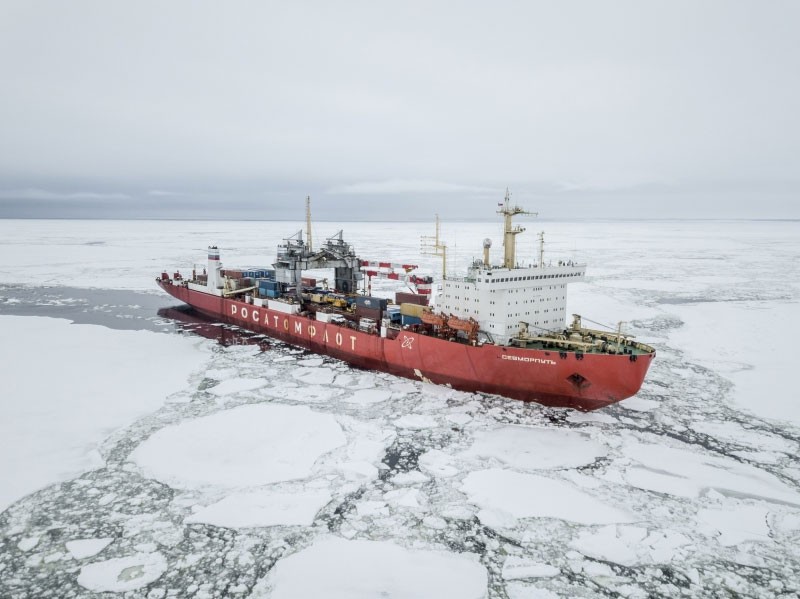
The fire brigade in Murmansk quickly extinguished the blaze that broke out on the 24th of December in a cabin onboard nuclear-powered container ship Sevmorput. State shipowner Rosatom never issued any information about the dramatic situation.
By Atle Staalesen, 28 Dec 23
Little information is available about the fire that broke out in Atomflot, the base for nuclear-powered vessels in Murmansk.
Only two short announcements were in the evening of the 24th of December posted on messenger service Telegram by the local Ministry of Emergency Situations (Emercom).
The first message posted at 21.17 pm informed about a fire on the territory of Atomflot and about the fire brigades that were on the way.
About 1,5 hour later, Emercom informed about its successful fire fighting……………
According to the emergency service, the fire covered an area of about 30 square meters in a cabin onboard the Sevmorput.
The Telegram messages were read by about ten thousand people. A few of them commented on the posts.
Where should we flee?” one of the readers asked.
Rosatom, the state nuclear power company that operates the Sevmorput, has apparently not issued any information about the fire. Neither has any of the company’s subsidiaries, such as the Atomflot or the Rosatomflot.
There is no information about the incident on the companies’ websites or their social media.
The fire could potentially have created a dramatic situation in the big Russian Arctic city. The Atomflot base is located only few kilometres from downtown Murmansk and a major fire on the nuclear-powered ship would have posed a serious threat to the about 270,000 population.
The Sevmorput is the world’s only nuclear-powered merchant container ship.
It is 260 meter long and was built in 1988. For many years, the ship lay idle in Murmansk and Russian authorities ultimately decided to scrap it. However, in 2013 it was instead decided to undertake a major renovation, and in autumn 2015, the ship was again test-sailing the Barents Sea. The following year, Sevmorput was back in regular service and has in the lastest years delivered cargo to military installations in the Russian Arctic, as well as to the petroleum development along the Siberian coast. The ship can carry 74 lighters or 1324 containers.
After the 2015 upgrade and safety evaluation, the reactor’s service life was prolonged with 150,000 hours aimed at keeping the vessel in operation until 2024.
It now looks increasingly likely that the ship will exit service and ultimately be scrapped. In a recent conference on the Arctic, Head of Atomflot Leonid Irlitsa said that his company plans to replace the ship with alternative non-nuclear vessels in 2024…………. https://thebarentsobserver.com/en/nuclear-safety/2023/12/nuclear-powered-ship-murmansk-started-burn-only-few-locals-got-know-about
1 This Month
Chernobyl: The Lost Tapes – A good documentary on Chernobyl on SBS available On Demand for the next 3 weeks– https://www.sbs.com.au/ondemand/tv-program/chernobyl-the-lost-tapes/2352741955560

of the week–London Campaign for Nuclear Disarmament

Tell the Ukrainian Government to Drop Prosecution of Peace Activist Yurii Sheliazhenko
To see nuclear-related stories in greater depth and intensity – go to https://nuclearinformation.wordpress.com
-
Archives
- April 2026 (126)
- March 2026 (251)
- February 2026 (268)
- January 2026 (308)
- December 2025 (358)
- November 2025 (359)
- October 2025 (376)
- September 2025 (257)
- August 2025 (319)
- July 2025 (230)
- June 2025 (348)
- May 2025 (261)
-
Categories
- 1
- 1 NUCLEAR ISSUES
- business and costs
- climate change
- culture and arts
- ENERGY
- environment
- health
- history
- indigenous issues
- Legal
- marketing of nuclear
- media
- opposition to nuclear
- PERSONAL STORIES
- politics
- politics international
- Religion and ethics
- safety
- secrets,lies and civil liberties
- spinbuster
- technology
- Uranium
- wastes
- weapons and war
- Women
- 2 WORLD
- ACTION
- AFRICA
- Atrocities
- AUSTRALIA
- Christina's notes
- Christina's themes
- culture and arts
- Events
- Fuk 2022
- Fuk 2023
- Fukushima 2017
- Fukushima 2018
- fukushima 2019
- Fukushima 2020
- Fukushima 2021
- general
- global warming
- Humour (God we need it)
- Nuclear
- RARE EARTHS
- Reference
- resources – print
- Resources -audiovicual
- Weekly Newsletter
- World
- World Nuclear
- YouTube
-
RSS
Entries RSS
Comments RSS
 nuclear-news