Wildfire closes 20+ miles of highway across Hanford nuclear site Saturday night
ICHLAND, WA More than 20 miles of Highway 240 across the Hanford nuclear site and part of Highway 24 was closed by a wildfire for a few hours starting at 6 p.m. Saturday. Wind gusts of up to 26 mph in the area fanning the flames Saturday night.
The Hanford site alerted its employees that Highway 240, sometimes called the Hanford highway, was closed from Highway 225 north of Benton City to the intersection with Highway 24. The highway runs between the section of the nuclear reservation closed to the public and Hanford Reach National Monument land, including Rattlesnake Mountain, also closed to the public. Highway 24 was closed from the Vernita Bridge across the Columbia River to the Silver Dollar cafe, according to Hanford officials.
About 7 p.m. the Washington state Department of Transportation announced the Highway 24 closure but both roadways reopened a few hours later. No information about the specific location of the size of the fire was immediately available.
Officials set up road closures around Sunnyside Community Hospital for radiation concerns
Le’Ana Freeman NonStop Local Digital Journalist, May 26, 2024, SUNNYSIDE, Wash. https://www.nbcrightnow.com/news/sunnyside-police-warn-public-to-avoid-sunnyside-hospital-for-radiation-concerns/article_f8308f6e-1ba9-11ef-98e3-af76c9eab7ef.html
Sunnyside Police have confirmed they are blocking off the Sunnyside Hospital area from Franklin Ave to East Edison Ave to continue decontamination efforts.
Officials are asking the public to avoid the area.
Officials have asked the public to avoid the Sunnyside Hospital area.
According to the Sunnyside Police Department, construction workers arrived at the Sunnyside Hospital and reported radiation exposure from a construction site out of town. The hospital is decontaminating the emergency room and patients.
Police ask the public to divert from the hospital and avoid the area for safety.
Zaporizhzhia nuclear plant’s main power line down for hours, no safety threat
MOSCOW, May 23 (Reuters) – Russia said the main power line supplying the Russian-controlled Zaporizhzhia nuclear power plant (ZNPP) in Ukraine was down for more than three hours on Thursday, though there was no threat to safety.
The six reactors at the Zaporizhzhia plant, held by Russia and located close to the front line of the conflict in Ukraine, are not in operation but it relies on external power to keep its nuclear material cool and prevent a catastrophic accident.
The Russian management said on their official channel on the Telegram app that the reasons for the outage, which had not caused any change in radiation levels, were being investigated.
It had initially said the main 750 kilovolt (kV) “Dniprovska” power line went down at 1:31 p.m. local time (1031 GMT), while the 330 kV “Ferosplavnaya” line was supplying power to the plant now.
It later reported that the Dniprovska line was restored at 4:49 p.m. local. Power supply to ZNPP is possible via both lines, it added.
The Dniprovska power line also went down for almost five hours on March 22, highlighting what the International Atomic Energy Agency (IAEA) said were “ever present dangers to nuclear safety and security” from the Russia-Ukraine war.
Russia and Ukraine have each accused the other at various times of shelling the Zaporizhzhia plant, which is Europe’s largest. Both deny such accusations.
The IAEA has said that the ZNPP has been experiencing major off-site power problems since the conflict began in early 2022, exacerbating the nuclear safety and security risks confronting the site.
UN watchdog warns on nuclear trafficking
https://www.aljazeera.com/news/2024/5/20/un-watchdog-warns-on-nuclear-trafficking
The IAEA reports thousands of pieces of nuclear materiel have gone missing over last three decades.
The United Nations’ nuclear watchdog has called for “vigilance” as it warned of thousands of instances of radioactive materials going missing.
The International Atomic Energy Agency’s (IAEA) Incident and Trafficking database reported on Monday that 31 countries reported 168 incidents in which nuclear or other radioactive material was lost, stolen, improperly disposed of or otherwise neglected last year, “in line with historical averages”. The watchdog has recorded more than 4,200 thefts or other incidents over the past 30 years.
The IAEA noted that six of last year’s incidents were “likely related to trafficking or malicious use”, also known as Group I, representing a slight increase from 2022 but a drop from 2021.
The trafficking database covers three types of incidents where nuclear or radioactive material escaped regulatory control, with Group I being the most serious.
Incidents where trafficking or malicious use is unlikely or can be ruled out are known as Group II and those where any connection is unclear fall into Group III.
The trafficking database was set up to track the illicit trafficking of nuclear material, such as uranium and plutonium, which can be used in atom bombs, and radioactive material, such as isotopes used in hospital equipment.
The IAEA released its latest finding as it opened its fourth international conference on nuclear security, which will run until Friday in the Austrian capital, Vienna.
Since 1993, the nuclear watchdog has recorded 4,243 incidents, 350 of them connected or likely to be connected to trafficking or malicious use.
“The reoccurrence of incidents confirms the need for vigilance and continuous improvement of the regulatory oversight to control, secure and properly dispose radioactive material,” said Elena Buglova, director of the IAEA’s nuclear security division.
The IAEA noted a decline in incidents involving nuclear material, such as uranium, plutonium and thorium.
Military activities near Zaporizhzhya Nuclear Power Plant (ZNPP).
The International Atomic Energy Agency is continuing to monitor observance
of the five concrete principles aimed at protecting Ukraine’s
Zaporizhzhya Nuclear Power Plant (ZNPP) during the military conflict, where
nuclear safety and security remain precarious, Director General Rafael
Mariano Grossi said on 9 May in the IAEA’s Update 227.
During the week of 1-8 May, the IAEA team stationed at the ZNPP have heard military activities
on most days, including artillery and rocket fire some distance away from
the plant, as well as small arms fire both near to and further away from
the site. On 8 May IAEA experts on site reported that there was an air raid
alarm with restrictions on movement outside of buildings for about 90
minutes, which the ZNPP informed the team was allegedly due to drones being
present in the area of the cooling pond. The experts did not hear any
explosion during the period of the restriction on movement. Earlier on 8
May however another air raid alarm was heard, again restricting outside
movement and resulting in the team’s planned walkdown within the site.
Modern Power Systems 14th May 2024
https://www.modernpowersystems.com/news/newsrussian-military-steps-up-activity-at-znpp-11770581
MISTAKES THAT CAUSED THE CHERNOBYL DISASTER
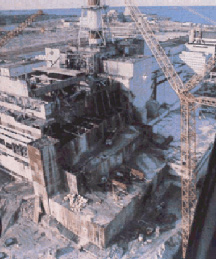
BY S. FLANNAGAN/MAY 12, 2024 https://www.grunge.com/1562994/mistakes-that-caused-chernobyl-disaster/
The Chernobyl disaster remains one of the most chilling incidents of the nuclear age. The Chernobyl Power Complex was the name of a nuclear power plant in northern Ukraine just a few miles from the Belarus border near the city of Pripyat. At the time Ukraine was part of the Union of Soviet Socialist Republics (USSR), and Chernobyl was constructed between 1970 and 1977 as part of the USSR’s nuclear expansion program. It had four reactors, each capable of generating colossal amounts of energy to enrich the Soviet bloc. On April 26, 1986, a series of errors caused reactor 4 to experience an unexpected surge of power that started a huge fire, which led to several explosions and the biggest release of radioactive material into the atmosphere in history.
Local areas such as Pripyat were evacuated, but a delayed emergency response saw the area transformed into an uninhabitable no-go zone. It has been reported that 31 people lost their lives in the immediate aftermath of the meltdown, including six firefighters who received double the fatal amount of radiation as they attempted to extinguish the blaze. But a delayed response saw the amount of material released into the environment and spread across Ukraine, Belarus, Russia, and parts of Central Europe. Hundreds of thousands of people were involved in the clean-up, many of whom went on to develop health problems such as cancer as a consequence of the exposure. Here are some of the mistakes that led to the meltdown, and to the local area being largely uninhabited even today.
A FLAWED DESIGN
The World Nuclear Association notes that one of the key issues that led to the meltdown of Reactor 4 which resulted in the Chernobyl disaster of 1986 was the flawed design of the reactor itself. Each of Chernobyl’s four reactors was of a new Soviet design known as “reaktor bolshoy moshchnosty kanalny,” or RBMK. RBMK reactors were one of two reactor designs to emerge from the USSR in the 1970s. They employ a water-cooling system and graphite control rods that regulate fission, which creates nuclear energy.
On the night of the meltdown, operators were attempting to test whether residual steam pressure would be able to keep the reactor going in the event of a power cut long enough for the backup diesel generators to take over. However, in the course of the experiment, a huge and unexpected power surge hit the reactor, which was later found to have been caused by the RBMK’s enormous “void coefficient,” ultimately meaning that excess steam in the water cooling system would not be able to absorb neutrons in the system, resulting in the surge. After an investigation into these flaws, crews were tasked with upgrading other reactors in the Chernobyl Power Complex to make them safer, though over the years these other reactors have also eventually been decommissioned.
SAFETY ISSUES COVERED UP
But the flaws in the design of the RBMK-1000 reactor at Chernobyl that rendered it unsafe weren’t exactly a surprise to experts in the wake of the meltdown. In fact, the site had suffered several notable accidents and emergencies years before the shocking events of April 1986. But as we know now, those in charge of the Soviet nuclear program sought to cover up evidence that their reactors were unsafe, meaning that they continued to be operated despite such safety issues leading to the worst nuclear accident in history.
According to a 2021 report published by Reuters, it was revealed that the side had a radiation leak as early as 1982 and that numerous accidents occurred at the plant in 1984. The Soviet government was reportedly aware of the truth that Chernobyl was fundamentally unsafe as a power plant as early as 1983 but kept the matter a secret from the public.
The same instinct among the Soviet powers that be to cover their tracks led to their delayed order to evacuate the city of Pripyat until about Chernobyl 36 hours after the meltdown began, ultimately exposing thousands of locals to dangerous levels of radiation.
The nuclear operators on-site at the Chernobyl Power Complex were later identified as lacking in adequate training required to keep such a complicated and cutting-edge power station running effectively and safely. In the years following the devastating nuclear meltdown, the operators themselves were afforded a great deal of blame for the disaster in which many of them lost their lives.
Indeed, the experiment that the Chernobyl nuclear operators were performing on the night of the meltdown was flawed as a result of human error, which largely came down to the team’s lack of understanding of the reactor’s internal systems. None of them expected the surge of power that the experiment unleashed. The experiment itself was later reported to have been unauthorized, though plant director Viktor Bryukhanov, chief engineer Nikolai Fomin, and his deputy, Anatoly Dyatlov later received 10-year prison sentences for the disaster. Official Soviet government reports claimed that the operators, three more of whom were given prison sentences, had been negligent.
The lack of training that the operators were afforded resulted from what is now known to have been an almost complete lack of safety culture at the Chernobyl Power Complex, a characteristic of Soviet industry more generally at the time. No interest in maximum design accidents, hypothetical disasters that could then be mitigated against in design features, were of little interest to commissioners or designers of the RBMK-1000 reactor, who were also looking to reduce costs.
The safety of Chernobyl was further impacted by opacity within the Soviet hierarchy, which prevented subordinates from reporting issues and misgivings to their superiors, leading to a culture of silence in which errors were not course-corrected. Similarly, mistakes, including those around safety, were covered up, rather than treated as lessons to be learned from. “The attitude came from the race for the atomic bomb, “Chernobyl: History of a Tragedy writer Sehii Plokhy writer told The Guardian in 2018. “The sacrifice of health and life was almost expected. That culture was transferred to the nuclear power establishment.”
Further safety features were overlooked as director Viktor Bryukhanov, who was also in charge of the setting up of the reactors as well as providing accommodation for the operators, raced to keep the project on track. The science journal Nature reports that under his direction electric cables were installed without the required fire-resistant cladding, just one instance of the corners that were cut in the creation of the plant despite the potential calamity that might occur were something to go wrong with any of its reactors.
A lax attitude to safety continued even after the meltdown and the delayed evacuation of local people from the area around the site as it grew more and more radiated and became a danger to human life. In the aftermath, an international effort saw a concrete “sarcophagus” erected around the reactor intended to stop the spread of further radiation. However, the structure was only intended to be temporary and still requires a permanent solution to this day, with experts claiming that it and other stores of radioactive material from the world’s worst nuclear disaster constitute an ongoing risk to public safety if not adequately maintained.
Sizewell C in Suffolk granted nuclear site licence

Campaigners ‘appalled’ as French energy company EDF gets go-ahead for next stage of project
Jillian Ambrose, 8 May 24, https://www.theguardian.com/business/article/2024/may/07/sizewell-c-suffolk-granted-nuclear-site-licence-edf
A planned nuclear power station at Sizewell in Suffolk has been granted the first site licence in more than a decade as investors and government officials race to finalise a deal for the multibillion-pound project this year.
The licence from the nuclear regulator is considered a milestone for EDF, which plans to build Sizewell C as a replica of its Hinkley Point C project in Somerset, which has been dogged by delays and cost overruns.
The Office for Nuclear Regulation (ONR) has granted only two site licences to build new nuclear plants in more than 35 years: the first for Hinkley Point C in 2012, and the second for Sizewell.
It was granted as EDF works to reach a final investment decision on the Sizewell C project by the end of this year, depending on a government framework to finance the project and fresh investment to cover its construction costs.
EDF holds just under 50% stake in the project, while the UK government holds just over 50%. They are searching for further investment after EDF’s partner at Hinkley Point, China’s CGN, was barred from the successor project over security concerns.
Mina Golshan, a director at Sizewell C, said the licence was a “show of confidence” from the UK’s nuclear regulator that the company had a suitable site and was ready to begin large-scale construction work on a safe design replicated from Hinkley Point C.
“It’s a huge milestone and demonstrates that this project is firmly on track,” Golshan said.
EDF has blamed inflation, Covid and Brexit for a four-year delay and cost overruns at the Hinkley Point C site. It believes that by learning the lessons from Hinkley it will be able to build Sizewell C in about nine years.
Mark Foy, the ONR chief nuclear inspector and its chief executive, said the licence was granted after “extensive engagement and review” by the ONR team and would allow the regulator to take greater regulatory oversight and challenge the company as it progressed its plans.
“The licensing process is fundamental in confirming that operators of a nuclear site are ready and able to meet their obligations under the nuclear site licence, to protect their workforce and the public,” Foy said.
A group campaigning against the nuclear plant, Stop Sizewell C, said it was “appalled that a nuclear site licence has been issued when matters critical to the future safety of the site remain unresolved.
“There isn’t even a final design of the sea defences, which will be necessary to keep this vulnerable site safe for the next century and a half, at the very least. This seems to us like kicking the can down the road, on the assumption that some future generation will be able to clear up the mess,” the group said.
12 years behind schedule, EDF’s Flamanville 3 nuclear plant gets regulatory approval for trial period
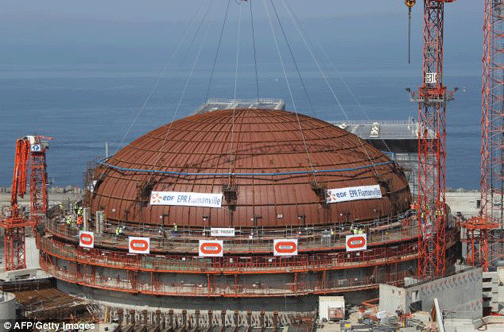
Electricite de France SA got regulatory approval to start up its new
nuclear reactor 12 years behind schedule after the utility faced
construction problems ranging from concrete weakness to faulty pipe welds.
The green light for commissioning of the Flamanville 3 nuclear plant
located in Northwestern France allows EDF to load the fuel in the reactor,
proceed with trials, then begin operations, the Autorite de Surete
Nucleaire said in a statement on Tuesday.
Further approvals will be
required when reaching key milestones during the trial phase, the regulator
added said. Once connected to the grid, the 1.6-gigawatt plant called a
European Pressurized Reactor will join EDF’s fleet of 56 reactors in
France, which accounted for about two-thirds of the country’s power
production last year.
Bloomberg 7th May 2024
Fears raised over Wales accident risk involving aircraft carrying nuclear materials
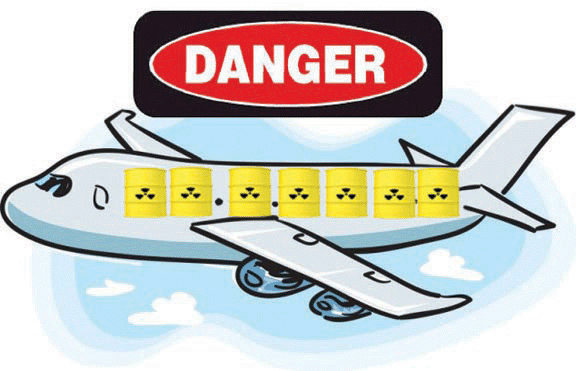
An air crash involving an RAF aircraft carrying US nuclear materials over South Wales may be the stuff of nightmares, but the Chair of the Welsh Nuclear Free Local Authorities has just written to the First Minister of Wales asking him to contemplate just that possibility.
The Campaign for Nuclear Disarmament and Nukewatch have just published a disturbing briefing titled ‘Special nuclear flights between the UK and US: the dangers involved’. The briefing references the transport of nuclear materials made by RAF C-17 Globemaster flying between RAF Brize Norton in Oxfordshire and airbases in the United States. Around ten such round-trips are made every year to transport nuclear materials utilised for the maintenance of Britain’s nuclear arsenal.
The report says of the route taken by these flights: ‘Aircraft fly from Brize Norton out into the Atlantic, overflying the Cotswolds and then the northern edges of Bristol and Cardiff to reach the Bristol Channel, flying south of Ireland to cross the Atlantic. A variation of this route takes the plane further to the north where it overflies Gloucestershire and the South Wales valleys, heading out to sea over Swansea and the Gower, and, again, South of Ireland.’
Although the C-17 Globemasters involved in these flights are four-engine aircraft, and are subject to an enhanced maintenance regime, so catastrophic mechanical failure is less likely, Welsh Forum Chair Councillor Sue Lent wants Welsh emergency planning authorities to properly consider the likely impact of any accident involving nuclear materials. Cllr Lent serves on Cardiff City Council, one of the municipalities flown over, and one of several South Wales local authorities who are members of the NFLAs.
The First Minister acts as Chair of the Wales Resilience Forum. The Forum ‘supports good communication and improves emergency planning across agencies and services’ acting as a coordinating body for local resilience forums across Wales. These ‘bring together all responder organisations that have a duty to co-operate under the Civil Contingencies Act. The groups also include other organisations who would respond to an emergency. Together, they ensure they prepare for emergencies by working in a coordinated and effective way.’[i]
The Minister of Defence hosts annual Astral Bend exercises ‘to practice and test the emergency response to an accident involving an RAF aircraft transporting special nuclear materials’, but investigative reporter Rob Edwards uncovered evidence that such an exercise held in February 2011 at the Caerwent military base in South Wales identified several failures in the actions of first responders which would have led to ‘“avoidable deaths” in a real-life situation’. The MoD has refused to release details of recent exercises held after 2012 in response to Freedom of Information requests; nonetheless the NFLA Secretary has just submitted one.
Councillor Lent asks First Minister Gething to ‘seek a reassurance from the MoD / RAF that such flights will be diverted out to sea, well away from our South Wales municipalities, and revisit emergency planning arrangements should an accident involving these special nuclear materials occur’ and suggests that as the last exercise conducted at Caerwent appears to be that held in 2011 a follow-up exercise to test the preparedness of Welsh emergency service agencies is ‘long overdue.’
IAEA’s top nuclear salesman-cum-watchdog to visit Iran
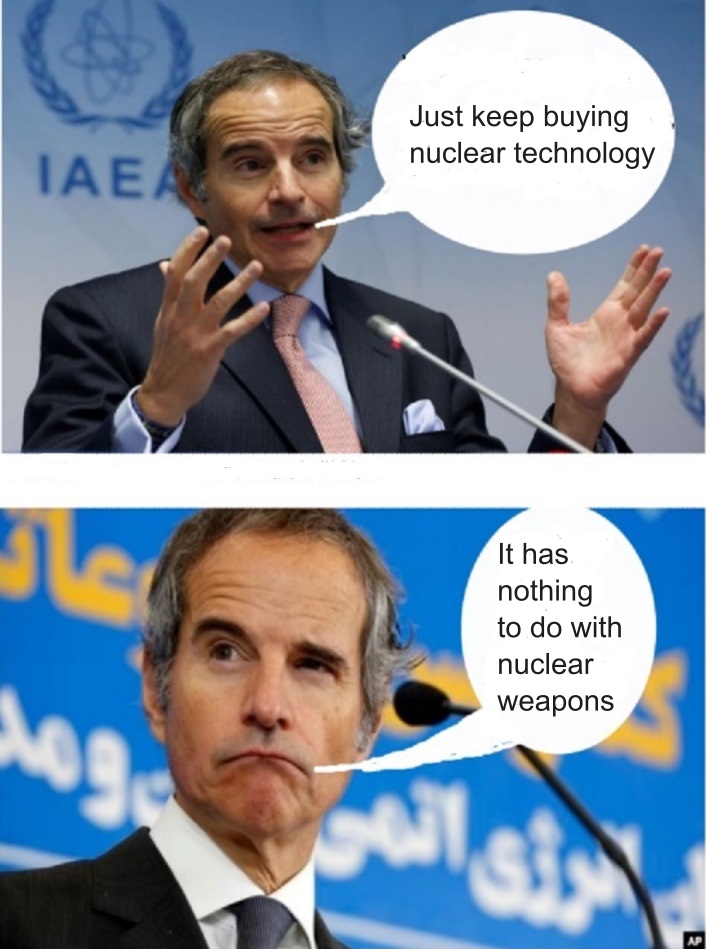
The International Atomic Energy Agency (IAEA) has confirmed that its Director-General, Rafael Grossi, will travel to Iran on May 6 to engage with high-ranking officials.
He will attend the International Conference on Nuclear Science and Technology during the visit, taking place in Isfahan, just months after officials in Iran claimed to be within reach of nuclear weapons. Grossi just days ago also claimed Iran was “weeks not months” from a nuclear weapon.
Im February Grossi admitted a “drifting apart” in relations between the agency and an increasingly defiant Iran.
Grossi noted in the same month that although the rate of uranium enrichment in Iran had decreased slightly since the previous year’s end, Iran continued to enrich uranium at a significant rate of approximately 7 kg per month to 60 percent purity, near weapons grade.
Under the terms of a 2015 agreement with world powers, Iran was only permitted to enrich uranium up to 3.67 percent.
However, after former President Donald Trump withdrew the United States from the agreement in 2018 and reinstated sanctions, Iran exceeded the limits. As a result, the IAEA has stated that the 2015 nuclear deal has “all but disintegrated”.
Five Things the “Nuclear Bros” Don’t Want You to Know About Small Modular Reactors

1. SMRs are not more economical than large reactors.
2. SMRs are not generally safer or more secure than large light-water reactors.
3. SMRs will not reduce the problem of what to do with radioactive waste.
4. SMRs cannot be counted on to provide reliable and resilient off-the-grid power for facilities, such as data centers, bitcoin mining, hydrogen or petrochemical production.
5. SMRs do not use fuel more efficiently than large reactors.
Ed Lyman, April 30, 2024 https://blog.ucsusa.org/edwin-lyman/five-things-the-nuclear-bros-dont-want-you-to-know-about-small-modular-reactors/
Even casual followers of energy and climate issues have probably heard about the alleged wonders of small modular nuclear reactors (SMRs). This is due in no small part to the “nuclear bros”: an active and seemingly tireless group of nuclear power advocates who dominate social media discussions on energy by promoting SMRs and other “advanced” nuclear technologies as the only real solution for the climate crisis. But as I showed in my 2013 and 2021 reports, the hype surrounding SMRs is way overblown, and my conclusions remain valid today.
Unfortunately, much of this SMR happy talk is rooted in misinformation, which always brings me back to the same question: If the nuclear bros have such a great SMR story to tell, why do they have to exaggerate so much?
What are SMRs?
SMRs are nuclear reactors that are “small” (defined as 300 megawatts of electrical power or less), can be largely assembled in a centralized facility, and would be installed in a modular fashion at power generation sites. Some proposed SMRs are so tiny (20 megawatts or less) that they are called “micro” reactors. SMRs are distinct from today’s conventional nuclear plants, which are typically around 1,000 megawatts and were largely custom-built. Some SMR designs, such as NuScale, are modified versions of operating water-cooled reactors, while others are radically different designs that use coolants other than water, such as liquid sodium, helium gas, or even molten salts.
To date, however, theoretical interest in SMRs has not translated into many actual reactor orders. The only SMR currently under construction is in China. And in the United States, only one company—TerraPower, founded by Microsoft’s Bill Gates—has applied to the Nuclear Regulatory Commission (NRC) for a permit to build a power reactor (but at 345 megawatts, it technically isn’t even an SMR).
The nuclear industry has pinned its hopes on SMRs primarily because some recent large reactor projects, including Vogtle units 3 and 4 in the state of Georgia, have taken far longer to build and cost far more than originally projected. The failure of these projects to come in on time and under budget undermines arguments that modern nuclear power plants can overcome the problems that have plagued the nuclear industry in the past.
Developers in the industry and the US Department of Energy say that SMRs can be less costly and quicker to build than large reactors and that their modular nature makes it easier to balance power supply and demand. They also argue that reactors in a variety of sizes would be useful for a range of applications beyond grid-scale electrical power, including providing process heat to industrial plants and power to data centers, cryptocurrency mining operations, petrochemical production, and even electrical vehicle charging stations.
Here are five facts about SMRs that the nuclear industry and the “nuclear bros” who push its message don’t want you, the public, to know.
Continue readingAlarm over nuclear safety lapses on the Clyde
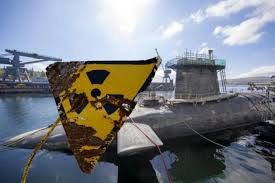
The Ferret Rob Edwards, April 28, 2024
The number of safety incidents that could have leaked radiation at the Trident nuclear base on the Clyde has risen to the highest in 15 years, according to information released by the Ministry of Defence (MoD).
One incident in 2023 at the Faslane base, near Helensburgh, was given the MoD’s worst risk rating. This is the first time this has happened since 2008.
Another four incidents at the base in 2023, and one in 2024, were given the second worst rating. The number in 2023 was the highest since 2006.
According to the MoD’s definitions, all six incidents had “actual or potential for radioactive release to the environment”. In total the MoD logged 179 nuclear safety incidents on the Clyde in 2023 and 2024, though most of them were deemed to be less serious.
The MoD insisted that there had been no “radiological impact” or harm to health from any of the incidents. But it declined to provide any further details for national security reasons.
Campaigners described the rise in serious safety incidents as “alarming” and “chilling”. They condemned the secrecy surrounding the incidents, and called for the MoD to give a “full account” of what happened.
The MoD has released new figures to MPs summarising the number of “nuclear site events” in 2023 and 2024 at Faslane and the nearby nuclear bomb store at Coulport.
A total of 158 incidents of all kinds were recorded for 2023, plus 21 so far in 2024. All but six of the incidents were in three less serious categories, suggesting they posed lower risks.
According to the MoD, the incidents included “equipment failures, human error, procedural failings, documentation shortcoming or near-misses”. But it gave no further descriptions of any of the six more serious incidents.
One incident at Faslane in 2023 was rated as “category A”, the highest risk rating used by the MoD. It has defined such incidents as having an “actual or high potential for radioactive release to the environment” in breach of safety limits.
The last category A incident reported by the MoD was in 2008 when radioactive waste leaked from a barge at Faslane into the Clyde. There were also spillages from nuclear submarines at the base in 2007 and 2006.
The MoD’s figures disclosed four “category B” incidents at Faslane in 2023. This is the highest number of such incidents at the site since 2006, when there were five.
There was another category B incident at Faslane in the first four months of 2024, as well as two in 2022 and three in 2021. The MoD has defined such incidents as having an “actual or high potential for a contained release”, or an “actual or potential for radioactive release to the environment” below safety limits.
Nuclear weapons infrastructure ‘dangerously rotting’

“If you watch media followup, you’ll see NO reporting on the substance, e.g the fact that our nuclear weapons infrastructure is dangerously rotting & is tens of billions secretly in the hole, with huge knockon effects beyond its destructive effects on MoD which has got *even worse* & *even more lying* during the war.
The entire puerile election debate will be based on fake budget numbers that will then be given to Starmer on above-STRAP3 yellow paper, with him given the same nudge to classify, punt and lie. Nobody will report on all this & MPs will continue to ignore it...Dominic Cummins, Substack 31 Dec 2023
The latest figures were released in response to a parliamentary question by the SNP MP for Edinburgh North and Leith, Deidre Brock. In previous questions, she has obtained information on nuclear safety events at Faslane and Coulport back to 2006.
“My annual questions to UK ministers have exposed steadily declining nuclear safety standards at Faslane and Coulport, but the increase in the severity of incidents last year is particularly alarming,” she told The Ferret.
“Reports detailing these incidents should be made public again so that people of Scotland – including those who live near the bases – can weigh up for themselves the risks created by the storage of these nuclear warheads.”
She accused the MoD of “playing down” the safety breaches, pointing out that in December 2023 the former Prime Minister Boris Johnson’s senior advisor, Dominic Cummins, described the UK’s nuclear weapons infrastructure as “dangerously rotting”.
Brock said she would be submitting further parliamentary questions asking for details of the more serious incidents in 2023 and 2024. “But it shouldn’t take the digging of individual MPs or journalists to get piecemeal bits of information from the MoD,” she argued.
The Scottish Campaign for Nuclear Disarmament branded the category A incident at Faslane as “chilling”. The UK’s nuclear weapons were a “catastrophe in waiting”, said the campaign chair, Lynn Jamieson.
She accused the UK government of wanting to suppress “bad news” about nuclear weapons.
The Nuclear Information Service, which researches and criticises nuclear weapons, called for the MoD to give a “full account” of what happened. “This is very concerning, and shows there are clearly problems with safety standards at Faslane,” said the service’s director, David Cullen.
He pointed out that there had been another “serious workplace safety failure” on a Trident submarine at Faslane in August 2021. The UK Office for Nuclear Regulation issued an improvement notice after an “electrical overload”………………………………………………… https://theferret.scot/nuclear-safety-lapses-clyde-alarm/
IAEA clears Japanese reactor for 60-year lifetime
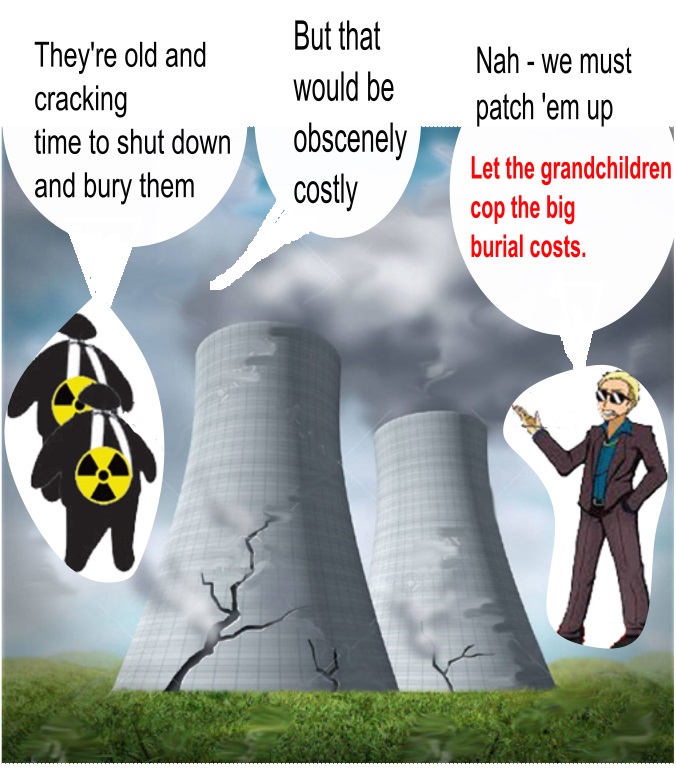
Following a review, unit 3 at the Mihama nuclear power plant (NPP) has been deemed fit for further operation.
Alfie Shaw, April 26, 2024
Ateam of experts from the International Atomic Agency (IAEA) has found that Japanese utility Kansai Electric Power Company is implementing timely measures for the safe long-term operation of unit 3 at its Mihama NPP.
Under regulations that came into force in July 2013, Japanese reactors have a nominal operating period of 40 years; 20-year extensions can be granted once, but this is contingent on exacting safety requirements.
Kansai’s Mihama unit 3, a 780MW pressurised water reactor that entered commercial operation in 1976, was granted an extension by Japan’s Nuclear Regulation Authority (NRA) in November 2016, giving the unit a licence to operate until 2036. Unit 3 at Mihama was the third Japanese unit to be granted a licence extension enabling it to operate beyond 40 years under the revised regulations, following Takahama units 1 and 2, which received NRA approval in June 2016.
Following the disaster at the Fukushima Daiichi plant in 2011, Mihama shut down, lying idle until restarting in June 2021. It became the first Japanese reactor to operate beyond 40 years…………………………………………….
Power Technology 26th April 2024 https://www.power-technology.com/news/mihama-nuclear-unit-sees-extension-to-60-year-lifetime/
.
Grim nuclear anniversary: Zaporizhzhia must not repeat Chornobyl

Shaun Burnie, Jan Vande Putte and Daryna Rogachuk, 26 April 2024 https://www.greenpeace.org/international/story/66648/grim-nuclear-anniversary-zaporizhzhia-chornobyl-ukraine/
Chornobyl is one of the most recognised synonyms for disaster in the world. Its legacy is a universal reminder of the horrific consequences of nuclear power when things goes wrong: on this day in 1986, a test procedure produced explosions at the power plant in Pripyat, Ukraine, causing a chain reaction that blew a colossal release of radioactive contamination across Europe and eventually much of the Northern Hemisphere.
Millions of Ukrainians have been affected by the destruction of reactor unit 4 and the radiation it released into the environment, either directly or through their families, friends and colleagues and its impact is still felt across generations.
Today, 38 years later, the spectre of nuclear catastrophe looms large – and not only in the abandoned region around Chornobyl: the ongoing illegal Russian military occupation of the south-eastern Zaporizhzhia nuclear power plant, the largest in Europe and one of the 10 biggest in the world, installed by force the Russian state nuclear authority Rosatom. In doing so, Moscow placed in danger not only Ukraine, but most of Europe – and with chilling echoes of a Soviet era mentality that prioritised domination over life and safety and produced the catastrophe in Chornobyl.
Chornobyl’s RBMK reactor design had evolved out of the Soviet Union’s 1950s military reactors used for producing plutonium for nuclear weapons, and were known even then to be unsafe. Scientists warning of integral instabilities, including a ‘positive steam coefficient’ which could lead to an explosion, were ignored. Twenty years later, that design flaw and others led to two massive explosions that destroyed the Chornobyl unit 4 reactor and shook the world.
In the years between 1986-1990, over 600,000 firefighters, soldiers, janitors, and miners – collectively known as ‘liquidators’ – were sent to the Chornobyl site after the explosion in an attempt to respond to the disaster. Many tens of thousands have suffered long term health consequences and death.
The Russian threat at Zaporizhzhia nuclear power plant
By sidelining Zaporizhzhia’s Ukrainian engineers at gunpoint, and by deliberately firing missiles at Ukraine’s wider energy infrastructure, the Kremlin risks repeating terrible lessons from history. The Russian invasion presence places Ukraine’s four nuclear power plants – South Ukraine, Rivne, Khemelnitsky and especially Zaporizhzhia – at risk of an emergency power loss and station blackout.
Despite heroic efforts by Zaporizhzhia workers and citizens of nearby Energodar to barricade the main access road with vehicles, tyres and sandbags to block the advancing Russian troops, they were overwhelmed and the resulting assault damaged the plant, including its vital electricity infrastructure for maintaining the cooling function of the hot nuclear fuel. One reactor core producing heat for the electricity has the power of two million water cookers: if cooling stopped after shutdown, it would take only hours for the cooling water to boil off, expose the hot nuclear fuel to the air and melt down, leading to a new major nuclear disaster. In peacetime, power plant workers still have several options to restore cooling in an emergency, but in a war zone this is severely and constantly compromised.
There is a long list of dangerous incidents caused by the Russian invasion, including the destruction of the Nova Kakhovka dam on 6 June 2023, which not only led to an enormous damage and suffering below the dam, but also emptied the Kakhovka reservoir providing cooling water for the Zaporizhzhia nuclear plant.
Nuclear history repeating itself?
The ultimate blow to nuclear safety however is the plan of Rosatom and Moscow to attempt to restart one or more reactors at the Zaporizhzhia nuclear plant. The existing cooling water resources are far from sufficient to cool an operational reactor. Rosatom would have to build a new pump system, which would not be as reliable, and it does not have the workforce and expertise to control an operational reactor, especially in a warzone. Nuclear energy is incompatible with a world marred by conflict and instability.
Russia might have launched a disinformation campaign to pave the way for blaming Ukraine in case something goes very wrong. Hiding behind false flag attacks might make it easier for them to take higher risks. That is why it is so important to remember Chornobyl today, and how it happened, through irresponsible deliberate decisions and acts by the Soviet system.
Greenpeace Germany has written to Rafael Mariano Grossi, the International Atomic Energy Agency (IAEA) Director General calling on him to make clear to Rosatom and the Russian government that restart of Zaporizhzhia under Russian control is unconscionable. The IAEA must do all it can to prevent restart and not cooperate with Rosatom, nor seek to accommodate the interests of the nuclear industry, or it risks repeating the grave mistakes of the past.
Decrepit nuclear reactors operate without meaningful inspections or insurance.

Convicted of 92 federal felony manslaughter counts, Diablo’s Pacific Gas & Electric is a criminal operation. Its 2010 negligence at San Bruno gas lines incinerated eight people. Its faulty transmission lines killed 84 people in northern California’s infamous 2017 Camp Fire. No PG&E executive went to prison any of those killings. In 2021 its CEO was paid $51.2 million.
.
Nuclear Power’s Lethal, Larcenous End Game, BY HARVEY WASSERMAN, 26 Apr 24
“………………………………………………………………………………………………………..Thus Congress has just extended the 1957 Price-Anderson Act which exempts reactor owners from liability for a major disaster, an official vote of no confidence in the industry’s ability to guarantee the public safety.
With the February 29 passage of the Advanced Atomic Reactor Act, the industry stands to grift billions in public subsidies for decrepit reactors whose licenses they want to extend for 60-80 years while fighting basic safety inspections from federal regulators.
Thus the Nuclear Regulatory Commission—whose financial support comes from the operation of the reactors it supposedly regulates—is infamous for its blind eye to the deep structural and operational holes that could soon doom the aging US fleet.
The NRC is currently green-lighting operations at Diablo’s 40-year-old Unit One despite a dangerously embrittled core that could irradiate all of downwind California. Ohio’s Davis-Besse is riddled with mismanagement and decay. Ohio’s Perry, Virginia’s North Anna and Diablo have all been recently shaken earthquakes. California’s San Onofre shut in 2014 because its newly-installed unfixable steam turbines leaked radiation.
Convicted of 92 federal felony manslaughter counts, Diablo’s Pacific Gas & Electric is a criminal operation. Its 2010 negligence at San Bruno gas lines incinerated eight people. Its faulty transmission lines killed 84 people in northern California’s infamous 2017 Camp Fire. No PG&E executive went to prison any of those killings. In 2021 its CEO was paid $51.2 million.
For the public, the costs in health, ecological and economic damage at any US reactor could climb into the trillions, with radioactive clouds and multiple bankruptcies leaving countless victims dead, destroyed, destitute.
According to the US Government Accountability Office, from 2001 to 2006 alone, more than 150 reactor incidents violated acceptable safety guidelines. A 2010 survey of US nuclear accidents showed least 56 by then involved loss of human life or more than $50,000 in property damage.
Said former Vice President Al Gore in 2009:
“Of the 253 nuclear power reactors originally ordered in the United States from 1953 to 2008, 48 percent were canceled, 11 percent were prematurely shut down, 14 percent experienced at least a one-year-or-more outage, and 27 percent are operating without having a year-plus outage. Thus, only about one fourth of those ordered, or about half of those completed, are still operating and have proved relatively reliable.[53]
Yet New York is dumping $7.6+ billion into keeping four decrepit reactors on line (one of which opened in 1969). Ohio’s legislature recently pocketed $61 million in bribes to scam a $1 billion taxpayer bailout for two 40 and 50-year old nukes irradiating Lake Erie. Michigan wants $8 billion to revive the 51-year-old Palisades reactor—which shut two years ago—even though Holtec (the waste management company designated to revive Palisades) has no experience building or operating any nuclear power reactor. Pieces of the reactor have already been sold off for scrap.………………………………………..more https://www.counterpunch.org/2024/04/26/nuclear-powers-lethal-larcenous-end-game/
.
1 This Month


PLEASE OPPOSE HR 8255 AND S.3639 – bills would accelerate satellite deployment, with no environmental review or safeguards – https://ncstd5li.quorum.us/campaign/169331/
To see nuclear-related stories in greater depth and intensity – go to https://nuclearinformation.wordpress.com
-
Archives
- September 2026 (194)
- August 2026 (330)
- July 2026 (355)
- June 2026 (287)
- May 2026 (306)
- April 2026 (356)
- March 2026 (251)
- February 2026 (267)
- January 2026 (308)
- December 2025 (358)
- November 2025 (359)
- October 2025 (375)
-
Categories
- 1
- 1 NUCLEAR ISSUES
- business and costs
- climate change
- culture and arts
- ENERGY
- environment
- health
- history
- indigenous issues
- Legal
- marketing of nuclear
- media
- opposition to nuclear
- PERSONAL STORIES
- politics
- politics international
- Religion and ethics
- safety
- secrets,lies and civil liberties
- spinbuster
- technology
- Uranium
- wastes
- weapons and war
- Women
- 2 WORLD
- ACTION
- AFRICA
- Atrocities
- AUSTRALIA
- Christina's notes
- Christina's themes
- culture and arts
- Events
- Fuk 2022
- Fuk 2023
- Fukushima 2017
- Fukushima 2018
- fukushima 2019
- Fukushima 2020
- Fukushima 2021
- general
- global warming
- Humour (God we need it)
- Nuclear
- RARE EARTHS
- Reference
- resources – print
- Resources -audiovicual
- Weekly Newsletter
- World
- World Nuclear
- YouTube
-
RSS
Entries RSS
Comments RSS
 nuclear-news