‘Near miss’ incident reported at nuclear waste site near Carlsbad
Federal watchdog reports ongoing safety concerns at WIPP
JULY 19, 2024, Adrian Hedden, Carlsbad Current-Argus
Federal nuclear oversight staff reported several safety problems at the Waste Isolation Pilot Plant in a monthly report, despite a “safety stand down” in April that was intended to pause work while WIPP officials retooled various protocols.
The Defense Nuclear Facilities Safety Board (DNSFB) reported “ongoing safety culture challenges” in its June 7 report on WIPP activities as the facility near Carlsbad disposes of transuranic (TRU) nuclear waste from federal facilities around the country.
The monthly report covered observations and incidents from May, noting a “near miss” incident which saw a waste handler improperly using a forklift instead of a crane to reposition weights in the parking lot waste storage area.
The May 20 event saw the waste handler using two forklifts to reposition a “six-ton” calibration weight, read the report, without proper documentation or analysis or the awareness of a shift supervisor.
The forklift sling broke while rotating the weight, read the report, causing it to fall on its side and send a shackle flying “a significant distance” away from the lift and past a spotter.
In another incident, all routine work was paused May 23 to 28 after a bolter contacted an electrical box near WIPP’s exhaust shaft, read the report, causing a bulkhead to lose function, rendering sump pumps inoperable and creating potential exposure to “hazardous energy.”………………………………………………….. more https://www.currentargus.com/2024/07/near-miss-incident-reported-at-nuclear-waste-site-near-carlsbad/
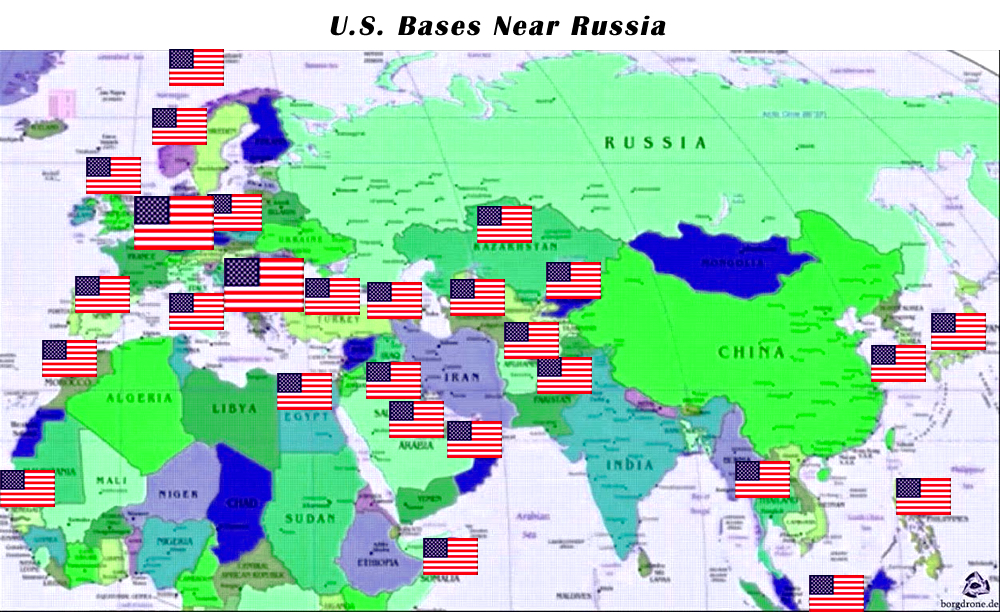
US bases in Europe on high alert for possible terrorist attack: DOD
Bradford Betz , Lucas Y. Tomlinson, Fox News, Sun, 30 Jun 2024 https://www.sott.net/article/492907-US-bases-in-Europe-on-high-alert-for-possible-terrorist-attack-DOD
U.S. military bases throughout Europe have been put on heightened alert status due to a potential terrorist attack, Fox News Digital has confirmed.
FILE – Sign in front of Ramstein Air Base, Germany.“There is credible intel pointing to an attack against U.S. bases over the next week or so,” a U.S. defense official told Fox News’ Lucas Tomlinson.
The official, who declined to be identified because he was not authorized to speak to the media, did not elaborate on the nature of the threat, but confirmed it was not tied to the French elections.
ISIS remains global threat a decade after declaring caliphate, US military official says
The official said all U.S. military bases in Europe have been placed on high alert, not a lock-down.
The U.S. bases have raised the status of the alert level to, “Force Protection Charlie,” which means the Pentagon has received credible intelligence indicating some form of a terrorist attack is in the works.
The new alert applies to all U.S. military facilities and personnel in Europe, including facilities in Germany, Italy, Romanian and Bulgaria, per reporting from Stars and Stripes.
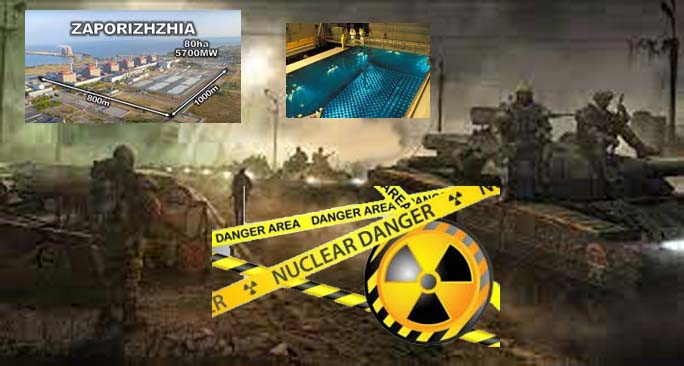
Russia might restart the Zaporizhzhia Ukrainian nuclear plant it seized, our new report shows
Charles Digges, Bellona, 2 July 24
“……………………………………………….. Russia has taken over the plant with its own technicians while coercing the Ukrainian workers who remain to sign contracts with Rosenergoatom, the branch of Rosatom, responsible for day-to-day operations at the 11 nuclear plants within Russia. The Kremlin has also spun off another commercial tendril from Rosatom to oversee the management of the captive plant.
But should a potential restart continue to unfold, the principal nuclear threat of Putin’s war on Ukraine could soon be an atomic energy station operating on the front lines of a protracted war.
Since early in the invasion, all of the Zaporizhzhia nuclear plant’s reactors have been placed in various states of shutdown. This was a critical safety measure, urged by the IAEA and agreed to by both Moscow and Kyiv, which would dampen the impact of a radiological disaster should any of the reactors suffer a catastrophic strike.
In this setting, the content of short-lived and highly dangerous radionuclides like iodine-131 in uranium fuel is much lower than if the plant was active because they have partially, or even completely decayed since September 2022. But once the reactors are restarted, these radionuclides will once again begin to form — making their spread into the environment a possibility should reactor containments be ruptured.
Despite the obvious risks, recent statements from Russian officials and, more concretely, the activities of Russia’s technical oversight agency within Ukraine, indicate that the plant’s Russian occupiers could move to restart at least one of the reactor units sometime this year — thus removing this important assurance against disaster.
To restart a reactor, Russian technicians would first have to guarantee an ample and stable supply of cooling water. This task was made more difficult by the destruction of the nearby Khakovka Dam in June 2023, which compromised several reservoirs used for precisely that purpose.
But over the past year, the Russian side has announced plans to replenish the plant’s damaged cooling ponds, which would then be capable of supplying up to three reactors.
Further, Russian technicians have begun to rewire the power grid to divert the electricity produced by the Zaporizhzhia nuclear plant toward Russia and the occupied territories of Ukraine. Satellite images of the Rosatom-controlled Zaporizhzhia Terminal Power Plant, which connects the nuclear plant to the Ukrainian grid, show evidence of efforts to shift powerlines away from Ukraine and into the occupied regions.
The plant has also recently played host to high-profile guests from Moscow. In April, Alexander Trembitsky, the head of Russia’s Federal Service for Environmental, Technological and Nuclear Supervision, Rostekhnadzor) visited the plant to review personnel certifications and work toward extending the lifespan of the reactors. Rostekhnadzor officials have also been codifying licensing requirements for the plant to operate under Russian purview and reviewing various plant systems since the start of the year.
That same month Sergei Kiriyenko, a former CEO of Rosatom and one of Putin’s first deputies, visited Enerhodar, where many plant workers live.
This flurry of activity followed a March meeting in Sochi between Putin, current Rosatom CEO Alexei Likhachev, and IAEA director general Rafael Grossi, during which, according to media reports, Putin stated his intentions to restart Zaporizhzhia’s reactors. This remains diplomatically unconfirmed by other sources, but recent events seem to bear those intentions out.
Kyiv vociferously protested Russia’s efforts to disconnect a nuclear plant that once supplied 5700 megawatts, or about 10%, of Ukraine’s entire electricity needs. There is little doubt that the military could fight back against any efforts to redirect this energy.
Still, efforts to relaunch the reactors may prove to be more effort than they are worth.
Fresh nuclear fuel and spare parts would have to be transported across war zones. The pump station enhancing cooling water supplies is being constructed under conditions of military conflict. Powerlines will have to be rerouted under fire. All of this will cost billions of rubles, which, in our analysis, will hardly be recouped by tariffs on the power one or two Zaporizhzhia reactors would produce. ………. https://bellona.org/news/nuclear-issues/2024-07-russia-might-restart-the-ukrainian-nuclear-plant-it-seized
UK’s Nuclear weapons pose a risk to proposed new homes
By Nick Clark, Local Democracy Reporting Service, 28 June 24, https://www.bbc.com/news/articles/clddy5kyv64o
Nuclear weapons could pose a risk to plans for almost 500 homes just outside a village, a council has been warned.
The Atomic Weapons Establishment (AWE) – the only maker of nuclear warheads in Britain – has opposed plans for the development near Spencers Wood in Berkshire.
It told Wokingham Borough Council the residents would live in an area exposed to a “radiation emergency” if something went wrong at its site in nearby Burghfield.
Proposals for the site also include a primary school and green space.
‘Safety concerns’
Development consultants Pegasus Group submitted the plans for up to 475 homes in May.
While not a formal planning application, the submission hopes to determine if a development would affect the environment, according to the Local Democracy Reporting Service (LDRS).
But in a letter to the council, AWE said the plans raised “significant” safety concerns.
It said the proposed site, between Basingstoke Lane and Sussex Lane, fell within its Detailed Emergency Planning Zone (DEPZ).
This is an area where neighbouring West Berkshire Council must have a detailed plan in place for its response to a nuclear emergency at Burghfield.
AWE said: “Whilst chances of a radiation emergency at AWE B are very low, the potential impact on the local population would be high and an appropriate and proportionate step is, to where possible, avoid new development being located within the DEPZ.”
It added the increased population in the area would also put strain on emergency services’ ability to help existing residents in the event of an emergency.
Wokingham Borough Council’s own emergency planning manager also said he would likely oppose the proposals if developers Richborough applied for planning permission.
He said the new development would have a “detrimental impact” on its emergency plan to help people living within the DEPZ.
What does Chevron mean for nuclear? The USA courts can now supercede the safety role of the Nuclear Regulatory Commission

should we trust the courts to be better arbiters of how nuclear power plants should be regulated than the actual agency set up to regulate them?
In the worst-case scenario, rogue judges are now empowered to issue out-of-pocket decisions on highly technical matters they don’t actually understand.
The NRC was the undisputed final word in what goes for nuclear energy in the United States. Did the overturning of the longstanding Chevron decision now put the courts above the regulatory agency?
Elemental, ANGELICA OUNG, JUN 30, 2024
The US Supreme Court just overturned the longstanding “Chevron deference” This is a move so dramatic that Dahlia Lithwick, senior legal editor at Slate, described it as a “requiem” for the Administrative state.
According to Lithwick in the Slate Podcast on the issue, the Chevron doctrine said that when a statute is unclear, federal courts should defer to a reasonable interpretation by administrative agencies. No more. Courts can now decide from the get-go what a statute means, regardless of what the agency thinks.
Once upon a time, ironically, it was the conservative Justice Scalia who was the Chevron doctrine’s biggest fan. But as it becomes increasingly clear that the conservative justices are going to enjoy a generational hold on the Supreme Court while the party holding the Executive Branch flips and flops, it became an advantageous political project for the court to take out Chevron and transfer power from the “ABC agencies,” which of course includes the National Regulatory Commission (NRC) over to the courts.
“This fundamentally changes the way government governs,” said Lithwick.
So what now? If the court is now the final arbiter for whether, say, a bump stock makes a gun a machine gun, is it also going to become the final arbiter on whether a giant trampoline works as well as a reinforced containment dome for that purpose of protecting a nuclear reactor from the impact of a large commercial aircraft?
In fact, since the Aircraft Impact Assessment (AIA) is a part of the NRC’s regulations, not explicitly mandated by law, the court can even opt to throw the regulation out entirely.
The undercutting of the NRC goes both ways: just as nuclear companies can now challenge what they see as unreasonably onerous NRC regulations in court, they are now also vulnerable to individuals or groups claiming harm, even if the companies followed all the regulatory guidelines, increasing their legal risk.
As Chief Justice John Roberts wrote in his opinion in the landmark 6-3 ruling, “Agencies have no special competence in resolving statutory ambiguities. Courts do.”
In a dissenting opinion, Justice Elena Kagan warned that Congress does not have the ability to write perfectly complete regulatory statutes and it would be preferable for the gaps formed by inevitable ambiguities to be filled by the responsible agency, not a court. The decision “is likely to produce large-scale disruption.”………………………………………………………………………………………………
…….should we trust the courts to be better arbiters of how nuclear power plants should be regulated than the actual agency set up to regulate them?
In the worst-case scenario, rogue judges are now empowered to issue out-of-pocket decisions on highly technical matters they don’t actually understand. https://elementalenergy.substack.com/p/what-does-chevron-mean-for-nuclear
Scary truths on civilian nuclear power are coming to the fore
Firstly, everyone agrees that climate breakdown will flip heretofore stable regions into unstable. Adding the reasons mentioned above, a proliferation of civilian nuclear power stations will give potential non-nuclear conflicts a new nuclear dimension. Add to that the cheaper, supposedly even sometimes mobile, small nuclear reactors that are seen as “dirtier” than existing NPPs.
It’s no surprise therefore that the civil nuclear lobby would rather not talk about it.
Bill Ramsay, The National 24 June 24
IT’S entirely natural that the UK civilian nuclear power lobby pitch is behind Labour.
Probably some who support Scottish independence think that the stance of the SNP on nuclear power is a marginal vote-loser. However, if looked at properly through a national security lens, it’s actually a vote-winner.
Occasionally, the threat of some limited non-state terrorist attack on a civilian nuclear facility gets an airing. The more important issue of the implication of the presence of civilian nuclear power stations in a war zone rarely does.
………………………………. the lack of discussion – in the public domain at least – of the implications of the presence of a civilian nuclear power station in a so-called non-nuclear conventional battlefield.
I did nothing more on the issue until my sort-of retirement from education as a senior official of the EIS aligned with the Russian invasion of Ukraine. Ukraine hosts Europe’s largest nuclear power station and some others. More than half of Ukraine’s electricity is generated by its nuclear power stations.
My first attempt at a paper was rather “undercooked” – as the rejection from the Royal United Services Institute (RUSI) rightly pointed out – but the final effort – after helpful further consultation with Paul Rodgers, emeritus professor of peace studies at Bradford University – is now available on the Scottish CND website.
In Castle Zaporizhzhia: War Fighting Implications Linked To The Proliferation Of Nuclear Power As Part Solution To Climate Chaos, I unpack the dangers that the nuclear lobby would rather not discuss.
I argue that from a purely military perspective, the occupying Russian forces – whose current, if not future, capabilities are far from overwhelming – will militarily milk the Zaporizhzhia NPP for all its worth and more.
Militarily, the intimidatory potential of the Zaporizhzhia NPP of today and future Zaporizhzhias are huge. Zaporizhzhia NPP performs a similar role for the Russian invaders of Ukraine that the motte-and-bailey castle did for the Norman invaders of England after 1066. These castles of wood then stone were designed to intimidate the Saxon natives.
Zaporizhzhia NPP does the same. Russia can use it as a base of operations from which it can project its power in the full knowledge that the Ukrainians cannot attack it without the risk of another Chornobyl nuclear disaster.
If they wished, the Russians could fire long-range ordnance from it, in the full knowledge the Ukrainians dare not fire back. Indeed, although Zaporizhzhia NPP was discussed at the Ukrainian summit held in Switzerland a few days ago, the bigger global security risks associated with civilian nuclear power production was not. Why? Because the civil nuclear lobby sees nuclear power as a clean alternative to fossil fuels.
In my view, civil nuclear power as a climate chaos mitigator is triply flawed.
Firstly, everyone agrees that climate breakdown will flip heretofore stable regions into unstable. Adding the reasons mentioned above, a proliferation of civilian nuclear power stations will give potential non-nuclear conflicts a new nuclear dimension. Add to that the cheaper, supposedly even sometimes mobile, small nuclear reactors that are seen as “dirtier” than existing NPPs.
It’s no surprise therefore that the civil nuclear lobby would rather not talk about it. Though, to be fair to RUSI, soon after the publication of my report by Scottish CND, RUSI published another which was followed up by a seminar and more recently it has established an ongoing project on strategic and security aspects of civil nuclear power.
Despite all this, the security aspects of civil nuclear power remain very much an elite issue with very little reportage in the mainstream media.
It’s a similar strategy to that employed by John Cleese’s hotelier character Basil Fawlty when faced by an influx of a coach-load of elderly German tourists to his establishment. Paranoid that his staff would make reference to the Second World War, he threatened them with dismissal if they did.
We would all like the war in Ukraine to end, not least because of the death and destruction. The nuclear lobby’s motives are rather less altruistic as the longer the war goes on, the more likely their so-called solution to climate chaos will be exposed to a more searching critique. https://www.thenational.scot/politics/24405095.scary-truths-civilian-nuclear-power-coming-fore/
‘Lax’ nuclear security leaving UK at risk of cyber attacks from hostile nations
Official figures show 20 per cent drop in nuclear inspections amid 45 per cent rise in security threats.
By Richard Vaughan, June 19, 2024 The i
The average number of inspections at UK nuclear facilities has plunged by a fifth in recent years despite a significant rise in the number of security incidents over the same period, official figures show.
The “unacceptable” numbers have prompted nuclear safety experts to warn that the Government has taken a “laissez-faire” approach to nuclear power inspection.
According to data from the Office for Nuclear Regulation (ONR), between 2015 and 2019 there were an average of 194 security inspections per year, a figure that dropped to 153 per year between 2020 and 2023 – a decline of 20 per cent.
This is despite a dramatic rise in the average number of major security incidents over the same period, with 531 such incidents per year between 2015 and 2019, rising to 771 between 2020 and 2023 – an increase of 45 per cent.
Security incidents reported to the ONR are both physical and cyber, with protesters and individuals gaining unauthorised access to the sites as well as hostile states targeting the UK’s nuclear infrastructure.
In December, it was revealed that cyber groups linked to Russia and China had hacked into the Sellafield site in Cumbria, prompting fears that sensitive information around how Sellafield moves radioactive waste may have been compromised.
It follows warnings from the National Cyber Security Centre of the heightened threat of “state-aligned groups against western critical national infrastructure” linked to Russia, including the UK’s nuclear power stations.
The National Risk Register, a government document which assesses “the most serious risks facing the UK”, recently highlighted the danger of both conventional and cyber attacks on UK civil nuclear infrastructure.
Nuclear safety experts said the drop in inspections coincided with the Covid pandemic that allowed for “at distance” virtual inspections, which have continued creating more “lax nuclear regulation”.
The overall number of inspections has fallen by 30 per cent since 2015, when there were 240 inspections, compared to 2023 when 153 checks were carried out.
Dr Paul Dorfman, the chair of the Nuclear Consulting Group and a former secretary of the government’s committee examining radiation risks of internal emitters (Cerrie), told i: “Covid allowed ONR to ramp ‘at-distance virtual inspection’. This is a problem because ONR needs to be in close, on-site touch with nuclear facilities to get a good view on what’s really going on – and they seem to be carrying on this ‘arms’-length’ inspection regime post-Covid.
“Basically, it looks like the ONR’s nuclear inspections are being hit by the current Govternment’s ‘laissez faire’ attitude – hence we seem to be seeing more lax nuclear regulation.”……………………………………… more https://inews.co.uk/news/politics/government-approach-nuclear-safety-drop-inspections-3120112
Proliferation warnings over enriched nuclear fuel for advanced reactors

BY JULIA ROBINSON, 13 JUNE 2024, https://www.chemistryworld.com/news/proliferation-warnings-over-enriched-nuclear-fuel-for-advanced-reactors/4019621.article—
Governments and others promoting the use of high-assay low-enriched uranium (HALEU) for nuclear power have not considered the potential terrorism risk that widespread adoption of this fuel creates, nuclear scientists have warned.
HALEU is a nuclear reactor fuel enriched with uranium-235 to between 5 and 20%. At 20% uranium-235 and above, the mixture is called highly-enriched uranium (HEU) and it is internationally recognised that it can be employed in nuclear weapons.
Historically, HALEU use has been limited to research reactors, where it is used in small quantities, while commercial reactors typically use fuels with low enrichments, in the range of 3 to 5% uranium-235, which cannot sustain an explosive chain reaction.
However, new advanced reactors are being designed to run on HALEU – most favouring 19.75% uranium-235 HALEU – in the hope that these reactors will be smaller, more flexible and less expensive.
In the US, the Department of Energy (DOE) and US Department of Defense are providing funds for more than 10 reactor concepts, while the UK’s Civil Nuclear Roadmap, announced on 11 January, promised up to £300 million of investment specifically to develop HALEU fuel production.
However, in a policy forum in Science, experts in nuclear science and global security highlight that in many of the designs, the amount of HALEU needed is ‘hundreds to thousands of kilograms’, which may mean that a single reactor contains enough HALEU to make a nuclear weapon.
The authors said that estimates indicate that quantities ranging from several hundred kilograms to about a tonne of 19.75% HALEU could produce explosive yields similar to or greater than that of the Little Boy bomb dropped on Hiroshima.
If this is the case, they said, commercialising HALEU fuels without ensuring that the material is ‘appropriately protected against diversion by national governments or theft by terrorists would pose a serious threat to security’.
‘The time has come to review policies governing the use of this material,’ the authors write. ‘We recommend that the US Congress direct the DOE’s National Nuclear Security Administration to commission a fresh review of HALEU proliferation and security risks by US weapons laboratory experts.’
They also suggested that, according to the information available, a reasonable balance of the risks and benefits could be struck if enrichment of uranium-235 was restricted to 12% or less.
Alarm over 174 security breaches at Clyde nuclear bases
Rob Edwards, June 10, 2024, https://theferret.scot/security-breaches-clyde-nuclear-bases/—
Two nuclear bomb bases on the Clyde recorded 174 security breaches over five years, according to information released by the Ministry of Defence (MoD).
Between 2018 and 2022 there were 130 breaches reported at the Trident submarine base at Faslane, near Helensburgh, and a further 44 breaches at the nearby nuclear weapons store at Coulport.
The MoD has not given any details of the incidents, but suggested that some were “minor”. They could include lost identity cards, misplaced documents and data protection breaches, it said.
The MoD stressed that it investigated every incident “no matter how small” with the aim of continuously improving security.
Campaigners, however, warned there were “risks of major catastrophe” at Faslane and Coulport. They called on whoever wins the general election to “get to grips” with security problems.
The Conservatives, Labour and the Liberal Democrats all support the UK’s nuclear weapons programme. The Scottish National Party and the Greens oppose it.
A freedom of information response released by the MoD in May revealed that the Royal Naval Armaments Depot at Coulport recorded the highest number of security breaches – 13 – in 2019. Since then, there were 11 in 2020, nine in 2021 and nine in 2022.
Coulport is where around 200 of the UK’s arsenal of nuclear warheads are kept in underground bunkers. Spread across the slopes above Loch Long, the site is dotted with watchtowers and protected by a series of barbed wire fences.
The latest MoD release also confirmed a previous report that there were 60 security breaches at Faslane in 2022. Another report in 2022 said that there were 16 breaches at Faslane in 2021, and 18 in each of the previous three years.
Faslane, on the Gareloch, is the home port for the UK’s four Vanguard-class submarines that carry nuclear-armed Trident missiles. One submarine is meant to be continuously on patrol at sea, but in recent years the service has been stretched.
The numbers of security breaches in 2023 and so far in 2024 have not been published by the MoD. But it has previously released figures for nuclear safety incidents that have also plagued the Clyde bases.
The Ferret reported in April that Faslane and Coulport logged 843 “nuclear site events” from 2019 to April 2024. Twelve of them were classified by the MoD as having “actual or potential for radioactive release to the environment”.
We also revealed in August 2023 that the MoD’s Defence Nuclear Organisation, which oversees the UK nuclear weapons programme, had recorded 113 “security concerns” since 2017-18. Again, no details were given.
The Scottish Campaign for Nuclear Disarmament warned that security breaches should not be “shrugged off” as minor. “Faslane and Coulport combine nuclear bombs, nuclear reactors and missiles – radioactivity, explosives and highly flammable rocket fuel – always presenting potential targets and risks of major catastrophe,” said the campaign’s chair, Lynn Jamieson.
“At these most dangerous places, regular breaches signal either a grossly-inappropriate casual culture or the impossibility of 100 per cent security. Incidents rising to 60, averaging more than one a week, is a warning and calls for public investigation.”
Jamieson also attacked the MoD failure to provide details of the breaches. “Secrecy cloaks the reality of the everyday risks in our own backyard,” she told The Ferret.
“Secrecy is convenient for politicians who spout the myth that threatening to destroy half the planet with nuclear weapons keeps us safe.”
Some nuclear security breaches ‘serious’
The Nuclear Information Service, which researches and criticises nuclear weapons, argued that any security breaches were concerning. “If, as the MoD imply, some of these incidents were relatively minor, why have no further details been disclosed?” asked the service’s director, David Cullen.
“The obvious inference is that some of the incidents were much more serious. Whoever wins the election, I hope the incoming government will get to grips with this.”
The large increase in security breaches at Faslane between 2021 and 2022 was “especially worrying”, he said. A report by the London news broadcaster, LBC, in September 2023 suggested that this could be linked to Russian activity in the wake of the invasion of Ukraine in February 2022.
According to the MoD, incidents “can include minor breaches”. They can also include “the mis-accounting of documentation, loss of identity cards, inadvertent use of personal electronic devices and breaches in general data protection,” it said.
A spokesperson for the Royal Navy added: “Security is of paramount importance and we investigate every incident, no matter how small, to ensure we learn from experience and continuously improve our security.”
Are the prospects for Small Modular Reactors being exaggerated? Five key characteristics examined
June 11, 2024 by Ed Lyman, Ed Lyman is Director, Nuclear Power Safety, at the Union of Concerned Scientists
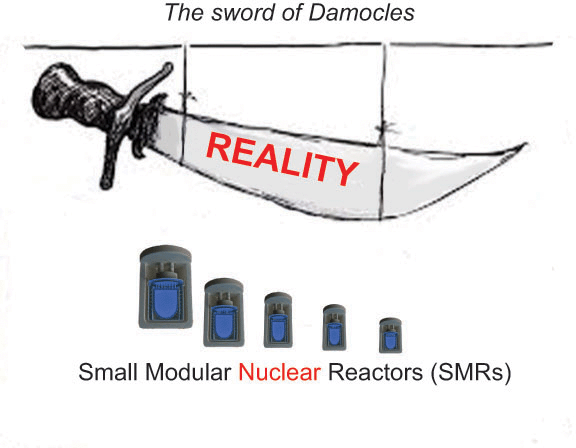
Small Modular Reactors (SMRs) are being presented as the next generation of nuclear technology. While traditional plants face cost overruns and safety issues, SMRs are seen by their champions as cheaper, safer, and faster to deploy. But Ed Lyman at UCS cites evidence that cast these claims into doubt.
In five sections of this article, he lists the reasons why. SMRs are not more economical than large reactors. SMRs are not generally safer or more secure than traditional large light-water reactors. SMRs will not reduce the problem of disposal of radioactive waste. SMRs cannot be counted on to provide reliable and resilient off-the-grid power (for facilities like data centres, bitcoin mining, hydrogen or petrochemical production). SMRs do not use fuel more efficiently than large reactors.
And where problems might be ironed out over time, the learning cycle of such technology is measured in decades during which costs will remain very high. SMRs may have a role to play in our energy future, says Lyman, but only if they are sufficiently safe and secure, along with a realistic understanding of their costs and risks.
Even casual followers of energy and climate issues have probably heard about the alleged wonders of small modular nuclear reactors (SMRs). This is due in no small part to the “nuclear bros”: an active and seemingly tireless group of nuclear power advocates who dominate social media discussions on energy by promoting SMRs and other “advanced” nuclear technologies as the only real solution for the climate crisis. But as I showed in my 2013 and 2021 reports, the hype surrounding SMRs is way overblown, and my conclusions remain valid today.
Unfortunately, much of this SMR happy talk is rooted in misinformation, which always brings me back to the same question: if the nuclear bros have such a great SMR story to tell, why do they have to exaggerate so much?
What are SMRs?
SMRs are nuclear reactors that are “small” (defined as 300 megawatts of electrical power or less), can be largely assembled in a centralised facility, and would be installed in a modular fashion at power generation sites. Some proposed SMRs are so tiny (20 megawatts or less) that they are called “micro” reactors. SMRs are distinct from today’s conventional nuclear plants, which are typically around 1,000 megawatts and were largely custom-built. Some SMR designs, such as NuScale, are modified versions of operating water-cooled reactors, while others are radically different designs that use coolants other than water, such as liquid sodium, helium gas, or even molten salts.
To date, however, theoretical interest in SMRs has not translated into many actual reactor orders. The only SMR currently under construction is in China. And in the United States, only one company — TerraPower, founded by Microsoft’s Bill Gates — has applied to the Nuclear Regulatory Commission (NRC) for a permit to build a power reactor (but at 345 megawatts, it technically isn’t even an SMR).
The nuclear industry has pinned its hopes on SMRs primarily because some recent large reactor projects, including Vogtle units 3 and 4 in the state of Georgia, have taken far longer to build and cost far more than originally projected. The failure of these projects to come in on time and under budget undermines arguments that modern nuclear power plants can overcome the problems that have plagued the nuclear industry in the past.
Developers in the industry and the US Department of Energy say that SMRs can be less costly and quicker to build than large reactors and that their modular nature makes it easier to balance power supply and demand. They also argue that reactors in a variety of sizes would be useful for a range of applications beyond grid-scale electrical power, including providing process heat to industrial plants and power to data centres, cryptocurrency mining operations, petrochemical production, and even electrical vehicle charging station
Here are five facts about SMRs that the nuclear industry and the “nuclear bros” who push its message don’t want you, the public, to know.
1. SMRs are not more economical than large reactors. 2. SMRs are not generally safer or more secure than large light-water reactors. 3. SMRs will not reduce the problem of what to do with radioactive waste. 4. SMRs cannot be counted on to provide reliable and resilient off-the-grid power for facilities, such as data centers, bitcoin mining, hydrogen or petrochemical production. 5. SMRs do not use fuel more efficiently than large reactors
Continue readingWill Port Adelaide, Fremantle or Port Kembla be the Australian Chernobyl?
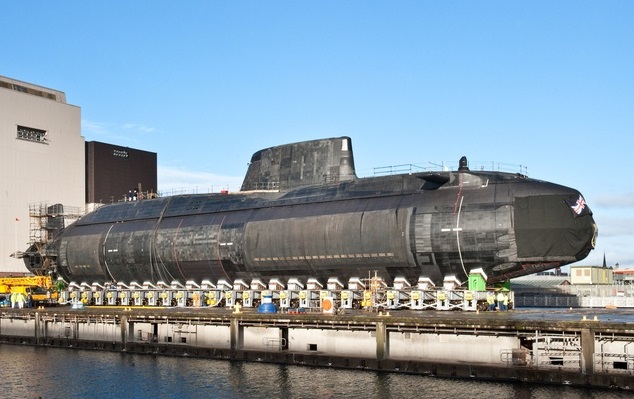
By Douglas McCartyJul 21, 2023 https://johnmenadue.com/aukus-will-adelaide-fremantle-or-port-kembla-be-the-australian-chernobyl/
While most discussion of the AUKUS Agreement has focussed on the geopolitical implications for Australia’s standing in the world, the escalation of the risk of war and the crippling cost of the nuclear submarine purchases when less expensive and more sensible non-nuclear options are available, little has been said of the risk to the civilian population posed by these nuclear-powered submarines (or other nuclear-powered naval vessels) in Australia’s home ports.
Perhaps we citizens only enter the calculations as ‘collateral damage’. Any such necessarily technical discussion is hampered by military secrecy. Some information has been released officially, but most is from generalised inference, or conjecture, and so subject to uncertainty. However, in this important matter, it is worth attempting to join the dots….
News from the war in Ukraine includes, almost every other night, a report on the situation around the Zaporizhzhia Nuclear Power Plant, the largest in Europe. Though no longer continuing to generate power for Ukraine, it is always at risk of being shelled or bombed by one side or the other, and regularly just avoiding reactor cooling water pump failure from damaged power transmission lines or lack of diesel fuel for their backup generators for the pumps. How long this situation will continue remains to be seen. And now, after the breaching of the Kakhovka Dam, it is estimated just three months of water for cooling remains.
The consequences of the catastrophic failure of a nuclear reactor are well known to both the Ukrainians and the Russians. To the Northwest of Zaporizhzhia, and just 100 kilometres North of Kyiv, lies the Chernobyl Reactor No. 4, which, on 26 April 1986, underwent meltdown after a coolant and moderator failure, exploded, and caught fire. Radioactive material and fission products were ejected into the air, spreading across the immediate countryside and into Northern Europe. Radioactive rain was reported on the mountains of Wales and Scotland, in the Alps, and contamination in reindeer herds in Northern Sweden. The principal radiological contaminant of concern across this vast area was Caesium-137, one of many fission products and representing some 6% of fission reactor spent fuel. Just 27 kg of Caesium-137, it is calculated, caused this contamination. Some 150,000 square kilometres of Ukraine, Belarus and Russia were initially contaminated. Of course, at the time of the accident, all this was part of the Soviet Union. To this day, 2600 square kilometres around the plant are considered unsafe for human habitation, or agriculture, and will remain so for between 300 and 3000 years! The Reactor used 2% enriched Uranium fuel.
Although the loss of life at Chernobyl was a small fraction of the 100,000 deaths from one of the only two uses of nuclear weapons in war, on Hiroshima in 1945, Chernobyl created 400 times more radioactive pollution. The Hiroshima bomb, “Little Boy”, contained 64 kg of enriched Uranium, though less than 2% actually underwent nuclear fission. The bomb was detonated 500 metres above ground (‘airburst’), and the fatalities were the result of blast, heat, and irradiation, in a city centre. Chernobyl occurred at ground level and so ejected debris upwards initially, followed by smoke columns from subsequent fires. . The 31 deaths at Chernobyl were plant operators and, of course, firemen. The G7, the AUKUS Partners and the Quad just met at ‘ground zero’ in a rebuilt Hiroshima City, 78 years after the bombing.
The US Navy nuclear powered warships, including the ‘Virginia’ Class submarines that Australia would buy under the AUKUS Agreement, principally use Highly Enriched Uranium (HEU) reactors. The Uranium is enriched to above 93% fissionable Uranium-235. It is weapons grade material and has in part been sourced from decommissioned nuclear weapons. The submarine reactors are intended to last for the ‘Life of Ship’ (LOS), up to 33 years, without needing refuelling. Low Enriched Uranium reactors need fuel replacement every 5 to 10 years, when, importantly, the containment pressure vessel around the reactor is physically inspected for flaws and deterioration. This is not done for the HEU, LOS reactors.
The US Navy nuclear powered warships, including the ‘Virginia’ Class submarines that Australia would buy under the AUKUS Agreement, principally use Highly Enriched Uranium (HEU) reactors. The Uranium is enriched to above 93% fissionable Uranium-235. It is weapons grade material and has in part been sourced from decommissioned nuclear weapons. The submarine reactors are intended to last for the ‘Life of Ship’ (LOS), up to 33 years, without needing refuelling. Low Enriched Uranium reactors need fuel replacement every 5 to 10 years, when, importantly, the containment pressure vessel around the reactor is physically inspected for flaws and deterioration. This is not done for the HEU, LOS reactors. In one year, at full power, (210 x 365 ÷ 940 =) 81.5 kg of U-235 would be required. Along with other decay products from the U-235 (Strontium-90, Iodine-131, Xenon-133 etc.), as noted earlier some 6% (or 4.9 kg) would be Caesium-137. The ‘neutron poisons’ also created are balanced out by ‘burnable’ neutron poisons incorporated into the core when new, to maintain reactor function over the years. So far, simple nuclear physics and thermodynamics.
Operationally, one surmises, the submarine reactor will infrequently run at full power. Actual annual production of Caesium-137 may lie between, say, 0.8 kg for 1/6th capacity operation on average for the whole year, and 2.45 kg at half capacity for the year. As the reactor is designed to not need refuelling for the ‘Life of the Ship’, the Cs-137 would continuously accumulate inside the reactor fuel elements. At the lower bound of 1/6th operation, there would be approaching 27 kg of Cs-137 in the core after 33 years, allowing for the decay of some of the Caesiun-137, given its half-life of 30.05 years. At the upper bound, it would take about 13 years for 27 kg of Caesium-137 to accumulate.
Visiting nuclear-powered submarines, from the US or UK, would be similar. Visiting US nuclear-powered aircraft carriers, each with two A1B reactors each of 700MWt, may have 27 kg of Cs-137 in their reactor cores after just two years of operation.
Visiting ships may stay in Australian ports for days or even weeks. Australian submarines will be in port not only between deployments, but also for maintenance, for months and years. The US Navy appears to have about 40 Virginia Class Subs, with some 18 undergoing long-stay maintenance, or about half. We might expect the same. So, at any one time, the AUKUS plan would see naval nuclear reactors, US, or UK, or Australian, or all, in Adelaide, and/or Fremantle, and/or Port Kembla. While peacetime only presents the risk of a nuclear accident, wartime would see these important military assets easily detectable – and targetable – while in port. In the event of a nuclear war, this may be just one of our worries.
In a conventional, non-nuclear conflict, the story may be very different. The situation of the Zaporizhzhia civilian reactors in Ukraine is most instructive. However, as legitimate military targets, would such restraint be shown towards the reactors in the submarines? What would be the impact of a conventional cruise or hypersonic or ballistic missile warhead on the pressure hull and reactor containment vessel (and plumbing) of a nuclear-powered submarine?
Should just 27 kg of the Caesium-137 in the naval reactor cores be released into the air through an explosion (as at Chernobyl) in an accident or deliberate attack, what would be the outcome? In Fremantle, especially if the ‘Fremantle Doctor’ was blowing, would sections of Fremantle and Perth become unsafe for human habitation? In Port Kembla, especially if a ‘Southery Buster’ came through, the Illawarra and, depending on the particular weather conditions, would parts of the South of Sydney become unsuitable for human habitation? For Port Adelaide, especially if a NW change came through, would the Adelaide coastal strip from Gawler to Aldinga become unsuitable for human habitation?
Imagine the number of “single mums doing it tough” who would have to be relocated to emergency accommodation – somewhere! Imagine all that social housing rendered uninhabitable! Even if we ‘won’ the war.
This is a real possibility if we have nuclear reactors in surface ships or submarines in our ports, or in our ship building and maintenance facilities.
Drone sightings reported over British nuclear facilities

UK Defence Journal, By George Allison, May 29, 202
Recent data acquired under the Freedom of Information Act 2000 (FOIA 2000) unveils a number of drone sightings over UK nuclear facilities from 2021 to 2023.
The Ministry of Defence Police (MDP) has kept specific location details confidential, citing national security implications.…………………………………………………………………..
In the context of the UK, nuclear sites generally refer to a range of facilities associated with the nuclear energy industry and defence establishments. These can include:
- Nuclear Power Stations: These are plants where nuclear energy is converted into electricity. Examples include Hinkley Point, Sizewell, and Dungeness.
- Nuclear Research Facilities: These are centres where nuclear research takes place, such as the Culham Centre for Fusion Energy or the Dalton Nuclear Institute.
- Nuclear Reprocessing Plants: Sellafield in Cumbria is a prime example, where nuclear fuel is reprocessed.
- Nuclear Submarine Bases: The UK operates a fleet of nuclear-powered submarines, and these vessels are based at certain naval docks, notably HM Naval Base Clyde (sometimes referred to as Faslane).
- Defence Establishments: Some sites are associated with the development or storage of nuclear weapons, such as the Atomic Weapons Establishment (AWE) sites at Aldermaston and Burghfield.
- Nuclear Waste Storage and Disposal Sites: Locations where nuclear waste is stored, treated, or disposed of.
- Decommissioned Nuclear Sites: Former nuclear facilities which are no longer operational but might still have nuclear materials or be under decommissioning.
These sites are of strategic importance to the UK, both in terms of energy supply and national security. As such, they are heavily regulated, monitored, and protected. Any unauthorised activity, such as drone flights, in the vicinity of these sites is taken very seriously due to the potential security and safety risks involved.
What drives these flights near such sensitive areas? Are they a product of curiosity, deliberate reconnaissance, or mere coincidence? https://ukdefencejournal.org.uk/drone-sightings-reported-over-british-nuclear-facilities/
2 aging central Japan nuclear reactors get 20-yr service extensions
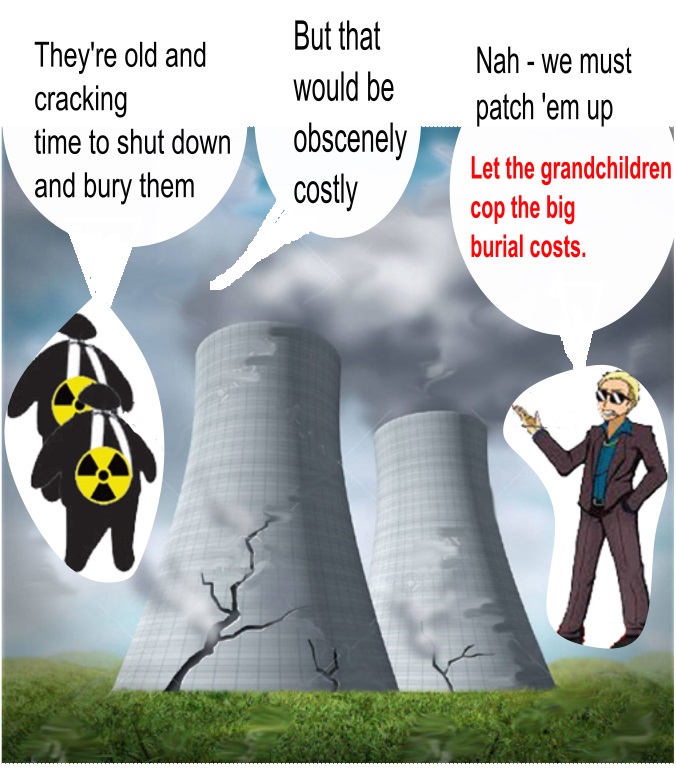
May 29, 2024 (Mainichi Japan) TOKYO (Kyodo) — The aging No. 3 and 4 reactors at the Takahama nuclear plant in central Japan were approved Wednesday by the nuclear regulator to continue operating for 20 more years, as the government maintains support of the technology’s use in the resource-poor country’s energy mix.
The decision makes them the seventh and eighth reactors nationwide that the Nuclear Regulation Authority has green-lit for extensions after 40 years of operations. All four reactors at the facility in Fukui Prefecture have now been approved to run for 60 years…………………..
The regulator’s Chairman, Shinsuke Yamanaka, said at a meeting that nuclear reactor pressure vessels tend to become brittle due to radiation, but an official at the organization’s secretariat said the reactors had been evaluated carefully and that there was “no problem.”
The facility’s No. 1 and 2 reactors were approved in June 2016 to operate beyond 40 years from their start date. In 2023, both reactors were rebooted for the first time since the 2011 Fukushima Daiichi nuclear disaster.
Following the nuclear accident, the government introduced rules mandating that nuclear units can operate for up to 40 years, with extensions to 60 years possible pending approval.
But in May 2023, the Japanese government enacted a bill to introduce a new system that will allow the country’s nuclear reactors to operate beyond the current 60-year limit……. https://mainichi.jp/english/articles/20240529/p2g/00m/0na/038000c
Wildfire closes 20+ miles of highway across Hanford nuclear site Saturday night
ICHLAND, WA More than 20 miles of Highway 240 across the Hanford nuclear site and part of Highway 24 was closed by a wildfire for a few hours starting at 6 p.m. Saturday. Wind gusts of up to 26 mph in the area fanning the flames Saturday night.
The Hanford site alerted its employees that Highway 240, sometimes called the Hanford highway, was closed from Highway 225 north of Benton City to the intersection with Highway 24. The highway runs between the section of the nuclear reservation closed to the public and Hanford Reach National Monument land, including Rattlesnake Mountain, also closed to the public. Highway 24 was closed from the Vernita Bridge across the Columbia River to the Silver Dollar cafe, according to Hanford officials.
About 7 p.m. the Washington state Department of Transportation announced the Highway 24 closure but both roadways reopened a few hours later. No information about the specific location of the size of the fire was immediately available.
Officials set up road closures around Sunnyside Community Hospital for radiation concerns
Le’Ana Freeman NonStop Local Digital Journalist, May 26, 2024, SUNNYSIDE, Wash. https://www.nbcrightnow.com/news/sunnyside-police-warn-public-to-avoid-sunnyside-hospital-for-radiation-concerns/article_f8308f6e-1ba9-11ef-98e3-af76c9eab7ef.html
Sunnyside Police have confirmed they are blocking off the Sunnyside Hospital area from Franklin Ave to East Edison Ave to continue decontamination efforts.
Officials are asking the public to avoid the area.
Officials have asked the public to avoid the Sunnyside Hospital area.
According to the Sunnyside Police Department, construction workers arrived at the Sunnyside Hospital and reported radiation exposure from a construction site out of town. The hospital is decontaminating the emergency room and patients.
Police ask the public to divert from the hospital and avoid the area for safety.
1 This Month

of the week – Shut Down Drone Warfare!


Tell the Ukrainian Government to Drop Prosecution of Peace Activist Yurii Sheliazhenko

Petition to revoke the licensing of the Near Surface Nuclear Disposal Facility (NSDF) at Chalk River. https://www.ourcommons.ca/petitions/en/Petition/Details?Petition=e-7247
To see nuclear-related stories in greater depth and intensity – go to https://nuclearinformation.wordpress.com
-
Archives
- April 2026 (103)
- March 2026 (251)
- February 2026 (268)
- January 2026 (308)
- December 2025 (358)
- November 2025 (359)
- October 2025 (376)
- September 2025 (257)
- August 2025 (319)
- July 2025 (230)
- June 2025 (348)
- May 2025 (261)
-
Categories
- 1
- 1 NUCLEAR ISSUES
- business and costs
- climate change
- culture and arts
- ENERGY
- environment
- health
- history
- indigenous issues
- Legal
- marketing of nuclear
- media
- opposition to nuclear
- PERSONAL STORIES
- politics
- politics international
- Religion and ethics
- safety
- secrets,lies and civil liberties
- spinbuster
- technology
- Uranium
- wastes
- weapons and war
- Women
- 2 WORLD
- ACTION
- AFRICA
- Atrocities
- AUSTRALIA
- Christina's notes
- Christina's themes
- culture and arts
- Events
- Fuk 2022
- Fuk 2023
- Fukushima 2017
- Fukushima 2018
- fukushima 2019
- Fukushima 2020
- Fukushima 2021
- general
- global warming
- Humour (God we need it)
- Nuclear
- RARE EARTHS
- Reference
- resources – print
- Resources -audiovicual
- Weekly Newsletter
- World
- World Nuclear
- YouTube
-
RSS
Entries RSS
Comments RSS
 nuclear-news