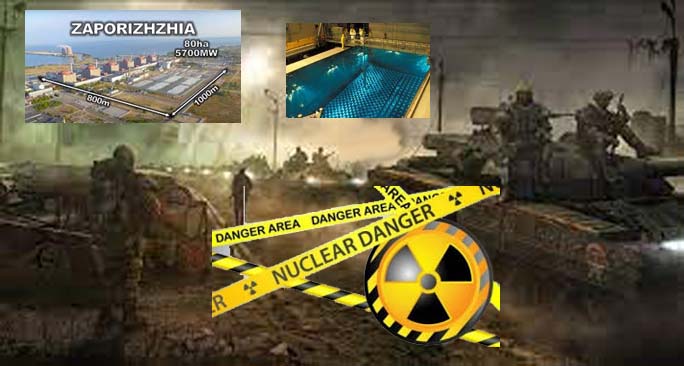
IAEA concerned about forest fires near occupied Zaporizhzhia Nuclear Power Plant
Tetyana Oliynyk — Thursday, 8 August 2024, https://www.pravda.com.ua/eng/news/2024/08/8/7469572/
he International Atomic Energy Agency (IAEA) believes that intense fires near the Zaporizhzhia Nuclear Power Plant, which is temporarily occupied by Russia, pose a risk for its external power supply.
Source: IAEA website, as reported by Ukrinform
Quote: “On several occasions over the past week, the IAEA Support and Assistance Mission to Zaporizhzhya (ISAMZ) observed several fires at various distances from the ZNPP and nearby villages. Over the weekend, the IAEA experts observed smoke coming from an area to the north of the ZNPP near the Zaporizhzhya Thermal Power Plant (ZTPP) inlet channel.”
Details: The agency noted that the fire was underneath the remaining overhead power cables that supply power to the plant.
Quote: “As the summer heat continues, such fires along the pathways of the two remaining lines place the ZNPP at risk of loss of external power. While there was no disconnection of either line on this occasion, the situation highlighted the fragility of off-site power at the ZNPP.”
IAEA chief calls for restraint as fighting remains ongoing ‘in the vicinity’ of Russia’s Kursk Nuclear Power Plant

by Dmytro Basmat, Kyiv Independent 10th Aug 2024
International Atomic Energy Agency (IAEA) Director General Rafael Mariano Grossi called on both Kyiv and Moscow to “exercise maximum restraint” in order to avoid a nuclear accident as fighting is reportedly ongoing in the region around the Kursk Nuclear Power Plant (KNPP).
In a statement issued by the IAEA on Aug. 9, Grossi said that a nuclear accident at the KNPP would have “the potential for serious radiological consequences.”
Grossi noted that two of the six nuclear reactors at the KNPP are in shutdown, while another two are fully operational. The remaining two reactors are under construction.
The statement comes as Ukraine’s continues its surprise incursion across the border into Kursk Oblast, with Ukraine reportedly making gains deeper into Russian territory.
Earlier in the day on Aug. 9, a fire caused by an alleged drone attack on a power substation led to power outages in several areas of Kurchatov which houses the KNPP, regional Governor Alexei Smirnov claimed.
On Aug. 8, Kurchatov’s mayor, Igor Korpunkov, claimed that battles are ongoing “a few dozen kilometers” from the town.
Independent Russian news outlet IStories reported on Aug. 9 that Russia is currently preparing to defend the Kursk Nuclear Power Plant as Ukrainian troops are approaching it.
The entrances to the Kursk Nuclear Power Plant were blocked as of the afternoon of Aug. 9, the pro-government regional newspaper network Bloknot claimed, citing its undisclosed sources.
Everything at the nuclear power plant’s units under construction has been de-energized, and construction workers have left the site, Bloknot claimed………………………………………..
Russia’s Emergency Situations Ministry also said on Aug. 9 that the situation in Kursk Oblast had been declared a “federal emergency,” and began sending additional military equipment into the region. https://kyivindependent.com/iaea-chief-calls-for-restraint-to-ensure-nuclear-safety-at-kursk-nuclear-power-plant/
Russia strengthens security at Kursk nuclear power plant amid Ukraine’s assault in region
Russian Guard Corps says additional forces deployed in vicinity of plant to protect it from Ukraine’s attack
Elena Teslova |07.08.202, MOSCOW , https://www.aa.com.tr/en/russia-ukraine-war/russia-strengthens-security-at-kursk-nuclear-power-plant-amid-ukraines-assault-in-region/3298072
Russia said Wednesday that it strengthened security at the Kursk nuclear power plant amid Ukraine’s assault in the region.
The Russian Guard Corps said it took additional measures to ensure the safety of the plant, including the deployment of additional units in the area.
“As part of ensuring the safety of a particularly important facility, the Russian Guard Corps units took additional measures to protect the Kursk nuclear power plant,” it said.
It added that the security services increased their forces to combat the Ukrainian sabotage and reconnaissance groups in the Kursk and Belgorod regions.
The office of Kursk’s Acting Gov. Alexey Smirnov announced that emergency situation forces were introduced in the region because of ongoing combat operations and the situation on the border “remains tense.”
Additional forces have also been allocated to the operational headquarters under the leadership of the governor of the Kursk region to handle the incursion, it said.
The Russian chief of the General Staff, Valery Gerasimov, said Wednesday that up to 1,000 Ukrainian troops attacked Russia’s military positions near two border settlements adjacent to Ukraine’s Sumy region on Tuesday.
At least five civilians were killed and 24 injured in the attack, including six children, according to statements from regional authorities.
Ukraine has not yet commented on the claims and independent verification is difficult because of the war.
IAEA: Cooling pond water levels decreasing at Ukraine nuclear plant
Aug 6, 2024, https://www.ans.org/news/article-6266/iaea-cooling-pond-water-levels-decreasing-at-ukraine-nuclear-plant/
The water level in Ukraine’s Zaporizhzhia nuclear power plant cooling pond continues to decrease, creating a serious safety threat.
“If this trend continues, ZNPP staff confirmed that it will soon become challenging to pump water from the pond. Maintaining the level of the pond is made more difficult by the hot summer weather,” said Rafael Mariano Grossi, director general of the International Atomic Energy Agency, in an update issued August 2.
Zaporizhzhia—Europe’s largest nuclear plant—has been under Russian control since March 2022, shortly after the military invasion of Ukraine. The plant stopped producing power in September 2022, and all six of its units currently are in cold storage.
Water issues: Following the destruction of the Kakhovka dam in 2023, Zaporizhzhia workers dug 11 groundwater wells to provide approximately 250 cubic meters of cooling water per hour to support the plant’s sprinkler ponds. These ponds cool all six reactors.
“Dwindling water levels in the cooling pond remains a potential source of concern, and we will continue to closely monitor and observe the situation at the site to ensure the availability of a sufficient supply of cooling water for the plant’s needs at all times,” Grossi said.
During a site walkdown last week, IAEA inspectors stationed at the plant observed proper function in the sprinkler ponds, with water at nominal levels. But any compromise to the availability of water to the sprinkler ponds might necessitate using the cooling pond as a backup source.
Safety concerns: The IAEA team continue to hear military activity at varying distances from the plant.
On April 30, they reported hearing over 100 rounds of gunfire in the vicinity of the Zaporizhzhia, allegedly in response to drones flying near the plant’s training center. The “kamikaze” drones, some measuring 11 feet long and 8 feet wide, were observed in video evidence from Ukraine’s defense intelligence. The drones do not fire missiles but are equipped with explosives and can strike with precision.
Separately, the team reported three direct drone strikes on the plant on April 7 and April 9, resulting in one casualty. Ukrainian military intelligence spokesperson Andrii Cherniak said the Russians are using space around Zaporizhzhia because the Security and Defense Forces of Ukraine cannot return fire in a 1.5-kilometer zone around the plant.
IAEA report: In a letter from the permanent mission of the Russian Federation to the IAEA’s secretariat the following issues were highlighted.
- During a span of six days (July 22–28), 77 aerial vehicles launched with the aim of attacking and provoking ZNPP and the nearby town of Energodar.
- On July 29, Ukrainian armed forces launched three artillery strikes at the checkpoint entrance to Energodar, injuring three Russian Guard employees.
- The plant has enough diesel fuel to operate on emergency power for 19 days.
- Recruitment of personnel for the plant is ongoing, though the current number of employees is sufficient to continue cold shutdown operations and scheduled maintenance tasks.
Support for Zaporizhzhia: Starting in April 2022, the IAEA developed a broad assistance program at Zaporizhzhia. The agency recently organized four remote workshops with a focus on mental health. The sessions were geared toward supervisors, managers, and mental health teams to help recognize signs of distress and support those dealing with stress or trauma.
The United States and United Kingdom have lent support by delivering equipment and hosting workshops.
It must be no to nuclear – whether energy or weapons
Tor Justad: I REFER to recent articles in the National and Sunday
National regarding nuclear power and nuclear weapons in Scotland. The first
was headlined “Safety warnings as cracks rise at Torness nuclear plant”
(Sunday National, Jul 21) which reported on the increase to 46 of cracks
which have appeared in the Torness nuclear reactor.
It is extremely concerning that at the launch of the Cromarty Firth and Inverness Freeport,
Steve Chisholm, operations & Innovations director at Global Energy stated
that the area was ideally placed for a move into manufacturing small
modular reactors.
The National 5th Aug 2024
https://www.thenational.scot/community/24496800.must-no-nuclear—whether-energy-weapons/
US nuclear plant unfit for quick resurrection, former lead engineer says
By Timothy Gardner, WASHINGTON, Aug 2 2024, (Reuters)
– The first U.S. nuclear plant to ever try reopening after undergoing preparations for permanent closure is not fit to restart anytime soon because it sidestepped important safety work for years before retirement, a former official at the reactor said.
Power company Entergy (ETR.N), opens new tab closed the Palisades reactor in Michigan in 2022, after the plant generated electricity for more than 50 years. Privately-held Holtec International bought Palisades shortly after and has since secured a $1.52 billion conditional U.S. loan guarantee to restart. Holtec seeks to open the plant in about a year.
The fate of Palisades is closely watched by the nuclear industry as at least two other shuttered plants, including a unit at Constellation Energy’s (CEG.O)
, opens new tab Three Mile Island, consider reopening…………
“I’m pro-nuclear, but they selected the wrong horse to ride to town on,” said Alan Blind, who was engineering director at the Palisades plant from 2006 to 2013 under Entergy.
Blind said the plant got exemptions from the U.S. Nuclear Regulatory Commission, the nuclear safety regulator, allowing it to fall short of safety design standards that more modern plants must adhere to because it was nearing retirement.
Those safety standards include prevention of cooling systems being clogged by the breakdown of insulation on pipes, defense against earthquakes, and reduction of risks to fires, Blind said, adding he had been monitoring the plants’ exemption requests since his retirement.
“I’m worried that the NRC will not insist that the generic safety issues be the fixed before they allow Palisades to restart,” Blind told Reuters………………………………………………………..
The Biden administration’s Loan Programs Office at the Department of Energy issued Holtec a conditional $1.52 billion loan guarantee in March to restart Palisades. … https://www.reuters.com/business/energy/us-nuclear-plant-unfit-quick-resurrection-former-lead-engineer-says-2024-08-02/
Nuclear plant trips due to fire, and battery storage steps in to stabilises the grid
What happens when a giant nuclear power station
suddenly goes off line? It’s a question that market operators have to ask
themselves all the time.
The biggest units on the grid are generally
nuclear, in those countries that have them, and a considerable amount of
planning and expense needs to make sure that the back-up is on hand,
despite the insistence by some of the whackier pro-nuclear spruikers in
Australia that no storage or gas is needed.
According to Grid Status, which
monitors grid operations in the US, the frequency excursion was arrested by
a rapid response from the state’s rapidly growing portfolio of big
battery projects. “Immediately, grid frequency declined,” Grid Status
noted in a post on LinkedIn and X. “An excursion below critical levels
required a fast response by ERCOT to ensure stability of the grid. In this
case, ERCOT swiftly deployed ancillary services, including a significant
amount of batteries providing ECRS, to boost the frequency back to
normal.” ERCOT is the Electricity reliability Council of Texas, which
manages the grid. ECRS refers to the contingency reserve service. The big
batteries were back in action a few days later when one of the state’s
coal fired power station units also tripped.
Texas is expected to more than
double its battery storage capacity in 2024, adding around 6.4 GW of
battery capacity (with varying levels of storage), to the 5.5 GW that
existed before.
Renew Economy 1st Aug 2024
Japan nuclear watchdog panel decides against restarting Tsuruga reactor
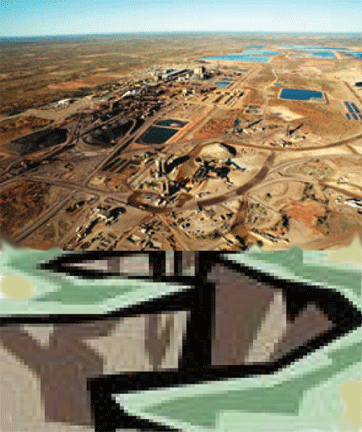
difficult to determine the safety of the reactor, noting the proximity of a seismic faultline.
The government in Japan, one of the world’s most seismically active countries, does not allow nuclear plants to be situated over active faultlines.
July 27 2024, TOKYO, https://japantoday.com/category/national/japan-nuclear-watchdog-panel-decides-against-restarting-tsuruga-reactor1
A panel of Japan’s nuclear watchdog decided on Friday against restarting a reactor at the Tsuruga nuclear power plant citing seismic risks, paving the way for the regulator to keep the Japan Atomic Power plant shut.
The panel said it was difficult to determine the safety of the reactor, noting the proximity of a seismic faultline. Consequently, it said, the reactor was not deemed compliant with criteria for installation licensing.
“We will conduct an additional investigation. We are not considering decommissioning the plant,” Mamoru Muramatsu, president of Japan Atomic Power, said after the panel meeting, according to Kyodo News Agency.
The government in Japan, one of the world’s most seismically active countries, does not allow nuclear plants to be situated over active faultlines.
The panel is set to report its decision to the Nuclear Regulation Authority (NRA) soon.
If approved, this would be the first case of non-compliance under the stricter safety standards imposed after the 2011 Fukushima nuclear disaster.
The move could hinder the government’s efforts to restart more nuclear power plants to ensure a stable energy supply.
Japan, which had 54 operational reactors before the 2011 disaster, has restarted only 12 of the 33 nuclear reactors it has been considering restarting.
Along with most reactors in Japan, operations at the Tsuruga’s No.2 reactor have been halted since 2011 following triple meltdowns at Tokyo Electric Power’s Fukushima Daiichi nuclear power plant.
On March 11, 2011, Japan’s northeast coast was struck by a magnitude 9 earthquake, the strongest quake in Japan on record, and a massive tsunami, triggering the worst nuclear crisis since Chernobyl a quarter of a century earlier.
Seek shelter ‘best option’ in nuclear incident
Caroline Robinson, 25 July 24, BBC News, Ben Chapple, BBC News, Guernsey
Channel Island authorities will advise people to seek shelter in the unlikely event of a nuclear incident affecting the islands.
The UK Health Security Agency (UKHSA) looked at nuclear risks to the islands as part of “routine risk and business continuity planning”.
It said the risk of a nuclear incident occurring was extremely low and its review considered the worst-case scenarios.
The UKHSA recommended shelter-in-place and stockpiling iodine be considered, but the pan-island Radiation Advisory Group decided shelter was the most appropriate choice for the islands.
‘Shelter-in-place’
Nearby nuclear sites in France, radioactive waste dumped in the Hurd Deep trench off Alderney in the 1950s and 1960s and the transport of nuclear materials by ship in the seas around the Channel Islands were the risks considered.
The sites in France looked at were the Orano La Hague nuclear fuel reprocessing site, the Flamanville nuclear power station and Cherbourg’s naval dockyard, where nuclear submarines are dismantled.
The UKHSA said if an incident happened at one of these sites wind direction and weather were important – wind could blow the radioactive material towards the islands and rain would cause more of it to land on the islands.
Based on five years of weather data it said with the prevailing wind being from the west and south west it was unlikely a plume would be blown towards the islands.
The UKSHA said if any material was due to arrive in the island the “best option” for people was to “shelter-in-place”.
This means going inside, closing doors and windows and turning off ventilation fans and air conditioning…………………………………………………………….. more https://www.bbc.com/news/articles/c3grzg9j3xgo
High hopes and security fears for next-gen nuclear reactors

Fuel for advanced reactors is raising nuclear proliferation concerns.
The Verge, By Justine Calma, a senior science reporter covering energy and the environment with more than a decade of experience. She is also the host of Hell or High Water: When Disaster Hits Home, a podcast from Vox Media and Audible Originals, Jul 20, 2024
Next-generation nuclear reactors are heating up a debate over whether their fuel could be used to make bombs, jeopardizing efforts to prevent the proliferation of nuclear weapons.
Uranium in the fuel could theoretically be used to develop a nuclear weapon. Older reactors use such low concentrations that they don’t really pose a weapons proliferation threat. But advanced reactors would use higher concentrations, making them a potential target of terrorist groups or other countries wanting to take the fuel to develop their own nuclear weapons, some experts warn.
They argue that the US hasn’t prepared enough to hedge against that worst-case scenario and are calling on Congress and the Department of Energy to assess potential security risks with advanced reactor fuel.
Other experts and industry groups still think it’s unfeasible for such a worst-case scenario to materialize. But the issue is starting to come to a head as nuclear reactors become a more attractive energy source, garnering a rare show of bipartisan support in Congress.
……. Earlier this month, President Joe Biden signed bipartisan legislation into law meant to speed the development of next-generation nuclear reactors in the US by streamlining approval processes.
………….The US Nuclear Regulatory Commission (NRC) certified an advanced small modular reactor design for the first time last year. And we’re likely still years away from seeing commercial plants in action. But if the US ever wants to get there, it’ll also have to build up a supply chain for the fuel those advanced reactors would consume. The Inflation Reduction Act includes $700 million to develop that domestic fuel supply.
Today’s reactors generally run on fuel made with a uranium isotope called U-235. Naturally occurring uranium has quite low concentrations of U-235; it has to be “enriched” — usually up to a 5 percent concentration of U-235 for a traditional reactor. Smaller advanced reactors would run on more energy-dense fuel that’s enriched with between 5 to 20 percent U-235, called HALEU (short for high-assay low-enriched uranium).
That higher concentration is what has some experts worried. “If the weapons usability of HALEU is borne out, then even a single reactor would pose serious security concerns,” says a policy analysis penned by a group of nuclear proliferation experts and engineers published in the journal Science last month (including an author credited with being one of the architects of the first hydrogen bomb).
Fuel with a concentration of at least 20 percent is considered highly enriched uranium, which could potentially be used to develop nuclear weapons. With HALEU designs reaching 19.75 percent U-235, the authors argue, it’s time for the US to think hard about how safe the next generation of nuclear reactors would be from malicious intent.
“We need to make sure that we don’t get in front of ourselves here and make sure that all the security and safety provisions are in place first before we go off and start sending [HALEU] all around the country,” says R. Scott Kemp, associate professor of nuclear science and engineering and director of the MIT Laboratory for Nuclear Security and Policy.
That 20 percent threshold goes back to the 1970s, and bad actors ostensibly have more information and computational tools at their disposal to develop weapons, Kemp and his coauthors write in the paper. It might even be possible to craft a bomb with HALEU well under the 20 percent threshold, the paper contends……………………………………………………………………………………..
Aside from asking Congress for an updated security assessment of HALEU, the paper suggests setting a lower enrichment limit for uranium based on new research or ramping up security measures for HALEU to more closely match those for weapons-usable fuels.
…………………………“Unless there’s a really good reason to switch to fuels that pose greater risks of nuclear proliferation, then it’s irresponsible to pursue those,” says Edwin Lyman, director of nuclear power safety at the Union of Concerned Scientists and another author of the paper. Lyman has also raised concerns about the radioactive waste from nuclear reactors over the years. “There is no good reason.” https://www.theverge.com/24201610/next-generation-nuclear-energy-reactors-security-weapons-proliferation-risk
Nuclear industry faces acute cybersecurity threats – report.

many nuclear plants rely on software that is “built on insecure foundations and requiring frequent patches or updates” or “has reached the end of its supported lifespan and can no longer be updated”.
with operators opting to run the facility by a central computer system without human presence. Increased reliance on cloud systems to run infrastructure is bound to enhance the cybersecurity risks.
Think tank Chatham House claims that the global nuclear industry has to take measures to ease cybersecurity concerns.
Power Technology, Alfie Shaw, July 19, 2024
As nuclear power establishes itself as an ever more important source of energy for nations across the world, cybersecurity risks are also becoming increasingly menacing, according to a new report by UK think tank Chatham House.
The Sellafield NPP debacle was a conspicuous case of nuclear cybersecurity going awry.
The site on the English coast has been hacked multiple times by actors with close ties to Russia and China since 2015 but this was “consistently covered up by senior staff”, the Guardian reported last December.
According to the Guardian, information and data on Sellafield’s most sensitive activities could have been fed back to foreign parties through “sleeper malware” that has lurked in the background of its computer systems for as long as ten years.
While Sellafield is used primarily as a nuclear waste and decommissioning site, rather than for active nuclear production, the site has the world’s largest stores of plutonium, a highly reactive metal used to make nuclear weapons. It also contains a set of emergency planning documents that detail the steps the UK Government would take should the country come under foreign attack, meaning foreign hackers could have accessed the “highest echelons of confidential material at the site”.
The case therefore illustrated how not only energy security, but national security can be comprised by nuclear cybersecurity threats.
According to Chatham House’s ‘Cybersecurity of the civil nuclear sector’ report, there are several reasons the nuclear power industry is particularly vulnerable to cybersecurity breaches.
An unprepared and oblivious industry
Firstly, a lot of the existing nuclear power infrastructure is dated and does not possess up-to-date cybersecurity technology.
Chatham House notes that, currently, many nuclear plants rely on software that is “built on insecure foundations and requiring frequent patches or updates” or “has reached the end of its supported lifespan and can no longer be updated”. The think tank pointed out that civil nuclear industries are thus playing catch up with other critical national infrastructure (CNI) industries when it comes to cybersecurity.
The fact that nuclear infrastructure is considered to be CNI also makes it an attractive target for hackers. As demonstrated by the Sellafield incident, nuclear sites can have implications beyond energy, including national security. Foreign actors could target another state’s nuclear industry to not only jeopardise the state’s energy security but also gain a military advantage, says Chatham House.
Another vulnerability highlighted by the report is the industry’s reliance on ‘security by obscurity’. Hubristic systems managers have often neglected adequate security measures due to the assumption that ICT (information and communication technology) systems in older NPPs are too small-scale to have well-known vulnerabilities that can be exploited.
The SMR threat
The Chatham House report also details how the uptake of small modular reactors (SMRs) could lead to increased cybersecurity risks.
Due to their diminutive size, SMRs can be deployed in disparate areas that lack the physical conditions necessary for the deployment of large-scale energy infrastructure. The inherent versatility of the advanced technology has made it popular among governments across the world as they seek to widen access to more forms of renewable energy.
However, SMR-centred nuclear infrastructure would look different to that of traditional reactors, requiring different security measures.
For one, there will be a larger number of SMRs in more locations due to their easily deployable nature. It might not be practical to have staff at each site, with operators instead opting to run the facility by a central computer system without human presence. Increased reliance on cloud systems to run infrastructure is bound to enhance the cybersecurity risks, Chatham House says.
Furthermore, SMRs present additional supply chain pinch-points for cybersecurity, as the materials for SMRs tend to be prefabricated by a larger number of varying suppliers than in traditional nuclear plants, according to Chatham House.
Combination of cyber and physical threats
Chatham House notes that while NPPs are not designed to operate in war zones, they do have several layers of physical safety built in to protect reactors from kinetic threats. However, physical threats combined with cybersecurity breaches could create far more menacing risks for plant operators that could overwhelm operating staff and enable unauthorised access to nuclear materials.
For instance, in Serbia during the Balkan wars of the 1990s, this combination of threats was realised at the Vinca research reactor, where research staff feared that highly enriched uranium fuel could be stolen. The International Atomic Energy Agency (IAEA) was forced to carry out several inspections between 1995 and 1999. The plant was saved, but for some time the threat nearly escalated into catastrophe.
More recently, the Zaporizhzhia NPP has raised similar concerns. Since November 2022, Russia has controlled the NPP, which sits on the front line of Russian-occupied Ukraine. “Reckless attacks” on the power plant have “significantly increased the risk of a major nuclear accident”, Rafael Mariano Grossi, director-general of the IAEA, told the UN Security Council in April, although Russia and Ukraine have accused each other of carrying out the attacks.
Where does the industry go from here?
……………………………………….With states rushing to grapple with rapaciously evolving cyber technologies, nuclear regulators may have their work cut out safeguarding the digital side of their industry. As the world becomes increasingly digitalised, and more reliant on decentralised, cloud-based systems, it is fair to expect cybersecurity to become a pressing issue for regulators in the near future. https://www.power-technology.com/news/nuclear-industry-faces-menacing-cyber-security-threats-according-to-chatham-house/?cf-view&cf-closed
‘Near miss’ incident reported at nuclear waste site near Carlsbad
Federal watchdog reports ongoing safety concerns at WIPP
JULY 19, 2024, Adrian Hedden, Carlsbad Current-Argus
Federal nuclear oversight staff reported several safety problems at the Waste Isolation Pilot Plant in a monthly report, despite a “safety stand down” in April that was intended to pause work while WIPP officials retooled various protocols.
The Defense Nuclear Facilities Safety Board (DNSFB) reported “ongoing safety culture challenges” in its June 7 report on WIPP activities as the facility near Carlsbad disposes of transuranic (TRU) nuclear waste from federal facilities around the country.
The monthly report covered observations and incidents from May, noting a “near miss” incident which saw a waste handler improperly using a forklift instead of a crane to reposition weights in the parking lot waste storage area.
The May 20 event saw the waste handler using two forklifts to reposition a “six-ton” calibration weight, read the report, without proper documentation or analysis or the awareness of a shift supervisor.
The forklift sling broke while rotating the weight, read the report, causing it to fall on its side and send a shackle flying “a significant distance” away from the lift and past a spotter.
In another incident, all routine work was paused May 23 to 28 after a bolter contacted an electrical box near WIPP’s exhaust shaft, read the report, causing a bulkhead to lose function, rendering sump pumps inoperable and creating potential exposure to “hazardous energy.”………………………………………………….. more https://www.currentargus.com/2024/07/near-miss-incident-reported-at-nuclear-waste-site-near-carlsbad/
US bases in Europe on high alert for possible terrorist attack: DOD
Bradford Betz , Lucas Y. Tomlinson, Fox News, Sun, 30 Jun 2024 https://www.sott.net/article/492907-US-bases-in-Europe-on-high-alert-for-possible-terrorist-attack-DOD
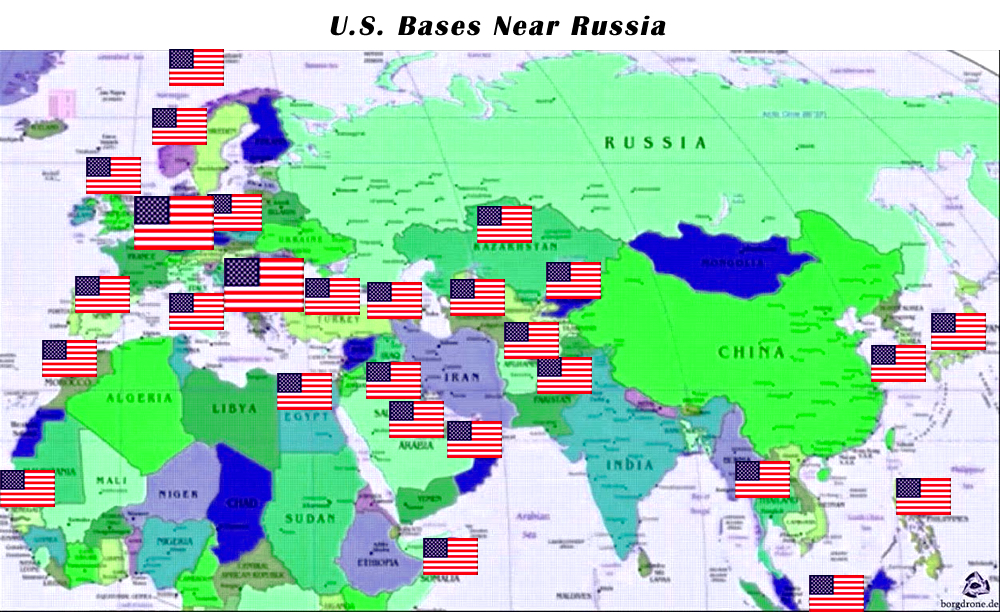
U.S. military bases throughout Europe have been put on heightened alert status due to a potential terrorist attack, Fox News Digital has confirmed.
FILE – Sign in front of Ramstein Air Base, Germany.“There is credible intel pointing to an attack against U.S. bases over the next week or so,” a U.S. defense official told Fox News’ Lucas Tomlinson.
The official, who declined to be identified because he was not authorized to speak to the media, did not elaborate on the nature of the threat, but confirmed it was not tied to the French elections.
ISIS remains global threat a decade after declaring caliphate, US military official says
The official said all U.S. military bases in Europe have been placed on high alert, not a lock-down.
The U.S. bases have raised the status of the alert level to, “Force Protection Charlie,” which means the Pentagon has received credible intelligence indicating some form of a terrorist attack is in the works.
The new alert applies to all U.S. military facilities and personnel in Europe, including facilities in Germany, Italy, Romanian and Bulgaria, per reporting from Stars and Stripes.
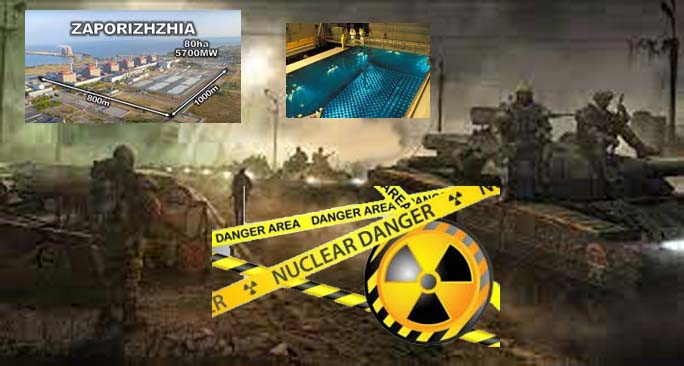
Russia might restart the Zaporizhzhia Ukrainian nuclear plant it seized, our new report shows
Charles Digges, Bellona, 2 July 24
“……………………………………………….. Russia has taken over the plant with its own technicians while coercing the Ukrainian workers who remain to sign contracts with Rosenergoatom, the branch of Rosatom, responsible for day-to-day operations at the 11 nuclear plants within Russia. The Kremlin has also spun off another commercial tendril from Rosatom to oversee the management of the captive plant.
But should a potential restart continue to unfold, the principal nuclear threat of Putin’s war on Ukraine could soon be an atomic energy station operating on the front lines of a protracted war.
Since early in the invasion, all of the Zaporizhzhia nuclear plant’s reactors have been placed in various states of shutdown. This was a critical safety measure, urged by the IAEA and agreed to by both Moscow and Kyiv, which would dampen the impact of a radiological disaster should any of the reactors suffer a catastrophic strike.
In this setting, the content of short-lived and highly dangerous radionuclides like iodine-131 in uranium fuel is much lower than if the plant was active because they have partially, or even completely decayed since September 2022. But once the reactors are restarted, these radionuclides will once again begin to form — making their spread into the environment a possibility should reactor containments be ruptured.
Despite the obvious risks, recent statements from Russian officials and, more concretely, the activities of Russia’s technical oversight agency within Ukraine, indicate that the plant’s Russian occupiers could move to restart at least one of the reactor units sometime this year — thus removing this important assurance against disaster.
To restart a reactor, Russian technicians would first have to guarantee an ample and stable supply of cooling water. This task was made more difficult by the destruction of the nearby Khakovka Dam in June 2023, which compromised several reservoirs used for precisely that purpose.
But over the past year, the Russian side has announced plans to replenish the plant’s damaged cooling ponds, which would then be capable of supplying up to three reactors.
Further, Russian technicians have begun to rewire the power grid to divert the electricity produced by the Zaporizhzhia nuclear plant toward Russia and the occupied territories of Ukraine. Satellite images of the Rosatom-controlled Zaporizhzhia Terminal Power Plant, which connects the nuclear plant to the Ukrainian grid, show evidence of efforts to shift powerlines away from Ukraine and into the occupied regions.
The plant has also recently played host to high-profile guests from Moscow. In April, Alexander Trembitsky, the head of Russia’s Federal Service for Environmental, Technological and Nuclear Supervision, Rostekhnadzor) visited the plant to review personnel certifications and work toward extending the lifespan of the reactors. Rostekhnadzor officials have also been codifying licensing requirements for the plant to operate under Russian purview and reviewing various plant systems since the start of the year.
That same month Sergei Kiriyenko, a former CEO of Rosatom and one of Putin’s first deputies, visited Enerhodar, where many plant workers live.
This flurry of activity followed a March meeting in Sochi between Putin, current Rosatom CEO Alexei Likhachev, and IAEA director general Rafael Grossi, during which, according to media reports, Putin stated his intentions to restart Zaporizhzhia’s reactors. This remains diplomatically unconfirmed by other sources, but recent events seem to bear those intentions out.
Kyiv vociferously protested Russia’s efforts to disconnect a nuclear plant that once supplied 5700 megawatts, or about 10%, of Ukraine’s entire electricity needs. There is little doubt that the military could fight back against any efforts to redirect this energy.
Still, efforts to relaunch the reactors may prove to be more effort than they are worth.
Fresh nuclear fuel and spare parts would have to be transported across war zones. The pump station enhancing cooling water supplies is being constructed under conditions of military conflict. Powerlines will have to be rerouted under fire. All of this will cost billions of rubles, which, in our analysis, will hardly be recouped by tariffs on the power one or two Zaporizhzhia reactors would produce. ………. https://bellona.org/news/nuclear-issues/2024-07-russia-might-restart-the-ukrainian-nuclear-plant-it-seized
UK’s Nuclear weapons pose a risk to proposed new homes
By Nick Clark, Local Democracy Reporting Service, 28 June 24, https://www.bbc.com/news/articles/clddy5kyv64o
Nuclear weapons could pose a risk to plans for almost 500 homes just outside a village, a council has been warned.
The Atomic Weapons Establishment (AWE) – the only maker of nuclear warheads in Britain – has opposed plans for the development near Spencers Wood in Berkshire.
It told Wokingham Borough Council the residents would live in an area exposed to a “radiation emergency” if something went wrong at its site in nearby Burghfield.
Proposals for the site also include a primary school and green space.
‘Safety concerns’
Development consultants Pegasus Group submitted the plans for up to 475 homes in May.
While not a formal planning application, the submission hopes to determine if a development would affect the environment, according to the Local Democracy Reporting Service (LDRS).
But in a letter to the council, AWE said the plans raised “significant” safety concerns.
It said the proposed site, between Basingstoke Lane and Sussex Lane, fell within its Detailed Emergency Planning Zone (DEPZ).
This is an area where neighbouring West Berkshire Council must have a detailed plan in place for its response to a nuclear emergency at Burghfield.
AWE said: “Whilst chances of a radiation emergency at AWE B are very low, the potential impact on the local population would be high and an appropriate and proportionate step is, to where possible, avoid new development being located within the DEPZ.”
It added the increased population in the area would also put strain on emergency services’ ability to help existing residents in the event of an emergency.
Wokingham Borough Council’s own emergency planning manager also said he would likely oppose the proposals if developers Richborough applied for planning permission.
He said the new development would have a “detrimental impact” on its emergency plan to help people living within the DEPZ.
1 This Month

of the week – Shut Down Drone Warfare!


Tell the Ukrainian Government to Drop Prosecution of Peace Activist Yurii Sheliazhenko

Petition to revoke the licensing of the Near Surface Nuclear Disposal Facility (NSDF) at Chalk River. https://www.ourcommons.ca/petitions/en/Petition/Details?Petition=e-7247
To see nuclear-related stories in greater depth and intensity – go to https://nuclearinformation.wordpress.com
-
Archives
- April 2026 (79)
- March 2026 (251)
- February 2026 (268)
- January 2026 (308)
- December 2025 (358)
- November 2025 (359)
- October 2025 (376)
- September 2025 (257)
- August 2025 (319)
- July 2025 (230)
- June 2025 (348)
- May 2025 (261)
-
Categories
- 1
- 1 NUCLEAR ISSUES
- business and costs
- climate change
- culture and arts
- ENERGY
- environment
- health
- history
- indigenous issues
- Legal
- marketing of nuclear
- media
- opposition to nuclear
- PERSONAL STORIES
- politics
- politics international
- Religion and ethics
- safety
- secrets,lies and civil liberties
- spinbuster
- technology
- Uranium
- wastes
- weapons and war
- Women
- 2 WORLD
- ACTION
- AFRICA
- Atrocities
- AUSTRALIA
- Christina's notes
- Christina's themes
- culture and arts
- Events
- Fuk 2022
- Fuk 2023
- Fukushima 2017
- Fukushima 2018
- fukushima 2019
- Fukushima 2020
- Fukushima 2021
- general
- global warming
- Humour (God we need it)
- Nuclear
- RARE EARTHS
- Reference
- resources – print
- Resources -audiovicual
- Weekly Newsletter
- World
- World Nuclear
- YouTube
-
RSS
Entries RSS
Comments RSS
 nuclear-news