New nuclear safety rules proposed for European Union
 EU Presents Post-Fukushima Nuclear Safety Rules BRUSSELS June 13, 2013 (AP) abc news, The European Commission proposed tougher nuclear safety rules Thursday, amid international debate about the future of nuclear energy and how to secure aging plants.
Stress tests on European nuclear plants prompted by the 2011 disaster at Japan’s Fukushima nuclear plant showed that almost all of them needed safety improvements. A report on those tests called for more consistency across the 27-nation EU in assessing and managing nuclear safety threats. EU nuclear plants already undergo regular tests, but the proposed new rules would strengthen that. They include EU-wide safety reviews every six years, and the threat that the EU would send in inspectors if countries don’t do enough to ensure nuclear safety. It would also include a system of peer reviews, allowing national governments to verify their neighbors’ atomic plants.
Another new rule would require emergency response centers on the site of nuclear plants that would be protected against radioactivity, earthquakes and flooding.
Critics called the plan too modest; EU Energy Commissioner Guenther Oettinger called it “realistic.”….. Environmental group Greenpeace said the new rules do not do enough to address potential terrorist threats, or to increase the powers of nuclear regulators, which have been accused in the past of being too close to nuclear industry players.
Several European countries are rethinking their reliance on nuclear energy since the Fukushima accident……. After last year’s stress tests to gauge nuclear reactors’ ability to withstand accidents and natural disaster, the commission said the costs of needed improvements to EU reactors could run as high as 25 billion euros ($32 billion) over the coming years. http://abcnews.go.com/International/wireStory/eu-presents-post-fukushima-nuclear-safety-rules-19390098#.UbuQO-dwo6I
France investigating low security at nuclear submarine base
France launches probe into ‘vulnerable’ nuclear base after media disclosure RT.comJune 13, 2013 The French government ordered an inquiry into a nuclear submarine base off the coast of Brittany after the claims in the local paper that the strategic site is vulnerable for terrorist attack due to poor security.
The country’s defense minister, Jean-Yves Le Drian, took the publication by Le Telegramme de Brest daily very seriously, calling for an immediate check at the base on the Ile Longue island, AFP reports.
The paper has called the base “a fortress on paper,” revealing huge security flaws at the facility, which hosts France’s four nuclear attack submarines.
According to the publication, access controls to the base were very weak as they didn’t use biometric identification systems, which are common for most modern airports. ……
The submarines at the Ile Longue island constitute the bulk of France’s nuclear deterrent after the country closed its land-based, long-range nuclear system at the Albion Plateau back in 1999.
The four nuclear subs, which are commonly known as ‘Boomers’, are each equipped with 16 inter-continental ballistic missiles.
Le Telegramme warned that there’ll be serious trouble if they fall into the wrong hands as firepower of just one submarine is equal to 960 times the nuclear explosion in Hiroshima in 1945.
Independent defense consultant, Jean-Marie Collin, told Francetv Info that the investigation into the Ile Longue base is an “an admission of weakness” by the French defense ministry, which indicates problems in the country’s national security. …… http://rt.com/news/france-nuclear-submarine-security-645/
Serious safety flaw – Monticello nuclear power plant not prepared for major flood
Feds fault Monticello nuclear power plant’s flood planning by: DAVID SHAFFER , Star Tribune June 11, 2013 Inspectors said Monticello plant wasn’t prepared for a major flood, but also said Xcel’s response means site is not now a “safety concern.” Xcel Energy’s Monticello nuclear power plant on the bank of the Mississippi River has long been unprepared for worst-case flooding, federal regulators said Tuesday in a finding they classified as having “substantial safety significance.”
U.S. Nuclear Regulatory Commission (NRC) inspectors said Xcel’s flood-fighting efforts, including dikes, could not have been completed in the 12 days required, and some work would take twice that time.
Xcel, which owns and operates the plant 40 miles northwest of the Twin Cities, said it has addressed the problem by putting dike-building materials on site. As a result, NRC inspectors said, the issue is “not a current safety concern.”
But the finding, which is preliminary, is the Monticello plant’s most serious safety shortcoming since the NRC adopted a color-coded, four-step ranking system for inspection results. This problem was ranked “yellow,’’ one level short of the “red,’’ or most serious, level. (The two lowest levels are “green” and “white.” )
Xcel has 10 days to challenge it, and the plant faces enhanced inspections if the finding stands.
Three other U.S. nuclear power plants belonging to other utilities also have been cited recently for unsatisfactory flood-fighting plans after a round of inspections prompted by the 2011 tsunami and disaster at the Fukushima Daiichi nuclear power plant in Japan, an NRC official said…… http://www.startribune.com/business/211107961.html
Nuclear Regulatory Commission will take safety allegations seriously
 Nuclear Energy Activist Toolkit #8: Allegations, Union of Concerned Scientists Dave Lochbaum, director, Nuclear Safety Project June 11, 2013 The NRC’s Allegations Program handles accusations that NRC’s requirements are being violated. The NRC receives allegations from workers at NRC-licensed facilities as well as from other sources. For example, workers sometimes seek to protect their identities (and their jobs) by voicing their concerns to media and groups like UCS. The NRC’s 250-word definition of allegation contains three footnotes containing 206 words of “clarification.” Ignoring that legal mumbo-jumbo, the NRC’s Allegations Program looks into reports that the agency’s requirements may have been violated.
The NRC can process allegations submitted anonymously, but would prefer to know the sources of allegations. The NRC seeks to ensure it correctly understands the allegations before dispatching inspectors to examine the issues. And sometimes the NRC re-contacts sources for additional information during the course of its investigations. The NRC also sends a letter summarizing the scope of its investigation and its findings to sources it knows.
With very few exceptions (such as when an allegation is made in a newspaper article or posted on a website), the NRC treats all sources confidentially even within the agency. For example, while the NRC’s allegations staff know the identity of a source, the NRC’s inspectors who investigate the allegations would not know this information…… Continue reading
UK emergency services not up to dealing with a nuclear transport radiation accident
Nuclear convoy disaster exercise reveals weaknesses in emergency response Rob Edwards The Guardian, 13 June 2013 Internal report highlights five-hour wait for weapons experts and confusion over radiation monitoring. An emergency exercise has exposed serious weaknesses in Britain’s ability to cope with a catastrophic motorway pileup in which a nuclear bomb convoy burns and spreads a cloud of radioactive contamination over nearby communities.
An internal report released by the Ministry of Defence reveals that the emergency services faced “major difficulties” in responding to the mocked-up accident near Glasgow because they had no help from MoD weapons experts for more than five hours.
At times the response, which involved 21 agencies, was disorganised, the report says. Heated disputes with ambulance staff over how to handle casualties contaminated with radioactivity at the crash site caused “considerable delay”, resulting in one victim being declared dead.
Other problems included outdated, paper-based communications systems, poor mobile phone signals, conflicting scientific advice on health hazards and confusion over radiation monitoring.
Nuclear weapons are transported in heavily guarded road convoys up to six times a year between bomb factories at Aldermaston and Burghfield in Berkshire and the Royal Naval Armaments Depot at Coulport on Loch Long in Argyll. The trips are needed to ensure that Britain’s stockpile of about 200 Trident missile warheads is properly maintained…. http://www.guardian.co.uk/world/2013/jun/12/nuclear-convoy-disaster-exercise-emergenc
Safety upgrades required will cost U.S. nuclear plant operators $billions
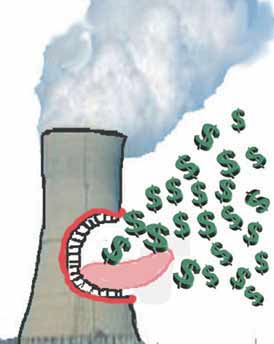 U.S. plants covered under the directive are older, boiling-water reactors mainly similar in design to the Fukushima facility…..
Plant operators may have to spend nearly $3.6 billion over the next three to five years on modifications to the nation’s 102 nuclear facilities in response to the Fukushima accident, according to a Platts survey released on Thursday.
U.S. orders new safety upgrades at nuclear plants By CNN Staff June 7, 2013 –– Washington — U.S. regulators are directing 31 nuclear reactors similar in design to the Fukushima Daiichi plant in Japan, where an earthquake and tsunami caused a meltdown two years ago, to take additional steps to help contain radiation and other damage from any accident that is not quickly halted.
The Nuclear Regulatory Commission directive on Thursday requires enhancements to systems for venting accumulated pressure from containment structures during an emergency. Vents must also be able to safely handle rising temperatures, hydrogen concentrations and radiation levels.
The changes also aim to ensure that plant personnel can continue to operate vents safely if a reactor core melts down, the agency said. Continue reading
South Korean government sacks nuclear power bosses
South Korea’s top nuclear plant operator sacked Channel News Asia : 07 Jun 2013 South Korea on Thursday fired the head of the state-run company that oversees the country’s 23 nuclear reactors over a forged documentation scandal that has shut a host of those reactors down. SEOUL – South Korea on Thursday fired the head of the state-run company that oversees the country’s 23 nuclear reactors over a forged documentation scandal that has shut a host of those reactors down.
Korea Hydro and Nuclear Power president Kim Kyun-Seop was dismissed from his post for the scandal involving parts provided with fake safety certificates, the Ministry of Trade, Industry and Energy said in a statement.
It added that An Seung-Kyoo, CEO of KEPCO Engineering and Construction, which is responsible for nuclear power plant design and technology, would also be sacked at a board meeting on Friday.
The ministry had vowed stern punitive action against any senior officials of the two companies if they were found involved in the scandal.
The move came after President Park Geun-Hye demanded action over what she called “unpardonable” corruption in the nuclear power sector.
State prosecutors have launched an extensive probe into the case which forced the shutdown of two reactors on May 28 and delayed the scheduled start of operations at two more.
At proper capacity, South Korea’s nuclear reactors supply more than 35 percent of national electricity needs.
But 10 of 23 reactors are currently offline for various reasons, prompting government warnings of serious power shortages……http://www.channelnewsasia.com/news/asiapacific/south-korea-s-top-nuclear-plant-operator/700446.html
All of Tennessee Valley Authority.s nuclear power plants have notices of safety violations
All of TVA’s nuclear power plants operating under notices of safety violations http://enformable.com/2013/06/all-of-tvas-nuclear-power-plants-operating-under-notices-of-safety-violations/ Lucas W Hixson The Tennessee Valley Authority (TVA) is a federally owned corporation in the United States, which is already facing the threat of being sold as it carries some $25 billion in debt -just under the $30 million debt limit set by Congress, is facing increased oversight after having been found to having improperly assessed safety violations at two nuclear power plants. TVA owns and operates the Browns Ferry, Sequoyah, and Watts Barr nuclear power plants, all of which are operating under notices of safety violations. In 2011, the Browns Ferry nuclear power plant was issued a red finding due to the failure of a safety valve and TVA’s failure to recognize the problem.
This week, the Nuclear Regulatory Commission put the Sequoyah nuclear power plant and Watts Bar nuclear power plant on increased oversight after determining that TVA violated nuclear safety standards in how the utility analyzed and prepared its flood assessment risk at the two nuclear power plants, both of which are located on the Tennessee River.
In late April of this year, the NRC staff held a conference with TVA officials to discuss the risk significance of the issues with the flood protection area. After reviewing information presented by TVA and previous NRC inspections, the NRC staff concluded that the licensee had not met safety standards in multiple areas at both nuclear power plants. The NRC concluded that TVA did not adequately establish flooding protection for scenarios involving the failure of upstream dams and also had not taken necessary measures to prevent water from flooding the intake pumping station. Additionally, TVA was cited for an additional violation for not promptly notifying the NRC after discovering that the potential failure of upstream dams could result in an unanalyzed condition affecting plant safety.
In response to the violations, the Nuclear Regulatory Commission also increased its oversight at the nuclear power plants, an expense that TVA will have to pay for, putting all three nuclear facilities operated by TVA under increased oversight due to safety violations. The NRC did not choose to impose further civil penalties and fines on TVA beyond the expense of the additional inspections and oversight.
Nuclear Regulatory Commission orders upgrades for 31 nuclear reactors
Upgraded vent systems ordered for 31 nuclear reactors, including two at Peach Bottom Nuclear Regulatory Commission says move is a safety measure By Jamie Smith Hopkins, The Baltimore Sun, June 6, 2013 The Nuclear Regulatory Commission said Thursday that it has ordered a venting upgrade for nearly a third of the reactors in the country, including ones at the Peach Bottom Atomic Power Station just north of Harford County.
Peach Bottom, in Delta, Pa., has two of the 31 reactors that must now have venting systems that can better handle accidents. The commission’s order is part of its review effort following the 2011 nuclear meltdown in Fukushima, Japan, after an earthquake and tsunami.
Scott Burnell, a spokesman for the Nuclear Regulatory Commission, said officials want venting systems in place that can operate “under a wider set of conditions and keep doing the job they’re designed for” — releasing pressure and hydrogen so containment buildings can hold on to radioactive material….. http://www.baltimoresun.com/business/bs-bz-nuclear-reactor-safety-20130606,0,3084896.story#ixzz2VZ6s598g
EPA Dramatically Weakens Radiation Protection
 Fukushima Radiation Risk Media Deception, Lynda Lovon 3 June 13 ………“The U.S. Environmental Protection Agency (EPA) is publishing in the Federal Register today controversial new Protective Action Guides (PAGs) for responding to radioactive releases. EPA says it solicits public comment but is nonetheless making the PAGs immediately effective.
Iran’s Bushehr nuclear plant has long cracks: its safety is in doubt
Iran’s only working nuclear reactor damaged by earthquakes, diplomats say Fox news, June 04, 201 Associated Press Several countries monitoring Iran’s nuclear program have picked up information that the country’s only power-producing nuclear reactor was damaged by one or more of several recent earthquakes, with long cracks appearing in at least one section of the structure, two diplomats said Tuesday.
Iran is under U.N. sanctions for refusing to stop nuclear programs that could be used to make weapons, even as it insists it has no such plans.
Its Bushehr nuclear plant is not considered a proliferation threat. But some nations are concerned about how safe it is. Iran has refused to join an international nuclear safety convention and persistent technical problems have shut the plant for lengthy periods since it started up in September 2011 after years of construction delays.
Reports of the International Atomic Energy Agency in February and May said the agency had been informed by the Iranians that the facility was shut down, without specifying why.
Kuwait and other Arab countries are only a few hundred miles away from Iran’s Bushehr reactor, which is on the Persian Gulf coast, and are particularly worried about the safety of the Russian-built reactor. Saudi Arabia mentioned Bushehr as a safety concern on Tuesday at a session of the Vienna-based IAEA’s 35-nation board.
But Iran insists the plant is technically sound and built to withstand all but the largest earthquakes unscathed. Officials in Tehran reassured the international community after the quakes struck in April and early May that the facility was undamaged.
The diplomats referred to recent restricted information gathered from the site in questioning that assertion. They told The Associated Press that one concrete section of the structure developed cracks several meters long as a result of the quakes on April 9 and April 16.
Both diplomats are from member countries of the Vienna-based International Atomic Energy Agency, which monitors Iran’s nuclear program. They demanded anonymity because they are not allowed to divulge confidential information.
One of the two said that the cracks seen were not in the vicinity of the reactor core, which contains highly radioactive fuel. But he said that the information available was limited to one section of the reactor, meaning damage elsewhere could not be ruled out.
He declined to go into details, saying that could jeopardize the sources…….
Iran is the only country operating a nuclear power plant that has not signed on to the 75-nation nuclear safety convention, which was created after the 1986 Chernobyl nuclear disaster.

Uranium is France’s major strategic economic interest in the Sahel,
How long before the bombings hit Paris?
Niger’s Uranium Facilities Under Assault Oil Price, By John Daly, 03 June 2013 One of the scariest scenarios for Western intelligence analysts is the possible nexus between terrorism and nuclear materials Recent events in Africa have heightened these scenarios. Continue reading
USA’s Dept of Energy’s plans for allowing recycling of radioactive metals
Nuclear site scrap metal could be headed to recyclers June 2, 2013 By Len Boselovic / Pittsburgh Post-Gazette A U.S. Department of Energy proposal to recycle scrap metal from its nuclear facilities has set off the radiation detectors of environmental groups, some in the metals industry and one member of Congress.
But the industry group representing metals recyclers says current safeguards will prevent any radioactive scrap from getting into jewelry, knives and forks and other common goods consumers use every day.
The DOE’s draft proposal, issued in December, comes 13 years after then Energy Secretary Bill Richardson suspended shipments of metal scrap from the agency’s sites because of public safety concerns.
“This involves risk. Radiation causes cancer,” said Daniel Hirsch, president of the Committee to Bridge the Gap. “The U.S. population should not be used as a disposal facility.”
Mr. Hirsch — whose nonprofit examines nuclear safety, waste disposal and related issues — said rescinding the scrap recycling moratorium that has been in place since 2000 demonstrates the Energy Department’s “callous disregard for the public.”……
Despite radiation detectors at scrap yards and metals plants, there have been cases of radioactive metals making it into mills as well as onto store shelves.
Last year, Bed, Bath and Beyond pulled metal tissue boxes out of about 200 stores after it was discovered that the household items emitted low levels of radiation…….http://www.post-gazette.com/stories/business/news/nuclear-site-scrap-metal-could-be-headed-to-recyclers-690043/#ixzz2VBlSDy22
Desperate radioactive water problem at Fukushima – attempt to freeze surrounding soil
 Soil around Fukushima to be frozen to stop groundwater leaking in http://www.abc.net.au/news/2013-05-31/operator-ordered-to-freeze-soil-around-crippled-nuclear-plant/4724554 By North Asia correspondent Mark Willacy, The Japanese government has ordered the operator of the Fukushima nuclear plant to freeze the soil around its crippled reactor buildings to stop groundwater seeping in and becoming contaminated.
Every day another 400 tonnes of groundwater forces its way into the plant, becomes contaminated with radioactivity and needs to be stored onsite. Plant operator Tokyo Electric Power Company (TEPCO) already has a quarter of a million tonnes of radioactive water stored in tanks at Fukushima. (below Fukushinma Daichi reactor No 6)

Fearing the nuclear plant is running out of space to store contaminated water, the Japanese government has ordered TEPCO to take the drastic step. The government hopes these frozen walls of soil will stop huge amounts of groundwater leaking into the buildings and it wants the system to be in place within two years.
According to a report compiled by a government panel on Thursday, there are no previous examples of using walls created from frozen soil to isolate groundwater being used for longer than a few years.
This means the project at the Fukushima plant poses “an unprecedented challenge in the world”.
Landfill on fire a threat to nearby nuclear waste
“The bottom line is it’s very serious,” “What’s happening up here is not something that has ever been encountered before. They’ve had landfill fires and nuclear waste, but never in such close proximity.
Smoldering Landfill Could Threaten Nuclear Waste, abc News, By JIM SALTER Associated Press BRIDGETON, Mo. May 29, 2013 Dawn Chapman can put up with the noxious smell caused by smoldering trash in a landfill near her suburban St. Louis home. But if the burning creeps close to buried nuclear waste, she’s ready to get out.
It’s a problem that worries many people in this densely populated area near Lambert Airport, where the trash burns just 1,200 feet from another landfill that holds radioactive waste dating back to the Manhattan Project, which created the first atomic bomb in the 1940s. Continue reading
1 This Month




PLEASE OPPOSE HR 8255 AND S.3639 – bills would accelerate satellite deployment, with no environmental review or safeguards – https://ncstd5li.quorum.us/campaign/169331/
To see nuclear-related stories in greater depth and intensity – go to https://nuclearinformation.wordpress.com
-
Archives
- September 2026 (330)
- August 2026 (330)
- July 2026 (355)
- June 2026 (287)
- May 2026 (306)
- April 2026 (356)
- March 2026 (251)
- February 2026 (267)
- January 2026 (308)
- December 2025 (358)
- November 2025 (359)
- October 2025 (375)
-
Categories
- 1
- 1 NUCLEAR ISSUES
- business and costs
- climate change
- culture and arts
- ENERGY
- environment
- health
- history
- indigenous issues
- Legal
- marketing of nuclear
- media
- opposition to nuclear
- PERSONAL STORIES
- politics
- politics international
- Religion and ethics
- safety
- secrets,lies and civil liberties
- spinbuster
- technology
- Uranium
- wastes
- weapons and war
- Women
- 2 WORLD
- ACTION
- AFRICA
- Atrocities
- AUSTRALIA
- Christina's notes
- Christina's themes
- culture and arts
- Events
- Fuk 2022
- Fuk 2023
- Fukushima 2017
- Fukushima 2018
- fukushima 2019
- Fukushima 2020
- Fukushima 2021
- general
- global warming
- Humour (God we need it)
- Nuclear
- RARE EARTHS
- Reference
- resources – print
- Resources -audiovicual
- Weekly Newsletter
- World
- World Nuclear
- YouTube
-
RSS
Entries RSS
Comments RSS

