US nuclear regulator kicks off review on Three Mile Island restart
By Laila Kearney, October 26, 2024
- Summary
- Companies
- NRC holds first public meeting on Three Mile Island restart
- Constellation wants to restore Unit 1’s operating license
- NRC requests more emergency, environmental restart plan details
- Watchdog group questions plans, including simulator
NEW YORK, Oct 25 (Reuters) – U.S. nuclear regulators kicked off a long-winding process to consider Constellation Energy’s (CEG.O), opens new tab unprecedented plans to restart its retired Three Mile Island nuclear power plant in an initial public meeting held on Friday.
Constellation, which announced last month that it had signed a 20-year power purchase agreement with Microsoft that would enable reopening the Unit 1 reactor at Three Mile Island, made its case before the Nuclear Regulatory Commission to restore its operating license for the plant.
The company also sought to extend the life of the plant and change its name to the Crane Clean Energy Center.
Three Mile Island, which is located in Pennsylvania on an island in the Susquehanna River, is widely known for the 1979 partial meltdown of its Unit 2 reactor. That unit has been permanently shut and is being decommissioned.
Members of the NRC requested details about the emergency evacuation plans for the restarted plant and information about the commercial deal with Microsoft, while imploring Constellation to quickly work on permitting related to its water use for the plant.
The NRC also raised questions about how the restart of Unit 1 would intersect with the decommissioning of Unit 2, which began last year, nearly 45 years after the partial meltdown.
Utah-based nuclear services company EnergySolutions owns Unit 2 and related infrastructure, while Constellation owns Unit 1 and the site’s land.
Unit 1 shut down due to economic reasons in 2019, some 15 years before the operating license was set to expire. At the time, Constellation said it did not anticipate a restart.
Constellation now expects to restart the 835-megawatt Unit 1 in 2028, delivering power to the grid to offset electricity use by Microsoft’s data center in the region.
A recent jump in U.S. electricity demand, driven in part by Big Tech’s energy-intensive AI data center expansion has led to a revival of the country’s struggling nuclear industry.
No retired reactor has been restarted before. The Palisades nuclear plant in Michigan, owned by Holtec, is also in the process of being resurrected.
…………………..The physical work to restore Three Mile Island, which is expected to start in the first quarter of 2025, cost at least $1.6 billion, and could require thousands of workers, still needs licensing modifications and permitting.
Local activists have also vowed to fight the project over safety and environmental concerns, including the storage of nuclear waste on the site.
Scott Portzline, who is with nuclear watchdog group Three Mile Island Alert in Harrisburg, questioned the site’s backup power and criticized the proposed nuclear control room simulator used for training.
“I have a constitutional right to know how my nuclear plants are operating and the utility ought to be able to answer that,” Portzline said during the meeting……….
Under the National Environmental Policy Act, the NRC will be required to complete an environmental assessment within the final year of any restart. The plant will require other environmental permits, including ones for air emissions and water pollutants. https://www.reuters.com/business/energy/us-nuclear-regulator-hears-three-mile-island-power-plant-restart-plan-2024-10-25/
Letter laments the unscientific assurances of safety by spokesmen from the nuclear industry.

Dr. Paul Moroz, 25 Oct 24
I am writing about the Deep Geological Registry (DGR) proposed for Teeswater by the NWMO as a way of managing all of Canada’s high-energy nuclear waste. I can no longer remain silent as I have witnessed the reckless way that the NWMO has misinformed the public and municipal leaders on the real potential risks of DGR technology.
I am a Professor of Medicine having taught in Canadian and US medical schools for more than three decades. I have served as an independent reviewer for many, many research proposals for new medications, new surgical procedures, new technologies with the obvious focus being on the evidence-based demonstration of human safety for the proposed intervention.
Having observed for the last two years the public disclosures by the NWMO, I am appalled at their claims of DGR technology as a “settled science” and “best practice” for the management of high-level nuclear waste near human settlements and water-sources. There are currently no functioning DGRs anywhere in the world. One currently being built in Finland is years away from starting up. Also, three test-DGRs done in the last two decades (one in the US and two in Germany) all reportedly leaked or had major problems. The NWMO are simply in no position to call this a “settled science” or “best practice”.
The NWMO may think it is a “settled science” from a geological point of view, but they cannot claim this from a medical or population health perspective at this time. No one can. Yet, NWMO nuclear engineers and physicists claim it is safe for humans; but, where are NWMO’s doctors, professors, population health experts and epidemiologists? They do not have any, as far as I can see.
I contacted Health Canada to ask about DGR safety and they told me they have left this all to the Canadian Nuclear Safety Commission (CNSC), an offshoot of the nuclear industry. I cannot trust this relationship as a truly independent assessment of something so crucial as the possibility of thousands of years of leaking radiation into our environment. This is just so wrong.
No Canadian or US medical school or medical regulatory board would accept this kind of non-evidence-based, non-independent claim of safety of an unproven technology, I believe. If a surgeon tried to perform a never-done-before surgical procedure without first extensive study, testing and reliable confirmation of testing over time, that surgeon would very quickly lose [his or her] medical license.
Yet, it seems OK for the NWMO to so openly mislead the public and council members with claims of safety when they simply do not know how safe a DGR really is. No one does, since there are no working DGRs anywhere in the World. “Taking a chance” with a million years of decaying high-level nuclear waste in populated farmland and watershed is simply just unacceptable if it can first be tested remotely.
Canada’s first DGR should be done in an area far away from populated farmland and waterways and certainly away from the Great Lakes, the source of water for 40 million people in both Canada and the US. Such a DGR could then be tested for a reasonable period of time before it can be labeled “safe”. I would suggest testing a DGR for at least 100 years. Yes, 100 years is not unreasonable given that DGR radioactivity will be active for an estimated one million years. Only then might we call a DGR “reasonably safe” to nearby humans.
I went to NWMO sponsored DGR public meetings twice, once in Teeswater in 2023 and once in Mildmay in 2024. Opposition voices were not allowed a platform – so much for an open public meeting. No open microphone for questions were allowed and written submitted questions were hand-picked. I submitted questions that were not read out or answered.
On Oct 5, 2024 Protect Our Waterways featured presentations in Teeswater by physicians, nuclear physicists, scientist/broadcaster David Suzuki and a legal scholar, all of whom were never invited to speak at NWMO public meetings. Open minded people should be asking themselves why? All these speakers were against the unproven DGR claims made by NWMO.
I am not anti-nuclear, and I am not even anti DGR technology. But the fashion in which this has been presented by the NWMO is irresponsible and misleading, I believe. No one should accept placing never-before tested DGR technology into populated farmland and cattle country near the Great Lakes, the biggest collection of fresh water in the world. The risks over the course of thousands of years of possible radiation leakage, even a small one, is simply too much for a never tested technology.
Dr. Paul Moroz, MD, MSc, FRCSC, FAAOS,
Southampton, Ontario
Prof of Surgery (part-time), McMaster University,
Faculty of Health Sciences.
Former Prof of Surgery,
University of Hawaii,
John A. Burns School of Medicine.
Nuclear Missile Submarines Collided (Armed with Hundreds of Nuclear Weapons)
The two submarines were nuclear-powered. Thus, these boats could have become like Chernobyl under the waves.
the need for stealth is naval engagements should be well understood but it must also be stressed that, in the nuclear age, such secrecy could lead to truly devastating consequences unless some form of modus vivendi is crafted between Washington and Beijing to deescalate certain crises.
In February 2009, the British HMS Vanguard and French Le Triomphant, both nuclear-powered ballistic missile submarines, collided in the Atlantic Ocean during routine patrols. The incident raised serious concerns about naval safety protocols and the lack of communication between allied nations operating stealth vessels in close proximity.
The National Interest, by Brandon J. Weichert, October 20, 2024
What You Need to Know: In February 2009, the British HMS Vanguard and French Le Triomphant, both nuclear-powered ballistic missile submarines, collided in the Atlantic Ocean during routine patrols. The incident raised serious concerns about naval safety protocols and the lack of communication between allied nations operating stealth vessels in close proximity.
-Whistleblower William McNeilly later alleged that equipment failures and crew errors aboard the Vanguard contributed to the collision and that a cover-up ensued. This event underscored the potential catastrophic consequences of submarine collisions, especially between nuclear-armed vessels.
-The article also draws parallels to recent incidents involving U.S. and Chinese submarines, emphasizing the need for improved communication to prevent escalations that could lead to environmental disasters or even war.
The Collision
The collision happened in the early hours of 3 February 2009. The two subs were conducting routine patrols. At some point, in the mid-Atlantic, the two nuclear-powered submarines crossed paths and crashed into each other.
This catastrophe was the result of a combination of factors, but the most damning one of all comes from a Royal Navy submariner, William McNeilly, who decided to become a whistleblower. According to this whistleblower, the accident was likely the result of the British submarine which had been subject to “massive equipment failures, crew errors, and lax standards” onboard the HMS Vanguard.
Indeed, the official account provided to the public by the British government (and backed up by the French government), according to McNeilly, was far less caustic than the event actually had been. In fact, according to the whistleblower testimony, the British nuclear submarine was mere moments away from exploding (which would have ignited the ship’s nuclear reactor, causing all kinds of problems for the world).
The whistleblower account details how the FNS Le Triomphant had bashed out a “massive chunk” from the HMS Vanguard after which the French sub “grazed down the side of” the Vanguard. From there, “compressed air bottle groups had been dislodged by the collision and ‘were hanging off and banging against the pressure hull.’ The submarine had to return to base slowly because ‘if one of the [High Pressure Air] bottle groups exploded it would’ve created a chain reaction and sent the submarine plummeting to the bottom.’”
A “massive cover-up of the incident” soon followed.
According to McNeilly the Vanguard had become the poster child in the failing British Royal Navy (an issue about which this author has documented repeatedly in these pages) of mismanagement, lax discipline, and poor seamanship.
Before its collision with the Le Triomphant, there was another cover-up involving the Vanguard pertaining to a “deep depth incident” in which the HMS Vanguard “dived far beyond a normal safe depth. A combination of high-water pressure and the submarine’s low speed made it difficult for the submarine’s hydroplanes [to] generate enough lift to raise the submarine, and ballast water could not be pumped out fast enough to allow the submarine to rise.”
In essence, well before the 2009 collision, the Vanguard was almost lost due to poor seamanship. Yet, the Royal Navy, rather than address the problems, chose to cover it up and continue operating as though everything were normal.
Thankfully, the incident led to a review of submarine operations and safety protocols by both the British and French navies. It further highlighted the need for improved communication and coordination between allied nations operating in the same waters.
Although, the presence of a “massive cover-up” being enacted immediately upon the Vanguard’s return to port is unacceptable and begs the question as to whether the Royal Navy and French Navy really learned the right lessons or if they just figured out how to downplay things better.
The Subs Involved
Britain’s HMS Vanguard was the lead boat in the Vanguard-class ballistic missile submarine. ………………………………………………………………………….
On the other end of the collision was France’s Le Triomphant, the lead boat of the French navy’s Triomphant-class ballistic missile submarine. ………………………………………
The Triomphant carried 15 M45 ballistic missiles and had four torpedo tubes for F17 torpedoes.
This incident on the High Seas between two allied nations that simply were not aware that each other had submarines operating in the same Area of Responsibility (AOR) could have been far worse than it was. The two submarines, as you have read, were nuclear-powered. Thus, these boats could have become like Chernobyl under the waves.
Thankfully, that fate was avoided. But this incident was a clear wake-up call………………………
Implications for Sino-American Interactions Beneath the Sea
Just recently, in fact, the USS Connecticut is believed to have crashed into an undersea mountain (seamount) in the crowded South China Sea while it was possibly conducting a covert surveillance mission of China’s secretive naval base at Hainan Island.
It was a major source of embarrassment for the US Navy because, the incident not only revealed what the Connecticut was up to but it also put a dent in the Navy’s limited Seawolf-class fleet.
the need for stealth is naval engagements should be well understood but it must also be stressed that, in the nuclear age, such secrecy could lead to truly devastating consequences unless some form of modus vivendi is crafted between Washington and Beijing to deescalate certain crises.
This was done throughout the Cold War……………………………..
A Sino-American collision, which is likely to occur given the tension and interactions thus far between the two powers, could either lead to an environmental catastrophe. Or worse, it could lead to a world war. https://nationalinterest.org/blog/buzz/2-nuclear-missile-submarines-collided-armed-hundreds-nuclear-weapons-211587
Canada’s nuclear watchdog green-lights operation of aging Pickering reactors to 2026
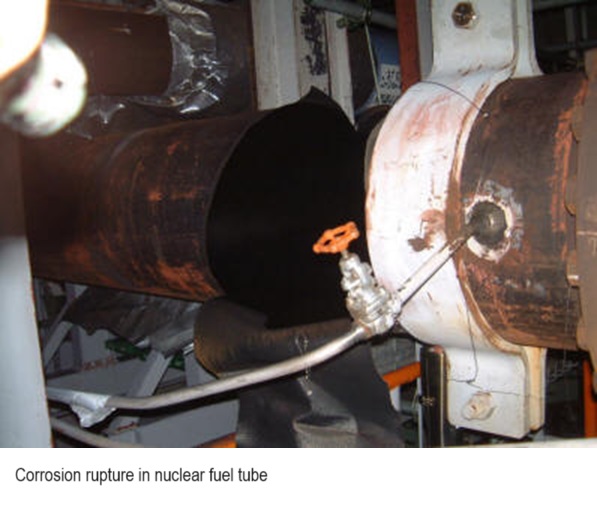
Pressure tubes, which are six-metre-long rods that contain fuel bundles of uranium, are regarded as the major life-limiting component in CANDUs. They deteriorate as they age, gradually increasing their propensity to fracture, an event which could lead to a serious accident.
Matthew McClearn, October 11, 2024 https://www.theglobeandmail.com/business/article-canadas-nuclear-watchdog-green-lights-operation-of-aging-pickering/
Canada’s nuclear safety regulator again extended a crucial permit for the country’s oldest nuclear power plant on Friday, allowing it to continue operating beyond its original design life.
On Friday the Canadian Nuclear Safety Commission authorized its owner, Ontario Power Generation, to operate the Pickering Nuclear Generating Station for an additional two years, to Dec. 31, 2026. The extended permit applies only to its newest four reactors, Units 5 through 8, which are collectively known as Pickering B. Those reactors entered service between 1983 and 1986.
The licence extension was granted by commissioners Timothy Berube, Marcel Lacroix and Andrea Hardie, who decided OPG would make adequate provisions for protecting the environment and public safety.
Canada’s homegrown reactor, the CANDU, was originally assigned a design life of 30 years, which had been incorporated into CNSC licensing requirements. If followed, they would have dictated that all four reactors shut down for major overhauls or decommissioning years ago. The CNSC, though, amended those rules and extended the station’s licence three times, while imposing more thorough inspection requirements on key components. The Pickering B reactors are now around 40 years old.
Pickering Station, located roughly 30 kilometres northeast of downtown Toronto, employs about 3,000 people and until recently supplied about 11 per cent of Ontario’s electricity. Nuclear power plants play a crucial role in the province’s grid, but their output has declined: Pickering Unit 1 shut down permanently last month, and Unit 4 is scheduled to follow in December. (The other two Pickering A units were idled permanently decades ago.)
OPG said Pickering B’s continued operation is needed because reactors at other stations are offline for overhauls.
Pressure tubes, which are six-metre-long rods that contain fuel bundles of uranium, are regarded as the major life-limiting component in CANDUs. They deteriorate as they age, gradually increasing their propensity to fracture, an event which could lead to a serious accident. Pressure tubes and related components are collectively known as fuel channels.
The main cause of that deterioration is called deuterium ingress, which is measured in parts per million (ppm) of hydrogen equivalent concentration. Previously, Pickering’s licence contained a condition that effectively capped hydrogen concentrations at 120 parts per million.
But in recent years a small number of pressure tubes in Canada have been found to have greatly exceeded that limit. The CNSC removed the 120 ppm limit from Pickering Station’s licence on Friday, and introduced a new requirement that OPG “implement and maintain an enhanced fitness for service program” for its fuel channels.
Familiar patterns of support and opposition emerged during public hearings held by the CNSC in June, with host municipalities emphasizing the plant’s economic importance. A deluge of submissions from nuclear industry contractors, lobbyists and unions also supported the plant’s continued operation, including the Society of United Professionals and the Canadian Nuclear Association.
The CANDU Operators Group, which represents utilities that use those reactors, wrote in a statement that experimental work had confirmed that the station’s fuel channels could operate safely until 2026, and that OPG “will continue with its exemplary safety record in every aspect of its operations.”
Environmental activists such as the Canadian Environmental Law Association recommended the CNSC reject the permit, partly owing to risks associated with the plant’s aging equipment.
“Old nuclear plants are particularly susceptible to accidents,” it wrote in its submission, adding that the dangers of allowing the plant to continue operating are “high and increasing.”
Sunil Nijhawan, a nuclear safety consultant and frequent intervenor before the CNSC, said that OPG’s own estimates showed “that the degradation of fuel channels is widespread; a number of component and system failure mechanisms are fast converging to put the reactor into unsafe operation territory.”
Several First Nations asserted that the plant’s continued operations required their consent, and some also raised concerns about aging pressure tubes. The Mississaugas of Scugog Island First Nation declared in a written statement that it was “not comfortable with the risk management methods being employed by the CNSC and OPG.”
The CNSC found that the licence extension “does not present any novel adverse impact on any potential or established Aboriginal claim or right.”
A second life is planned for the Pickering B reactors following the planned 2026 shutdown: In January, the Ontario government authorized OPG to begin a refurbishment that would return them to service in the mid-2030s.
Canada’s false ‘solution’ for used nuclear fuel waste

Potentially trucking waste to a deep geological repository could be a recipe for disaster.
BY WILLIAM LEISS | October 7, 2024, William Leiss is an author, and emeritus professor at Queen’s University
The Nuclear Waste Management Organization (NWMO) is a curious hybrid body created out of whole cloth by the federal government in its 2002 Nuclear Fuel Waste Act to find a permanent solution for that waste. Governments tried and failed to find that solution for the previous quarter-century. Now, NWMO is weeks away from identifying the “final resting place” in a deep geological repository (DGR) in Ontario, either far into the province’s northwest at Ignace near Dryden/Wabigoon Lake First Nation, or South Bruce close to Lake Huron near Teeswater and the Bruce Peninsula. One of two small municipalities and one of two groups of treaty-rights holding First Nations will need to agree, but millions of Canadians potentially affected won’t get a say.
Last month, The Globe and Mail described the organization’s DGR solution: “For 40 or so years … big trucks carrying specially designed waste containers would trundle from the reactor sites to the DGR facility, where the fuel canisters would be lowered.”
More than 90 per cent of that waste is currently at the Pickering, Darlington, and Bruce nuclear generating stations. The rest is at far-off Point Lepreau, N.B., and in Quebec, Manitoba, and Ottawa. If NWMO chooses the Ignace site and an all-road transportation method, it estimates that those trucks will travel 84 million kilometres on Canadian roads.
Each truckload will hold exactly 192 used fuel bundles, packed into a special steel container weighing 35 tonnes. The current array of operating reactors will ultimately produce a total of six million bundles. But that figure doesn’t include the announced “Bruce C” development of new reactors, or other new ones yet to be unveiled, adding at least two million more bundles. Eight million bundles will require 40,000 truckloads over at least a 40-year period.
And there will be a further 20,000 dry-cask containers in which those bundles had previously been stored which will also require transportation to a DGR. Empty, they each weigh 60 tonnes and will be radioactive. They will need to be cut in half due to their weight, adding up to another 40,000 truckloads. If they go to a DGR in Ignace, that will add another 84 million kilometres of truck travel on Canadian roads. (The NWMO has not done this estimate.)
Is everybody OK with all this? Are most Canadians even aware of these scenarios? The NWMO says that the containers on the trucks will survive any imaginable road accident, and no radioactivity will escape. But trucks travelling 168 million kilometres are—quite obviously—going to be involved in a fair number of road accidents, some serious, across those four or more decades. In those cases, folks likely will be told, “Don’t worry, it may look awful, but you and your kids won’t be irradiated.”
The two small communities designated as potential “hosts” for the DGR do not, apparently, care too much about the transportation issue. However, others are starting to become alarmed, especially in and around the city of Thunder Bay, which is on the road route for those 80,000 trucks if the DGR is sited in Ignace. If the choice is South Bruce, well, who knows? The NWMO has not published any kind of transportation plan for that choice. Just looking at a map, however, a lot of those trucks will have to go through or near the already grid-locked GTA.
And what about the First Nations? Here’s where things get interesting. The designated First Nation treaty rights holders for the Ignace site are the 28 First Nation communities of Grand Council Treaty 3, the governing body of the Anishinaabe Nation in Treaty 3, which maintains rights to all lands and water in the territory. Development in the Treaty 3 territory requires the consent, agreement, and participation of the Anishinaabe Nation in Treaty 3. To date, that consent hasn’t been granted.
The designated First Nation treaty rights holder for the South Bruce site is Saugeen Ojibway Nation (SON): the Chippewas of Nawash Unceded First Nation–Neyaashiinigmiing Anishinaabek, and the Chippewas of Saugeen First Nation. CBC News recently quoted Greg Nadjiwon, one of SON’s two chiefs, that “if you think about how many [other] treaty territories that waste would have to go through, I don’t think it will happen.” The CBC then paraphrased the chief: “Nadjiwon says even if Ignace and nearby Wabigoon Lake Ojibway Nation say yes to the proposed nuclear dump, he doubts the spent nuclear fuel from the Bruce station, which is currently in temporary storage, would ever leave his nation’s traditional territory.” Mere weeks from a site selection announcement, there clearly isn’t agreement.
NWMO’s approach isn’t going to work. Canadians do not have an acceptable solution to the problem of long-term storage or disposal of used nuclear fuel. It’s past time to consider some alternative options.
Ukraine wants UN nuclear watchdog to place foreign observers near all its nuclear plants
Kyiv Independent, by Dominic Culverwell, October 3, 2024
Ukraine is in talks with the International Atomic Energy Agency (IAEA) to place foreign observers near its nuclear power plants amid reports Russia is planning to attack the infrastructure connecting the plants to the country’s energy grid, an Energy Ministry official said.
President Volodymyr Zelensky warned on Sept. 24 that Russia is planning to strike three power plants as it continues its broader strategy of targeting and crippling Ukraine’s energy system for the third year in a row.
While Zelensky did not specify which ones, the country only has three operating nuclear facilities — Rivne and Khmelnytskyi plants in the country’s west, and the Pivdennoukrainsk plant in the south. The Chornobyl plant is decommissioned, while the Zaporizhzhia plant has been under Russian occupation since 2022……………………………………………………………. https://kyivindependent.com/ukraine-discussing-with-atomic-agency-to-place-missions-near-all-its-nuclear-power-plants/
Suffolk radiation emergency evacuation plans updated to include potential Sizewell C incidents
Suffolk Resilience Forum’s (SRF) plans to evacuate
people in response to potential nuclear or radiological incidents have been
updated to include the planned Sizewell C power station.
New Civil Engineer 4th Oct 2024
Corrosion exceeds estimates at Michigan nuclear plant US wants to restart, regulator says
By Timothy Gardner, October 3, 2024, WASHINGTON, Oct 2 (Reuters) –
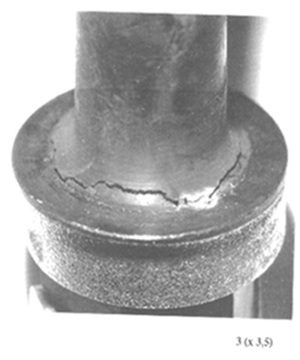
Holtec, the company wanting to reopen the Palisades nuclear reactor in Michigan, found corrosion cracking in steam generators “far exceeded” estimates, the U.S. nuclear power regulator said in a document published on Wednesday.
President Joe Biden’s administration this week finalized a $1.52 billion conditional loan guarantee to the Palisades plant. It is part of an effort to support nuclear energy, which generates virtually emissions-free power, to curb climate change and to help satisfy rising electricity demand from artificial intelligence, electric vehicles and digital currency.
Palisades, which shut under a different owner in 2022, is seeking to be the first modern U.S. nuclear power plant to reopen after being fully shut.
A summary of an early September call between the U.S. Nuclear Regulatory Commission and Holtec published on Wednesday said indications of stress corrosion cracking in tubes in both of Palisade’s steam generators “far exceeded estimates based on previous operating history.” It found 1,163 steam generator tubes had indications of the stress cracking. There are more than 16,000 tubes in the units.
Steam generators are sensitive components that require meticulous maintenance and are among the most expensive units at a nuclear power station.
Holtec wants to return the plant to operation late next year. Patrick O’Brien, a company spokesperson, said the results of the inspections “were not entirely unpredicted” as the standard system “layup process”, or procedure for maintaining the units, was not followed when the plant went into shutdown…………………….
Holtec still needs permits from the NRC. “Holtec must ensure the generators will meet NRC requirements if the agency authorizes returning Palisades to operational status,” an NRC spokesperson said.
The NRC said last month that preliminary results from inspections “identified a large number of steam generator tubes with indications that require further analysis and/or repair.”
Steam generator issues can pose problems for nuclear power plants. Parts of the San Onofre Nuclear Generating Station in California were shut in 2012 after steam generators that had a design flaw leaked. Problems with new generators led to the closure of the plant in 2013. https://www.reuters.com/business/energy/us-report-says-corrosion-michigan-nuclear-plant-above-estimates-2024-10-02/
Construction of Ontario nuclear reactor should move forward despite incomplete design, ! regulator says

https://www.theglobeandmail.com/business/article-though-its-design-is-incomplete-nuclear-safety-regulator-says-the/ Matthew McClearn, 4 Oct 24
Canada’s nuclear safety regulator has recommended that the country’s first new power reactor in decades should receive the go-ahead to begin construction, even though its design is not yet complete.
At a hearing Wednesday, staff from Ontario Power Generation argued that the Canadian Nuclear Safety Commission should grant a licence to construct a 327-megawatt nuclear reactor known as the BWRX-300 at OPG’s Darlington Nuclear Generating Station in Clarington, Ont., about 70 kilometres east of Toronto.
he application received unequivocal support from the CNSC’s staff, despite the fact that several safety questions remain unresolved.
“The level of design information needed for CNSC staff to recommend a licence to construct is not the final design, but the information must be sufficient to ensure that the regulations have been met,” Sarah Eaton, the CNSC’s director-general ofits Directorate of Advanced Reactor Technologies, said before the commission.
It would be the first small modular reactor built in a G7 country and among the first globally – although its output would exceedthe informal 300-megawatt cutoff for SMRs.
The BWRX-300 is currently being developed by U.S. vendor GE Hitachi Nuclear Energy. Someaspects of its design are based on the Economic Simplified Boiling Water Reactor (ESBWR), which was licensed by the U.S. Nuclear Regulatory Commission in 2014 but never built. The CNSC said the 1,600-megawattESBWR underwent significant testing that is “mostly applicable” to its smaller cousin.
OPG, which submitted its application two years ago, is seeking a 10-year licence andplans to build three additional BWRX-300s at Darlington.
A second part of the CNSC hearing, scheduled for January, will hear interventions from the public, including Indigenous communities. OPG has already partly prepared the site – building roads and moving earth – under an earlier licence granted by the CNSC.
David Tyndall, OPG’s vice-president of new nuclear engineering, said the reactor’s design had advanced sufficiently to meet Canada’s regulatory requirements.
One significant unresolved issue, though, is its emergency shutdown systems.
Typically, reactors are required to have two independent shutdown systems. The BWRX-300would have 57 control rods that could be inserted rapidly into its coreby high-pressure water in an emergency to halt reactivity. Should that hydraulic method fail, electric motors would drive them in instead.
Mr. Tyndall assured the commission that the BWRX-300 was designedin such a way that all safety systems “are guaranteed to be fully independent and redundant, which ensureshigh reliability and fail-safe operation.”
CNSC staff, however, questioned whether the shut-off systems were truly independent because both systems rely on the same control rods. That remained unresolved at Wednesday’s hearing.
To address unresolved issues, CNSC staff proposed that the commission impose three “regulatory hold points” during the reactor’s construction at which work would halt until OPG provided sufficient information to satisfy CNSC staff. Ramzi Jammal, the commission’s executive vice-president and chief regulatory operations officer, would administer the hold points.
Throughout an assessmentrunning more than 1,000 pages, published by the CNSC this summer, staff repeatedly noted missing information in OPG’s submission that they vowed to review once it becomes available.
“In many cases, there is a discussion about a topic, and it’s noted that the design is not complete,” commissioner Jerry Hopwood observed at the hearing.
“It’s not entirely clear to what extent the design has been completed in such a way that the conclusions that support a licence to construct are then justified.”
M.V. Ramana, a professor at the University of British Columbia’s School of Public Policy and Global Affairs who specializes in nuclear power, said the CNSC doesn’t have enough information to answer key safety questions necessary to grant a construction licence. He added that, as the first of its kind, the Darlington SMR’s design is likely to require further significant changes during construction.
“What it does tell me is that OPG really has rushed through this,” he said. “It may be that they don’t feel they know enough about the design and are waiting for information from GE Hitachi, or that OPG is under its own self-imposed deadline to submit this application by a certain date.”
Prof. Ramana said the CNSC’s role as a safety regulatoris in conflict with statements its leadership has made in recent years promoting SMRs.
“The CNSC has acted as a cheerleader for small modular reactors,” he said. “This is completely at odds with what a good regulator ought to be doing.”
Ukraine kills nuclear plant’s pro-Russian security chief with car bomb
Politico, October 4, 2024, By Seb Starcevic
The security chief at a Russia-controlled nuclear power plant in southern Ukraine was killed in a car bombing Friday, according to Russian and Ukrainian authorities.
Andriy Korotkyy, head of security at the Zaporizhzhia nuclear power plant, died after his car exploded on Friday morning in the Russian-occupied Ukrainian city of Enerhodar.
“A homemade explosive device was planted under the vehicle of the head of the security,” Russia’s Investigative Committee said in a statement on Telegram.
“When the man got into the car, it detonated. The victim died in the hospital from his injuries,” the committee said, adding that it was opening a murder investigation.
Ukraine’s Military Intelligence Directorate, also known as GUR, seemingly took responsibility for the blast that killed Korotkyy, calling him a “war criminal” and posting a video of a white SUV exploding on Telegram………………………………………………………………….
Moscow took control of the Zaporizhzhia nuclear power plant, the largest such facility in Europe, shortly after it invaded Ukraine in early 2022. It is located about 50 kilometers southwest of the city of Zaporizhzhia, home to more than 700,000 people.
There is widespread concern about the safety of the plant, with shelling and drone strikes nearby prompting the United Nations’ nuclear watchdog in August to issue a warning about a nuclear disaster.
Korotkyy is not the first Russian-allied official to die in a car bombing by Ukrainian intelligence. Mikhail Filiponenko, a pro-Russian lawmaker and ex-militiaman in occupied eastern Ukraine, was killed in a similar attack last November, with the GUR promising to punish other high-profile collaborators. https://www.politico.eu/article/ukraine-russia-andriy-korotkyy-car-bomb-nuclear-plant-zaporizhzhia/
Russia intercepts drone near Kursk, no damage to nuclear plant, governor says
By Reuters, October 4, 2024
MOSCOW, Oct 3 (Reuters) – Russian forces intercepted a Ukrainian drone on Thursday near the Russian town of Kurchatov but there was no damage to the nearby Kursk nuclear power plant, the regional governor said.
Governor Alexei Smirnov said debris from the drone caused explosions in a building unrelated to the plant.
Several Russian Telegram channels earlier reported the alleged Ukrainian attack, which they said had been thwarted by air defences but had resulted in a fire several miles from the nuclear plant…………………………
Rafael Grossi, head of the U.N. nuclear watchdog, visited the nuclear plant on Aug. 27 and said it was especially vulnerable to a serious accident because it lacks a protective dome that could shield it from missiles, drones or artillery. https://www.reuters.com/world/europe/russia-intercepts-drone-near-kursk-no-damage-nuclear-plant-governor-says-2024-10-03/
UN Nuclear Watchdog Warns on Ukraine Plant After Power Failure
By Patrick Donahue, October 04, 2024, https://www.bnnbloomberg.ca/investing/2024/10/04/un-nuclear-watchdog-warns-on-ukraine-plant-after-power-failure/
(Bloomberg) — The United Nations atomic watchdog reinforced warnings on safety risks in Russia’s war on Ukraine after Europe’s largest nuclear power plant lost a back-up power link for 36 hours earlier this week.
The International Atomic Energy Agency said the Russian-occupied Zaporizhzhia Nuclear Power Plant in southern Ukraine lost supply from its only remaining back-up power line before it was restored late Wednesday.
“The off-site power situation remains a deep source of concern,” IAEA Director General Rafael Mariano Grossi said in a statement. The disruption “shows that the situation is not improving in this regard, on the contrary.
The agency and Ukrainian authorities have repeatedly warned that fighting around the plant in Zaporizhzhia poses an urgent risk, particularly to substations that feed the nuclear plant with power needed to keep systems running.
The plant has lost external power eight times during the conflict, forcing engineers to maintain electricity supplies with diesel generators, the IAEA said.
An IAEA team found that shelling at a substation in nearby Enerhodar had destroyed a transformer and had damaged a nearby power line earlier in the week, the agency said. The IAEA last month took the unusual step of expanding its monitoring mission to include substations.
Lawmakers to Investigate Faulty Sub, Carrier Welding at Newport News Shipbuilding

USNI News, Sam LaGrone, September 27, 2024
THE PENTAGON – The House Armed Services Committee is investigating substandard welding on submarines and aircraft carriers at Newport News Shipbuilding, the committee announced on Friday.
Following a Thursday report in USNI News, lawmakers are now looking into how shipbuilders at the Virginia yard had violated proper welding procedures on work that made it into current in-service submarines. The flawed work was found by quality assurance teams at Newport News Shipbuilding, which has led to a wider investigation into welding quality that’s prompted a notification to the Department of Justice, USNI News reported.
“It is deeply concerning to learn that faulty welds may have been knowingly made to U.S. Navy submarines and aircraft carriers. The House Armed Services Committee is investigating how this occurred. The safety of our sailors is our top concern, and we need to immediately understand any risks associated with the faulty work,” reads the statement from HASC chair Rep Mike Rogers (R-Ala.), ranking member Rep Adam Smith (D-Wash.) and House Armed Services seapower and projection forces subcommittee leaders Rep. Trent Kelly (R-Miss.) and Rep. Joe Courtney (D-Conn.).
“The Department of Defense needs to immediately provide our committee with answers and a plan for how they will protect U.S. Navy vessels against tampering. Absolute transparency with Congress is essential.”
The Congressional query comes as the Navy and shipbuilder HII are gauging the scope of the ships that were affected overall. The number of in-service Virginia-class submarines that have been affected are in the “low single digits” and an ongoing analysis of under-construction Virginia, Columbia-class submarines and Ford-class aircraft carriers could stretch into October, a defense official told USNI News on Friday.
Earlier this year, quality assurance teams at Newport News discovered the sub-standard welds and reported the violations in procedure to both the Navy and the Department of Justice, according to a Friday statement on LinkedIn by Newport News president Jennifer Boykin.
“We recently discovered that the quality of certain welds on submarines and aircraft carriers under construction here at NNS do not meet our high-quality standards. Most concerning is that some of the welds in question were made by welders who knowingly violated weld procedures.” she wrote.
“We immediately put together a team made up of both internal and independent engineering and quality subject matter experts to determine the root causes, bound the issue and put in place immediate short-term corrective actions as we work through longer-term solutions.”
Boykin went on to say HII notified both the Navy and the Department of Justice on the sub-standard work………………………………………………………………………………………….
Neither HII nor the Navy have said when the initial faulty work was discovered.
While the assessment of the overall welds on the ships under construction could extend into next month, the Navy and HII now have the tedious task of reinspecting the welds and determining solutions.
Twice in the 2000s, the Navy mounted separate investigations into suspicious welds into then Northrop Grumman-managed Newport News Shipbuilding. In 2007, the Navy found welders used the wrong filler material in non-nuclear pipping on Virginia submarines. In 2009, the Navy had to reinspect the welds on nine submarines and four aircraft carriers after a shipyard inspector admitted to falsifying inspection reports, according to The Virginian Pilot.
The inspections can involve analyzing welds that are difficult to reach throughout a submarine or aircraft carrier. The subsequent weld checks after the 2009 investigation took years, USNI News understands. https://news.usni.org/2024/09/27/lawmakers-announce-investigation-into-faulty-submarine-carrier-welding-at-newport-news-shipbuilding-ships-affected-in-low-single-digits-officials-say
China’s Newest Nuclear Submarine Sank, Setting Back Its Military Modernization
Pierside accident came as Beijing attempts to expand its navy
WSJ, By Michael R. Gordon, Sept. 26, 2024
WASHINGTON—China’s newest nuclear-powered attack submarine sank in the spring, a major setback for one of the country’s priority weapons programs, U.S. officials said.
The episode, which Chinese authorities scrambled to cover up and hasn’t previously been disclosed, occurred at a shipyard near Wuhan in late May or early June.
It comes as China has been pushing to expand its navy, including its fleet of nuclear-powered submarines.
The Pentagon has cast China as its principal long-term “pacing challenge,” and U.S. officials say that Beijing has been using political and military pressure to try to coerce Taiwan, a separately governed island that Beijing claims as part of its territory.
China says its goal in building a world-class military is to deter aggression and safeguard its overseas interests. A spokesman for the Chinese embassy didn’t immediately respond to a request for comment…………………………………………………………….. more https://www.wsj.com/world/china/chinas-newest-nuclear-submarine-sank-setting-back-its-military-modernization-785b4d37?st=pMigx5&reflink=desktopwebshare_permalink
Nuclear power for AI: what it will take to reopen Three Mile Island safely
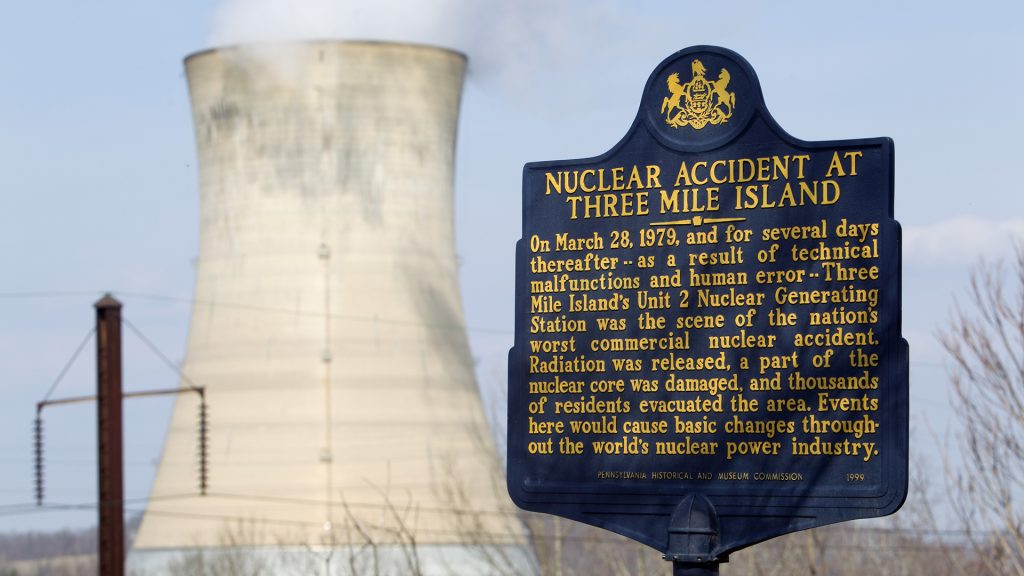
As Microsoft strikes a deal to restart a reactor at the notorious power station, Nature talks to nuclear specialists about the unprecedented process.
Michael Greshko, https://www.nature.com/articles/d41586-024-03162-2 30 Sept 24
Microsoft announced on 20 September that it had struck a 20-year deal to purchase energy from a dormant nuclear power plant that will be brought back online. And not just any plant: Three Mile Island, the facility in Londonderry Township, Pennsylvania, that was the site of the worst-ever nuclear accident on US soil when a partial meltdown of one of its reactors occurred in 1979.
The move, which symbolizes technology giants’ need to power their growing artificial-intelligence (AI) efforts, raises questions over how shuttered nuclear plants can be restarted safely — not least because Three Mile Island isn’t the only plant being brought out of retirement.
Palisades Nuclear Plant, an 805-megawatt facility in Covert, Michigan, was shut down in May 2022. But the energy company that owns it, Holtec International, based in Jupiter, Florida, plans to reopen it. This reversal in the facility’s fortunes has been bolstered by a US$1.5-billion conditional loan commitment from the US Department of Energy (DoE), which sees nuclear plants — a source of low-carbon electricity — as a way of helping the country to meet its ambitious climate goals. The Palisades plant is on track to reopen in late 2025.
“It’s the first time something like this has been attempted, that we’re aware of, worldwide,” says Jason Kozal, director of the reactor safety division at a regional office of the US Nuclear Regulatory Commission (NRC) in Naperville, Illinois, and the co-chair of a regulatory panel overseeing the restart of Palisades.
Here, Nature talks to nuclear specialists about what it will take to restart these plants and whether more are on the way as the world’s demand for AI grows.
A change in fortunes
Since 2012, more than a dozen nuclear plants have been shut down in the United States, in some cases as a result of unfavourable economics. Less cost-effective plants — such as those with only a single working reactor — struggled to remain profitable in states with deregulated electricity markets and widely varying prices. Three Mile Island, owned by the utility company Constellation Energy in Baltimore, Maryland, is a prime example. Today, 54 US plants remain in operation, running a total of 94 reactors.
Nuclear energy, which accounts for about 9% of the world’s electricity, has seen some resurgence internationally, but is also competing with other energy sources, including renewables. After the 2011 Fukushima Daiichi disaster, Japan suspended operations at all of its 48 remaining nuclear plants, but these are gradually being brought back online, in part to cut dependence on gas imports. By contrast, Germany announced a phase-out of its nuclear plants in 2011, and shut down its last three in 2023.
In the United States, nuclear energy’s fortunes might be turning as technology companies race to build enormous, energy-gobbling data centres to support their AI systems and other applications while somehow fulfilling their climate pledges. Microsoft, for instance, has committed to being carbon negative by 2030.
It’s further confirmation of the value of nuclear, and, if the deal is right — if the price is right — then it makes business sense, as well,” says Jacopo Buongiorno, the director of the Center for Advanced Nuclear Energy Systems at the Massachusetts Institute of Technology in Cambridge.
A new start
This isn’t the first time that the United States has brought a powered-down reactor back online. In 1985, for example, the Tennessee Valley Authority, a federally owned electric utility company, took the reactors at its Browns Ferry Nuclear Power Plant in Athens, Alabama, offline. After years of refurbishment, they were brought back online, with the final reactor restarted in 2007.
The cases of Palisades and Three Mile Island are different, however. When those plants closed, their then-owners made legal statements that the facilities would be shut down, even though their operating licenses were still active. Three Mile Island, which will be renamed the Crane Clean Energy Center under the proposed restart, shut down its single remaining functional reactor in 2019.
Because the plants were slated for shutdown and safety checks were therefore stopped, regulators and companies must now navigate a complex licensing, oversight and environmental-assessment process to reverse the plants’ decommissioning.
Safety checks will be needed to ensure, among other things, that the plants can operate securely once uranium fuel rods have been replaced in their reactors. When these plants were decommissioned, their radioactive fuel was removed and stored, so the facilities no longer needed to adhere to many exacting technical specifications, says Jamie Pelton, also a co-chair of the Palisades restart panel, and a deputy director at the NRC’s Office of Nuclear Reactor Regulation in Rockville, Maryland.
It will be no small feat to reinstate those safety regulations: to meet the standards, infrastructure will need to be inspected carefully. According to Buongiorno, any metallic components in the plants that have corroded since the shutdowns, including wires and cables used in instrumentation and controls, will need to be replaced.
The plants’ turbine generators, which make electricity from the steam produced as the plants’ fuel rods heat up water, will also get a close look. After sitting dormant for years, a turbine could develop defects within its shaft or corrosion along its blades that would require refurbishment. In the case of Palisades, the NRC announced on 18 September that the plant’s steam generators would need further testing and repair, following inspections conducted by Holtec.
Nuclear’s prospects
As the plants near their restart dates, their operators will also have to contend with a challenge faced by even fully operational plants: the need to source fresh nuclear fuel. US nuclear utility companies have long counted on the international market to buy much of the necessary raw yellowcake uranium and the services that separate and enrich uranium-235, the isotope used in nuclear reactors’ fuel rods. Russia has been a major international supplier of these services, even after the country’s 2022 invasion of Ukraine, because US and European sanctions have not targeted nuclear fuel. But to minimize its reliance on Russia, the United States is building up its own supply chain, with the DoE offering $3.4 billion to buy domestically enriched uranium.
There probably won’t be too many other restarts of mothballed nuclear plants in the United States, however, even as demand for low-carbon electricity grows. Not every US plant that has been shut down is necessarily in good enough condition to be easily refurbished — and the idea of reopening some of those would meet with too much resistance. As an example, Buongiorno points to New York’s Indian Point Energy Center, which was closed in 2021. The plant’s proximity to New York City had long provoked criticism from nuclear-safety advocates.
But that doesn’t mean that all of these sites will remain unused. One option is to build advanced reactors — including large reactors with upgraded safety features and small modular reactors with innovative designs — on sites where old nuclear plants once stood, to take advantage of existing transmission lines and infrastructure. “We might see interest in the US in building more of these large reactors, whether that’s fuelled by data centres or some other applications,” Buongiorno adds. “Utilities and customers are exploring this at the moment.”
1 This Month

of the week – Shut Down Drone Warfare!


Tell the Ukrainian Government to Drop Prosecution of Peace Activist Yurii Sheliazhenko

Petition to revoke the licensing of the Near Surface Nuclear Disposal Facility (NSDF) at Chalk River. https://www.ourcommons.ca/petitions/en/Petition/Details?Petition=e-7247
To see nuclear-related stories in greater depth and intensity – go to https://nuclearinformation.wordpress.com
-
Archives
- April 2026 (79)
- March 2026 (251)
- February 2026 (268)
- January 2026 (308)
- December 2025 (358)
- November 2025 (359)
- October 2025 (376)
- September 2025 (257)
- August 2025 (319)
- July 2025 (230)
- June 2025 (348)
- May 2025 (261)
-
Categories
- 1
- 1 NUCLEAR ISSUES
- business and costs
- climate change
- culture and arts
- ENERGY
- environment
- health
- history
- indigenous issues
- Legal
- marketing of nuclear
- media
- opposition to nuclear
- PERSONAL STORIES
- politics
- politics international
- Religion and ethics
- safety
- secrets,lies and civil liberties
- spinbuster
- technology
- Uranium
- wastes
- weapons and war
- Women
- 2 WORLD
- ACTION
- AFRICA
- Atrocities
- AUSTRALIA
- Christina's notes
- Christina's themes
- culture and arts
- Events
- Fuk 2022
- Fuk 2023
- Fukushima 2017
- Fukushima 2018
- fukushima 2019
- Fukushima 2020
- Fukushima 2021
- general
- global warming
- Humour (God we need it)
- Nuclear
- RARE EARTHS
- Reference
- resources – print
- Resources -audiovicual
- Weekly Newsletter
- World
- World Nuclear
- YouTube
-
RSS
Entries RSS
Comments RSS
 nuclear-news