Continued Incidents Raise Concerns Over Nuclear Security, Says UN

By David Dalton, 5 March 2025, https://www.nucnet.org/news/continued-incidents-raise-concerns-over-nuclear-security-says-un-3-3-2025
Transportation of radioactive materials remains one of most vulnerable areas.
There were almost 150 incidents of illegal or unauthorised activity involving nuclear and other radioactive material reported last year, according to the International Atomic Energy Agency’s (IAEA) monitoring database.
New data reveals that while the overall number remains consistent with previous years, the continued incidents of trafficking and radioactive contamination cases raises concerns over nuclear security, the United Nations said on its website.
Three of the reported cases were directly linked to trafficking or malicious intent, while in 21 incidents, authorities could not determine whether criminal activity was involved.
Most incidents did not involve organised crime, but experts warn that even a single case of nuclear material falling into the wrong hands could pose serious global risks.
A troubling trend in 2024 was the rise in contaminated industrial materials, such as used pipes and metal parts that unknowingly entered supply chains.
“This indicates the challenge for some countries to prevent the unauthorised disposal of radioactive sources, and at the same time, it confirms the efficiency of the detection infrastructure,” said Elena Buglova, director of the IAEA’s division of nuclear security.
The transportation of radioactive materials remains one of the most vulnerable areas of nuclear security. Over the past decade, 65% of all reported thefts have occurred while materials were in transit.
Nuclear and radioactive substances are regularly transported for use in medicine, industry and scientific research, making them a potential target for theft. With so many different handlers involved during shipping, security gaps persist.
Experts emphasise the need for stronger safety measures while goods are on the move to prevent radioactive material from being lost or stolen.
Enhanced international cooperation is also essential to ensure proper security along supply chains.
More than 145 Reports Added to IAEA Incident and Trafficking Database in 2024
In 2024, 147 incidents of illegal or unauthorized activities involving
nuclear and other radioactive material were reported to the Incident and
Trafficking Database (ITDB), a number aligned with the historical average.
The new data released by the International Atomic Energy Agency (IAEA)
today underlines the need for continued vigilance and improvement of
regulatory oversight for security of nuclear and other radioactive
material.
IAEA 28th Feb 2025,
https://www.iaea.org/newscenter/pressreleases/more-than-145-reports-added-to-iaea-incident-and-trafficking-database-in-2024
Is giving old reactors new life the future of nuclear energy?
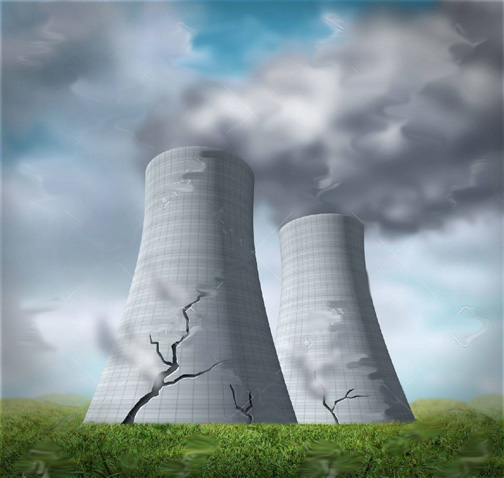
Countries want to squeeze more electricity from ageing power plants to help meet
global demand, but the strategy has its own challenges. The Torness nuclear
power station on Scotland’s south-east coast is showing its age. Over the
past few years, cracks have started to appear in the graphite bricks
encasing the uranium-filled fuel rods.
The bricks are too difficult to replace, so engineers routinely lower microscopic cameras into the reactor to monitor the wear and tear caused by radiation. If the cracks start to
jeopardise the reactor’s ability to safely shut down during an extreme
earthquake or other disaster, it cannot stay open.
So far, so good. And the
plant’s owner EDF, the French energy group, intends to keep the station
running until at least 2030, 42 years after it opened in 1988. Station
director Paul Forrest is confident. “But if the graphite inspection
starts surprising us, we will change course,” he says.
His efforts are part of an urgent, global quest to squeeze more years of electricity out of
existing nuclear power plants to meet rising demand for low carbon power as
countries try to move away from fossil fuels. Most of the world’s
operating nuclear power plants, around 400, were built in the 1970s to
1990s and are now coming to the end of their projected lives or original
licence periods.
FT 3rd March 2025 https://www.ft.com/content/91784663-eba2-48e6-a0a3-47e04774c5c0
A Single Trumputin Drone Can Turn the “Peaceful Atom” Into World War 3

Putin, or anyone else of his ilk, would need precisely one technician with one weaponized drone to turn any “peaceful” nuke into a radioactive apocalypse.
Even without drone attacks, America’s 21st century reactor projects are catastrophic economic failures.
No significant supply from SMRs can be realistically expected in less than a decade. None can be protected from drone attacks.
And no explosion at a wind turbine or solar panel will ever cause a radioactive apocalypse.
by Harvey Wasserman, March 2, 2025, https://freepress.org/article/single-trumputin-drone-can-turn-%E2%80%9Cpeaceful-atom%E2%80%9D-world-war-3
Vladimir Putin right now has in his sights nearly 300 pre-deployed atomic weapons set to easily launch a radioactive apocalypse with a single drone strike.
He may already have crashed an early warning into the sarcophagus at Chernobyl.
And taken as a whole, the “Peaceful Atom” lends a terrifying reality to Donald Trump’s Oval Office threat of an impending World War 3.
Some 180 operational “Peaceful Atom” reactors now operate throughout Europe. There are 93 more in the US, 19 in Canada, two in Mexico.
Putin, or anyone else of his ilk, would need precisely one technician with one weaponized drone to turn any “peaceful” nuke into a radioactive apocalypse.
When Donald Trump brought Ukraine’s Volodymir Zelensky into the Oval Office to accuse him of flirting with “World War 3,” atomic reactors were among the specifics he failed to cite.
As of today, more than 50 commercial nuclear power plants are considered operable in France. Another 130+ operate in Belarus; Belgium; Bulgaria; the Czech Republic; Finland; Hungary; the Netherlands; Romania; Slovakia; Slovenia; Spain; Sweden; Switzerland; Ukraine; the UK (Germany, Italy and Lithuania have gone nuke-free).
Six reactors are under unstable Russian control at Ukraine’s Zaporizhzhia; two more are in Kursk, now a hotly contested war zone. Russia has a further three dozen.
Each could blanket the globe with atomic radiation, as has Chernobyl Unit 4 since it exploded on April 26, 1986.
The still-hot Chernobyl core could explode yet again.
Europe has collectively spent more than $2 billion to cover that core with a giant sarcophagus, the world’s largest movable structure.
On February 14, 2025, it was struck by a military drone.
Putin denies ordering the hit. His supporters say it could have been a “false flag.” But the drone itself was of an Iranian design widely used by the Russians.
On-going maintenance at Chernobyl has been conflicted and highly suspect, especially as impacted by the Russian invasion. After decades of denial, nuke supporters admit that what’s left of Chernobyl #4 could explode again. A definitive 2007 study by the Russian Academy of Sciences put the downwind human death toll at more than 985,000…and rising.
Three melt-downs and four explosions at American-designed reactors at Fukushima have raised the stakes. Caused by an earthquake and tidal wave, their lost cores still send unfathomable quantities of radioactive poisons into the Pacific, with no end in sight.
Both Fukushima and Chernobyl have released far more radioactive cesium and other deadly isotopes than did the atomic bombings at Hiroshima and Nagasaki. No western insurer will gamble against the likelihood of a new catastrophe caused by natural disasters, faulty designs, operator error, or acts of terror…drone-inflicted or otherwise.
Even without drone attacks, America’s 21st century reactor projects are catastrophic economic failures. Two at VC Summer, South Carolina, are dead, at a cost of $9 billion. Two more at Vogtle, Georgia, came in years behind schedule, billions over budget and completely incapable of competing with renewables. Talks of reviving shut reactors like Three Mile Island in Pennsylvania, Michigan’s Palisades and Duane Arnold in Iowa all depend on huge federal subsidies to cover vastly inflated market prices.
Parallel projects in France, Britain and Finland are also very late and far beyond budget.
Soaring costs and lagging production schedules have already killed the first order from NuScale, the first licensed US producer of Small Modular Reactors.
No significant supply from SMRs can be realistically expected in less than a decade. None can be protected from drone attacks.
But the billions SMR (Silly Mythological Rip-offs) backers want to squander on this pre-failed technology will help keep Europe dependent on Putin’s gas.
Germany has shut all its reactors, as have Italy and Lithuania. Putin’s war has destabilized their fossil fuel supply, especially complicating Germany’s transition to 100% renewables, still likely within the next decade.
Corporate hype will not can’t deliver any new nukes, big or small, that can compete with wind, solar, battery backup or increased efficiency, all of whose cost projections continue to plummet.
And no explosion at a wind turbine or solar panel will ever cause a radioactive apocalypse.
But whoever attacked the Chernobyl sarcophagus has made it clear that as long as atomic reactors continue to operate, World War 3 is just a drone strike away.
Harvey “Sluggo” Wasserman wrote SOLARTOPIA: OUR GREEN POWERED EARTH and co-wrote KILLING OUR OWN: THE DISASTER OF AMERICA’S EXPERIENCE WITH ATOMIC RADIATION. Most Mondays at 2pm PT he co-convenes the GREEP Zoom (www.grassrootsep.org)
IAEA mission arrives at nuclear plant in Ukraine through Russia

By Reuters, March 2, 2025, https://www.reuters.com/world/europe/new-iaea-mission-arrives-russian-held-zaporizhzhia-nuclear-plant-russia-says-2025-03-01/
March 1 (Reuters) – A new monitoring mission from the U.N. nuclear watchdog arrived on Saturday at the Russian-held Zaporizhzhia nuclear power plant in Ukraine for the first time through Russian territory, a Russia-installed head of the plant said.
The IAEA rotation came after weeks of delay caused by military activity around the site with each side blaming the other for violating rules to ensure the team’s safe passage to the plant.
“It is fundamentally important that the route passed through the territory of the Russian Federation for the first time,” Yuri Chernichuk, the Russia-installed head of the Zaporizhzhia plant in southeastern Ukraine, said in a video on Telegram.
The arrival of three inspectors, he added, was ensured by Russia’s defence ministry and national guard and followed “intense” consultations between the heads of Russia’s state nuclear power company Rosatom and IAEA.
Reuters could not independently verify the report. The IAEA could not be reached outside business hours to comment on the Russian statement. There was no immediate comment from Ukraine.
Nuclear reactors could become targets of war, defence experts warn

The Australian Security Leaders Climate Group has warned the Coalition’s nuclear plans could leave Australia vulnerable to devastating attacks.
Key Points
- The Australian Security Leaders Climate Group has warned nuclear reactors could become targets of war in Australia.
- Nuclear reactors could be targeted by missile attack and sabotage, the group said.
- The Coalition is planning to build seven small nuclear reactors across five states.
Australian nuclear reactors could become a target of war if the Coalition was to go ahead with plans to build them, a group of former defence leaders warn.
The plan to build seven small nuclear reactors across five states on the sites of coal-fired stations could leave Australia vulnerable to missile warfare and sabotage, the Australian Security Leaders Climate Group says.
The group, including former Australian Defence Force chief Chris Barrie and former director of preparedness and mobilisation at the Department of Defence Cheryl Durrant, is urging the nation not to go down the path of building nuclear power stations.
Modern warfare is increasingly being fought using missiles and unmanned aerial systems, Barrie said.
“Every nuclear power facility is a potential dirty bomb because rupture of containment facilities can cause devastating damage,” he said.
“With the proposed power stations all located within a 100 kilometres of the coast, they are a clear and accessible target.”
Durrant cited the Russia-Ukraine war where both sides have prioritised targeting their opponents’ energy systems
Australia would be no different,” Durrant said.
Nuclear power plants could become a dual target due to their role in energy supply, but also the catastrophic devastation which would occur if facilities were breached.
This means Australia would need to consider introducing expensive and complex missile defence systems and cyber and intelligence resources to defend the plants if war were to break out — which the nation currently lacks.
“Do we prioritise the protection of cities and population centres and military bases, or do we divert vital resources to defending seven nuclear power stations scattered across Australia?” Barrie said.
The group said building nuclear capabilities would derail Australia’s climate targets and exacerbate risks in the region.
IAEA Director General Statement on fire Situation in Chernobyl nuclear station

IAEA, 27 Feb 25
Two weeks after it was hit by a drone, Ukrainian firefighters are still trying to extinguish smouldering fires within the large structure built over the reactor destroyed in the 1986 Chornobyl nuclear accident, Director General Rafael Mariano Grossi of the International Atomic Energy Agency (IAEA) said today.
With unrestricted access, the IAEA team based at the site has been closely monitoring the situation following the strike early in the morning on 14 February that pierced a big hole in the New Safe Confinement (NSC), designed to prevent any potential release into the atmosphere of radioactive material from the Shelter Object covering the damaged reactor, and to protect it from external hazards………………………….
Working in shifts, more than 400 emergency response personnel have been participating in the site’s efforts to manage the aftermath of the drone strike.
“The firefighters and other responders are working very hard in difficult circumstances to manage the impact and consequences of the drone strike. It was clearly a serious incident in terms of nuclear safety, even though it could have been much worse. As I have stated repeatedly during this devastating war, attacking a nuclear facility must never happen,” Director General Grossi said……………………………………………………………………. https://www.iaea.org/newscenter/pressreleases/update-278-iaea-director-general-statement-on-situation-in-ukraine
Ontario’s outdated nuclear vision poses serious safety and financial risks

Intervenors also raised safety concerns about OPG’s plans for the BWRX-300 high-level spent fuel waste. Edwards said an above-ground spent fuel pool, unprotected by a containment structure, is vulnerable
there’s nothing there. There’s really nothing. There are no safety systems to speak of.”
rabble,ca, by Ole Hendrickson, February 26, 2025
As Ontario seeks to build a small modular nuclear reactor, the standards and safety of Canada’s nuclear industry leave something to be desired.
In October 2022, the federal infrastructure bank committed $970 million towards Canada’s first small modular nuclear reactor. Ontario Power Generation (OPG) has applied to construct a 20-story tall, half underground, BWRX-300 boiling water reactor at the Darlington nuclear site near Toronto.
Independent nuclear experts say the reactor poses significant risks. They brought them to the attention of the Canadian Nuclear Safety Commission (CNSC) during a five-day public hearing in January 2025.
On January 8, the first day of the hearing, Ontario Premier Doug Ford issued a press release about Fortress Am-Can, his plan for “economic prosperity in Canada and the United States.” Ford said “With our fleet of nuclear power plants and the first small modular nuclear reactors in the G7, Ontario is uniquely positioned to power the future of Fortress Am-Can.”
Independent experts say that nuclear plants are far costlier than a combination of renewables with energy storage systems and conservation measures. They create intractable waste problems. They are slow to deploy, delaying climate action.
Furthermore, the design of Ontario’s “first small modular nuclear reactor” raises major safety concerns.
The BWRX-300 is a slimmed-down, 300-megawatt version of an earlier 1600-megawatt boiling water reactor design from the American company GE-Hitachi. The U.S. Nuclear Regulatory Commission (NRC) licensed the design, but investors never materialized. General Electric (GE) also designed the boiling water reactors that melted down at the Fukushima Daiichi plant in Japan.
At the CNSC hearing, Dr. Gordon Edwards, a leading independent nuclear expert with the Canadian Coalition for Nuclear Responsibility, disputed claims that the BWRX-300 design is “inherently safe.” He noted that the U.S. NRC has not approved the design. A single system, the Isolation Condenser System, would replace multiple safety systems of its larger predecessor. Edwards suggested that “the eagerness of OPG and CNSC staff to proceed with construction before the design is finalized is based on political, technological, and marketing considerations.”
Sarah Eaton, CSNC’s Director General for Advanced Reactor Technologies, responded for CNSC staff. She said staff use a “trust but verify approach.” CNSC Executive Vice President Ramzi Jammal confirmed that Canada differs from the U.S., where the NRC must certify a design before a license is issued.
Another CNSC staffer, Melanie Rickard, said “We’re talking about hundreds of hours, maybe thousands of hours, to be honest, so that we’re certain that this is going to be acceptable. And we are not certain. There is more work to be done.”
Intervenors also raised safety concerns about OPG’s plans for the BWRX-300 high-level spent fuel waste. Edwards said an above-ground spent fuel pool, unprotected by a containment structure, is vulnerable in a conflict. He added, “look at what’s happening in the Ukraine with the Zaporizhzhia plant with the conflict going on there.”
Dr. Sunil Nijhawan, who followed him, warned that an aircraft impact on a pool with a thousand spent fuel assemblies “can create a radiation disaster affecting Lake Ontario and about five million residences and businesses of southern Ontario.”
Nijhawan said “I’ve been in the industry for a long time. The first time I looked at a boiling water reactor design manual was 50 years ago, 1974, and I’ve kept in touch with development of all sorts of reactor designs… Right now what I see
Intervenors also raised safety concerns about OPG’s plans for the BWRX-300 high-level spent fuel waste. Edwards said an above-ground spent fuel pool, unprotected by a containment structure, is vulnerable in a conflict. He added, “look at what’s happening in the Ukraine with the Zaporizhzhia plant with the conflict going on there.”
Dr. Sunil Nijhawan, who followed him, warned that an aircraft impact on a pool with a thousand spent fuel assemblies “can create a radiation disaster affecting Lake Ontario and about five million residences and businesses of southern Ontario.”
Nijhawan said “I’ve been in the industry for a long time. The first time I looked at a boiling water reactor design manual was 50 years ago, 1974, and I’ve kept in touch with development of all sorts of reactor designs… Right now what I see in this design, to me there’s nothing there. There’s really nothing. There are no safety systems to speak of.”
Nijhawan warned about a loss of “safety culture” throughout Canada’s nuclear industry…………………………….. https://rabble.ca/columnists/ontarios-outdated-nuclear-vision-poses-serious-safety-and-financial-risks/
The physical hazards of nuclear energy
Mark Diesendorf: The debate about the economics of nuclear energy versus
renewable energy has distracted politicians, the media and members of the
public from the physical hazards of nuclear energy. The three principal
hazards are its contribution to the proliferation of nuclear weapons, the
risk of nuclear accidents, and the impossible task of managing nuclear
wastes for 100,000 years. This article offers a concise review, drawing
attention to some issues that are not widely known, including a fourth
hazard, radiation exposure of the unborn child. I write wearing the hat of
a physicist.
John Menadue’s Public Policy Journal 24th Feb 2025 https://johnmenadue.com/the-physical-hazards-of-nuclear-energy/
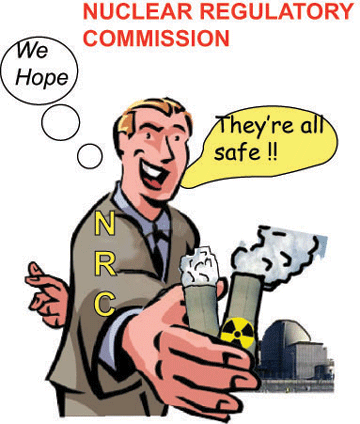
United States: White House Threatens Nuclear Regulatory Commission’s Independence
Energy Intelligence Group, Jessica Sondgeroth, Washington, 21 Feb 25,
The Trump administration’s expansive assertion of presidential power now threatens the independence of the US Nuclear Regulatory Commission (NRC) after the White House this week issued an executive order (EO) claiming control over federal agencies that were established to be independent of politics. The Feb. 18 EO tasks the White House’s Office of Management and Budget (OMB) with the authority to manage independent agencies’ obligations and spending to ensure they align with “the President’s policies and priorities.” These agencies will also have to submit for review to an OMB office “all proposed and final significant regulatory actions.” The extent to which this erodes the NRC’s independence may vary depending on how NRC responds and on OMB actions taken, but nuclear energy sector veterans, critics and advocates are nonetheless waving red flags.
The White House decision “to meddle in safety regulation” is “devastating,” former NRC chair Allison Macfarlane, now a policy professor at the University of British Columbia, told Energy Intelligence. “The US NRC used to be referred to as the ‘gold standard’ for nuclear regulators. No longer. Now other countries can take that mantle.” Macfarlane said that as NRC chair, she spent years championing regulatory independence “to ensure national security and economic security. A nuclear accident, as happened in Japan, can devastate a country’s economy, not to mention its nuclear industry. I guess the folks at the White House have never learned this lesson?”
The EO, titled “Ensuring Accountability for All Agencies”, is only the latest White House challenge to the independence of various executive agencies and to Congressional lawmaking, from science and health research to environmental oversight to public education. This particular EO seeks to broaden the White House’s authority over independent regulatory agencies, including the Federal Trade Commission, Federal Energy Regulatory Commission, Federal Communications Commission and Securities and Exchange Commission. The EO does make some exceptions, but the NRC is not among them.
……………………………………………Given “the blatant and unmitigated conflicts of interest in the White House, and the newfound love among Trump and Elon [Musk]’s tech bro friends for nuclear power,” Ed Lyman, a nuclear regulatory watchdog at the Union of Concerned Scientists, warned in an email that the agency “could be turned into a mere rubber stamp for whatever projects are favored by the President at the moment.” This could override the NRC’s “public health and safety mandate in the name of ‘consistency with the President’s policies and priorities.'”
The NRC was established as an independent agency by Congress in the Energy Reorganization Act of 1974. That law took the NRC’s predecessor, the Atomic Energy Commission, and split its regulatory and promotional roles into the NRC and what is today the US Department of Energy (DOE), respectively. “The NRC was explicitly created to be independent of energy system policy goals under the Atomic Energy Commission that Congress perceived as too political and influenced by the industry,” Adam Stein, nuclear energy innovation director, noted. “Shifting from an independent agency to an agency under direct control of one party under the President creates the same problem from a different influence.”
……………………The nuclear industry lobbies Congress for favorable policies but also communicates directly with the NRC through filings and public meetings to advocate for its interpretation of Congressionally-mandated regulatory reforms.
…………………….For agencies as specialized as the NRC, mass layoffs or buyouts threaten to undermine core competencies and training activities — particularly given the recent hiring of 600 staff, a growing workload of new reactor licensing activities and concerns over the aging workforce.
https://www.energyintel.com/00000195-25b1-ddbd-a9dd-3ff520010000
The IAEA comments on the state of Ukraine’s Nuclear Power Plants
The Zaporizhzhya Nuclear Power Plant has been relying on a single off-site power line for more than a week now after the other 9 have been taken offline due to the war – this single power line is critical to prevent massive radioactive releases at the site.
At the Chornobyl plant, firefighters are continuing to put out small fires that keep smouldering and spreading on the roof of the reactor shield hit by a Russian drone.
Ukraine’s other nuclear plants have continued to report frequent air raid alarms over the past week due to the presence of drones around the sites.
5.0-magnitude quake strikes off Japan’s Fukushima: JMA
TOKYO, Feb. 21 (Xinhua) https://english.news.cn/20250221/1a62306993674102b4bf547c66308416/c.html?fbclid=IwY2xjawInSGJleHRuA2FlbQIxMQABHaLmlIJlO8LIDD4_tC9mDYzpZnPQTSalQEzW0hj-j5vNUxWQ8hVw_Wrelw_aem_JSAQL14AGKbnrwbZ10cXPA
— An earthquake with a preliminary magnitude of 5.0 struck off the northeastern Japanese prefecture of Fukushima on Friday, the country’s weather agency said.
The temblor occurred at around 10:01 p.m. local time at a depth of 50 km, measuring 4 on the Japanese seismic intensity scale of 7, according to the Japan Meteorological Agency (JMA).
The epicenter was located at a latitude of 37.5 degrees north and a longitude of 141.5 degrees east.
There was no tsunami warning, the JMA added
Trump just assaulted the independence of the nuclear regulator. What could go wrong?

By Allison Macfarlane | February 21, 2025
President Trump, through his recent Executive Order, has attacked independent regulatory agencies in the US government. This order gives the Office of Management and Budget power over the regulatory process of until-now independent agencies. These regulatory agencies include the Federal Elections Commission, the Federal Trade Commission, the Securities and Exchange Commission, the Federal Energy Regulatory Commission—and my former agency, the Nuclear Regulatory Commission, which I chaired between July 2012 and December 2014.
An independent regulator is free from industry and political influence. Trump’s executive order flies in the face of this basic principle by requiring the Office of Management and Budget to “review” these independent regulatory agencies’ obligations “for consistency with the President’s policies and priorities.” This essentially means subordinating regulators to the president.
In the past, the president and Congress, which has oversight capacity on the regulators, stayed at arm’s length from the regulators’ decisions. This was meant to keep them isolated, ensuring their necessary independence from any outside interference. Trump’s executive order implies there are no longer independent regulators in the United States.
Independent regulators should not only be free from government and industry meddling; they also need to be adequately staffed with competent experts and have the budget to operate efficiently. They also need to be able to shut down facilities such as nuclear power plants that are not operating safely, according to regulations. To do this, they need government to support their independent decisions and rulemaking.
Independence matters. When I was chairman, I traveled the world talking about the importance of an independent regulator to countries where nuclear regulators exhibited a lack of independence and were subject to excessive industry and political influence. It is ironic that the US Nuclear Regulatory Commission—often called the “Gold Standard” in nuclear regulation—has now been captured by the Trump administration and lost its independence. So much for the Gold Standard; the Canadian, the French, or the Finnish nuclear regulator will have to take on that mantle now.
To understand what is at stake, one needs to look no further than the Fukushima accident in March 2011, which showed the world how a country’s economic security is vulnerable to a captured regulator………………………………………………………..
An independent investigation by the Diet (Japan’s house of parliament) into the cause of the Fukushima accident concluded unequivocally that: “The TEPCO Fukushima Nuclear Power Plant accident was the result of collusion between the government, the regulators and TEPCO, and the lack of governance by said parties. They effectively betrayed the nation’s right to be safe from nuclear accidents.” Japan’s government and nuclear industry continue to struggle with the clean-up of the Fukushima site, and it purposely began in 2023 to release still-contaminated water into the Pacific Ocean. Nearby countries responded by banning fishing products from the region.
As the industry often says, a nuclear accident anywhere is a nuclear accident everywhere. …………………… more https://thebulletin.org/2025/02/trump-just-assaulted-the-independence-of-the-nuclear-regulator-what-could-go-wrong/?fbclid=IwY2xjawImRopleHRuA2FlbQIxMQABHXcsEIvbsR7x3_k1wSvr8EHSizxiqUnLBb42mZ2YJGeOYLxrftrY4-5HVg_aem_Q1k1WJJnpyqw6WEHOuvZ2Q
Efforts continue to eliminate fires in Chernobyl shelter’s roof
In an update on Thursday at 17:00 local time, the Chernobyl nuclear power plant operator said thermal imaging monitoring of the New Safe Confinement was continuing and parts of the exterior cut into “for the final elimination of smouldering areas”.
Workers from the State Emergency Service of Ukraine have been working at the site since the drone strike on Friday 14 February damaged the roof of the giant structure built to cover Chernobyl’s unit 4.
The Chernobyl plant company (ChNPP) said that the external cladding of the arch-shaped New Safe Confinement (NSC) had a 15 square metre area of damage from the drone, with further damage in areas up to 200 square metres. It said there was also damage to the internal cladding filler and to some bolted connections in the structure.
It says that radiation levels remain within their normal levels at the site – the NSC was built to cover a wide area, including the original rapidly built shelter over the remnants of unit 4 following the accident in 1986.
In its update on Thursday, the International Atomic Energy Agency, which has experts based at Chernobyl, said: “Firefighters are continuing to put out small fires that keep smouldering and spreading on the roof of the New Safe Confinement.” It added that agency staff’s “measurements continue to show normal gamma radiation dose rate values near the NSC compared to those recorded by the IAEA since it established a continuous presence at the site just over two years ago”………………………………………….
https://www.world-nuclear-news.org/articles/chernobyl-shelter-roof-small-fires-efforts-to-eliminate
World Nuclear News 20th Feb 2025
“Radioactive Russian Roulette” at San Onofre: Exposing Critical Safety Failures.
Charles Langley of Public Watchdogs has exposed a critical issue that demands immediate attention: the Nuclear Regulatory Commission (NRC) has granted Southern California Edison (SCE) sweeping exemptions from emergency planning and safety requirements, putting millions of lives at risk. These alarming exemptions—despite strong objections from state officials—leave the public dangerously unprotected in the event of a nuclear emergency.
| The Samuel Lawrence Foundation is calling on all community members to read the article and understand the gravity of this situation. With these dangerous exemptions in place, we are vulnerable to catastrophic risks. The time to act is now—before it’s too late. Read the full article here.Let’s make our voices heard and demand stronger safety measures to protect the health and safety of millions of Californians. |
1 This Month

of the week – Shut Down Drone Warfare!


Tell the Ukrainian Government to Drop Prosecution of Peace Activist Yurii Sheliazhenko

Petition to revoke the licensing of the Near Surface Nuclear Disposal Facility (NSDF) at Chalk River. https://www.ourcommons.ca/petitions/en/Petition/Details?Petition=e-7247
To see nuclear-related stories in greater depth and intensity – go to https://nuclearinformation.wordpress.com
-
Archives
- April 2026 (68)
- March 2026 (251)
- February 2026 (268)
- January 2026 (308)
- December 2025 (358)
- November 2025 (359)
- October 2025 (376)
- September 2025 (257)
- August 2025 (319)
- July 2025 (230)
- June 2025 (348)
- May 2025 (261)
-
Categories
- 1
- 1 NUCLEAR ISSUES
- business and costs
- climate change
- culture and arts
- ENERGY
- environment
- health
- history
- indigenous issues
- Legal
- marketing of nuclear
- media
- opposition to nuclear
- PERSONAL STORIES
- politics
- politics international
- Religion and ethics
- safety
- secrets,lies and civil liberties
- spinbuster
- technology
- Uranium
- wastes
- weapons and war
- Women
- 2 WORLD
- ACTION
- AFRICA
- Atrocities
- AUSTRALIA
- Christina's notes
- Christina's themes
- culture and arts
- Events
- Fuk 2022
- Fuk 2023
- Fukushima 2017
- Fukushima 2018
- fukushima 2019
- Fukushima 2020
- Fukushima 2021
- general
- global warming
- Humour (God we need it)
- Nuclear
- RARE EARTHS
- Reference
- resources – print
- Resources -audiovicual
- Weekly Newsletter
- World
- World Nuclear
- YouTube
-
RSS
Entries RSS
Comments RSS
 nuclear-news