Chernobyl cooling systems have lost power but meltdown risk is low
An electrical outage at Chernobyl nuclear power plant risks dangerous fuel overheating, but experts say that the chances are extremely slim due to the age of the reactors, which were shut down over two decades ago
New Scientist, By Matthew Sparkes, 20 January 2026
An electrical outage at Ukraine’s Chernobyl Nuclear Power Plant has taken spent fuel cooling systems offline, leading to a potential risk of overheating and the release of dangerous levels of radiation – but due to the age of the fuel, it should be safe until power is restored.
The International Atomic Energy Agency (IAEA) reports that several Ukrainian electrical substations have been hit by Russian military strikes, causing power outages at Chernobyl. “The IAEA is actively following developments in order to assess impact on nuclear safety,” wrote IAEA director general Rafael Grossi in a post on X.
Spent nuclear fuel from reactors continues to emit radiation for years, creating heat that must be shed, or else the fuel can melt and emit a spike of dangerous radiation. The fuel from Chernobyl’s former reactors is stored in a large cooling pond that is constantly replenished with fresh, cold water to keep its temperature down.
But without an electricity supply – which the IAEA says the site now lacks – this cooling has stopped, which will allow the water temperature to rise and increase the rate of evaporation.
“When the fuel comes out of a reactor, it will be hot for a while, because there will be fission products and there will be radioactive and giving off gammas and betas and alphas – just emitting energy, which needs to be removed, otherwise it will eventually melt,” says Paul Cosgrove at the University of Cambridge.
Working in Chernobyl’s favour, however, is that its stored fuel is older and therefore has already had time to emit much of its radioactive energy and cool down. The risk now is lower than the risk was in 2022, for example, when New Scientist reported on similar power outages at Chernobyl.
“It is always a worry when a nuclear site loses power, but worry about nuclear risks is often several orders of magnitude above the risks associated with other events with similar consequences,” says Ian Farnan, also at Cambridge.
Chernobyl’s reactor 4 exploded in 1986, but reactor 2 was shut down in 1991, reactor 1 ceased generating power in 1996 and reactor 3 – the final one at the site – was decommissioned in 2000.
The exact specifications of the storage pools that contain the fuel left over from those reactors at Chernobyl are kept classified, says Cosgrove. But he is aware of an inspection by regulators in 2022, which found that the risk of spent fuel overheating in the case of a power outage was low. “This fuel has been sat in there for 20 years, so it will have decayed. More and more of that energy will be gone,” he says………………. https://www.newscientist.com/article/2512468-chernobyl-cooling-systems-have-lost-power-but-meltdown-risk-is-low/
IAEA chief says nuclear accident risk in Ukraine outweighs fear of atomic weapons.

Rafael Grossi says fighting around Zaporizhzhia nuclear power plant has left Europe’s largest facility in ‘extremely fragile, volatile condition’ –
Beyza Binnur Donmez |16.01.2026 GENEVA, https://www.aa.com.tr/en/russia-ukraine-war/iaea-chief-says-nuclear-accident-risk-in-ukraine-outweighs-fear-of-atomic-weapons/3801135
The head of the UN nuclear watchdog said he is more worried about the risk of a nuclear accident in Ukraine than the potential use of atomic weapons, stressing the fragile situation at Europe’s largest nuclear power plant.
In an interview published on Friday, International Atomic Energy Agency Director General Rafael Grossi told RTVE that while the possibility of nuclear weapons being used in the Ukraine war cannot be fully ruled out, it remains unlikely.
“I believe that the possibility of the use of nuclear weapons in the context of this conflict is not very high,” Grossi said. “Therefore, we are immediately more concerned about the possibility of a nuclear accident than about the use of the nuclear weapon itself.”
Grossi underlined the dangers surrounding the Zaporizhzhia Nuclear Power Plant, which he described as “the most important nuclear power plant in Europe,” noting that it once supplied 20% of Ukraine’s electricity. The plant, located in a combat zone and occupied by Russia, remains highly vulnerable to military activity and power outages that could disrupt cooling systems.
“The situation today is extremely fragile. It is a combat zone,” he said, adding: “We are exercising this function of permanent observation and mediating between both belligerents to achieve, for example, specific ceasefires. We have already successfully negotiated four that allow us to carry out, for example, repairs on the high voltage lines that surround the plant, in order to precisely avoid radiological emergency situations.”
“It is an extremely fragile and volatile situation that we follow day by day,” he stressed.
Iran holds ‘significant amount’ of enriched uranium
Turning to Iran, Grossi said the country continues to hold a “significant amount” of highly enriched uranium, amid tensions and suspended inspections following attacks on nuclear facilities.
“There is still a significant amount of uranium enriched to 60% isotopic purity in Iran, which is practically the level required for the manufacture of nuclear weapons,” he said.
Grossi also warned against any Iranian move to withdraw from the Treaty on the Non-Proliferation of Nuclear Weapons, saying: “This would only aggravate the situation of tension that is already being experienced.”
To a question, the IAEA chief said the agency remains engaged in dialogue with Tehran and other key actors, including the US, to restore monitoring and prevent further escalation.
Ukraine and Russia agree temporary ceasefire to allow repairs to Zaporizhzhia nuclear power line.
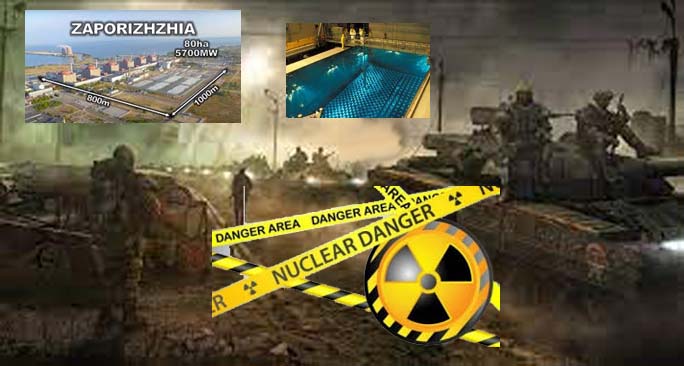
The IAEA director warned that attacks on Ukraine’s power infrastructure have “direct implications on the nuclear safety of its nuclear facilities”.
Mirror UK, Emma O’Neill Content Editor, 16 Jan 2026
Ukraine and Russia have agreed a temporary ceasefire to allow urgent repair work on a damaged power line at Europe’s largest nuclear plant, the Zaporizhzhia Nuclear Power Plant (ZNPP), IAEA officials confirmed today……….
The 330 kV backup line was disconnected on 2 January during military activity, leaving the plant reliant on a single 750 kV main power line. Technicians from Ukraine’s electrical grid operator are expected to begin repairs under the short-term truce in the coming days.
An IAEA team has departed Vienna to travel to the frontline and monitor the work, ensuring that safety measures are strictly followed during the repairs.
The agency confirmed that winter protection measures are in place at the plant, including temperature controls to prevent freezing in groundwater wells that supply cooling systems for reactors and spent fuel pools. Emergency diesel generators are also fully operational should the plant lose off-site power again.
The situation highlights the ongoing risks to Ukraine’s nuclear facilities, with military activity recently damaging a substation at the Chernobyl plant and forcing temporary power reductions at other sites.
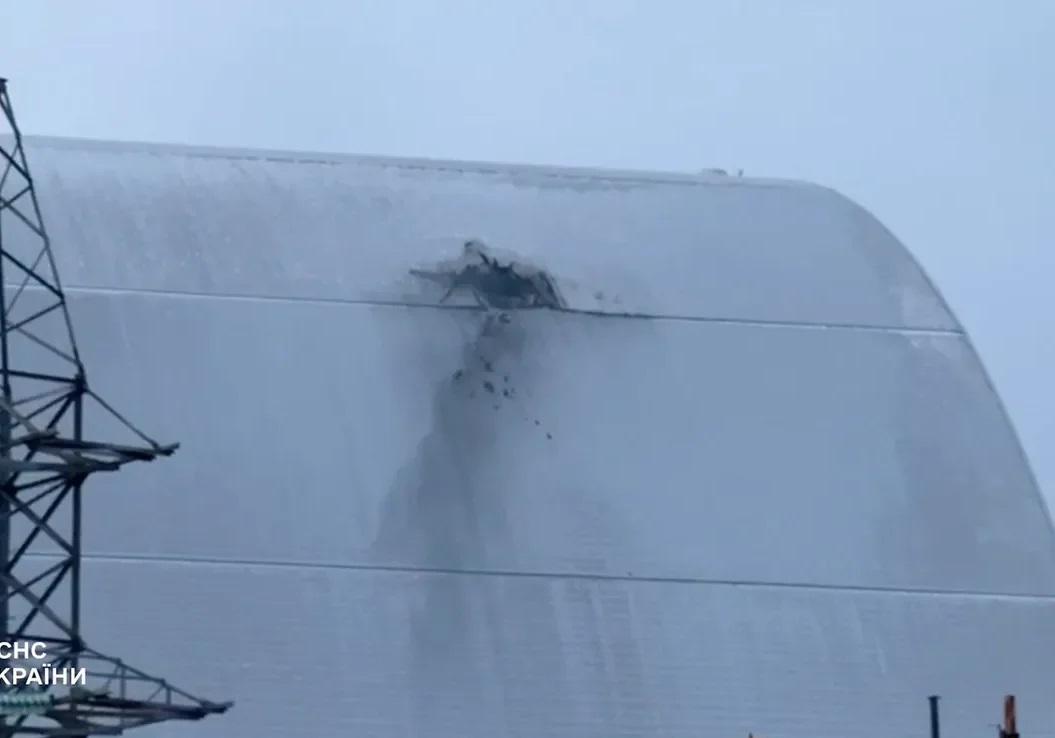
Grossi warned that attacks on Ukraine’s power infrastructure have “direct implications on the nuclear safety of its nuclear facilities” and announced plans for another IAEA mission to assess 10 critical substations supplying electricity for reactor cooling systems and safety equipment.
Over the past week, IAEA teams reported air raid alarms and military activity near all five nuclear sites in Ukraine, including explosions and flying objects close to Zaporizhzhia, Khmelnitsky, South Ukraine, and Chernobyl plants.
The temporary ceasefire now allows repairs to the ZNPP backup line to go ahead, providing a vital safeguard for Europe’s largest nuclear facility and reducing the risk of a serious nuclear incident. https://www.mirror.co.uk/news/world-news/ukraine-russia-agree-temporary-ceasefire-36566368
TEPCO postpones 1st reactor restart since Fukushima due to alarm trouble.
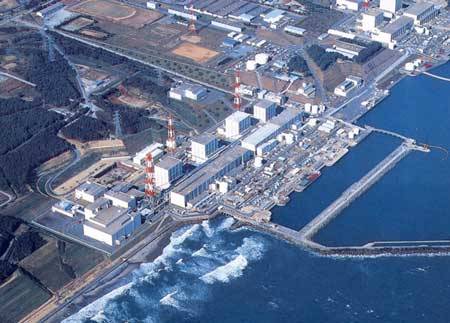
January 19, 2026 (Mainichi Japan), https://mainichi.jp/english/articles/20260119/p2g/00m/0bu/023000c
TOKYO (Kyodo) — Tokyo Electric Power Company Holdings Inc. said Monday it will postpone until an unspecified date the restart of its nuclear reactor northwest of Tokyo — its first since the 2011 Fukushima disaster — due to a control-rod alarm failure.
The Kashiwazaki-Kariwa nuclear complex in Niigata Prefecture was initially set to restart on Tuesday, but an alarm designed to sound when two non-paired control rods are withdrawn from the reactor fuel core failed to trigger during a test Saturday, the utility said at a press conference.
The company said it will announce a new date for restarting the No. 6 unit of the nuclear power complex.
After the latest incident, which was deemed a deviation from operational limits stipulated in the plant’s safety regulations, TEPCO returned all control rods to the fully inserted position.
The cause of the error was determined to be an incorrect control rod pairing that had persisted since the No. 6 unit began commercial operation in November 1996.
According to TEPCO, investigations since Saturday revealed that 88 of approximately 20,000 control rod pairs had configuration errors. The incorrect pairings had not been discovered until now because alarm tests are conducted at random.
Yutaka Kikukawa, unit director at the Kashiwazaki-Kariwa plant, denied that any mistakes were made by operational staff, saying, “We will do what needs to be done to correct the error discovered by chance.”
The configuration errors have since been corrected, and the plant was returned to its pre-deviation state Sunday night, TEPCO said.
The rescheduling came as it will take several days for the operator to conduct verification checks on each of the 205 control rods at the No. 6 reactor and examine the fission reaction of the fuel assemblies.
The reactors at the seven-unit complex have been offline since the No. 6 unit entered regular inspection in March 2012.
All the president’s yes-men?
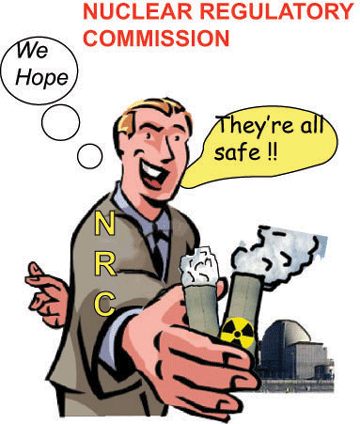
The NRC commission looks poised to rubber-stamp “Cowboy Chernobyl”, write Paul Gunter and Linda Pentz Gunter
Donald Trump loves a yes-man. What we are now waiting to learn is just how many of those yes-men are sitting on the US Nuclear Regulatory Commission (NRC).
The agency was ordered late last year by the then White House and Elon Musk-created US Department of Government Efficiency, to effectively accelerate and “rubber stamp” reactor license approvals in order to fulfill the White House’s reckless directive, contained in four executive orders issued last May, to license new reactors at lighting speed.
On December 1, the NRC proudly announced that its staff had completed their final safety evaluation for the Bill Gates company TerraPower’s small modular reactor design in record time, in keeping with the make haste mandate from the White House. The NRC staff had concluded that “there are no safety aspects that would preclude issuing the construction permit.”
NRC commissioner David Wright was abruptly and surprisingly demoted from his position as chairman after serving in that capacity for less than one year.
Jeremy Groom, acting director of the NRC’s Office of Nuclear Reactor Regulation, even bragged how the NRC staff “finished our technical work on the Kemmerer review a month ahead of our already accelerated schedule, as we aim to make licensing decisions for new, advanced reactors in no more than 18 months.”
What we are now waiting to find out, likely sometime this month, is whether the five NRC commissioners will indeed grant a construction license to a patently dangerous reactor design (we are using the term “dangerous” here under their own definition since all of us already know that every nuclear reactor design is inherently dangerous and the so-called new ones haven’t changed that reality.)
Who will be calling those shots, however, has now been significantly reshuffled by the Trump administration.
Sitting NRC commissioner and Republican David Wright had been appointed commission chair immediately after Trump’s January 2025 inauguration, bumping the Biden administration’s appointed chair, Democrat Christopher Hanson, to commissioner.
By June, the White House had unceremoniously fired Hanson from the commission “without cause” in a move widely viewed as illegal based on US Supreme Court precedent case law that went unchallenged. By August, Republican commissioner Annie Caputo had resigned, a surprise move explained by the need to “spend more time with family,” invariable a convenient cover story. This left two vacant seats on the commission.
These have now been filled by two Republicans nominated by the White House — Douglas Weaver (straight from industry) and Ho Nieh, who has been spinning through industry-regulator revolving doors for much of his career.
Nieh has been an NRC employee for 23 years, reaching senior management level. He was confirmed to the commission by the US Senate on November 19, 2025 and sworn in on December 4, 2025.
Then, in yet another surprise move, on January 8, 2026, Trump named Ho Nieh the new NRC commission chairman, effective immediately, bumping David Wright back to commissioner. Caputo’s vacant seat was filled by Weaver.
This was a strategic political maneuver to set up a 3-2 Republican majority on the commission, with the Democrats — Bradley Crowell (term expiring June 30, 2027) and Matthew Marzano (term expiring June 30, 2028 — now pushed to the minority………………………………………………………………………………………………………………………………………………………………………………………………………
The witnesses for the House hearing — tellingly called “American Energy Dominance: Dawn of the New Nuclear Era” — came exclusively from the industry, with representatives from the Nuclear Energy Institute — the nuclear industry’s paid propaganda arm — and from Southern Company, the Nuclear Innovation Alliance and the Idaho National Laboratory.
Entirely missing were any contrary, independent, objective and scientifically knowledgeable voices. Did they invite Lyman or M.V. Ramana, or Arjun Makhijani, physicists who actually understand how precisely dangerous these new reactor schemes are?
Did they invite Amory Lovins to blow the lid off the extreme costs or Mark Jacobson to educate them on how they could achieve their same goals with renewables instead?
And did they invite anyone from the targeted communities to see if they actually wanted these things in their neighborhoods or had even been consulted?
Even the right wing British daily newspaper, the Daily Mail, ran a headline that screamed “Tiny city of just 2,000 residents are fearful as Bill Gates-backed nuclear plant dubbed ‘Cowboy Chernobyl is built on their doorstep,” borrowing the moniker Lyman had used for the Natrium plan.
“I don’t think there are, at least from our perspective, many communities that are out there raising their hands saying, ‘Yes. We want a nuclear project in our community with an expedited safety and environmental review,’” John Burrows, Wyoming Outdoor Council’s energy and climate policy director told his local NPR station. “It’s just not something that any community wants to see, especially for a pilot or demonstration project.”
At least 60 percent of Americans now say they want more nuclear power according to a recent Pew Research Center poll. Of course they do, because they, like members of Congress, are only listening to the endless propaganda drumbeat from the nuclear industry, blasted non-stop across mainstream media and almost always without challenge.
Lyman’s “Cowboy Chernobyl” quip is actually a deep serious warning. It’s time we drove those nuclear cowboys off into the sunset, not in glory but in disgrace.
Paul Gunter is the Director of the Reactor Oversight Project at Beyond Nuclear. Linda Pentz Gunter is the founder of Beyond Nuclear and serves as its international specialist. Her book, No To Nuclear. Why Nuclear Power Destroys Lives, Derails Climate Progress and Provokes War, can be pre-ordered now from Pluto Press. https://beyondnuclearinternational.org/2026/01/15/all-the-presidents-yes-men/
Chubu Electric to Face On-Site Probe over N-Plant Data Fraud

Tokyo, Jan. 14 (Jiji Press) https://jen.jiji.com/jc/eng?g=eco&k=2026011400579—
Japan’s Nuclear Regulation Authority decided Wednesday that its secretariat will conduct an on-site inspection of Chubu Electric Power Co. over the company’s data fraud regarding earthquake risks at its Hamaoka nuclear power plant.
The inspection is expected to target Chubu Electric’s headquarters in the central Japan city of Nagoya. The power plant located in the central prefecture of Shizuoka may be subject to the probe if necessary.
Also at the day’s regular meeting, the nuclear watchdog approved the scrapping of its screening of the power plant for a possible restart, in the wake of the data scandal.
In addition, the NRA will issue an order for Chubu Electric to report back on the details of the data fraud under the nuclear reactor regulation law, with the deadline set for the end of March. The company will face punishment if it refuses the order or makes false statements.
The authority plans to urge other power companies to prepare appropriate documents for the NRA’s reactor screenings.
Bill Gates-backed ‘Cowboy Chernobyl’ nuclear reactor races toward approval in Wyoming
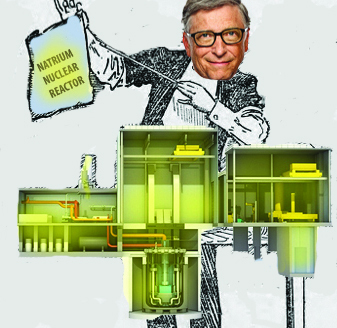
For longtime Wyoming resident Steve Helling, the risks outweigh the promises.
“Wyoming is being used as a guinea pig for this nuclear experiment,”
By Samantha Olander, Jan. 10, 2026
A Bill Gates-backed nuclear reactor dubbed “Cowboy Chernobyl” by critics is barreling toward approval in rural Wyoming, alarming residents and nuclear safety experts as regulators fast-track the project under a Trump-era order.
TerraPower, founded by the Microsoft guru, is seeking federal approval to build the western hemisphere’s first Natrium nuclear reactor in Kemmerer, a coal town of roughly 2,000 people near the Utah border and about two hours north of Salt Lake City.
The plant would use liquid sodium rather than water to cool the reactor, a design pitched as safer and more efficient.
Critics say it introduces new risks while cutting corners on containment.
The United States Nuclear Regulatory Commission completed its final safety evaluation in December, concluding there were no issues that would block issuance of a construction permit.
The five-member commission is expected to vote on the permit later this month. TerraPower still needs a separate operating license before the reactor can run.
Local residents say the fast pace has left them uneasy.
“We’re probably two hours away from that place when it comes to how long it takes the wind to get here,” Patrick Lawien of Casper told the Daily Mail. “Obviously, if anything goes wrong, it’s headed straight for us.”
TerraPower began building the non-nuclear portion of the 44-acre site in June 2024, near the retired Naughton coal plant, which shut down at the end of 2025.
The company says the reactor will generate 345 megawatts of power, with the ability to reach 500 megawatts during peak demand. It aims to have the plant operating by 2030………………………………………
uclear watchdogs say speed is the problem.
The Union of Concerned Scientists, a nonprofit science advocacy group, says TerraPower’s design omits the traditional concrete containment structure used at U.S. nuclear plants.
The company instead proposes “functional containment,” which relies on internal engineered systems to perform containment functions rather than a physical containment building.
“The potential for rapid power excursions and the lack of a real containment make the Kemmerer plant a true ‘Cowboy Chernobyl,’” said Edwin Lyman, the group’s director of nuclear power safety.
Lyman warned that if containment proves inadequate later, it would be nearly impossible to add a traditional containment structure once construction begins.
He also criticized the sodium cooling system.
“Its liquid sodium coolant can catch fire, and the reactor has inherent instabilities that could lead to a rapid and uncontrolled increase in power,” Lyman said….
Concerns intensified after the NRC wrapped up its review months ahead of its original schedule.
The accelerated timeline followed an executive order signed by Donald Trump in May directing federal agencies to fast-track advanced nuclear reactor approvals,
TerraPower applied for its construction permit in March 2024 and received preliminary approval in December, well ahead of its initial August 2026 target.
For longtime Wyoming resident Steve Helling, the risks outweigh the promises.
“Wyoming is being used as a guinea pig for this nuclear experiment,” Helling told the Daily Mail. “Wyoming has everything I could want, beauty, clean air, clean water, wildlife, abundant natural resources.”
He said he worries about the long-term cost of disposing of nuclear waste decades down the road, as the U.S. still lacks a permanent storage solution.
Some states, including California and Connecticut, prohibit new nuclear plant construction unless the federal government establishes a long-term solution for radioactive waste storage.
Watchdog halts nuclear plant safety review after seismic data found to be fabricated
Japan’s nuclear watchdog is scrapping the safety screening for two reactors at the Hamaoka nuclear power plant
ByMARI YAMAGUCHI Associated Press, January 7, 2026,
TOKYO — Japan’s nuclear watchdog said Wednesday it is scrapping the safety screening for two reactors at the Hamaoka nuclear power plant in central Japan after the plant’s operator was found to have fabricated data about earthquake risks, in a setback to Japan’s attempts to accelerate reactor restarts to boost nuclear energy use.
Chubu Electric Power Co. had applied for safety screening to resume operations at the No. 3 and 4 reactors at the Hamaoka nuclear power plant in 2014 and 2015. Two other reactors at the plant are being decommissioned, and a fifth is idle.
The plant, about 200 kilometers (125 miles) west of Tokyo, is located on a coastal area known for potential risks from so-called Nankai Trough megaquakes.
The Nuclear Regulation Authority said it started an internal investigation in February after receiving a tip from a whistleblower that the utility had for years provided fabricated data that underestimated potential seismic risks.
The regulator suspended the screening for the reactors after it confirmed the falsification and the utility acknowledged the fabrication in mid-December, said Shinsuke Yamanaka, the watchdog’s chair. The NRA is also considering inspecting the utility headquarters.
“Ensuring safety is the first and foremost responsibility for nuclear plant operators and (data fabrication) is an act of betrayal to their task and one that destroys nuclear safety,” Yamanaka said.
The scandal surfaced Monday when Chubu Electric President Kingo Hayashi acknowledged that workers at the utility used inappropriate seismic data with an alleged intention to underestimate seismic risks and apologized. He pledged to establish an independent panel for investigation.
The screening, including data that had been approved earlier, would have to start from scratch or possibly be rejected entirely, Yamanaka said.
The move is a setback at a time Japan’s government seeks to accelerate reactor restarts to cope with rising energy costs and pressure to reduce carbon emissions.
Public opinion in Japan remains divided due to lingering safety concerns after the 2011 Fukushima Daiichi meltdowns.
Japan’s ‘most dangerous’ nuclear power plant admits to manipulating earthquake safety data

Regulator halts review to restart Hamaoka power plant after 14 years
Shweta Sharma, Tuesday 06 January 2026, https://www.independent.co.uk/asia/japan/japan-nuclear-plant-data-manipulation-earthquake-b2895086.html
A Japanese power plant operator has admitted to cherry-picking critical safety data to pass the screening process of the nuclear safety regulator to restart two of its offline reactors.
Chubu Electric said on Monday that it had set up an independent panel of experts to investigate possible misconduct in compiling data as part of a process to restart two reactors at the Hamaoka nuclear power plant.
The plant originally had five reactors but two were permanently shut down in 2009. The remaining three reactors were taken offline in the wake of the 2011 Fukushima disaster.
Concerns about data manipulation mean the power plant is unlikely to restart anytime soon. It’s also a likely setback for Japan’s efforts to shift back to nuclear power to boost energy security and cut greenhouse gas emissions.
Chubu told regulators it had selected an earthquake wave model closest to the average of 20 possible patterns to calculate the Hamaoka plant’s “standard seismic motion”, the maximum shaking the reactors could withstand. However, the company admitted, employees in charge could have deliberately chosen that model to make the plant appear safer and speed up the screening process.
We sincerely apologise for the incident,” Chubu Electric president Kingo Hayashi told a press conference. “The actions could potentially shake the foundations of the nuclear power business.”
The regulator learned about the misconduct last February after it was contacted by a whistleblower.
A senior agency executive called the matter “unbelievable” saying it broke trust in the operator and would make the people question its eligibility.
The industry ministry has now ordered Chubu Electric to submit a detailed report by 6 April explaining the cause of the misconduct and outlining measures to prevent it from happening again.
The Hamaoka power plant, 200km south-west of Tokyo, has been described as the “world’s most dangerous” nuclear power facility by some seismologists and anti‑nuclear campaigners. Government forecasts have predicted an 87 per cent chance of a powerful quake in the area, which sits on two major subterranean faults. A major accident would be likely to force the evacuation of Greater Tokyo, home to 28 million people.
Professor Katsuhiko Ishibashi, a seismologist and a former member of a Japanese government panel on nuclear reactor safety, said in 2003 that Hamaoka was “the most dangerous nuclear power station” in Japan because of the potential for an earthquake to trigger a nuclear disaster.
He assessed at the time that such an incident would devastate a broad area between Tokyo and Nagoya, destroying more than 200,000 buildings and resulting in a huge tsunami.
The plant was ordered to shut down reactors 4 and 5 and cancel the planned restart of reactor 3 following the Fukushima disaster, when a magnitude 9 earthquake triggered tsunami waves up to 15m high. Hamaoka was built to withstand only an 8.5-magnitude quake and an 8m tsunami.
Chubu applied for a review to restart the Hamaoka reactors between 2014 and 2015, and it was approved for standard seismic motion in September 2023.
Shares of Chubu Electric dropped 8.2 per cent, its steepest fall since April 2025, after the latest revelations.
New roads police team for major construction work
Alice Cunningham, BBC 4th Jan 2026, Suffolk
A police force is hiring a road team to escort abnormal loads heading to and from nationally significant infrastructure projects such as Sizewell C nuclear power station.
Suffolk Police said it was recruiting a designated abnormal indivisible loads (AIL) team that would consist of police motorcyclists.
It envisaged the team would work with several projects for several years, and noted that its current project with the new Sizewell C nuclear plant near Leiston was for 12 years.
Chief Constable Rachel Kearton said the “uplift required to support the policing element of the Sizewell C development has been secured through the planning process and paid for by the Sizewell C developer”……………………a “carefully co-ordinated roads policing provision” was in place to ensure safe movement of the abnormal loads to and from Sizewell.
The UK government, which is the largest shareholder in Sizewell C Limited, is building a new two-reactor nuclear power station on the coast next to the Sizewell A and B sites, that could power the equivalent of about six million homes and will generate electricity for 60 years.
Permission for the project was granted in July 2022 before the government gave its final funding approval last year…………………. https://www.bbc.com/news/articles/cddg773172jo
Safety fears as Japan prepares to restart nuclear plant ‘built on tofu’
the greatest risk remains the region’s susceptibility to seismic activity.
the will of the majority of residents today is opposition to a restart and that opposition is f
While Fukushima operator Tepco says it is ‘committed to safety’ at Kashiwazaki-Kariwa, critics believe it is a disaster waiting to happen.
Julian Ryall, 27 Dec 2025
Campaigners against nuclear energy have condemned Japan’s decision to resume operations at the Kashiwazaki-Kariwa power plant, claiming that the facility will be unable to withstand a major earthquake as it was “built on tofu”.
Tokyo Electric Power Co (Tepco), the operator of the Niigata prefecture plant, on Wednesday applied for a final examination of the facility to the Nuclear Regulation Authority (NRA). Approval is likely to be a formality as the prefectural assembly already gave the nod on Tuesday.
Tepco, which has been fiercely criticised for its handling of the Fukushima Daiichi nuclear power plant disaster in March 2011, intends to restart one reactor at Kashiwazaki-Kariwa on January 20.
It would be the first of Tepco’s nuclear reactors to resume since three of Fukushima’s six reactors melted down after a magnitude 9 offshore earthquake unleashed devastating tsunamis.
Tepco has been working hard in recent years to convince the local government and residents of Niigata prefecture that it has made upgrades to secure the site from natural disasters.
Its president, Tomoaki Kobayakawa, told the media that as the operator “responsible” for the Fukushima accident, the company was now “committed to prioritising safety” at Kashiwazaki-Kariwa.
Many people remain unconvinced.
“The plant was famous for having been built on tofu – the bedrock is 30 metres (100 feet) below the surface – with many fault lines running through the site as well as offshore,” said Shaun Burnie, senior nuclear energy specialist for Greenpeace.
“Kashiwazaki-Kariwa is one of the world’s largest nuclear plants and the only one in theory capable of operating for Tepco. So restarting operations has been a priority for both the company and the government for more than a decade,” Burnie told This Week in Asia.
“But resistance from Niigata residents, the scale of safety issues and the incompetence of Tepco have undermined all efforts until now.”
History repeating itself?
Nearly 15 years after the Fukushima plant was the site of the second-worst nuclear accident in global history, Burnie warns that serious problems are being overlooked again.
Even during the preliminary planning stages, in the mid-1970s, it was apparent that ground conditions at the site by the Sea of Japan were not suitable, he said.
That was shown in July 2007, when the Chuetsu-oki earthquake struck. The magnitude 6.6 quake occurred on a previously unknown offshore fault line about 11km (7 miles) off the coast, followed 13 hours later by a 6.8 tremor around 330km (205 miles) to the west.
The nuclear plant, 19km (12 miles) due south from the epicentre of the initial quake, registered a peak ground acceleration – essentially how much the ground shook – of 6.8 metres (22 feet) per second squared in reactor No 1. The design specification for achieving a safe shutdown is 4.5m/s², while the restart level for key equipment in the plant is 2.73m/s².
Burnie said the original design specifications at the site “turned out to be gross underestimates”, with the quakes causing damage of varying degrees at 3,000 places within the plant.
A fire in an electric transformer caused the most serious damage. It left a pall of black smoke over the plant and alarmed local residents. There were also a number of leaks of mildly radioactive water and spills of radioactive cobalt-60, iodine and chromium-51 from overturned storage drums.
Given the events of 2007 and 2011, Burnie said local residents’ concerns were justified, particularly as new issues have come to light.
“We should have no confidence in Tepco assurances on safety at Kashiwazaki-Kariwa,” he said. “For example, two months after the NRA had approved the reactors’ basic safety assessment in late 2017, Tepco revealed that … the site under the emergency hydrogen ventilation buildings at units five, six and seven was vulnerable to liquefaction.”
Tepco “immediately came under pressure to explain the scale of liquefaction at the site, prove that it does not extend to the reactor buildings and how it was that the NRA was not informed prior to granting approval”, Burnie said.
Equally, he said, the NRA had to explain how it failed to identify liquefaction as a problem for a site before it granted basic safety approval.
A series of security incidents have also been cause for concern. There have been accusations of poor handling of sensitive documents, malfunctioning intruder detection systems and an employee borrowing a colleague’s pass to enter the restricted main control room in 2020.
Shaken by fears
But the greatest risk remains the region’s susceptibility to seismic activity.
“There are multiple seismic fault lines in the area of the Kashiwazaki-Kariwa site, including large-scale submarine active faults,” Burnie said. “The enormous seismic risks at the site remain unresolved and are certain to dominate the debate about the safety of any reactor restart, including in ongoing legal challenges.”
In a statement issued on Tuesday, Tepco said it would “carefully cooperate with all inspections performed by the NRA while also continuing to prioritise safety and steadily making each and every preparation for a restart”.
Takeshi Sakagami, a member of the Citizens’ Association for Monitoring Nuclear Regulation, said that a recent survey conducted by Niigata prefecture determined that 60 per cent of local residents believed that “conditions are not right” to resume operations at the plant.
“The governor explained that support should increase as understanding deepens,” Sakagami said. But “opponents counter that the will of the majority of residents today is opposition to a restart and that opposition is firm”.
Sakagami believed the government was hastening to restart the reactors “because they fear that Japan’s nuclear technology will fall behind the rest of the world”.
For him, the direction that Japan should take is simple.
“I believe Japan should abandon nuclear power and boldly shift towards renewable energy sources and energy conservation,” he said.
What Lies Ahead for Ukraine’s Contested Zaporizhzhia Nuclear Power Plant?
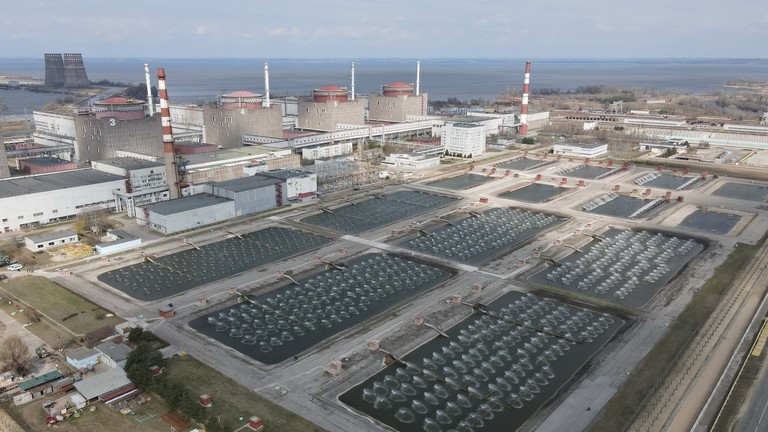
In the long term, there is the unresolved problem of the lack of water resources to cool the reactors after the vast Kakhovka hydro-electric dam was blown up in 2023, destroying the reservoir that supplied water to the plant.
Besides the reactors, there are also spent fuel pools at each reactor site used to cool down used nuclear fuel. Without water supply to the pools, the water evaporates and the temperatures increase, risking fire.
Asharq Al-Awsat, 29 Dec 25, https://english.aawsat.com/features/5223621-what-lies-ahead-ukraine%E2%80%99s-contested-zaporizhzhia-nuclear-power-plant
The Zaporizhzhia nuclear power plant, Europe’s largest, is one of the main sticking points in US President Donald Trump’s peace plan to end the nearly four-year war between Russia and Ukraine. The issue is one of 20 points laid out by Ukrainian President Volodymyr Zelenskiy in a framework peace proposal.
Here are some of the issues regarding the facility:
WHAT ROLE MAY THE US PLAY?
Russia took control of the plant in March 2022 and announced plans to connect it to its power grid. Almost all countries consider that it belongs to Ukraine but Russia says it is owned by Russia and a unit of Russia’s state-owned Rosatom nuclear corporation runs the plant.
Zelenskiy stated at the end of December that the US side had proposed joint trilateral operation of the nuclear power plant with an American chief manager.
Zelenskiy said the Ukrainian proposal envisages Ukrainian-American use of the plant, with the US itself determining how to use 50% of the energy produced.
Russia has considered joint Russian-US use of the plant, according to the Kommersant newspaper.
WHAT IS ITS CURRENT STATUS?
The plant is located in Enerhodar on the banks of the Dnipro River and the Kakhovka Reservoir, 550 km (342 miles) southeast of the capital Kyiv.
The Zaporizhzhia nuclear power plant has six Soviet-designed reactors. They were all built in the 1980s, although the sixth only came online in the mid-1990s after the collapse of the Soviet Union. It has a total capacity of 5.7 gigawatts, according to an International Atomic Energy Agency (IAEA) database.
Four of the six reactors no longer use Russian nuclear fuel, having switched to fuel produced by then-US nuclear equipment supplier Westinghouse.
After Russia took control of the station, it shut down five of its six reactors and the last reactor ceased to produce electricity in September 2022. Rosatom said in 2025 that it was ready to return the US fuel to the United States.
According to the Russian management of the plant, all six reactors are in “cold shutdown.”
Both Russia and Ukraine have accused each other of striking the nuclear plant and of severing power lines to the plant.
The plant’s equipment is powered by electricity supplied from Ukraine. Over the past four years these supplies have been interrupted at least eleven times due to breaks in power lines, forcing the plant to switch to emergency diesel generators.
Emergency generators on site can supply electricity to keep the reactors cool if external power lines are cut.
IAEA Director General Rafael Grossi says that fighting a war around a nuclear plant has put nuclear safety and security in constant jeopardy.
WHY DOES RUSSIA WANT ZAPORIZHZHIA PLANT?
Russia has been preparing to restart the station but says that doing so will depend on the situation in the area. Rosatom chief Alexei Likhachev has not ruled out the supply of electricity produced there to parts of Ukraine.
Oleksandr Kharchenko, director of the Energy Research Center in Kyiv, said Moscow intended to use the plant to cover a significant energy deficit in Russia’s south.
“That’s why they are fighting so hard for this station,” he said.
In December 2025, Russia’s Federal Service for Environmental, Technological and Nuclear Supervision issued a license for the operation of reactor No. 1, a key step towards restarting the reactor.
Ukraine’s energy ministry called the move illegal and irresponsible, risking a nuclear accident.
WHY DOES UKRAINE NEED THE PLANT?
Russia has been pummeling Ukraine’s energy infrastructure for months and some areas have had blackouts during winter.
In recent months, Russia has sharply increased both the scale and intensity of its attacks on Ukraine’s energy sector, plunging entire regions into darkness.
Analysts say Ukraine’s generation capacity deficit is about 4 gigawatts, or the equivalent of four Zaporizhzhia reactors.
Kharchenko says it would take Ukraine five to seven years to build the generating capacity to compensate for the loss of the Zaporizhzhia plant.
Kharchenko said that if Kyiv regained control of the plant, it would take at least two to three years to understand what condition it was in and another three years to restore the equipment and return it to full operations.
Both Ukrainian state nuclear operator Energoatom and Kharchenko said that Ukraine did not know the real condition of the nuclear power plant today.
WHAT ABOUT COOLING FUEL AT THE PLANT?
In the long term, there is the unresolved problem of the lack of water resources to cool the reactors after the vast Kakhovka hydro-electric dam was blown up in 2023, destroying the reservoir that supplied water to the plant.
Besides the reactors, there are also spent fuel pools at each reactor site used to cool down used nuclear fuel. Without water supply to the pools, the water evaporates and the temperatures increase, risking fire.
An emission of hydrogen from a spent fuel pool caused an explosion in Japan’s Fukushima nuclear disaster in 2011.
Energoatom said the level of the Zaporizhzhia power plant cooling pond had dropped by more than 15%, or 3 meters, since the destruction of the dam, and continued to fall.
Ukrainian officials previously said the available water reserves may be sufficient to operate one or, at most, two nuclear reactors.
Trump regulators ripped
by beyondnuclearinternational, https://beyondnuclearinternational.org/2025/12/28/trump-regulators-ripped/
Rushed approval of Bill Gates’ reactor comes with risks, writes Brett Wilkins with Common Dreams
A leading nuclear safety expert has sounded the alarm over the Trump administration’s expedited safety review of an experimental nuclear reactor in Wyoming designed by a company co-founded by tech billionaire Bill Gates and derided as a “Cowboy Chernobyl.”
On December 1, the US Nuclear Regulatory Commission (NRC) announced that it has “completed its final safety evaluation” for Power Station Unit 1 of TerraPower’s Natrium reactor in Kemmerer, Wyoming, adding that it found “no safety aspects that would preclude issuing the construction permit.”
Co-founded by Microsoft’s Gates, TerraPower received a 50-50 cost-share grant for up to $2 billion from the US Department of Energy’s Advanced Reactor Demonstration Program. The 345-megawatt sodium-cooled small modular reactor (SMR) relies upon so-called passive safety features that experts argue could potentially make nuclear accidents worse.
However, federal regulators “are loosening safety and security requirements for SMRs in ways which could cancel out any safety benefits from passive features,” according to Union of Concerned Scientists nuclear power safety director Edwin Lyman.
The reactor’s construction permit application—which was submitted in March 2024—was originally scheduled for August 2026 completion but was expedited amid political pressure from the Trump administration and Congress in order to comply with an 18-month timeline established in President Donald Trump’s Executive Order 14300.
“The NRC’s rush to complete the Kemmerer plant’s safety evaluation to meet the recklessly abbreviated schedule dictated by President Trump represents a complete abandonment of its obligation to protect public health, safety, and the environment from catastrophic nuclear power plant accidents or terrorist attacks,” Lyman said in a statement on December 2.
Lyman continued:
“The only way the staff could finish its review on such a short timeline is by sweeping serious unresolved safety issues under the rug or deferring consideration of them until TerraPower applies for an operating license, at which point it may be too late to correct any problems. Make no mistake, this type of reactor has major safety flaws compared to conventional nuclear reactors that comprise the operating fleet. Its liquid sodium coolant can catch fire, and the reactor has inherent instabilities that could lead to a rapid and uncontrolled increase in power, causing damage to the reactor’s hot and highly radioactive nuclear fuel.
“Of particular concern, NRC staff has assented to a design that lacks a physical containment structure to reduce the release of radioactive materials into the environment if a core melt occurs. TerraPower argues that the reactor has a so-called “functional” containment that eliminates the need for a real containment structure. But the NRC staff plainly states that it “did not come to a final determination of the adequacy and acceptability of functional containment performance due to the preliminary nature of the design and analysis.
“Even if the NRC determines later that the functional containment is inadequate, it would be utterly impractical to retrofit the design and build a physical containment after construction has begun,” Lyman added. “The potential for rapid power excursions and the lack of a real containment make the Kemmerer plant a true ‘Cowboy Chernobyl.’”
The proposed reactor still faces additional hurdles before construction can begin, including a final environmental impact assessment. However, given the Trump administration’s dramatic regulatory rollback, approval and construction are highly likely.
Former NRC officials have voiced alarm over the Trump administration’s tightened control over the agency, which include compelling it to send proposed reactor safety rules to the White House for review and possible editing.
Allison Macfarlane, who was nominated to head the NRC during the Obama administration, said earlier this year that Trump’s approach marks “the end of independence of the agency.”
“If you aren’t independent of political and industry influence, then you are at risk of an accident,” she warned.
Brett Wilkins is a staff writer for Common Dreams. This article first appeared on Common Dreams whose content is available through a Creative Commons license.
Occupied and Imperiled: Charting a Path for Zaporizhzhia’s Nuclear Future
The Zaporizhzhia nuclear power plant, the largest in Europe, is a central issue in U. S. President Donald Trump’s peace plan for the ongoing war between Russia and Ukraine.
ByNewsroom, December 27, 2025, https://moderndiplomacy.eu/2025/12/27/occupied-and-imperiled-charting-a-path-for-zaporizhzhias-nuclear-future/
The Zaporizhzhia nuclear power plant, the largest in Europe, is a central issue in U. S. President Donald Trump’s peace plan for the ongoing war between Russia and Ukraine. This matter is part of a broader peace proposal from Ukrainian President Volodymyr Zelenskiy, comprising 20 key points. The power plant has been under Russian control since March 2022, with Russia asserting ownership while most of the world maintains it belongs to Ukraine. A significant proposal has emerged from the U. S. for a joint trilateral operation of the plant with Ukrainian participation and an American chief manager overseeing its operations.
Currently located in Enerhodar, the power plant has six reactors and a total capacity of 5.7 gigawatts. However, since Russia’s takeover, five reactors have been shut down, and the last one ceased operation in September 2022. Four of the reactors have transitioned to using fuel from Westinghouse, moving away from Russian nuclear fuel. The plant’s management states that all reactors are now in “cold shutdown. ” Both Russia and Ukraine have accused each other of attacks on the plant and disruptions to its power lines, which has often compelled it to rely on emergency diesel generators for essential cooling functions.
The Zaporizhzhia nuclear power plant, the largest in Europe, is a central issue in U. S. President Donald Trump’s peace plan for the ongoing war between Russia and Ukraine. This matter is part of a broader peace proposal from Ukrainian President Volodymyr Zelenskiy, comprising 20 key points. The power plant has been under Russian control since March 2022, with Russia asserting ownership while most of the world maintains it belongs to Ukraine. A significant proposal has emerged from the U. S. for a joint trilateral operation of the plant with Ukrainian participation and an American chief manager overseeing its operations.
Currently located in Enerhodar, the power plant has six reactors and a total capacity of 5.7 gigawatts. However, since Russia’s takeover, five reactors have been shut down, and the last one ceased operation in September 2022. Four of the reactors have transitioned to using fuel from Westinghouse, moving away from Russian nuclear fuel. The plant’s management states that all reactors are now in “cold shutdown. ” Both Russia and Ukraine have accused each other of attacks on the plant and disruptions to its power lines, which has often compelled it to rely on emergency diesel generators for essential cooling functions.
An ongoing concern is the dwindling water supply necessary for cooling the reactors, exacerbated by the destruction of the Kakhovka hydroelectric dam in 2023. The plant requires adequate water for both its reactors and spent fuel pools; without it, the risk of overheating and fire increases. Reports indicate a significant drop in the water level at the plant’s cooling pond, raising alarms about the safety of operations, as the current reserves may only suffice for one or two reactors. Consequently, the situation at the Zaporizhzhia plant raises critical questions about nuclear safety amid the conflict and the potential repercussions if issues remain unaddressed.
Warning Chernobyl nuclear plant radiation shield is at risk of collapse

By PERKIN AMALARAJ, FOREIGN NEWS REPORTER, 24 December 2025
A Russian strike could collapse the internal radiation shelter at the defunct Chernobyl nuclear power station in Ukraine, the plant’s director has warned.
Kyiv has accused Russia of repeatedly targeting the facility, the site of a 1986 meltdown that is still the world’s worst ever nuclear disaster, since Moscow invaded in February 2022.
A hit earlier this year punched a hole in the outer radiation shell, triggering a warning from the International Atomic Energy Agency (IAEA) that it had ‘lost its primary safety functions.’
In an interview with AFP, plant director Sergiy Tarakanov said fully restoring that shelter could take three to four years, and warned that another Russian hit could see the inner shell collapse.
‘If a missile or drone hits it directly, or even falls somewhere nearby, for example, an Iskander, God forbid, it will cause a mini-earthquake in the area,’ Tarakanov said.
The Iskander is Russia’s short-range ballistic missile system that can carry a variety of conventional warheads, including those to destroy bunkers.
‘No one can guarantee that the shelter facility will remain standing after that. That is the main threat,’ he added.
The remnants of the nuclear power plant are covered by an inner steel-and-concrete radiation shell – known as the Sarcophagus and built hastily after the disaster – and a modern, high-tech outer shell, called the New Safe Confinement (NSC) structure.
Our NSC has lost several of its main functions. And we understand that it will take us at least three or four years to restore these functions,’ Tarakanov added.
The IAEA said earlier this month an inspection mission found the shelter had ‘lost its primary safety functions, including the confinement capability, but also found that there was no permanent damage to its load-bearing structures or monitoring systems.’
Director Tarakanov said that radiation levels at the site remained ‘stable and within normal limits.’
Daily Mail 23rd Dec 2025, https://www.dailymail.co.uk/news/article-15409149/Warning-Chernobyl-nuclear-plant-radiation-shield-risk-collapse.html
1 This Month


Shut down the radiation-damaged Heysham nuclear reactors now
To see nuclear-related stories in greater depth and intensity – go to https://nuclearinformation.wordpress.com

Say No to NASA’s Reckless Nuclear Reactor on the Moon
Say No to NASA’s Reckless Nuclear Reactor on the Moon
-
Archives
- October 2026 (247)
- September 2026 (339)
- August 2026 (330)
- July 2026 (355)
- June 2026 (287)
- May 2026 (306)
- April 2026 (356)
- March 2026 (251)
- February 2026 (267)
- January 2026 (308)
- December 2025 (358)
- November 2025 (359)
-
Categories
- 1
- 1 NUCLEAR ISSUES
- business and costs
- climate change
- culture and arts
- ENERGY
- environment
- health
- history
- indigenous issues
- Legal
- marketing of nuclear
- media
- opposition to nuclear
- PERSONAL STORIES
- politics
- politics international
- Religion and ethics
- safety
- secrets,lies and civil liberties
- spinbuster
- technology
- Uranium
- wastes
- weapons and war
- Women
- 2 WORLD
- ACTION
- AFRICA
- Atrocities
- AUSTRALIA
- Christina's notes
- Christina's themes
- culture and arts
- Events
- Fuk 2022
- Fuk 2023
- Fukushima 2017
- Fukushima 2018
- fukushima 2019
- Fukushima 2020
- Fukushima 2021
- general
- global warming
- Humour (God we need it)
- Nuclear
- RARE EARTHS
- Reference
- resources – print
- Resources -audiovicual
- Weekly Newsletter
- World
- World Nuclear
- YouTube
-
RSS
Entries RSS
Comments RSS

