Office for Nuclear Regulation says its ‘insufficient organisational capability’ is increasing strategic risk.

18 Jul, 2025 By Tom Pashby
The Office for Nuclear Regulation (ONR) has identified its “insufficient
organisational capability” as an increasing strategic risk in its latest
annual report. The risks are: Insufficient organisational capability, the
ONR being ineffective at discharging its duties as a regulator, failure to
deliver objectives due to an inability to respond to incidents, poor
knowledge management, inflexible funding, the impact of changes to deliver
leadership and insufficient security controls.
Each of these risks has been
analysed on whether it is static, increasing or decreasing. Notably, it
said the risk of “insufficient organisational capability” was found to
be increasing. This has “matured out of the former Insufficient
Organisational Capability and Capacity risk to allow for an enhanced focus
on the capability of the organisation. “We have implemented a review of
regulatory competence and capacity to meet future regulatory
requirements.” An ONR spokesperson told NCE: “The government has
announced its biggest expansion of nuclear power in several decades and so
maintaining a resilient regulatory capability and capacity to deliver our
mission remains a key priority.
New Civil Engineer 18th July 2025, https://www.newcivilengineer.com/latest/office-for-nuclear-regulation-says-its-insufficient-organisational-capability-is-increasing-strategic-risk-18-07-2025/
Trump’s nuclear power push weakens regulator and poses safety risks, former officials warn
Spencer Kimball, Jul 17 2025
Key Points
Former NRC commissioners say the order threatens the regulator’s independence, raising safety concerns that could undermine public confidence.
President Donald Trump has ordered an overhaul of the Nuclear Regulatory Commission, part of his push to quadruple nuclear power in the U.S. by 2050.
The order requires the NRC to make decisions on nuclear plants within 18 months, completely revise its regulations and reduce its staff.
Former NRC commissioners say the order threatens the
regulator’s independence, raising safety concerns that could undermine
public confidence. President Donald Trump’s push to approve nuclear
plants as quickly as possible threatens to weaken the independent regulator
tasked with protecting public health and safety, former federal officials
warn.
Trump issued four sweeping executive orders in May that aim to
quadruple nuclear power by 2050 in the U.S. The White House and the
technology industry view nuclear as powerful source of reliable electricity
that can help meet the growing energy needs of artificial intelligence.
The most consequential of Trump’s orders aims to slash regulations and speed
up power plant approvals through an overhaul of the Nuclear Regulatory
Commission. The NRC is an independent agency established by Congress in
1975 to make sure that nuclear reactors are deployed and operated safely.
Trump accuses the NRC of “risk aversion” in his order, blaming the
regulator for how few nuclear plants have been built in the U.S. over the
past three decades. The president says that the NRC is focused on
protecting the public from “the most remote risks,” arguing that such a
cautious approach to approving plants restricts access to reliable
electricity.
CNBC 17th July 2025, https://www.cnbc.com/2025/07/17/trumps-nuclear-power-push-weakens-regulator-and-poses-safety-risks-former-officials-warn.html
Improvements required at Sellafield after lead oxide release
The Office for Nuclear Regulation (ONR) has served an improvement notice
on Sellafield Ltd following an incident at the Cumbria site. In April, an
unintentional release of lead oxide was detected at the First Generation
Magnox Storage Pond (FGMSP) facility when workers noticed the degraded
condition of some flexible lead shielding.
Lead shielding sheets are used
across the site to protect workers from potential exposure to radiation.
The coating on the sheets used on the FGMSP skip handling machine had
degraded over time, resulting in lead oxide being released which posed a
potential risk to workers. Further enquiries have identified a number of
other locations across the Sellafield site where degraded flexible lead
shielding sheets caused a risk of lead exposure. Lead oxide is not a
radioactive substance, but can be harmful if ingested, inhaled or absorbed.
ONR 9th July 2025, https://www.onr.org.uk/news/all-news/2025/07/improvements-required-at-sellafield-after-lead-oxide-release/
US DOGE (Department of Government Efficiency) told regulator to ‘rubber stamp’ nuclear.

The Nuclear Regulatory Commission’s historic role of assuring safety is changing as the White House shifts some responsibility to the Department of Energy.
Politico, By Francisco “A.J.” Camacho and Peter Behr, 07/14/2025
A DOGE representative told the chair and top staff of the Nuclear Regulatory Commission that the agency will be expected to give “rubber stamp” approval to new reactors tested by the departments of Energy or Defense, according to three people with knowledge of a May meeting where the message was delivered.
The three people said Adam Blake, detailed to the NRC by the Department of Government Efficiency, described a new regulatory approach by NRC that would expedite nuclear safety assessments.
“DOE, DOD would approve stuff, and then NRC would be expected to just kind of rubber-stamp it,” said one of the three people, who were all granted anonymity because of the sensitivity of the issue.
The meeting was held after President Donald Trump signed a May 23 executive order that would supplant the NRC’s historical role as the sole agency responsible for ensuring commercial nuclear projects are safe and won’t threaten public health.
Two of the three people said Blake used the term “rubber stamp” at the meeting that included NRC Chair David Wright, senior agency staff and DOE officials. Under Trump’s executive order, the NRC could not revisit issues assessed by DOE or the Pentagon, but the people with knowledge of the meeting said Blake and DOE officials went a step further to suggest the NRC’s secondary assessment should be a foregone conclusion.
Trump’s executive order and staff departures have added to concern at the independent agency and among nuclear experts that the White House is exerting more control over the NRC’s mandate under the Atomic Energy Act of 1954 than any previous administration.
“The NRC is working quickly to implement the executive orders reforming the agency and modernizing our regulatory and licensing processes,” said NRC spokesperson Maureen Conley. “We look forward to continuing to work with the administration, DOE and DOD on future nuclear programs.”
The NRC’s Wright was not made available for an interview. POLITICO’s E&E News also reached out for comment from Blake about the “rubber stamp” remark and his role at the agency. Blake and the White House did not respond to requests for comment.
When asked about the May meeting, a DOE spokesperson referenced Trump’s executive order.
Trump has said he wants to quadruple the U.S. supply of nuclear power by 2050. Tech industry allies, Republicans in Congress and Secretary of Energy Chris Wright have been sharply critical of the NRC for what they say is an unreasonably slow approval process that has held back the nuclear industry.
Defenders of the NRC and former agency officials agree that today’s smaller reactor designs require a new approach to licensing nuclear technology. They’re also adamant that a political push to build more nuclear reactors, and fast, doesn’t change NRC requirements under the law to ensure new reactor designs are safe.
Nuclear is now in political vogue again, with bipartisan support lately driven by Silicon Valley and Trump administration plans to use nuclear power to fuel huge artificial intelligence data centers. Some clean energy supporters see new, smaller nuclear reactors as crucial sources of carbon-free power in the 2030s.
Ongoing shake-up
In the weeks following the “rubber stamp” comment, the NRC experienced significant upheaval, including the abrupt June 13 firing of Christopher Hanson, a Democratic commissioner originally appointed during Trump’s first term and the former chair under President Joe Biden.
Hanson took to social media to protest the termination, saying it was done “without cause, contrary to existing law and longstanding precedent regarding removal of independent agency appointees.”
Anna Kelly, a White House spokesperson, told POLITICO at the time that “all organizations are more effective when leaders are rowing in the same direction,” adding that Trump “reserves the right to remove employees within his own Executive Branch who exert his executive authority.”
Wright’s term on the commission expired at the end of June as his reappointment from Trump waited in a Senate committee. Wright’s appointment squeaked through the Environment and Public Works Committee on Wednesday on a party-line vote after Democrats decried what they characterized as the administration’s “hostile takeover” of the NRC.
The decision by Trump and top aides to insert DOE into the NRC’s statutory licensing process was spelled out in four executive orders Trump signed May 23 — prompting nuclear experts to warn of “serious consequences” if the NRC’s loss of independence erodes safety.
Trump ordered a “wholesale review” of the NRC’s reactor design and safety regulations, with a nine-month deadline for proposed changes and final action in another nine months. The order said commission reviews of new designs must be completed within 18 months, with shorter deadlines set as appropriate.
A committee of at least 20 people would perform the review, including representatives of DOGE and the Office of Management and Budget, headed by Russ Vought, the architect of Project 2025’s conservative blueprint for shrinking the federal government.
Leadership at Idaho National Laboratory, which has been one of the centers of DOE’s research on nuclear reactors, has said DOE can perform safety evaluations of new reactors, and in doing so move more quickly and efficiently than the NRC………………………………………………….
………………………………………….
Big tech companies such as Microsoft, Google, Amazon and Meta are also signing long-term agreements with utilities that own nuclear reactors and SMR startups for future purchases of electricity to power their AI data centers.
The NRC is assessing a plan to reopen a closed unit at the Three Mile Island nuclear plant in Pennsylvania. And last month, the agency received a combined license application from Fermi America, a Texas-based company led by former Energy Secretary Rick Perry that plans to build the nation’s largest nuclear power complex. The “HyperGrid” site is in Amarillo, Texas, near the largest U.S. assembly plant for nuclear weapons known as Pantex.
“The Chinese are building 22 nuclear reactors today to power the future of AI,” said Perry, the former Texas governor. “America has none. We’re behind, and it’s all hands on deck.”
One of the three people with knowledge of the May meeting and Blake’s “rubber stamp” remark said the influx of nuclear license applications — and from politically connected people — is adding pressure and scrutiny to the process. “This is where the rubber hits the road,” the person said.
All of this comes amid a shake-up of senior leadership at the NRC. That includes the commission’s Executive Director of Operations Mirela Gavrilas, who had worked at the agency for more than 20 years and who was effectively forced out, according to the three people.
As the Senate Environment and Public Works Committee sent Wright’s renomination to the full Senate on Wednesday, its top Democrat, Sheldon Whitehouse of Rhode Island, withdrew his support……………………………..https://www.politico.com/news/2025/07/14/doge-to-regulator-rubber-stamp-nuclear-00450658
IAEA Director General Statement on Situation in Ukraine
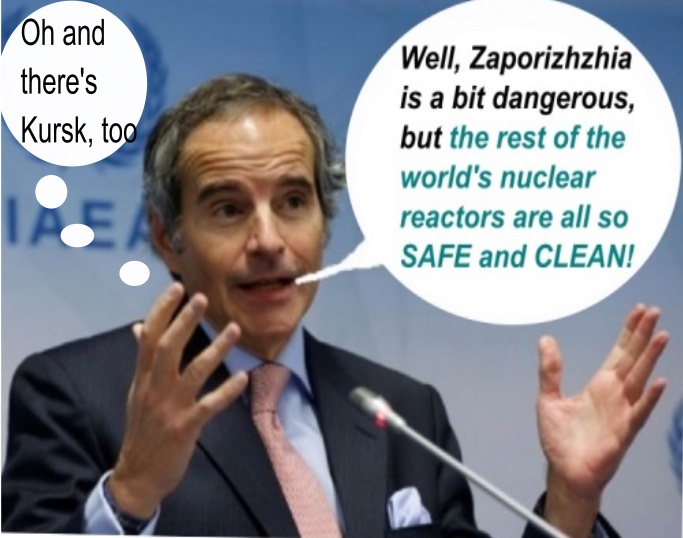
The IAEA team at Ukraine’s Zaporizhzhya Nuclear Power Plant (ZNPP) reported hearing hundreds of rounds of small arms fire last night, the latest sign of military activity potentially threatening nuclear safety and security, Director General Rafael Mariano Grossi said today.
The large number of shots – repeatedly fired for about an hour from 10pm local time – was unusual, the team members reported.
Conducting a site walkdown this morning, they saw numerous small calibre casings lying scattered on the ground near reactor units 5 and 6. There was no sign of broken windows or other physical damage.
The IAEA team at the ZNPP is seeking further information about the incident.
“Such military activity at or near a major nuclear power plant is clearly unacceptable,” Director General Grossi said.
Saturday evening’s shooting came after a series of purported attacks and other incidents involving drones near the ZNPP and other nuclear facilities in Ukraine in recent months, including a report of a strike a few days ago in the city of Enerhodar, where most ZNPP staff live.
Director General Grossi reiterated his deep concern about the apparent increased use of drones near nuclear power plants since early this year, saying such weaponry posed a clear risk to nuclear safety and security.
Any drone strike on a nuclear facility would violate the Seven Indispensable Pillars for nuclear safety and security during an armed conflict as well as the Five Principles to help ensure nuclear safety and security at the ZNPP, outlined by the Director General in March 2022 and May 2023, respectively.
“We are seeing a clear escalation in drone strikes during this war, also affecting Ukraine’s nuclear power plants and potentially putting them in further danger. As I have repeatedly stated, any military attack on a nuclear site – with or without drones – jeopardizes nuclear safety and must stop immediately,” Director General Grossi said.
Zaporizhzhia loses off-site power for first time in 19 months
7 July 2025, https://www.world-nuclear-news.org/articles/zaporizhzhia-loses-off-site-power-for-first-time-in-19-months
The Zaporizhzhia nuclear power plant lost its off-site power supply for more than three hours on Friday, having to rely on its emergency back-up diesel generators for the first time since December 2023.
IAEA Director General Rafael Mariano Grossi said: “What was once virtually unimaginable – that a major nuclear power plant would repeatedly lose all of its external power connections – has unfortunately become a common occurrence at the Zaporizhzhia Nuclear Power Plant. Almost three and a half years into this devastating war, nuclear safety in Ukraine remains very much in danger.”
The 18 emergency diesel generators started operating when the external power supply was lost. The power is needed to cool the cores of the reactors – which are all currently shut down – and the used fuel pools. Ten days worth of fuel for the back-up generators is stored at the plant, and the generators were turned off after the power supply returned.
Why the US must protect the independence of its nuclear regulator
By Stephen Burns, Allison Macfarlane, Richard Meserve | July 7, 2025, https://thebulletin.org/2025/07/why-the-us-must-protect-the-independence-of-its-nuclear-regulator/https://thebulletin.org/2025/07/why-the-us-must-protect-the-independence-of-its-nuclear-regulator/
The White House has introduced radical changes that threaten to disrupt the effectiveness of the US Nuclear Regulatory Commission (NRC). The agency was formed in 1975 to be an independent regulator, separating it from the promotional role pursued by its predecessor, the Atomic Energy Commission. The NRC has set safety requirements that have become the global gold standard for nuclear regulation. The White House actions threaten to undermine this record.
Conversations with fellow former NRC chairs and retired NRC experts reveal a shared concern that the changes will have unintended, dangerous consequences. In February, the White House issued an executive order that intruded on the traditional autonomy of independent agencies, thereby giving the White House the capacity to control NRC regulatory actions and allow politics to infect regulatory decision-making. A series of executive orders on nuclear matters issued in late May compounded the challenge. One of the executive orders focuses on the reform of the NRC. It would establish arbitrary deadlines for decisions on construction permits and operating licenses, regardless of whether the design offers new and previously unevaluated safety challenges. Other provisions demand the review of all the extensive NRC regulations within 18 months. The other executive orders allow the construction of nuclear power reactors on federal lands—sites belonging to the Energy Department and the Defense Department—without any review by the NRC.
Then, on June 13, the Trump administration fired Christopher Hanson, an NRC commissioner and former chair, without any stated justification. These actions all serve to weaken protections for those who work in or live near reactors. Given the anticipated expansion of reliance on nuclear power, the drastic staff reductions contemplated by the White House come at the wrong time.
There is always room to assess the efficiency and effectiveness of the regulatory process and adapt it to the evolution of nuclear technologies and their implementation. Recognizing that, past and current NRC commissioners and technical staff have set in motion changes to reduce the regulatory burden and speed the deployment of reactors at a lower cost. The changes are prudent and reasonable and support the promise of expanded reliance on nuclear energy. Congress has also encouraged those efforts and further instructed the NRC to make more improvements to the process through the bipartisan ADVANCE Act signed into law in 2024. All of this was underway before the White House interference.
The NRC has protected the health and safety of Americans for 50 years without a single civilian reactor radiation-related death. The lessons of the 1979 Three Mile Island accident have long been woven into the safety regime, and every commercial reactor in the United States is safer today because of major safety steps taken after the destruction of reactors in Japan’s Fukushima Daiichi plant by a massive earthquake and tsunami in 2011.
Since Three Mile Island, the agency has licensed approximately 50 power reactors to operate. It has recently issued construction permits for advanced reactors ahead of schedule. And the NRC has cleared utilities to boost the power of many existing reactors and has licensed them to run longer than originally planned.
We are concerned about the unintended safety consequences that a reduced NRC independence and a schedule-driven regulatory paradigm threaten to bring.
We fear the loss of public confidence that can befall a safety agency when expediency is seen to be given priority. Reducing the NRC’s independence while mixing promotion of nuclear energy and responsibility for safeguarding the public and environment is a recipe for corner-cutting at best and catastrophe at worst.
We are also concerned that such steps could damage the reputation of US reactor vendors worldwide. A design licensed in the United States now carries a stamp of approval that can facilitate licensing elsewhere, including the many countries that plan to embark on a nuclear power program. If it becomes clear that the NRC has been forced to cut corners on safety and operate less transparently, US reactor vendors will be hurt.
The US nuclear industry is helped by the fact that it has a strong independent regulator behind it. The White House’s executive orders may produce the opposite effect from their stated purpose.
Editor’s note: The authors are former chairs of the US Nuclear Regulatory Commission.
America’s largest airport reveals ‘plan’ to build NUCLEAR REACTOR on its land.
America’s largest airport by size is reportedly considering plans to build
a nuclear reactor on its sprawling 33,500-acre property. Denver
International Airport CEO Phil Washington, 67, made the shocking revelation
during a recent Future of Aerotropolis event hosted by local business
publication, Business Den. Washington, a former pick to lead Joe Biden’s
FAA before he withdrew under heavy Republican criticism over the airport’s
safety record, told the panel discussion the he was seriously considering a
‘small modular reactor’ to meet growing energy demands.
Daily Mail 9th July 2025, https://www.dailymail.co.uk/news/article-14890859/Americas-largest-airport-reveals-plan-build-NUCLEAR-REACTOR-land.html
Corrosion-hit Civaux most modulated 1.5 GW French unit – study
French utility EDF’s Civaux 2 unit, where EDF recently detected fresh
stress corrosion, was the most modulated of France’s four 1.5 GW nuclear
reactors last year, according to a study by analytics firm Kpler requested
by Montel.
Montel News 3rd July 2025, https://montelnews.com/news/b24ca2fd-a322-4b72-9fc1-de737f3e9fe0/corrosion-hit-civaux-2-most-modulated-1-5-gw-french-unit-study
Seizing Zaporizhzhia: A Meltdown in Nuclear Governance
By Robert Schuett – 30 June 2025, https://www.globalpolicyjournal.com/blog/30/06/2025/seizing-zaporizhzhia-meltdown-nuclear-governance
This is not just about Ukraine. Robert Schuett argues that Russia’s occupation of the Zaporizhzhia Nuclear Power Plant signals a broader unravelling of global nuclear governance—one that must urgently be addressed.
“There cannot be a crisis next week,” Henry Kissinger once quipped. “My schedule is already full.”
Decades later, the line reads less like a joke about the work ethic and demands of high office, and more like a grim diagnosis of the current global condition. From the ongoing war in Europe—where Russian armed forces continue their relentless aggression, with recent escalations in Kyiv and Odesa—to the deepening geopolitical fracture in the Middle East, international society is not short on crises, violence, and human suffering.
The real strategic risk for global policy is that when pre-emptive force becomes the de facto tool for upholding non-proliferation principles, the entire framework of nuclear governance begins to fracture.
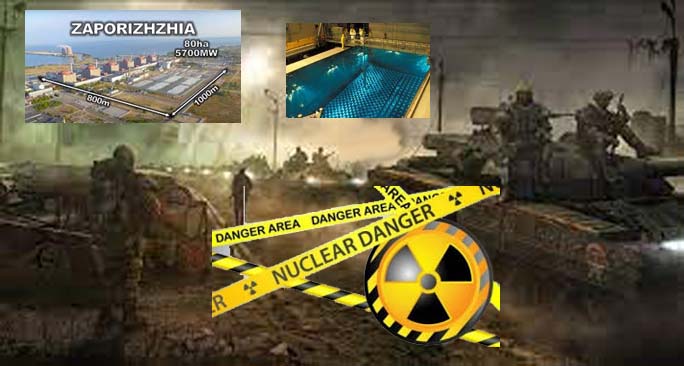
Yet among them, one threat quietly festers in a war zone on the east bank of the Dnipro River: the occupation of the Zaporizhzhia Nuclear Power Plant (ZNPP)—after all, the largest in Europe—located in the city of Enerhodar, in Ukraine’s Zaporizhzhia Oblast. Overshadowed by battlefield developments and Russia’s broader diplomatic brinkmanship, this overlooked flashpoint risks unravelling the foundational norms of nuclear safety, civilian infrastructure protection, and international law itself.
Captured by Russian forces in March 2022, the facility has become a symbol of everything that should not happen in modern warfare. Russia has consistently ruled out transferring control of the ZNPP—either back to Ukraine, the US, or any international authority. The Kremlin maintains a posture of legal reinterpretation, insisting on its operational authority despite international condemnation.
Although all six reactors remain in cold shutdown, the risk is far from neutralized. The plant now depends on a single functioning high-voltage line to power critical cooling and safety systems, which is a stark contrast to the ten off-site lines it had before the illegal Russian war of aggression. The destruction of the Kakhovka Dam in 2023 eliminated its primary cooling reservoir, forcing the plant to rely on makeshift groundwater wells.
Russian forces have reportedly deployed military assets within the facility, further compromising its integrity. While the International Atomic Energy Agency (IAEA) maintains a presence onsite, its ability to enforce safety protocols is severely limited under conditions of foreign military occupation.
As IAEA Director General Rafael Mariano Grossi recently warned, the power supply to Zaporizhzhia remains “extremely fragile,” placing the site, and the entire region, at persistent risk.
This is not merely a technical or regional issue, however. Russia’s nuclear blackmail is a serious threat to global nuclear order.
Russia’s occupation of ZNPP constitutes a rupture in the international legal and regulatory architecture that safeguards civilian nuclear infrastructure. For decades, global norms and laws—rooted in instruments like the Geneva Conventions, the Convention on the Physical Protection of Nuclear Material, and IAEA guidance—have treated nuclear power plants as protected, non-military assets. Seizing or attacking them was once unthinkable. Russia’s actions have shattered this principle, undermining legal norms from which it has historically benefited.
The twist is as alarming as it is cynical. Russian state entities like Rosatom, which in peacetime present themselves as responsible global stewards of nuclear safety, are now party to an act of strategic subversion and tool of ruthless state power. Rosatom and its subsidiaries regularly construct and operate nuclear plants abroad, complying with international standards and cultivating an image of professionalism. But at Zaporizhzhia, the same actor has helped transfer control of the facility to a newly created Russian-operated entity. The contradiction is jarring: the self-proclaimed guarantor of global nuclear norms is now violating them in pursuit of pseudo-geopolitical gain. Rosatom has recently confirmed its long-term intention to restart ZNPP, despite the unresolved security, political, regulatory, and moral challenges on the ground.
At a strategic level, this selective application of international rules and norms sets a dangerous precedent. If civilian nuclear infrastructure can be seized and operated by military force—while cloaked in the language of regulation—it opens the door to the normalization of impunity. The rulebook governing civilian nuclear conduct risks becoming a tool of expedience rather than a binding constraint. Such erosion undermines not only nuclear safety but also the predictability and trust that underpin broader technical agreements, from arms control to climate-related energy cooperation.
The longer Zaporizhzhia remains a “nuclear hostage,” the more the world risks sleepwalking into disaster. The plant is not operational, but that is no guarantee of safety. The worst-case scenarios, ranging from damage to spent fuel pools, sabotage of safety systems, or collapse of staff morale, are not theoretical. The ongoing uncertainty erodes public trust in nuclear energy, destabilizes non-proliferation efforts, and sends dangerous signals to other regimes watching how the world responds.
Moreover, the moral implications cannot be ignored. Civilian nuclear facilities were never meant to be pawns in geopolitical contests. They exist to serve public needs, not strategic or revanchist ambitions. Allowing one state to weaponize this infrastructure risks eroding the civilian character of nuclear energy itself.
What’s at stake is far more than a single nuclear plant—or even the authority of one international watchdog. This is a stress test for the entire system of rules that keeps the world from tipping into chaos. If the norms protecting nuclear safety can be so casually violated, what’s to stop similar breaches in artificial intelligence, biotechnology, climate regulation, or space?
The responsibility now lies with the international community not only to condemn, but to act. Diplomatic actors—especially those in Europe and within multilateral institutions—must ensure that the Zaporizhzhia crisis remains at the forefront of international attention. It cannot be allowed to drift into the background of conflict fatigue or be buried beneath newer headlines.
Sustained diplomatic pressure, public engagement, and policy innovation are essential to prevent normalization of the unacceptable. The defense of global norms must not be reactive or selective. Rather, it must be proactive, persistent, and principled.
If international society won’t defend longstanding rules at Zaporizhzhia, it may find itself unprepared when those rules collapse everywhere else.
Robert Schuett is co-founder and managing partner at STK Powerhouse, a global risk advisory firm. A former Defence civil servant, he also serves as Chairman of the Austrian Political Science Association and is a long-standing Honorary Fellow at Durham University.
Canadian Coalition for Nuclear Responsibility’s recommendations opposing the proposed30-year operating licence extension for the Darlington Nuclear Generating Station (DNGS)
27June 25, Gordon Edwards
Recommendation 1: CCNR urges the Commission to grant Darlington no more than a five-year licence, to incentivize the public to remain engaged on matters of radiological safety, and to pressure the staff of OPG and CNSC to improve their practices related to public heath and safety. In our opinion, under no circumstance should a licence of more than ten years be countenanced.
Comments: The CNSC is expected to review the financial guarantee for decommissioning the Darlington plant every five years. The plant’s safety analysis is expected to be reviewed every 10 years. Why should public input be so underappreciated that it only has to be considered once in three decades?
Suspicions of regulatory capture can only be intensified when regulatory staff meets with industry representatives behind closed doors, decade after decade, without any meaningful public involvement. After all, the CNSC’s primary legal obligations are to the Canadian public, the Canadian environment, and the international community – not to the licencee. Without reasonably frequent public hearings, without listening to the concerns of the public directly, staff may come to regard those legislated responsibilities as more abstract than real. The staff of the licensee and the staff of the regulator become of one mind; the public is seen as an unwelcome intruder.
Ultimately, this is not good for the CNSC or for OPG. CCNR believes it is also not good for the public, or for the trust that CNSC wishes to enjoy from the public.
Recommendation 2: CNSC staff should be required to report to the Commissioners and to the public on a regular basis what efforts are being made to drastically reduce the routine releases of radioactive materials into the environment from Darlington.
Comments: On an annual basis, Darlington releases several hundred trillions of becquerels of radioactive hydrogen (tritium). Tritium is readily incorporated into all living things in the form of radioactive water molecules, as a result of ingestion, inhalation, or absorption through the skin. Tritium emissions from Darlington are far greater than corresponding tritium emissions from any other power reactors in the world, except for other CANDU reactors. Although CNSC and OPG staff are both quick to point out that these tritium emissions are “within regulatory limits”, that does not exonerate CNSC from the responsibility of requiring that such emissions be kept “As Low As Reasonably Achievable”, in accordance with the ALARA principle. All radioactive emissions are ionizing. Ionizing radiation is acknowledged to be a Class 1 carcinogen. No genotoxic carcinogenic material should be disseminated freely into the environment without the strictest possible controls, regardless of whatever regulatory limits may have been established arbitrarily by fiat. There is no science-based rationale for Canada’s tritium standards. It is not honourable to allow such very large releases of radioactive hydrogen to continue unabated for another three decades without any discernible effort to drastically reduce those emissions. Indeed, what efforts have been made in the last 30 years or will be made in the next 30 years to cut these emissions by orders of magnitude? Is that even a goal of the Commission? Or is the operating licence for a nuclear power reactor also a licence to freely pollute ad infinitum?
Similar considerations apply to routine emissions of radioactive carbon-14 from Darlington, which are reported to be at least a trillion becquerels per year or more. Since carbon-14 has a radioactive half-life of 5,700 years, carbon-14 emissions accumulate in the environment year after year as each year’s emissions are simply added to the previous year’s emissions. Carbon-14 from DNGS has been accumulating already for over 30 years, and it will continue to accumulate for the next 30 years if the licence is granted as requested. Thus 1 trillion becquerels per year turns into 60 trillion becquerels overall. What, if anything, is CNSC or OPG doing to prevent this from continuing?
As long ago as 1980, the Select Committee on Ontario Hydro Affairs reported that trium and carbon-14 “are easily incorporated into human tissue. Carbon-14 is incorporated into the carbon that comprises about 18 percent of total body weight, including the fatty tissue, proteins and DNA [molecules]. Tritium is incorporated into all parts of the body…. Thus the radiological significance of both elements is not related to their inherent toxicity, as each is a very low energy form of radiation, but to their easy incorporation in the body.”
Recommendation 3: All radioactive releases from Darlington should be posted on-line in real time so the public can be properly notified of those releases as they happen.
Comments: Testimony before the Select Committee on Ontario Hydro Affairs in 1979 by Dr. Edward Radford (Professor of Environmental Epidemiology at the Graduate School of Public Health, University of Pittsburgh) indicated that sudden large pulses of tritium absorbed by a pregnant woman can have a life-long effect on her unborn daughter by causing genetic damage to the baby girl’s eggs – damage that will persist throughout her life and could affect her eventual offspring. In 2023, in just one week, 6,469 curies = 239 trillion becquerels of tritium were released from Darlington. That’s comparable to an entire year’s release of tritium from just one unit happening in just one week. Yet the public has no way of knowing about this sudden massive leak of tritium in order to do what they can to protect themselves and their unborn babies. For these reasons, OPG should be required by CNSC to publicly report all radioactive emissions on-line in real time, so that vulnerable citizens such as pregnant women and parents of young children can choose to vacate the area when sudden large releases of triium or other radionuclides occur.
Recommendation 4: In accordance with its mandate to disseminate objective scientific information, CNSC should publicly declare that it is not correct for anyone to say that nuclear energy is “clean” (or non-polluting).
Comments: In addition to the radioactive hydrogen and radioactive carbon released routinely in large amounts from Darlington, as well as the radioactive iodine, other routine emissions occur. Over 100 million becquerels of radioactive iodine vapour is released annually from Darlington, along with more than 10 million becquerels of radioactive particulates. In addition, millions of becquerels of alpha emitters are released every year from Darlington. Bear in mind that alpha-emitters are hundreds to thousands of times more biologically damaging, per becquerel, than beta-emitters or gamma-emitters. For example, elementary arithmetic shows that one becquerel of plutonium inside the body is about 18,000 times more biologically damaging than one becquerel of tritium at the same location. Tens of trillions of Bq-MeVs of radioactive noble gases are released, that are heavier than air and so stay close to the ground, delivering radioactuve exposures from abve by what is called “skyshine”. Does the Commission ever concern itself with drastically reducing these large routine radioactive emissions? Does the Commission ever feel uneasy when nuclear power is called a “clean” or “non-emitting” energy source in defiance of scientific fact?
Recommendation 5: Darlington Nuclear Generating Station should not be given an operating licence for more than five years. At all future licencing hearings for Darlington, OPG’s detailed plans for dismantling the Darlington reactors should be spelled out in very specific terms and the public should be invited to weigh in on those plans from a community health and safety perspective.
Comments: During a retubing operation at Pickering many years ago, workers were contaminated with carbon-14 dust and carried that contamination into their homes for a period of several weeks. More recently, over 500 workers were contaminated with airborne plutonium dust for a period of several weeks during the refurbishment of Bruce unit 1. In both cases, the contamination was not detected by the standard radiation monitors in place at every nuclear power plant. In both cases, the radioactive contamination was only detected when air samples were analyzed and the offending materials were identified.
Dust that can contaminate the clothing or the lungs of workers, undetected, can equally well blow in the wind and contaminate people and property far from the reactor site. The public should be fully informed of the precise details of OPG’s plans for radioactive demolition, and given a chance to have their own input into those plans. It is possible, indeed likely, that a detailed examination of those plans will lead to the need for a greatly enhanced financial guarantee on the part of OPG to ensure that those plans can be carried out safely and to the complete satisfaction of local residents. It is also important that ratepayers learn the true cost of nuclear decommissioning, which will give a more realistic assessment of the total cost of nuclear-generated electricity.
Recommendation 6: CNSC staff be instructed by the Commission members to commission experts not affiliated with CANDU reactor design, operation, or regulation, to conduct an independent peer review of the calculations that led CNSC staff to conclude that 100 trillion becquerels of cesium-137 is a realistic and acceptable estimate of the “source term” following a severe nuclear accident at Darlington Nuclear Generating Station.
Comments: CCNR has obtained documentary evidence that this number was arbitrarily chosen by CNSC staff without any credible accident scenario to support that number. CCNR analysts have also examined the 2015 CNSC document Study of Consequences of a Hypothetical Severe Nuclear Accident and Effectiveness of Mitigation Measures. In paragraph one of section 3.1, the authors of the report state that a “large release” of radioactivity is, by definition, any release of more than 100 terabecquerels of cesium-137. Anything less than 100 TBq does not even qualify as a large release. Then, in the second paragraph of section 3.1, the authors arbitrarily select that very number, the lowest possible number, namely 100 terabecquerels, as their assumed large release from Darlington. In doing so staff ignores its own definition, that all large releases must be greater than that amount. Please note that the authors of the CNSC report have simply chosen the lowest possible number that can be used to describe a large radioactive release, and they have used that number as an estimate of what a large release at Darlington might actually be. Despite promising to do so, the authors fail to describe or refer to any realistic accident scenario that would in fact result in such a small radioactive release of cesium-137.
Using straightforward calculations, CCNR estimates that a typical Darlington core contains a total of at least 55,000 trillion becquerels of cesium-137. Since there are 480 fuel channels in each Darlington reactor, each channel contains about 114.6 trillion becquerels of cesium-137. At a temperature of 1500 degrees C (well below the melting point of the fuel) the exposed fuel will release about 25% of the cesium inventory in one hour. In the event of severe core damage, all of the cesium released from the overheated fuel will escape from the calandria because the rupture disks on top will have exploded, providing an unfiltered pathway for the cesium vapour to escape into the containment. Given the fact that each of the 480 fuel channels can release 57 trillion becquerels of cesium-137 in one hour, it is impossible to believe that only 100 trillion becquerels of cesium-137 will find its way out into the environment, given the relatively leaky containment system that exists at Darlington.
Recommendation 7: OPG should not be given an operating licence for a period of more than five years, and all future licencing hearings for Darlington should include a detailed re-evaluation of Emergency Measures in accordance with a more realistic estimated source term.
Comments: In the event of a severe accident in a CANDU reactor, leading to a truly large release of radioactivity, emergency measures that are currently predicated on a maximum release of 100 trillion becquerels of cesium-137 will be woefully inadequate. Radioactive cesium contamination of homes and properties will be far greater, more extensive, and persistent, than currently considered possible. Residential and commercial areas closest to the Darlington plant may well remain uninhabitable for decades, as we learned from bitter experiuence at Chernobyl and Fukushima Daiichi. Considering the enormous volume of radioactively contaminated water that was flushed into the Pacific Ocean following the Fukushima accident, including the 1.2 million tons of radioactive water that is currently being dumped into the Pacific, one can only wonder about the deleterious effects on Lake Ontario and the millions of people that draw their drinking water from the Lake. Canadians deserve an honest, science-based, realistic assessment of what the consequences of a severe nuclear accident might be in Canada. The CNSC has an obligation to provide them with objective scientifically based information, not self-serving efforts to low-ball the risk estimates for public relations purposes. The public will have to be consuilted more frequently rather than less frequently. Their right to a healthy body and a healthy environment cannot be taken for granted for thirty yeards at a time. Shame on OPG for even suggesting such a thing.
One final word. CCNR fully supports the position of Dr. Frank Greening against wasting valuable hearing time by allowing private profit-making parties or other project-supporting groups to have equal time with public or indigenous intervenors who are addressing legitimate matters of public health and safety or environmental integrity that are fundamental to the core mission of CNSC as a regulator. The time saved by eliminating such promotional testimony can be used to extend the time available for other presenters to make their interventions, or to provide closing argumants near the end of the proceedings as would be permitted in a judicial setting.
Revealed: 585 cracks in Torness nuclear reactor
Rob Edwards, The Ferret 26th June 2025
The estimated number of cracks in the graphite core of a nuclear reactor at Torness in East Lothian has risen to 585 – the highest so far – prompting fears of a nuclear “meltdown” and calls for its early closure.
In documents released under freedom of information law, the UK Government’s safety watchdog, the Office for Nuclear Regulation (ONR), said that the state of the graphite core posed a “significant challenge” to plans to keep Torness and other ageing nuclear stations running over the next five years.
In November 2024 ONR advised the French operator, EDF Energy, to “pause for thought” before deciding to extend the lives of Torness and other nuclear stations in England. Less than a week later EDF decided to extend the life of Torness from 2028 to 2030.
Campaigners accused EDF of putting profits before safety, and warned that keeping “clapped out reactors” running would endanger the public. It was “time for these ageing reactors to be closed”, they said.
EDF, however, insisted that nuclear safety was its “overriding priority” and that it would not consider operating Torness unless it was “confident it was safe”. Planned closure dates for reactors were “kept under review”, it said.
ONR said that cracking was “a well known phenomenon”, and that the number of cracks was “acceptable”. It stressed that the risks were “tolerable”, and that it would not allow any nuclear plant to operate “unless we are satisfied that it is safe.”
The Ferret previously reported that 46 cracks had been detected in April 2024 in the graphite bricks that surround the highly radioactive uranium fuel powering one of the two reactors at Torness. The first three cracks were found in February 2022.
But only a small proportion of the bricks were actually inspected, and no estimate has previously been given for the total number of cracks across the core. Following a freedom of information request by The Ferret, ONR has now disclosed that 59 cracks were found in a similarly limited inspection in March 2025.
In its response, ONR said that this “equated to around 585 cracks when forecast across the central area of the core where cracking is expected”. The high number of cracks did not “challenge safety margins” at Torness, it said.
EDF confirmed that it had found 59 cracks in the graphite bricks it sampled in March 2025. This suggested that in total around a third of the central part of the core had cracking, equivalent to about 585 cracks, it said.
ONR also revealed that another inspection in May 2025 discovered the first crack in the second reactor at Torness. It started generating electricity later than the first reactor.
Torness nuclear power station, near Dunbar, was officially opened in May 1989 by the then Conservative prime minister, Margaret Thatcher. The site had been the target of anti-nuclear protests since 1978.
Scotland’s other nuclear power station at Hunterston in North Ayrshire was closed down in January 2022, more than a year earlier than planned. This followed the discovery of an estimated 586 cracks in its two reactors.
‘Pause for thought’ on Torness
ONR also released to The Ferret the results of its assessment of EDF’s 2024 review of extending the lives of Torness, and other advanced gas-cooled reactors (AGRs) at Heysham, near Lancaster, and Hartlepool, on the north east coast of England.
Three scenarios were reviewed. One assumed Torness closed as planned in 2028, a second assumed its operation was extended to 2030, and a third envisaged keeping it going until 2032.
ONR concluded that because of cracking and other issues, “graphite represents one of EDF’s significant challenges for lifetime extension”. It also highlighted a series of other potential ageing problems with AGRs, including risks from leaking boilers, failing equipment, and corrosion.
“It is possible that safe operation of certain components might be undermined due to life extension,” ONR said. There were a number of issues which had not been fully covered in EDF’s review, it argued.
“Although these are not considered a blocker to potential life extensions, ONR expects EDF to manage and resolve these issues as part of its lifetime management of the AGRs,” ONR added.
“Moreover, coupled with the aspects identified by EDF in the submissions, this should give EDF pause for thought when reaching a decision on AGR lifetime extensions.”
ONR wrote to EDF with its advice on 27 November 2024. On 3 December – less than a week later – EDF decided to extend the life of Torness from 2028 to 2030, and to extend the lives of its English AGR stations.
Another document released by ONR was a June 2024 assessment of the “structural integrity” of the graphite core of the more badly cracked reactor at Torness. The majority of the 35-page document was redacted “for the purposes of safeguarding national security”.
The ONR assessment found “shortfalls” in the crack predictions made by EDF, and concluded that this “raises a question” over the company’s “ability to predict the future core state”. At the time ONR nevertheless gave EDF permission to keep running Torness on the grounds that the risks were “tolerable”.
The nuclear critic and consultant, Peter Roche, argued that there was “a significant design difference” which could make cracking at Torness worse than at Hunterston. “Graphite debris in the fuel channels or misshapen bricks could compromise the operator’s ability to keep the fuel cool and in a worst case lead to a meltdown,” he claimed.
This risked releasing radioactivity into the environment. “Clearly it’s time for these ageing reactors to be closed,” Roche said. “Keeping them open would be gambling with public safety.”
The veteran environmental campaigner, Dr Richard Dixon, accused EDF of trying to cover the costs of building new nuclear plants. “It cannot be a coincidence that running Torness for an extra two years would ease EDF’s major financial woes caused by the massive delays to its reactor projects elsewhere,” he said
“EDF’s inability to complete reactor projects anything remotely like on time or on budget should not mean that the public in Scotland face the extra risk of running clapped out reactors ever further past their sell-by date.”
The Scottish Greens described the Torness cracks as “potentially dangerous”. It was “deeply concerning” that EDF was planning to keep the station going until 2030, according to the party’s energy spokesperson and retiring co-leader, Patrick Harvie MSP.
“It appears that the profits of a giant energy company are being put ahead of safety here in Scotland,” he told The Ferret. EDF is owned by the French government, and earnt £15.6bn (€18.3bn) before interest and taxes in 2024…………………………………………………………..
https://theferret.scot/nuclear-reactor-torness-585-cracks/
EU and UK make contributions to EBRD-managed Chornobyl ICCA fund
EBRD 26th June 2025,
https://www.ebrd.com/home/news-and-events/news/2025/eu-and-uk-make-contributions-to-ebrd-managed-chornobyl-icca-fund.html
- EU and United Kingdom pledge up to €31.7 million to EBRD-managed International Chernobyl Cooperation Account
- Contributions will help fund emergency repairs to New Safe Confinement
- Total cost of emergency repairs could exceed €100 million
The European Union (EU) and the United Kingdom will make contributions to the EBRD-managed International Chernobyl Cooperation Account (ICCA) as part of ongoing international efforts to support the restoration of the key functions of the New Safe Confinement (NSC) at the Chornobyl nuclear power plant (ChNPP) in Ukraine.
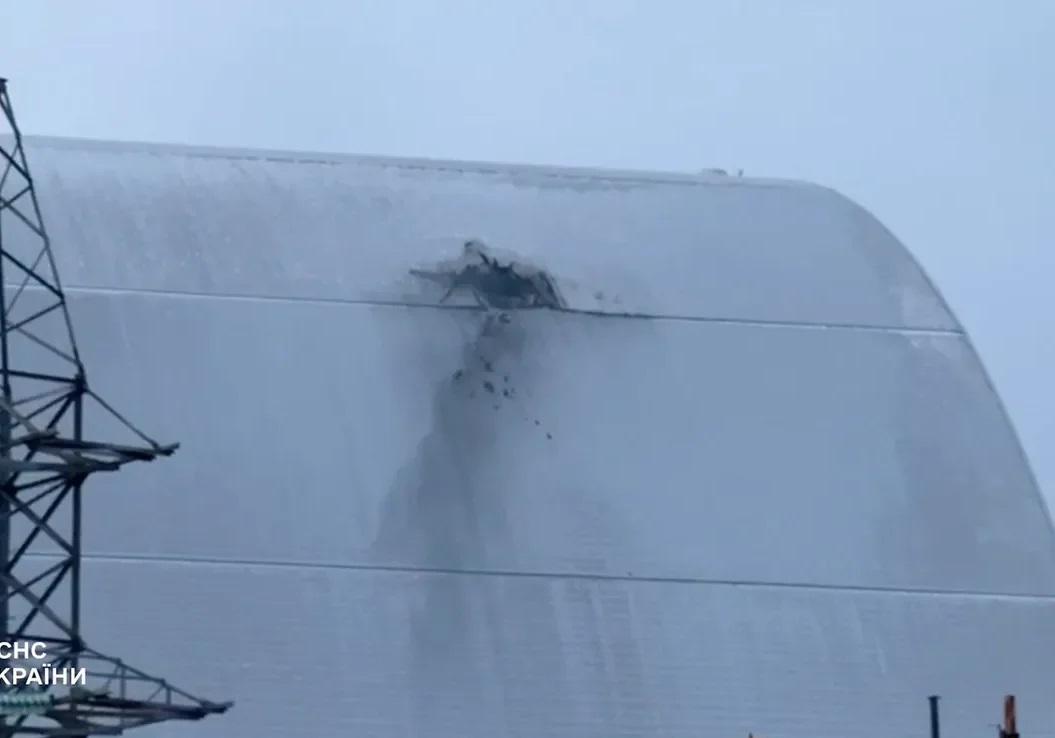
The EU will contribute up to €25 million, while the United Kingdom will contribute up to €6.7 million, with both pledges being made at today’s ICCA Assembly meeting in London. The money will be used to fund emergency repairs to the NSC following the Russian drone attack in February 2025.
That strike has severely affected the NSC’s two primary functions: (i) containing radiological hazards and (ii) supporting long-term decommissioning. Key systems designed to ensure the NSC’s 100-year lifespan have been rendered non-operational, with a significant risk of further deterioration in the absence of swift emergency repairs. While it is difficult to provide an accurate estimate of the cost of repairs to the NSC at the moment, the scale of the damage and the complex radiological environment suggest that the total cost of the emergency works could exceed €100 million.
Balthasar Lindauer, EBRD Nuclear Safety Department Director, said, “These new pledges to the ICCA are a manifestation of the international community’s unwavering support for Chornobyl and its togetherness in the face of the major radiological threat that the damaged NSC poses. We are grateful to the EU and the United Kingdom for their contributions to the ICCA.”
The ICCA was established by the EBRD in November 2020 at the request of the Ukrainian government. It was set up as a multilateral fund to support the development of a comprehensive plan for Chornobyl. The EBRD manages the ICCA, which currently holds some €25 million in donor funds. Following the occupation of the Chornobyl Exclusion Zone (CEZ) at the start of Russia’s war on Ukraine, the scope of the ICCA was broadened to support the restoration of safety and security within the CEZ, as well as wider nuclear safety measures across Ukraine.
The international community has contributed around €2 billion to EBRD-managed programmes in Chornobyl since 1995. In addition, the Bank has made more than €800 million of its net income available for Chornobyl-related projects.
‘Conspicuous’ Small Modular Nuclear Reactors need fresh police funding model, security expert warns
23 Jun, 2025 By Tom Pashby New Civil Engineer 23rd June 2025
A proliferation of small modular reactors (SMRs) across England and Wales, expanding the number of reactors and types of locations they are deployed in, means the country needs a fresh police funding model for SMR security, an expert has said.
https://www.newcivilengineer.com/latest/conspicuous-smrs-need-fresh-police-funding-model-security-expert-warns-23-06-2025/
From Iran to Everywhere, We Live in Terror of the “Peaceful Atom Apocalypse”
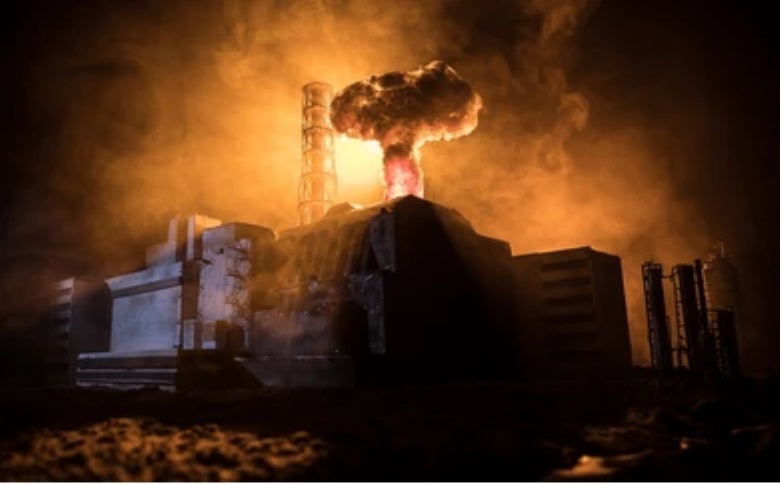
No big city in the US, Europe or Asia is immune to annihilation from the fallout that could be imposed by a single drone, seismic shock or tsunami hitting a single atomic reactor. Millions of downwind humans will die, trillions in economic and ecological damage will threaten the ability of our species to survive on this planet.
Renewables could save a global economy and ecology now death threatened by both atomic warheads and nuclear reactors.
by Harvey “Sluggo” Wasserman, June 22, 2025, https://freepress.org/article/iran-everywhere-we-live-terror-%E2%80%9Cpeaceful-atom-apocalypse%E2%80%9D
Donald Trump has opened the military door to an atomic apocalypse.
But it’s likeliest to come through the “Peaceful Atom Window.”
The 400+ atomic power reactors (94 in the US) now operating worldwide are all sitting ducks for low-tech attack.
Iran or any other nation or terror group, with or without a nuclear warhead, can blow apart any commercial reactor with a single drone.
The resulting apocalypse can be spreading as you read this.
Commercial atomic power makes nuclear warheads ridiculously obsolete. The Trump/Netanyahu attacks on Iran’s alleged bomb factories ae marginal at most to today’s atomic reality.
Once blown apart by a drone, earthquake, tsunami, human error, equipment failure or simple sabotage, any atomic reactor can irradiate a continent, an ocean… the planet as a whole.
All commercial reactors operating in the world today are without comprehensive private insurance.
They are sitting naked ducks…absurdly vulnerable to a simple low-level attack from a single combatant with a drone, mortar, instrument of sabotage.
Fallout from Chernobyl, in 1986, irradiated most of Europe, much of Asia, and was detected all the way across the continental US. Twice.
It killed at least a million humans and cost at least a trillion dollars, probably far more – https://pmc.ncbi.nlm.nih.gov/articles/PMC2974725
Billions of gallons of lethal radioactive liquid still pour into the Pacific Ocean from the 2011 disaster at Fukushima, with no end in sight, and no credible way to gauge the permanent damage to our global ecosystems. But radioactive tuna did turn up within weeks off the coast of California.
Fukushima spewed more than 100X more radioactive cesium into the air than the combined Bombings at Hiroshima & Nagasaki – https://www.whoi.edu/know-your-ocean/ocean-topics/ocean-human-lives/pollution/radiation/fukushima-radiation/faqs-radiation-from-fukushima/#:~:text=Cesium%2D137%20and%20%2D134%20were,direct%20threat%20to%20marine%20life.
If Iran or any other nation, however small, with or without actual atomic weaponry, were serious about inflicting unlimited radioactive damage on a perceived enemy or the planet as a whole, it does not need a warhead or a missile….just a single drone to take down an atomic reactor.
Thus the Trump/Netanyahu attack on Iran’s warhead production is of zero military meaning. It offers the world no respite from the threat of atomic annihilation.
Russia’s Putin has already served many warnings. On February 14, 2025, he crashed a drone into the sarcophagus that covers the still-steaming exploded core at Chernobyl, inflicting millions in damage and threatening the world with another apocalyptic release.
Putin’s mortar shells continue to fly around and about the dozen commercial reactors perched like eggshells in the Ukrainian war zone.
None are protected with multi-billion-dollar shields like the one at Chernobyl. After seventy years in development, no US reactor can get private insurance against a catastrophic disaster.
The two reactors at Diablo Canyon, California, are more than 40 years old. They’re internally embrittled, hopelessly fragile, surrounded by seismic faults, violating state and federal environmental laws, gouging California with the continental US’s highest electric bills. An apocalyptic cloud will inevitably pour down the coast into Los Angeles when the “Big One” turns those reactors into radioactive rubble.
The global insurance industry has de facto pronounced these reactors “UNSAFE!” by refusing to cover liability for a major disaster.
No big city in the US, Europe or Asia is immune to annihilation from the fallout that could be imposed by a single drone, seismic shock or tsunami hitting a single atomic reactor. Millions of downwind humans will die, trillions in economic and ecological damage will threaten the ability of our species to survive on this planet.
Thus the Trump/Netanyahu attack on Iran’s atomic weaponry has in no way made our species safer. On a planet filled with atomic reactors, atomic warheads are an afterthought.
Thankfully, ALL these reactors can be rapidly replaced with solar, wind, geothermal, battery storage, efficiency and other Solartopian technologies that are safer, cheaper, cleaner, more reliable, more job producing and faster to build than anything fossil/nuclear.
They could save a global economy and ecology now death threatened by both atomic warheads and nuclear reactors.
Without eliminating BOTH, our species has no future.
———————————————————————-
Harvey “Sluggo” Wasserman wrote SOLARTOPIA! OUR GREEN-POWERED EARTH, & co-wrote KILLING OUR OWN: THE DISASTER OF AMERICA’S EXPERIENCE WITH ATOMIC RADIATION. Most Mondays he co-convenes the Green Grassroots Emergency Election Protection Coalition Zooms (www.grassrootsep.org)
1 This Month

of the week – Shut Down Drone Warfare!


Tell the Ukrainian Government to Drop Prosecution of Peace Activist Yurii Sheliazhenko

Petition to revoke the licensing of the Near Surface Nuclear Disposal Facility (NSDF) at Chalk River. https://www.ourcommons.ca/petitions/en/Petition/Details?Petition=e-7247
To see nuclear-related stories in greater depth and intensity – go to https://nuclearinformation.wordpress.com
-
Archives
- April 2026 (68)
- March 2026 (251)
- February 2026 (268)
- January 2026 (308)
- December 2025 (358)
- November 2025 (359)
- October 2025 (376)
- September 2025 (257)
- August 2025 (319)
- July 2025 (230)
- June 2025 (348)
- May 2025 (261)
-
Categories
- 1
- 1 NUCLEAR ISSUES
- business and costs
- climate change
- culture and arts
- ENERGY
- environment
- health
- history
- indigenous issues
- Legal
- marketing of nuclear
- media
- opposition to nuclear
- PERSONAL STORIES
- politics
- politics international
- Religion and ethics
- safety
- secrets,lies and civil liberties
- spinbuster
- technology
- Uranium
- wastes
- weapons and war
- Women
- 2 WORLD
- ACTION
- AFRICA
- Atrocities
- AUSTRALIA
- Christina's notes
- Christina's themes
- culture and arts
- Events
- Fuk 2022
- Fuk 2023
- Fukushima 2017
- Fukushima 2018
- fukushima 2019
- Fukushima 2020
- Fukushima 2021
- general
- global warming
- Humour (God we need it)
- Nuclear
- RARE EARTHS
- Reference
- resources – print
- Resources -audiovicual
- Weekly Newsletter
- World
- World Nuclear
- YouTube
-
RSS
Entries RSS
Comments RSS
 nuclear-news