Los Alamos National Laboratory lost 250 barrels of nuke waste
The contractor that’s been in charge of Los Alamos National Laboratory’s operations for the past year lost track of 250 barrels of waste, while the company heading the legacy cleanup mislabeled and improperly stored waste containers and took months to remedy some infractions, according to the state’s yearly report on hazardous waste permit violations.
Triad National Security LLC, a consortium of nonprofits that runs the lab’s daily operations, had 19 violations of its permit from the New Mexico Environment Department. Newport News Nuclear BWXT Los Alamos, also known as N3B, which is managing a 10-year cleanup of waste generated at the lab, was cited 29 times.
Triad’s most notable violation was shipping 250 barrels of mostly mixed waste to the Waste Isolation Pilot Plant in Carlsbad without tracking them. Mixed waste contains low-level radioactive waste and other hazardous materials. Inspectors found records still listed the waste at the national lab. …..
A disastrous “kitty litter” incident happened under Los Alamos National Security, in which a waste barrel was packaged in error with a volatile blend of organic cat litter and nitrate salts, causing the container to burst and leak radiation at the Southern New Mexico storage site. WIPP closed for almost three years, and the cleanup cost about $2 billion.
The National Nuclear Security Administration, a division of the U.S. Department of Energy that oversees the lab, declined to renew LANS’ contract in 2015. Triad took over operations in November 2018. Among Triad’s duties is to dispose of waste at the lab generated from 1999 to the present.
N3B won a $1.4 billion contract in December 2017 to clean up waste produced at the lab before 1999.
The company was cited for a slew of mislabeled waste containers during the year. Inspectors also found some waste barrels, which are stored under tent-like domes, coated with snow or rainwater.
N3B also failed to remedy within 24 hours the flaws that inspectors found in equipment or structures that could present an environmental or human-health hazard, the report said. Inspectors discovered N3B took as long as 18 months to fix cracks in concrete and asphalt surfaces…….. https://www.santafenewmexican.com/news/local_news/state-report-lanl-lost-track-of-barrels-of-nuke-waste/article_e9de8348-17cc-11ea-bae3-c71a1aadd222.html
Cyber attack targets UK’s nuclear industry
 Telegraph UK, Wil Crisp, 30 NOVEMBER 2019 GCHQ cyber experts have been called in after a digital attack on a major player in Britain’s nuclear power industry triggered a security crisis.
The National Cyber Security Centre (NCSC), an arm of GCHQ, has been secretly providing assistance to a nuclear power company in the UK that has struggled to recover after being hit by a cyber attack, The Telegraph can reveal.
A Nuclear Decommissioning Authority (NDA) report, obtained using freedom of information legislation, said officials are “aware that an important business in the Nuclear Power Generating Sector has been negatively impacted by a cyber attack and has had to rely on expertise from the NCSC to help them with recovery”.
The document,... (subscribers only) https://www.telegraph.co.uk/business/2019/11/30/cyber-attack-targets-uks-nuclear-industry/
For the 8th time this year, a Hanford worker exposed to nuclear radiation
The 324 Building sits over a leak of radioactive cesium and strontium into the soil beneath it at the site about one mile north of Richland and about 300 yards west of the Columbia River.
“Although individually the contamination levels (on workers) have been low and no dose has been assigned to workers, collectively the number of personnel contamination events indicate a negative trend in contamination control that corrective actions taken to date have been inadequate to address,” the Department of Energy wrote in a Nov. 14 letter to its contractor on the project, CH2M Hill Plateau Remediation Co.
Earlier the same day that DOE sent the letter, CH2M had stopped work at the Hanford nuclear reservation’s 324 Building — one of several temporary halts to at least some of the work there this year.
Joe Franco, the DOE deputy manager at the DOE Richland Operations Office, told CH2M in the letter that he would not allow work to resume in the highly contaminated areas of the 324 Building until the company had developed a plan of correction and DOE had agreed on the path forward……. https://www.tri-cityherald.com/news/local/hanford/article237601614.html?fbclid=IwAR2PEXSoItPKGXYQxV0lOc3NJ2-KFlstPIvbdexqiIgP_i23UgMl9bBqGg4
Russian Watchdog Detects ‘Radiation Incident’ in South China Sea
|
Russian Watchdog Detects ‘Radiation Incident’ in South China Sea https://www.themoscowtimes.com/2019/11/22/russian-watchdog-detects-radiation-incident-in-south-china-sea-a68287
A Rospotrebnadzor statement said radiation levels are not high enough to threaten the Russian population. The Russian government’s consumer protection watchdog Rospotrebnadzor said Friday it has detected a “radiation incident” in the South China Sea.“Based on data received from the Global Environmental Monitoring System, there’s an increase in background radiation in the South China Sea in connection with a radiation incident,” Rospotrebnadzor said in an online statement. It added that the radiation levels did not “currently threaten the Russian population” and that it “has increased its radiation monitoring in the adjacent border areas.” A website run by far-right U.S. talk show radio host Hal Turner claimed Wednesday that unidentified military sources had allegedly detected an underwater nuclear explosion in the area that caused powerful shockwaves. The U.S. tech news website Gizmodo cited two scientists who dismissed the report as fake. Gizmodo reported that uRADMonitor Global Environmental Monitoring Network data used in the initial report registered “negligible” radiation and noted that two other agencies in the region showed normal radiation readings. Military analysts reported Saturday that an 11,000-ton Chinese nuclear missile submarine had surfaced among Vietnamese fishing boats in the South China Sea in September. |
|
|
Leak shuts down V.C. Summer nuclear plant
|
Leak shuts down V.C. Summer nuclear plant, The State , BY SAMMY FRETWELL, NOVEMBER 09, 2019 Dominion Energy has shut down the V.C. Summer nuclear reactor in Fairfield County after the utility found a “small leak’’ in the atomic power plant’s coolant system, a spokeswoman said Saturday afternoon.
Leaking material has not escaped into the environment, the company said. Dominion didn’t have to shut down the reactor, but it chose to do so while it addresses the leak, spokeswoman Rhonda O’Banion said in an email. O’Banion said there is no danger to the public. The utility said plant operators had been monitoring a small leak for several weeks, before finally deciding to shutter the plant so the leak could be fixed. The company declined to say how long the power plant might be shut down, noting that when the unit will “return to service is market sensitive information.’’……https://www.thestate.com/news/local/environment/article237204218.html |
|
French activists broke into nuclear plant, demonstrating the risk of terrorism
 Greenpeace 28th Oct 2019, In the early hours of 12 October 2017, eight people sneaked inside the grounds of the Cattenom nuclear plant in northern France. Without much difficulty, they reached the foot of a spent fuel pool – where the still highly radioactive fuel rods are stored after use.
It was a scenario Greenpeace France had been warning about since 2001 through numerous reports, letters and speeches. France’s aging fleet of reactors is poorly protected, and not designed to withstand big impacts, such as an explosion set off by terrorists.
A loss of water from the spent fuel pools – protected by walls only 30cm thick – could lead to a massive release of radioactivity. Fortunately, the eight intruders turned out to be peaceful activists from Greenpeace France; they set off some fireworks to demonstrate their presence and then allowed themselves to be led away.
The ease with which they had penetrated alarmed the government of Luxembourg, which lies just north of Cattenom. It also finally spurred the French authorities into action; a parliamentary investigation into nuclear safety
was announced the following month. It’s a textbook example of the role of
non-violent direct action (NVDA) in a democracy, much like the recent
climate strikes.
When the authorities are sleeping at the wheel, and not
responding to polite arguments, citizen action is needed to wake them up.
In this case, it did. A happy end? Unfortunately not.
In a classic case of shooting the messenger, prosecutors have pressed for stiff penalties. In February 2018, a court in Thionville sentenced the ‘Cattenom nine’ – the eight activists and a Greenpeace France employee. It imposed a 2-month jail sentence on two of the individuals, and suspended sentences on the
rest. It also ordered Greenpeace France to pay €50,000 to the power
company, EDF as ‘moral damages’.
Columbia nuclear fuel factory in trouble again, with safety problems
The Westinghouse nuclear plant discovered last week that it had a device in place that was not adequate to prevent uranium from leaking into chemical supply drums at the site, federal records show.
That’s potentially significant because the drums were in a “non-favorable’’ position, which under certain circumstances could increase chances of a radiation burst inside the 1,000-employee plant.
The Nuclear Regulatory Commission is looking into the matter, reported by Westinghouse to the agency Oct. 16. Westinghouse shut down part of the plant where the improper equipment was found, a spokesman for the NRC said this week………
The nuclear fuel factory, one of only three of its kind in the country, has a long history of incidents, including events in which some workers were exposed to radiation or injured. But concerns have intensified in recent years among people who live in eastern Richland County, near the plant.
Since 2016, the facility has run afoul of federal regulators for allowing uranium to build up in an air pollution control device, leaking uranium through a hole in the plant floor and failing to notify authorities of historic leaks on the property. This past summer, federal officials learned that water had dripped through a rusty shipping container onto a barrel of nuclear waste, causing a leak into the ground. Officials also learned about a small fire this summer that erupted in a container that held nuclear material.
Groundwater beneath the site is polluted with an array of toxins, including nitrate, solvents and nuclear materials, dating as far back as the 1980s. Neighbors near the plant are leery, with some saying they don’t trust Westinghouse to safeguard the environment. The company has pledged to do better.
Westinghouse’s plant supplies fuel rods for atomic power plants across the country. Located between Interstate 77 and Congaree National Park, the 550,000-square-foot factory has been a key part of the Columbia economy since opening in 1969. The plant employs about 1,000 people. Operators are now seeking to renew a federal license, as well as state discharge permits. https://www.thestate.com/news/local/environment/article236495448.html
A single bird grounds America’s Navy ‘Doomsday’ plane
Navy ‘Doomsday’ plane built to withstand nuclear attack grounded after striking single bird, By JESSICA SCHLADEBECK, NEW YORK DAILY NEWS |OCT 18, 2019 The Navy’s “Doomsday Plane,” designed to withstand even a nuclear attack, suffered millions of dollars in damages after striking a single bird as it practiced a landing maneuver earlier this month at a Maryland air station.
The E-6B Mercury was supposed to only touch down momentarily before immediately taking off again from the Patuxent River Naval Air station – but a bird was sucked into one of the plane’s four engines while it attempted the “touch and go” move, according to Military.com….. https://www.nydailynews.com/news/national/ny-bird-strike-navy-plane-nuclear-attack-grounds-20191018-c5jhcnyoufa2nf2ryaxb3bupo4-story.html
Russia’s fatal Skyfall missile test- a fatal nuclear accident
- A report from a US State Department official on Thursday provides a clearer picture as to how the August 8 Skyfall accident occurred at a secret Russian military testing range.
- “The United States has determined that the explosion near Nyonoksa, Russia, was the result of a nuclear reaction that occurred during the recovery of a Russian nuclear-powered cruise missile,” the official wrote. “The missile remained on the bed of the White Sea since its failed test early last year, in close proximity to a major population centre.”
- Amid confusion and obfuscation from Russia and speculation from analyst, the report gives a clearer picture of how the accident, which killed seven Russians, occurred.
A report to the UN General Assembly First Committee on Thursday by Thomas G. DiNanno, the deputy assistant secretary and senior bureau official at the State Department’s Bureau of Arms Control, Verification, and Compliance, ended months of speculation about the exact cause of the accident, which killed seven Russians.
While experts at the time determined that the cause was a nuclear-reactor explosion and tied it to the 9M730 Burevestnik nuclear-powered cruise missile, which NATO calls the SSC-X-9 Skyfall, DiNanno’s report gives a clearer picture of how the accident occurred.
After the accident, Russia’s explanations and reactions to it varied greatly, from ordering an evacuation of the area to canceling it hours later. Four radiation sensor sites also went mysteriously offline after the accident, pointing to a potential cover-up. Russian officials said they were not obligated to share the data, which could have helped point to the cause of the accident, The New York Times reported.
Officials also declined to tell doctors treating engineers affected by the blast that they had been exposed to nuclear radiation and requested hospital staff sign a nondisclosure agreement, The Moscow Times originally reported……. https://www.businessinsider.my/us-putins-skyfall-missile-failed-test-and-exploded-during-recovery-2019-10/
Massive Nuclear Explosion similar to Kyrshtym by Mayak Can Happen Happen at Hanford if the site is not Monitored and tanks not taken care of
Lane, 6 Oct 19 Mayak Explosion
Ten Thousand Gallon Tank at Mayak Exploded from Heat Decay. The Heat Deacy was from Strontium 90, Cesium 137, Cobalt 60 and Plutonium Stored in the Underground Tank. The explosion was equivalent to 100 tons of TNT. There are55 million gallons of the same Radionuclide Mix stored at Hanford, in UnderGround Tanks. If they become too concentrated and hot, the same thing will Happen there, contaminating a Great Portion of the Pacific NW USA and southe western Canada.
Medvedev, Zhores A. (4 November 1976). “Two Decades of Dissidence”. New Scientist.
Medvedev, Zhores A. (1980). Nuclear disaster in the Urals translated by George Saunders. 1st Vintage Books ed. New York: Vintage Books. ISBN 978-0-394-74445-2. (c1979)

In 1957 the cooling system in one of the tanks containing about 70–80 tons of liquid radioactive waste failed and was not repaired. The temperature in it started to rise, resulting in evaporation and a chemical explosion of the dried waste, consisting mainly of ammonium nitrate and acetates (see ammonium nitrate/fuel oil bomb). The explosion, on 29 September 1957, estimated to have a force of about 70–100 tons of TNT,[10] threw the 160-ton concrete lid into the air.[8] There were no immediate casualties as a result of the explosion, but it released an estimated 20 MCi (800 PBq) of radioactivity. Most of this contamination settled out near the site of the accident and contributed to the pollution of the Techa River, but a plume containing 2 MCi (80 PBq) of radionuclides spread out over hundreds of kilometers.[11] Previously contaminated areas within the affected area include the Techa river, which had previously received 2.75 MCi (100 PBq) of deliberately dumped waste, and Lake Karachay, which had received 120 MCi (4,000 PBq).[7]
In the next 10 to 11 hours, the radioactive cloud moved towards the north-east, reaching 300–350 km (190–220 mi) from the accident. The fallout of the cloud resulted in a long-term contamination of an area of more than 800 to 20,000 km2 (310 to 7,720 sq mi), depending on what contamination level is considered significant, primarily with caesium-137 and strontium-90.[7] This area is usually referred to as the East-Ural Radioactive Trace EURT
Russia’s deadly explosion in August has awakened Russians to the nuclear danger
|
Blast, Radiation Unnerve Russians Living Near Test Site Deadly August explosion during missile trial was wake-up call; ‘We’re worried it could happen again’ WSJ, By Ann M. Simmons The Wall Street Journal, Sept. 25, 2019 SEVERODVINSK, Russia—For decades, the Russian military conducted trials at a restricted site near this northern city, testing missiles that Moscow loaded onto Cold War-era submarines. Residents paid little heed for years. That changed on Aug. 8, when an explosion during a missile test killed at least seven people and caused radiation levels to spike in the area around Severodvinsk. U.S. officials said the explosion confirmed that Russia is endeavoring to develop high-grade specialized nuclear weapons, as Moscow makes fresh efforts to produce a new generation of arms capable of overcoming U.S. defense systems. University student Alexandra Volkova closed all her windows when she heard about the blast hours after it occurred, but is afraid she acted too late. “I’m not sure if I have been exposed to radiation,” the 22-year-old said. “I’m not sure whether it’s a serious problem. I’m not sure whether I should have taken some iodide.”……… Russian President Vladimir Putin said the incident occurred during the test of a “promising weapons system” and praised the personnel who perished as national heroes.
The demise in August of the 1987 Intermediate-range Nuclear Forces Treaty lifted decades-old constraints on Russia and the U.S. on developing nuclear and conventional ground-based ballistic and cruise missiles with ranges of 300 to 3,400 miles.
It is now unclear whether a parallel accord, New START, which limits U.S. and Russian long-range nuclear arms, will be renewed when it expires in 2021. The Kremlin hasn’t named the weapon that was being tested in the explosion in an area called Nyonoksa, which a CIA report declassified in 2013 described as a prominent weapons testing site. Experts believe the explosion resulted from Russia’s failed test of its nuclear-powered Burevestnik missile, known as Skyfall, which it started developing in the 2000s. Mr. Putin unveiled the weapon last year in a slick animated video, showcasing a guided missile gliding untracked over oceans and circumventing air-defense systems. The Kremlin has described the missile as virtually unstoppable, with potentially unlimited range and an unpredictable flight pattern. Little is publicly known about it. Matt Korda, a research associate for the Nuclear Information Project at the Federation of American Scientists in Washington, said it wouldn’t be an overstatement to describe it as “a kind of flying Chernobyl,” referring to the 1986 nuclear accident at this Soviet nuclear power plant.
If completed, Skyfall would be an “unshielded nuclear reactor that’s essentially just flying around pumping out radiation,” Mr. Korda said. The accident sowed concerns among residents around Severodvinsk, home to a naval base and around 183,000 people. “As far as we knew, there was never any nuclear testing here and there had never been any accidents with radiation involved,” said Oleg Mandrykin, a businessman and environmental activist in the city. “People died because of this explosion, because of high exposure to radiation,” he said. “Now people here are worried because they just don’t understand what happened.” Russian authorities’ Soviet-era style secrecy in the aftermath of the explosion exacerbated fears. A notice on the Severodvinsk city website announcing a spike in radiation levels following the blast was quickly deleted. An initial order for residents of Nyonoksa to evacuate was canceled. And at least four Russian monitoring stations designed to detect nuclear radiation were switched off soon after the blast, the Comprehensive Nuclear-Test-Ban Treaty Organization said. Authorities in Severodvinsk, where foreigners still need official permission to visit, didn’t respond to requests for comment on the statements following the incident and accusations that officials are deceiving the public about the severity of the radiation and the current risk. https://www.wsj.com/articles/blast-radiation-unnerve-russians-living-near-test-site-11569403801
|
|
|
faulty parts found in a number of France’s nuclear reactors
10% of French Nuclear Reactors Have Potentially Faulty Parts Installed as Fukushima Fears Persist https://sputniknews.com/europe/201909181076832892-10-of-french-nuclear-reactors-have-potentially-faulty-parts-installed-as-fukushima-fears-persist/
|
by Tim Korso Most European states have taken a course to reduce to zero the use of nuclear plants since the disaster at the Japanese plant Fukushima in 2011 that led to the contamination of nearby land and sea.
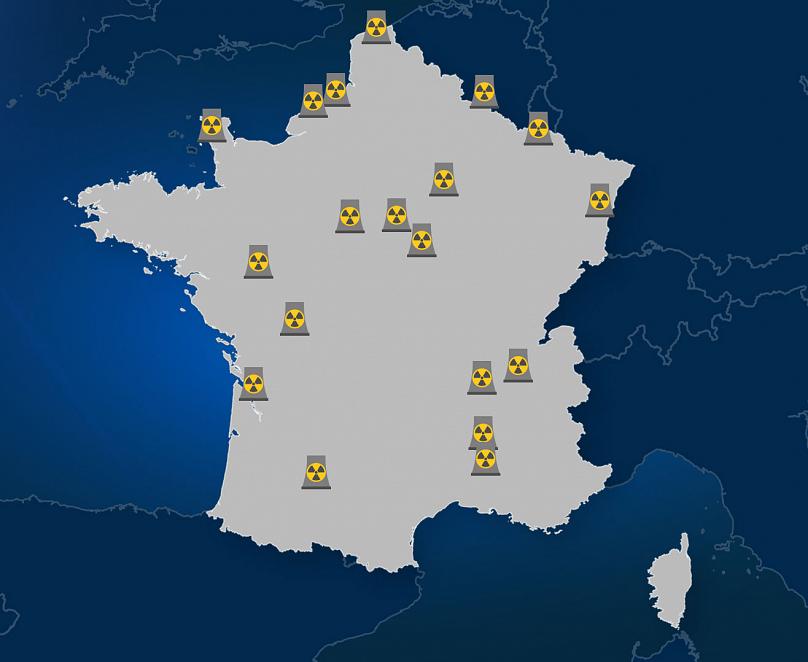
Six (around 10% of the total amount) of nuclear reactors in France are using parts that had “manufacturing deviations” Electricite de France (EDF) SA, the country’s biggest power supplier reported. The irregularities were found in 16 steam generators used on nuclear power plants in Blayais, Bugey, Fessenheim, Dampierre-en-Burly, and Paluel. At the same time, EDF stated that the issue is not a pressing one and doesn’t require immediate attention. The report comes in line with an ongoing programme of reactor checks in France following the discovery of carbon-content irregularities in the steel produced by Le Creusot Forge in 2016, which made the metal weaker than usual. The checks led to the temporary suspension of numerous reactors, and a spike in energy prices both in France and in nearby states due to the former’s need to import energy to cover the deficit. Some European states have even announced their intention of completely phasing out the use of nuclear energy, gradually shutting down existing nuclear plants and aborting the construction of newer ones following the 2011 disaster at the Japanese plant Fukushima, which left significant patches of land and sea contaminated. The incident happened after the plant was hit by a powerful tsunami that knocked out its power and left reactors without cooling systems. Three countries, namely Belgium, Switzerland and Germany, are planning to eventually switch to renewable energy sources, while using gas in the transitional period. France, however, despite initially considering such option decided to keep its nuclear industry. Still, Paris opted for a reduction of its portion in the country’s energy generation from over 70% down to 50% by 2035. |
U.S. intelligence assessment – Russia’s Mystery Nuclear Explosion Occurred During Missile Recovery at Sea
|
Russia’s Mystery Nuclear Explosion Occurred During Missile Recovery at Sea — Reports https://www.themoscowtimes.com/2019/08/30/russias-mystery-nuclear-explosion-occurred-during-missile-recovery-at-sea-reports-a67084 The mysterious explosion in northern Russia that caused a spike in radiation levels happened during a mission to salvage a nuclear-powered cruise missile from the bottom of the sea, media have cited a U.S. intelligence assessment as saying.
Five nuclear engineers were killed in a liquid propulsion system blast at Russia’s naval missile test facility, leading to a brief spike in radiation on Aug. 8. The secrecy surrounding the accident has led outside observers to speculate that what the explosion involved the Burevestnik nuclear-powered intercontinental cruise missile, dubbed the SSC-X-9 Skyfall by NATO.
“This was not a new launch of the weapon, instead it was a recovery mission to salvage a lost missile from a previous test,” the CNBC business outlet cited an unnamed U.S. official with direct knowledge of a U.S. intelligence assessment as saying. Russian crews aboard three vessels had last year prepared to recover a missile that landed in the Barents Sea during a failed November 2017 test, CNBC reported last year, also citing a U.S. intelligence report. “There was an explosion on one of the vessels involved in the recovery and that caused a reaction in the missile’s nuclear core which lead to the radiation leak,” another unnamed source told the outlet Thursday. The U.S.-funded Radio Free Europe/Radio Liberty news outlet’s Russian-language service came to the same conclusion after analyzing photographs of nuclear waste containers at what are thought to be previous Burevestnik test sites. Russia tested four of the missiles between November 2017 and February 2018, each resulting in a crash, people who spoke on condition of anonymity previously told CNBC. Government officials have given a muted, occasionally contradictory response in the weeks since the accident. President Vladimir Putin said the explosion occurred during testing of what he called promising new weapons systems. Last year, Putin had boasted about what he said was the Burevestnik’s unlimited range. Four of Russia’s nuclear radiation monitoring stations went silent days after the explosion, and doctors in the region have said they weren’t warned that they were treating patients exposed to radiation. |
|
Examining the radioactive isotopes from Russia’s mystery explosion
How nuclear scientists are decoding Russia’s mystery explosion. Isotopes that caused a radiation spike earlier this month probably came from an exploding nuclear-reactor core — but device’s application is still unknown. Nature,
Narrow escapes from nuclear war
|
A few small goofs nearly threw the world into nuclear war Popular Science , Excerpt: End Times, By Bryan Walsh
If there’s an important post in America’s national defense establishment, chances are that William Perry has held it. He worked as a civilian expert in electronic intelligence in the 1960s, served as undersecretary of defense for research and engineering, and ended his career in government service as President Bill Clinton’s defense secretary from 1994 to 1997. He served on the University of California’s board of governors for the laboratory at Los Alamos—where the first nuclear bomb was developed—and is currently the head of the board at the Bulletin of the Atomic Scientists. Even at 91 years old his voice still exudes authority, and his words demand attention in capitals around the world. What makes Perry special, however, is that he is one of the last living American statesmen who saw with his own eyes just how close we came to nuclear annihilation. And what he came to understand was that the real threat of nuclear war wasn’t from military competition, but from the way that simple misunderstandings and technical errors could spiral out into planetary catastrophe. It wasn’t the war in nuclear war that was so dangerous—it was the nuclear, the fact that thousands of megatons of explosive power kept on a hair trigger made any mistake irrevocable…… Perry got involved in what would become known as the Cuban Missile Crisis. ….. The stage was set for the single moment in the modern age when the human race may have come closer to extinction than it ever has before or since. On October 27, 1962, as part of the U.S. naval quarantine of Cuba, American destroyers and the aircraft carrier USS Randolph managed to corner the Soviet submarine B-59. The U.S. ships began dropping small depth charges—underwater explosive devices—around the sub. The American commanders weren’t trying to sink the sub but rather to force it to the surface, an intention they had made clear to Soviet military leaders in Moscow. What the Americans didn’t know was that the sub had been out of touch with Moscow for days. When depth charges began exploding around the sub, the crew had every reason to believe that World War III had begun. An exhausted Captain Valentin Savitsky gave the orders to prepare the sub’s nuclear torpedo for firing. A successful hit on the Randolph would have vaporized the aircraft carrier, which in turn would have put the U.S. nuclear war plan for total retaliation into play. Thousands of American warheads would have been on their way to targets in the Soviet Union, China, and other nations. The Soviets would have responded, and the worst would have come true. The decision to launch a nuclear weapon on board the Soviet sub had to be authorized by three officers. Ivan Maslennikov, the deputy political officer, said yes. But Vasili Arkhipov, Savitsky’s second in command, refused. He convinced Savitsky to instead bring the sub to the surface, where a U.S. destroyer ultimately allowed the ship to return to Russia. …….. The Cuban Missile Crisis is only the best known of many, many times when World War III was almost triggered by accident. William Perry himself lived through one when he was serving in the Department of Defense in 1979 and was awakened in the middle of the night by a watch officer at NORAD who said his monitors were showing two hundred Soviet intercontinental ballistic missiles (ICBMs) en route to the United States. It turned out to be a computer error. Less than a year later, on June 3, 1980, military computers showed thousands of Soviet missiles headed toward the States. Then–national security adviser Zbigniew Brzezinski was about to recommend a counterattack until he was told at the last minute that the alarm had been generated by a faulty computer chip—one that cost all of 46 cents. Perhaps the closest the world came to nuclear war after the Cuban Missile Crisis was on September 26, 1983, with the reported launch of several ICBMs from the United States. Lieutenant Colonel Stanislav Petrov was on duty that night, and his job was straightforward: register the missile launch and report it to Soviet military and political command. An ICBM takes half an hour to reach its target, which meant Petrov had only minutes to authenticate the apparent attack in time for the Soviets to launch a counterattack. Yet Petrov judged that the United States would not launch a first strike with only a handful of missiles, so he instead reported a system malfunction. And then he waited. “Twenty-three minutes later I realized that nothing had happened,” Petrov told the BBC in 2013. “If there had been a real strike, then I would already know about it. It was such a relief.” ………… But the side effect of nuclear-enforced peace was the creation of existential risk for the entire species. Every year, every day, every moment, global catastrophe could strike at the push of a button. “Today, every inhabitant of this planet must contemplate the day when this planet may no longer be habitable,” President Kennedy told the United Nations in 1961. “Every man, woman, and child lives under a nuclear sword of Damocles, hanging by the slenderest of threads, capable of being cut at any moment by accident or miscalculation or by madness.” And we live under that sword still. Excerpted from End Times by Bryan Walsh. https://www.popsci.com/end-times-nuclear-war-accidents/ |
|
|
1 This Month

of the week – Shut Down Drone Warfare!


Tell the Ukrainian Government to Drop Prosecution of Peace Activist Yurii Sheliazhenko

Petition to revoke the licensing of the Near Surface Nuclear Disposal Facility (NSDF) at Chalk River. https://www.ourcommons.ca/petitions/en/Petition/Details?Petition=e-7247
To see nuclear-related stories in greater depth and intensity – go to https://nuclearinformation.wordpress.com
-
Archives
- April 2026 (79)
- March 2026 (251)
- February 2026 (268)
- January 2026 (308)
- December 2025 (358)
- November 2025 (359)
- October 2025 (376)
- September 2025 (257)
- August 2025 (319)
- July 2025 (230)
- June 2025 (348)
- May 2025 (261)
-
Categories
- 1
- 1 NUCLEAR ISSUES
- business and costs
- climate change
- culture and arts
- ENERGY
- environment
- health
- history
- indigenous issues
- Legal
- marketing of nuclear
- media
- opposition to nuclear
- PERSONAL STORIES
- politics
- politics international
- Religion and ethics
- safety
- secrets,lies and civil liberties
- spinbuster
- technology
- Uranium
- wastes
- weapons and war
- Women
- 2 WORLD
- ACTION
- AFRICA
- Atrocities
- AUSTRALIA
- Christina's notes
- Christina's themes
- culture and arts
- Events
- Fuk 2022
- Fuk 2023
- Fukushima 2017
- Fukushima 2018
- fukushima 2019
- Fukushima 2020
- Fukushima 2021
- general
- global warming
- Humour (God we need it)
- Nuclear
- RARE EARTHS
- Reference
- resources – print
- Resources -audiovicual
- Weekly Newsletter
- World
- World Nuclear
- YouTube
-
RSS
Entries RSS
Comments RSS
 nuclear-news