Report from China that North Korea’s “nuclear mountain” test site has collapsed
 North Korea radiation WARNING as shock report deems nuclear test site UNUSABLE https://www.express.co.uk/news/world/951489/north-korea-news-kim-jong-un-nuclear-test-site-punggye-ri-radiation
NORTH Korea’s main nuclear test site has collapsed after multiple explosions and could be vulnerable to radiation leaks, according to a team of Chinese geologists.By SIMON OSBORNE
The Chinese scientists collected data after the most powerful of the North’s six nuclear tests last September.
The controlled explosion, which caused a magnitude 6.3 tremor, is believed to have triggered four more earthquakes over the following weeks.
The study found there was “a near-vertical on-site collapse towards the nuclear test centre” about eight minutes after the test.
The report said: “In view of the research finding that the North Korea nuclear test site at Mount Mantap has collapsed, it is necessary to continue to monitor any leakage of radioactive materials that may have been caused by the collapse.”
North Korean nuclear tests have caused seismic events in Chinese border towns and cities, forcing evacuations of schools and offices, sparking fears of wind-borne radiation and leading to a backlash among some Chinese against their country’s unpredictable traditional ally.
On Saturday, Kim announced North Korea would close its nuclear testing facility and suspend nuclear and intercontinental ballistic missile tests – a move welcomed by US president Donald Trump as “big progress” – and which comes ahead of a planned summit between the leaders in late May or early June.
But Kim stopped short of promising to give up his nuclear weapons, and the missile test ban does not include shorter-range weapons capable of reaching Japan and South Korea.
The accidental dropping of two nuclear bombs, on North Carolina

 The U.S. Once Dropped Two Nuclear Bombs on North Carolina by Accident https://www.atlasobscura.com/articles/nuclear-bombs-dropped-on-north-carolinaBy sheer luck, neither detonated., , APRIL 26, 2018
How the diabolically dangerous plutonium cores killed two nuclear scientists
The Nuclear ‘Demon Core’ That Killed Two Scientists https://www.atlasobscura.com/articles/demon-core-that-killed-two-scientistsAfter World War II ended, physicists kept pushing a plutonium core to its edge. BY SARAH LASKOW
APRIL 23, 2018
Since the United States dropped two atomic bombs on Japan, the world has been in a state of readiness for nuclear combat. In this secretive domain, mistakes and mishaps are often hidden: This week we’re telling the stories of five nuclear accidents that burst into public view.
THE WAR WAS OVER—JAPAN HAD surrendered. The third plutonium core created by the United States, which scientists at Los Alamos National Lab had been preparing for another attack, was no longer needed as a weapon. For the moment, the lab’s nuclear scientists were allowed to keep the sphere, an alloy of plutonium and gallium that would become known as the demon core.
In a nuclear explosion, a bomb’s radioactive core goes critical: A nuclear chain reaction starts and continues with no additional intervention. When nuclear material goes supercritical, that reaction speeds up. American scientists knew enough about the radioactive materials they were working with to be able to set off these reactions in a bomb, but they wanted a better understanding of the edge where subcritical material tipped into the dangerous, intensely radioactive critical state.
The first time someone died performing one of these experiments, Japan had yet to formally sign the terms of surrender. On the evening of August 21, 1945, the physicist Harry Daghlian was alone in the lab, building a shield of tungsten carbide bricks around the core. Ping-ponging neutrons back the core, the bricks had brought the plutonium close to the threshold of criticality, when Daghlian dropped a brick on top. Instantly, the core reacted, going supercritical and Daghlian was doused in a lethal dose of radiation. He died 25 days later.
His death did not dissuade his colleagues, though. Nine months later, they had developed another way to bring the core close to that critical edge, by lowering a dome of beryllium over the core. Louis Slotin, another physicist, had performed this move in many previous experiments: He would hold the dome with one hand, and with the other use a screwdriver to keep a small gap open, just barely limiting the flow of neutrons back to the bomb. On a May day in 1946, his hand slipped, and the gap closed. Again, the core went supercritical and dosed Slotin, along with seven other scientists in the room, with gamma radiation.
In each instance, when the core slipped over that threshold and started spewing radiation, a bright blue light flashed in the room—the result of highly energized particles hitting air molecules, which released that bolt of energy as streams of light.
The other scientists survived their radiation bath, but Slotin, closest to the core, died of radiation sickness nine days later. The experiments stopped. After a cooling-off period, the demon core was recast into a different weapon, eventually destroyed in a nuclear test.
In the 1950s, military accidents meant that nuclear warheads went missing.
When the U.S. Kept Losing Nuclear Bombs https://www.atlasobscura.com/articles/has-america-ever-lost-nuclear-bombs In the 1950s, military accidents meant that nuclear warheads went missing, ,APRIL 24, 2018
Future Nuclear-Powered Spaceships (oh by the way, one crashed to Canada in the past)
 Interstellar for Real: Meet the Nuclear-Powered Spaceships of the Future Sputnik news, 22 Apr 18, Spaceships using conventional hydrogen-oxygen fuel will be able to take people to the moon, Mars or Venus. But human exploration of other planets in our solar system, and beyond it, will require the creation of ships harnessing the power of nuclear fission and nuclear fusion, including via the concept of nuclear pulse propulsion.
Still, as Pervushin noted, if humanity wants to escape the bonds of our solar system and send large spacecraft to those close by, nuclear pulse propulsion remains the only realistic option.Postscriptum: Nuclear Fission for Electrical Propulsion
In addition to the ambitious proposals for interstellar nuclear fission and nuclear fusion propulsion, Soviet scientists worked intently from the 1960s to the 1980s on nuclear fission electric power propulsion systems, which transform nuclear thermal energy into electrical energy, which is then used to power conventional electrical propulsion systems.
The Soviet space program pioneered and worked to improve the technology with the Kosmos series of satellites, which, while generally successful, had their reputation somewhat marred following the emergency descent of Kosmos 954 in 1978, which spread radioactive debris over northern Canada.
The Soviets continued to experiment with these technologies well into the late 1980s, and even envisioned the use of nuclear fission-based energy as a realistic means to reach Mars. https://sputniknews.com/science/201804221063803318-nuclear-powered-spaceships-of-the-future/
Radioactive Sludge Barrel Ruptures at Idaho Nuclear Site
U.S. News U.S. officials say a barrel of radioactive sludge has ruptured at an Idaho nuclear site., April 12, 2018, By KEITH RIDLER, Associated Press,
BOISE, Idaho (AP) — A barrel containing radioactive sludge ruptured at an Idaho nuclear facility, federal officials said Thursday, resulting in no injuries and no risk to the public but possibly slowing progress in shipping waste out of the state.
The U.S. Department of Energy said the 55-gallon (208-liter) barrel ruptured late Wednesday at the 890-square-mile (2,305-square-kilometer) site that includes the Idaho National Laboratory, one of the nation’s top federal nuclear research labs.
The rupture triggered a fire alarm, and three Idaho National Laboratory firefighters extinguished the smoldering barrel and pulled it away from a dozen other barrels nearby.
When the firefighters left the building, emergency workers detected a small amount of radioactive material on their skin, said department spokeswoman Danielle Miller………
Federal officials said it’s the first known rupture of a barrel containing radioactive sludge at the site but might not be the last. https://www.usnews.com/news/best-states/idaho/articles/2018-04-12/incident-reported-at-idaho-nuclear-site-crews-responding
March 28 – anniversary of Three Mile Island nuclear disaster and the lies about “no-one died”
Too little information clouds real impact of TMI, https://beyondnuclearinternational.org/2018/03/25/too-little-information-clouds-real-impact-of-tmi/ By Beyond Nuclear staff
The disaster at Unit 2 of the Three Mile Island (TMI) nuclear power plant near Harrisburg, Pennsylvania, began on March 28, 1979. Today, 39 years later, the reality, of what really happened, and how many people it harmed, remains cloaked in mystery and misinformation. Unlike the popular catchphrase, TMI is a story of too little information.
What happened?
The two unit Three Mile Island nuclear power plant sits on an island in the middle of the Susquehanna River, just ten miles southeast of Harrisburg, Pennsylvania. TMI Unit 2 was running at full power, but had been commercially operational for just 88 days when, at 4 A.M. on Wednesday, March 28, 1979, it experienced either a mechanical or electrical failure that caused the turbine-generator and the nuclear reactor to automatically shut down.
The pressure and temperature in the reactor began to increase, but when a relief valve on top of the reactor’s primary coolant pressurizer stuck open, malfunctioning instrumentation indicated that the valve had shut. While cooling water emptied out of the reactor, operators mistakenly reduced the amount of cooling water flowing into the core, leading to the partial meltdown.
Workers deliberately and repeatedly vented radioactive gas over several days to relieve pressure and save the containment structure. Then came fears of a hydrogen explosion. But by April 1, when President Jimmy Carter arrived at the site, that crisis had been averted, and by April 27 the now destroyed reactor was put into “cold shutdown.” TMI-2 was finished. But its deadly legacy was to last decades.
How much radiation got out?
Within hours of the beginning of the nuclear disaster, onsite radiation monitors went off the scale because radiation levels exceeded their measurement capacity. There were only a few offsite radiation monitors operating that day. Subsequent examination of human blood, and of anomalies in animals and plants, suggest that significant levels of radiation were released.
In the days following the TMI meltdown, hundreds of local residents reported the same acute radiation exposure symptoms as victims of the Hiroshima and Nagasaki bombings — nausea and vomiting, severe fatigue, diarrhea, hair loss and graying, and a radiation-induced reddening of the skin. For example, Marie Holowka, a dairy farmer near TMI, recalled as she left the milkhouse that morning that, outside, “it was so blue, I couldn’t see ten feet ahead of myself.” There was a “copper taste” in the air. She was later treated for thyroid problems. Given the absence of monitors and the paucity of evidence, the only real radiation meters were the people of Three Mile Island.
“No one died:” The biggest lie
Given that exposure to ionizing radiation is medically understood to cause diseases like cancer which can be fatal, there is no way to definitively state that “no one died at TMI” or later developed cancers. The opposite is far more likely to be true.
Estimates can be complicated by the long latency period for illnesses caused by exposure to radiation. Sometimes exposed populations move away and cannot be tracked. Nevertheless, long after a catastrophic radiation release, disease can still manifest, both from the initial radiation exposure and from slow environmental poisoning, as the radionuclides released by the disaster are ingested or inhaled for many generations.
The only independent study that looked at the aftermath of TMI was conducted by the late Dr. Stephen Wing and his team at the University of North Carolina, Chapel Hill. They looked at radiation-specific markers in residents’ blood, called biomarkers, to assess dose rather than relying solely on industry measured (or mis-measured as the case was) radiation emissions. The team concluded that lung cancer and leukemia rates were two to 10 times higher downwind of the Three Mile Island reactor than upwind.
Harm to animals and plants
After the radiation release from Three Mile Island, a number of plants exhibited strange mutations including extra large leaves (gigantism), double-headed blossoms and other anomalies. These plant anomalies were documented over decades by Mary Osborn, a local resident who conducted meticulous plant research and is a founder of Three Mile Island Alert. (Her deformed rose is pictured at the top of this story.)
Robert Weber, a Mechanicsburg veterinarian, reported a 10% increase in stillbirths, and a marked increase in the need for Cesarean Sections among sheep, goats and pigs in 1979, 1980, and 1981 in a 15-mile area around the TMI site. Dr. Weber also reported significant increases in the cancer rate among animals with shorter life spans such as dogs and cats. These findings are consistent with research around Chernobyl.
Evacuation failure
During the licensing phase of the construction and operation of TMI, a nuclear disaster was considered unthinkable. Consequently, emergency plans were practically non-existent when TMI began its meltdown. Emergency planning officials were repeatedly misinformed by TMI owner, Metropolitan Edison, on the disaster’s progression, and kept in the dark about the need for public protective actions in the early days at TMI.
On March 30, Pennsylvania Governor Richard Thornburgh finally “advised” that pregnant women and pre-school age children voluntarily evacuate a five-mile perimeter around TMI, an anticipated target population of 3,500 people. Instead, approximately 200,000 people spontaneously evacuated from a 25-mile perimeter.
TMI demonstrated that managing human responses during a nuclear catastrophe is not realistic and provokes unique human behavior not comparable to any other hazard.
Competing loyalties between work duty and personal family caused a significant number of staffing problems for various emergency response roles. As the crisis intensified, more emergency workers reported late or not at all.
Doctors, nurses and technicians in hospitals beyond the five-mile perimeter and out to 25 miles, spontaneously evacuated emergency rooms and their patients. Pennsylvania National Guard, nuclear power plant workers, school teachers and bus drivers assigned to accompany their students, abandoned their roles for family obligations. A similar response could be expected in the same situation today.
You can find our full investigation — The Truth About Three Mile Island — on our website. It is free to download and reprint.
U.S. Department of Homeland Security and the Federal Bureau of Investigation confirm Russian hackers targeting U.S. nuclear plants
 Union of Concerned Scientists 16th March 2018, Yesterday, the Department of Homeland Security and the Federal Bureau of Investigation officially confirmed that Russian hackers have been targeting US nuclear power plants and other critical facilities since at least 2016.
Regardless, the US nuclear industry has been pressuring the Nuclear Regulatory Commission to relax its cyber security standards. Below is a statement by Edwin Lyman, a senior scientist at the Union of Concerned Scientists.
“The Department of Homeland Security alert is a stark
reminder that nuclear power plants are tempting targets for cyber
attackers. Although the systems that control the most critical safety
equipment at US nuclear plants are analog-based and largely immune to cyber
attacks, many other plant systems with important safety and security
functions are digital and could be compromised. For instance, electronic
locks, alarms, closed-circuit television cameras, and communications
equipment essential for plant security could be disabled or reprogrammed.
And some plants have equipment, such as cranes that move highly radioactive
spent fuel, that utilize computer-based control systems that could be
manipulated to cause an accident.”
https://www.ucsusa.org/press/2018/russian-cyber-attacks-call-stringent-security-standards-us-nuclear-plants-plant-owners
Radiation monitors failed at Hanford nuclear station – spread of contamination was not detected
 Report says radioactive monitors failed at nuclear plant, abc news, By THE ASSOCIATED PRESS RICHLAND, Wash. — Mar 9, 2018, A new report says mistakes and mismanagement are to blame for the exposure of workers to radioactive particles at the Hanford Nuclear Reservation in Washington state.
Radioactive leaks from Bugey nuclear power plant, near Lyon, France
 Sortir du Nucleaire 7th March 2018, In December 2017, a radioactive leak was detected at the Bugey nuclear
power plant, 35 km from Lyon. Four associations complain and call for the
immediate shutdown of the plant, which combines risks of all kinds.
On December 20, 2017, EDF detected an abnormal concentration of tritium in a
piezometer (tube allowing access to the water table) on the site of the
Bugey nuclear power station. The concentration of this radioactive
substance, which can cause serious damage to the DNA, reached 670
Becquerels per liter.
Larger concentration peaks (up to 1600 Bq / l) were
detected on subsequent days and at other locations on the site. This
presence of tritium in the Rhône water table suggests the release into the
environment of other radioelements and probably chemical elements.
Contaminated water has also certainly reached the Rhône.
http://www.sortirdunucleaire.org/Fuite-radioactive-a-la-centrale-nucleaire-du
Unknown – whether there were nuclear missiles on Russian ship that was ravaged by fire
Bellona 27th Feb 2018, A Russian official has admitted there were missiles aboard the
Yekaterinburg nuclear submarine when it was ravaged by fire during repair
work at a shipyard near Murmansk in late 2011, reviving a six year old
mystery about what specific dangers faced the Russian public when the
accident occurred.
And while many Russian media rushed to report the
official’s remarks as conclusive proof that the submarine was armed with
nuclear missiles when it was swept by the blaze, it remains unclear whether
they, in fact, had been topped with their warheads at the time the fire
swept through the sub, injuring 19.
http://bellona.org/news/nuclear-issues/2018-02-russian-officials-offhand-remark-about-nuclear-submarine-fire-ignites-fresh-speculation-and-new-denials
A forgotten nuclear disaster? 1985 Russian submarine accident
In 1985, a Russian Submarine Created an Atomic Disaster. The Radiation Lingers to This Day. Kyle Mizokami, 27 Feb 18,
According to Nuclear Risks, the accident scene was heavily contaminated with radioactivity. Gamma ray radiation was not particularly bad; at an exposure rate of five millisieverts per hour, it was the equivalent of getting a chest CT scan every hour. However, the explosion also released 259 petabecquerels of radioactive particles, including twenty-nine gigabecquerels of iodine-131, a known cause of cancer. This bode very badly for the emergency cleanup crews, especially firefighters who needed to get close to the explosion site, and the nearby village of Shkotovo-22. Forty-nine members of the cleanup crew displayed symptoms of radiation sickness, ten of them displaying acute symptoms.
In 1985, a Soviet submarine undergoing a delicate refueling procedure experienced a freak accident that killed ten naval personnel. The fuel involved was not diesel, but nuclear, and the resulting environmental disaster contaminated the area with dangerous, lasting radiation. The incident, which remained secret until after the demise of the USSR itself, was one of many nuclear accidents the Soviet Navy experienced during the Cold War.
The Soviet Union’s nuclear war planners had a difficult time targeting the United States. While the United States virtually encircled the enormous socialist country with nuclear missiles in countries such as Turkey and Japan, the Western Hemisphere offered no refuge for Soviet deployments in-kind.
One solution was the early development of nuclear cruise missile submarines. These submarines, known as the Echo I and Echo II classes, were equipped with six and eight P-5 “Pyatyorka” nuclear land attack cruise missiles, respectively. Nicknamed “Shaddock” by NATO, the P-5 was a subsonic missile with a range of 310 miles and 200- or 350-kiloton nuclear warhead. The P-5 had a circular error probable of 1.86 miles, meaning half of the missiles aimed at a target would land within that distance, while the other half would land farther away.
The missiles were stored in large horizontal silos along the deck of the submarine. In order to launch a P-5 missile, the submarine would surface, deploy and activate a tracking radar, then feed guidance information to the missile while it flew at high altitude. The system was imperfect—the command link was vulnerable to jamming, and the submarine needed to remain on the surface, helpless against patrol aircraft and ships, until the missile reached the target. Eventually the P-5 missiles were withdrawn and the P-5 missile was replaced with the P-6, a similar weapon but one with its own radar seeker for attacking U.S. aircraft carriers.
The introduction of the P-6 gave the Echo II a new lease on life. ……
On August 10, the submarine was in the process of being refueled. Reportedly, the reactor lid—complete with new nuclear fuel rods—was lifted as part of the process. A beam was placed over the lid to prevent it from being lifted any higher, but incompetent handling apparently resulted in the rods being lifted too high into the air. (One account has a wave generated by a passing motor torpedo boat rocking the submarine in its berth, also raising the rods too high.) This resulted in the starboard reactor achieving critical mass, followed by a chain reaction and explosion.
The explosion blew out the reactor’s twelve-ton lid—and fuel rods—and ruptured the pressure hull. The reactor core was destroyed, and eight officers and two enlisted men standing nearby were killed instantly. A the blast threw debris was thrown into the air, and a plume of fallout 650 meters wide by 3.5 kilometers long traveled downwind on the Dunay Peninsula. More debris and the isotope Cobalt-60 was thrown overboard and onto the nearby docks.
According to Nuclear Risks, the accident scene was heavily contaminated with radioactivity. Gamma ray radiation was not particularly bad; at an exposure rate of five millisieverts per hour, it was the equivalent of getting a chest CT scan every hour. However, the explosion also released 259 petabecquerels of radioactive particles, including twenty-nine gigabecquerels of iodine-131, a known cause of cancer. This bode very badly for the emergency cleanup crews, especially firefighters who needed to get close to the explosion site, and the nearby village of Shkotovo-22. Forty-nine members of the cleanup crew displayed symptoms of radiation sickness, ten of them displaying acute symptoms. …….
Chinese and USA officials scuffled over the “nuclear football”
Nuclear football’ scuffle broke out during Donald Trump’s visit to China , ABC News 20 Feb 18
A scuffle broke out between Chinese and US officials over the “nuclear football” — the briefcase containing the US nuclear launch codes — during a visit to Beijing by US President Donald Trump last year, according to media reports.
Key points:
- Report says Chinese official tackled to ground
- Secret Service confirms scuffle but not tackle
- Chinese not believed to have taken possession of briefcase
US news website Axios said multiple sources confirmed an incident in which Chinese officials tried to block a military aide with the briefcase from following Mr Trump into the Great Hall of the People, despite the aide being required to stay close to the President at all times.
The report said when Mr Trump’s chief of staff Mike Kelly attempted to intervene, a Chinese official tried to grab him before a US Secret Service agent tackled the Chinese official to the ground.
The Secret Service did not initially deny the incident took place, but in a tweet said reports that a host nation official was “tackled” to the ground were “false”.
The federal law enforcement agency later confirmed an incident had taken place……..
The “nuclear football” is a leather briefcase that contains the codes needed to launch a nuclear strike while away from fixed command centres.
It is carried by a rotating group of military officers near the President whenever he is travelling. http://www.abc.net.au/news/2018-02-20/scuffle-broke-out-over-nuclear-football-during-trumps-china-trip/9463976
Diablo Canyon Nuclear Plant – another scare, with fire event
Fire at Rickety Diablo Canyon Nuclear Plant Gives California a Scare — Shutdown Slated for 2025, bureau EnviroNews Headline News , by Shad Engkilterra on January 27, 2018 , (EnviroNews USA
USA jet -with 4 nuclear bombs on board – crashed in Greenland 50 years ago
Director of the Health Physics and Radiation Protection Graduate Program and Associate Professor of Radiation Medicine, Georgetown University January 18, 2018 Fifty years ago, on Jan. 21, 1968, the Cold War grew significantly colder. It was on this day that an American B-52G Stratofortress bomber, carrying four nuclear bombs, crashed onto the sea ice of Wolstenholme Fjord in the northwest corner of Greenland, one of the coldest places on Earth. Greenland is part of the Kingdom of Denmark, and the Danes were not pleased.
The radioactivity was released because the nuclear warheads had been compromised. The impact from the crash and the subsequent fire had broken open the weapons and released their radioactive contents, but luckily, there was no nuclear detonation.
To be specific, HOBO 28’s nuclear weapons were actually hydrogen bombs. As I explain in my book, “Strange Glow: The Story of Radiation,” a hydrogen bomb (or H-bomb) is a second-generation type of nuclear weapon that is much more powerful than the two atomic bombsdropped on Hiroshima and Nagasaki. Those two bombs were “fission” bombs – bombs that get their energy from the splitting (fission) of very large atoms (such as uranium and plutonium) into smaller atoms.
In contrast, HOBO 28’s bombs were fusion bombs – bombs that get their energy from the union (fusion) of the very small nuclei of hydrogen atoms. Each of the four Mark 28 F1 hydrogen bombs that HOBO 28 carried were nearly 100 times more powerful than the bomb dropped on Hiroshima (1,400 kilotons versus 15 kilotons).
Fusion bombs release so much more energy than fission bombs that it’s hard to comprehend. For example, if a fission bomb like Hiroshima’s were dropped on the Capitol building in Washington, D.C., it’s likely that the White House (about 1.5 miles away) would suffer little direct damage. In contrast, if just one of the Mark 28 F1 hydrogen bombs were dropped on the Capitol building, it would destroy the White House as well as everything else in Washington, D.C. (a destructive radius of about 7.5 miles). It is for this reason that North Korea’s recent claim of achieving hydrogen bomb capabilities is so very worrisome.
Nuclear Explosion Power Comparison
After the crash, the United States and Denmark had very different ideas about how to deal with HOBO 28’s wreckage and radioactivity. The U.S. wanted to just let the bomber wreckage sink into the fjord and remain there, but Denmark wouldn’t allow that. Denmark wanted all the wreckage gathered up immediately and moved, along with all of the radioactively contaminated ice, to the United States. Since the fate of the Thule Air Base hung in the balance, the U.S. agreed to Denmark’s demands……… https://theconversation.com/50-years-ago-a-us-military-jet-crashed-in-greenland-with-4-nuclear-bombs-on-board-87155
1 This Month
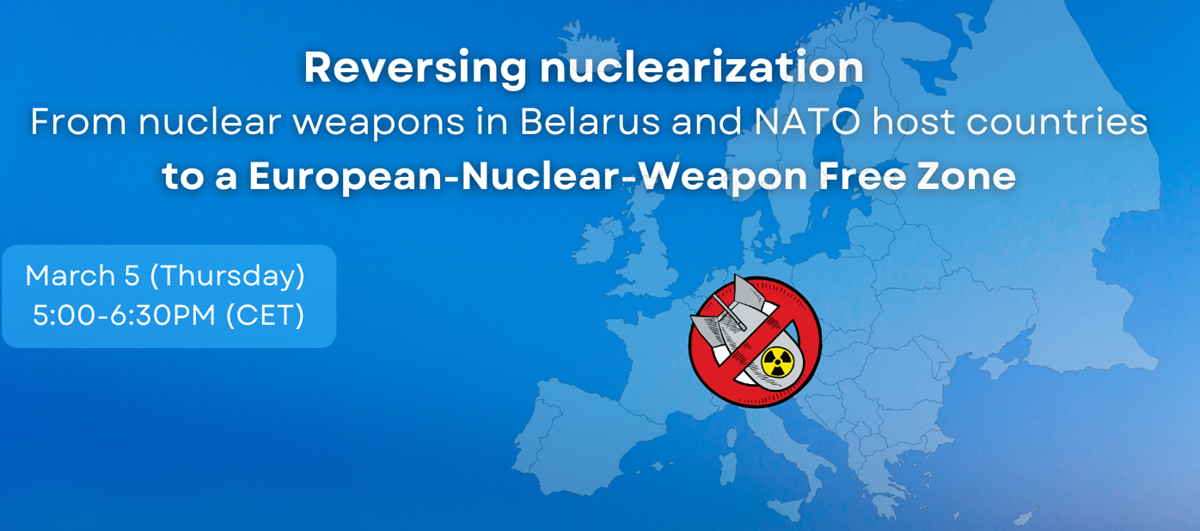
5 March -Online – Reversing nuclearization:
From nuclear weapons in Belarus and NATO host countries to a European-Nuclear-Weapon Free Zone
11am-12:30pm Eastern Time USA / 5pm-6:30pm CET

of the week – Advocating for a
nuclear free beach – https://www.samuellawrencefoundation.org/
The Samuel Lawrence Foundation advocates for a Nuclear Waste Free Beach at San Onofre, join us and take action!

10 March A LIVE WEBINAR THE REAL EFFECTS OF NUCLEAR POWER
What the Industry Isn’t Telling Us
1:00 PM Mountain, 2 pm Central, 3 pm Eastern. Live on the Keepers of the Water Facebook page

18 March Webinar @ 1 PM EST: An Assessment of SMR Projects: The Case of Canada
register for the zoom:
https://us02web.zoom.us/webinar/register/WN_o8BIIOUvQ2ONJR1nta65DQ#/registration

of the week – STOP SMALL MODULAR REACTORS IN CANADA
To see nuclear-related stories in greater depth and intensity – go to https://nuclearinformation.wordpress.com
-
Archives
- March 2026 (37)
- February 2026 (268)
- January 2026 (308)
- December 2025 (358)
- November 2025 (359)
- October 2025 (376)
- September 2025 (258)
- August 2025 (319)
- July 2025 (230)
- June 2025 (348)
- May 2025 (261)
- April 2025 (305)
-
Categories
- 1
- 1 NUCLEAR ISSUES
- business and costs
- climate change
- culture and arts
- ENERGY
- environment
- health
- history
- indigenous issues
- Legal
- marketing of nuclear
- media
- opposition to nuclear
- PERSONAL STORIES
- politics
- politics international
- Religion and ethics
- safety
- secrets,lies and civil liberties
- spinbuster
- technology
- Uranium
- wastes
- weapons and war
- Women
- 2 WORLD
- ACTION
- AFRICA
- Atrocities
- AUSTRALIA
- Christina's notes
- Christina's themes
- culture and arts
- Events
- Fuk 2022
- Fuk 2023
- Fukushima 2017
- Fukushima 2018
- fukushima 2019
- Fukushima 2020
- Fukushima 2021
- general
- global warming
- Humour (God we need it)
- Nuclear
- RARE EARTHS
- Reference
- resources – print
- Resources -audiovicual
- Weekly Newsletter
- World
- World Nuclear
- YouTube
-
RSS
Entries RSS
Comments RSS
 nuclear-news