A reader vents anger about America’s “terminal liberalism” – and much of this rings true

| Honestly, America is such an awful place. Just an awful, awful country. Not only is it the evil empire of today’s world, the ideology of America and Americans, is corrosive to the human spirit. Community and society don’t really exist in America because, America is basically terminal neoliberalism. Everyone is a rugged individual so, everything that happens to you is your fault. Even if it happened, due to the conditions created by the 2008 Financial Crash |
THERE is the near total defunding of mental health services. 100 million people in so much medical debt they are barely housed. 95,000 a year die from lack of affordable health care. You are judged for life as a loser, even if The economic circumstances you were born into were not your fault.
.Even judged in this crummy racist shithole, based on the color of your skin.
The idea of competing for jobs is insane, it’s directly equivalent to slaves or serfs trying to compete, for which master or lord they serve. It’s a vicious competition. Workers stab each other-in-the-back. They climb over the pile of corpses, lie, throw fellow workers, under the bus. All this , for some employer, that sees them as a tool and nothing else.
People all hate themselves, for failing in a rigged game, where they have to destroy each other to survive, or get ahead.
American society can go to hell. It’s already tearing apart . Children are slaughtering their classmates. Mass homelessness. Police state. Fascism. Nobody cares. Do you know what it takes, for a child to actually buy a gun and show up to school, with the intention, of killing everyone there? Not that much. Not only is it horrific, not only are other children dying, but when you think about it, the shooter is throwing their life away. Shooter kills, because they’ll live in prison until they die or they intend to shoot themselves, afterwards. Children know they have nothing to live for. Americans truly don’t care.
This culture is evil, Americans don’t give a darn about each other, remotely, not even a little, the only time they pretend to care, is when they try, justifying bombing other countries or, caging refugees. That is because, that is what Americans are, Cowardly, sadistic nucleoape killers
The life expectancy of Americans is falling every year, in large part due to opioid abuse, worst health care in the world, cancer from all the radioactive shit, Infant and mother mortality at its highest level ever! The usa has the highest level of Infant and mother in the world, for in a supposed developed country.
ther in the world, for in a supposed developed country. The wealthy in the usa have more money than ever before. The life expectancy of every citizen is falling. Nowhere else has this phenomenon occurred.
Even the Russians, didn’t see a spike in opioid deaths, until after the USSR had collapsed.
American society is disintegrating, it is a cancer. The chaos is just here.
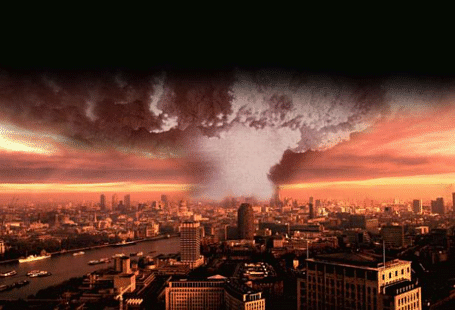
Nuclear weapons since Oppenheimer: Who’s in control?
Bulletin, By Lisbeth Gronlund | August 4, 2023
The theme of control—and the lack of it—appears throughout Christopher Nolan’s latest film Oppenheimer.
………………………………………………………… While others were not so sanguine, Oppenheimer expected that he and other scientists who built the bomb would have a hand in future US policy. This belief also proved to be short-lived.
The scene in which the two bombs that would be detonated over Hiroshima and Nagasaki are boxed up and handed over to the military hammers home the point that the scientists were no longer in control of these weapons—literally and figuratively……………………..
…………………………….. Who really has been in control all these years? No one.
Policy makers—not just in the United States but in all nations with nuclear weapons—have abdicated their responsibilities to curb and eliminate the threat posed by their nuclear weapons. They have let the interests of their military and arms producers control the agenda—and the budget for these weapons. They have been swayed by the abstract goal of “deterrence,” which is a creature with a voracious appetite.
During the 2020 presidential election campaign, President Joe Biden pledged to adopt a “no first use” policy. It is shocking that the United States still considers using nuclear weapons first to be a viable option, even though it would likely spur a wider nuclear war. Sadly, it was not shocking that President Biden’s 2022 Nuclear Posture Review did not include this promised policy change. Instead, the president gave in to the military, which does not like to foreclose options. But, of course, that’s exactly what he and his overseas counterparts need to do—foreclose options. Take control. https://thebulletin.org/2023/08/nuclear-weapons-since-oppenheimer-whos-in-control/?utm_source=Newsletter&utm_medium=Email&utm_campaign=MondayNewsletter08072023&utm_content=NuclearRisk_WhosInControl_08042023
Scared to Death!

BY JOHN MIKSAD, https://www.counterpunch.org/2023/07/31/scared-to-death/– 31 July 23
I met U.S. Rep. Joe Courtney (D-CT) for the first time recently. I had a short, but revealing conversation with him.
I don’t know what he thought coming away from the exchange, but I know what I felt. I felt afraid. I saw someone who was enthusiastic about the current proxy war with Russia and the potential war with China, two nuclear armed nations. I saw someone who believes that the US only fights for freedom and democracy although I wonder if he could tell me that last war that was fought for freedom or that resulted in democracy.
I will admit that the weapons manufacturers–who Joe staunchly assists at every turn–have experienced more financial freedom (read “profits”) as a result of Joe’s efforts.
I saw someone who had no use for diplomacy because he believes that you can’t negotiate with adversaries, a belief that has led to countless wars through the millennia and continuous war in this century.
This is deeply concerning to me. Violent conflict over land, resources, ideology, power, and ego may have been the only model we’ve been exposed to, but we can no longer afford to continue working within this old paradigm of might makes right, zero-sum games, and endless arms races. All this has led us to where we find ourselves today, on the brink of self-annihilation.
The fear I felt coming away from this conversation stems from the realization that many of our elected officials adamantly maintain that violence is the only way.
We must find a way to talk, negotiate, build trust, and ultimately cooperate with all nations. I come to this conclusion based on the premise that all people of all nations now face the same existential threats from pandemics, climate collapse, and war escalating to nuclear annihilation.
For the first time in history, the entire human species has obvious common interests. The only rational way forward is to put aside our petty grievances and come together to deal with these existential threats. No one nation can solve these threats alone. There is no other way but together as an international community.
People like Joe are unwilling to give peace a chance and in doing so they are condemning all of us to hardship, suffering, and potentially death. They know only “us versus them” thinking.
They cannot get past the obsolete and barbaric paradigm of resolving conflict by violence or the threat of violence. They don’t realize that we will only have safety and security when all nations have safety and security. Their belief system is incompatible with the realities that we face.
They think that fighting over there protects us here. They don’t realize that there is always blowback and tragic predictable consequences from war that come back to bite us in many ways. We now have epidemic levels of violence within a society that has been shown by its government that violence is the best way to settle disputes.
The blood and treasure that war has stolen from us has left us with crumbling infrastructure, poor results in education and health, and a failing democracy. The planet’s climate is fast approaching tipping points (points of no return) as people around the world experience escalating climate catastrophes including deadly heat waves, floods, wildfires, droughts, and storms.
We continue to spend $1 trillion/year on war and militarism when we know from experience that the military cannot protect us from the real threats that we are now facing. In fact, war exacerbates these threats. War is the worst investment ever.
We must start with a reassessment of U.S. foreign policy and draw down our overreaching military with its expensive and ineffective 750 bases on the sovereign soil of some 80 foreign countries.

If we are to survive and help head the world in the right direction, we must join treaties for nuclear weapons. We must create strong democratized international institutions.
The clock is ticking.
Someone needs to take the lead and break the cycle of mistrust we helped create. It takes courage to do this. We must realize that only peace serves our interest and the interests of all our fellow inhabitants of earth.
I believe people can change. People do change. But not everyone will change. There were people who believed that owning slaves was morally acceptable even after slavery was outlawed.
That’s the way it will be with war and militarism as well. Even when it becomes quite obvious to most of us that the only way to deal with the global threats we face is through international cooperation, I suspect that Joe will believe that wars are still the preferable way to resolve our differences. I suspect he will always believe that all US wars are good and noble even though they kill civilians, create refugees, result in war crimes, and creates poverty, trauma, and desperation just like all war does.
Fortunately, we don’t have to convince everyone that war is barbaric and destructive. We only have to convince enough of our fellow citizens. When we reach a tipping point, the old paradigm will come tumbling down like the Berlin Wall.
Joe prefers to cling to his childhood games where he played the “good” cowboy that killed the “evil savages.” I’ve got some bad news for him about that story as well.
Joe is scared to death of Russia, China, Iran and North Korea.
I am scared to death of Joe.
Joe thinks that we should continue fighting over slivers of land on the other side of the planet.
I think we should be fighting to save the planet and all living things.
Joe thinks that nuclear war is on the table.
I think we must do everything in our power to reduce and ultimately eliminate the threat of nuclear annihilation.
Joe’s fear of other nations brings us ever closer to nuclear annihilation while distracting us from dealing with impending climate collapse and future pandemics.
I believe we need international cooperation for the safety, security, and well-being of all people.
Joe’s actions jeopardize the health and well-being of all people.
I believe we need to send an unequivocal message to Joe and the many other warmongers in Congress that they need to give peace a chance, not someday, but now.
John Miksad is Chapter Coördinator with World Beyond War.
Will we ban nuclear weapons, or will Biden and Putin get us all cremated equally?
paulrodenlearning 23 July23
After the Civil War, “dumb-dumb bullets” that mushroomed on impact were banned. After World War I chlorine, phosgene and mustard and other chemical weapons were supposedly banned, despite the Chemical Weapons Ban Treaty, the US at least is finally destroying their stockpiles of nerve gas, mustard gas and other gas munition stockpiles.
And after the horrors of Hiroshoma & Nagasaki, Eisenhower started “Atoms for Peace,” and now both India and Pakistan both have the bomb. Then we had troops practicing manuvers on the “atomic battlefield,” marching into the fallout & blast zones to see the effectivesness of military troops after nuking an enemy. Now so many of those soldiers and sailors who witness and marched both those “small yield nukes,” and the nuclear tests in the Pacific, are dieing or have died from radiation sickness, cancer and other early death diseases.
This is all shown in the documentary, “Paul Jacobs and the Nuclear Gang.” Paul Jacobs a journalist, who walked into the “atomic battlefield,” and testing zones when we still did atmospheric testing, died of cancer shortly after the film was completed
We have developed the “neutron bomb” which had supposedly limit blast impact that was designed just to kill people with radiation to save the buildings. Imagine, conquering a foreign nation and securing the remaining buildings with no people, just corpses.
And now with artificial intelligence, we will be living on a trip wire, of “launch on warning,” and if you can remember the General that George C. Scott played in “Dr. Strangelove,” “we will get the Russians with their pants down.” One thing for sure, both Biden and Putin will prove that we are all cremated equally.
Archbishop to denounce nuclear arms on Trinity test’s 78th anniversary
Jul. 10—The first atomic blast that lit up the early morning sky at the Trinity Site in south-central New Mexico on July 16, 1945 — an event that opened the door for two nuclear bombs to be dropped on Japan — had an immense impact on the state that is still felt to this day.
Santa Fe Archbishop John Wester will mark the 78th anniversary of the Trinity test by denouncing the nuclear weapons program that has escalated since the long-ago detonation in a remote desert, and for which New Mexico finds itself in a primary role.
Wester and anti-nuclear groups are organizing an event Sunday at the Santa Maria de la Paz Community Hall, featuring speakers, music, exhibitions and moments of reflection and prayer on the atomic blast that reshaped civilization. The public can attend or livestream it;
We can no longer deny or ignore the extremely dangerous predicament of our human family,” Wester said in a statement. “We are in a new nuclear arms race far more dangerous than the first, and I believe we need to rejuvenate a sustained, serious conversation about universal, verifiable nuclear disarmament.”
Because of Trinity, New Mexico will be forever linked to the two bombs dropped on the Japanese cities of Hiroshima and Nagasaki. The bombs, credited by many with hastening the war’s end and saving tens of thousands of American lives, killed more than 200,000 Japanese people and inflicted radiation poisoning on much of the populace.
The atomic test released radioactive fallout in downwind communities in New Mexico, causing fatal illnesses such as cancer in what many believe are a large number of residents, though the actual quantity remains unknown because the federal government didn’t track such aftereffects as part of the secrecy surrounding the project………………………………………………… more https://news.yahoo.com/archbishop-denounce-nuclear-arms-trinity-033300743.html?guccounter=1&guce_referrer=aHR0cHM6Ly9uZXdzLmdvb2dsZS5jb20v&guce_referrer_sig=AQAAADJqdcGm_qX6CdNLQ8_g7p81OistELVP4KvAUR1PfQl-0Q2SBtdSRa8GwdKyTIcwvX8aofXxou_a1DmL9axGTUu9S4o5f35bRYrwMTXGG5ZaoooE2PgjQaFWi5uLyJbf3gg8EShjtVi5A26UqvyJcSYMPWp9GQCX2T9NlsjflzJW
Ukraine rebuffs Vatican peace attempt
https://www.rt.com/russia/577589-ukraine-vatican-peace-meeting/ 9 June 23
An envoy of Pope Francis visited Kiev in search of ways to end the conflict
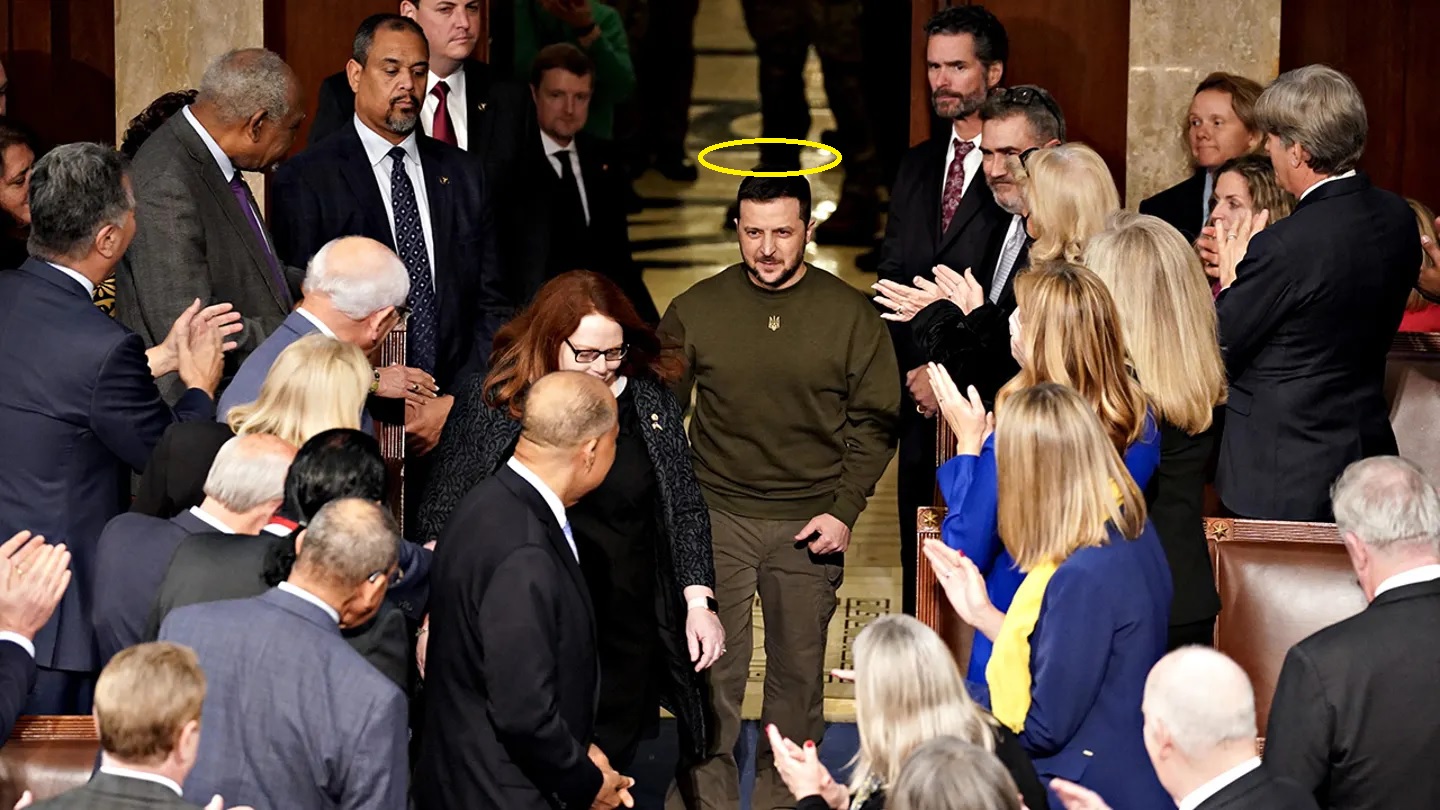
The only end to the conflict that Kiev considers acceptable is the Ukrainian “peace formula,” President Vladimir Zelensky told the Holy See envoy Cardinal Matteo Zuppi in a meeting on Tuesday.
“Ukraine welcomes the willingness of other states and partners to find ways to achieve peace, but since the war is on our territory, the formula for achieving peace can only be Ukrainian,” Zelensky said after meeting the papal emissary in Kiev.
Zelensky added that he discussed the situation in Ukraine and the humanitarian cooperation with the Vatican “within the framework of the Ukrainian peace formula,” and urged the Holy See to join the efforts to pressure Russia.
Zuppi arrived in Ukraine on Monday, in what the Vatican called a “search for paths to a just and lasting peace.” In addition to Zelensky, he met with other Ukrainian officials, including parliamentary commissioner for human rights Dmitry Lubinets.
“The results of these talks, like those with religious representatives as well as the direct experience of the atrocious suffering of the Ukrainian people as a result of the ongoing war, will be brought to the Holy Father’s attention,” the press office of the Holy See said in a statement on Tuesday evening.
This is the second time in two months that Zelensky has declined an offer by Pope Francis to mediate in the conflict with Russia. After his meeting with the pontiff at the Vatican last month, the Ukrainian president told Italian media outlets that Kiev was only interested in its own vision of peace.
“It was an honor for me to meet His Holiness, but he knows my position: the war is in Ukraine and the [peace] plan must be Ukrainian,” Zelensky told talk show host Bruno Vespa.
The “peace formula” in question is a list of Zelensky’s demands first revealed
The “peace formula” in question is a list of Zelensky’s demands first revealed in November 2022, ranging from Russia’s withdrawal from all territories Ukraine claims – including Crimea and the Donbass – payment of reparations, war crimes trials for the Russian leadership, and Ukraine’s membership in NATO.
Moscow has rejected Zelensky’s “peace platform” as delusional. Russia understands that any peace talks will not be held “with Zelensky, who is a puppet in the hands of the West, but directly with his masters,” Russian Foreign Minister Sergey Lavrov told reporters last month.
June 2: Nonviolent ecumenical movements call for ratification of the Nuclear Weapons Prohibition Treaty
04.06.23 – Italy – Redazione Italia https://www.pressenza.com/2023/06/june-2-nonviolent-ecumenical-movements-call-for-ratification-of-the-nuclear-weapons-prohibition-treaty/
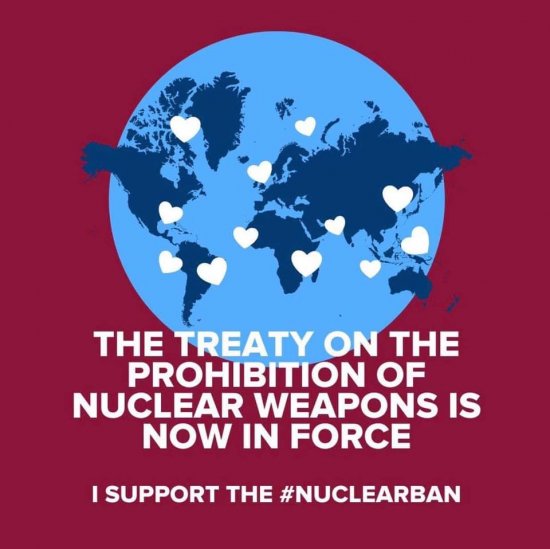
On the occasion of June 2, Republic Day, associations and organizations from the Catholic world and spiritually based ecumenical and nonviolent movements called at a June 1 press conference for the Italian government to ratify the U.N. Treaty on the Prohibition of Nuclear Weapons as a first step in stemming the war in Ukraine and embarking on a diplomatic path to peace.
“We are in an apocalyptic scenario, today, more than ever, it is necessary that the Treaty be signed because the crest on which we are walking is very dangerous,” said Carlo Cefaloni of the Focolare Movement, opening the press conference at the Chamber of Deputies on behalf of all the movements.
“Tomorrow there will be a military parade, instead we are here to say that we don’t want war; but we really have to decide that,” said Don Renato Sacco of Pax Christi, “because in this last year 2240 billion euros have been invested in armaments; this means that you want war: [therefore] there is a need to choose peace in a strong and determined way.
Also speaking during the press conference was Enkolina Shqau of the Pope John XXIII Association; she stressed that “to say no to war and nuclear weapons is not a matter of being good but of being smart because it is not possible that we still have not learned anything from the disasters of the last century.”
Emanuela Gitto, Vice President of the Youth Sector of Catholic Action stressed that “On the occasion of the June 2 holiday, we want to remember how the Constituent Assembly decided to put the repudiation of war among the founding pillars of our Republic, which is why it is important that the call to silence the weapons and open a true dialogue towards peace starts from these rooms.
“Politics has been lacking in these months, especially a prophetic vision of politics,” said Emiliano Manfredonia, national president of the ACLI, “and so the usual traffickers, including drug and human traffickers have won. Let us commit instead to sign this treaty as a prophetic gesture, as a strong signal to start a real path of peace and to accompany Monsignor Zuppi in this mission of his in Ukraine so that he can really open the necessary paths.”
Maurizio Simoncelli, spokesman for the Italia ripensaci campaign explained that “the Treaty so far has been signed by nations that do not have nuclear production (Translator’s note: They probably mean “nuclear weapons”. Italy hosts nuclear weapons), and it would be nice if instead, Italy was the first to set a good example in this regard because we know that having nuclear weapons does not increase a country’s security, but rather the opposite.”
A number of parliamentarians were also present in the press room of the Chamber of Deputies, including Hon. Paolo Ciani, who wanted to reiterate how important the commitment of politics is “and it is not a credit to European politics that the go-ahead from Strasbourg in these hours will allow the use of PNRR (National Plan for Recovery and Resilience) funds for the production of munitions to be sent to Ukraine.” MP Nicola Fratoianni also commented on the news of the Europarliament vote, saying that “these are acts that have nothing to do with real politics and I am very happy with demonstrations like the
one you organized today because they are necessary to make the decision-makers change direction.”
Mario Marazzitti of the Sant’Egidio Community wanted to add that “the signing of this document certainly does not serve to resolve the conflict in Ukraine, but it is a first step to lower the fever of war and this mad arms race.”
“Good politics is the one that gets us out of the logic of the market,” said Maurizio Certini of the Giorgio La Pira Foundation, “therefore out of the business related to the production of weapons because we need to make everyone understand that bombs bring insecurity.
At the end of the press conference, representatives of the associations gathered in front of the Montecitorio to display a banner that read For a Republic Free of War and Nuclear Weapons.
Will Environmental, social, and governance (ESG) investment managers follow the govt in backing nuclear?

By Chloe Cheung, 19 Apr 23, https://www.ftadviser.com/investments/2023/04/19/will-esg-investment-managers-follow-the-govt-in-backing-nuclear/
Wind turbines and solar panels are commonly associated with low-carbon energy, but nuclear power is also being considered in the pursuit of net zero.
In a move to encourage private sector investment, chancellor Jeremy Hunt said in the spring Budget that the UK green taxonomy will class nuclear power as ‘environmentally sustainable’, subject to consultation.
Although nuclear fuels are not renewable, the classification would enable nuclear power to have the same investment incentives as renewable energy.
But despite being low-carbon, it is not uncommon to come across ESG funds and investment companies that exclude nuclear power generation. So will investment managers follow the UK government’s approach to nuclear power?
William Argent, lead adviser to the VT Gravis Clean Energy Income Fund, says the fund’s responsible investment statement does not currently allow exposure to nuclear power generation assets.
“There may be some very modest exposure to companies involved in the nuclear energy supply chain, providing services; but we do not have exposure to companies that own nuclear energy generation plants themselves,” he adds.
While the UK government wants to class nuclear power as ‘environmentally sustainable’, Argent says his position on nuclear energy has, at this stage, not changed. “We exclude it as a commonly perceived ‘controversial activity’.
“There would need to be a shift in that perception among our investors and more widely. We would not consider changing the stance unless there was a broader acceptance.”
Other funds avoiding companies that generate revenue from nuclear power generation include Quilter Cheviot’s Climate Assets Funds.
“While we recognise that nuclear power does not generate greenhouse gas emissions, and therefore it has a role to play in the net-zero pathway and transition away from fossil fuels, we do not consider it a ‘sustainable investment’,” says Claudia Quiroz, lead fund manager of the Climate Assets Funds, and head of sustainable investment at Quilter Cheviot.
Citing environmental and safety issues that “outweigh” zero emission credentials, she says: “Nuclear energy generates a significant mass of radioactive waste. In addition, however it is disposed of, that radioactive waste will remain for generations to come.
“Safety concerns, both accidental and deliberate, also exist. While the operation of nuclear power plants is undoubtedly safer than previous generations and an accidental disaster on the scale of Chernobyl is unlikely, safety challenges do remain.
“Nuclear power plants are also easy targets for malevolent acts such as terrorist threats, cyberattacks or acts of war.”
Although Quiroz describes the UK government’s intended sustainable classification of nuclear energy as ultimately a positive move, she adds that as sustainable investors, it will not change the fund’s philosophy on investing in nuclear energy.
Emerging Environmental Justice Issues in Nuclear Power and Radioactive Contamination.

As long as the public is excluded by “national security” concerns and by government agencies relying on nuclear expert knowledge and self-serving rules that favor commercial interests over public well-being, justice will be elusive.
Emerging Environmental Justice Issues in Nuclear Power and Radioactive Contamination (2016). By : Dean Kyne and Bob Bolin, and Jayajit Chakraborty, Academic Editor, Sara E. Grineski, Academic Editor, and Timothy W. Collins, Academic Editor.
Highlights:
- Nuclear hazards, linked to both U.S. weapons programs and civilian nuclear power, pose substantial environment justice issues. Nuclear power plant (NPP) reactors produce low-level ionizing radiation, high level nuclear waste, and are subject to catastrophic contamination events.
- Justice concerns include plant locations and the large potentially exposed populations, as well as issues in siting, nuclear safety, and barriers to public participation.
- Other justice issues relate to extensive contamination in the U.S. nuclear weapons complex, and the mining and processing industries that have supported it.
- To approach the topic, first we discuss distributional justice issues of NPP sites in the U.S. and related procedural injustices in siting, operation, and emergency preparedness.
- Finally, we discuss the persistent risks of nuclear technologies and renewable energy alternatives.
- Then we discuss justice concerns involving the U.S. nuclear weapons complex and the ways that uranium mining, processing, and weapons development have affected those living downwind, including a substantial American Indian population.
Conclusion:
- What steps could be taken to begin to resolve some of the above discussed justice issues?
- To overcome all types of environmental justice issues, it is imperative for all key stakeholders including nuclear regulatory agency to take accountability and responsibility in carrying out activities in risk evaluation, risk decision-making, and risk management regarding nuclear power and radiation [69].
- This requires full disclosure and public right-to-know principles and full democratic procedures in all nuclear issues, even those involving the military [27].
- Next we examine the problem of high-level nuclear waste and the risk implications of the lack of secure long-term storage.
- The handling and deposition of toxic nuclear wastes pose new transgenerational justice issues of unprecedented duration, in comparison to any other industry.
As long as the public is excluded by “national security” concerns and by government agencies relying on nuclear expert knowledge and self-serving rules that favor commercial interests over public well-being, justice will be elusive.- Given the history of secrecy and denial in the U.S. over nuclear technology risks and impacts [14] whether a more just approach could be developed remains unclear.
- Clearly, phasing out of nuclear energy and nuclear weapons technologies, with their centralized and authoritarian tendencies [102] (as many European countries have initiated) is a positive step that responds to public opinion.
- Likewise, planning for high-level waste storage must involve democratic procedures and full consultation with those people and places that will be most affected. To do otherwise will repeat a history of nuclear injustice.
U.S. Faith Leaders Call for Xmas Truce in Ukraine as Zelensky Visits D.C. Seeking More Arms & Money
Democracy Now 22 Dec 22,
Ukrainian President Volodymyr Zelensky has wrapped up a one-day visit to Washington, D.C., where he called on the Biden administration and lawmakers to provide more military and financial aid to Ukraine in its fight against Russia. This was Zelensky’s first overseas trip in nearly a year, since the war began. Ahead of the trip, over 1,000 faith leaders in the United States called for a Christmas truce in Ukraine. For more on the war and hopes for peace, we speak with CodePink co-founder Medea Benjamin, theologian Cornel West and Reverend Graylan Scott Hagler, senior adviser to the Fellowship of Reconciliation……………………
AMY GOODMAN: During his speech to a joint session of Congress later in the day, Ukrainian President Volodymyr Zelensky said aid to Ukraine should be viewed as investment, not charity.
AMY GOODMAN: Ahead of President Zelensky’s trip to Washington, over a thousand faith leaders in the United States called for a Christmas truce in Ukraine. The signatories included the Reverend Jesse Jackson, Bishop William Barber and members of the Russian Orthodox Church. The letter was initiated by the Fellowship of Reconciliation, CodePink and the National Council of Elders. The groups also released this short video featuring some of the signatories.
AMY GOODMAN: We’re joined now by three guests involved in this call by over a thousand faith leaders for a Christmas truce in Ukraine.- Reverend Graylan Scott Hagler….. Cornel West … Medea Benjamin, co-founder of CodePink………………..
MEDEA BENJAMIN: We feel that this war is not going to be won on the battlefield. This is something that the Chair of the Joint Chiefs of Staff Mark Milley said. We see that the head of NATO, Jens Stoltenberg, who has been so hawkish on this, was asked his greatest fear; he said, “Spinning out of control. If it goes wrong, it could go horribly wrong.” We see us no longer marching towards a nuclear Armageddon with their eyes closed; it’s with our eyes opened. There will not be a military victory. There must be negotiations.
And we don’t want the moral center questioning this war to be coming from people like Marjorie Taylor Greene, Lauren Boebert, Donald Trump or Tucker Carlson, who are the people now questioning this war. We want it to come from the moral center of this country. That means the faith-based community, who understands that we have to protect all of God’s creations and that our moral obligation is to stop the killing, stop the fighting, stop the war. And that’s why we have called for this Christmas truce.
CORNEL WEST: ……………………… we have to be willing to have a moral witness that keeps track of the organized greed, of the routinized hatred, of the manipulated fear and the chronic hypocrisy of the wounded Russian empire and the American empire, that is, of course, 800 — has 800 military troops units around the world and doesn’t want to be honest about its own role. We know that if there were missiles in Canada or Mexico or Venezuela or Cuba, the U.S. military would blow them to smithereens. So we have no moral authority when it comes to dealing with the gangster activity of Putin. We have American gangster activity in our military-industrial complex tied to the White House.
…………….. AMY GOODMAN: And, Reverend Graylan Hagler, if you can talk about what this truce would mean, as a minister in Washington, D.C., and senior adviser to the Fellowship of Conciliation? It seems that in the United States — this is unlike even the media in France, for example, and Germany — that negotiation is viewed as capitulation. In other places, it’s viewed as how to save the planet. But talk about what it would look like here and what your response was to yesterday’s joint session of Congress, to the plea that President Zelensky made, with his people under fire across Ukraine, what it means for President Biden to agree to send this Patriot missile system. Clearly, Zelensky, to laughter, has said he’ll be asking for more.
REV. GRAYLAN SCOTT HAGLER:………………………………………….. What we’re looking at is, in 1914, on Christmas Eve, in World War I, people came out of the trenches, combatants, and celebrated for a moment an atmosphere of peace. And we’re saying that that history is speaking to us right now and calling upon us right now to create an atmosphere where we can begin the road towards peace and reconciliation, because the issue is, is weapons are not going to take us there, and combatants are not going to take us there. It’s only when we sit down and say, “Enough is enough, and we need to reason from the heart and the spirit of justice.”
…………………..MEDEA BENJAMIN: Well, I think it’s important to understand that Angela Merkel, in her interview, also said, “Why would Putin ever trust the West in peace negotiations?” Basically, using those peace negotiations not to stop the inflow of weapons into Ukraine, but to start pouring them in even more. And so, there is no trust on any side at this point.
But there is a need for negotiations. Both sides have staked out their positions, maximalist positions on each side, Zelensky now saying they want every inch of Donbas and all of Crimea back, and the Russians saying they now control and owned these four regions of Ukraine that they can’t even control on the battlefield. But these are positions for negotiations. But the call for negotiations has to come from Biden. And it is not happening. We see that after he met with Macron, the head of France, Macron said there are legitimate security interests of Russia that have to be taken into account. So that all has to be dealt with at the peace table.
And so, what we are saying with this Christmas truce call is that let’s be realistic with the American people. We keep pouring more money. Now it will be another $45 billion that will be approved by the end of this week. That’s over $100 billion, without a year going by, that could have been used for so many essential needs here in this country, and instead poured into a war that is not winnable on the battlefield.
So, we need to be honest about this. And that’s why we have this call for a Christmas truce. That’s why Reverend Barber will be giving a Christmas Eve sermon on the moral imperative of a truce. That’s why we’re having a week of protests, starting January 13th; February 19th, the Libertarian Party and the People’s Party calling for a protest in Washington, D.C.; March 8th, International Women’s Day, an international call of women to say, “Stop this war, and end all wars.” That’s what we need to do.
AMY GOODMAN: I wanted to turn to two clips of President Biden. This was the joint news conference that he held with the Ukrainian President Volodymyr Zelensky yesterday afternoon at the White House.
…………… (Biden – ) the United States is committed to ensuring that the brave Ukrainian people can continue, continue to defend their country against Russian aggressions as long as it takes.
AMY GOODMAN: And Biden went on to indicate he would let Zelensky set the timetable for any negotiated settlement with Russia.
PRESIDENT JOE BIDEN: It can succeed in the battlefield with our help, and the help of our European allies and others, so that if and when President Zelensky is ready to talk with the Russians, he will be able to succeed, as well, because he will have won on the battlefield……………………..
AMY GOODMAN: ………………………………….There’s also discussion that this moment that President Biden and President Zelensky have seized for Zelensky’s joint session of Congress address is right before the House changes hands to Republicans, because a number of Republicans — not clear if the House speaker will be McCarthy — are demanding that this money and weapons flow stop. How do you feel as a progressive antiwar activist — two things — being allied with far-right Republicans and, secondly, being called by some a Russian apologist?
MEDEA BENJAMIN: I feel that if I were in Russia, I would be in jail for protesting this war. I also feel terrible that my congresspeople in the Progressive Caucus were cowed and silenced. I think the 30 who signed on that letter, in their heart of hearts, probably believe that negotiations is the only way. And we have to pressure them more to come out and say that their original stance was right………………. So, it’s our job to put the pressure on our members of Congress, whether they’re Republican or Democrat, to come out with the only rational position right now.
The U.S., unfortunately, and the Biden administration, has been against negotiations, nixed the negotiations that were going on in late March, early April, and told the Ukrainians, basically, “You don’t have to negotiate, because we’re going to keep pouring more weapons in.” This is only helping the weapons companies, who actually were the sponsors of a reception at the Ukrainian Embassy in Washington, D.C., on December 8th, brought to you by Lockheed Martin, Northrop Grumman and Raytheon. They are the ones who are getting rich in this. The Ukrainians are suffering. ………. …………………………………more https://www.democracynow.org/2022/12/22/christmas_truce_letter
Archbishop renews call for dialogue on ridding world of nuclear weapons
BY CATHOLIC NEWS SERVICE Albuquerque, N.M. — October 19, 2022,
The world still has not learned “the essential lesson” of the Cuban Missile Crisis that “the only way to eliminate the nuclear danger is through careful, universal, verifiable steps to eliminate nuclear weapons,” said Archbishop John C. Wester of Santa Fe, New Mexico.
“It is the very nature of these weapons that the possession of any nuclear weapons is an existential danger to all,” he said. “And Pope Francis has been explicitly clear that ‘the possessing of nuclear weapons is immoral.'”
He renewed his call “for dialogue on the existential issue of eliminating nuclear weapons” and said New Mexico’s congressional delegation should help lead this dialogue,” given that the federal government spends billions in the state on weapons production while New Mexico “remains mired at the bottom of numerous socioeconomic indicators.”
st nuclear war Aug. 9, 2017. (CNS photo/Eduardo Munoz, Reuters)
BY CATHOLIC NEWS SERVICE
Join the Conversation
Send your thoughts to Letters to the Editor. Learn more
Albuquerque, N.M. — October 19, 2022
Share on FacebookShare on TwitterEmail to a friend
The world still has not learned “the essential lesson” of the Cuban Missile Crisis that “the only way to eliminate the nuclear danger is through careful, universal, verifiable steps to eliminate nuclear weapons,” said Archbishop John C. Wester of Santa Fe, New Mexico.
“It is the very nature of these weapons that the possession of any nuclear weapons is an existential danger to all,” he said. “And Pope Francis has been explicitly clear that ‘the possessing of nuclear weapons is immoral.'”
He renewed his call “for dialogue on the existential issue of eliminating nuclear weapons” and said New Mexico’s congressional delegation should help lead this dialogue,” given that the federal government spends billions in the state on weapons production while New Mexico “remains mired at the bottom of numerous socioeconomic indicators.”
Wester made the comments in an Oct. 14 reflection on the 60th anniversary of the Cuban Missile Crisis, “regarded as the closest that humanity has ever come to global nuclear annihilation,” he said.
A month earlier, he took his summons to begin meaningful conversations to achieve full nuclear disarmament to the annual United Nations prayer service in New York.
In August, he apologized for the atomic bombings of Japan in 1945 and to Indigenous New Mexicans, uranium miners and scientists suffering from ill health related to the nuclear weapons industry in the state.
He also released a pastoral letter Jan. 11: “Living in the Light of Christ’s Peace: A Conversation Toward Nuclear Disarmament.”……………………..
“Robert McNamara, defense secretary under President Kennedy, said that we survived the Cuban Missile Crisis only by plain dumb luck,” Wester said. “In my own childhood, I had to practice the futile exercise of ‘duck and cover’ in school.”
“It deeply pains me to think of young boys and girls growing up today with renewed nuclear threats that should have been decisively dealt with and resolved 60 years ago,” he added.
st nuclear war Aug. 9, 2017. (CNS photo/Eduardo Munoz, Reuters)
BY CATHOLIC NEWS SERVICE
Join the Conversation
Send your thoughts to Letters to the Editor. Learn more
Albuquerque, N.M. — October 19, 2022
Share on FacebookShare on TwitterEmail to a friend
The world still has not learned “the essential lesson” of the Cuban Missile Crisis that “the only way to eliminate the nuclear danger is through careful, universal, verifiable steps to eliminate nuclear weapons,” said Archbishop John C. Wester of Santa Fe, New Mexico.
“It is the very nature of these weapons that the possession of any nuclear weapons is an existential danger to all,” he said. “And Pope Francis has been explicitly clear that ‘the possessing of nuclear weapons is immoral.'”
He renewed his call “for dialogue on the existential issue of eliminating nuclear weapons” and said New Mexico’s congressional delegation should help lead this dialogue,” given that the federal government spends billions in the state on weapons production while New Mexico “remains mired at the bottom of numerous socioeconomic indicators.”
Wester made the comments in an Oct. 14 reflection on the 60th anniversary of the Cuban Missile Crisis, “regarded as the closest that humanity has ever come to global nuclear annihilation,” he said.
A month earlier, he took his summons to begin meaningful conversations to achieve full nuclear disarmament to the annual United Nations prayer service in New York.
In August, he apologized for the atomic bombings of Japan in 1945 and to Indigenous New Mexicans, uranium miners and scientists suffering from ill health related to the nuclear weapons industry in the state.
He also released a pastoral letter Jan. 11: “Living in the Light of Christ’s Peace: A Conversation Toward Nuclear Disarmament.”
For 13 days in October 1962, President John F. Kennedy convened a small group of senior officials to debate how to address the newly discovered presence of Soviet nuclear-armed missiles in Cuba, which is just 90 miles from the United States.
Some in the group wanted a military solution, such as an invasion or air strikes, and others sought a diplomatic solution to remove the missiles. The U.S. eventually agreed to Soviet leader Nikita Khrushchev’s offer to remove the Cuban missiles in exchange for the U.S. promising not to invade Cuba.
Now, 60 years later, President Joe Biden “is invoking that dreaded name of Armageddon to describe what could potentially occur in the crisis over Ukraine,” Wester said.
Biden was responding to suggestions by Russian President Vladimir Putin that possibly tactical nuclear weapons could be used in Russia’s war against Ukraine.
“Robert McNamara, defense secretary under President Kennedy, said that we survived the Cuban Missile Crisis only by plain dumb luck,” Wester said. “In my own childhood, I had to practice the futile exercise of ‘duck and cover’ in school.”
“It deeply pains me to think of young boys and girls growing up today with renewed nuclear threats that should have been decisively dealt with and resolved 60 years ago,” he added.
ADVERTISEMENT
That the world’s nuclear weapons states “have no intention to honor their pledge to eliminate nuclear weapons,” he said, “is made abundantly clear yet again by the failure of the recent Review Conference of the (Nuclear) Non-Proliferation Treaty to make any progress whatsoever toward global nuclear disarmament.”
“Yet the U.S. and other nuclear weapons powers sternly denounce the new Treaty on the Prohibition of Nuclear Weapons, which the Vatican was the first nation-state to sign,” he said.
Wester said the nuclear powers’ alternative to the Nuclear Non-Proliferation Treaty is investing “trillions of dollars … into so-called ‘modernization’ programs that will keep nuclear weapons forever.”
They “intentionally ignore” the treaty’s “50-year-old obligation to enter into serious negotiations leading to nuclear disarmament,” he added.
Investing in such modernization programs helps fuel “a new nuclear arms race” and “robs society of resources that could help humanity achieve its full potential” in many areas, including education, health care and addressing climate change, Wester said.
It will be “extremely hard work” to abolish nuclear weapons and have this “concretely verified,” he said, but humanity cannot “continue to survive with nuclear weapons.”…………
He said the Archdiocese of Santa Fe has “a special responsibility” to “help lead humanity toward nuclear weapons abolition.”
“More money is spent on nuclear weapons research and production in the Archdiocese of Santa Fe than any other diocese in the country because of the Los Alamos and Sandia National Laboratories,” he explained.
Perhaps these labs provide “new verification technologies that could help underpin a future world free of nuclear weapons,” he suggested.
“Congress should have the courage to begin to help lead us toward a future world free of nuclear weapons,” Wester said. “In particular, I call upon the New Mexican congressional delegation to end their support for unneeded, exorbitantly expensive plutonium pit production for nuclear weapons.”
He said New Mexico’s congressional members tout expanding nuclear weapons production programs as jobs programs, but these federal dollars “appear to stay in privileged enclaves” of the state, he noted, while New Mexico has the most children living in poverty and declining per capita income relative to the other 49 states. https://www.ncronline.org/news/archbishop-renews-call-dialogue-ridding-world-nuclear-weapons
Vasily Arkhipov saved the world — Beyond Nuclear International

Russian refused a nuclear launch during Cuban Missile Crisis
Vasily Arkhipov saved the world — Beyond Nuclear International
Sixty years ago the Cuban Missile Crisis erupted and nuclear war came close
By Angelo Baracca 16 Oct 22,
On October 14, 1962, a U.S. U-2 spy plane flying over Cuba revealed that the Soviet Union was building ramps for the installation of missiles with nuclear warheads. President Kennedy immediately ordered a naval blockade of Cuba. The most serious crisis since the beginning of the Cold War began: for thirteen, endless, days the Soviet Union and the United States faced off against one another, coming close to war. The whole world waited with bated breath. And indeed, not only did we get close to World War III, but also to nuclear Armageddon! The reason that none of this came to pass was the cool-headedness of a Soviet captain, Vasily Arkhipov (and “perhaps” also, quite independently, of his American counterpart, William Bassett, although we have only a posthumous testimony).
Since the outbreak of the war in Ukraine, comparisons have been made from many quarters with that crisis 60 years ago: indeed there are not only a few commonalities, but also many points of difference. History is a great teacher, in fact it is the only guide we have for the present, but it is necessary to put it in context.
At that time, 15 years after the end of World War II (and the bombs on Hiroshima and Nagasaki), there was no international agreement on arms control, much less on the nuclear arsenals that were becoming the focus of military confrontation between the two blocs. By about 1960, the U.S. had about 30,000 nuclear warheads, the USSR about 5,000, enough for total devastation: intercontinental missiles were in their infancy, and the USSR had only about 20 capable of reaching U.S. territory. Britain built their bomb in 1952; France in 1960 (in collaboration with Israel); China did not reach that point until 1964………………………………………………………………………………………………………..
another aspect to consider in assessing Washington’s behaviour back in 1962. Throughout the crisis, from October 14 to 28, the U.S. General Staff insisted on military action to eliminate the missile ramps before they became operational: little did they know that there were already 140 Soviet nuclear warheads in Cuba!…………………………………………………………………………………….
It was on that fateful day on October 27, 1962, that a U.S. naval team spotted the B-59 submarine in international waters and began an all-out hunt to force it to surface. Tensions on board were sky-high. The Arctic Fleet’s submarine ventilation system malfunctioned in the Atlantic; the temperature inside the submarine rose to 45-50 degrees. Carbon dioxide levels also rose; the crew (78 members) were hardly able to breathe.
It was impossible to contact Moscow, and under pursuit of the Americans, the captain of the B-59, Savitsky, was convinced that war had broken out. He didn’t want to sink without a fight, so he decided to launch a nuclear warhead at the aircraft carrier. We will die too, but we will take them with us. The political officer agreed with the captain, but on the flagship B-59, Arkhipov’s consent was also needed; World War III, nuclear war, hung on his decision. And Arkhipov objected to, reasoned with and convinced the commander.
On October 27, the crisis was at its height. A U.S. U-2 spy plane was shot down over Cuba and another, over Russia, was almost intercepted. Kennedy negotiated for the withdrawal of Soviet missiles from Cuba in exchange for a promise not to invade the island again (as the U.S. had done a year earlier by organizing the landing of Cuban counterrevolutionaries at the Bay of Pigs). The Soviet freighters turned back and on October 28 Khrushchev announced that he had ordered the removal of the missiles from Cuba.
Arkhipov convinced Commander Savitsky to surface the B-59; he refused U.S. fighter assistance and headed for Russia. His mission had failed.
Arkhipov continued to serve in the Soviet Navy; his role in having saved the world remaining unknown until shortly before his death in 1998 at age 72. His wife Olga recounted a few years later, “I was and always will be proud of my husband. He is the man who saved the world.” October 27 should be proclaimed Arkhipov day!
But there is another not insignificant aspect of the affair that became known only 50 years later. I pointed out that the deployment of nuclear missiles in foreign territories by Washington was being carried out secretly: and so they had also done in 1961 in Japan, in Okinawa, which Khrushchev clearly suspected, although their range could hit parts of China and not the USSR.
The Kennedy Tapes revealed that this was unknown to President Kennedy himself, elected in January 1961, and he was informed of it just as the Cuban Missile Crisis erupted. In any case, in his televised address on Oct. 22, 1962, a week after the crisis broke out, Kennedy had the impudence to say, “Our strategic missiles have never been transferred to the territory of another nation under a cloak of secrecy and deception.”
So it was not until 2015 that a testimony emerged from a serviceman named Bordne, serving in Okinawa, that on that very fateful night of October 27, his superior, William Bassett (deceased in 2011), received an order to launch the nuclear missiles, but he sensed something wrong in that order, stalled, asked for clarification, insisted twice, and finally received the counter order; stop everything!
So today we can tell this story. And it is very appropriate to remember it because things are no longer like that. With the objective of avoiding “human error” there has been a tendency to entrust nuclear weapons’ control to automation. The crucial problem is error, the high rate of false positives in predicting rare events. Unfortunately, the decision made by a machine will be irrevocable! Not only can machines make mistakes, but they can also be fooled by false signals. An article in the Bulletin of the Atomic Scientists last January commented, “If artificial intelligence controlled nuclear weapons we might all be dead!”
Today there can no longer be a man who has the authority, and the responsibility, to verify and contradict a nuclear alert, as even Colonel Stanislav Petrov did on 26 September 1983.
The parallel between the Cuban Missile Crisis and the resurgence of the nuclear nightmare is certainly evocative, but inadequate. With the 1962 agreement to withdraw Soviet missiles from Cuba, the U.S. granted in return something of fundamental importance to military balance: later on, in order to conceal the connection with the agreement reached with Moscow that October 28, 1962, the U.S. withdrew their missiles deployed in Turkey and Italy.
In recent years security in Europe has been compromised by NATO’s eastward extension: what concession could the US offer to restore it?
The parallel between the Cuban Missile Crisis and the resurgence of the nuclear nightmare is certainly evocative, but inadequate. With the 1962 agreement to withdraw Soviet missiles from Cuba, the U.S. granted in return something of fundamental importance to military balance: later on, in order to conceal the connection with the agreement reached with Moscow that October 28, 1962, the U.S. withdrew their missiles deployed in Turkey and Italy.
In recent years security in Europe has been compromised by NATO’s eastward extension: what concession could the US offer to restore it? https://beyondnuclearinternational.org/2022/10/16/vasily-arkhipov-saved-the-world/—
Death by Nationalism?
The game may be almost over. more http://commonwonders.com/death-by-nationalism/ By Robert C. Koehler, 12 Oct 22,
Medea Benjamin and Nicolas J.S. Davies put it this way:
“The irresolvable dilemma facing Western leaders is that this is a no-win situation. How can they militarily defeat Russia, when it possesses 6,000 nuclear warheads and its military doctrine explicitly states that it will use them before it will accept an existential military defeat?”
Neither side is willing to let go of its commitment: to protect, to expand, a piece of the whole planet, no matter what the cost. The game of conquest — the game of war, and all that comes with it, e.g., the dehumanization of most of humanity, the indifference to its toll on the planet itself — has been going on for thousands of years. It’s our “history.” Indeed, history is taught from war to war to war.
Wars — who wins, who loses — are the building blocks of who we are, and they have managed to consume the various counter-philosophies that crop up, such as religious belief in love and interconnectedness, and turn them into allies. Love thy enemy? Nah, that’s silly. Love isn’t possible until you defeat the devil. And, oh yeah, violence is morally neutral, as per St. Augustine and the “just war theory” he came up with sixteen hundred years ago (as I wrote about last week). This made things so convenient for would-be conquerors.
And that philosophy has hardened into reality: We’re number one! Our empire is better than yours! And humanity’s weaponry — its ability to fight and kill — has advanced, from clubs to spears to guns to . . . uh, nukes.
Slight problem! Nuclear weapons clarify a truth we have previously been able to ignore: The consequences of war and dehumanization always, always, always come home. There are no “nations,” except in our imagi-nations.
So are we stuck with all this power we’ve aligned against ourselves in defense of a falsehood? That seems to be the case, as the war in Ukraine continues and escalates, pushing itself (and all of us) closer to Armageddon. Much of the world is aware of the danger of this falsehood; we even have a global organization, the United Nations, that keeps trying to unite the world, but it has no power to force unity (or sanity) on the planet. The fate of all of us seems to be in the hands of a few leaders who actually possess nuclear weapons, and will use them if “necessary.”
And sometimes I fear the worst: that the only way such leaders will lose their power — to develop and maybe use their nukes — is for one or several of them to, oh my God, launch a nuclear war. Ladies and gentlemen, we’re a split-second decision away from such an occurrence. Seemingly, in the wake of such a war — if human life has survived and is able to begin rebuilding civilization — sanity and a sense of global wholeness might find its way to the core of the human social structure; and our collective thinking, having no other choice, will finally see beyond war and war preparation.
Let me drop the narrative at this point. I have no idea what’s going to happen, let alone what’s going to happen “next.” I can only reach into the depths of my soul and begin praying, you might say, to every God on this planet. Oh Lords, let humanity grow up before it kills itself.
And as I pray, who shows up but the French philosopher and political activist Simone Weil, who died in 1943, two years before the nuclear age birthed itself, but who knew something was deeply wrong. And of course much was already wrong. The Nazis controlled her country. She was able to flee France with her parents, but she died at age 34, apparently of a combination of tuberculosis and self-starvation.
But what she left behind in her writing is a precious pearl of awareness. Is it too late? Here’s where I drop to my knees.
“Weil,” wrote Christy Wampole in a New York Times op-ed three years ago, “saw in her historical moment a loss of a sense of scale, a creeping ineptitude in judgment and communication and, ultimately, a forfeiture of rational thought. She observed how political platforms being built upon words like ‘roots’ or ‘homeland’ could use more abstractions — like ‘the foreigner,’ ‘the immigrant,’ ‘the minority’ and ‘the refugee’ — to turn flesh-and-blood individuals into targets.”
No human being is an abstraction? Is this where the rebuilding starts?
And then a song started playing in my head, in my soul. The song is “Deportee,” written and sung by Woody Guthrie 75 years ago, after a plane crashed over California’s Los Gatos Canyon, killing 32 people — mostly Mexicans, being sent back to Mexico because they were either here “illegally” or their guest worker contracts had expired. Initially the media identified by name only the actual Americans who died (pilot, copilot, stewardess). The rest were simply deportees.
Goodbye to my Juan, goodbye, Rosalita,
Adios mis amigos, Jesus y Maria;
You won’t have your names when you ride the big airplane,
All they will call you will be “deportees.”
What does this have to do with a Doomsday Clock at 100 seconds to midnight, ongoing slaughter and nuclear powers at odds with each other in Ukraine, a world in endless and bloody conflict almost everywhere? I have no idea.
Except, maybe, this: If a nuclear war happens, everyone on the planet is no more than a deportee.
Nuclear War and Moral Sanity

In a spiritual and moral sense, the world’s nuclear powers are the most underdeveloped nations—committed to maintaining power over, rather than power with, the rest of the planet. https://www.commondreams.org/views/2022/09/29/nuclear-war-and-moral-sanity ROBERT C. KOEHLER, September 29, 2022,
What does surrender look like in the world of geopolitics? To my mind, this gets pretty close:
“President Biden’s national security adviser said on Sunday that the United States had warned Russia that there would be ‘catastrophic consequences’ for the country if Moscow used nuclear weapons in its increasing desperation to hold on to territory in Ukraine.”
This is surrender in multiple directions, or so it seemed to me as I read these words the other day in the New York Times — surrender to the worst (the stupidest) of who we are, on the part not only of the growling superpowers on both sides of the conflict, who are apparently playing games with Armageddon, but also surrender on the part of the mainstream media, which has failed, yet again, to cover war in the context of a larger sanity.
Oops, darn that mushroom cloud!
Maintaining peace through militarism — us vs. them in which good guy wins and bad guy loses — has gotten blown up in the age of nukes. But for some reason any grasp of this remains politically marginal. In a world that has sliced itself into international borders, power remains a matter of dominance, or so the world’s leaders (and the media that covers them) continue, apparently, to believe.
Much of Planet Earth is moving beyond this glaringly lethal ignorance, but the most “powerful” nations on the planet remain spiritually underdeveloped. It’s the only way they can hold onto their power.
As a journalist, my impulse is to cry out to the media to do its job: to cover geopolitics, to cover war — Russian, American and all the rest — in a context larger than that declared by the national leaders who are caught up in it. The best the Times could do, at least in this particular story, was to cast Putin as an international “pariah” because, in threatening to use nuclear weapons in Ukraine if necessary, he “broke the nuclear taboo for the first time in 77 years.”
In other words, it’s OK to possess nukes. You’re just not supposed to talk about them.
The larger context of this particular story would, it seems to me, include a perspective that transcends the thinking of both American and Russian leadership. Such a perspective would include the fact that most of the world’s nations, as well as the United Nations, have declared nuclear weapons . . . ahem . . . illegal.
The Treaty on the Prohibition of Nuclear Weapons, which bans their use, development and actual possession, was approved by the U.N. General Assembly in 2017 by a vote of 122-1 (the nine nations that possess nukes, along with most of the members of NATO, boycotted the vote). It has now been ratified by 68 countries, and signed by a total of 91.
“On the International Day for the Total Elimination of Nuclear Weapons, we reject the claim that nuclear disarmament is some impossible utopian dream.”
So said U.N. Secretary-General António Guterres a few days ago, making a point that is globally crucial and by no means irrelevant to the looming disaster in Ukraine. For God’s sake, we have become a trans-national planet and the job of everyone — this includes world leaders, media, you, me — is to envision a trans-militarized world and continue evolving toward it.
“Eliminating these devices of death is not only possible, it is necessary,” Guterres said. “. . . we need a new vision for nuclear disarmament and nonproliferation.”
I repeat: We need a new vision! A “new vision for nuclear disarmament and nonproliferation.” A new vision of the meaning of geopolitics, the shortcomings of nationalism and national borders. A new vision of the nature of power. What if — at the highest levels of media and government — we saw “power” as a force that valued life?
Here are some words of Martin Luther King: “In a real sense all life is interrelated. We are all caught in an inescapable network of mutuality, tied into a single garment of destiny.”
Let us consider the possibility that this isn’t just blather — that it’s actually true. Then what it means, at the deepest core of human existence, is that playing war — endlessly preparing to destroy part of ourselves — is suicidal behavior. National military budgets might as well be called suicide budgets. We have to start learning how to live without defining ourselves by our enemies. What if, at the very least, the media reported on war in this context, rather than in the context of good vs. evil, NATO vs. Putin?
As David Swanson pointed out at World Beyond War, both Russia and the United States “stand as rogue regimes outside the Landmines Treaty, the Convention on Cluster Munitions, the Arms Trade Treaty, and many others.” Neither country is party to the International Criminal Court or supports its rulings. And the U.S. and its allies violated any commitment to Russia, such as the eastward expansion of NATO, when the Cold War ended, making the present moment of nuclear uncertainty inevitable.
As I noted, the wealthiest and most militarily powerful nations on the planet are, in a spiritual — in a moral — sense, the world’s most underdeveloped nations, committed to maintaining power over, rather than power with, the rest of the planet. At the very least, the media shouldn’t give national leaders trapped in this commitment the final say in how to move forward.
And no matter what the danger, such leaders will not, of their own volition, give up their nations’ nuclear weapons. They cannot hear António Guterres, who, speaking in a larger sanity, points out: “Eliminating nuclear weapons would be the greatest gift we could bestow on future generations.”
After U.N. conference, nuclear disarmament advocates look to new strategies
Dennis Sadowski, Catholic Review, 11 Sept 22,
WASHINGTON (CNS) — Four weeks of debate — during a review conference for a treaty widely viewed as a cornerstone of nuclear disarmament — resulted in no consensus on how to move forward despite the efforts of the Holy See, disarmament advocates and non-nuclear nations
Russia blocked agreement on a final document late Aug. 26, the review conference’s final day, by objecting to paragraphs raising concerns about military activity around the Zaporizhzhia nuclear power plant in Ukraine.
The 10th Review Conference for the Treaty on the Non-Proliferation of Nuclear Weapons (NPT) at the United Nations headquarters in New York led to widespread consensus on numerous issues related to nuclear safety, but could not satisfy the Russian delegation’s objection even though the document did not mention Russia by name.
Maryann Cusimano Love, associate professor of international politics at The Catholic University of America, attended the conference as an expert consultant to the Holy See Mission at the U.N.
She told Catholic News Service that the Holy See’s participation in the review conference and its consistent voice in urging the world to abolish nuclear weapons was critical, especially at a time when fears remain that nuclear weapons may be introduced to the war in Ukraine
Early in the war, Russian President Vladimir Putin put his country’s nuclear forces on alert, but has since backed off any suggestion that he would authorize the use of nuclear weapons in Ukraine.
The review conference brought delegations from around the world to New York to discuss next steps toward fulfilling the treaty’s goal of the eventual abolition of nuclear weapons. Originally scheduled for 2020, it was delayed three times because of the coronavirus pandemic.
Among the treaty’s provisions is a requirement that parties to it “pursue negotiations in good faith on effective measures relating to cessation of the nuclear arms race at an early date and to nuclear disarmament.”
Disarmament advocates say that not enough has been done to achieve that goal…………………………………..
Maryann Cusimano Love also said that while the Russian objection was the main focus coming out of the meeting, the 35-page draft document offered numerous other steps related to nuclear safety, reducing nuclear arsenals and protecting human life that conference delegates can pursue going forward.
………………………………. the 65 states that have signed the 2017 Treaty on the Prohibition of Nuclear Weapons, including the Holy See, released a statement voicing their disappointment over the outcome. They pledged their support for the treaty, saying it was a necessary step toward an eventual ban on nuclear weapons.
The ban treaty went into force in January 2021, but has not gained the support of any nuclear-armed nations.
Supporters of the ban treaty also expressed concern that the risk of the use of nuclear weapons in the world today remained high, “and the possibility of the catastrophic humanitarian impact … is looming ominously over us.”
“We are dismayed that this very fact has been used at the NPT review conference deliberations as reason against the urgently needed progress on nuclear disarmament, and to uphold an approach to security based on the fallacy of nuclear deterrence. This approach relies on the threat of the actual use of nuclear weapons and, hence, the risks of the destruction of countless lives, of societies, of nations, and of inflicting global catastrophic consequences,” the statement said…………………………………………… more https://catholicreview.org/after-u-n-conference-nuclear-disarmament-advocates-look-to-new-strategies/
1 This Month

of the week – Shut Down Drone Warfare!


Tell the Ukrainian Government to Drop Prosecution of Peace Activist Yurii Sheliazhenko

Petition to revoke the licensing of the Near Surface Nuclear Disposal Facility (NSDF) at Chalk River. https://www.ourcommons.ca/petitions/en/Petition/Details?Petition=e-7247
To see nuclear-related stories in greater depth and intensity – go to https://nuclearinformation.wordpress.com
-
Archives
- April 2026 (44)
- March 2026 (251)
- February 2026 (268)
- January 2026 (308)
- December 2025 (358)
- November 2025 (359)
- October 2025 (376)
- September 2025 (257)
- August 2025 (319)
- July 2025 (230)
- June 2025 (348)
- May 2025 (261)
-
Categories
- 1
- 1 NUCLEAR ISSUES
- business and costs
- climate change
- culture and arts
- ENERGY
- environment
- health
- history
- indigenous issues
- Legal
- marketing of nuclear
- media
- opposition to nuclear
- PERSONAL STORIES
- politics
- politics international
- Religion and ethics
- safety
- secrets,lies and civil liberties
- spinbuster
- technology
- Uranium
- wastes
- weapons and war
- Women
- 2 WORLD
- ACTION
- AFRICA
- Atrocities
- AUSTRALIA
- Christina's notes
- Christina's themes
- culture and arts
- Events
- Fuk 2022
- Fuk 2023
- Fukushima 2017
- Fukushima 2018
- fukushima 2019
- Fukushima 2020
- Fukushima 2021
- general
- global warming
- Humour (God we need it)
- Nuclear
- RARE EARTHS
- Reference
- resources – print
- Resources -audiovicual
- Weekly Newsletter
- World
- World Nuclear
- YouTube
-
RSS
Entries RSS
Comments RSS
 nuclear-news