The Moral Complexities Of Bombing A Concentration Camp Full Of Children

Caitlin’s Newsletter, CAITLIN JOHNSTONE, NOV 4, 2023
They’re dropping bombs on a concentration camp full of children. THEY’RE DROPPING BOMBS ON A CONCENTRATION CAMP FULL OF CHILDREN.
Not in the past. Right now. They’re still doing it. They show no signs of stopping.
No part of opposing this should be remotely controversial.
They’re dropping bombs on a concentration camp full of kids. Even shitlibs and pseudo-leftists who get every other foreign policy issue wrong are managing to get this one right, it’s that obvious. Anyone getting this issue wrong can be permanently dismissed without any real loss
No matter how much you talk about October 7, it will still be a fact that Israel is raining military explosives upon a concentration camp full of children, and that it urgently needs to stop.
No matter how much you talk about how evil and bad Hamas are, it will still be a fact that Israel is raining military explosives upon a concentration camp full of children, and that it urgently needs to stop.
No matter how much you say the words “human shields”, it will still be a fact that Israel is raining military explosives upon a concentration camp full of children, and that it urgently needs to stop.
No matter how much you accuse Israel’s critics of loving terrorists, it will still be a fact that Israel is raining military explosives upon a concentration camp full of children, and that it urgently needs to stop.
No matter how much you accuse Israel’s critics of hating Jews, it will still be a fact that Israel is raining military explosives upon a concentration camp full of children, and that it urgently needs to stop.
No matter how many words you use or how much narrative spin you try to put on it or how many ad hominems you throw at the people criticizing what Israel is doing, it will still be a fact that Israel is raining military explosives upon a concentration camp full of children, and that it urgently needs to stop.
Yeah I’m gonna go ahead and assume that the people arguing that it’s necessary to keep dropping military explosives on a giant concentration camp full of children are on the side that will be judged negatively by history.
❖
A huge amount of western depravity hides behind the unexamined assumption that killing people with bombs is somehow less evil than killing them with bullets or blades. By waging nonstop foreign bombing campaigns, the west desensitized the public to the reality of what bombs do.
❖
Hamas are in the ambulances. Hamas are in the hospitals. Hamas are underneath the refugee camps. Hamas are behind the children. Maybe they’re just massacring civilians.
If a military power was just massacring thousands of civilians and then making up propagandistic lies to cover its massacres, would it look any different from what Israel’s actions and statements look like right now?…………………………………………………………………..
more https://www.caitlinjohnst.one/p/the-moral-complexities-of-bombing?utm_source=post-email-title&publication_id=82124&post_id=138565169&utm_campaign=email-post-title&isFreemail=true&r=1ise1&utm_medium=email #Israel #Palestine
World Council of Churches head meets with new director of International Campaign to Abolish Nuclear Weapons

World Council of Churches general secretary the Rev. Jerry Pillay on Oct. 26 met with Melissa Parke, the new executive director of the International Campaign to Abolish Nuclear Weapons (ICAN).
Discussions centered around how disarmament work, though often carried out with an emphasis on security, also requires an approach that embraces humanitarian concerns, human rights, environmental issues and health.
“We welcome the ongoing collaboration with ICAN and look forward to working with the new executive director Melissa Parke and her team as we seek to work together, to advocate for the complete elimination of nuclear weapons which is, alarmingly becoming a major concern and threat to peaceful living in the world. Our joint work in this area requires the breaking down of silos and interdisciplinary collaborations to engage in meaningful action and advocacy for nuclear disarmament,” said Pillay.
Parke reflected on why it is critical to have even more endorsements from partners at this stage of the campaign.
“At this time of heightened tensions and outright conflict, it has never been more urgent or important to take action to eliminate nuclear weapons,” she said. “Nuclear weapons are weapons of mass destruction, the very existence of which constitute a moral injury to our beautiful earth and all of its inhabitants. We welcome individuals and partners around the world to join with us to make our planet safer, healthier and more sustainable.”
Parke noted that faith-based organisations understand with their minds and their hearts the interconnectedness of humanity and nature.
Parke reflected on why it is critical to have even more endorsements from partners at this stage of the campaign.
“At this time of heightened tensions and outright conflict, it has never been more urgent or important to take action to eliminate nuclear weapons,” she said. “Nuclear weapons are weapons of mass destruction, the very existence of which constitute a moral injury to our beautiful earth and all of its inhabitants. We welcome individuals and partners around the world to join with us to make our planet safer, healthier and more sustainable.”
Parke noted that faith-based organisations understand with their minds and their hearts the interconnectedness of humanity and nature. #nuclear #antinuclear #NoNukes
Holy See urges renewed efforts to advance nuclear disarmament
Archbishop Gabriele Giordano Caccia, the Vatican’s Permanent Observer to the UN in New York, says that despite the “dark clouds” of growing conflict and “escalatory rhetoric”, there is still space for hope that progress in nuclear disarmament can be achieved.
Vatican News, By Lisa Zengarini 20 Oct 23
The Holy See has decried the current “downward spiral of arms control and disarmament policies”, urging for “renewed efforts to advance progress on nuclear disarmament at a time when the risk of nuclear war becomes again a reality.”
Speaking on 17 October at the First Committee of the UN 78th General Assembly (UNGA) in New York, which addresses disarmament and international security matters, Archbishop Gabriele Giordano Caccia lamented that the international community “has collectively moved in the wrong direction, discarding important treaties on arms control, disarmament and transparency”, with “the international disarmament machinery remaining in deadlock.”
Stall in talks on the review of the NPT
Since 2010, periodic talks for the review of the landmark 1970 Treaty on the Non-Proliferation of Nuclear Weapons (NPT) have stalled, as international tensions have increased.
Following the failure of the 2015 Review Conference, the 2022 review conference ended again without agreement as Russia blocked consensus on the negotiated outcome document.
This poses significant risks for the global non-proliferation regime with some states, including Iran, increasing their interest in acquiring nuclear weapons.
Increased polarization and distrust between States
In his statement, Archbishop Caccia expressed the Holy See’s disappointment “at the increased levels of polarization and mistrust at the First Session of the Preparatory Commission for the 11th Review Conference of on NPT due to take place in 2026.
“At a time when flexibility is most needed, the lack of a chair’s summary will be detrimental in working towards consensus” in 2026, the Vatican Permanent Observer to the UN said. …………………………………………………………………….
Condemnation of rhetoric that threatens use of nuclear weapons and nuclear testing
Archbishop Caccia furher relayed the Holy See’s unequivocal condemnation of all rhetoric that threatens the use of nuclear weapons, recalling that such threats “increase tensions and elevate the risk of both intentional and unintentional use, placing humanity at the precipice of calamity.”……………………………
Archbishop Caccia concluded his intervention by saying that despite the “dark clouds of growing conflict and escalatory rhetoric there is ample space for hope.”
In this regard, he said the Holy See looks forward to the convening of the Second meeting of States Parties of the Treaty on the Prohibition of Nuclear Weapons (TPNW). It also welcomes the deliberations of the NPT Working Group on Further Strengthening the Review Process.
Listen to our report https://www.vaticannews.va/en/vatican-city/news/2023-10/holy-see-urges-renewed-efforts-to-advance-nuclear-disarmament.html #nuclear #antinuclear #nuclearfree #NoNukes
Israel’s Violence Will Never Bring “Safety” to Anyone, Including Jews
As the horrific siege against Gaza escalates, we need to confront the violence of Israel’s ethnonationalist militarism.
By Sarah Lazare & Maya Schenwar , TRUTHOUT, October 18, 2023
he horror and heartbreak in Gaza reaches new proportions each minute: Israel’s siege has killed at least 3,400 people and injured more than 12,000 in the past week and a half, and a possible ground invasion threatens unspeakable levels of new violence. The Israeli forces and settlers have also killed 61 and injured 1,250 in the West Bank and East Jerusalem. The death tolls climb even as Palestinians and those in solidarity with them are marching and rallying worldwide in powerful and urgent protests.
For us, as anti-Zionist Jewish journalists, the past week and a half has been a flood of many griefs.
We grieve and struggle against the ongoing, now catastrophically heightened violence of Israeli colonization, occupation, apartheid and genocidal campaign against Palestinians, carried out by a government that is cynically invoking the names of Jews to intensify the oppressive policies it was already invested in.
And we watch with rising horror as the Israeli government instrumentalizes the grief of Jewish people who’ve lost loved ones in the Hamas attacks, which killed 1,400 people and injured 3,400. The Israeli government is fashioning this grief into a weapon, exploiting it to justify the annihilation of Gaza (even as some Israelis who lost loved ones in the attacks urge against taking vengeance against Palestinians).
Indeed, it is in the name of Jewish “safety” and Jewish grief that not only Israel but almost all of Europe, and certainly the United States, are marching lockstep behind the new unity government’s maximalist war, as it kills thousands and carries out a potential second Nakba, forcing an estimated 1.1 million people from their homes. Jewish “safety” is the rationale for deploying white phosphorus, which can cause severe toxic burns, in Gaza and Lebanon, as Israel’s defense minister declares “we are fighting human animals.” President Joe Biden, Secretary of State Antony Blinken, nearly every member of Congress, and the likes of Lindsay Graham, an open affiliate of antisemitic pastor John Hagee, are all invoking Jewish safety to lend their unqualified support to what is clearly a massacre.
But a growing number of Jews — including many descendants of Holocaust survivors and pogrom survivors — are rejecting the idea that colonial violence ever brings “safety” for anyone. This includes, for some, recognizing that the political ideology of modern Zionism, and the military apparatus that has developed alongside it, is a danger to all, including Jews.
The actions of the state of Israel, whose 75-year history was forged in British colonialism, steeped in the blood and ethnic displacement of Palestinians, and politically and financially upheld by the U.S., are a tragic illustration of this reality. The events of the last week and a half clarify this further. Israel’s systems of occupation and apartheid, which have built upon an infrastructure of ever-increasing militarism and subjugation of Palestinians, are a deep well of violence. The roots of the tragic deaths we saw unfold on October 7 are, as Jewish Voice for Peace has pointed out, apartheid and systemic colonial oppression.
And Israel’s apparent lack of concern even for its own people, as it attacks Gaza wholesale while 199 Israelis are reportedly held hostage there, should remind us that human lives (including the lives of Jews) are not its top priority.
This disregard for human life, including Jewish life, is rooted in a specific history. Theodor Herzl, a founder of modern Zionism, said in his 1896 pamphlet The Jewish State that Israel will be “neutral” and will require only a “professional army.” However, the concept of “neutrality” on colonized land is a contradiction in terms, and predictably, Israel was established as a heavily militarized society in which, from the beginning, military service has been compulsory for Jews. In The Jewish State, Herzl called for the creation of a company to liquidate the business interests of Jews departing their home countries and organize commerce in the new country. To raise capital for this company, he wrote, “Not only poor Jews, but also Christians who wanted to get rid of them, would subscribe a small amount to this fund.” British Prime Minister Arthur Balfour, who issued the declaration announcing Britain’s support for a Jewish state in Palestine, was motivated by his fear of what he termed the “undoubted evils” of Eastern European Jewish migration to Britain.
For the colonizers who pushed for the creation of Israel, safety for Jews was never the real goal. Instead, Israel presented a convenient alternative to welcoming large numbers of Jewish refugees into their own countries. The U.S. turned away and persecuted thousands of Jewish refugees, including those seeking asylum from Nazi Germany. The “Jewish state,” which is often portrayed as having emerged as a peaceful answer to antisemitic violence, was partly forged to serve the interests of actors who were either antisemitic or callous to the suffering of Jews. In supporting Israel, the U.S. and other colonizers were pursuing geopolitical power in a colonial context, a reality that continues today, at the expense primarily of Palestinians, as racist dehumanization undergirds modern Zionism.
While most Jews in the U.S. report that they view Israel as an important part of their Judaism, a significant number do not, and in fact forcefully reject the political ideology reinforcing an ethnonationalist state. It’s worth remembering that ever since modern Zionism has existed, it has had critics, including from the Jewish left.
Today, many such critics are involved in efforts, in coalition with Palestinian activists, to reject ethnonationalism and colonization, and instead work toward building a society based on justice and equality, in which Palestinians are neither besieged, occupied, exiled, nor treated as second-class citizens, and all can live in safety.
In the decades leading up to World War II, many leftist Jews did not want to throw in their lot with British imperialism, to which political Zionism was inextricably tied. And some recognized the antisemitism that propelled colonial powers to support the establishment of Israel, while others understood that imposing an exclusivist Jewish state was contrary to democratic principles……………………………………………………………
Anti-Zionist Jews recognize that we must do the opposite: Reject the negation of Palestinians, in all its forms.
While Jewish anti-Zionism isn’t a majority position, it is an undeniable force in U.S. politics today. Jewish Voice for Peace, a U.S. organization, released a statement in 2019 explaining why it takes an anti-Zionist position.
“Zionism has meant profound trauma for generations, systematically separating Palestinians from their homes, land, and each other,” it states. “Zionism, in practice, has resulted in massacres of Palestinian people, ancient villages and olive groves destroyed, families who live just a mile away from each other separated by checkpoints and walls, and children holding onto the keys of the homes from which their grandparents were forcibly exiled.”
The statement goes on, “In sharing our stories with one another, we see the ways Zionism has also harmed Jewish people. Many of us have learned from Zionism to treat our neighbors with suspicion, to forget the ways Jews built home and community wherever we found ourselves to be.” And the number of U.S. Jews who are willing to openly critique and question Israel’s occupation, even if they might not consider themselves anti-Zionists, has swelled since the Trump administration.
In the U.S., anti-Zionists, alongside critics of the Israeli government’s actions, also point to the massive military complex that sustains Israel — which spent $23.4 billion on its military in 2022, according to the Stockholm International Peace Research Institute — and our own country’s complicity: Israel receives about $3.3 billion in military aid from the U.S. annually.
Today, members of Jewish Voice for Peace, IfNotNow, and other Jews and allies are taking action in Washington, D.C., urging President Biden to use his leverage to force Israel to halt its assault on Palestinians in Gaza. They are saying, “No genocide in our name,” and many are taking arrests in acts of civil disobedience……………………………………………………………………………….
Some within Israel’s political system are moving to crack down on Israelis who oppose the siege on Gaza. Haaretz reported on October 15 that “Communications Minister Shlomo Karhi is promoting regulations that would allow him to direct police to arrest civilians, remove them from their homes, or seize their property if he believes they have spread information that could harm national morale or served as the basis for enemy propaganda.”
And there are some reports that Israelis who oppose the killing of Palestinian civilians are facing physical threats and firings. These are not the signs of a state that is truly invested in the safety of all Jews, let alone the 18 percent of Israeli citizens who are Palestinian.
Meanwhile, there is a deficit of coverage in the U.S. of what Palestinians are facing right now. Most U.S. press outlets are telling the stories of Israeli civilians killed but still giving shockingly little airtime to Palestinian civilians, even as Israel embraces war on a scale we have not seen in our lifetime.
Palestinians in Gaza, in the West Bank and throughout the world have been speaking out about this atrocity, sometimes at great personal risk to themselves……………
It is the “deadliest time for journalists in Gaza,” with at least 12 journalists already killed, according to the Committee to Protect Journalists.
With rising horror, we witness what Palestinians are facing — the immediate threat of annihilation. Accordingly, we should recognize that, even as we talk about how the reality of the modern Zionist project, helmed by a right-wing government, hurts Jews by offering a false promise of safety and peace, we must never obscure that the group of people most targeted by this political system is Palestinians. They are the ones who have been colonized, displaced and besieged even before Israel launched its relentless bombing campaign and cut
off electricity, food and water to a strip that is home to 2 million people, the majority of them children.
Palestinians are the ones living under military occupation in the West Bank, and as second-class citizens in Israel, thrown into administrative detention, evicted from their homes, facing tear gas canisters and live fire for the mere act of protest, forced to navigate apartheid structures that leave them traveling on different roads, suffering systematic dispossession.
Palestinians are the ones who have been exiled from their homes for generations, denied the most basic right to return. And now they are facing an extermination campaign.
There is no safety for anyone in a society based on ethnonationalist militarism. Safety can only come through collective liberation, throwing our grief into the struggle against Palestinian genocide, apartheid and colonization, toward a society premised on justice and equality. We have to confront the brutal history of Zionism and unequivocally reject the unspeakable violence against the Palestinian people carried out in our name. https://truthout.org/articles/israels-violence-will-never-bring-safety-to-anyone-including-jews/?utm_source=Truthout&utm_campaign=431d0bc2ba-EMAIL_CAMPAIGN_3_20_2023_13_41_COPY_05&utm_medium=email&utm_term=0_bbb541a1db-431d0bc2ba-650192793&mc_cid=431d0bc2ba&mc_eid=73e1cd43d0 #Israel #Palestine
#Ukraine ‘very cheap way’ to fight Russia, NATO state claims
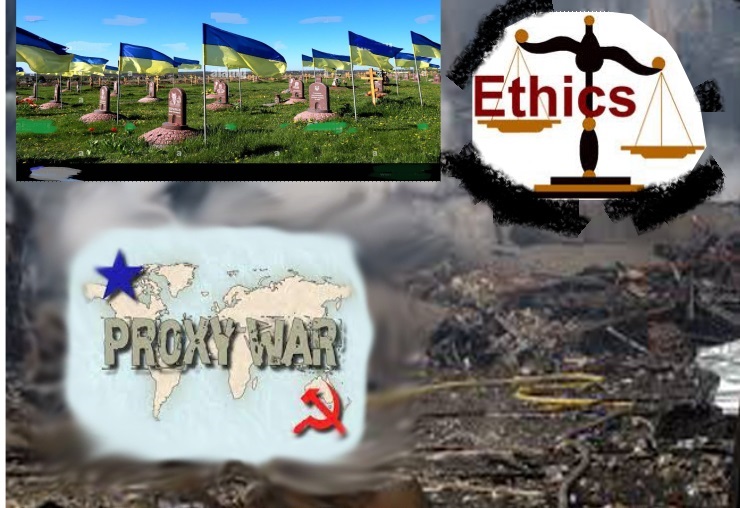
“It is very much in our interest to support Ukraine, because they are fighting this war, we are not fighting it,”
https://www.rt.com/news/584053-dutch-nato-ukraine-cheap/ 6 Oct 23
The Dutch defense minister made a case for funding Kiev at a conference in Poland
Arming Kiev is a cost-effective way of preventing Moscow from threatening NATO, Dutch Defense Minister Kajsa Ollongren said on Wednesday at the Warsaw Security Forum.
Ollongren was asked whether the US and its allies can continue supporting Ukraine “for as long as it takes,” given the political in-fighting in Washington.
“We cannot pretend that we’ll just wait and see how the American elections are going,” she said. “Because they have the same interest, in a way. Of course, supporting Ukraine is a very cheap way to make sure that Russia with this regime is not a threat to the NATO alliance. And it’s vital to continue that support.”
“It is very much in our interest to support Ukraine, because they are fighting this war, we are not fighting it,” Ollongren noted, while admitting that NATO has “skin in the game.”
Ollongren explained that she had recently visited the US and that political developments there are cause for concern, but that Western Europeans need to talk with their American colleagues and persuade them to stay the course.
“I think that we are capable of a lot, and we have proven that in the past year and a half, and the only thing we have to do is keep it up,” the minister said, adding that the scale of military assistance to Kiev has surprised Ukraine, Russia, and even NATO itself.
The US and its allies have channeled a large amount of money, weapons, ammunition, and supplies to Ukraine since the conflict with Russia escalated in February 2022.
EU foreign policy chief Josep Borrell revealed earlier this week that the bloc has sent Ukraine €85 billion ($89.8 billion) so far, of which more than €25 billion was military aid.
The most recent estimates of US spending were from the end of July, and amounted to $46.6 billion in military aid, $3.9 billion in humanitarian aid, and $26.4 billion in loans and cash payments to keep the government in Kiev going.
Moscow has repeatedly warned that the deliveries of heavy weapons and other aid are tantamount to direct involvement in the hostilities. Washington and Brussels, however, insist they are not actually a party to the conflict. Russia has said that foreign weapons will not change the course of the fighting and will not deter Moscow from achieving its goals in Ukraine.
Russian officials have cited NATO’s expansion eastward as one of the root causes of its conflict with Ukraine and the standoff with the West.
The Pope speaks out against climate deniers
The Pope has warned the world is “collapsing” in a stark new document
about the perils of climate change in which he takes aim at deniers and
backs “radicalised” environmental protesters.
Times 4th Oct 2023
https://www.thetimes.co.uk/article/pope-francis-synod-2023-environment-nature-28p9swmmk
Canada’s Honoring of Nazi Vet Exposes Ottawa’s Longstanding Ukraine Policy
Following the war, Canada’s Liberal government classified thousands of Jewish refugees as “enemy aliens” and held them alongside former Nazis in a network of internment camps enclosed with barbed wire, fearing that they would infect their new country with communism. At the same time, Ottawa placed thousands of Ukrainian veterans of Hitler’s army on the fast-track to citizenship.
By celebrating a Waffen-SS volunteer as a “hero,” Canada’s Liberal Party highlighted a longstanding policy that has seen Ottawa train fascist militants in Ukraine while welcoming in thousands of post-war Nazi SS veterans. Canada’s second most powerful official, Chrystia Freeland, is the granddaughter of one of Nazi Germany’s top Ukrainian propagandists.
SCHEERPOST, By Max Blumenthal / The Grayzone 1 Oct 23
In the Spring of 1943, Yaroslav Hunka was a fresh-faced soldier in the 14th Grenadier Division of the Waffen-SS Galicia when his division received a visit from the architect of Nazi Germany’s genocidal policies, Heinrich Himmler. Having presided over the battalion’s formation, Himmler was visibly proud of the Ukrainians who had volunteered to support the Third Reich’s efforts.
80 years later, the Speaker of Canada’s parliament, Anthony Rota, also beamed with pride after inviting Hunka to a reception for Volodymyr Zelensky, where the Ukrainian president lobbied for more arms and financial assistance for his country’s war against Russia.
“We have in the chamber today Ukrainian war veteran from the Second World War who fought for Ukrainian independence against the Russians and continues to support the troops today even at his age of 98,” Rota declared during the September 22 parliamentary event in Ottawa.
“His name is Yaroslav Hunka but I am very proud to say he is from North Bay and from my riding of Nipissing-Timiskaming. He is a Ukrainian hero, a Canadian hero, and we thank him for all his service,” Rota continued.
Gales of applause erupted through the crowd, as Prime Minister Justin Trudeau, Zelensky, Deputy Prime Minister Chrystia Freeland, Canadian Chief of Defense Staff Gen. Wayne Eyre and leaders of all Canadian parties rose from their seats to applaud Hunka’s wartime service.
Since the exposure of Hunka’s record as a Nazi collaborator – which should have been obvious as soon as the Speaker announced him – Canadian leaders (with the notable exception of Eyre) have rushed to issue superficial, face-saving apologies as withering condemnations poured in from Canadian Jewish organizations.
The incident is now a major national scandal, occupying space on the cover of Canadian papers like the Toronto Sun, which quipped, “Did Nazi that coming.” Meanwhile, Poland’s Education Minister has announced plans to seek Hunka’s criminal extradition.
The Liberal Party has attempted to downplay the affair as an accidental blunder, with one Liberal MP urging her colleagues to “avoid politicizing this incident.” Melanie Joly, Canada’s Foreign Minister, has forced Rota’s resignation, seeking to turn the the Speaker into a scapegoat for her party’s collective actions.
Trudeau, meanwhile, pointed to the “deeply embarrassing” event as a reason to “push back against Russian propaganda,” as though the Kremlin somehow smuggled an nonagenarian Nazi collaborator into parliament, then hypnotized the Prime Minister and his colleagues, Manchurian Candidate-style, into celebrating him as a hero.
To be sure, the incident was no gaffe. Before Canada’s government and military brass celebrated Hunka in parliament, they had provided diplomatic support to fascist hooligans fighting to install a nationalist government in Kiev, and oversaw the training of contemporary Ukrainian military formations openly committed to the furtherance of Nazi ideology.
Ottawa’s celebration of Hunka has also lifted the cover on the country’s post-World War Two policy of naturalizing known Ukrainian Nazi collaborators and weaponizing them as domestic anti-communist shock troops. The post-war immigration wave included the grandfather of Deputy Prime Minister Chrystia Freeland, who functioned as one of Hitler’s top Ukrainain propagandists inside Nazi-occupied Poland.
Though Canadian officialdom has worked to suppress this sordid record, it has resurfaced in dramatic fashion through Hunka’s appearance in parliament and the unsettling contents of his online diaries.
“WE WELCOMED GERMAN SOLDIERS WITH JOY”
The March 2011 edition of the journal of the Association of Ukrainian Ex-Combatants in the US contains an unsettling diary entry which had gone unnoticed until recently.
Authored by Yaroslav Hunka, the journal consisted of proud reflections on volunteering for the 14th Grenadier Division of the Waffen-SS Galicia. Hunka decribed the Nazi Wehrmacht as “mystical German knights” when they first arrived in his hometown of Berezhany, and recalled his own service in the Waffen-SS as the happiest time in his life.
“In my sixth grade,” he wrote, “out of forty students, there were six Ukrainians, two Poles, and the rest were Jewish children of refugees from Poland. We wondered why they were running away from such a civilized Western nation as the Germans.”
The Jewish Virtual Library details the extermination of Berezhany’s Jewish population at the hands of the “civilized” Germans: “In 1941 at the end of Soviet occupation 12,000 Jews were living in Berezhany, most of them refugees fleeing the horrors of the Nazi war machine in Europe. During the Holocaust, on Oct. 1, 1941, 500–700 Jews were executed by the Germans in the nearby quarries. On Dec. 18, another 1,200, listed as poor by the Judenrat, were shot in the forest. On Yom Kippur 1942 (Sept. 21), 1,000–1,500 were deported to Belzec and hundreds murdered in the streets and in their homes. On Hanukkah (Dec. 4–5) hundreds more were sent to Belzec and on June 12, 1943, the last 1,700 Jews of the ghetto and labor camp were liquidated, with only a few individuals escaping. Less than 100 Berezhany Jews survived the war.”
When Soviet forces held control of Berezhany, Hunka said he and his neighbors longed for the arrival of Nazi Germany. “Every day,” he recalled, “we looked impatiently in the direction of the Pomoryany (Lvov) with the hope that those mystical German knights, who give bullets to the hated Lyakhs are about to appear.” (Lyakh is a derogatory Ukrainian term for Poles).
In July 1941, when the Nazi German army entered Berezhany, Hunka breathed a sigh of relief. “We welcomed the German soldiers with joy,” he wrote. “People felt a thaw, knowing that there would no longer be that dreaded knocking on the door in the middle of the night, and at least it would be possible to sleep peacefully now.”
Two years later, Hunka joined the First Division of the Galician SS 14th Grenadier Brigade – a unit formed under the personal orders of Heinrich Himmler. When Himmler inspected the Ukrainian volunteers in May 1943 (below), he was accompanied by Otto Von Wachter, the Nazi-appointed governor of Galicia who established the Jewish ghetto in Krakow.
“Your homeland has become so much more beautiful since you have lost – on our initiative, I must say – those residents who were so often a dirty blemish on Galicia’s good name, namely the Jews…” Himmler reportedly told the Ukrainian troops. “I know that if I ordered you to liquidate the Poles … I would be giving you permission to do what you are eager to do anyway.”
“HITLER’S ELITE TORTURERS AND MURDERERS HAVE BEEN PASSED ON RMCP ORDERS”
Following the war, Canada’s Liberal government classified thousands of Jewish refugees as “enemy aliens” and held them alongside former Nazis in a network of internment camps enclosed with barbed wire, fearing that they would infect their new country with communism. At the same time, Ottawa placed thousands of Ukrainian veterans of Hitler’s army on the fast-track to citizenship.
The Ukrainian Canadian newsletter lamented on April 1, 1948, “some [of the new citizens] are outright Nazis who served in the German army and police. It is reported that individuals tattoooed with the dread[ed] SS, Hitler’s elite torturers and murderers have been passed on RCMP orders and after being turned down by screening agencies in Europe.”
The journal described the unreformed Nazis as anticommunist shock troops whose “‘ideological leaders’ are already busy fomenting WWIII, propagating a new world holocaust in which Canada will perish.”
In 1997, the Canadian branch of the Simon Wiesenthal Center charged the Canadian government with having admitted over 2000 veterans of the 14th Volunteer Waffen-SS Grenadier Division.
That same year, 60 Minutes released a special, “Canada’s Dark Secret,” revealing that some 1000 Nazi SS veterans from Baltic states had been granted citizenship by Canada after the war. Irving Abella, a Canadian historian, told 60 Minutes that the easiest way to get into the country “was by showing the SS tattoo. This proved that you were an anti-Communist.”
Abella also alleged that Prime Minister Pierre Trudeau (Justin’s father) explained to him that his government kept silent about the Nazi immigrants “because they were afraid of exacerbating relationships between Jews and Eastern European ethnic communities.”
Yaroslav Hunka was among the post-war wave of Ukrainian Nazi veterans welcomed by Canada. According to the city council website of Berezhany, he arrived in Ontario in 1954 and promptly “became a member of the fraternity of soldiers of the 1st Division of the UNA, affiliated to the World Congress of Free Ukrainians.”
Also among the new generation of Ukrainian Canadians was Michael Chomiak, the grandfather of Canada’s second-most-powerful official, Chrystia Freeland. Throughout her career as a journalist and Canadian diplomat, Freeland has advanced her grandfather’s legacy of anti-Russian agitation, while repeatedly exalting wartime Nazi collaborators during public events.
CANADA WELCOMES HITLER’S TOP UKRAINIAN PROPAGANDISTS……………………………………………………………………………………………………………. more https://scheerpost.com/2023/10/01/canadas-honoring-of-nazi-vet-exposes-ottawas-longstanding-ukraine-policy/
Vatican at U.N. : Risk of nuclear war is ‘at its highest in generations’
September 27, 2023, By Justin McLellan, Catholic News Service, https://catholicreview.org/vatican-at-u-n-risk-of-nuclear-war-is-at-its-highest-in-generations/
VATICAN CITY (CNS) — The international community must cooperate to advance disarmament rather than embrace the “false security” offered by nuclear weapons, the Vatican’s foreign minister said.
Speaking Sept. 26 during a high-level meeting on the elimination of nuclear weapons at the U.N. General Assembly in New York, Archbishop Paul R. Gallagher, the Vatican foreign minister, called eliminating nuclear weapons a “moral imperative.”
“Regrettably, the risk of nuclear war is at its highest in generations, featuring unconscionable threats of nuclear use, while an arms race runs unabated,” he said.
The archbishop lamented how countries “squander resources needed for pressing development concerns on nuclear weapons,” and said countries have “abandoned much of the arms control and disarmament structure that underpins international security.”
“In this context, it is clear that nuclear-weapons states are increasing reliance on nuclear deterrence” rather than disarmament, he said.
Archbishop Gallagher called for states to adopt disarmament measures including no-first-use policies, treaties managing materials that can undergo fission and assurances that nuclear-weapon states will not use or threaten to use nuclear weapons against states that do not possess them.
The same day, he also spoke during general debate at the opening of the U.N. General Assembly session, criticizing the “crumbling trust among nations” in recent years and how at the United Nations and other international bodies, “richer, more powerful countries attempt to impose their own worldview on poorer countries, promoting alien, cultural values they do not share.”
“The international community must maintain the universality of global multilateral forums and not turn them into clubs reserved for a few elites who think alike, and where some are simply tolerated as long as they do not bother anyone,” he said.
Archbishop Gallagher also called for legal instruments to regulate artificial intelligence, particularly AI-powered lethal autonomous weapons systems, and for religious freedom to be upheld worldwide.
“The true litmus test to see if human rights are being protected is the degree to which people have freedom of religion or belief in a country,” he said. “Religious freedom is one of the absolute minimum requirements necessary to live in dignity.”
Pope says world on brink of nuclear war like 1962 Cuban missile crisis
‘A world free of nuclear arms is possible and necessary,’ pontiff says
Beyza Binnur Donmez |20.09.2023 https://www.aa.com.tr/en/politics/pope-says-world-on-brink-of-nuclear-war-like-1962-cuban-missile-crisis/2996411
GENEVA
Pope Francis warned Tuesday that the world is on the brink of a nuclear war like the 1962 Cuban missile crisis.
Francis conveyed the message at an international conference in Oslo commemorating the 60th anniversary of Pope John XXIII’s influential encyclical Pacem in Terris.
In his message, according to Vatican News, he said the conference is taking place “as our world continues to be in the grip of a third world war fought piecemeal, and, in the tragic case of the conflict in Ukraine, not without the threat of recourse to nuclear weapons.”
He drew a comparison between the present moment and the time that preceded the publication of Pacem in Terris, where the Cuban missile crisis in October 1962 brought the world perilously close to nuclear destruction.
Urging the conference to focus on the sections of Pacem in Terris that address disarmament and the ways to achieve long-lasting peace, the pontiff said that “a world free of nuclear arms is possible and necessary.”
He also recalled his statement from the Hiroshima Peace Memorial in 2019, when he said that “the use of atomic energy for purposes of war is immoral, just as the possessing of nuclear weapons is immoral.”
Regarding conventional arms, he said that they “should be used for defensive purposes only and not directed to civilian targets.”
On The Idiotic Notion That It’s Brave To Support Nuclear Brinkmanship In Ukraine
CAITLIN JOHNSTONE. SEP 20, 2023 https://www.caitlinjohnst.one/p/on-the-idiotic-notion-that-its-brave?utm_source=post-email-title&publication_id=82124&post_id=137202849&utm_campaign=email-post-title&isFreemail=true&r=1ise1&utm_medium=email
During a Sunday appearance on Face the Nation to plug his new Zelensky movie, actor Sean Penn decried the “cowardice” of the US government in its caution around provoking a nuclear exchange with its proxy warfare in Ukraine.
“It is my absolute feeling that the caution with which the United States has pledged support, which seemed, in my reading of February 2022 was a, like a lean on in the fear of nuclear conflict, something I think all of us should look very carefully at and understand that, of course, is possible,” Penn said. “And that’s to be concerning. The likelihood is extremely low. And as one of our witnesses in the film says, you know, are we going to let a gangster with nuclear weapons dictate the way we live?”
Penn emotionally lamented the fact that the Biden administration did not pour F-16 warplanes into Ukraine from the very beginning of the conflict, initially fearing the move to be too escalatory. Describing this hesitation, Penn said that “at some point, caution becomes cowardice.”
As you might expect, the interviewer refrained from challenging Penn on his claim that the likelihood of nuclear war is “extremely low” in spite of his acknowledgement that it’s a real possibility, or on his claim that resisting increasing the likelihood of nuclear war is an act of cowardice.
Sean Penn has been one of Hollywood’s most egregious empire apologists for some time now (in 2020 he told CNN that “there is no greater humanitarian force on the planet than the United States military”), but even by his standards these comments about nuclear brinkmanship are remarkably odious.
There’s this obnoxious idea that comes up in mainstream political discourse about Ukraine that an aversion to nuclear brinkmanship is somehow cowardly, and that being willing to risk the life of every terrestrial organism advancing US strategic objectives is somehow an act of courage.
We saw this back in July from Paul Massaro, an advisor to the US government’s Helsinki Commission and a minor celebrity in online Zelenskyite circles. During this year’s “Captive Nations Summit” with the Victims of Communism Memorial Foundation, Massaro mocked westerners for being “fearful” of proxy warfare in Ukraine leading to nuclear warfare.
“I think the biggest thing is fear, I think we’re fearful,” Massaro said. “It’s very funny to me, because you meet Ukrainians, not a single Ukrainian is fearful. You talk to Ukrainians it’s like ‘What if the Russians use nuclear weapons?’, they’re like ‘We’ll keep fighting, we’ll win.’ You know it’s only the westerners that are like ‘Oh my god, I’m over here in California and what if the Russians use nuclear weapons?’ You know, it’s almost pathetic.”
It’s a common theme. Any time you talk publicly about the risk of the continually escalating war in Ukraine leading to nuclear catastrophe you’ll get empire apologists calling you a coward and saying we all need to be brave and stand up to the big bully Putin. And it’s just such a disgusting perversion of what courage actually is and what it looks like.
Empire loyalists often talk about nuclear brinkmanship like it’s something courageous that they personally are doing, as though gambling every terrestrial life on strategic grand chessboard maneuverings is a brave risk that could only hurt them. If you think you are brave for risking the life of everyone on earth to advance your personal geopolitical agendas, you might be a malignant narcissist, because you think the world revolves around you, and other lives exist only as props to support your main character adventures.
Hardly any human on this planet gives a shit who governs Crimea or the Donbass — and exactly zero of the plants and animals do — but people like Sean Penn and Paul Massaro think they have every right to not only gamble all their lives on a bid to control that outcome, but to call themselves courageous for doing so. Imagine being so self-absorbed you think you’re a brave hero for putting the lives of Africans, Asians, and South Americans on the betting table who’ve never even heard of Donetsk or Luhansk and don’t care who governs them, as well as every non-human life on earth.
I mean, the absolute arrogance. The fucking gall. It’s as emotionally stunted and infantile a perspective as you could possibly come up with, but these are the people whose worldview is shaping outcomes on this planet. These are the sort of people who are setting the trajectory of our species as a collective.
The mainstream western political consensus is a sickness of the mind. Its existence should make us all want to fall to our knees and beg the forgiveness of every life on this earth that it imperils.
Kiev orders closure of Christian churches
https://www.rt.com/russia/583031-kiev-orthodox-church-crackdown/ 17 Sept 23
Ukrainian Orthodox Church property is being seized over “ties to Moscow”
Kiev Mayor Vitaly Klitschko on Friday ordered the closure of 74 churches belonging to the canonical Ukrainian Orthodox Church (UOC), citing its alleged “direct ties” to the Moscow Patriarchate of the Russian Orthodox Church.
Klitschko’s decree is similar to that used to seize the Kiev Pechersk Lavra, or Monastery of the Caves, which Ukrainian police stormed last month. The world-famous holy site, which is nearly 1,000 years old, was handed over to the Orthodox Church of Ukraine, a rival organization set up by the government in 2018.
The Lavra is technically state property but the church administered it under a 2013 agreement, which Kiev declared null and void earlier this year, claiming that the UOC violated it by having ties to “enemy nation” Russia. Ukrainian courts rejected the UOC’s appeals.
The newly sequestered sites may be handed over to the OCU or the Ukrainian Greek Catholic Church, which is in communion with Rome, or could even be demolished as “illegal objects” given the government’s annulment of lease and use contracts.
Back in March, President Vladimir Zelensky called the seizure of the Lavra “a move to strengthen our spiritual independence” and accused the UOC of being a tool of Russia. A third of Ukraine’s regions have outrightly banned the UOC so far.
Moscow has accused Kiev of persecuting the canonical Orthodox church and Washington for tacitly approving Ukraine’s actions. The US State Department, which produces an annual “religious freedom” report, has never commented on Kiev’s campaign against the UOC. The reports published so far contain references only to meetings with representatives of the government-backed OCU.
The US Air Force Is Clearing Out Jungles In The Pacific To Prepare For War With China
CAITLIN JOHNSTONE, SEP 14, 2023 https://www.caitlinjohnst.one/p/the-us-air-force-is-clearing-out?utm_source=post-email-title&publication_id=82124&post_id=137027034&utm_campaign=email-post-title&isFreemail=true&r=1ise1&utm_medium=email
The US Air Force is clearing out jungles in the Pacific and replacing them with airfields for its coming war with China,
because there exist people on this earth who look at a jungle and think, “This should be replaced with an airfield to prepare for a war with China.”
There are people on this earth who say, “You know the world would be a much better place if all these trees and exotic insects and birds were replaced with long stretches of concrete lined with nuclear bombers on high alert.”
There are people on this earth who see bulldozing rainforests to make way for war planes as much simpler and easier than just making peace.
There are people on this earth who would rather stare down the barrel of nuclear armageddon than turn and stare at themselves.
There are people on this earth who would light the skies on fire before they’d take even a minute to just be here now.
There are people on this earth who would rather destroy everything than make peace with anything.
There are people on this earth who look at the staggering beauty of the natural world and think how wonderful it would be if they could tear it all down and funnel it into a factory to make Tomahawk missiles.
The biosphere is dying,
and we are hurtling toward nuclear war,
and it is so very, very heartbreaking,
and yet even in the midst of that heartbreak
nature shines as majestically as ever,
and some moments all you can do is take in the beauty
and take it as your solemn, sacred duty to appreciate it while it lasts,
and look at the trees and the bugs and the birds and the critters
who never had anything to do with this madness,
and bow as deeply as your body can bow,
and say I’m sorry.
I’m so sorry.
If The US Really Were What It Pretends To Be

CAITLIN JOHNSTONE, SEP 12, 2023 https://www.caitlinjohnst.one/p/if-the-us-really-was-what-it-pretends?utm_source=post-email-title&publication_id=82124&post_id=136958632&utm_campaign=email-post-title&isFreemail=true&r=1ise1&utm_medium=email
It’s wild to consider how many of the world’s problems would not exist if the US really was the thing it advertises itself as.
Ukraine would not be at war right now, because the US empire would not have provoked that war, since the US really would be an upholder of peace and international order.
The world would not be staring down the barrel of nuclear armageddon, because the US really would be a normal country that respects the sovereignty of other nations instead of the hub of a globe-spanning undeclared empire which keeps ramping up aggression against nuclear-armed states who refuse to consent to its planetary rule.
China would not be preparing for war, because the US military really would be used for the defense of the United States instead of rapidly encircling the US empire’s top geopolitical rival with massive amounts of war machinery.
The middle east would not have spent the 21st century being ripped to pieces by western aggression, because the US really would care about the lives of the people who live there and not just pretend to in order to promote regime change interventionism.
Mountains of human corpses would not have been amassed in Yemen by violence, starvation and disease, because the US really would oppose tyrannical dictatorships like Saudi Arabia instead of enthusiastically facilitating their war crimes.
The information ecosystem of the western world would not be strangled by empire propaganda, internet censorship and Silicon Valley algorithm manipulation, because the US really would value free speech and free thought instead of churning out a continual barrage of mass-scale psychological operations designed to dominate the way people think, speak, work, act and vote.
Julian Assange would not be languishing in prison, because the US really would support press freedoms instead of working to set a legal precedent normalizing the persecution of journalists for reporting inconvenient facts.
The people of the United States would not be floundering in poverty and broken infrastructure, because they really would live in a democracy that allows them to influence government policy instead of an oligarchy rigged to benefit the rich and powerful at the expense of normal human beings.
The US would not be a tyrannical police state with the largest incarceration rate on the planet, because the US government really would care about civil rights and liberty instead of only caring about the profits that can be harvested via prison slavery and private prisons from those citizens who don’t make good cogs in the capitalist machine.
Developing nations would be thriving a lot more, because the US really would support their national sovereignty and independence instead of doing whatever’s necessary to facilitate the imperialist extraction of their wealth.
Human civilization would be far more just and equitable than it currently is, because the US really would value every nation’s right to forge its own path, and therefore would not have spent generations aggressively stomping out every attempt to move toward socialism everywhere in the world.
The planet would not be circled by hundreds of foreign US military bases and continually terrorized by US wars of aggression, proxy conflicts, CIA coups and starvation sanctions, because all the US government secrecy which makes this malfeasance possible wouldn’t exist, since the US really would value truth and transparency instead of power and domination.
The world would be a much more healthy and harmonious place if the US really was the peace-loving, tyranny-opposing democracy that it and all its propaganda systems frame it as. But because the US government is actually the most tyrannical regime on earth and values nothing apart from its own ability to dominate as many members of the human species as possible, we live in a world of far greater peril and abuse than we otherwise would.
I write so much about the US empire because that’s just what you find yourself doing when you set out to describe the problems of our world with an open mind; trace those problems back to their origins, and many of them revolve around this strange and profoundly abusive power structure which manages to evade much criticism and scrutiny because it has the most sophisticated soft power narrative control systems ever devised.
The US empire depends on keeping the world asleep to its abusiveness. And the world depends on everyone waking up to it.
Japan’s Insane Immoral, Illegal Radioactive Dumping
CounterPunch, BY ROBERT HUNZIKER 8 Sept 23

Japan cannot possibly outlive the atrocity of dumping radioactive wastewater into the Pacific Ocean. In fact, Tokyo Electric Power Company (TEPCO) is an example of how nuclear meltdowns negatively impact the entire world, as its toxic wastewater travels across the world in ocean currents. The dumping of stored toxic wastewater from the meltdown in 2011 officially started on August 24th, 2023. Meanwhile, the country restarts some of the nuclear plants that were shut down when the Fukushima Daichi Nuclear Power Plant exploded.
Fukushima’s broken reactors are an example of why nuclear energy is a trap that can’t handle global warming or extreme natural disasters. Nuclear is an accident waiting to happen, for several reasons, including victimization by forces of global warming.
According to Dr. Paul Dorfman, chair of the Nuclear Consulting Group, former secretary to the UK Scientific Advisory Committee on Internal Radiation, and Visiting Fellow, University of Sussex: “It’s important to understand that nuclear is very likely to be a significant climate casualty. For cooling purposes nuclear reactors need to be situated by large bodies of water, etc. …” Essentially, global warming is nuclear energy’s Waterloo; it has already seriously endangered France’s 56 nuclear reactors with partial shutdowns because of extreme global warming. Nuclear reactors cannot survive global warming. See “the nuclear energy trap” link at the end of this article.
TEPCO’s treacherous act of dumping radioactive water into a wide-open ocean is a deliberate violation of human decency, as it clearly violates essential provisions of the International Atomic Energy Agency’s (IAEA) General Safety Guide No. 8 (GSG-8).
Japan should be forced to stop its diabolical exercise of potentially destroying precious life. Shame on the IAEA and shame on the member countries of the G7 for endorsing this travesty. They’ve christened the ocean an “open sewer.” Hark! Come one, come all, dump your trash, open toxic spigots, bring chemicals, bring fertilizers, bring plastic, bring radioactive waste that’s impossible to dispose… the oceans are open sewers. It’s free! Yes, it’s free but only weak-minded people would allow a broken-down crippled nuclear power plant to dump radioactive waste into the world’s ocean. It is a testament to human frailty, weakness, insipience, not courage.
According to Arjun Makhijani, Ph.D. Institute for Energy and Environmental Research, TEPCO’s ALPS-treated Radioactive Water Dumping Plan Violates Essential Provisions of IAEA’s General Safety Guide No. 8 (GSG-8) and Corresponding Requirements in Other IAEA Documents, June 28, 2023: “The IAEA is an important United Nations institution. Like the rest of the Expert Panel, the author of this paper has been reluctant to criticize the IAEA. Yet, its outright refusal to apply its own guidance documents in full measure is stark. Its constricted view of the dumping plan has allowed it to evade its responsibilities to many countries. Its eagerness to assure the public that harm will be “negligible” has been carried to the point of grossly overstating well-known facts about tritium. The serious lapses of the IAEA in the Fukushima radioactive water matter have made criticism unavoidable.”………………………………………………………………………………………………………….
“At high doses, ionizing radiation can cause immediate damage to a person’s body, including, at very high doses, radiation sickness and death. At lower doses, ionizing radiation can cause health effects such as cardiovascular disease and cataracts, as well as cancer. It causes cancer primarily because it damages DNA, which can lead to cancer-causing gene mutations.” (Source: National Cancer Institute)
How is it possible to justify dumping any amount of radioactive wastewater into the Pacific Ocean? Is the world’s consciousness so low, so lacking a moral compass, that it’s okay to dump the most toxic material on the planet into the oceans?
Stop destroying the oceans!
And please contemplate the dire ramifications of the nuclear energy trap. more https://www.counterpunch.org/2023/09/08/japans-insane-immoral-illegal-radioactive-dumping/?fbclid=IwAR0IaIETBoTgZeDUmJ3caeJAlFFWGPrdCtsqt5oR0A7XP8NEl1fKqLJwu54
Robert Hunziker lives in Los Angeles and can be reached at rlhunziker@gmail.com.
“A world free from nuclear weapons is possible”
World Council 0f Churches, 11 Sept 23
Peter Prove, director of the World Council of Churches Commission of the Churches on International Affairs, spoke on a nuclear weapons-free world during “The Audacity of Peace” gathering in Berlin.
Prove, part of a panel discussion, noted that a world free from nuclear weapons is not just possible—but necessary, and he endorsed the comprehensive approach of the Treaty on the Prohibition of Nuclear Weapons as a legal means to achieve this goal.
“Nuclear weapons are the most indiscriminately and catastrophically destructive category of weapons ever created by human beings,” Prove said. “They are designed to destroy entire cities, along with everyone and everything in them, and their use poisons the environment for thousands upon thousands of years.”
Prove also noted that the World Council of Churches has also adopted a position of categorical opposition to nuclear weapons since its founding in 1948.
“The WCC has continued to call for the complete elimination of nuclear weapons since that time, through its governing bodies, functional commissions, and member churches,” he said. “While the absolute number of nuclear weapons has declined since its height during the Cold War, it only amounts to a reduction in the number of times that the world’s population centres could be destroyed.”…………………………more https://www.oikoumene.org/news/a-world-free-from-nuclear-weapons-is-possible
1 This Month

of the week – Shut Down Drone Warfare!


Tell the Ukrainian Government to Drop Prosecution of Peace Activist Yurii Sheliazhenko

Petition to revoke the licensing of the Near Surface Nuclear Disposal Facility (NSDF) at Chalk River. https://www.ourcommons.ca/petitions/en/Petition/Details?Petition=e-7247
To see nuclear-related stories in greater depth and intensity – go to https://nuclearinformation.wordpress.com
-
Archives
- April 2026 (44)
- March 2026 (251)
- February 2026 (268)
- January 2026 (308)
- December 2025 (358)
- November 2025 (359)
- October 2025 (376)
- September 2025 (257)
- August 2025 (319)
- July 2025 (230)
- June 2025 (348)
- May 2025 (261)
-
Categories
- 1
- 1 NUCLEAR ISSUES
- business and costs
- climate change
- culture and arts
- ENERGY
- environment
- health
- history
- indigenous issues
- Legal
- marketing of nuclear
- media
- opposition to nuclear
- PERSONAL STORIES
- politics
- politics international
- Religion and ethics
- safety
- secrets,lies and civil liberties
- spinbuster
- technology
- Uranium
- wastes
- weapons and war
- Women
- 2 WORLD
- ACTION
- AFRICA
- Atrocities
- AUSTRALIA
- Christina's notes
- Christina's themes
- culture and arts
- Events
- Fuk 2022
- Fuk 2023
- Fukushima 2017
- Fukushima 2018
- fukushima 2019
- Fukushima 2020
- Fukushima 2021
- general
- global warming
- Humour (God we need it)
- Nuclear
- RARE EARTHS
- Reference
- resources – print
- Resources -audiovicual
- Weekly Newsletter
- World
- World Nuclear
- YouTube
-
RSS
Entries RSS
Comments RSS
 nuclear-news