Trump’s team no longer trusts Netanyahu – Axios.
27 Dec 25, https://www.rt.com/news/630093-trump-team-distrust-netanyahu/
The US president’s close aides reportedly feel that the Israeli prime minister is deliberately stalling the Gaza peace process.
Officials in US President Donald Trump’s closest circle no longer believe that Israeli Prime Minister Benjamin Netanyahu can be trusted to push forward with the Gaza peace plan, Axios reported on Friday, citing insiders.
The future of Trump’s grand Gaza war settlement roadmap, unveiled in September, hinges on his upcoming meeting with the Israeli leader on Monday, according to the outlet.
Last week, US special envoy Steve Witkoff and the president’s son-in-law, Jared Kushner, met with officials from Egypt, Qatar, and Türkiye to finalize the next step of the plan, which envisions Hamas disarming and Israel pulling out of Gaza.
Netanyahu has privately expressed skepticism about the roadmap, but the plan cannot go ahead without his buy-in, Axios said.
“Bibi is trying to convince a one-man audience,” the outlet cited a White House official as saying. “The question is whether Trump will side with him or with his top advisers when it comes to Gaza.”
Key figures in Trump’s team have now lost trust in Netanyahu, fearing he is “slow-walking the peace process” and could resume the war with Hamas after taking steps to undermine the fragile ceasefire, according to Axios.
The Israeli PM has “lost” Vice President J.D. Vance, Secretary of State Marco Rubio, Chief of Staff Susie Wiles, and both Kushner and Witkoff, the outlet wrote, citing another US official.
“The only one he has left is the president, who still likes him, but even he wants to see the Gaza deal moving faster than it is right now.”
Trump is expected to press Netanyahu to move past the Gaza war, as well as raise the issue of Israel’s push into the occupied West Bank, according to Axios.
West Jerusalem officially approved the construction of nearly a dozen new controversial Israeli settlements in Palestinian territory earlier this week, drawing international condemnation.
On top of losing trust within the White House, Netanyahu’s government has taken a beating in the domestic approval polls. Only a quarter of Israeli Jews trust their government, and only 17% of the country’s Arabs, according to an Israel Democracy Institute poll published earlier this week.
Netanyahu Is Visiting Trump For The FIFTH Time This Year, And Other Notes.
Caitlin Johnstone, Dec 28, 2025, https://www.caitlinjohnst.one/p/netanyahu-is-visiting-trump-for-the?utm_source=post-email-title&publication_id=82124&post_id=182737899&utm_campaign=email-post-title&isFreemail=true&r=1ise1&triedRedirect=true&utm_medium=email
Benjamin Netanyahu will be meeting with President Trump again on Monday. This will be the pair’s fifth meeting in the United States this year, but of course it would be antisemitic to suggest that there’s anything strange about the US president meeting with the Israeli prime minister more frequently than with any other foreign leader on the planet.
NBC reports that Netanyahu is expected to discuss more attacks on Iran during the visit, citing concerns about “Iran’s efforts to rebuild facilities where they produce the ballistic missiles and to repair its crippled air defense systems.”
Which is just wild. They’ve stopped making up pretend nonsense about nuclear weapons and now they’re just going “We need to attack Iran because Iran is rebuilding its ability to stop us from attacking it.”
On Christmas Day, Donald Trump became the first American president ever to bomb Nigeria. While Trump claimed the Tomahawk missile strike was directed at ISIS targets with the goal of protecting Christians in the northwestern farming community of Jabo, locals told CNN that Islamic State has had no presence in the area and that Christians and Muslims coexist peacefully there. Residents also told Al Jazeera that the airstrikes resulted in no casualties, civilian or otherwise, meaning the bombing accomplished nothing besides terrifying some farmers and setting a precedent to normalize US airstrikes in yet another African nation.
Israel has ignited worldwide controversy by formally recognizing the breakaway Somali region known as Somaliland. I’ve seen a lot of people highlighting reports that Israel has been in communication with Somaliland as a potential location to which the population of Gaza might be deported in an ethnic cleansing operation of the Palestinian territory, noting that recognition could be a way of enticing Somaliland to agree to the arrangement.
Back in August the Times of Israel reported that “Israel is in talks with five countries or territories — Indonesia, Somaliland, Uganda, South Sudan and Libya — about potentially accepting resettled Palestinians from the Gaza Strip,” adding that “Somaliland is a breakaway region of Somalia that is reportedly hoping to secure international recognition through the deal.”
A German journalist named Anna Liedtke reports that she was raped by Israeli forces after she was abducted from the Global Sumud Flotilla while attempting to deliver aid to starving people in Gaza this past October. Unsurprisingly, as of this writing there appears to be a near-total media blackout on Liedtke’s story in the German press.
❖
Activist Greta Thunberg has been arrested by British police because in the UK it is considered an act of terrorism to hold a sign which says “I support the Palestine Action prisoners. I oppose genocide.”
Zionism is the single greatest threat to free speech in the western world.
New South Wales Premier Chris Minns defended his authoritarian crackdown on pro-Palestine protesters following the Bondi shooting by arguing that Australia doesn’t have the same free speech protections as the US.
“I acknowledge that we don’t have the same free speech rules that they have in the United States and I make no apologies for that, we have got a responsibility to knit together our community,” Minns said.
And of course Minns isn’t wrong when he says Australians don’t have any real free speech rights (Australia is the only western democracy without any kind of national bill of rights), but it is a bit odd to be openly proclaiming that this is a good thing because it means you’re allowed to stomp out criticism of Israel. Kinda feels like that’s saying the quiet part out loud.
It’s been so surreal watching in real time as Australians get manipulated into accepting the Zionist narrative about the Bondi Beach attack. As of this writing we have not been presented with the tiniest shred of evidence that anti-genocide protests had anything whatsoever to do with the massacre, but the nation is proceeding as though this is an established fact. NSW is banning the phrase “globalise the intifada” and passing laws allowing for demonstrations to be made illegal for up to three months while PM Anthony Albanese rolls out more policies to align with “antisemitism envoy” Jillian Segal’s plan to crush free speech in Australia. After being smashed in the face with an extremely aggressive mass media propaganda campaign to marry the Bondi attack to anti-genocide demonstrations in the minds of the public, a recent poll by the Resolve Political Monitor found that 53 percent of Australians now support a ban on pro-Palestine marches.
Again, this is happening in light of literally zero evidence that pro-Palestine demonstrations were even slightly responsible for the Bondi attack. None. Nothing. They’re suggesting that there is an association between the two, and they are lying. They’re rolling out pre-existing agendas to crush free expression in opposition to an active genocide, and they are doing so based on lies.
And Australians are just going right along with it, like a bunch of human livestock. We’re a whole damn continent full of bipedal sheep. Absolutely fucking pathetic.
I still can’t believe what evil, disgusting pigs Israel supporters are. The instant the Bondi shooting happened, their very first thought was “How can we use this to stomp out pro-Palestine demonstrations?” Not their third or fourth thought. Their first. They started pushing it instantly. Didn’t even wait for the bodies to cool, the sick fucks. All to stop people from protesting a genocide.
I am so angry at them right now. Absolute worst people in the world.
‘Pay price for wrongdoing’: China Sanctions 20 US defence firms after Trump approves Taiwan arms sale
China on December 27 announced sanctions on 20 U.S. defense companies and 10 senior executives, including Palmer Luckey of Anduril Industries, following the Trump administration’s approval of an $11.1 billion arms package for Taiwan.
by Aditi, December 27, 2025 , https://www.financialexpress.com/world-news/pay-price-for-wrongdoing-china-sanctions-20-us-defence-firms-after-trump-approves-taiwan-arms-sale/4089711/
China announced sanctions against 20 US defence companies and 10 top executives on Friday — the latest in a series of tit-for-tat measures. The announcement came soon after the Trump administration approved a major weapons sale to Taiwan. The sanctions list includes well-known companies like Northrop Grumman and Boeing’s defence unit in St. Louis, as well as Palmer Luckey, founder of Anduril Industries.
China said it will freeze the assets of these companies in the country, block them from doing business with Chinese organisations, and prevent the executives from entering mainland China, Hong Kong, and Macau, according to a report from the Wall Street Journal. Both Washington and Beijing have also announced export controls, investment restrictions, visa and travel bans and curtailed use of sensitive technology over the past year.
The Chinese Foreign Ministry said the US arms sale “interferes in China’s internal affairs and seriously undermines China’s sovereignty and territorial integrity.” The sanctions were announced on December 27, and according to a Global Times report, took immediate effect. Officials said the US decision went against the one-China principle and the three China-US Joint Communiques.
China sanctions US defence firms over Taiwan arms sale
Under the new measures, China has imposed sanctions on 20 US defence-related companies that it claims are involved in supplying weapons to Taiwan in recent years. The companies named include Northrop Grumman Systems Corporation, L3Harris Maritime Services, Boeing in St. Louis, Gibbs & Cox, Advanced Acoustic Concepts, VSE Corporation, Sierra Technical Services, Red Cat Holdings, Teal Drones, ReconCraft, High Point Aerotechnologies, Epirus, Dedrone Holdings, Area-I, Blue Force Technologies, Dive Technologies, Vantor, Intelligent Epitaxy Technology, Rhombus Power, and Lazarus Enterprises.
China announced that all movable and immovable assets of these companies located within the country will be frozen. Chinese individuals and organisations have also been barred from doing business or cooperating with these firms in any form.
Sanctions extended to senior executives
In addition to companies, China has also imposed restrictions on 10 senior executives in the defence sector. Among them is Palmer Luckey, founder of Anduril Industries, along with top executives from companies such as L3Harris and VSE Corporation, according to ANI. According to the Foreign Ministry, these executives will face restrictions on assets located in China and activities related to the country.
Taiwan is a ‘red line’, says China
A spokesperson for the Chinese Foreign Ministry said the Taiwan issue is at the very core of China’s national interests and is a red line in China-US relations. The spokesperson warned that anyone attempting to provoke China on the Taiwan question would face a firm response. In a statement, the ministry said, “Anyone who attempts to cross the line and make provocations on the Taiwan question will be met with China’s firm response. Any company or individual who engages in arms sales to Taiwan will pay the price for the wrongdoing. No country or force shall ever underestimate the resolve, will and ability of the Chinese government and people to safeguard national sovereignty and territorial integrity.”
China claims Taiwan as part of its territory — contending that the autonomously governed island must eventually be reunified with the mainland. The United States does not officially recognise Taiwan as a sovereign nation under the ‘One China’ policy, but maintains unofficial ties with the administration.
US arms supply to Taiwan
The reaction from China comes after the administration of US President Donald Trump approved a major arms package for Taiwan last week. According to the US State Department, the proposed sales are valued at more than USD 10 billion and include medium-range missiles, howitzers, and drones.
According to Focus Taiwan, the potential sale involves eight arms packages, including HIMARS rocket systems, anti-tank missiles, and drones, with a total estimated cost of USD 11.1 billion.
Trump, Zelenskyy make ‘95% progress’, but ‘thorny issues’ remain – 5 key points
Aditi, 29 Dec 2025, https://www.financialexpress.com/world-news/trump-zelenskyy-make-95-progress-but-thorny-issues-remain-5-key-points/4090944/
Ukrainian President Volodymyr Zelensky met US President Donald Trump at Mar-a-Lago in Florida for high-stakes talks aimed at ending the nearly four-year Russia–Ukraine war.
Ukrainian President Volodymyr Zelenskyy met US President Donald Trump in Florida on Sunday as both leaders tried to push forward a possible peace deal to end the nearly four-year war between Russia and Ukraine. The meeting took place at Trump’s private club, Mar-a-Lago, in Palm Beach, where the US president is spending the holiday season. Both leaders described the talks as positive. Trump called the meeting “terrific,” while Zelenskyy said it was “great.”
This was Zelenskyy’s third visit to meet Trump this year, and expectations were high that the two would try to close major gaps in a peace plan that has been under discussion for months. Here are all the key points discussed.
Trump and Zelenskyy meet: Trump confident, but ‘thorniest’ issue unresolved
Trump seemed positive after the meeting, but also warned that the talks are complicated and fragile. Standing next to Zelenskyy, he said a deal could be clear “in a few weeks,” but stopped short of giving a firm timeline.
“We could have something where one item that you’re not thinking about is a big item, breaks it up. Look, it’s been a very difficult negotiation,” he said. Trump said he believes a peace agreement is close, possibly with around 95% agreement on key points, but admitted that final hurdles remain.
Speaking of the eastern Donbas region, which Russia has demanded that Ukraine surrender, is still an outstanding issue.
Trump acknowledged that this area is one of the “thorny issues” still unresolved. The US has suggested creating a “free economic zone” in parts of Donbas as part of a negotiated settlement, but details remain unclear.
“We’re getting closer to an agreement on that. And that’s a big issue,” he told reporters in a joint appearance with Ukrainian President Volodymyr Zelenskyy. “Certainly, that’s one of the big issues, and I think we’re closer.”
Trump and Zelenskyy meet: Territory still the hardest question
After the meeting, Zelenskyy made it clear that the issue of land remains the most difficult part of the talks. Speaking to reporters at Mar-a-Lago, he said Ukraine cannot simply give up territory. “You know our position,” Zelenskyy said, according to CNN. “We have to respect our law and our people. We respect the territory which we control.”
He added that any decision about land must be made by the people of Ukraine, not just leaders behind closed doors. Zelenskyy said a national referendum could be used to decide not only territorial questions, but other parts of the peace plan as well. “This is not the land of one person,” he said. “It is the land of our nation for many generations.”
He also said Ukraine’s parliament could be involved, but told reporters that Ukraine’s constitution does not allow territory to be handed over through a simple parliamentary vote. Only the public can approve such a move.
‘Russia wants to see Ukraine succeed,’ Trump says after meeting Zelenskyy
“Russia wants to see Ukraine succeed. Once it sounds a little strange, but I was explaining to the President, President Putin was very generous in his feelings toward Ukraine succeeding, including supplying energy, electricity, and other things at very low prices. So a lot of good things came out of that call today,” Trump told reporters standing next to Zelenskyy after the meeting.
Trump also said he would consider travelling to Ukraine if it helped secure a deal, including possibly speaking to Ukraine’s parliament. However, he suggested such a trip is unlikely. “I have no problem with travelling to Ukraine,” Trump said. “But I would like to get the deal done and not necessarily have to go.”
Trump and Zelenskyy meet: Ukraine and the United States are fully aligned
President Vladimir Putin has repeatedly said he wants four regions captured by Russian forces, along with Crimea, to be recognised as Russian territory. Crimea was illegally annexed by Russia in 2014. Russia is not ready to negotiate on its demands, Moscow has made it clear.
Putin has also demanded that Ukraine withdraw from some eastern areas that Russian forces have not even captured. Kyiv has rejected these conditions.
Despite the challenges, Zelenskyy said there has been strong progress on other parts of the peace plan. According to him, about 90% of the overall plan has broad agreement. On security guarantees and military issues, he said Ukraine and the United States are fully aligned. “We agree that security guarantees are a key milestone in achieving lasting peace,” Zelenskyy said.
He added that the two leaders discussed all aspects of a 20-point peace proposal during their talks.
Trump and Zelenskyy meet: Call with European leaders
During Zelenskyy’s visit, Trump and the Ukrainian president also held a phone call with several European leaders. The call lasted over an hour and included leaders from Britain, France, Germany, Italy, Poland and Norway, along with NATO’s secretary general and the president of the European Commission.
Finnish President Alexander Stubb said the leaders discussed “concrete steps” toward ending the war. European Commission President Ursula von der Leyen said there was good progress made.
Netanyahu to Press for ‘Another Round of War With Iran’ in Meeting With Trump This Week
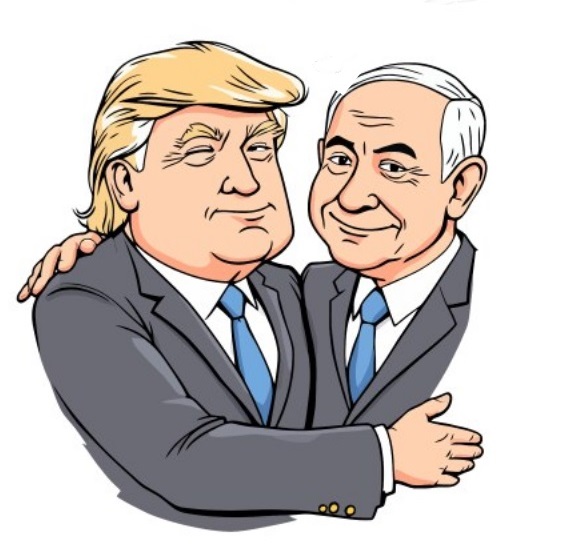
Amid a growing rift between Israel and the White House, one foreign policy analyst says the meeting “will signal whether Washington is prepared to continue underwriting open-ended escalation.”
Stephen Prager, Dec 28, 2025, https://www.commondreams.org/news/trump-netanyahu-meeting-iran-war
As Israeli Prime Minister Benjamin Netanyahu heads to Mar-a-Lago to meet with US President Donald Trump on Monday, amid a growing rift with the president and his advisers, reports say he’ll seek to push the US back toward war with Iran.
Last week, NBC News reported that at the meeting, “Netanyahu is expected to make the case to Trump that Iran’s expansion of its ballistic missile program poses a threat that could necessitate swift action” and that “the Israeli leader is expected to present Trump with options for the US to join or assist in any new military operations.”
“Netanyahu plans to press Donald Trump for US backing for another round of war with Iran, now framed around Iran’s ballistic missile program,” said Sina Toossi, a senior fellow at the Center for International Policy. “Netanyahu’s pivot to missiles should therefore be read not as the discovery of a new threat, but as an effort to manufacture a replacement casus belli after the nuclear argument collapsed.”
He noted criticisms levied against Netanyahu by Yair Golan, chair of the Democrats, a center-left party in Israel, earlier this week: “How is it possible that last June, at the end of the war with Iran, Benjamin Netanyahu solemnly declared that ‘Israel had eliminated Iran’s nuclear threat and severely damaged its missile array’; and that this was a ‘historic victory’—and today, less than six months later, he is running to the president of the United States to beg for permission to attack Iran again?” Golan said.
Iran is just one of several areas the two will likely discuss on Monday. According to Israeli officials who spoke to the Washington Post, Netanyahu also reportedly wants Trump to “take a tougher stance on Gaza and require that Hamas disarm before Israeli troops further withdraw as part of the second phase of Trump’s 20-point peace plan.
The chief of Israel’s armed forces suggested earlier this week that its occupation of more than half of Gaza would be permanent, but walked those comments back after reported behind-the-scenes outrage in the White House. Meanwhile, Trump—invested in his image as a peacemaker—has reportedly balked at Israel’s routine violations of the ceasefire agreement he helped to broker in October.
Near-daily strikes have resulted in the death of at least 418 Palestinians, according to the Gaza Media Office. Meanwhile, Israel’s continued blockade of humanitarian aid has left hundreds of thousands of people—displaced from homes destroyed by Israeli bombing—to languish in the cold without tents. Desperately needed fuel, food, and medicine have entered the strip at far lower numbers than the ceasefire agreement required.
As Axios reported on Friday, Trump’s advisers increasingly fear that Netanyahu is intentionally slow-walking and undermining the peace process in hopes of resuming the war.
Netanyahu also seeks Trump’s continued backing of Israel’s territorial expansion in Syria. Earlier this month, the Israel Defense Forces (IDF) pushed through a UN-monitored demilitarized zone between Israeli and Syrian-held positions in the Golan Heights, which Israel illegally occupies.
This push into southern Syria went against the wishes of the Trump administration, which feared it could destabilize the Western-backed government that rules in Damascus following the ouster of former President Bashar al-Assad.
Israel has also routinely struck Lebanon in violation of the US-brokered ceasefire it signed with Hezbollah in late 2024, with bombings becoming a near-daily occurrence in December. Last month, the UN reported that at least 127 civilians, including children, had been killed in Israeli strikes since the ceasefire began.
“Netanyahu’s visit unfolds against a backdrop of unresolved fronts, with widening disputes with Washington over the second phase of the Gaza ceasefire, including postwar governance, reconstruction, and Turkish involvement,” Toossi said. “At the same time, Israel is seeking greater latitude to escalate again against Hezbollah in Lebanon, an end to US accommodation of Syria’s new leadership, and firm assurances on expanded military aid.”
“Taken together, Netanyahu’s visit is less about resolving any single crisis than about postponing strategic reckoning,” he continued. “The outcome will signal whether Washington is prepared to continue underwriting open-ended escalation, or whether this meeting marks the beginning of clearer limits on Israel’s regional strategy.”
The West is spending big on nuclear plants again – and taking taxpayers along for the ride
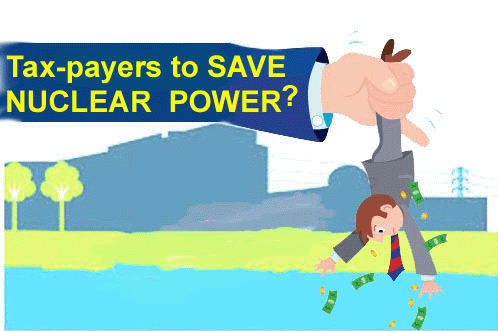
One question separates announced but purely hypothetical nuclear power
plants from those that actually stand a chance of being built: Who’s
going to pay for them?
In China and Russia, which dominated reactor
construction for the past few decades, governments provided the funds.
Advanced economies placed much greater emphasis on private capital. That
approach was intended to impose greater commercial discipline and protect
the public purse but led to very few reactors being built in the West.
Yet in 2025, Western governments returned to funding nuclear plant
constructions. Prime Minister Mark Carney and Ontario Premier Doug Ford
stood shoulder-to-shoulder in October before a full-sized replica nuclear
reactor used for training, as they committed a combined $3-billion to a new
nuclear power station in the early stages of construction in Clarington,
Ont., next to the Darlington Nuclear Generating Station.
Globe and Mail 27th Dec 2025, Matthew McClearn, https://www.theglobeandmail.com/business/article-nuclear-plants-expansion-west-public-funding-taxpayers/
Kushner, Witkoff draft $112B proposal to develop Gaza into ‘smart city’ with luxury resorts.

by Shane Galvin, 22 Dec 25, https://www.msn.com/en-us/news/world/kushner-witkoff-draft-112b-proposal-to-develop-gaza-into-smart-city-with-luxury-resorts-and-us-footing-60b/ar-AA1SK9NI?ocid=BingNewsVerp
Trump administration reps have just revealed a grandiose $112 billion plan to rebuild war-torn Gaza into a futuristic international destination dubbed “Project Sunrise.”
The 10-year development plan, drafted by first son-in-law Jared Kushner, US special envoy Steve Witkoff, and two top White House aides, is currently courting investor countries with a 32-slide PowerPoint presentation detailing the bold plan to renovate burning rubble into beach resorts.
Gaza would see the development of luxury hotels, high speed rail and AI-optimized smart grid features that would revolutionize the small slice of the coveted Mediterranean coastline into a bustling metropolis, the Wall Street Journal reported.
“Gaza’s destruction has been profound, but we believe what lies ahead is not just restoration — it’s a chance to develop a gateway of prosperity in the Middle East with state-of-the-art infrastructure, urban design, and technology,” the executive summary slide read, according to the outlet.
The total $112 billion cost would be spread out over 10 years, with the US agreeing to “anchor” up to $60 billion in grants and guarantees on debts by raising industry funds.
“Reimagining Gaza as a ‘smart city’ with tech-driven governance and services,” one slide from the PowerPoint presentation beamed.
The ambitious proposal — developed within the last 45 days by Kushner, Witkoff, and White House aides consulted Israeli security experts about the path forward — further called for establishing a “Chief Digital Office and an innovation lab to define standards and guide policymaking.”
The presentation does not go into detail about which countries or companies would be investing in the rebuilding fund, according to WSJ.
Though the plan mapped out distinct phases of construction, it did not provide details for housing the 2 million Palestinians who would be displaced during the massive construction necessary.
There is an estimated 68 million tons of rubble in Gaza after thousands of Israeli airstrikes leveled cities during the two-year war in Gaza.
US officials who have knowledge of the proposal are skeptical that it will come to fruition because a condition would be Hamas agreeing to disarm, the Journal reported.
Witkoff, meanwhile, met Saturday in Miami with high-level delegations from Egypt, Turkey and Qatar to discuss implementation for the second phase of the Gaza cease-fire plan.
Iran rejects inspections of bombed nuclear sites without IAEA framework
Iran says UN nuclear watchdog must first define ‘post-war conditions’ following US strikes on its nuclear facilities in June.
By Anadolu. 24 Dec 2025, https://www.aljazeera.com/news/2025/12/24/iran-rejects-inspections-of-bombed-nuclear-sites-without-iaea-framework
Iran has rejected calls to allow inspections of nuclear facilities bombed during attacks by the United States in June, saying the United Nations nuclear watchdog must first define “post-war conditions” governing access to sites hit by military attacks.
Speaking to reporters after a cabinet meeting in Tehran on Wednesday, Mohammad Eslami, head of Iran’s Atomic Energy Organisation, said Tehran would not permit inspections of facilities struck by the US until the International Atomic Energy Agency (IAEA) establishes a clear framework for such visits, according to Iran’s semiofficial Tasnim news agency.
“If there are established procedures for the post-war situation, the agency should announce them so that we can act accordingly,” Eslami said.
He added that Tehran had formally communicated its position to the IAEA, insisting that rules must be “defined and codified” for cases in which nuclear facilities under international safeguards are subjected to military attack.
During a 12-day war with Israel in June, the US military bombed three major Iranian nuclear facilities – Fordo, Natanz and Isfahan – using bunker-buster munitions. More than 430 people were killed, and thousands more were wounded in the wave of attacks, according to Iran’s Ministry of Health.
The strikes followed Israel’s surprise attack on Iran, which killed hundreds of Iranian civilians, including nuclear scientists, as well as senior military commanders, and targeted several nuclear programme-related sites.
Tehran denies seeking a nuclear bomb.
Israel, meanwhile, is widely believed to have an undeclared nuclear arsenal.
Following the US attacks, Iran expelled IAEA inspectors stationed in the country, accusing the agency of failing to condemn the attacks.
Get instant alerts and updates based on your interests. Be the first to know when big stories happen.Yes, keep me updated
The Geneva Conventions prohibit attacks on “installations containing dangerous forces, namely dams, dykes and nuclear electrical generating stations”.
Eslami said if the IAEA supports or tolerates military action against safeguarded nuclear sites, it should say so explicitly.
“But if such attacks are not permitted, they must be condemned – and once condemned, the post-war conditions must be clarified,” he said, adding that Iran would not accept “political and psychological pressure” to allow inspections before that happens.
‘No legal effect’ of nuclear deal
Eslami also criticised a UN Security Council meeting on nuclear non-proliferation held on Tuesday, describing the statements made there as completely unprofessional and non-legal, according to Tasnim.
A key point of contention was the legal status of Resolution 2231, which endorsed the Joint Comprehensive Plan of Action (JCPOA), commonly known as the Iran nuclear deal.
Iran’s ambassador to the UN, Amir-Saeid Iravani, told the UNSC that Resolution 2231 expired on October 18, 2025, and therefore “ceased to have any legal effect or operative mandate”.
His position was echoed by the representatives of Russia and China.
Iravani said Iran remained committed to “principled diplomacy and genuine negotiations”, placing responsibility on France, the United Kingdom and the US to take steps to restore trust, according to the state-run news agency IRNA.
The US representative at the meeting, Morgan Ortagus, said Washington remained open to talks but only if Iran agreed to direct and meaningful dialogue.
“Foremost, there can be no enrichment inside of Iran,” she said.
Before the June escalation, Iran and the US had held five rounds of indirect nuclear negotiations, mediated by Oman, without reaching a breakthrough.
Israel Is Preparing for a Permanent Presence in Gaza, Satellite Images Reveal
Since the ceasefire, Israel has constructed at least 13 new military outposts inside Gaza, consolidated existing military infrastructure, built roads, and destroyed more Palestinian property.
Forensic Architecture and Drop Site News. Dec 21, 2025
Since the so-called ceasefire came into effect in Gaza on October 10, Israel has been consolidating its control of over 50% of Gaza and—according to new research by Forensic Architecture—physically altering the geography of the land. Through a combination of the construction of military infrastructure alongside the destruction of existing buildings, Israel appears to be laying the groundwork to establish a permanent presence in the majority of the Gaza Strip.
Israel has constructed at least 13 new military outposts inside Gaza since the ceasefire—primarily located along the yellow line, in eastern Khan Younis, and near the border with Israel, according to analysis of satellite imagery by Forensic Architecture.
“Israel is doing what it always does, and what it historically has done best: establish ‘facts on the ground,’ incrementally rather than spectacularly, and make them permanent once those with influence to force it to reverse course either lose interest, decide that the cost of confronting Israel is not worth the price, or come out in open support of Israeli violations. Israel is in no rush and prepared to play the long game,” Mouin Rabbani, co-editor of Jadaliyya and a former UN official who worked as a senior analyst on Israel-Palestine for the International Crisis Group, told Drop Site after reviewing a summary of the Forensic Architecture findings.
The analysis also shows that, between October 10 and December 2, 2025, Israel has:
- Accelerated the growth and infrastructure development of 48 existing military outposts inside Gaza.
- Expanded a network of roads connecting military outposts inside Gaza to the Israeli road network, bases and settlements outside of Gaza.
- Continued construction that began in September 2025 of a new road in Khan Younis, re-routing the Magen Oz corridor to run within Israel’s area of control.
- Engaged in the systematic demolition and destruction of Palestinian property, particularly in eastern Khan Younis, targeting areas which haven’t already been destroyed. New military outposts and roads have emerged across this area.
………………………………………………………………………………………………………………………………………………………………………………………………………………………………………https://www.dropsitenews.com/p/gaza-israel-building-military-outposts-roads-permanent-presence-yellow-line
Trump’s Son-in-Law Pitches $112B Tech Utopia on Gaza Rubble.
CASH FROM THE ASH
Jared Kushner has been showing a 32-page PowerPoint presentation to nearby countries.
Adam Downer , Breaking News Reporter, Dec. 20 2025, https://www.thedailybeast.com/trumps-son-in-law-pitches-112b-tech-utopia-on-gaza-rubble/
Ivanka Trump’s husband is trying to get Middle Eastern leaders to invest in his vision of a high-tech paradise on the ruins of Gaza with a PowerPoint presentation.
Jared Kusher, 44, and Middle East envoy Steve Witkoff, 68, have concocted a 32-slide, “sensitive but unclassified” PowerPoint titled “Project Sunrise: Building a New and Unified Gaza,” which paints a vision of a sparkling metropolis built on the war-torn ruins of the Gaza Strip, The Wall Street Journal first reported on Friday.
The proposal says the U.S. would commit 20% of the development costs to turn the Gaza Strip into a ritzy tourist destination, replete with high-speed rails, AI-driven power grids, and beachside luxury resorts. The plan would cost $112.1 billion over ten years, with the U.S. promising to support nearly $60 billion in grants and guarantees on debt for “all the contemplated work streams” in that time period.
Kushner’s pitch deck does not provide a specific plan for exactly where 2 million displaced Palestinians would go during the reconstruction period. It does say they would be placed in “temporary shelter, field hospitals, and mobile clinics.”
The White House did not immediately respond to the Daily Beast’s request for comment. Spokeswoman Abigail Jackson told the Journal, “The Trump administration will continue to work diligently with our partners to sustain a lasting peace and lay the groundwork for a peaceful and prosperous Gaza.”
Trump’s son-in-law and Witkoff reportedly pressed their business connections in the Middle East while hammering out a peace deal in the Israel-Hamas conflict. Kushner and Witkoff are reportedly trying a similar tactic to secure a profitable peace in the Russia-Ukraine war.
So far, the two men have shopped the PowerPoint to Turkey, Egypt, and wealthy Gulf Kingdoms, according to the Journal.
However, Middle East experts have serious doubts that Jared and Witkoff’s vision will ever come to fruition.
“Nothing happens until Hamas disarms. Hamas will not disarm, so nothing will happen,” said Steven Cook, a senior fellow for the Middle East at the Council on Foreign Relations.
The tenuous peace deal in the Israel-Hamas conflict struck on Oct. 10 hinges on Hamas agreeing to disarm, which it so far has refused to do. Hamas disarmament is phase 2 of Trump’s 20-phase peace plan. Without Hamas disarmament, the rest of the peace agreement can’t move ahead. Slide 2 of the “Project Sunrise” PowerPoint concedes that it can’t move forward unless Hamas disarms.
Secretary of State Marco Rubio said on Friday that Hamas remains the biggest roadblock to any reconstruction effort.
“You are not going to convince anyone to invest money in Gaza if they believe another war is going to happen in two, three years,” he said.
“We have a lot of confidence that we are going to have the donors for the reconstruction effort and for all the humanitarian support in the long term,” he added.
Even if Kushner and Witkoff’s “Project Sunrise” somehow moves forward, building a tech metropolis in Gaza isn’t a simple endeavor. Construction would require the removal of unexploded land mines, 68 million tons of rubble, and the bodies of 10,000 killed Palestinians.
“Make Iran like Gaza”: Chilling insider view from Israel weapons expo
by Michael West and Stephanie Tran | Dec 23, 2025 , https://michaelwest.com.au/make-iran-like-gaza-chilling-insider-view-from-israel-weapons-expo/
How to make ‘Iran like Gaza’ and describing the genocide in Palestine as a weapons testing laboratory. Michael West and Stephanie Tran with the inside story of a weapons expo.
Inside a conference hall at Tel Aviv University, executives, generals and venture capitalists took turns boasting about “combat-proven” Israeli weapons and surveillance systems.
At Defense Tech Week 2025, senior figures from Israel’s defence establishment openly described how the genocide in Gaza has accelerated weapons development, unlocked new export markets and reshaped Israel’s global identity as a defence powerhouse.
Less than 70 kilometres from where the conference was held, Gaza has been reduced to rubble. More than two years of genocide, indiscriminate bombardment and mass displacement have left at least 70,000 Palestinians dead and 90% of the Strip destroyed.
Gaza weapons lab
Defense Tech Week advertises itself as a forum connecting startups, investors, defence primes and policymakers. According to its organisers, the event showcases “practical lessons from Israel’s cutting-edge solutions that are addressing global security challenges”.
MWM has obtained the footage with Drop Site News in the US.
The speakers resembled a roll call of Israel’s military-industrial complex with senior Israeli military leadership, officials from the Ministry of Defense, and executives from Israel’s largest arms manufacturers, including Israel Aerospace Industries, Elbit Systems and Rafael Advanced Defense Systems.
Speaker after speaker framed the war as a lucrative opportunity for weapons development and sales.
“These are not lab projects or PowerPoint concepts,” said Amir Baram, Director General of Israel’s Ministry of Defense.
“They are combat-proven systems.”
Gili Drob-Heistein, Executive Director at the Blavatnik ICRC and Yuval Ne’eman Workshop for Science, Technology and Security, described defence technology as Israel’s “next big economic engine”.
Israel is known for being the startup nation,” she said. “We all believe that defence tech has the potential to become the next big economic engine for Israel.”
She credited what she called Israel’s “technological leadership” and “out of the box thinking” for results “we’ve seen recently on the battlefield.”
For Boaz Levy, President and CEO of Israel Aerospace Industries, the war has presented an opportunity to showcase the company’s wares with IAI’s weapons being deployed in Gaza, Iran and Yemen.
“The war that we faced in the last two years enabled most of our products to become valid for the rest of the world,” he said.
“Starting with Gaza and moving on to Iran and to Yemen, I would say that many, many products of IAI were there.”
Real-time combat data
Elbit Systems CTO Yehoshua (Shuki) Yehuda spoke about deploying autonomous systems and mass data collection in real-time combat. He showed a video demonstrating how an AI-powered system developed by Elbit is used to select and track targets “less than a pixel.”
“All of it is done by collecting the data,” he said, describing the ability to track “small targets in a very tough background… less than a pixel.”
He explained that these systems were developed in collaboration with the IDF and refined through continuous data collection during military operations.
Profiting from genocide
The speakers were candid about the scale of the financial opportunity presented by genocide.
According to Amir Baram, more than 300 startups are now working with Israel’s military research directorate, MAFAT, with 130 joining during the current war alone. In 2024, he said, the ministry invested 1.2 billion shekels in defence startups.
Baram oriented Israel’s surge within the global boom in defence spending.
“Global defence spending reached $2.7 trillion in 2024,” he said, pointing to the increase in expenditure from NATO countries and US defence spending exceeding $1 trillion.
“By partnering with Israel, you gain access to our advanced technologies as well as the valuable insights and experience that make our system truly effective. The world has chosen to partner with Israel because trust in defence must be built on credibility, performance, and shared strategic purposes.”
In 2024 alone, Baram said, Israel signed 21 government-to-government defence agreements worth billions, positioning Tel Aviv as the world’s third largest defence tech hub.
At Israel Aerospace Industries, Levy said 80% of the company’s activity is export-oriented.
“IAI as of now has $27 billion of new orders,” he said, with annual sales of around $7 billion.
Elbit Systems reported $8 billion in annual revenue and a $25 billion backlog, with more than 20,000 employees worldwide.
‘Make Iran like Gaza’
The speakers were explicit about how techniques developed and used in Gaza could be deployed in future conflicts.
Dr Daniel Gold, head of Israel’s Directorate of Defense Research and Development, described scenarios in which Israel would replicate Gaza style control in Iran.
“Once we have operational freedom in the air,” he said, “we inject inside… our UAV fleet controlling Tehran and controlling Iran – which means we make Iran like Gaza.”
Gold highlighted the practicality of “dual use” technology which have both civilian and military applications.
“A swarm of drones that control the traffic in Tel Aviv can be the same swarm of drones that control in Gaza,” he said.
During his presentation, video footage was shown of a semi-autonomous drone targeting an individual inside an apartment building, imagery that bears striking resemblance to documented Israeli strikes that have killed civilians in residential homes, including the attack that killed Dr Marwan al-Sultan and his family.
“It is very simple to operate,” Gold explained. “Semi-autonomous.”
Mounting pressure
In her report on the “Economy of Genocide”, UN Special Rapporteur for Palestine, Francesca Albanese stated that “for Israeli companies such as Elbit Systems and Israel Aerospace Industries, the ongoing genocide has been a profitable venture.”
the report found.
Two years into Israel’s livestreamed genocide in Gaza, execs appear to be acutely aware of the mounting international pressure.
Shlomo Toaff, an executive at RAFAEL Advanced Defense Systems, lamented that “Israel is experiencing a boycott.”
“I think Israel is experiencing a boycott,” he said, citing the company’s exclusion from the Paris Air Show last year. “This is something that we have to take into account when we’re talking about what we’re doing here in the industry.”
The Sovereign Hook – How Australia and its Jewish Community are Played in a Foreign Game.

The final stage of the playbook is the deliberate conflation of three distinct entities: the Jewish faith, the Jewish people (especially in the diaspora), and the political State of Israel. Political Zionism’s success depends on merging these concepts, thereby framing any criticism of Israeli state policy as an attack on Jewish people globally, which is then branded as antisemitism.
23 December 2025 Andrew Klein, https://theaimn.net/the-sovereign-hook-how-australia-and-its-jewish-community-are-played-in-a-foreign-game/
Introduction: A Sovereign Nation on a Foreign Hook
The premise is stark and troubling: Australia is being played. This manipulation operates on two interconnected levels: the geopolitical, where Australian sovereignty and policy are leveraged to serve a foreign nation’s interests, and the communal, where the rich, complex history of Australian Jewry is reduced to a political pawn. The cynical exploitation of the Bondi Beach tragedy – used to justify cross-border political pressure and a rapid legislative response absent in domestic crises – is not an anomaly. It is the latest move in a long game, one that deliberately conflates Jewish identity, faith, and safety with the agenda of the modern Israeli state. This article traces the historical roots of this conflation and examines its contemporary manifestation, arguing that both the Australian body politic and its Jewish citizens are victims of a sophisticated foreign policy playbook.
Part I: The Australian Jewish Tapestry – From First Fleet to National Pillars
The history of Jews in Australia begins with the First Fleet in 1788, with at least eight Jewish convicts among the initial colonists. This community grew steadily through the 19th century, comprised initially of British Jews and later supplemented by those fleeing persecution in Eastern Europe. By Federation in 1901, they numbered over 15,000 and were recognised as equal citizens in a society where the antisemitism endemic to Europe was notably rare.
Their integration and contribution to Australian nation-building are undeniable. In commerce, Jewish entrepreneurs were central to sectors like clothing manufacturing, particularly in Melbourne’s Flinders Lane, creating employment and industry. In service to the nation, no figure looms larger than General Sir John Monash. The son of Jewish parents from East Prussia, Monash commanded the Australian Corps in 1918 with such brilliance that he is considered one of the war’s most celebrated commanders. His leadership, however, was attacked by rivals, including official war historian C.E.W. Bean, who expressed antisemitic views about Jews’ “ability… to push themselves”. Monash’s triumph over this bigotry to become a national hero symbolised a powerful truth: loyalty and identity for Australian Jews were directed at their home country, Australia.
This history creates a clear benchmark: for over a century, Australian Jewish identity was synonymous with Australian civic identity. The community’s battles were against stereotypes and prejudice, not for the political objectives of a foreign state. The notion of a “Jewish society” in Australia is a historical falsehood; Australia is and has always been a pluralist, secular democracy.
Part II: The Fracturing Instrument – Zionism’s Rise and the Haavara Precedent
The rise of political Zionism in the 20th century created a new and potent ideology that sought to redefine Jewish identity in national-political terms. This movement often found itself at odds with established Jewish communities in the diaspora, including in Australia, where early Zionist overtures were reportedly dismissed by a government wary of disruptive foreign influence.
A critical and darkly revealing historical nexus is the 1933 Haavara Agreement between Nazi Germany and Zionist organisations. This pact allowed approximately 60,000 German Jews to transfer some assets to Palestine in exchange for boosting German exports. For the Nazis, it was a tool to forcibly emigrate Jews while breaking an international boycott. For some Zionist leaders, it was a pragmatic, if horrifying, means to build the Jewish population in Palestine.
The agreement was deeply controversial. Mainstream Jewish leaders like American Rabbi Stephen Wise opposed it, and right-wing Revisionist Zionist leader Ze’ev Jabotinsky denounced it vehemently. The pact illustrates a chilling precedent: the willingness of a nationalist political movement to engage in realpolitik with even the most abhorrent regimes when it served its demographic and state-building goals, treating individual Jewish lives as political currency. This instrumental approach foreshadowed later accusations of Zionist leaders showing contempt for Holocaust survivors, viewing them less as victims to be comforted than as demographic assets to be utilised.
Part III: The Geopolitical Playbook – From USS Liberty to Bondi Beach
The modern playbook for manipulating Western democracies was refined over decades. A foundational event was the 1967 Israeli attack on the USS Liberty, a U.S. Navy spy ship in international waters, which killed 34 American servicemen. Declassified documents and senior U.S. officials, from Secretary of State Dean Rusk to CIA Director Richard Helms, concluded the hour-long assault on a clearly marked ship in broad daylight was deliberate.
The subsequent cover-up was a masterclass in political coercion. Records show Israeli diplomats threatened to accuse President Lyndon Johnson of “blood libel” if he pressed the issue, while U.S. officials, fearing domestic political fallout, ordered the Navy to “hush this up”. The lesson was clear: a foreign nation could attack a sovereign ally with impunity by leveraging perceived political control over a minority voting bloc and the weaponised charge of antisemitism.
This template is now visible in Australia. Following the Bondi attack, the U.S. Special Envoy to Monitor and Combat Antisemitism (a role with an explicitly American mandate) publicly blamed the Australian government for “inaction,” inserting himself as an authority on Australian internal security. The Australian government’s response was tellingly swift, pledging to adopt recommendations from its own Antisemitism Envoy, Jillian Segal. Critics note the government is simultaneously ignoring the report’s “unlawful” aspects while fast-tracking measures that curtail free speech—a reaction that stands in stark contrast to the glacial pace of action on homelessness or healthcare. The tragedy was leveraged to advance a pre-existing, contentious policy agenda, demonstrating how external pressure can create “political will” for a foreign-aligned objective where none exists for domestic suffering.
Part IV: The Conflation and the Crisis – Playing Both Sides Against the Middle
The final stage of the playbook is the deliberate conflation of three distinct entities: the Jewish faith, the Jewish people (especially in the diaspora), and the political State of Israel. Political Zionism’s success depends on merging these concepts, thereby framing any criticism of Israeli state policy as an attack on Jewish people globally, which is then branded as antisemitism.
This conflation is a betrayal of both the Australian Jewish community and the Australian public. It ignores the long tradition of Jewish voices in Australia and globally who are strident critics of Israeli policy and the ongoing violence in Gaza. It resurrects the very ideas of racial-national identity the world sought to bury after WWII. It forces a false choice upon Australian Jews: either express unwavering support for a foreign government’s actions or be accused of betraying your people.
The ultimate goal is to create a political monolith. By fostering suspicion and manufacturing crises – whether through the amplification of extremist attacks or the promotion of divisive legislation – the architects of this playbook aim to polarise societies, dismantle bipartisan foreign policy, and align democracies unquestioningly behind a single geopolitical vision. As recent statements from U.S. figures about creating a singular empire suggest, Australia’s sovereignty is not a principle to be respected but a variable to be managed.
Conclusion: Reclaiming Sovereignty and Sanity
Australia is indeed being played. Its Jewish community, with its deep and patriotic history, is being used as a wedge and a shield. Its political class is being manipulated into prioritising a foreign nation’s narrative over its own citizens’ welfare. The rapid, forceful response to the Segal report’s agenda, contrasted with the neglect of foundational domestic issues, is proof of a hijacked policy compass.
Breaking this hook requires intellectual and moral courage. It requires disentangling faith from nationalism, rejecting the conflation that is the playbook’s central weapon, and reaffirming that in a pluralist democracy like Australia, loyalty is to the nation and its people – not to a foreign flag. It requires remembering the legacy of Sir John Monash, who served Australia, not a foreign ideology. The task is to reclaim sovereignty from foreign manipulation and sanity from manufactured crisis, for the benefit of all Australians.
References……………………
Iran, UK foreign ministers discuss nuclear issue in phone call
Dec 20, 2025, https://www.iranintl.com/en/202512192167
ranian Foreign Minister Abbas Araghchi spoke by phone with UK Foreign Secretary Yvette Cooper on Friday, saying Tehran is open to diplomacy based on respect.
“Iran has never rejected negotiations and dialogue based on respect for the Iranian nation’s legal rights and legitimate interests, but considers talks based on one-sided imposition unacceptable,” official media cited Araghchi as saying.
Araghchi criticized the “irresponsible” stance of the three European powers on Iran’s nuclear program, saying that Tehran is open to talks respecting its legal rights and legitimate interests but rejects unilateral imposition.
Cooper underlined Britain’s commitment to diplomacy on the nuclear dossier. No UK readout of the call has been issued.
The three European countries—France, Germany, and the United Kingdom—triggered the Iran nuclear deal snapback mechanism in August, leading to the reimposition of UN sanctions in September.
Iran and the International Atomic Energy Agency (IAEA) reached a technical understanding in Cairo in September, mediated by Egypt, aimed at gradually restoring inspectors’ access to nuclear sites.
Following the return of UN sanctions on Iran, Foreign Minister Abbas Araghchi said that the United States and three European powers had “killed” the Cairo nuclear agreement through what he called a sequence of hostile actions.
Araghchi said last month that Washington’s approach amounted to “dictation, not negotiation,” accusing the US of trying to achieve through diplomacy what it failed to gain by force.
“They want us to accept zero enrichment and limits on our defense capabilities,” he said. “This is not negotiation.”
Trump said Iran could avoid past and by reaching a nuclear deal, adding that any attempt to revive its program without an agreement would prompt further US action. He has repeatedly said Iran missed an earlier chance to avert the strikes by accepting a deal.
Report: Netanyahu To Ask Trump To Support Another Attack on Iran
The Israeli PM is expected to make the case during a December 29 meeting at Mar-a-Lago
by Dave DeCamp | December 21, 2025 , https://news.antiwar.com/2025/12/21/report-netanyahu-to-ask-trump-to-support-another-attack-on-iran/
Israeli Prime Minister Benjamin Netanyahu is expected to ask President Trump to support another US-Israeli war on Iran, according to an NBC News report from Saturday.
The report said that Netanyahu will stress Israel’s concern over Iran’s production of ballistic missiles and will present Trump with options for the US to join or assist Israel with an attack on Iran. Israeli officials are also warning that Iran is reconstituting its nuclear sites that were bombed by the US during the war in June, but that was not their immediate concern.
According to a report from Israel Hayom, Israeli officials are preparing an “intelligence dossier” on Iran to present to Trump. Netanyahu’s office has said the meeting will take place at Mar-a-Lago on December 29, though President Trump suggested last week that it wasn’t finalized, saying, “We haven’t set it up formally, but he’d like to see me.”
Trita Parsi, Executive Vice President of the Quincy Institute for Responsible Statecraft, has been warning that another war with Iran was likely since Israel didn’t achieve all of its goals during its previous attack on the country, pointing to the fact that Iran’s missile strikes forced Israel to agree to a ceasefire quickly.
“The June war resulted in mutual deterrence, a situation Iran can accept, but one that is intolerable for Netanyahu and his legacy. Ultimately, the conflict was neither a victory for Israel nor for Iran,” Parsi wrote in Responsible Statecraft on Sunday, responding to the NBC report.
“It is precisely this balance of terror that prompts Israel to seek a new round – Israel’s military doctrine does not allow for any of its regional foes to deter it or challenge its military dominance. Iran’s missile program currently does exactly that,” Parsi added. “And this is precisely why Trump must say no to Netanyahu. Because Israel’s objective is not security in the conventional sense, but rather absolute dominance.”
Earlier this month, Trump suggested the US could destroy Iran’s ballistic missiles when a reporter said Iran was “reconstituting” its missile program. “Well, they can try, but it’s going to take them a long time to come back,” Trump said.
“But if they do want to come back and they want to come back without a deal, then we’re going to obliterate that one too. We can knock out their missiles very quickly. We have great power. And we helped Israel a lot. We were shooting down the drones. We were doing a lot of things for Israel. We did a good job for Israel. But Israel did a good job, they fought, they all fought bravely,” the president added.
Global nuclear arms control under pressure in 2026
The fragile global legal framework for nuclear weapons control faces
further setbacks in 2026, eroding guardrails to avoid a nuclear crisis. The
first half of the year will see two key events: the US-Russia bilateral
treaty, New START, expires on February 5, and in April, New York hosts the
Review Conference (RevCon) of the Treaty on the Non-Proliferation of
Nuclear Weapons (NPT) — the cornerstone of global nuclear security
frameworks.
The RevCon, held every four to five years, is meant to keep the
NPT alive. But during the last two sessions, the 191 signatory states
failed to agree on a final document, and experts expect the same outcome in
April.
Daily Mail 22nd Dec 2025, https://www.dailymail.co.uk/wires/afp/article-15405099/Global-nuclear-arms-control-pressure-2026.html
1 This Month

of the week – Shut Down Drone Warfare!


Tell the Ukrainian Government to Drop Prosecution of Peace Activist Yurii Sheliazhenko

Petition to revoke the licensing of the Near Surface Nuclear Disposal Facility (NSDF) at Chalk River. https://www.ourcommons.ca/petitions/en/Petition/Details?Petition=e-7247
To see nuclear-related stories in greater depth and intensity – go to https://nuclearinformation.wordpress.com
-
Archives
- April 2026 (114)
- March 2026 (251)
- February 2026 (268)
- January 2026 (308)
- December 2025 (358)
- November 2025 (359)
- October 2025 (376)
- September 2025 (257)
- August 2025 (319)
- July 2025 (230)
- June 2025 (348)
- May 2025 (261)
-
Categories
- 1
- 1 NUCLEAR ISSUES
- business and costs
- climate change
- culture and arts
- ENERGY
- environment
- health
- history
- indigenous issues
- Legal
- marketing of nuclear
- media
- opposition to nuclear
- PERSONAL STORIES
- politics
- politics international
- Religion and ethics
- safety
- secrets,lies and civil liberties
- spinbuster
- technology
- Uranium
- wastes
- weapons and war
- Women
- 2 WORLD
- ACTION
- AFRICA
- Atrocities
- AUSTRALIA
- Christina's notes
- Christina's themes
- culture and arts
- Events
- Fuk 2022
- Fuk 2023
- Fukushima 2017
- Fukushima 2018
- fukushima 2019
- Fukushima 2020
- Fukushima 2021
- general
- global warming
- Humour (God we need it)
- Nuclear
- RARE EARTHS
- Reference
- resources – print
- Resources -audiovicual
- Weekly Newsletter
- World
- World Nuclear
- YouTube
-
RSS
Entries RSS
Comments RSS
 nuclear-news