“Hit Iran’s Nuclear Sites First”: Donald Trump’s Advice To Israel

The former president, speaking at a campaign event in North Carolina, referred to a question posed to Democratic President Joe Biden this week about the possibility of Israel targeting Iran’s nuclear program.
Agence France-Presse, Oct 05, 2024, https://www.ndtv.com/world-news/donald-trump-says-israel-should-hit-irans-nuclear-facilities-6719212
Washington:
Republican White House hopeful Donald Trump said Friday he believes Israel should strike Iran’s nuclear facilities in response to the Islamic republic’s recent missile barrage.
The former president, speaking at a campaign event in North Carolina, referred to a question posed to Democratic President Joe Biden this week about the possibility of Israel targeting Iran’s nuclear program.
“They asked him, what do you think about Iran, would you hit Iran? And he goes, ‘As long as they don’t hit the nuclear stuff.’ That’s the thing you want to hit, right?” Trump told a town hall style event in Fayetteville, near a major US military base.
Biden was asked on Wednesday whether he would support strikes against Iranian nuclear sites and the US president told reporters: “The answer is no.”
“I think he’s got that one wrong,” Trump said Friday, in response to a participant’s question about the issue. “Isn’t that what you’re supposed to hit? I mean, it’s the biggest risk we have, nuclear weapons,” he said.
“When they asked him that question, the answer should have been, hit the nuclear first, and worry about the rest later,” Trump added.
“If they’re going to do it, they’re going to do it. But we’ll find out whatever their plans are.”
Biden on Wednesday expressed his opposition to such strikes against Iran’s nuclear facilities, in response to the firing of nearly 200 Iranian missiles towards Israel.
We’ll be discussing with the Israelis what they’re going to do,” he said, adding that all G7 members agree Israel has “a right to respond, but they should respond in proportion.”
Trump, locked in a tooth-and-nail presidential election battle with US Vice President Kamala Harris, the Democratic nominee, has spoken little about the recent escalation in tensions in the Middle East.
He issued a scathing statement this week, holding Biden and Harris responsible for the crisis.
Israel has given no assurances it won’t target Iran’s nuclear facilities, top State Department official tells CNN
By Kylie Atwood and Jennifer Hansler, CNN, Fri October 4, 2024, Washington
Israel has not given assurances to the Biden administration that targeting Iran’s nuclear facilities is off the table in retaliation for the Iranian ballistic missile strikes earlier this week, a top US State Department official told CNN on Friday.
The official added that it is “really hard to tell” if Israel will use the anniversary of Hamas’ October 7 attacks to retaliate.
“We hope and expect to see some wisdom as well as strength, but as you guys know, no guarantees,” the official said when asked by CNN if Israel has assured the US that Iran’s nuclear sites are off the table.
US officials have voiced support for Israel responding to Iran’s missile attack earlier this week, with multiple officials publicly saying there must be consequences. At the same time, officials have also voiced concerns about a regional conflagration as they grapple with an increasingly volatile Middle East.
President Joe Biden said earlier this week the US would not support Israel targeting Iran’s nuclear program.
“If I were in their shoes, I’d be thinking about other alternatives than striking oil fields,” Biden said at a press briefing Friday. https://edition.cnn.com/2024/10/04/politics/state-department-israel-no-assurances-irans-nuclear-facilities/index.html
Russia’s Nuclear Doctrine Change Is More Cautious Than It May Appear
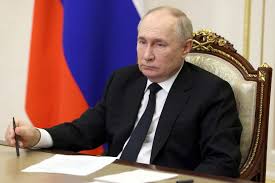
What’s new in the proposed update is the suggestion that a non-nuclear state could be the primary aggressor without being formally allied with a nuclear-armed state. ……………….
This shift in the doctrine seems to be crafted with the current geopolitical situation in mind, particularly Russia’s framing of the Ukraine conflict and its relationship with the United States and its allies.….
Long-Range Strikes May Not Be a Silver Bullet…………
By Maxim Trudolyubov on September 27, 2024, https://www.wilsoncenter.org/blog-post/russias-nuclear-doctrine-change-more-cautious-it-may-appear
In a recent discussion on Russia’s nuclear doctrine, President Vladimir Putin announced an expansion of the categories of states and military alliances that would fall under Russia’s nuclear deterrence policy. “Aggression against Russia by any non-nuclear state, with the participation or support of a nuclear state, will be treated as a joint attack on the Russian Federation,” Putin stated during the public segment of a recent meeting of Russia’s Security Council.
While the official document, titled “Basic Principles of State Policy of the Russian Federation on Nuclear Deterrence,” has yet to be updated, experts suggest that the timing of this announcement serves as a clear warning to Ukraine. Currently, Ukraine is seeking approval from the United States to use Western long-range missiles against targets deeper within Russian territory.
Putin’s wording is explicit: the “non-nuclear state” in question is Ukraine, while the “nuclear state” providing support or participating in an attack is primarily the United States, though this could also extend to the United Kingdom and France.
U.S. officials believe such strikes could lead to a significant escalation, potentially drawing NATO into direct confrontation with Russia. Moscow has consistently warned Western countries that any attacks on its territory would be seen as acts of war. This cautious stance by the United States has led to public frustration among some American allies in Europe.
Both France and Britain have indicated a willingness to approve such strikes for Ukraine, but they are waiting for Washington’s decision as a benchmark. The UK and France produce and supply their own missiles, but they use guiding technology developed by the United States. “It would be really good to stop the delays. And I think that the restrictions on the use of weapons should be lifted,” said Mette Frederiksen, prime minister of Denmark, in an interview with Bloomberg.
What the New Language Actually Means
Pavel Podvig, a senior researcher on weapons of mass destruction at the United Nations Institute for Disarmament Research, notes that Russia’s current nuclear doctrine does not clearly distinguish between aggression from nuclear-armed and non-nuclear states. Instead, any aggression that “threatens the existence of the state” could potentially provoke a nuclear response.
At first glance, the proposed change does not sound like a tectonic shift. Since 1995, Russia has pledged not to use nuclear weapons against non-nuclear-armed states unless they act “in association or alliance with a nuclear-weapon state.” The Russian authorities at the time operated on an assumption that any such situation would involve a nuclear-armed state as the primary aggressor, with non-nuclear states in a supporting role.
What’s new in the proposed update is the suggestion that a non-nuclear state could be the primary aggressor without being formally allied with a nuclear-armed state. The language implies that a non-nuclear state’s aggression could be seen as part of a broader campaign involving a nuclear-armed state, thereby justifying a nuclear response. This shift in the doctrine seems to be crafted with the current geopolitical situation in mind, particularly Russia’s framing of the Ukraine conflict and its relationship with the United States and its allies.
“The new language suggests that a non-nuclear weapon state might be an aggressor,” Podvig says. “Apparently, the idea behind the change is to say that this ‘association’ would make the nuclear weapons state that provides this support an aggressor too. It’s the ‘joint attack’ language.”
During the Security Council meeting Putin also said that Russia could resort to nuclear weapons on receiving “reliable information” indicating a large-scale aerial attack involving aircraft, missiles, and drones. Additionally, Moscow would treat an attack on its ally Belarus as an attack on Russia itself, potentially responding with nuclear force to defend Belarus.
On closer examination, Putin’s remarks reflect a more cautious approach than may initially seem. While the rhetoric implies a potential broadening of scenarios in which Russia might consider nuclear deterrence, it does not represent a fundamental departure from the country’s long-standing policies. However, the language remains vague: it fails to define what constitutes an “association” or clarify precisely against whom a nuclear strike might be directed.
Long-Range Strikes May Not Be a Silver Bullet
There are doubts within the policy and expert communities about whether long-range strikes on Russian territory would be a decisive factor in the war. To achieve a significant breakthrough, Ukraine would need to coordinate large-scale ground maneuvers in tandem with these strikes—something its forces have yet to demonstrate. “In its summer 2023 offensive, the Ukrainian military showed no ability to coordinate forces on anything like the scale needed for a decisive breakthrough. Longer-range weapons would make this coordination even more complicated,” writes Stephen Biddle, professor of international and public affairs at Columbia University, in a piece for Foreign Affairs.
Biddle highlights the limitations and challenges of deep strikes in the current context. Such strikes are costly and require precision guidance, which can quickly lose effectiveness as the opposing side adapts.
The historical record on longer-range strikes is not encouraging, notes Biddle. Historically, even large-scale strategic bombing campaigns, including strikes aimed at German and Japanese cities during World War II and North-Korean cities during the Korean War, have not succeeded in breaking the resolve of the targeted country. Additionally, the military benefits of diverting Russian efforts into air defense or disrupting weapons production would require an extensive, sustained campaign that Ukraine is not currently equipped to carry out.
All Eyes on U.S. Voters
The wait for a decision on allowing Ukraine to carry out long-range strikes on Russian territory is closely tied to the outcome of the U.S. presidential election. The two candidates have contrasting views on the Russo-Ukrainian war, which makes the future U.S. stance uncertain. One candidate may push for greater support for Ukraine, potentially approving the use of advanced Western missiles for strikes deeper into Russia, while the other could advocate a more cautious approach, prioritizing de-escalation or negotiations.
This political uncertainty leaves European allies, Ukrainian policymakers, and even Moscow in a holding pattern. For now, decision-makers are watching the United States closely, understanding that the future of support for Ukraine’s military capabilities—and the overall direction of the war—will largely hinge on the results of the upcoming election.
Biden would rather defend Israeli impunity than stop a regional war

As Israel intensified its deadly attacks on Lebanon, the U.S. moved more troops to the Middle East. The move shows Joe Biden’s priority is not to avoid escalation but to ensure that Israel has full impunity.
Mondoweiss. By Mitchell Plitnick September 27, 2024
As Israel was intensifying its deadly attacks on Lebanon, the United States decided to move more troops to the Middle East. The number of soldiers was not announced, but the force was said to be small.
The stated purpose was to protect Americans stationed in the region, but the more likely reason was to send a message to Iran, Ansarallah, and other allies of Hezbollah that the United States would protect Israel in the event of escalation, regardless of who was responsible for that escalation.
U.S. President Joe Biden might hope that such a message would deter escalation, but his decision to communicate it by increasing the U.S. military presence rather than acting to restrain Israel demonstrates that, just as with Gaza, Biden’s priority is not to avoid escalation, but to ensure that Israel has full impunity to act as it wants.
Confronting Iran is Israel’s endgame
In fact, this response plays right into the tactics Israel is pursuing in its attack on Lebanon. The Israeli right doesn’t have a real strategy, but it has long clung to an ideological belief that Israel should throw off the “restraints” placed on it by the United States and Europe and fully exercise its military might to utterly destroy its enemies.
This is what has played out in Gaza since last October. The genocidal campaign is meant not to destroy Hamas, but rather to destroy the Palestinian national movement. That’s why it was inevitable that the genocide would expand to the West Bank, despite the fact that there were virtually no Palestinian actions there in response to the horror in Gaza.
The Israeli right believes it must decisively defeat Iran, not merely deter it. Israel’s provocative actions such as its bombing of the Iranian embassy in Syria and assassinating Hamas leader Ismail Haniyeh in Tehran were meant to force a response from Iran that would escalate regional tensions. Iran didn’t take the bait, despite the fact that its lack of response to Israel’s activities invites more and greater provocative Israeli actions.
The latest Israeli escalation indicates that Israel is making good on its promise to shift its attention from Gaza to Lebanon. That won’t mean the slaughter in Gaza will stop, but it will mean that Israel will focus its forces more in the north once it feels it is ready to engage Hezbollah on the ground, an eventuality its current activities are an attempt at paving the path toward.
Both Israeli and American military leaders are less enthusiastic about escalation with Lebanon……………………………………………………………………
A potential Iranian diplomatic response
Iran has been an obsession for Israeli Prime Minister Benjamin Netanyahu from his earliest days in the public eye. Few in Israel disagree with that obsession, but past governments had significant internal dissent from the idea of provoking a conflict with the Islamic Republic.
This government is much more willing to take bold steps to provoke that confrontation. Worse, successive American administrations have raised Israeli hopes that they can get the support from Washington that they would need to effectively fight Iran. ……………………………………………………………………………………… more https://mondoweiss.net/2024/09/biden-would-rather-defend-israeli-impunity-than-stop-a-regional-war/
Public scrutiny of UK-US nuclear pact is essential
“Rather than working together to get rid of their nuclear weapons, the UK and US are collaborating on further advancing their respective nuclear arsenals” – Carol Turner
The Agreement facilitates the development of Britain’s nuclear weapon technology and supports building the Trident replacement. This is in direct contradiction to Britain’s legal obligation under the NPT and CTBT to the disarm.
Vice Chair of CND, Carol Turner, writes on the UK-US Mutual Defence Agreement, and what it spells for the so-called independence of Britain’s foreign policy. 29 Sept 24
One of the Prime Minister’s first foreign policy initiatives after taking office in July was an amendment to the Agreement for Cooperation on the Uses of Atomic Energy for Mutual Defence Purposes. Never heard of it? That could be just what Labour is hoping for.
The Mutual Defence Agreement (MDA) is a bilateral nuclear pact between the USA and Britain. The United States provides the UK with nuclear technology and know-how in exchange for access to British intelligence facilities. Since it was first signed in secret in 1958, the MDA has been brought before parliament for approval every 10 years. This has been a formal process, with no vote and negligible scrutiny.
After the MDA is signed by the end of this year, not even the formality of approval will be required in future. Defence Secretary John Healey laid an amendment to the MDA before parliament on 25 July – three weeks after Labour took office, just five days before the summer recess – which removes all mentions of renewal. When the pact is signed this year, it becomes permanent. No parliamentary debate and no change in the law is needed for this. As CND General Secretary Kate Hudon observes ‘this spells farewell to even the smallest notion of parliamentary responsibility’ for Britain’s foreign policy.
What’s on offer for Britain and the US
The agreement enables both countries to exchange classified information allowing them to develop their respective nuclear weapon systems. The MDA is essential to the replacement of Britain’s Trident nuclear weapons system. The current UK warhead is a copy of the US warhead; some components are bought from the US. Inevitably, the United States leverage over Britain’s foreign and security policy will to be enhanced by the MDA amendment.
In an explanatory memorandum to parliament which accompanied the proposed changes to the agreement, Healey explained the MDA ‘provides the necessary requirements for the control and transmission of submarine nuclear propulsion technology, atomic information and material between the UK and US, and the transfer of non-nuclear components to the UK’.
Healey neglects to point out that control and transmission of Trident nuclear weapons is indispensable to Britain’s ability to use them. Being able to deliver a nuclear bomb to its target, is every bit as essential as the nuclear warhead itself. As Richard Norton Taylor rightly points out, the MDA ‘gives the lie to persistent claims by the Ministry of Defence that Britain’s submarine-launched nuclear arsenal is operationally independent’.
In exchange for this, Britain provides the US with intelligence facilities. The Menwith Hill listening post in Yorkshire makes signals intelligence available to the US from across the northern hemisphere, intercepting both military and commercial electronic communications. Fylingdales radar station, also in Yorkshire, is one of three bases that comprise the USA’s Ballistic Missile Early Warning System. Information from these bases initiates a nuclear response from the US or Britain to a perceived threat.
Agreement breaches Britain’s international obligations
Healey’s memorandum claims the MDA ‘is consistent with the UK’s obligations under the Nuclear Non-Proliferation Treaty and commitments under the Comprehensive Nuclear Test Ban Treaty’. It does not provide for ‘the transfer of nuclear weapons or other nuclear explosive devices, or control over such weapons or explosive devices’.
The Agreement facilitates the development of Britain’s nuclear weapon technology and supports building the Trident replacement. This is in direct contradiction to Britain’s legal obligation under the NPT and CTBT to the disarm. The NPT states that countries should undertake ‘to pursue negotiations in good faith on effective measures relating to… nuclear disarmament’. Rather than working together to get rid of their nuclear weapons, the UK and US are collaborating on further advancing their respective nuclear arsenals.
A 2004 legal advice paper from Rabinder Singh QC and Professor Christine Chinkin concluded it is ‘strongly arguable that the renewal of the Mutual Defence Agreement is in breach of the nuclear Non-Proliferation Treaty’. This is because it implies ‘continuation and indeed enhancement of the nuclear programme, not progress towards its discontinuation’.
What parliament can do
When the MDA was first introduced, parliament was powerless to oppose renewal. However, the Constitutional Reform and Governance Act of 2010, now provides an opportunity for parliament to oppose ratification. The House of Commons could block the MDA indefinitely if MPs so decided.
The government is not obliged to hold a debate or vote, however, the onus is on MPs. Before the MDA was renewed in 2014, Jeremy Corbyn MP tabled Early Day Motion 153 calling for a debate. It was supported by LibDem, SNP, Plaid Cymru, and Green, as well as Labour MPs.
The need for an open and transparent debate is crucial this year, before the Agreement becomes permanent. At the very least, Labour should be made to answer why they are they are contravening their legal obligation to work towards disarmament and instead renewing an agreement designed to maintain US and UK nuclear weapons production capabilities.
and why MPs should do it
The world is moving closer to war in Europe between nuclear armed antagonists. Extending the Mutual Defence Agreement indefinitely:
- is a further step in perpetuating Britain’s nuclear arsenal
- encourages nuclear proliferation, and
- makes Britain a key target in the event of war.
This change to the MDA should not be allowed to pass unnoticed. It’s time that MPs challenged the Agreement for Cooperation on the Uses of Atomic Energy for Mutual Defence Purposes.
After destroying Ukraine and Gaza, Biden seeks a destroyed nation trifecta in Lebanon

Walt Zlotow, West Suburban Peace Coalition, Glen Ellyn IL, 29 Sept 24
One might surmise that with 2 failed nations on his presidential resume, Joe Biden would cease nation destroying during his last 4 months in office.
But no, he has plunged pell-mell into full support of Israeli Prime Minister Netanyahu’s pager terrorist attack on Lebanese civilians and a massive bombing campaign also mainly killing civilians there.
Of course Biden pays lip service to peace, requesting Netanyahu immediately implement a 21 day ceasefire in his Lebanon bombing campaign. But Netanyahu essentially told Biden to go straight to Hell with his emphatic rejection.
“The report about a ceasefire is incorrect. This is an American-French proposal that the Prime Minister has not even responded to. The report about the purported directive to ease up on the fighting in the north is the opposite of the truth. The Prime Minister has directed the IDF to continue fighting with full force, according to the plan that was presented to him. The fighting in Gaza will also continue until all the objectives of the war have been achieved.”
But while once again trashing Biden’s latest peace proposal, Netanyahu was gobbling up another $8.7 billion in US military assistance to continue his devastating bombing of Lebanon along with his near total destruction of Gaza as a habitable land. Biden trotted out his Defense Secretary Lloyd Austin to defend US nation destroying with this doublespeak: “We’ve been committed from the very beginning to help Israel, provide the things that are necessary for them to be able to protect their sovereign territory and that hasn’t changed and won’t change in the future.”
Israel’s ‘sovereign territory’? Apparently Joe Biden believes Israeli sovereign territory includes all of Gaza, the West Bank and possibly even southern Lebanon as well.
The most plausible explanation of Israel’s self-destructive warfare in Gaza and Lebanon is expand the war to Iran which could draw in the US. Without direct US participation, Israel will fail to achieve any of its multi war objectives. If that occurs, President Biden may move beyond destroying 3 countries by adding Iran to his ignominious failed state hit list.
Say it ain’t so, Joe.
Iran ready for nuclear talks at UN ‘if other parties willing’, foreign minister says

By Reuters, September 23, 2024,
Reporting by Dubai Newsroom; editing by Alex Richardson, Christina Fincher and Mark Heinrich https://www.reuters.com/world/iran-ready-nuclear-talks-new-york-if-other-parties-are-willing-foreign-minister-2024-09-23/
DUBAI, Sept 23 (Reuters) – Iran is ready to start nuclear negotiations on the sidelines of the U.N. General Assembly in New York if “other parties are willing”, Foreign Minister Abbas Araqchi said on Monday in a video published on his Telegram channel.
The U.S., under then-President Donald Trump, withdrew in 2018 from a nuclear accord signed in 2015 by Iran and six world powers under which Tehran curbed its disputed nuclear programme in return for a lifting of international sanctions.
Indirect talks between Washington and Tehran to revive the deal have stalled. Iran is still formally part of the deal but has scaled back commitments to honour it due to U.S. sanctions reimposed on the Islamic Republic.
“I will stay in New York for a few more days than the [Iranian] president and will have more meetings with various foreign ministers. We will focus our efforts on starting a new round of talks regarding the nuclear pact,” Araqchi said.
He added that messages have been exchanged via Switzerland and a “general declaration of readiness” issued, but cautioned that “current international conditions make the resumption of talks more complicated and difficult than before”.
Araqchi said he would not meet with U.S. Secretary of State Antony Blinken: “I do not believe it would be expedient to hold such a dialogue. There were such meetings before but there is currently no suitable ground for that. We are still a long way from holding direct talks.”

Since the renewal of U.S. sanctions during the Trump administration, Tehran has refused to directly negotiate with Washington and worked mainly through European or Arab intermediaries.
Iranian leaders want to see an easing of U.S. sanctions that have significantly harmed its economy. But Iran’s relations with the West have worsened since the Iranian-backed Palestinian Hamas militant group attacked southern Israel on Oct. 7, and as Tehran has increased its support for Russia’s war in Ukraine.
U.S. President Joe Biden’s administration has said the United States is not ready to resume nuclear talks with Iran.
Cold War II: US Congress passes 25 anti-China laws in 1 week, funds propaganda campaign
By Ben Norton
https://geopoliticaleconomy.com/2024/09/22/us-congress-25-anti-china-laws-week-fund-propaganda/
In what it called “China Week”, the US House of Representatives approved 25 anti-Chinese laws over a few days, in bipartisan votes. Cold War Two fervor is reaching fever pitch in Washington.
The US House of Representatives approved 25 anti-China laws in just one week in September: a clear sign that Washington’s new cold war is quickly heating up.
The hawkish House Select Committee on the Chinese Communist Party proudly described these days as “China Week”, boasting that much of the legislation had “overwhelming bipartisan” support.
NBC News noted that “many of the measures passed with bipartisan support at a time when viewing [China] primarily as a geopolitical rival is one of the few issues both Republicans and Democrats can agree on”.
Cold War Two fervor is reaching fever pitch in the United States. CIA Director William Burns has referred to China as the “bigge[st] long-term threat”. The last two US secretaries of state, Democrat Antony Blinken and Republican Mike Pompeo, gave speeches specifically dedicated to demonizing China.
In an article in the Financial Times in 2023, centrist British columnist Gideon Rachman recalled that, “Visiting Washington last week, it was striking how commonplace talk of war between the US and China has become”.
“Many influential people seem to think that a US-China war is not only possible but probable”, Rachman wrote, adding that “US officials are now looking at the cold war — not as a warning, but as a potential model”.
Among the bills passed during September 2024’s “China Week” was the “Countering the PRC Malign Influence Fund Authorization Act”, which would give $1.63 billion to the State Department and USAID over five years ($325 million each year from 2023 through 2027) in order to fund organizations that spread anti-China propaganda around the world.
Anti-interventionist think tank the Quincy Institute for Responsible Statecraft noted that this massive funding for anti-China propaganda would amount to roughly twice the annual operating expenses of CNN.
Other bills approved in “China Week” include legislation that threatens the Hong Kong Economic and Trade Office, targets Chinese officials and their family members over Taiwan, seeks to strengthen US influence in the Pacific region, deepens ties to Japan and South Korea, expands blacklists of Chinese companies, and hopes to weaken the renminbi.
Many of the bills would facilitate the imposition of further unilateral US sanctions on entities not only from China, but also from Russia, Iran, the DPRK (North Korea), Cuba, and Venezuela. (The United States has already imposed sanctions on one-third of all countries on Earth, including 60% of poor nations.)
The so-called “End Chinese Dominance of Electric Vehicles in America Act” portrays Chinese EVs as a supposed threat, and would restrict them. However, it fails to mention that, as the New York Times put it, “few Chinese electric cars are sold in U.S.” An April 2024 report by the US International Trade Commission found that Chinese vehicles made up a mere 2% of EV imports into the US from 2018 to 2023. Despite this, just a month later, President Joe Biden announced 100% tariffs on Chinese EVs.
Other bills passed during “China Week” target Chinese drones, batteries, biotechnology, routers and modems, telecommunications infrastructure, and media outlets.
Approved legislation would also block scientific cooperation with China, while banning the sale of US farmland to nationals of China, Russia, Iran, and the DPRK (North Korea).
An especially redundant bill adopted by the House would withhold funding to US universities that host Confucius Institutes – organizations that teach foreign students about Chinese languages and culture. This measure went through despite the fact that, as was reported in 2023 by the US Government Accountability Office (GAO), “In 2018, Congress restricted federal funding to schools with institutes; nearly all of the institutes have since closed”.
All of this legislation passed during “China Week” must subsequently be approved by the Senate and signed by the president before it officially becomes law.
Negotiate with Moscow to end the Ukraine war and prevent nuclear devastation.
The Hill, by Robert F. Kennedy Jr. and Donald Trump Jr., opinion contributors – 09/17/24
The New York Times reported Thursday that the Biden administration is considering allowing Ukraine to use NATO-provided long-range precision weapons against targets deep inside Russia. Such a decision would put the world at greater risk of nuclear conflagration than at any time since the Cuban missile crisis.
At a time when American leaders should be focused on finding a diplomatic off-ramp to a war that should never have been allowed to take place, the Biden-Harris administration is instead pursuing a policy that Russia says it will interpret as an act of war. In the words of Vladimir Putin, long-range strikes in Russia “will mean that NATO countries — the United States and European countries — are at war with Russia.”
Some American analysts believe Putin is bluffing, and favor calling his bluff………………………
These analysts are mistaking restraint for weakness. In essence, they are advocating a strategy of brinksmanship. Each escalation — from HIMARS to cluster munitions to Abrams tanks to F-16s to ATACMS — draws the world closer to the brink of Armageddon. Their logic seems to be that if you goad a bear five times and it doesn’t respond, it is safe to goad him even harder a sixth time.
Such a strategy might be reasonable if the bear had no teeth. The hawks in the Biden administration seem to have forgotten that Russia is a nuclear power. They have forgotten the wisdom of John F. Kennedy, who said in 1963, “Nuclear powers must avert those confrontations which bring an adversary to a choice of either a humiliating retreat or a nuclear war.”………………………………………………………………………… more https://thehill.com/opinion/international/4882868-negotiate-with-moscow-to-end-the-ukraine-war-and-prevent-nuclear-devastation/
Western, Russian nuclear industries still intertwined, report says

By Reuters, September 19, 2024, https://www.reuters.com/business/energy/western-russian-nuclear-industries-still-intertwined-report-says-2024-09-19/
VIENNA, – The Russian and Western nuclear industries remain dependent on each other, a situation that has shielded Russia from European sanctions, an industry report said on Thursday.
Cutting the West’s dependence would likely drive up costs, the annual World Nuclear Industry Status Report said.
Since Russia’s 2022 full-scale invasion of Ukraine, some of the five European Union countries with Russia-designed VVER reactors, which use Russian fuel, have sought alternative fuel sources, particularly U.S. company Westinghouse Electric.
Several of those countries, however, stockpiled Russian fuel last year, driving up imports.
Some Western companies rely heavily on Russian state company Rosatom’s construction of new reactors abroad to sell their parts, the report said.
“Interdependence between Russia and its Western partners remains significant,” the report said.
“With Rosatom implementing all 13 nuclear-power reactor construction sites started outside China over the past five years, providers of parts, e.g. France’s Arabelle turbines, do not have any other foreign customer besides Rosatom,” it said, referring to a unit of French state power utility EDF.
With US $billions and diplomatic support, Ukraine and Israel are destroying themselves.
Walt Zlotow, West Suburban Peace Coalition, Glen Ellyn IL 22 Sept 24
Joe Biden began his presidency doing a great thing for peace. Three years ago he ended America’s illegal, immoral, criminal war in Afghanistan.
But Biden is no friend of peace. He’s spent the last three years instigating and funding proxy war in Ukraine to weaken Russia, and funding and enabling Israel’s genocidal ethnic cleansing of Palestinians in Gaza.
Neither of these murderous wars could continue without America’s endless billions and fervent moral support in word and deed.
But both Ukraine and Israel have fallen for US support to head down the path to failed state status.
Ukraine is already there. A fifth of their land gone. Economy shattered. Military largely destroyed. Millions displaced internally or fled to o other countries. Dependent upon on massive, unrepayable loans from the US and NATO countries simply to function. Cancelled elections spell the end of Ukrainian democracy. It could hardly be worse.
This all could have been avoided had the US not demanded Ukraine join NATO to isolate Russia from the European political economy, and supported a coup toppling the Ukrainian president who sought economic relations with Russia. Nor would it have happened had Ukraine President Zelensky rebuffed Biden’s NATO membership overtures and provided regional autonomy to Donbas as promised under the 2015 Minsk II Accords.
While not the basket case Ukraine is, Israel appears hell bent to join it as a failed state. By exploiting the October 7 Hamas attack to initiate all out genocidal ethnic cleansing of Gaza, Israel is destroying itself as well. Outside of the Biden administration, it has lost worldwide support as a moral nation. It has greatly weakened Israel’s economy, overtaxed it military, irrevocably divided its populace, forced over 60,000 citizens to flee northern Israel, and embarked on a self destructive war it cannot win.
Make that 2 wars. Israel’s Prime Minister Benjamin Netanyahu’s genocidal campaign in Gaza has provoked blowback in northern Israel from both Hezbollah in Lebanon and the Houthis in Yemen. Like Hamas in Gaza, neither of these two additional opponents can be defeated by Israel alone. Just like with Ukraine, endless billions from Biden will not turn the tide.
Both Zelensky in Ukraine and Netanyahu in Israel have one Hail Mary toss to fling….bring the US directly into the battle on their side. Zelensky has been promoting this explicitly since his losing war with Russia began 31 month ago. Netanyahu, is more discreet, simply taking provocative actions like bombing Hezbollah leaders in Lebanon and Syria, engaging in terrorism using explosive cellphones and pagers, all designed to ignite regional war involving Iran that the US would feel compelled to join.
So far President Biden has resisted direct US involvement in both senseless wars. But either could blow up in his face at any moment, triggering direct US involvement. Should that occur, we’ll see much worse than Ukraine and Israel self destructing. America and the rest of the world’s 193 countries might well join them.
Global status report highlights parlous state of nuclear power sector

“the industry is essentially running to stand still.”
Jim Green, 20 Sept 2024, https://reneweconomy.com.au/global-status-report-highlights-parlous-state-of-nuclear-power-sector/
Two new reports have undermined the Dutton Coalition’s claims about nuclear power.
A report by the Institute for Energy Economics and Financial Analysis (IEEFA) undermines claims that nuclear power would reduce power bills, and the latest edition of the World Nuclear Industry Status Report undermines claims that nuclear power is on a growth trajectory and Australia risks being left behind.
The IEEFA report’s key findings are as follows:
– Under the Coalition’s nuclear plans, electricity bills could rise by $665 per year on average across jurisdictions and scenarios, for households using a median amount of electricity.
– The bill impact would be more acute for larger households, given their higher electricity consumption. For example, for 4-person households the average annual bill increase across regions and nuclear scenarios would be $972 and for 5+ person households it would be $1,182.
– The cost of electricity generated from nuclear plants would likely be 1.5 to 3.8 times the current cost of electricity generation in eastern Australia.
– Overnight capital costs (excluding financing costs) of recent nuclear power station builds analysed by IEEFA have blown out by a factor of between 1.7 and 3.4, creating significant financial difficulties for the companies involved.
World Nuclear Industry Status Report 2024
The World Nuclear Industry Status Report 2024 (WNISR-2024) was released yesterday. Since 1992, these reports have provided a wealth of factual information about the status and trajectory of nuclear power worldwide.
WNISR-2024 notes that as of 1 July 2024, a total of 408 nuclear power reactors were operating in 32 countries, 30 below the 2002 peak of 438 reactors.
At the end of 2023, nuclear capacity stood at 365 gigawatts (GW). As of mid-2024, operating capacity reached 367.3 GW, 0.2 GW more than the previous 2006 end-of-year record of 367.1 GW.
That’s something for the nuclear boosters to cheer about: record nuclear capacity. But some context is needed. Nuclear power has been stagnant for the past 30 years and a fleet of mostly young reactors is now a fleet of old reactors.
In 1990, the mean age of the global power reactor fleet was just 11.3 years. WNISR-2024 notes that the average age of the world’s operating reactor fleet has been increasing since 1984 and stands at 32 years as of mid-2024, up from 31.4 years in mid-2023.

As the rate of closure of ageing reactors increases, it will become increasingly difficult for the industry to maintain its 30-year pattern of stagnation by matching closures with start-ups, let alone achieving any growth.
Former World Nuclear Association executive Steve Kidd spoke to this problem in 2016, noting that “the industry is essentially running to stand still.”
In 2023, WNISR-2024 notes, there were five reactor start-ups (5 GW) and five permanent closures (6 GW) with a net decline of 1 GW in capacity. (This year has also been underwhelming: a net gain of 2 GW of nuclear capacity compared to several hundred GW of new renewable capacity.)
Nuclear’s share of global electricity generation declined from 9.2 percent to 9.1 percent in 2023, little more than half of its peak of 17.5 percent in 1996.
In the 20 years from 2004 to 2023, there were 102 startups and 104 reactor closures worldwide. Of these, 49 startups were in China with no closures. Outside China, there has been a net decline of 51 reactors over the same period, and net capacity declined by 26.4 GW.
As of mid-2024, 59 reactors were under construction worldwide, 10 fewer than in 2013. China had the most reactors under construction (27) but none abroad. Russia dominates the international market with 26 units under construction as of mid-2024, six of them in Russia and 20 in seven other countries.
WNISR-2024 states: “It remains uncertain to what extent these projects have been or will be impacted by sanctions imposed on Russia and other consequential geopolitical developments following Russia’s invasion of Ukraine.”
Construction started on six reactors in 2023 — down from 10 in 2022 — including five in China.
Chinese and Russian government-controlled companies launched all 35 reactor constructions in the world from December 2019 to mid-2024. Besides Russia’s Rosatom, only France’s EDF is currently building nuclear power plants abroad (two reactors in the UK) as lead-contractor.
Potential nuclear ‘newcomer’ countries
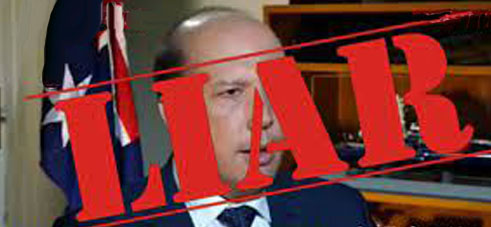
Peter Dutton claims that “50 countries are exploring or investing in next-generation nuclear technology for the first time.” That’s nonsense. WNISR-2024 notes that the number of countries building reactors fell by three from mid-2023 to mid-2024.
Reactors are under construction in 13 countries, down from 16 countries the previous year as the UAE and the US completed their last construction projects and Brazil suspended its only reactor construction project. Only three countries — China, India, and Russia — are building reactors at more than one site.
Just three potential nuclear newcomer countries had reactors under construction as of mid-2024: Egypt, Bangladesh and Turkiye.
WNISR-2024 notes that of 18 African countries analysed, only four would have grid systems large enough to meet minimum capacity criteria to host a large nuclear reactor (based on the rule of thumb that the largest unit in a grid system should not exceed 10 percent of total system capacity).
Small modular reactors might find a niche — but they don’t exist.
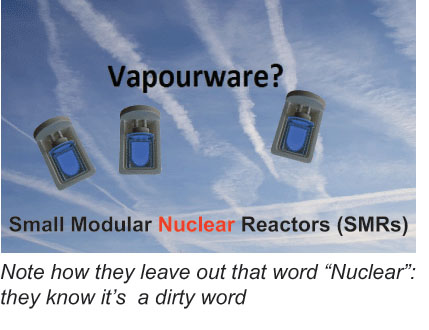
Small modular reactors
WNISR-2024 states: “The gap between hype about Small Modular Reactors (SMRs) and industrial reality continues to grow. The nuclear industry and multiple governments are doubling down on their investments into SMRs, both in monetary and political terms. So far, reality on the ground does not reflect those efforts.
“SMR projects continue to be delayed or canceled. Costs for nuclear projects in general and SMRs in particular are surging. The few available cost estimates for SMRs, especially when weighted by their electrical power generation capacities, show how expensive these are.”


Two developments over the past year have punctured the hype around SMRs. The first was NuScale’s decision to abandon its flagship project in Idaho after cost estimates rose to an absurd A$30,000 per kilowatt (A$14 billion for a 462 megawatt plant).
Then, French utility EDF announced that it had suspended the development of its Nuward SMR and reoriented the project “to a design based on proven technological building blocks.”
The two operating SMRs — a twin-reactor plant in China and a twin-reactor floating plant in Russia — weren’t built using serial factory construction methods so can’t be called SMRs. Nor are there plans to mass-produce these reactors types using serial factory construction methods, so the so-called SMRs in China and Russia can’t even be called prototype SMRs.
Dutton wants taxpayers to fund the construction of large reactors in the eastern states and SMRs in SA and WA. SA aims to reach 100 percent net renewable electricity generation as soon as 2027. Presumably Dutton wants to replace some of that renewable power generation with SMRs, for some unfathomable reason.
Nuclear vs renewables

Total investment in non-hydro renewable electricity capacity in 2023 was estimated by Bloomberg New Energy Finance (BNEF) at $US623 billion, up 8 per cent compared to the previous year. According to a WNISR estimate, this represents 27 times the reported global investment decisions for the construction of nuclear power plants of about $US23 billion for 6.7GW.
BNEF estimated investments in stationary storage capacity at around US$36 billion in 2023, which, for the first time, exceeded investments into new nuclear. Globally, utility-scale storage additions jumped from just over 10 GW added in 2022 to more than 25 GW in 2023.
In 2023, annual additions of solar and wind power grew by 73 per cent and 51 per cent, respectively, resulting in nearly 460 GW of combined new capacity, according to the International Renewable Energy Agency.
The solar PV market saw China alone adding around 217 GW — a 150-percent increase over 2022-additions — and the rest of the world 129 GW for a total of 346 GW or about 1 GW per day.
The Global Wind Energy Council reported a record of 117 GW of new wind installations, a 50 per cent year-on-year increase, with China accounting for 65 percent of total added onshore capacity and 58 per cent of total added offshore capacity. These numbers compare with a net addition of 1 GW nuclear capacity in China and a global decline of 1 GW in 2023.
WNISR 2024 states: “In 2021, the combined output of solar and wind plants surpassed nuclear power generation for the first time. In 2023, wind and solar facilities generated 50 percent more electricity than nuclear plants.
“Wind power alone generated 2,300 terawatt-hours (TWh) and is getting close to nuclear’s 2,600 TWh. Since 2013, non-hydro renewables added 3,500 TWh to the world’s power generation, 14 times more than nuclear’s roughly 250 TWh, and generated 80 percent more power than nuclear in 2023.”
In 2023, the European Union achieved its largest renewable capacity additions ever and the renewable share in total electricity generation reached a record 44 percent. Solar and wind plants together produced 721 TWh compared to nuclear’s 588 TWh.
For the first time ever, non-hydro renewables generated more power than all fossil fuels combined in 2023. Fossil fuel power generation dropped by a record 19 percent, reaching its lowest level ever and accounting for less than one-third of the EU’s electricity generation.
In China, solar PV produced a total of 578 TWh of electricity in 2023, 40 percent more than nuclear’s 413 TWh. Wind power generation first exceeded nuclear in 2012: in 2023, wind produced 877 TWh, more than doubling nuclear generation. Adding other non-hydro renewables like biomass to solar and wind, the net total generation of 1,643 TWh in 2023 was four times the nuclear output.
Keep in mind that China is the only country in the world with a significant nuclear power expansion program. It might be a stretch for WNISR-2024 to state that “nuclear power remains irrelevant in the international market for electricity generating technologies”, but it is heading in that direction.
Dr Jim Green is the national nuclear campaigner with Friends of the Earth Australia and a member of the Nuclear Consulting Group.
The World Would Be Better off Without NATO, Revisited
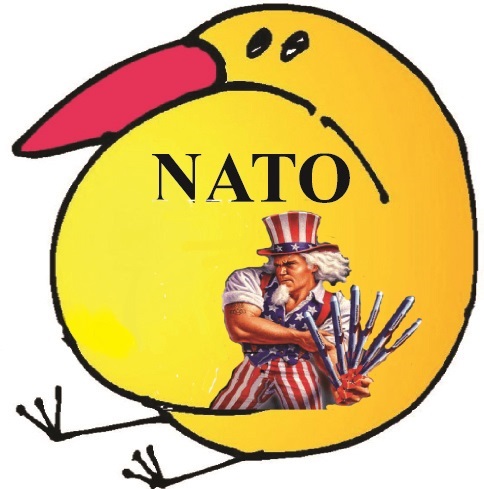
CounterPunch, by Eve Ottenberg, September 20, 2024
The hyper-capitalist terror state that plots to rule the world keeps its fist in a mailed glove called NATO. But NATO is in trouble. As its massive, disastrous Ukraine adventure fails, a key member, Turkey, applied to, uh, essentially join the other side, namely BRICS. When Ankara does so, how will that work? One foot in the Washington-dominated axis and the other in the Moscow and Beijing camp? That could require some political acrobatics, but Turkey has performed thus before. We got a smaller show of that with the spring 2022 Istanbul negotiations to settle the Ukraine War, until Boris “To the Last Ukrainian” Johnson, doubtless at Joe “Proxy War” Biden’s behest, scuttled them.
Things got stupendously worse September 12, with Anthony “World War III” Blinken’s trip to Kiev, along with his British sidekick, foreign secretary David Lammy, to promise long-range, possibly precision missiles to Volodymyr Zelensky, to strike deep into Russia.
At once Russian president Vladimir Putin took to the airwaves to announce that this would put NATO at war with Russia and that Moscow would adjust its plans accordingly. Never a good sign; one, in fact, that conjures images of bombed, radioactive American, Russian and European cities. But this was a reminder of Russia’s long-standing military policy: if existentially threatened, anything can happen. In short, one of the adults in the room had spoken. And Biden, with unexpected sanity, responded like an adult: no strikes deep into Russia. Let’s all hope to God, the west, Washington in particular, stops playing with fire – as one Kremlin bigwig accurately put it.
As for the Ukraine War itself, well, it’s a catastrophe for Kiev and for NATO. The stinging realization that Washington, the CIA in particular, bit off more than it can chew has commenced wounding the swelled heads of the more intelligent decision-makers in the imperial capital. Now, of course, Moscow is only interested in peace on the harshest terms for Ukraine, a change in posture, and not for the good for the west, thanks to the insane Ukrainian incursion into Russia.
It is unlikely that Recep Erdogan and Naftali Bennett can ride to the rescue, as they attempted two and a half years ago. In those elapsed years, hundreds of thousands of Ukrainian soldiers have perished, tens of thousands of Russian ones have too, Europe has swung into an economic and political tailspin, Germany’s broke (Deutschland boasted 10,702 corporate insolvencies in the first quarter of 2024 alone, a scalding indictment of its Russophobic foreign policy), NATO’s cupboards are bare of weapons, and Washington is losing interest. Quite the time for Ankara to approach BRICS – perhaps the first rat leaving the waterlogged Titanic. Can Hungary and Slovakia be far behind?
……………………………………………………………………………………………………………………………………………………………………… Obviously, the western decision to bring Ukraine into NATO was a catastrophic, colossal blunder. As Kiev loses, out-manned and out-gunned by Moscow, this can only focus the very legitimate criticism on NATO that it has essentially done nothing besides make very bloody trouble since the end of the cold war (vide NATO crimes in Yugoslavia, Afghanistan and Libya). Numerous American diplomatic and security state luminaries vociferously cautioned against NATO expansion after 1991. They were ignored. American presidents, in their supreme arrogance, starting with Bill “Bomb Belgrade” Clinton, broke Washington’s promise to Mikhail Gorbachev and expanded NATO right up to Russia’s doorstep. Evidently, they thought they could do so with impunity. They were wrong. Their gamble not only risks WWIII, it destroyed a country, Ukraine. Time to mothball NATO, so it can never cause such a catastrophe and endanger the entire world again.
Eve Ottenberg is a novelist and journalist. Her latest book is Busybody. She can be reached at her website. https://www.counterpunch.org/2024/09/20/the-world-would-be-better-off-without-nato-revisited/
The 2024 World Nuclear Industry Status Report now released.
The World Nuclear Industry Status Report 2024 (WNISR2024) assesses on 513
pages the status and trends of the international nuclear industry. It
provides a comprehensive overview of nuclear power plant data, including
information on operation, production, fleet age, and construction.
The WNISR discusses the status of newbuild programs in existing as well as in
potential newcomer nuclear countries; notably in the Türkiye Focus which
provides critical context to the ongoing construction of the country’s
first nuclear power plant. A section is dedicated to ambitions and
prospects for nuclear deployment in Potential Newcomer Countries in Africa,
while Taiwan Focus covers the current situation and implementation of the
nuclear phaseout policy.
WNISR 19th Sept 2024
https://www.worldnuclearreport.org/World-Nuclear-Industry-Status-Report-2024-1046
The World’s Chance To Confront US-Israeli Genocide
Popular Resistance, By Medea Benjamin and Nicolas J. S. Davies, Consortium News., September 18, 2024
As nations come together in the U.N. General Assembly on Wednesday, they face both a serious challenge and an unprecedented opportunity.
On Wednesday, the General Assembly is scheduled to debate and vote on a resolution calling on Israel to end “its unlawful presence in the Occupied Palestinian Territory” within six months.
Given that the General Assembly, unlike the exclusive 15-member Security Council, allows all members to vote and there is no veto in the General Assembly, this is an opportunity for the world community to clearly express its opposition to Israel’s brutal occupation of Palestine.
If Israel predictably fails to heed a General Assembly resolution calling on it to withdraw its occupation forces and settlers from Gaza, the West Bank and East Jerusalem, and the United States then vetoes or threatens to veto a Security Council resolution to enforce the ICJ ruling, then the General Assembly could go a step further.
It could convene an emergency session to take up what is called a Uniting For Peace resolution, which could call for an arms embargo, an economic boycott or other sanctions against Israel — or even call for actions against the United States.
Uniting for Peace resolutions have only been passed by the General Assembly five times since the procedure was first adopted in 1950.
The Sept. 18 resolution comes in response to an historic ruling by the International Court of Justice (ICJ) on July 19, which found that “Israeli settlements in the West Bank and East Jerusalem, and the regime associated with them, have been established and are being maintained in violation of international law.”
The court ruled that Israel’s obligations under international law include “the evacuation of all settlers from existing settlements” and the payment of restitution to all who have been harmed by its illegal occupation.
The passage of the General Assembly resolution by a large majority of members would demonstrate that countries all over the world support the ICJ ruling, and would be a small but important first step toward ensuring that Israel must live up to those obligations.
Israel’s President Benjamin Netanyahu cavalierly dismissed the court ruling with a claim that, “The Jewish nation cannot be an occupier in its own land.”
This is exactly the position that the court had rejected, ruling that Israel’s 1967 military invasion and occupation of the Occupied Palestinian Territories did not give it the right to settle its own people there, annex those territories, or make them part of Israel.
Settler Violence
While Israel used its hotly disputed account of the Oct. 7 events as a pretext to declare open season for the mass murder of Palestinians in Gaza, Israeli forces in the West Bank and East Jerusalem used it as a pretext to distribute assault rifles and other military-grade weapons to illegal Israeli settlers and unleash a new wave of violence there, too.
Armed settlers immediately started seizing more Palestinian land and shooting Palestinians. Israeli occupation forces either stood by and watched or joined in the violence, but did not intervene to defend Palestinians or hold their Israeli attackers accountable.
Since last October, occupation forces and armed settlers in the West Bank and East Jerusalem have now killed at least 700 people, including 159 children.
The escalation of violence and land seizures has been so flagrant that even the U.S. and European governments have felt obligated to impose sanctions on a small number of violent settlers and their organizations.
In Gaza, the Israeli military has been murdering Palestinians day after day for the past 11 months. The Palestinian Health Ministry has counted over 41,000 Palestinians killed in Gaza, but with the destruction of the hospitals that it relies on to identify and count the dead, this is now only a partial death toll.
Medical researchers estimate that the total number of deaths in Gaza from the direct and indirect results of Israeli actions will be in the hundreds of thousands, even if the massacre were to end soon.
Israel and the United States are undoubtedly more and more isolated as a result of their roles in this genocide. Whether the United States can still coerce or browbeat a few of its traditional allies into rejecting or abstaining from the General Assembly resolution on Sept. 18 will be a test of its residual “soft power.”……………………………………………………………………………………………………………….. more https://popularresistance.org/the-worlds-chance-to-confront-us-israeli-genocide/
1 This Month



26 September – International Day for the Total Elimination of Nuclear Weapons


PLEASE OPPOSE HR 8255 AND S.3639 – bills would accelerate satellite deployment, with no environmental review or safeguards – https://ncstd5li.quorum.us/campaign/169331/
To see nuclear-related stories in greater depth and intensity – go to https://nuclearinformation.wordpress.com
-
Archives
- September 2026 (219)
- August 2026 (330)
- July 2026 (355)
- June 2026 (287)
- May 2026 (306)
- April 2026 (356)
- March 2026 (251)
- February 2026 (267)
- January 2026 (308)
- December 2025 (358)
- November 2025 (359)
- October 2025 (375)
-
Categories
- 1
- 1 NUCLEAR ISSUES
- business and costs
- climate change
- culture and arts
- ENERGY
- environment
- health
- history
- indigenous issues
- Legal
- marketing of nuclear
- media
- opposition to nuclear
- PERSONAL STORIES
- politics
- politics international
- Religion and ethics
- safety
- secrets,lies and civil liberties
- spinbuster
- technology
- Uranium
- wastes
- weapons and war
- Women
- 2 WORLD
- ACTION
- AFRICA
- Atrocities
- AUSTRALIA
- Christina's notes
- Christina's themes
- culture and arts
- Events
- Fuk 2022
- Fuk 2023
- Fukushima 2017
- Fukushima 2018
- fukushima 2019
- Fukushima 2020
- Fukushima 2021
- general
- global warming
- Humour (God we need it)
- Nuclear
- RARE EARTHS
- Reference
- resources – print
- Resources -audiovicual
- Weekly Newsletter
- World
- World Nuclear
- YouTube
-
RSS
Entries RSS
Comments RSS
 nuclear-news