Treaty on the Prohibition of Nuclear Weapons States agree – the ban is the alternative to reckless nuclear deterrence and proliferation as Third Meeting of States Parties draws to a close.
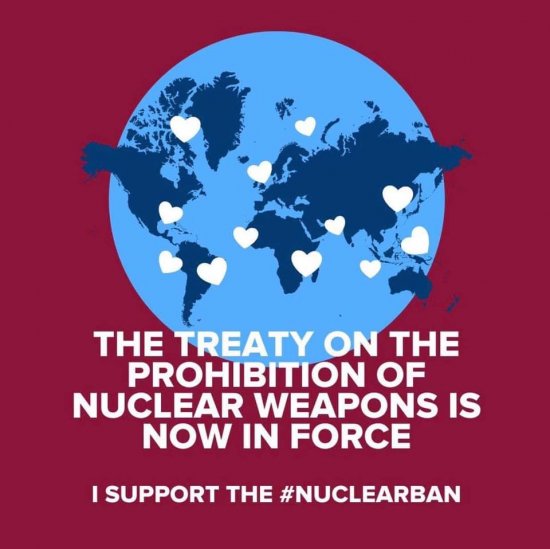
The Third Meeting of States Parties to the UN Treaty on the Prohibition of Nuclear Weapons (TPNW) has successfully concluded at UN Headquarters with a powerful political declaration rejecting nuclear weapons and challenging nuclear deterrence, and adopting a host of decisions that strengthen the Treaty’s process.
86 countries participated in the meeting as states parties or observers, engaging in a robust and interactive debate during the week, adopting a political declaration and package of decisions. The meeting also counted the active participation of a thousand representatives from 163 civil society organisations, including many affected community voices, and nine International Organisations. Over 70 events took place in the context of the 3MSP, in the UN and across the city during Nuclear Ban Week.
Connecting nuclear disarmament to global security concerns and introducing the roadmap to dismantle nuclear deterrence
80 years after nuclear weapons were first tested and used, and against a backdrop of increasing instability and calls for nuclear proliferation in Asia and Europe, the states parties and signatories to the Treaty are showing leadership to put an end to the threats that nuclear weapons and nuclear deterrence pose to their – and everyone else’s – security.
In the Declaration adopted at the end of the meeting, TPNW states parties agreed that the best way to advance global security from nuclear weapons is to bring more countries on board the Treaty, now including 94 signatories and 73 states parties. States parties agreed that “nuclear weapons are a threat to the security, and ultimately the existence, of all states, irrespective of whether they possess nuclear weapons, subscribe to nuclear deterrence or firmly oppose it.”
A report submitted to the conference provided detailed recommendations on how TPNW states can challenge current nuclear weapon doctrines and ways in which it threatens their security, including at the UN Security Council, with media and bilaterally with nuclear-armed states. The Declaration also rejects nuclear deterrence as a threat to TPNW member states, challenging the increasing reliance on deterrence by the nuclear-armed states and other pro-nuclear weapons states that we are seeing in both Europe and Asia, stating: “Nuclear deterrence is posited on the very existence of nuclear risk, which threatens the survival of all.” This is the strongest condemnation of nuclear deterrence seen in a multilateral process.
Incorporating calls for nuclear justice from affected communities
Communities affected by nuclear weapons, including Indigenous Peoples, were integral to the meeting and the strength of its outcomes. The 3MSP heard the calls from Nobel Peace Laureates, Nihon Hidankyo, and affected individuals from the Yankunytjatjara People, Kazakhstan, the Republic of Korea, Maohi Nui (French Polynesia), Kiribati, Fiji, the Navajo Nation, among others on how TPNW states can best support those most affected through their implementation of the Treaty.
Across a series of events, including the fourth edition of the Nuclear Survivors Forum, affected community representatives were active and vocal in reinforcing the urgent need to address past harms from the use and testing of nuclear weapons – and do so in a manner that is meaningfully inclusive. The Declaration emerging from the meeting pledged “to continue to collaborate through an inclusive approach with all States, international organizations, parliamentarians, civil society, scientists, financial institutions, youth as well as communities and individuals affected by nuclear weapons, including Indigenous Peoples.”
Outlining an inclusive and bold path forward for the TPNW
States agreed to continue to work on the 50 point Vienna Action Plan adopted at the first Meeting of States Parties in 2022, in order to be able to take stock of progress and prepare the next series of actions at the Review Conference.
The Review Conference for the TPNW will be held at UN Headquarters in New York in November 2026, with South Africa serving as the president.
Europe’s Face-Saving Theater on Ukraine
Could they have been as corrupted as Antony Blinken, who insisted to the end of his time as U.S. secretary of state that Ukraine lower the conscription age to 18, even though he knew these youth would be sent to certain death? Have Western leaders not understood that the only chance Ukraine had to win the war was with NATO’S direct participation, risking a nuclear holocaust ?
Britain’s prime minister called an “emergency” summit in London following the Oval Office Fiasco to try to convince the world it will not be Europe’s fault, but America’s (Read: Donald Trump’s) when Ukraine collapses, writes Joe Lauria.
By Joe Lauria, Consortium News, https://consortiumnews.com/2025/03/05/europes-facing-saving-theater-on-ukraine/
Then Starmer added: but only if the United States joins us.
He said:
“We will go further to develop a ‘coalition of the willing’ to defend a deal in Ukraine…
And to guarantee the peace.
Not every nation will feel able to contribute.
But that can’t mean we sit back.
Instead, those willing will intensify planning now – with real urgency.
The UK is prepared to back this…
With boots on the ground, and planes in the air…
Together with others.
Europe must do the heavy lifting…
But to support peace on our continent.
And to succeed, this effort must have strong US backing.
We’re working with the US on this point, after my meeting with President Trump last week.”
Donald Trump has made it clear he is not going to commit U.S. troops to Ukraine, however. And Russia has said it would never accept Western troops there.
What Starmer is really saying is: Europe stands ready to fight and die as peacekeepers to save Ukraine if necessary, but only with the Americans. So when they refuse to come and the disastrous Project Ukraine at last comes crashing on our heads, don’t blame us, blame the U.S.A.
Trump will become even easier to blame now that he has cut off military aid and intelligence to Ukraine.
[The theater continued on Thursday at another European summit in Brussels, dubbed a “War Summit” by Politico, in which French President Emmanuel Macron, and still German Foreign Minister Alena Baerbock said Europe needed to get ready for war with Russia.]
The theater piece directed by Starmer at Lancaster House with an assembly of 15 European heads of government (and Justin Trudeau of Canada) was not really choreographed to try to convince Trump to reverse course, which appears unlikely, but as an elaborate presentation to save the hides of politicians who invested so much of their own political capital and wasted so much of their citizens’ money in the inevitable and humiliating defeat of Ukraine.
The summit was called by Starmer within two days of what he and the other Europeans saw transpire in the Oval Office on Friday. [See: Trump, Vance School Zelinsky on Reality of His War]. That occured at the end of a week in which both Starmer and French President Emmanuel Macron had paid a visit to the same Oval Office where they learned first hand Trump’s determination to end the war even if it means Ukraine’s defeat.
That Ukraine would lose was obvious two years ago to Macron and German Chancellor Olaf Scholz when they both gently broke that news to Zelensky privately in Paris in February 2023.
The private remarks clashed with public statements from European leaders who had routinely said then, and still say today, that they will continue to support Ukraine for as long as it takes to achieve victory on the battlefield. That was Joe Biden’s line too.
The Wall Street Journal, which reported on the private remarks to Zelenksy two years ago, wrote:
“The public rhetoric masks deepening private doubts among politicians in the U.K., France and Germany that Ukraine will be able to expel the Russians from eastern Ukraine and Crimea, which Russia has controlled since 2014, and a belief that the West can only help sustain the war effort for so long, especially if the conflict settles into a stalemate, officials from the three countries say.
‘We keep repeating that Russia mustn’t win, but what does that mean? If the war goes on for long enough with this intensity, Ukraine’s losses will become unbearable,’ a senior French official said. ‘And no one believes they will be able to retrieve Crimea.’”
Indeed Ukraine’s losses have become unbearable. Macron and Scholz tried to tell Zelensky at that Élysée Palace dinner in February 2023 that he must consider peace talks with Moscow, the Journal reported.
According to its source, the newspaper quoted Macron as telling Zelensky that “even mortal enemies like France and Germany had to make peace after World War II.”
Macron told Zelensky “he had been a great war leader, but that he would eventually have to shift into political statesmanship and make difficult decisions,” the newspaper reported.
One wonders then why Scholz and Macron and the rest of Europe have persisted in fueling a lost cause that has since chewed up tens of thousands of additional Ukrainian lives. Could they be so corrupt that the survival of their political careers was worth the carnage of another nation’s men?
Could they have been as corrupted as Antony Blinken, who insisted to the end of his time as U.S. secretary of state that Ukraine lower the conscription age to 18, even though he knew these youth would be sent to certain death? Have Western leaders not understood that the only chance Ukraine had to win the war was with NATO’S direct participation, risking a nuclear holocaust ?
It seems that U.S. and European leaders kept an unwinnable war going until now to save their own careers. They could never admit defeat. But it did not save Biden or Harris or Blinken or Scholz or Trudeau, and Macron is in trouble too as voters saw through them all.
They’d all staked too much on the outcome of the war. They allowed their economies to fall. They pushed government censorship of social and alternative media to hide criticism that they were allowing men to die so that they would not be accused of “losing Ukraine.”
It’s been a cornerstone of history from ancient emperors to Lyndon Johnson and Richard Nixon in Vietnam, and now Biden and Starmer in Ukraine: Let them die so that we may stay in office.
With defeat staring them in the face, who better to blame it on than the ogre, Donald Trump, who has dared to inject realism into the twisted dream of using Ukraine to weaken and defeat Russia.
It’s a failed policy that the European and Ukrainian leaders desperately need to keep going. One way to attempt this, as Chicago University professor John Mearsheimer said, is for the British, French and Ukrainians to “trap” the United States into giving a “security guarantee” to Ukraine.
Language in the mineral deal Zelensky had gone to the U.S. on Friday to sign calls for “common protection of critical resources.” Mearsheimer told a TV network in India that that is “the way they are trying to trap Trump and Co., and Trump won’t be trapped.”
This became evident in the Oval Office dust up last Friday when Trump angrily rejected Zelensky’s insistence on a U.S. “security guarantee” before he’d agree to a ceasefire and sign the mineral agreement. [See: Trump, Vance School Zelensky on Reality of His War]
The only way to keep their war going is to cajole Trump into getting the U.S. deeper into the morass, rather than wisely pulling out and pushing for a deal to end it.
As much as they might despise Trump, Starmer’s Sunday performance was designed to suck up to him. And an ungrateful Zelensky, reconsidering his public feud with Trump, is trying to make up with a man that seems susceptible to flattery.
In his address to the U.S. Congress Tuesday night, Trump said:
“Earlier today I received an important letter from President Zelensky of Ukraine. The letter reads: ‘Ukraine is ready to come to the negotiating table as soon as possible to bring lasting peace closer.’
‘Nobody wants peace more than the Ukrainians,’ he said. ‘My team and I stand ready to work under President Trump strong leadership to get a peace that lasts. … We do really value how much America has done to help Ukraine, maintain its sovereignty and independence. … Regarding the agreement on minerals and security, Ukraine is ready to sign it at any time.’
That is convenient for you. I appreciate that he sent this letter. I just got it a little while ago. Simultaneously we’ve had serious discussions with Russia. Then I’ve received strong signals that they are ready for peace. Wouldn’t that be beautiful? Wouldn’t that be beautiful?
Wouldn’t that be beautiful?
It’s time to stop this madness. It’s time to halt the killing. It’s time to end the senseless war. If you want to end wars, you have to talk to both sides.”
Desperate Europeans and Ukrainians need Trump to keep their war and thus their careers going, perhaps none more so than Zelensky.
Will Trump stand firm, or will he succumb to a trap?
The Russians aren’t coming, the Russians aren’t coming.
The US should continue to work with Russia to end the war, reestablish normal diplomatic relations and reinstate the 3 nuclear agreements America dumped with Russia this century The survival of peoplekind depends on this détente
Walt Zlotow, West Suburban Peace Coalition, Glen Ellyn IL, 9 Mar 25
The US pause of all weapons and intelligence to Ukraine has got some Western European countries in uproar.
French President Emmanuel Macron is scrambling to make up the slack by pledging massive military aid to Ukraine by France and whichever neighbors he can con into squandering their treasure to sustain Ukraine’s lost cause against Russia. Macron may as well be shouting the ‘The Russians are coming, the Russians are coming.’ when he blurted out “Russia has become a threat to France and Europe for years to come. I want to believe that the United States will remain by our side, but we need to be ready if that were no longer the case. The future of Europe should not be decided in Washington or in Moscow.”
European Commission President Ursula von der Leyen warned, “We are living in the most momentous and dangerous of times.” German Chancellor-in-waiting Friedrich Merz recently declared that Europe had “five minutes to midnight.”
For 76 years Europe NATO members have been dependent on Uncle Sam to save their bacon from an imaginary enemy. The aforementioned leaders are now pledging to make up for America’s pullback from their own economies already weakened by three years of aid to the lost war in Ukraine.They are calling for EU member states to take on additional debt and ramp up military spending by $840 billion over four years, some of which will continue weaponizing the war in Ukraine till the last Ukrainian soldier is dead.
Macron recklessly went further stating that French troops could be sent to Ukraine. “Our forces will be there if necessary to guarantee peace, not before a peace agreement is signed. We will continue to meet with allies to move toward the signing of such an agreement. The only thing French and other European troops in Ukraine will guarantee is being attacked by Russia and possibly triggering nuclear war.
The US should continue to work with Russia to end the war, reestablish normal diplomatic relations and reinstate the 3 nuclear agreements America dumped with Russia this century The survival of peoplekind depends on this détente.
While a daunting task, if those objectives can be achieved the US should further encourage Europe to provide for their own defense by withdrawing from NATO which became obsolete 34 years ago when the Soviet Union went poof. With a GDP ten times Russia’s, that should be snap.
If America does withdraw from Europe, the hardliners in France, Germany and the EU, might come to their senses that…the Russians aren’t coming, the Russians aren’t coming.
Jeffrey Sachs: Negotiating a Lasting Peace in Ukraine
The time has arrived for diplomacy that brings collective security to Europe, Ukraine, and Russia.
Jeffrey D. Sachs, Mar 06, 2025Common Dreams
There should be little doubt about how a lasting peace can be established in Ukraine. In April 2022, Russia and Ukraine were on the verge of signing a peace agreement in Istanbul, with the Turkish Government acting as mediator. The U.S. and U.K. talked Ukraine out of signing the agreement, and hundreds of thousands of Ukrainians have since died or been seriously injured. Yet the framework of the Istanbul Process still provides the basis of peace today.
The draft peace agreement (dated April 15, 2022) and the Istanbul Communique (dated March 29, 2022) on which it was based, offered a sensible and straightforward way to end the conflict. It’s true that three years after Ukraine broke off the negotiations, during which time Ukraine has incurred major losses, Ukraine will eventually cede more territory than it would have in April 2022 — yet it will gain the essentials: sovereignty, international security arrangements, and peace.
In the 2022 negotiations, the agreed issues were Ukraine’s permanent neutrality and international security guarantees for Ukraine. The final disposition of the contested territories was to be decided over time, based on negotiations between the parties, during which both sides committed to refrain from using force to change boundaries. Given the current realities, Ukraine will cede Crimea and parts of southern and eastern Ukraine, reflecting the battlefield outcomes of the past three years.
Such an agreement can be signed almost immediately and in fact is likely to be signed in the coming months. As the U.S. is no longer going to underwrite the war, in which Ukraine would suffer yet more casualties, destruction, and loss of territory, Zelensky is recognizing that it’s time to negotiate. In his address to Congress, President Donald Trump quoted Zelensky as saying “Ukraine is ready to come to the negotiating table as soon as possible to bring lasting peace closer.”
The pending issues in April 2022 involved the specifics of security guarantees for Ukraine and the revised boundaries of Ukraine and Russia. The main issue regarding the guarantees involved the role of Russia as a co-guarantor of the agreement. Ukraine insisted that the Western co-guarantors should be able to act with or without Russia’s assent, so as not to give Russia a veto over the Ukraine’s security. Russia sought to avoid a situation where Ukraine and its Western co-guarantors would manipulate the agreement to justify renewed force against Russia. Both sides have a point.
The best resolution, in my view, is to put the security guarantees under the authority of the UN Security Council. This means that the U.S., China, Russia, U.K., and France would all be co-guarantors, together with the rest of the UN Security Council. This would subject the security guarantees to global scrutiny. Yes, Russia could veto a subsequent UN Security Council resolution regarding Ukraine, but it would then face China’s opprobrium and the world’s if Russia were to act arbitrarily in defiance of the will of the rest of the UN.
Regarding the final disposition of borders, some background is very important. Before the violent overthrow of Ukrainian President Viktor Yanukovych in February 2014, Russia did not make any territorial demands vis-à-vis Ukraine. Yanukovych favored neutrality for Ukraine, opposed NATO membership, and peacefully negotiated with Russia a 20-year lease for Russia’s naval base in Sevastopol, Crimea, home of Russia’s Black Sea Fleet since 1783. After Yanukovych was toppled and replaced by a U.S.-backed, pro-NATO government, Russia moved quickly to retake Crimea, to prevent the naval base from falling into NATO hands. During 2014 to 2021, Russia did not push for annexing any other Ukrainian territory. Russia called for the political autonomy of the ethnic Russian regions of eastern Ukraine (Donetsk and Luhansk) that broke away from Kyiv immediately after Yanukovych was toppled.
The Minsk II agreement was to implement autonomy. The Minsk framework was inspired in part by the autonomy of the ethnic Germany region of South Tyrol in Italy. German Chancellor Angela Merkel knew the South Tyrol experience and viewed it as a precedent for similar autonomy in the Donbas. Unfortunately, Ukraine strongly resisted autonomy for the Donbas, and the U.S. backed Ukraine in rejecting autonomy. Germany and France, which ostensibly were guarantors of Minsk II, stood by silently as the agreement was thrown aside by Ukraine and the United States.
Following six years in which Minsk II was not implemented, during which the U.S.-armed Ukrainian military continued to shell the Donbas in an attempt to subdue and recover the breakaway provinces, Russia recognized Donetsk and Luhansk as independent states on February 21, 2022. The status of Donetsk and Luhansk in the Istanbul process was still to be finalized. Perhaps a return to Minsk II and its actual implementation by Ukraine (recognizing the autonomy of the two regions in the Ukrainian constitution) could have been ultimately agreed. When Ukraine walked away from the negotiating table, alas, the issue was moot. A few months later, on September 30, 2022, Russia annexed the two oblasts as well as two others, Kherson and Zaporizhzhia.
The sad lesson is this. Ukraine’s loss of territory would have been averted entirely but for the violent coup that toppled Yanukovych and brought in a U.S.-backed regime intent on NATO membership. The loss of territory in eastern Ukraine could have been averted had the U.S. pushed Ukraine to implement the UN Security Council-backed Minsk II agreement. The loss of territory in eastern Ukraine could probably have been averted as late as April 2022 in the Istanbul Process, but the U.S. blocked the peace agreement. Now, after 11 years of war since the overthrow of Yanukovych, and as a result of Ukraine’s losses on the battlefield, Ukraine will cede Crimea and other territories of eastern and southern Ukraine in the coming negotiations.
Europe has other interests that it should be negotiating with Russia, notably security for the Baltic States and for European-Russian security arrangements more generally. The Baltic States feel very vulnerable to Russia, understandably so given their history, but they are also gravely and unnecessarily adding to their vulnerability by a stream of repressive measures taken against their ethnic Russian citizenry, including measures to repress the use of the Russian language and measures to cut their citizens’ ties with the Russian Orthodox Church. Baltic state leaders are also provocatively engaging in remarkable Russophobic rhetoric. Ethnic Russians are about 25% of the population of both Estonia and Latvia, and around 5% in Lithuania. Security for the Baltic States should be achieved through security-enhancing measures taken on both sides, including the respect for minority rights of the ethnic Russian populations, and by refraining from vitriolic rhetoric.
The time has arrived for diplomacy that brings collective security to Europe, Ukraine, and Russia. Europe should open direct talks with Russia and should urge Russia and Ukraine to sign a peace agreement based on the March 29 Istanbul Communique and the April 15, 2022 draft peace agreement. Peace in Ukraine should by followed by the creation of a new system of collective security for all of Europe, stretching from Britain to the Urals, and indeed beyond.
Europe’s Face-Saving Theater on Ukraine
That Ukraine would lose was obvious two years ago to Macron and German Chancellor Olaf Scholz when they both gently broke that news to Zelensky privately in Paris in February 2023.
It seems that U.S. and European leaders kept an unwinnable war going until now to save their own careers. They could never admit defeat. But it did not save Biden or Harris or Blinken or Scholz or Trudeau, and Macron is in trouble too as voters saw through them all.
Britain’s prime minister called an “emergency” summit in London following the Oval Office Fiasco to try to convince the world it will not be Europe’s fault, but America’s (Read: Donald Trump’s) when Ukraine collapses, writes Joe Lauria.
By Joe Lauria, Consortium News, https://consortiumnews.com/2025/03/05/europes-facing-saving-theater-on-ukraine/
In his speech following the emergency European summit he called in London on Sunday, British Prime Minister Keir Starmer said Britain was prepared to send “boots on the ground” and “planes in the air” to defend Ukraine against the evil madman, Vladimir Putin.
Then Starmer added: but only if the United States joins us.
He said:
“We will go further to develop a ‘coalition of the willing’ to defend a deal in Ukraine…
And to guarantee the peace.
Not every nation will feel able to contribute.
But that can’t mean we sit back.
Instead, those willing will intensify planning now – with real urgency.
The UK is prepared to back this…
With boots on the ground, and planes in the air…
Together with others.
Europe must do the heavy lifting…
But to support peace on our continent.
And to succeed, this effort must have strong US backing
Donald Trump has made it clear he is not going to commit U.S. troops to Ukraine, however. And Russia has said it would never accept Western troops there.
What Starmer is really saying is: Europe stands ready to fight and die as peacekeepers to save Ukraine if necessary, but only with the Americans. So when they refuse to come and the disastrous Project Ukraine at last comes crashing on our heads, don’t blame us, blame the U.S.A.
The theater piece directed by Starmer at Lancaster House with an assembly of 15 European heads of government (and Justin Trudeau of Canada) was not really choreographed to try to convince Trump to reverse course, which appears unlikely, but as an elaborate presentation to save the hides of politicians who invested so much of their own political capital and wasted so much of their citizens’ money in the inevitable and humiliating defeat of Ukraine.
The summit was called by Starmer within two days of what he and the other Europeans saw transpire in the Oval Office on Friday. [See: Trump, Vance School Zelinsky on Reality of His War]. That occured at the end of a week in which both Starmer and French President Emmanuel Macron had paid a visit to the same Oval Office where they learned first hand Trump’s determination to end the war even if it means Ukraine’s defeat.
That Ukraine would lose was obvious two years ago to Macron and German Chancellor Olaf Scholz when they both gently broke that news to Zelensky privately in Paris in February 2023.
Trump will become even easier to blame now that he has cut off military aid and intelligence to Ukraine.
[The theater continued on Thursday at another European summit in Brussels, dubbed a “War Summit” by Politico, in which French President Emmanuel Macron, and still German Foreign Minister Alena Baerbock said Europe needed to get ready for war with Russia.]
The private remarks clashed with public statements from European leaders who had routinely said then, and still say today, that they will continue to support Ukraine for as long as it takes to achieve victory on the battlefield. That was Joe Biden’s line too.
The Wall Street Journal, which reported on the private remarks to Zelenksy two years ago, wrote:
“The public rhetoric masks deepening private doubts among politicians in the U.K., France and Germany that Ukraine will be able to expel the Russians from eastern Ukraine and Crimea, which Russia has controlled since 2014, and a belief that the West can only help sustain the war effort for so long, especially if the conflict settles into a stalemate, officials from the three countries say.
‘We keep repeating that Russia mustn’t win, but what does that mean? If the war goes on for long enough with this intensity, Ukraine’s losses will become unbearable,’ a senior French official said. ‘And no one believes they will be able to retrieve Crimea.’”
Indeed Ukraine’s losses have become unbearable. Macron and Scholz tried to tell Zelensky at that Élysée Palace dinner in February 2023 that he must consider peace talks with Moscow, the Journal reported.
According to its source, the newspaper quoted Macron as telling Zelensky that “even mortal enemies like France and Germany had to make peace after World War II.”
Macron told Zelensky “he had been a great war leader, but that he would eventually have to shift into political statesmanship and make difficult decisions,” the newspaper reported.
One wonders then why Scholz and Macron and the rest of Europe have persisted in fueling a lost cause that has since chewed up tens of thousands of additional Ukrainian lives. Could they be so corrupt that the survival of their political careers was worth the carnage of another nation’s men?
Could they have been as corrupted as Antony Blinken, who insisted to the end of his time as U.S. secretary of state that Ukraine lower the conscription age to 18, even though he knew these youth would be sent to certain death? Have Western leaders not understood that the only chance Ukraine had to win the war was with NATO’S direct participation, risking a nuclear holocaust ?
It seems that U.S. and European leaders kept an unwinnable war going until now to save their own careers. They could never admit defeat. But it did not save Biden or Harris or Blinken or Scholz or Trudeau, and Macron is in trouble too as voters saw through them all.
They’d all staked too much on the outcome of the war. They allowed their economies to fall. They pushed government censorship of social and alternative media to hide criticism that they were allowing men to die so that they would not be accused of “losing Ukraine.”
It’s been a cornerstone of history from ancient emperors to Lyndon Johnson and Richard Nixon in Vietnam, and now Biden and Starmer in Ukraine: Let them die so that we may stay in office.
With defeat staring them in the face, who better to blame it on than the ogre, Donald Trump, who has dared to inject realism into the twisted dream of using Ukraine to weaken and defeat Russia.
It’s a failed policy that the European and Ukrainian leaders desperately need to keep going. One way to attempt this, as Chicago University professor John Mearsheimer said, is for the British, French and Ukrainians to “trap” the United States into giving a “security guarantee” to Ukraine.
Language in the mineral deal Zelensky had gone to the U.S. on Friday to sign calls for “common protection of critical resources.” Mearsheimer told a TV network in India that that is “the way they are trying to trap Trump and Co., and Trump won’t be trapped.”
This became evident in the Oval Office dust up last Friday when Trump angrily rejected Zelensky’s insistence on a U.S. “security guarantee” before he’d agree to a ceasefire and sign the mineral agreement. [See: Trump, Vance School Zelensky on Reality of His War]
The only way to keep their war going is to cajole Trump into getting the U.S. deeper into the morass, rather than wisely pulling out and pushing for a deal to end it.
As much as they might despise Trump, Starmer’s Sunday performance was designed to suck up to him. And an ungrateful Zelensky, reconsidering his public feud with Trump, is trying to make up with a man that seems susceptible to flattery.
In his address to the U.S. Congress Tuesday night, Trump said:
“Earlier today I received an important letter from President Zelensky of Ukraine. The letter reads: ‘Ukraine is ready to come to the negotiating table as soon as possible to bring lasting peace closer.’
‘Nobody wants peace more than the Ukrainians,’ he said. ‘My team and I stand ready to work under President Trump strong leadership to get a peace that lasts. … We do really value how much America has done to help Ukraine, maintain its sovereignty and independence. … Regarding the agreement on minerals and security, Ukraine is ready to sign it at any time.’
That is convenient for you. I appreciate that he sent this letter. I just got it a little while ago. Simultaneously we’ve had serious discussions with Russia. Then I’ve received strong signals that they are ready for peace. Wouldn’t that be beautiful? Wouldn’t that be beautiful?
Wouldn’t that be beautiful?
It’s time to stop this madness. It’s time to halt the killing. It’s time to end the senseless war. If you want to end wars, you have to talk to both sides.”
Desperate Europeans and Ukrainians need Trump to keep their war and thus their careers going, perhaps none more so than Zelensky.
Will Trump stand firm, or will he succumb to a trap?
Non-Proliferation Treaty ‘struggling’ in new nuclear age, expert warns
A CRUCIAL international treaty seen as the cornerstone of nuclear relations is “really struggling” in the modern age as nuclear-armed states fail to meet their obligations under it, an expert has warned.
Speaking to The National from a UN summit on the Treaty on the Prohibition
of Nuclear Weapons (TPNW), the University of Glasgow’s Dr Rhys Crilley
said there was “a lot of frustration internationally” with
nuclear-armed states like the UK failing to live up to their commitments
under the older Nuclear Non-Proliferation Treaty (NPT).
The National 6th March 2025, https://www.thenational.scot/news/24988503.non-proliferation-treaty-struggling-new-nuclear-age-expert-warns/
UK urged to prepare for Donald Trump halting Trident partnership.
After tensions over a failed nuclear missile test last year, experts say the
White House withdrawing assistance would cost billions.
When a Trident II D5 missile misfired and crashed into the sea off the coast of Florida
during a rare test launch by the Royal Navy in January last year, American
sailors were on board the submarine to witness it. US ships monitored the
event nearby. In the days that followed, US and UK officials wrangled over
how much information the Ministry of Defence in London could share with the
public about what went wrong.
The British government wanted to be as open
as possible in the hope that it would restore some faith in the nuclear
deterrent — which costs about £3 billion a year to run — eight years
after another misfire in 2016. The Americans won the argument and officials
were limited to saying that an “anomaly occurred”.
What actually happened was a failure caused by test equipment strapped to the missile;
had it been fired in anger without such a device, it would have worked.
“There was deep frustration at the US for blocking a full explanation,”
said a defence source privy to the discussions with the Americans. The UK
has total operational control over its Trident missiles once they are
loaded on to its four Vanguard-class submarines.
However, such revelations
expose how intertwined the US and UK are when it comes to the nuclear
deterrent, Britain’s ultimate insurance policy. Should the UK want to
untangle the relationship — or a pro-Russian White House end its
co-operation — it would cost taxpayers tens of billions, experts warn.
Times 5th March 2025, https://www.thetimes.com/uk/defence/article/uk-urged-to-prepare-for-donald-trump-halting-trident-partnership-cj8rdjw0w
UK Government ignoring international law on nuclear weapons – experts.
By Xander Elliards
THE UK Government is flouting the international laws it has subscribed to
by refusing to discuss banning nuclear weaponry, leading experts have said.
It comes after the Labour Government dismissed a UN summit on the Treaty on
the Prohibition of Nuclear Weapons (TPNW) out of hand, saying they would
not attend even as an observer.
However, the majority of the world’s
countries are present at the TPNW meeting in New York, where a total ban on
nuclear weapon testing, development, or use is being discussed. The UK
Government is not a signatory to the TPNW – but like the US, France,
Russia, and China it is signed up to the earlier Nuclear Non-Proliferation
Treaty (NPT). This obliges states to prevent new countries from acquiring
nuclear weapons – but also obliges signatories to work towards complete
disarmament.
The National 5th March 2025, https://www.thenational.scot/news/24985203.uk-government-ignoring-international-law-nuclear-weapons—experts/
One empty seat. UK fails again to send representation to UN nuke conference

NFLA 5th March 2025,
https://www.nuclearpolicy.info/news/one-empty-seat-uk-fails-again-to-send-representation-to-un-nuke-conference/
The UK/Ireland Nuclear Free Local Authorities laments that a joint appeal made to the Prime Minister and Foreign Secretary to send a British representative to an important nuclear disarmament conference being held at the United Nations this week has fallen on deaf ears.
Alongside academics and other peace campaigners, NFLA Chair Councillor Lawrence O’Neill and NFLA Secretary Richard Outram were two of the co-signatories to a letter drafted by the United Nations Association UK (UNA-UK) that was sent to the two senior British politicians asking the UK Government to send an observer to the 3rd Meeting of States Parties (3MSP) to the Treaty on the Prohibition of Nuclear Weapons (TPNW) which is being held in New York until 7 March.
The invitation was not taken up as the meeting has been boycotted by Britain and the other eight nuclear weapons states, which continue to refuse to engage with the treaty despite around half of the UN’s membership – 94 states – having become signatories to it, with 73 also having completed formal ratification.
The NFLAs will be especially interested to see the progress made in establishing an international trust fund to support the victims, usually Indigenous Peoples, of the use and testing of nuclear weapons and the remediation of their natural environment. This represents a clear commitment of the signatories to help satisfy their undertakings under Article 6 and 7 of the TPNW. Establishing such a fund was seen as a key priority at the preceding MSP2.
NFLA Secretary Richard Outram, in speaking recently on a webinar to mark the sixty fifth anniversary of the first French nuclear weapon test in Algeria, referenced the fact that the UK should contribute on a voluntary basis to such a fund despite not being a formal party to the treaty.
Britain tested forty five atomic and nuclear weapons in Australia, the Pacific, and latterly in the USA in a period from 1952 to 1991, and has a responsibility for the damage caused to the health and environment of Indigenous People in these places, as well as to the British atomic and nuclear test veterans community and their family members who continue to suffer as a direct result of exposure to radiation in the tests.
The NFLAs will continue to campaign for justice and financial compensation for both the civilian and military victims of nuclear weapons use and testing, and, as a member of the Nobel Peace Prize winning International Campaign to Abolish Nuclear Weapons (ICAN) and a partner of Mayors for Peace, for the universal adoption of the TPNW and the total abolition of nuclear weapons.
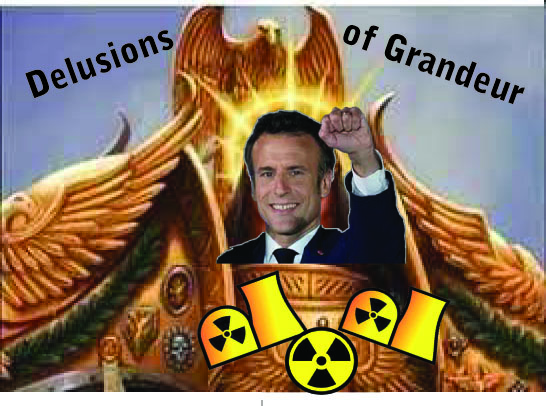
Macron’s Offer: France and the Delusions of Nuclear Deterrence
March 7, 2025 Dr Binoy Kampmark ,https://theaimn.net/macrons-offer-france-and-the-delusions-of-nuclear-deterrence/
The singular antics of US President Donald Trump, notably towards supposed allies, has stirred the pot regarding national security in various capitals. From Canberra to Brussels, there is concern that such assumed, if unverifiable notions as extended nuclear deterrence from Washington are valid anymore. America First interests certainly bring that into question, as well it should. If the imperium is in self-introspective retreat, this is to the good. But the internationalists beg to differ, wishing to see the United States as imperial guarantor.
In Europe, the fear at the retreat of Washington’s nuclear umbrella, and the inflation of the Russian threat, has caused flutters of panic. On February 20, 2025, Friedrich Merz, chairman of the Christian Democratic Union and the incoming German chancellor, floated the idea that other states consider shouldering Europe’s security burden. “We need to have discussions with both the British and the French – the two European nuclear powers – about whether nuclear sharing, or at least nuclear security from the UK and France, would apply to us.”
Merz has also explicitly urged European states to accept the proposition that “Donald Trump will no longer unconditionally honour NATO’s mutual defence commitment,” making it incumbent on them to “make every effort to at least be able to defend the European continent on its own.”
On March 1, French President Emmanuel Macron showed signs of interest. In an interview with Portuguese TV RTP, he expressed willingness to “to open this discussion … if it allows to build a European force.” There had “always been a European dimension to France’s vital interests within its nuclear doctrine.”
On March 5, in an address to the nation, Macron openly identified Russia as a “threat to France and Europe.” Accordingly, he had decided “to open the strategic debate on the protection of our allies on the European continent by our (nuclear) deterrent.” The future of Europe did not “have to be decided in Washington or Moscow.”
The matter of France’s European dimension has certainly been confirmed by remarks made by previous presidents, including Charles de Gaulle, who, in 1964, stated that an attack on a country such as Germany by the then Soviet Union would be seen as a threat to France.
Domestically, Macron’s offer did not go down well in certain quarters. It certainly did not impress Marie Le Pen of the far–right National Rally. “The French nuclear deterrent must remain a French nuclear deterrent,” she declared in comments made on a visit to the Farm Show in Paris. “It must not be shared, let alone delegated.” This was a misunderstanding, came the response from Defence Minister Sébastien Lecornu. The deterrent “is French and will remain French – from its conception to its production to its operation, under a decision of the president.”
A number of countries meeting at the European Union emergency security summit in Brussels showed interest in Macron’s offer, with some caution. Poland’s Prime Minister Donald Tusk suggested that “we must seriously consider this proposal.” Lithuania’s President Gitanas Nausėda thought the idea “very interesting” as “a nuclear umbrella would serve as really very serious deterrence towards Russia.” Latvian Prime Minister Evika Siliņa was not inclined to commit to a stationing of French nuclear weapons on Latvian territory: it was “too soon” to raise the issue.
Czech Prime Minister Petr Fiala, on the other hand, found the debate “premature”, as “our security is guaranteed by close cooperation with the United States.” He certainly has a point, given that the United States still, at present, maintains an extensive nuclear arsenal on European soil.
The trouble with deterrence chatter is that it remains hostage to delusion. Strategists talk in extravagant terms about the genuine prospect that nuclear weapons can make any one state safer, leading to some calculus of tolerable use. Thus we find the following comment from Benoît Grémare of the Université Jean Moulin Lyon 3: “[T]he fact remains that without US support, the balance of power appears largely unfavourable to France, which has a total of 290 nuclear warheads compared to at least 1,600 deployed warheads and nearly 2,800 stockpiled warheads on the Russian side.”
While Grémare acknowledges that France’s thermonuclear arsenal, along with the M51 strategic sea-to-land ballistic missile, would be able to eliminate major Russian cities, Russia would only need a mere “200 seconds too atomise Paris” if its Satan II thermonuclear weapons were used. “This potential for reciprocity must be kept in mind amid the mutual bet of nuclear deterrence.”
Logic here gives way to the presumption that such weapons, rather than suggesting impotence, promise formidable utility. This theoretical, and absurd proposition, renders the unthinkable possible: that Russia just might use nuclear weapons against European countries. Any such contention must fail for the fundamental point that nuclear weapons should, quite simply, never be used. Instead, they should be disbanded and banned altogether, in line with the Treaty on the Prohibition of Nuclear Weapons. Unfortunately, the French offer of replacing the US nuclear umbrella in Europe perpetrates similar deadly sins about deterrence.
Delays in Trident renewal put our deterrent in peril
In 2016 the House of Commons voted overwhelmingly in favour of renewing
the UK’s nuclear deterrent. Then hardly a second thought was given to
undertaking the upgrade programme without the full involvement of the US
military.
Ever since the British government first opted to introduce the
Continuous at Sea Deterrent (CASD) model to deliver our nuclear weapons
capability – replacing the Royal Air Force’s airborne Vulcan system –
it has been an article of faith that the project should be a joint US-UK
undertaking.
The tumult caused by US President Donald Trump’s return to
the White House has inevitably raised concerns both about the wisdom of
relying so heavily on US support for our own nuclear deterrent, especially
in the wake of Trump’s less-than-friendly treatment of Ukrainian
president Volodymyr Zelensky when he visited the White House last week. If
the leader of the free world can treat someone like Zelensky, who is
supposed to be one of Washington’s key allies, with such studied
contempt, then why not other allies, such as the UK?
Telegraph 5th March 2025
https://www.telegraph.co.uk/news/2025/03/05/delays-in-trident-renewal-put-our-deterrent-in-peril/
Zelensky reverses hardline position on peace talks
5 Mar 25, https://www.rt.com/news/613687-trump-zelensky-peace-talks/
The about-face comes one day after reports of Donald Trump freezing military aid to Kiev.
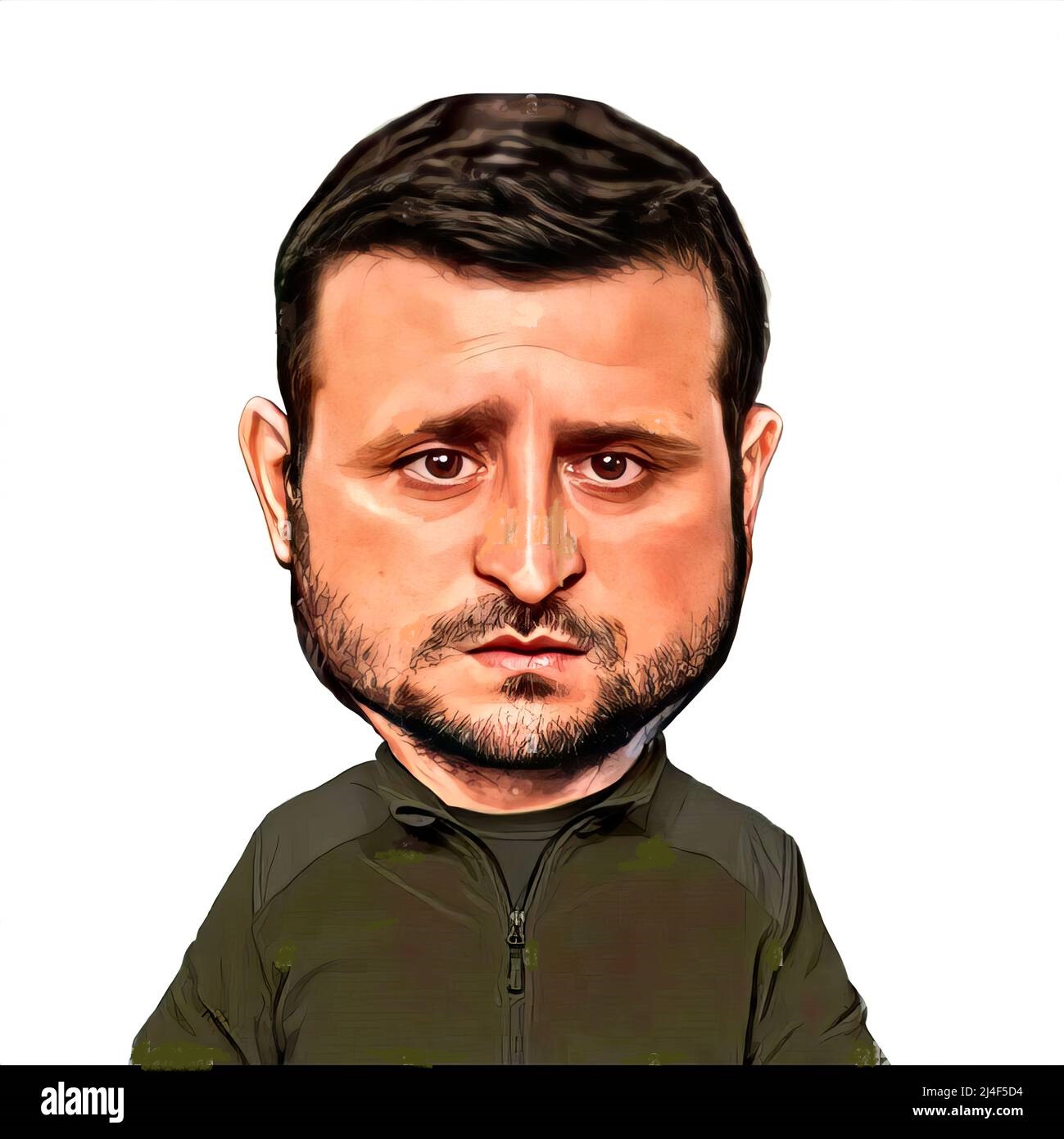
Ukrainian leader Vladimir Zelensky has said that Kiev is ready to engage in peace negotiations with Russia, to be brokered by US President Donald Trump. The statement comes after the White House reportedly stopped all military aid to Kiev following a disastrous meeting in the Oval Office between the two leaders, for which US officials have demanded Zelensky apologize.
Zelensky made a concession-filled post on X on Tuesday, saying his public feud with Trump in the Oval Office was “regrettable.”
“We are ready to work fast to end the war,” Zelensky wrote. He has frequently said in the past that Ukraine would fight as long as necessary and that peace talks could only happen on Ukraine’s terms.
He proposed the release of prisoners and establishing “truces” on both the air and sea fronts, echoing suggestions by UK Prime Minister Keir Starmer and French President Emmanuel Macron in a meeting with him in London on Sunday. The French-UK plan envisages a temporary, month-long “truce in the air, on the seas, and on energy infrastructure.” Moscow has repeatedly ruled out a temporary ceasefire with Kiev, insisting on a permanent, legally binding peace deal that addresses the root causes of the conflict.
On Monday, Trump reportedly ordered a temporary halt to all US military aid to Ukraine, aiming to pressure Zelensky into negotiations to end the conflict with Russia. An unnamed senior administration official told Fox News that military assistance would stay suspended until the Ukrainian leadership demonstrates a genuine commitment to peace talks.
“Ukraine is ready to come to the negotiating table as soon as possible to bring lasting peace closer,” Zelensky continued on X, offering his appreciation for Washington’s support. “My team and I stand ready to work under President Trump’s strong leadership to get a peace that lasts,” he added.
“’Ready’ is good, it is positive,” Kremlin spokesman Dmitry Peskov reacted to the statement.
During the Friday meeting, Trump accused Zelensky of ingratitude and “gambling with World War III” by refusing to work towards a halt to hostilities.
On Sunday, Zelensky told reporters that “an agreement to end the war is still very, very far away, and no one has started all these steps yet.” Trump condemned his statement on social media, promising that “America will not put up with it for much longer.”
Russian President Vladimir Putin has indicated Moscow’s readiness to resolve the Ukraine conflict through peaceful means. He emphasized Russia’s aim of establishing an international system that ensures a balanced and mutual consideration of interests, creating a long-term, indivisible European and global security framework.
Zelensky’s hostility to peace triggers White House meltdown.

Those who insist that Zelensky was ambushed are overlooking the cordial, lengthy exchange that occurred before the meeting turned testy. In a room full of aides and news cameras, Trump, Vance, and Zelensky held court for more than 40 minutes. It was Zelensky who became confrontational each time the two US leaders spoke favorably about negotiations with Russia.
because Trump stressed that his goal is to end the war through diplomacy, Zelensky grew agitated.
While Zelensky now claims that Russia cannot be negotiated with, his own representatives in Istanbul hold a much different view.
Aaron Maté, aaronmate.net, Sun, 02 Mar 2025 https://www.aaronmate.net/p/zelenskys-hostility-to-peace-triggers?utm_source=post-email-title&publication_id=100118&post_id=158233237&utm_campaign=email-post-title&isFreemail=true&r=1b65ob&triedRedirect=true&utm_medium=email
Long rewarded by Washington and NATO for undermining diplomacy with Russia, Zelensky grew confrontational — and told outright falsehoods — when Donald Trump and JD Vance told him to make peace.
A contentious White House meeting between President Donald Trump, Vice President JD Vance, and Ukrainian president Volodymyr Zelensky has thrown US-Ukrainian relations into disarray. The meeting resulted in Zelensky’s ejection from the White House, the cancellation of a planned minerals agreement, and, according to one report, a review of continued US military assistance to Ukraine.
For panicked cheerleaders of the proxy war against Russia, the consensus view is that Trump has betrayed a stalwart US ally, sided with an enemy in Moscow, and may have even deliberately triggered the clash to serve his treacherous agenda.
Those who insist that Zelensky was ambushed are overlooking the cordial, lengthy exchange that occurred before the meeting turned testy. In a room full of aides and news cameras, Trump, Vance, and Zelensky held court for more than 40 minutes. It was Zelensky who became confrontational each time the two US leaders spoke favorably about negotiations with Russia.
In his opening remarks, Trump criticized his predecessor Joe Biden for refusing to “speak to Russia whatsoever” and expressed his hope to bring the war “to a close.” Zelensky responded by calling Vladimir Putin a “a killer and terrorist” and vowing that there would be “of course no compromises with the killer about our territories.” In a paranoid threat, he also declared that unless Trump helps him “stop Putin,” then the Russian leader will invade the Baltic states “to bring them back to his empire”, which would draw the US into the war, despite the “big nice ocean” shielding the US from Europe: “Your soldiers will fight.”
Trump did not interrupt or object to these initial, belligerent comments. The closest he came to a direct criticism occurred when a reporter asked about Zelensky’s avowed refusal to compromise. Trump replied that “certainly he’s going to have to make some compromises, but hopefully they won’t be as big as some people think you’re going to have to make.” Trump even promised that “we’re going to be continuing” US military support to Ukraine.
Yet because Trump also stressed that his goal is to end the war through diplomacy, Zelensky grew agitated. The tipping point came when, after 40 minutes, a reporter asked whether Trump has chosen to “align yourself too much with Putin.” Vance responded that, in his view, “the path to peace and the path to prosperity” entails “engaging in diplomacy.” It was here that Zelensky lost his composure and directly challenged Vance: “What kind of diplomacy, J.D., you are speaking about? What do you mean?”.
This drew a sharp reaction. Vance reminded Zelensky that his military is brutally nabbing Ukrainian men off the street to send them to the front lines, and that the US seeks “the kind of diplomacy that’s going to end the destruction of your country.” Zelensky then doubled down by challenging Vance to visit Ukraine and reviving his attempted fearmongering. “You have a nice ocean and don’t feel it now,” he said, referring to the Atlantic, “but you will feel it in the future.” That veiled threat angered Trump, who proceeded to call out Zelensky for, among other things, “gambling with the lives of millions of people,” and “with World War III.”
In opting to confront Vance, Zelensky showed that he is so reflexively hostile to the notion of negotiating with Russia that he is willing to berate his chief sponsor, in public no less, for daring to suggest it. And to serve his agenda, Zelensky also showed that he is willing to engage in distortion and even outright falsification.
To make his case that Putin cannot be negotiated with, Zelensky invoked an agreement, brokered by France and Germany, that he signed with Putin in Paris on December 9, 2019. The pact called for a prisoner exchange, which, Zelensky asserted, Putin ignored. “He [Putin] didn’t exchange prisoners. We signed the exchange of prisoners, but he didn’t do it,” Zelensky said.
Zelensky was not being truthful. He himself attended a December 29, 2019 ceremony welcoming the return of Ukrainian prisoners freed under his agreement with Putin. Then in April 2020, his office hailed the release of a third round of prisoners.
omitted his own record in undermining diplomacy with Moscow.
The December 2019 Paris agreement recommitted Ukraine and Russia to the Minsk peace process, the UN Security Council-endorsed framework for ending the war that broke out in 2014 between the post-coup Ukrainian government and Russian-backed eastern Ukrainian rebels.
After initially taking some positive steps toward implementation, Zelensky ultimately refused to comply, a stance that he previewed in Putin’s company. During a joint news conference in Paris, Zelensky visibly smirked as Putin discussed the importance of following through with Minsk. The following March, Zelensky, under pressure from Ukraine’s ultra-nationalists and US-funded NGOs, abandoned a pledge to hold direct talks with representatives of the breakaway Donbas republics, which would be granted limited autonomy under Minsk.
By that point, the Kremlin had begun raising concerns that Zelensky was not following through. A Kremlin readout of a call between Putin and Zelensky the previous month noted that Putin had “stressed the importance of the full and unconditional fulfillment of all measures and decisions made in Minsk and adopted at the Normandy summits, including the one held in Paris on December 9, 2019… Vladimir Putin directly asked if Kyiv intends to really implement the Minsk agreements.”
Zelensky kept signaling that he had no such intention. In mid-July 2020, Zelensky’s party proposed a measure that would hold local elections throughout Ukraine – yet in a deliberate omission, the plan excluded Donbas, which was supposed to have new elections under Minsk. By that point, Zelensky was openly contemptuous of Donbas residents. “The people of the Donbas have been brainwashed,” Zelensky complained. “They live in the Russian information space… I can’t reach them.”
The entry of the Biden team to the Oval Office in January 2021 encouraged Zelensky’s confrontational path. In February 2021 – one year before Russia invaded – Zelensky shut down three television networks tied to his main political opposition, which advocated better ties with Russia. A Zelensky aide later disclosed that this crackdown was “conceived as a welcome gift to the Biden administration,” which offered its enthusiastic endorsement of Zelensky’s effort to “counter Russia’s malign influence.”
The following month, the Biden administration returned the favor by approving its first military package for Ukraine, valued at $125 million. That encouraged even more bellicosity from Zelensky’s government. Ukraine’s National Security and Defense Council approved a strategy to recover all of Crimea from Russian control, including by force. Ukrainian military leaders also announced that they were “ready” to retake Donbas by force, with the help of NATO allies.
By this point, Zelensky was openly disdainful of the diplomatic path that he had signed onto in Paris. “I have no intention of talking to terrorists, and it is just impossible for me in my position,” he declared in April 2021. Zelensky also demanded changes to Minsk. “I’m now participating in the process that was designed before my time,” he said. “The Minsk process should be more flexible in this situation. It should serve the purposes of today not of the past.”
Zelensky and his aides maintained this stance in the weeks before Russia’s February 2022 invasion. “The position of Ukraine, which has been expressed many times at different levels, is unchanged,” top Zelensky advisor Andrii Yermak said. “There have not been and will not be any direct negotiations with the separatists.” Added Ukrainian security chief Oleksiy Danilov: “The fulfillment of the Minsk agreement means the country’s destruction.” Perhaps to underscore the point, Zelensky’s government escalated attacks on rebel-controlled areas.
The Russian invasion forced Zelensky to abandon his hostility to negotiations, resulting in the Istanbul talks of March-April 2022. While Zelensky now claims that Russia cannot be negotiated with, his own representatives in Istanbul hold a much different view.
“We managed to find a very real compromise,” Oleksandr Chalyi, a senior member of the Ukrainian negotiating team, recalled in December 2023. “We were very close in the middle of April, in the end of April, to finalize our war with some peaceful settlement.” Putin, he added, “tried to do everything possible to conclude [an] agreement with Ukraine.”
According to former Zelensky advisor Oleksiy Arestovich, who also took part in the talks, “the Istanbul peace initiatives were very good.” While Ukraine “made concessions,” he said, “the amount of their [Russia’s] concessions was greater. This will never happen again.” The Ukraine war, Arestovich concluded, “could have ended with the Istanbul agreements, and several hundreds of thousands of people would still be alive.”
The US and UK sabotaged the Istanbul talks by refusing to provide Ukraine with security guarantees and encouraging Zelensky to keep fighting instead. Zelensky’s decision to obey their dictates helps explain why he is so desperate to obtain a security guarantee from Trump. Having walked away from a peace deal that would have saved hundreds of thousands of lives, Zelensky needs a tangible Western security commitment to show for it.
In Zelensky’s defense, he has also faced, from the start of his presidency, the threat of violence from Ukrainian ultra-nationalists staunchly opposed to any peace deal with Russia and allied eastern Ukrainians. And rather than help him overcome this domestic obstacle to peace, Washington has enabled it. As the late scholar Stephen F. Cohen prophetically warned in October 2019, Zelensky would not be able to “go forward with full peace negotiations unless America has his back” against “a quasi-fascist movement” that was literally threatening his life.
For this reason, it was disrespectful of Vance to insist that Zelensky thank the US for its military support, when that assistance has in fact fueled Ukraine’s decimation. Yet Zelensky is also responsible for putting himself in this position. Because he dutifully served the US goal of using Ukraine to bleed Russia, Zelensky was rewarded with political and media adulation, along with tens of billions of dollars in NATO funding.
The unprecedented dispute at the White House shows that Zelensky’s disingenuous hostility to negotiations is no longer welcome in Washington. While this may prove fatal to Zelensky’s political career and US proxy warfare against Russia, it is a tangible step toward ending his country’s destruction.
Nuclear Power Is the Cuckoo in the Climate Policy Nest

Politicians in Australia, the U.K., and elsewhere are obfuscating the true cost of next-generation technologies.
Enthusiasm for a new generation of nuclear technology has gripped politicians across the world. The United Kingdom is the latest country to take action, with the Labour Party government set to revise planning rules in February 2025 with a goal of restoring the country’s position as “one of the world leaders on nuclear.” Key to this plan is accelerating the deployment of a new generation of miniature nuclear and small modular reactors (SMRs)—compact units that generate less power than traditional nuclear reactors but can be assembled onsite.
Similarly, in Australia, as part of the Australian campaign for a federal election expected in late April, the Coalition Party led by Peter Dutton unveiled a plan in December 2024 to adopt nuclear energy as a solution for providing efficient and affordable electricity. The proposal—which has drawn significant opposition from the public, as it would overturn a decades-old bans on nuclear reactors—is to build conventional nuclear stations and SMRs, with a goal of having them running by the late 2030s. The plan includes the announcement of seven proposed reactor locations across the country
There are high expectations for SMRs, but there is also a major challenge: They
have been touted to require lower capital costs and shorter construction
times than the traditional large-scale nuclear reactors. However, in
reality, SMRs are facing similar pitfalls as large-scale nuclear power, and
the disappointing results from the first pilot project in the United States
should serve as a cautionary tale for governments and developers…………………………… [Subscribers only] https://foreignpolicy.com/2025/03/04/nuclear-power-australia-britain-reactors/
Russia agrees to help US in negotiations with Iran over nuclear program, Bloomberg reports
by Kateryna Hodunova andThe Kyiv Independent news desk, March 4, 2025
Moscow has pledged to help Washington in dealing with Iran over the Islamic Republic’s nuclear program and its support for regional anti-American proxies, Bloomberg reported on March 4, citing its undisclosed sources.
Since returning to the White House, Trump has been trying to restore relations with Russia, which were severed under the previous administration when the full-scale invasion of Ukraine began in February 2022.
Trump voiced his interest in negotiations with Iran to Putin during a phone call in February. A few days later, the U.S. and Russian delegations discussed this issue during talks in Riyadh, Saudi Arabia, Bloomberg reported……………………………… https://kyivindependent.com/russia-agrees-to-help-us-in-negotiations-with-iran-over-nuclear-program-bloomberg-reports/
1 This Month



26 September – International Day for the Total Elimination of Nuclear Weapons


PLEASE OPPOSE HR 8255 AND S.3639 – bills would accelerate satellite deployment, with no environmental review or safeguards – https://ncstd5li.quorum.us/campaign/169331/
To see nuclear-related stories in greater depth and intensity – go to https://nuclearinformation.wordpress.com
-
Archives
- September 2026 (206)
- August 2026 (330)
- July 2026 (355)
- June 2026 (287)
- May 2026 (306)
- April 2026 (356)
- March 2026 (251)
- February 2026 (267)
- January 2026 (308)
- December 2025 (358)
- November 2025 (359)
- October 2025 (375)
-
Categories
- 1
- 1 NUCLEAR ISSUES
- business and costs
- climate change
- culture and arts
- ENERGY
- environment
- health
- history
- indigenous issues
- Legal
- marketing of nuclear
- media
- opposition to nuclear
- PERSONAL STORIES
- politics
- politics international
- Religion and ethics
- safety
- secrets,lies and civil liberties
- spinbuster
- technology
- Uranium
- wastes
- weapons and war
- Women
- 2 WORLD
- ACTION
- AFRICA
- Atrocities
- AUSTRALIA
- Christina's notes
- Christina's themes
- culture and arts
- Events
- Fuk 2022
- Fuk 2023
- Fukushima 2017
- Fukushima 2018
- fukushima 2019
- Fukushima 2020
- Fukushima 2021
- general
- global warming
- Humour (God we need it)
- Nuclear
- RARE EARTHS
- Reference
- resources – print
- Resources -audiovicual
- Weekly Newsletter
- World
- World Nuclear
- YouTube
-
RSS
Entries RSS
Comments RSS
 nuclear-news