Nuclear experts pour cold water on US idea to restore and run Ukrainian power plant.
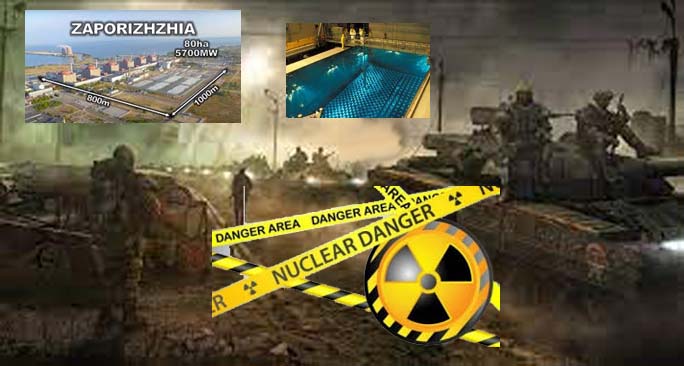
Nuclear experts have also highlighted that the US does not have any nuclear plants that use the same class of technology as Zaporizhzhia, which is a Soviet-designed “water water energetic reactor” (abbreviated as “VVER” in Russian).
By Lauren Kent, CNN, 20th March 2025, https://edition.cnn.com/2025/03/20/europe/ukraine-us-zaporizhzhia-nuclear-power-plant-explainer/index.html
Ukraine’s Zaporizhzhia nuclear power plant, occupied by Russian forces since the early days of the war, could be restored and protected by US ownership – at least according to the Americans.
But it’s unclear how the operation would work in practice, experts say, especially as the plant is on the front line, in territory controlled by Russia.
As part of ongoing talks to inch toward a partial ceasefire, US President Donald Trump and Ukrainian counterpart Volodymyr Zelensky “discussed Ukraine’s electrical supply and nuclear power plants” during a Wednesday phone call, according to the US readout of the call.
“(Trump) said that the United States could be very helpful in running those plants with its electricity and utility expertise. American ownership of those plants would be the best protection for that infrastructure and support for Ukrainian energy infrastructure,” the readout said.
On Thursday, Zelensky disputed that section, saying: “In terms of ownership, we definitely did not discuss this with President Trump.” Zelensky stressed that “all nuclear power belongs to the (Ukrainian) state, including the temporarily occupied Zaporizhzhia region.”
Zelensky said the day before that Ukraine is ready to consider the possibility of American investment in the restoration and modernization of Zaporizhzhia. During a news conference after his call with Trump, Zelensky said they only discussed the occupied Zaporizhzhia plant, rather than Ukraine’s wider nuclear power network.
“I believe that the station will not work under occupation. I believe that the station can be restored to operation,” Zelensky said, also cautioning that the process will take an estimated two years or more.
Before Russia’s full-scale invasion in 2022, the Zaporizhzhia plant supplied roughly 20% of Ukraine’s energy, with six reactors, making it the largest nuclear power station in Europe. Ukrainian staff remain at the plant under Russian occupation, and at one point staff were forced to work at “gunpoint.”
But the plant is now disconnected from the grid and the electricity infrastructure required to operate the plant safely has been damaged by drone strikes and frequent shelling. Russia also destroyed the nearby Kakhovka dam, emptying the reservoir that supplied water to cool the plant.
All six reactors are shut down and there are concerns over the plant’s ongoing maintenance, as explosions continue nearby, according to a UN nuclear watchdog team on the ground.
When asked about how the US could potentially run a Ukrainian nuclear plant, Energy Secretary Chris Wright told Fox News that he didn’t believe it would require American troops on the ground.
“Certainly, we have immense technical expertise in the United States to run those plants. I don’t think that requires boots on the ground,” Wright said. “But I’ll leave the foreign policy to President Trump and Secretary (of State Marco) Rubio. I know they are working tirelessly, ‘How do we bring peace to Ukraine?’
“But, if it was helpful to achieve that end – have the US run nuclear power plants in Ukraine? No problem. We can do that,” Wright added.
But experts question how feasible the idea floated by the Trump administration would be.
Operating the plant safely would require a safe, constant power supply to avoid a reactor meltdown, as well as the restoration of sufficient water supplies for cooling the plant.
“The first word of business would be to establish definitively that there could be no attacks on either the plant directly or on the supporting infrastructure – both power and water resources – and that would have to be iron-clad,” said Edwin Lyman, director of nuclear power safety at the Union of Concerned Scientists. “So far, that kind of agreement has been elusive, as shelling occurs at a daily basis in the vicinity of the reactors.”
“There’s no point in trying to rebuild a plant and operate it if it could be jeopardized at any moment,” Lyman said. “And the notion that US-ownership would somehow be more of a deterrent to Russia attacking the plant than now, when the Russians themselves control the plant, that doesn’t make sense either.”
The idea of US operation “raises a whole lot of logistical and technical and practical questions that are very unclear,” Lyman said, including the question of US liability for any accident at the facility. “With ownership or operator status comes responsibility.”
Nuclear experts have also highlighted that the US does not have any nuclear plants that use the same class of technology as Zaporizhzhia, which is a Soviet-designed “water water energetic reactor” (abbreviated as “VVER” in Russian).
“These are different technologies,” said Elena Sokova, director of the Vienna Center for Disarmament and Non-Proliferation, adding that there are strict licensing requirements for the plant’s operators.
“The US is an advanced country… but to be prepared to immediately take control of something that is of a different design, designed by different country, and where you have no experience of running it – I don’t think it’s a good solution or viable option.”
“Having said that, if we’re talking about a long process, I’m sure certain things could be worked out, particularly if there is an arrangement… to have the majority of the Ukrainian staff and operators running these reactors,” Sokova added.
Ukraine wants role in restoration of plant
Zelensky emphasized on Wednesday night that safe restoration of the plant is in the whole world’s interest, and Ukraine should have a role in that “because it is ours, and this is our land, this is our station.”
The Ukrainian president said any return of the plant would not be possible without control of the area where it is located – the city of Enerhodar – on the Russian-occupied side of the Zaporizhzhia region.
“If you just hand over the station, and a meter away from the station, everything is occupied or there are Russian weapons, no one will work like that,” Zelensky told reporters, raising concerns that the plant could be restored with US and Ukrainian investment, only to have Russia possibly damage or destroy it again later.
As fighting continues along the front line, the dire situation at the Zaporizhzhia plant “remains unchanged,” Andrian Prokip, energy program director at the Ukrainian Institute for the Future, wrote last month.
“It still does not receive adequate maintenance and it continues to serve as a Russian ammunition depot,” said Prokip, also a senior associate at the Wilson Center.
CNN’s Svitlana Vlasova, Christian Edwards and DJ Judd contributed to this report.
US seeks full dismantling of Iran’s nuclear program, Trump’s advisor says
Iran International 23rd March 2025,
https://www.iranintl.com/en/202503231237
The Trump administration is seeking full dismantlement of Iranian nuclear program in a way that the entire world can see, White House National Security Advisor Michael Waltz told CBS News on Sunday.
“It is time for Iran to walk away completely from its desire to have a nuclear weapon. And they will not, and cannot be allowed to have a nuclear weapons program, that’s enrichment, weaponization, and its strategic missile program,” Waltz said.
“The President has all options on the table. But we want to be clear, this isn’t some kind of, you know, kind of tit for tat that we had under the Obama administration, or Biden. This is the full program. Give it up, or there will be consequences,” he added.
His comments came in contrast to the much more conciliatory tone of Trump’s Middle East envoy, Steve Witkoff, who spoke of the US president’s intention to resolve Iran’s nuclear dispute diplomatically.
Earlier this month, Trump wrote a letter to Iran’s Supreme Leader Ali Khamenei in an attempt to explore a new nuclear agreement and prevent military escalation, Witkoff told Fox News on Sunday.
“We don’t need to solve everything militarily,” Witkoff said.
He emphasized that Iran cannot have a nuclear bomb, saying, “It cannot happen and it will not happen.”
“Our signal to Iran is let’s sit down and see if we can, through dialogue, through diplomacy, get to the right place. If we can, we are prepared to do that. And if we can’t, the alternative is not a great alternative.”
On Friday, Witkoff told the Tucker Carlson show, “We should talk. We should clear up the misconceptions. We should create a verification program so that nobody worries about weaponization of your nuclear material.”
He also said Trump believes the issue “has a real possibility of being solved diplomatically” and “acknowledged that he’s open to an opportunity to clean it all up with Iran.”
His remarks raised questions about the Trump’s administration’s approach toward Iran, as Trump’s Secretary of State, Marco Rubio, and National Security Advisor, Michael Waltz, have taken a much tougher stance, insisting over the past few weeks that Iran’s nuclear program must be dismantled and that Iran will face military action unless it complies with US demands.
Ukraine will have to make territorial concessions – Waltz
https://www.rt.com/news/614323-waltz-ukraine-territorial-concessions/ 24 Mar 25
Trump’s national security adviser has also indicated that the US is ready to ramp up sanctions pressure on Russia if it declines a 30-day ceasefire.
Ukraine should be prepared to give up certain territories as part of any future peace negotiations with Russia, US National Security Adviser Mike Waltz has said.
Kiev claims sovereignty over Crimea, the Donetsk and Lugansk People’s Republics, as well as Kherson and Zaporozhye Regions. The territories officially became part of Russia after referendums in 2014 and 2022. Moscow has maintained that their status is non-negotiable.
Speaking to ABC News on Sunday, Waltz said that a potential settlement to the Ukraine conflict “is going to be some type of territory for future security guarantees” for Kiev.
According to the official, an alternative in the form of NATO membership for Ukraine “is incredibly unlikely.” Ukraine has demanded accession to the US-led military bloc whereas Moscow views Kiev’s NATO aspirations as a root cause of the ongoing conflict.
Attempts to “drive every Russian off of every inch of Ukrainian soil, including Crimea” would be unrealistic at this point, Waltz believes. The ongoing diplomatic efforts spearheaded by the US should focus on the “reality of the situation on the ground,” the national security adviser argued.
Also on Sunday, in an interview with Fox News, Waltz said that “we are engaging in diplomacy, and that will involve both carrots and sticks to get both sides to the table.” When asked whether US President Donald Trump was prepared to “punish” Russian President Vladimir Putin with more sanctions if he rejected a ceasefire, Waltz replied that “all options are on the table.”
Earlier this week, US Secretary of State Marco Rubio revealed that representatives from Washington and Kiev had “had conversations” on the issue of territorial concessions during the talks in the Saudi Arabian city of Jeddah on Tuesday. The diplomat argued that “neither side can militarily achieve their maximalist goals.”
He similarly predicted that “obviously, it’ll be very difficult for Ukraine in any reasonable time period to sort of force the Russians back all the way to where they were in 2014.”
Following the negotiations in Jeddah, Ukraine agreed to a 30-day ceasefire.
Trump’s special envoy, Steve Witkoff, traveled to Moscow on Thursday to present Putin with the details of the proposal.
The Russian head of state welcomed the ceasefire in principle but insisted on addressing several salient issues first, including the fate of the Ukrainian troops encircled in Russia’s Kursk Region
US wants to negotiate with Iran on nuclear programme: US envoy
Tehran accuses US of bullying tactics as nuclear deal uncertainty deepens under Trump’s renewed pressure campaign.
US President Donald Trump’s outreach to Iran’s Supreme leader, Ayatollah Ali Khamenei, on a possible new nuclear deal is an attempt to avoid direct military action, US special envoy Steve Witkoff has said.
“We don’t need to solve everything militarily,” Witkoff told Fox News on Sunday. “Our signal to Iran is ‘Let’s sit down and see if we can, through dialogue, through diplomacy, get to the right place’. If we can, we are prepared to do that. And if we can’t, the alternative is not a great alternative.”
Witkoff’s comments come after Trump said on March 7 that he sent a letter to the Iranian leadership seeking to engage in talks over Iran’s nuclear activities and warning of potential military action if it refused. The approach was slammed by Khamenei, who said Iran was not going to engage with a “bully”.
Trump has also threatened Tehran over any support for the Iran-aligned Houthis in Yemen, who have resumed their military support for Palestinians by targeting Israel after it blockaded aid and then resumed its war in Gaza.
Amid intense US air strikes on Yemen last week, Trump said the US will hold Tehran responsible for any attacks by Yemen’s Houthis, dismissing Iran’s insistence that the group operates independently.
Talks with the US are impossible unless Washington changes its pressure policy the Iranian Foreign Minister Abbas Araghchi said on Sunday. On Thursday, he said that the letter was “actually more of a threat”, and that Tehran would respond soon.
There is little trust in Iran in US negotiation commitments after Trump in 2018 pulled the US out of a landmark nuclear deal – the Joint Comprehensive Plan of Action (JCPOA) – imposing instead additional sanctions on Iran. The JCOPA was signed with world powers in 2015 to curb Iran’s nuclear deal in exchange for sanctions relief.
Since Trump’s unilateral withdrawal from the accord, Iran has accelerated its enrichment of uranium to up to 60 percent purity – a step away from the 90 percent level needed for weapons-grade uranium.
According to the International Atomic Energy Agency (IAEA), which carries out inspections of Iranian nuclear sites, Iran has amassed enough fissile material for multiple bombs, but has made no effort to build one.
While Trump has hinted at the desire to negotiate with Iran since returning to the White House earlier this year, he has reinstated a “maximum pressure” campaign against Tehran.
And on Wednesday, senior White House officials again said Iran must do away with its nuclear programme entirely, leaving all uranium enrichment activity, even at low levels.
That, along with Trump’s threats of military action against Iran, has prompted calls from within Iran to abandon its officially stated policy that it will never pursue nuclear weapons.
Aaron Mate on how NATO provoked Russia in Ukraine and undermined peace
By Aaron Maté / The Grayzone March 23, 2025, https://scheerpost.com/2025/03/23/aaron-mate-on-how-nato-provoked-russia-in-ukraine-and-undermined-peace/
The Grayzone’s Aaron Maté argues that the US and NATO provoked Russia in Ukraine by expanding NATO, dismantling arms control, installing military assets threatening Russia, meddling in Ukraine and blocking multiple opportunities for peace.https://www.youtube.com/watch?v=z8IMtB6UkvM
Katz: Israel To Begin Annexing Gaza
The Defense Minister explained that Israel will begin seizing territory and will not stop until all hostages are released
by Kyle Anzalone March 21, 2025, https://news.antiwar.com/2025/03/21/katz-israel-to-begin-annexing-gaza/
Israeli Defense Minister Israel Katz said that the IDF will begin annexing parts of the Gaza Strip. President Donald Trump and Israeli officials have discussed expelling the Palestinians from the Strip.
“I have instructed the IDF to seize additional areas in Gaza, while evacuating the population, and to expand the security zones around Gaza for the protection of Israeli communities and IDF soldiers,” he said on Friday. “The more Hamas persists in its refusal to release the hostages, the more territory it will lose, which will be annexed to Israel.”
On Wednesday, Katz directly threatened the civilian population of Gaza with “utter destruction and devastation” if they did not release the hostage and expel Hamas from Gaza. He added if the Palestinians did that, then they would be allowed to leave Gaza for another country.
While Katz is demanding Hamas release the hostages, the renewed assault on the Strip breaks a hostage and ceasefire deal that would have led to the release of the remains of the Israeli captives. Since Israel resumed bombing Gaza, at least 500 have been killed, including 200 children.
Katz explained in his Friday statement that he will deploy “all military and civilian pressure tools including the evacuation of Gaza’s population southward and the implementation of voluntary relocation plans for Gaza residents.” He added that the IDF would establish “permanent Israeli control of the territory.”
On Friday, the Times of Israel reported that Egypt said it was willing to temporarily house half a million Palestinians in the northern Sinai while Gaza is rebuilt.
Still, Tel Aviv and Washington lack a country to send the roughly two million permanently resettle Palestinians. Over the past week, reports said Syria, Somalia, Somaliland, and Sudan received offers from Washington to resettle Palestinians.
Kyle Anzalone is the opinion editor of Antiwar.com and news editor of the Libertarian Institute. He hosts The Kyle Anzalone Show and is co-host of Conflicts of Interest with Connor Freeman.
The fight for control of Ukraine’s nuclear reactors
How serious is Donald Trump about US ownership of Kyiv’s nuclear power plants?
By Chas Newkey-Burden, The Week UK,
https://theweek.com/world-news/the-fight-for-control-of-ukraines-nuclear-reactors
First, Donald Trump made a pitch for Ukraine’s critical minerals; now, the US president seems to want to own the war-torn nation’s nuclear power plants.
But there’s a lot of confusion over what Trump would do if he did take control of the plants – and if he actually even wants to.
How many nuclear power plants in Ukraine?
Ukraine has four nuclear power plants. The most significant one – and the largest in Europe – is Zaporizhzhia, which was seized by Russia in the first weeks of the war. And it’s this plant, in particular, that’s become Trump’s “new craving” in his “transactional approach to bringing peace”, said Politico.
What is Trump demanding?
As a demand, it’s Trump “at his most confusing”, said The Guardian. If the current frontlines in Ukraine were “frozen” in a ceasefire or peace deal, it would be “difficult to see” how Zaporizhzhia could be operated by the US while it’s “surrounded by Russian occupiers”. Besides, Ukraine is “not thought willing” to “renounce” ownership.
It’s “unclear” whether the US is actually looking to own Ukraine’s atomic power, said the Financial Times. A US account of a recent call between Kyiv and Washington suggested so, but Zelenskyy said the discussion only touched on the US helping to “recover” and modernise the Zaporizhzhia plant.
Why would Trump want control?
Trump’s minerals deal with Ukraine is “back on” but “can only go ahead if the materials can be extracted”, said The Telegraph. This “takes a lot of energy – something which the Zaporizhzhia plant could provide”.
Energy analysts have also noted that the US could have another “economic interest” in the plant, said The New York Times. Zaporizhzhia uses fuel and technology supplied by Westinghouse, an American nuclear technology company.
But still, the idea has “a catch” for “the man who coined the art of the deal”, said Reuters: “it would be years” before there is “even a hope of it making a return on investment”. So, the proposal could simply be the US “testing out various ideas to see what works”, as Trump “seeks to hammer out a lasting peace deal”.
What might happen next?
Control over the plant is “likely to remain a legal and logistical challenge”, said The Associated Press. And, of course, control over the land Zaporizhzhia stands on is a “highly divisive issue for both warring sides”.
It’s “unclear” what Trump could “offer to Russia to get it to hand over the plant”, said the NYT. Moscow is likely to demand something meaningful in return, such as “the lifting of Western sanctions that have hurt its economy”.
If Ukraine does regain control of Zaporizhzhia, the “more likely” alternative to US ownership is a “joint venture” – an investment fund for the ageing plant, which “both parties could contribute to and benefit from”, said The Telegraph. This is essentially the same concept that “formed the basis” of the minerals deal.
Trump: best protection for Ukraine’s nuclear power is US takeover.
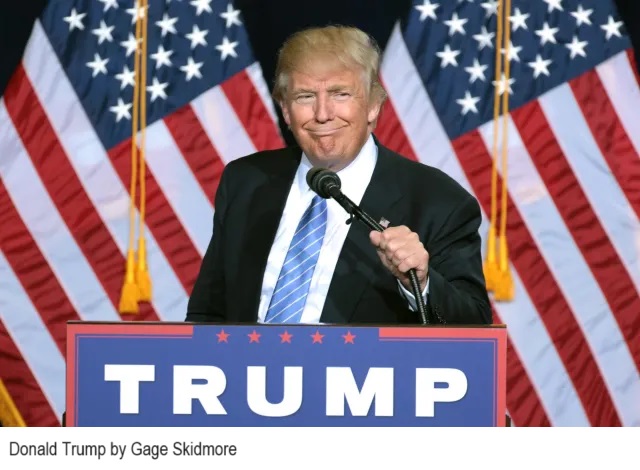
President Trump has told President Zelensky that an American takeover of
nuclear power in Ukraine would offer the “best protection” for the
country’s infrastructure. The White House said Trump had “moved
beyond” the minerals deal for American companies to extract oil, gas and
rare metals that had been proposed as a way to protect Ukraine from future
Russian aggression. That deal was suspended after Zelensky’s disastrous
meeting last month with Trump and JD Vance, the vice-president, in the Oval
Office. It envisaged US control over natural resources and infrastructure
such as ports, but did not mention nuclear power.
Times 19th March 2025 https://www.thetimes.com/world/russia-ukraine-war/article/trump-best-protection-for-ukraines-nuclear-power-is-us-takeover-9l0xsxqjj
‘Never forget’: Pacific countries remember nuclear test legacy as weapons ban treaty debated.
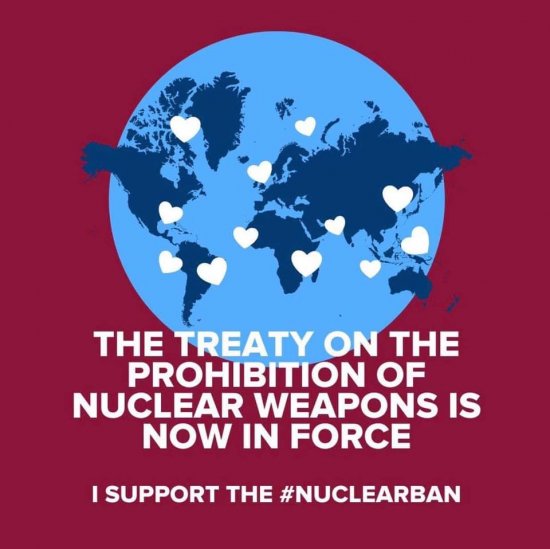
Supporters of the UN treaty prohibiting nuclear weapons gathered this month in New York to call for wider ratification
Jon Letman, Guardian, 21 Mar 25
Growing up in the Pacific nation of Kiribati, Oemwa Johnson heard her grandfather’s stories about nuclear explosions he witnessed in the 1950s. The blasts gave off ferocious heat and blinding light. He told her people were not consulted or given protective gear against bombs detonated by the US and UK at Kiritimati Island, now part of Kiribati, decades ago.
People in Kiribati suffered grave health consequences as a result of exposure to radiation from the tests in the late 1950s and early 1960s, a legacy they say continues to this day. Johnson says there’s a lack of accountability and awareness of how nuclear testing by foreign countries has harmed her people and homeland.
“It doesn’t matter if they’re very small island nations, their stories matter,” the 24-year-old says.
Between 1946 and 1996, the US, the UK and France conducted more than 300 underwater and atmospheric nuclear tests in the Pacific region, according to Pace University International Disarmament Institute. Kiribati, French Polynesia, and the Republic of the Marshall Islands were among the most affected.
For decades the countries have called for justice for the ongoing environmental and health impacts of nuclear weapons development. The push intensified this month as supporters of the UN treaty on the prohibition of nuclear weapons (TPNW) – including many from Pacific nations – met to discuss the treaty and call for wider ratification.
The treaty imposes a ban on developing, testing, stockpiling, using or threatening to use nuclear weapons – or helping other countries in such activities. It entered into force in 2021 and has 98 countries as parties or signatories. In the Pacific region 11 countries have backed the treaty. Treaty supporters want universal global support but many countries – including the US, the UK and France – oppose the treaty.
The nine nuclear armed countries argue that nuclear weapons are critical to their security. Likewise, Nato nations, Japan, South Korea and others are not yet party to the treaty. Australia, where the UK conducted nuclear tests in the 1950s, has not ratified the TPNW despite the prime minister, Anthony Albanese, saying in 2018 that Australia would do so the treaty when his party was in power…………………………..
‘Nuclear risks rising’
Against this backdrop, politicians, activists and other representatives gathered at UN headquarters in New York this month for week-long discussions on how to secure more support for the TPNW.
Hinamoeura Morgant-Cross, a representative of the French Polynesia assembly, was among the parliamentarians. She says her family was significantly affected by French nuclear detonations at Moruroa and Fangataufa atolls between 1966 and 1996. Morgant-Cross told the forum high rates of radiation-induced cancer in her family had motivated her to become an anti-nuclear activist and assembly member.
“It started with my grandma with thyroid cancer,” she said. “Then her first daughter – my auntie – with thyroid cancer. She also got breast cancer. My mom and my sister have thyroid disease. I got chronic leukemia when I was 24 years old. I’m still fighting against this leukemia.”
New Zealand’s UN representative in Geneva, Deborah Geels, stressed the treaty’s “special importance in the Pacific”, warning: “Tensions between nuclear-armed states and nuclear risk are rising, and no region is immune – even the South Pacific.”……………………………….. more https://www.theguardian.com/world/2025/mar/21/never-forget-pacific-countries-remember-nuclear-test-legacy-as-weapons-ban-treaty-debated
‘Vandals in the White House’ no longer reliable allies of Australia, former defence force chief says
Henry Belot and Ben Doherty, Guardian, 21 Mar 25
Chris Barrie says Donald Trump’s second term is ‘irrecoverable’, but stops short of calling for end to Aukus pact.
A former Australian defence force chief has warned “the vandals in the White House” are no longer reliable allies and urged the Australian government to reassess its strategic partnership with the United States.
Retired admiral Chris Barrie spent four decades in the Royal Australian Navy and was made a Commander of the Legion of Merit by the US government in 2002. He is now an honorary professor at the Australian National University.
“What is happening with the vandals in the White House is similar to what happened to Australia in 1942 with the fall of Singapore,” Barrie said. “I don’t consider America to be a reliable ally, as I used to.
“Frankly, I think it is time we reconsidered our priorities and think carefully about our defence needs, now that we are having a more independent posture … Our future is now in a much more precarious state than it was on 19 January.
“Trump 1.0 was bad enough. But Trump 2.0 is irrecoverable.”
Barrie said it was “too soon” to say whether Australia should end its multibillion-dollar Aukus partnership, but raised concerns about a lack of guarantee that nuclear-powered submarines would actually be delivered. He also warned about an apparent lack of a back-up option.
Pillar One of the Aukus deal – which would see the US sell Australia nuclear-powered submarines before the Aukus-class submarines were built in Australia – is coming under increasing industry scrutiny and political criticism, with growing concerns the US will not be able, or will refuse, to sell boats to Australia, and continuing cost and time overruns in the development of the Aukus submarines.
“Let’s define why we really need nuclear submarines in the first instance, given a new independent defence posture for Australia,” Barrie said. “If they still make sense in that context, fine. But they might not. There might be alternatives. There might be alternatives with conventional submarines if we didn’t want to go any further than the Malacca Straits.”
Barrie’s warning comes after former foreign affairs minister Bob Carr said Australia would face a “colossal surrender of sovereignty” if promised US nuclear-powered submarines did not arrive under Australian control.
Carr, the foreign affairs minister between 2012 and 2013, said the Aukus deal highlighted the larger issue of American unreliability in its security alliance with Australia.
“The US is utterly not a reliable ally. No one could see it in those terms,” he said. “[President] Trump is wilful and cavalier and so is his heir-apparent, JD Vance: they are laughing at alliance partners, whom they’ve almost studiously disowned.”………………………. https://www.theguardian.com/australia-news/2025/mar/21/vandals-in-the-white-house-no-longer-reliable-allies-to-australia-former-defence-force-chief-says-ntwnfb?CMP=share_btn_url
The Phony Ceasefire

European leaders, who’ve staked their reputations on not losing in Ukraine, can apparently see no other way than to scaremonger a Russian threat and meet it by unnecessarily militarizing the continent. They need their publics to support this.
Knowing well in advance that Russia would reject it, the U.S. and Ukraine announced with fanfare that its ceasefire deal was in “Russia’s court” in what was an exercise of pure public relations, writes Joe Lauria.
by Joe Lauria, Consortium News, 16 Mar 25 more https://consortiumnews.com/2025/03/16/the-phony-ceasefire/
Nothing could have been clearer than Russia’s repeated conditions for a permanent end of the war, rather than a temporary ceasefire: Ukraine’s neutrality, its demilitarization and denazification, the inclusion of four Russian-speaking oblasts into the Russian Federation and treaties establishing a new security architecture in Europe.
Equally clear was Ukraine’s utter rejection of these conditions, demanding instead the return of every inch of its territory, including Crimea, and Ukraine’s membership in NATO.
It is the reason the two sides are still fighting a war. It is a war, however, that Ukraine is badly losing. Obscuring that fact is an important aim of Ukraine and its European allies to keep their publics onside.
But it isn’t only their publics that need convincing to continue supporting Ukraine, but the president of the United States too.
After the Oval Office dustup, in which Donald Trump and J.D. Vance laid it on the line to Zelensky in public, the Europeans held two summits. At both they made loud noises about continuing to support Zelensky, but also made clear they couldn’t do it without the United States.
Much as they loathe him, Zelensky and the European leaders need Donald Trump. So they set Zelensky up to writing a letter sucking up to Trump, a man clearly susceptible to flattery.
Very likely also influenced by his Secretary of State Marco Rubio and National Security Advisor Michael Waltz, both of whom had previously expressed neocon support for Ukraine and condemnation of Russia, Trump was apparently turned around, convinced to propose the 30-day ceasefire.
Trump then somehow got the notion that Vladimir Putin, despite his oft repeated conditions for ending the war, would yield to pressure. It could be Trump thinks he is a neutral mediator who needs to bully both sides to force them to do a deal.
So after the ceasefire was floated, Trump resumed arms and intelligence flows to Ukraine, new sanctions on Russia were threatened and Ukraine fired 350 drones at residential areas of Moscow just as Trump’s envoy Steve Witkoff was arriving in Moscow to discuss the ceasefire.
Like Casting a Lone Veto
All this was designed to push Putin to accept it or appear like a man guilty of rejecting peace. If U.S. arms, intelligence and sanctions had not deterred Putin before, why would it now?
Putin saw this as the public relations exercise that it is and treated it as such. He responded with public relations of his own.
Instead of firmly saying the expected, “No,” he said, “Yes,” followed by “nuances,” such as who would monitor such a ceasefire along a 2,000-kilometer front?
He said such a ceasefire could not begin as occupying Ukrainian troops were encircled on Russian territory; and, crucially, that a 30-day ceasefire — with no Ukrainian rearmament — could only mark the start of talks for a permanent settlement. Putin exposed the motive to give Ukrainian troops on the run a chance to regroup.
Just as designed, Zelensky and European leaders blasted Putin for being a man who loves war, and hates peace.
At the U.N. Security Council, which I covered as a correspondent for a quarter of a century, I often saw countries introduce resolutions for a vote even though they were certain one of the five permanent members would veto it.
Diplomats explained that this was done on purpose to force the arm of that nation’s ambassador to be the lone one raised in opposition to the measure for all the world to see, causing it maximum public embarrassment.
That is precisely the exercise we have seen with this phony ceasefire proposal. The Europeans and the Ukrainians are trying to milk it for all it’s worth. Zelensky did a selfie video to call Putin a “manipulator” of world leaders.
British Prime Minister Keir Starmer said: “The Kremlin’s complete disregard for President Trump’s cease-fire proposal only serves to demonstrate that Putin is not serious about peace.”
Starmer deployed the scare tactic that Putin is bent on European conquest, saying: “Russia’s appetite for conflict and chaos undermines our security back here in the United Kingdom.” He even tried to blame his political difficulties at home on Russia for “driving up energy costs.”
Meanwhile Starmer says a European peacekeeping force is moving to “operational phase” ahead of a Thursday meeting of European leaders. Only with a ceasefire and Russia’s consent could such a force be deemed “peacekeepers” however.
European leaders, who’ve staked their reputations on not losing in Ukraine, can apparently see no other way than to scaremonger a Russian threat and meet it by unnecessarily militarizing the continent. They need their publics to support this.
In the end, the “ceasefire” gambit may indeed create more public sympathy for Ukraine and more irrational fear of Russia. But the big question is whether it will harden Trump against Russia by continuing arms shipments and intelligence and perhaps levelling new sanctions against Moscow.
All that would do, however, is prolong the death and destruction. Without NATO’s direct participation in the war against Russia, which would risk nuclear annihilation, the outcome of the war is certain. Because of that, Trump could resume pressure on Zelensky to essentially give up instead.
The ball is now in Trump’s court. On Sunday he told reporters he would be discussing land and control of powet plants in telephone call with Putin scheduled for Tuesday. “We want to see if we can bring that war to an end,” he said. “Maybe we can. Maybe we can’t, but I think we have a very good chance.”
The course of this three-year conflict since Russia’s intervention makes clear that the longer Ukraine tries to fight, the worse deal it will get, no matter how many public relations points it might win along the way.
Joe Lauria is editor-in-chief of Consortium News and a former U.N. correspondent for The Wall Street Journal, Boston Globe, and other newspapers, including The Montreal Gazette, the London Daily Mail and The Star of Johannesburg. He was an investigative reporter for the Sunday Times of London, a financial reporter for Bloomberg News and began his professional work as a 19-year old stringer for The New York Times. He is the author of two books, A Political Odyssey, with Sen. Mike Gravel, foreword by Daniel Ellsberg; and How I Lost By Hillary Clinton, foreword by Julian Assange.
Britain wants Ukraine’s minerals too
It’s not just Trump. The UK views critical minerals as a government priority and wants to open up Ukraine’s vast resources to British corporations.
MARK CURTIS, 11 March 2025,
more https://www.declassifieduk.org/britain-wants-ukraines-minerals-too/?utm_source=Email&utm_medium=Button&utm_campaign=ICYMI&utm_content=Button
When UK officials signed a 100 year partnership with Ukraine in mid-January, they claimed to be Ukraine’s “preferred partner” in developing the country’s “critical minerals strategy”.
Yet within a month, Donald Trump had presented a proposal to Ukraine’s President Volodymr Zelensky to access the country’s vast mineral resources as “compensation” for US support to Ukraine in the war against Russia.
Whitehall was none too pleased about Washington muscling in.
When foreign secretary David Lammy met Zelensky in Kyiv last month he reportedly raised the issue of minerals, “a sign that Starmer’s government is still keen to get access to Ukraine’s riches”, the iPaper reported.
Lammy earlier said, in a speech last year: “Look around the world. Countries are scrambling to secure critical minerals, just as great powers once raced to control oil”.
The UK foreign secretary was correct, but Britain itself is one of those powers, and Ukraine is one of the major countries UK officials – as well as the Trump administration – have their eyes on.
It’s no surprise why. Ukraine has around 20,000 mineral deposits covering 116 types of minerals such as beryllium, manganese, gallium, uranium, zirconium, rare earth metals, and nickel.
The country, whose economy has been devastated by Russia’s brutal war, also possesses one of the world’s largest reserves of graphite, the largest titanium reserves in Europe, and a third of the continent’s lithium deposits.
These resources are key for industries such as military production, high tech, aerospace, and green energy.
In recent years, the Ukrainian government has sought to attract foreign investment to develop its critical mineral resources and signed strategic partnerships and held investment fora to showcase its mining opportunities.
The country has also begun auctioning exploration permits for minerals such as lithium, copper, cobalt and nickel, offering lucrative investment opportunities.
Media narratives largely parrot the UK government’s interests in Ukraine being about standing up to aggression. But Whitehall has in the past few years stepped up its interest in accessing the world’s critical minerals, not least in Ukraine. www.liberalsagainstnuclear.au
Walt Zlotow: Trump pushing Ukraine peace for simple reason: he has no cards to play either.
Walt Zlotow, West Suburban Peace Coalition, Glen Ellyn IL 17 Mar 25
At his Oval Office kerfuffle with Ukraine President Zelensky, President Trump told Zelensky he had to make peace with Russia. This followed Zelensky’s plea for more US weapons to keep the war going till Ukraine prevails. Trump disabused him of that notion by saying “You have no cards to play”, colloquial for ‘Make peace, not war.’
Trump knows he has no cards to play as well in the ongoing peace negotiations in Saudi Arabia. That’s why he is anxious to end the war. He knows predecessor Biden made a catastrophic mistake provoking the war over 3 years ago. He knows Ukraine is on the brink of military collapse in spite of the $175 billion in weapons Biden poured into Ukraine that has merely turned it into a failed state. Trump knows Biden sabotaged the imminent peace treaty Putin and Zelensky were prepared to sign ending the war in its first 2 months.
He wants none of that disastrous Biden war policy attached to his foreign policy resume.
Every American, every Ukrainian, every Russian should support the Trump peace initiative that could end the war, bring security to the region, allow reconstruction of the 80% of what’s left of Ukraine, provide resumption of normal US Russia diplomatic relations. Most importantly, it will end the risk of this war going nuclear, a threat hanging over peoplekind every one of the 1,120 days of this totally unnecessary, lost war.
Trump didn’t change sides. He’s not abandoning an ally. He’s not a Russian agent. He’s not a traitor. Unlike Biden, he’s merely a realist who looked at his empty hand, saw Russian President Putin was holding 4 aces, and decided to walk away lest another 100,000 Ukrainians are needlessly sacrificed for America’s lust to control European geopolitics.
On this issue President Trump deserves our support.
Towards a Eurobomb: The Costs of Nuclear Sovereignty
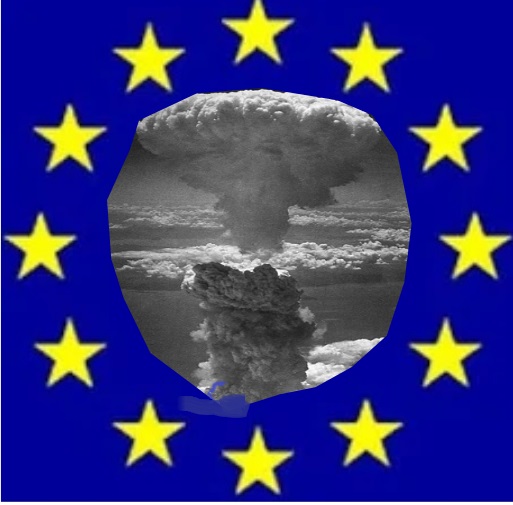
it would be much better if the leaders of the EU spend as much time on diplomacy with Russia than in building up European defense.
Instead of investing in weapons of mass destruction, making EU defense more efficient should be the priority as well as integrating Russia into a larger collective security organization
Tom Sauer |11.03.2025 , https://www.aa.com.tr/en/opinion/opinion-towards-a-eurobomb-the-costs-of-nuclear-sovereignty/3505915
The author is a professor in International Politics at the University of Antwerp in Belgium.
- If American soldiers or the tactical nuclear weapons are withdrawn, the odds are that the Europeanization of the French (and maybe British) nuclear weapons in one way or another may indeed become reality
ISTANBUL
The Trump administration’s recent isolationist statements, amid the talks of war in Europe, have revived discussions on Europeanizing French (and possibly British) nuclear weapons. After 75 years of NATO, concerns over US abandonment are increasingly shaping European foreign policy discussions. In the past, the French idea of a “dissuasion concertée (concerted deterrence) was mostly met with silence, especially in Germany. This time around the conservative leader Friedrich Merz seems in favor despite the fact that NATO is still alive and the US still has 100,000 soldiers and 100 tactical nuclear weapons in Europe. These weapons are stationed in Türkiye, Germany, Italy, the Netherlands, and Belgium. If the soldiers or the tactical nuclear weapons are withdrawn, the odds are that the Europeanization of the French (and maybe British) nuclear weapons in one way or another may indeed become reality.
There are different scenarios imaginable. The first step is for European nuclear states to declare that their “national interests” align with “European interests,” a principle already reflected in the Lisbon Treaty. The latter, by the way, also contains a collective defense clause similar to NATO’s Article 5. Further steps could be imagined to make these statements more credible: information exchange, consultation, joint planning, joint exercises, and co-financing. Another step could involve deploying French dual-capable aircraft in Germany or Poland. A final step would be the creation of an EU nuclear bomb in a European Defense Union (EDU). It remains, however, still to be seen how the Ukraine war will accelerate the pace towards such an EDU.
What are the costs of Europeanization of nuclear weapons?
First of all, the assumption that nuclear deterrence works is uncertain. Advocates of nuclear weapons believe that it works. They forget that in history many nuclear weapon states (including Israel, India, the UK) have been attacked by non-nuclear weapon states. In theory, it is very hard to make it work as it assumes for instance a rational enemy. It also assumes that the possessor is really prepared to use them. However, if used on a massive scale, it means the annihilation of the planet. In the war in Ukraine, French President Emmanuel Macron for that reason stated that even if Russia uses a tactical nuclear weapon in Ukraine, France would not retaliate with nuclear weapons.
Secondly, emerging and disruptive technologies (like AI) and weapon systems (like hypersonic missiles) will further undermine the so-called nuclear stability. Ideally, conventional deterrence (using hypersonic missiles) could and should replace nuclear deterrence on the condition that all nuclear states agree.
Thirdly, extended nuclear deterrence, read the atomic umbrella, is even more incredible. As early as the 1970s, Henry Kissinger cautioned Europeans against assuming that the US would employ nuclear weapons for their defense. That is also the reason why France did not want to shelter under the US umbrella, and why it built its own nuclear arsenal in the 1950s. Ironically, France now offers its umbrella to its European partners.
Fourthly, as long as there is no EDU, the question will be whose finger will be on the button. Macron is very clear: it will be his finger. The question then becomes whether German taxpayers would be interested in co-financing a strategic weapon system that they cannot control in times of war.
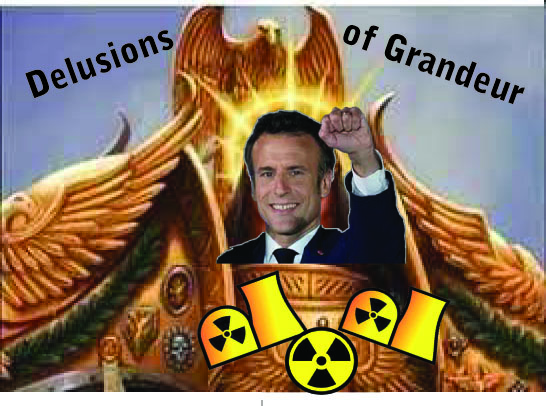
Fifthly, by Europeanizing the French nuclear weapons, the EU legitimizes nuclear weapons. This complicates the fight against proliferation. How sustainable is it to ask Iran not to produce nuclear weapons when the EU itself is setting up a nuclear arsenal?
There are also concerns about whether Europeanization aligns with the Nuclear Non-Proliferation Treaty, particularly if Germany and Poland were to develop their own nuclear capabilities. Both ideas also go against the spirit and the letter of the Treaty on the Prohibition of Nuclear Weapons (2017) that in the meantime has been signed by more or less 100 states.
Sixthly and lastly, it would be much better if the leaders of the EU spend as much time on diplomacy with Russia than in building up European defense. It is high time that the war in Ukraine ends, not only for humanitarian but also economic reasons. A peace agreement ideally includes a beginning of a restructuring of the European collective security architecture that includes both Russia and Ukraine, either in a transformed NATO or an upgraded Organization for Security and Cooperation in Europe (OSCE). If such an agreement is reached, there would be little justification for further fragmenting European defense into over 25 separate, small-scale military forces. Nowadays already the European NATO member states spend $485 billion on defense, much more than Russia ($120 billion). The primary challenge for EU defense today is not the absence of a Eurobomb but the lack of coordination in pooling, sharing, and specialization. Instead of investing in weapons of mass destruction, making EU defense more efficient should be the priority as well as integrating Russia into a larger collective security organization.
Australia’s Trump cards
by Rex Patrick | Mar 16, 2025, https://michaelwest.com.au/tariffs-australias-trump-cards/

Australia does have Trump cards; North West Cape, Pine Gap, US Marine Rotational forces in Darwin, AUKUS and/or critical minerals that the US needs. Perhaps it’s also time to cancel the traitorous quantum computing development contract given to a US company over Australian companies.
These are things that we can put on the table. But doing that requires a measure of boldness. Our problem is our Prime Minister doesn’t have the ticker. Neither does the opposition leader. They are with Trump internationally as they are with the gas cartel domestically; owned and weak.
Anthony Albanese has it all wrong, writes former senator and submariner Rex Patrick. He’s trying to bribe Trump with sweeteners in response to trade tariffs. Instead, he needs to tell Trump he’s prepared to take things away.
US nuclear deterrent
Deep beneath the Indian Ocean, USS Kentucky, a nuclear-powered Ohio Class Ballistic Missile Submarine (SSBN) ploughs its way through the water. Contained within its 18,750 tonne pressure hull structure are 24 Trident ballistic missiles, each capable of carrying eight nuclear warheads to targets up to 12,000 km away.
The launch of all of USS Kentucky’s missiles would, quite literally, change the world by exacting severe destruction on whole societies.
This ability to inflict damage on an exceptionally large scale is the basis of the SSBN’s deterrent capability. Unlike silo based missiles, which are vulnerable to a first strike, or aircraft delivered nuclear weapons, which can be pre-emptively hit or shot down, SSBNs are essentially invisible. They provide certainty of response.
SSBNs serve as the ultimate nuclear deterrent. They’re extremely important to the US, whose navy possesses 14 of them. At any one time six to eight will be at sea, with four of them always on deterrent patrol. They are spread about the globe giving the US President the ability to quickly deliver return-fire with nuclear warheads at any adversary.
24/7 Operation
The primary performance metric for an SSBN is to be able to deliver its nuclear weapons with reliability, timeliness and accuracy.
The Commanding Officer of USS Kentucky must be able to loiter undetected in a place suited for the launching of weapons, be able to receive an order to launch, have an understanding of the submarine’s exact navigational position to a high degree of accuracy and have the ability to launch the weapons quickly and reliably once that order arrives.
Loitering undetected and being able to receive an order to launch is challenging. When a submarine is near the surface, their hulls can be seen by aircraft, and raised periscopes and communications masts can be seen visually and on radar. Operating a submarine at shallow depth can also result in acoustic counter-detection.
The Commanding Officer of USS Kentucky knows that deep is the place to be.
But being deep frustrates a submarine’s ability to receive communications, particularly an ‘emergency action message’.
And that’s were Very Low Frequency (VLF) communications stations come into play. In conjunction with a submarine’s buoyant wire antenna – a long wire that sits just below the sea surface – they can receive a launch command from the President.
The US has a network of these VLF communication stations around the world including in Maine, Washington state and North West Cape, Australia.
North West Cape
The VLF Communication Facility at North West Cape (NAVCOMMSTA Harold E Holt) has been in operation since 1967. Born of secrecy, it was at first exclusively US operated until 1974 when the facility became joint and started communicating with Australian submarines. In 1991 it was agreed that Australia would take full command in 1992 and US Naval personnel subsequently left in 1993.
The facility’s deterrence support role now rests on a 2008 treaty which, ratified in 2011, is formally titled the “Agreement between the Government of Australia and the Government of the United States of America relating to the Operation of and Access to an Australian Naval Communication Station at North West Cape in Western Australia”.
The station’s antenna is 360 meters high, with a number of supporting towers in a hexagon shape connected to it by wires. Considered to be the most powerful transmitter in the southern hemisphere, it transmits on 19.8 kHz at about 1 megawatt.
The station enables emergency action messages to be relayed to submerged SSBNs, like USS Kentucky, when operating in the Indian and Western Pacific oceans.
If the facility was taken out by a first strike nuclear attack, the US Air Force can temporarily deploy Hercules ‘TACAMO’ aircraft, with a long VLF wire they deploy while airborne. It’s a back-up measure with much lower transmission power capabilities.
A bedrock of certainty
After US steel and aluminium tariffs were put into play, the Australian Financial Review ran with a headline “How Australia was blindsided on the US tariffs”. The article opened with, “Australia pulled out all stops to avoid Donald Trump’s duties on steel and aluminium, but it’s impossible to negotiate with someone who doesn’t want anything”.
But the US does want something.
A fact not so well appreciated with respect to nuclear deterrence is it must be seen to be a robust and continuous capability. Onlookers must see a 24/7 capability including deployable submarines manned by well-trained crews, proven and reliable missile systems, an organised strategic command, a continuous communication system that reliably links that strategic command to the submarines with appropriate redundant communication pathways, training facilities and maintenance support.
Potential adversaries must know that they could be struck by an SSBN that could be lurking anywhere in the world’s major oceans.
Effective nuclear deterrence must be built on a bedrock of operational certainty.
Remove the transmitter keys
North West Cape forms part of that certainty.
Australia has the keys to take some certainty away. Without our cooperation the US can’t operate a certain global deterrent capability. Turning off transmissions at North West Cape reduces the effectiveness of the US nuclear deterrence while eliminating one Australian nuclear target
The North West Cape Treaty provides leverage. While the agreement has another decade to run, Article 12 provides that “either Government may terminate this Agreement upon one year’s written notice to the other Government.”
It’s open to Australia to signal or give actual notice of termination. That would focus up policy makers in Washington.
Would we do that to a mate? No, but the US is showing they are not a mate. They are not showing us the loyalty we have shown them. Other actions; abandoning Ukraine, threatening Greenland and Panama and a not so subtle push to annex Canada have also shown they are an unreliable ally who doesn’t share our values.
Trump cards
In negotiating with President Zelensky over the war in Ukraine, President Trump told him in no uncertain terms. “We’re going to feel very good and very strong. You’re, right now, not in a very good position. You’ve allowed yourself to be in a very bad position. You don’t have the cards right now with us.”
But Australia does have Trump cards; North West Cape, Pine Gap, US Marine Rotational forces in Darwin, AUKUS and/or critical minerals that the US needs. Perhaps it’s also time to cancel the traitorous quantum computing development contract given to a US company over Australian companies.
These are things that we can put on the table. But doing that requires a measure of boldness. Our problem is our Prime Minister doesn’t have the ticker. Neither does the opposition leader. They are with Trump internationally as they are with the gas cartel domestically; owned and weak.
Things have changed
Alliances are means to ends, not an end in themselves; and, as pointed out above, things have changed. We can pretend everything is okay, but that doesn’t make it so.
But the bureaucracy is unlikely to advise the Government of alternatives.
Our uniformed leaders are locked into AUKUS, a program that gives them relevance at the big table; something they wouldn’t otherwise have with the depleted Navy they’ve built out of their procurement incompetence. They’re clinging to that relevance, despite all signs showing the program is running aground.
Our spooks are in the same place. In response to calls to put Pine Gap on the table, former Home Affairs Secretary Mike Pezzullo (sacked for failing to safeguard sensitive government information) spoke out, putting the facility ahead of trade interests and Aussie jobs.
The bulk of the intelligence from Pine Gap is very usable for the US and rather less so for Australia. Senior spooks just want to maintain their own relevance in the Five Eyes club; but it’s a mistake to conflate their interest with our national interest.
We should be prepared to play our Trump cards and we should be prepared to face the national security consequences.
If that means an Australia that‘s more independent and more self-reliant, that would be a very good thing. If there’s a shock to the system, then all well and good, because in the changing world we find ourselves in, it might be the only thing that wakes the Canberra bubble from its stupor and pushes us to actually be prepared.
In these uncertain times, there are no hands more trustworthy than our own.
Rex Patrick is a former Senator for South Australia and earlier a submariner in the armed forces. Best known as an anti-corruption and transparency crusader, Rex is running for the Senate on the Lambie Network ticket next year – www.transparencywarrior.com.au.
1 This Month
Chernobyl: The Lost Tapes – A good documentary on Chernobyl on SBS available On Demand for the next 3 weeks– https://www.sbs.com.au/ondemand/tv-program/chernobyl-the-lost-tapes/2352741955560

of the week–London Campaign for Nuclear Disarmament

Tell the Ukrainian Government to Drop Prosecution of Peace Activist Yurii Sheliazhenko
To see nuclear-related stories in greater depth and intensity – go to https://nuclearinformation.wordpress.com
-
Archives
- April 2026 (139)
- March 2026 (251)
- February 2026 (268)
- January 2026 (308)
- December 2025 (358)
- November 2025 (359)
- October 2025 (376)
- September 2025 (257)
- August 2025 (319)
- July 2025 (230)
- June 2025 (348)
- May 2025 (261)
-
Categories
- 1
- 1 NUCLEAR ISSUES
- business and costs
- climate change
- culture and arts
- ENERGY
- environment
- health
- history
- indigenous issues
- Legal
- marketing of nuclear
- media
- opposition to nuclear
- PERSONAL STORIES
- politics
- politics international
- Religion and ethics
- safety
- secrets,lies and civil liberties
- spinbuster
- technology
- Uranium
- wastes
- weapons and war
- Women
- 2 WORLD
- ACTION
- AFRICA
- Atrocities
- AUSTRALIA
- Christina's notes
- Christina's themes
- culture and arts
- Events
- Fuk 2022
- Fuk 2023
- Fukushima 2017
- Fukushima 2018
- fukushima 2019
- Fukushima 2020
- Fukushima 2021
- general
- global warming
- Humour (God we need it)
- Nuclear
- RARE EARTHS
- Reference
- resources – print
- Resources -audiovicual
- Weekly Newsletter
- World
- World Nuclear
- YouTube
-
RSS
Entries RSS
Comments RSS
 nuclear-news