Trump’s bombing threat over Iran nuclear programme prompts backlash
Guardian, Patrick Wintour Diplomatic editor, 31 Mar 25
Iranian officials accuse US president of breaching UN charter and say ‘violence brings violence’
Iran has reacted with outrage after Donald Trump said the country will be bombed if it does not accept US demands to constrain its nuclear programme.
The US president said on Sunday that if Iran “[doesn’t] make a deal, there will be bombing. It will be bombing the likes of which they have never seen before.”.
Trump’s latest threat – more explicit and violent than any made before – came after he sent a letter to Iran, as yet undisclosed, offering to hold talks on its nuclear programme. Iran had sent a reply to the US stating it was willing to hold indirect talks, officials confirmed.
Esmail Baghaei, the Iranian foreign ministry spokesperson, said of Trump’s threat: “The explicit threat of bombing Iran by the head of a country is clear contradiction to the essence of international peace and security.
Such a threat is a gross violation of the United Nations charter and a violation of the International Atomic Energy Agency safeguards regime. Violence brings violence and peace creates peace, America can choose.”
The supreme leader, Ayatollah Ali Khamenei, a sceptic about talks with the US, said Iran was “not overly concerned” by Trump’s words. “We consider it unlikely that such harm would come from outside. However, if any malicious act does occur, it will certainly be met with a firm
and decisive response,” he said.
Brig Gen Amir Ali Hajizadeh, the commander of the Revolutionary Guard’s aerospace force, said: “Someone in glass houses does not throw stones at anyone,” adding: “The Americans have at least 10 bases with 50,000 troops in the region, meaning they are sitting in a glass house.”
But the Iranian foreign minister, Abbas Araghchi, clearly had authority to keep the prospect of talks alive, saying Iran had already replied to the Trump letter through intermediaries in Oman and adding he knew the Iranian letter had now reached the US. Araghchi said direct talks were not possible while the US continued to threaten and bully Iran………………………………………………………………………………………………………………. https://www.theguardian.com/world/2025/mar/31/trumps-bombing-threat-over-iran-nuclear-programme-prompts-backlash
Iran rejects direct nuclear talks with Trump, open to indirect negotiations
US president threatens Iran with bombings if Tehran does not come to a nuclear agreement with Washington.
Aljazeera, 30 Mar 25
Iranian President Masoud Pezeshkian has ruled out direct negotiations with the administration of US President Donald Trump over the country’s nuclear programme but signalled a willingness for indirect talks, while Trump threatened bombings and secondary tariffs if Tehran does not come to an agreement with Washington.
“We responded to the US president’s letter via Oman and rejected the option of direct talks, but we are open to indirect negotiations,” Pezeshkian said during a cabinet meeting in Tehran on Sunday.
He stressed that while Iran is not against negotiations in principle, Washington must first rectify its past “misconduct” and rebuild trust.
His remarks, reported by the ISNA news agency, come amid escalating tensions between the two nations.
“If they don’t make a deal, there will be bombing,” Trump said in a telephone interview with NBC on Sunday.
“But there’s a chance that if they don’t make a deal, that I will do secondary tariffs on them like I did four years ago.”
Barbara Slavin, a fellow at the Stimson Center in Washington and a lecturer in international affairs at George Washington University, told Al Jazeera that “the Iranians are, right to be distrustful, given Trump’s track record and withdrawing from a previous deal”.
Trump has even signalled willingness to lift sanctions if nuclear and regional issues are resolved, but his ability to secure a deal is uncertain, said Slavin.
“The Iranians are worried, but mostly about the economic impact of Trump’s sanctions, the resumption and increase in economic sanctions, which we’ve already seen. The Iranian currency has depreciated dramatically. There’s high inflation and unemployment, and I think this frankly worries the Iranians more than a physical attack, which if anything, might unify the country,” she added.
“The US has moved additional bombers to Diego Garcia. It’s got another aircraft carrier apparently coming into the region. So it is well positioned to carry out some sort of military action, possibly in conjunction with the Israelis if there isn’t movement toward a diplomatic settlement,” Slavin said……………………………………………………https://www.aljazeera.com/news/2025/3/30/iran-rejects-direct-nuclear-talks-with-trump-open-to-indirect-negotiations
Iran rejects direct talks with the US over its nuclear programme
IRAN will not hold direct negotiations with the United States over its
nuclear programme, President Masoud Pezeshkian said today. Commenting on a
letter sent by US President Donald Trump to Iranian Supreme Leader Ali
Khamenei, Mr Pezeshkian said Iran’s response, delivered via Oman, left
open the possibility of indirect negotiations with Washington.
However, such talks have made no progress since Mr Trump, during his first term in
the White House, unilaterally withdrew the US from Tehran’s nuclear deal
with world powers in 2018. The Iranian president told a cabinet meeting:
“We don’t avoid talks; it’s the breach of promises that has caused
issues for us so far. “They must prove that they can build trust.”
Morning Star 30th March 2025, https://morningstaronline.co.uk/article/iran-rejects-direct-talks-us-over-its-nuclear-programme
Why Ontario won’t consider the nuclear option in its fight over Trump’s tariffs
Although Ontario Premier Doug Ford vowed that his
government would “not back down,” “apply maximum pressure” and
“keep up the fight” in the Canada-U.S. trade war, one nuclear option is
off the table: cancelling contracts to build American power reactors.
The province’s utility, Ontario Power Generation, is on the cusp of starting
construction of the first of four BWRX-300 small modular reactors, or SMRs,
at Darlington Nuclear Generating Station in Clarington. They’re designed
by Wilmington, N.C.-based GE-Hitachi Nuclear Energy, a stalwart of the
U.S.‘s nuclear industry. While the cost hasn’t been disclosed yet, the
first reactor is likely to cost several billion dollars.
Globe & Mail 30th March 2025,
https://www.theglobeandmail.com/business/article-why-ontario-wont-consider-the-nuclear-option-in-its-fight-over-trumps/
EUROPE’S DESPERATE GAMBIT
Russian and Eurasian Politic,sby Gordonhahn, March 31, 2025, https://gordonhahn.com/2025/03/31/europes-desperate-gambit/
Ukraine’s battlefronts and army continue to slowly crumble under the pressure of the Russian army’s advance east. The Maidan regime is beginning to eat itself. Yuliya Tymoshenko is being courted by Kiev’s former key backer, Donald Trump’s new America. Former president and Zelenskiy-indicted opposition leader Petro Poroshenko calls Zelenskiy “a dictator.” Kiev’s Mayor Vitaliy Klichko and Zelenskiy’s former aide Oleksiy Arestovich have done much the same, and the latter has announced his intent to run for president. And well-armed neofascist army units, some at the corps level, await their moment to ‘finish Ukraine’s nationalist revolution, which the oligarch-dominated Maidan regime, they say, only began.
On this catastrophic background, Europe is radically opposed to Trump’s new détente with Vladimir Putin’s Russia and rather than pursuing an end to the NATO-Russia Ukrainian War is planning what will prove to be an only partially realizable rearmament campaign to restock its own weapons stores and refill those of Ukraine’s deteriorating army. By supplying military and financial aid to Kiev, Europe can block any ceasefire and prolong Ukraine’s agony. At the same time, Britain and France are spearheading a reckless plan to deploy ‘peacekeeping troops’ from a ‘coalition of the willing’ recruited from among the EU’s member-states.
Moscow has repeatedly warned that any troops from NATO member-states will be regarded as legal military targets. This European ‘maximum plan’ would not only undermine U.S. President Donald Trump’s ceasefire and peace treaty efforts but would create a ‘trip wire’ that Paris and London hope Moscow will touch so the U.S. will be compelled to intervene militarily in direct rather than by proxy fashion as hitherto. Thus, Europe hopes to continue a policy orientation that has helped to destroy Ukraine, pushed the West towards authoritarianism, and weakened many of its own ruling parties and governments.
However, this policy orientation of NATO expansion, Ukrainian victory at seemingly all costs, and subjugation of Russia has begun to split not just the Trans-Atalantic core of NATO and the Western community. It is driving a wedge into Europe, forcing a schism, generally speaking, between Western, Central, and Northern Europe, on the one hand, and Eastern and Southern Europe, on the other hand.
In the north and west, Great Britain, France, Portugal, Germany, Poland, the Baltic states, and Scandinavia prefer to continue the Ukrainian war for years in the hope that Putin wil leave the scene, an upheaval will occur in Moscow, and a new Russian administration or even regime will be weaker on the battlefield or more amenable to compromises.
Countries in Eastern and Southern Europe such as Hungary, Serbia, Slovakia, and Croatia support an end to the war outright and Trump’s general effort to achieve it. Romania’s population has moved in this direction, but the election of anti-war Calin Giorgescu has been blocked by the government and, apparently, the EU itself.
Italy (Germany too) has balked at Anglo-Franco plans to organize European peacekeeping contingents for deployment to Ukraine, even as Washington rejects the idea and Russia has given to understand in no uncertaine terms that any such troops will be treated as legitimate, legal military targets by Russia’s armed forces. Italy, Portugal, Spain, and even France are opposing the EU proposal to provide up to 40 billion euros ($43.67 billion) in military aid for Ukraine this year, which would be a doubling of its support ion 2024 (https://t.me/stranaua/189942).
Yet France is leading the effort to deploy ‘peacekeepers’ in Ukraine. While Denmark, Estonia, and Lithuania are leaders in backing Ukraine, having devoted more than 2 percent of their GDPs to the war since February 2022, support has been limited from Italy, Slovenia, Spain, Portugal, Greece and Cyprus, each of which has provided less than 0.5% of their GDPs (www.reuters.com/world/europe/italy-spain-not-ready-back-eu-plan-boost-ukraine-military-aid-2025-03-17/).
EU member states will be tested as Trump follows through on his threat to level high tarriffs against European states for any continuation of their support for Kiev or at least for their resistance to Trump’s peace efforts.
What Europe should be doing is joining the Trump administration in attempting to put an end to the bloodshed in and ruin of Ukraine. More generally, as Trump seems to understand, a more benign Western policy vis-à-vis Russia’s national security, NATO expansion, and a new security architecture that will serve all from Vladivostok to Vancouver, inlcuding Kiev.
A general peace formula in Eastern Europe must be based on two fundamental principles:
(1) States on Russia’s borders should seek modus vivendi with great power neighbor and
(2) other great powers refrain from drawing adjacent neighbors out of Moscow’s orbit, which is impossible without putting the local neighbors’ national security at risk.
Some might counter: But at the end of the Cold War the West succeeded in removing from Moscow’s orbit numerous East European states without provoking Moscow to war. This was an anomaly in world history in which a declining power prioritized good relations with a former foe over maintenance of its external empire, which was crumbling from within in as Moscow’s USSR was.
Russia is not crumbling from within, despite the West’s best efforts; rather, it is strengthening on the basis of effective leadership and robust relations, including profitable foreign trade with the Rest or non-Western world. The USSR had little economically effective trade relations with the outside world and squandered its finances and economic growth in the attempt to support ‘color’ revolutions by comunist and national liberation movements in the ‘Third World’, today’s Rest. Under such a scheme Kiev, Kishinev, Tbilisi, Baku, Yerevan, and, yes, Riga, Tallinn, Vilnius, and Warsaw should follow the Cold War Finnish model and profit therefrom. NATO is a troublemaker in the region, and the trouble it incites will rain down on the Eastern European states first and foremost.
Western and Eastern Europeans. Their arrogant leaders, deluded by visions of granduer and a Woke dystopia, are drunk on their own generously spiked Cool Aid: a mixture of Western superiority and rights to remake the world as the West sees proper (and profitable) at any minute in time and a perverse, historical russophobia that clouds the mind, inuring it of all realism and simple common sense.
Trump Threatens Iran With ‘Bombing’ If Nuclear Deal Is Not Reached

no evidence Iran is trying to build a nuclear weapon or that Iranian Supreme Leader Ayatollah Ali Khamenei has reversed his 2003 fatwah that banned the production of weapons of mass destruction.
The threat comes after US intelligence agencies reaffirmed that Iran is not building a nuclear weapon
by Dave DeCamp March 30, 2025, https://news.antiwar.com/2025/03/30/trump-threatens-iran-with-bombing-if-no-nuclear-deal-is-reached/
President Trump on Sunday threatened to bomb Iran if a deal isn’t reached on the country’s civilian nuclear program.
“If they don’t make a deal, there will be bombing. It will be bombing the likes of which they have never seen before,” Trump told NBC News in a phone interview.
The president has made similar threats toward Iran, but Sunday’s marked the most explicit one yet, and it comes as the US is sending more bombers to the region and pounding Yemen with daily airstrikes. Trump also said the US could hit Iran with “secondary tariffs” if a deal isn’t reached.
Trump’s threat comes after US intelligence agencies said in their annual threat assessment that there’s no evidence Iran is trying to build a nuclear weapon or that Iranian Supreme Leader Ayatollah Ali Khamenei has reversed his 2003 fatwah that banned the production of weapons of mass destruction.
Iran recently responded to a letter Trump sent to Khamenei proposing nuclear talks and giving Tehran a two-month deadline to reach a deal. A US official told Axios that the deployment of US B-2 bombers to Diego Garcia was “not disconnected” from that deadline.
Iranian officials have repeatedly rejected the idea of direct talks with the US in the face of Trump’s so-called “maximum pressure campaign” but have left the door open to indirect negotiations.
Iranian President Masoud Pezeshkian said Sunday that Iran’s response to Trump’s letter made indirect talks possible but that the US’s behavior would determine how things would move forward.
“While Iran’s response rules out the possibility of direct talks between the two sides, it states that the path for indirect negotiations remains open,” Pezeshkian said. Iranian officials have been noting the fact that Trump was the one who tore up the 2015 nuclear deal by reimposing sanctions on Iran.
“As we have stated before, Iran has never closed the channels of indirect communication. In its response, Iran reaffirmed that it has never shied away from engaging in negotiations, but rather, it has just been the United States’ repeated violations of agreements and commitments that have created problems on this path,” Pezeshkian said.
“It’s the behavior of the Americans that will determine whether the negotiations can move forward,” the Iranian leader added. In his interview with NBC, Trump said that US and Iranian officials were talking but didn’t elaborate further.
Trump threatens bombs if Iran doesn’t make nuclear deal
Canberra Times, By Doina Chiacu and David Ljunggren, March 31 2025
US President Donald Trump has threatened Iran with bombing and secondary tariffs if Tehran does not come to an agreement with Washington over its nuclear program.
In Trump’s first remarks since Iran rejected direct negotiations with Washington last week, he told NBC News on Sunday that US and Iranian officials were talking, but did not elaborate.
“If they don’t make a deal, there will be bombing,” Trump said in a telephone interview.
“It will be bombing the likes of which they have never seen before.”
“There’s a chance that if they don’t make a deal, that I will do secondary tariffs on them like I did four years ago.”
Iran sent a response through Oman to a letter from Trump urging Tehran to reach a new nuclear deal, saying its policy was to not engage in direct negotiations with the United States while under its maximum pressure campaign and military threats, Tehran’s foreign minister was quoted as saying on Thursday.
Iranian President Masoud Pezeshkian reiterated the policy on Sunday. “Direct negotiations (with the US) have been rejected, but Iran has always been involved in indirect negotiations, and now too, the Supreme Leader has emphasised that indirect negotiations can still continue,” he said, referring to Ayatollah Ali Khamenei.
In the interview, Trump also threatened so-called secondary tariffs, which affect buyers of a country’s goods, on both Russia and Iran. He signed an executive order last week authorising such tariffs on buyers of Venezuelan oil…………………………………….. https://www.canberratimes.com.au/story/8930263/trump-threatens-bombs-if-iran-doesnt-make-nuclear-deal/
France’s UK energy apathy poses nuclear problem for Labour
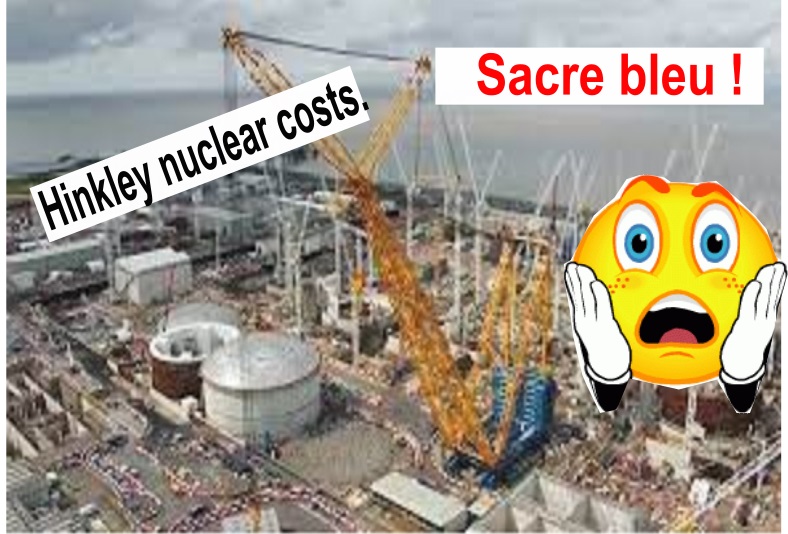
France’s public spending watchdog is advising the country to cut back on its involvement in UK nuclear projects
Brad Gray, Tortoise 27th March 2025, https://www.tortoisemedia.com/2025/03/26/frances-uk-energy-apathy-poses-nuclear-problem-for-labour
EDF has reduced its stake in the Sizewell C nuclear power plant by a further 7.7 per cent, leaving the UK government with an 83.8 per cent share.
In 2022, a government buy-out to allow the Chinese state to exit the project made the UK the leading investor.
Last week Emmanuel Macron fired the EDF chief following a row over energy prices, and France’s public spending watchdog is advising the country to cut back on its involvement in UK nuclear projects and focus on small modular reactors instead.
As France reduces its investment, taxpayers are likely to foot more of the bill than anticipated – a tough pill to swallow as the chancellor slashes public funding.
When complete, Sizewell C is forecast to provide up to 7 per cent of the country’s electricity needs, with reactors lasting 60 years. Right now it’s a political headache.
Why The US Australia Alliance Needs a Rethink

Australian Independent Media March 29, 2025, By Denis Hay
Description
Why the US Australia alliance needs a rethink. The U.S. is no ally. Discover why Australia must distance itself to avoid war and reclaim its sovereignty.
How Australia Can Safely Distance Itself from U.S. Hegemony
Introduction – The US Australia Alliance: Myth vs Reality
Picture this: You’re sitting in a Brisbane café, sipping a flat white while reading the headlines – Australia has just signed another defence pact with the United States. More American troops, military hardware, and diplomatic praise about our “unbreakable alliance.” Yet, beneath the headlines lies a growing discomfort – are we allies, or are we just a strategic pawn in U.S. global dominance?
Joh Bjelke-Petersen once said that this is just politicians “feeding the chooks.” Empty words. The truth is, the U.S. government doesn’t respect its people, let alone Australia. It sees nations – including its own – as resources to be mined for profit. This article will explore how Australia can break free from this exploitative alliance without putting itself in harm’s way.
The U.S. Government’s Track Record: A Global Power Without Respect
Exploiting Its Own Citizens
Visit Detroit, Michigan – a city once bustling with manufacturing pride. Now, it stands as a ghost town of forgotten promises, where basic water access has become a luxury. Millions of Americans are homeless or working two jobs or more just to survive. U.S. billionaires soared in wealth, while 45 million Americans live impoverished.
Internal reflection: “If they treat their own citizens this way, what hope do allies have?”
Exploiting Other Nations
Let’s take Iraq. The 2003 invasion, sold on lies about weapons of mass destruction, cost hundreds of thousands of lives, all to secure oil. In Libya, a once-stable nation descended into chaos after U.S.-led intervention. This is not defence—it’s corporate imperialism.
When the U.S. backs coups in Latin America or imposes sanctions on countries like Venezuela or Cuba, the motive is always clear: control the global economy for U.S. corporate gain.
The U.S.–Australia Relationship: Not What It Seems
Political Rhetoric vs Reality
Australian and U.S. politicians often repeat phrases like “shared values” and “strong friendship.” But how many Australians were consulted when Pine Gap was set up or when AUKUS was signed?
Dialogue: “This isn’t a partnership. It’s a surrender of our sovereignty,” says a former Australian diplomat.
The Cost of Loyalty
Australia’s blind support for U.S. policy has real consequences:
• Trade tensions with China – our largest trading partner
• Environmental destruction from military exercises on Australian soil
• Loss of independence as U.S. bases expand here without public debate.
Why China Matters More Than Ever
60% of Australia’s exports go to Asia, with China alone accounting for over 25%. Australia’s economy is tightly linked to Chinese demand, from iron ore to wine. Trade disruptions – often driven by political antagonism encouraged by the U.S. – have already cost farmers, winemakers, and miners dearly.
The Danger of Choosing Sides
We risk becoming collateral damage in a U.S.-China conflict. Australia should not repeat its mistakes from Vietnam or Iraq – wars that had nothing to do with our national interest but cost us dearly in blood, treasure, and reputation. This has been the outcome of the US Australia alliance.
Thought: “Must we always fight other nations’ wars? When do we stand up for ourselves?”
Pathways Toward Australian Independence………………………………………..
Phasing Out US Australia Alliance and Military Influence
Start with transparency:
• Conduct a national audit of U.S. bases and agreements.
• Establish parliamentary oversight.
• Hold a public referendum on AUKUS.
Dialogue: “Our security must not come at the cost of our sovereignty,” says Senator David Shoebridge.
………………………………………….more https://theaimn.net/why-the-us-australia-alliance-needs-a-rethink/
Trump warns of ‘bad, bad things’ for Iran if nuclear deal not reached
https://www.iranintl.com/en/202503289286 29 Mar 25
AS president Donald Trump warned Iran on Friday that “bad, bad things” would happen if Tehran did not agree to a nuclear deal, a day after Iran declined to have direct talks under his stepped-up sanctions.
“My big preference … is we work it out with Iran. But if we don’t work it out, bad, bad things are going to happen to Iran,” Trump told reporters in the Oval Office.
This is what Trump said he conveyed in his letter to Iran’s supreme leader Ali Khamenei last week.
Tehran confirmed on Wednesday that a response to the letter had been sent via Oman.
“Our policy remains not to engage in direct negotiations under maximum pressure and military threats. However, indirect negotiations as existed in the past can continue,” foreign minister Abbas Araghchi said.
Iran denies seeking a nuclear weapon but the UN’s nuclear watchdog says it has enriched more uranium than any state lacking a bomb. While Washington assesses Tehran is not actively building one, it doubts Iranian intentions.
Trump last month reinstated the “maximum pressure” campaign of sanctions on Iran from his first term, with the stated aim of driving its oil sales to zero.
Trump’s remarks come as Iran’s parliament speaker on Friday accused the US of using nuclear talks to pressure Tehran into relinquishing its defense capabilities.
“The US means disarmament when it says negotiation,” Mohammad Bagher Ghalibaf said in a speech during Quds Day rallies in Tehran on Friday. “Our people understand that talks under threat are just a show to impose their will. No wise nation would accept that.”
His comments were echoed by other senior Iranian officials speaking at Quds Day events showcasing Tehran’s solidarity with Palestinians, including Foreign Minister Abbas Araghchi and senior adviser to Iran’s Supreme Leader Ali Larijani.
I’m Oppenheimer’s grandson. I support Trump’s pursuit of nuclear diplomacy.
President Donald Trump is right to propose direct talks with President Vladimir Putin of Russia and President Xi Jinping of China on nuclear arms control.
USA Today, Charles Oppenheimer, 28 Mar 25
Amid all the chaos in the world, I want to provide a ray of light, a sliver of hope: We may be on the verge of radically reducing the gravest global existential danger ‒ that of nuclear weapons.
Many people and countries have felt threatened by the rapidly changing world order, and many increasingly look to nuclear weapons for supposed protection. But an uncontrolled global nuclear arms race would be the worst outcome, as global nuclear risks have already surged to the highest level since the end of the Cold War. The Bulletin of the Atomic Scientists recently pushed its famed Doomsday Clock to 89 seconds to midnight, the closest ever to humanity’s destruction.
To his credit, President Donald Trump has proposed confronting the growing global nuclear danger head-on. He is right to be repeatedly calling for bold denuclearization talks among the United States, China and Russia ‒ the world’s three biggest nuclear powers ‒ to de-escalate the new nuclear arms race.
If Trump is serious about pursuing nuclear diplomacy, I’ll strongly support his initiative ‒ and there is much work to be done.
How many countries now have nuclear weapons? 9.
As Trump has pointed out, nothing in the world is more dangerous than the persistent threat that nuclear weapons pose to our very existence. During the Cold War, the United States and the Soviet Union waged a dangerous, costly and ultimately unwinnable nuclear arms race under the doctrine of mutual assured destruction (MAD). At its peak, the two countries amassed more than 70,000 nuclear weapons and repeatedly brought the world to the brink of nuclear annihilation.
MAD was always a crazy gamble, positing that more nuclear weapons make us safer. But if it had any merit, it was designed for two nuclear peers, not for three nuclear superpowers. Nor did it account for the growing number of countries looking to acquire their own nuclear weapons or irrational leaders with their fingers on the button.
Yet, MAD still dominates countries’ nuclear thinking.
At a time of profound global changes and instability, following the dangerous and outdated Cold War playbook will only lead to another futile nuclear arms race among the world’s now nine nuclear powers and encourage even more countries to build their own nukes.
Instead of increasing security, such a nuclear free-for-all will only hasten our own demise.
We don’t need to go down this path. There is a reason for hope. A new opening for peace. Not to solve all conflicts and all problems ‒ but the world’s most important and dangerous one.
As the president suggested, the best shot at reducing the growing nuclear threat is directly de-escalating the arms race among the United States, China and Russia. China’s rise as a world power has led it to increase its once-small nuclear arsenal.
China now has roughly 600 nuclear weapons and is on a path to match America’s and Russia’s deployed arsenals of about 1,500 each (thousands more are in reserve).
Many U.S. politicians see the growth of China’s power as a reason to escalate tensions. The military-industrial complex still sells the old lie: The more nuclear weapons we have, the more we can “deter” China and Russia, and the safer we will be………………………………………………………………………………………………….
President Trump is right to propose direct talks with President Vladimir Putin of Russia and President Xi Jinping of China on nuclear arms control. Though nuclear negotiations are often held by bureaucrats with no real power and don’t go anywhere, it’s time the leaders themselves step up to lead.
A meaningful commitment from these three leaders to reducing global nuclear threats would be the biggest breakthrough on this most important of issues since the 1986 summit between Soviet leader Mikhail Gorbachev and President Ronald Reagan ‒ a hawkish leader who ended up embracing nuclear disarmament.
Such an accomplishment would be worthy of a Nobel Peace prize for Trump, Putin and Xi, regardless of what you think of their respective politics.
There are many great ideas out there on how trilateral nuclear negotiations could work. My recommendation is to start with prohibiting artificial intelligence from launching nuclear weapons, something all parties could agree to. Washington and Moscow could then explore reducing their respective arsenals from thousands toward Beijing’s much lower level. They can further negotiate with China on a mutual pledge not to use nuclear weapons first, which China has already committed to………………………………… https://www.usatoday.com/story/opinion/2025/03/28/trump-nuclear-diplomacy-russia-china-oppenheimer/82651474007/
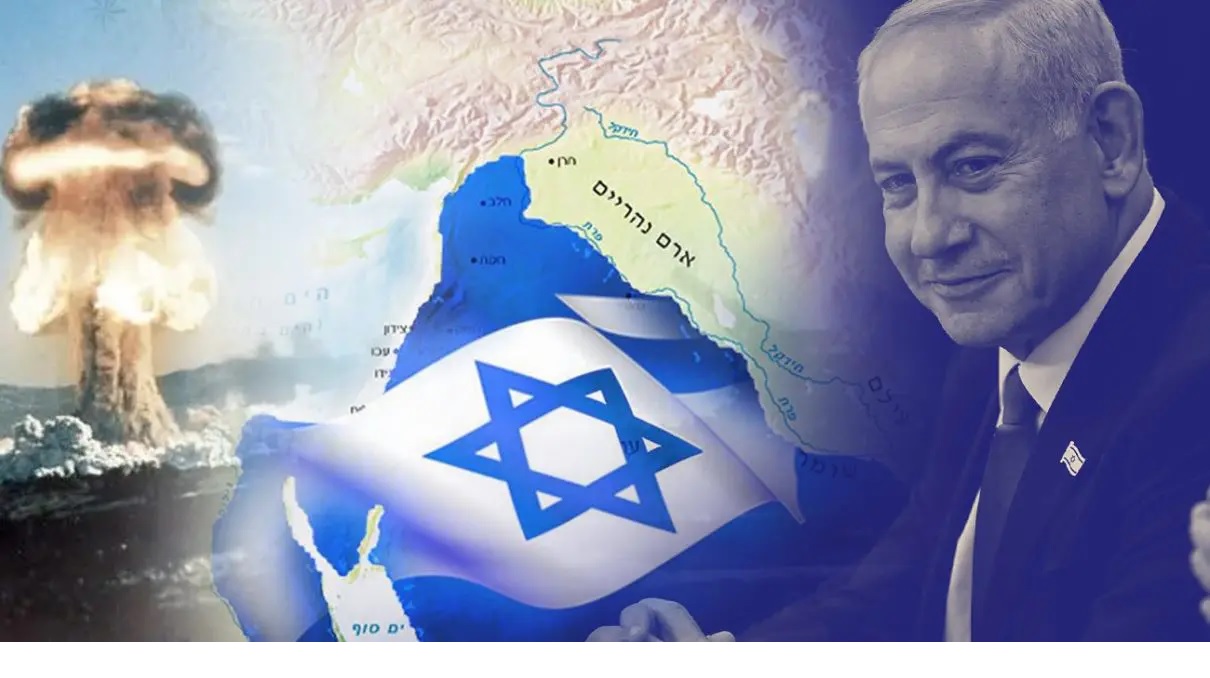
Netanyahu’s nuclear gamble: The risks of escalation with Iran
https://www.dailysabah.com/opinion/op-ed/netanyahus-nuclear-gamble-the-risks-of-escalation-with-iran 27 Mar 25
While Netanyahu convinces the Israeli public and the U.S. administration to wage war on Iran, it cannot be known ‘for whom the bells will toll’ at the end of such an escalation.
n 1992, when he was a 42-year-old Knesset member, Benjamin Netanyahu raised concerns about Iran’s nuclear threat, stating, “Iran is close to producing a nuclear weapon within three to five years, and this threat needs to be uprooted by an international front led by the U.S.” In 1995, in his book, he discussed Iran’s nuclear threat and emphasized that it was a vital issue for Israel. A year later, he came to power for the first time.
The Israeli prime minister’s political career has been marked by security-focused rhetoric. In a country like Israel with high security concerns, this is not unusual, but what makes Netanyahu different is his constant focus on issues like Iran, Hamas and Palestine, and his personalization of the message that “only I can protect Israel.” So much so that rabbis like Nir Ben Artzi and Moshe Ben Tov preach, “Netanyahu must remain prime minister until the Messiah comes.”
Last year, Netanyahu’s posing with Lubavitch movement leader Rebbe Schneerson’s book in the Knesset and claims that Schneerson had prophesied 30 years ago that Netanyahu would “become Israel’s prime minister and transfer the duty to the Messiah” have added apocalyptic meanings to Israel’s war environment.
Factors such as Netanyahu’s brother being Israel’s national hero and his father being one of the important figures of Revisionist Zionism make the situation even more mystical. Revisionist Zionism essentially argues that Jewish rights can only be protected by force; that reconciliation with Arabs is impossible and that the Jewish state encompasses all the historical Eretz Yisrael territories. All these arguments align quite well with Netanyahu’s policies.
Throughout his 40-year political career, Netanyahu’s emphasis on “the last few years” for Iran to become a nuclear threat has led to criticism, especially from his political rivals, that he is exploiting this issue and using it to consolidate power. However, today, Netanyahu appears closer than ever to achieving this goal. Over the past 30 years, Netanyahu has faced three obstacles to his hawkish steps regarding Iran’s nuclear capacity: convincing the bureaucracy and domestic public opinion, convincing the U.S. and convincing the international community.
It is known that in 2010-2011, Netanyahu, together with Defense Minister Ehud Barak, ordered the military to prepare to strike Iran. The order to put the Israeli Air Force on alert for a long-range airstrike was made with a small group of advisors within the security bureaucracy. However, figures such as Chief of Staff Gabi Ashkenazi and Mossad Chief Meir Dagan objected, characterizing such an operation as an “illegal war decision” before the necessary military preparations were completed. Netanyahu was forced to back down. It is also known that the U.S. repeatedly restrained Netanyahu.
Plans of a warmonger
Today, there is a broad consensus in Israel, both from the government and the opposition, that Iran’s possession of nuclear weapons is unacceptable. The rhetoric “we will strike alone if necessary” resonates with society, and the developments in October reinforced this determination. Netanyahu’s threat at the U.N., “If you strike us, we’ll strike you,” has gone beyond rhetoric and has been implemented. This has given Israelis the confidence that “we can defend ourselves, we can act preemptively if necessary.” A significant portion of public opinion polls and media support Israel taking unilateral action if diplomacy fails and Iran reaches the nuclear threshold. Especially after Iran’s direct attack, a psychology of “there’s nothing to fear anymore, if they did it, we can do it too” has emerged. All this indicates that Netanyahu has been highly successful in socializing the issue.
Another obstacle for Netanyahu was bureaucratic issues. As mentioned above, Netanyahu’s desired steps had been stuck in domestic politics and bureaucracy. Netanyahu, who was cornered before the Oct. 7 attacks, has used the attacks as a significant lever and has begun taking radical steps to leave his political legacy as the one who solved the “problems” of Gaza, Hamas, Hezbollah, (if possible) the West Bank and Iran. In this process, he has virtually crushed anyone who stood in his way without regard to domestic politics. His newly appointed Chief of Staff, Eyal Zamir, has declared 2025 a “year of war” and indicated that they will focus especially on Gaza and Iran. Zamir’s 2022 report for the Washington Institute, titled “Countering Iran’s Regional Strategy: A Long-Term, Comprehensive Approach,” is quite noteworthy. Every step Zamir proposed in this report has been taken after Oct. 7.
Lastly, Israel has significantly neutralized Hamas in the south and Hezbollah in the north. Both the Israeli Air Force and the U.S. Air Force are conducting “exercises” for long-distance attacks with their strikes on Yemen. The distance between Tel Aviv and Sanaa is 2,000 kilometers (just over 1,240 miles), while the distance between Tel Aviv and Tehran is 1,500 kilometers.
Strike before being struck
During President Donald Trump’s first term, the U.S. came to Netanyahu’s desired line, and radical steps such as withdrawing from the nuclear agreement, declaring Jerusalem as the capital, and the killings of Qasem Soleimani and Mohsen Fakhrizadeh were taken. The fundamental question is: What has changed from yesterday to today that would make Trump take a different step from his 2018-2020 line? In other words, Netanyahu’s thesis since 1992, “this can’t be done without the U.S.,” seems to be coming true. The U.S. administration is now openly threatening Iran with military intervention. Internal objections and opposition in Israel seem to be of no concern to the Netanyahu government. Therefore, Netanyahu faces the third and final obstacle: convincing the international community.
Netanyahu’s U.N. speeches were also aimed at convincing the international community that Iran would not comply with nuclear negotiations and that diplomacy was “not a path.” The revelation of nuclear documents smuggled from Iran in 2018 by himself and the emphasis that Iran was a “liar” who did not abandon its intentions despite the agreement are diplomatically significant.
From Israel’s perspective, it is necessary to be sure that Russia will not provide support to Iran at this point. Recent developments in Ukraine are likely to keep Russia away from Iran. The U.S. government may also be providing suggestions to Russia on this matter. The Iranian domestic public opinion does not trust the Russians on this issue. Especially the events in Karabakh and Syria have created great disappointment among Iranians.
As for the other actors, European countries do not appear to be able to actively get involved at this stage due to the security crisis they are in. Although China has been providing covert diplomatic and technological support to Iran against Israel for some time, it does not seem possible to expect it to directly enter the field militarily in such an intervention. Therefore, Iran presents an image that has lost its proxy forces in the region, largely lost its effectiveness in the field, and lacks popular support.
The Iranians are aware of the approaching threat. On the one hand, they are conducting tremendously flexible diplomacy. On the other hand, they complain about the threats made against them, saying, “There can be no negotiation with threats.” They express at every opportunity that they do not want war, but on the other hand, they conduct military exercises almost every week. They particularly focus on air defense and naval forces in these exercises. Commanders of the Islamic Revolutionary Guard Corps (IRGC) say they will not bow to threats and will give a clear response to any attack.
According to Zamir, Iran’s center of gravity is the Islamic Revolutionary Guard Corps (IRGC). He thinks that if the center of gravity is targeted, the regime will dissolve on its own. Indeed, the IRGC dominates almost every corner of the country and, although not openly stated, is at odds with civilian politics and institutions in the country. The dominant figure in the IRGC is Mojtaba Khamenei.
Triggering the unplanned
Israel’s first step will be covert activities, similar to Lebanon. At this point, it is very likely that assassinations and sabotage (especially targeting leading IRGC figures) will be seen very soon. Indeed, information in this direction is also reflected in open sources. Likewise, ethnic fault lines in many parts of Iran, such as Urmia, can break very violently. It is a known fact that Iran is concerned about pan-Turkist movements within it. So much so that the election engineering of Masoud Pezeshkian, who was vetoed in the parliamentary elections a week before the late Iranian President Ebrahim Raisi’s death, and frequent emphasis on the “Iranian Turkishness-Anatolian Turkishness” distinction through events such as the Chaldiran commemorations, are results of this concern.
Whatever happens, if popular movements follow the chaos created by the paralysis of the political mechanism (or vice versa), the regime in Iran may be seriously at risk. Because both in the 2009 protests and the Mahsa Amini protests, the influence of Khamenei and those under his command is known. With the elimination of this influence, the ground in Iran may completely change.
In conclusion, all experts agree that the Netanyahu government cannot end Iran’s nuclear capacity by striking nuclear facilities. However, the basic strategy is to completely paralyze Iran by directly targeting the regime and rendering all its activities, from ballistic missiles to nuclear, from proxy forces to drone work, dysfunctional.
However, this situation can open Pandora’s box. If things don’t go as planned and Iran enters a total war by mobilizing all its available means, it may not be able to deliver fatal blows to Israel, but it will cause tens of thousands of Israelis who already find Israel unsafe to leave their country, companies to withdraw their investments from Israel, and in the medium and long term, the establishment of a climate of insecurity. Therefore, Netanyahu is taking a huge gamble and paving the way for a path that could make Israel more insecure. Because the biggest risk is an uncalculated risk, these steps threaten the future of the region from beginning to end. As the famous poet John Donne said: “And therefore never send to know for whom the bell tolls; it tolls for thee.”
Ukraine and Israel are not US allies.
Walt Zlotow, West Suburban Peace Coalition, Glen Ellyn IL , 25 Mar 25
They are essentially US Trojan Horses used to project US power dominance in Europe and Middle East respectively.
Both US Trojan Horses have come up lame and are heading for the glue factory.
The US marched their Ukraine Trojan Horse up to Russia’s borders armed with NATO entrance papers and billions in US weapons. When Russia pleaded with the US for years to discuss Russia’s valid security concerns, the US replied ‘Nyet.’ Former President Biden knew Russia would attack but believed any invasion would be a Vietnam style quagmire for Russia. Biden saw the upcoming Russian collapse as the shining achievement of his half century anti-Russian Cold War mantra. That failed spectacularly.
The election of Trump has injected a healthy dose of realpolitik that acknowledges Biden’s folly. Trump is currently in negotiations to put America’s Ukraine Trojan Horse to pastoral retirement. Can’t come soon enough.
America’s Israeli Trojan Horse to dominate the Middle East is a horse of a different color. It’s more like Israel’s Trojan Horse near totally financed by Uncle Sam. America gets to sit back while Israel marches around their neighborhood committing genocide is Gaza, indiscriminately bombing innocents in Syria and Lebanon, and promoting US attacks on Yemen and eventually Iran. All this senseless carnage constitutes Israel serving as the US battering ram to recreate the Middle East according to its dominant worldview.
Like our Ukraine Trojan Horse, our Israeli Trojan Horse is failing to promote America’s true national interests. Most of the world’s 193 countries are aghast America promotes the most grotesque genocide this century. America’s standing may be at an all time low. Like with Ukraine, we’re enabling Israel to self destruct. It’s now a pariah state. Tourism and investment are in decline. Its military is demoralized both from significant casualties and having to commit genocide.
Both allies are flirting with wider war; nuclear in Ukraine, regional war in Israel.
America gets nothing from allies Ukraine and Israel except worldwide condemnation, squandered treasure and diminishing unipolar world dominance.
With allies like Ukraine and Israel, America does not need enemies.
Zaporizhzhia nuclear plant to stay in Russian control, Moscow says

By Reuters, March 26, 2025, https://www.reuters.com/world/europe/zaporizhzhia-nuclear-plant-stay-russian-control-moscow-says-2025-03-25/
MOSCOW, March 25 (Reuters) – Russia’s Foreign Ministry said on Tuesday the Zaporizhzhia nuclear plant was a Russian facility and transferring control of it to Ukraine or any other country was impossible.
The ministry also said that jointly operating the plant was not admissible as it would be impossible to properly ensure the physical and nuclear safety of the station.
It said Zaporizhzhia region, partly controlled by Russian forces, was one of four in Ukraine that had been annexed by Russia by virtue of referendums staged seven months after Moscow’s full-scale invasion of its neighbour and a presidential decree had formally made the station Russian property.
Western nations have dismissed the referendums as shams.
“The return of the station to Russia’s nuclear sector has been a fait accompli for quite some time,” the ministry statement said. “Transferring the Zaporizhzhia plant to the control of Ukraine or another country is impossible.”
Russian forces seized the station early in the invasion and each side has since routinely accused the other of staging attacks that endanger safety at the plant, Europe’s largest with six reactors.
Although the plant now produces no electricity, the U.N.’s nuclear watchdog has monitors stationed there, as it does at all Ukrainian nuclear power sites.
Ukraine demands the return of the station to its jurisdiction and rejects the 2022 annexation of its territory as illegal.
U.S. President Donald Trump, during a phone conversation this month with his Ukrainian counterpart Volodymyr Zelenskiy suggested the United States could help run and possibly own Ukraine’s nuclear power plants.
Zelenskiy said the plants belong to the Ukrainian people. He said he and Trump had discussed potential U.S. investment in the plant. Reporting by Maxim Rodionov and Ron Popeski; Editing by Hugh Lawson and Rod Nickel
Nuclear experts pour cold water on US idea to restore and run Ukrainian power plant.
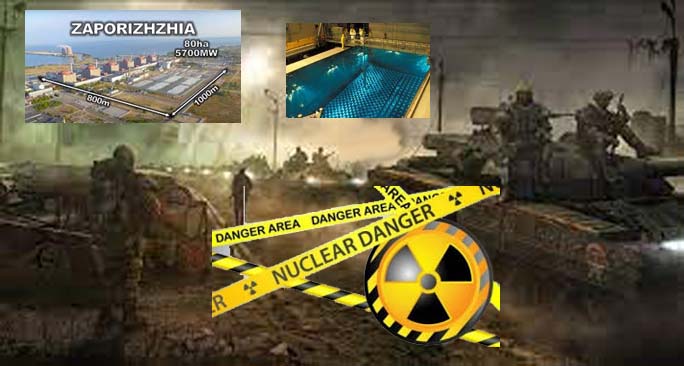
Nuclear experts have also highlighted that the US does not have any nuclear plants that use the same class of technology as Zaporizhzhia, which is a Soviet-designed “water water energetic reactor” (abbreviated as “VVER” in Russian).
By Lauren Kent, CNN, 20th March 2025, https://edition.cnn.com/2025/03/20/europe/ukraine-us-zaporizhzhia-nuclear-power-plant-explainer/index.html
Ukraine’s Zaporizhzhia nuclear power plant, occupied by Russian forces since the early days of the war, could be restored and protected by US ownership – at least according to the Americans.
But it’s unclear how the operation would work in practice, experts say, especially as the plant is on the front line, in territory controlled by Russia.
As part of ongoing talks to inch toward a partial ceasefire, US President Donald Trump and Ukrainian counterpart Volodymyr Zelensky “discussed Ukraine’s electrical supply and nuclear power plants” during a Wednesday phone call, according to the US readout of the call.
“(Trump) said that the United States could be very helpful in running those plants with its electricity and utility expertise. American ownership of those plants would be the best protection for that infrastructure and support for Ukrainian energy infrastructure,” the readout said.
On Thursday, Zelensky disputed that section, saying: “In terms of ownership, we definitely did not discuss this with President Trump.” Zelensky stressed that “all nuclear power belongs to the (Ukrainian) state, including the temporarily occupied Zaporizhzhia region.”
Zelensky said the day before that Ukraine is ready to consider the possibility of American investment in the restoration and modernization of Zaporizhzhia. During a news conference after his call with Trump, Zelensky said they only discussed the occupied Zaporizhzhia plant, rather than Ukraine’s wider nuclear power network.
“I believe that the station will not work under occupation. I believe that the station can be restored to operation,” Zelensky said, also cautioning that the process will take an estimated two years or more.
Before Russia’s full-scale invasion in 2022, the Zaporizhzhia plant supplied roughly 20% of Ukraine’s energy, with six reactors, making it the largest nuclear power station in Europe. Ukrainian staff remain at the plant under Russian occupation, and at one point staff were forced to work at “gunpoint.”
But the plant is now disconnected from the grid and the electricity infrastructure required to operate the plant safely has been damaged by drone strikes and frequent shelling. Russia also destroyed the nearby Kakhovka dam, emptying the reservoir that supplied water to cool the plant.
All six reactors are shut down and there are concerns over the plant’s ongoing maintenance, as explosions continue nearby, according to a UN nuclear watchdog team on the ground.
When asked about how the US could potentially run a Ukrainian nuclear plant, Energy Secretary Chris Wright told Fox News that he didn’t believe it would require American troops on the ground.
“Certainly, we have immense technical expertise in the United States to run those plants. I don’t think that requires boots on the ground,” Wright said. “But I’ll leave the foreign policy to President Trump and Secretary (of State Marco) Rubio. I know they are working tirelessly, ‘How do we bring peace to Ukraine?’
“But, if it was helpful to achieve that end – have the US run nuclear power plants in Ukraine? No problem. We can do that,” Wright added.
But experts question how feasible the idea floated by the Trump administration would be.
Operating the plant safely would require a safe, constant power supply to avoid a reactor meltdown, as well as the restoration of sufficient water supplies for cooling the plant.
“The first word of business would be to establish definitively that there could be no attacks on either the plant directly or on the supporting infrastructure – both power and water resources – and that would have to be iron-clad,” said Edwin Lyman, director of nuclear power safety at the Union of Concerned Scientists. “So far, that kind of agreement has been elusive, as shelling occurs at a daily basis in the vicinity of the reactors.”
“There’s no point in trying to rebuild a plant and operate it if it could be jeopardized at any moment,” Lyman said. “And the notion that US-ownership would somehow be more of a deterrent to Russia attacking the plant than now, when the Russians themselves control the plant, that doesn’t make sense either.”
The idea of US operation “raises a whole lot of logistical and technical and practical questions that are very unclear,” Lyman said, including the question of US liability for any accident at the facility. “With ownership or operator status comes responsibility.”
Nuclear experts have also highlighted that the US does not have any nuclear plants that use the same class of technology as Zaporizhzhia, which is a Soviet-designed “water water energetic reactor” (abbreviated as “VVER” in Russian).
“These are different technologies,” said Elena Sokova, director of the Vienna Center for Disarmament and Non-Proliferation, adding that there are strict licensing requirements for the plant’s operators.
“The US is an advanced country… but to be prepared to immediately take control of something that is of a different design, designed by different country, and where you have no experience of running it – I don’t think it’s a good solution or viable option.”
“Having said that, if we’re talking about a long process, I’m sure certain things could be worked out, particularly if there is an arrangement… to have the majority of the Ukrainian staff and operators running these reactors,” Sokova added.
Ukraine wants role in restoration of plant
Zelensky emphasized on Wednesday night that safe restoration of the plant is in the whole world’s interest, and Ukraine should have a role in that “because it is ours, and this is our land, this is our station.”
The Ukrainian president said any return of the plant would not be possible without control of the area where it is located – the city of Enerhodar – on the Russian-occupied side of the Zaporizhzhia region.
“If you just hand over the station, and a meter away from the station, everything is occupied or there are Russian weapons, no one will work like that,” Zelensky told reporters, raising concerns that the plant could be restored with US and Ukrainian investment, only to have Russia possibly damage or destroy it again later.
As fighting continues along the front line, the dire situation at the Zaporizhzhia plant “remains unchanged,” Andrian Prokip, energy program director at the Ukrainian Institute for the Future, wrote last month.
“It still does not receive adequate maintenance and it continues to serve as a Russian ammunition depot,” said Prokip, also a senior associate at the Wilson Center.
CNN’s Svitlana Vlasova, Christian Edwards and DJ Judd contributed to this report.
1 This Month
Chernobyl: The Lost Tapes – A good documentary on Chernobyl on SBS available On Demand for the next 3 weeks– https://www.sbs.com.au/ondemand/tv-program/chernobyl-the-lost-tapes/2352741955560

of the week–London Campaign for Nuclear Disarmament

Tell the Ukrainian Government to Drop Prosecution of Peace Activist Yurii Sheliazhenko
To see nuclear-related stories in greater depth and intensity – go to https://nuclearinformation.wordpress.com
-
Archives
- April 2026 (133)
- March 2026 (251)
- February 2026 (268)
- January 2026 (308)
- December 2025 (358)
- November 2025 (359)
- October 2025 (376)
- September 2025 (257)
- August 2025 (319)
- July 2025 (230)
- June 2025 (348)
- May 2025 (261)
-
Categories
- 1
- 1 NUCLEAR ISSUES
- business and costs
- climate change
- culture and arts
- ENERGY
- environment
- health
- history
- indigenous issues
- Legal
- marketing of nuclear
- media
- opposition to nuclear
- PERSONAL STORIES
- politics
- politics international
- Religion and ethics
- safety
- secrets,lies and civil liberties
- spinbuster
- technology
- Uranium
- wastes
- weapons and war
- Women
- 2 WORLD
- ACTION
- AFRICA
- Atrocities
- AUSTRALIA
- Christina's notes
- Christina's themes
- culture and arts
- Events
- Fuk 2022
- Fuk 2023
- Fukushima 2017
- Fukushima 2018
- fukushima 2019
- Fukushima 2020
- Fukushima 2021
- general
- global warming
- Humour (God we need it)
- Nuclear
- RARE EARTHS
- Reference
- resources – print
- Resources -audiovicual
- Weekly Newsletter
- World
- World Nuclear
- YouTube
-
RSS
Entries RSS
Comments RSS
 nuclear-news