Israel’s international isolation has begun.
U.S. and global politics surrounding Israel are shifting rapidly as the world recoils in horror at Israel’s starvation of Gaza. Here are several lessons the left should take note of.
By Philip Weiss August 1, 2025 , https://mondoweiss.net/2025/08/israels-international-isolation-has-begun/
We’ve never lived through such rapid change in the politics of Israel as we are now. Two nights ago more than half of Democratic senators – 27– voted to block some arms sales to Israel. A day before that, the UK and Canada said they will recognize a Palestinian state at the U.N, echoing France’s recent statement.
These are steps that advocates for Palestinians thought might be years away. But today the world is shocked by Israel’s starvation of Gaza, and the mainstream press is at last reporting the charge of genocide.
Israel’s international isolation has begun.
These political changes were driven by the street. For years, Israel’s favorability has been sliding in global opinion and in the U.S. among Democratic voters. But party leaders defied the shift — and then Zohran Mamdani won the NY primary for mayor last month, in a groundswell that overwhelmed Cuomo’s $25 million in negative ads. A poll shows that nearly four of five Democrats in NY say Israel is committing a genocide. And Trump’s base is catching up. “My people are starting to hate Israel,” Trump reportedly warned a “Jewish donor”.
There are several lessons the left should recognize.
Pressure works
We always said that the way to stop Israeli war crimes is for western nations to sanction or abandon Israel. The change in official tone proves the point. Israel is now seeking to moderate its brutality, and reports from Israel say that some Israelis are ashamed by the front-page coverage of starvation. The west could have ended the occupation a long time ago.
Our media failed us
When the reckoning on genocide comes, it will include all the voices who explained away children buried in rubble by American bombs. Liberal voices in the Times, on the cables and NPR acted like Gaza was normal—then the people arose.
“Truthfully, it goes back decades,” Donald Johnson writes. “Israel has been an apartheid state for a long time, even by liberal Zionist standards. Jimmy Carter was right about apartheid in 2006 and the press didn’t want to listen.” (In fact, Carter was pilloried by Wolf Blitzer and Terry Gross and ostracized from the Democratic Party.)
The Israel lobby is exposed
Biden and Harris and Blinken and Power did nothing to stop a genocide, just sent more bombs—why? Democrats for years embraced the illegal settlement project, and Obama insisted on “undivided Jerusalem” language in the Democratic platform in 2012–why? Dem leadership in NY has failed to endorse Mamdani weeks after his victory—why?
There is only one factor that keeps leading Democrats “allegiant” to Israel, as James Carville phrased it, and that is the pro-Israel forces inside the Party, embodied by DMFI and AIPAC and the big donors.
The good news is that the corruption is now obvious. “Support for blocking bombs to Israel, recognizing Israel’s genocide in Gaza, and holding Israel accountable for its violations of the law is not simply the opinion of the majority of Democratic voters, it is the vast, vast majority, and any Democrat who stands with AIPAC instead of their own voters is running the real risk of getting voted out of office,” says Margaret DeReus of IMEU.
While former Obama aide Tommy Vietor said on his podcast that the Dems’ policy of hugging Netanyahu is a failure, he pleads guilty, and — “there is no going back to a pre-October 7 Democratic Party”.
For years the lobby claimed that the U.S. was on Israel’s side because Israel served the American interest, and anti-Israel activists claimed that if Americans only knew they would abandon Israel. The anti-Israel activists were right. There is no American interest in racial oppression. There is no American interest in arming a country that bombs one neighbor after another creating instability across the world.
The liberal Zionist branch of the lobby is also vulnerable. For over a year it has denied that there is a genocide– as it has denied apartheid and ethnic cleansing and war crimes in years past. The liberal Zionists served a vital function for the lobby, keeping progressive Democrats on board. To that end, they have fostered delusions — that real pressure on Israel is bad policy and antisemitic, and that Israel is a “democratic Jewish state.”
Today the liberal Zionists are scrambling to get ahead of the shifting Democratic politics of the issue, but they ought to be challenged. For instance, J.J. Goldberg says Americans should sympathize with Israelis’ “fear at the prospect of accepting a new structure of full equality and integration, as though a century of Palestinian anger will just go away”. There were similar fears in the Jim Crow south and South Africa.
The Jewish community is in turmoil and it should be
The American Jewish community is the most reactionary force in the Democratic Party on Israeli apartheid. Leading Jewish organizations sought to kneecap any politician who stepped out of line. These politics among the most liberal highly educated voting bloc in the U.S. should have produced an internal Jewish crisis a long time ago. Yes, horror over Israeli actions generated Jewish Voice For Peace and IfNotNow 10 and 20 years ago, but today is a revolutionary moment. As Arielle Angel writes, “The Gaza genocide has made plain what many leftist Jews have long feared: that virtually the entire enterprise of Judaism—and nearly every organization charged with stewarding it—is infected with a voracious rot.” (This rot sadly extends to Bernie Sanders, the leading moral voice for Democrats, whose refusal to call a genocide a genocide surely reflects his youth volunteering at an Israeli kibbutz.)
It’s understandable that many Americans are so afraid of the antisemitism label that they won’t call out Jewish organizations’ role in oppressing Palestinians. But Jews can do so freely—and young Jews must take down the pro-genocide establishment.
The root cause of the Israel/Palestine conflict is Zionism
An ideology that grants Jews greater rights to land and to civil freedoms is inherently hateful and will always produce the sort of revolt we saw on October 7 (horrific war crimes against civilians took place in Algeria and South Africa too).
It is great that European politicians are finally trying to give Palestinians sovereignty. The effort is way too late, but it demonstrates the truth that political freedom is all that will guarantee security in the land.
The recognition and denunciation of Zionism must accelerate. Zionism might have made sense 100 years ago (or even 80) as a liberation from European persecution. But over and over as they gained power, Zionists took the wrong path. They chose ethnic cleansing, occupation, and apartheid. They chose disdain for their neighbors in favor of superpower politics. They bragged of their “villa in the jungle” – a racist fantasy of Jewish supremacy that even liberal Zionists like J Street promoted.
Can Israel be reformed? I don’t know. But Zionism cannot be. Know it by its fruits. It is apartheid genocide and famine, and the American people have awakened.
Trump, or Violence as Diplomacy

By C.A.R. Turner / August 1, 2025, https://www.thepostil.com/trump-violence-as-diplomacy/
Violence is diplomacy—that is the essence of the Trumpian encounter with the world: do as I say, or else. Versions of this approach are easily noted in most of President Trump’s public pronouncements. The most recent iteration, in response to Trump’s bombing of Iran, was given by Vice President JD Vance at the Ohio Republican Party dinner in Lima, Ohio, on Tuesday, June 24, 2025. He later summarized it on X also.
Here is what he said: “What I call the Trump Doctrine is quite simple: Number one, you articulate a clear American interest and that’s, in this case, that Iran can’t have a nuclear weapon. Number two, you try to aggressively, diplomatically solve that problem. And number three, when you can’t solve it diplomatically, you use overwhelming military power to solve it and then you get the hell out of there before it ever becomes a protracted conflict.”
The contradictions from one through to three are obvious: how can there be a clarity of “American interest” when the policy is “Israel First?” America has long given up being clear about what it wants, since it wants so many different things which negate one another. It wants to be the hegemon, but also the beacon of “liberty.” Number two: suddenly “American interest” is now a “problem” that needs to “solved” by diplomacy, because other countries do not agree with the “American interest.” Was it not Zelinsky, sitting in the White House, who asked Vance, “What do you mean by diplomacy?” In other words, that “American interest” mentioned in Number one is actually an American demand.
And then we quickly move on to Number three—when America fails at diplomacy, it loves to drop bombs. Bombing, it would appear is the last resort of the scoundrel, to update a famous phrase. What is the point of doing any diplomacy when the people you are trying to diplomatize already know that you are going to bomb them in the end? Iran found that out pretty darned quick—for they thought they were actually involved in diplomacy with Washington when Trump suddenly decided to drop some bombs all over Iran, thinking that this would be persuasive. So, how quickly does Washington move from the diplomatic table to the cockpit of a B2 bomber? In other words, how do bombs become diplomacy?
Vance then throws in the caveat that “you get the hell out of there before it ever becomes a protracted conflict.” So, we are supposed to believe that bombing a country flat and flying back home magically avoids a “protracted conflict?” A recent example—how long has America been bombing Yemen—and what has it accomplished? America just bombed Iran—and what has that accomplished? And, is there any need to mention the fact that Trump, in his first five months of his second term, has carried out 529 airstrikes against Yemen, Syria, Iraq, and Somalia, and bombed 240 locations in these places—it is not known yet how many total civilians he has killed in the process. And whatever happened to Number two in all these cases? How did Trump move past diplomacy and get right to Number three with Iraq, Somalia and Yemen?
In other words, the world is viewed through simplistic Trumpian narratives and bombed accordingly.
It would seem that Vance is trying to lend coherence to a “foreign policy” that is no more than Trump’s feelings. How such feelings, which are erratic at best, become a doctrine is beyond comprehension.
Despite claims of aggressively pursuing diplomacy, what everyone has witnessed is an utter lack of diplomacy—there are only threats; or worse, bomb first and then pretend to talk.
The “overwhelming military force” part has translated into significant civilian casualties, nearly matching the total from many years prior in specific conflicts such as Yemen. Amnesty International and Human Rights Watch have labeled some strikes as potential war crimes. This “bomb first, ask questions later” approach contrasts starkly with the so-called doctrine’s promise to avoid prolonged entanglements, raising ethical and legal questions.
Trump promised rapid resolutions to major conflicts like Ukraine and Gaza and a definitive end to Iran’s nuclear program but has largely failed to achieve any of these objectives. Instead, what the world sees again and again is an overestimation of his own personal influence upon world leaders, and an utter lack of comprehension of the complexity of diplomacy and the ensuing buildup of a deep resentment among nations. In other, there is hardly a doctrine, let alone clarity.
What is clear to see is that all of foreign policy is reduced to a some sort of a transaction, “a deal,” which is spun as prioritizing narrowly defined American interests and sovereignty. However, what ends up happening is confrontation, backed up by a lot of threats of sanctions, tariffs, or bombs.
Despite talk of restraint and rapid exits, Trump’s administration embraces a willingness to wage sustained aerial campaigns and intense military operations, sometimes lacking clarity on long-term goals. What is deployed therefore is intimidation tactics.
This so-called “doctrine” causes unease within political factions and the public who fear prolonged conflicts despite the promise of quick disengagement. It is a strategy that will fail to prevent entanglements, because the world is seen as “ripping American off” and therefore needs to be put in its place. This completely undermines real-world expectations of other nation-states.
In essence, while Vance’s presentation of the “Trump Doctrine” attempts to offer a clear and structured foreign policy, there is a wide gap between rhetoric and reality, made worse by diplomatic incompetence, problematic military consequences, and fundamental inconsistencies that collectively render this “doctrine” not only deeply flawed, but utterly reprehensible as any sort of a guiding principle.
Thus, in June 2025, in the so-called “12 Day War,” the Trump administration conducted airstrikes on three Iranian nuclear sites, aiming to prevent Tehran from obtaining a nuclear weapon, consistent with the Trump Doctrine’s three-step approach (clear interests, aggressive diplomacy, military force, if necessary). However, the strikes were launched just two days after a supposed diplomatic ultimatum, raising suspicions that diplomacy was not genuinely exhausted beforehand.
Plus, the strikes risked escalating into a broader regional war and limited future diplomatic options because of Trump’s prior withdrawal from the Joint Comprehensive Plan of Action (JCPOA) nuclear agreement, which Iran rightly saw as a betrayal. This undercut trust and prospects for peaceful resolution.
Although Vance and administration proponents called the strikes “wildly successful” with no American casualties, initial intelligence suggested damage to Iran’s program was limited. Moreover, Iran’s leadership remained cautious, avoiding direct war with the U.S. despite harsh rhetoric, complicating claims of decisive military resolution.
Humanitarian consequences and the risk of civilian casualties added ethical and legal criticisms, undermining the promise to exit before prolonged conflict.
Proponents of the Trump Doctrine also contrast it with the 2015 Obama nuclear deal, which they argue was lenient and compromised American moral clarity by allowing Iran’s nuclear enrichment program to continue.
The Trump Doctrine calls for denying Iran all paths to nuclear weapons through strength and clarity, but this maximalist stance (zero enrichment demanded) is unrealistic and purely ideological, offering no practical diplomatic off-ramp and increasing risk of sustained conflict.
The doctrine’s combination of maximum pressure without clear enforcement capability resulted in constrained U.S. options and increased involvement in the conflict, contradicting the promise of quick exits.
Then, there are the broader regional implications. The doctrine’s application in Yemen, with intense bombing campaigns against the Houthis, parallels its Iran approach, marked by high civilian casualties and unclear long-term strategic gains, raising concerns about ethical implications and strategic coherence.
Fear of prolonged entanglement in the Middle East and tensions within political factions about the feasibility of rapid withdrawal reveal internal contradictions within the doctrine.
Thus, what happened in Iran and Yemen entirely contradicts what Vance says. In other words, there is a chasm between what is done and what is said.
The rapid shift from diplomacy to military action fully undermines claims of aggressive diplomacy first.
Then, military strikes have yet to yield definitive success and have caused legal, ethical controversies and humanitarian catastrophes.
Overly maximalist demands and the lack of feasible diplomatic pathways constrain U.S. options and risk protracted conflicts.
Contradictions between partisan expectations of quick exits and the reality of prolonged military engagement create strategic incoherence.
Thus, the doctrine abandons traditional moral leadership and multilateral cooperation in favor of a deal that tries to find ways to “protect” America rather than build or lead alliances. This results in a posture of strategic disengagement and economic self-interest rather than any sort of global leadership.
In conflicts like Ukraine, the U.S. under Trump criticizes Russia but also avoids deep involvement, leaving resolution largely to the affected parties (e.g., Kyiv and Moscow). This causes concern among long-term defense partners about the reliability and clarity of American commitments, weakening traditional alliance cohesion.
Trump treats NATO more as a “protection racket,” demanding more financial contributions from allies and showing willingness to reduce U.S. support if unmet. European leaders, uncertain about the U.S. guarantee, are exploring independent defense measures, including shared nuclear capabilities. This unsettles longstanding alliance structures and undermines trust, and points to a West that engage in a new arms race.
The Trump administration has withdrawn from major international agreements (e.g., Paris Climate Accord, WHO), signaling skepticism toward multilateral institutions. This has led to diplomatic isolation and further strains relationships with traditional global partners.
The doctrine involves recalibrated signaling to allies based on geopolitical alignment and interests rather than comprehensive coalition-building, emphasizing sovereignty and economic independence sometimes at the expense of traditional alliance solidarity.
In effect, the Trump Doctrine as articulated essentially reshapes U.S. alliances by emphasizing American sovereignty and international relations as “dealmaking,” coupled with reluctance for enduring involvement, which collectively causes alliance uncertainty, strain on NATO and Western partnerships, and challenges to traditional multilateralism and global leadership that the U.S. once upheld.
So, when Trump repeats the slogan of making America “great,” what does he mean? Great economically, or great in leading the world? He does not know how to do both. On the one hand, he piles on tariffs on the world and threatens it, and on the other he wants the world to look up to America.
Vance’s “Trump Doctrine” is clear in one thing—the Trump administration has no clue how to reconcile what they say with what they do, because their actions and words are always contradictory.
Russia is staying quiet on Trump’s nuclear move
BBC, Steve Rosenberg, Russia editor in Moscow, 2 Aug 25
Could this be the first time in history a social media spat triggers nuclear escalation?
President Donald Trump, offended by posts by former Russian President Dmitry Medvedev, says he’s ordered two nuclear submarines to move closer to Russia.
So, how will Moscow respond? Are we on a path to a nuclear standoff between America and Russia? An internet-age version of the 1962 Cuban Missile Crisis?
I doubt it, judging by initial reaction in Russia.
Russian news outlets have been rather dismissive of Trump’s announcement.
Speaking to the Moskovsky Komsomolets newspaper, a military commentator concluded that Trump was “throwing a temper tantrum”.
A retired lieutenant-general told Kommersant that the US president’s talk of submarines was “meaningless blather. It’s how he gets his kicks”.
“I’m sure Trump didn’t really give any orders [about submarines],” a Russian security expert suggested to the same paper.
Kommersant also mentions that in 2017, Trump said that he’d despatched two nuclear submarines to the Korean peninsula as a warning to North Korea.
Yet not long after, Trump held a meeting with North Korean leader Kim Jong Un.
So, bizarrely, might Donald Trump’s latest submarine deployment be a precursor to a US-Russia summit?
I wouldn’t go that far.
But the reaction from the Russian authorities has been interesting.
At time of writing, there hasn’t been any.
Not from the Kremlin. Not from the Russian foreign ministry. Nor the defence ministry.
And I’ve seen no announcement about Russian nuclear submarines being positioned closer to America.
Which suggests that either Moscow is still studying the situation and working out what to do, or that Moscow doesn’t feel the need to react.
The Russian press reaction I mentioned earlier suggests it’s the latter……………………………. https://www.bbc.com/news/articles/cly4kgv9238o
Never before has a US leader chosen to engage in nuclear brinkmanship of this kind
US president brazenly climbs first rung of nuclear escalation
ladder, but few are panicking.
Telegraph 1st Aug 2025, https://www.telegraph.co.uk/world-news/2025/08/01/trumps-reckless-nuclear-performance-high-stakes-low-cost/
Netanyahu Is Reportedly Planning to Annex Gaza Strip, With Trump Admin’s Backing
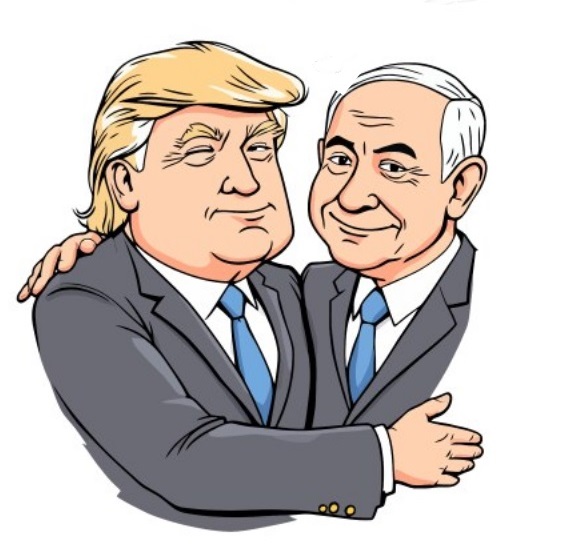
Israeli sources say the plan has already been presented to U.S. Secretary of State Marco Rubio and has the approval of the White House.
Israeli sources say the plan has already been presented to U.S. Secretary of State Marco Rubio and has the approval of the White House.
If Netanyahu’s plan goes forward, Israel will be in the process of annexing the entirety of Palestine.
By Sharon Zhang , Truthout, July 29, 2025, https://truthout.org/articles/netanyahu-is-reportedly-planning-to-annex-gaza-strip-with-trump-admins-backing/
Israeli Prime Minister Benjamin Netanyahu is reportedly prepared to propose a plan to annex the entire Gaza Strip that has the backing of the Trump administration, signalling the next horrific phase in Israel’s genocide as it also moves forward with annexing the occupied West Bank.
On Tuesday, Israeli outlet Haaretz reported that Netanyahu is expected to propose the plan to his cabinet soon. The plan would entail giving Hamas a few days to accept a ceasefire deal — likely one designed for Hamas to reject, given Netanyahu’s history — and beginning annexation if Hamas rejects the deal.
The Israeli military would first annex parts of the “buffer zone,” an area spanning all of Gaza’s border created by the military amid its genocide. The zone encompasses over half of Gaza’s land area, and Israeli forces have bulldozed everything inside it, including homes, schools, farming sites, and more.
The military would then move to annex parts of northern Gaza, which Israel has worked diligently to isolate from the rest of Gaza, and move gradually until Israel has annexed the entirety of the Gaza Strip, Haaretz reports.
Netanyahu is reportedly presenting the plan in order to keep Finance Minister Bezalel Smotrich in his government, following the prime minister’s longtime pattern of taking drastic military actions in order to maintain his coalition and stay in power. Citing sources familiar, Haaretz says that Smotrich has said that he will stay in his position if the annexation plan goes forward.
Israeli sources say the plan has already been presented to U.S. Secretary of State Marco Rubio and has the approval of the White House.
Numerous military officials in Netanyahu’s government have said in recent months that annexation has long been the goal of Israel’s genocide, forcible removal of Palestinians, and near-complete destruction of Gaza. Israel has previously distanced itself from an Israeli general’s comments about Israel’s intentions for total occupation in the Strip, but has recently become even more emboldened.
The genocide has accelerated in the past weeks, with Israel’s near-total blockade on all basic resources reaching a breaking point last week, causing at least dozens of starvation deaths.
If Netanyahu’s plan goes forward, Israel will formally begin the process of annexing the entirety of Palestine. In many ways, however, Israel has already been carrying out an annexation plan in all but name.
Israeli officials have vastly accelerated settlement-building and violence in the occupied West Bank throughout their genocide, and last week, the Israeli Knesset passed a nonbinding measure calling for the annexation of the West Bank. Smotrich is a key architect of this plan, and has been pushing for annexation alongside many of the most extremist Israeli politicians for years.
In light of Israel accelerating its genocide and moving to annex Palestine, human rights advocates and experts have issued urgent calls for the world to act.
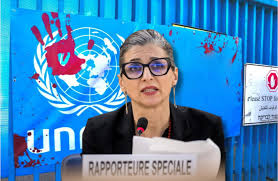
“The absolute incapacity of Western leaders to enforce international law when it comes to Israel is EPIC,” said UN special rapporteur for the occupied Palestinian territory Francesca Albanese on Tuesday. “Ministers, Prime Ministers, Presidents of Republic: Doing NOTHING, diverting attention, sanctioning individual ministers IS NOT enforcing the [international] law that was developed after the Holocaust and WWII to prevent another Holocaust and WWII.”
Trump puts Putin on ‘Double Secret Probation’ for not ending Ukraine war.
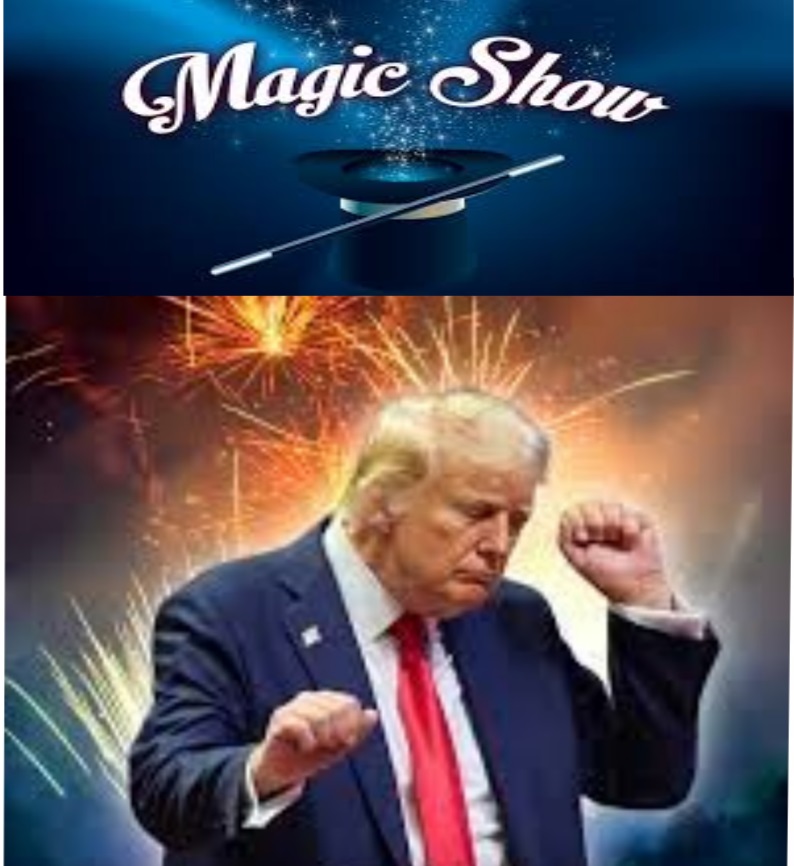
31 July 2025 AIMN Editorial By Walt Zlotow, https://theaimn.net/trump-puts-putin-on-double-secret-probation-for-not-ending-ukraine-war/
President Trump channeled Animal House’s Dean Vernon Wormer in trying to reign in the out of control John ‘Bluto’ Blutarsky, a.k.a. Vladimir Putin.
Trump is livid over Putin’s refusal to cave into his demand he end the Ukraine war. And what will Trump do if Putin doesn’t enact ceasefire in “10 to 12” days?
Send in American troops to replace the rapidly disappearing Ukraine soldiers filling up numerous freshly dug Ukraine cemeteries? Nope.
Pour another $170 billion in US weapons that have done nothing but cause loss of one fifth of Ukraine territory to Russia? Nope.
Threaten Russia with nuclear annihilation? Nope.
Trump is planning something so horrific Putin will cave the moment Trump drops it on him… the Mother of all Sanctions. Only Trump knows what horrifying sanctions he has in store for Putin. Hence, Double Secret Probation (DSP).
Putin’s Bluto simply thumbed his nose at Trump’s Dean Wormer, hurling hundreds of drone bombs into Ukraine every day since Trump imposed DSP.
Trump’s Ukraine war policy is as chaotic as the administration of Faber College in Animal House. Big difference? Trump’s presiding over a catastrophe, destroying Ukraine in the lost cause to weaken Russia. All things considered, I prefer John Landis’ ‘Animal House’ to the Donald Trump version.
Australia’s Prime Minister Anthony Albanese says Israel’s denial of starvation in Gaza ‘beyond comprehension’

ABC News, By national affairs correspondent Jane Norman, 29 July 25
In short:
Anthony Albanese has expressed his astonishment at claims made by Israel’s prime minister that “there is no starvation in Gaza”, telling Labor MPs that statement is “beyond comprehension”.
The prime minister made the comments in response to a question from a Labor backbencher about when Australia would move to recognise Palestinian statehood.
What’s next?
Overnight, US President Donald Trump also appeared to dispute Mr Netanyahu’s statement, but Opposition Leader Sussan Ley later declined to say whether she believed starvation was occurring.
Anthony Albanese has expressed his astonishment at claims made by Israel’s prime minister that “there is no starvation in Gaza”, telling Labor MPs that statement is “beyond comprehension”.
The prime minister made the comments in response to a question from a Labor backbencher about when Australia would move to recognise Palestinian statehood.
Mr Albanese — who has been sharpening his criticism of Israel’s actions in the Gaza Strip — appeared to directly criticise Israeli Prime Minister Benjamin Netanyahu, who posted a clip to X saying “there is no starvation in Gaza, no policy of starvation in Gaza”.
That assertion was repeated in Canberra yesterday by Israeli’s deputy ambassador to Australia, Amir Meron.
“Those claims that there’s no starvation in Gaza are beyond comprehension,” Mr Albanese told the Labor caucus, according to a spokesperson.
The prime minister outlined Australia’s pre-conditions for recognition, including “democratic reforms” in the Palestinian territory, but indicated these obstacles were not insurmountable, referencing a famous quote from Nelson Mandela that “it always seems impossible until it’s done”.
……………………………………………………….. The prime minister’s intervention came amid growing international concern about both the number of deaths at aid centres managed by the Israeli-backed Gaza Humanitarian Foundation and the level of hunger in the enclave………………………………………………………………… https://www.abc.net.au/news/2025-07-29/pm-criticises-israels-denial-of-starvation-in-gaza/105585494
Trump’s Ukraine Plan: Power Play or Exit Strategy?
Beneath the rhetoric lies a fundamental truth: America is disengaging. Not with a decisive withdrawal, but through a form of diplomatic sleight-of-hand. By recasting its role from arsenal to arms dealer (insisting NATO nations pay “a hundred percent” for U.S.-made weapons) the United States transforms the principle of collective defense into a commercial transaction.
Beneath the rhetoric lies a fundamental truth: America is disengaging. Not with a decisive withdrawal, but through a form of diplomatic sleight-of-hand. By recasting its role from arsenal to arms dealer (insisting NATO nations pay “a hundred percent” for U.S.-made weapons) the United States transforms the principle of collective defense into a commercial transaction.
Uncover the hidden logic behind Trump’s delayed weapons aid, NATO rifts, and realpolitik tactics reshaping U.S. foreign policy and Ukraine’s fate.
Post-Liberal Dispatch, Jul 24, 2025, This piece was written by guest contributor Sérgio Horta Soares and has been reviewed and edited by Paulo Aguiar, founder of Post-Liberal Dispatch.
In geopolitics, there are no saints, only actors grappling for advantage, cloaking raw interests in the language of freedom, democracy, and humanitarian concern.
The recent choreography surrounding former U.S. President Donald Trump’s ostensible reentry into the Ukraine conflict lays bare the mechanics of power as they actually function: not through moral imperatives, but through calculated ambiguity, resource preservation, and the exploitation of time.
What masquerades as renewed support for Ukraine is, in substance, a meticulously engineered performance, designed not to rescue Kyiv, but to extricate Washington. Trump’s pronouncements of “billions” in arms, and his threats of tariffs against nations buying Russian oil, are not expressions of strategic commitment; they are instruments of political theater, signals issued to multiple audiences with competing agendas, none of whom are meant to receive a clear message.
To understand this gambit, one must first understand the war’s trajectory. Since Russia’s full-scale invasion of Ukraine in February 2022, Western countries (led by the United States) have supplied billions in weapons, economic assistance, and intelligence to Ukraine in an effort to repel Russian advances and prevent the collapse of the post–Cold War European security order.
Initially, this support was framed in terms of values: defending sovereignty, democracy, and international law. But as the war dragged on into its third year, cracks emerged in the Western coalition (rising costs, strained defense stockpiles, and growing domestic opposition to what many now view as an open-ended commitment).
Beneath the rhetoric lies a fundamental truth: America is disengaging. Not with a decisive withdrawal, but through a form of diplomatic sleight-of-hand. By recasting its role from arsenal to arms dealer (insisting NATO nations pay “a hundred percent” for U.S.-made weapons) the United States transforms the principle of collective defense into a commercial transaction.
NATO, once a bastion of mutual obligation, is being refashioned into a procurement agency. The nations of Europe are no longer being asked to fight beside the U.S.; they are being asked to shop.
That this approach incites confusion and resentment among allies is the point. Strategic ambiguity, long a hallmark of Trump’s foreign policy, is not a flaw but a deliberate tactic. By maintaining a posture of conditional engagement, the U.S. preserves its leverage, avoids definitive entanglement, and keeps both adversaries and allies on edge. This calculated vagueness allows for plausible deniability and quick reversals. It ensures that commitments can be revoked, blame can be shifted, and outcomes can be rebranded.
What emerges is not policy, but posture, a stance of strength unmoored from obligation. The imposition of delayed tariffs and the promise of weapons that will not arrive in time to affect the current Russian offensive are not strategic errors; they are expressions of strategic intent. They buy time; not for Ukraine, but for Russia.
Intelligence suggests that Russian commanders believe they can achieve key battlefield objectives within weeks, before weather and logistics slow their operations. Trump’s 50-day deadline for triggering sanctions likely falls outside of that window. This is not coincidence; it is complicity, veiled beneath performative deterrence.
Ukraine, under siege and starved of arms, is left to decipher whether the promised aid is a lifeline or a leash. Meanwhile, Washington hedges its bets, calibrating its involvement to extract maximum geopolitical return with minimum exposure.
The material realities further erode any illusion of robust support. Western arsenals are depleted. Since 2022, the U.S. and its NATO allies have shipped tens of thousands of artillery shells, air defense systems, and armored vehicles to Ukraine. Yet the West’s military-industrial base is still operating on peacetime rhythms, struggling to keep pace with the demands of high-intensity warfare. Arms production in the U.S. and Europe cannot meet short-term demand, and weapons systems, such as Germany’s promised Patriots, are delayed by months.
These constraints reveal a widening gap between political intent and logistical feasibility. Without urgent expansion of industrial capacity, Western efforts risk falling behind Russia’s war economy, rendering even well-publicized support strategies operationally irrelevant
The fragmentation of NATO in response to the Trump plan is less an aberration than a revelation.
France and Italy reject participation outright, prioritizing domestic industry and fiscal restraint. Hungary abstains on ideological grounds, and the Czech Republic prefers alternative aid mechanisms. Even those nations nominally listed as partners (Finland, Denmark, Sweden) were reportedly blindsided by the announcement. This is improvisation, and it exposes the brittle scaffolding of transatlantic unity, where each state calculates its own interests and distances itself from burdens it cannot (or will not) carry.
Within this fractured landscape, Ukraine is not a partner but a bargaining chip, leveraged between competing powers with conflicting priorities. Trump’s ultimate objective is not Ukrainian victory but………………………………………………..(Subscribers only) https://postliberaldispatch.substack.com/p/trumps-ukraine-plan-power-play-or?utm_source=post-email-title&publication_id=4747899&post_id=169097642&utm_campaign=email-post-title&isFreemail=true&r=ln98x&triedRedirect=true&utm_medium=email
Predictably, there was no progress in Istanbul peace talks
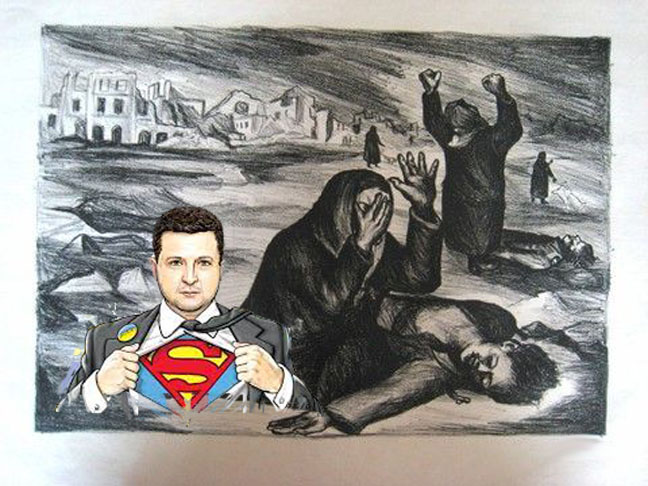
Citizens have been fed a non-stop diet of propaganda about Zelensky our savior from the terrors of the Vlad the terrible. Yet now cracks have appeared and people are asking whether Zelensky is in fact just as corrupt as every Ukrainian leader who came before him
Will war now stretch into 2026 or has Zelensky’s anti-corruption blunder changed the game?
Ian Proud, The Peacemonger, Jul 24, 2025
Below my article of yesterday in Responsible Statecraft. I predicted there would be no progress at the Istanbul peace talks yesterday and there was no progress. The meeting apparently lasted just 40 minutes or so, with little to show except for further agreement on a further round of POW exchanges.
Zelensky didn’t need to cut a deal in Istanbul because he figures that the US will impose harsh secondary sanctions on Russia’s trading partners on 2 September, amounting to a 100% tariff. I have written previously about why I believe that will backfire on the US.
In any case, Zelensky stalling on peace talks in Istanbul may soon be overtaken by events closer to home, in Kyiv and other Ukrainian cities.
It would be easy, I think, to underestimate just how big an impact this will have on public perceptions of Zelensky in western nations that have supported Ukraine to the hilt in the war, and to the impoverishment of their own people. Citizens have been fed a non-stop diet of propaganda about Zelensky our savior from the terrors of the Vlad the terrible. Yet now cracks have appeared and people are asking whether Zelensky is in fact just as corrupt as every Ukrainian leader who came before him. More on that in my next article.
But having started yesterday certain that war would drag into 2026, I am coming round to the idea that it could be over this year. The Ukrainian front line is cracking in various places. European leaders may find it harder than ever before to justify feeding the Zelensky gravy train. One thing I do know, it’s going to be a rocky ride in Kyiv for a while. And more people will die on the front line while the drama unfolds.
Time to end this nonsense now.
President Volodymyr Zelensky of Ukraine has said that a further round of talks between Ukraine and Russia could start as early as this week, and indicated that “everything had to be done to get a ceasefire.” Yet it is far from clear that a ceasefire will be possible. And it’s likely that the war will continue into 2026.
In June, Zelensky was pressing the European Union to go further in its sanctions against Russia, including calling for a $30 per barrel cap on Russian oil shipments. Washington effectively vetoed a lowering of the oil price cap at the recent G7 Summit in Canada. However, on July 18 the European Union agreed its 18th round of Russian sanctions since war began, overcoming a blocking move by Slovakia in the process.
This imposes a cap on Russian oil shipments at 15% below market value ($47.60 at the time the package was agreed) and places further restrictions on Russia’s energy sector. But, there is scepticism that this will dent Russian revenues without the U.S. mirroring the measures, as the prior $60 per barrel G7 cap made no noticeable difference. Zelensky hailed the package as “essential and timely.”
Despite the overtures towards peace talks, economic sanctions against Russia continue to be the preferred approach for both Zelensky and for the EU. And the clock is ticking for the focus to shift back to President Trump’s proposed secondary sanctions. Having given Russia 50 days to agree a peace deal with Ukraine or face tariffs of 100% against its major trading partners, Trump has effectively set a deadline of September 2.
…………………………………………………………………………………………………….this limited agenda will not be enough to satisfy the Kremlin that Ukraine is ready to negotiate and make progress towards an agreement on Russia’s so-called underlying concerns, the key concern being Ukraine’s NATO aspiration. Without the negotiations seriously getting into this and other such substantive issues as the disposition of forces and territory when the fighting stops, don’t expect a leader-level meeting any time soon.
…………………This dynamic of Europe and the U.S. threatening Russia with sanctions unless progress towards peace is made, while no expectations are placed on Ukraine to make concessions, has been locked in since March of 2015. It simply will not work.
Calling on Putin to meet in Istanbul is therefore, like it was in May, an act of political theater by Zelensky. He needs to keep his Western sponsors on side and for the flow of money and arms into Ukraine to continue. He also wants to polish his image as a putative global statesman.
Meanwhile, at the most recent Contact Group of Support for Ukraine meeting, then Ukrainian Prime Minister Denis Shmyhal requested an additional $6 billion to cover this year’s deficit in defense procurement. He also urged “partners to allocate funds for Ukraine in their budget proposals for 2026, right now.”
Anyone who believes that Zelensky is really committed to accelerating moves towards peace in Ukraine may, I fear, be overly optimistic. I am increasingly convinced that war will continue into next year. https://thepeacemonger.substack.com/p/predictably-there-was-no-progress?utm_source=post-email-title&publication_id=3221990&post_id=169121725&utm_campaign=email-post-title&isFreemail=true&r=1ise1&triedRedirect=true&utm_medium=email
US congresswoman labels Zelensky ‘dictator’
23 Jul, 2025 , https://www.rt.com/news/621871-us-congresswoman-zelensky-dictator/
Marjorie Taylor Greene has urged Washington to stop backing the Ukrainian leader, accusing him of refusing peace and clinging to power
US Representative Marjorie Taylor Greene has labeled Ukrainian leader Vladimir Zelensky “a dictator” and called for his removal, citing mass anti-corruption protests across Ukraine and accusing him of blocking peace efforts.
Her comments came after Zelensky signed a controversial bill into law that places the Specialized Anti-Corruption Prosecutor’s Office (SAPO) and the National Anti-Corruption Bureau (NABU) under the authority of the prosecutor general.
Critics argue that the legislation effectively strips the bodies of their independence. The law has sparked protests across Ukraine, with around 2,000 people rallying in Kiev and additional demonstrations reported in Lviv, Odessa, and Poltava.
“Good for the Ukrainian people! Throw him out of office!” Greene wrote Wednesday on X, sharing footage from the protests. “And America must STOP funding and sending weapons!!!”
Greene, a longtime critic of US aid to Kiev, made similar comments last week while introducing an amendment to block further assistance. “Zelensky is a dictator, who, by the way, stopped elections in his country because of this war,” she told the House.
“He’s jailed journalists, he’s canceled his election, controlled state media, and persecuted Christians. The American people should not be forced to continue to pay for another foreign war.”
Her statements come amid mounting speculation over Zelensky’s political future. Journalist Seymour Hersh has reported that US officials are considering replacing him, possibly with former top general Valery Zaluzhny.
Senator Tommy Tuberville also called Zelensky a “dictator” last month, accusing him of trying to drag NATO into the conflict with Russia. Tuberville claimed that Zelensky refuses to hold elections because “he knew if he had an election, he’d get voted out.”
Zelensky’s five-year presidential term expired in 2024, but he has refused to hold a new election, citing martial law, which has been extended every 90 days since 2022.
US President Donald Trump has also questioned Zelensky’s legitimacy, calling him “a dictator without elections” in February.
Russian officials have repeatedly brought up the issue of Zelensky’s legitimacy, arguing that any agreements signed by him or his administration could be legally challenged by future leaders of Ukraine.
Iran holds ‘frank’ nuclear talks with European powers amid sanctions threat
Diplomatic meeting in Istanbul between Tehran and E3 countries is first since Israel and US attacked Iran in mid-June.
25 Jul 2025, https://www.aljazeera.com/news/2025/7/25/iran-is-meeting-european-powers-amid-threats-of-renewed-nuclear-sanctions
Iranian diplomats say they held “frank” nuclear talks with their counterparts from Germany, the United Kingdom and France, as Tehran faces warnings that the three European nations could trigger “snapback” United Nations sanctions against the country.
The meeting in the Turkish capital, Istanbul, on Friday was the first since Israel’s mid-June attack on Iran, which led to an intensive 12-day conflict that saw the United States launch strikes against key Iranian nuclear sites.
Israel’s offensive also derailed US-Iran nuclear talks that began in April.
Since then, the European powers, known as the E3, have threatened to trigger a so-called “snapback mechanism” under a moribund 2015 nuclear deal that would reinstate UN sanctions on Iran by the end of August.
Iran’s Deputy Foreign Minister Kazem Gharibabadi, who attended Friday’s talks alongside senior Iranian diplomat Majid Takht-Ravanchi, said after the meeting that the parties held a “serious, frank and detailed” discussion about sanctions relief and the nuclear issue.
“While seriously criticising their stances regarding the recent war of aggression against our people, we explained our principled positions, including on the so-called snapback mechanism,” Gharibabadi said.
“It was agreed that consultations on this matter will continue.”
The European countries, along with China and Russia, are the remaining parties to the 2015 deal, from which the US unilaterally withdrew in 2018.
Under the pact, known formally as the Joint Comprehensive Plan of Action (JCPOA), Iran had agreed to curb its nuclear programme in exchange for global sanctions relief.
Iranian Ministry of Foreign Affairs spokesperson Esmaeil Baghaei said in an earlier interview with state news agency IRNA that Tehran considers talk of extending the UN resolution governing the deal – Security Council Resolution 2231 – to be doubly “meaningless and baseless”.
The resolution enshrines the major powers’ prerogative to restore UN sanctions. The option to trigger the snapback expires in October, and Tehran has warned of consequences should the E3 opt to activate it.
Separately, International Atomic Energy Agency (IAEA) head Rafael Grossi said on Friday that Iran has indicated it will be ready to restart technical-level discussions on its nuclear programme with the UN nuclear watchdog.
Grossi said in Singapore that Iran must be transparent about its facilities and activities.
He told reporters that the IAEA had proposed that Iran start discussions on “the modalities as to how to restart or begin [inspections] again”.
“So this is what we are planning to do, perhaps starting on technical details and, later on, moving on to high-level consultations. So this will not include inspections yet.”
In late June, after the Israeli and US attacks on the country, Iran took an unequivocal stance against the IAEA, with Foreign Minister Abbas Araghchi summarily dismissing Grossi’s request to visit nuclear facilities that were bombed during the conflict.
“Grossi’s insistence on visiting the bombed sites under the pretext of safeguards is meaningless and possibly even malign in intent,” Araghchi said at the time.
Uranium enrichment
Iranian diplomats have previously warned that Tehran could withdraw from the global nuclear non-proliferation treaty if UN sanctions are reimposed.
Restoring the sanctions would deepen Iran’s international isolation and place further pressure on its already strained economy.
Before the June conflict, Washington and Tehran were divided over uranium enrichment, which Iran has described as a “non-negotiable” right for civilian purposes but the US calls a “red line”.
The IAEA says Iran is enriching uranium to 60 percent purity – far above the 3.67 percent cap under the 2015 deal, but well below the 90 percent needed for weapons-grade levels.
Tehran has said it is open to discussing the rate and level of enrichment, but not the right to enrich uranium.
Iran also says it will not abandon its nuclear programme, which Araghchi has called a source of “national pride”.
Trump has backed himself into a corner on Ukraine
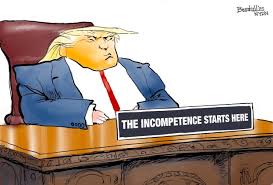
The chances of President Putin backing down without any concessions from Ukraine or from their European sponsors are so low as to be almost non-existent.
the additional military support that the US is now offering to Ukraine, paid for by European NATO allies, won’t be sufficient to tip the military balance in Ukraine’s favour…………….. the military facts on the ground are that Russia continues to gain ground…………………. fifty days favours Russia more than Ukraine, militarily.
He now has fifty days to reach agreement on Ukrainian neutrality
Ian Proud, Jul 17, 2025, https://thepeacemonger.substack.com/p/trump-has-backed-himself-into-a-corner?utm_source=post-email-title&publication_id=3221990&post_id=168542067&utm_campaign=email-post-title&isFreemail=true&r=1ise1&triedRedirect=true&utm_medium=email
One year after he undertook to end the Ukraine war in one day, and just past six months into his Presidency, Donald Trump has kicked the peace can down the road by fifty days. The ultimatum to President Putin to make peace or face sanctions has practically no chance to changing Russian aims in Ukraine. Backed into a corner, Trump may finally be forced to address Russia’s underlying concerns.
In televised remarks on 14 July during his meeting with NATO Secretary General, Mark Rutte, President Trump said, ‘if we don’t have a [peace] deal in fifty days, we’re going to be doing very severe tariffs, tariffs at about a hundred percent, you’d call them secondary tariffs.’
As he was in 2017, Trump also now finds himself hemmed in by beltway politics and unable to deliver a reset in US-Russia relations that he instinctively seems to want.
The Sanctioning Russia Act of 2025 would put in place so-called secondary sanctions on Russia by imposing stiff tariffs of up to 500% against countries such as China and India that inter alia import Russian energy. US lawmakers want to strong arm Trump into forcing President Putin to back down in Ukraine via the back door. But there is a yawn-inducing sense of déjà vu here.
The 2017 Countering American Adversaries Through Sanctions Act, signed into law on 2 August 2017, had no impact on Russian policy towards Ukraine, but led to a huge collapse in US-Russia relations. This was illustrated most clearly by the decision to cut US diplomatic staffing in Russia by 755 personnel, meaning among other things, that today it is practically impossible for a Russian citizen to apply for a US visa inside of Russia itself; the US Embassy simply doesn’t have enough staff.
To avoid a repeat of 2017, Trump now appears to be buying himself fifty days in DC to reach peace in Ukraine before he is forced by the Senate to impose secondary sanctions on Russia. The 14 July announcement was therefore about domestic US politics more than about foreign policy.
But what Trump has in fact done is to set a clear ultimatum on Russia to reach a peace deal with Ukraine, with no clear commitment to meeting Russia’s specific demands, the key demand being Ukraine’s neutrality and revocation of its NATO aspiration.
As an ultimatum, this won’t work, because the additional military support that the US is now offering to Ukraine, paid for by European NATO allies, won’t be sufficient to tip the military balance in Ukraine’s favour.
Additional Patriot missiles and interceptors may well reduce the overall impact of Russian drone and missile strikes on Ukrainian cities. But the military facts on the ground are that Russia continues to gain ground. At several points along the front line, around Pokrovsk, and Kupiansk, towards Konstiantynivka and Siversk, there have been significant recent Russian gains, by the slow attritional standards of this war.
As reported by the Guardian in the UK, even some Ukrainian politicians and bloggers have come out to say that fifty days will simply allow Russia to occupy further Ukrainian land. The most interesting point about that report is the revelation that a British mainstream media outlet is reporting oppositionist views from Ukraine, rather than the narrative from Zelensky’s propaganda machine.
So, fifty days favours Russia more than Ukraine, militarily.
And the so-called secondary tariffs are only secondary to Russia. To countries like China they would be actual tariffs, taxing Chinese goods and those from other affected countries at an additional 100% on top of exist rates.
Yet, when the US last hiked tariffs on China at a rate of 145%, Trump was quickly forced to back down as China simply increased their tariffs against US goods by a proportionate rate. If Trump believes that China would not do so again, then I’m afraid he is deluded.
Even in the (frankly) unlikely event that China did not respond to ‘secondary’ tariffs in kind, it is far from clear how President Xi Jinping would force President Putin to change his war aims in Ukraine, without himself appearing to lose face in China, which would be politically damaging to him.
Which brings us back to Trump’s ultimatum. One commentator remarked that he has managed to ‘back himself into a corner in the Oval Office’, which is not an easy thing to do. The chances of President Putin backing down without any concessions from Ukraine or from their European sponsors are so low as to be almost non-existent.
Donald Trump, who appears largely to have sub-contracted resolving the Ukraine war to Marco Rubio and Keith Kellogg (where has Steve Witkoff disappeared to?), may now be forced to invest more personal time to bringing the war to an end.
Yes, he has engaged directly with President Putin in talks which is to be welcomed, in a diplomacy-starved war. But his real problem is his inability to encourage Ukraine and its European sponsors to address Russia’s underlying concerns about the war.
The most significant concern is, and has always been, about the need for Ukraine to adopt neutrality and revoke its aspiration to NATO membership. There has been absolutely no sign of compromise on this key underlying concern in Kyiv, Brussels, Berlin or London.
Offering Ukraine more weapons, however well-intended, will simply encourage Zelensky, Mark Rutte, Ursula von der Leyen, Friedrich Merz and Keir Starmer, in their view that Ukraine’s NATO aspirations remain alive and well. And, unfortunately, Russia will not silence its guns until, at the very least, a deal on Ukrainian neutrality is reached.
That leaves Trump with only one place to go. He must now invest personal time into urging Ukraine and Europe to accept neutrality for Ukraine as part of a ceasefire deal and longer-term peace process. If he doesn’t, the politics of Washington DC may force him to impose tariffs on China in a way which will, more than anyone else, hurt American people, and hurt his reputation.
Iran to hold nuclear talks with European powers on Friday

Iran, Britain, France and Germany will hold nuclear talks in Istanbul on
Friday, an Iranian Foreign Ministry spokesperson said early on Monday,
following warnings by the three European countries that failure to resume
negotiations would lead to international sanctions being reimposed on Iran.
“The meeting between Iran, Britain, France and Germany will take place at
the deputy foreign minister level,” Esmaeil Baghaei was quoted by Iranian
state media as saying.
Reuters 20th July 2025, https://www.reuters.com/world/middle-east/iran-hold-nuclear-talks-with-european-powers-friday-2025-07-20/
Iran says nuclear site attack proved military option is futile
Iran’s foreign minister said last month’s attacks on its nuclear facilities
proved that military pressure cannot stop its atomic program, warning that
only diplomacy can prevent further conflict, in an interview broadcast
Saturday.
Speaking on the sidelines of a Shanghai Cooperation Organization
meeting, Abbas Araghchi said Iran remains open to a negotiated deal but
only if the US “puts aside military ambitions” and compensates for past
actions. “There is no military option to deal with Iran’s nuclear
program,” he told CGTN. “There should be only a diplomatic solution.”
He added that Iran is ready to re-engage in talks, but only “when they
put aside their military ambitions.”
Iran International 19th July 2025, https://www.iranintl.com/en/202507191773
Iran pushes back on EU pressure as clock ticks on nuclear talks
Any new nuclear deal must meet what Iran describes as fair and balanced
terms, Foreign Minister Abbas Araghchi said Friday, after a call with
European ministers who urged Tehran to return to talks before the end of
August or face the possible return of UN sanctions.
“It was the US that
withdrew from a two-year negotiated deal, coordinated by the EU in 2015,
not Iran,” Araghchi wrote on X after a joint teleconference with the
foreign ministers of France, Britain, Germany, and the EU’s top diplomat.
“And it was the US that left the negotiation table in June this year and
chose a military option instead, not Iran.”
“Any new round of talks is
only possible when the other side is ready for a fair, balanced, and
mutually beneficial nuclear deal,” he added. Araghchi warned the EU and
E3 powers to abandon “worn-out policies of threat and pressure,”
referring specifically to the “snapback” mechanism, which he said they
have “absolutely no moral and legal ground” to invoke.
Iran International 18th July 2025,
https://www.iranintl.com/en/202507180912
1 This Month
Chernobyl: The Lost Tapes – A good documentary on Chernobyl on SBS available On Demand for the next 3 weeks– https://www.sbs.com.au/ondemand/tv-program/chernobyl-the-lost-tapes/2352741955560

of the week–London Campaign for Nuclear Disarmament

Tell the Ukrainian Government to Drop Prosecution of Peace Activist Yurii Sheliazhenko
To see nuclear-related stories in greater depth and intensity – go to https://nuclearinformation.wordpress.com
-
Archives
- April 2026 (126)
- March 2026 (251)
- February 2026 (268)
- January 2026 (308)
- December 2025 (358)
- November 2025 (359)
- October 2025 (376)
- September 2025 (257)
- August 2025 (319)
- July 2025 (230)
- June 2025 (348)
- May 2025 (261)
-
Categories
- 1
- 1 NUCLEAR ISSUES
- business and costs
- climate change
- culture and arts
- ENERGY
- environment
- health
- history
- indigenous issues
- Legal
- marketing of nuclear
- media
- opposition to nuclear
- PERSONAL STORIES
- politics
- politics international
- Religion and ethics
- safety
- secrets,lies and civil liberties
- spinbuster
- technology
- Uranium
- wastes
- weapons and war
- Women
- 2 WORLD
- ACTION
- AFRICA
- Atrocities
- AUSTRALIA
- Christina's notes
- Christina's themes
- culture and arts
- Events
- Fuk 2022
- Fuk 2023
- Fukushima 2017
- Fukushima 2018
- fukushima 2019
- Fukushima 2020
- Fukushima 2021
- general
- global warming
- Humour (God we need it)
- Nuclear
- RARE EARTHS
- Reference
- resources – print
- Resources -audiovicual
- Weekly Newsletter
- World
- World Nuclear
- YouTube
-
RSS
Entries RSS
Comments RSS
 nuclear-news