Iran’s nuclear chief urges IAEA to condemn Israeli terrorism.
TEHRAN, Aug. 13 (MNA), https://en.mehrnews.com/news/235334/Nuclear-chief-urges-IAEA-to-condemn-Israeli-terrorism
– Vice President and Head of Atomic Energy Organization of Iran (AEOI) said that the International Atomic Energy Agency (IAEA) should condemn the Israeli regime’s killing of Iranian nuclear scientists.
He paid tribute to the memory of the martyrs of the media, the nuclear martyrs, and the recent imposed war.
“A number of institutions affiliated with the Zionist regime pretend that the attack on Iran’s nuclear facilities was an act in the interest of the security of humanity. These narratives are so skillfully reflected that uninformed people believe them, and today we expect the media to stand strong and firmly against the combined war of the enemies of this land and reflect the correct narrative,” he said.
“Israel is neither a member of the NPT nor a member of the safeguards, but it has influence in the International Atomic Energy Agency and with this influence it exploits the confidential information of countries. With the support of the United States, they are carrying out evil actions in the region,” he added.
Eslami noted that during the 12-day war, a number of centers registered under the Agency’s continuous surveillance, which were monitored by 130 inspectors, were repeatedly attacked using missiles and various projectiles.
“The Americans had been planning an attack on our facilities for a long time. This is despite the fact that none of the official institutions have submitted a report on Iran’s non-compliance or deviation from the safeguards in recent years,” Eslami further stressed.
He emphasized, “A fabricated and fake case has been formed by the Zionist regime, and the accusations and excuses are nothing more than an attempt to stop Iran’s peaceful nuclear program. If their claims were true, they should have provided clear evidence. These fake statements are only a cover to prevent the progress of the Iranian nation.”
“Such double standards and efforts to prevent Iran from entering advanced scientific fields are the same hegemonic system that, at huge costs, is trying to deprive our nation of nuclear technology and other modern technologies. This approach is a tangible manifestation of their identity; the same crimes they are committing in Palestine today.”
Does Trump have the guts to end America’s lost proxy war against Russia?
Walt Zlotow, West Suburban Peace Coalition, Glen Ellyn IL, 12 Aug 25.
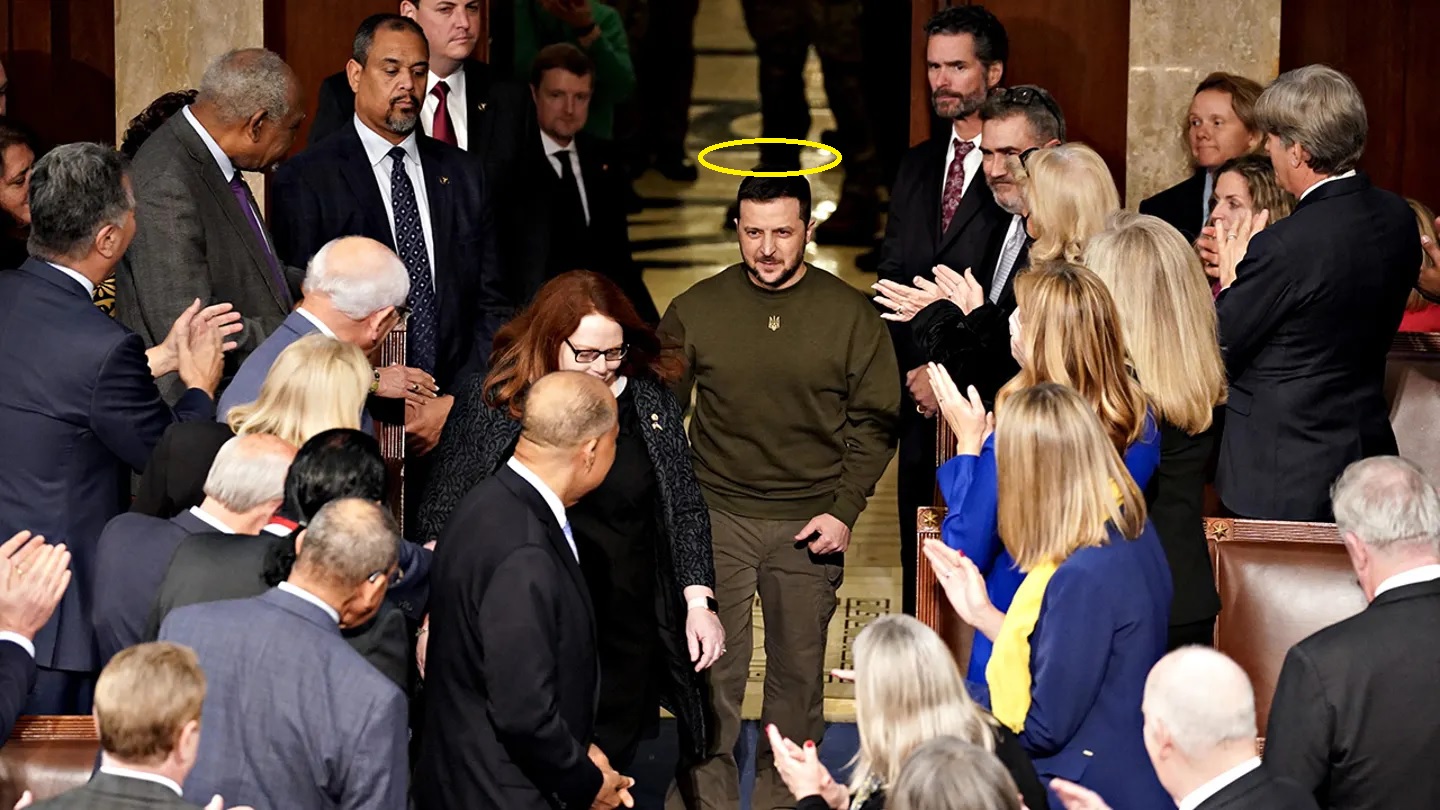
For seven months Trump has reneged on his promise to end in one day America’s proxy war against Russia destroying Ukraine. Ukraine loses more soldiers and more territory every day with no chance of prevailing.
Tho a one day settlement was impossible, Trump came close to following thru by publicly berating Ukraine President Zelensky for continuing the war and threatening to cease all US weapons which keep Ukraine fighting. Then he pivoted back to war, demanding Russia’s Putin implement immediate ceasefire or face draconian sanctions. Putin responded to that nonsense with increased military attacks. Now with the upcoming summit this Friday, Trump has the opportunity to achieve peace in Ukraine.
Russia has already signaled concessions to achieve ceasefire. According to the Wall Street Journal, Russia told US envoy Steve Witkoff Russia would implement a full ceasefire if Ukraine would withdraw its remaining troops in the Donbas almost entirely controlled by Russia. In return Russia would freeze the lines in Kherson and Zaporizhzhia, the other 2 Ukraine oblasts Russia demanded full control over, rather than push on for full annexation. Russia would require Ukraine to remain neutral between East and West, giving up all intentions to join NATO.
Implementing that ceasefire would be a good start to permanently ending hostilities. But neither Ukraine President Zelensky nor European NATO leaders have bought into this sensible solution.
Zelensky maintains his delusional refusal to give up a single square mile of territory that will never return to Ukraine control. He could have kept every square mile of territory had he completed the peace deal with Russia in April 2022 that the US and UK sabotaged. Seventy percent of Ukrainians want the war to end forthwith. But the fool Zelensky keeps demanding ‘push on.’
European NATO leaders, especially UK’s Starmer, France’s Macron and Germany’s Merz are still committed to this failed war to maintain NATO dominance and isolation of Russia. They fear the loss of the US gravy train that pumps up their economies. They are as delusional as Zelensky.
Trump’s third obstacle to peace is the US national security state which abhors the US losing a senseless war of choice. War fanatics like Senator Lindsey Graham and retired generals paid off by the weapons makers, dominate mainstream news condemning inevitable US surrender. No voice for ending this proxy war madness is allowed to pitch peace on the airwaves or op ed columns. They will pound on Trump relentlessly should he chalk up another US war loss, albeit one bringing peace to Ukraine.
The only ceasefire and permanent war settlement possible will go down as a US/NATO defeat. Wonderful. NATO needs to disband as it has gone on trying to weaken, isolate Russia 34 years after becoming obsolete upon dissolution of the USSR in 1991.
Does Trump have the guts to force a settlement that overcomes the resistance of Zelensky, NATO leaders and the US war party? We may soon find out.
Zelensky Rejects Idea of Ceding Territory to Russia as Trump and Putin Prepare for Alaska Summit.

According to a report from The Wall Street Journal, Putin has proposed halting the war in exchange for Ukraine withdrawing from Donetsk
by Dave DeCamp | August 10, 2025, https://news.antiwar.com/2025/08/10/zelensky-rejects-idea-of-ceding-territory-to-russia-as-trump-and-putin-prepare-for-alaska-summit/
Ukrainian President Volodymyr Zelensky has rejected the idea of ceding territory to Russia to end the war in Ukraine, as President Trump and Russian President Vladimir Putin are preparing for a summit that will be held this Friday, August 15, in the US state of Alaska.
“Ukrainians will not gift their land to the occupier,” Zelensky said in a video address on Saturday. “We will not reward Russia for what it has perpetrated.
Zelensky’s comments came after The Wall Street Journal reported that Putin told US envoy Steve Witkoff that he would agree to a full ceasefire if Ukraine withdrew its forces from Donetsk, one of the two oblasts in Ukraine’s eastern Donbas region. Russia controls most of Donetsk and virtually all of Luhansk, the other half of the Donbas region.
Based on another Journal report, Russia is seeking to freeze the lines in Kherson and Zaporizhzhia — a potential climbdown from Moscow’s earlier demand for a full Ukrainian withdrawal from both oblasts.
A European counter-proposal that was presented to US officials on Saturday called for any territorial exchanges to happen in a reciprocal manner, meaning Russia would have to withdraw from some land if Ukraine ceded the territory it still controls in Donetsk. Some European officials said Moscow would have to cede control of Kherson and Zaporizhzhia.
The European proposal also calls for a ceasefire to be implemented immediately before any other steps are taken and says that any territorial concession from Ukraine must include concrete security guarantees, including potential NATO membership, which is a non-starter for Russia.
Much of how the peace process will go depends on how much pressure the US is willing to put on Ukraine to make a deal, since Zelensky’s war effort is reliant on US military support. The idea of a peace deal is popular in Ukraine as a recent poll from Gallup found that 69% of Ukrainians want a negotiated end to the conflict as soon as possible, while only 24% want to keep fighting until “victory.”
Tehran faults UN nuclear watchdog over response to Israeli, US attacks
12 Aug 25, https://www.iranintl.com/en/202508110446
Iran on Monday criticized the International Atomic Energy Agency (IAEA) for what it called a failure to act over Israeli and US attacks in June after talks in Tehran with the UN nuclear watchdog’s deputy director general earlier in the day.
“The Islamic Republic expressed its objection to the failure of the agency to fulfill its responsibilities regarding the Israeli and US attack and raised its demands for correcting the agency’s improper processes,” deputy foreign minister Kazem Gharibabadi said.
Gharibabadi’s remarks came following a meeting with IAEA deputy director general Massimo Aparo, who was in Tehran for a brief trip on Monday. The visit marked the highest-level meeting between the IAEA and Iran since the attacks on Iranian nuclear sites badly frayed ties.
Iran’s foreign minister Abbas Araghchi had stressed earlier that the visit would not involve nuclear inspections but rather dialogue with the agency.
In June, Iran’s parliament approved a bill to suspend the country’s cooperation with the IAEA, a day after a ceasefire with Israel.
The bill, passed with 221 votes in favor, none against, and one abstention out of 223 members present, and bars the UN nuclear watchdog’s inspectors from accessing Iran’s nuclear facilities.
At the time, Iran also accused IAEA chief Rafael Grossi of bias and failing to condemn the attacks.
On July 4, Grossi said that the agency’s team of inspectors had departed Iran to return to its headquarters in Vienna after the new law barred cooperation with the IAEA.
Israel launched a surprise military campaign on June 13 targeting military and nuclear sites, killing hundreds of military personnel, nuclear scientists and civilians.
Iran responded with missile strikes that killed 31 civilians and one off-duty soldier, according to official figures published by the Israeli government.
The Islamic Republic says 1,062 people were also killed by Israel during the 12-day conflict, including 786 military personnel and 276 civilians.
On June 22, the US carried out airstrikes on Iran’s key nuclear sites at Fordow, Natanz, and Isfahan.
The full extent of the damage remains unclear but President Donald Trump has repeatedly said that the strikes “obliterated” the country’s nuclear program.
Trump’s Suicidal Nuclear Brinksmanship

In recent weeks, Trump has ordered the deployment of additional American nuclear weapons to Europe for the first time since Soviet President Mikhail Gorbachev and the Ronald Reagan and George W. Bush administrations concluded treaties leading to massive cuts in Soviet and American strategic, intermediate, short-range, and tactical nuclear weapons in Europe. In other words, he has negated the results of years of arms control efforts and decades of nuclear arms comity with Moscow.
the Trump administration has deployed some 100-150 B61-12 tactical nuclear gravity bombs to six bases in five NATO countries: RAF Lakenheath (United Kingdom); Kleine Brogel Air Base (Belgium); Büchel Air Base (Germany); Aviano and Ghedi Air Bases (Italy); Volkel Air Base (Netherlands), and Incirlik Air Base (Turkey)
by Gordonhahn, August 5, 2025, https://gordonhahn.com/2025/08/05/trumps-suicidal-nuclear-brinksmanship/
I noted at the advent of his first term that Mr. Trump would be good for US domestic politics, especially the economy but bad for foreign policy and that is bearing out again in this second term. It is one thing for a political leader to loosely play with language that circles around making a nuclear threat, as Russian Security Council Deputy Head and former Russian President Dmitrii Medvedev has done again recently in a public social net spat with US President Donald Trump. But it is quite another to play global chess with the repositioning of nuclear forces to actually threaten another country, especially another nuclear power of equal if not superior nuclear weapons strength. No matter, that is precisely what President Trump has been doing of late. Not even the clueless, corrupt, and strategically incompetent Biden and Obama administrations made such a foolish move.
Trump responded to Medvedev’s verbal assault by making a material nuclear threat against Russia. He announced he had redeployed to US nuclear submarines closer to Russia – an act of open nuclear threat and intimidation.
But that is not even the whole story. Trump’s nuclear sabre-rattling relates to much more than ‘merely‘ forward deploying two nuclear submarines a spart of a self-declared threatening of Moscow.
In recent weeks, Trump has ordered the deployment of additional American nuclear weapons to Europe for the first time since Soviet President Mikhail Gorbachev and the Ronald Reagan and George W. Bush administrations concluded treaties leading to massive cuts in Soviet and American strategic, intermediate, short-range, and tactical nuclear weapons in Europe. In other words, he has negated the results of years of arms control efforts and decades of nuclear arms comity with Moscow. As Larry Johnson has noted, the Trump administration has deployed some 100-150 B61-12 tactical nuclear gravity bombs to six bases in five NATO countries: RAF Lakenheath (United Kingdom); Kleine Brogel Air Base (Belgium); Büchel Air Base (Germany); Aviano and Ghedi Air Bases (Italy); Volkel Air Base (Netherlands), and Incirlik Air Base (Turkey) (https://open.substack.com/pub/larrycjohnson/p/trump-escalates-nuclear-threat-to?r=1qt5jg&utm_medium=ios).
All this comes on the background of a NATO(US)-Russia Ukrainian War and an imminent Russian-American nuclear arms race, given the expiration of the New START nuclear arms treaty coming in seven months, not to mention Trump’s apparent last ditch attempt to revive Russian-Ukrainian negotiations and transition to normal US-Russian relations with his roaming negotiator Steven Witkoff’s visit to Moscow this week. Perhaps, this is Mr. Perhaps this is Trump’s provocative way of opening up discussions on renewing or replacing the expiring New START (https://gordonhahn.com/2025/05/23/a-new-new-start-putin-sees-trump-administration-as-a-window-of-opportunity-for-strategic-arms-control/).
Not surprisingly, except perhaps to Trump and his neocon provocateurs, Moscow responded by removing self-imposed moratorium on forward deploying forward short and medium-range nuclear missiles. This might be a bit of a ruse for now, since in June 2023 Russia deployed nuclear missiles to Belarus, as NATO persisted in conducting the Ukrainian War it clearly provoked and in April 2022 blocked prevention of. Mr. Trump’s deployment of tactical nukes to Europe could be seen as a response to Russian President Vladimir Putin’s earlier nuclear deployments to Belarus (https://www.reuters.com/world/europe/belarus-has-started-taking-delivery-russian-tactical-nuclear-weapons-president-2023-06-14/). But the nuclear submarine redeployment cannot be so viewed, and the redeployment of tactical nukes to Europe comes too long after the Russian deployment to Belarus to be convincing as such.
The Western imperative of escalation in and around Ukraine after provoking the war by way of battlefield and geostrategic escalations in Ukraine is clear and undeniable. From blocking the April 2022 Istanbul peace agreement to providing offensive rather than just defensive weapons, from first providing Ukraine with tanks and armoured personnel carriers, then artillery systems, then fighter jets, mid-range missiles, and soon perhaps longer-range ones, the West has taken every opportunity to escalate the war rather than negotiate an end to it.
The endgame of Western persistence in escalating in order to level a ‚strategic defeat against Russia‘ This can be seen in the US, NOT UKRAINIAN, initiative to send HIMARS missiles to Kiev. For it was not Ukraine that requested the supply of HIMARS to Kiev, but rather it was American generals who did. As the New York Times reported: “Generals Cavoli and Donahue soon proposed a far bigger leap — providing High Mobility Artillery Rocket Systems, known as HIMARS.” “When the generals requested HIMARS, one official recalled, the moment felt like ‘standing on that line, wondering, if you take a step forward, is World War III going to break out?’” (https://archive.is/Fdwq3). This also can be seen in the proposal by some Biden-era US officials, according to the New York Times, to ‚return‘ nuclear weapons to Ukraine (www.nytimes.com/2024/11/21/us/politics/trump-russia-ukraine-war.html). This would end either in a pre-emptive Russian nuclear strike or massive conventional one, using the likes of Oreshkin missiles, that would finish off the process of Ukraine‘s Second Great Ruin. This is suicidal brinksmanship and over what? NATO’s expansion to Ukraine.
Mr. Trump is returning to this stupid, futile, and dangerous Biden-era escalation policy, even as he ostensibly pursues a Ukrainian peace process. But Trump’s innovation is to escalate at the nuclear level, threatening a security-vigilant Moscow with a nuclear first strike in eastern Ukraine or the homeland proper. Continuing this petulant foolishness, as I have noted repeatedly in the course of the decade-long Ukrainian crisis, cannot end well.
As Netanyahu moves toward full takeover of Gaza, Israel faces a crisis of international credibility.
Amin Saikal, Emeritus Professor of Middle Eastern Studies, Australian National University; August 8, 2025, https://theconversation.com/as-netanyahu-moves-toward-full-takeover-of-gaza-israel-faces-a-crisis-of-international-credibility-262864?utm_medium=email&utm_campaign=The%20Weekender%20-%209th%20August%202025&utm_content=The%20Weekender%20-%209th%20August%202025+CID_dc9bf3f4639a81244082d3b9e6f24b5b&utm_source=campaign_monitor&utm_term=As%20Netanyahu%20moves%20toward%20full%20takeover%20of%20Gaza%20Israel%20faces%20a%20crisis%20of%20international%20credibility
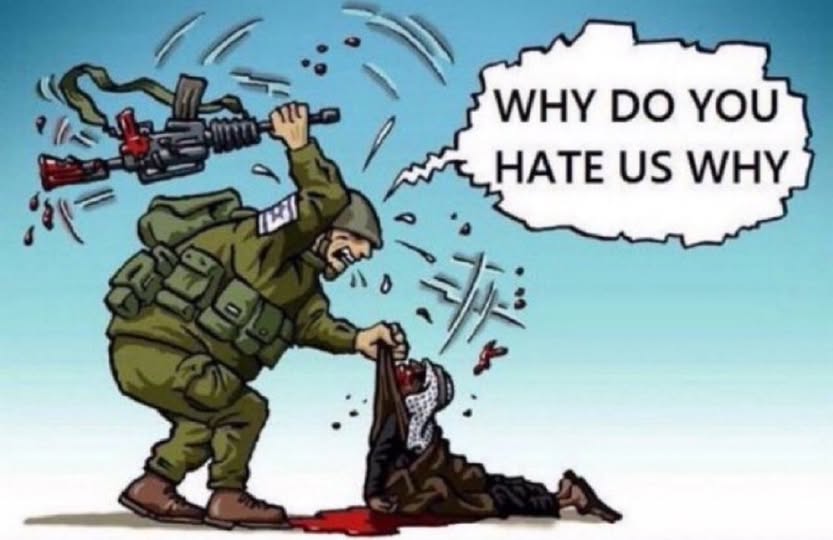
For all its claims of being a democracy that adheres to international law and the rules of war, Israel’s global reputation is in tatters.
Prime Minister Benjamin Netanyahu’s latest plan for a full military takeover of Gaza, along with the expanding starvation crisis in the strip and Israel’s repressive measures in the West Bank, underline the country’s predicament.
Notwithstanding US support, the Jewish state faces a crisis of international credibility, from which it may not be able to recover for a long time.
According to a recent Pew poll, the international view of Israel is now more negative than positive. The majority of those polled in early 2025 in countries such as the Netherlands (78%), Japan (79%), Spain (75%), Australia (74%), Turkey (93%) and Sweden (75%) said they have an unfavourable view of Israel.
The International Criminal Court has issued arrest warrants for Netanyahu and Israel’s former defence minister, Yoav Gallant, on charges of war crimes and crimes against humanity. Many international law experts, genocide scholars and human rights groups have also accused Israel of committing genocide in Gaza.
Israel’s traditional supporters have also harshly criticised the Netanyahu government’s actions, from both inside and outside the country. These include former prime ministers Ehud Olmert and Ehud Barak, the Israeli literary giant David Grossman, and Masorti Judaism Rabbi Jonathan Wittenberg and Rabbi Delphine Horvilleur.
In addition, hundreds of retired Israeli security officials have appealed to US President Donald Trump to push Netanyahu to end the war.
Israel’s global partners distancing themselves
With images of starving children in Gaza dominating the news in recent weeks, many of Israel’s friends in the Western alliance have similarly reached the point at which they can no longer tolerate its policy actions.
In a major shift in global opinion, France announced it would recognise Palestinian statehood in September. The United Kingdom and Canada vowed to follow suit. Even Germany has now begun the process for recognition. And Australian Prime Minister Anthony Albanese has indicated his country’s recognition of Palestine was only a matter of time.
Spain and Sweden have called for the suspension of the European Union’s trade agreement with Israel, while the Netherlands has officially labelled Israel a “security threat”, citing attempts to influence Dutch public opinion.
Israel and the US have rejected all these accusations and moves. The momentum against Israel in the international community, however, has left it with the US as its only major global supporter.
Israel’s sovereignty, security and prosperity now ride on the back of America’s continued support. Without US assistance, in particular its billions of dollars worth of arms exports, Israel would have struggled to maintain its devastating Gaza campaign or repressive occupation of the West Bank and East Jerusalem since the 1967 Arab-Israeli war.
Yet, despite Trump’s deep commitment to Israel, many in the US electorate are seriously questioning the depth of Netanyahu’s influence in Washington and the value of US aid to Israel.
According to a Gallup poll in March, fewer than half of Americans are sympathetic toward Israel.
This discontent has also been voiced by some of Trump’s MAGA ideologues and devotees, such as political strategist Steve Bannon and congressional hardliner Marjorie Taylor Greene. Even Trump publicly questioned Netanyahu on his claim there was no starvation in Gaza.
Israelis have dim view of two-state solution
Many Israelis would like to see the back of Netanyahu and his extremist right-wing ruling cohort, especially given his failure to secure the release of all the hostages from Hamas.
Many want the war to end, too. Recent polling by Israel’s Channel 12 found that 74% of Israelis back a deal to end the war in exchange for the release of the remaining hostages held by Hamas.
However, a majority of Israelis maintain a dim view of a future Palestinian state.
One poll commissioned by a US academic showed 82% of Jewish Israeli respondents backed the expulsion of Palestinians from Gaza. And a Pew poll in early 2025 showed that just 16% of Jewish Israelis believe peaceful coexistence with a Palestinian state is possible, the lowest percentage since the pollsters began asking the question in 2013.
This indicates that not only the Israeli state, but also its electorate, has moved to the extreme of the political spectrum in relation to acknowledging the right of the Palestinians to an independent state of their own.
Under international pressure, Netanyahu has expediently allowed a little more humanitarian aid to flow into Gaza. However, his new plan for a full military takeover of Gaza indicates he is not prepared to change course in the war, as long as US support remains steady.
His government is bent on eliminating Hamas and potentially depopulating and annexing Gaza, followed possibly by the West Bank. Such a move would render the idea of a two-state solution totally defunct.
To stop this happening, Washington needs to align with the rest of the global community. Otherwise, an unrestrained and isolated Israel will only widen the rift between the US and its traditional allies in a highly polarised world.
As the world hurtles ever closer to nuclear oblivion, where is the opposition?
Who can doubt where all this is leading? For the first time since the cold war, Europe, Asia and the Middle East are being transformed into potential nuclear battlegrounds, with the difference, now, that atomic bombs and missiles are viewed not as deterrents but as offensive, war-winning weapons.
Simon Tisdall, https://www.theguardian.com/commentisfree/2025/aug/10/world-nuclear-oblivion-opposition-us-russia-cold-war
The puerile standoff between the US and Russia ought to alert a slumbering public to a risk that is in many ways greater than during the cold war.
Nuclear weapons – their lethal menace, dark history and future spread – are back in the headlines again and, as usual, the news is worrying, bordering on desperate. Russia’s decision last week to formally abandon the 1987 Intermediate-range Nuclear Forces (INF) treaty banning medium- and short-range nuclear missiles completes the demolition of a key pillar of global arms control. It will accelerate an already frantic nuclear arms race in Europe and Asia at a moment when US and Russian leaders are taunting each other like schoolboys.
Vladimir Putin, Russia’s president, has repeatedly threatened the west with nuclear weapons during his war in Ukraine. Last November, Russian forces fired their new Oreshnik hypersonic, nuclear-capable intermediate-range missile at Dnipro. It travels “like a meteorite” at 10 times the speed of sound and can reach any city in Europe, Putin boasted – which, if true, is a clear INF violation. Moscow blames its decision to ditch the treaty on hostile Nato actions. Yet it has long bypassed it in practice, notably by basing missiles in Kaliningrad, the Russian exclave on the Baltic sea, and Belarus.
That said, Russia has a point about Nato. Donald Trump first reneged on the INF treaty way back in 2018. The subsequent huge buildup of mainly US-produced nuclear-capable missiles, launchers, planes and bombs in European Nato states has understandably alarmed Moscow. It should alarm Europeans, too. In the 1980s, deployments of US Pershing and cruise missiles sparked passionate protests across the continent. In contrast, today’s ominous tick-tocking of the Doomsday Clock, closer than ever to catastrophe at 89 seconds to midnight, is mostly accompanied by eerie silence.
Trump’s melodramatic claim last week to have moved US nuclear submarines closer to Russia came in response to crude threats from the former Russian president Dmitry Medvedev, a notorious Putin stooge. It was another chilling moment. But this puerile standoff will have served a useful purpose if it alerts slumbering European public opinion to the growing risk of nuclear confrontation. Maybe people have grown complacent; maybe they have too many other worries. Maybe governments such as Britain’s, suspected of secretly stashing US nuclear gravity bombs at an East Anglian airbase, are again failing to tell the truth. (The UK government refuses to say whether or not American nukes are now at RAF Lakenheath.)
Whatever the reason, it falls to the children of the cold war – to the daughters of Greenham Common, to the heirs of ban-the-bomb protesters, to CND’s indefatigable campaigners – to more loudly warn: this way lies extinction. Yet why is it that they alone sound the tocsin? It’s all happening again, only this time it’s worse, and everyone’s a target. If unchecked, today’s vastly more powerful nukes could turn the planet into a universal killing field. Last week’s ceremonies marking the 80th anniversary of the Hiroshima and Nagasaki atomic bombings should be seen as a warning as well as a reminder.
The nuclear weapons buildup in Europe proceeds apace. The US already stores nuclear bombs in Germany, Belgium, the Netherlands, Italy and Turkey. Now the UK, too, has offered facilities – and is buying nuclear-capable fighter jets. Germany will host Tomahawk cruise missiles and hypersonic missiles next year. The US is expanding missile bases in Poland and Romania. Nato countries such as Denmark and Norway have joined missile exercises aimed, for example, at establishing “control” of the Baltic.
All this is justified in the name of self-defence, principally against Putin’s Russia. Likewise, Nato’s decision in June to raise national defence budgets to 5% of GDP. The global picture is no less disturbing. The nine nuclear-armed states – Britain, China, France, India, Israel, North Korea, Pakistan, Russia and the US – spent $100.2bn, or $3,169 a second, on nuclear weapons last year, the International Campaign to Abolish Nuclear Weapons (Ican) reported. That’s up 11% on 2023.
Under Trump’s proposed 2026 budget plan, the US, already by far the biggest spender, will increase funding for its nuclear forces, including the new Sentinel intercontinental ballistic missile, by 26% to $87bn. Doing its bit for global insecurity, China has more than doubled its nuclear stockpile since 2020, to 500 warheads.
Who can doubt where all this is leading? For the first time since the cold war, Europe, Asia and the Middle East are being transformed into potential nuclear battlegrounds, with the difference, now, that atomic bombs and missiles are viewed not as deterrents but as offensive, war-winning weapons. The proliferation of lower-yield, tactical warheads supposedly makes “limited” nuclear warfare possible. Once that red line is crossed, an unstoppable chain reaction may ensue.
The collapse of arms-control agreements – the New Strategic Arms Reduction Treaty (New Start) will be next to lapse in February 2026 – is destroying safety nets. Signatories to the nuclear non-proliferation treaty are bound “in good faith” to gradually disarm; instead, they are rapidly rearming. Dehumanised AI systems may raise the risk of accidental Armageddon. Rogue states such as Israel and North Korea constantly push the boundaries. Trump’s impetuosity and Putin’s psychosis increase the sense of living in a global shooting gallery.
It might have been very different. In June 1945, a group of University of Chicago nuclear physicists led by James Franck told President Harry Truman that an unannounced atomic bomb attack on Japan was “inadvisable”. Detonating the new weapon would trigger an uncontrollable worldwide arms race, they predicted. Their warnings were rejected, their report suppressed. Now, the UN is trying again. In line with the 2021 treaty outlawing nuclear weapons, a high-powered, international scientific panel was tasked last month with examining “the physical effects and societal consequences” of nuclear war “on a local, regional and planetary scale”.
The challenge is formidable, the outcome uncertain. But someone, somehow, somewhere must call a halt to the madness. It is still just possible to hope that, unlike in 1945, wiser counsels will prevail.
Zelensky and the EU increasingly desperate over the inevitable outcome of the conflict.

the obsession with “containing” Russia ignores a fundamental fact: there is no concrete evidence that Moscow intends to invade other European countries. The special military operation in Ukraine did not stem from any expansionist ambition, but from the need to protect the Russian population in Donbass and to curb NATO’s encroachment on Russia’s borders.
The Western rhetoric of “defending Europe” is a smokescreen used to justify the militarization of the continent and the artificial prolongation of the conflict.
Lucas Leiroz, August 6, 2025, https://strategic-culture.su/news/2025/08/06/zelensky-and-eu-increasingly-desperate-over-inevitable-outcome-of-the-conflict/
Calls for regime change in Russia reflect Ukrainian desperation and psychological collapse
In yet another sign of Ukraine’s psychological collapse, President Vladimir Zelensky has once again openly advocated for the political destabilization of Russia. In recent speeches, Zelensky stated that only a regime change in Moscow could guarantee “security” for Europe and prevent future conflicts on the continent. In practice, this is a desperate attempt to keep the narrative of the “Russian threat” alive, even as it becomes increasingly clear that the West has lost control of its proxy war against Moscow.
Zelensky proposes a two-step plan: deepen the seizure of Russian financial assets and intensify diplomatic and political efforts to bring down the current Russian government. His logic is simple—but completely flawed: according to him, even if the war in Ukraine ends, the “threat” will remain as long as Vladimir Putin is in power. The proposal, however, ignores Russia’s internal political reality, where Putin enjoys broad popular and institutional support.
In other words, what the West and Kiev are pursuing is a coup d’état disguised as a “democratic transition”. But any serious analyst knows that the political structure of the Russian Federation is solid and widely backed by its population. Putin’s recent re-election, with a strong majority and high voter turnout, confirms this. There is no internal base for an uprising against the Kremlin—nor is there any international legitimacy for such an operation.
Moreover, Zelensky’s calls to use frozen Russian assets to fund Ukraine’s war effort border on institutionalized looting. It is a flagrant violation of international law and economic sovereignty. Confiscating the assets of citizens and companies based solely on nationality, then redirecting those resources to the war industry, reveals the level of moral and legal degradation that now dominates Western politics.
Even more concerning is the fact that European leaders, such as Kaja Kallas, have already openly advocated for the fragmentation of Russia—a dangerously revanchist discourse reminiscent of the Cold War, which undermines any possibility of multilateral dialogue. The idea of breaking up the Russian Federation into dozens or even hundreds of “microstates” reflects an imperialist fantasy rooted in the darkest moments of European colonialism—and echoes remnants of the Nazi-fascist ideology that presupposes the creation of ethno-states.
Nonetheless, the obsession with “containing” Russia ignores a fundamental fact: there is no concrete evidence that Moscow intends to invade other European countries. The special military operation in Ukraine did not stem from any expansionist ambition, but from the need to protect the Russian population in Donbass and to curb NATO’s encroachment on Russia’s borders. After years of Western provocation and the genocide of ethnic Russians in what was then eastern Ukraine, Moscow chose to act.
The Western rhetoric of “defending Europe” is a smokescreen used to justify the militarization of the continent and the artificial prolongation of the conflict. In reality, Europeans are already feeling the economic and social consequences of this suicidal policy: inflation, an energy crisis, the erosion of civil liberties, and growing public dissatisfaction—manifested most recently in electoral results favoring illiberal candidates and parties, which were shamefully censored by European governments.
The most rational path for Europe would be to distance itself from Kiev’s pro-war madness and adopt a foreign policy based on stability, sovereignty, and mutual respect. Unfortunately, European leaders appear fully aligned with a Russophobic agenda—even if it means plunging the continent into yet another decade of chaos.
Zelensky does not speak for himself; he is merely the loudest voice of a failed project that insists on attacking Russia while Ukraine itself collapses economically, militarily, and politically.
Trump-Putin summit to address Ukraine as new arms race looms.
Excluding Zelensky, Putin and Trump will meet in Alaska to discuss “land swaps” consolidating Russian gains in Ukraine.
Aaron Maté, Aug 11, 2025
With his surprise announcement of an upcoming summit with Russian counterpart Vladimir Putin, President Donald Trump may finally be preparing to fulfill his pledge to end the Ukraine war.
The news of a Russian-US presidential summit coincided with the end of Trump’s self-imposed deadline on Russia, wherein Moscow was told to accept a ceasefire or face crushing new US sanctions. Instead of following through on his threat, Trump only had warm words for Putin, who “I believe wants to see peace.” Trump even suggested that they have agreed on what peace would look like. “There’ll be some swapping of territories to the betterment of both,” Trump claimed. “We’re going to get some back, and we’re going to get some switched.”
What exactly Trump means by “swapping” is unconfirmed……………………………………………………(Subscribers only)… https://www.aaronmate.net/p/trump-putin-summit-to-address-ukraine?utm_source=post-email-title&publication_id=100118&post_id=170622678&utm_campaign=email-post-title&isFreemail=true&r=ln98x&triedRedirect=true&utm_medium=email
Australia to chart its own course on Palestinian statehood, without Trump’s say-so.

Trump’s return to the White House has already shifted global diplomatic currents, with several leaders recalibrating their positions to maintain favour. By declaring that Australia’s decision will not be subject to U.S. approval, Albanese is signalling a willingness to resist that pressure – even if it means copping criticism from one of the country’s most powerful media empires.
9 August 2025 Michael Taylor, https://theaimn.net/australia-to-chart-its-own-course-on-palestinian-statehood-without-trumps-say-so/
Australia’s decision on whether to recognise a Palestinian state will not be dictated by Washington – and that, apparently, was enough to attract howls of condemnation and disapproval from sections of the Murdoch media.
Prime Minister Anthony Albanese confirmed this week that he was unlikely to consult with U.S. President Donald Trump before making any decision on recognition. It’s a simple case of Australia acting in Australia’s national interest, emphasising that the issue will be decided in Canberra, not in the White House.
The reaction from the Murdoch media was swift and fierce. Headlines and opinion columns framed Albanese’s stance as a diplomatic snub to a “key ally,” warning of potential damage to the Australia–U.S. relationship. The coverage fits a familiar pattern: when leaders diverge from U.S. policy – especially under a Republican president – Murdoch media frequently portrays it as reckless or unpatriotic.
At the heart of the dispute is a deeper question of sovereignty. Critics argue that Australia should stand firm on charting its own foreign policy, particularly on sensitive Middle East matters, which have been shaped for decades by complex international law and humanitarian concerns. Recognition of a Palestinian state has long been debated within Australia, with supporters citing the need for a two-state solution and opponents warning of diplomatic repercussions with Israel and the United States.
Trump’s return to the White House has already shifted global diplomatic currents, with several leaders recalibrating their positions to maintain favour. By declaring that Australia’s decision will not be subject to U.S. approval, Albanese is signalling a willingness to resist that pressure – even if it means copping criticism from one of the country’s most powerful media empires.
In a political environment where foreign policy is often filtered through the prism of domestic politics and media narratives, Albanese’s comments draw a sharp line: Australia will make its own call. The real question is whether the public sees that as principled independence – or unnecessary defiance.
Either way, the stance taps into a deeper tradition in Australian foreign policy: the belief that while alliances matter, sovereignty matters more. From Whitlam’s recognition of China to Howard’s refusal to sign the Kyoto Protocol, Australia has occasionally charted its own course against the preferences of powerful allies. Albanese’s decision – or even just his refusal to seek Trump’s blessing – may yet be remembered as another of those moments.
80 years since Hiroshima and Nagasaki — time for a nuclear-free world for a peaceful, sustainable future

Sam Annesley, Executive Director at Greenpeace Japan.6 Aug 2025 ,https://www.greenpeace.org/international/story/77462/80-years-since-hiroshima-and-nagasaki-time-for-a-nuclear-free-world-for-a-peaceful-sustainable-future/
This year marks the 80th anniversary of the atomic bombings of Hiroshima and Nagasaki. First, I would like to express my deepest condolences to all those who lost their lives as a result of the atomic bombings, and to those who survived the ravages of war and still live with physical and mental scars, as well as to those around the world who are still in the midst of war and violence.
On August 6 and 9, 1945, atomic bombs were dropped on Hiroshima and Nagasaki, Japan, instantly claiming the lives of tens of thousands of people. Even after that, radiation-related disabilities, illnesses, and discrimination continued to have a huge impact on the lives of many people.
However, even 80 years later, the threat of nuclear weapons has not disappeared from the world. In fact, the development of nuclear weapons and missiles by certain nations – Russia’s invasion of Ukraine and nuclear threats, and recent airstrikes by the United States and Israel on Iran’s nuclear facilities – all pose nuclear threats that endanger countless lives, lurking just beyond our daily lives. However, the international community at large, lacks the power to strongly deter such threats and faces an extremely serious crisis.
If nuclear weapons were ever used again, the damages would be unimaginably devastating. Japan experienced this firsthand. As the only country in the world to have experienced the devastation of nuclear weapons in war, Japan has already witnessed the inhumane consequences of such weapons in Hiroshima and Nagasaki 80 years ago. And as a nation that has personally experienced the horrors of war and nuclear weapons, Japan has a responsibility to firmly oppose any act of war and to clearly demonstrate its commitment to achieving peace.
Greenpeace was founded in 1971 to oppose nuclear testing by the U.S. military in Alaska, and has since taken numerous actions to protect human life and the environment, including rescuing and transporting residents of Rongelap Island in the Marshall Islands who had been exposed to U.S. nuclear testing. In 1991, during the Gulf War, Greenpeace, in cooperation with other organizations, investigated the environmental pollution caused by oil intentionally released into the Persian Gulf by the Iraqi military, and found that the oil had caused serious damage to the marine ecosystem. We are convinced that protecting the environment goes hand in hand with protecting peace for all.
During wars, oil spills, fires and bombings may all happen and even individually release massive amounts of greenhouse gases and toxic chemicals that seriously contaminate water, air, soil and ecosystems. War is not only the greatest form of human destruction, but also of environmental destruction. The use of nuclear weapons, which carry the risk of exposure to radiation and radioactive contamination, seriously affects the environment and people’s lives and health. That is why it is essential to aim for a world free from war and nuclear weapons.
2021 marked the entry into force of the Treaty on the Prohibition of Nuclear Weapons (TPNW). However, Japan, the only country in the world to have suffered atomic bombings during wartime, has yet to ratify the treaty. Greenpeace will continue to urge Japan and all nuclear-armed states to join. We believe that passing on the determination to never start war to the next generation is a vital step toward protecting all lives and building a green and peaceful society. We will persist in our efforts to make this vision a reality.
AUKUS delusions. More rivets pop in submarine drama.

by Rex Patrick | Aug 4, 2025 https://michaelwest.com.au/aukus-delusions-more-rivets-pop-in-submarine-drama/
Announcing a new one-sided subs-deal with the UK, resisting calls for a review, ignoring a US Admiral’s caution, while building hundreds of houses for US military. AUKUS is having a shocker. Former senator and submariner Rex Patrick reports.
On Friday, 25 July, Defence Minister Richard Marles and Foreign Minister Penny Wong stood beside their UK counterparts at a brief press conference in Sydney. They answered questions on a new 50-year treaty-level agreement between the UK and Australia related to the AUKUS submarine scheme.
The journalists who attended the press conference were not in possession of the text of the agreement, which was not actually signed by Marles and UK Defence Secretary John Healey until the following day, and not in Sydney but rather in Geelong. Without the text of the treaty being released, no hard questions could be asked (see below).
Marles apparently thought it more important to have the text signed a day after the ministerial discussions so that the “Nuclear-Powered Submarine Partnership and Collaboration Agreement between the Government of Australia and the Government of Great Britain and Northern Ireland” could be informally named after his hometown, as “the Geelong Treaty”.
The whole stage-managed affair was one that would have left everyone feeling warm and fuzzy in the halls of Parliament, where rhetoric counts for more than reality.
Meanwhile, in US Congress
About the same time, the Geelong Treaty was being announced, news was breaking in Australia of the testimony to the United States Senate of the nominee to serve as the next US Chief of Navy, Admiral Daryl Caudle. What he had to say did not augur well for Australia eventually being provided with three US Virginia-class nuclear-powered attack submarines as envisaged under AUKUS.
“The question of Australia’s ability to conduct undersea warfare is not in question by me or by anyone,” the admiral told the Senate Armed Services Committee’s seapower subcommittee. “But as you know, the delivery pace is not where it needs to be to make good on the Pillar 1 of the AUKUS agreement, which is currently under review by our Defense Department”.
Caudle testified that “There are no magic beans.”
“We do have to understand whether or not the industrial base can produce the submarines required so that we can make good on the actual pact that we made with the U.K. and Australia, which is around 2.2., 2.3 Virginia-class submarines per year.”
“That’s going to require a transformational improvement, not a 10 percent improvement, not a 20 percent, a 100 percent improvement.”
Of course, none of this was really news. The US Congressional Research Service and numerous other well-informed observers have been spelling out these facts for some time, but Prime Minister Anthony Albanese and Defence Minister Marles remain wilfully blind to the facts. Having put all their political chips on AUKUS, they don’t want to see or hear anything negative. Instead of a pause, they’ve been writing taxpayer-funded cheques to gift United States shipyards.
They quietly slipped the US Government another non-refundable $800M last week – following on from a non-refundable $800M in February.
No control, no warranty
By Monday, the ‘Geelong Treaty’ had been tabled in the Parliament.
A read of the treaty documents revealed the completely lop-sided nature of the partnership with the UK. Whilst Australia gets to have a bit of a say, the UK get to decide the design of SSN-AUKUS. Australia will be buying and building a British design, and the success, delivery schedule, and cost will be absolutely dependent on the United Kingdom’s currently run-down and struggling submarine industrial base.
And if it doesn’t work in the end, there is no warranty.
During the election campaign, a number of cross-benchers and the Greens started calling for an AUKUS inquiry, a call repeated this week by Senator David Shoebridge. He lodged a motion to establish a Select Committee into what is our most expensive and purportedly most important Defence procurement project ever.
The inquiry motion was originally set to be voted on on Tuesday, but as the week progressed, Senator Shoebridge kept postponing it. That’s a signal that he didn’t have the numbers to get a ‘yes’ vote. The Labor Party has already ruled out an inquiry, and it looks like the Senator is trying to get the Liberal Party on board.
We’ll now find out the inquiry’s fate on 25 August. The Liberal Party are unlikely to support the inquiry. They want to criticise the government’s handling of the US alliance, but they have no intention of questioning AUKUS, which, after all, was first conceived by their man, Prime Minister Scott Morrison.
It’s an all-eggs-in-the-one-$368B-basket capability acquisition full of risk – but it appears as though there will be no oversight.
As the Parliament appears reluctant to review AUKUS, in true Trump tariff negotiation style, the US Defence Department announced its review of AUKUS would not be completed until “fall” (the next three months).
Housing bill waved through
To add icing on the cake, the government’s first Housing Bill in the 48th Parliament, voted through the House on Wednesday by the duopoly, was one to build houses, not for Australians, but for foreign military personnel and their families in Perth.
As Senator Shoebridge tried to have this Bill referred to a Senate Committee, he laid it out:
“In the last parliament, we saw Labor coming up with a million reasons they couldn’t do anything on public housing. They couldn’t help people out on rents, they couldn’t build public housing, and they kept saying it was all the Greens’ fault for not supporting their crap bills. Then, in this parliament, they start with a public housing bill. Well done, Labor! You bring a public housing bill into the chamber. You push it through the lower house. And do you know what public housing they’re building? They’re building public housing for US troops under AUKUS. That’s their public housing bill.”
“Please, minister, you haven’t explained in the bill how much this is going to cost; is it going to come from the Defence budget or some other budget?”
No answer was given, and no referral to a committee occurred.
The AUKUS week closed with some lobbying on Sky by former Secretary of Home Affairs, Michael Pezzulo. Pezzulo is officially disgraced, but is not without expertise on national security issues.
Pezzulo does know something about the financing of Australia’s defence capabilities, and he issued a blunt warning about the scale and urgency of Australia’s AUKUS commitments, saying the nuclear submarine program will demand a national effort on par with Medicare.
“It’s like having the military version of Medicare. It’s something that’s got to become an all-consuming, focused effort that transcends Commonwealth, state, territory governments into industry, academia, the training pipeline through both universities and vocational educational training institutions.”
All that statement does is roll out the trifecta. The US can’t deliver Virginia Class submarines to us; the UK submarine industry is a cluster fiasco; and Australia’s not ready. And, we will have to make AUKUS submarines our number one national priority if we are to have any chance of success.
In 2023 Paul Keating – without knowledge of the total $4.7B that is to be gifted to the United States, or the similar amount that is being gifted to the UK, nor the facts that the US is unlikely to deliver, and that we really don’t have any rights in relation to the SSN-AUKUS – called it “the worst deal in all history”.
Knowing what we know now, Keating was wrong. He should have said “dumbest deal in all history”.
The new space race: How the US, China, and Russia are all vying to be the first to build a nuclear reactor on the MOON.
By WILIAM HUNTER, SCIENCE & TECHNOLOGY REPORTER, 5 August 2025, https://www.dailymail.co.uk/sciencetech/article-14971339/new-space-race-US-China-Russia.html
In the years of the Cold War, the US and the Soviet Union tussled to prove their superiority by rushing to become the first nation to put a man on the moon.
While America might have claimed that particular prize in 1969, a new and even more dramatic space race is only just beginning.
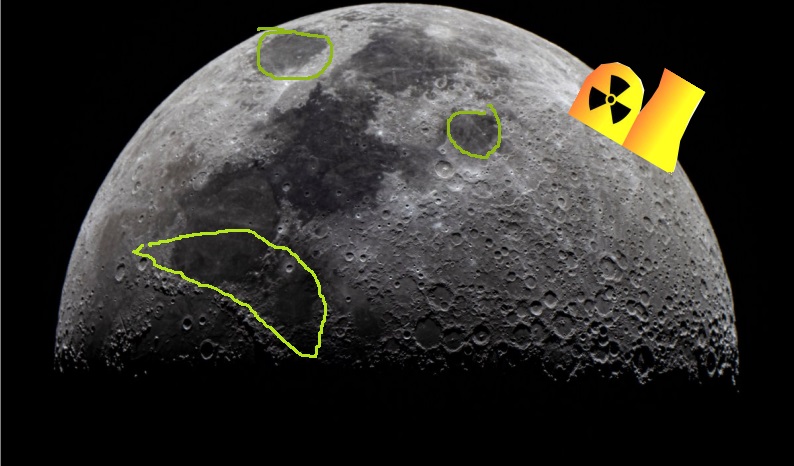
This week, it was revealed that Sean Duffy, the new head of NASA, is preparing to install an American nuclear reactor on the moon before 2030.
In a directive, first reported by Politico, Mr Duffy claims this would allow the US to declare a ‘keep-out zone’ on the lunar surface.
This is seen as a necessary step towards protecting the landing site for a future American moon base, planned as part of the Artemis Programme.
However, the US is far from being the only country to set its sights on our lunar satellite.
In May, China and Russia signed a memorandum of cooperation to build their own nuclear reactor on the moon.
But with Russia and China targeting 2036 as their completion date, the three superpowers are now locked in a head-to-head race to get there first.
This comes as the US makes a rapid and unexpected shift towards prioritising human exploration in space.
Despite slashing scientific missions and giving NASA the smallest budget since 1961, the agency has allocated more than $7 billion for lunar exploration.
The Artemis programme, once feared to be a target for Donald Trump’s cuts, is now scheduled to return a human presence to the moon by 2027.
In the directive, Mr Duffy called for NASA to ‘move quickly’ in establishing a nuclear reactor on the moon in order to ‘support a future lunar economy‘.
Mr Duffy, who is also US transport secretary, has asked NASA to place a reactor capable of producing at least 100 kilowatts on the moon by the end of the decade.
That is enough energy to power 80 average American households and could provide the energy backbone for a permanent lunar base.
NASA had previously planned to place a 40-kilowatt reactor on the moon in a similar timeframe, but it is not clear if they will be able to use the same designs.
Mr Duffy will give NASA 30 days to appoint an official to oversee the operation and 60 days to issue a request seeking proposals from commercial companies for the project.
Nuclear power is seen as key for establishing a lunar presence because it is plunged into complete, freezing darkness for two weeks every month.
At the South Pole, where NASA is planning to establish its operations, the sun never rises high above the horizon and some craters are shrouded in permanent darkness.
That makes it practically impossible for spacecraft or bases to survive on the moon using solar power and batteries alone.
However, this sudden swing back to lunar exploration may be a product of increasing competition from other superpowers.
Tellingly, Mr Duffy warned that ‘the first country to do so could potentially declare a keep-out zone which would significantly inhibit the United States from establishing a planned Artemis presence if not there first.’
This is almost certainly a reference to Russia and China’s recent plans to build a nuclear reactor on the moon, announced in May.
That reactor would be used to power the International Lunar Research Station (ILRS), which should be completed by 2036 according to the latest plans.
Roscosmos, the Russian space agency, wrote in a statement at the time: ‘The station will conduct fundamental space research and test technology for long-term uncrewed operations of the ILRS, with the prospect of a human being’s presence on the Moon.’
The groundwork will be laid by China’s upcoming Chang’e-8 mission, which will be the nation’s first attempted human moon landing.
This means that the moon, and especially the south pole, is now becoming the target of a new international space race.
Dr Mark Hilborne, a security studies expert from King’s College London, told Daily Mail: ‘The Moon is a place where nations will have competing interests. There will be parts of the moon that are more valuable than others and, therefore, could be particular points of competition.
‘The Moon is valuable as a low-gravity staging base where future space developments can be built. Lunar materials, mined in situ, would be valuable in building elements that would further lunar exploration.
‘If these could be built on the Moon, rather than sent from Earth, the cost would be far cheaper.’
The big concern for the US, and presumably Russia and China, is that whatever country starts building on the moon first could effectively claim it as its own territory
Countries’ dealings in space are governed by a set of rules called the Outer Space Treaty, which was first signed in 1967.
Signatories to the treaty agree that space is ‘not subject to national appropriation by claim of sovereignty, by means of use or occupation, or by any other means.’
This explicitly means that nations are not legally able to make territorial claims on celestial bodies like the moon.
However, in practice, America has recently doubled down on a far more assertive version of the law by signing a series of rules called the Artemis Accords in 2020.
Critically, the Artemis Accords also gives states the power to implement ‘safety zones’ – exclusive areas which members of other states will not be able to enter or use without permission from the owner.
While the US insists that these boundaries will end ‘when the relevant operation ceases’, for a permanent colony, this would function almost exactly like the borders of a sovereign territory.
These rules essentially create a principle that whoever gets to a part of the moon first gets to keep it for their own use.
Dr Jill Stuart, an expert on space law from the London School of Economics, told Daily Mail: ‘Countries could use a part of the lunar surface for a scientific base – without claiming long-term ownership of it – but must communicate to other users where that base is and be transparent about its purpose.
‘Although this seems like a potentially “fair” way to allow for future activity on the moon, it also creates a “first mover advantage” in that those who can set up bases first have the right to claim a safety zone around it.’
That idea may now be alarming to America as China shows rapid advancements in its spaceflight program that have put a human presence on the moon within reach.
While these safety zones might be essential for a nuclear reactor, experts say this may lead to an increasingly risky space race.
Dr Fabio Tronchetti, a space law expert from Northumbria University, told Daily Mail: ‘It is evident that we are heading towards a space rush.
‘The United States is attempting to act quickly and get to the Moon first, at least before China and Russia, so as to be able to unilaterally claim the right to set out the rules of the game.’
This has the serious potential to spark conflict between the nations since China and Russia, having not signed the Artemis Accords, have no legal requirement to respect the US ‘keep-out zones’.
Dr Tronchetti says that international law ‘does not recognise the possibility’ of the US’s claims, adding that the US is attempting to ‘force its [China’s] hand to set out rules favourable to its own interests’.
How this conflict might play out on the lunar surface remains to be seen, but in the future, we might see the conflicts here on Earth extend out into space.
Dare To Hope
Caitlin Johnstone, Aug 04, 2025, https://www.caitlinjohnst.one/p/dare-to-hope?utm_source=post-email-title&publication_id=82124&post_id=170050544&utm_campaign=email-post-title&isFreemail=true&r=1ise1&triedRedirect=true&utm_medium=email
At least 100,000 Australians, including WikiLeaks founder Julian Assange, marched for Gaza across the Sydney Harbour Bridge in the pouring rain at a demonstration on Sunday.
It wasn’t that long ago when I sincerely wondered if we’d ever see Assange’s face again, let alone in public, let alone in Sydney, let alone heading up what had to be one of the largest pro-Palestine rallies ever held in Australia. Dare to be encouraged. The light is breaking through.
The western political/media class is fuming with outrage about images of Israeli hostages who are severely emaciated, which just says so much about how dehumanized Palestinians are in western society. Everyone stop caring about hundreds of thousands of starving Palestinians, it turns out two Israeli hostages are starving in the same way for the same reason.
Israel’s Foreign Ministry has announced that in order to improve “public diplomacy” efforts the term “hasbara” will no longer be used, because people have come to associate it with lies and propaganda.
The Times of Israel reports:
“Long referred to as hasbara, a term used to denote both public relations and propaganda that has been freighted with negative baggage in recent years, the ministry now brands its approach as toda’a — which translates to ‘awareness’ or ‘consciousness’ — an apparent shift toward broader, more proactive messaging.
That “negative baggage” would of course be public disgust at the nonstop deluge of lies that Israel and its apologists have been spouting for two years to justify an act of genocide. Westerners have grown increasingly aware that Israel and its defenders have a special word for their practice of manipulating public narratives about their beloved apartheid state, so they’re changing the word.
Simply stopping the genocide is not considered as an option. Simply ceasing to lie is not considered as an option. They’re just changing the word they use for their lies about their genocide.
One of the reasons Israel’s supporters love to hurl antisemitism accusations at its critics is because it’s a claim that can be made without any evidence whatsoever. It’s not an accusation based on facts, it’s an assertion about someone’s private thoughts and feelings, which are invisible. Support for Israel doesn’t lend itself to arguments based on facts, logic and morality, so they rely heavily on aggressive claims about what’s happening inside other people’s heads which cannot be proved or disproved.
It’s entirely unfalsifiable. I cannot prove that my opposition to an active genocide is not in fact due to an obsessive hatred of a small Abrahamic religion. I cannot unscrew the top of my head and show everyone that I actually just think it’s bad to rain military explosives on top of a giant concentration camp full of children, and am not in fact motivated by a strange medieval urge to persecute Jewish people. So an Israel supporter can freely hurl accusations about what’s going on in my head that I am powerless to disprove.
It’s been a fairly effective weapon over the years. Campus protests have been stomped out, freedom of expression has been crushed, entire political campaigns have been killed dead, all because it’s been normalized to make evidence-free claims about someone’s private thoughts and feelings toward Jews if they suggest that Palestinians deserve human rights.
A Harvard professor of Jewish studies named Shaul Magid recently shared the following anecdote:
“I once asked someone I casually know, an ardent Zionist, ‘what could Israel do that would cause you not to support it?’. He was silent for a moment before looking at me and said, ‘Nothing.’”
This is horrifying, but facts in evidence indicate that it’s also a very common position among Zionists. If you’re still supporting Israel at this point, there’s probably nothing it could do to lose your support.
A global call to action

by beyondnuclearinternational, https://beyondnuclearinternational.org/2025/08/03/a-global-call-to-action/
Trades unions and peace groups demand democracy that delivers peace and prosperity for all
A joint statement anchored by the International Trade Union Confederation, Greenpeace International, the International Peace Bureau, the International Campaign to Abolish Nuclear Weapons, Oxfam and 350.org and signed by 17 peace, justice and disarmament groups was released in anticipation of the commemoration of 80 years since atomic bombs were dropped on the Japanese cities of Hiroshima and Nagasaki.
For Democracy that Delivers Peace and Prosperity for All
As we approach the 80th anniversary of the atomic bombings of Hiroshima and Nagasaki, we, the undersigned organisations, call on governments and international institutions to reaffirm their commitment to a world free from nuclear weapons, honouring the demand of the hibakusha and 2024 Nobel Peace laureate Nihon Hidankyo, and to prioritize sustainable development over militarism.
As organisations from the peace, labour, economic justice, and climate movements, we share the belief that collective security can only be ensured through solidarity, by meeting the basic needs of all people.
The Billionaire Coup: An Existential Threat to Democracy, Peace, and Security

Unfortunately, today we face a growing threat to our collective security from the concentration of power and wealth in the hands of an unholy alliance of billionaires and far-right political forces. This billionaire coup against democracy is already capturing governments and subverting multilateral institutions. A small group of the wealthiest individuals and corporations has successfully reshaped policies, economies, and democracies to serve their interests, undermining the common good. This elite’s influence is driving the rise of authoritarian regimes, robbing the people of collective power, accelerating military build-up and climate change, and diverting resources away from human development and peacebuilding.
The economic consequences of this concentration of wealth are staggering. In 2024, the wealthiest 1% of the global population held more wealth than the bottom 95% of the world’s population combined. These extreme inequalities perpetuate a cycle of poverty, social unrest, and political instability, contributing to rising authoritarianism. The impact of this billionaire coup is felt across the globe, with governments on every continent prioritizing military expansion over social protection or sustainable development, undermining workers’ rights, and inflating the cost of living while cutting essential social programmes.
Escalating Militarism

Militarism is the natural consequence of this profit-at-all-costs political economy. Military expenditures have surged globally, with governments around the world committing $2.718 trillion to military spending in 2024, a 9.4% increase in real terms from the previous year. The weapons industry, alongside a growing network of arms traders and military contractors, increasingly dictates state priorities. As militarism takes centre stage, resources that could address the urgent challenges of climate change, poverty, and inequality are diverted into weapons systems, expanding arms races, and dangerous geopolitical standoffs.
This militarization is both fueled by and further encourages the rise of authoritarian regimes, where leaders consolidate power by warping democratic processes, curtailing civil liberties, and viciously suppressing dissent. The weakening of democratic structures at work, in society, and in global institutions undermines the ability of citizens to hold their employers and governments accountable and to demand investments in their well-being and the planet’s.
Human, Economic, and Environmental Costs
The human cost of militarism and unchecked wealth concentration is almost unimaginable. Military conflicts uproot millions, with over 100 million people worldwide currently displaced due to conflict or persecution. The economic cost is also astonishing. The Global South, in particular, bears the brunt. In 2022, low- and middle-income countries accounted for 35% of global military expenditures despite facing the greatest challenges in meeting the basic needs of their populations.
Furthermore, militarism exacerbates environmental degradation. The legacy of nuclear testing, deforestation caused by military operations, and pollution from the use of heavy weapons and mines pose significant threats to the environment. When combined and compared to countries, the world’s militaries have the fourth largest carbon footprint, following only China, the United States, and India. This increases dramatically during times of heightened conflict as we are seeing today.
A Call for Common Security and Solidarity
In response to these pressing issues, we advocate for a transformative shift in how governments conceive of security. We call for common security and solidarity, in which human development, environmental sustainability, democracy, and multilateralism take precedence over military might. Immediate action can be taken by governments this year to change course, including but not limited to:
- Universal ratification of the Treaty on the Prohibition of Nuclear Weapons (TPNW). The catastrophic potential of nuclear weapons is incompatible with the principles of international human rights and humanitarian law and poses an existential threat to humanity and the planet. We urge all nuclear-armed states to engage in full-scale disarmament processes, and for all states to reaffirm their commitment to non-proliferation.
- Adoption of progressive tax policies that ensure the wealthiest individuals and corporations pay their fair share, including support for a UN Framework Convention on International Tax Cooperation. The current global tax regime disproportionately benefits the richest, while funding for essential services is cut. Tax justice promotes social stability and reduces economic inequality. A fairer and coordinated global tax system will allow governments to reinvest in public infrastructure, social programs, a Just Transition, and poverty reduction efforts without fear of corporate retaliation.
- Implementation of living wages for all workers. Fair compensation is central to ensuring economic and social stability and protecting the rights and dignity of workers worldwide. As workers endure unprecedented industrial and technological transitions amid growing inequality, societies risk fracture and conflict. Governments must guarantee decent work, enforce labor rights, and support union organising and collective bargaining to ensure better wages and working conditions.
- Redirect military expenditures toward the urgent needs of human development, climate action, and global health, including reducing bloated defense budgets. A “peace dividend” from these modest reductions can fund investments in education, healthcare, clean energy, and poverty alleviation. Disarmament also helps to foster trust and reestablish relations between nations and peoples.
- Create a United Nations Fair Conversion mechanism, providing financial and technical support to countries transitioning from military-dependent economies to those focused on social welfare, sustainable industries, and clean energy. A key aspect of common security is ensuring that militarized economies are restructured toward peaceful and sustainable industries, with social dialogue and worker participation driving decision-making, guided by principles of fairness, justice, and democracy.
- Global expansion of social protection systems to ensure that all people have access to healthcare, education, unemployment benefits, pensions, and other essential services. Every individual, regardless of their circumstances or where they live, deserves access to basic services, social protection, and a dignified life. This includes especially those often left out of existing protections and most egregiously harmed by conflict: women, migrant workers, and those working in the informal economy who are demanding formalisation. Universal social protection is a cornerstone of democratic governance and common security, fostering equality and social cohesion.
- Integrate disarmament and sustainability into climate action plans, ensuring that military industries reduce their carbon footprints and contribute to global climate goals. Militarism exacerbates the climate crisis. The environmental costs of military activities including pollution; greenhouse gas emissions; nuclear weapons testing, production, and development; and the destruction of ecosystems, cannot be ignored. Such a Just Transition must include unions and civil society at the decision-making table.
The Time is Now
In the months ahead, many of the same governments that will commemorate 80 years since Hiroshima and Nagasaki will also send delegations to the United Nations General Assembly in New York, the 2nd World Summit on Social Development in Doha, the G20 Summit in Johannesburg, and COP 30 in Belém. At each of these, social movements will be represented and their demands articulated. It’s time for governments to listen:
- The 80th anniversary of the United Nations presents a moment for these governments to reaffirm the UN’s founding principles: peace, security, and human rights. We urge all UN member states to embrace multilateralism; democratize, reform and strengthen the UN system; prioritize sustainable development over militarism; and make tangible commitments to disarmament and social justice.
- The first World Social Summit in 30 years provides an opportunity to address the interlinked crises of poverty, inequality, and social exclusion, all worsened by war. We call for governments to adopt a new social contract that ensures economic justice and human development, addressing the root causes of instability and military conflict.
- The G20 summit in South Africa, with a focus on “Solidarity, Equality, and Sustainability” offers a critical opportunity for the world’s largest economies to align their economic priorities with the values of peace, common security through solidarity, and shared prosperity. We urge the G20 to commit to reducing military expenditures and investing in policies that foster human development and climate mitigation and adaptation.
- Hosted in the Amazon, COP30 is a key moment for governments to ensure that investments in peace and sustainability are at the heart of the global response to the climate crisis.
As we commemorate the 80th anniversary of the nuclear bombings, too many world leaders are forgetting the lessons of 1945. We call on them to learn from, not repeat, the past and build a better world where the threat of nuclear weapons is eradicated, where democracy delivers peace and prosperity for all people, and where common security is guaranteed through solidarity and sustainable development.
Find the original statement and list of signatories here.
1 This Month
Chernobyl: The Lost Tapes – A good documentary on Chernobyl on SBS available On Demand for the next 3 weeks– https://www.sbs.com.au/ondemand/tv-program/chernobyl-the-lost-tapes/2352741955560

of the week–London Campaign for Nuclear Disarmament

Tell the Ukrainian Government to Drop Prosecution of Peace Activist Yurii Sheliazhenko
To see nuclear-related stories in greater depth and intensity – go to https://nuclearinformation.wordpress.com
-
Archives
- April 2026 (127)
- March 2026 (251)
- February 2026 (268)
- January 2026 (308)
- December 2025 (358)
- November 2025 (359)
- October 2025 (376)
- September 2025 (257)
- August 2025 (319)
- July 2025 (230)
- June 2025 (348)
- May 2025 (261)
-
Categories
- 1
- 1 NUCLEAR ISSUES
- business and costs
- climate change
- culture and arts
- ENERGY
- environment
- health
- history
- indigenous issues
- Legal
- marketing of nuclear
- media
- opposition to nuclear
- PERSONAL STORIES
- politics
- politics international
- Religion and ethics
- safety
- secrets,lies and civil liberties
- spinbuster
- technology
- Uranium
- wastes
- weapons and war
- Women
- 2 WORLD
- ACTION
- AFRICA
- Atrocities
- AUSTRALIA
- Christina's notes
- Christina's themes
- culture and arts
- Events
- Fuk 2022
- Fuk 2023
- Fukushima 2017
- Fukushima 2018
- fukushima 2019
- Fukushima 2020
- Fukushima 2021
- general
- global warming
- Humour (God we need it)
- Nuclear
- RARE EARTHS
- Reference
- resources – print
- Resources -audiovicual
- Weekly Newsletter
- World
- World Nuclear
- YouTube
-
RSS
Entries RSS
Comments RSS
 nuclear-news