US ‘disappointed’ that Rolls-Royce will build UK’s first small modular reactors.
Guardian, 13 Nov 25
As Keir Starmer announces SMRs to be built in Wales, US ambassador says Britain should choose ‘a different path.
Keir Starmer has announced that the UK’s first small modular nuclear reactors will be built in north Wales – but immediately faced a backlash from Donald Trump’s administration after it pushed for a US manufacturer to be chosen.
Wylfa on the island of Anglesey, or Ynys Môn, will be home to three small modular reactors (SMRs) to be built by British manufacturer Rolls-Royce SMR. The government said it will invest £2.5bn.
SMRs are a new – and untested – technology aiming to produce nuclear power stations in factories to drive down costs and speed up installation. Rolls-Royce plans to build reactors, each capable of generating 470 megawatts of power, mainly in Derby.
The government also said that its Great British Energy – Nuclear (GBE-N) will report on potential sites for further larger reactors. They would follow the 3.2GW reactors under construction by French state-owned EDF at Hinkley Point C in Somerset and Sizewell C in Suffolk.
The Labour government under Starmer has embraced nuclear energy in the hope that it can generate electricity without carbon dioxide emissions, while also providing the opportunity for a large new export industry in SMRs.
However, it faced the prospect of a row with the US, piqued that its ally had overlooked the US’s Westinghouse Electric Company when choosing the manufacturer for the Wylfa reactors.
Ahead of the publication of the UK announcement, US ambassador Warren Stephens published a statement saying Britain should choose “a different path” in Wales.
“We are extremely disappointed by this decision, not least because there are cheaper, faster and already-approved options to provide clean, safe energy at this same location,” he said.
The Trump administration last month signed an $80bn (£61bn) deal with Westinghouse, which had been struggling financially, to build several of the same larger reactors proposed at Wylfa. Under the terms of that deal, the Trump administration could end up taking a stake in the company……………………………………………………………………………………………………………………… https://www.theguardian.com/environment/2025/nov/13/us-disappointed-that-rolls-royce-will-build-uks-first-small-modular-reactors
When it comes to New Start nuclear treaty….Trump just can’t get started

Walt Zlotow, West Suburban Peace Coalition, Glen Ellyn IL , 12 Nov 25
President Trump sure has an aversion to nuclear disarmament treaties with Russia that might just prevent nuclear war.
In his first term he dropped out of the Joint Comprehensive Plan of Action (JCPOA), a signature Obama agreement including Russia, China, France, Germany and the UK to diffuse Iran’s nuclear program. He also withdrew from the Intermediate Range Nuclear Forces Treaty (INF). Then he left office without renewing the impending expiration of the New Start Treaty. Successor Biden wisely renewed it for 5 years upon replacing Trump in January, 2021.
Here we are with New Start set to expire in 12 weeks and guess whose president again? Nuclear agreement adverse Donald J. Trump. And what has Trump done to avoid having the third nuclear treaty go poof on his watch. Nada, zilch, nothing.
New Start was and is a sensible nuclear agreement. It limits the number of strategic nuclear warheads that can be deployed by the US and Russia to 1,550 each. It further restricts nuclear capable bombers, submarines and missile launchers to 800. All this to be verified by mutual inspections.
Seven weeks ago Russian President Putin reached out to Trump to get the New Start renewal ball rolling. Trump’s response? Kremlin spokesman Dmitry Peskov expressed dismay there has been no reaction to the proposal as of yet. “After all, my colleague in Washington announced that Trump would personally respond to this initiative. But so far, there’s been no response from the American.”
When a reporter recently asked Trump what he thought of Putin’s request to renew New Start, Trump meekly replied “Sounds like a good idea to me” before turning away to avoid a follow up question.
When it comes to initiating, staying in, renewing nuclear agreements with Russia that just might prevent nuclear Armageddon, Trump adheres to the NATO formula: No Action, Talk Only.
Is President Trump leading US to Vietnam style disaster in Venezuela?

Walt Zlotow, West Suburban Peace Coalition, Glen Ellyn IL , 14 Nov 25.
Sure looks like Trump is initiating regime change in Venezuela. He’s sent a US armada of ships including its most advanced aircraft carrier, planes and troops to Venezuela’s neighborhood. Trump’s hoping to intimidate Venezuelan President Maduro to go quietly so he can replace him with a compliant US puppet. For emphasis he’s issued a $50 million dollar reward for his arrest, and blasted 17 small, unarmed boats to smithereens near Venezuela murdering dozens.
Trump doesn’t care one whit about ending imaginary Venezuelan drug smuggling into the US. That is simply a plot device to control Venezuela’s massive oil reserves via a US puppet ruling Venezuela, and to sever Venezuela’s newfound political, economic and military ties to Russia and China. Neither will stand by to an American regime change operation, much less an outright invasion, without offering help to resist US aggression. Trump may be the president upon whose watch the Monroe Doctrine went poof.
No nation in in Central or South America supports Trump’s march to war against Venezuela. Indeed no nation in the world, outside of possibly Israel, supports this impending abomination of foreign intervention.
US firepower is so dominant they can quickly take out Maduro if Trump’s newly rechristened Secretary of War Pete Hegseth lights the fuse. But neither the Maduro government nor its citizens will go quietly. Resistance both during and after the incursion will likely be ferocious. Get ready for US body bags to start arriving at Arlington.
Trump would be wise to converse with former President George W. Bush to get his thoughts on the nearly 4,500 senseless US deaths in Iraq and the 2,400 senseless US deaths in Afghanistan after Bush’s ‘war fighters’ quickly deposed Saddam Hussein and the Taliban respectively. To what end? We’re still defiling Iraq with 2,000 troops Iraq wants out but, like being in a roach motel, will never leave. It took 20 years but the Taliban kicked out the US invaders that stayed thru 3 presidencies till Biden left in disgrace.
The last possible firewall preventing Trump’s impending invasion, Congress, abdicated their responsibility by refusing to invoke the War Powers Act forbidding war without Congressional approval as required by the Constitution. Only 2 of 100 Senators voted for peace. All 49 Democrats who voted to prevent were more likely motivated by political opposition to anything Trump. When it comes to US militarism abroad, Democrats are almost always on board.
The 49 Republicans voting for presidential war did so because they love both robust militarism and their deranged, war loving president keeping them supported by Trump’s MAGA base. Only Republicans Lisa Murkowski and Rand Paul voted against their party’s impending war out of principle.
Besides a powwow with Bush Jr., Trump might seek a séance with late warmonger down in War Lovers Hell LBJ. If he could communicate from his everlasting place of infamy over Vietnam, he might tell Trump, ‘Faggedaboudit Donald, I lost 58,000 US boys for nothing. Pivot to peace while you’re till earthbound.’
The Member States Complicit in Genocide (w/ Francesca Albanese) | The Chris Hedges Report
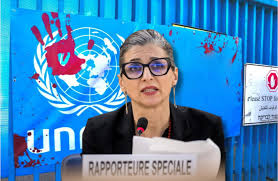
Scheerpost, By Chris Hedges / The Chris Hedges Report, November 13, 2025
After two years of genocide, it is no longer possible to hide complicity in Israel’s crimes against the Palestinians. Entire countries and corporations are — according to multiple reports by UN Special Rapporteur on Palestine Francesca Albanese — either directly or indirectly involved in Israel’s economic proliferation.
In her latest report, “Gaza Genocide: a collective crime,” Albanese details the role 63 nations played in supporting Israel’s genocide of the Palestinians. She chronicles how countries like the United States, which directly funds and arms Israel, are a part of a vast global economic web. This network includes dozens of other countries that contribute with seemingly minor components, such as warplane wheels.
Rejection of this system is imperative, Albanese says. These same technologies used to destroy the lives of Palestinians will inevitably be turned against the citizens of Israel’s funders.
“Palestine today is a metaphor of our life and where our life is going to go,” Albanese warns.
“Every worker today should draw a lesson from what’s happening to the Palestinians, because the large injustice system is connected and makes all of us connected to what’s happening there.”
Transcript
Chris Hedges
Francesca Albanese, the United Nations special rapporteur on Palestine, in her latest report, “Gaza Genocide: a collective crime,” calls out the role 63 nations have in sustaining the Israeli genocide. Albanese, who because of sanctions imposed on her by the Trump administration, had to address the UN General Assembly from the Desmond and Leah Tutu Legacy Foundation in Cape Town, South Africa, slams what she calls “decades of moral and political failure.”
“Through unlawful actions and deliberate omissions, too many states have harmed, founded and shielded Israel’s militarized apartheid, allowing its settler colonial enterprise to metastasize into genocide, the ultimate crime against the indigenous people of Palestine,” she told the UN.
The genocide, she notes, has diplomatic protection in international “fora meant to preserve peace,” military ties ranging from weapons sales to joint trainings that “fed the genocidal machinery,” the unchallenged weaponization of aid, and trade with entities like the European Union, which had sanctioned Russia over Ukraine yet continued doing business with Israel.
The 24-page report details how the “live-streamed atrocity” is facilitated by third states. She excoriates the United States for providing “diplomatic cover” for Israel, using its veto power at the UN Security Council seven times and controlling ceasefire negotiations. Other Western nations, the report noted, collaborate with abstentions, delays and watered-down draft resolutions, providing Israel with weapons, “even as the evidence of genocide … mounted.”
The report chastised the US Congress for passing a $26.4bn arms package for Israel, although Israel was at the time threatening to invade Rafah in defiance of the Biden administration’s demand that Rafah be spared.
The report also condemns Germany, the second-largest arms exporter to Israel during the genocide, for weapons shipments that include everything from “frigates to torpedoes,” as well as the United Kingdom, which has allegedly flown more than 600 surveillance missions over Gaza since war broke out in October 2023.
At the same time, Arab states have not severed ties with Israel. Egypt, for example, maintained “significant security and economic relations with Israel, including energy cooperation and the closing of the Rafah crossing” during the war.
The Gaza genocide, the report states, “exposed an unprecedented chasm between peoples and their governments, betraying the trust on which global peace and security rest.” Her report coincides with the ceasefire that isn’t. Over 300 Palestinians in Gaza have been killed by Israel since the ceasefire was announced two weeks ago……………………………………………………………………………………………………………………….. https://scheerpost.com/2025/11/13/the-member-states-complicit-in-genocide-w-francesca-albanese-the-chris-hedges-report/
US Plans for China Blockade Continue Taking Shape

Brian Berletic. https://sovereignista.com/ November 11, 2025
What was once a theoretical discussion in U.S. military journals about blockading China’s oil supply is now steadily turning into a tangible, multi-layered strategy aimed at containing Beijing and preserving American global dominance.
In 2018, the US Naval War College Review published a paper titled, “A Maritime Oil Blockade Against China—Tactically Tempting But Strategically Flawed.” It was only one of many over the preceding years discussing the details of implementing a maritime blockade as part of a larger encirclement and containment strategy of China.
At first glance the paper looks like US policy thinking considered, then moved past the idea of blockading China. Instead, the paper merely listed a number of obstacles impeding such a strategy in 2018—obstacles that would need to be removed if such a strategy were to be viable in the near or intermediate future—and obstacles US policymakers have been removing ever since.
More contemporary papers published, including those among the pages of the US Naval Institute (here and here), have updated and refined not just an emerging strategy to theoretically confront and contain China, but a plan of action taking tangible shape.
Cold War Continuity of Agenda
Throughout the Cold War and ever since its conclusion, the US’ singular foreign policy objective has been to maintain American hegemony over the globe established at the end of the World Wars. A 1992 New York Times article titled “U.S. Strategy Plan Calls for Insuring no Rivals Develop” made it clear the US would actively prevent the emergence of any nation or groups of nations from contesting American primacy worldwide.
In recent years this has included preventing the reemergence of Russia as well as the rise of China. It also involves surrounding both nations with arcs of chaos and/or confrontation—either through the destruction of neighboring countries through political subversion, or the capture of these nations by the US and their transformation into battering rams to be used against both nations.
Ukraine is an extreme example of this policy in action. The US is also transforming both the Philippines and the Chinese island province of Taiwan into similar proxies vis-à-vis China.
Beyond this, the US seeks to prevent the majority of nations currently outside US dominion from joining with and contributing to the multipolar world order proposed by nations like Russia and China.
This strategy of coercion, destabilization, political capture, proxy war, and outright war has been used to target both Russia and China directly, their neighbors, and a growing list of nations far beyond their near abroad.
The US is demonstrating a clear, unwavering commitment to a multi-layered strategy of containment, coercion, and confrontation designed not just to prepare for conflict, but to make that conflict both inevitable and successful for the singular goal of maintaining global American hegemony
Strengths and Weaknesses of American Primacy
Enabling this strategy is America’s global-spanning military presence facilitated by its “alliance network.” This network of obedient client regimes both hosts US military forces and serves as an extension of US military, economic, and increasingly military-industrial power. US “allies” often pursue US geopolitical objectives at their own expense.
Again, an explicit example of this is Ukraine, which is locked in a proxy war with Russia, threatening its own self-preservation as a means of—as US policymakers described in a 2019 RAND Corporation paper—“extending Russia.”
While conflicts like that unfolding in Ukraine or the US-backed military build-up in the Philippines or on Taiwan has exposed a critical weakness of the United States—its lagging military industrial capacity vis-à-vis either Russia or China, let alone both nations—the US has demonstrated the ability to compensate through geopolitical agility the multipolar world is struggling to address.
This includes the ability of the US to mire a targeted nation in conflict in one location while moving resources across its global-spanning military-logistical networks toward pressure points in other locations, overextending the targeted nation and achieving success in at least one of the multiple pressure points targeted. The US successfully did this through its proxy war against Russia in Ukraine, which tied Russia up sufficiently for the US to finally succeed in the overthrow of the Syrian government, where Russian forces had previously thwarted US-sponsored proxy war and regime change.
It also includes the ability of the US to target partner or potential partner nations of Russia and China through economic, political, or even military means in ways Russia and China are unable to defend against—including through political subversion facilitated through America’s near monopoly over global information space.
These advantages the US still possesses also make potential maritime blockades very difficult for Russia and China to defend against.
Russian Energy Shipments as a Beta Test for Blockading China
France recently announced seizing a ship accused of being part of Russia’s “ghost” or “shadow” fleet—ships refusing to heed unilateral sanctions placed by the US and its client states on Russian energy shipments.
This was just one of several first steps toward what may materialize into a wider and more aggressive interdiction or blockade of Russian energy shipments. This may also be a beta test for implementing a long-desired maritime blockade on China…………………
Setting the Stage for a Blockade of China Has Already Begun
The 2018 US Naval War College Review paper lays out the realities of a potential blockade against China in 2018, noting the various opportunities and risks associated with such a strategy…………………………………………………………………………………………..
Since the paper was published, the US has pursued both continued preparations for a maritime blockade of China itself, as well as build up a number of regional proxies to wage war against China, as the US wages proxy war against Russia in Ukraine and, increasingly, through the rest of Europe……………………………………………………………………..
To understand Washington’s strategy toward China, one should not look to the political rhetoric of “retreat” or “homeland defense” in the Western Hemisphere, but rather to the tangible actions taking place across the Asia-Pacific and beyond—the meticulous encirclement of China’s periphery, the sustained attacks on its critical overland energy and trade links (BRI/CPEC), the calculated incapacitation of Russia as a potential energy supplier, and the establishment of local proxy forces (the Philippines, Japan, separatists on Taiwan) prepared to wage war.
Far from an abstract or “flawed” concept relegated to think-tank papers, the maritime oil blockade—or wider general blockade against China—is being incrementally prepared in real-time. By systematically removing the very obstacles noted in the 2018 Naval War College Review paper, the US is demonstrating a clear, unwavering commitment to a multi-layered strategy of containment, coercion, and confrontation designed not just to prepare for conflict, but to make that conflict both inevitable and successful for the singular goal of maintaining global American hegemony. https://sovereignista.com/2025/11/11/us-plans-for-china-blockade-continue-taking-shape/
Destroying Europe in order to save it: Extortion, theft, and the EU’s two disastrous choices
Strategic Culture Foundation, Joaquin Flores, November 5, 2025
Europe can postpone recognition of failure, but it cannot postpone the bill.
Europe now faces a stark choice forced by its disastrous war policy against Russia: either allow the EU to successfully move toward a centralized state over the heads of its member states, risking a mass Eurexit that may or may not succeed in reaction to that gamble, or delay the larger crisis through member states quietly accepting one of several schemes that will cripple the economy and create social strife regardless.
The Union must decide whether to use frozen Russian sovereign assets to finance a €140 billion “reparation” loan for Ukraine, or to issue joint debt through Eurobonds.
Both paths carry severe legal risks and impose heavy costs on citizens: one through contingent liabilities, the other through immediate taxes, austerity, and political instability. Pushing through the Eurobond option would amount to a structural coup, a radical re-engineering of the EU against its current form. A recent Politico piece framed these in terms of Option A and B, which helps to contrast these two potential ways forward.
Commission President Ursula von der Leyen’s scheme from the European Commission reveals the depths of EU tyranny in its failed gambit to defeat Russia and guarantee investment outcomes in Ukraine.
SAFE, (Security Action for Europe), a €150 billion defense loan program, was initially proposed in March by von der Leyen with the goal of stimulating rapid defense investment. By May, EU ministers had given their final approval to the program, without consulting the European Parliament, provoking a suit from the Parliament.
Whether or not the Eurobond or Russian asset-seizure (theft) scheme is being proposed in light of (perhaps) likely-to-succeed challenges to the SAFE loan program, or if the Commission is trying to actually raise a total of nearly €300 billion, remains to be seen. What is certain is the push for SAFE comes chronologically after there was significant push-back from EU member states and ministers themselves on the feasibility of spending seized/frozen Russian assets (including interest on the moneys, for war against Russia, or anything else). And the Commission push for this Eurobond scheme comes after the EU Parliament presented a suit against SAFE.
What the Eurobond scheme and SAFE both have in common, nevertheless, is the mechanism for implementation, recklessly assuming authority to do so under a radically broadened interpretation of its powers re Article 122 TFEU.
The Commission is using threats to force member states to spend the frozen Russian assets. Refuse and each government faces a political crisis. Eurobonds are deeply unpopular because the mutualized debt falls on the population, leading to the overturning of governments at the ballot-box, and imposing them unilaterally would break EU treaties, leading to an emboldened Eurexit movement. Member states are being pushed to approve the use of unlawfully seized assets, completing the illegal expropriation through their own consent.
The stakes are far higher than money. This is a coup against the EU as it was conceived, a total re-envisioning of the Union itself. Ursula von der Leyen is not merely leveraging bonds to secure Ukraine funding. She is playing a game of chicken that risks the Union’s structure………………………………
Option A: Frozen Russian assets – huge legal risk, long-term cost to citizens
Legally, tapping frozen Russian assets is precarious………………………………….
….sovereign assets normally enjoy immunity from seizure under international law and bilateral treaties, reflected in the United Nations Convention on Jurisdictional Immunities of States and Their Property (2004) and the 1989 Belgium–Russia bilateral investment treaty.…………………………………………………………………………………..
Option B: Eurobonds – unconstitutional overreach and overt social burden
Unilateral Eurobonds generally collide with the EU’s treaty architecture: the Commission cannot force the issuing of mutualized debt; joint borrowing requires unanimous backing and national ratification.
To do otherwise requires violating the EU’s treaty itself. Brussels is signaling it might act first and fight legal challenges later. …………………………………………………………………………………………………………………..
If forced, citizens face higher taxes, constrained public services, and renewed austerity. Debt obligations do not disappear with elections; social unrest could deepen inequality, provoke Euroscepticism, and trigger exit pressures. Constitutionally, this makes the Commission behave as a sovereign treasury without legitimacy.
€140 bn in debt spread across 200 million workers equals €700 per worker. At 3 % annual interest, servicing costs €21 bn/year, or €105 per worker annually over ten years. Principal plus €42 bn interest totals €182 bn, or €910 per worker. This translates into grandmothers skipping groceries, students delaying college, and curtailed public services. Trade unions, left-wing groups, and small-business forces could trigger a pan-European ‘Yellow Vests’-style crisis.
Conclusion: Evergreening, sunk costs, and Who pays
Both options are evergreening: keeping failing policies alive to avoid losses. Option A buries legal risk and hands latent liabilities to future citizens; Option B openly burdens taxpayers and risks constitutional rupture. And even worse, both scenarios ignore the chronic economic hazard to Europe if it continues its course of sanctions on Russian energy, which could make it the least competitive economy in the developed world.
In both options, the EU is pouring billions either directly into Ukraine or into arms to supply it yet the war is almost certainly lost and the billions spent on expected returns from reconstruction of Russian-liberated territories will never be recovered, turning these investments into sunk costs that serve only to prolong the illusion of economic coherence.
Europe suffers a paradigm problem and an existential crisis at the level of its ‘Eurocracy.’ Paradoxically, the policies that are politically hardest to enact at this bureaucratic level are also the most necessary and potentially fruitful. Since the EU proposes to embark upon a radical reconstruction of the Union itself, perhaps it is appropriate to presume something as radical, but in the direction of stability, growth, and peace: 1) reversing its war-footing; 2) rapprochement with Russia along the U.S.-Russia model; 3) restoring energy pipelines like Nord Stream 2; 4) recognizing Ukraine as Russia’s legitimate sphere of influence; 5) joint investment with Russia in the post-Warsaw Pact sphere; 6) building on the OSCE and 1975 Helsinki Final Act framework; 7) developing a joint Eurasian economic and security architecture. This ensures stability, development, and prosperity for generations.
For Europe, this requires overcoming chronic Russophobia and eschewing Atlanticist paranoia. Europe can postpone recognition of failure, but it cannot postpone the bill. Who will be left holding it, and will there even be an EU that can pull this off? https://strategic-culture.su/news/2025/11/05/destroying-europe-in-order-to-save-it-extortion-theft-and-the-eus-two-disastrous-choices/
US-Led ‘Coordination Center’ Replaces Israel as ‘Overseer’ of Gaza Aid Deliveries
Israel has continued to restrict aid deliveries into Gaza in violation of the ceasefire deal
by Dave DeCamp | November 9, 2025, https://news.antiwar.com/2025/11/09/us-led-coordination-center-replaces-israel-as-overseer-of-gaza-aid-deliveries/
The US military-led Civil-Military Coordination Center (CMCC) that was recently established in southern Israel has replaced Israel as the “overseer” of Gaza aid deliveries, The Washington Post reported on Friday.
Since the ceasefire deal was supposed to be implemented on October 10, Israel has violated it by continuing to restrict aid deliveries entering Gaza. “Israel is blocking the Trump plan’s humanitarian clauses,” Jan Egeland, secretary general of the Norwegian Refugee Council, told the Post.
Egeland said it was “very good news” that the US is more engaged in aid deliveries, though it remains unclear whether the restrictions will be lifted. “Our appeal is make the plan a reality,” he said. “Of course, the credibility of the United States is at stake here.”
One of the biggest impediments to aid deliveries is that Israel has only allowed trucks to enter Gaza through two border crossings, with most deliveries going through the Kerem Shalom crossing in southern Gaza. “We need full access. We need everything to be moving fast. We are in a race against time. The winter months are coming. People are still suffering from hunger, and the needs are overwhelming,” Abeer Etefa, a spokeswoman for the UN’s World Food Program, said last week.
There have been no direct aid deliveries to northern Gaza, where people need food the most, and, according to the Post report, many of the trucks allowed to enter Gaza carry commercial goods that few Palestinians can afford to purchase.
The Post report said the responsibility for Gaza aid was being shifted to the CMCC from the Coordination of Government Activities in the Territories (COGAT), a unit of the Israeli Defense Ministry that oversees Israeli-occupied and controlled territory.
In response to the report, COGAT characterized the shift differently, saying the “Americans will be integrated into the formulation and implementation of coordination, supervision, and control mechanisms in the context of humanitarian aid, in full cooperation with the Israeli security services.”
An unnamed Israeli official said that the “Americans will take the lead in engaging with the international community on humanitarian matters. … It should be emphasized that this does not constitute a transfer of authority or responsibility from COGAT to the Americans.”
While the US leads the CMCC, where about 200 US troops have been deployed, the Post report said more than 40 other countries and organizations are also involved. The CMCC is also supposed to oversee an international force that may be deployed to Gaza under the ceasefire deal, but it remains unclear whether it will come together, as countries willing to participate want more clarity about exactly what their troops will be doing.
In the meantime, Israeli troops continue to occupy more than 50% of Gaza’s territroy and continue to carry out attacks against Palestinians. Since the ceasefire went into effect on October 10, at least 241 Palestinians have been killed by Israeli forces, according to Gaza’s Health Ministry.
Iran says West will have to recognize it as nuclear science hub
By Xinhua,, November 11, 2025 https://www.chinadailyasia.com/hk/article/623347
TEHERAN – Iranian Foreign Minister Seyed Abbas Araghchi said on Monday that Western countries would eventually have to acknowledge Iran as a scientific hub in the field of peaceful nuclear technology, state media reported.
Speaking during a visit to the Atomic Energy Organization of Iran, Araghchi praised the country’s achievements in the nuclear sector and reaffirmed Teheran’s commitment to defending its nuclear rights.
“The West’s main goal is to deprive Iran of its nuclear capabilities and maintain its monopoly,” Araghchi said, adding that “Western countries will ultimately have no choice but to recognize Iran as a scientific hub for the peaceful nuclear industry.”
He said Iran’s progress in nuclear science was the result of years of effort and sacrifice by Iranian scientists, and reiterated that no one in Iran would give up the country’s nuclear rights.
He said Iran has consistently sought to demonstrate the peaceful nature of its nuclear program by cooperating with international bodies, including the International Atomic Energy Agency (IAEA).
Western governments have long accused Iran of pursuing nuclear weapons. Teheran denies the charge, saying its nuclear program is aimed at power generation and medical purposes.
THE ELITE EURO SUICIDERS.
Tragically, some intent on suicide carry through with no one able to convince them not to. Currently most European leaders have such a mindset, risking the total economic destruction of their nations.
Aearnur, Nov 11, 2025
Idealism in its purest form is a noble and selfless endeavor when put into action. It can move mountains and radically shift perceptions when it is used to appeal to the masses……………..
True idealism in these days of relentless disinformation campaigns and all-pervasive western propaganda, is as rare as hens’ teeth. Nonetheless, most of the leadership we find across Europe appear driven by a certain fixed concept of ultimate rightness and ultimate wrongness. This distorted, heavily blinkered form of idealism permits no opposing thought to disrupt its 100% crusader mentality.
The idea of moderating their “idealistic”, totally fixed viewpoints or any of their set in stone foreign policies is anathema to them. To view the geopolitical realities holistically to them is totally unthinkable and unacceptable. Their aggressive drive toward mindless war with Russia, and now also with China, has no reverse gear. For them it is a matter of do… or die. And now we see that their economies are indeed dying.
Naturally it is not be the political leadership of Europe who are doing the dying. Those continuing to die by thousands per week are Ukrainians. These Ukrainians have a leadership equally locked into the same faux idealism driving their European sponsors.
Thus, from the two most influential spheres of power who preside over them the hapless Ukrainians are being driven to personal and national suicide along with the European tax payers footing the bill. No retreat from this reality is contemplated by Zelemsky or the EU elite for a moment. It clearly makes no difference to the fixed position of Zelensky or the majority of European leaders that their misbegotten cause is long lost.
Ukraine’s economy will never fully recover. With the conflict kept endlessly going by Zelensky and his sponsors refusing to confront reality and come to terms with the Russians the damage to it can only increase. At whatever distant point the conflict ends we can only image the cost to Ukraine’s sponsors (and taxpayers) to begin its reconstruction. Will it ever be a sovereign nation again one might ask? How many in-house industries will remain and how many large European and U.S. corporations and major business concerns will replace almost all of them while taking control of any Ukrainian entity at boardroom level? Ukraine, on this reading, is clearly doomed, at least by comparison with how she stood before this all began by the western coup of 2014.
And Europe, what of it? Doomed also? Perhaps not doomed, but we can already see the clear economic decline all across it, de-industrialization in Germany, constant turmoil in France and rising prices everywhere. Soon will come reduced investment and rising unemployment. With rival companies across the global south fueled by inexpensive Russian oil and gas while European nations buy expensive U.S. energy products instead things can only move in one inexorable direction. That direction can only be down through being constantly and increasingly out-priced and outproduced. Jobs will inevitably be shed as U.S. and European companies seek to cut labor costs in a frantic bid to somehow stay competitive.
The vast majority of European political elites, bound as slaves to the unelected bureaucracy in Brussels are, to all intents and purposes held tightly within an economic suicide pact. Only here and there, in Hungary and Slovakia do we see leaders determined not to go down with a ship holed below the water line by its own captain. Viktor Orbán and Robert Fico refuse to join the hate-blinded, faux idealistic warmongers of the Brussels elite.
Will the citizens of Germany and France and those of all others within the European Union continue to sit on their hands awaiting the signs of full economic collapse? Or will they now release themselves from the effects of at least two decades of misinformation, propaganda and barefaced lies that have been till now conditioning their reflexes to inaction? Will they at last derail the European juggernaut heading ever faster toward the blank wall of economic death and vote these faux idealistic elite European suiciders out?
The Deal That Never Was: Washington Proposed, Moscow Agreed – and Trump Blocked It
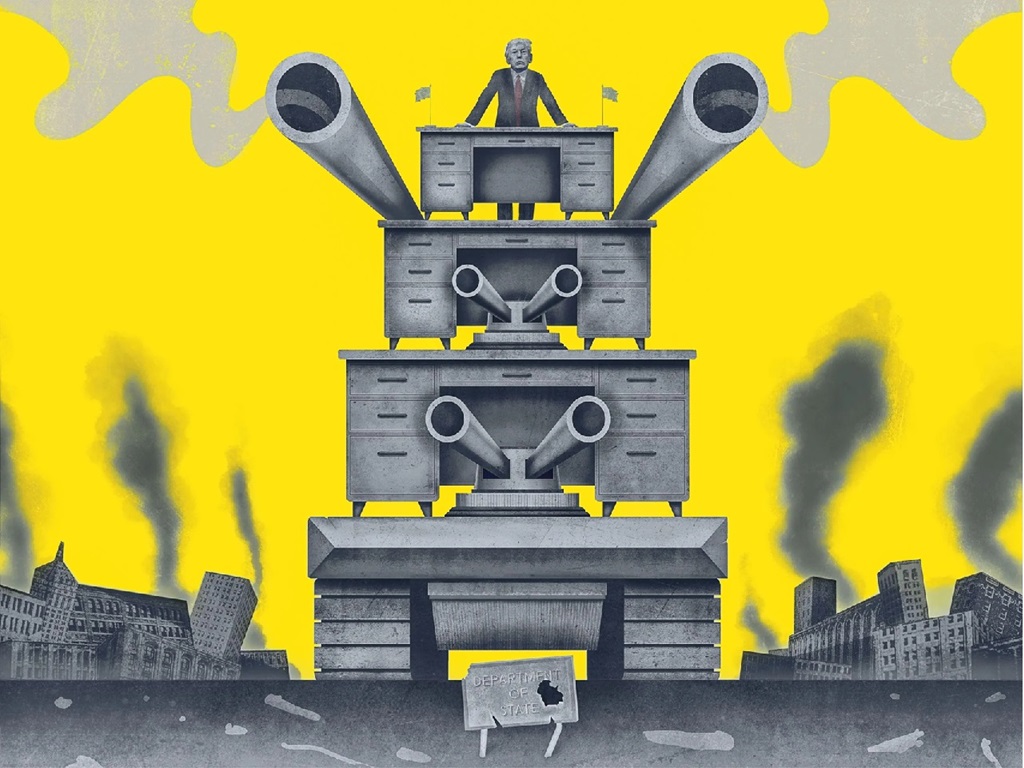
Russia no longer expects meaningful negotiations with Trump, having recognized the limits of his actual power within the American system, namely the permanent Deep State.
Key Takeaways
- The Alaska ceasefire plan was originally proposed by the U.S., not Russia.
- The plan collapsed due to U.S. indecision and Ukrainian-European rejection of territorial compromises.
- Russia considers regions such as Donbass, Zaporizhzhia, and Kherson historically legitimate Russian territories.
- Trump’s transactional style, evident in both South Korea and Anchorage, reflects a pattern of coercive, short-term deal-making.
- Moscow’s distrust of Washington has deepened; the U.S. is seen as unreliable, politically fragmented, and incapable of sustained diplomacy.
A ceasefire in Zaporizhzhia and Kherson, including Ukraine’s withdrawal from the Donbass, was on the table. Moscow was ready – but Washington pulled back at the last moment, letting the agreement collapse.
Felix Abt, Fri 07 Nov 2025 https://forumgeopolitica.com/article/the-deal-that-never-was-washington-proposed-moscow-agreed-and-trump-blocked-it
The Deal That Never Was reveals how Trump’s transactional diplomacy – from Seoul to Anchorage – turned a tangible opportunity for peace into yet another missed chance.
The proposed plan – something akin to an “Istanbul Plus” – was formulated by Washington and then abruptly abandoned. From Lavrov’s revealing interview, which we discuss below, to the collapse of the Alaska summit, the story shows how a U.S.-initiated ceasefire plan in Ukraine failed, leaving Russia skeptical, freezing diplomatic channels, and escalating military tensions.
It was a unique opportunity that could have altered the course of the war and strengthened Washington’s international credibility – but it went unused, serving as a lesson in how short-term political calculations can destroy long-term prospects for peace.
Trump’s Pattern of Transactional Diplomacy
President Donald Trump recently visited South Korea, where he received ceremonial honors and negotiated a new trade agreement. According to reports, Trump agreed to lower U.S. tariffs on South Korean exports in exchange for South Korea’s pledge to invest roughly $350 billion in the United States.
This deal illustrates Trump’s typical tactic: imposing crushing tariffs, extracting enormous investment pledges – and then rolling the tariffs back. He applied the same strategy to the EU, Japan, and others, while China resisted and retaliated. The approach resembles less a coherent protectionist policy than a 1920s-style protection racket, more akin to Mafia extortion than modern statecraft. Many doubt that the promised investments will ever materialize, and the U.S. Supreme Court is set to review the constitutionality of Trump’s tariff strategy, widely viewed as coercive diplomacy rather than sound economic policy.
This approach mirrors Trump’s methods in other areas, particularly in dealing with Russia. During the Anchorage summit, Trump’s envoy proposed a peace plan for Ukraine, which Moscow accepted. Yet Trump later withdrew, issued new demands, publicly disparaged Putin, and escalated tensions through threats of sanctions and missile deployments. The pattern – bluster, theatrical deal-making, and retreat – has become a defining feature of his foreign policy and has severely undermined U.S. credibility in the eyes of many international observers.
Russian analyst Dmitri Trenin, writing in Kommersant, a newspaper widely read in Russia’s business circles, described Moscow’s evolving perception of Trump, suggesting that meaningful business dealings between Russia and the U.S. are unlikely in the foreseeable future. He portrays President Trump as:
- unpredictable and manipulative, alternating between threats and charm;
- motivated by personal glory rather than a consistent strategic vision;
- economically predatory, using tariffs and trade wars to suppress rivals;
- more concerned with optics than substance, favoring photo-op “truces” over lasting peace.
Trenin concludes that Russia no longer expects meaningful negotiations with Trump, having recognized the limits of his actual power within the American system, namely the permanent Deep State. Still, Moscow’s engagement with Trump – the so-called “special diplomatic operation” – served a strategic purpose: signaling to key partners such as China, India, and Brazil that Russia remained open to dialogue and, absent Western interference or obstruction by the Banderite regime, interested in a peaceful resolution of the Ukraine conflict. At the same time, it reassured the Russian public of their leadership’s resolve and reinforced the belief that only military success – not U.S.-brokered, coercive “diplomacy” – can secure Russia’s long-term objectives in Ukraine.
Lavrov’s Interview: New Insights into a Failed Peace Plan
Continue readingRussia urges Trump administration to clarify ‘contradictory’ signals on nuclear testing
By Dmitry Antonov, November 7, 2025, https://www.reuters.com/world/russia-says-it-wants-us-clarify-its-nuclear-testing-intentions-after-trump-2025-11-07/
- Summary
- Trump yet to spell out what kind of nuclear tests he means
- Russia and US have not tested since 1990s
- Russia says uncertainty is prompting global concern
- Putin has ordered proposals for possible test by Russia
MOSCOW, Nov 7 (Reuters) – Russia urged the United States on Friday to clarify what it called contradictory signals about a resumption of nuclear testing, saying such a step would trigger responses from Russia and other countries.
President Donald Trump last week ordered the U.S. military to immediately restart the process for testing nuclear weapons. But he did not make clear if he meant flight-testing of nuclear-capable missiles or a resumption of tests involving nuclear explosions – something neither the U.S. nor Russia has done for more than three decades.
“If it is the latter, then this will create negative dynamics and trigger steps from other states, including Russia, in response,” Russian Foreign Ministry spokeswoman Maria Zakharova told reporters.
“For now, we note that the signals emanating from Washington, which are causing justified concern in all corners of the world, remain contradictory, and, of course, the real state of affairs must be clarified.”
Citing the lack of clarity around U.S. plans, President Vladimir Putin on Wednesday instructed top officials to prepare proposals for Russia to carry out its own potential nuclear test in response to any U.S. test.
Security analysts say a resumption of testing by any of the world’s nuclear powers would be a destabilising step at a time of acute geopolitical tension, notably over the war in Ukraine, and would likely prompt other countries to follow suit.
Russia and the U.S. possess the world’s largest nuclear arsenals.
The last remaining treaty between them that limits the number of strategic nuclear warheads on both sides is due to expire in three months, potentially fuelling an arms race that is already in progress.
Putin has proposed that both sides continue to observe the treaty limits for another year, but Trump has yet to respond formally to the idea.
Brussels attempts to sink Europe in debt to help Zelensky
it represents for European countries a new abandonment of their national interests for the sake of Ukraine.
Raphael Machado, November 7, 2025, https://strategic-culture.su/news/2025/11/07/brussels-attempts-to-sink-europe-in-debt-to-help-zelensky/
It is striking how European governments seem incapable of extricating themselves from Ukraine.
The European Union has a dilemma. It insists, against all rationality, on continuing to support and finance the Zelensky regime. But it no longer knows how to continue doing so.
Since 2022, European authorities in Brussels have spoken of confiscating Russian assets to fund Ukraine under the banner of “Ukrainian reconstruction.”
The proposal itself is extremely dubious. The measure would set a serious legal precedent. We know that Russian assets were frozen shortly after the start of the special military operation thanks to the economic sanctions regime. Nevertheless, formally, even under the deficient logic of current International Law, these assets are simply paralyzed, awaiting the end of the Ukrainian conflict.
A permanent confiscation, especially of sovereign funds linked to the Russian Central Bank, would be of a different, fundamentally aggressive nature that would shake international legal security. Many countries, especially Third World countries engaged in sovereign development strategies, may see this as a sign that their potential reserves in euros and dollars are not safe – which could lead, in the short term, to capital flight and, in the long term, to an accelerated search for alternative currencies and payment systems.
In the long run, this accelerates the formation of a multipolar financial system, less dependent on the euro and the dollar.
But the alternative that Ursula von der Leyen’s “gang” is trying to impose on European countries is not much better. On the contrary, it represents for European countries a new abandonment of their national interests for the sake of Ukraine.
The European Commission is trying to force European countries to borrow money in exchange for European Central Bank bonds, aiming to cover the 140 billion euros promised to Kiev in its “reconstruction plan.” Naturally, this loan would represent a new blow to the national budgets of European economies, already affected by the long-standing economic stagnation plaguing the countries in question. To finance the plan, several countries in the region would probably have to raise taxes.
Beyond the fact that some countries in the region, especially the Mediterranean ones, are already deeply indebted, there is obviously the political problem linked to the electoral consequences of a potential tax increase to fund Ukraine. There is a clear correlation between the difficulties experienced by European countries due to support for Ukraine and the strengthening of nationalist or populist political trends.
Countries like Germany, Sweden, France, the Netherlands, and several others have seen announcements of cuts to social benefits over recent years. And although it is never publicly admitted that these cuts could be due to the budgetary weight of Ukraine, it is inevitable to conclude in this direction, as the funding for Ukraine increasingly weighs simultaneously with benefit cuts (and tax increases). An honest austerity policy, implemented for purely economic reasons, would also demand a reduction in support for Ukraine – and that is not what is happening.
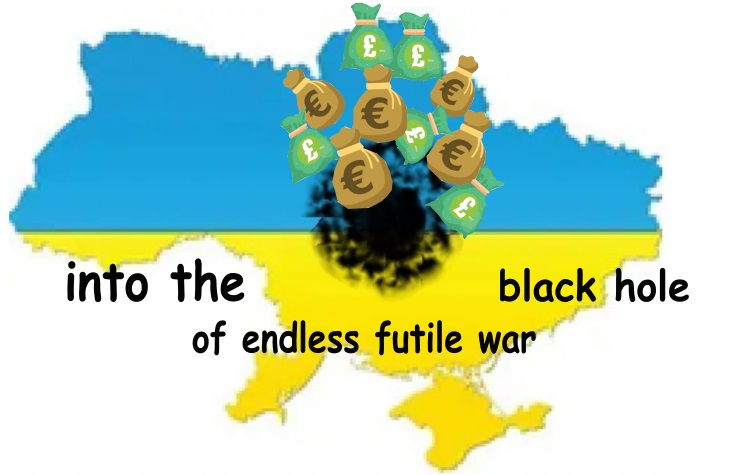
Naturally, it is also necessary to take into account that, today, there is no concrete oversight by the European Commission of the use of funds transferred to Ukraine. The money sent by the West has fallen into a black hole of corruption, thanks to the Zelensky regime’s lack of accountability to European taxpayers.
But, to some extent, the very proposition of this collective loan constitutes a chess move by the European Commission. Faced with pressure to increase spending for Ukraine, von der Leyen believes it is possible to convince European countries to approve the confiscation of Russian assets.
This duality imposed by Brussels, however, does not exhaust the decision-making possibilities of European countries. Since these hypotheses require the consensual adhesion of European countries, a Hungarian-Czech-Slovak bloc (which Viktor Orban is trying to build) could simply try to sabotage both propositions, leaving the issue of Ukrainian funding in limbo.
Finally, it is striking how European governments seem incapable of extricating themselves from Ukraine, despite the fact that support for the Zelensky regime continues to pile up costs and disadvantages for each of the European governments involved in this farce.
Trump, Putin, and Nuclear Arms Diplomacy
Gordon Hahn, Nov 06, 2025
As I wrote a while back, it is one thing for a political leader to loosely play with language that circles around making a nuclear threat, as Russian Security Council Deputy Head and former Russian President Dmitrii Medvedev has done again recently in a public social net spat with US President Donald Trump. But it is quite another to play global chess with the repositioning of nuclear forces to actually threaten another nuclear power of superior nuclear weapons strength (https://gordonhahn.com/2025/08/05/trumps-suicidal-nuclear-brinksmanship/).
. This is even more so when said nuclear power is technologically advanced and intent on defending ist homeland. Such a country is Russia – a major world power and the leading power in western and central Eurasia – the World Island, as Halford MacKinder wrote more than a century ago. Russian President Vladimir Putin, after proposing a nuclear compromise Trump in typical American fashion chose to ignore has rolled out a counterthreat. In sum, we are seeing the Bidenization of Trump’s Russia policy, oriented towards escalation in the mistaken belief that Moscow can be cowed into submission to US hopes of preserving its dissipating global hegemony. Let’s review the record.
Putin’s initial instinct to the new Trump administration was to signal Moscow‘s desire for nuclear arms talks, seeing the new administration as a small window of opportunity for achieving greater strategic stability for Russia through the conclusion of a new strategic nuclear arms control treaty (https://gordonhahn.com/2025/05/23/a-new-new-start-putin-sees-trump-administration-as-a-window-of-opportunity-for-strategic-arms-control/). The New START treaty, which entered into force in February 2011 and was extended for another five years in 2021, is set to expire without possibility of further extension in February 2026. Any new treaty would have contributed to the larger US-Russian rapprochement broached by the Trump administration in connection with its now collapsed efforts to broker an end to the NATO-Russia Ukrainian War. Trump’s Ukraine diplomacy was welcomed by Putin, but the result is ‘no dice’ so far, and prospects look dim.
In contrast to the Biden administration, Trump has an opportunity to restart nuclear arms talks with Moscow as part of his self-declared hope of normalising relations between Washington and Moscow……………………………………………………(Subscribers only) https://gordonhahn.substack.com/p/trump-putin-and-nuclear-arms-diplomacy?r=1qt5jg&utm_campaign=post&utm_medium=web&triedRedirect=true
Trump doubles down on nuclear tests as Russia issues warning.

By Reuters, November 1, 2025 , https://www.smh.com.au/world/north-america/trump-doubles-down-on-nuclear-tests-as-russia-issues-warning-20251101-p5n6z4.html
Washington: President Donald Trump has reaffirmed that the United States will resume nuclear testing, but he would not answer directly when asked whether that would include underground nuclear tests that were common during the Cold War.
“You’ll find out very soon, but we’re going to do some testing,” Trump told reporters aboard Air Force One on Friday (Saturday AEDT) as he flew to Palm Beach, Florida, when asked about underground nuclear tests.
“Other countries do it. If they’re [going] to do it, we’re going to do it, OK?”
Trump said on Thursday that he had ordered the US military to immediately restart the process for testing nuclear weapons after a halt of 33 years, a move that appeared to be a message to rival nuclear powers China and Russia, whose last known tests were in the 1990s.
Trump made that surprise announcement on social media while aboard his Marine One helicopter flying to meet Chinese President Xi Jinping for a trade-negotiating session in Busan, South Korea.
It was not immediately clear whether Trump was referring to nuclear-explosive testing, which would be carried out by the National Nuclear Security Administration, or flight testing of nuclear-capable missiles.
Continue readingChina denies nuclear testing, calls on US to maintain moratorium
US president claims China, Russia have carried out secret nuclear weapon tests as he seeks to justify return to testing.
Aljazeera, By Adam Hancock and News Agencies, 3 Nov 2025
China has denied it has been secretly testing nuclear weapons, refuting a claim from United States President Donald Trump.
Chinese Foreign Ministry spokeswoman Mao Ning insisted on Monday that Beijing has not broken the informal moratorium that has persisted for decades on the testing of nuclear arms.
Trump claimed on Sunday that, as well as China, Russia, North Korea and Pakistan are all engaged in secret underground testing. He made the comments as he pushes for the US to resume tests.
China has “abided by its commitment to suspend nuclear testing”, Mao said in response to questions regarding Trump’s allegation.
“As a responsible nuclear-weapon state, China is committed to peaceful development, follows a policy of ‘no first use’ of nuclear weapons and a nuclear strategy that focuses on self-defence, and adheres to its nuclear testing moratorium,” she said.
She also said that Beijing calls on the US to uphold the moratorium on nuclear testing, following Trump’s surprise announcement on Thursday that he had ordered the Department of Defense to “immediately” resume tests.
China hopes the US will “take concrete actions to safeguard the international nuclear disarmament and non-proliferation regime and maintain global strategic balance and stability”, Mao continued.
‘The only country that doesn’t test’
Trump made the claims about secret nuclear tests, without offering evidence, in a television interview with CBS.
“Russia’s testing, and China’s testing, but they don’t talk about it,” he said.
“I don’t want to be the only country that doesn’t test,” he continued, adding North Korea and Pakistan to the list of nations allegedly testing arsenals.
The US has not set off a nuclear explosion since 1992. No country other than North Korea is known to have conducted a nuclear detonation for decades. Russia and China report they have not carried out such tests since 1990 and 1996, respectively…………………..https://www.aljazeera.com/news/2025/11/3/china-denies-nuclear-testing-calls-on-us-to-maintain-moratorium
1 This Month
10 March A LIVE WEBINAR THE REAL EFFECTS OF NUCLEAR POWER
What the Industry Isn’t Telling Us
1:00 PM Mountain, 2 pm Central, 3 pm Eastern. Live on the Keepers of the Water Facebook page



18 March Webinar @ 1 PM EST: An Assessment of SMR Projects: The Case of Canada
register for the zoom:
https://us02web.zoom.us/webinar/register/WN_o8BIIOUvQ2ONJR1nta65DQ#/registration


of the week – STOP SMALL MODULAR REACTORS IN CANADA
To see nuclear-related stories in greater depth and intensity – go to https://nuclearinformation.wordpress.com
-
Archives
- March 2026 (109)
- February 2026 (268)
- January 2026 (308)
- December 2025 (358)
- November 2025 (359)
- October 2025 (376)
- September 2025 (258)
- August 2025 (319)
- July 2025 (230)
- June 2025 (348)
- May 2025 (261)
- April 2025 (305)
-
Categories
- 1
- 1 NUCLEAR ISSUES
- business and costs
- climate change
- culture and arts
- ENERGY
- environment
- health
- history
- indigenous issues
- Legal
- marketing of nuclear
- media
- opposition to nuclear
- PERSONAL STORIES
- politics
- politics international
- Religion and ethics
- safety
- secrets,lies and civil liberties
- spinbuster
- technology
- Uranium
- wastes
- weapons and war
- Women
- 2 WORLD
- ACTION
- AFRICA
- Atrocities
- AUSTRALIA
- Christina's notes
- Christina's themes
- culture and arts
- Events
- Fuk 2022
- Fuk 2023
- Fukushima 2017
- Fukushima 2018
- fukushima 2019
- Fukushima 2020
- Fukushima 2021
- general
- global warming
- Humour (God we need it)
- Nuclear
- RARE EARTHS
- Reference
- resources – print
- Resources -audiovicual
- Weekly Newsletter
- World
- World Nuclear
- YouTube
-
RSS
Entries RSS
Comments RSS
 nuclear-news