Former Sect. of State Kissinger says U.S. should get along with China
Gary Clifford Gibson, Blog and Books, 23 May 22, Former Sect. of State Henry Kissinger; 99 years old, spoke at an economic forum on the need to get along with China. If the Biden administration had its oars in the water on international affairs it would understand that mentioning the U.S. would go to war if China invades Taiwan is a diplomatic faux pas.
There are other ways to let China know what the administration thinks about Taiwanese independence and U.S. support for that without using a bludgeon, in a manner of speaking.
The Democratic President and his party leadership are used to forcing whatever they want into being, since the U.S. is regarded as the most powerful nation on Earth militarily and financially and party leadership realizes that force can get what they want done sometimes. Yet nuclear war with either Russia or China shouldn’t be an option; and it is for Democrats as an escalation from conventional war implicitly. Having peaceful and mutually prosperous relations with China is advantageous for the world and the world environment. Intelligent leadership needs to find a way to return international affairs to order as soon as possible including ending sanctions on Russia directly if they sign on on halting the Ukraine venture in place and sign off on a permanent peace……….. https://wordpress.com/read/blogs/53114755/posts/13350
War in Ukraine is getting complicated, and America isn’t ready — The New York Times

https://en.thepage.ua/politics/war-in-ukraine-is-getting-complicated-and-america-isnt-ready Author Valery Moiseev, 22 May 22,
The Senate passed a $40 billion emergency aid package for Ukraine, but with a small group of isolationist Republicans loudly criticizing the spending and the war entering a new and complicated phase, continued bipartisan support is not guaranteed. This is stated in an editorial published in The New York Times (NYT).
Avril Haines, the director of national intelligence, warned the Senate Armed Services Committee recently that the war in Ukraine could take “a more unpredictable and potentially escalatory trajectory”, with the increased likelihood that Russia could threaten to use nuclear weapons.
The newspaper also notes that there are many questions that President Biden has yet to answer for the American public.
Is the United States, for example, trying to help bring an end to “this conflict” (as the newspaper calls the war in Ukraine) through a settlement that would allow for a sovereign Ukraine and some kind of relationship between the United States and Russia? Or is the United States now trying to weaken Russia permanently? Has the administration’s goal shifted to destabilizing Putin or having him removed? Does the United States intend to hold Putin accountable as a war criminal? Or is the goal to try to avoid a wider war — and if so, how to achieve this?
Without clarity on these questions, the White House not only risks losing Americans’ interest in supporting Ukrainians — who continue to suffer the loss of lives and livelihoods — but also jeopardizes long-term peace and security on the European continent, the NYT says.
The authors of the article believe that Americans “have been galvanized by Ukraine’s suffering”, but popular support for a war far from U.S. shores will not continue indefinitely. Inflation is a much bigger issue for American voters, and problems in global food and energy markets are likely to intensify.
“It is tempting to see Ukraine’s stunning successes against Russia’s aggression as a sign that with sufficient American and European help, Ukraine is close to pushing Russia back to its positions before the invasion. But that is a dangerous assumption.”
The article says that Russia remains too strong, and Putin has invested too much personal prestige in the invasion to back down.
“Unrealistic expectations could draw the United States and NATO ever deeper into a costly, drawn-out war. Russia, however battered and inept, is still capable of inflicting untold destruction on Ukraine and is still a nuclear superpower with an aggrieved, volatile despot who has shown little inclination toward a negotiated settlement.”
The NYT says that it is the Ukrainians who must make the hard decisions: they are the ones fighting, dying and losing their homes to Russian aggression, and it is they who must decide what an end to the war might look like. “If the conflict does lead to real negotiations, it will be Ukrainian leaders who will have to make the painful territorial decisions that any compromise will demand.”
But as the war continues, “Biden should also make clear to President Volodymyr Zelenskyy and his people that there is a limit to how far the United States and NATO will confront Russia, and limits to the arms, money and political support they can muster. It is imperative that the Ukrainian government’s decisions be based on a realistic assessment of its means and how much more destruction Ukraine can sustain.”
Confronting this reality may be painful, but it is not appeasement, the NYT stresses. This is what governments are duty bound to do, not chase after an illusory “win.” Russia will be feeling the pain of isolation and debilitating economic sanctions for years to come, and Putin will go down in history as a butcher. The challenge now is to shake off the euphoria, stop the taunting and focus on defining and completing the mission.
Extraditing Julian Assange would be a gift to secretive, oppressive regimes
Handing over the WikiLeaks founder to the US will benefit those around the world who want to evade scrutiny

Peter Oborne 22 May 22, https://www.theguardian.com/commentisfree/2022/may/20/extradite-julian-assange-investigative-journalism-wikileaks
In the course of the next few days, Priti Patel will make the most important ruling on free speech made by any home secretary in recent memory. She must resolve whether to comply with a US request to extradite Julian Assange on espionage charges.
The consequences for Assange will be profound. Once in the US he will almost certainly be sent to a maximum-security prison for the rest of his life. He will die in jail.
The impact on British journalism will also be profound. It will become lethally dangerous to handle, let alone publish, documents from US government sources. Reporters who do so, and their editors, will risk the same fate as Assange and become subject to extradition followed by lifelong incarceration.
For this reason Daniel Ellsberg, the 91-year-old US whistleblower who was prosecuted for his role in the Pentagon Papers revelations, which exposed the covert bombing of Laos and Cambodia and thus helped end the Vietnam war, has given eloquent testimony in Assange’s defence.
He told an extradition hearing two years ago that he felt a “great identification” with Assange, adding that his revelations were among the most important in the history of the US.
The US government does not agree. It maintains that Assange was effectively a spy and not a reporter, and should be punished accordingly.
Up to a point this position is understandable. Assange was anything but an ordinary journalist. His deep understanding of computers and how they could be hacked singled him out from the professionally shambolic arts graduates who normally rise to eminence in newspapers.
The ultimate creature of the internet age, in 2006 he helped found WikiLeaks, an organisation that specialises in obtaining and releasing classified or secret documents, infuriating governments and corporations around the world.
The clash with the US came in 2010, when (in collaboration with the Guardian, Der Spiegel, Le Monde, the New York Times and other international news organisations) WikiLeaks entered into one of the great partnerships of the modern era in any field. It started publishing documents supplied by the US army intelligence analyst Chelsea Manning.
Between them, WikiLeaks and Manning were responsible for a series of first-class scoops that any self-respecting reporter would die for. And these scoops were not the tittle-tattle that comprises the daily fodder of most journalism. They were of overwhelming global importance, reshaping our understanding of the Iraq war and the “war on terror”.
To give one example among thousands, WikiLeaks published a video of soldiers in a US helicopter laughing as they shot and killed unarmed civilians in Iraq – including a Reuters photographer and his assistant. (The US military refused to discipline the perpetrators.)
To the intense embarrassment of the US, WikiLeaks revealed that the total number of civilian casualties in Iraq was 66,000 – far more than the US had acknowledged.
It shone an appalling new light on the abuse meted out to the Muslim inmates at Guantánamo Bay, including the revelation that 150 innocent people were held for years without charge.
Clive Stafford Smith, the then chairman of the human rights charity Reprieve who represented 84 Guantánamo prisoners, praised the way WikiLeaks helped him to establish that charges against his clients were fabricated.
It’s easy to see why the US launched a criminal investigation. Then events took an unexpected turn in November 2010 when Sweden issued an arrest warrant against Assange following allegations of sexual misconduct. Assange refused to go to Sweden, apparently on the grounds that this was a pretext for his extradition to the United States and took refuge in the Ecuadorian embassy in London. Sweden never charged Assange with an offence, and dropped its investigation in 2019.
This was an eventful year in the Assange story. Ecuador kicked him out of the embassy and he was promptly arrested for breaching bail: he’s languished for the past three years in Belmarsh prison. Meanwhile the US pursues him using the same 1917 Espionage Act under which Ellsberg was unsuccessfully prosecuted. Assange’s defence, led by the solicitor Gareth Peirce and Edward Fitzgerald QC, has argued that his only crime was the crime of investigative journalism.
They point out that the indictment charges Assange with actions, such as protecting sources, that are basic journalistic practice: the US alleges that “Assange and Manning took measures to conceal Manning as the source of the disclosure of classified records”. Any journalist who failed to take this elementary precaution when supplied with information by a source would be sacked.
The US stated that Assange “actively encouraged Manning” to provide the information. How disgraceful! No wonder Kenneth Roth, the executive director of Human Rights Watch, has warned that: “It is dangerous to suggest that these actions are somehow criminal rather than steps routinely taken by investigative journalists who communicate with confidential sources to receive classified information of public importance.”
Despite all this, there’s no reason to suppose that Patel will come to Assange’s rescue – though there may yet be further legal ways to fight extradition.
Even if Patel wasn’t already on the way to winning the all-corners record as the most repressive home secretary in modern history, the Johnson government, already in Joe Biden’s bad books, has no incentive to further alienate the US president.
If and when Assange is put on a plane to the US, investigative journalism will suffer a permanent and deadening blow.
And the message will be sent to war criminals not just in the US but in every country round the globe that they can commit their crimes with impunity.
Ukraine Contact Group: war used to expand global NATO

Defense News May 22, 2022, Rick Rozoff, m https://antibellum679354512.wordpress.com/2022/05/22/ukraine-contact-group-war-used-to-expand-global-nato/
More nations expected to sign up for Pentagon’s Ukraine aid group
A group of international defense chiefs convened by U.S. Defense Secretary Lloyd Austin to coordinate military aid for Ukraine is likely to expand when it meets for the second time on Monday.
The Ukraine Contact Group, which included 40 member countries at the inaugural gathering at Ramstein Air Base in Germany on April 26, has since attracted more interest….
“In its first iteration, you had countries from the Middle East, you had countries from the Indo-Pacific,” he said. “It wasn’t just Europe, and it certainly wasn’t just NATO….”
British Defense Secretary Ben Wallace, co-organizer of the push, is expected to make an opening statement along with Austin and a Ukrainian delegate, according to a British official, who spoke on condition of anonymity….
At the last meeting, Germany agreed to provide 50 Cheetah air-defense vehicles to Ukraine. The vehicles are slated to be delivered in July, German broadcaster ZDF reported. The British government also agreed to provide Ukraine with anti-aircraft capabilities, along with Canada’s offer of eight armored vehicles.
Austin will hold a call with Ukraine’s defense minister, Oleksii Reznikov, to discuss its military requirements in advance of the contact group meeting, Kirby said….
France’s woes with nuclear power plants means more energy uncertainty for Europe
The utility cut its forecast as it realised that “stress corrosion” issues affecting some of its reactors will require more checks and repairs. Irish Examiner, THU, 19 MAY, 2022. LARS PAULSSON, JESPER STARN AND FRANCOIS DE BEAUPUY
The woes facing the nuclear power stations at France’s EDF — Europe’s largest electricity producer — will increase the pressure on war-hit European energy markets after the summer.
EDF, which is the backbone of Europe’s integrated power system, cut its nuclear output target for a third time this year, the latest sign that Europe’s power crisis is worsening.
Western Europe has for decades relied on exports of power from EDF’s nuclear stations. The cuts are another blow to European energy security just as the region is weaning itself off Russian supplies of everything from natural gas to coal and oil because of the war in Ukraine.
Less output from EDF is sending prices higher just as soaring inflation is pushing up costs for everything from petrol to food. It could get even worse in winter as France, traditionally an exporter of electricity, may be forced to import more from its neighbours.
French prices are the most expensive in Europe, with contracts for the period almost double levels in Germany. The utility cut its forecast as it realised that “stress corrosion” issues affecting some of its reactors will require more checks and repairs. The outlook for the following year remains unchanged for now, the firm said.
| “We fine-tuned the repairs to be made,” Regis Clement, deputy head of the company’s nuclear division, said during a media conference. “We’ve got to cut more pipes” to carry out further checks “and more repairs to handle”, he said.The big test will come when temperatures start to fall toward the end of the year. It won’t take many days of cold weather to jeopardise French power supplies, according to Emeric de Vigan, chief executive officer at French energy analysis firm Cor-e.“With such poor nuclear availability, if we reach 2 degrees Celsius below normal in the winter for a few days we could be in trouble, it would be really tight,” Mr de Vigan said. Paying customers and factories to lower consumption are steps that likely will need to be taken, he said. ………………. https://www.irishexaminer.com/business/economy/arid-40876541.html |
Russia’s grip on Europe’s nuclear power industry – this is being ignored
Europe needs a plan in place for cutting ties with Russia’s nuclear
giant Rosatom, says 2021 Right Livelihood Award winner and co-chairman of
Ecodefense Vladimir Slivyak. With the European Union tightening its
sanctions against Russia, banning Russian imports of oil, gas, and coal has
emerged as one powerful tool to starve the Kremlin’s war machine of
funding it needs to continue its brutal aggression in Ukraine.
But one other major source of Russia’s revenue in Europe has largely remained
unnoticed: Russia’s supplies of nuclear fuel and services to European
nuclear power plants.
Seeking to close this gap in Europe’s concerted
action against the war in Ukraine and to provide a comprehensive picture of
the union’s reliance on Russian nuclear technology, environmentalists
Patricia Lorenz, of Friends of the Earth Europe, and Vladimir Slivyak, a
2021 Right Livelihood Award laureate and co-chairman of the Russian
environmental group Ecodefense, on Wednesday jointly presented Russian Grip
on EU Nuclear Power – an overview of Russia’s businesses and supply
chains serving the European nuclear market.
Eco Defense 19th May 2022
Ukraine controlled by US and UK – Russia
Rt.com 17 May 22, The stalling of the peace talks is a result of the wish of London and Washington to drag out the Ukraine conflict, Lavrov claimed. London and Washington have been exercising their control over the Ukrainian negotiators with the aim of dragging out the conflict, and this policy has led to the suspension of peace talks between Moscow and Kiev, Russian Foreign Minister Sergey Lavrov claimed on Tuesday.
Speaking at the New Horizons educational marathon, Lavrov said that Ukraine may have made its own decision in Istanbul, when it came up with some “acceptable principles for reaching agreements” during negotiations with Russia. However, according to the minister, these ideas were apparently not supported by the West.
“We have information coming through various channels that Washington and especially London ‘lead’ the Ukrainian negotiators and control their freedom of maneuver. They want to drag out the conflict, and it seems to them that the longer it will last, the more damage they will inflict on Russian servicemen,” Lavrov said.
The foreign minister doubts, however, that “transferring the conversation to the level of Washington or London” would be able to change anything in terms of the progress.
“Anyway, neither London, nor Washington, nor the West as a whole has put forward any proposals,” Lavrov said.
The West actually acknowledged that Ukraine is “expendable in a hybrid total war against the Russian Federation,” Lavrov claimed, citing remarks by the EU, UK and US officials who have said on multiple occasions that Russia should not be allowed to win in the Ukrainian conflict.
“The war was declared by them. And not at all between Ukraine and Russia, but between the West and Russia,” Lavrov said.
Earlier on Tuesday, Deputy Foreign Minister Andrey Rudenko said that diplomatic dialogue between Moscow and Kiev had been completely suspended after Kiev withdrew from negotiations without providing any response to the latest Russian proposals.
A Ukrainian presidential adviser, Mikhail Podolyak, later confirmed that “after the Istanbul communiqué [in March], there have been no changes, no progress.”……. https://www.rt.com/russia/555640-russia-lavrov-west-ukraine/
Germany will vote against EU plans to label nuclear power as a green investment,
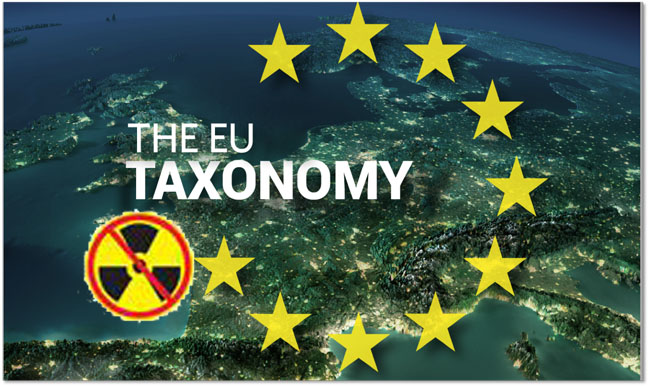
Germany says it will vote against EU plans to label nuclear power as a green investment, https://www.euronews.com/green/2022/05/17/germany-will-vote-against-eu-plans-to-include-nuclear-energy-as-a-green-investment By Kate Abnett with Reuters – UK Online Report Business News 17/05/2022
Germany will oppose European Union plans to include nuclear energy as a sustainable investment in its “taxonomy” policy for labelling green investments, the government said on Monday.
With the bloc aiming to achieve net-zero by 2050, massive investments into sustainable energy sources are needed. The European Commission is looking to class nuclear energy as ‘green’ making it easier for states and the private sector to invest.
Brussels is now seeking approval from EU countries and European Parliament for its plan to label gas and nuclear as climate-friendly investments. It has split opinions among states who disagree with the fuels’ green credentials.
Germany, the EU’s biggest economy, is among those planning to reject it when countries come to vote on the plan in the coming weeks.
“The Federal Government has expressed its opposition to the taxonomy rules on nuclear power. This ‘no’ is an important political signal that makes clear: Nuclear energy is not sustainable and should therefore not be part of the
taxonomy,” Germany’senvironment ministry and its economy and climate ministry said in a statement.
Nuclear energy is not sustainable and should therefore not be part of the taxonomy.
“Accordingly, the Federal Government would vote for the Council to object to the EU Commission’s delegated legal act,” the ministries said.
A ‘gold standard’ for green investing
To reject the rules, 20 of the EU’s 27 countries must oppose it – a high threshold seen as unlikely to be reached. Germany’s stance could also steer opinion in the European Parliament, however, where a majority of the assembly’s 705 lawmakers could block the gas and nuclear rules in a July vote.
The EU’s sustainable finance taxonomy was designed to provide a “gold standard” for green investing, by limiting which investments can be labelled climate-friendly to only those that truly protect the planet.
Austria is leading a call for legal action because of “serious concerns” about nuclear energy being too expensive and slow to actually fight climate change. Officials from the country have pointed out that, whilenuclear energy generation is CO2-free, the problem of nuclear waste has still not been solved.
The small but wealthy nation of Luxembourg is also considering legal action if the decision to label nuclear energy as ‘green’ goes ahead.
\The plan to label gas as climate-friendly has faced criticism from countries including Spain, although some countries had lobbied hard for the taxonomy to incentivise gas investments to help them phase out coal.
Gas emits less CO2 than coal when burned, but is also associated with leaks of methane, a potent greenhouse gas.
Nuclear Free Local Authorities seeks assurance British nuclear will not rely on Russian uranium
An organisation representing UK councils, Nuclear Free Local Authorities
(NFLA), has written for reassurance that Russian uranium will not be used
to power British nuclear reactors. The group reached out to the Chief
Executive of nuclear plant operator EDF energy, Simone Rossi, and the
Minister for Climate Change, Greg Hands, for clarification.
This comesafter NFLA Chair, Cllr David Blackburn, noticed mentions of a long-term
contract for natural and enriched uranium with Russian-owned supplier Tenex
in an EDF Energy report. In the annual financial report from EDF’s French
parent company, one section looks at the company’s strategy for enriching
natural uranium into uranium 235
Environment Journal 17th May 2022
Five reasons that Russia’s nuclear exports will continue, despite sanctions and the Ukraine invasion. But for how long?
By many measures, Russia’s state-controlled nuclear energy company,
Rosatom, has primacy in the global nuclear energy market. At any given
moment, the firm provides technical expertise, enriched fuel, and equipment
to nuclear reactors around the world.
The Russian invasion of Ukraine and,
more acutely, the Russian military’s dangerous actions at the
Zaporizhzhia nuclear power plant and in the Chernobyl exclusion zone have
many countries rethinking their dependence on Russian nuclear products and
searching for alternatives.
Additionally, the ensuing global effort to
cripple Russian access to international markets calls into question the
viability of current contracts, government licensing, and financial
instruments involved in Russia’s nuclear exports.
Concurrently, the invasion has highlighted the lack of energy source diversification across
Europe. Headlines have focused on how several European countries decided to
phase out or delay plans to build new nuclear power plants in the wake of
the 2011 Fukushima-Daiichi disaster and, instead, increase imports of
Russian oil and natural gas to feed their electric grids’ baseload needs.
Now, in response to the sudden European effort to minimize dependence on
Russian imports, the United States has sent tankers of liquefied natural
gas (LNG) to European ports. Additionally, the United States and partners
are releasing a round of oil from their strategic stockpiles to stabilize
market prices. For oil and natural gas supplies to Europe, there are some
immediate alternatives available.
However, for nuclear power plants,
swapping in alternative supplies is causing serious dilemmas and could lead
to stranded assets.
Bulletin of Atomic Scientists 17th May 2022
Five reasons that Russia’s nuclear exports will continue, despite sanctions and the Ukraine invasion. But for how long?
U.S., allies may be planning Ukraine proxy war model for Myanmar — Anti-bellum
ReutersMay 17, 2022 Myanmar resistance urges West to provide arms for fight against junta The defence chief of Myanmar’s shadow government has called for international help to arm its resistance forces fighting the ruling military, requesting support similar to that being given to Ukrainians battling invading Russian troops. The people of Ukraine and Myanmar’s anti-government] […]
U.S., allies may be planning Ukraine proxy war model for Myanmar — Anti-bellum
Borrell: EU defense chiefs to approve another half billion Euros to arm Ukraine — Anti-bellum
Interfax-UkraineMay 17, 2022 EU defense ministers to approve another EUR 500 mln for arming Ukraine – Borrell The Council of Ministers of Defense of the European Union at a meeting of the Council for Foreign Affairs, which is taking place on Tuesday in Brussels, will approve a proposal to allocate another EUR 500 million to […]
Borrell: EU defense chiefs to approve another half billion Euros to arm Ukraine — Anti-bellum
What will be the consequences of Finland’s and Sweden’s NATO membership?
The West has no positive vision anymore – its actions are about re-armament, threats, sanctions, demonization, the self-righteous “we-never-did-anything-wrong” and the concomitant projection of its own dark sides upon others, China in particular.
This is not the time to make decisions in a moment of historical hysteria and panic. This is indeed a moment to keep cool.
One can only regret that Sweden and Finland lack the intellectual power to see the larger picture in time and space. NATO has had the time since 1949 to prove that it can make peace. We know now that it can’t. Joining it, therefore, is one big gift to militarism and future warfare.
IT IS FOOLISH FOR FINLAND AND SWEDEN TO JOIN NATO, Popular Resistance By Jan Oberg, The Transnational., May 15, 2022
”……………………………………………………………There are potentially so many – some more likely than others – that they cannot all be listed in a short pointed analysis like this. But let me mention:
- The Swedes and the Finns will become less secure. Why? Because there will be harder confrontation and polarization instead of soft borders and mediating attitudes. In a serious crisis, they will, for all practical purposes, be occupied and told what to do by the US/NATO.
- To the degree that, at some point in the future, the two countries will be asked to host US bases – like Norway and Denmark now – they won’t be able to say ‘No’! Such bases will be Russia’s first-order targets in a war situation.
- From a Russian point of view, of course, their NATO membership is extremely tension-increasing and confrontational. Russia has 8% (US$ 66 billion) of the military expenditures of the 30 NATO members. Now there will be a huge re-armament throughout NATO; Germany alone plans to increase to almost twice as much as Russia’s expenditures. Ukraine will receive about US$ 50 billion. Add a re-armed Sweden and Finland and we shall see Russia rush down to 4% of NATO’s expenditures – and still be called a formidable threat.
- There will be virtually no confidence-building and conflict-resolution mechanisms left in Europe. No discussion will be possible about a new all-European peace and security system. And whether it is understood and respected or not, Russia will feel even more intimidated, isolated and – in a certain situation – become even more desperate. As does, normally, the weaker party in an asymmetric conflict. We are living in very dangerous times and these two countries in NATO will only increase the danger, there is no way it could reduce it.
- If Finland and Sweden so strongly want to be “protected” by the United States and/or NATO, it is completely unnecessary for these two countries to join because, if there is a serious crisis, the US/NATO will under all circumstances come to “protect” or rather use their territories to be closer to the Baltic republics. That’s what the Host Nation Support agreements are about.The only reason to join would be paragraph 5 – but the disadvantage is that paragraph 5 requires that Finland and Sweden will be expected to participate in wars that are not about their defense and perhaps even in future international law-violating wars à la those in Yugoslavia, Iraq and Libya. So, will Finnish and Swedish young people be killed in future NATO-country wars? Are they ready for that?
- It will cost a fortune to convert their military infrastructure to full NATO membership – and when they have joined, they cannot not pay whatever the price will turn out to be. In addition, there will be much less de facto sovereign decision-making possible – here de jure is almost irrelevant. And it was already very self-limited before they joined.
- As NATO members, Finland and Sweden cannot but share the responsibility for nuclear weapons – the deterrence and possible use of them by NATO. It’s also obvious that NATO vessels may bring nuclear weapons into their ports – but they will of course not even ask – they know the arrogant US response is that “we neither confirm nor deny that sort of thing.
- ”This goes against every fibre of the Swedish people – and Sweden’s decision to not develop nuclear weapons dating some 70 years back.
- The days when Sweden and Finland can – in principle, at least – work for alternatives are numbered. That is, for the UN Treaty on nuclear abolition and the UN goals of general and complete disarmament, any alternative policy concepts like common security, human security, a strong UN etc. They won’t be able to serve as mediators – like, say, Austria and Switzerland. No NATO member can pay anything but lip service to such noble goals. NATO is not an organization that encourages alternatives. Instead, it seeks monopoly as well as regional and global dominance.
- Finland and Sweden say yes to militarist thinking, to a ‘peace’ paradigm that is imbued with weapons, armament, offensiveness (long-range + large destructive capacity), deterrence and constant threatening: NATO is human history’s most militaristic organization. Its leader, the United States of America, has been at war 225 out of 243 years since 1776. Every idea about nonviolence, the UN Charter provision of making peace by predominantly peaceful means (Article 1 in the Charter) will be out of the window.
- The political attention, as well as funds, will tend to switch to military matters, away from contributing to solving humanity’s most urgent problems. But – we know it now – the excuse will be Putin’s invasion of Ukraine. Is there any huge change that cannot be justified with reference to that?
- While everybody knows that the Arctic is going to be a region of central security and peace concerns in the near future, this issue has hardly been discussed in relation to the two countries’ NATO membership. However, it doesn’t require much expertise to see that US/NATO access to Sweden and Finland is a clear advantage in the future confrontation with Russia and China there.
- As NATO members, Sweden and Finland not only accept but reinforce decades of hate of the Russian people, everything Russia including Russian-European culture. It will say yes to the West’s reckless, knee-jerk collective (illegal) punishment of everything Russia, the cancellation of Russia on all dimensions.Once upon a time, in contrast, Finland’s President Kekkonen stood for policies of active neutrality, a go-between role and initiating the OSCE. Finland was proud that its people felt that neither the East nor the West was an enemy, various kinds of equidistance prevailing. And that was during the height of the First Cold war when the Warsaw Pact was about 10 times stronger vis-a-vis NATO than Russia is today. How and why? One reason was that policies had an intellectual foundation and leaders a consciousness about what war meant. Not so today.
- The prospect that no NATO advocates talk about is this: In all likelihood, we have only seen the hard beginning of an extremely Cold War with an ever-increasing risk of a Hot War too. It is the stated purpose of the US – and that means NATO – to weaken Russia militarily in Ukraine so it can’t rise ever again and to undermine its economy back home through history’s hardest, time-unlimited and unconditional sanctions – that is, sanctions that will not be lifted in a lifetime or more.
- And, finally, by joining NATO, the two countries will be forced to side with the larger West in the future world order change in which China, the Middle East, Africa and South America as well as huge non-Western regional associations will gain strength.The US priority Number One is China. As NATO members, Sweden and Finland will be unable to walk on two legs in the future, a Western and a Non-Western, and will decline and fall with the West – the US Empire and NATO in particular.
- If you think that’s a too daring and pessimistic scenario, you’re not following developments and trends outside the West itself. Also, please consider that a split and problem-torn US, EU and NATO have just come together for one reason: the negative policy of hating Russia and cover-up for its crystal clear co-responsibility for the conflict that brought us where we now are.
- The West has no positive vision anymore – its actions are about re-armament, threats, sanctions, demonization, the self-righteous “we-never-did-anything-wrong” and the concomitant projection of its own dark sides upon others, China in particular.
- For small countries to put all their eggs in one basket when they do have alternatives and acting without a clue about the next five-to-ten years has always been a recipe for disaster, for war.
- Both NATO and the EU act these days as the passengers did in the restaurant of the elegant, luxurious RMS Titanic.
- There were huge problems which should have been solved for humanity to survive: climate, environment, poverty, inequality, militarism, nukes, etc. They are now forgotten. Economic crisis and disruptions followed, and then came the Corona and took a heavy toll on all kinds of resources and energies. And, finally, now this war in Europe with its underlying NATO-created conflict.
This is not the time to make decisions in a moment of historical hysteria and panic. This is indeed a moment to keep cool.
One can only regret that Sweden and Finland lack the intellectual power to see the larger picture in time and space. NATO has had the time since 1949 to prove that it can make peace. We know now that it can’t. Joining it, therefore, is one big gift to militarism and future warfare. …………………………… https://popularresistance.org/it-is-foolish-for-finland-and-sweden-to-join-nato-and-ignore-both-the-real-causes-and-consequences/
Germany to reject EU green investment label for nuclear power

https://www.reuters.com/business/germany-reject-eu-green-investment-label-nuclear-power-2022-05-16/ , By Kate Abnett. BRUSSELS, May 16 (Reuters) – Germany will oppose European Union plans to include nuclear energy as a sustainable investment in its “taxonomy” policy for labelling green investments, the government said on Monday.
Brussels is seeking approval from EU countries and European Parliament for its plan to label gas and nuclear as climate-friendly investments, which has split opinion among states who disagree on the fuels’ green credentials.
Germany, the EU’s biggest economy, is among those planning to reject it when countries come to vote on the plan in the coming weeks.
“The Federal Government has expressed its opposition to the taxonomy rules on nuclear power. This ‘no’ is an important political signal that makes clear: Nuclear energy is not sustainable and should therefore not be part of the taxonomy,” Germany’s environment ministry and its economy and climate ministry said in a statement.
“Accordingly, the Federal Government would vote for the Council to object to the EU Commission’s delegated legal act,” the ministries said.
To reject the rules, 20 of the EU’s 27 countries must oppose it – a high threshold seen as unlikely to be reached. Germany’s stance could also steer opinion in the European Parliament, however, where a majority of the assembly’s 705 lawmakers could block the gas and nuclear rules in a July vote.
The EU’s sustainable finance taxonomy was designed to provide a “gold standard” for green investing, by limiting which investments can be labelled climate-friendly to only those that truly protect the planet.
Nuclear energy generation is CO2-free, but produces radioactive waste. Separately, Austria and Luxembourg have threatened legal action over the plan to label nuclear investments as green.
The plan to label gas as climate-friendly has faced criticism from countries including Spain, although some countries had lobbied hard for the taxonomy to incentivise gas investments to help them phase out coal. Gas emits less CO2 than coal when burned, but is also associated with leaks of methane, a potent greenhouse gas.
IT IS FOOLISH FOR FINLAND AND SWEDEN TO JOIN NATO
- Popular Resistance By Jan Oberg, The Transnational., May 15, 2022
And Ignore Both The Real Causes And Consequences.
Here’s what the West is intellectually unable – in the midst of its boundlessly self-righteous, militarist mood to see:
NATO’s expansion policy created – and is responsible for – the conflict. Russia created – and is responsible for – the war. There exists no violence which is not rooted in underlying conflicts. Conflict and peace literate people, therefore, talk about both.
And if they want peace, they do not increase the symptoms – the war – they address the real cause, the conflict and ask the conflicting parties to tell what they fear and what they want and then move, step-by-step towards a sustainable solution.
But neither the mainstream media nor politicians have the civil courage to address the conflict. It’s only about the war and only about Russia/Putin who must be punished, no matter the price to be paid by future generations. If we survive.
It’s a banality to point out that it takes at least two to conflict. But that’s the intellectual and moral level decision-makers, media and much of academia operate in these dark times.
This approach has no future and can never bring peace. Period.
Decisions taken with this irrational approach and emotionalism will only make things worse. Such as Sweden and Finland joining NATO based on the hysteric panic of the moment: There simply exists no credible, realistic scenario that would lead to an isolated, out-of-the-blue Russian attack on either of them if they remained non-aligned as they’ve been for decades.
That some less knowledgeable people – or people who speak for NATO membership – have been talking about even an isolated, out-of-the-blue attack on the Swedish island of Gotland is Monty Python politics.
Why will Sweden and Finland join?
So why will Finland and Sweden now make a disastrous, tension-increasing decision to join NATO? Here are some of the possible reasons:
Both have been under heavy pressure by NATO and the US in particular. Sweden’s prime minister, Olof Palme, was murdered – a man who stood for the UN goal of international disarmament, nuclear abolition and the intelligent concept of common security. US ambassadors have held secret meetings with Swedish MP, there are many channels, demands and rewards.
Sweden’s single worst security challenge was the Russian submarine, U 137 Whisky on the Rocks. It was Russian, yes, but the operation was an American PSYOP – Psychological Operation – conducted by the “Navigation Expert” on board who was the only one never interviewed in Sweden and who soon after disappeared……………………………….
Both countries have moved to be wooed by the US and NATO. They have, over the last 20 years, become engaged with NATO in all kinds of ways – so, as the saying goes, why not marry now? In other words, Finland and Sweden now join because they have – incrementally – made one wrong decision after the other, painted themselves into a “no-choice-but-NATO” corner and abdicated every ounce of their historical, independent-minded creative foreign policy thinking. And stopped criticism of warfare and militarism………………………………….
Further, Sweden and Finland are now joining because elites related to the Military-Industrial-Media-Academic Complex, MIMAC, in both countries – rather than the people – decide security and foreign policy matters. Of course, there was extremely little open public discussion; it wasn’t wanted. Decision-makers knew that NATO’s nuclear weapons foundation and its members’ contact wars, particular in the Middle East were seen as basically evil among the citizenry.- Liberal media suggest that there cannot be a referendum because there is such a time pressure – presumably before that Russian invasion of Sweden and Finland – and, so, just make the most important foreign and security political decision since 1945 in a hurry now there is popular outrage at Russia – the beloved, necessary enemy.
- The Swedish decision-makers of course know that there will never be a 75% or so majority for NATO – which is what there should be to make such a fundamental, fateful decision. So much, you may say, for democracy – but no new NATO member has held a referendum where NATO and other alternatives were freely discussed and a 75% majority came out in favor. ………………………….
A further reason to join is the intellectual disarmament that decision-makers have unified around one alternative, forgotten to leave other doors open and deliberately quelled alternatives. The discourse of peace – in media, politics and research – has been disappeared. Peace has come to mean weapons, deterrence, more and more of it coupled to blind loyalty with every US/NATO war. …………………
- An institute such as SIPRI – Stockholm International Peace Research Institute – has decayed intellectually into something that should rather be named Stockholm International Military Security Research, SIMSI – as I have suggested years ago.
- In other words, the political creativity that was needed to run an independent policy of neutrality, non-alignment and global disarmament coupled with a strong belief in international law vanished years ago.
- It’s easier to follow the flock – particularly when, as it seems, the Social Democratic party today exists only by name.
- Without exhausting all those – tragic – reasons, one final reason to mention is the role of the media. Like everywhere else, media from left to right have unified around a pro-Western, non-neutral policy. The present pro-NATO propaganda, not the least in the liberal Dagens Nyheter, is pervasive. Critical voices are marginalized and public information “explainers” are reduced to some high school-like basic facts coupled with FOSI, Fake + Omission + Source Ignorance. Sweden is able to have televised panel discussions where, de facto, all the participants are more or less pro-NATO thus leaving out a large part of public opinion. )…………………………… https://popularresistance.org/it-is-foolish-for-finland-and-sweden-to-join-nato-and-ignore-both-the-real-causes-and-consequences/
 |
1 This Month



26 September – International Day for the Total Elimination of Nuclear Weapons


PLEASE OPPOSE HR 8255 AND S.3639 – bills would accelerate satellite deployment, with no environmental review or safeguards – https://ncstd5li.quorum.us/campaign/169331/
To see nuclear-related stories in greater depth and intensity – go to https://nuclearinformation.wordpress.com
-
Archives
- September 2026 (257)
- August 2026 (330)
- July 2026 (355)
- June 2026 (287)
- May 2026 (306)
- April 2026 (356)
- March 2026 (251)
- February 2026 (267)
- January 2026 (308)
- December 2025 (358)
- November 2025 (359)
- October 2025 (375)
-
Categories
- 1
- 1 NUCLEAR ISSUES
- business and costs
- climate change
- culture and arts
- ENERGY
- environment
- health
- history
- indigenous issues
- Legal
- marketing of nuclear
- media
- opposition to nuclear
- PERSONAL STORIES
- politics
- politics international
- Religion and ethics
- safety
- secrets,lies and civil liberties
- spinbuster
- technology
- Uranium
- wastes
- weapons and war
- Women
- 2 WORLD
- ACTION
- AFRICA
- Atrocities
- AUSTRALIA
- Christina's notes
- Christina's themes
- culture and arts
- Events
- Fuk 2022
- Fuk 2023
- Fukushima 2017
- Fukushima 2018
- fukushima 2019
- Fukushima 2020
- Fukushima 2021
- general
- global warming
- Humour (God we need it)
- Nuclear
- RARE EARTHS
- Reference
- resources – print
- Resources -audiovicual
- Weekly Newsletter
- World
- World Nuclear
- YouTube
-
RSS
Entries RSS
Comments RSS

