UK’s Nuclear Minister has so far failed to meet East Suffolk communities who have concerns about Sizewell C nuclear project
The Chair of the Nuclear Free Local Authorities has written to Nuclear
Minister Andrew Bowie MP urging to honour his promise to revisit the
communities of East Suffolk to meet and talk with elected representatives
and local people about their concerns over this massive project.
NFLA 19th Dec 2023
Blood Money: The Top Ten Politicians Taking the Most Israel Lobby Cash
SCHEERPOST, By Alan MacLeod / MintPress News 20 Dec 23
As the Israeli attack on Gaza, Lebanon and Syria intensifies, the U.S. public watch on aghast. A new poll finds that Americans support a permanent ceasefire by a more than 2:1 ratio (including the vast majority of Democrats and a plurality of Republicans).
And yet, despite this, only 4% of elected members of the House support even a temporary ceasefire, and the United States continues to veto U.N. resolutions working towards ending the violence. Walter Hixson, a historian concentrating on U.S. foreign relations, told MintPress News:
“Unfettered support for Israel and the lobby consistently puts the United States at odds with international human rights organizations and the vast majority of nations over Israel’s war crimes and blatant violations of international law. The current U.N. vote on a ceasefire in Gaza [which the U.S. vetoed] is just the latest example.”
Here, Hixson is referring to the pro-Israel lobby, a loose connection of influential groups that spend millions on pressure campaigns, outreach programs, and donations to American politicians, all with one goal in mind: making sure the United States supports the Israeli government’s policies full stop, including backing Israeli expansion, blocking Palestinian statehood and opposing a growing boycott divestment and sanctions movement (BDS) at home.
Internationally, Israel has lost virtually all its support. But it still has one major backer: the United States government. Part of this is undoubtedly down to the extraordinary lengths the lobby goes to secure backing, including showering U.S. politicians with millions of dollars in contributions.
In this investigation, MintPress News breaks down the top ten currently serving politicians who have taken the most pro-Israel cash since 1990.
1 JOE BIDEN, $4,346,264
The largest recipient of Israel lobby money is President Joe Biden. From the beginning of his political career, Biden, according to his biographer Branko Marcetic, “established himself as an implacable friend of Israel,” spending his Senate career “showering Israel with unquestioning support, even when its behavior elicited bipartisan outrage.” The future president was a key figure in securing record sums of U.S. aid to the Jewish state and helped block a 1998 peace proposal with Palestine.
The support for Israeli policies has continued into the present, with his administration insisting that there are “no red lines” that it could cross that would cause it to lose American support. In essence, Biden has given Prime Minister Benjamin Netanyahu a carte blanche to break any rules, norms or laws he wishes to.
This has included ethnic cleansing and war crimes such as the bombing of schools, hospitals and places of worship using banned weapons like white phosphorous munitions. The arms Israel is using come supplied directly by the U.S. In November, the Biden administration rubber-stamped another $14.5 billion military aid package to Israel, ensuring the carnage would continue.
For his staunch support, Biden has received more than $4.3 million from pro-Israel groups since 1990.
2 ROBERT MENÉNDEZ, $2,483,205
The New Jersey senator has received nearly $2.5 million in contributions and, in the wake of the Hamas attack on October 7, has been a key figure in drumming up support for Israel. Describing Operation Al-Aqsa Flood as “barbaric atrocities” that were an “affront to humankind itself,” Menéndez gave an impassioned speech on the Senate floor where he addressed Biden directly, stating:
“33
He went on to claim that Israel and the United States are intrinsically linked and were founded on the same principles.
Menéndez also courted controversy after he demanded that the U.S. help Israel “wipe Hamas from the face of the Earth,” even as Israel was leveling Gaza by carpet bombing it.
In October, he co-sponsored a Senate resolution “standing with Israel against terrorism” that passed unanimously, without dissent.
3 MITCH MCCONNELL, $1,953,160
The Senate Minority Leader is one of the most powerful politicians in America and has used his influence to attempt to force through legislation criminalizing BDS. He has described the peaceful tactic as “an economic form of anti-Semitism that targets Israel.”
McConnell is known to be very close to Prime Minister Netanyahu and supported a bill condemning the United Nations and calling on the U.S. to continue to veto any U.N. resolution critical of Israel. Last month, he strongly opposed steps taken towards applying basic U.S. and international law on weapons shipments to Israel.
Under current U.S. law, Washington is duty-bound to stop supplying arms to nations committing serious human rights violations. McConnell, however, said that applying these standards to Israel would be “ridiculous,” explaining that:
“Our relationship with Israel is the closest national security relationship we have with any country in the world, and to condition, in effect, our assistance to Israel to their meeting our standards it seems to me is totally unnecessary… This is a democracy, a great ally of ours, and I do not think we need to condition the support that hopefully we will give to Israel very soon.”
McConnell has received nearly $2 million from pro-Israel groups.
4 CHUCK SCHUMER, $1,725,324
“Next on the list is McConnell’s Democratic opponent, Senate Majority Leader Chuck Schumer, who had taken over $1.7 million from Israel lobbying groups. In recent weeks, Schumer has taken the lead in steering the public conversation away from Israel’s crimes and towards a supposed rise in anti-Semitism across America. “To us, the Jewish people, the rise in anti-semitism is a crisis. A five-alarm fire that must be extinguished,” the New York Senator said, adding that “Jewish-Americans are feeling singled out, targeted and isolated. In many ways, we feel alone.”
The idea that anti-Semitic hate is exploding across the United States comes largely from a report published by the Anti-Defamation League (ADL), which claims that anti-Semitic incidents have risen by 337% since October 7. Buried in the small print, however, is the fact that 45% of these “anti-Semitic” incidents the ADL has tallied are pro-Palestine, pro-peace marches calling for ceasefires, including ones led by Jewish groups like If Not Now or Jewish Voice for Peace. (MintPress recently published an investigation into the ADL’s fudged numbers and its history of working for Israel and spying on progressive American groups.)
Schumer, however, has deliberately tried to conflate opposition to Israel’s bombardment of its neighbors with anti-Jewish racism, ……………………………………………………………………………………………………………
5 STENY HOYER, $1,620,294………………………………………………..
TED CRUZ, $1,299,194………………………………………………………………….
7 RON WYDEN, $1,279,376…………………………………………………………….
8 DICK DURBIN, $1,126,020…………………………………………………
9 JOSH GOTTHEIMER, $1,109,370………………………………………….
10 SHONTEL BROWN, $1,028,686…………………………………….
A DARK FORCE IN US POLITICS
The most well-known and likely most influential group in the loose coalition referred to as the Israel lobby is AIPAC, American Israel Public Affairs Committee. With a staff of around 400 people and annual revenues that frequently top over $100 million, the organization is a huge, conservative force in American politics, flooding the system with gigantic amounts of money. Worse still, the group does not disclose the sources of its funding.
AIPAC’s stated goal is:
“To make America’s friendship with Israel so robust, so certain, so broadly based, and so dependable that even the deep divisions of American politics can never imperil that relationship and the ability of the Jewish state to defend itself.”
Yet Israel is widely recognized by international bodies such as the United Nations and human rights groups like Amnesty Internationaland Human Rights Watch as an apartheid state. It has near total control over the Gaza Strip, which, even before the latest attack, was an “unlivable” “open-air prison.” It is this state and these injustices that AIPAC and others seek U.S. support for.
American intransigence on Israel has helped make it a pariah nation, one that constantly has to veto U.N. resolutions and has lost its voting rights at UNESCO.
Not only does it give more money to Republicans than Democrats, but AIPAC also floods conservative Democrats’ coffers with funds, especially when they are up against progressive, pro-Palestine challengers……………………………………………………………….
IS THE TAIL WAGGING THE DOG?
As such, AIPAC acts as a bulwark against progressive political change. In such a divisive political environment, few political issues unite Democrats and Republicans, as well as Israel and shutting down anti-establishment figures. As Hixson told MintPress:
Other than a handful of progressives (Bernie Sanders, Rashida Tlaib, Ilhan Omar, etc.), the U.S. Congress invariably gives the lobby everything it wants, namely massive regular funding for Israeli militarism and an endless series of resolutions condemning Israel’s international foes and domestic critics.”
The question that arises from this is why? Why does Israel always seem to receive full support from Washington? Is the lobby really that effective? Why do so many U.S. politicians go along with it? Mazin Qumsiyeh, a professor at Bethlehem University, characterized Washington as full of amoral careerists, telling MintPress that:
“”They [Senators and Congresspersons] do not buy the Zionist argument. It is strictly personal interest: money and good media coverage and avoiding blackmail, as the Zionists have their dirty secrets which they could expose if they step out of line.”
Yet Israel also serves a vital purpose for the American empire. The region is not only geographically strategic but home to the world’s largest resources of hydrocarbons. Washington has always made it a top priority to control the flow of oil around the world, and Israel helps them do this. Militarily, Israel serves as a conduit the U.S. can work through, farming out its dirty work to Tel Aviv. It, therefore, represents an unofficial and beneficial “51st state.” As Joe Biden said in 1986 and has regularly repeated, Israel is the best investment the U.S. makes. “Were there not an Israel, the United States of America would have to invent an Israel to protect our interests in the region,” he added.
Many other nations or industries have lobbied in Washington, D.C. But few have proven to be as organized or effective as the pro-Israel one. Nevertheless, public opinion, particularly among young people, has begun to drift away from it.
The Overton Window is shifting; Professor Qumsiyeh told MintPress. “When I first went to the U.S. in 1979, the average citizen did not know anything about Palestine or knew only a negative, distorted picture driven by Hollywood and biased media. Things [have] changed,” he said.
Things have indeed changed. The streets of America have been filled with demonstrations against Israeli aggression. Millions of Americans have participated in Palestine solidarity protests, including hundreds of thousands in Washington, D.C. alone. Celebrities have spoken out against injustice. And social media is filled with posts showing sympathy for Gazans. There, too, Israel and pro-Israel groups have attempted to use their financial clout to influence the conversation, but to limited effect.
Fortunately for Israel, for now, at least, they can still rely on the unwavering support of senior American politicians, their pockets filled with AIPAC money, turning the other way as Israel carries out another genocide against Palestine. https://scheerpost.com/2023/12/20/blood-money-the-top-ten-politicians-taking-the-most-israel-lobby-cash/
Let’s Talk About Why Nuclear Won’t Work in Australia
Zachariah Kelly 21 Dec 23, Gizmodo
The CSIRO has just put out the latest draft of its GenCost report, a report that delves into the cost of electricity in Australia and what energy types would work in the Australian market. Over the past years, CSIRO has gotten behind onshore wind and solar as the cheapest energy generation methods, and stresses that these energy sources will be instrumental to the future of Australia’s grid, but nuclear energy is something that the science body has shunned for some time now, and this latest report draft seems pretty definite on why.
In tandem with the release of the draft report, the CSIRO has released a blog post directly addressing why nuclear won’t work down under. Put simply, the CSIRO references the collapse of a Small Modular Reactor (SMR) program in the U.S. in November, the Coal Free Power Project, where project costs were estimated at 70 per cent above what was initially projected. It’s a pretty good example of why we can’t just simply introduce nuclear in Australia.
“We don’t disagree with the principle of SMRs.They are an attempt to speed up the building process of nuclear plants using standardised components in a modular system, and it may well be possible to achieve cost reductions over time. However, for now, the technology is yet to be deployed commercially,” GenCost author Paul Graham said.
Put simply, it’s far too expensive and takes too long to set up, according to the CSIRO. With the timeline of projects shown above, the CSIRO is confident that nuclear just won’t work as well for Australia right now, or at least it won’t work as well as onshore wind or solar………………………………………………………………………………….
economist Professor John Quiggin told Gizmodo Australia in September that it’s a very hyped thing, like crypto or AI, and that arguments around nuclear in Australia have been formed from a political place.
“I think the obvious point that people are making is ‘why is Dutton talking about this now? the government was in office for nine years’, because if they started doing something about it in 2013, for example, repealed the ban on nuclear and started establishing an authority, by the time they went out 10 years later, nine years later, then the thing would have been an obvious goal,” Quiggin said.
“It always has to be kept at this stage of ‘why don’t we have the vote?’ because it is just a debating point.”
You can view the GenCost consultation draft here. https://gizmodo.com.au/2023/12/csiro-nuclear-australia/
Time to shelve Hinkley Point C?

Alan Debenham: December 19, 2023, https://somersetapple.co.uk/news/time-to-shelve-hinkley-point-c
SEASONAL old TV films could well remind us of the 1990s popular sit-com Drop the Dead Donkey about a fictional national newspaper’s forever squabbling journalists, where it was imperative to drop all stories past their sell-by date. Very much like the growing absurdity of the little-mentioned massive overspend and time delay over the enormous Hinkley C nuclear power station construction project on the Severn estuary. Would be good if last week’s putting a roof on the first reactor was matched with putting a roof on nuclear nonsenses.
The arguments against Hinkley C, from all sides of the media, NGOs and professional experts, definitely have been loud and sustained enough to label it a ‘dead donkey’ which should have ‘died’ at reviews in 2012 and 2015. The enormous cost overrun, going from an original £16bn in 2012 to double that figure announced recently, and an enormous completion time delay, going from first forecast 2017 to now only a single reactor operating by 2027 – both reactors a year later – should have killed off the whole project long time ago.
However, as we all know, big billions of investment have colossal lobbying power – especially with this millionaire-led Tory government regarding its daft nuclear mania around proven existential linkage between nuclear bombs and nuclear power. With our essential public services collapsing around hardworking families now driven to food banks, Tory spending hundreds of billions on maintaining our so-called submarine-based nuclear deterrent and planning to build eight new nuclear power stations – with Labour not far behind – it’s as obscene and broken as parliamentary democracy gets.
Sadly, if ever Hinkley C satisfactorily operates – unlike EDF’s other wonky EPR reactors – it’s likely to be both a miracle and another very big increase in electricity prices for us consumers because of 2013 Coalition’s agreeing far too high an index-linked “strike price” ( £92.50 Mw/hr, uplifted 2022 to £128 ) likely to be 50% above the then ‘global market’ price, unless reduced by some big hidden ‘nuclear levy’ put on all bills.
However, it’s not too late to scrap Sizewell C etc, PLUS join GREEN LEFT policies for: no nuclear, new wealth taxes, funded public services, democracy reform ( inc. PR voting ), de-growth for climate help etc.
U.S. Nuclear Sector Set for Major Transformation
By ZeroHedge – Dec 18, 2023, https://oilprice.com/Alternative-Energy/Nuclear-Power/US-Nuclear-Sector-Set-for-Major-Transformation.html
- Suggests reducing government intervention in commercial nuclear operations and focusing on public health and safety regulation.
- Calls for the Department of Energy to exit the commercialization of nuclear technology and for states to play a larger role in nuclear regulation.
- Recommends private sector management of nuclear waste and potential insurance coverage options for nuclear reactor accidents outside the federal Price-Anderson program.
The silver lining of this month’s United Nations COP28 global warming conference is the growing consensus that nuclear energy is critical to meeting national carbon dioxide reduction goals.
Denying the world access to clean, affordable fuels like gas, oil, and coal is a real problem. But recognizing that nuclear energy must play a pivotal role in our energy future is a major step forward—one that should enjoy widespread support, regardless of one’s views on CO2 reductions.
But to go big on nuclear requires thinking big on nuclear energy policy, and that means questioning the subsidize-first mentality that has defined U.S. energy policy for decades
The goal should not be to build a few nuclear power plants. Rather, we should strive to create an economically sustainable, competitive, innovative and uniquely American nuclear industry.
This will require a realignment of responsibility. The government’s role should be to protect public health and safety. The private sector’s role should be to operate a competitive commercial nuclear sector.
That means getting rid of the subsidies, rethinking regulation and getting Washington out of nuclear waste management. Washington should have a regulatory role, but not its current role as Nuclear CEO.
The reason is simple: Governments are not good at business, because they make decisions based on politics rather than on good economic sense. This never yields a successful industry.
Some argue that nuclear energy requires more governmental control, suggesting that nuclear presents more financial, technical, and political risks than other industries.
But all big projects have financial risk. Private oil refineries can cost billions of dollars, and projects like skyscrapers, liquid natural gas export terminals and other large industrial projects all require massive capital outlays. Companies and individuals regularly take big financial risks.
Then there is technological risk. But nuclear is not really that different from other industries. With 440 nuclear reactors operating globally, technical risk for existing technology is relatively low. Industry knows how to build and operate nuclear plants.
Possible technological risks with new designs are not beyond the realm of those posed by innovation in other cutting-edge businesses, such as fracking or offshore energy exploration. e. Beyond that, as it pertains to nuclear energy, there is a vast federal research infrastructure in place that the private sector can access to help mitigate that risk.
Political risk, however, is real and uniquely high when it comes to nuclear energy, and it exacerbates financial and technical risk calculations.
Any justification for government intervention is based on mitigating government-imposed risk.
But here is the problem.
When government intervenes to mitigate a risk that it has created, it adds another layer of political risk. Worse, it creates dependence, distorts capital flows, incentivizes rent-seeking and lobbying, and forces firms to allocate resources to satisfy politicians and bureaucrats rather than improve its business.
This creates misalignments between responsibility and authorities and undermines economic efficiency.
Even worse, politics often changes, making it difficult to build a sustainable business model around political preferences. At best, this approach could yield a couple of reactors or keep some firms above water, but it won’t produce a robust, competitive, innovative nuclear industry. Failure is likely.
The major question is: How does America minimize political risk and allow the private sector to manage other risks, so that a robust industry can emerge?
It will require changing the Department of Energy’s role, bold regulatory reforms, and solving the problem of nuclear waste management.
We need to get the Energy Department totally out of the nuclear commercialization business. The problem is not that people are not doing their jobs, the problem is the nature of government.
The Department should not be funding grants, loans, or demonstration projects. Nor should it be attempting to improve operations or economics of existing plants or new technologies. The private sector can do these better than government.
The Energy Department has an important role to play in nuclear research and scientific discovery, but it needs to get as far from any commercialization or commercial operations as possible.
What about regulation?
Worthwhile attempts are being made to improve the Nuclear Regulatory Commission. An efficient, predictable, and affordable regulatory process for new reactor technologies is essential.
But America needs to think bigger.
For example, states could be authorized to take a larger role in nuclear power plant regulation. The Atomic Energy Act of 1954 already allows states to regulate some nuclear materials. That should be expanded. States could regulate existing reactor technology, and the NRC could focus on new technologies. Not all states will use this opportunity, but some will.
This is a reasonable proposition because U.S. utilities have been safely operating large light water reactors for over 50 years. America should not be regulating large light water reactors as new, scary technology, because it is neither new nor scary. The regulatory burden should be significantly lifted on those reactors.
NRC personnel should not be the only ones who can review permit applications and other regulatory review work. Private firms should be able to compete for this business. They would lighten the NRC’s load and likely do a quicker job at lower cost.
Lastly, companies should be allowed to build reactors outside the existing NRC regulatory regime if they obtain their own liability insurance against accidents. In exchange they would forgo participation in the federal Price-Anderson program that currently provides liability coverage.
Some might question whether private insurers would cover a nuclear reactor absent a government backstop. But given outstanding safety records of existing reactors and promises that new technologies are safer, this should be an option. Insurance comes in many forms, and no one can predict what could ultimately emerge.
Either way, the insurance industry is extraordinarily sophisticated and does a tremendous job at pricing risk. It will be effective at ensuring that only the safest nuclear plants are built.
Finally, there is the question of what to do with nuclear waste—or, more accurately, spent nuclear fuel.
The federal government took responsibility for managing the nation’s spent nuclear fuel in 1982. By removing responsibility from the spent fuel producers, the 1982 Nuclear Waste Policy Act removed any incentive for the nuclear industry to integrate spent fuel management into its long-term business planning and left it instead to Washington bureaucrats. It should surprise no one that the plan has failed.
Reforms are needed to reconnect the nuclear industry to waste management. Reforms would allow for a private spent fuel industry to emerge that would drive innovation in reactor technologies and spent fuel processing. They would allow the nuclear industry and communities to engage in real negotiations, bound by legal contracts, to build and operate spent fuel management facilities.
There is no question that these proposed reforms are a major departure from the status quo, but they are reasonable, not radical. They would foster good governance and economic progress in the industry. As COP28 representatives discuss how to reduce carbon while raising global living standards, nuclear energy should be on the front burner.
Biden has the power to rein in the nuclear presidency. He should use it.
By Jon Wolfsthal, December 18, 2023, https://www.washingtonpost.com/opinions/2023/12/18/trump-nuclear-weapons-control-president-biden/
Jon Wolfsthal is director of global risk at the Federation of American Scientists as well as a former National Security Council senior director under President Barack Obama.
In less than a year, America will elect a president. Whoever is sworn in on Jan. 20, 2025, will immediately be vested with the sole legal authority to order the use of the United States’ nuclear weapons. If a sitting president decides to exercise that authority — for almost any reason — no one can legally stop them. That must change.
This is not a new problem. Two of the 14 presidents in the nuclear age have behaved dangerously enough that their own officials have tried, in legally questionable ways, to insert themselves into the nuclear chain of command.
In President Richard M. Nixon’s final days, then-Defense Secretary James Schlesinger declared that any nuclear order had to be checked with him first. The fact that Donald Trump remains the front-runner for the 2024 Republican nomination injects additional concern given his behavior as president. In the last few days of Trump’s term, then-Chairman of the Joint Chiefs of Staff Gen. Mark A. Milley tried to mitigate these risks by telling officers at the National Military Command Center (NMCC) that if they received a nuclear launch order from Trump, they must loop him in. “I’m part of the procedure,” Milley reportedly told subordinates.
We might want to thank both Milley and Schlesinger for did what they did, but they might have broken the law in doing so. Though the chairman of the Joint Chiefs is the country’s senior military officer, he is not part of the nuclear-launch process. Nor is the defense secretary, secretary of state or even the commander of U.S. Strategic Command.
To initiate a nuclear strike, the president can issue an order bypassing senior military leaders and advisers. Every president carries with him a sealed card known as the “biscuit.” The president can call the NMCC at any time and use the code from the biscuit to verify his identity — and the weapons get launched. As commander in chief, a president can even order the watch officer not to tell superiors that an order has been given. So even if a concerned chairman of the Joint Chiefs instructs his soldiers to inform him of any such command, the president can simply override that “safeguard” at his discretion.
The chain of command, however, is different for almost every other decision to use military force. For non-nuclear decisions — including conventional military strikes or sending soldiers into combat — the president must give an order to the defense secretary, who then issues written instructions to the relevant combatant commander. It’s a transparent system that encourages accountability.
Why are nuclear weapons procedures different from conventional ones? Because, during the Cold War, speed was seen as essential for deterrence. If a Soviet nuclear bolt from the blue could kill a sitting president before he had time to order a counterattack, adversaries were thought to have an incentive to initiate a first strike. By being able to respond quickly, without having to work through layers of officials, deterrence was thought to be more robust.
But there is no reason today to rely on speedy decision-making during situations in which the United States might launch first. Even as relations with Moscow are at historic lows, we are worlds removed from the Cold War’s dominant knife’s-edge logic. This means checks and balances on a president’s decision to start a nuclear war can be adopted without sacrificing America’s security or the protection of our allies. It’s time our institutions caught up with this strategic reality.
Numerous ideas have been put forward to close this dangerous loophole. None is perfect. The idea of requiring another elected or Senate-confirmed officer such as a vice president, secretary of state or defense secretary to agree to a nuclear launch order has been considered impractical. For one, if senior officials are killed, or are appointed without Senate approval, the United States could be rendered unable to retaliate against a nuclear attack. At the very least, any such change would require a legal remedy and congressional approval by both houses of Congress — something unlikely even in ideal circumstances.
What is left is not a permanent solution but an improvement over the current process nonetheless: President Biden has the authority as commander in chief to change the military chain of command. He can make launching nuclear weapons absent a confirmed nuclear attack on the United States conform to the same procedures required for the use of conventional forces. Adopting such a process would not impact the country’s security, or that of its allies. But it would ensure that no president can act without other senior officials being directly involved in a decision to use America’s most powerful weapons.
Could a future president try to reverse these safeguards? Yes, but doing so would take time and require the work of other senior officials. The formal chain of command is established by law but can be changed through executive order. Requiring White House lawyers to develop a new directive to revert to the older, less-constrained systems would be a time-consuming process. And putting even surmountable speed bumps in place is worth the effort.
There is no perfect system for preventing nuclear use as long as nuclear weapons exist. Yet nuclear procedures have been adjusted many times over the decades, and it is time for yet another change. The Biden administration should be praised for spending a lot of time crafting norms for responsible nuclear behavior — from repeatedly declaring that a nuclear war cannot be won and thus must never be fought, to ensuring that unsupervised artificial intelligence is kept far from decision on the use of nuclear weapons. It should continue this admirable track record by insulating the United States’ nuclear weapons from an unstable future president by adding senior officials into the process.
Biden Intends To Keep Participating In The Incineration Of Gaza

CAITLIN JOHNSTONE, DEC 15, 2023
Biden administration officials are telling the press that they have no plans to place any conditions on military aid to Israel.
The Biden administration currently has no plans to place conditions on the military aid it is providing to Israel, officials told CNN, despite growing calls by Democratic lawmakers and human rights organizations for the US to stop providing weapons unless Israel does more to protect civilians in Gaza.
Biden administration officials are telling the press that they have no plans to place any conditions on military aid to Israel.
Speaking to Democratic donors in Washington this week, President Joe Biden acknowledged that he has had tough conversations with Israeli Prime Minister Benjamin Netanyahu about Israel’s military campaign, how Israel is losing international support, and the need for a two-state solution led by the Palestinian Authority. But he said even throughout those discussions, “we’re not going to do a damn thing other than protect Israel in the process. Not a single thing.”
Echoing that sentiment, US officials told CNN that the US has no plans to shift its position and draw any red lines around the transfer of weapons and munitions to Israel.
This is the real story of Washington’s relationship with the incineration of Gaza. Ignore all their feigned concern about civilian casualties and posturing about Israel’s need to wrap this up soon; in reality they intend to keep backing this mass atrocity unconditionally.
❖
“Israel has a right to defend itself” sounds reasonable until you realize it actually means “Israel has a right to kill as many Palestinian children as it wants in its efforts to eliminate all armed resistance to a murderous and tyrannical occupying regime.”
Israel supporters like to say, “Hamas can end this any time by surrendering.”
Israel can end this any time by ceasing to be a murderous and tyrannical occupying regime held together by endless violence and apartheid. Israel wasn’t attacked because Palestinians are innately evil and want to kill Jews, Israel was attacked because it has treated Palestinians horrifically for generations. If Israel and its allies ended the injustices, paid reparations and righted the wrongs that have been inflicted on Palestinians for the last 75 years, there could be a sustainable peace.
The only way to believe all this intense civilian-slaughtering warfare is necessary to obtain peace is to believe Palestinians are orc-like subhumans who are acting out of an innate hatefulness and thus cannot be reasoned with or negotiated with. It’s not okay for grown adults to believe this.
“Hamas can end this any time by surrendering” really just means “Israel gets to keep murdering Gaza’s children until Gaza’s government gives it what it wants.” Which is about as evil a position as you can possibly imagine. This is not an acceptable position for any person to have
Israel’s unique focus on attacking hospitals makes no sense as a military strategy but makes lots of sense as an ethnic cleansing strategy.
❖
Western media are constantly babbling about “Iran-backed” forces in Yemen, Syria and Iraq, yet Israeli bombings are never described as “US-backed”, even though they indisputably are, and even though the evidence for this is far stronger than any claims about Iranian backing.
❖
Both Zionists and people who hate Jews conflate Judaism and Zionism, and both Zionists and people who hate Jews contribute to spreading hatred of Jews by indoctrinating the public with this distortion……………………………………………….
I don’t criticize Israel because I want to, I criticize Israel because I have to. If I could avoid saying stuff that gets weird sociopaths shrieking at me and calling me a Nazi all day long, I would. But if Israel’s going to commit horrific mass atrocities, it must be opposed. https://www.caitlinjohnst.one/p/biden-intends-to-keep-participating?utm_source=post-email-title&publication_id=82124&post_id=139812608&utm_campaign=email-post-title&isFreemail=true&r=1ise1&utm_medium=email
Theddlethorpe nuclear waste site: Informed decision needed, says council.

Residents must be clear about plans to build a nuclear waste site in their
village before deciding on them, a council leader has said.
A former gas terminal in Theddlethorpe, near Mablethorpe in Lincolnshire, was announced
as a possible location for an underground disposal facility in 2021. A
public vote on whether to approve the plans may not take place until 2027.
Craig Leyland of East Lindsey District Council said it was “critical”
voters made an “informed decision”. The proposal by Nuclear Waste Services
– formerly known as Radioactive Waste Management – for a Geological
Disposal Facility (GDF) would see nuclear waste from the UK being stored
underneath up to 1,000m of solid rock until its radioactivity had naturally
decayed.
The plans have “had a detrimental effect on physical and mental
health” of residents, according to Travis Hesketh, an Independent Group
councillor at East Lindsey District Council. He called for a review into
residents’ views on the GDF at a meeting on Wednesday, the Local Democracy
Reporting Service said.
BBC 14th Dec 2023
Sad Clown with the Circus Closed Down*: Zelenskiy’s Demise

When it comes to love for the limelight and delusions of grandeur, Zelenskiy outstrips most politicians and not least of all Putin. Almost all politicians are egoistic, but Zelenskiy is narcissistic.
Zelenskiy’s inexperience and ego likely played pivotal roles in his disastrous decision-making.
Zelenskiy himself remained mired in personal corruption as the Pandora Papers demonstrated
Zelenskiy’s failures also have made him eminently expendable
by GORDONHAHN , December 11, 2023, https://gordonhahn.com/2023/12/11/sad-clown-with-the-circus-closed-down-zelenskiys-demise/—
Introduction
Ukrainian President Volodomyr Zeleneksiy appears to be at the end of the line politically and perhaps biologically. Portraying himself as a fighter for peace, anti-corruption, and full democratization when he ran for and won the presidency in 2019, he proceeded to lead the country into war, further corruption, and de-republicanization (authoritarianization).
On both a personal and global level this is high tragedy. A superb comedian and actor stars in a television fictional series as the president of Ukraine, rises in popularity, wins the country’s presidency on a peace platform, and leads the country into a catastrophic, easily avoidable war that threatens the survival of his country and himself.
The unreality of Ukraine refracts in our century of simulacra and disinformation through this icon moved from the television screen to real life politics, and the tragedy of it all is sold as a heroic triumph on the road to universal democracy, peace, and brotherhood.
In the real world, however, there is a rub. The country is historically divided along every conceivable line (ethnic, linguistic, cultural, political, ideological, economic, and social), an almost accidental state cobbled together by communists but claimed by hapless republicans and determined ultra-nationalists. Thus, Zelenskiy becomes president of a fundamentally divided country further riven by schism as a result of two ‘revolutions’ – really revolts – and a civil war compounded by foreign (Russian) intervention.
****************************
Zelenskiy’s emergence and victory are as surreal as the Maidan regime of which he assumed leadership.
Continue readingEDF told not to expect UK to step in to fund Hinkley Point C flagship nuclear project

Cost overruns a ‘commercial issue’ for Hinkley Point C’s French
developer after CGN halts payments, says British official.
The UK government has signalled it will not step in to help France’s EDF fund
Hinkley Point C after its Chinese partner CGN halted payments to cover
mounting cost overruns on Britain’s flagship nuclear power project. The
reluctance of the British government to intervene comes as the price tag
for the power plant under construction in south-west England is likely to
exceed the revised £32.7bn estimate EDF put on it earlier this year,
according to people close to discussions.
CGN, EDF’s partner in Hinkley Point C, had agreed to finance 33.5 per cent of the original £18bn cost of the plant in 2016, with the French group responsible for the remainder. But
after paying its contracted share, CGN has not made payments linked to the
overruns in recent weeks, three people familiar with the matter said.
The French group warned earlier this year that the Chinese group could refuse
to pick up the extra costs. One UK government official said there were no
plans to step in to fill the gap left by CGN, suggesting EDF could pull in
other investors. “It is a commercial contract which we obviously don’t
play a part in financing,” the official said, adding: “It would first
be a matter for the shareholders.”
One industry source said pulling other
investors into the project at this stage would be “complicated”. The
French economy ministry said it was in contact with London over the issue.
“We’re working with the British government to ensure the rollout of the
UK nuclear programme, including on the financing front,” an official in
Paris said.
FT 14th Dec 2023
https://www.ft.com/content/2bccd67f-a3c6-48d1-baa5-8ef9d54cdf67
INTERNS ACCUSE CONGRESS OF SUPPRESSING CALLS FOR CEASE-FIRE
Poplsr Resistance, By Molly Redden, HuffPost., December 14, 2023, Resist!
The Workers In 71 Congressional Offices Have Recorded A Total More Than 690,000 Calls For A Cease-Fire.
But most are “unnoticed and unheard,” an open letter said.
Congressional interns and fellows released a letter on Monday accusing Congress of having “suppressed and ignored” a tidal wave of constituent support for a permanent cease-fire in the Israel-Gaza conflict.
More than 140 interns and fellows signed the letter, and 71 disclosed the number of calls and emails in support of a cease-fire that their offices have recorded. Those 71 offices (out of the total of 535) have received a total of 693,170 messages supporting a cease-fire since Israel’s bombing of the Gaza Strip began in early October.
But in spite of constituents’ outreach, most senators and representatives have refused to publicly support a cease-fire — and privately, the letter said, many senior staffers responsible for briefing members of Congress are downplaying the number and intensity of the calls.
“In some cases, Members of Congress are not being adequately briefed about the volume or contents of these messages,” the letter says. “In several instances, senior staff have deliberately provided inaccurate information about these data to Members. In other cases, Members have willfully ignored the pleas of large swaths of their constituents.”
Congressional phone lines have been clogged with calls for a cease-fire almost since the very start of hostilities, staffers have previously reported………………
The indiscriminate nature of the retaliation, coupled with the Biden administration’s steadfast support for its closest military ally, has sparked nationwide protests in the U.S. and profound outrage among many of the president’s own voters.
“While we refrain from telling our bosses how to do their jobs, as congressional interns and fellows, we owe it to the American people to expose the patent malpractice of Congress,” the letter says. “We can no longer stand by while the voices of constituents are suppressed and ignored by their elected officials.”
The letter came together after interns and fellows in several offices witnessed senior staff downplaying the number of calls and emails supporting a cease-fire, one of the letter’s organizers told HuffPost. In his office, a senior staffer quoted a number to the congressman that was 3,000 less than the actual number of callers, the organizer said.
“It’s very deliberate,” he said. “They see these overwhelming numbers, and they decrease it.”
Letter To Congress…………………………………………………………..
Signers of the letter work in Democratic and Republican offices and are remaining anonymous out of fear of career retaliation. The organizers, who spoke with HuffPost on the condition they not be named, verified the identities of those who signed.
Because interns answer the vast majority of constituent calls, many of those who signed the letter have personally fielded thousands of calls from constituents demanding a cease-fire.
“Out of the tens of thousands of calls made to our office, one in particular stood out to me: A constituent called in tears to share that her husband’s family had been killed in a hospital bombing in Gaza,” wrote one of the letter’s signers. “She had pleaded with me to change the Member’s stance on the war.”………………………………….. more https://popularresistance.org/interns-accuse-congress-of-suppressing-calls-for-cease-fire/
Bernie Sanders Votes No on Giving Israel Aid to Continue ‘Inhumane War’ on Gaza

“I do not believe that we should give the right-wing extremist Netanyahu government an additional $10.1 billion with no strings attached.”
By Jake Johnson / Common Dreams, more https://scheerpost.com/2023/12/13/bernie-sanders-votes-no-on-giving-israel-aid-to-continue-inhumane-war-on-gaza/
Sen. Bernie Sanders was the lone member of the Senate Democratic caucus to oppose advancing a $110.5 billion supplemental foreign aid measure on Wednesday, expressing opposition to the bill’s unconditional military assistance for the Israeli government.
“I voted NO on the foreign aid supplemental bill today for one reason,” Sanders (I-Vt.) said in a statement. “I do not believe that we should give the right-wing extremist Netanyahu government an additional $10.1 billion with no strings attached to continue their inhumane war against the Palestinian people.”
“Israel has the absolute right to defend itself against the Hamas terrorists who attacked them on October 7,” Sanders added. “They do not have the legal or moral right to kill thousands of innocent Palestinian men, women, and children.”
The aid package, which also includes billions in military assistance for Ukraine, failed to clear a procedural hurdle Wednesday, with every Republican voting no over the absence of immigration policy changes that progressives have condemned as draconian. Senate Majority Leader Chuck Schumer (D-N.Y.) flipped his initial yes vote to no in a maneuver that will allow him to bring the bill forward again at a later date.
According to a summary released by the Senate Appropriations Committee, the supplemental package contains over $10 billion in military aid for Israel, which already receives roughly $4 billion in assistance from the U.S. per year and has gotten tens of thousands of bombs, artillery shells, and other weaponry since the Hamas-led October 7 attack.
The measure is largely in line with a request issued in October by the Biden White House, which has sought to expedite U.S. arms shipments to Israel even as the nation’s military is using American-made weaponry to commit heinous war crimes in the Gaza Strip.
One human rights monitor estimated earlier this week that at least 90% of the people killed by Israeli forces in Gaza since October 7 have been civilians.
Sanders, who has faced progressive criticism and outrage for rejecting calls for a permanent cease-fire in Gaza, said in a Senate floor speech on Monday that Israel “must dramatically change its approach to minimize civilian harm and lay out a wider political process that can secure lasting peace.”
The senator conceded during his remarks that there is no evidence Israel has altered its approach in response to light pressure from top U.S. officials, pointing to recent bombings of United Nations schools and other civilian infrastructure.
“Israel’s indiscriminate approach is, in my view, offensive to most Americans, it is in violation of U.S. and international law, and it undermines the prospects for lasting peace and security,” said Sanders.
Wins, losses and participation trophies for US nuclear power in 2023
From the long-awaited commissioning of Vogtle 3 to the NuScale pilot’s collapse, here are the biggest wins and losses for nuclear from this year.
By Eric Wesoff, 12 December 2023, https://www.canarymedia.com/articles/nuclear/wins-losses-and-participation-trophies-for-us-nuclear-power-in-2023
With this bumpy year for nuclear coming to a close and the world’s energy stakeholders having just gathered for the most nuclear-focused COP meeting ever, it’s a good time to assess the state of atomic power in the U.S.
Government pledges and consumer support for nuclear power in the U.S. have surged in recent years. Armed with this newfound policy support and financing, the relatively stagnant U.S. nuclear industry now has to start executing on its ambitious plans if the fuel is to play a meaningful role in decarbonizing the energy system.
So how did the U.S. nuclear sector fare in 2023? Here’s a list of its major wins and its losses.
A win on the world stage: Dubai hosts the first “nuclear COP”

More than 20 countries including the U.S., France, Japan and the U.K. pledged to triple global generation from nuclear energy by 2050 during this year’s COP28 global climate meeting in Dubai. Hitting that goal would require the world to install an average of 40 gigawatts of nuclear every year through 2050; presently, that annual installation figure is closer to 4 gigawatts.
Nuclear has received scant attention at previous COP meetings due to its financial challenges and the thorny issue of managing spent fuel, so the pledge is a marked departure from the policy status quo. All of this was enough to make this the year of the “nuclear COP.”
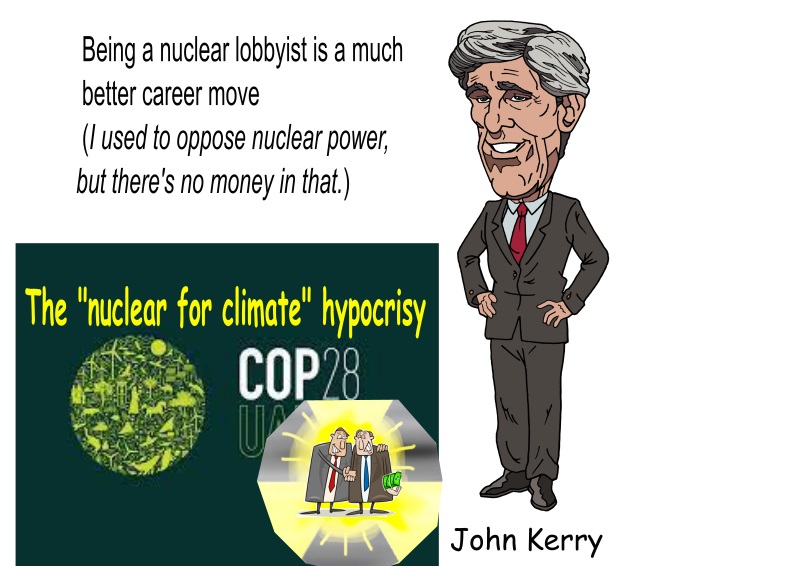
And although it’s a global pledge, President Biden’s climate envoy John Kerry helped spearhead the declaration, indicating the increasing embrace of nuclear power at the highest echelons of U.S. climate policy. Kerry said that the science has proven “you can’t get to net-zero 2050 without some nuclear.”
Participation trophy for Georgia Power: Vogtle 3 connects to the grid
It’s a bit of a stretch calling Vogtle 3’s long-awaited connection to the grid a “win” after a $16 billion cost overrun and a six-year overshoot of the target launch date, but the Department of Energy was looking forward to a new commercial reactor coming online this year, and the department ultimately did get its wish.
As of July 31, Georgia Power’s 1,100-megawatt Plant Vogtle Unit 3 nuclear reactor is supplying power to the grid — making it the first reactor to enter service since Tennessee’s Watts Bar Unit 2 began operating in 2016. Vogtle 4, a second 1,100-megawatt reactor, is nearing the finish line as well, with operations expected to start in early 2024, according to Georgia Power.

Thanks to then-Secretary Rick Perry, in 2019 the Department of Energy’s Loan Programs Office provided up to $12 billion in loan guarantees to help complete the Vogtle expansion amid a spate of spending freezes and lawsuits. The project generated more than 9,000 jobs during peak construction and will provide an additional 800 permanent jobs at the facility once fully operational.
Dan Yurman, publisher of Neutron Bytes, a blog on nuclear power, offered Canary Media this explanation for Vogtle’s major cost and schedule overruns: “The utility and the vendor kicked off a massive infrastructure project with major unaddressed risks in terms of supply chain, labor force skills, regulatory compliance and a 30-year gap in know-how to build large nuclear power plants. It is no surprise that the first-of-a-kind AP1000s came in at twice the cost and double the estimated time to complete them.”

The nuclear industry can call this a win — if it can learn from Vogtle and begin to remedy the missteps called out by Yurman.
A financial win: Nuclear funding and government support

The U.S. government is putting its money where its mouth is when it comes to supporting nuclear power: The (barely) Bipartisan Infrastructure Law added $3.2 billion for development of modular and advanced nuclear reactors, and the U.S. Department of Energy’s Loan Programs Office has devoted $11 billion in loan-making authority for advanced reactors and supply chains. What’s more, the epochal Inflation Reduction Act devotes $700 million to the HALEU Availability Program to support the development of a non-Russian supply of high-assay low-enriched uranium.
Additionally, the IRA offers a preposterously generous $15 per megawatt-hour production tax credit meant to keep today’s existing nuclear fleet competitive with gas and renewables, as well as a similarly generous investment tax credit to incentivize new plant construction.
Losing the global nuclear crown: China is sprinting ahead of the U.S. on nuclear
America has the world’s biggest nuclear power fleet at 93 reactors, but it’s on its way to losing that distinction.
China has built 37 new reactors over the last decade for a total of 55, according to the International Atomic Energy Agency. America has added a grand total of two reactors during that same period. China also aims to double its nuclear energy capacity by 2035, and it is well on its way; it has 22 nuclear plants currently under construction with more than 70 in the planning stages.
Outside of Vogtle 4, it’s unclear when — or if — another nuclear reactor will be connected to the U.S. grid.
And despite small modular reactors being held up as a cure-all to the U.S. nuclear industry’s significant challenges, the only country in the world that has actually built an SMR is China. It demonstrated a pair of smallish high-temperature, gas-cooled reactor units using a “pebble-bed” design and a more concentrated fuel format last year.
Notably, China is not a participant in the COP28 nuclear pledge — an ironic development as it’s the only country with any real chance of meeting the goal of tripling its capacity by 2050.
Huge win, disappointing loss for SMRs: NuScale’s ups and downs

The nuclear gods are fickle creatures. Small modular reactor pioneer NuScale Power made history in January 2023 when it scaled the highest regulatory peak in the U.S.: The Nuclear Regulatory Commission certified the design of its 50-megawatt module, the first small modular reactor and only the seventh reactor design ever approved for use in the U.S.
This was a long-fought victory for NuScale and advocates of SMRs: Utilities and developers can now reference NuScale’s SMR design when applying for a license to construct and operate a reactor. NuScale and the DOE spent more than 10 years and hundreds of millions of dollars to reach this regulatory milestone.
Armed with this historic design certification, NuScale landed a promising inaugural customer in the Utah Associated Municipal Power Systems and began working on a deployment near the Department of Energy’s national laboratory in Idaho. Project plans had called for one 77-megawatt unit to begin operation in 2029.
The Idaho project was once widely predicted to be not only the first small module reactor completed in the U.S., but the next nuclear reactor to be built in the country, period. However, it was not to be so.
The project was ultimately scrapped in November because it couldn’t secure enough subscriptions from utilities in the Western U.S. to make the project work financially.
The innovative SMR aspirant still has a pipeline of tentative agreements to deploy reactors across North America, Europe and the Middle East.
Win for domestic HALEU fuel: Bringing uranium enrichment capabilities back to the U.S.

Call this one a win because, for the first time in 70 years, America is home to a U.S.-owned enrichment facility producing the concentrated fuel needed by the many advanced reactors now in development.
Centrus, a company with roots in the Manhattan Project, began demonstration-scale enrichment operations at its facility in Piketon, Ohio in October. It marks the potential rebirth of a once-strong American enrichment industry. America was once the only source of uranium enrichment outside of the Soviet bloc, but over the last 30 years, it has surrendered that role to Russia and other countries.
The HALEU produced in Centrus’ centrifuges will be used to test new fuels and reactor designs, as well as to fuel the cores of the two demonstration reactors funded through the Bipartisan Infrastructure Law and supported by DOE’s Advanced Reactor Demonstration Program.
The U.S. currently depends on Tenex, part of Russian state-owned nuclear supplier Rosatom, to supply the low-enriched uranium fuel that’s used in our civilian fleet. And Russia (which is not blockaded on nuclear fuel exports) supplies all of America’s high-assay low-enriched uranium, the more concentrated material required by the new generation of advanced reactors.
It is a precarious situation for U.S. national and energy security.
The DOE is looking to jump-start the domestic market by directing IRA funding toward enrichment and fuel-processing facilities like Centrus’ plant in Ohio, as well as by acting as the initial customer, creating an inventory and providing a reliable customer and price.
It’s a win for the U.S., but it comes after years of stepping on rakes.
A win for preserving the existing nuclear fleet: Diablo Canyon lives on

Pacific Gas & Electric, one of the three large investor-owned utilities in California, decided to decommission both of the reactors at California’s Diablo Canyon Nuclear Power Plant in 2017.
But public outcry, political pressure and worries about grid failures seem to have helped get the plant’s operations extended an additional five years with the help of a state loan and up to $1.1 billion through the federal Civil Nuclear Credit Program designed to support economically ailing plants. It’s a win for California nuclear advocates and the emissions of the state’s grid.
PG&E has now filed an application with the Nuclear Regulatory Commission for a 20-year operating extension for the two 1,150-megawatt reactors at Diablo Canyon, which will trigger a review process expected to take a minimum of two years.
The U.S. nuclear fleet is the largest in the world, but it’s also one of the oldest: The average age of an American nuclear reactor is 42 years, compared to a world average of 31 years.
The majority of nuclear plant operators in the country have expressed interest in extending their operating licenses to allow operation up to 80 years, according to a poll of member utilities of Nuclear Energy Institute, a trade organization.
But even with such extensions, these older plants would all need to be replaced by around 2060, and nuclear power’s long lead times mean that decisions will have to be made about replacing their generation capacity in the late 2030s.
Neither a win nor a loss: Action in advanced reactors and microreactors
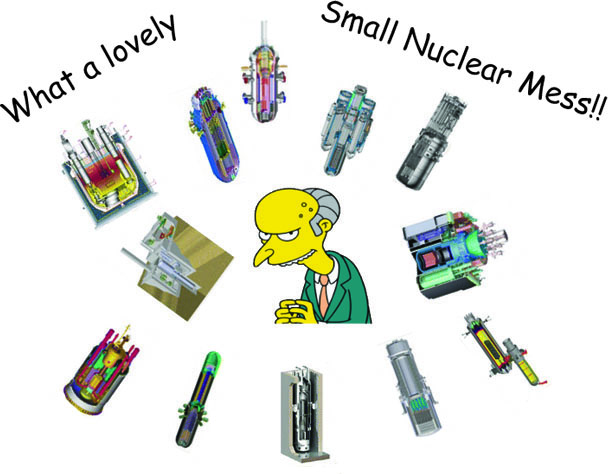
Encouraged by government funding, shifting societal sentiment and a cornucopia of new reactor designs, 2023 witnessed a raft of startups and established vendors making deals in the U.S. and abroad to build next-generation nuclear reactors.
Microreactors like Oklo’s 15-megawatt fast breeder reactor, Aalo Atomics’ 20-megawatt thermal design based on the Marvel reactor at Idaho National Labs, and Westinghouse’s 5MWe eVinci design are intended to provide electrical power and heat in remote or behind-the-meter industrial applications. Ultra Safe Nuclear has plans to construct a microreactor facility in Gadsden, Alabama. The Department of Defense’s Strategic Capabilities Office’s Project Pele program is looking to build and demonstrate a 1–5 MWe mobile, high-temperature, gas-cooled microreactor capable of powering U.S. military bases.
But none of these designs are approved by the Nuclear Regulatory Commission.
For its part, the DOE is betting big on TerraPower and X-energy, with the agency’s Advanced Reactor Demonstration Program providing initial funding of $80 million to each, along with future cost-sharing funds. These two demonstration projects are poised to use HALEU from Centrus’ newly commissioned 16-centrifuge cascade.
TerraPower, founded by Microsoft co-founder Bill Gates, is developing a 345-megawatt sodium-cooled fast reactor coupled with a molten salt energy storage system. The company has raised $750 million to build its operating demonstration reactor in Wyoming.
X-energy is developing its high-temperature gas-cooled advanced small modular reactor and plans the initial deployment at a Dow Chemical facility in Texas.
These reactor designs also are not approved by the NRC.
Despite the proliferation of tentative agreements, memorandums of understanding and handshake deals, all of these planned reactors — with the possible exception of NuScale’s — fall into the famous “paper reactor” category — meaning they are simple, light, small, cheap and quick to build. Importantly, they are also never actually going to be built.
Ukraine ready to ban country’s largest Christian church – parliament speaker
https://www.rt.com/russia/588975-ukraine-orthodox-church-ban/ 13 Dec 23
Legislation outlawing the Ukrainian Orthodox Church (UOC) over alleged links to Russia should apparently be passed in early 2024
A bill that would ban the Ukrainian Orthodox Church (UOC), the largest Christian church in the country, could be passed in early 2024, the speaker of the parliament in Kiev, Ruslan Stefanchuk, has said.
Ukrainian authorities have long accused the UOC of having ties with the Russian Orthodox Church, despite the religious organization condemning Russia’s military operation in Ukraine and announcing its autonomy from Moscow shortly after the escalation of the conflict in February 2022.
When asked about the legislation during a TV appearance on Rada TV on Tuesday, Stefanchuk said that “the committee must make the necessary decisions, carry out consultations, and accept it as a proposal in the second reading.”
“I hope that this issue might be settled in the beginning of the next year,” the speaker stressed.
The legislation, which had been prepared on the order of Ukrainian President Vladimir Zelensky, passed its first reading in the parliament, the Verkhovna Rada, in October. The bill would allow authorities to ban the UOC if an expert review panel confirms its connections with Russia. It garnered the support of 267 out of 450 MPs.
The Church, which has millions of followers across Ukraine, condemned the legislation, saying that it goes against the Ukrainian Constitution and violates religious freedom.
The head of the Russian Orthodox Church, Patriarch Kirill, has also called upon religious leaders and international organizations to intervene to stop “mass violations of religious rights of the followers of the UOC.” The actions of Ukrainian authorities were “on par with the most sinister God-fighting regimes of the past,” he insisted.
The administration of President Zelensky supports the Orthodox Church of Ukraine (OCU), which had been created by Ukrainian authorities shortly after the western-backed coup in 2014 that installed a pro-Western government. The emergence of the OCU, considered non-canonical by the Russian Orthodox Church, prompted years of religious tensions in the country.
Since the start of the conflict between Moscow and Kiev, Ukrainian authorities and activists have been seizing the UOC’s places of worship and handing them over to the government-backed OCU. For instance, the UOC’s monks were evicted from the country’s holiest Orthodox site, the Kiev Pechersk Lavra.
According to Tass news agency, the Security Service of Ukraine (SBU) has launched 65 criminal cases against UOC priests; 17 clerics have faced sanctions, and 19 of them were stripped of their Ukrainian citizenship.
U.S. Congress passes bill barring imports of Russian uranium for nuclear power, (but this ban can be waived as needed.)

The Hill, BY RACHEL FRAZIN – 12/11/23
The House on Monday passed legislation that would bar imports of Russian uranium for nuclear power plants.
The measure was passed by a voice vote with bipartisan support. Ahead of the voice vote, Republican Rep. Cathy McMorris Rodgers (Wash.) and Democrat Rep. Frank Pallone (N.J.) spoke in favor of the bill.
The legislation would make it illegal to import low-enriched uranium, which is used in nuclear fuel, 90 days after the bill becomes law.
It allows for the prohibition to be waived, however, if there aren’t other viable sources of uranium to sustain nuclear reactors.
According to the Energy Information Administration, the majority of uranium that powers U.S. plants is imported, and about 12 percent of those imports came from Russia in 2022. …………………. https://thehill.com/policy/energy-environment/4354533-house-passes-bill-barring-imports-russian-uranium-nucler-power/
1 This Month
23-25 October – on Zoom – World BEYOND War’s annual global conferenc


Shut down the radiation-damaged Heysham nuclear reactors now
To see nuclear-related stories in greater depth and intensity – go to https://nuclearinformation.wordpress.com

Say No to NASA’s Reckless Nuclear Reactor on the Moon
Say No to NASA’s Reckless Nuclear Reactor on the Moon
-
Archives
- October 2026 (180)
- September 2026 (339)
- August 2026 (330)
- July 2026 (355)
- June 2026 (287)
- May 2026 (306)
- April 2026 (356)
- March 2026 (251)
- February 2026 (267)
- January 2026 (308)
- December 2025 (358)
- November 2025 (359)
-
Categories
- 1
- 1 NUCLEAR ISSUES
- business and costs
- climate change
- culture and arts
- ENERGY
- environment
- health
- history
- indigenous issues
- Legal
- marketing of nuclear
- media
- opposition to nuclear
- PERSONAL STORIES
- politics
- politics international
- Religion and ethics
- safety
- secrets,lies and civil liberties
- spinbuster
- technology
- Uranium
- wastes
- weapons and war
- Women
- 2 WORLD
- ACTION
- AFRICA
- Atrocities
- AUSTRALIA
- Christina's notes
- Christina's themes
- culture and arts
- Events
- Fuk 2022
- Fuk 2023
- Fukushima 2017
- Fukushima 2018
- fukushima 2019
- Fukushima 2020
- Fukushima 2021
- general
- global warming
- Humour (God we need it)
- Nuclear
- RARE EARTHS
- Reference
- resources – print
- Resources -audiovicual
- Weekly Newsletter
- World
- World Nuclear
- YouTube
-
RSS
Entries RSS
Comments RSS

