Canada to expedite approval of new nuclear projects, energy minister says
Reuters, By Steve Scherer and Rod Nickel, March 1, 2024
OTTAWA, Feb 29 (Reuters) – Canada will expedite the approval process for new nuclear projects, but will not exclude them from the federal environmental review as requested by the province of Ontario, Energy and Natural Resources Minister Jonathan Wilkinson said.
All new major projects in Canada, including nuclear reactors, have to be reviewed under the Impact Assessment Act (IAA), which the government has promised to revise this spring after the Supreme Court last year ruled it overstepped into provincial jurisdiction.
Wilkinson said the legislative revisions to the IAA will be limited to addressing the concerns of the court because if the government does more than that, it would “have to open up large scale consultations that will take significant time.”
“That being said, we do have some ideas that as to how we can make the process more efficient and respond to the thoughts and aspirations of the provinces,” Wilkinson told Reuters in an interview on Wednesday, adding that accelerating the process will not come at the cost of addressing environmental concerns.
Canada is the world’s second-largest uranium producer, but the long regulatory process has resulted in miners like NexGen Energy having to wait seven years and counting to build the world’s largest uranium mine in Saskatchewan.
“It’s a very long process,” said NexGen CEO Leigh Curyer. “Government and industry working together to bring these projects online more expeditiously, that is absolutely key.”……………………..
Nuclear expansion faces opposition, however, over charges it already doesn’t adequately review risks.
The Sierra Club environmental group opposes development of nuclear fuels because of dangerous waste, high cost and links to weapons, said Sierra’s Canada programs director Gretchen Fitzgerald.
“Canada again and again has failed to create valid environmental assessment processes and arms-length regulation of the nuclear power industry – leaving communities at risk,” Fitzgerald said………………………………
OLD SITES VS NEW ONES
Last month, Ontario said would start work to refurbish aging nuclear reactors at Pickering, located about 45 km (28 miles) east of Toronto, to extend production by 30 years…………………………………………………………..
Ontario is developing what could be the first operating small modular reactor (SMR) in the Western world by the end of the decade, a technology that many countries are looking at as a way of replacing coal-fired plants, Wilkinson said.
Wilkinson said SMRs are “sort of carbon copies of each other” and so should not require repetitive engineering assessments.
The government is also reviewing its entire regulatory process to approve large industrial projects including nuclear by eliminating overlaps between the provincial and federal assessments, he said. The details of that review, which will have a particular impact on mining, will be released in the next few months, Wilkinson said……….https://www.reuters.com/business/energy/canada-expedite-approval-new-nuclear-projects-energy-minister-says-2024-02-29/
The last stammering of Jewish fascism

In Israel, the Jewish democratic opposition organized anti-Zionist demonstrations, which were not very well attended. Speakers emphasized the betrayal of the Prime Minister, who used the shock of October 7 not to save the hostages, but to realize his colonial dream.
Washington then decided to radically change its policy. Until then, it had considered that it could not afford to let Israel lose. It had therefore supported its crime. Now, it could no longer afford to let the Jewish fascists win. It’s important to understand that Washington didn’t change its mind when it saw the suffering of the Gazans, nor because of a sudden outburst of anti-fascism, but because of the threats of the “revisionist Zionists”. Its positions are dictated exclusively by its desire to maintain its domination of the world. It could not contemplate another defeat for its Israeli allies, this time after those in Syria and Ukraine. But it could even less envisage losing to the “revisionist Zionists”.
Victoria Nuland’s dismissal demonstrates the Biden Administration’s desire to clean up its own house, while doing the same for Israel.
https://www.voltairenet.org/article220564.html VOLTAIRE NETWORK | PARIS (FRANCE) | 12 MARCH 2024, by Thierry Meyssan
Anyone acting in good faith understands that murdering 30,000 innocent people has nothing to do with eliminating Hamas. Operation Iron Glaive appears for what it is: a cover to realize the old dream pursued by Jewish fascists from Jabotinsky to Netanyahu: to expel the Arab population from Palestine. From then on, this mass crime, committed for the first time live on television, turned the world’s political chessboard upside down. Feeling threatened, the Jewish supremacists themselves threatened the United States. Anxious to remain masters of the “free world”, the United States is preparing to topple the Jewish supremacists.
The Biden administration watched with bated breath as Israel reacted to the attack by the Palestinian Resistance, including Hamas, known as the “Flood of Al-Aqsa” (October 7). Operation Iron Glaive began with a massive pounding of Gaza City on a scale unprecedented anywhere in the world, including the World Wars. From October 27 onwards, this was followed by ground intervention, looting and the torture of thousands of Gazan civilians. In five months, 37,534 civilians were killed or disappeared, including 13,430 children and 8,900 women, 364 medical personnel and 132 journalists. [1].
At first, Washington reacted by unwaveringly supporting “Israel’s right to defend itself”, threatening to veto any ceasefire request and supplying as many bombs as necessary for the widespread destruction of the Palestinian enclave. It was unthinkable, in its eyes, to suffer yet another defeat, after those in Syria and Ukraine. However, Americans were watching the horrors live on their cell phones. Many high-ranking State Department officials wrote and spoke of their shame at supporting this butchery. Petitions were circulated. Prominent figures, both Jewish and Muslim, resigned.
In the midst of a presidential election campaign, Joe Biden’s team could no longer stain its hands with blood. It therefore began to put pressure on the Israeli war cabinet to negotiate the release of the hostages and conclude a ceasefire. However, Benjamin Netanyahu’s coalition refused, playing on the trauma of its citizens to ensure that peace would only return once Hamas had been eradicated. Washington eventually realized that the events of October 7 were merely a pretext for Jabotinsky’s followers to do what they had always wanted to do: expel the Arabs from Palestine. He became more insistent, stressing that the Palestinians had a right to live, that the colonization of their land was illegal under international law, and that the Israeli-Palestinian question would be resolved by a “two-state solution” (and not by the binational state envisaged by Resolution 181 of 1947).
Revisionist Zionists” (i.e., followers of Jabotinsky [2]) responded by organizing the “Conference for the Victory of Israel” [3] on January 28, 2024. Headlining the event was Rabbi Uzi Sharbaf, sentenced in Israel to life imprisonment for his racist crimes against Arabs, but pardoned by his friends. Sharbaf did not hesitate to proclaim himself heir to the Lehi and Stern groups who fought against the Allies alongside duce Benito Mussolini.
The message was perfectly received in Washington and London: this tiny group intended to impose its will on the Anglo-Saxons and would not hesitate to attack them if they tried to prevent ethnic cleansing.
The White House immediately issued a ban on fundraising and transfers to them [4]. This ban was extended to all Western banks under the Foreign Account Tax Compliance Act (FATCA).
In addition, on February 8, President Joe Biden signed a Memorandum on the conditions of US arms transfers [5]. Israel has until March 25 to guarantee in writing that it will not violate either International Humanitarian Law (but not International Law itself) or Human Rights (in the sense of the US Constitution).
For their part, the parliaments of the Netherlands and the United Kingdom have begun debating the possibility of ceasing arms trading with Israel.
In Israel, the Jewish democratic opposition organized anti-Zionist demonstrations, which were not very well attended. Speakers emphasized the betrayal of the Prime Minister, who used the shock of October 7 not to save the hostages, but to realize his colonial dream.
The “revisionist Zionists” then launched a media offensive against the United Nations Relief and Works Agency for Palestine Refugees in the Near East (UNRWA). Since 1949, this UN agency has been providing education, food, healthcare and social services to 5.8 million stateless Palestinians in Palestine itself, as well as in Jordan, Lebanon and Syria. It has an annual budget of over $1 billion and employs over 30,000 people. Already in 2018, President Donald Trump had questioned the agency’s assistance to Palestinians and suspended US funding for it. His intention was to force the Palestinian factions back to the negotiating table. Five years on, the aim of the “revisionist Zionists” is very different. By attacking UNRWA, they intend to force Jordan, Lebanon and Syria to expel Palestinian refugees too. To this end, they accused 0.04% of its staff of having taken part in Operation Flood of Al-Aqsa, and blocked their bank accounts in Israel. UNRWA Director Philippe Lazzarini of Switzerland immediately suspended the 12 accused employees and ordered an internal investigation.
Of course, he never received the proof the Israelis claimed to have, but one donor after another, led by the United States and the European Union, suspended funding. Within days in Gaza, and weeks in Jordan, Lebanon and Syria, the United Nations aid system collapsed.
Continue readingUkraine could need dictatorship to survive – Zelensky party MP
https://www.rt.com/russia/594489-ukraine-dictatorship-zelensky-party/ 20 Mar 24
The president is already “making most of the decisions” in the country, Sergey Demchenko has said
Ukraine may need to become a dictatorship in order to prevail in the conflict with Russia, an MP from President Vladimir Zelensky’s party has suggested.
Zelensky has already concentrated a great deal of power in his hands and “makes most of the decisions” on behalf of the government, Sergey Demchenko told Novyny.Live news on Monday. The situation is “reasonable” and does not mean that Ukraine is a dictatorship, though the country may need to become one, he argued.
”That is possible. During war, people sometimes say that the only way for a nation to emerge victorious is a state of dictatorship,” the lawmaker said. “For the country, for the people, dictatorship always plays negatively, but this tool may help beat the enemy.”
At present, Ukraine can be described as a “democratorship,” the host suggested, to which Demchenko replied that the term for the political system is not important.
The MP did not say whether he personally supports this path, but claimed that the Ukrainian people love freedom too much to accept life under a dictator.
Long before open hostilities with Russia erupted in February 2022, Zelensky cracked down on opposition politicians and critical media, claiming to do so in order to fight against Russian influence and domestic oligarchs.
His term in office is technically set to expire in late May, while a new presidential election must be held by the end of March. However, martial law suspends regular democratic procedures, and Zelensky has indicated that he has no intention of changing the constitution to allow a wartime election. The domination of his Servant of the People party in the parliament would likely have allowed the passage of such amendments, Ukrainian political experts have argued.
The parliament is currently debating a radical reform of the mobilization system, which would introduce hefty punishments for draft dodgers. Kiev intends to add up to 500,000 people to the armed forces with the proposed system in place.
Moscow has claimed that Zelensky is refusing to negotiate a peaceful settlement of the conflict, with the goal of protecting his personal power.
The spending horrors facing UK’s next PM from old nuclear subs to RAAC in schools
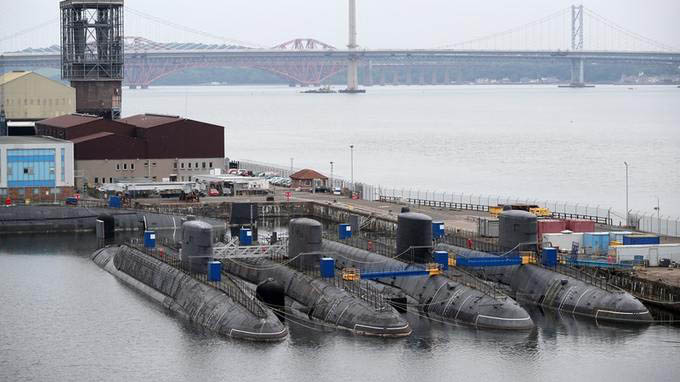
Meg Hillier warned that the next Government will face many spending ‘big nasties’ that will eat up already stretched budgets
The spending horrors facing the next PM from old nuclear subs to RAAC in
schools. Meg Hillier warned that the next Government will face many
spending ‘big nasties’ that will eat up already stretched budgets.
The influential chair of the Public Accounts Committee (PAC) has warned of the
“big nasties” of public spending that face the next Government. In an
interview with i, Labour MP Meg Hillier warned that there wasn’t
“nearly enough good project management” in Government to ensure that
the numerous issues she’s identified, from crumbling hospitals to an out
of service a nuclear submarine fleet, are dealt with.
The UK also needs to
consider how it will safely dispose of its fleet of retired nuclear
submarines, a job that is expected to be very costly for the Ministry of
Defence. The current Vanguard class of submarines are due to be phased out
by 2032 and replaced by the Dreadnought class, and it was estimated in 2016
that the renewal of the programme could cost between £167bn and £179bn
over its 30-year life span.
iNews 17th March 2024
https://inews.co.uk/news/politics/spending-horrors-facing-next-prime-minister-2960825
And Israel? Macron to propose ‘Olympic ceasefire’ for Ukraine conflict
17 Mar 2024 , https://www.sott.net/article/489864-And-Israel-Macron-to-propose-Olympic-ceasefire-for-Ukraine-conflict
French President Emmanuel Macron has said he will propose a ceasefire between Russia and Ukraine during the Summer Olympic Games, set to take place in Paris between July 26 and August 11.
In an interview with Ukrainian media on Saturday, Macron was asked whether France, as the host of the games this year, will follow tradition and seek “a ceasefire during the Olympics.” The journalist was apparently referring to the Olympic Truce, a period of conflict cessation which historically began seven days before the games and ended seven days after so that the athletes could safely travel to and from the Olympics.
“It will be requested,” the French leader responded.
“The rule of the host country is to move in step with the Olympic movement,” the French leader said when asked about his views on the situation in which Russian athletes are allowed to participate under a neutral flag.
“This is a message of peace. We will also follow the decision of the Olympic Committee,” he added.
Comment: Will Israeli athletes also be forced to attend under a neutral flag or be banned altogether by the IOC?
The International Olympic Committee (IOC) originally banned Russian and Belarusian athletes from competing internationally, following the escalation of the military conflict in Ukraine in February 2022. Last year, however, the blanket ban was reconsidered by the organization, and conditions were set to allow individuals, but not the teams, to participate provided that they do so under a neutral flag.
The decision prompted an outcry from Kiev, with President Vladimir Zelensky calling for a complete boycott of the games. However, Ukraine later softened its stance and permitted its athletes to compete as long as the Russians and Belarusians were only present as neutral athletes.
While Moscow condemned the IOC’s requirements, calling them “unreasonable, legally void and excessive”, the head of the Russian Olympic Committee, Stanislav Pozdnyakov, confirmed on Thursday that this year’s Olympics in Paris would not be shunned, despite the restriction.
“We will never take the path of boycotting (the Games). We will always support our athletes,” he told RIA Novosti.
Comment: The French president would likely want to buy some time so that the Western partners have more time to rearm Ukraine and train yet another army. That wish for a ceasefire is unlikely to be granted by Russia.
One wonders why the French president wasn’t asked about a ceasefire in Israel.
Macron has in the recent weeks done made sure to get some time in the limelight, but it hasn’t quite worked out and he might have shown himself to be delusional if not also untrustworthy. See also:
Macron leads the way to Western civilization’s suicideMajority disagree with Macron’s comments on sending NATO troops to Ukraine – poll
UK government plans to block foreign control of newspapers – what about foreign control of Sizewell nuclear project ?
Telegraph ruling raises questions over Sizewell funding
The government plans to block foreign control of newspapers – what about physical infrastructure?
Questions are being raised about the government’s willingness to allow essential physical infrastructure to fall into the hands of foreign states but not newspapers.
Government minister Lord Parkinson told the House of Lords yesterday: “We will amend the media merger regime explicitly to rule out newspaper and periodical news magazine mergers involving ownership, influence or control by foreign states.”
Legislation is being introduced specifically to prevent The Telegraph newspaper group from being bought by RedBird IMI, a fund backed by the United Arab Emirates.
It is not yet clear, however, how far the new law could stretch. The intention is that it applies only to newspapers and news magazines. But are they really more important than water companies, electricity companies and power stations?
The Chinese state was allowed to have an influence in the development of Hinkley Point C nuclear power station but has been blocked from further involvement in the UK nuclear programme amid security concerns.
However, the UK government has been wooing the UAE to step in to help fund Sizewell C in place of China.
Campaigners against Sizewell C see the Telegraph intervention as grounds to block UAE investment in British nuclear power, on the basis that nuclear power stations must be at least as important to national security as newspapers.
“If the government is prepared to ban foreign state ownership of newspapers because of the UAE’s bid for the Telegraph, ministers must now block UAE investment in Sizewell C in the interests of national security. That deal should also be dead in the water: there is no place in our critical national infrastructure for a regime that does not share our views and values,” said a spokesperson for Stop Sizewell C.
There already exists legislation that could be used to prevent a foreign state having influence in critical infrastructure – the National Security & Investment Act 2021 and the National Security Act 2023 have sought to respond to foreign state interference.
Lord Parkinson told parliament yesterday: “We intend to expand on the current definition of ‘foreign powers’ used in the National Security Act 2023 to ensure a broad definition that also covers officers of foreign governments acting in a private capacity and investing their private wealth.”
That could put the skids under a whole host of utility companies.
However, rather blurring the message, the minister concluded: “I should note that the government remain committed to encouraging and supporting investment into the United Kingdom and recognise that investors deploying capital into this country rely on the predictability and consistency of our regulatory regime. The UK remains one of the most open economies in the world, which is key for the prosperity and future growth of our nation. Our focus here is not on foreign investment in the UK media sector in general; this new regime is targeted and will apply only to foreign states, foreign state bodies and connected individuals, and only to newspapers and news magazines.”
‘Don’t hold your breath’ – people living in Wylfa’s shadow have say on development plans
The UK Government recently announced it had bought the Anglesey site from Hitachi
North Wales Live, David Powell, Court reporter, 17 Mar 24
People living near the Wylfa power station on Anglesey have greeted the prospect of a fresh development at the site with excitement, anxiety and pessimism. Last week the UK Government announced that a £160m deal had been reached with Hitachi to buy sites at Wylfa and Oldbury in Gloucestershire – with a final sign off expected this summer.
The minister for nuclear Andrew Bowie says this is not another “false dawn” for Wylfa and that he was “supremely confident” that new nuclear would be developed at the site. North Wales Live this week visited nearby Cemaes to gauge opinions from people in the village on the proposals.
Cemaes resident William Huw Edwards, 80, used to work as a contractor atRio Tinto
, which ran Anglesey Aluminium, and on the runway at RAF Valley. He remembers disruption during construction work for the current Wylfa power station.
“There used to be two or three lorries at a time in convoys,” he recalled. As for the prospect of a new nuclear development, he said: “A lot of people are against it because of the traffic and the noise.”
He added: “It’s going to cost a lot and they will have to find the money.” He doubts it will be in the near future, saying: “It won’t be soon. Don’t hold your breath.”
But another resident Julie Clemence, 63, would support a new nuclear operation if it were smaller than its predecessor. “The American ones are really huge but I would support it if it’s smaller and less of a blot on the landscape than now,” she said.
………………………………………………………… Dylan Morgan, of Pobl Atal Wylfa B (PAWB), a campaign group against the proposal, said: “This government and anyone following it will face the same challenges regarding attracting any large new private investment to develop reactors at Wylfa or any other site in the global context of a shrinking nuclear industry.
“At the same time, renewable technologies are galloping ahead every year to take an increasing share of the worldwide electricity market.” He claimed 20 years has been “wasted” when money and resources could have been spent developing renewable energy…………………………………….
Meanwhile Katie Hayward, of Felin Honeybees, has said she is “completely broken” after learning the site might be redeveloped after she battled the proposed Wylfa B site for years.
https://www.dailypost.co.uk/news/north-wales-news/dont-hold-your-breath-people-28797236—
UK Steps Up Sizewell Nuclear Push With State-Backed Loans

Mar 14, 2024, William Mathis and Priscila Azevedo Rocha, Bloomberg News, https://www.bnnbloomberg.ca/uk-steps-up-sizewell-nuclear-push-with-state-backed-loans-1.2046821
HSBC Holdings Plc is in talks with investment funds about loans to help to finance the construction of the UK’s Sizewell C nuclear plant, as the government steps up efforts to get a key energy project off the drawing board this year.
The bank is in discussions with funds to provide the debt that would be guaranteed by the country’s export finance agency, according to people familiar with the matter. That would help Sizewell offset risks of financing a long-term project, while securing cheaper capital, the people said, asking not to be identified as the negotiations are private.
HSBC, Sizewell and UK Export Finance all declined to comment. A spokesperson for the Department for Energy Security and Net Zero said the development of the project’s commercial structure is subject to sensitive discussions
Securing state-guaranteed funding would be an important milestone for a project that could cost more than £40 billion ($51 billion). The UK government has vowed to get as much as 25% of the country’s power from nuclear plants in coming years as part of a push to reach net-zero carbon emissions by 2050. Declining output from Britain’s fleet of aging reactors means new plants will be needed by the end of the decade.
So far, the only one under construction is Electricite de France SA’s Hinkley Point C. That plant has been repeatedly delayed, while the projected budget has ballooned to as high as £47.9 billion.
The UK government is working with Barclays Plc to drum up equity investors for the Sizewell project, with bids due later this year. Centrica Plc is seen as a potential anchor investor, with Chief Executive Officer Chris O’Shea saying the company has been in talks with the government.
HSBC is working for Sizewell C Ltd., the operating company set up by EDF to build the copy of Hinkley. The second project should cost less than its forerunner, according to EDF.
The UK has gradually increased its own exposure to Sizewell C, boosting investment in the project to more than £2 billion earlier this year to become the majority shareholder. The government is taking on more construction risk than it did for Hinkley, as it trials a different approach to financing to try to get new projects over the line.
The huge costs involved make it tricky. In 2019, the government offered to take a third of the equity in a £20 billion project in Wales, and provide all the debt during construction plus guaranteed power prices. That wasn’t enough to convince the developer Hitachi Ltd. to proceed.
With assistance from Jessica Shankleman and Francois de Beaupuy.
Decision time Democrats: Oppose Biden’s genocide in Gaza or tacitly support it

Walt Zlotow, West Suburban Peace Coalition, Glen Ellyn IL 15 Mar 24
Decision time Democrats: Oppose Biden’s genocide in Gaza or tacitly support it
The verdict of history will condemn President Biden to eternity for enabling Benjamin Netanyahu’s genocidal ethnic cleansing of Palestinians in Gaza. Over half (56%) of his 81 million voters in 2020 recognize this ghoulish truth and are abandoning him with their respect and possibly their vote November 5.
But that leaves roughly 37 million Biden voters who have turned away from Biden’s genocidal policies to continue total support in this election season. They have scrubbed any references to Gaza, Palestinians or genocide from their support. They go further and criticize any Democrat who does, even hurling scurrilous insults that critics are in sync with Trump and aiding Trump’s reelection.
While destroying life for 2,300,000 Palestinians in Gaza, Biden has destroyed his soul and legacy with the worst murderous policy any leader could engage in. At 81 and in declining mental and physical health, it may be too late to expect a Biden epiphany to abandon genocidal aid to Netanyahu’s Likud Party.
But it’s not too late for genocidal Biden’s unthinking supporters to pivot to peace. If so, they would not only join the Democratic voting majority and most of the civilized world in solidarity with the Palestinian cause, they would be reclaiming their moral legacy as well.
Japan Ramps Up Drive to Restart World’s Biggest Nuclear Plant
Stephen Stapczynski and Aya Wagatsuma, Bloomberg News, 15 Mar 24
Japan’s government is ramping up an effort to secure local approval to resume operations at the world’s biggest nuclear power plant, according to a report, amid a wider push by the nation to restart its idled fleet of reactors.
Minister of Economy, Trade and Industry Ken Saito will next week request Niigata Governor Hideyo Hanazumi to endorse the restart of Tokyo Electric Power Co’s Kashiwazaki-Kariwa nuclear power station, according to the Niigata Nippo newspaper. METI didn’t respond to a request for comment.
The governor’s approval is one of the last hurdles before the nuclear plant can resume…………………………….
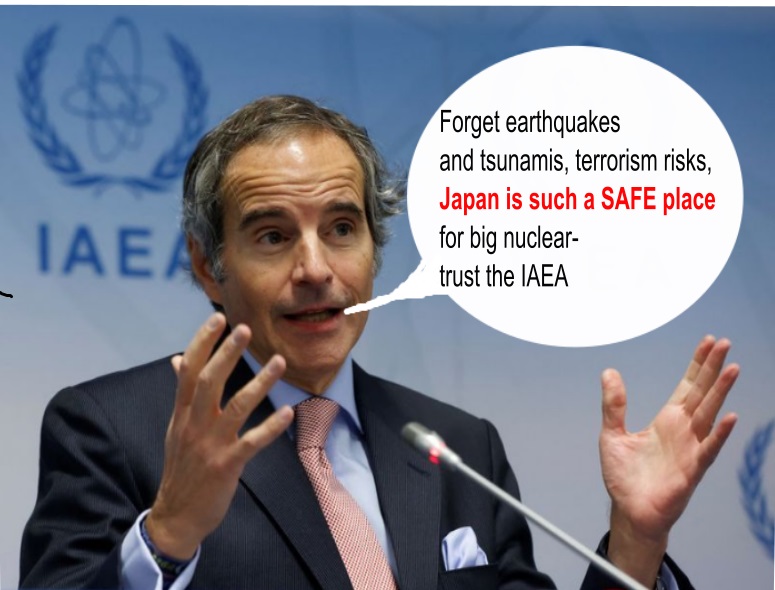
The head of the International Atomic Energy Agency this week said that the organization would provide technical assistance for the plant, and send a team of experts to assist Tepco’s effort to gain public trust.
Kashiwazaki Kariwa, which has seven reactors totaling 8.2 gigawatts in capacity, is located about 250 kilometers (155 miles) north of Tokyo. The nation’s regulator said in 2017 that reactor units 6 and 7 met post-Fukushima safety protocols.
–With assistance from Winnie Hsu and Shoko Oda. https://www.bnnbloomberg.ca/japan-ramps-up-drive-to-restart-world-s-biggest-nuclear-plant-1.2047179—
The U.S. Is Betting Big on Small Nuclear Reactors (done up with green paint)

Oil Price, By Felicity Bradstock – Mar 14, 2024,
- After decades of decline, the U.S. is significantly increasing its investment in nuclear energy to address climate change and strengthen energy security.
- The recently passed Atomic Energy Advancement Act simplifies approval processes for novel reactor designs, aiming to expedite the development of new nuclear power plants.
………. The U.S. is set to accelerate the rollout of new nuclear power plants and reactors following the passing of new legislation this month. This follows a movement away from nuclear power for several decades due to the poor political and public perception of nuclear power due to several notable nuclear disasters………………..
This month, the House approved legislation aimed at developing U.S. nuclear power capacity in the coming years, with a vote of 365 to 36. The Atomic Energy Advancement Act was widely approved by both the Democrat and Republican parties ………
……………………………..The law will see that the Nuclear Regulatory Commission (NRC) streamlines its processes for the approval of new reactor designs, and will increase hiring at the commission, reduce fees for applicants, establish financial prizes for novel types of reactors, and encourage the development of nuclear power at the sites of retiring coal plants. The legislation is expected to support the greatest development of U.S. nuclear power of this generation. ……………………………..
The Biden administration has repeatedly demonstrated its support for nuclear power by passing laws and approving funding to keep existing nuclear projects afloat. Two policies, passed in 2021 and 2022, provided the funding needed to save 22 reactors, with further investment being rolled out this year. This financing is expected to keep the existing U.S. nuclear reactor fleet online until at least 2032, by which time the government hopes greater investment will be being made into new nuclear projects. The policies also provide funding for research and development into the next generation of modular, more flexible nuclear plants
The passing of the Atomic Energy Advancement Act is expected to speed up the deployment of new nuclear energy technology, supported by previous Biden administration policies that provide greater investment to the sector. While strict safety regulations must be upheld, the government is putting pressure on the NRC to modernize and approve innovative reactor designs to allow for new nuclear energy capacity to be rolled out …. https://oilprice.com/Alternative-Energy/Nuclear-Power/The-US-Is-Betting-Big-on-Small-Nuclear-Reactors.html
UK’s Spring budget a ‘myopic sop’ to nuclear obsessives
https://cnduk.org/spring-budget-a-myopic-sop-to-nuclear-obsessives/ 14 Mar 24
CND Vice-President Dr Ian Fairlie writes for us on the purchase of the Wylfa nuclear site in last week’s budget.
On March 6, as part of the Spring Budget, the Chancellor announced a deal with the Japanese multinational Hitachi to purchase the defunct and closed Wylfa and Oldbury nuclear sites for £160 million. Hitachi suspended the much larger Wylfa project in 2019 and then abandoned it in September 2020 due to the massively rising costs of building nuclear plants.
Many nuclear enthusiasts read into the Chancellor’s statement that the government was going to build new plants at these sites. However a careful reading of the Budget statement reveals no such commitment. Instead, several independent commentators drily remarked that if Hitachi had decided the Wylfa nuclear plant was commercially untenable, why would anyone in Government think it was.
In fact, it is likely the £160 million land purchase was little more than a sop to myopic nuclear obsessives in the Conservative Party. The reality is that, in energy strategy terms, this sum is a drop in the bucket compared to the estimated £46,000 million (£46 billion) which Hinkley C nuclear plant would cost if it ever were completed. And, in another comparison, the Chancellor confirmed that the budget for the 2024 Contracts for Difference (CfD) auctions mainly for wind and solar projects will be set at over £1,000 million (£1 billion).
The environmental group People Against Wylfa B called the Chancellor’s statement a cynical move to try to support Tory Virginia Crosbie MP to keep her Ynys Môn parliamentary seat. Not much chance of that happening as her majority is under 2,000, and several recent by-elections have shown that Tory majorities of even 20,000 or more are now unsafe.
South Dakota Governor Signs Bill Into Law That Conflates Criticism of Israel With Anti-Semitism
Under the law, drawing ‘comparisons of contemporary Israeli policy to that of the Nazis’ is considered anti-Semitic
by Dave DeCamp March 11, 2024 ,https://news.antiwar.com/2024/03/11/south-dakota-governor-signs-law-that-conflates-criticism-of-israel-with-anti-semitism/
South Dakota Governor Kristi Noem signed a bill into law last week that conflates some criticisms of the modern state of Israel with anti-Semitism.
By signing the bill into law, the International Holocaust Remembrance Alliance’s (IHRA) definition of anti-Semitism must be taken into consideration in investigations of unfair or discriminatory practices within the state of South Dakota.
The IHRA’s definition was first adopted in 2016 and lists “drawing comparisons of contemporary Israeli policy to that of the Nazis” as an example of anti-Semitism. Noem signed the bill into law as Israel’s brutal campaign in Gaza has killed over 31,000 Palestinians, mostly women and children, and after the International Court of Justice ruled it’s “plausible” that Israel is committing genocide.
The IHRA also defines anti-Semitism as applying “double standards” to Israel by “requiring of it a behavior not expected or demanded of any other democratic nation.” It lists “denying the Jewish people their right to self-determination” by “claiming that the existence of a State of Israel is a racist endeavor” as another example of anti-Semitism.
According to The Jerusalem Post, South Dakota has become the 12th US state to codify the IHRA’s definition of anti-Semitism into law. At least 23 other states have supported the definition through legislative action but have not officially made it into law. The US State Department has also adopted the definition, as the US is a member country of the IHRA.
Many US states have also passed laws to punish individuals or companies who boycott Israel. The legislation is designed to fight against the global Boycott, Divestment, and Sanctions (BDS) movement that advocates for global boycotts against Israel.
Over 30 states have adopted anti-BDS laws, and several states used them to punish Unilever, the parent company of Ben & Jerry’s, over the ice cream maker’s decision to stop selling its product in illegal Israeli settlements in the West Bank. Colorado, New York, New Jersey, Illinois, Arizona, Florida, and Texas all took action against Unilever by moving to divest state pension funds from the British conglomerate.
When Ben & Jerry’s first announced it would stop selling ice cream in the occupied territory, Israel launched a “maximum pressure” campaign and urged states to take action against Ben & Jerry’s. Unilever eventually sold the ice cream company’s business interests in Israel to a local company that would keep selling the product in settlements.
Japan’s Nuclear Energy Policy Disaster
The yawning gap between vision and policy reality jeopardizes Japan’s important energy security goals and efforts to decarbonize the energy supply.
By Florentine Koppenborg, March 08, 2024, https://thediplomat.com/2024/03/japans-nuclear-energy-policy-disaster/
The Japanese government is chasing a nuclear mirage 13 years after the Fukushima Daiichi nuclear disaster in March 2011. Government statements in support of nuclear power, such as the recent declaration at COP28 that Japan will triple nuclear energy by 2050, receive much attention. Away from the public spotlight, however, Japan is facing a nuclear energy policy disaster as it struggles to actually return to nuclear energy after the Fukushima nuclear accident.
As the Japanese government pursues a nuclear revival to no avail, the yawning gap between vision and policy reality jeopardizes important energy policy goals such as energy security and decarbonizing energy supply.
The share of nuclear power in Japan’s electricity mix has stagnated between 5 and 8 percent since 2018, and the goal to generate 20–22 percent of electricity from nuclear by 2030 has become elusive. Japan’s fleet of commercial nuclear reactors, once the third largest in the world at 54 units, has diminished to 33 plus two units currently under construction. Restarting these 35 reactors would barely be enough to meet the government’s 2030 targets. However, only 27 reactors are undergoing the safety reviews required for a restart permit. If successful, they can provide about 14 percent of Japan’s electricity mix by 2030, far from the government’s goals.
Actual restart progress is even more bleak, with only 12 reactors back on the grid by early 2024. Plans to start using the Onagawa plant’s reactor number two for electricity generation in May 2024 had to be postponed to September due to delays in additional safety construction work. For the Tokai reactor number two, work on safety measures is scheduled to conclude in September 2024, but it remains to be seen whether construction will finish on time. With the restart process riddled with setbacks and uncertainties, the total number of reactors actually generating electricity looks to increase only marginally over the next few years.
One potential solution to this problem, constructing new reactors, takes at least a decade and risks public backlash as safety concerns linger. The recent Noto earthquake was a reminder of safety risks as the earthquake partly exceeded assumptions made in safety checks and led to questions about the adequacy of emergency evacuation plans. Removing the official 40-year lifespan limit on nuclear reactors – introduced as a major safety lesson after the 2011 nuclear disaster – as part of Japan’s so-called GX (green transformation) strategy that will guide the country’s decarbonization appears as a rather desperate and potentially risky measure. The next generation of modular reactors stressed in the COP28 declaration on nuclear and the GX strategy are not even market-ready technology at the moment.
Japan’s nuclear energy revival is supposed to increase energy security and drive decarbonization. Chasing unattainable goals, however, has the exact opposite effect as the yawning implementation gap is continuously filled with fossil fuel imports.
It is time to embrace the solution at hand: expanding renewable energy capacity.
Increasing energy security has been a major goal of Japan’s energy policy ever since the oil shock in the 1970s. Dependence on fossil fuel imports, already high at 81 percent in 2010, shot up once all of the nuclear power plants were shut down following the Fukushima accident. What brought it down again to about 83 percent in 2021 was not nuclear restarts, but rather an increasing share of renewable energy. Nuclear power and renewable energy have essentially switched places in Japan’s energy mix as renewables increased from 4 percent in 2010 to 11 percent in 2021 and nuclear decreased from 10 percent in 2010 to 3 percent in 2021.
Additional coal and gas imports to fill the nuclear power gap not only keep Japan’s import dependence high, but also have a substantial impact on its greenhouse gas emissions. Aside from a small share of nuclear energy, low-carbon electricity mainly comes from renewables, which have seen an impressive annual growth at about 16 percent since 2012. The remaining 72 percent come from fossil fuels. Once a climate leader in the 1990s, the current nuclear energy disaster solidifies Japan as a fossil fuel champion rather than a decarbonization leader.
In 2024, the Japanese government has an opportunity to turn things around. Japan’s Strategic Energy Plan, revised every three years, is due again. This presents an opportunity for the government to increase its renewable energy target, ideally in line with the international commitment made at COP28 to triple renewable energy capacity by 2050, and to reduce its nuclear power target accordingly. This would be the best way to alleviate Japan’s current nuclear energy policy disaster and to put the country back on track in its pursuit of energy security and decarbonization.
Anglesey nuclear power plant plan resurrected almost four years after being shelved due to costs
This Is Money, By JOHN ABIONA , 7 March 2024
Plans for a nuclear power plant in North Wales look set to be revived almost four years after the project was shelved.
Jeremy Hunt said the Government has bought the Wylfa site on Anglesey and a second at Oldbury-on-Severn in south Gloucestershire from Hitachi for £160million.
The Japanese firm walked away from building the plant at Wylfa in September 2020 having suspended the project the year before due to rising costs.
But yesterday the Chancellor, who referred to the island by its Welsh-language and constituency name, said: ‘Ynys Mon has a vital role in developing our nuclear ambitions.’
Ministers are also pressing ahead with plans for small modular reactors (SMRs) with six companies including Rolls-Royce bidding to win the contract.
These will complement Somerset’s Hinkley Point C and Suffolk’s Sizewell C nuclear power stations…………………………………………….more https://www.thisismoney.co.uk/money/markets/article-13165945/Anglesey-nuclear-power-plant-plan-resurrected-four-years-shelved.html
1 This Month
10 March A LIVE WEBINAR THE REAL EFFECTS OF NUCLEAR POWER
What the Industry Isn’t Telling Us
1:00 PM Mountain, 2 pm Central, 3 pm Eastern. Live on the Keepers of the Water Facebook page

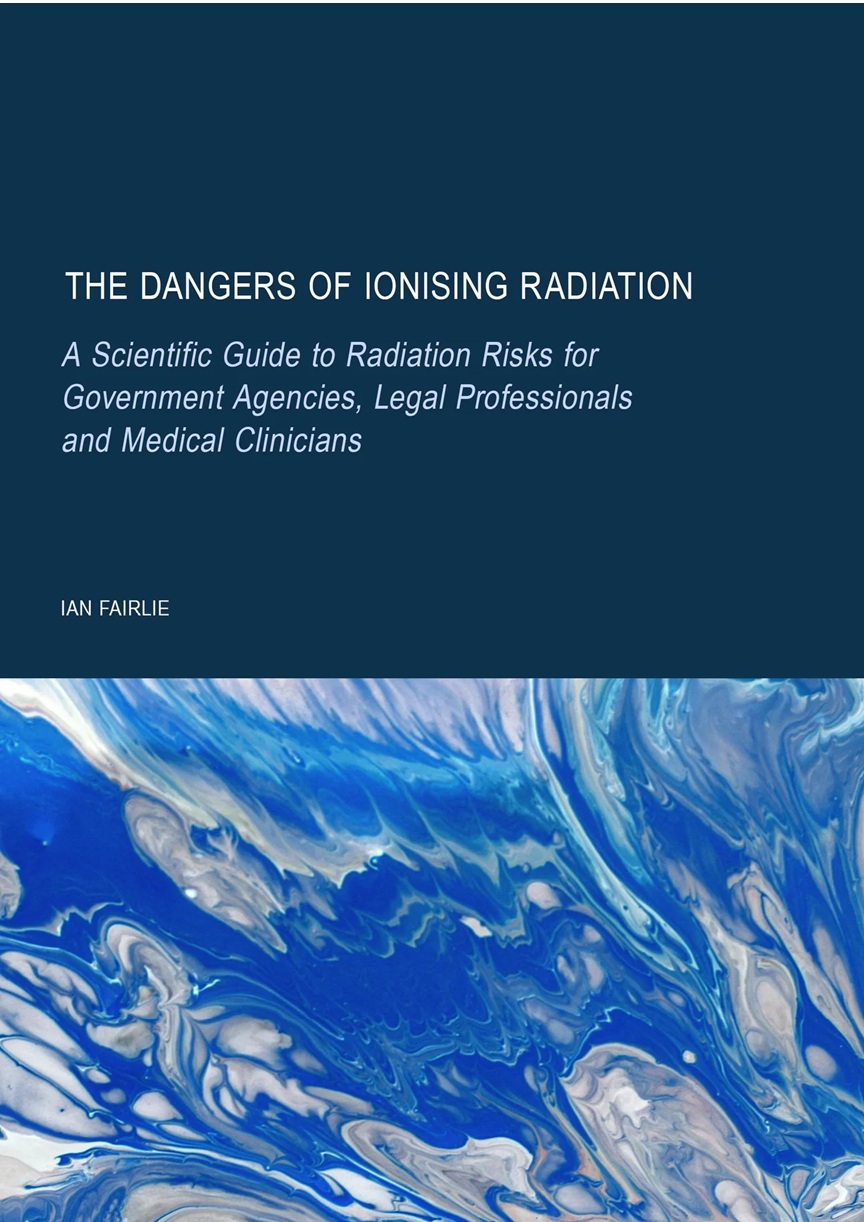
18 March Webinar @ 1 PM EST: An Assessment of SMR Projects: The Case of Canada
register for the zoom:
https://us02web.zoom.us/webinar/register/WN_o8BIIOUvQ2ONJR1nta65DQ#/registration


of the week – STOP SMALL MODULAR REACTORS IN CANADA
To see nuclear-related stories in greater depth and intensity – go to https://nuclearinformation.wordpress.com
-
Archives
- February 2026 (268)
- January 2026 (308)
- December 2025 (358)
- November 2025 (359)
- October 2025 (376)
- September 2025 (258)
- August 2025 (319)
- July 2025 (230)
- June 2025 (348)
- May 2025 (261)
- April 2025 (305)
- March 2025 (319)
-
Categories
- 1
- 1 NUCLEAR ISSUES
- business and costs
- climate change
- culture and arts
- ENERGY
- environment
- health
- history
- indigenous issues
- Legal
- marketing of nuclear
- media
- opposition to nuclear
- PERSONAL STORIES
- politics
- politics international
- Religion and ethics
- safety
- secrets,lies and civil liberties
- spinbuster
- technology
- Uranium
- wastes
- weapons and war
- Women
- 2 WORLD
- ACTION
- AFRICA
- Atrocities
- AUSTRALIA
- Christina's notes
- Christina's themes
- culture and arts
- Events
- Fuk 2022
- Fuk 2023
- Fukushima 2017
- Fukushima 2018
- fukushima 2019
- Fukushima 2020
- Fukushima 2021
- general
- global warming
- Humour (God we need it)
- Nuclear
- RARE EARTHS
- Reference
- resources – print
- Resources -audiovicual
- Weekly Newsletter
- World
- World Nuclear
- YouTube
-
RSS
Entries RSS
Comments RSS
 nuclear-news