Republicans and Democrats Finally Agree on Nuclear. It’s the Industry That’s the Problem.
The atomic age is perpetually on the verge of dawning.
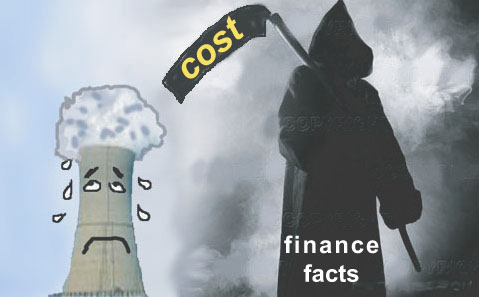
Nuclear power is a political winner — but not a money saver. Just ask
Tim Echols. Echols’ term on the Georgia Public Service Commission is up
this year, and unlike most states, his position is an elected one.
He says the Vogtle nuclear plant has been a campaign issue — it’s hiked
customers’ bills by about 12 percent since coming fully online last year,
$21 billion over budget and seven years behind schedule — but that his
opponents haven’t been able to weaponize it. He won his Republican
primary resoundingly last month.
“All the Democratic opponents are saying
that they would build Vogtle,” he said. “They’re just not saying how
they would pay for it. Or they’re saying they’re going to lower bills,
but they’re going to build nuclear, and those two things don’t go
together.”
The hippies are dying out, and with them the memories of
Shoreham, San Onofre, V.C. Summer, Three Mile Island and other nuclear
plants that didn’t pan out, suffered radiation leaks or otherwise closed
before their time. It’s not the policy that’s holding nuclear back:
It’s the industry.
All the incentives and permitting reforms the
government can muster won’t change the basic economics that have led to
just three new nuclear plants getting built in the U.S. this century: It
takes too long, is too expensive and is only getting pricier. “In terms
of new nuclear, it’s a nonstarter,” said Stanford engineering professor
Mark Z. Jacobson, a longtime skeptic of nuclear power. “They can spend as
much money as they want, it’s never going to happen.”
Politico 9th July 2025, https://www.politico.com/news/magazine/2025/07/09/gop-dems-nuclear-energy-industry-problems-debra-kahn-column-00344370
New nuclear power plant in Switzerland not before 2050
The possible construction of new nuclear power plants in Switzerland, as currently
discussed, depends on many factors. Even if the ban on new construction
were lifted, there would still be numerous other political, technological,
economic, and social uncertainties, as the Energy Commission of the Swiss
Academies of Arts and Sciences outlines in a new report.
Even if the ban on
new construction is lifted, commissioning a new nuclear power plant is
unlikely before approximately 2050. Before connecting to the power grid,
various political, administrative, and economic decisions must be made.
Several referendums and even appeals are expected. The majorities are
uncertain from today’s perspective and could change due to individual
events such as Fukushima.
Swiss Academies of Arts and Sciences 1st July 2025, https://akademien-schweiz.ch/news/neues-kernkraftwerk-in-der-schweiz-fruehestens-2050
Nuclear comeback? Japan’s plans to restart reactors hit resistance over radioactive waste
The Japanese government wants to turn its nuclear power
stations back on – but some local residents and Indigenous Ainu people
don’t want nuclear waste stored near them. Fourteen years after the
Fukushima disaster, Japan is restarting its nuclear reactors – and two
wind-blown near-deserted fishing villages on the northern island of
Hokkaido could be the destination for all their radioactive waste. But,
while some residents of Suttsu and Kamoenai welcome the government money
that volunteering to store the waste will bring, others are fiercely
opposed due to fears that the nuclear waste will contaminate their land and
water. The controversy could delay Japan’s goals to use carbon-free
nuclear energy to replace electricity generation from expensive imported
fossil fuels and cut greenhouse gas emissions on the way to net zero by
2050.
Climate Home News 6th July 2025, https://www.climatechangenews.com/2025/07/06/nuclear-comeback-japans-plans-to-restart-reactors-hit-resistance-over-radioactive-waste/
Three Blows Against Zionism in a Single Day

A court ruling in Australia, an election result in New York and a military setback for Israel, all coming on Tuesday this week, signaled a serious turn of events for Zionism and its supporters, writes Joe Lauria.
By Joe Lauria, Consortium News, https://consortiumnews.com/2025/06/26/three-blows-against-zionism-in-a-single-day/
The impunity with which Zionism invades and bombs its neighbors and shuts up its critics in Western nations was thrown into question perhaps as never before on Tuesday as Zionism suffered a legal, a political and a military defeat all in one day.
A Military Defeat in the Morning
On Tuesday morning Washington time, President Donald Trump announced that Israel and Iran had agreed to a cessation of hostilities after an 11-day war that saw Israel seriously deplete its air defenses, undermine its economy and suffer the worst damage from enemy fire in memory.
A war that Israel — and especially its prime minister Benjamin Netanyahu — had lusted after for three decades had finally been launched. Netanyahu at last found an American president willing to join him in unprovoked aggression against Iran to extend Israel’s regional dominance well beyond the Jordan River.
That would require the destruction of Iran’s nuclear enrichment program and the overthrow of the Iranian government to be replaced by a puppet regime led by Israel and the United States.
Instead, Israel had to cut short the operation despite U.S. involvement because it was not going to plan. U.S. intelligence says the so-far merely civilian nuclear program was only set back a few months and the Iranian government has never been made more secure.
As it touts itself as the most invincible (and “moral”) army, the failure to achieve its goals in Iran and the physical damage it took from Iranian missile and drone attacks makes what just transpired a humiliating military defeat for Zionism.
And though U.S. presidents have privately groused about Israeli leaders before, never has Israel been cursed out before in public by a president, as Trump did on Tuesday morning.
A Legal Defeat in the Evening
Then at 8:15 pm Tuesday, U.S. East Coast time (10:15 am Wednesday in Australia), a federal judge in Sydney found the courage to stand up to the organized thuggery of Zionist lobbies by ruling that the Australian Broadcasting Corporation (ABC) had succumbed to intense pressure from Israel lobbyists to sack a radio presenter because she shared an instagram post from Human Rights Watch which accurately reported that Israel was using starvation as a weapon of war.
That is the exact charge formally leveled in Netanyahu’s arrest warrant issued by the International Criminal Court (ICC). The Australian judge ruled that the presenter, Antoinette Lattouf, was wrongly dismissed and that the ABC must pay her restitution.
Judge Daryl Rangiah said the ABC had “appease[d] … pro-Israel lobbyists” because Lattouf “held political opinions opposing the Israeli military campaign in Gaza.” Rangiah said that “the complaints [to the ABC] were an orchestrated campaign by pro-Israel lobbyists to have Ms Lattouf taken off air.”
ABC managing director Hugh Marks apologized to the public on air, saying, “Any undue influence or pressure on ABC management or any of its employees must always be guarded against.”
It was a major setback for a powerful Israel Lobby in a Western nation. These lobbies have been untouchable until now no matter what underhanded tactics they employ to create cover for genocide and wars of aggression by smearing and silencing legitimate critics of Israel.
A Political Defeat in the Night
Still on Tuesday, at around 11 pm in New York City, a Muslim politician who has vowed to arrest Netanyahu based on the ICC warrant if he steps foot in the city while he is mayor, defeated a Democratic Party machine politician in the party’s primary election for mayor.
Despite being repeatedly smeared as an anti-semite, Zohran Mamdani has refused to renounce his strong support for Palestinians, including refusing to retract his labelling of Israel’s war on Gaza “genocide.”
Mamdani’s electoral victory has incensed Zionists everywhere, setting off gnashing of teeth. “NY Democrats have fully embraced Marxism, antisemitism, anti-capitalism, and sheer insanity,” said fanatical Zionist Congresswoman Elise Stefanik. U.S. Rep. Mike Lawler called Mamdani “a radical, antisemitic socialist.”
The election result shows that a sizeable number of voters in the city with the largest population of Jews after Tel Aviv don’t care anymore about the taboos constructed and enforced against criticizing Israel. Israel has their live-streamed genocide to thank for that.
A Beginning, Not an End
Anyone of these events alone would signify a momentous turning of the tide against decades of built-up injustice committed by Israel and its lobby. The baseless smears of anti-semitism are losing their effect. The image of an all-powerful Israeli military is tarnished.
June 24, 2025 may be seen as the day in which fear of Israel was overcome on a scale not seen before. There is a long road ahead filled with enormous obstacles, but this day could usher in an era in which Israel and its enablers are at last held accountable for their many crimes.
Joe Lauria is editor-in-chief of Consortium News and a former U.N. correspondent for The Wall Street Journal, Boston Globe, and other newspapers, including The Montreal Gazette, the London Daily Mail and The Star of Johannesburg. He was an investigative reporter for the Sunday Times of London, a financial reporter for Bloomberg News and began his professional work as a 19-year old stringer for The New York Times. He is the author of two books, A Political Odyssey, with Sen. Mike Gravel, foreword by Daniel Ellsberg; and How I Lost By Hillary Clinton, foreword by Julian Assange.
Chris Hedges: War With Iran

By Chris Hedges / Original to ScheerPost, https://scheerpost.com/2025/06/22/chris-hedges-war-with-iran/
War opens a Pandora’s box of evils that once unleashed are beyond anyone’s control. The warmongers who ordered the strikes by U.S. bombers on Iranian nuclear sites have no more of a plan for what comes next in Iran than they had in Afghanistan, Iraq, Libya or Syria.
European allies, whom Israel and Trump have alienated with these air assaults, are in no mood to cooperate with Washington. The Pentagon, even if it wanted to, does not have the hundreds of thousands of troops it would need to attack and occupy Iran — the only way Iran might be subdued.
And the idea that the marginal and discredited Iranian resistance group Mujahedeen-e-Khalq (MEK), which fought alongside Saddam Hussein in the war against Iran and is viewed by most Iranians as composed of traitors, is a viable counter force to the Iranian government is ludicrous.
In all these equations the 90 million people in Iran are ignored just as the people of Afghanistan, Iraq, Libya and Syria were ignored. They will not welcome the United States and certainly not Israel as liberators. They may hate the regime, but they will resist. They don’t want to be dominated by foreign powers.
A war with Iran will be interpreted throughout the region as a war against Shiism. Soon there will be retaliation. Lots of it. It will come at first with desultory missile strikes and then attacks carried out by elusive enemies on ships, military bases and installations. Steadily it will grow in volume and lethality.
The death toll, including among the some 40,000 soldiers and Marines stationed in the Middle East, will mount. Ships, including aircraft carriers, will be targeted. We will, as we did in Iraq and Afghanistan, begin to lash out with a blind fury, fueling the conflagration we began.
Those who lured us into this war know little about the instrument of war and even less about the cultures or peoples they seek to dominate. Blinded by hubris, believing their own hallucinations, they have learned none of the lessons of the last two decades of warfare in the Middle East. A war with Iran will be a self-defeating and costly quagmire, one more nail in the rotting edifice of the empire.
US State Department Spokeswoman Says Israel Is Greater Than America.
Caitlin Johnstone, Jun 23, 2025, https://www.caitlinjohnst.one/p/us-state-department-spokeswoman-says?utm_source=post-email-title&publication_id=82124&post_id=166596495&utm_campaign=email-post-title&isFreemail=true&r=1ise1&triedRedirect=true&utm_medium=email
Journalist Ken Klippenstein has drawn attention to an overlooked remark made by State Department spokeswoman Tammy Bruce last month saying that the United States is “the greatest country on earth, next to Israel.”
“The pride of being able to be here and do work that facilitates making things better for people and in the greatest country on Earth, next to Israel,” Bruce told Jewish News Syndicate. “It’s an honor to be able to make a difference and to be able to speak in this regard with an administration that I love so much and that I feel genuinely represented by.”
It’s like this administration is doing everything it can to vindicate those who accuse it of being Israel First instead of America First.
I feel like we don’t talk enough about the fact that Donald Trump publicly admitted to being bought and owned by the richest Israeli on earth, Republican megadonor Miriam Adelson.
On the campaign trail last year Trump told the Israeli American Council Summit that the first time he was president, Miriam and her late husband Sheldon “would come into the White House probably almost more than anybody, outside of people that work there.” He said they were always after something, “always for Israel,” and “as soon as I’d give them something, they’d want something else.” He named the US recognition of the occupied Golan Heights as part of Israel as one of the gifts he showered the Zionist state with to please the Adelsons, who pumped hundreds of millions of dollars into his presidential campaigns.
It’s hard to focus on Israel’s airstrikes in Lebanon due to Israel’s invasion of Syria, which is hard to focus on due to Israel’s atrocities in the West Bank, which are hard to focus on due to Israel’s genocide in Gaza, which is hard to focus on due to Israel’s war on Iran, which is hard to focus on because of America’s war on Iran.
❖
Top Ten dumbest things we’re being asked to believe about Iran:
1. That the Iranians want to be bombed.
2. That the guy bombing Iran wants peace.
3. That regime change interventionism is a swell idea this time.
4. That anyone who doesn’t want war with Iran hates Jews.
5. That this time the government and the media are telling us the truth about an American war.
6. That this time the neocons are smart and correct.
7. That bombing Iran makes it LESS likely to try to obtain nukes.
8. That Iran is trying to assassinate the US president when all US presidents have the same foreign policy.
9. That Iran (a country that never starts wars) cannot be trusted with nuclear weapons, but Israel (a country that starts wars constantly) can.
10. That attacking Iran benefits Americans.
❖
It blows my mind that there are people trying to argue that Trump does not seek war. What do these idiots think the United States would do if another country started bombing American energy infrastructure?
I’m trying to get an important business deal done, so I firebombed the guy’s house to make him more likely to negotiate with me. I just want peace.
The following things are antisemitic:
– opposing war with Iran
– viewing Palestinians as human
– opposing genocide
– Greta Thunberg
– peace
– journalism
– Ms Rachel
– truth
– critical thinking
– the UN
– Tucker Carlson
– Amnesty International
– Human Rights Watch
– equal rights
It’s hilarious that anyone still takes this “antisemitism” schtick seriously. Oh no there’s a special group of white people who might get hurt feelings if I don’t want to send my kids to invade Iran.
The western world has been on a two-year crash course learning all the reasons why the Muslim world has been correct about Israel this entire time.
It’s kind of nice to be arguing with George W Bush conservatives about US foreign policy again. For the last few years I’ve been getting called a Nazi by western Zionists and a Putin-loving fascist by NATO simps; it’s refreshing to be hated for the hippie moonbat I actually am for once.
Ford’s nuclear obsession is robbing Ontario of its true clean energy future
Canada’s National Observer Adrienne Tanner, June 19th 2025
Ontario’s Premier Doug Ford just can’t seem to shake his aversion to renewables.
Ford’s new Energy for Generations plan, mapping out energy generation from now to 2050, is laudable for its end goal: to all but end Ontario’s reliance on gas for electricity generation. But its single-minded pursuit of new nuclear power projects is myopic when it comes to solar and wind, the gold standard sources of clean energy.
Ontario is seriously eyeing sites for three even bigger nuclear plants than it already has — “the equivalent of adding about five Darlington Nuclear Generating Stations to the grid,” the report states — with the possibility of even more of them down the road.
As for solar and wind, the plan calls for a modest increase of slightly more than double the small amounts produced now which comprise 11 per cent of Ontario’s power supply. And the clincher: solar and wind will get a boost while nuclear plants are being scaled up, but only for a short while.
Once new nuclear plants are up and running, Ontario actually plans to dial back progress on renewables. It sounds like the province plans to tear down solar installations and wind farms and haul the pieces off to metal recyclers and landfills. And why? On those questions, the plan is silent.
The only hint is a bullseye graphic comparing the amount of land needed for a new nuclear plant compared to the much greater amounts needed to generate the same amount of power from solar or wind. As might be expected from a plan that reads like a pro-nuclear manifesto, there isn’t a single mention of the radioactive waste generated from nuclear power plants and the still-unsolved challenges associated with its disposal.
Like his Alberta counterpart, Premier Danielle Smith, Ford seems almost pathologically opposed to solar and wind energy. From the moment he was elected, Ford made it clear he was not interested in clean technology of any description; he cancelled 750 renewable energy projects, slowed the buildout of electric vehicle charging stations, ended the provincial EV rebate, repeatedly lowered gas taxes and has sided with Enbridge, Ontario’s natural gas provider, at every turn.
He’s budged on EV charging stations recently, probably because failing to build at least some would be a bad look for a province trying to capture EV and battery manufacturing industries. And last year, when it became clear Ontario needed more energy to meet skyrocketing demand, the Ontario government finally opened the door to more solar and wind. Judging by his past record, I would bet that wasn’t Ford’s idea.
…………………………………………. There might be other forces at play causing Ford to favour Big Nuclear over solar and wind. Ford’s government has always been open-minded, shall we say, to the siren songs of business lobbyists, and the nuclear industry is currently in high gear. It could be Ford can only get excited about energy megaprojects with their jobs and potential for federal backing, regardless of the risk and cost. https://www.nationalobserver.com/2025/06/19/opinion/ford-ontario-energy-nuclear-solar-wind?nih=Vf0DQztC-W6YOqBGCjgdMvyuSr-jgXEgtm__lNRKxi0&utm_source=National+Observer&utm_campaign=d7478891e6-EMAIL_CAMPAIGN_2025_06_19_01_16&utm_medium=email&utm_term=0_cacd0f141f-d7478891e6-277039322
Niger to nationalise uranium project co-owned with France’s Orano
Niger has said it will nationalise a large uranium project it jointly owns
with French nuclear fuel producer Orano, in a significant escalation of the
tensions between the west African country’s military government and the
state-owned company. The plan was announced on the state broadcaster late
on Thursday, after ministers adopted a draft resolution transferring
complete ownership of the Somair project to the government in Niamey. Orano
owns just over 63 per cent of Somair and Niger’s state-run Sopamin holds
the rest.
FT 20th June 2025,
https://www.ft.com/content/a0f40288-f932-409a-bc98-eb8e05b43086
Trump says US intelligence ‘wrong’ about Iran not building nuclear bomb

It is extremely rare for a US president to openly contradict the country’s intelligence community.
“This is not just one person, one team saying something,” “It’s the entire intelligence community in the United States. That he would dismiss them … it’s just astounding.”
US president doubles down on claim Iran is building nuclear weapon, again contradicting US intelligence community.
20 Jun 2025, https://www.aljazeera.com/news/2025/6/20/trump-says-us-intelligence-wrong-about-iran-not-building-nuclear-bomb
United States President Donald Trump has said his director of national intelligence was “wrong” when she testified that Iran was not building a nuclear weapon and that Supreme Leader Ayatollah Ali Khamenei had not re-authorised the country’s suspended nuclear weapons programme.
The comments come after Trump earlier this week cast doubt on Tulsi Gabbard’s March 25 report to Congress, in which she reiterated the US intelligence community’s assessment. On Tuesday, Trump told reporters, “I don’t care” that the intelligence community’s finding contradicted his own claims, saying Iran was in the late stages of developing a nuclear weapon.
But speaking on Friday, Trump went further.
A reporter asked, “What intelligence do you have that Iran is building a nuclear weapon? Your intelligence community said they have no evidence.”
The president responded, “Then my intelligence community is wrong. Who in the intelligence community said that?”
“Your DNI [director of national intelligence], Tulsi Gabbard,” the reporter replied.
“She’s wrong,” Trump said.
Gabbard appeared to come to Trump’s defence later on Friday.
“America has intelligence that Iran is at the point that it can produce a nuclear weapon within weeks to months, if they decide to finalize the assembly,” she wrote in a social media post. “President Trump has been clear that can’t happen, and I agree.”
However, that statement does not contradict her earlier assessment that Iran is not building a weapon. No known US intelligence assessment concludes that Iran is weaponising its nuclear programme.
It is extremely rare for a US president to openly contradict the country’s intelligence community, with critics accusing Trump of flagrantly disregarding evidence to justify potential direct US involvement in the fighting, according to Al Jazeera’s senior political analyst Marwan Bishara.
“This is not just one person, one team saying something,” Bishara said. “It’s the entire intelligence community in the United States. That he would dismiss them … it’s just astounding.”
Speaking on Friday, Trump also appeared to downplay the prospect of the US brokering a ceasefire agreement between Iran and Israel, saying he “might” support such a deal, while adding, “Israel’s doing well in terms of war, and I think you would say that Iran is doing less well.”
“It’s hard to make that request right now. When someone’s winning, it’s harder than when they’re losing,” he added.
Reporting from Washington, DC, Al Jazeera’s Heidi Zhou Castro noted that Trump was “really making a point that he’s not going to make an effort to ask Israel to ease up on its aerial bombing of Iranian targets”.
“It seems that Trump is very squarely on Israel’s side as things are progressing, and … it appears that he is not leaning towards the diplomacy route, though, again, he is giving himself that two weeks’ time to make a final decision,” she said.
Trump on Thursday said he would take two weeks to decide the US response to the conflict. Experts say the decision would likely be transformative.
The US is seen as one of the few countries with the leverage to pressure Israel to step back from the brink of wider-scale regional war.
At the same time, the involvement of the US military is seen as key to Israel’s stated mission of completely dismantling Iran’s nuclear programme, which hinges on destroying the underground Fordow enrichment plant.
A successful attack on the facility would require both Washington’s 30,000-pound (13,000kg) GBU-57 Massive Ordnance Penetrator and the B-2 bombers needed to deliver it.
Speaking to reporters on Friday, Trump also downplayed the potential role of European countries in de-escalating the situation. That came hours after Iran’s Foreign Minister Abbas Araghchi met the top diplomats from France, the UK, Germany and the EU in Geneva.
“Europe is not going to be able to help,” the US president said.
House Progressives Back War Powers Resolution as Trump Ratchets Up Rhetoric Against Iran
Brett Wilkins, 17 June 25, https://www.commondreams.org/news/progressives-war-powers-iran
Numerous House progressives said Tuesday that they will support legislation that would force President Donald Trump to obtain congressional permission to wage war on Iran, a development that followed Monday’s introduction of two Senate measures aimed at stopping Trump from dragging the United States into the widening Israel-Iran war.
Reps. Thomas Massie (R-Ky.) and Ro Khanna (D-Calif.) on Tuesday introduced legislation affirming the legal requirement under the War Powers Resolution of 1973—also known as the War Powers Act—for the president to notify lawmakers within 48 hours of committing troops to military action and limiting such action to 60 days, with a 30-day withdrawal period, unless Congress declares war or issues an authorization for the use of military force.
“The Constitution does not permit the executive branch to unilaterally commit an act of war against a sovereign nation that hasn’t attacked the United States,” Massie explained in a statement. “Congress has the sole power to declare war against Iran. The ongoing war between Israel and Iran is not our war. Even if it were, Congress must decide such matters according to our Constitution.”
In a post on the social media site X, Massie thanked the resolution’s co-sponsors, all of them Democrats: Don Beyer (Va.), Greg Casar (Texas), Alexandria Ocasio-Cortez (N.Y.), Lloyd Doggett (Texas), Jesús “Chuy” García (Ill.), Val Hoyle (Ore.), Pramila Jayapal (Wash.), Summer Lee (Pa.), Jim McGovern (Mass.), Ilhan Omar (Minn.), Ayanna Pressley (Mass.), Delia Ramirez (Ill.), Rashida Tlaib (Mich.), and Nydia Velazquez (N.Y.).
More lawmakers—possibly including Republicans—are expected to sign on to the measure.
“The president does not have the power to unilaterally declare war. Congressional authorization isn’t optional,” Lee said on social media. “When some profit both financially and politically from endless war, the rest of us pay the price. We can’t let them lie us into another conflict that will cost innocent lives.”
Tlaib asserted that “the American people aren’t falling for it again. We were lied to about ‘weapons of mass destruction’ in Iraq that killed millions [and] forever changed lives.”
The progressive political action committee Justice Democrats welcomed Massie’s measure: “Here’s an opportunity for bipartisanship that doesn’t sell out the American people. Every member of Congress should oppose U.S. involvement, funding, weapons, or troops fighting another endless war in the Middle East.”
The House proposal follows Monday’s introduction of a war powers resolution by Sen. Tim Kaine (D-Va.) and bill by Sen. Bernie Sanders (I-Vt.) that would prevent the Trump administration from using federal funds for a military attack on Iran without congressional approval. It also echoes a 2020 resolution proposed in the then-Democrat-controlled House that would have banned Trump from waging war on Iran without lawmakers’ approval.
Explaining her support for Massie’s legislation, Omar said, “I support this resolution because the American people do not want another war.”
Indeed, an Economist/YouGov poll published Tuesday revealed that only 16% of surveyed voters “think the U.S. should get involved in the conflict between Israel and Iran.” Just 10% of respondents who voted for former Vice President Kamala Harris last year and 19% of 2024 Trump voters want the U.S. to wage war on Iran, as do 15% of self-described Democrats, 11% of Independents, and 23% of Republicans.
A separate survey commissioned by Demand Progress and conducted by the Bullfinch Group recently found that 53% of registered voters—including 58% of Democrats, 47% of Independents, and 56% of Republicans—want Trump to “obtain congressional authorization before striking targets in other countries.”
“We applaud Rep. Massie and Sen. Kaine for introducing these resolutions to keep us out of yet another war in the Middle East,” Demand Progress senior policy adviser Cavan Kharrazian said Tuesday. “It should be in the interest of Republicans and Democrats to uphold the Constitution and prevent Israel from dragging us into a disastrous war with Iran.”
“The American people, including a clear majority of Republican voters, believe the president must obtain congressional authorization before initiating strikes against another country,” Kharrazian added. “Congress must listen to them and reassert its constitutional war powers authority by passing these resolutions.”
Israel claims it attacked Iran to stop it from obtaining nuclear weapons. However, successive U.S. intelligence assessments have concluded for decades—most recently in March—that Iran is not trying to build nukes. On Tuesday, Trump brushed off his own director of national intelligence’s findings that Iran is not close to having a nuclear bomb.
As Trump ratcheted up his cryptic threats against Tehran amid ongoing Israeli attacks on Iran and Iranian counterstrikes, anti-war voices including the National Iranian American Council (NIAC) and the peace group CodePink urged restraint and negotiation to avert escalating the Mideast crisis.
NIAC, which is circulating a petition demanding Congress act to avert U.S. intervention, is planning to hold a Tuesday afternoon No War With Iran Action Hour co-hosted with Peace Action and Action Corps.
“Trump continues to renege on his own commitments to diplomacy and an end to wars by perpetuating [Israeli Prime Minister Benjamin] Netanyahu’s war of aggression through his own vocal support and U.S. military equipment and personnel in the region,” NIAC said Tuesday. “Israel’s assaults on Tehran have killed upwards of 224 Iranians and hospitalized over 1,277 more.”
“Happening at the same time, in just the last day alone, Israeli forces have also killed at least 51 Palestinians desperate for aid and food at a World Food Program site in southern Gaza,” NIAC noted. “There is no telling how much more devastation for Iran, Israel, and the U.S. an expanded war on Iran would bring.”
“President Trump must immediately halt military aid and support for the Israel war on Iran,” the group added, “and if he will not, Congress must act within its constitutional authority to save millions of American, Iranian, Israeli, and Palestinian lives.”
Westinghouse lobbies for site in Wales as Starmer backs nuclear renaissance
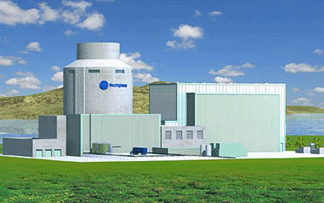
Westinghouse lobbies for site in Wales as Starmer backs nuclear renaissance US nuclear giant plans to build major nuclear power plant in Wales
Matt Oliver, Industry Editor
A US energy giant is in talks with Downing Street to build a major power plant off the
coast of Wales as Sir Keir Starmer throws his support behind a nuclear
renaissance in Britain. Westinghouse, which is also pursuing a US nuclear
expansion under Donald Trump, is understood to have presented plans for at
least two large reactors at Wylfa, in the Isle of Anglesey. It is lobbying
for the Welsh site to be kept in reserve for the project – which could
power several million homes – as the Government considers whether to put
mini nuclear plants there instead.
State-owned South Korean energy giant
Kepco was previously interested in the site but is said to have dropped the
plans after settling a global legal dispute with Westinghouse. Wylfa, where
a now decommissioned nuclear plant generated power until 2015, is seen as
attractive thanks to its ample space and favourable geology. The
Westinghouse plant would be similar in size to Hinkley Point C, in
Somerset, and Sizewell C, in Suffolk, which will use technology provided by
French nuclear giant EDF and come online in the 2030s.
In discussions with government officials, Westinghouse has claimed that a plant at Wylfa using its AP1000 reactors could also come online by the mid-2030s and for just a
fraction of the cost. An offer submitted by the company in February, which
was revised just weeks before Rachel Reeves unveiled her spending review,
proposes two reactors initially, with an option for another two later.
The discussions have surfaced as officials are separately negotiating a final
deal with Rolls-Royce to build the first small modular reactors (SMRs)
after the Derby-based company won a design competition. A location has not
been chosen but Wylfa is seen as one potential site alongside
Oldbury-on-Severn in Gloucestershire. Both are government-owned and Rolls
has said either would be suitable for its needs. But Westinghouse has
argued that Wylfa – regarded by the nuclear industry as the best site in
the country – is more suited to a large project.
The company is also understood to be interested in building SMRs elsewhere in the UK including at Moorside, Cumbria, which was recently made available for development by
the Government.
Telegraph 18th June 2025, https://www.telegraph.co.uk/business/2025/06/18/us-nuclear-giant-in-talks-with-no10-build-major-power-plant/
UK’s Bakers’ union rejects new nuclear reactors, calls for socialist Green New Deal
Bakers’ union rejects new nuclear reactors, calls for socialist Green New
Deal. Tens of thousands of energy jobs could be created with a socialist
Green New Deal without the need of new nuclear reactors, the bakers’
union said today. Delegates from the Bakers, Food and Allied Workers Union
(BFAWU) passed a motion calling for the democratic public ownership of all
forms of energy. They condemned the loss of skilled jobs in North Sea
industry and Grangemouth oil refinery, saying they have “no faith” in
private firms to tackle the climate crisis “nor do we accept that nuclear
power is a clean form of energy production.”
Morning Star 16th June 2025
https://morningstaronline.co.uk/article/bakers-union-rejects-new-nuclear-reactors-calls-socialist-green-new-deal
Labour’s £14bn ‘fixation’ with new nuclear power ‘won’t cut bills or help climate’
It’s almost like a mass psychosis because if they really investigated properly what the best use of public funds would be, nuclear wouldn’t get a look-in.”
“It’s almost like a mass psychosis because if they really investigated properly what the best use of public funds would be, nuclear wouldn’t get a look-in.”
The UK Government last week announced a new ‘golden age’ of nuclear but academics and campaigners warn it will be a costly energy fail.
Dan Vevers Sunday Mail Chief Reporter, Daily Record, 15 Jun 2025
Labour’s £14billion “fixation” with new nuclear power will be a costly flop and do nothing to lower Scots’ bills or hit climate targets, experts have warned.
It comes after Keir Starmer’s goverment last week announced a “golden age” of nuclear energy with a £14.2billion investment to finally build the delayed Sizewell C plant in Suffolk which it claimed will create 10,000 jobs.
Ministers say the move is vital to prevent future blackouts and to help the shift to a low carbon economy.
Now campaigners and academics warned nuclear energy is too expensive and plants take too long to build to make any dent in net zero efforts or prevent future blackouts.
And they said the result of “inevitable” cost overruns on nuclear projects would lead to a “nuclear tax” on consumer bills.
It follows pressure on the SNP to end its block on nuclear projects, with Labour saying it could open Scotland up to small modular reactors (SMR) if it wins at Holyrood next year.
But Pete Roche, an Edinburgh energy consultant and anti-nuclear campaigner, said: “It’s too late for nuclear. It takes too long to build.
“We’re trying to tackle a climate crisis here, we need to be fast – the faster, the better.
“You can insulate people’s homes and put up wind farms quite quickly in comparison to how long it takes to build a nuclear power station.
“And the worry is when you’re putting all your eggs in the nuclear basket, the money is getting diverted, civil servants’ attention is getting diverted.
“We’re not focused enough on getting the energy transition based on renewables off the ground.
“It’s a fixation and the UK is not on its own. There’s all sorts of talk in other countries of building nuclear power stations again.
“It’s almost like a mass psychosis because if they really investigated properly what the best use of public funds would be, nuclear wouldn’t get a look-in.”
Dr Paul Dorfman, of the Bennett Institute at the University of Sussex, said more than £20billion had now been committed to Sizewell C but the final bill could easily be double that and likely more.
He told the Sunday Mail: “The vast majority of that money comes from public subsidy – in other words, the public will have to pay for all the inevitable over-costs and overruns, which is basically a nuclear tax.”
Dr Dorfman continued: “In Scotland, given the country’s vast renewable power capacity, one wonders what would be the reason to burden Scotland with new nuclear.
“New nuclear builds, wherever they’re built, are always vastly over cost and over time.
“Hinkley Point C [in Somerset] is already 90 per cent over budget and seven years late, with at least seven years of construction remaining.
“And the form of reactor that is doomed to be constructed at Sizewell C is the same reactor being built at Hinkley C.”
He added: “It is possible to sustain a reliable power system by expanding renewables on all levels, whether that’s solar, wind, geothermal, hydrogen, storage and all the rest of it…
“But nuclear risks eating all of the cake.
“The time lost may prove catastrophic, because according to the UK Government, it takes up to 17 years to build just one nuclear power plant.
“Meanwhile all SMRs are in the design phase.
“In terms of the climate, we are running out of time now.” And because of the time it takes to build a nuclear station, he declared: “Nuclear cannot keep the lights on.”
Tor Justad, chair of Highlands Against Nuclear Power (HANP), highlighted the continuing issues related to the old Dounreay plant which shut down in 1985 around radioactive waste.
He said: “For me, investing in nuclear makes no sense, whether economically or in terms of safety or benefit to the wider community.
“We don’t need these massive white elephants which always end up costing twice what they started with and take twice the length of time to build than they predicted.
“And this argument about base load doesn’t take into account the storage possibilities for renewables that we’re developing at a rapid pace, including here in the Highlands.
“We can store electricity now in ways that we never could do ten years ago, and that will continue to improve.”
He added Labour’s pro-nuclear stance is “a real danger” in Scotland…………………………. https://www.dailyrecord.co.uk/news/politics/labours-14bn-fixation-new-nuclear-35393729
Trump’s Nuclear Plan Faces Major Hurdles
By Felicity Bradstock – Jun 14, 2025
- Trump aims to boost U.S. nuclear energy capacity from 100GW to 400GW by 2050, mandating quicker licensing and new reactor construction.
- Nearly all U.S. uranium is imported—especially from Russia—posing a major obstacle given recent bans and tariffs.
- With minimal enrichment capacity and mining, companies like Centrus stress the need for urgent public-private investment to meet demand.
The U.S. President recently announced plans to quadruple the U.S. nuclear
capacity by 2050. However, several challenges must be overcome to meet this
target. Firstly, building a new nuclear plant can take a decade or more,
meaning that operators would have to apply for permits for new projects now
to get them up and running in the coming decades.
In addition, the U.S.
continues to rely heavily on Russia for its Uranium, despite having
introduced heavy sanctions on the country’s energy sector in response to
its 2022 invasion of Ukraine. The U.S. would need to seek an alternative
supply of enriched uranium, or significantly increase its domestic
production, to fuel its power plants.
Oil Price 14th June 2025, https://oilprice.com/Energy/Energy-General/Trumps-Nuclear-Plan-Faces-Major-Hurdles.html
Sizewell C and Britain’s nuclear renaissance
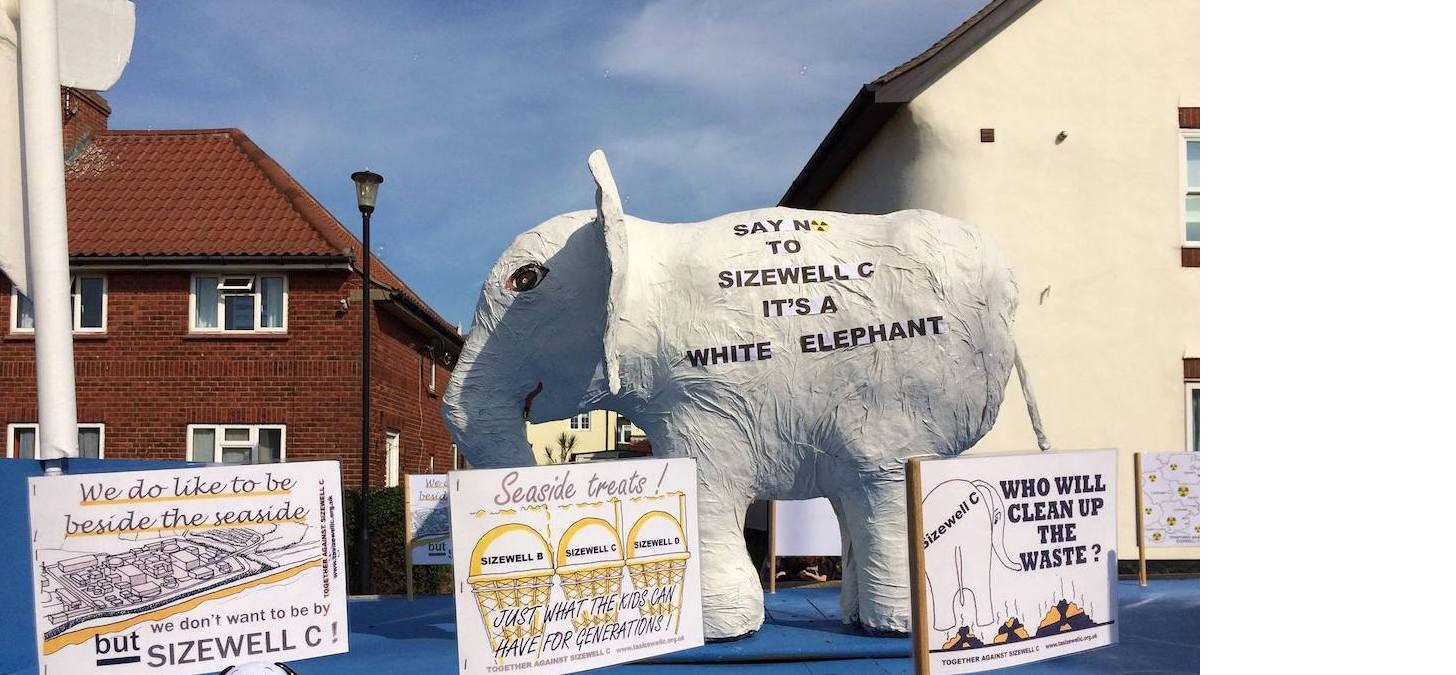
Is ‘the most announced nuclear power station in history’ finally about to get off the ground?
14 June 25, https://theweek.com/politics/sizewell-c-and-britains-nuclear-renaissance
After years of setbacks, Britain has finally ended the uncertainty “over the future of its nuclear industry”, said the FT. Chancellor Rachel Reeves has pledged a game-changing £11.5 billion of new state funding for the Sizewell C nuclear plant in Suffolk – in addition to a £2.7 billion commitment previously made in the autumn Budget.
Although Reeves has had to make tough decisions on day-to-day departmental budgets in the Spending Review, she was able “to find the extra billions for Sizewell C through a change to her fiscal rules”, which has made £113 billion available for extra capital spending across government, funded by borrowing. In two further nuclear-boosting moves, Rolls-Royce has been chosen as preferred bidder to build Britain’s first “small modular nuclear reactors”; and more than £2.5 billion is being invested in “the nascent technology of nuclear fusion“.
“Sizewell C must be the most announced nuclear power station in history,” said Nils Pratley in The Guardian. “It feels as if every energy secretary in the last half-decade, facing up to the reality that most of the existing nuclear fleet will be going offline by the early 2030s, has endorsed the Suffolk plant.” The difference this time is that Ed Miliband‘s promise of “a golden age for clean energy abundance” is being backed by “serious government money”.
The move is a recognition that we cannot rely on the private sector alone to finance and build nuclear projects, as the last project attempted – at Hinkley Point C in Somerset, which is heavily delayed and over budget – has shown. Sizewell C is effectively “a replica of Hinkley”, and both projects are being built jointly by the UK government and EDF, the French government-owned energy company. But the hope is that lessons have been learnt and that it can be built a lot more cheaply. “The game now is about rounding up private-sector investors to play a supporting financing role.”
“Rinse and repeat” is one way of looking at things, said Eleanor Steafel in The Daily Telegraph. But it rather overlooks the fact that Hinkley Point has been “beset with problems” from the moment that EDF broke ground there in 2017 – and is currently £28 billion over budget, and counting. Indeed, the biggest hole in this week’s announcement is the government’s reluctance to spell out how much Sizewell C is expected to cost, let alone how much consumers will be paying for the electricity it eventually generates, said Alistair Osborne in The Times. The promise of Sizewell is that it may one day bring us “baseload power”, complementing wind and solar. But taxpayers have a right to know “if the costs of delivering it will be radioactive”.
-
Archives
- February 2026 (240)
- January 2026 (308)
- December 2025 (358)
- November 2025 (359)
- October 2025 (376)
- September 2025 (258)
- August 2025 (319)
- July 2025 (230)
- June 2025 (348)
- May 2025 (261)
- April 2025 (305)
- March 2025 (319)
-
Categories
- 1
- 1 NUCLEAR ISSUES
- business and costs
- climate change
- culture and arts
- ENERGY
- environment
- health
- history
- indigenous issues
- Legal
- marketing of nuclear
- media
- opposition to nuclear
- PERSONAL STORIES
- politics
- politics international
- Religion and ethics
- safety
- secrets,lies and civil liberties
- spinbuster
- technology
- Uranium
- wastes
- weapons and war
- Women
- 2 WORLD
- ACTION
- AFRICA
- Atrocities
- AUSTRALIA
- Christina's notes
- Christina's themes
- culture and arts
- Events
- Fuk 2022
- Fuk 2023
- Fukushima 2017
- Fukushima 2018
- fukushima 2019
- Fukushima 2020
- Fukushima 2021
- general
- global warming
- Humour (God we need it)
- Nuclear
- RARE EARTHS
- Reference
- resources – print
- Resources -audiovicual
- Weekly Newsletter
- World
- World Nuclear
- YouTube
-
RSS
Entries RSS
Comments RSS
 nuclear-news