Why USA needs a fundamental reappraisal of nuclear weapons policy
Why we need a fundamental reappraisal of nuclear weapons policy, The Hill, BY WARD WILSON, OPIN— 10/03/21 The Deputy Assistant Secretary of Defense for nuclear and missile defense policy, a Biden appointee who apparently was intent on challenging status quo ideas, recently was forced out of the Nuclear Posture Review process in a “reorganization.” The move led some to conclude that new ideas and innovative thinking are being excluded, some to have even sharper reactions, and inspired Sen. Edward Markey (D-Mass.) to fire off a letter to the president asking eight pointed questions and expressing concern that the move “will result in a draft Nuclear Posture Review that reflects the Cold War era’s over-reliance on nuclear weapons.”
This move to force out a proponent of new ideas is disappointing because the need for a fundamental, realistic reappraisal of nuclear weapons policy is unmistakable — not because recent policies were obviously flawed, although they do seem to have failed to avert a second nuclear arms race. The problem goes back to the origins of nuclear weapons policy and the peculiar fact-free nature of the field………
if U.S. nuclear weapons policy is not based on fact, on what is it based? It is based on assumptions. The people who first made policy about nuclear weapons did the best they could using intuition, judgment and what little experience they had. The problem is that it is easy to get assumptions wrong. In the case of nuclear weapons, there is every reason to believe that at least some of the assumptions that underpin thinking about these weapons are mistaken.
It’s likely, for example, that early judgments were skewed by fear. Nuclear weapons policy was first formulated during the Cold War, a time of uniquely intense anxiety, paranoia and continual fear of nuclear war. This is a problem, because people don’t do their best thinking when they are afraid. Strong emotions almost certainly distorted early thinking about nuclear weapons.
Another likely source of error is what happened in Hiroshima, Japan. Over the past 15 years, the meaning of that one real experience has come under scrutiny. There are now credible reasons to doubt that the twin bombings of Hiroshima and Nagasaki played a significant role in Japan’s decision to surrender at the end of World War II. Some believe it is even possible they played no role at all……….https://thehill.com/opinion/national-security/574383-why-we-need-a-fundamental-reappraisal-of-nuclear-weapons-policy
UK’s nuclear tax – who is going to pay for Sizewell C nuclear station?
The French have a saying: “Le malheur des uns fait le bonheur des autres”, which essentially means that there’s always someone who will benefit from the misfortune of others. EDF, the French-owned energy
company, will certainly know this, and the nuclear industry is cheerfully demonstrating it. Soaring gas and electricity prices, along with the panic caused by the long queues outside empty petrol stations, have led to a predictable knee-jerk reaction in government and the media. Nuclear is the answer!
As someone who has been a regular visitor to the Suffolk coast for 30 years, I, along with thousands of others, have been opposing the £20 billion reactors that are being planned at Sizewell C. They will cause
untold damage to Minsmere, one of Europe’s best-loved nature reserves, which is right next door. There aren’t the roads in Suffolk to cope with the extra 10,000 cars and HGVs heading their way.
Who is going to pay for Sizewell C? Until recently EDF was in bed with CGN (China General Nuclear),
which might have taken a 20 per cent share in the project, but because of national security issues having China as a business partner has become politically unacceptable.
Unfortunately, very few pension funds have shown any inclination to invest. This puts more emphasis on the regulated asset base (RAB), which the protest group, Stop Sizewell C, has termed “the nuclear tax”. RAB will pile the upfront costs of construction on to consumers’ bill years ahead of it becoming operational. Is this the best time to be considering another stealth tax on electricity bills . . . particularly as the amount will almost certainly rise with the cost overruns and overspends for which the nuclear industry is notorious?
Times 3rd Oct 2021
Norway paid to help Russian nuclear submarine waste clean-up – but now – new submarines!
Norway celebrates 25-years paying for nuclear-dump cleanup. Russia showcases new reactor weapons
Rosatom officials and Norwegian project partners are Wednesday marking that it is 25 years since the first money check was sent from Oslo to help improve infrastructure at the ill-fated Andreeva Bay dump site for spent nuclear fuel and radioactive waste accumulated from the operation of Cold War submarines. The Barents Observer ,By Thomas Nilsen September 29, 2021
Hindered from on-site meetings due to the pandemic, today’s 25-years anniversary meeting in Andreeva Bay is long overdue. However, the meeting comes in pole position as the two countries are trying to improve bilateral relations in times of more complex geopolitics and higher tensions between NATO and Russia up north.
……. ensuring nuclear safety is another topic for good bilateral cooperation.
For the Soviet nuclear navy, the Coastal Technical Base in Andreeva Bay became the main storage site for both spent fuel assemblies from submarine reactors, as well as a site to store containers with solid radioactive waste. Focus was not on safety and after years of exposure to Arctic climate, the site became contaminated and the infrastructure started to fall apart. With Russia being broke after the collapse of the Soviet Union, the call for international action was precarious. Norwegian money, and will to solve the problem, was most welcomed……………
Success story
More than 2 billion kroner (nearly €200 million) of Norwegian taxpayers money are spent on helping Russia secure its nuclear legacy since the mid-1990ties. The ground-breaking nuclear safety work initiated on the Kola Peninsula, only some 60 km from the border to Norway, has since been followed by many other countries and international financial grant programs.
For projects in Andreeva Bay, Norway has paid more than €30 million on things like fixing electricity, water pipelines, roads, fences, constructing a new sanitary building and improving the old pier in port with a new lifting crane. About half of the 21,000 spent uranium fuel elements originally stored in three rundown concrete tanks is so far lifted out, repacked and shipped out of Andreeva Bay. First to Atomflot in Murmansk, then by train further to Russia’s reprocessing plant at Mayak in the South Urals. Some 10,000 cubic meters of solid radioactive waste that previously was stored outdoor and exposed to snow and frost is now under roof in a new building erected at the site. Soon, also that will be transported away.
Present at the celebrations in Andreeva Bay is also representatives from the environmental NGO Bellona. It was this organization, with offices both in Murmansk and Oslo, that before the official country-to-country cooperation started, was first to uncover security breaches and the urgency to act before the entire storage site turned out to be a Chernobyl in slow-motion.
“Time has come”
Bellona’s Aleksandr Nikitin says to the Barents Observer that the time has come for Russia to solve its own nuclear challenges, not the international community. “But first we have to complete already started international projects, like the nuclear legacy,” Nikitin says and points to the ongoing work in Andreeva Bay………….
Meanwhile, and unlike the 1990ties, Russia is now investing huge money in building new nuclear-powered submarines and other military nuclear installations. A key question is whether Moscow now is arming the country again into a nuclear age that later could cause similar radiological waste challenges as the legacy from the last Cold War created.
…….. It is a task for Russia and Rosatom. We cannot hire anymore for a rich uncle from the west to come and help again. It was a time when it was necessary, not anymore.”
Meanwhile, Aleksandr Nikitin is glad to see the solution-oriented results of the work in Andreeva Bay.
“Bellona started it, and we have to finish it,” he says………………………………….
A Norwegian intelligence official has previously expressed fears for more accidents with the reactor-powered weapons systems now under testing and development in Norway’s neighboring areas up north.
For Norway, a challenge is to balance the aid-support to nuclear safety with making sure no funding ends up in Russia’s new crazy nuclear weapons programs…………..
The “Serebryanka” dilemma
A review made by the Barents Observer of the publicly available documents on financial aid from Norway and Sweden to equip modern communication and positioning systems on board “Serebryanka” shows that about 9 million kroner (€900,000) were spent on the project in 2013 and 2014. That was shortly before the Burevestnik testing program started.
The Swedish Radiation Safety Authority, in charge of the project, says in its annual overview of Non-Proliferation cooperation for 2013 that the “Serebryanka” was the largest project initiated in the Murmansk region.
Stockholm spent 4,1 million Swedish kroner (SEK) on equipment for “Serebryanka” in 2013 and an additional 217,000 SEK in 2014.
Describing the project, the Radiation Safety Authority writes: “This project is co-financed with Norway and the purpose is to equip the vessel “Serebryanka” with a physical protection system, as well as communications and positioning systems, in order to increase security when transporting nuclear materials and radioactive substances.”
The Norwegian share of the project was 3 million Norwegian kroner, paid as part of the Nuclear Action Plan financed by the Ministry of Foreign Affairs.
Conflict-of-interests
Asked about the potential conflicting interests, State Secretary Audun Halvorsen in Norway’s Foreign Ministry told the Barents Observer upfront of the annual meeting in the Norwegian-Russian Commission on Nuclear Safety this spring that “…. our bilateral cooperation on nuclear safety projects are related to civilian activities only, and questions regarding military activities are therefore considered outside of the scope of the commission by the Russian side.” https://thebarentsobserver.com/en/nuclear-safety/2021/09/while-norway-celebrates-25-years-paying-cleanup-nuclear-dumpsite-russia-gives
Australia’s nuclear submarines – a gand announcement leading to a grand shambles
Bitter truth is we will likely never get any nuclear subs, https://www.theaustralian.com.au/commentary/yes-weve-cancelled-the-french-but-now-what/news-story/99b43465c2124c01a579672d8ef19349 Greg Sheridan, 30 Sept 21, As things stand, it is unlikely Australia will ever get a nuclear submarine. All that we have done so far is cancel the French submarine. My guess is this delays any submarine at all by at least 10 years. It fills me with regret to say this, but analytically the conclusion is inescapable that the nuclear subs under the AUKUS rubric will probably proceed the way of all our other submarine announcements. They will enjoy a brief flower of credibility before doubts creep in, critics become mobilised, the prime minister who ordered them moves on and eventually they are consigned to the dustbin for a new submarine announcement that can enjoy its brief season in the sun.
Our submarine acquisition process remains a complete shambles and the chances of anything significant emerging from it remain remote.
My colleague Dennis Shanahan reported from the recent prime ministerial trip to the US that the government was not interested in leasing a nuclear submarine from the US over the next several years. Instead it wanted to add new submarines to the allied fleet, rather than take a sub or two out of the existing US and British lines. On its own, this approach probably guarantees that nothing of consequence comes of this initiative.
It is impossible to understand why the Brits are in the mix, apart from PR. If we choose the British Astute sub and don’t modify it, that means ditching the jewel of our defence technology, the US combat system that we have on the Collins, as well as most of the US weapons we use on the Collins. So the US, at the end of all this, would be getting billions of dollars less work from us and our navies would be less integrated.
Malcolm Turnbull was savage in his National Press Club attack on the Morrison government’s decision to ditch the French subs and go nuclear. Turnbull exaggerates the diplomatic cost. However, his technical critique of the nuclear subs proposal was substantial. He drew attention to obvious contradictions in the process.
All we have done so far is cancel the French subs. As of now, we have no future submarine program at all. The Morrison government scored a diplomatic triumph in getting the Americans to agree to transfer nuclear submarine propulsion to us and in the way AUKUS was presented.
But the global reaction was based on the idea, wholly mistaken, that we would be getting the nuclear subs some time soon.In his first press conference, Scott Morrison said the subs would be built in Adelaide and he hoped we might start the build before the end of this decade and get the first one into service before the end of the next decade; that is, 2040. Here are some laws of the physical universe and the operation of logic that cannot be contradicted or transcended. If we do not lease a sub and instead make them all in Adelaide we will not get the first one before 2040. Frankly, even that date involves almost miraculous virtuosity.
Every major, complex naval build we’ve undertaken has come in way over budget and long over schedule.In the history of human habitation of this continent, nothing remotely comparable in complexity to building a nuclear submarine has ever been attempted.
Obviously, it makes no industrial or military sense to build the subs in Adelaide. Doing so will add years to the schedule and tens of billions of dollars to the cost. The French are criticised for prospective delays in their conventional subs, but we could have had them much more quickly if they were built in France.But here is a moral certainty. The dialectics of Australian politics will force both the Coalition and Labor, before the next election, to commit to building all the subs in Adelaide.
Say by some miracle the process stays on track and we actually get a boat in the water by 2040 – pretty unlikely, but not absolutely impossible – that does not mean we have our replacement submarine fleet by 2040. If we can build one nuclear sub every three years after that we will be doing very well. That means we would get our fleet of eight subs by 2061.In terms of military capability in the face of the strategic challenges we face in the next decade or two, that is truly a sick joke. It’s the three-card trick all over again.
The capability gap we have to bridge is not up to 2040 but up to, say, 2055, when we might get the sixth nuclear boat and can therefore replace, one for one, the Collins boats. Of course the nuclear subs will be much more capable than the Collins, but they’re no good at all if they don’t actually exist.
Australian submarine policy right now requires the Collins boats to remain our frontline submarine capability until at least the 2040s. No living Australian prime minister has commissioned a sub that actually got built. The last prime minister to do so was Bob Hawke. The Collins boats were commissioned in the 1980s, yet must serve into the 2040s. The frankly batshit crazy quality of our circumstances is evident in this comparison: it would be as if Britain commissioned a new weapons system under Queen Victoria in 1901 and it was still in service as the main British weapons system at the time of the Beatles in the 1960s.
It is impossible to understand why the Brits are in the mix, apart from PR. If we choose the British Astute sub and don’t modify it, that means ditching the jewel of our defence technology, the US combat system that we have on the Collins, as well as most of the US weapons we use on the Collins. So the US, at the end of all this, would be getting billions of dollars less work from us and our navies would be less integrated.
Alternatively, there is talk of choosing the Astute but putting a US combat system, US weapons and even US propulsion system into it. Dear God in heaven, if we embrace the insanity of designing a new nuclear sub just for Australia, even 2060 will be optimistic for the first boat.Or if we choose the Virginia, as we must, the Brits get nothing, yet Boris Johnson was assuring the British public that AUKUS meant hundreds and hundreds of well-paid jobs in Britain’s north. We made a mistake choosing the British Type 26 frigate, which still is not in service even in Britain and is two years behind schedule and counting. Just imagine a Brit submarine saga.
So the government has solved only the problem that its own incompetent, lazy and inexplicable failure to champion its own defence programs brought about, but so far has substituted nothing concrete for it.
The result is likely no submarine capability for us at all, except museum piece Collins boats and whatever submarine visits the Americans or Brits send along. We should have kept the French subs going, perhaps at a reduced number of six or even three, then gone nuclear in an orderly way.
Instead we have once more followed our own traditions of grand announcement leading to grand shambles.
A cynical interpretation might be that the Liberals never explained, championed or campaigned for their own choice of the French sub. Choosing Marise Payne and then Linda Reynolds as defence ministers was grotesque, by Turnbull and Morrison respectively, as neither could carry the debate or the portfolio.
So the government has solved only the problem that its own incompetent, lazy and inexplicable failure to champion its own defence programs brought about, but so far has substituted nothing concrete for it.The result is likely no submarine capability for us at all, except museum piece Collins boats and whatever submarine visits the Americans or Brits send along. We should have kept the French subs going, perhaps at a reduced number of six or even three, then gone nuclear in an orderly way.
Instead we have once more followed our own traditions of grand announcement leading to grand shambles.
SNP and the Greens aim to block Boris Johnson’s plan for new nuclear plants in Scotland.
Nicola Sturgeon is expected to temper Boris Johnson’s energy plans by
signalling her intention to block the creation of nuclear plants in
Scotland. The Sunday Times yesterday revealed a push by Rishi Sunak, the
chancellor, for more nuclear power stations to be built to help Britain
reach net-zero carbon emissions by 2050.
A source close to Sunak said:
“His general view is that we should have been doing this ten years ago
when it was cheaper, but we can’t rely on wind and solar power.”
However, the Scottish government, which controls the planning process north
of the border, opposes the technology. Asked for its response to the news
from Whitehall, it referred The Times to a recent statement that it was
“absolutely clear in its opposition to the building of new nuclear power
plants in Scotland under current technologies”.
Times 27th Sept 2021
Uncertainty on how UK will exclude Chinese involvement in Sizewell and Bradwell nuclear projects
China set to be banned from investing in the UK’s nuclear power stations on security grounds – leaving a huge financial gap which may be plugged by pension funds.
- Exactly how the Chinese will be frozen out of Sizewell on Suffolk coast is unclear
- CGN is also involved at Bradwell, where progress is understood to have stalled
- By ALEX LAWSON and GLEN OWEN FOR THE MAIL ON SUNDAY
Chinese investment in Britain’s next generation of nuclear power stations is set to be banned on security grounds, leaving a multi-billion pound funding hole in the plans……
The Government has committed to making a final investment decision on at least one large nuclear project during this parliament.
Officials are understood to be keen to publish a decision on the future of Sizewell C ahead of next month’s spending review and the UN climate change conference in Glasgow in November.
A senior industry source said: ‘The Chinese will not be involved at Sizewell. This is part of a long journey and is politically much bigger than just one plant.’ Exactly how the Chinese will be frozen out of Sizewell, on the Suffolk coast, is unclear.
They have a 20 per cent stake in development of the project and an option to remain once it is built.
CGN is also involved at Bradwell in Essex, where progress is understood to have stalled, and in the EDF-led Hinkley Point in Somerset, due to be completed in 2026.
Treasury officials have studied several options to replace China’s funds at the plant.
Sources said the favoured option is a regulated asset base (RAB) model, which has been used in other big infrastructure projects such as the Thames Tideway and requires legislation.
Last week, it emerged that Ministers are in talks with the US nuclear reactor manufacturer Westinghouse over a proposal to build a new plant in Anglesey, North Wales.
Separate proposals have been mooted for a series of small modular reactors (SMRs) to complement larger plants, including a programme led by Rolls-Royce.
A Government spokeswoman said: ‘CGN is currently a shareholder in Sizewell C up until the point of the Government’s final investment decision. Negotiations are ongoing and no final decision has been taken.’ https://www.dailymail.co.uk/news/article-10028807/China-set-banned-investing-UKs-nuclear-power-stations-security-grounds.html
Japan’s election campaign – Liberal Democratic Party candidates’ differing views on nuclear recycling.
Three of the four candidates vying to lead the Liberal Democratic Party
called Sunday for Japan to maintain its nuclear fuel recycling program as
they geared up for the last few days of campaigning prior to Wednesday’s
vote. During a Fuji TV program, vaccination minister Taro Kono, the only
contender who has pushed for phasing out nuclear power generation, went
against his leadership rivals and said Japan should pivot away from fuel
recycling “as soon as possible.”
Japan Times 26th Sept 2021
https://www.japantimes.co.jp/news/2021/09/26/national/ldp-hopefuls-nuclear-fuel/
UK government close to deal for Regulated Asset Base (RAB) funding for Sizewell nuclear project

Ministers close to deal that could end China’s role in UK nuclear power station. Exclusive: deal in which UK government would take stake in Sizewell C would risk inflaming geopolitical tensions. Ministers are
closing in on a deal that could kick China off a project to build a £20bn nuclear power station on the Suffolk coast and pump in tens of millions of pounds of taxpayer cash instead – a move that would heighten geopolitical tensions.
The government could announce plans to take a stake in Sizewell C power station, alongside the French state-backed power giant EDF, as early as next month, ahead of the Cop26 climate summit. That would be likely to result in China General Nuclear (CGN), which currently has a 20% stake in Sizewell, being removed from the project.
Under plans for Sizewell being discussed by Whitehall officials and EDF, the government could take a stake in a development company that will push it through various stages of planning and bureaucracy, sharing the costs with EDF.
Private sector investors such as the insurance funds L&G and Aviva would then be lured in
at a later stage in return for a government-backed funding model called the regulated asset base (RAB), diluting the taxpayer and EDF. Legislation on RAB funding – the same model used to fund airports such as Heathrow and water companies – is due to progress through parliament next month.
Observer 25th Sept 2021
Democrat politicians, who get big donations from weapons corporations, vote against cuts to Pentagon spending
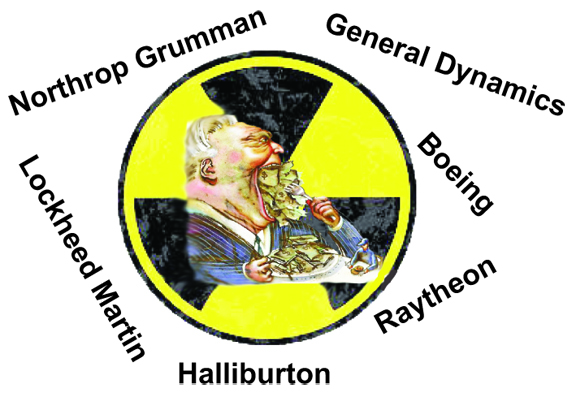
Since fiscal year 2001, military contractors have received over 54% of Pentagon spending, totaling about $8 trillion,” Sludge noted. “Over $2.2 trillion of that went to the five largest weapons firms: Lockheed Martin, Raytheon, General Dynamics, Boeing, and Northrop Grumman. These five firms comprise about 40% of military industry cash given to federal candidates.”
Dems Who Opposed Pentagon Cuts Received Nearly 4x More Donations From Weapons Makers, Common Dreams The latest passage of the NDAA “is particularly strong evidence that Pentagon contractors’ interests easily take precedence over national security and the public interest for too many members of Congress,” said one critic.
Dems Who Opposed Pentagon Cuts Received Nearly 4x More Donations From Weapons Makers, Common Dreams The latest passage of the NDAA “is particularly strong evidence that Pentagon contractors’ interests easily take precedence over national security and the public interest for too many members of Congress,” said one critic.
KENNY STANCIL Common Dreams, September 24, 2021 In a bipartisan 316-113 vote on Thursday night, the U.S. House authorized a $778 billion military budget for fiscal year 2022. Every Republican voted against two amendments to reduce Pentagon spending, but Democrats were split, and a new analysis reveals that lawmakers who rejected the proposed cuts received far more campaign cash from the weapons industry than those who supported the cuts.
One amendment to the National Defense Authorization Act (NDAA), introduced by Rep. Mark Pocan (D-Wis.), would have slashed the overall spending authorization level by 10%, exempting the paychecks and health benefits of military personnel and the Defense Department’s federal civilian workforce.
The measure failed by a tally of 86-332. According to an analysis of OpenSecrets data by the Security Policy Reform Institute (SPRI) and Sludge, the Democrats who voted against the 10% Pentagon budget cut have taken, on average, 3.7 times more campaign money from arms manufacturers since January 2019 than the Democrats who voted for it.
Sludge‘s Donald Shaw and SPRI’s Stephen Semler wrote Friday that “the average amount of defense cash received by Democrats who opposed the amendment was $60,680, while the Democrats who supported it received an average of $16,497” in contributions from the PACs of Defense Department contractors “as well as donations larger than $250 from those companies’ employees.”
“The vote was a step backwards for House progressives,” noted Shaw and Semler, who added that:
Last year, an identical amendment was put forward and it received 93 votes in favor, seven more than it received yesterday. Nine Democrats switched from supporting the 10% reduction last year to opposing it this year: Emanuel Cleaver (Mo.), Dwight Evans (Pa.), Al Green (Texas), Bill Keating (Mass.), Robin Kelly (Ill.), Stephen Lynch (Mass.), Richard Neal (Mass.), Brad Sherman (Calif.), and Bennie Thompson (Miss.).
Earlier this month, the House Armed Services Committee voted in favor of a Republican-sponsored amendment to add $23.9 billion on top of President Joe Biden’s proposed $753 billion military budget for fiscal year 2022—already up from the $740 billion approved for the previous fiscal year under the Trump administration.
A second NDAA amendment, led by Rep. Barbara Lee (D-Calif.), would have restored military spending to the level requested by the president. That proposal for a modest 3% cut to the NDAA’s top-line figure garnered the support of a majority of—but not all—House Democrats and was shot down in a 142-286 vote.
Sludge reported that “the 77 Democrats who opposed the 3% cut have received, on average, $52,211 from the defense sector since January 2019, and the 142 Democrats who supported it have received an average of $35,898.”
Lindsay Koshgarian, program director of the National Priorities Project at the Institute for Policy Studies (IPS), told Common Dreams on Friday that “the passage of the $23.9 billion increase in the House is particularly strong evidence that Pentagon contractors’ interests easily take precedence over national security and the public interest for too many members of Congress.”
As she spoke in support of Pocan’s amendment on Wednesday, Rep. Alexandria Ocasio-Cortez (D-N.Y.) pushed back against the narrative that cutting Pentagon spending would make Americans less safe, emphasizing how easy it would be to find the funds.
“The Pentagon could save almost $58 billion by eliminating obsolete weapons, weapons like Cold War-era bombers and missiles designed and built in the last century that are completely unsuitable for this one,” said Ocasio-Cortez.
“We could find another $18 billion by simply preventing the end-of-year spending sprees that lead to contract money being shoveled out the door every September,” she added, echoing Sen. Bernie Sanders’ (I-Vt.) observation earlier this week that the Pentagon—which has never passed an audit—is “inherently susceptible to fraud.”…………………
The House passage of the NDAA came just over a week after researchers at Brown University’s Costs of War project estimated that as much as half of the $14 trillion that the Pentagon has spent since the U.S. invasion of Afghanistan two decades ago has gone to private military contractors. IPS’ Koshgarian and SPRI’s Semler, meanwhile, have both said that corporations gobbled up more than half.
“Since fiscal year 2001, military contractors have received over 54% of Pentagon spending, totaling about $8 trillion,” Sludge noted. “Over $2.2 trillion of that went to the five largest weapons firms: Lockheed Martin, Raytheon, General Dynamics, Boeing, and Northrop Grumman. These five firms comprise about 40% of military industry cash given to federal candidates.” https://www.commondreams.org/news/2021/09/24/dems-who-opposed-pentagon-cuts-received-nearly-4x-more-donations-weapons-makers
Sizewell C nuclear project no longer viable, with new developments in cheaper wind power- energy expert
Nuclear power has become “outdated by technology” and offshore wind can
produce power more quickly and cheaply, an energy scientist told the BBC.
Professor in energy and climate change Charlie Wilson said there was no
longer a good case for a new £20bn Sizewell C plant on the Suffolk coast.
He said new ways to store wind turbine energy meant supplies could be
maintained even in low winds.
EDF, the firm behind Sizewell C, said nuclearwas key for UK energy needs.
The government said nuclear was vital for the
“UK’s low-carbon energy future”. Prof Wilson, of the the Norwich-based
Tyndall Centre for Climate Change Research at the University of East
Anglia, said nuclear power cost twice as much as wind power. Electricity
generated by wind turbines costs about £40 per megawatt hour, compared to
£92.50 which is the projected cost of the latest nuclear plant being built
at Hinkley Point C in Somerset, he added.
He said in the past nuclear power
was seen as key because in any weather it provides the same baseload power
– baseload refers to the minimum amount of electric power needed to be
supplied to the electrical grid at any given time. “The view in the
1970s-1990s was that you needed this large firm baseload power generation
like nuclear,” he said.
“The game-changing technologies around storage and
flexibility mean intermittent renewables – like large offshore wind farms –
are now viable as a reliable generation source.
BBC 25th Sept 2021
Nuclear submarine for Japan? Kono says yes, Kishida says no
Nuclear submarine for Japan? Kono says yes, Kishida says no Nikkei Asia Poll leader believes capability is ‘extremely important’ for country. YUSUKE TAKEUCHI, Nikkei staff writer, September 26, 2021
TOKYO — Following a recent deal by the U.S. and the U.K. to offer Australia classified technology to build nuclear-powered submarines, should fellow Quad member Japan also seek such a capability? The four candidates running for the Liberal Democratic Party presidential race to succeed Prime Minister Yoshihide Suga were asked the question Sunday on Fuji TV.
Poll leader Taro Kono, minister for administrative reform and also in charge of vaccine distribution, gave a thumbs-up. “As a capability, it is very important for Japan to have nuclear submarines,” he said……..
Sanae Takaichi, the former internal affairs minister, also looked favorably upon the idea. “If we think of the worst-case risks in the international environment ahead, I do believe we could have [submarines] that can travel a little longer,” she said, referring to the advantage of nuclear propulsion in that they can stay submerged longer without refueling.
Japan’s Atomic Energy Basic Law stipulates that the use of nuclear power will be limited to peaceful purposes. Takaichi said there was “a need to sort things out” but added she did not believe nuclear-powered submarines to be unconstitutional.
Former LDP policy chief Fumio Kishida, meanwhile, was less receptive to the idea. “When I think about Japan’s national security arrangements, to what extent do we need it?” he asked.
Nuclear-powered submarines are faster and can travel longer compared to the diesel-electric submarines that Japan currently has. But Kishida was alluding to the fact that the Self-Defense Forces’ operations are primarily in areas close to Japan.
To maintain stealth, it will require long hours of work,” he said. “We have to prioritize improving working conditions [of sailors] and secure the personnel.”…….
Seiko Noda, the LDP’s executive acting secretary-general, said: “I have no intention to hold such a capability. I want to make clear that we are a nation with three non-nuclear principles,” she said, pointing to Japan’s long-held position of neither possessing nor manufacturing nuclear weapons, nor permitting their introduction into Japanese territory.
“This is not a situation where we can immediately buy and start to use the submarines,” she said. “We must properly establish a national consensus.” ……. https://asia.nikkei.com/Politics/Nuclear-submarine-for-Japan-Kono-says-yes-Kishida-says-no
Nuclear power for UK – slow, dangerous, exorbitantly expensive and useless to counter climate change.
An anti-nuclear group has blasted the UK Government for having talks on building another large-scale multi-billion pound nuclear power plant in Wales. Dylan Morgan, Co-ordinator for PAWB, has reacted furiously to the discussions with US reactor manufacturer Westinghouse to build a new
facility on Anglesey.
The UK Government say that the move is part of an effort to reduce the UK’s carbon emissions to net zero by 2050, but according to Morgan it isn’t an effective way to “counter climate change”. He argues that nuclear power is “slow, dangerous and extortionately expensive”.
According to the UK Government, a new nuclear power plant at the decommissioned Wylfa site could become operational in the mid-2030s and generate power for six million homes. Dylan Morgan said:
“We have an immediate crisis now. Building huge reactors at a nuclear power station take at least 15 years. “For example, EdF are involved in building their EPR at Olkiluoto in Finland. Comstruction started in 2005 with the boast it would be completed by 2009. “It still hasn’t been completed in 2021. Nuclear power is slow, dangerous and extortionately expensive. It will do nothing to address the current energy crisis, neither will it be effective to counter climate change.
Nation Cymru 24th Sept 2021
Pentagon forces out Leonor Tomero, a top official with moderate views (they can’t have that!)

Pentagon hawks circle Biden’s nuclear policy, Politico, By ALEXANDER WARD 09/23/2021 With help from Daniel Lippman The forced dismissal of a top Pentagon nuclear official could mean curtains for President JOE BIDEN’s nuclear agenda.
Biden installed national security officials intent on negotiating new arms control treaties and curtailing nuclear weapons spending. One of them was LEONOR TOMERO, a leading voice for nuclear restraint on Capitol Hill and in the think tank community, who was appointed to oversee the Nuclear Posture Review that will set the administration’s nuclear weapons policy and strategy.
But officials with more traditional views on nuclear weapons, who promote a more hawkish nuclear agenda to include modernizing the land, sea and airborne legs of America’s nuclear arsenal, did not take kindly to Tomero’s progressive ideology, 11 current and former defense officials, as well as others with insight into the debate, told our own LARA SELIGMAN and BRYAN BENDER (with an assist from your host).
“Her appointment was something that people were immediately resistant to,” JEFFREY LEWIS, a professor and nuclear weapons expert at the Middlebury Institute for International Studies and host of the podcast Arms Control Wonk, told POLITICO. “People with very traditional views of nuclear weapons policy did not want someone in charge of the Nuclear Posture Review who might think differently about those issues.”
The Defense Department insists Tomero was nothing more than a casualty of a reorganization, leaving no space for her as her duties were moving to another office……….
Experts now worry that her removal signals the Nuclear Posture Review, or NPR, will not fully consider alternative options for maintaining the U.S. nuclear deterrent that might be less costly or evaluate new ways to carry out nuclear strategy.
“The decision to fire Leonor suggests to me that the first draft of NPR is going to be a continuation of the line of thinking we saw in the Trump administration’s NPR,” Lewis said. “They have put themselves on the course that is a first draft that is 180 degrees to what Biden said on the campaign trail.”
If that’s the case, one staffing change over at DoD might be the death knell for Biden’s hopes of changing U.S. nuclear policy for the foreseeable future.
The United States is currently planning to upgrade the nuclear force to the tune of $634 billion over the next decade, according to a recent analysis by the nonpartisan Congressional Budget Office.
Read Seligman and Bender’s full story here. https://www.politico.com/newsletters/national-security-daily/2021/09/23/pentagon-hawks-circle-bidens-nuclear-policy-494450
Jennifer Granholm and Westinghouse enthusiastic to sell ”clean” nuclear power to Poland

You really have to wonder just who Jennifer Granholm works for. Is it the American people, or is it the nuclear industry? She’s great at regurgitating nuclear lies about ”clean” nuclear
US lures Eastern Europe with nuclear power, $23t in clean [nuclear is NOT clean]energy market

By Frédéric Simon | EURACTIV.com 24 Sept 21, The climate crisis presents “a market opportunity for carbon-reducing technologies” such as nuclear power, said US energy Secretary Jennifer Granholm, teasing a $23 trillion market to countries in Central and Eastern Europe by 2030.
Low-carbon technologies “will be a 23 trillion-dollar market by the end of this decade,” which offers “an enormous potential to countries on both sides of the Atlantic,” Granholm said on Wednesday (22 September).
Speaking from Poland during an online press briefing, Granholm said the transatlantic market “will give us a chance to launch new business, new industries, to attract billions of dollars of new investment, and certainly to create millions of new jobs”………
In the US, President Biden’s ‘build back better‘ agenda includes an objective to have 100% of US electricity produced from “clean sources” by 2035, [nuclear is NOT clean] she explained, saying this involves reducing CO2 emissions by more than 50% by 2030 and cutting them down to net-zero by 2050……
Nuclear: ‘The reason we’re here.’
And nuclear power features highly among the US objectives.
“The reason we’re here in Poland is because we have been talking about a partnership in the area of nuclear,” Granholm said. “We’re really excited that we may have this partnership here with Poland”.
In October last year, Warsaw and Washington signed a 30-year intergovernmental agreement on future cooperation in the development of the Polish civil nuclear energy programme.
And the US is in pole position to win those contracts.

“Our collaboration to develop Poland’s civil nuclear programme is vital to Poland achieving EU carbon reduction targets and to guarantee its energy security,” Granholm said. “That dispatchable, clean [nuclear is NOT clean] , uninterruptable power is the gold standard of what every nation is looking for” in their quest to reduce CO2, she explained.
In July, US nuclear power firm Westinghouse announced the launch of a front-end engineering and design study – or FEED – under a grant from the US Trade Development Agency to advance Poland’s nuclear energy programme.
“It’s an opportunity to give American technology to help meet Poland’s clean-energy needs, [nuclear is NOT clean] and Westinghouse is going to offer its AP1000 nuclear reactor for the project,” Granholm said. https://www.euractiv.com/section/energy/news/us-lures-eastern-europe-with-nuclear-power-23tln-clean-energy-market/
Senator Markey calls on Biden administration for answers on removal of top Defense official Ms. Tomero
SENATOR MARKEY ASKS BIDEN ADMINISTRATION FOR ANSWERS ON ELIMINATION OF KEY NUCLEAR POLICY POSITION AS PART OF DEPARTMENT REORGANIZATION https://www.markey.senate.gov/news/press-releases/senator-markey-asks-biden-administration-for-answers-on-elimination-of-key-nuclear-policy-position-as-part-of-department-reorganizationLead civilian official within the Office of the Secretary of Defense (OSD) was responsible for drafting the Nuclear Posture Review Washington (September 24, 2021) – Senator Edward J. Markey (D-Mass.) today wrote to President Joseph R. Biden to express concern about organizational changes at the Department of Defense in the midst of drafting the administration’s Nuclear Posture Review. On September 21, 2021 the Department of Defense announced that it removed the lead civilian official within the Office of the Secretary of Defense (OSD) responsible for drafting the Nuclear Posture Review, part of the Administration’s Integrated National Security Strategy.
“The Department of Defense stated that it eliminated the position of the Deputy Assistant Secretary for Nuclear and Missile Defense Policy, held by Leonor Tomero, as part of a reorganization within the Department. But according to press reports, Department officials may have driven Ms. Tomero from her position for challenging traditional views on the role of U.S. nuclear weapons.
“Congress needs to understand whether ideology played any role in Ms. Tomero’s dismissal. I am also concerned that the sudden departure of a top appointee, charged with presenting you options on the future of the U.S. nuclear weapons enterprise, will result in a draft Nuclear Posture Review that reflects the Cold War era’s overreliance on nuclear weapons, rather than your lifetime of work championing policies that reduce nuclear weapons risks.” A copy of this letter can be found HERE.
In his letter, Senator Markey requests responses to the following questions:
1. Why did the Defense Department eliminate the top civilian position in OSD responsible for the Nuclear Posture Review? Why was the position eliminated in the midst of that Review, as opposed to before it began or when it is completed?
2. Ms. Tomero’s demonstrated expertise in nuclear deterrence policy, arms control, and missile defense made her well-suited to lead and contribute substantively to the Nuclear Posture Review process. Why, given Ms. Tomero’s specific expertise on nuclear policy, was she removed from the Nuclear Posture Review process or why was she not reassigned to a position under the Assistant Secretary of Defense for Space Policy, who will be taking over responsibility for nuclear policy?
3. When did the Department of Defense inform Ms. Tomero that it had eliminated her position as a result of a reorganization? Which Department officials communicated with Ms. Tomero about her dismissal and when? I am particularly interested in any communications that occurred between or among Ms. Tomero, her then-boss Acting Assistant Secretary of Defense for Strategy, Plans, and Capabilities, Melissa Dalton, and Undersecretary of Defense for Policy Colin Kahl. After Ms. Tomero’s dismissal, did any senior Department leader communicate with her about the reason(s) for her dismissal?4. The Defense Department stated that the decision to eliminate the Deputy Assistant Secretary of Defense for Nuclear and Missile Defense Policy was part of a reorganization within OSD Policy. How will the reorganization change the current OSD Policy office structure? Which officials will take over the duties previously performed by the former Deputy Assistant Secretary position?
5. On September 22, 2021, Defense Department Spokesperson John Kirby said that “we have a wide-ranging team of experts working” on the Nuclear Posture Review. Please identify the individuals and organizations consulting on the Nuclear Posture Review, including paid contractors.
6. Mr. Kirby also said: “We’re going to continue to consider and include a wide range of viewpoints in the Nuclear Posture Review, including those from Administration Officials, of military leaders, academics and all others.” How will the Department ensure that the advice of individuals who do not support the default military reliance on nuclear weapons is included in this process?
7. The President’s 2021 Interim National Security Guidance stated that the Administration will “re-establish [its] credibility as a leader in arms control” and “take steps to reduce the role of nuclear weapons in [U.S.] national security strategy. How will you ensure that your guidance is reflected in the options the Department of Defense puts forth?
8. I understand that the Department of Defense expects that by 2022 an independent review will be completed to evaluate the technical feasibility of extending the life of the Minuteman III intercontinental ballistic missile (ICBM). To what extent will that independent review impact the options presented to you in connection with the Nuclear Posture Review and your Fiscal Year 2023 budget request
In July, Senators Edward J. Markey (D-Mass.), Jeffrey A. Merkley (D-Ore.) and Representatives Don Beyer (VA-08) and John Garamendi (CA-03), co-chairs of the Nuclear Weapons and Arms Control Working Group, led 18 of their colleagues in aletter calling on President Biden to actively guide the formation of the Department of Defense-led Nuclear Posture Review. The lawmakers urged the Administration to consider a series of bold actions that would fulfill the President’s pledge to reduce the role of “nuclear weapons in our national security strategy”.
1 This Month
23-25 October – on Zoom – World BEYOND War’s annual global conferenc


Shut down the radiation-damaged Heysham nuclear reactors now
To see nuclear-related stories in greater depth and intensity – go to https://nuclearinformation.wordpress.com

Say No to NASA’s Reckless Nuclear Reactor on the Moon
Say No to NASA’s Reckless Nuclear Reactor on the Moon

-
Archives
- October 2026 (209)
- September 2026 (339)
- August 2026 (330)
- July 2026 (355)
- June 2026 (287)
- May 2026 (306)
- April 2026 (356)
- March 2026 (251)
- February 2026 (267)
- January 2026 (308)
- December 2025 (358)
- November 2025 (359)
-
Categories
- 1
- 1 NUCLEAR ISSUES
- business and costs
- climate change
- culture and arts
- ENERGY
- environment
- health
- history
- indigenous issues
- Legal
- marketing of nuclear
- media
- opposition to nuclear
- PERSONAL STORIES
- politics
- politics international
- Religion and ethics
- safety
- secrets,lies and civil liberties
- spinbuster
- technology
- Uranium
- wastes
- weapons and war
- Women
- 2 WORLD
- ACTION
- AFRICA
- Atrocities
- AUSTRALIA
- Christina's notes
- Christina's themes
- culture and arts
- Events
- Fuk 2022
- Fuk 2023
- Fukushima 2017
- Fukushima 2018
- fukushima 2019
- Fukushima 2020
- Fukushima 2021
- general
- global warming
- Humour (God we need it)
- Nuclear
- RARE EARTHS
- Reference
- resources – print
- Resources -audiovicual
- Weekly Newsletter
- World
- World Nuclear
- YouTube
-
RSS
Entries RSS
Comments RSS

