Poland wants the European Union to push for more investment in nuclear energy

Poland eyes boost for nuclear energy in EU power market reform, Nasdaq February 06, 2023 — by Kate Abnett for Reuters
Poland has urged the European Union to use upcoming reforms to Europe’s electricity market to do more to support investments in nuclear energy, according to a document seen by Reuters.
The European Union is set to propose a power market upgrade next month, to attempt to avoid a repeat of last year when cuts to Russian gas supply sent European power prices soaring, since gas plants often set overall electricity prices in the current EU system.
“We must ensure a positive regulatory environment for investing in all zero- and low emission technologies. This is especially important for nuclear power projects,” Poland said in a paper shared with EU policymakers, adding that nuclear projects typically require high upfront investments.
The call from Warsaw comes as countries are squaring off over the role for nuclear energy in other EU policies. Negotiations this week on new EU renewable energy targets were cancelled amid a disagreement over whether to expand the targets to include hydrogen produced with nuclear power. https://www.nasdaq.com/articles/poland-eyes-boost-for-nuclear-energy-in-eu-power-market-reform
One Year After Russia Annexed Crimea, Locals Preferred Moscow To Kiev
Kenneth Rapoza, Senior Contributor, Mar 20, 2015, https://www.forbes.com/sites/kenrapoza/2015/03/20/one-year-after-russia-annexed-crimea-locals-prefer-moscow-to-kiev/?sh=6b884a88510d
The U.S and European Union may want to save Crimeans from themselves. But the Crimeans are happy right where they are.
One year after the annexation of the Ukrainian peninsula in the Black Sea, poll after poll shows that the locals there — be they Ukrainians, ethnic Russians or Tatars are mostly all in agreement: life with Russia is better than life with Ukraine.
Little has changed over the last 12 months. Despite huge efforts on the part of Kiev, Brussels, Washington and the Organization for Security and Cooperation in Europe, the bulk of humanity living on the Black Sea peninsula believe the referendum to secede from Ukraine was legit. At some point, the West will have to recognize Crimea’s right to self rule. Unless we are all to believe that the locals polled by Gallup and GfK were done so with FSB bogey men standing by with guns in their hands.
In June 2014, a Gallup poll with the Broadcasting Board of Governors asked Crimeans if the results in the March 16, 2014 referendum to secede reflected the views of the people. A total of 82.8% of Crimeans said yes. When broken down by ethnicity, 93.6% of ethnic Russians said they believed the vote to secede was legitimate, while 68.4% of Ukrainians felt so. Moreover, when asked if joining Russia will ultimately make life better for them and their family, 73.9% said yes while 5.5% said No.
In February 2015, a poll by German polling firm GfK revealed that attitudes have not changed. When asked “Do you endorse Russia’s annexation of Crimea?”, a total of 82% of the respondents answered “yes, definitely,” and another 11% answered “yes, for the most part.” Only 2% said they didn’t know, and another 2% said no. Three percent did not specify their position.
With two studies out of the way, both Western-based, it seems without question that the vast majority of Crimeans do not feel they were duped into voting for annexation, and that life with Russia will be better for them and their families than life with Ukraine. A year ago this week, 83% of Crimeans went to the polling stations and almost 97% expressed support for reunification with their former Soviet parent. The majority of people living on the peninsula are ethnic Russians.
The U.S. made a big deal about the rights of ethnic minorities there known as the Tatars, which account for around 10% of the population. Of the 4% total that said they did not endorse Russia’s annexation, the vast majority — 55% — said that they feel that way because they believe it should have been allowed by Kiev in accordance with international law. Another 24% said the referendum vote was “held under pressure”, which means political or military threats to vote and vote in favor.
The GfK survey also asked if the Ukrainian media have given Crimea a fair assessment. Only 1% said that the Ukrainian media “provides entirely truthful information” and only 4% said it was “more often truthful than deceitful.”
For now, the Gallup and GfK polls show a deeply divided Ukraine. The division of political allegiances ultimately threatens Ukraine’s territorial integrity. Only 19% in the east and 26.8% in the southeast think Ukraine should join the European Union, while 84.2% in the west believe Ukraine is a natural fit with the E.U.. Nearly 60% in the north agree that E.U. is the place to be, and just under half in the center part of the country want E.U. integration.
NATO integration is even less supported in the southeast and east, and a little over a third in the center and north agree that Ukraine should join the Western military powers. In the west, that number rises to 53%.
Those numbers also coincide with Ukraine’s trust or distrust with Washington. The pro-integration west, north and center portions of Ukraine all view the U.S. role in the crisis as mostly positive. Well under a third say so in the east and southeast, and almost no one, including the Tatars, believe so in Crimea, GfK poll data suggests.
Interestingly enough, despite Russia’s involvement in the separatist movement in eastern Ukraine, only 35.7% of people polled there said they viewed Russia’s involvement as mostly positive while 71.3% of Crimeans were more in line with Russia’s world view, according to the year old poll from Gallup.
This week, the State Department’s press secretary Jen Psaki said sanctions on Russia will continue until Crimea is returned to Ukraine. Both the State Department and Treasury Department did not clarify whether that was an actual policy statement, nor whether that included the sectoral sanctions which were applied in a third round of sanctions last July following the downing of Malaysian flight MH17 over east Ukraine.
Saudi Arabia: The Next Nuclear Power?
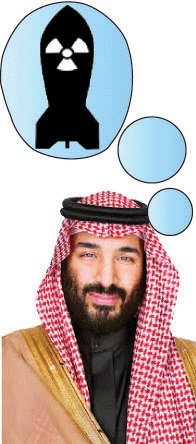
The idea that Saudi Arabia will seek atomic weapons remains a concern. In 2018, Crown Prince Mohammed bin Salman said his country could develop nuclear weapons as a response to Iran’s nuclear program.
As Iran edges closer to gaining the ability to build nuclear weapons, Saudi Arabia is beginning to make similar moves.
FEBRUARY 05, 2023 Author: CHLOE DOMAT
Saudi Arabia plans to develop its own nuclear power industry using local uranium, according to energy minister Prince Abdulaziz bin Salman.
Recent field studies have shown promising uranium resources in the kingdom, he said during a speech at the Future Minerals Forum held in Riyadh in January.
“This would involve the entire nuclear fuel cycle: the production of yellowcake, low enriched uranium and the manufacturing of nuclear fuel both for our national use and, of course, for export,” Abdulaziz said, citing potential joint ventures “in accordance with international commitments and transparency standards.”
Saudi Arabia is investing heavily in the mining industry, touting resources including aluminum, phosphate, gold, copper and uranium worth about $1.33 trillion. In 2022, its mining revenue increased 27% and there are dozens of exploration licenses accessible to foreign companies. Overall, the kingdom wishes to attract $32 billions of investments to the mining sector.
“Equipped with robust bilateral relationships with relevant countries and the funds to bring in foreign partners, Saudi Arabia is likely to advance its nuclear game plan with the support of external players,” says Bayly Winder, Penn Kemble Fellow at the nonprofit National Endowment for Democracy. “Saudi Arabia initiated a bidding process for its first nuclear power station with interested parties including South Korea, China, Russia and France. The Saudi and American governments are also working on a partnership framework for clean-energy development”
The idea that Saudi Arabia will seek atomic weapons remains a concern. In 2018, Crown Prince Mohammed bin Salman said his country could develop nuclear weapons as a response to Iran’s nuclear program.
“The risk of regional escalation will continue to exist, but the Saudis are well aware of the sensitivities involved in nuclear energy buildup,” adds Winder.
The United Arab Emirates is currently the only Arab country operating a nuclear energy plant.
Despite failure to refit nuclear submarine, UK senior defence officials get £200,000 in performance bonuses
Three senior ministry of defence officials have received more than
£200,000 in performance bonuses despite not being able to get a
Scottish-based nuclear submarine back in service more than seven years
after it started undergoing a refit and refuelling.
The MoD had hoped that
HMS Vanguard would be returned to Royal Navy service at Faslane last summer
but The Sunday Times has learnt that the repair and refuelling project for
the Trident missile-armed vessel has hit new snags.
However, the three top
executives at the ministry’s Submarine Delivery Agency, which is
responsible for keeping the navy’s submarines in working order, were paid
performance bonuses last year. Its chief executive, Ian Booth, received
£95,000 on top of his £290,000 salary before he retired just before
Christmas, according to the agency’s accounts. Its technical director and
financial officer each received £55,000 bonuses.
Times 29th Jan 2023
https://www.thetimes.co.uk/article/bonus-for-mod-officials-despite-sub-refit-delays-gmqb30s35
California’s plan to keep Diablo Canyon nuclear plant online hits regulatory snag
Kavya Balaraman, Senior Reporter, Utility Dive, Jan. 30, 2023
Dive Brief:
- The U.S. Nuclear Regulatory Commission last week rejected a request from Pacific Gas & Electric Co. to resume its review of the license renewal application for the 2.2-GW Diablo Canyon nuclear power plant the utility filed in 2009.
……………………………………………. Diane Curran, an attorney for San Luis Obispo Mothers for Peace — one of three groups that petitioned the NRC to reject PG&E’s request — praised the agency’s decision. “The license renewal application was withdrawn by PG&E from the license renewal docket and then they let it lapse … when you file a license renewal application, you have to update it every year,” she said.
Curran said that the NRC’s decision is a big setback for PG&E because a new application filed at the end of the year won’t give the NRC much time to complete its review before the license for Diablo Canyon’s Unit 1 expires in 2024. https://www.utilitydive.com/news/california-plan-diablo-canyon-nuclear-plant-online-regulatory-snag-NRC-PGE/641482//
‘Delays and broken promises’ as flagship UK nuclear agency stalls

Great British Nuclear will be tasked with overseeing the development of the next generation of nuclear power sources
https://inews.co.uk/news/business/delays-broken-promises-flagship-uk-nuclear-agency-stalls-2115492—
By David Connett 30 Jan 23
The Government has been urged to stop delaying a new “flagship” agency to develop the UK’s next generation of nuclear reactors.
Ministers have been warned that the country risks “sleepwalking into the familiar pattern of delays and broken promises that have held back our nuclear ambitions in the past”.
The warning is contained in a letter signed by major companies, including Rolls-Royce and the US Westinghouse group, as well as the Prospect union, cross-party MPs and Lords, and the Northern Powerhouse Partnership.
It expresses dismay over delays in setting up Great British Nuclear (GBN), a body tasked with overseeing the development of the next generation of nuclear power sources.
It was envisaged as the cornerstone of former prime minister Boris Johnson’s plans to produce enough energy for the nation and reduce reliance on imports.
Last year, Mr Johnson said it would be launched to oversee the construction of up to 24 gigawatts of new capacity by 2050. “Our aim is to lead the world once again in a technology we pioneered so that by 2050, up to a quarter of our power consumed in Great Britain is from nuclear,” he said at the time.
However, a dispute between the Treasury and the Department for Business, Energy and Industrial Strategy has delayed the move.
The letter warns that progress on GBN has “stalled”. It says: “We do not have time to spare. All but one of the UK’s existing nuclear reactors are due to retire by the end of the decade and this capacity needs to be replaced.”
It warns that private-sector funding and expertise could be lost to rivals because of the delay. It also says that a “global race for investment in next generation nuclear technologies is accelerating, spurred on by the Inflation Reduction Act in the US”.
The letter says the recent Skidmore report into the UK’s route to meet its net-zero climate change commitments demands “stable, long-term policy”, and adds: “We call on the Prime Minister to launch a fully funded Great British Nuclear programme as a matter of priority.”
A report outlining GBN’s strategy and operation, drawn up by the nuclear industry expert Simon Bowen, has been with ministers for several months.
He has asked for it to be published to help the industry prepare for the demands it will face in funding and training sufficient numbers of skilled people, but he has been told that it cannot be.
Experts have warned that continued delays in the nuclear programme will mean that the “ambitious” 2050 target will be missed.
The Government is already struggling to replace its current nuclear generation capacity even before it manages to expand it. Five nuclear power plants generated more than 15 per cent of the UK’s electricity last year. All but one is set to be decommissioned by 2028.
French power company EDF, which operates Sizewell B, has discussed plans with the UK’s nuclear regulator to extend the life of the existing UK reactors, but has not yet made a formal bid to the Office of Nuclear Regulation.
The energy minister, Graham Stuart, told MPs last week that he hoped the GBN strategy would be “published early this year”, but refused to be more specific.
Pakistan’s Ministry of Finance refuses to guarantee funding for expansion of nuclear power
Expansion in nuclear power generation hits snags Kazim Alam January 31, 2023
KARACHI: The development of C-5, which is the fifth unit of the Chashma Nuclear Power Generating Station, has hit a snag because of the reported refusal by the Ministry of Finance to furnish a sovereign guarantee, sources told Dawn on Monday.
The Chinese partner has agreed to provide financing for up to 85 per cent of the $3.7 billion nuclear power plant having a nameplate capacity of 1,200 megawatts, subject to the sovereign guarantee.
Such guarantees are meant to assure the creditor that the government will satisfy the obligation if the primary obligor — the Pakistan Atomic Energy Commission (PAEC), in this case — defaults on the loan repayment.
The loan programme of the International Monetary Fund (IMF) seems to have tied the government’s hands with regard to the sovereign guarantee. As part of the 2022-23 budget, the government has laid before the National Assembly a Statement of Contingent Liabilities.
The list contains all guarantees expected to be issued during the fiscal year. The government is treating it as a ceiling to contain fiscal risks and safeguard the public debt trajectory.
The spokesperson for the finance ministry wasn’t available for comment……………………………………..https://www.dawn.com/news/1734533/expansion-in-nuclear-power-generation-hits-snags
—
Belgium to shut down second nuclear reactor
By Anne-Sophie Gayet | EURACTIV.com
The Tihange 2 nuclear reactor – the second largest of the three Tihange reactors – will shut down permanently on Tuesday evening after 40 years of activity, making it the second nuclear reactor to shut down in the country.
In accordance with 2003 Belgian law on nuclear phase-out, Tihange 2 will be disconnected from the grid on Tuesday at midnight, despite calls from politicians across the political spectrum and citizen associations to stop the nuclear reactor shutdowns………… https://www.euractiv.com/section/politics/news/belgium-to-shut-down-second-nuclear-reactor/
King Charles wants to honour nuclear test heroes but medals are being delayed by MoD red tape
King Charles wants Britain’s nuclear test heroes honoured before his coronation, but the MoD is accused of creating “unreasonable delay”
Mirror, By Susie Boniface. Reporter , 27 Jan 2023
King Charles wants to give a medal to Britain’s nuclear test heroes within months – but Ministry of Defence red tape could hold up the process for at least a year.
The King has told friends he has pencilled in a full “investiture” type ceremony in April, before his coronation.
But two months after Prime Minister Rishi Sunak announced a gong for victims of the Cold War radiation experiments, civil servants say it will take more than a year for the design of the medal to be signed off.
Alan Owen, whose dad died after witnessing 24 bombs in 78 days, said: ““It beggars belief that this country can organise a coronation in 8 months but we’ve been told it will take even longer to do one, simple, medal.
“It took them 70 years to get around to asking the monarch for what we should have had on day one. They know how to make medals, this is just another unreasonable delay by the MoD so that there are as few veterans as possible left to collect it.”
A source close to the King said: “His Majesty is taking a close interest in the issue of nuclear test veterans, and wants to see some form of official ceremony as soon as possible.
“He recognises that those who can be given it are not going to be around for long.
“His staff have pencilled in something for April, depending on approval from government.”…………………………………………….
The Mirror has campaigned for official recognition on their behalf for 40 years, and last year saw the first sign of change when the PM finally asked the King to approve a medal.
Cabinet Office staff have told campaigners that “the usual process” for medal design and delivery is handled by the MoD medal office according to “set procedures”.
It is understood they are still working out criteria, with no date for inviting applications, or for it to be made by the Royal Mint…………………………………….
Mr Sunak also promised a face-to-face meeting with veterans to discuss war pension reform, education packages, and missing records on nuked blood. Despite No10 acknowledging the request, no date has been set.
Campaigners have also been promised meetings with Office of Veterans Affairs staff to discuss grant applications to a £200,000 fund, but none have been arranged.
Labour’s Rebecca Long-Bailey, who campaigns for the veterans, said: “When he announced the medals, the PM witnessed their decades of pain and grief. The families wept as he promised them a meeting. They are still waiting, and time is running out. I urge the PM to meet us as soon as he can.” ………………………………………………
more https://www.mirror.co.uk/news/politics/breaking-britains-nuclear-test-veterans-28544461
Donald Trump warns of NUCLEAR WAR as Joe Biden sends 31 tanks to Ukraine

omigawd! It’s a weird world when we find Donald Trump saying something sensible!
Former president Donald Trump has hit out at Joe Biden’s decision to send 31 M1 Abrams tanks to Ukraine ahead of a fresh Russian attack as he admitted they could lead to a nuclear war
Mirror, By Liam BucklerNews Reporter, 27 Jan 2023
Donald Trump has warned of a nuclear war as President Biden prepares to send 31 battle tanks to Ukraine in the war against Russia.
Biden’s administration confirmed on Wednesday it would be sending 31 M1 Abrams tanks to Ukraine after President Volodymyr Zelensky’s demand for more heavy armour.
The US are also providing 500 armoured vehicles as part of the help to Ukraine in addition to the $26 billion already committed to Kyiv since Russia’s invasion nearly a year ago.
But in a post to Truth Social, the former president believes sending the thanks could lead to a possible nuclear war.
Donald Trump wrote on Thursday: “‘FIRST COME THE TANKS, THEN COME THE NUKES. Get this crazy war ended, NOW. So easy to do!”
President Zelensky made a visit to the US in December to personally plead for more tanks and weapons as he believed Ukraine were struggling to make inroads with their Soviet-era T-72 tanks.
It comes after Germany confirmed they would send 14 Leopard 2 tanks to Kyiv. Berlin’s decision to send 14 of the world’s most deadly tanks to Ukraine means other western countries can follow suit with their own Leopard 2s.
Germany had been trying to persuade the US to send tanks to Ukraine but top officials in Biden’s administration were wary of the move as they require extensive training.
However, Biden has since u-turned after he originally said last March: “‘The idea that we’re going to send in offensive equipment and have planes and tanks and trains going in with American pilots and American crews, just understand … that’s called World War III, okay?
“Let’s get it straight here, guys. We will not fight the third world war in Ukraine.”
His remarks were similar to Donald Trump who believes giving tanks to Ukraine will be followed by “nukes.”
However, Mr Biden told reporters the tanks will “enhance Ukraine’s capacity to defend its territory and achieve its strategic objectives.”
The tanks heading to Ukraine are set to “take time” as they are “extremely, extremely complex to operate and maintain.”…………….. https://www.mirror.co.uk/news/us-news/donald-trump-warns-nuclear-war-29063832
Rolls Royce wants to make sure that the tax-payer cops the cost of their small nuclear reactor folly

Rolls-Royce calls on government for more clarity on nuclear. https://www.energylivenews.com/2023/01/26/rolls-royce-calls-on-government-for-more-clarity-on-nuclear/
Executives of the engineering giant have cited Britishvolt as an example of a company which committed to a factory without having orders.
Dimitris Mavrokefalidis
Rolls-Royce has urged the government to provide more clear vision of its target to roll out 24GW of nuclear power generation by 2050.
During a session at the House of Commons Welsh Affairs Committee, asked when Rolls-Royce will start the process of building its first Small Modular Reactor factory, Alastair Evans, Director of Corporate and Government Affairs at Rolls-Royce SMR, said: “If you look at the Britishvolt example, that is an example of a company that committed to a factory without orders. We don’t have clarity on orders in the UK.
“So, as soon as we have that clarity that the UK Government wants to deploy Rolls-Royce SMRs, we will be able to get the first factory moving, but our shareholders need that clarity. Britishvolt is a very good example of where you try and run a business and build a factory and get things moving without that certainty, orders and customers.”
A few days ago, company representatives visited the first four sites which have the potential to host 15GW of new nuclear power capacity.
Mr Evans confirmed that once Rolls-Royce receives the green light from the government, then the whole process around the development of its first SMR facility will accelerate.
He said: “That was the purpose of doing our planning processes, getting the selection of our heavy pressure vessel sites – we’ve got 600 people in the Rolls-Royce SMR business today. So we are set up to deliver at pace. We are 600 UK-based workers looking at manufacturing, assembly, lead skills, and module concept. We are ready to go.”
Julian Assange and the US government’s war on whistleblowers
Chris Hedges, The Real News Network, Fri, 20 Jan 2023
Thirteen years ago, WikiLeaks published extensive leaked US government documents detailing a range of criminal and unethical acts, from the slaughter of civilians in the “War on Terror” to acts of espionage against foreign heads of state. Since then, the persecution of Julian Assange has not ceased. This year, Assange is expected to stand trial in the US for violations of the Espionage Act. Journalist Kevin Gosztola joins The Chris Hedges Report to review the cases of Julian Assange and Chelsea Manning, and discuss Washington’s wider war against whistleblowers and the truth itself.
Kevin Gosztola is the managing editor of Shadowproof, where he writes The Dissenter. He is the author of Guilty of Journalism: The Political Case Against Julian Assange.
TRANSCRIPT
Chris Hedges: The long persecution of Julian Assange, the publisher of WikiLeaks, is set to culminate in its final act: a trial in the United States, probably this year. Kevin Gosztola has spent the last decade reporting on Assange, WikiLeaks, and the wider war on whistleblowers. His new book, Guilty of Journalism: The Political Case against Julian Assange, methodically lays out the complex issues surrounding the case, the gross distortions to the legal system used to facilitate the extradition of Julian, now in a high security prison in London, the abuses of power by the FBI and the CIA, including spying on Julian’s meetings when he sought refuge in the Ecuadorian embassy in London with his family, doctors, and attorneys, and the dire consequences, should Julian be convicted, for the press.
Joining me to discuss his new book is Kevin Gosztola. So Kevin, you do a very… I think your book and Nils Melzer are the two books I would recommend for people who don’t understand the case. I use this show in this interview to really lay out for people who are unfamiliar with the long persecution of Julian and the legal anomalies that have been used against him. You know, what those are. So let’s just start with what are the charges, what are the allegations, which is where you begin your book.
Kevin Gosztola: Yeah. And the intention was to look ahead and say, Julian Assange is likely to be brought to the US by the end of 2023, maybe 2024. We need something out there for the general public so they can wrap their head around the unprecedented nature of what’s unfolding. And so the charges against Julian Assange, he was first indicted back in April of 2019. Or sorry, that was when it was unveiled. He was charged first with a computer crime offense. They alleged, essentially, a password cracking conspiracy. And that was of intrusion, of essentially agreeing to help Chelsea Manning anonymously access military computers.
And then the other charges were 17 espionage act offenses. ………………………………………………………… https://therealnews.com/julian-assange-and-the-us-governments-war-on-whistleblowers
Canada: Federal gifts for the nuclear and mining industries
The government needs a more transparent and evidence-based approach to decision-making when assessing choices for decarbonization.
Policy Options, by Mark Winfield, January 25, 2023
Canada’s nuclear industry got an important pre-Christmas gift from the federal government in the form of the announcement of its decision not to conduct an assessment under the 2019 Impact Assessment Act of a proposed small modular nuclear reactor (SMR) at the Point Lepreau site in New Brunswick.
The Lepreau SMR proposal has been highly controversial, given its reliance on technologies where the performance, costs and risks are essentially unknown. Moreover, serious questions have even been raised about whether the project, intended to reprocess fuel from the Lepreau CANDU reactors, would violate the Treaty on the Non-Proliferation of Nuclear Weapons. It would have seemed precisely the kind of situation where a very thorough, public review is needed before a project can proceed. The federal government has chosen otherwise.
The Lepreau decision capped a string of federal decisions and multi-billion-dollar announcements around technologies claimed to be essential to decarbonizing Canada’s economy. There was the $970-million investment through the Canada Infrastructure Bank in another SMR project at Ontario Power Generation’s Darlington facility. A “critical minerals strategy,” also released in December, reads like a mining industry wish list. Billions had already been committed to “critical minerals” projects and infrastructures. A tax credit for carbon capture, utilization and storage (CCUS), with a value in the range of $1.5 billion per year, was introduced in the March 2022 budget. Hundreds of millions more have gone into fossil-fuel-based “blue hydrogen-related” technologies…………………………………………………………………
The SMR component of the federal government’s approach to “clean” electricity, for its part, carries high trade-off risks, ranging from direct impacts to questions of geopolitical security. At the same time, the technology remains immature and unlikely to make any contribution to the achievement of Canadian or global emission-reduction targets for 2030 or even by mid-century. Rather, it may represent a “dead-end” pathway – albeit one with very significant risks of major legacy costs and impacts………… more https://policyoptions.irpp.org/magazines/january-2023/federal-gifts-for-the-nuclear-and-mining-industries/
2022 saw the slow demise of the Bradwell B nuclear plan
That was the Year That Was…
https://www.banng.info/news/that-was-the-year-that-was/
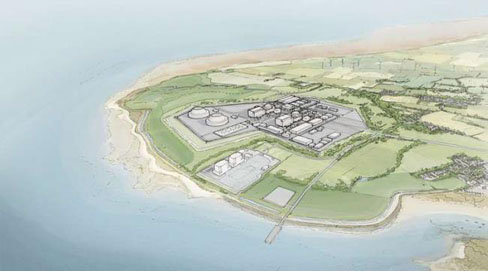
Andy Blowers summarises the past year for the Bradwell B project in the BANNG column for the January 2023 edition of Regional Life
A year is a short time in the glacial progress of a nuclear power station as it slowly moves through the various hurdles until it falls or proceeds eventually to the point where it goes critical and its long-term legacy becomes eternal and irreversible. So, with Bradwell B’s faltering progress over the past seven years until its fall last year. It may seem, in the words of Charles II, that it has been ‘an unconscionable time a-dying’, but the year just ended has witnessed the slow demise of Bradwell B.
Bradwell B entered 2022 with diminishing prospects. From the moment in early 2020 when it disclosed its preposterous plans to an outraged public, it had struggled for credibility. It’s true that in 2021 the Chinese-designed reactors gained Generic Design Approval (GDA) from the UK regulatory authorities. But, also in 2021, CGN (China General Nuclear Power Group) announced it was pausing its activities indefinitely. No doubt this was, in part, a result of the overwhelming and sustained opposition from BANNG, BAN, local councils and communities that it had encountered over the years.
During 2022 any lingering hopes for the project appeared to vanish amid deepening fears about Sea Level Rise and destructive impacts on our vulnerable coast. And it became clear that Chinese participation in UK nuclear projects was unwelcome for reasons of national security. By the year’s end, CGN informed stakeholders that it was effectively decommitting from its activities on the site with no plans for resumption.
It’s over. Let it go…
So, Bradwell B is over and we can let it go. But the threat of new nuclear at Bradwell will remain as long as the Government categorises the site as ‘potentially suitable’. Other developers may try to muscle in and we know that Rolls Royce has made a ranging shot at Bradwell as a ‘deployable site’ for its non-existent Small Modular Reactors (SMRs). It must be finally and unequivocally demonstrated that the Bradwell site is utterly unsuitable for the deployment of nuclear development, whether big Gigawatts (GW) or big SMRs That has been the nub of BANNG’s campaign over many years and it remains so as we enter 2023.
1 This Month




PLEASE OPPOSE HR 8255 AND S.3639 – bills would accelerate satellite deployment, with no environmental review or safeguards – https://ncstd5li.quorum.us/campaign/169331/
To see nuclear-related stories in greater depth and intensity – go to https://nuclearinformation.wordpress.com
-
Archives
- September 2026 (330)
- August 2026 (330)
- July 2026 (355)
- June 2026 (287)
- May 2026 (306)
- April 2026 (356)
- March 2026 (251)
- February 2026 (267)
- January 2026 (308)
- December 2025 (358)
- November 2025 (359)
- October 2025 (375)
-
Categories
- 1
- 1 NUCLEAR ISSUES
- business and costs
- climate change
- culture and arts
- ENERGY
- environment
- health
- history
- indigenous issues
- Legal
- marketing of nuclear
- media
- opposition to nuclear
- PERSONAL STORIES
- politics
- politics international
- Religion and ethics
- safety
- secrets,lies and civil liberties
- spinbuster
- technology
- Uranium
- wastes
- weapons and war
- Women
- 2 WORLD
- ACTION
- AFRICA
- Atrocities
- AUSTRALIA
- Christina's notes
- Christina's themes
- culture and arts
- Events
- Fuk 2022
- Fuk 2023
- Fukushima 2017
- Fukushima 2018
- fukushima 2019
- Fukushima 2020
- Fukushima 2021
- general
- global warming
- Humour (God we need it)
- Nuclear
- RARE EARTHS
- Reference
- resources – print
- Resources -audiovicual
- Weekly Newsletter
- World
- World Nuclear
- YouTube
-
RSS
Entries RSS
Comments RSS

