The Madness of Antony Blinken

it would be a NATO attack on Russia, dressed up as a Ukrainian one. It would mean the U.S. and Britain were at war with Moscow, something Blinken seems to want and said was going to happen.
Blinken has emerged as the undisputed leader of who George H.W. Bush called the “crazies in the basement.”
Two years after the Pentagon shot down his ploy for a no-fly zone against Russia in Ukraine, the U.S. “top diplomat” has been at it again pushing an even more insane idea, writes Joe Lauria.
By Joe Lauria, Consortium News, https://consortiumnews.com/2024/09/20/the-madness-of-antony-blinken/
On March 7, 2022, two weeks after Moscow entered the civil war in Ukraine, U.S. Secretary of State Antony Blinken told CBS News from Moldova that the U.S. would give NATO-member Poland a “green light” to send Mig-29 fighter jets to Ukraine to enforce a no-fly zone against Russian aircraft.
U.S. House Speaker Nancy Pelosi and Senate Majority Leader Chuck Schumer then also backed the no-fly zone. But within days the Pentagon shot down the idea as it engaged in a consequential battle with the State Department and members of Congress to prevent a direct NATO military confrontation with Russia that could unleash history’s most unimaginable horrors.
A no-fly zone “could result in significant Russian reaction that might increase the prospects of a military escalation with NATO,” according to then Pentagon spokesman John Kirby.
President Joe Biden was caught in the middle of the fray. Pressure on the White House from some members of Congress and the press corps was unrelenting to recklessly bring NATO directly into the war.
Biden ultimately sided with the Defense Department, and he couldn’t be more explicit why. He opposed a NATO no-fly zone over Ukraine fighting Russian aircraft, he said, because “that’s called World War III, okay? Let’s get it straight here, guys. We will not fight the third world war in Ukraine.”
U.S. Defense Secretary Lloyd Austin backed him up:
President Biden’s been clear that U.S. troops won’t fight Russia in Ukraine, and if you establish a no-fly zone, certainly in order to enforce that no-fly zone, you’ll have to engage Russian aircraft. And again, that would put us at war with Russia.”
(The administration plan was, and apparently still is, to bring down the Russian government through a proxy counteroffensive and an economic and information war, not a direct military one.)
Blinken, who stepped out of line to speak above the heads of the president and the Pentagon, lost that round. It’s surprising he kept his job. But he survived and now he’s come back for more.
Relentless
Blinken’s recklessness emerged yet again last week when he peddled a story — eagerly picked up by The Guardian and The New York Times — that Biden would approve a British request to fire its Storm Shadow missiles deep into Russia.
The Guardian story on Sept. 11 said:
“The US secretary of state, Antony Blinken, gave his strongest hint yet that the White House is about to lift its restrictions on Ukraine using long-range weapons supplied by the west on key military targets inside Russia, with a decision understood to have already been made in private.”
Speaking in Kyiv alongside the UK foreign secretary, David Lammy, Blinken said the US had ‘from day one’ been willing to adapt its policy as the situation on the battlefield in Ukraine changed. ‘We will continue to do this,’ he emphasised.”
To fire British Storm Shadows, Ukraine would have to depend on British technical soldiers on the ground in Ukraine to actually launch them and on U.S. geolocation technology. German Chancellor Olaf Scholz revealed those British soldiers are already in Ukraine
In other words, it would be a NATO attack on Russia, dressed up as a Ukrainian one. It would mean the U.S. and Britain were at war with Moscow, something Blinken seems to want and said was going to happen.
The next day Russian President Vladimir Putin warned that launching such missiles into Russia “will mean that NATO countries — the United States and European countries — are at war with Russia. And if this is the case, then, bearing in mind the change in the essence of the conflict, we will make appropriate decisions in response to the threats that will be posed to us.”
Nevertheless, The New York Times ran a story on the same day with the headline: “Biden Poised to Approve Ukraine’s Use of Long-Range Western Weapons in Russia.”
The Guardian added:
“British government sources indicated that a decision had already been made to allow Ukraine to use Storm Shadow cruise missiles on targets inside Russia, although it is not expected to be publicly announced on Friday when Starmer meets Biden in Washington DC.”
Blinken’s words evidently raised British Prime Minister Keir Starmer‘s hopes that he would satisfy his desire to strike Russia with his nation’s arsenal of long-range missiles, despite Putin saying that meant direct war with NATO.
Blinken and the British are trying to lead us to the brink.
Sanity in Arlington
Except that the Pentagon, the purveyor of the most monstrous violence in world history, has pulled the world back from it.
For at least the second time — publicly known — the Department of War secured peace from neocon recklessness fronted by Blinken.
Starmer was sent back on his chartered British Airways flight from the White House meeting licking his wounds. He’d evidently been led by Blinken to believe that it was a done deal: the U.S. would let Britain attack Russia with its long-range missiles using U.S. technology — even if the U.S. wouldn’t allow its own long-range ATACMS to be used.
The Times of London reported that Biden withholding approval “surprised British officials who had listened closely to hints from Antony Blinken, the US secretary of state, that America was edging towards authorising Storm Shadow, an Anglo-French weapon which relies on American GPS guidance systems.”
Starmer’s mania to strike Russia illustrates the British elite’s continuing pathological hatred of Russia, extending back centuries, compared to a perhaps more tempered, though determined, American geostrategic rivalry with Moscow.
Biden’s Limits With the Neocons
Biden has proven himself a supreme warmonger, his advocacy for the illegal invasion of Iraq and his complicity in the genocide in Gaza as the most egregious examples.
Like the two presidents before him, Biden allowed neocons to worm themselves into positions of power in his administration. But the extent to which Biden himself is a neocon, as opposed to a traditional warmonger, is subject to question.
As a creature of Washington of more than half a century, he seems to respect the military’s judgement about military matters and, on his good days, understands that even America has limits.
Barack Obama let Hillary Clinton, the “Queen of Warmongers,” bring Neocon Queen Victoria Nuland into his administration. Donald Trump let neocons John Bolton and Mike Pompeo into his. And Biden has Blinken (and for a time Nuland too.)
Instead of banishing these people, they are allowed to linger and drag the U.S. into evermore perilous failures: Iraq, Afghanistan, Gaza and Ukraine, leaving behind a mountain of squandered dollars and an ocean of blood.
As a careerist, Blinken said what he had to say to get to where he is. Obama in 2015 wisely decided against arming Ukraine after the Nuland and Biden-led 2014 coup because he did not want to antagonize Russia, for whom he said Ukraine was a vital interest, while it was not for the U.S. Obama also feared U.S. arms would fall into the hands of “thugs” — meaning neo-Nazi Azov types, whom Obama was well aware of.
Blinken at the time was Obama’s deputy secretary of state. To support the president’s position, he told a conference in Berlin:
“If you’re playing on the military terrain in Ukraine, you’re playing to Russia’s strength, because Russia is right next door. It has a huge amount of military equipment and military force right on the border. Anything we did as countries in terms of military support for Ukraine is likely to be matched and then doubled and tripled and quadrupled by Russia.”
But once he was freed of the restraints of Obama, he joined Biden’s aggressive Ukraine policy at the top of the State Department. From that position, and with a power vacuum in the White House because of Biden’s dementia, Blinken has been openly pushing the neocon agenda, laid out plainly in the 2000 report of the Project for a New American Century.
And what is that agenda? In another age, before it became a dirty word, it would have been proudly proclaimed as imperialism. It contains all of the hubris and sense of invincibility and impunity of any empire in history.
PNAC plainly promulgates that no power or alliance of powers will be allowed to rise up to stand in the way of the neocons’ mad quest to harness American power to achieve world domination. An alliance of powers such as that of China, Russia and the BRICS countries, which has only accelerated in opposition to unhinged, neoconservative adventurism.
No matter the many disasters piling up, notably Iraq, Palestine and now Ukraine, the neocons are undeterred and unrestrained. It’s about power and murder but it is made palatable to themselves with flowery language about America saving the world for democracy.
Their belief in their own supremacy, cloaked in an American flag, remains fanatic, no matter the death and destruction they cause. They do not understand that American power has limits and to test that, they risk everything.
In 2019, Blinken teamed up with arch-neoconservative Robert Kagan to write a Washington Post op-ed arguing for more aggressive use of U.S. power abroad and against U.S. domestic trends towards non-interventionism.
With Kagan’s wife Nuland out of the Biden Administration and National Security Advisor Jake Sullivan crucially siding with the realists, Blinken has emerged as the undisputed leader of who George H.W. Bush called the “crazies in the basement.”
That was 30 years ago. The neocons are in the penthouse now and only the restraint of the Pentagon and Sullivan’s persuasion brought Biden back from the brink.
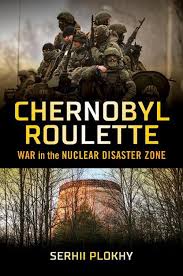
Chernobyl Roulette by Serhii Plokhy review – gripping account of wartime chaos at Ukraine’s nuclear plant
Luke Harding, Mon 2 Sep 2024, https://www.theguardian.com/books/article/2024/sep/01/chernobyl-roulette-by-serhii-plokhy-review-gripping-account-of-wartime-chaos-at-ukraines-nuclear-plant
The Ukrainian historian compellingly chronicles the singular courage and selflessness of atomic power station employees held hostage by Russian troops in 2022
Luke Harding, Mon 2 Sep 2024
On 24 February 2022, workers at the Chornobyl nuclear power station in Ukraine woke to the sound of explosions. A battle was going on, not far from the contaminated exclusion zone. By late afternoon, the Russians had arrived. A column of military vehicles pulled up at a checkpoint and an officer got out. Moscow, he said, was now in charge.
The plant’s 300 personnel – specialist operators and firefighters, plus troops from Ukraine’s national guard – became prisoners. Over the next few weeks, they kept the station’s systems going, working in cramped conditions and living side by side with their armed Russian masters. The enemy had invaded from Belarus. Its main force trundled onwards towards Kyiv.
Chernobyl Roulette by the Ukrainian historian Serhii Plokhy is a gripping account of the extraordinary events inside the plant (Plokhy spells the power station with an “e”). It is a tale of bravery and selflessness, reminiscent of the sacrifice demonstrated by the Chornobyl employees who went through the 1986 nuclear disaster, when reactor No 4 blew up. Some of those on duty in 2022 were involved in the original Soviet-era clean-up.
They included Valentyn Heiko, the 59-year-old shift foreman who was taken hostage with his colleagues. He proved to be a subtle and resilient leader. Heiko met the Russian commanders and told them they would have to follow Ukrainian safety rules and behave in a “civilised manner”. If they didn’t, he promised to unleash a radiation incident, killing them and everyone else. This was blackmail. And a bluff. It worked.
According to Heiko, some of the Russians were polite and rational. About a third of the soldiers, though, were brainwashed and often drunk. The occupiers moved into the fourth floor of the administration building. The station got crowded. There was a shortage of food, cigarettes and razors. The captive nuclear operators – unable to go home to the nearby town of Slavutych – grew beards and puffed on butts.
There were small acts of resistance. Liudmyla Kozak – one of 17 imprisoned women – refused a demand to wear a white armband. The Russians warned her she might be shot. Kozak found a white medical cap, embroidered it with a blue and yellow patch and wore that instead. An order was given to turn off the radio, which brought news of the Russian army’s setbacks around Kyiv. Staff switched it on anyway.
After three weeks, Heiko and his stressed and exhausted workmates could scarcely function. Astonishingly, 46 colleagues volunteered to replace them. The old shift exited the plant, travelled by bus through Belarus and crossed the Dnipro River in a fishing boat. Heiko carried the station’s Ukrainian flag with him. The new team went in the same way – uncertain if or when they would return.
The Kremlin’s occupation of the nuclear plant was an act of astounding recklessness. Soldiers dug trenches in the red forest, one of the world’s most toxic places. It is unclear if they suffered lasting health damage, their heads “full of sawdust”, as one gleeful Ukrainian official put it. Plokhy suggests this might be wishful thinking. Overall, though, radiation levels went up, as thousands of tracked Russian vehicles churned up deadly dust.
In the south of the country, meanwhile, another Russian unit captured the Zaporizhzhia nuclear power station, Europe’s biggest. The attackers fired rocket-propelled grenades at civilian infrastructure and damaged a reactor. Two and a half years on, the Russians are still there. Its turbine halls are stuffed with military kit and weapons. From the territory, they regularly bombard nearby Ukrainian towns with Grad missiles.
Last month, Russian soldiers started a fire in a cooling tower – an apparent warning, after Ukraine’s surprise counter-invasion of Russia’s Kursk region. Since the beginning of Moscow’s all-out attack, Vladimir Putin and his minions have issued a string of mass destruction threats directed at Kyiv and the west. State TV hosts talk about nuking London, Berlin and Paris.
The Chornobyl 2 story at least had a happy ending. On 30 March 2022, Russian servicemen fled north, as part of a pull-out from the Kyiv region. They departed with numerous items stolen from the plant: radiation dosimeters, computers and cars. In the town of Chornobyl, military looting parties carried off sacks of household goods. They even took ancient stuff: black-and-white TVs and video recorders.
The Ukrainian workers who put duty before personal survival narrowly averted another Chornobyl crisis. In Plokhy’s view, Moscow’s 2022 violent takeover of two atomic energy stations should serve as a “wake up call to the world”. It was, he argues, an act of nuclear terrorism carried out by a large nuclear power – a rogue one. The distinction between tactical nuclear weapons and civil nuclear facilities looks increasingly blurred, he says.
How the international community should respond to these alarming developments is less clear. Plokhy calls for a reform of the laws governing nuclear state behaviour and of the body that is supposed to administer them – the International Atomic Energy Agency (IAEA). When Russian tanks entered Chornobyl, the IAEA, led by Rafael Grossi, issued no condemnation of the Kremlin. Nor did it call on the occupiers to get out, appealing instead to “both sides”.
Plokhy is the author of several previous nonfiction books on Ukraine. These include Chernobyl: History of a Tragedy, which won the 2018 Baillie Gifford prize, and The Russo-Ukrainian War, an account of the conflict and its origins, published last year. Chernobyl Roulette is equally compelling. It salutes the singular men and women who stepped up – as their predecessors did before them – when protocols and governments failed.
‘True horror’: Japan’s Hiroshima atomic bomb survivor campaigns for a nuclear-free world
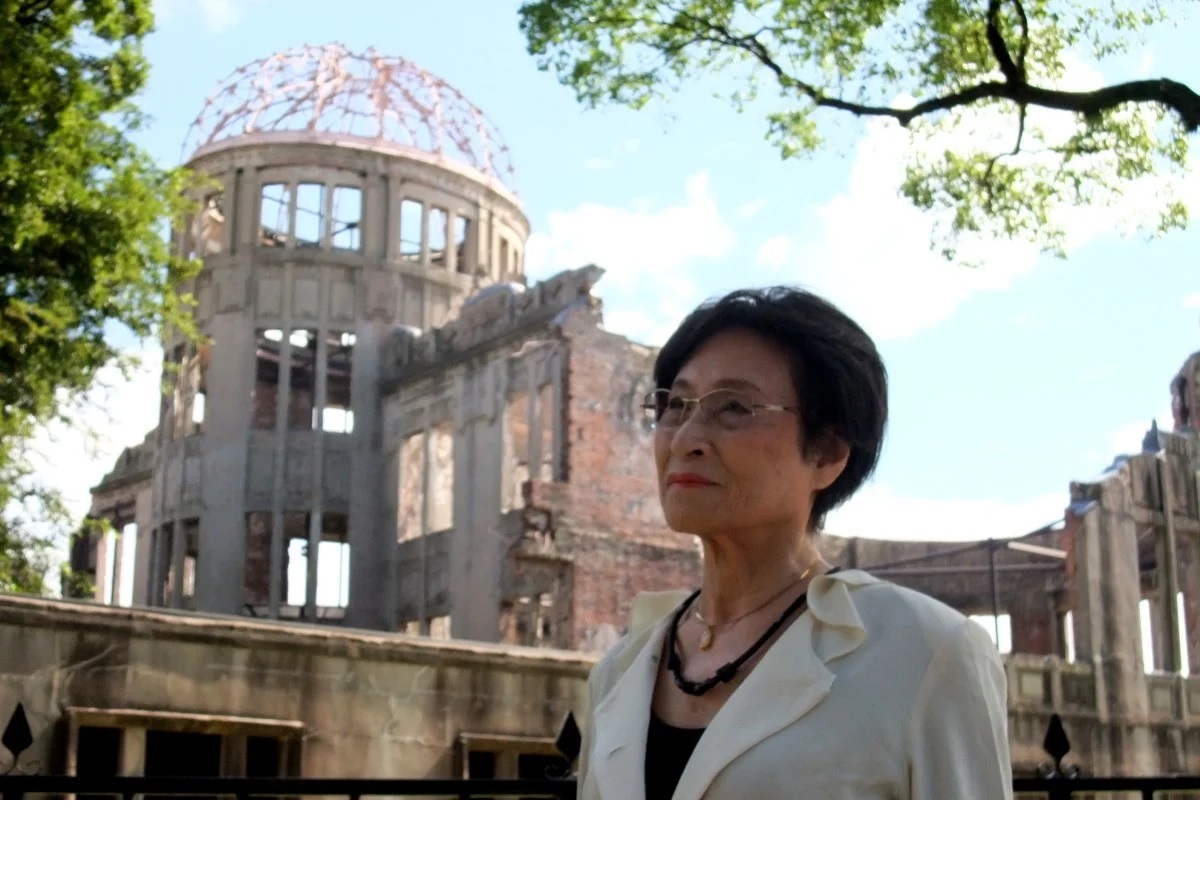
Bun Hashizume, 93, who has written poems about her descent into ‘hell’ after the bombing, has travelled the world to spread her message
Norman Aisbett, SCMP, 3 Aug 24,
What I feel the most about these days is human stupidity,” says 93-year-old Bun Hashizume, from her home in the Japanese temple city of Kamakura.
“I was a victim of the first atomic bomb in human history and I have advocated throughout my life for the abolition of nuclear weapons, but the world leaders still do not understand their true horror.
“Even my poems cannot describe it.”
Rewind to 8.15am on August 6, 1945 in the final throes of World War II.
A US atomic bomb named “Little Boy” was dropped from a B-29 aircraft and exploded at low altitude over the city of Hiroshima. With a blast force equal to 16 kilotons of TNT, it destroyed most buildings and caused mass death and injury.
Then aged 14, Hashizume was a war-mobilised school student working in the four-storey reinforced-concrete Savings Bureau building about 1.5km from the hypocentre of the blast.
Looking back, she recalls a third-floor window being filled “with a sudden flash of light that was so bright I thought the sun had fallen at my feet. A thousand rainbows all at once seemed to explode before my eyes”. And how, after being briefly unconscious and bleeding heavily from a head wound, she staggered downstairs among other workers looking “like a parade of ghosts with wildly dishevelled hair and sooty bodies”.
Once outside the building, it was a regular employee, Tomoyanagi, who “half-carried” her to a nearby Red Cross Hospital, where more shocking scenes and high drama followed.
Hashizume is today the author of The Day the Sun Fell – Memoirs of a Survivor of the Atomic Bomb – translated by Susan Bouterey – which closely details her and her family’s horrific experiences and also explains her present-day opposition to “dangerous” nuclear power plants, which she emphasises during this Australian writer’s long-distance interview with her, via a Japanese interpreter-admirer.
Her drive was such that, at age 70, she began her solo pilgrimages to many countries over 15 years to “become a citizen of the world” and share her anti-nuclear views. With only her aged pension to buy airline tickets and stay in youth hostels, she spoke to anyone or group willing to listen, including schoolchildren. Everywhere, people were also touched by her genuine personal warmth and quiet charm. A small booklet she handed out was entitled, “Fellow Humans! Let Us Foster Love and Wisdom.”
Right now, though, she is homebound due to A-Bomb-related health issues that have plagued her life. She tells of having endured “lifelong” rheumatism, chronic kidney disease, thyroid cancer and more. The past 20 years have also brought numerous breaks of radiation-weakened ribs, collarbones and three compressed fractures of her spine after a fall in Norway in 2003.
She is unable to go outside alone. There are twice-weekly visits to a hospital and three transports per week to a rehabilitation clinic. “Otherwise I’m on my bed reading the newspapers, with care from my eldest son and his family, who live with me.”
Her activist spirit nevertheless endures. She cites recent-times threats of nuclear strikes by North Korea if threatened; by Russia amid the Ukraine war; and an Israeli cabinet minister’s suggestion to nuke Hamas in Gaza The minister was promptly sacked by his embarrassed government which has never admitted that it has nuclear weapons – and subsequent high tensions and conflict between arch-enemies Israel and Iran.
{I believe that nuclear weapons should never be used, stockpiles should be completely abolished, and the Japanese government should join and ratify the Treaty on the Prohibition of Nuclear Weapons as soon as possible,” she says. “It’s no wonder they are being been used as a threat.” She further notes that nine nations have nuclear weapons, but the warheads of only two nations – Russia (5,890) and the US (5,224) – “are enough to destroy all life on Earth several times over”.
A major disappointment for her was the 28th United Nations Climate Change Conference (Cop28) in Dubai when 23 nations including the US and Japan declared they would triple the generation of their nuclear power plants to achieve zero greenhouse gas emissions by 2050.
“It is shocking that Japan joined this dangerous proposal despite the fact that the world’s pervasive emphasis on economic growth, baseless absolute trust in science and technology, and limitless pursuit of energy collapsed in Fukushima in 2011,” she says…………………………………………
After Tomoyanagi left to find her own family, a 16-year-old boy Yoshiaki Iida, who was unknown to Hashizume, helped her outside just before flames engulfed the whole building.
However, she later heard that her brother, Hideo, seven, had died after his back caught fire in an instant when hit from behind by the scorching A-Bomb blast in a school playground. Her other family members survived but with bad injuries and other health problems. Younger sister Shizuko, nine, had been evacuated to a temple when she was struck by the blast wave. Years of radiation sickness caused her suicide at age 19. Older sister Mitsuko, 19, suffered “ghastly” facial wounds at her grandmother’s house.
What does Hashizume remember most after the explosion? She replies: “The complete silence and the smell of burnt corpses that filled the air.”………………………………………………………………………………………………
The Day the Sun Fell – Memoirs of a Survivor of the Atomic Bomb by Bun Hashizume (translated by Susan Bouterey) is published by Austin Macauley Publishers Ltd and also available on Kindle. https://www.scmp.com/week-asia/people/article/3273031/true-horror-japans-hiroshima-atomic-bomb-survivor-campaigns-nuclear-free-world
Canada and the Atom Bomb: Remembering As an Act of Resistance

Anton Wagner, July 23, 2024, http://imagearts.ryerson.ca/hiroshima/remembering/
I met Setsuko Thurlow in 1995 when I produced Our Hiroshima for Vision TV for the 50th commemoration of the atomic bombings of Hiroshima and Nagasaki. In 1954, she had received death threats while studying at an American college in Virginia after criticizing the United States’ hydrogen bomb test in the Marshall Islands, one thousand times more powerful than the atom bomb dropped on Hiroshima. But when she settled in Canada with her husband, Jim Thurlow, the following year, she found “a very passive, almost indifferent world here. Maybe Canadians felt they had nothing to do with the nuclear age.”
In Our Hiroshima, Setsuko singled out the Eldorado uranium refinery in Port Hope, Ontario, that enriched all the uranium used by the American Manhattan Project to produce the Hiroshima and Nagasaki bombs. She found Canadians were not informed about their country’s involvement in the development of the atom bomb and failed to recognize that nuclear weapons were a universal, global phenomenon. “We all have to be concerned.”
The documentary showed her speaking to a huge peace rally at the University of Toronto Varsity Stadium in 1982. “Peoples around the world, with their deafening silence, have permitted their government to continue producing and accumulating ever more destructive weapons of genocide,” she told the rally. The hundreds of billions of dollars spent on armaments annually “diverted the resources that could feed the starving, heal the sick, and teach the illiterate.”
Setsuko began sharing the horrors she had witnessed as a survivor of Hiroshima with Canadians in “A Silent Flash of Light,” published in Saturday Night in August 1985. She would make these same very detailed, moving personal descriptions for international media for the next four decades. Nine members of her family and over three hundred of her schoolmates and teachers perished. Her family’s house was but ashes and broken tiles. Only an ornate clock in a cast-iron frame (seen in Jim Allen’s photograph above) could be salvaged as a reminder of life before the atomic bombing. “In the Peace Park in Hiroshima, there is a cenotaph with the inscription: ‘Rest in peace; the evil will not be repeated,’” she concluded her Saturday Night memoir. “This has become the vow of the survivors. Only then will our loved ones’ grotesque deaths not have been in vain. Only then will our own survival have meaning.
Thirty-two years later, in December 2017, Setsuko Thurlow accepted the Nobel Peace Prize, together with Beatrice Fihn, awarded to the International Campaign to Abolish Nuclear Weapons for bringing about the United Nations Treaty on the Prohibition of Nuclear Weapons. In her acceptance speech, she asked her audience in Oslo, “Today, I want you to feel in this hall the presence of all those who perished in Hiroshima and Nagasaki. I want you to feel, above and around us, a great cloud of a quarter million souls. Each person had a name. Each person was loved by someone. Let us ensure that their deaths were not in vain.”
With the approaching 75th anniversary of the atomic bombings in 2020, Thurlow wrote to all the world’s heads of state, including Canada’s Prime Minister Justin Trudeau, who had not yet ratified the Treaty on the Prohibition of Nuclear Weapons. In her personal appeal to the Prime Minister, she included my research document “Canada and the Atom Bomb” that provides the factual basis for this “Canada and the Atom Bomb” exhibition.
Setsuko referred to the delegation from Deline in the Northwest Territories representing Dene hunters and trappers employed by Eldorado to carry the sacks of radioactive uranium ore on their backs for transport to the Eldorado refinery in Port Hope. The delegation travelled to Hiroshima in August of 1998 and expressed their regret that uranium from their lands had been used in the development of the atom bomb. As seen in Robert Del Tredici’s photographs, Dene had themselves died of cancer because of their exposure to uranium ore, leaving Deline a village of widows. “Surely,” Thurlow wrote Trudeau, “the Canadian Government should make its own acknowledgement of Canada’s contribution to the creation of the atom bombs that destroyed Hiroshima and Nagasaki.”
She stated that an awareness by Canadians of our country’s direct participation in the atomic bombings of Hiroshima and Nagasaki had all but disappeared from our collective consciousness. Thurlow proposed to the Prime Minister that the 75th anniversary of the atomic bombings would be the appropriate moment to acknowledge Canada’s critical role in the creation of nuclear weapons, express a statement of regret for the deaths and suffering they caused in Hiroshima and Nagasaki, as well as announce that Canada would ratify the Treaty on the Prohibition of Nuclear Weapons. The Globe and Mail headlined her August 2020 op ed about her appeal to Trudeau, “Canada must acknowledge our key role in developing the deadly atomic bomb.”
Justin Trudeau never acknowledged receipt of Setsuko’s appeal, although Liberal MP Ali Ehsassi personally delivered a copy to the Prime Minister’s Office. With Trudeau’s refusal to meet or communicate with Thurlow, she turned her lobbying efforts to Toronto City Council. She had facilitated the creation of a large Peace Garden directly in front of City Hall as a memorial to the atomic bombings and the need for peace in 1984. As shown in the exhibition, City Council hosted Prime Minister Pierre Elliott Trudeau who turned the sod, beginning construction of the Peace Garden; Pope John Paul II kindled its eternal flame, and Queen Elizabeth II dedicated it as a lasting expression of Toronto’s commitment to peace.
Setsuko was a fierce defender of the Peace Garden when the $40 million revitalization of the City Hall Square resulted in its demolition. She was a leading figure among peace activists and community peace groups who convinced City Council to rebuild the Peace Garden on the civic square. Michael Chambers’ images capture this rededication of the Peace Garden in 2016.
The following year, Toronto City Council honoured Setsuko for her peace activism and reaffirmed Toronto as a nuclear weapons-free zone. The Toronto Board of Health held public hearings that resulted in its recommendation that City Council request that the Government of Canada sign the Treaty on the Prohibition of Nuclear Weapons. City Council passed such a motion and sent the text to Justin Trudeau, the Minister of Foreign Affairs, and the Minister of Health.
But nothing Canadian peace activists did changed the policies of the federal Canadian government. Setsuko Thurlow’s life-long commitment towards the abolition of nuclear weapons is a challenge to all concerned about the survival of human civilization. How can we transform our yearning for peace and justice into political action that will compel governments to prohibit and eliminate nuclear weapons? Setsuko donated her family’s precious ornate clock to the Canadian War Museum in Ottawa for a small peace exhibition in 2013. Will some survivors of a nuclear holocaust digging in the rubble of what once was Ottawa find a small, charred clock that once belonged to a survivor of the first atomic bombing but whose words of remembrance of that horror were buried by the silence of political leaders?
‘Atomic bomb hell must never be repeated’ say Japan’s last survivors

Atomic People will be broadcast on Wednesday 31 July on BBC Two and BBC iPlaye
Lucy Wallis, BBC News https://www.bbc.com/news/articles/crg5lyd25jno 26 July 24
It was early in the day, but already hot. As she wiped sweat from her brow, Chieko Kiriake searched for some shade. As she did so, there was a blinding light – it was like nothing the 15-year-old had ever experienced. It was 08:15 on 6 August 1945.
“It felt like the sun had fallen – and I grew dizzy,” she recalls.
The United States had just dropped an atomic bomb on Chieko’s home city of Hiroshima – the first time a nuclear weapon had ever been used in warfare. While Germany had surrendered in Europe, allied forces fighting in World War Two were still at war with Japan.
Chieko was a student, but like many older pupils, had been sent out to work in the factories during the war. She staggered to her school, carrying an injured friend on her back. Many of the students had been badly burnt. She rubbed old oil, found in the home economics classroom, onto their wounds.
“That was the only treatment we could give them. They died one after the next,” says Chieko.
“Us older students who survived were instructed by our teachers to dig a hole in the playground and I cremated [my classmates] with my own hands. I felt so awful for them.”
Chieko is now 94 years old. It is almost 80 years since the atomic bombs were dropped on Hiroshima and Nagasaki and time is running out for the surviving victims – known as hibakusha in Japan – to tell their stories.
Many have lived with health problems, lost loved ones and been discriminated against because of the atomic attack. Now, they are sharing their experiences for a BBC Two film, documenting the past so it can act as a warning for the future
After the sorrow, new life started to return to her city, says Chieko.
“People said the grass wouldn’t grow for 75 years,” she says, “but by the spring of the next year, the sparrows returned.”
In her lifetime, Chieko says she has been close to death many times but has come to believe she has been kept alive by the power of something great.
The majority of hibakusha alive today were children at the time of the bombings. As the hibakusha – which translates literally as “bomb-affected-people” – have grown older, global conflicts have intensified. To them, the risk of a nuclear escalation feels more real than ever.
“My body trembles and tears overflow,” says 86-year-old Michiko Kodama when she thinks about conflicts around the world today – such as the Russian invasion of Ukraine and the Israel-Gaza war.
“We must not allow the hell of the atomic bombing to be recreated. I feel a sense of crisis.”
Michiko is a vocal campaigner for nuclear disarmament and says she speaks out so the voices of those who have died can be heard – and the testimonies passed on to the next generations.
“I think it is important to hear first-hand accounts of hibakusha who experienced the direct bombing,” she says.
Michiko had been at school – aged seven – when the bomb was dropped on Hiroshima.
“Through the windows of my classroom, there was an intense light speeding towards us. It was yellow, orange, silver.”
She describes how the windows shattered and splintered across the classroom – the debris spraying everywhere “impaling the walls, desk, chairs”.
“The ceiling came crashing down. So I hid my body under the desk.”
After the blast, Michiko looked around the devastated room. In every direction she could see hands and legs trapped.
“I crawled from the classroom to the corridor and my friends were saying, ‘Help me’.”
When her father came to collect her, he carried her home on his back.
Black rain, “like mud”, fell from the sky, says Michiko. It was a mixture of radioactive material and residue from the explosion.
She has never been able to forget the journey home.
“It was a scene from hell,” says Michiko. “The people who were escaping towards us, most of their clothes had completely burned away and their flesh was melting.”
She recalls seeing one girl – all alone – about the same age as her. She was badly burnt.
“But her eyes were wide open,” says Michiko. “That girl’s eyes, they pierce me still. I can’t forget her. Even though 78 years have passed, she is seared into my mind and soul.”
Michiko wouldn’t be alive today if her family had remained in their old home. It was only 350m (0.21 miles) from the spot where the bomb exploded. About 20 days before, her family had moved house, just a few kilometres away – but that saved her life.
Estimates put the number of lost lives in Hiroshima, by the end of 1945, at about 140,000.
In Nagasaki, which was bombed by the US three days later, at least 74,000 were killed.
Sueichi Kido lived just 2km (1.24 miles) from the epicentre of the Nagasaki blast. Aged five at the time, he suffered burns to part of his face. His mother, who received more serious injuries, had protected him from the full impact of the blast.
“We hibakusha have never given up on our mission of preventing the creation of any more hibakusha,” says Sueichi, who is now 83 and recently travelled to New York to give a speech at the United Nations to warn of the dangers of nuclear weapons.
When he woke up after fainting from the impact of the blast, the first thing he remembers seeing was a red oil can. For years he thought it was that oil can that had caused the explosion and surrounding devastation.
His parents didn’t correct him, choosing to shield him from the fact it had been a nuclear attack – but whenever he mentioned it, they would cry.
Not all injuries were instantly visible. In the weeks and months after the blast, many people in both cities began to show symptoms of radiation poisoning – and there were increased levels of leukaemia and cancer.
For years, survivors have faced discrimination in society, particularly when it came to finding a partner.
“‘We do not want hibakusha blood to enter our family line,’ I was told,” says Michiko.
But later, she did marry and had two children.
She lost her mother, father and brothers to cancer. Her daughter died from the disease in 2011.
“I feel lonely, angry and scared, and I wonder if it may be my turn next,” she says.
Another bomb survivor, Kiyomi Iguro, was 19 when the bomb struck Nagasaki. She describes marrying into a distant relative’s family and having a miscarriage – which her mother-in-law attributed to the atomic bomb.
“‘Your future is scary.’ That’s what she told me.”
Kiyomi says she was instructed not to tell her neighbours that she had experienced the atomic bomb.
Since being interviewed for the documentary, Kiyomi has sadly died.
But, until she was 98, she would visit the Peace Park in Nagasaki and ring the bell at 11:02 – the time the bomb hit the city – to wish for peace.
Sueichi went on to teach Japanese history at university. Knowing he was a hibakusha cast a shadow on his identity, he says. But then he realised he was not a normal human being and felt a duty to speak out to save humankind.
“A sense that I was a special person was born in me,” says Sueichi.
It is something the hibakusha all feel that they share – an enduring determination to ensure the past never becomes the present.
Atomic People will be broadcast on Wednesday 31 July on BBC Two and BBC iPlaye
Testimonies from the Mawasi massacre: 90 people buried in the sand

“I saw before my eyes one missile after another descending next to the tents. Missiles I have never seen in my life in all of Gaza’s wars. Isn’t this internationally forbidden? Shouldn’t the civilian population be protected and not face genocide and mass killing? Isn’t this forbidden?”
The Israeli army committed another massacre against displaced Palestinians in tent encampments, this time in the coastal Mawasi area, which Israel had designated as a “safe zone.”
BY TAREQ S. HAJJAJ , https://mondoweiss.net/2024/07/testimonies-from-the-mawasi-massacre-90-people-buried-in-the-sand/
In a crater in the ground almost larger than a schoolyard, a group of young men dig through the sand and pull out the bodies.
“His head is there! His head is there!” someone yells. A man emerges from the hole, carrying a child.
“Who knows who this child is? Who knows his family? Where are his parents?” he calls out.
Behind him are dead bodies and severed limbs scattered across the ground. Some poke out from beneath the sand, half-buried.
When the Israeli army struck the coastal displacement camp in al-Mawasi, west of Khan Younis, there was no rubble. The Israeli-designated “safe zone” was little more than a sea of tents on the beach, so people were buried in the sand instead.
At 10 a.m. on Saturday, while people were starting their day, the Israeli military targeted the area with successive airstrikes, leading to a massacre that, according to the Ministry of Health in Gaza, has, as of the time of writing, killed 90 people and injured over 300 others. Half of them are women and children, the health ministry says.
Shaima Farwaneh, 16, was near the site of the massacre when it happened. She was preparing to make breakfast for her family when the bombs fell.
People and sand scattered everywhere, limbs that were once attached to bodies flying over their heads.
“A leg hit me, and I saw dismembered bodies a few meters away,” Shaima told Mondoweiss. “I saw a young child screaming. He lost his lower limbs and was crawling on his hands and screaming. The bombs didn’t stop, and suddenly the boy disappeared. I saw how he vanished before me while we ran and lowered our eyes to the ground, unable to do anything but run.”
Shaima describes hearing seven explosions in short succession before it was over. “What a life we live in these tents that we have to see the dismembered bodies of our siblings and families fly over our heads.”
When the ambulance and Civil Defense crews arrived near a well-known crowded market for residents of the area, their vehicles were targeted as well, according to the director of the Civil Defense in Khan Younis, Yamen Abu Suleiman. Two Civil Defense workers were killed in the strike.
Abu Suleiman said that the occupation targeted Al-Mawasi with a large barrage of missiles, which led to many casualties. “The occupation targeted the area more than once to prevent us from any rescue operation,” he tells Mondoweiss, denouncing the silence of the International Committee of the Red Cross over Israel’s prevention of rescue teams from doing their work.
Israel claims that the airstrikes were an attempt to assassinate Muhammad al-Deif, the head of the armed wing of Hamas, the al-Qassam Brigades, as well as the commander of al-Qassam’s Khan Younis District Brigade, Rafi Salama. The Gaza government media office denies the Israeli claims, emphasizing that they are nothing but a way of diverting the world’s attention from the reality of the massacre the Israeli army committed as part of the genocide of Gaza’s people.
According to local sources, over 80,000 displaced people currently reside in tents in that area.
‘No state does this’
Fawzia Sheikh Youssef, 82, was buried in the sand from the bombing but survived. She describes what she experienced during the massacre as something she had never seen in her entire life. She tells Mondoweiss that she was already displaced during the Nakba of 1948 when she was only 6 years old, coming to the Khan Younis area and staying with her family for two years in a tent. 76 years later, she found herself back where she started, but this time witnessing massacres the likes of which she had never seen even during the Nakba.
“There is no country in all the world that does this to children, women, and civilians,” she says. “This isn’t how wars are.”
Fawzia was eating her breakfast when the bomb ripped through her encampment, demolishing her tent and trapping her underneath it. She found herself covered in sand and trapped inside but was not critically injured. She began crawling on the ground and extricated herself from beneath the tent, eventually escaping to a place far away from the shrapnel and missiles, closer to the main road.
“I saw before my eyes one missile after another descending next to the tents. Missiles I have never seen in my life in all of Gaza’s wars. Isn’t this internationally forbidden? Shouldn’t the civilian population be protected and not face genocide and mass killing? Isn’t this forbidden?”
“They killed young people and old women. They do not respect humans. Aren’t we human?” she continues. “There is nothing to protect us from these missiles. The tents fell on our heads, and I was hit with two pieces of shrapnel in my leg. I may get poisoned, and I did not harm anyone.”
“These are not humanitarian actions,” Fawzia says. “A normal state would know that children have value, and women have value. Their lives are respected. Killing them is forbidden. There are wars. Some countries fight in the world, but not like this. Not like what happens with us.”
‘I left my son and fled from the horror of the bombing’
Samah al-Farra, a survivor of the massacre, says she fled from the horror of the missiles, leaving her son behind without knowing what she was doing. She describes what she saw after the incident as witnessing the horrors of the Day of Resurrection. The sound of the explosions, the panic of the people around her, the stampede in the attempt to escape, women leaving their tents without even wearing their clothes — Samah has to live with witnessing all these brutal scenes.
“People were running. There was sand in our eyes and fire over our heads. I left my son behind me and started running. I found the world turned upside down. The bodies of the martyrs were next to us, cut into pieces. It was a massacre. The fragments, sand, and bodies flew over our heads as we ran,” Samah describes.
She says that if this density of missiles had fallen on fortified buildings, it would have destroyed them. “But what about when they fall on tents whose owners are protected only by a piece of cloth?”
She describes the scene as a shower of missiles falling four times in a row, with more than one explosion occurring during each shower. “We saved ourselves. If we had stayed where we were, we would have been cut up and buried under the sand.”
Media reports have said that the bombs used in the al-Mawasi attack were JDAMs made in the U.S., which turn highly destructive unguided bombs into more precise missiles.
‘The entire area was overturned‘
Aziza Abu Tahir sits in front of the devastation after the bombing. Scattered bags of flour, gallons of water, vegetables, pillowcases, and utensils litter the area. She owns an oven and sits beside it every day. The women of the camp send their dough to her to bake for a small fee.
“When they dropped the bombs above our heads, all the people were running and screaming and saying that these were incendiary bombs, and this is the first time we have heard a sound like this,” Aziza tells Mondoweiss. “We ran away, and no one knew where to run. Some people went from one direction and were bombed, and some of them went from another direction and survived. But no one knew where they were going.”
As she speaks, a small child is hugging her, the son of her neighbor. Aziza says his mother takes care of orphans, and explains that when the attack started, his mother was bringing some dough for Aziza to bake in order to then resell to get an income for her family. “She was just here, and I baked what she wanted, and she went to sell it. As soon as she walked away, the bombing started. I don’t know where she is now, and I don’t know if she will return. The entire area she was walking in was overturned, and everything was buried.”
Hassan Suleih conducted interviews and provided photography for this report.
The plutonium connection: Why I no longer conduct my research at the University of New Brunswick

I had already learned enough about the power and influence of the nuclear industry to know that I would be fighting a losing battle if I kept my research at UNB
Once during my 13 years at the NRC I was asked to work on a military technology project, and I refused. I had a visceral negative reaction to doing research that could potentially be implicated in mass killing.
by Susan O’Donnell, May 17, 2024, https://nbmediacoop.org/2024/05/17/the-plutonium-connection-why-i-no-longer-conduct-my-research-at-the-university-of-new-brunswick/
On Thursday this week, two very different emails landed in my inbox minutes apart. The juxtaposition jolted me, and I thought: it’s time to share my story about my departure from the University of New Brunswick.
The first email, from the NB Media Co-op, informed me that my commentary written with Gordon Edwards was just published. Our article marked the 50th anniversary of an event that had shocked the world: India’s test nuclear explosion made with plutonium extracted from a ‘peaceful’ nuclear reactor, a gift from Canada. We questioned if Canada was making the same mistake by backing the Moltex project to extract plutonium from used nuclear fuel at the Point Lepreau site on the Bay of Fundy in New Brunswick.
A UNB professor friend sent the second email. He wrote: ‘This will be aggravating to read, but I thought you’d want to see it. I’m attaching the announcement about Arthur Irving’s death coming from UNB’s President. Arthur Irving is celebrated for his commitment and dedication to the environment. Meanwhile, people who are actually committed to the environment (e.g., you) are blacklisted.’
The two emails had this connection: My research and writing about plutonium and Moltex is the main reason why in 2023 I moved my research program from the University of New Brunswick, the largest university in the province, over to St. Thomas University, a small liberal arts undergraduate institution that shares the campus with UNB in Fredericton.
My journey from UNB to STU began in 2020. At that point, I had been with the UNB Sociology department for almost 16 years as an adjunct professor, on faculty but not on staff and so not in the faculty union. During those years, I brought considerable federal research funding into UNB and hired and trained more than a dozen UNB graduate students. My research expertise includes technology adoption: analyzing the social, political, environmental and economic contexts in which people deploy technologies. I joined UNB in 2004 while employed at the National Research Council of Canada on the Fredericton UNB campus, as a senior researcher and vice-chair of the NRC’s research ethics board. Once during my 13 years at the NRC I was asked to work on a military technology project, and I refused. I had a visceral negative reaction to doing research that could potentially be implicated in mass killing.
At the start of 2020, I could not have imagined a connection between NB Power’s Point Lepreau nuclear reactor and weapons of mass destruction. That February, my UNB research project RAVEN was invited to partner with local groups to bring nuclear expert Gordon Edwards, president of the Canadian Coalition for Nuclear Responsibility, to New Brunswick to give public talks in Saint John and Fredericton. I readily agreed. Several months previously, I had read Gordon’s article in the NB Media Co-op about ‘small modular nuclear reactors (SMRs)’ and wanted to learn more. I put up posters around the UNB campus promoting Gordon’s upcoming talk. I asked the UNB communications office to help me promote Gordon’s visit, but they never came through, and I assumed they were too busy to help.
Gordon Edward’s talk, moved online when the pandemic hit in March 2020, sparked my research interest in the adoption of nuclear technology. I began looking into the two small nuclear reactor projects planned for New Brunswick, Moltex and ARC. In July that year, I co-wrote my first commentary with Gordon that mentioned our concerns about the Moltex project and plutonium extraction from used nuclear fuel. The same day that our piece was published in The Hill Times, the newspaper on Parliament Hill in Ottawa, the CEO of Moltex emailed, asking to meet with me. I agreed, and during a break in the pandemic that month, we met outside at Picaroons Roundhouse along with Janice Harvey, the coordinator of the Environment & Society program at St. Thomas University and a co-investigator on my RAVEN project. At the meeting, Janice and I disagreed with the Moltex CEO about the wisdom of his project to extract plutonium from the used nuclear fuel at Point Lepreau.
I continued my research into small nuclear reactors and plutonium extraction by reading research articles and consulting with Gordon and other experts across Canada and internationally. In May 2021, the federal government gave Moltex a $50.5 million grant to develop its technology that could be exported globally. Shortly after, nine U.S. non-proliferation experts wrote an open letter to Prime Minister Trudeau expressing concern about the Moltex project, writing that by ‘backing spent-fuel reprocessing and plutonium extraction, the Government of Canada will undermine the global nuclear weapons non-proliferation regime that Canada has done so much to strengthen.’ The Globe and Mail published an article about the nuclear weapons proliferation concerns with the Moltex project, and Gordon and I published commentaries in The Hill Times, the Bulletin of the Atomic Scientists and the NB Media Co-op.
During this time, I co-founded a public interest group with local activists, the Coalition for Responsible Energy Development in New Brunswick (CRED-NB), to advocate for a nuclear-free renewable energy future. Janice Harvey invited me to join her in the STU Environment & Society program as an adjunct research professor, and in June 2021 I was appointed to the STU faculty in addition to my UNB faculty appointment.
In August 2021, I received a phone call that augured the end of my research program at UNB. On the phone, a friend told me about overhearing the UNB president say: ‘Susan O’Donnell is spreading misinformation about nuclear energy.’ That shocked me for several reasons. First, I would never knowingly spread misinformation. Second, I’d never met the UNB president and didn’t know he knew I existed. Third, why the heck would he say such a thing? To find out, I filed a Right to Information request with UNB, asking for all communications received by the UNB President and the Vice-President Research that mentioned me or my research project RAVEN.
UNB released the information to me in November 2021. The release package, HERE, is dozens of pages, almost all of it redacted. Just enough information was left for me to know that the UNB senior administration’s concern about me began in February 2020, while I was putting up posters around UNB for Gordon Edwards’ talk about small nuclear reactors. Over the weeks leading up to Gordon’s event, a flurry of emails – involving the UNB president, his chief of staff, several vice-presidents, the UNB secretary, two UNB professors I’ve never met, numerous people in UNB communications, and the Atlantica Centre for Energy, a lobby group funded by the energy industry – fretted about the upcoming ‘anti-nuclear event,’ imagining that it was linked to the Green Party and would jeopardize funding for nuclear research at UNB. I finally realized why the UNB communications office had not responded to my request to help publicize Gordon’s talk.
Most interesting to me in the package was an email from the CEO of Moltex to the UNB vice-president research on July 6, 2020, the same day the CEO wrote to me requesting a meeting. To the VP research, the CEO wrote:
‘You may have seen the article recently written by Dr Susan O’Donnell and her group in NB media coop. It was today issued in the Hill Times which gives it significant exposure and credibility. I understand she is a lecturer at UNB. I have emailed her to request a meeting… I do have concerns that her group RAVEN is supported by SSHRC and yet it is being used as an advocacy group and she is using her Academic Freedom to express views without scientific credibility and in conjunction with political parties but I don’t plan on bringing that up with her. I greatly appreciate debate around nuclear and clean energy (I used to be anti nuclear) but it is hard to compete with misinformation backed by a university.’
There it was: the accusation that I was spreading ‘misinformation’ – the same accusation repeated later by the UNB president that my friend had overheard. Finally, I understood why the heck the president had said that: Moltex had stated it as a fact. I knew that Moltex was collaborating with UNB’s Centre for Nuclear Energy Research, and that in addition to the federal grant to Moltex of $50.5 million, UNB received more than $560,000. The Right to Information request showed me that half a million bucks buys a lot at UNB.
To learn more, I filed a complaint in December 2021 with the New Brunswick Ombuds office, asking UNB to release the redacted information. In April 2022, my complaint was dismissed, and I decided to drop it there.
I had already learned enough about the power and influence of the nuclear industry to know that I would be fighting a losing battle if I kept my research at UNB. I was due to write another application for federal research funding. My main concern was that the UNB VP research – who had written many emails about me (that had been redacted) and who would need to sign off on my future requests for federal research funding – was also on the advisory board of the UNB Centre for Nuclear Energy Research. An application for federal research funding takes months of work, and I was not willing to take the risk that after preparing the application, it could be vetoed at the final stage. I asked my UNB Sociology chair not to renew my faculty appointment when it expired in 2023, and I submitted my funding application via the research office at St. Thomas University.
When my UNB appointment ended, the Social Sciences and Humanities Research Council of Canada awarded me a five-year research grant at STU for the CEDAR project – Contesting Energy Discourses through Action Research. CEDAR has excellent co-investigators, collaborators and research assistants. We research the energy transition – focusing on nuclear energy – with the support of my new university administration.
As a bonus, my experience with the Right to Information system raised my awareness of how access to information requests could be useful for research. I’ve since filed more than two dozen requests with different federal and provincial government departments and agencies to learn what goes on behind the scenes between the nuclear industry and governments related to plutonium extraction from used nuclear fuel. As the release packages arrive, many heavily redacted, I’m making them available to other researchers, journalists, and anyone interested, via a page on the CEDAR project website, HERE. Using that information, The Globe and Mail published an article last September, and Gordon Edwards and I published another in March this year in The Bulletin of the Atomic Scientists about the collusion between the nuclear industry and the federal government to develop a policy on nuclear fuel reprocessing. My research continues.
Susan O’Donnell is the primary investigator of the CEDAR project at St. Thomas University.
The Vow from Hiroshima film is coming on PBS, this month

Gender and Radiation Impact Project 1 May 24, The Vow from Hiroshima film is coming on PBS, this month—You can use this tool, to network, teach and lobby about the nuclear ban treaty (TPNW) that brings HOPE when hope is so needed…
Following the introduction on this video, you will hear Setsuko telling her own story
Setsuko Thurlow survived the atomic bomb attack on her city of Hiroshima, August 6, 1945 and on that day vowed to rid the world of nuclear weapons that killed her friends and family. The Vow from Hiroshima is her story.
Thurlow gave her adult life, to this day, campaigning for the end of nuclear weapons. This film is a biography of a great woman, a civil rights leader, and also the story of the Treaty she helped imagine and bring into the world, the UN Treaty on the Prohibition of Nuclear Weapons. You are invited to join Thurlow in this quest by letting others know they can see this film on PBS, starting this month. The biggest reason anyone should watch this film is if they need to have hope renewed.
They can check their local listings here.
In 2017 Thurlow received the Nobel Peace Prize with ICAN for work to create the new Treaty on the Prohibition of Nuclear Weapons (TPNW). The Treaty continues to garner participation from nations of the world with 93 signatories, and of these, 70 have ratified (as of today May 1, 2024).
The VOW FROM HIROSHIMA tells these intertwined stories of the woman and the world in beautiful detail. It was made by two women who have had significant personal connections with Thurlow. Producer, Mitchie Takeuchi and Director, Susan Strickler did a masterful job creating a 55 minute version of their original feature film for the PBS audience.
This film is an amazing tool to educate yourself, and then share that with others—we all need hope—and Setsuko’s story and the story of the Treaty are brimming with it.
MORE INFO IS HERE: https://www.thevowfromhiroshima.com/
Five Years At Belmarsh: A Chronicle Of Julian Assange’s Imprisonment.

Kevin Gosztola, Apr 11, 2024, https://scheerpost.com/2024/04/12/five-years-at-belmarsh-a-chronicle-of-julian-assanges-imprisonment/
Calls for Assange’s freedom are renewed as the WikiLeaks founder marks five years in Belmarsh prison.
At the behest of the United States government, the British government has detained WikiLeaks founder Julian Assange in His Majesty’s Prison Belmarsh for five years.
Assange is one of the only journalists to be jailed by a Western country, making the treatment that he has endured extraordinary. He has spent more time in prison than most individuals charged with similar acts.
Since December 2010, Assange has lived under some form of arbitrary detention.
He was expelled from Ecuador’s London embassy on April 11, 2019, and British police immediately arrested him. Police transported Assange to Belmarsh, a maximum-security facility often referred to as “Britain’s Guantanamo.”
Around the same time, the U.S. Justice Department unsealed an indictment that alleged that Assange had conspired with U.S. Army whistleblower Chelsea Manning to commit a “computer intrusion.” The following month the DOJ issued another indictment with 17 additional Espionage Act charges.
2019
On May 1, Assange was sentenced by a British court to 50 weeks in prison as punishment for seeking political asylum from Ecuador while Sweden was attempting to extradite him. His sentence was longer than the six-month sentence that Jack Shepherd, the “speedboat killer” received for “breaching bail.”
Continue readingNo surprise genocide promoter, Defense Secretary Lloyd Austin, denies genocide in Gaza

https://heartlandprogressive.blogspot.com/ Walt Zlotow 10Apr 24
As Defense Secretary, Lloyd Austin fervently fulfills his role as US pointman for America’s enabling Israeli genocide in Gaza.
The former commander of US forces in America’s senseless, criminal Afghan and Iraq wars, has never failed to embrace a monstrous US war destroying countries and the millions ruined in their wake.
After four decades making a great living engaged in those in those murderous follies, he joined the weapons makers making millions off his expertise in pulling the levers of defense influence peddling.
Now, as Secretary of Defense, he’s promoting tens of billions in weapons deliveries to continue the genocidal ethnic cleansing in Gaza of 2,300,000 Palestinians in the way of Israeli expansion on Palestinian land.
Austin knows his work is fueling genocide. But he told Superhawk Senator Tom Cotton at a Senate Armed Forces Committee hearing. ‘Genocide? Not a shred of evidence to support that charge.’
CODEPINK demonstrators with infinitely greater moral clarity than Austin, disrupted the hearing 25 times. CODEPINK co-founder Medea Benjamin responded to Austin’s ghoulish genocide denial with “We are obviously here to say stop the complicity, stop the sending of weapons, stop the sharing of intelligence, just killing so many people, just stop the blood on your hands.”
If there were justice, Austin would join his masters of war in Washington in the dock at The Hague. The Defense Secretary’s likely defense? ‘I was just following orders.’
Sound familiar?
1 This Month
Chernobyl: The Lost Tapes – A good documentary on Chernobyl on SBS available On Demand for the next 3 weeks– https://www.sbs.com.au/ondemand/tv-program/chernobyl-the-lost-tapes/2352741955560

of the week–London Campaign for Nuclear Disarmament

Tell the Ukrainian Government to Drop Prosecution of Peace Activist Yurii Sheliazhenko
To see nuclear-related stories in greater depth and intensity – go to https://nuclearinformation.wordpress.com
-
Archives
- April 2026 (139)
- March 2026 (251)
- February 2026 (268)
- January 2026 (308)
- December 2025 (358)
- November 2025 (359)
- October 2025 (376)
- September 2025 (257)
- August 2025 (319)
- July 2025 (230)
- June 2025 (348)
- May 2025 (261)
-
Categories
- 1
- 1 NUCLEAR ISSUES
- business and costs
- climate change
- culture and arts
- ENERGY
- environment
- health
- history
- indigenous issues
- Legal
- marketing of nuclear
- media
- opposition to nuclear
- PERSONAL STORIES
- politics
- politics international
- Religion and ethics
- safety
- secrets,lies and civil liberties
- spinbuster
- technology
- Uranium
- wastes
- weapons and war
- Women
- 2 WORLD
- ACTION
- AFRICA
- Atrocities
- AUSTRALIA
- Christina's notes
- Christina's themes
- culture and arts
- Events
- Fuk 2022
- Fuk 2023
- Fukushima 2017
- Fukushima 2018
- fukushima 2019
- Fukushima 2020
- Fukushima 2021
- general
- global warming
- Humour (God we need it)
- Nuclear
- RARE EARTHS
- Reference
- resources – print
- Resources -audiovicual
- Weekly Newsletter
- World
- World Nuclear
- YouTube
-
RSS
Entries RSS
Comments RSS
 nuclear-news