Pressure on Hanford doctor to disregard worker safety

 Former Hanford doctor ‘under duress’ to disregard worker safety In 30 years of medical practice, Dr. Loren Lewis of Spokane said he’s never seen tactics like those used at Hanford.
Instead of putting worker safety as priority number one at the former nuclear weapons complex, the occupational medicine expert said he felt “forced and under duress to…manipulate a medical policy” he wasn’t comfortable with.
From 2004 to 2006, Lewis was the top medical professional at the site, the Site Occupational Medical Director (SOMD). As per federal regulation, he was legally and ethically responsible for overseeing medical policy and programs for the 11,000 workers at the site. As SOMD, he was an employee of a federal government contractor, AdvanceMed Hanford.
Lewis said his supervisors at AdvanceMed Hanford and officials they reported to at the U.S. Department of Energy pressured him to abandon his adherence to the federal regulations and loosen medical policy as it related to keeping workers safe from a highly toxic metal at the site called beryllium.
“That was really a violation of their own regulations. They should have been aware that (the regulation) gives strict authority to the SOMD (to direct medical policy),” said Lewis. “To me, it is unthinkable that a medical professional would be forced to do things that are politically or have some other motivation besides the health of the person. That’s what we are trained to do and what the Hippocratic oath is about – the health of the person.”
In the mid-2000s, the subject of keeping workers safe from beryllium was a hot topic. The metal was used at Hanford in non-sparking tools and processes used to produce plutonium. It is one of the most hazardous metals on the planet, and some workers become allergic to it or contract a life-threatening disease called Chronic Beryllium Disease. The condition is an incurable lung disease that can cause a person’s health to decline over several years. It can affect not only a person’s lungs, but can also damage a person’s heart, nervous system, and mental health, as well as liver and kidney function.
After a worker would be diagnosed with an allergic reaction to beryllium, a condition called beryllium sensitivity, experts say best practice is to keep them away from beryllium to the greatest extent possible.
“It takes a seemingly trivial amount of beryllium to cause this disease,” said Dr. Lee Newman of the University of Colorado Denver. “So if you’re not being as strict as possible in controlling the exposures, it’s, unfortunately, easy for someone to be overexposed.”
Newman is considered the world’s leading expert on beryllium.
“There is no known safe level for someone who is sensitized,” said Newman.
But Lewis said his supervisors and a top U.S. Department of Energy official were pressuring him to come up with a safe level of beryllium and to put that measurement in Hanford medical policy for those who had become sensitized.
Hundreds of internal emails obtained by KING 5 show the bitter dispute over this issue between Lewis and his superiors.
“We received specific guidance from (U.S. Department of Energy administrator) Doug Shoop to reword the policy,” wrote Lewis’ boss on Oct. 8, 2006. “He (Shoop) specifically requested that the wording in the medical restriction document contain a reference to the maximum exposure limit…(but) you began questioning this direction…Such behavior is inexcusable.”
Lewis pushed back in dozens of emails.
“I cannot stress enough that it is very inappropriate for…DOE to exert duress and compulsion on the way that we practice medicine, on medical decision making,” wrote Lewis on Oct. 4, 2006.
“I cannot provide a ‘safe level’ of exposure because there is no medical support of such,” wrote Lewis. “(I’m being) forced and under duress to manipulate a medical policy (by people who do not have) a license to practice medicine in the State of Washington. (Going along) would put Hanford workers at increased risk.”
Shoop said he could barely remember Lewis and that he “didn’t believe” he had put pressure on the SOMD.
“My interest was the health of the worker and keeping them safe and not letting them go back into a situation where they could be harmed further,” said Lewis.
Lewis said making deadlines and getting the work done seemed to eclipse worker safety at the site.
“It was in the best interest of the employer and their profitability and getting people to do the work regardless of what the health consequences were,” said Lewis.
Lewis refused to cave under pressure. Nineteen days after he put his foot down once and for all, he was fired. “My supervisor gave me a note and said the Department of Energy had lost confidence in my leadership and fired me on the spot,” said Lewis.
Lewis said on behalf of the sick and forgotten at Hanford, the fight, the stress, the loss of a job was all worth it.
“It was very difficult to stand up against that,” Lewis said. “There was a lot of force…I was proud of myself that I was willing to stand my ground and stick up for my principals and the ethics I felt were important, and if I did it again, I would do the same thing.”
Lewis now works for the U.S. Department of Labor, helping sick nuclear workers.
During that time in the mid-2000s, he tried to get the word out about what was going on. He filed complaints with the Department of Energy in Washington D.C. Teams came out and investigated, but nothing ever came of it.
That’s why he’s speaking out now, to bring attention to what he thinks is most likely still going on at Hanford.
“The workers are not safe and protected by the system,” said Newman.
America’s nuclear weapons made workers very ill
 The perils of Pantex: Hundreds of workers sickened at Texas nuclear weapons plant http://www.star-telegram.com/news/state/texas/article49500030.html
Panhandle nuclear weapons assembly plant a hazardous workplace
Workers used to joke that they made soap at the facility
More than 1,300 workers and families have been awarded compensation since 2000
A personal story of nuclear radiation, cancer and death
 James Knieling no high level international nuclear waste dump in south australia, 30 Jan 17
 Funny thing about Radiation debris, once it drops into your house, its like the “Relatives Visiting From Hell!” I watched the biggest ever above ground Nuke go off from 75-miles away, while my dad hoisted it into position at the Mercury’s Nevada Test Site. *It was dark with only the lights of Fremont Street’s Casinos at 0530 and then the brightest light you ever did not look at went on. Then a 50mph wind struck us, and it felt like a hundred little bee stings on my bare arms, legs, and face
Then it was gone. About 20-years later they found Nuclear Hot Particles in the attics of our street. My dad built and operated 67-above ground nuclear bomb hoists in 1956-7. He died of his exposure, never being warned that his badge had gone red hot, with Small Cell Lung & Bone Cancer.
My field was Radiation Health Technology to work at the Nevada Test Site so when I had the chance to go to Bikini Atoll and see all the on-site data and films I went. I went on the 60-yr post-blast and we took reading for a week. The coconuts were lethal, the coconut crabs were lethal, the ground was, even with 17″ of protection fill, still off gassing lethal hot particles.
We were billeted in structures built several feet off the ground with blowers underneath to vent the radiation. We were told not to walk bare foot, and not sit, or linger on the ground. We were told to “Never, Ever turn off the A/C and Never, Ever to shut the fresh air vent!” Funny thing about being safe to visit. Only a 150+ people had a problem with the “OK to Visit” notice, and they dropped dead. See the sign below from the Bikinian Cemetery? Guess who’s in it? Answer~!The Bikinians the US Govt suckered as “Its safe to come home!” Not, they started dropping like flies! https://www.facebook.com/groups/1314655315214929/
‘Monju was not worth dying for’ – says wife of top nuclear official, who suicided
 Nuclear plant official’s widow: ‘Monju was not worth dying for’ Asahi Shimbun By KEISHI NISHIMURA/ Staff Writer January 12, 2017 A question has haunted Toshiko Nishimura since she saw her husband’s swollen body in a hospital 21 years ago.
“What did he die for?”
Her husband, Shigeo, was a deputy chief of the general affairs department at Power Reactor and Nuclear Fuel Development Corp. (PNC).
His duties changed significantly after a fire and sodium leak occurred at PNC’s Monju prototype fast-breeder reactor in Tsuruga, Fukui Prefecture, on Dec. 8, 1995.
Shigeo was put in charge of the internal investigation of the suspected cover-up over the accident.
PNC, now the Japan Atomic Energy Agency (JAEA), entered the plant twice on the day after the incident and took video recordings of the damage.
However, the company only released the second video to the public, and that footage was heavily edited to cover up the extent of the accident.
On the morning of Jan. 12, 1996, Toshiko made a cup of coffee for her husband as usual, but he left for work without drinking it.
That evening, Shigeo appeared at a news conference to explain the sodium leak. Through his investigation, he and others knew the truth about the videos, but he gave false statements to the media about when the video footage came to the knowledge of PNC managers.
After the news conference, Shigeo is believed to have jumped to his death from the eighth floor of a hotel where he was staying. He was 49.
Toshiko, now 70, could not believe her husband would kill himself. Just days before his death, during the New Year break, their son announced his wedding plans.
Shigeo left a letter to his wife, but it did not mention the reason for the suicide.
PNC could not provide a satisfactory explanation to Toshiko, so she asked police officers, hospital workers, hotel staff and people at other places.
In 2004, she took legal action against the Japan Nuclear Cycle Development Institute, the successor of PNC, thinking that the testimonies of workers would give a clear account of what Shigeo was going through before his death.
But no details were revealed, and she lost the case.
She also joined an “anti-Monju movement” because she “could not forgive Monju for continuing to run at the sacrifice of human life.”
The Monju reactor, plagued by numerous problems, has proved a costly failure in the government’s plans for a nuclear fuel recycling program…..
Toshiko, meanwhile, is still involved in a lawsuit at the Tokyo District Court, demanding the return of her husband’s personal belongings that he left at the hotel.
She says she wants to tell Shigeo, “Monju was not worth dying for.” http://www.asahi.com/ajw/articles/AJ201701120001.html
A climate scientist who faces death threats

 I’m a scientist who has gotten death threats. I fear what may happen under Trump. Michael E. Mann, The Washington Post, December 18, 2016 Michael E. Mann is a professor of atmospheric science and director of the Earth System Science Center at Penn State University.
My Penn State colleagues looked with horror at the police tape across my office door.
I had been opening mail at my desk that afternoon in August 2010 when a dusting of white powder fell from the folds of a letter. I dropped the letter, held my breath and slipped out the door as swiftly as I could, shutting it behind me. First I went to the bathroom to scrub my hands. Then I called the police.
It turned out to be only cornstarch. And it was just one in a long series of threats I’ve received since the late 1990s, when my research illustrated the unprecedented nature of global warming, producing an upward-trending temperature curve whose shape has been likened to a hockey stick.
I’ve faced hostile investigations by politicians, demands for me to be fired from my job, threats against my life and even threats against my family. Those threats have diminished in recent years, as man-made climate change has become recognized as the overwhelming scientific consensus and as climate science has received the support of the federal government. But with the coming Trump administration, my colleagues and I are bracing for a renewed onslaught of intimidation, from inside and outside government. It would be bad for our work and bad for our planet.
Donald Trump, of course, famously dismissed global warming as a Chinese hoax and “a big scam for a lot of people to make a lot of money.” This month he framed his position on climate change as “nobody really knows – it’s not something that’s so hard and fast.” He has vowed to cancel U.S. participation in the Paris climate agreement and threatened to block the Clean Power Plan, a measure to reduce carbon emissions in the power sector.
The strong anti-science bent of his advisers is similarly ominous. Among the members of his Environmental Protection Agency transition team are some of the most notorious climate change deniers. One adviser has threatened to cut NASA’s entire climate research program, disparaging it, with no apparent sense of irony, as “heavily politicized.”………
We are afraid that four (possibly eight) years of denial and delay might commit the planet to not just feet, but yards, of sea level rise, massive coastal flooding (made worse by more frequent Katrina and Sandy-like storms), historic deluges, and summer after summer of devastating heat and drought across the country.
We also fear an era of McCarthyist attacks on our work and our integrity. It’s easy to envision, because we’ve seen it all before. We know we could be hauled into Congress to face hostile questioning from climate change deniers. We know we could be publicly vilified by politicians. We know we could be at the receiving end of federal subpoenas demanding our personal emails. We know we could see our research grants audited or revoked.
I faced all of those things a decade ago, the last time Republicans had full control of our government………
I’ve also come under pressure at the state level. In Pennsylvania, an organization funded by conservative Richard Mellon Scaife persuaded Republican state senators to threaten to hold my university’s funding hostage until “appropriate action” was taken against me. In Virginia, then-Attorney General Ken Cuccinelli, a tea party Republican, accused me of fraud and sued the University of Virginia for all my personal emails from when I was teaching there. When Cuccinelli was unsuccessful, a Koch brothers-funded front group attempted to sue for the same emails. That effort, too, was ultimately blocked by the Virginia Supreme Court, which ruled that unpublished research should be protected in the interest of academic freedom.
In all, I’ve been through roughly a dozen investigations prompted by climate change deniers. Each time, I’ve been exonerated: Investigators find my methods are sound, my data is replicable and my lab is run responsibly. But by then, much time has been lost, expense has been incurred, and abuse and vilification has been endured on my part.
And then there have been the threats of violence. I’ve received email warnings that “the public will come after you,” suggesting that I’ll find myself “six feet under” and hoping to read that I had “committed suicide.”
Such threats could spike again under a president and Congress hostile to climate science. As we’ve seen recently, a segment of Americans is receptive to fake news, and some are eager to act on it. Wild conspiracy theories have propelled a woman to make death threats against the parent of a child killed at Sandy Hook Elementary and motivated a man to discharge an assault rifle in a family pizza restaurant in Washington.
I fear the chill that could descend. I worry especially that younger scientists might be deterred from going into climate research (or any topic where scientific findings can prove inconvenient to powerful vested interests). As someone who has weathered many attacks, I would urge these scientists to have courage.
The fate of the planet hangs in the balance.
Michael E. Mann is a professor of atmospheric science and director of the Earth System Science Center at Penn State University. He co-authored, with Washington Post cartoonist Tom Toles, “The Madhouse Effect: How Climate Change Denial Is Threatening Our Planet, Destroying Our Politics, and Driving Us Crazy.” http://www.sfgate.com/opinion/article/I-m-a-scientist-who-has-gotten-death-threats-I-10804229.php
How three brave Chernobyl workers saved Europe from nuclear catastrophe
 Despite Three Mile Island, Daiichi Power Plant in Japan and Chernobyl, the industry still poo-poos the danger. At Chernobyl, after the initial explosion, the 185 tons of melting nuclear waste was still melting down. When it reached the water a thermonuclear explosion would have occurred. It was estimated it would have wiped out half of Europe and made Europe, Ukraine and parts of Russia uninhabitable for 500,000 years. This was prevented when three workers volunteered to dive in the radioactive water and open the valves to drain the pool and prevent a second explosion, knowing it would mean death by radioactive poisoning. They succeeded in draining the pool, but died of radiation sickness within a few weeks. Their bodies remained radioactive and were buried in lead coffins.
Chinese villagers intimidated by graphite plant owners in collusion with local authorities
 IN YOUR PHONE, IN THEIR AIR A TRACE OF GRAPHITE IS IN CONSUMER TECH. IN THESE CHINESE VILLAGES, IT’S EVERYWHERE. WASHINGTON POST, STORY BY PETER WHORISKEY PHOTOS BY MICHAEL ROBINSON CHAVEZ VIDEOS BY JORGE RIBAS OCTOBER 2, 2016 “…….BEING WATCHED
One of the main obstacles in clearing the pollution, villagers said, is the powerful alliance between local government officials and the owners of the graphite plants. The officials, the villagers said, protect the factories from environmental complaints.
At three of the five villages visited by Post journalists in May and June, a village official either tried to attend interviews or soon after inquired of the interviewees what had transpired in the interviews. Moreover, plant managers and party officials sometimes discouraged journalists from speaking with villagers.
After Post journalists visited the Haida Graphite plant in Pingdu, for example, a plant employee jumped in a car to follow their taxi off the property and through the village streets.
The taxi stopped twice in the village so The Post could interview more people. At each stop, the driver of the Haida car approached to within a few feet and blared the car horn continuously, making talking to villagers impossible. The driver relented only when The Post’s taxi left the area. Asked to comment later about the pollution complaints, a Haida official accused a Post reporter of “espionage” and refused to answer questions.
Similarly, after The Post visited a BTR graphite factory in Jixi, two cars with several men inside began following the reporters’ taxi. Three times, over several miles, the taxi pulled over to let them pass. Each time, the following cars pulled over and stopped behind the Post taxi. Confronted, the men in the cars told reporters that it was just a coincidence that they had stopped at the same time that the taxi did. The men said they were mapping out a bicycle race.
The intimidation has an effect on villagers.
Not far from the Hensen graphite plant in Laixi is a small factory that makes women’s underwear. Han Wenbing, 48, is the owner. A large man, proud of his workshop, he was eager to talk about the graphite pollution.
He readily invited reporters into his home, showing the dust quickly gathering on his kitchen table and showing how his well water, which had been fine for drinking, now is topped with a gray film.
But as he made his case against the graphite plant, his wife grew nervous — and then angry. To speak out would only cause trouble with the plant manager and village officials, she warned her husband.
“Yes, there is absolutely an impact [from the graphite], but we don’t want to be on TV,” she said. “This could offend the boss of the company, which could affect our lives. You [reporters] wash your hands and walk away, but we live here.”
Han nevertheless wanted to make his complaints known. Once his wife acquiesced, he offered to point out a field that showed some of the worst effects of the pollution. The field had been used by small farmers, he said, but industrial runoff had affected the soil so much that “not even the weeds can grow.”………Story by Peter Whoriskey. Photos by Michael Robinson Chavez. Videos by Jorge Ribas. Graphics by Lazaro Gamio andTim Meko. Design by Matt Callahan, Emily Chow and Chris Rukan. https://www.washingtonpost.com/graphics/business/batteries/graphite-mining-pollution-in-china/
The scandalous human toll of mining for lithium from cobalt – investigative journalism
 We who advocate renewable energy systems, and new technologies need to be aware of the dangers of the mining and processing of rare metals such as lithium. The history of this industry is scandalous. AFP: China pays price for world’s rare earths addiction. But today, the exploitation of lithium miners continues.
 THE COBALT PIPELINE Tracing the path from deadly hand-dug mines in Congo to consumers’ phones
  and laptops WP, by Todd C. Frankel September 30, 2016
The sun was rising over one of the richest mineral deposits on Earth, in one of the poorest countries, as Sidiki Mayamba got ready for work.
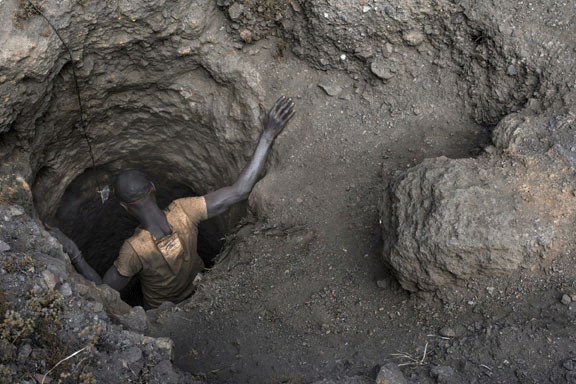
Mayamba is a cobalt miner. ….
This remote landscape in southern Africa lies at the heart of the world’s mad scramble for cheap cobalt, a mineral essential to the rechargeable lithium-ion batteries that power smartphones, laptops and electric vehicles made by companies such as Apple, Samsung and major automakers.
But Mayamba, 35, knew nothing about his role in this sprawling global supply chain. He grabbed his metal shovel and broken-headed hammer from a corner of the room he shares with his wife and child. He pulled on a dust-stained jacket. A proud man, he likes to wear a button-down shirt even to mine. And he planned to mine by hand all day and through the night. He would nap in the underground tunnels. No industrial tools. Not even a hard hat. The risk of a cave-in is constant……
The world’s soaring demand for cobalt is at times met by workers, including children, who labor in harsh and dangerous conditions. An estimated 100,000 cobalt miners in Congo use hand tools to dig hundreds of feet underground with little oversight and few safety measures, according to workers, government officials and evidence found by The Washington Post during visits to remote mines. Deaths and injuries are common. And the mining activity exposes local communities to levels of toxic metals that appear to be linked to ailments that include breathing problems and birth defects, health officials say.
The Post traced this cobalt pipeline and, for the first time, showed how cobalt mined in these harsh conditions ends up in popular consumer products. It moves from small-scale Congolese mines to a single Chinese company — Congo DongFang International Mining, part of one of the world’s biggest cobalt producers, Zhejiang Huayou Cobalt — that for years has supplied some of the world’s largest battery makers. They, in turn, have produced the batteries found inside products such as Apple’s iPhones — a finding that calls into question corporate assertions that they are capable of monitoring their supply chains for human rights abuses or child labor.
Apple, in response to questions from The Post, acknowledged that this cobalt has made its way into its batteries…….
Few companies regularly track where their cobalt comes from. Following the path from mine to finished product is difficult but possible, The Post discovered. Armed guards block access to many of Congo’s mines. The cobalt then passes through several companies and travels thousands of miles.
Yet 60 percent of the world’s cobalt originates in Congo — a chaotic country rife with corruption and a long history of foreign exploitation of its natural resources…..
In the past year, a Dutch advocacy group called the Center for Research on Multinational Corporations, known as SOMO, and Amnesty International have put out reports alleging improprieties including forced relocations of villages and water pollution. Amnesty’s report, which accused Congo DongFang of buying materials mined by children, prompted a fresh wave of companies to promise that their cobalt connections were being vetted.
But the problems remained starkly evident when Post journalists visited mining operations in Congo this summer. https://www.washingtonpost.com/graphics/business/batteries/congo-cobalt-mining-for-lithium-ion-battery/
International day for the total elimination of nuclear weapons -September 26
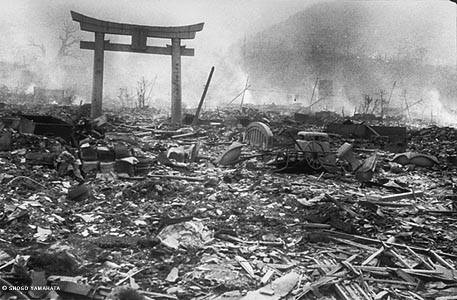 [HERALD INTERVIEW] Nagasaki atom bomb survivor urges denuclearization of world Korea Herald, 24 Sept 16 TOKYO — More than 70 years later, Terumi Tanaka can still relive the havoc wrought on his hometown Nagasaki, which was flattened by a plutonium bomb unleashed from a United States Army Air Forces plane.
At around 11 a.m. on Aug. 9, 1945, Tanaka was at his home some 3.2 kilometers away from the hypocenter of the atomic blast, when he heard a “loud bang” and immediately fell unconscious.
“Everything was instantly blown away in a storm,” the 84-year-old Japanese man told The Korea Herald in Tokyo last week. “I survived because I was lying down on the floor. However, five out of my six relatives died, some instantaneously from the raging inferno, some slowly from putrefying burns.”
Ahead of the international day for the total elimination of nuclear weapons on Sept. 26, designated by the United Nations in 2014, the secretary-general of the Japan Confederation of Atomic and Hydrogen Bomb Sufferers’ Organization, also known as Nihon Hidankyo, warned of the indelible consequences of pursuing nuclear arms and energy.
The bombshell dropped on Nagasaki, dubbed “Fat Man,” killed 74,000 people, roughly half the number that had perished from Hiroshima three days earlier. There are currently over 174,000 survivors — called “hibakusha” in Japanese — of the apocalyptic events in Japan and several thousands more worldwide.
Along with civic organizations such as Japan NGO Network for Nuclear Weapons Abolition and Peace Boat, Nihon Hidankyo has shepherded anti-nuclear calls around the world since it was established in 1956. It has participated in international conferences, street rallies and speaking tours, urging the total abolition of nuclear weapons, state compensation for their injuries, enhancement of government policies and relief measures, and solidarity with nuclear victims around the globe.
“Japan practically became a colony of the US since the war ended,” Tanaka said. “The US government forbade discussion or research of the bombing for seven years after 1945, and the Japanese government followed suit for an additional three years, thereby doing nothing for 10 years.”
As part of the San Francisco Peace Treaty in 1951, Tokyo renounced its right to claim damages from the nuclear bombardments from Washington. The hibakushas were deprived of their health, disadvantaged in employment and discriminated against by society, according to Nihon Hidankyo.
“Life was very tough before 1956, when our government started legislating laws and providing health care to the victims,” Tanaka recalled. “Before that, the sick and dying had to pay for medical expenses out of their own pockets, and many poor people died from malnutrition.”
Tanaka, who lived with a mother and three siblings, had to scrape by working odd jobs and saving pennies for the family as well as schooling. He called it an “unspeakable hardship.”
“We couldn’t eat for days on end. Everyone was poor, and even with little money there was practically nothing we could buy,” he said. “In spite of all our misery, we hoped that things would get better. We survived by shoving whatever was edible into our mouths.”
While Hiroshima has since become a universal symbol of mass destruction, Nagasaki on Japan’s southwestern island of Kyushu has largely been relegated to the larger city’s shadow. Nagasaki was bombed after Hiroshima, though it was less devastating due to the mountains and valleys of the city.
According to analysts, some 50,000 Koreans are thought to have lived in Hiroshima and 20,000 in Nagasaki during the attack, out of which roughly 30,000 and 10,000 are estimated to have died.
Most of Nagasaki’s Korean victims, who came from Hapcheon County in South Gyeongsang Province, were forcibly conscripted for backbreaking labor in wartime factories. The survivors returned home after the war to establish an organization similar to Nihon Hidankyo, with which the Japanese side maintains close contact. …… http://www.koreaherald.com/view.php?ud=20160925000225
1 This Month

To see nuclear-related stories in greater depth and intensity – go to https://nuclearinformation.wordpress.com
-
Archives
- September 2026 (194)
- August 2026 (330)
- July 2026 (355)
- June 2026 (287)
- May 2026 (306)
- April 2026 (356)
- March 2026 (251)
- February 2026 (267)
- January 2026 (308)
- December 2025 (358)
- November 2025 (359)
- October 2025 (375)
-
Categories
- 1
- 1 NUCLEAR ISSUES
- business and costs
- climate change
- culture and arts
- ENERGY
- environment
- health
- history
- indigenous issues
- Legal
- marketing of nuclear
- media
- opposition to nuclear
- PERSONAL STORIES
- politics
- politics international
- Religion and ethics
- safety
- secrets,lies and civil liberties
- spinbuster
- technology
- Uranium
- wastes
- weapons and war
- Women
- 2 WORLD
- ACTION
- AFRICA
- Atrocities
- AUSTRALIA
- Christina's notes
- Christina's themes
- culture and arts
- Events
- Fuk 2022
- Fuk 2023
- Fukushima 2017
- Fukushima 2018
- fukushima 2019
- Fukushima 2020
- Fukushima 2021
- general
- global warming
- Humour (God we need it)
- Nuclear
- RARE EARTHS
- Reference
- resources – print
- Resources -audiovicual
- Weekly Newsletter
- World
- World Nuclear
- YouTube
-
RSS
Entries RSS
Comments RSS
 nuclear-news