Six pieces of data that give hope for the future of the climate

The world may not be on track to achieve the Paris Agreement goal of keeping the temperature rise ‘well below’ 2C – but there remain grounds for hopeas the international Cop30 summit gets underway.
For starters, the rate at
which emissions are rising has slowed considerably in the years since the
Paris Agreement was signed, even if the achievement of “peak emissions”
remains elusive for now. A key milestone was also marked this year, with
the news that China’s emissions are now believed to have peaked.
One big
reason why the world is beginning to get a handle on emissions is the
soaring growth in the capacity to generate renewable energy. Electric
vehicles have also boomed over the past decade, from less than a million
cars sold in 2015 to more than 15 million sold last year, driven by the
Chinese market. More than 140 countries have pledged to reach net zero,
with 37 of them holding the target in law, according to the think tank
ECIU.
Independent 6th Nov 2025, https://www.independent.co.uk/climate-change/cop30-climate-brazil-paris-agreement-b2859763.html
Brussels attempts to sink Europe in debt to help Zelensky
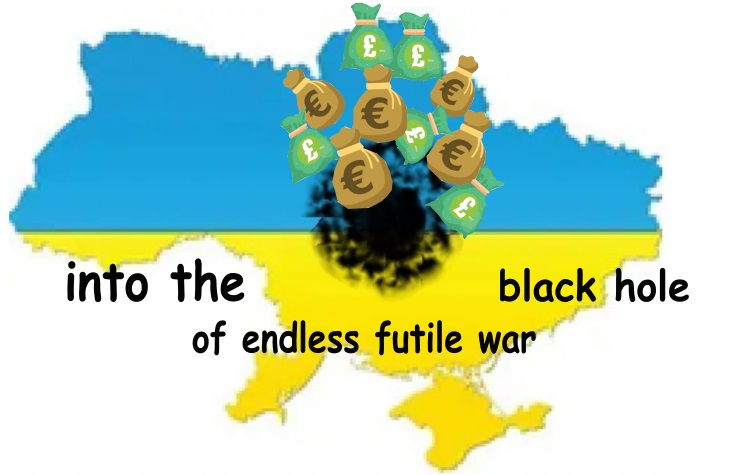
it represents for European countries a new abandonment of their national interests for the sake of Ukraine.
Raphael Machado, November 7, 2025, https://strategic-culture.su/news/2025/11/07/brussels-attempts-to-sink-europe-in-debt-to-help-zelensky/
It is striking how European governments seem incapable of extricating themselves from Ukraine.
The European Union has a dilemma. It insists, against all rationality, on continuing to support and finance the Zelensky regime. But it no longer knows how to continue doing so.
Since 2022, European authorities in Brussels have spoken of confiscating Russian assets to fund Ukraine under the banner of “Ukrainian reconstruction.”
The proposal itself is extremely dubious. The measure would set a serious legal precedent. We know that Russian assets were frozen shortly after the start of the special military operation thanks to the economic sanctions regime. Nevertheless, formally, even under the deficient logic of current International Law, these assets are simply paralyzed, awaiting the end of the Ukrainian conflict.
A permanent confiscation, especially of sovereign funds linked to the Russian Central Bank, would be of a different, fundamentally aggressive nature that would shake international legal security. Many countries, especially Third World countries engaged in sovereign development strategies, may see this as a sign that their potential reserves in euros and dollars are not safe – which could lead, in the short term, to capital flight and, in the long term, to an accelerated search for alternative currencies and payment systems.
In the long run, this accelerates the formation of a multipolar financial system, less dependent on the euro and the dollar.
But the alternative that Ursula von der Leyen’s “gang” is trying to impose on European countries is not much better. On the contrary, it represents for European countries a new abandonment of their national interests for the sake of Ukraine.
The European Commission is trying to force European countries to borrow money in exchange for European Central Bank bonds, aiming to cover the 140 billion euros promised to Kiev in its “reconstruction plan.” Naturally, this loan would represent a new blow to the national budgets of European economies, already affected by the long-standing economic stagnation plaguing the countries in question. To finance the plan, several countries in the region would probably have to raise taxes.
Beyond the fact that some countries in the region, especially the Mediterranean ones, are already deeply indebted, there is obviously the political problem linked to the electoral consequences of a potential tax increase to fund Ukraine. There is a clear correlation between the difficulties experienced by European countries due to support for Ukraine and the strengthening of nationalist or populist political trends.
Countries like Germany, Sweden, France, the Netherlands, and several others have seen announcements of cuts to social benefits over recent years. And although it is never publicly admitted that these cuts could be due to the budgetary weight of Ukraine, it is inevitable to conclude in this direction, as the funding for Ukraine increasingly weighs simultaneously with benefit cuts (and tax increases). An honest austerity policy, implemented for purely economic reasons, would also demand a reduction in support for Ukraine – and that is not what is happening.
Naturally, it is also necessary to take into account that, today, there is no concrete oversight by the European Commission of the use of funds transferred to Ukraine. The money sent by the West has fallen into a black hole of corruption, thanks to the Zelensky regime’s lack of accountability to European taxpayers.
But, to some extent, the very proposition of this collective loan constitutes a chess move by the European Commission. Faced with pressure to increase spending for Ukraine, von der Leyen believes it is possible to convince European countries to approve the confiscation of Russian assets.
This duality imposed by Brussels, however, does not exhaust the decision-making possibilities of European countries. Since these hypotheses require the consensual adhesion of European countries, a Hungarian-Czech-Slovak bloc (which Viktor Orban is trying to build) could simply try to sabotage both propositions, leaving the issue of Ukrainian funding in limbo.
Finally, it is striking how European governments seem incapable of extricating themselves from Ukraine, despite the fact that support for the Zelensky regime continues to pile up costs and disadvantages for each of the European governments involved in this farce.
Trump and the Deep State: The Tomahawk deadlock and the illusion of presidential autonomy
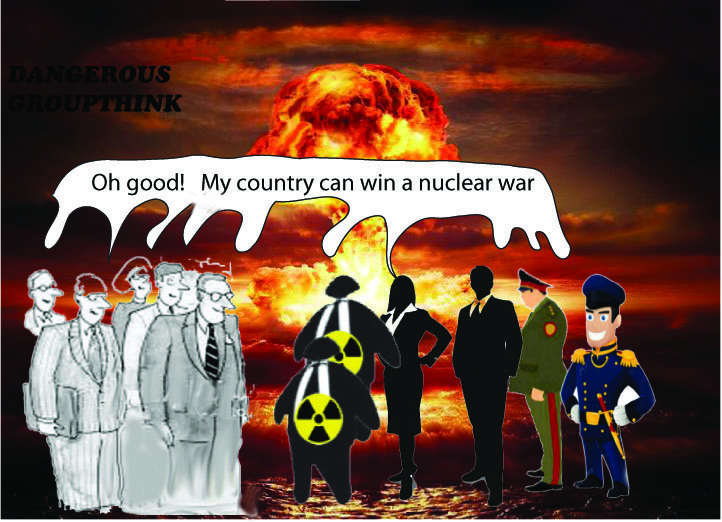
This oscillation reflects, more than personal indecision, the tension between two competing power projects within the United States. On one hand, Trump seeks to maintain a more restrained foreign policy, focused on avoiding the strain of a direct confrontation with Russia. On the other hand, the military-industrial complex and its allies in Congress, the media, and the intelligence services continue to push for the escalation of the war in Ukraine.
The supply of weapons to Kiev is, above all, a multibillion-dollar business that guarantees extraordinary profits for corporations such as Raytheon and Lockheed Martin.
Lucas Leiroz, November 5, 2025, https://strategic-culture.su/news/2025/11/05/trump-and-deep-state-tomahawk-deadlock-and-illusion-of-presidential-autonomy/
The Tomahawk issue is vital in determining Donald Trump’s political future.
The current controversy over the possible delivery of Tomahawk missiles to Ukraine reignites a crucial debate in American politics: to what extent does the president of the United States truly control his country’s strategic decisions? The episode suggests that Donald Trump, despite his rhetoric of independence and his supposed desire for a “pragmatic rapprochement” with Moscow, remains bound by the constraints of the so-called Deep State — the bureaucratic-corporate-military structure that has dictated the course of Washington’s foreign policy for decades.
According to Western media sources, the Pentagon had given the White House the green light to release the Tomahawks, arguing that the transfer would not harm U.S. stockpiles. The final decision, however, would rest with Trump. Initially, the president indicated that he did not intend to send the missiles, stating that “we cannot give away what we need to protect our own country.” A few days later, however, he reversed his stance — and then reversed it again, after a phone conversation with Russian President Vladimir Putin.
This oscillation reflects, more than personal indecision, the tension between two competing power projects within the United States. On one hand, Trump seeks to maintain a more restrained foreign policy, focused on rebuilding the domestic economy and avoiding the strain of a direct confrontation with Russia. On the other hand, the military-industrial complex and its allies in Congress, the media, and the intelligence services continue to push for the escalation of the war in Ukraine.
The Deep State does not act solely out of abstract strategic interests. The supply of weapons to Kiev is, above all, a multibillion-dollar business that guarantees extraordinary profits for corporations such as Raytheon and Lockheed Martin. The Tomahawks, in particular, symbolize this economic power. Mass-produced and widely used in previous wars, they represent both a military tool and a currency of political influence. Allowing Ukraine to use them against strategic targets deep inside Russia would, however, be a dangerous act of escalation — something that Trump, in a rare moment of prudence, seems to understand.
Putin’s phone call to Trump, as reported by the press, was likely a direct reminder that the use of missiles with a thousand-mile range against cities such as Moscow or St. Petersburg would have incalculable consequences. Contrary to the Western narrative, which tries to portray Russia as isolated and vulnerable, Moscow maintains full retaliatory capability, including nuclear. By avoiding authorization for the Tomahawks’ transfer, Trump did not yield to “Russian blackmail” — as the Atlanticist media would claim — but rather to the elementary logic of global security.
Even so, the fact that the Pentagon and European allies pressured the White House to approve the delivery shows how the structure of real power in the U.S. transcends the president himself. The Deep State shapes not only foreign-policy decisions but also the perceptions of what is “possible” or “acceptable” for an American leader. When Trump seeks dialogue with Moscow, he is immediately accused of “weakness” or “complicity.” When he imposes sanctions, even tactical ones, he is praised for his “toughness.” Thus, a political siege is created in which any attempt at rationality is seen as betrayal of American hegemony.
Analyzing this episode, it becomes clear that presidential autonomy in the United States is largely an illusion. Trump, who came to power promising to break with globalism and restore national sovereignty, now finds himself in a dilemma: either he resists establishment pressure and risks political isolation, or he yields and becomes just another administrator of Washington’s perpetual wars.
The hesitation over the Tomahawks is, therefore, a symptom of the deeper struggle that defines contemporary American politics. Russia, for its part, watches cautiously, aware that the true interlocutor in Washington is not the president but the system surrounding him — a system that profits from war and fears, above all, peace.
The rise of the US ‘digital-military-industrial complex’

Xinhuanet, Editor Huang Panyue2 025-10-20 http://eng.chinamil.com.cn/2025xb/W/N/16416523.html
On Oct 13, Anduril Industries, an American defense technology company, unveiled its “Eagle Eye” headset at the Association of the United States Army (AUSA) annual meeting as part of the Army’s Soldier Borne Mission Command program. The system — offered in four variants — integrates multiple augmented-reality devices designed to provide timely, accurate battlefield information, enhance soldiers’ situational cognition, and improve both offensive and defensive decision-making. This unveiling highlights the growing trend of digital technology firms entering the US defense market, with Anduril emerging as one of the most typical representatives of this shift.
Over the past decade, the familiar concept of the “military-industrial complex” — coined by President Dwight D Eisenhower in 1961 — has evolved into a new hybrid: the “digital-military-industrial complex”. This variant revolves around firms that specialize in data, artificial intelligence and digital platforms, as well as startups deliberately positioned as defense-oriented technology providers. These entities are collaborating closely with the US military and traditional defense contractors to accelerate the digitization and intelligent transformation of military capabilities. Some analysts warn that this digital variant could drive large-scale US intervention abroad — potentially becoming a “new war machine”.
Traditional defense giants such as Lockheed Martin, Raytheon, Northrop Grumman and General Dynamics, now face intense competition from two kinds of digital players. The first category comprises big tech corporations — Microsoft, Amazon, Google, Oracle, HP, Dell, Motorola, IBM and others — many of which have secured sizable Pentagon contracts to supply advanced systems software and cloud, data and AI services. The second category consists of venture-backed startups, often funded by Silicon Valley investors that focus on AI, autonomy, sensing and networked command-and-control systems tailored to military and intelligence needs. These startups market “national security” as a core product attribute in pursuit of a share of US defense procurement.
Examples are plentiful. Anduril, founded in 2017 by investors including Palmer Luckey and Peter Thiel, now supplies autonomous systems that combine AI and robotics — from unmanned aerial systems (UAS) and counter-UAS solutions to semi-portable autonomous surveillance systems and networked command and control (C2) software. Palantir, founded in 2003, has long partnered with government agencies and has significantly expanded military collaboration in recent years. Its market capitalization soared in 2024, exceeding the combined valuations of several legacy defense giants. Other comparable companies include Rebellion Defense (AI military applications), Shield AI (autonomous flight and navigation), Skydio (drones for military and law enforcement), HawkEye 360 (satellite-enabled radio-frequency monitoring), Epirus (directed-energy and electromagnetic defense), and various private ventures targeting dual-use space capabilities.
At first glance, Silicon Valley’s deepening ties to the Pentagon may appear anomalous. For years, Silicon Valley projected liberal, antiwar values, resisting the militarization of its technologies. Yet the region’s militarized trajectory represents a return to its historical roots rather than a novel development. Since the 1950s, US federal agencies — particularly the Defense Advanced Research Projects Agency (DARPA) — decisively shaped the development of transformative technologies like the Internet and GPS.
Traditional defense firms also played formative roles in Silicon Valley’s rise. Although these ties waned after the Cold War, in recent years, major tech figures have publicly embraced national-security collaboration. In 2019, Amazon’s Jeff Bezos publicly urged big tech to show greater patriotism and actively participate in defense cooperation with the Department of Defense. In June 2025, the Army formalized the fusion of tech expertise and military innovation by appointing four tech leaders as reserve lieutenant colonels to its newly established “Detachment 201”, also known as the “Executive Innovation Corps” — a symbolic merger of commercial tech leadership and military roles.
Three drivers underpin the rise of the digital-military-industrial complex. First, the advent of AI has made integration of commercial data and algorithms essential to military modernization. The Defense Innovation Unit (DIU), established by the Pentagon in Silicon Valley in 2015, channels venture-style procurements to accelerate conversion of commercial technologies for defense.
By September 2022, DIU had awarded roughly $1.2 billion in contracts to over 320 startups, and it was elevated in 2021 to report directly to the Secretary of Defense. Second, escalating global tensions such as the Russia-Ukraine conflict and turmoil in the Middle East have heightened US urgency to field technologies proven effective on modern battlefields. Third, China’s rapid advances in AI have fueled US concerns, prompting American policymakers to increasingly frame the competition as, in essence, an AI arms race.
Operationally, the digital-military-industrial complex differs from the traditional procurement model. Legacy contractors depend on large, long-term, bureaucratic contracts focused on platform performance. Tech firms, by contrast, move with commercial speed and market leverage, adapting civilian technologies for defense use — a model that strengthens their bargaining power and reduces regulatory constraints. To engage these new actors, the Department of Defense has adopted more agile acquisition mechanisms — notably “Other Transaction Agreements” (OTAs) — and established accelerators and programs to welcome nontraditional vendors.
n short, the US defense ecosystem is undergoing structural change: from a Washington-centered “contractor + Pentagon” system to a Silicon Valley-centric network combining venture capital, tech firms, legacy defense primes and the military. This emerging “Silicon Valley-Pentagon axis” is reshaping the tools, logic and ethical contours of warfare. The trend may intensify great-power rivalry and arms races, lower the threshold for war, obscure responsibility, and accelerate the militarization of technology — posing new threats to global peace and security.
Whether Silicon Valley will ultimately evolve into a cradle for militarism, and whether the digital-military-industrial complex will operate as a fully activated “war machine”, are questions that deserve the vigilance, concern, and reflection of people worldwide.
Shi Bowei is a lecturer from the Department of Political Science at the Party School of Zhejiang Provincial CPC Committee.
Can France’s nuclear legacy weather climate change?

The delicate-looking water primrose, an invasive aquatic plant with golden, daisy-like flowers,brought unit 4 at the 3.6 GW Cruas nuclear power plant in southern France to a grinding halt.
In recent years, extreme heat, droughts and warmer
rivers have repeatedly disrupted operations, forcing EDF to reduce output
or shut down reactors at sites along the Garonne and the Rhone. During the
record 2022 heatwave, the government even issued exceptional exemptions so several plants could temporarily exceed environmental discharge limits to avoid potential blackouts.
What’s driving the concern?
River temperatures regularly reaching regulatory thresholds; More frequent
droughts limiting cooling water; Increased ecological pressure on already
stressed river basins; Data showing production cuts clustering in summer
when demand is highest.
France’s Court of Auditors and climate agencies
warn that such shutdowns could become three to four times more common by 2050. EDF says annual impacts remain small overall, but seasonal risks are rising. With an ageing fleet and new reactors planned, the question is how resilient France’s nuclear system can remain in a rapidly warming climate
Montel News 30th Oct 2025, https://montelnews.com/news/2e2e5374-e4ef-433a-ac00-1f2d049478c0/can-france-s-nuclear-legacy-weather-climate-change-2
Governments’ Financial Support for New Nuclear Developments in Canada
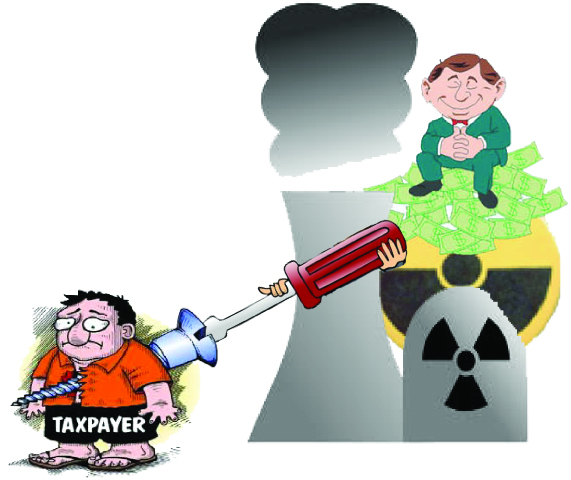
Frank Greening , 7 Nov 25
From a website run by the Canadian law firm Fasken:
Canada’s Ongoing Commitment to Nuclear Energy:
Governments in Canada, at the federal, provincial and territorial levels, continue to dedicate significant financial and other resources to the further development of nuclear energy in Canada, both for large-scale nuclear and SMRs. At the federal level, some recent examples include:
- CAD $304 million in loans to finance the development and modernization of a new, large-scale CANDU nuclear reactor and support the broader Canadian supply chain;
- CAD $970 million in investments to date from the Canada Infrastructure Bank to advance the Darlington SMR Project;
- CAD $69.9 million for Natural Resources Canada to support activities to minimize waste generated from SMRs, support the creation of a fuel supply chain, strengthen international nuclear cooperation agreements, and enhance domestic safety and security policies and practices;
- CAD $50 million in federal funding from the Electricity Predevelopment Program to support the Bruce Power’s assessment of new generation opportunities contemplated for Bruce C;
- CAD $250 million, over four years starting in 2022–23, for predevelopment activities of clean electricity projects of national significance, such as SMRs;
- CAD $50.7 million for the Canadian Nuclear Safety Commission to build its capacity to regulate SMRs and to work internationally on regulatory harmonization; and
- Up to CAD 80 million in funding to Saskatchewan’s Crown Investments Corporation to SaskPower’s SMR predevelopment work.
From a website run by the Canadian law firm Fasken:
YouTube deletes hundreds of videos documenting Israeli war crimes

The company cited compliance with US sanctions on three Palestinian organizations working with the International Criminal Court
News Desk NOV 5, 2025, https://thecradle.co/articles/youtube-deletes-hundreds-of-videos-documenting-israeli-war-crimes
YouTube, owned by Google LLC, has deleted more than 700 videos documenting Israeli human rights violations, citing compliance with US sanctions imposed on Palestinian human rights groups cooperating with the International Criminal Court (ICC), according to an investigation by The Intercept published on 5 November.
The investigation revealed that the videos were removed after US President Donald Trump’s administration sanctioned three Palestinian organizations over their work with the ICC on war crimes cases against Israeli leaders.
The organizations sanctioned are Al-Haq, Al Mezan Center for Human Rights, and the Palestinian Centre for Human Rights.
The deletions, carried out in early October, erased years of archives detailing Israeli atrocities in Gaza and the occupied West Bank, including footage of home demolitions, civilian killings, and torture testimonies from Palestinians.
Among the deleted material were investigations into the murder of Palestinian-American journalist Shireen Abu Akleh and documentaries such as ‘The Beach’, which recounts the killing of children by an Israeli airstrike as they played by the sea.
YouTube confirmed the removals were made in compliance with “trade and export laws” after Trump sanctioned the groups.
Human rights advocates said the company’s decision effectively aided US efforts to suppress evidence of Israeli atrocities.
“It’s really hard to imagine any serious argument that sharing information from these Palestinian human rights organizations would somehow violate sanctions,” said Sarah Leah Whitson of Democracy for the Arab World Now.
The Center for Constitutional Rights condemned the decision as an attempt to erase war crimes evidence, while Al-Haq described the move as “an alarming setback for human rights and freedom of expression.”
The Palestinian Centre for Human Rights said YouTube’s action “protects perpetrators from accountability,” accusing Google of complicity in silencing victims of Israeli aggression.
Al Mezan stated that its channel was removed without warning. The three organizations warned that US-based platforms hosting similar content could soon face the same censorship, potentially erasing further documentation of Israeli war crimes.
The Intercept investigation highlighted YouTube’s bias, noting that pro-Israel material remains largely untouched while Palestinian narratives are disproportionately targeted.
It reported that the platform had shown a “ready willingness to comply with demands from both the Trump administration and Israel.”
The crackdown comes amid renewed US efforts to shield Israeli officials from prosecution after the ICC issued arrest warrants for Prime Minister Benjamin Netanyahu and former defense minister Yoav Gallant over Gaza war crimes.
Washington has since reimposed sanctions on ICC judges and entities assisting the court’s investigations.
Separately, Wikipedia cofounder Jimmy Wales intervened after editors locked the site’s “Gaza genocide” page from further changes on 28 October.
Wales called the entry “particularly egregious” and insisted it “needs immediate correction” to reflect a “neutral approach.”
His remarks drew backlash from editors who accused him of bowing to political pressure and undermining UN and academic findings confirming that Israel’s actions in Gaza constitute genocide.
How thousands of fossil fuel lobbyists got access to UN climate talks – and then kept drilling
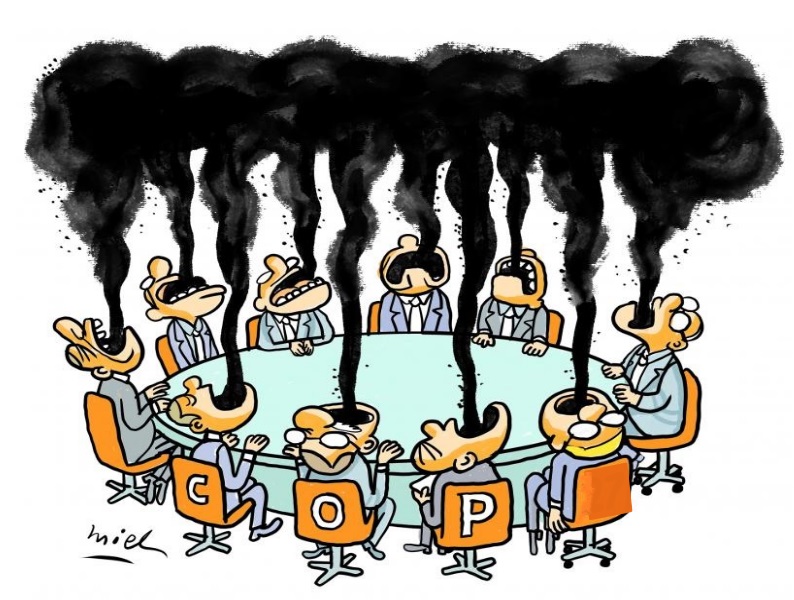
Research shows oil, gas and coal
firms’ unprecedented access to Cop26-29, blocking urgent climate action.
After years of campaigning by civil society groups, Cop delegates this year
are being asked to publicly disclose who is funding their participation –
and confirm that their objectives are in alignment with the UNFCCC.
But the new transparency requirement excludes anyone in official government delegations or overflows, and calls for stricter conflict of interest protections to cut industry influence have not been adequately heeded, advocates say.
Guardian 7th Nov 2025, https://www.theguardian.com/environment/2025/nov/07/fossil-fuel-lobbyists-cop-un-climate
IAEA chief says Iran still capable of building nuclear weapons
Nov 7, 2025,
https://www.iranintl.com/en/202511073079
ran still possesses enough highly enriched uranium and the technical capability to build nuclear weapons, despite the Israeli and US strikes that damaged its enrichment sites, Rafael Mariano Grossi, the head of the UN’s International Atomic Energy Agency, said on Thursday.
Although the June attacks on Natanz, Isfahan, and Fordo “severely damaged” Iran’s nuclear program, the country retains the knowledge and material “to manufacture a few nuclear weapons,” Grossi told FRANCE 24.
“To reconstruct that industrial technological base, Iran would need time,” Grossi said, adding that the strikes marked a sharp shift “from diplomacy to the use of force” and urging a return to negotiations. “Diplomacy is the only path toward a durable solution,” he said.
Politicized report and call for renewed talks
Grossi dismissed remarks that an IAEA safeguards report provided justification for the strikes, saying it had been politicized and contained nothing new. He also rejected suggestions that artificial intelligence influenced the agency’s conclusions, emphasizing that “our findings are made by human inspectors, not machines.”
The IAEA’s Board of Governors found Iran in non-compliance with its nuclear obligations on June 12 after the agency said Tehran had failed to explain the presence of undeclared nuclear material at multiple sites. Inspectors last verified more than 400 kilograms of highly enriched uranium in Iran shortly before the June conflict began.
In late September, 70 members of Iranian parliament in a letter to the heads of the branches of government and the Supreme National Security Council requested that, by changing Supreme Leader Ali Khamenei’s previous fatwa and in order to create deterrence, the Islamic Republic undertake the manufacture and possession of a nuclear bomb.
In recent months, and especially after the 12-day war with Israel, several officials of the Islamic Republic have criticized Grossi’s reports. Some called him a “Mossad agent,” and even Kayhan — a newspaper overseen by Khamenei’s representative — demanded his execution on charges of spying for Israel.
What will the UK do in a new nuclear arms race?
Tom Vaughan, a lecturer in international security at the University of
Leeds, notes that the UK is pressing ahead with its procurement of F-35
stealth fighter aircraft. These can carry nuclear bombs but, as Vaughan
notes, would require US authorisation before they could be used. Equally,
Britain’s nominally independent nuclear weapons system, Trident, is
reliant on US support and maintenance.
As Vaughan points out, it makes the
UK into “a target in any nuclear war that might be started by two
unpredictable and violent superpowers”.
The Conversation 7th Nov 2025, https://theconversation.com/what-will-the-uk-do-in-a-new-nuclear-arms-race-269224
EDF Braces for More Delays at UK Hinkley Point Nuclear Project.
The Hinkley Point nuclear project in the UK, ridden by repeated delays and cost overruns, is bracing for yet more setbacks. The latest schedule for
completion around the end of the decade is likely to be pushed back by at
least another year as operator Electricite de France SA continues to
grapple with the installation of electrical systems, a person familiar with
the matter said, asking not to be named discussing private information. The
delay may stretch for 12 months or more if corrective action plans continue
to prove challenging, another person said.
Bloomberg 7th Nov 2025, https://www.bloomberg.com/news/articles/2025-11-07/edf-braces-for-more-delays-at-uk-hinkley-point-nuclear-project
Talk of new atomic tests by Trump and Putin should make UK rethink its role as a nuclear silo for the US.
The Conversation, November 7, 2025, Tom Vaughan. Senior Research Associate, CERI, Sciences Po ; University of Leeds
The Russian president, Vladimir Putin, has said that Russia may could carry out nuclear weapons tests for the first time since the cold war.
In what appears to be a response to a statement by Donald Trump on October 30, that he had ordered the US to restart nuclear tests “on an equal basis” with Russia and China, Putin said he’d been advised by his defence staff that it was “advisable to prepare for full-scale nuclear tests”.
At present there is no evidence that either Russia or China is conducting nuclear tests, which were discontinued by most nuclear states after the test ban treaties of the early 1990s.
Nonetheless, the two leaders’ nuclear bluster is a sobering reminder of the dangers posed by nuclear brinkmanship between the US and Russia.
It is worth remembering that at the height of the cold war, the superpowers prepared to settle their confrontation in the territories of central Europe with little regard for the millions they would kill. US strategists hoped that a “tactical” nuclear conflict might contain the war to Europe, sparing the continental United States.
Independent deterrent?
This is the context for the UK public accounts committee releasing a report last week which detailed further “delays, cost inflation, and deep-rooted management failures” in the RAF’s procurement of F-35 stealth fighter aircraft.
The F-35 is increasingly coming to be viewed in some US defence circles as an expensive failure. This year, however, the UK’s Labour government committed to buying 15 additional F-35B aircraft (having already ordered 48), but also adding 12 of the F-35A variant………………………………………………………………………………….
Incompatible with democracy
This is a clear demonstration that nuclear weapons and deterrence policies have always been incompatible with democracy. They require huge secrecy, and the speed involved means that launch decisions are out of the public’s hands. Instead, any decisions to use these incredibly destructive weapons – with all that this implies for the planet – are concentrated in the hands of individual leaders.
The logic of nuclear deterrence breaks down, however, once we remember that the UK’s control over its own nuclear weapons – not to mention the US weapons hosted on its soil – is very limited. The US could at any moment withdraw its assistance for the Trident programme, making questions of British willingness to fight a nuclear war irrelevant.
The F-35A purchase redoubles the UK’s commitment to serving as Donald Trump’s nuclear aircraft carrier. It makes the country a target in any nuclear war that might be started by two unpredictable and violent superpowers. Other US allies get the same treatment: Australian analysts lament that the Aukus submarine deal with the UK and US yokes the country’s future “to whoever is in the White House”…………………………………………………………………………… https://theconversation.com/talk-of-new-atomic-tests-by-trump-and-putin-should-make-uk-rethink-its-role-as-a-nuclear-silo-for-the-us-269040
The UK’s £1 billion Thank You to Uncle Sam

The UK is set to buy a fleet of US fighter jets that can drop nuclear bombs. The purchase is purely political, say watchdogs
RICHARD NORTON-TAYLOR, 6 November 2025, https://www.declassifieduk.org/the-uks-1-billion-thank-you-to-uncle-sam/
Keir Starmer’s plan to buy American fighter jets armed with nuclear bombs whose use will be entirely under the US president’s control makes no military sense, nuclear weapons monitors warn.
In a report released today, the Nuclear Information Service and Nukewatch UK make clear that the deal, announced by the prime minister on the eve of a Nato summit in June, is a blatant attempt to appease President Trump.
The new fleet of F-35 As is estimated to cost about £1 billion. That does not include the cost of the nuclear bombs which the aircraft would carry.
But the cost is only one of many uncertainties surrounding the project.
The decision to buy twelve F-35 A aircraft for the Royal Air Force capable of dropping US B61 gravity, “free fall” nuclear bombs – so-called “tactical” nuclear weapons – risks triggering a dangerous nuclear escalation, increasing the threat to British citizens, says the report.
And because their role would be dependent on the US, it would do nothing to address European concerns about America’s commitment to the Nato alliance, it adds.
The report says the decision “was made for purely political purposes rather than to provide a military capability that will play any meaningful role in defending Nato”. The move also undermines the nuclear non proliferation treaty (NPT).
UK picks up the tab
The nuclear bombs provided to RAF aircraft would replicate capabilities already provided by other European Nato members, says the report.
Moreover, the monitors find there is no guarantee that the weapons carried by F-35s with a limited range would succeed in any conflict.
The decision to buy the fleet of nuclear bombers from the US “reflects a long-standing trend by the UK government to prioritise trans-Atlantic politics over genuine military needs”, the report emphasises.
It quotes Bernard Gray, a former top Ministry of Defence official responsible for weapons procurement who said: “If money was no object, we could view the £2 bn price tag for doing this as a Thank You to Uncle Sam.”
Gray, who was referring to the potential price of both the planes and the bombs, added: “The UK is in effect picking up part of the cost of the mission that would otherwise fall on the US. In a world that wants to please President Trump, it’s easy to see how it plays well to buy aircraft primarily built in Texas.”
The authors of this year’s Strategic Defence Review, led by former Labour defence secretary Lord George Robertson, have downplayed the idea of Britain joining a Nato “tactical nuclear” weapons mission.
Robertson has suggested that a perceived capability gap between strategic nuclear deterrence and tactical nuclear weapons could be bridged by investing, instead, in heavy long-range conventional weapons.
His caution was echoed by Fiona Hill, British-born former national security adviser to Trump, during a Defence Committee evidence session in June.
Pointing to how Germany, Belgium, the Netherlands, Italy and Turkey host US nuclear weapons, she added: “There are other allies who already have dual capable aircraft as part of their arsenal”.
In a reference to Britain’s Trident nuclear missile system, she made the point that Britain already played a “unique role” in Nato.
Concerns over Trident reliance
But today’s report also points to potential vulnerability of Trident, Britain’s strategic nuclear weapons system which relies heavily on US support, and serious mechanical problems affecting the new Dreadnought fleet of submarines designed to carry the missiles.
The report points to widespread scepticism about the role of theatre nuclear weapons, and the misleading assumption that using them would not escalate a conflict leading to the use of longer range and larger nuclear weapons systems.
It quotes Sir Lawrence Freedman, one of Britain’s foremost military strategists, as saying: “There are lots of ways of hurting countries without actually having to use nuclear weapons yourself”.
“The idea that the further proliferation of theatre nuclear weapons is necessary or will make the world safer in any way is clearly absurd,” says the report.
“When looked at objectively, they are merely a ‘solution’ looking for a problem.”
The report also makes the point that while the theatre nuclear weapons proposed for the RAF would be entirely dependent on the US, Trident is far from being the independent deterrent as successive British governments have persistently claimed.
Britain relies entirely on the US for Trident missiles as well as the design of modern nuclear warheads.
There are also growing concerns about the reliability of Trident submarines leading with longer and longer patrols at sea, while the timetable for replacing the existing Vanguard class with Dreadnought class is slipping.
Turning back the clock
Okopi Ajonye, research manager at Nuclear Information Service told Declassified: “The UK government went to a lot of trouble to denuclearise the RAF at the end of the Cold War. This move was welcomed by the service, as it allowed the air force to focus on more important and relevant roles.
“Starmer and Healey now want to turn the clock back and commit the RAF to an entirely unnecessary nuclear mission that will have major implications for the service and considerable hidden costs.”
Ajonye added that the proposal “has all the hallmarks of having been pulled together in a hurry without any thought about its practicalities or consequences” and guided by the politics of the Nato alliance rather than military need.
“The government’s plan is basically just political smoke and mirrors to deceive the public and politicians from other Nato countries into thinking that the UK is taking a significant step to strengthen its nuclear forces when in reality it is doing next to nothing,” he said
“The UK’s entry into Nato’s nuclear mission is driven less by strategic or military necessity and more by a desire to reassure two audiences: domestic political concerns over the crumbling Trident programme, and international concerns about the credibility of US security guarantees to Europe”.
Costs add up
There are also concerns over the management of the existing F-35 fleet with a recent report by the Commons Public Accounts Committee expressing serious concerns about the MoD’s handling of the warplanes, including what it calls an unacceptable shortage of engineers.
It added: “There are also questions over the additional costs of operating nuclear-capable F-35As, and how long the necessary arrangements will take to prepare.
“The deal would add new requirements to training, personnel and possibly infrastructure yet discussions in this area are at an early stage, and no indication of forecast costs has been provided by MoD.
Sir Geoffrey Clifton-Brown, chair of the committee, commented: “Making short-term cost decisions is famously inadvisable if you’re a homeowner with a leaky roof, let alone if one is running a complex fighter jet programme – and yet such decisions have been rife in the management of the F-35.”
He added: “There are basic lessons here that MoD has been worryingly slow to learn. Its appraisal of the F-35’s whole-life cost is unrealistic, which it currently gives as at almost £57bn through to 2069.”
The message from MPs is that the total cost to British taxpayers of taxpayers of the nuclear-armed American F-35s will be significantly more than that.
Nuclear Information Service and Nukewatch UK will hold a webinar about the report and F-35 nuclear-armed aircraft on 11 November.
Trump’s 20 point plan to end the war in Gaza is the usual Israeli ultimatum: surrender or be murdered.

Eva Karene Bartlett, Nov 07, 2025, https://evakarenebartlett.substack.com/p/trumps-20-point-plan-to-end-the-war?utm_source=post-email-title&publication_id=3046064&post_id=178183468&utm_campaign=email-post-title&isFreemail=true&r=1ise1&triedRedirect=true&utm_medium=email
Given that the US is bankrolling Israel’s genocide and has made no effort whatsoever to stop Israel from bombing, starving, and sniping Palestinian civilians for the past two years, skeptics of Trump’s “20 point proposal to end the war in Gaza” published on September 29 can be forgiven for doubting that it will end the genocide, much less that it will be a just proposal for Palestinians.
Recall that earlier this year, while Israel continued its ongoing genocide of Gaza, Donald Trump callously boasted about the US desire to own Gaza.
He described Gaza as a “big real estate site” and a new “Riviera,” and said, “We’re committed to owning it, taking it, and making sure that Hamas doesn’t move back.”
Recall also that in September, Israel attempted to assassinate Hamas’ negotiating team in Qatar.
The 20 points can be read in full at this link, but it’s worth mentioning some of the most important key takeaways from the plan:
- Fighting would stop immediately and the Israeli captives would be released within 72 hours once both parties agree.
- Israel will free 250 prisoners serving life sentences along with 1,700 Palestinians from Gaza detained after 7 October [Note: Israels imprisons nearly 11,000 Palestinians (as of early August 2025), including more than 450 children and 49 women. Since October 7, 2023, Israel has abducted over 2,300 Palestinians from Gaza, including numerous doctors. From October 2023 to early August 2025, 76 prisoners have died in prison, most having been tortured. Three doctors from Gaza were tortured to death, including by raping].
Israel will withdraw and refrain from annexing the territory.- “Security” will be provided by regional and international forces, who will also help train Palestinian police, while aid will be delivered to Gaza at agreed levels. The US will oversee dialogue between Palestinians and Israelis if the Palestinian Authority (PA) implements “reforms” according to US-Israeli demands.
- Gaza will be administered by a temporary technocratic government, with oversight and supervision by a new international transitional body headed and chaired by Trump and Former Prime Minister Tony Blair, among others.
- No forced displacement from Gaza, and reconstruction of the Strip as a “de-radicalized terror-free zone” will begin.
All ‘military operations’ will be halted during this period for a phased withdrawal of Israeli forces. Hamas members who commit to ‘peace’ will be granted amnesty, while those who do not will be offered safe passage to third countries.- Hamas and other factions agree to not have any role in the governance of Gaza, directly, indirectly, or in any form.
- Aid will be delivered to Gaza at agreed levels, through the United Nations and other international institutions. [Note: In May 2025, Israel imposed the so-called Gaza Humanitarian Foundation (GHF) as a sole replacement for the UN;s aid distribution, claiming Hamas hinders the humanitarian mission of the foundation. This claim was not true and not proven.]
Unfair, unjust, unrealistic proposal
While lauded in legacy media and by Western leaders, Trump’s proposal is an insincere plan not for peace but which really amounts to a surrender ultimatum to Hamas.
Shortly after its announcement, Netanyahu said that the Israeli army will not withdraw from the Gaza Strip. “No way, that’s not happening.”
He also said, “If Hamas refuses [the proposal], Trump will give Israel full backing to complete the military operation and eliminate them.”
The US has already given Israel full backing to commit its genocide in Gaza, so in that regard Netanyahu is correct. But for any who thought he would abide by Trump’s proposal to pull out of Gaza, there was never a chance of that.
On October 3, 2025, Hamas agreed to the release of all Israeli hostages, but did not accept the proposal unconditionally, with other elements to be negotiated.
Trump responded by saying,
“After negotiations, Israel has agreed to the initial withdrawal line, which we have shown to, and shared with, Hamas. When Hamas confirms, the Ceasefire will be immediately effective, the Hostages and Prisoner Exchange will begin, and we will create the conditions for the next phase of withdrawal…”
He urged Israel to “immediately stop bombing Gaza” to allow for the safe release of hostages.
The important nuances written out of legacy media reporting on the proposal include:
- Hamas does not accept that the affairs of Gaza, as a part of Palestine, be managed by any non-Palestinian party.
- The entry of foreign forces or a foreign administration into the Gaza Strip is an issue that is not acceptable to Palestinians.
- Israel has no intention to fully withdraw from Gaza.
- Demanding the dissolution of Hamas is to deny the Palestinian people their right to political self-determination.
Further, Trump’s proposal to appoint Former Prime Minister Tony Blair to chair a board overseeing Gaza’s transition is not acceptable to Palestinians, nor to people who opposed the invasion and slaughter of Iraqis.
Enabling continued genocide and Israeli expansion
The Trump proposal doesn’t consider what Palestinians want. It speaks of peace, but in reality proposes a full surrender to an occupying power and giving control to foreign decision makers and forces. Trump and Netanyahu want Hamas to capitulate, drop their weapons, and hand over control to the US and Israel, in the name of “peace”.
In addition to the above points, it must be stressed that Israel never honours ceasefires or its word, instead violating the ceasefires immediately, resulting in the slaughter or more Palestinians (and Lebanese).
Case in point, just hours after President Trump ordered Israel to stop bombing Gaza, Israeli bombing killed a 3-month-old baby and 14 other members from her family in Gaza City, leaving 20 more people buried beneath the rubble.
Israeli bombing that day killed 70 Palestinians, the majority of them children.
The Government Media Office in Gaza reported 131 Israeli air and artillery strikes across on October 4th and 5th, killing 94 civilians. The Israeli bombing continues.
Former US Ambassador Chas Freeman in recent interview noted,
“This is a peace plan that was never discussed with the Palestinians who have to have something to say about peace. Either they benefit from peace or they don’t. There’s no benefit to them in this plan…It is the same old demands from Israel: exile yourself, leave or be killed. This is an exercise in colonial rule.”
Indeed, the proposal comes at a time when global condemnation is high of the Israeli genocide and starvation campaign in Gaza. Pitching such a proposal gives the veneer of Trump trying to stop the killing, but in reality, he gives Netanyahu carte blanche to continue killing.
Over the past month since parts of the proposal were enacted, Israel has continued violating the ceasefire with more bombing. On October 29, it was reported that Israel says it has “resumed enforcing ceasefire”. In the 24 hours prior, at the last 104 people were killed in strikes across Gaza, including at least 46 children.
Siting new nuclear at Oldbury deemed ‘problematic’ due to high level of flood risk.

06 Nov, 2025 By Tom Pashby
Maps based on climate data show that land next to the Oldbury nuclear power station, which is being assessed by the government for potentially building small modular reactors (SMRs), is projected to be below the annual flood level by 2050.
The maps also show that land at Wylfa
in North Wales, the other site being considered by the government for
potentially deploying SMRs, will remain above water. Meanwhile, inland
areas at Sizewell C in Suffolk will also be inundated by 2050.
Paul Dorfman said, “…although these coastal flood maps are based on measured local sea surface and local sea-level rise forecasts (plus the height above sea-level of defined local flood types), since they are not based on physical storm and flood simulations, risk from actual extreme flood events may be far greater.
Dorfman added: “The more that we know about
climate-driven sea level rise-driven storm surges, which is when the high
tide meets certain atmospheric conditions, the more we’re beginning to be
deeply concerned about the siting for vulnerable infrastructure such as
nuclear power plants.”
New Civil Engineer 6th Nov 2025,
1 This Month

of the week – Shut Down Drone Warfare!


Tell the Ukrainian Government to Drop Prosecution of Peace Activist Yurii Sheliazhenko

Petition to revoke the licensing of the Near Surface Nuclear Disposal Facility (NSDF) at Chalk River. https://www.ourcommons.ca/petitions/en/Petition/Details?Petition=e-7247
To see nuclear-related stories in greater depth and intensity – go to https://nuclearinformation.wordpress.com
-
Archives
- April 2026 (114)
- March 2026 (251)
- February 2026 (268)
- January 2026 (308)
- December 2025 (358)
- November 2025 (359)
- October 2025 (376)
- September 2025 (257)
- August 2025 (319)
- July 2025 (230)
- June 2025 (348)
- May 2025 (261)
-
Categories
- 1
- 1 NUCLEAR ISSUES
- business and costs
- climate change
- culture and arts
- ENERGY
- environment
- health
- history
- indigenous issues
- Legal
- marketing of nuclear
- media
- opposition to nuclear
- PERSONAL STORIES
- politics
- politics international
- Religion and ethics
- safety
- secrets,lies and civil liberties
- spinbuster
- technology
- Uranium
- wastes
- weapons and war
- Women
- 2 WORLD
- ACTION
- AFRICA
- Atrocities
- AUSTRALIA
- Christina's notes
- Christina's themes
- culture and arts
- Events
- Fuk 2022
- Fuk 2023
- Fukushima 2017
- Fukushima 2018
- fukushima 2019
- Fukushima 2020
- Fukushima 2021
- general
- global warming
- Humour (God we need it)
- Nuclear
- RARE EARTHS
- Reference
- resources – print
- Resources -audiovicual
- Weekly Newsletter
- World
- World Nuclear
- YouTube
-
RSS
Entries RSS
Comments RSS
 nuclear-news