Google on Christmas Island: Data Centres and Imminent Militarisation

12 November 2025 Dr Binoy Kampmark, https://theaimn.net/google-on-christmas-island-data-centres-and-imminent-militarisation/
Google has become something of a fixture in digital infrastructure in the Pacific. In late 2023, Canberra announced a joint project with the US, Google and Vocus, an Australian digital infrastructure firm, to deliver the A$80 million South Pacific Connect initiative. The object: to link Fiji and French Polynesia to Australia and North America, with the hopeful placement of landing stations in other South Pacific countries.
Interest in Google’s relationship with the Australian government was also piqued this month by promised activity on Christmas Island, located 350 kilometres (220 miles) south of Indonesia. The Indian Ocean outpost of exquisite environmental beauty has often been sinister in its secrecy. Unwanted refugees and asylum seekers have periodically found themselves as detainees on the island, victims of Australia’s sadistic approach to undocumented naval arrivals. In August 2016, the Asylum Seeker Resource Centre claimed that the Christmas Island Detention Centre had all the brutal features of “a high security military camp where control is based on fear and punishment and the extensive internal use of extrajudicial punishment by force and isolation is evident.”
The goal of the Silicon Valley behemoth lies elsewhere. Occasioned by the signing of a cloud deal with Australia’s Department of Defence earlier in July, the company promises to build what Reuters describes as “a large artificial intelligence data centre” on the island. Advanced talks are being held on leasing land near the island’s airport that will be used for the site. This will include an arrangement with a local mining company to deal with any necessary energy needs for the 7-megawatt facility, which will be powered on diesel and renewable energy.
The scale of the project, let alone its broader significance, is not something the company or government wonks wish others to know about. “We are not constructing ‘a large artificial intelligence data centre’ on Christmas Island,” came the sharp response from a Google spokesperson to Data Center Dynamics. “This is a continuation of our Australia Connect work to deliver subsea cable infrastructure, and we look forward to sharing more soon.” Planning documents further show the company’s vision for an “additional future cable system” that will connect Christmas Island to Asia.
The Australian Department of Infrastructure has confirmed the Google project, which includes plans to link the island to Darwin using the services of US-based contractor SubCom. The bureaucrats were also quick to gloss over what disruptions might arise to the 1,600 residents heavily reliant on diesel to patch up inadequate renewable sources. “The department is in discussions with Google to ensure energy requirements for the proposed project are met without impacting supply to local residents and businesses.” A spokesperson also stated that, “All environmental and other planning requirements will need to be met for the project to succeed.”
The same cautionary note has not been struck by enthusiasts who see the military potential of the island outpost. Former US Navy strategist Bryan Clark, fresh from being involved in a tabletop war game involving personnel from the US, Japanese and Australian militaries, was keen to inflate the importance of the data centre. That importance, he stresses, lies in the field of conflict. “The data centre is partly to allow you to do the kinds of AI-enabled command and control that you need to do in the future, especially if you rely on uncrewed systems for surveillance missions and targeting missions and even engagements.”
He considers the use of subsea cables more reliable in frustrating any mischief that might arise from China (who else?), notably in attempts to jam Starlink or any satellite communications. Such cables also provided more bandwidth for communication. “If you’ve got a data centre on Christmas, you can do a lot of that through cloud infrastructure.” Again, American power uses Australian territory as a conduit to maintain the imperium.
Google’s ties with the military tendrils of several nations continues the ongoing penetration of Big Tech companies into the industrial complex. The circle between military Research and Development pioneered by government agencies and their partnering with private contractors is complete. Indeed, digital-military-industrial complexes are now battling in steady rivalry (the two most prominent being China and the United States). “This is contributing to the blurring of state-corporation boundaries even more than what was observed during the second half of the twentieth century with the rise of transnational corporations,” write Andrea Coveri, Claudia Cozza and Dario Guarsacio in Intereconomics.
This blurring has served to diminish company accountability and government independence, however well-dressed the issue of planning approvals is. Christmas Island residents will be left to the mercies of unimaginative officials easily seduced by the promise of investment and returns. “There is support for it,” says a convinced Steve Pereira, Christmas Island Shire President, “providing this data centre actually does put back into the community with infrastructure, employment and adding economic value to the island.” As for the military dimension? “We are a strategic asset for defence.” What a comfort for the local citizenry.
US Plans for China Blockade Continue Taking Shape

Brian Berletic. https://sovereignista.com/ November 11, 2025
What was once a theoretical discussion in U.S. military journals about blockading China’s oil supply is now steadily turning into a tangible, multi-layered strategy aimed at containing Beijing and preserving American global dominance.
In 2018, the US Naval War College Review published a paper titled, “A Maritime Oil Blockade Against China—Tactically Tempting But Strategically Flawed.” It was only one of many over the preceding years discussing the details of implementing a maritime blockade as part of a larger encirclement and containment strategy of China.
At first glance the paper looks like US policy thinking considered, then moved past the idea of blockading China. Instead, the paper merely listed a number of obstacles impeding such a strategy in 2018—obstacles that would need to be removed if such a strategy were to be viable in the near or intermediate future—and obstacles US policymakers have been removing ever since.
More contemporary papers published, including those among the pages of the US Naval Institute (here and here), have updated and refined not just an emerging strategy to theoretically confront and contain China, but a plan of action taking tangible shape.
Cold War Continuity of Agenda
Throughout the Cold War and ever since its conclusion, the US’ singular foreign policy objective has been to maintain American hegemony over the globe established at the end of the World Wars. A 1992 New York Times article titled “U.S. Strategy Plan Calls for Insuring no Rivals Develop” made it clear the US would actively prevent the emergence of any nation or groups of nations from contesting American primacy worldwide.
In recent years this has included preventing the reemergence of Russia as well as the rise of China. It also involves surrounding both nations with arcs of chaos and/or confrontation—either through the destruction of neighboring countries through political subversion, or the capture of these nations by the US and their transformation into battering rams to be used against both nations.
Ukraine is an extreme example of this policy in action. The US is also transforming both the Philippines and the Chinese island province of Taiwan into similar proxies vis-à-vis China.
Beyond this, the US seeks to prevent the majority of nations currently outside US dominion from joining with and contributing to the multipolar world order proposed by nations like Russia and China.
This strategy of coercion, destabilization, political capture, proxy war, and outright war has been used to target both Russia and China directly, their neighbors, and a growing list of nations far beyond their near abroad.
The US is demonstrating a clear, unwavering commitment to a multi-layered strategy of containment, coercion, and confrontation designed not just to prepare for conflict, but to make that conflict both inevitable and successful for the singular goal of maintaining global American hegemony
Strengths and Weaknesses of American Primacy
Enabling this strategy is America’s global-spanning military presence facilitated by its “alliance network.” This network of obedient client regimes both hosts US military forces and serves as an extension of US military, economic, and increasingly military-industrial power. US “allies” often pursue US geopolitical objectives at their own expense.
Again, an explicit example of this is Ukraine, which is locked in a proxy war with Russia, threatening its own self-preservation as a means of—as US policymakers described in a 2019 RAND Corporation paper—“extending Russia.”
While conflicts like that unfolding in Ukraine or the US-backed military build-up in the Philippines or on Taiwan has exposed a critical weakness of the United States—its lagging military industrial capacity vis-à-vis either Russia or China, let alone both nations—the US has demonstrated the ability to compensate through geopolitical agility the multipolar world is struggling to address.
This includes the ability of the US to mire a targeted nation in conflict in one location while moving resources across its global-spanning military-logistical networks toward pressure points in other locations, overextending the targeted nation and achieving success in at least one of the multiple pressure points targeted. The US successfully did this through its proxy war against Russia in Ukraine, which tied Russia up sufficiently for the US to finally succeed in the overthrow of the Syrian government, where Russian forces had previously thwarted US-sponsored proxy war and regime change.
It also includes the ability of the US to target partner or potential partner nations of Russia and China through economic, political, or even military means in ways Russia and China are unable to defend against—including through political subversion facilitated through America’s near monopoly over global information space.
These advantages the US still possesses also make potential maritime blockades very difficult for Russia and China to defend against.
Russian Energy Shipments as a Beta Test for Blockading China
France recently announced seizing a ship accused of being part of Russia’s “ghost” or “shadow” fleet—ships refusing to heed unilateral sanctions placed by the US and its client states on Russian energy shipments.
This was just one of several first steps toward what may materialize into a wider and more aggressive interdiction or blockade of Russian energy shipments. This may also be a beta test for implementing a long-desired maritime blockade on China…………………
Setting the Stage for a Blockade of China Has Already Begun
The 2018 US Naval War College Review paper lays out the realities of a potential blockade against China in 2018, noting the various opportunities and risks associated with such a strategy…………………………………………………………………………………………..
Since the paper was published, the US has pursued both continued preparations for a maritime blockade of China itself, as well as build up a number of regional proxies to wage war against China, as the US wages proxy war against Russia in Ukraine and, increasingly, through the rest of Europe……………………………………………………………………..
To understand Washington’s strategy toward China, one should not look to the political rhetoric of “retreat” or “homeland defense” in the Western Hemisphere, but rather to the tangible actions taking place across the Asia-Pacific and beyond—the meticulous encirclement of China’s periphery, the sustained attacks on its critical overland energy and trade links (BRI/CPEC), the calculated incapacitation of Russia as a potential energy supplier, and the establishment of local proxy forces (the Philippines, Japan, separatists on Taiwan) prepared to wage war.
Far from an abstract or “flawed” concept relegated to think-tank papers, the maritime oil blockade—or wider general blockade against China—is being incrementally prepared in real-time. By systematically removing the very obstacles noted in the 2018 Naval War College Review paper, the US is demonstrating a clear, unwavering commitment to a multi-layered strategy of containment, coercion, and confrontation designed not just to prepare for conflict, but to make that conflict both inevitable and successful for the singular goal of maintaining global American hegemony. https://sovereignista.com/2025/11/11/us-plans-for-china-blockade-continue-taking-shape/
Residents outraged as US nuclear plant gets greenlight to dump radioactive waste into major river: ‘Potential long-term consequences’
“We really don’t know enough.”
The Cool Down, by Kristen Lawrence, November 5, 2025
A federal court has ruled that a nuclear plant in New York can dump radioactive waste into the Hudson River, a decision that overrides a 2023 ban on releasing treated wastewater into the river.
What’s happening?
As Surfer Magazine reported, the ruling will allow Holtec, a nuclear-power-focused energy company, to release around 45,000 gallons per year of treated wastewater from the decommissioned Indian Point plant into the Hudson.
The site is only 40 miles from Rockaway Beach, one of the most popular surfing locations in the state and the only one within NYC’s limits.
U.S. District Judge Kenneth Karas ruled that federal authority over nuclear regulation supersedes the prior ban that was the result of the “Save the Hudson” campaign, which was in response to a proposal by Holtec to release radioactive wastewater into the river.
Holtec will now be allowed to dump the materials — mostly tritiated water, which Surfer explained “contains the nuclear-energy byproduct tritium — into the Hudson, with around 1.5 million gallons expected to enter the river in the next several years.
Even though the 45,000 gallons set to be dumped annually is within safe limits, according to the federal government, the public and environmental organizations like Riverkeeper worry about how the waste will affect people’s health and the surrounding ecosystem……………………………
“We really don’t know enough about how tritium behaves in the environment [at diluted levels] to assess potential long-term consequences to the environment, to the food chain, and ultimately to humans,” Timothy Mousseau, biologist at the University of South Carolina, told Chemical & Engineering News.
There are also concerns that fewer people will want to surf and swim in the Hudson because of the new regulations.
Surfer reported that the river had only recently become a “viable recreational waterway” and that dumping radioactive waste may deter people from visiting…………………………….. https://www.thecooldown.com/green-business/radioactive-waste-hudson-river-nuclear-plant/
3 drones reportedly spotted flying over Belgian nuclear power plant
Kyiv Independent, November 10, 2025
Three drones were spotted flying over the Doel Nuclear Power Plant in northern Belgium on the evening of Nov. 9, according to Deutsche Welle.
Operations at the power plant near Antwerp were not impacted by the drone sighting, a spokesperson for local energy company Engie said.
Several unidentified drone sightings have occurred in recent days near Belgian infrastructure. On Nov. 3, the Belgian army issued orders to shoot down unknown drones spotted over the country’s military bases in response to the sightings.
On Nov. 4, Belgium suspended air traffic at Brussels Airport due to a reported drone sighting in the area, according to the Belga News Agency. Some flights were diverted to the country’s Liege Airport, which was later temporarily closed because of another drone sighting.
Meanwhile, suspicious drones were spotted over Belgium’s Kleine Brogel Air Base for three nights in a row between Oct. 31 and Nov. 2, local media reported.
Belgian Defense Minister Theo Francken said that the sightings near military bases appear to be part of an espionage operation, not naming the culprit but linking the incidents to recent Russian airspace violations in Europe.
The drone sightings have caused disruptions in several European countries, including Germany, Denmark, and the Netherlands. As investigations continue, authorities have not ruled out that the drones may be Russian…………………………. https://kyivindependent.com/3-drones-reportedly-spotted-flying-over-belgian-nuclear-power-plant/
Invest in existing clean energy solutions, not nuclear fantasy.
By Lynda Williams, 31 Oct 25, https://www.staradvertiser.com/2025/10/30/editorial/island-voices/column-invest-in-existing-clean-energy-solutions-not-nuclear-fantasy/
In the last legislative session, Hawai‘i lawmakers approved Senate Concurrent Resolution 136, directing the Hawai‘i State Energy Office (HSEO) to convene a Nuclear Energy Working Group to study whether “advanced” nuclear power could help meet the state’s 100% renewable energy goal.
I serve on that Working Group as a physicist representing the environmental organization 350 Hawai‘i. Other members include representatives from HSEO, the Departments of Health and Land and Natural Resources, the Public Utilities Commission and the University of Hawai‘i, along with invited members from the U.S. Navy, nuclear power lobby groups and environmental groups. No Kanaka Maoli-led organizations such as the Office of Hawaiian Affairs or KAHEA were included — a serious oversight in any discussion of Hawai‘i’s energy future.
Nuclear power is not feasible in Hawai‘i because it faces insurmountable legal and technical barriers. Article XI, Section 8 of the Hawai‘i State Constitution prohibits the construction or operation of any nuclear-fission reactor without a two-thirds vote of each house of the Legislature — an exceptionally high bar without sweeping political change. Hawai‘i law also defines renewable energy as sources that are naturally replenished, such as solar, wind, ocean and geothermal — not technologies dependent on mining that produce radioactive waste. By legal definition, nuclear power cannot contribute to meeting the state’s renewable energy goals unless the law is changed.
Technical barriers are even higher. Despite growing hype around so-called “advanced” nuclear reactors, in reality, there are no operating “advanced” reactors anywhere in the world, no reliable timeline for when any might come online, and a decades-long record of cost overruns, cancellations and failed promises. Every design being promoted — from small modular reactors (SMRs) to molten-salt and thorium systems — is still a nuclear reactor that splits uranium atoms, generates radioactive waste and requires extensive cooling, shielding and waste-management infrastructure.
At our first meeting in September, there was discussion of whether Hawai‘i’s constitutional requirement for a two-thirds legislative vote to approve the construction of any nuclear-fission plant could somehow be avoided. That notion reflects a deep confusion driving this conversation: that “advanced” nuclear systems are fundamentally different from the fission reactors banned under Article XI. They are not. Some advocates even suggested that small “plug-and-play” SMRs could one day be shipped to Hawai‘i, used briefly and sent back to the continent — a concept that exists only in fantasy. Any nuclear reactor unit requires installation, grid connection and refueling — all of which constitute the operation of a nuclear-fission facility under Hawai‘i’s Constitution.
The first draft of HSEO’s report is due Nov. 5, with a final version to be submitted to the Legislature by the end of the year — a challenging timeline for such a complex report. How can anyone produce a thorough feasibility analysis — including cost, safety and environmental assessments — for a technology that doesn’t even exist? Even HSEO warned lawmakers in its testimony against this resolution that “given the current lack of cost, production, safety and nuclear waste-management information on SMRs, the formation of a nuclear energy task force is premature.”
Hawai‘i’s path forward in clean energy lies not in nuclear fantasies but in strengthening the laws protecting the islands and investing in what already works — solar and wind — and in exploring tidal and ocean energy resources to achieve clean, safe and independent power generation.
To read my full responses with citations to the Nuclear Energy Working Group survey, visit nuclearfreehawaii.substack.com.
Belgium flounders as 5 drones buzz nuclear power plant.
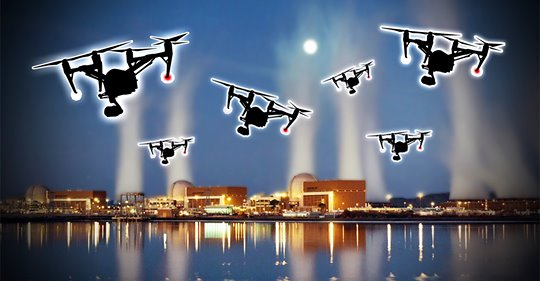
U.K., France and Germany send assistance.
Politico, November 10, 2025 , By Elena Giordano
Five drones were spotted flying over Belgium’s Doel nuclear power plant near the Port of Antwerp on Sunday evening, energy company Engie said.
“Initially we had detected three drones, but then we saw five drones. They were up in the air for about an hour,” Engie spokesperson Hellen Smeets told POLITICO Monday morning.
The first report of the three drones came shortly before 10 p.m. on Sunday, Smeet said, adding that the sightings had no impact on the plant operations. Belgium’s national Crisis Center, which is currently monitoring the situation, confirmed the incident……………
The latest incidents comes amid a surge of drone activity disrupting key infrastructure across Belgium. Airports in Brussels and Liège faced repeated interruptions last week, while drones were also spotted over military bases and the Port of Antwerp…….
While the government has avoided attributing blame, Belgium’s intelligence services suspect foreign hands, with Moscow seen as the most likely source, according to local media. Defense Minister Theo Francken said Saturday that “Russia is clearly a plausible suspect.”
On Sunday, the U.K. announced it will join France and Germany in sending personnel and equipment to help Belgium counter drone incursions around sensitive sites. https://www.politico.eu/article/drones-spotted-belgium-nuclear-plant-doel-airspace-incursions/
NFLAs welcome Remembrance Day award of medal to nuke test ‘Sniffers’, but fight not over as groundcrews exposed to radiation remain forgotten.
11th November 2025, https://www.nuclearpolicy.info/news/nflas-welcome-remembrance-day-award-of-medal-to-nuke-test-sniffers-but-fight-not-over-as-groundcrews-exposed-to-radiation-remain-forgotten/
The NFLAs have welcomed the Remembrance Day announcement that the Government has agreed to award the Nuclear Test Medal to gallant RAF aircrew of 27 and 543 Squadrons and sailors aboard the Royal Fleet
Auxiliary vessel Sir Percivale who passed through French and Chinese atmospheric nuclear tests in the Far East to carry out air sampling.
British personnel were ordered to fly or sail through the radioactive clouds of over 40 atomic and nuclear atmospheric tests carried out by China and France.
11th November 2025
NFLAs welcome Remembrance Day award of medal to nuke test ‘Sniffers’, but fight not over as groundcrews exposed to radiation remain forgotten
The NFLAs have welcomed the Remembrance Day announcement that the Government has agreed to award the Nuclear Test Medal to gallant RAF aircrew of 27 and 543 Squadrons and sailors aboard the Royal Fleet Auxiliary vessel Sir Percivale who passed through French and Chinese atmospheric nuclear tests in the Far East to carry out air sampling.
British personnel were ordered to fly or sail through the radioactive clouds of over 40 atomic and nuclear atmospheric tests carried out by China and France.
The NFLAs have been strong advocates for recognition, justice and compensation for Britain’s nuclear test veterans and their families, and the latest announcement comes just a month after NFLA Chair, Councillor Lawrence O’Neill, wrote to the new Veterans Minister, Louise Sandher-Jones, calling for the eligibility criteria for the medal to be extended to include these forgotten ‘sniffers’.
Unfortunately, the revised award criteria still wrongly exclude the RAF ground crew involved in decontaminating the aircraft on their return to the UK. The aircraft involved in sniffing operations were contaminated with radioactivity, and they were decontaminated by washing by groundcrew. Many of these groundcrew were unaware of the levels of radioactivity on the aircraft.
Consequently, many of these ground crew also developed cancers and other health conditions related to exposure to ionising radiation, some repeatedly. Some personnel died and others were able to access a War Pension as a result.
The latest decision by Ministers therefore only represents a part-victory. Councillor O’Neill believes that excluding the ground crew seems ‘not only unjust, but also bizarre and perverse’ given these veterans faced the same dangers as their colleagues who engaged in ‘sniffing’ duties on British tests and who will now qualify for the medal.
The fight therefore continues.
The remnants of Chernobyl are still present in the Black Sea
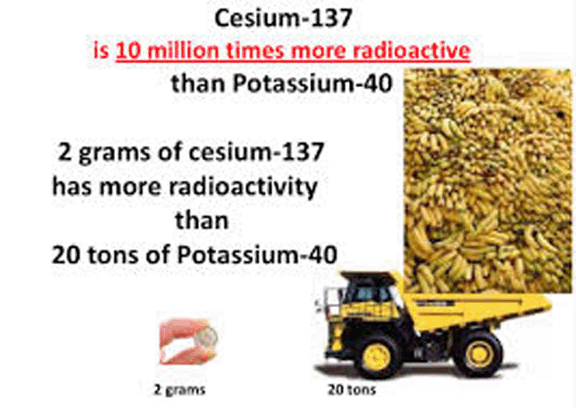
Forty years have passed since Chernobyl, but Chernobyl-related radioactive contamination in the Black Sea has not ended. TENMAK’s research has revealed that the concentration of caesium-137 in the Black Sea is seven times higher than in the Mediterranean Sea.
BirGün Daily, Giriş: 07.11.2025 , https://www.birgun.net/haber/the-remnants-of-chernobyl-are-still-present-in-the-black-sea-667018
Nearly 40 years have passed since the Chernobyl disaster, considered one of the world’s three largest nuclear accidents, but the radioactive contamination caused by the accident continues to affect the Black Sea. At the IVth National Symposium on Monitoring and Assessment in the Seas, Dr Aysun Kılınçarslan, presenting on behalf of the Turkish Energy, Nuclear and Mining Research Institute (TENMAK), announced the results of monitoring studies on radioactive contamination in Turkey’s coastal waters and sediments.
Analyses conducted in coastal sediments between 2015 and 2023 detected high levels of caesium-137 and strontium-90. While an average of 21 becquerels of caesium-137 isotope per kilogram was observed in the Black Sea, this rate was recorded as only 3.2 becquerels in the Mediterranean Sea. Values that are relatively high in the Sea of Marmara decrease as one moves towards the Aegean and Mediterranean Seas. The highest value found in the analyses exceeds 82 becquerels. This figure is 10 times higher than the highest value observed in the Mediterranean Sea. When viewed on a regional basis, the highest caesium-137 value in sediments, 50 becquerels, was found in Hopa. Hopa is followed by Trabzon and Sinop.
HIGH FIGURES IN TRABZON AND HOPA
In measurements taken in coastal surface waters between 2014 and 2023, the caesium-137 concentration averaged 9 millibecquerels per litre in the Black Sea, while this figure dropped to 1.6 millibecquerels in the Mediterranean Sea. Rates in the Bosphorus, Marmara and Çanakkale ranged between 8.4 and 6.9 millibecquerels, while the amount of caesium-137 in the water decreased in the Aegean Sea, falling to 1.8 millibecquerels. The highest figures were found in Trabzon and Hopa, which have been affected by Chernobyl for years and where cancer rates have increased. Tekirdağ, Ordu, Karasu and İğneada stand out as other regions with high measurements. Although the study’s findings indicate that these levels do not pose a risk to human health or environmental pollution, the significant difference between the Black Sea and the Mediterranean clearly demonstrates the consequences of Chernobyl-related contamination.
CHERNOBYL FLOWS
Another noteworthy finding of the study was the detection of plutonium-239, which does not occur naturally and is produced by nuclear reactions, alongside caesium-137. While average values do not differ between seas, the locations most affected by this contamination include Erdek, the Bosphorus Strait, Hopa, and Sinop. Experts point out that the sources of contamination linked to these isotopes are nuclear power plant accidents, nuclear weapons tests, and operational nuclear reactors. Chernobyl is also cited as a source of contamination in the Black Sea. Radioactive pollution from the out-of-control melted reactor and the surrounding area reaches the Black Sea via groundwater and the Dnieper River.
MARINE ASSESSMENT IS NECESSARY
Prof. Dr. İnci Gökmen, who revealed high levels of radiation in tea after Chernobyl, points out that the radiation level detected at 21 becquerels per kilogram is quite high. Gökmen states that data collected from the seas and coasts also highlights the need to measure radiation levels in the soil, adding, “It is surprising to see plutonium in the seas, even at low levels. Strontium is not surprising. However, since strontium does not emit gamma radiation and must be measured by chemical separation, measurements were rarely taken despite the presence of strontium in the environment and food after Chernobyl. However, the strontium values immediately after the accident can be estimated from the current results. By looking at the caesium levels in coastal surface water in some areas, it would be good to calculate the doses that swimmers or those working at sea, such as fishermen, would receive. It would be appropriate to take measurements in fish, mussels and other seafood. Thirty-nine years have passed since Chernobyl. Caesium has only undergone one half-life. This means that radioactive elements will remain in the seas for a long time to come,” he said. WHAT IS CAESIUM (CS-137)?
The most common radioactive form of caesium is Cs-137. Caesium-137 is produced by nuclear reactions. External exposure to Cs-137 can cause burns, acute radiation sickness and even death. Exposure to large amounts of Cs-137 can result from the misuse of a powerful industrial Cs-137 source, a nuclear explosion, or a major nuclear accident. Under normal conditions, large amounts of Cs-137 are not found in the environment. Exposure to Cs-137 can increase the risk of cancer due to the presence of high-energy gamma radiation. Ingestion or inhalation of Cs-137 increases the risk of cancer by causing the radioactive material to spread to soft tissues, particularly muscle tissue. Vascular plants do not accumulate high levels of caesium through root uptake because caesium is strongly adsorbed to the soil. However, the accumulation of radioactive residues on flora with large surface areas, such as lichens or mosses, is significant. Animals that feed on these plants can consume large amounts of radiocaesium (and other radionuclides present in radioactive fallout). Human consumption of the meat of such animals leads to the uptake of these radionuclides into the body.
Note: This article is translated from the original article titled Çernobil’in izleri hâlâ Karadeniz’de, published in BirGün newspaper on November 7, 2025.
Poseidon: The Ultimate Weapon of Vengeance [i]

“To wipe out the enemy coast…”
Very long article, with excellent illustrations.
Black Mountain Analysis Mike Mihajlovic, Nov 10, 2025
A weapon system on its own
The Poseidon, designated 2M39 in Russian service and known to NATO as Kanyon, is among the most enigmatic and controversial strategic systems developed in recent years. It resists conventional classification: neither a conventional torpedo nor a crewed submarine, it represents a novel class of autonomous, nuclear-powered underwater vehicle designed to carry a nuclear warhead.
This autonomous, nuclear-powered underwater vehicle, formerly designated Status-6, has been described in open sources as capable of carrying a very large thermonuclear warhead (some reports even cite yields as high as 100 megatons)1 and of transiting intercontinental distances at depths that would place it beyond the reach of most conventional antisubmarine weapons, arguably leaving only exceptionally large-yield nuclear depth charges as a theoretical counter. Open reporting also suggests it can adopt multiple mission modes: a high-speed transit phase at depth, which offers rapid repositioning but is more readily detectable by advanced acoustic sensors, and a prolonged low-speed, low-observability cruise that exploits nuclear endurance to remain submerged for effectively indefinite periods before conducting a final approach to a target.
As with many novel Russian weapons, most technical details remain classified; nevertheless, a synthesis of open-source analysis and official Russian statements permits a broad—albeit uncertain—reconstruction of Poseidon’s design philosophy, capabilities, and potential strategic effects.
………………………………………………………………………………………………………………………………………………………………………………………………………………... Summary
In summary, the Poseidon system represents a technically feasible but strategically extreme extension of known nuclear and naval technologies. It most likely uses a compact liquid-metal-cooled fast reactor to achieve long-range, high-speed operation at great depths, carries a warhead of 2-100 Mt, and could inflict catastrophic local damage and contamination on any coastal target. Yet the notion that it could raise ocean-wide radioactive tsunamis is unsupported by physical science. Its true significance may lie less in its physics than in its symbolism: a weapon designed to project the image of ultimate deterrence by threatening entire coastal societies, even if the practical mechanics of such annihilation are more limited than popular imagination suggests.
Politically, the deployment of Poseidon adds a new dimension to strategic deterrence. Its autonomous nature and perceived “doomsday” capability suggest a weapon intended more for psychological and geopolitical signaling than for practical battlefield use. Its mere existence challenges traditional arms control frameworks and complicates stability calculations by introducing a new underwater axis of nuclear deterrence.
Despite the growing public literature, many details remain unknowable. The reactor’s design, actual performance, warhead configuration, and even deployment status are tightly held secrets. Modeling the hydrodynamics of a multi-megaton underwater detonation is inherently uncertain, as no full-scale tests have ever been conducted at such yields or depths. Extrapolations from smaller historical tests provide useful guidance but cannot capture all nonlinear effects of deep-water bubble dynamics or coastal interactions. Moreover, the strategic intent behind Poseidon, whether as a second-strike deterrent, a terror weapon, or an anti-access denial system, remains speculative and politically sensitive. https://bmanalysis.substack.com/p/poseidon-the-ultimate-weapon-of-vengeance?utm_source=post-email-title&publication_id=1105422&post_id=177880124&utm_campaign=email-post-title&isFreemail=true&r=1ise1&triedRedirect=true&utm_medium=email
Rich countries have lost enthusiasm for tackling climate crisis, says Cop30 chief.

Guardian 10th Nov 2025
Brazil’s André Corrêa do Lago says countries should follow China’s lead on clean energy as conference begins
Rich countries have lost enthusiasm for combating the climate crisis while China is surging ahead in producing and using clean energy equipment, the president of the UN climate talks has said.
More countries should follow China’s lead instead of complaining about being outcompeted, said André Corrêa do Lago, the Brazilian diplomat in charge of the Cop30 conference, which begins on Monday.
“Somehow the reduction in enthusiasm of the global north is showing that the global south is moving,” Corrêa do Lago told reporters in Belém, the city in the Amazonian rainforest where the fortnight-long Cop30 conference is taking place. “It is not just this year, it has been moving for years, but it did not have the exposure that it has now.”
He pointed to the world’s biggest emitter of greenhouse gases, China, which is also the biggest producer and consumer of low-carbon energy. “China is coming up with solutions that are for everyone, not just China,” he said. “Solar panels are cheaper, they’re so competitive [compared with fossil fuel energy] that they are everywhere now. If you’re thinking of climate change, this is good.”…………………………………………………………………………………………………………………………………………… https://www.theguardian.com/environment/2025/nov/10/rich-countries-have-lost-enthusiasm-for-tackling-climate-crisis-says-cop30-chief
Russia deliberately ‘endangering nuclear safety in Europe’ says Kyiv
Ukraine says drones are targeting substations that power the Khmelnytskyi and Rivne nuclear plants. What we know on day 1,355
Guardian staff and agencies, 9 Nov 25
- Russia is again targeting substations that power the Khmelnytskyi and Rivne nuclear power plants in Ukraine, the country’s foreign minister Andrii Sybiha said on X on Saturday. Sybiha said drone attacks on the weekend were not accidental but well-planned strikes. “Russia is deliberately endangering nuclear safety in Europe,” he said.
- Russia launched a barrage of drones and missiles at Ukraine over the weekend, killing at least seven people and damaging energy infrastructure in three regions, according to Ukrainian officials. Ukraine’s president, Volodymyr Zelenskyy, said Russia had launched more than 450 drones and 45 missiles, most of which were shot down. Three people were killed and 12 wounded when a drone hit an apartment building in Dnipro, and another person was killed in the Kharkiv region. Three were killed in the south-eastern Zaporizhzhia region, regional officials said. https://www.theguardian.com/world/2025/nov/09/ukraine-war-briefing-russia-deliberately-endangering-nuclear-safety-in-europe-says-kyiv
Labour’s ‘national security threat’ attacks on Scottish National Party are hypocrisy 101
TO no one’s surprise, Anas Sarwar has lined up behind his UK bosses and doubled-down on claims that the Scottish Government is a “national security threat”. The Scottish Labour leader has meekly joined Defence Secretary John Healey, Deputy Prime Minister David Lammy, and Scottish
Secretary Douglas Alexander in deploying the inflammatory rhetoric against the SNP Government.
National security expert Professor Nick Ritchie pointed
out last week, Labour’s pro-nuclear rhetoric also undermines the international law that they are supposedly signed up to. The UK is a signatory to the nuclear Non-Proliferation Treaty (NPT), which obliges Britain to “pursue negotiations in good faith on effective measures” relating to nuclear disarmament.
But instead of uphold their obligations – which many top experts believe they are breaching – Labour ministers
are on the airwaves accusing the SNP of being a security threat for opposing nuclear weaponry.
The National 10th Nov 2025, https://www.thenational.scot/news/25611206.labours-national-security-threat-attacks-snp-hypocrisy-101/
Does Britain really need nuclear power? – Campaign for Nuclear Disarmament
, https://labouroutlook.org/2025/11/10/does-britain-really-need-nuclear-power-campaign-for-nuclear-disarmament/
With funding confirmed for a new nuclear power station in Suffolk, Dr Ian Fairlie, CND Vice-President and science adviser, and a leading consultant on radioactivity in the environment, questions whether we actually need this development and the technology in general.
In recent months, the government has continued to promote nuclear reactors. For example, the Energy Secretary is now asking GB Energy to assess sites to be used to host new nuclear reactors. And the Prime Minister continues to push for so-called Small Modular Reactors and has backed the US President’s wishful thinking of ‘a golden age of nuclear’.
But these announcements and proposals are mostly pie-in-the-sky statements and should be treated with a pinch (or more) of salt, as the reality is otherwise.
Let’s look at what is happening in the rest of the world. Last year, a record 582 GW of renewable energy generation capacity was added to the world’s supplies: almost no new nuclear was added.
Indeed, each year, new renewables add about 200 times more global electricity than new nuclear does.
Of course, there are powerful economic arguments for this. The main one is that the marginal (i.e. fuel) costs of renewable energy are close to zero, whereas nuclear fuel is extremely expensive. Nuclear costs – for both construction and generation – are very high and rising, and long delays are the norm. For example, the proposed Sizewell C nuclear station is now predicted to cost £47 billion, with the government and independent experts acknowledging even this estimate may rise significantly. The upshot is that new nuclear power means massive costs, a poisoned legacy to future generations, and whopping radioactive pollution.
iven these manifest disadvantages, independent commentators have questioned the government’s seeming obsession with nuclear power. It is not that nuclear provides a good solution to global warming: it doesn’t. The United Nations’ Intergovernmental Panel on Climate Change (IPCC) reports that renewables are now 10 times more efficient than new nuclear at CO2 mitigation. It’s not that AI centres will need nuclear: the International Energy Agency expects data centres will cause a mere 10% of global electricity demand growth to 2030. And it forecasts that the renewables will supply 10 to 20 times the electricity required for data-centre growth, with Bloomberg NEF predicting a 100-fold renewables expansion.
As for so-called Small Modular Reactors, the inconvenient truth is that these designs are all just paper designs and are a long way off. They would also be more expensive to run than large reactors per kWh – the key parameter. And as the former Chair of the US government’s Nuclear Regulatory Commission (NRC) says, SMRs will produce more chemical and radioactive waste per KW produced than large reactors.
Given a UK Treasury strapped for cash, the unsolved problem of radioactive nuclear waste, the spectre of nuclear proliferation, and it’s being a target in future wars, many wonder why the government is so fixated with nuclear power.
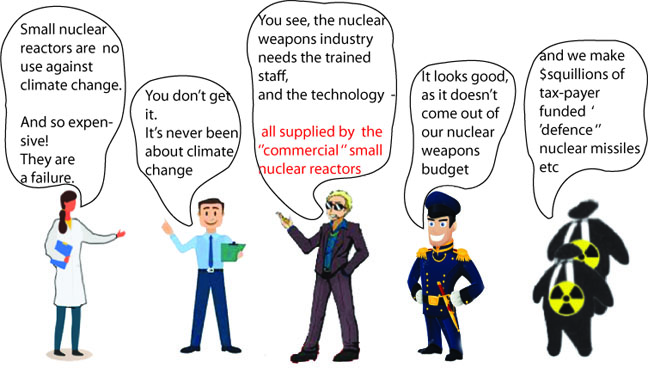
Well, the answer was supplied in 2023 by the Rishi Sunak administration which admitted that the main reason for its continued eye-watering financial support for civil reactors was that they provided needed technical support and expertise for the government’s nuclear weapons programme.
Zelensky blames ex-energy chief for failure to protect power grid.
Volodymyr Kudrytsky has been charged with large-scale fraud and abuse of office but anti-corruption campaigners say he is being targeted for speaking out
President Zelensky has blamed the former head of the Ukrainian state energy company for the extraordinary damage being done to the country’s power grid. Although Russia is responsible for attacks on the grid, there is growing anger among Ukrainians that the authorities in Kyiv have failed
to properly protect national infrastructure.
Large sections of Kyiv, Kharkiv and other big cities lost power on Saturday after one of the heaviest missile and drone assaults of the war, which killed 11 civilians and injured more than 40. In a single night, President Putin’s forces
launched 458 long-range drones and 45 missiles, battering critical infrastructure across the country.
Kyiv was without power again on Sunday
night. Centrenergo, one of the biggest energy suppliers, said that four of its main power stations were unable to produce electricity as they had all been struck by Russian ballistic missiles and drones. The power stations had only recently been repaired after strikes in 2024. Volodymyr Kudrytsky
has been charged with large-scale fraud and abuse of office but anti-corruption campaigners say he is being targeted for speaking out.
Times 9th Nov 2025, https://www.thetimes.com/world/russia-ukraine-war/article/zelensky-blames-ex-energy-chief-for-failure-to-protect-power-grid-db3g335l9
EDF boss vows to speed up nuclear projects and narrow gap to Asian peers
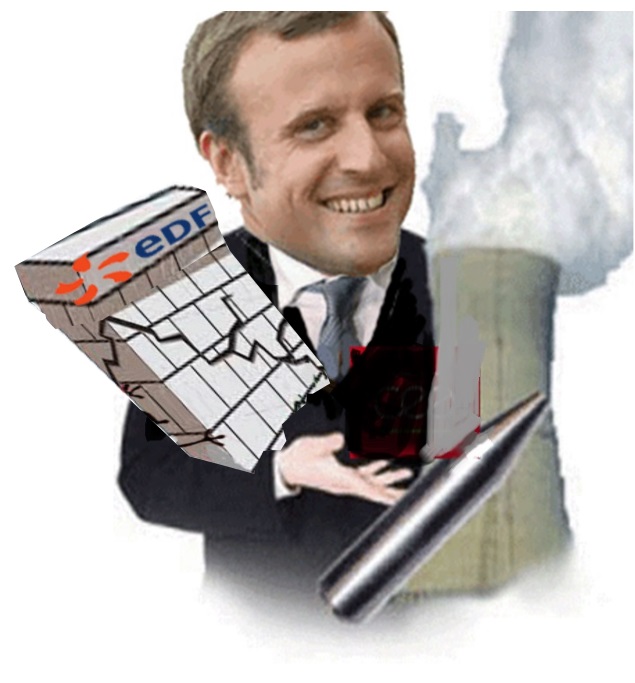
EDF’s new boss has vowed to speed up the delivery of new nuclear reactors in an increasingly competitive market, after costly overshoots in the past weighed on the French energy group.
The company wants to use the
development of the UK’s Sizewell C nuclear power station to show that huge reactors capable of powering millions of homes can be delivered at speed, in the hope that this will help it attract private funding and compete with more efficient rivals, including those from Asia.
Bernard Fontana, chief executive, said the state-owned group remained “open to international markets” and hoped to export more of its designs beyond the projects it is undertaking in the UK and France. EDF has been tasked with
delivering at least six new French reactors from 2038 onwards and is due to deliver two for the £38bn Sizewell C project in the middle to late 2030s.
Fontana’s push for efficiency comes as EDF, weighed down by a net debt of €50bn, needs to finance €30bn of investments annually over the next five years, including on maintaining current sites, according to estimates by France’s budget watchdog. EDF operates 57 French reactors.
FT 9th Nov 2025, https://www.ft.com/content/cc39da49-6ebf-40e2-bfbe-296ee2596ce9
1 This Month

of the week – Shut Down Drone Warfare!


Tell the Ukrainian Government to Drop Prosecution of Peace Activist Yurii Sheliazhenko

Petition to revoke the licensing of the Near Surface Nuclear Disposal Facility (NSDF) at Chalk River. https://www.ourcommons.ca/petitions/en/Petition/Details?Petition=e-7247
To see nuclear-related stories in greater depth and intensity – go to https://nuclearinformation.wordpress.com
-
Archives
- April 2026 (114)
- March 2026 (251)
- February 2026 (268)
- January 2026 (308)
- December 2025 (358)
- November 2025 (359)
- October 2025 (376)
- September 2025 (257)
- August 2025 (319)
- July 2025 (230)
- June 2025 (348)
- May 2025 (261)
-
Categories
- 1
- 1 NUCLEAR ISSUES
- business and costs
- climate change
- culture and arts
- ENERGY
- environment
- health
- history
- indigenous issues
- Legal
- marketing of nuclear
- media
- opposition to nuclear
- PERSONAL STORIES
- politics
- politics international
- Religion and ethics
- safety
- secrets,lies and civil liberties
- spinbuster
- technology
- Uranium
- wastes
- weapons and war
- Women
- 2 WORLD
- ACTION
- AFRICA
- Atrocities
- AUSTRALIA
- Christina's notes
- Christina's themes
- culture and arts
- Events
- Fuk 2022
- Fuk 2023
- Fukushima 2017
- Fukushima 2018
- fukushima 2019
- Fukushima 2020
- Fukushima 2021
- general
- global warming
- Humour (God we need it)
- Nuclear
- RARE EARTHS
- Reference
- resources – print
- Resources -audiovicual
- Weekly Newsletter
- World
- World Nuclear
- YouTube
-
RSS
Entries RSS
Comments RSS
 nuclear-news