Rio Rancho residents sound alarm over hypersonic missile plant
by Kevin Hendricks, Sandoval Signpost, 17 Nov 25
Rio Rancho residents packed a Nov. 13 city council meeting to voice sharp divisions over a resolution that would provide water services to a controversial hypersonic missile manufacturing facility, with speakers citing both national security imperatives and environmental risks.
The resolution, which authorizes the city manager to negotiate water and potentially wastewater services for Castelion’s Project Ranger facility, represents an exception to Rio Rancho’s longstanding policy against providing utilities outside city limits.
Four days after the meeting, on Nov. 17, California-based Castelion officially announced it had selected Sandoval County for the 1,000-acre manufacturing campus, which will be located about 3 miles west of Rio Rancho city limits on unincorporated county land.
The facility is projected to generate more than $650 million in economic output over the next decade and create more than 300 jobs with average salaries of $100,000, according to the New Mexico Economic Development Department.
Safety and environmental concerns
Several residents raised an alarm about potential risks to public health and the environment. Steven Van Horn noted that KRQE had announced just hours before the meeting that a toxic chromium plume from Los Alamos National Laboratory had spread to Pueblo land, with contamination levels exceeding state groundwater standards.
“This plant is going to be near three of our wells, transporting stuff that has no limitation on transport,” Van Horn said, warning of flood risks and water contamination.
Michael Farrell submitted a detailed written comment opposing the resolutions, arguing that Sandoval County advanced the project on county land while asking the city to fund access roads and deliver water without a guaranteed tax base or annexation. He said the move would break Rio Rancho’s policy since 2009 of limiting water and wastewater service to inside city boundaries.
Farrell expressed concern about water usage, citing a presentation from an Oct. 21 public meeting that indicated the facility would use water equivalent to approximately 50 households, or nearly 8 million gallons of water annually.
He also noted that the city dissolved its Utilities Commission in 2017, removing what he called “the public’s most technically qualified watchdog over major water and infrastructure decisions.”
Elaine Cimino filed a 10-page written objection citing procedural defects in the approval process and concerns about ammonium perchlorate, a toxic oxidizer used in rocket motors that can contaminate groundwater. She said no baseline groundwater, air or soil testing had been conducted before approval.
Cimino also raised concerns about impacts on mortgage insurance, noting that roughly 24 percent of Rio Rancho homeowners hold FHA-insured mortgages and could face rate increases of 20 to 100 percent if the area is reclassified as a high-fire-risk zone. She cited a wildfire report estimating potential public losses between $515 million and $2.5 billion from a wildfire or detonation incident.
“This project operates without active federal, state, or municipal oversight, relying instead on self-certification by a private weapons manufacturer,” Cimino wrote.
Connie Hoffman, a resident of Nicklaus Drive SE, said the facility is too close to residential areas and expressed concerns about unknown impacts on land, air and water supply.
“This belongs somewhere else, farther away from civilization,” Hoffman wrote. “I love the sunsets, the weather, the safe feeling — this will not be the same if this is allowed to go forward.”
Zachary Darden, a Bernalillo County Open Space employee who lives in Rio Rancho, questioned the impacts on property owners in the area and raised concerns about national security, given the facility’s proximity to Sandia National Laboratories and Kirtland Air Force Base.
Technical documents reviewed by the Sandoval Signpost in October showed that emergency explosion scenarios could affect structures up to 5 miles away, with 5,933 buildings and structures within that radius. The site sits 2.9 miles from Rio Rancho’s Northern Meadows neighborhood.
…………………………………………………………………………………………………………………………………………. Procedural concerns
Cimino’s written comment alleged multiple procedural violations in the approval process, including what she described as back-dating of the intergovernmental agreement between the city and county.
She noted that Sandoval County approved the agreement on Oct. 22, with an effective date of Nov. 1, even though the Rio Rancho City Council was not scheduled to vote on it until Nov. 13.
“This creates a chronological impossibility — an agreement cannot take effect before one of the contracting parties lawfully adopts it,” Cimino wrote.
She also alleged violations of the state’s Open Meetings Act, claiming that three lease agreements were added to a county agenda less than 24 hours before a vote in September, and that the company’s identity was withheld from the public until after county bonds were announced.
Farrell noted that the March city elections are approaching and said the Nov. 13 vote would have “enormous implications.”
“We’ve already seen how Sandoval County commissioners failed residents by fast-tracking this project without adequate notice, safeguards, or accountability — and voters will remember that,” Farrell wrote…………. https://sandovalsignpost.com/2025/11/rio-rancho-residents-sound-alarm-over-hypersonic-missile-plant/
Environmentalists FILE FEDERAL LAWSUITAGAINST HOLTEC’S UNPRECEDENTED PALISADES ATOMIC REACTOR RESTART.

Coalition Challenges Lawfulness of Exemption Request Key to High-Risk Scheme.
COVERT TOWNSHIP, MICHIGAN and WASHINGTON, D.C., NOVEMBER 17, 2025–An environmental coalition opposed to Holtec’s unprecedented and high-risk scheme to restart the Palisades atomic reactor on the Lake Michigan shoreline has filed a federal lawsuit seeking a permanent injunction against the impending return to nuclear power operations. The Complaint for Declaratory and Injunctive Relief was submitted to the U.S. District Court for the Western District of Michigan on November 17, 2025. The Court is headquartered in Grand Rapids, but the case will very likely be transferred to a federal judge in Kalamazoo, who has jurisdiction over Van Buren County, where Palisades is located.
The case is entitled Beyond Nuclear, Don’t Waste Michigan, and Michigan Safe Energy Future (Plaintiffs) versus the United States Nuclear Regulatory Commission and Holtec Decommissioning International (Defendants). Attorneys Terry Lodge of Toledo, Ohio and Wallace Taylor of Cedar Rapids, Iowa serve as co-counsel for the environmental coalition.
Arnold Gundersen, the coalition’s expert witness, a nuclear engineer with 54 years of experience, stated: “Holtec wanted its cake while eating it too on Palisades since 2022. They claimed that regulations like technical specifications, such as on anti-corrosion water chemistry, did not apply because the plant was in decommissioning mode. At the same time, they claimed that the plant still had an active legal license, the supposed legal basis for their NRC-approved regulatory pathway to restart. So Holtec is claiming that Palisades was both dead and alive at the same time. For the last three years, it has been both dead and alive simultaneously.”
“Holtec’s hiding behind decommissioning phase regulatory relief and waivers, and NRC compliantly allowing and enabling it, has resulted in serious, negative safety consequences, which could lead to a reactor core meltdown on the Great Lakes shore,” said Kevin Kamps of Beyond Nuclear, who resides in Kalamazoo, Michigan, 35 miles downwind.
On January 14, 2025, an NRC staff person affirmed that Holtec did not implement the proper “wet layup” on Palisades’ steam generator tubes, from 2022 to 2024. This resulted in widespread, accelerated degradation, with potentially very serious safety implications.
Wallace Taylor, Iowa-based co-counsel for the environmental coalition, said: “This lawsuit alleges that the NRC and Holtec didn’t just bend the regulations. They both broke the law to resurrect a reactor that was fifty plus years old, poorly maintained and could not compete in the open market. Palisades is not needed, way too expensive even with massive public subsidies, and unsafe.”
Holtec took over from the previous owner, Entergy, at Palisades on June 28, 2022. On September 9, 2022, Holtec and Michigan Governor Gretchen Whitmer jointly announced Palisades would be restarted by Holtec, breaking the promise made years earlier that Holtec would decommission Palisades instead.
“This bait and switch trick, con job, and big lie is how Holtec got ahold of Palisades in the first place, even though we had officially resisted it from the get-go, because we knew Holtec could not be trusted, even with decommissioning, let alone the zombie reactor restart,” said Kamps of Beyond Nuclear. “Now it is clear the NRC likewise cannot be trusted to obey, uphold, and enforce applicable laws and even its own regulations and mandates,” Kamps added.
On September 28, 2023, Holtec applied to NRC for an exemption from regulations in order to rescind the permanent shutdown certifications filed by Entergy, and docketed by NRC, in June 2022, after Entergy had shut down Palisades for good on May 20, 2022. The permanent shutdown had been announced in and planned since early December 2016.
The three environmental organizations, along with allies Nuclear Energy Information Service of Chicago and Three Mile Island Alert of Pennsylvania, have contested Holtec’s Palisades restart before the NRC’s Atomic Safety and Licensing Board (ASLB) ever since. Ironically, in early 2025 the coalition and Holtec actually agreed that the contested Exemption Request should not be included as a part of ASLB proceedings. However, the ASLB panel, by a 2-1 split decision, sided with NRC staff, and retained the Exemption Request as part of the licensing proceeding, effectively blessing NRC staff’s ultimate approval of the Exemption Request on July 24, 2025, “despite the exemption not qualifying for approval pursuant to the provisions of [10 Code of Federal Regulations Part] 50.12,” the coalition lawsuit argues.
The Complaint begins: “Plaintiffs seek a declaration from the Court that an ‘exemption’ granted by the U.S. Nuclear Regulatory Commission from the requirements of the Atomic Energy Act of 1954…which would allow the owner of a permanently shutdown commercial nuclear power plant to be restored to commercial generation is unlawful.”
The coalition alleges violations of the Atomic Energy Act, the Administrative Procedure Act, and NRC’s own implementing regulations.
“When those certifications were provided in connection with the decommissioning of a reactor, they legally prohibited any further operation of the Palisades reactor or replacement of the fuel into the Palisades reactor vessel,” the coalition argues in its lawsuit.
The coalition cited NRC’s 10 CFR Part 50.82, “Termination of license” regulations. At (a)(2), the regulation states: “Upon docketing of the certifications for permanent cessation of operations and permanent removal of fuel from the reactor vessel…the 10 CFR part 50 license no longer authorizes operation of the reactor or emplacement or retention of fuel into the reactor vessel.”
The environmental groups have brought the lawsuit on behalf of their members and supporters, some of whom live just 0.75 miles from the Palisades atomic reactor. The standing declarants are concerned the restart, especially considering Palisades’ age-related degradation and the high risks of a release of catastrophic amounts of hazardous radioactivity, could significantly and irreparably harm their health, safety, security, property, and the environment. Radioactivity releases even during so-called routine operations, Holtec’s lack of experience operating a reactor, and the company’s controversial history, were also cited as reasons for the lawsuit.
The coalition’s co-counsel argue:
“Before NRC grants the exemption Holtec seeks…it must be analyzed under the explicit limitations imposed…Additionally, the District of Columbia Circuit has limited the granting of exemptions to exigent circumstances…
Section 50.12 provides a mechanism for obtaining an exemption from the procedures incorporated in section 50.10, but one that may be invoked only in extraordinary circumstances. The Commission has made clear that section 50.12 is available “only in the presence of exigent circumstances, such as emergency situations in which time is of the essence and relief from the Licensing Board is impossible or highly unlikely…
The Commission has similarly emphasized that [Part] 50.12 exemptions are to be granted sparingly and only in cases of undue hardship…So Holtec bears an extremely heavy burden to justify its request for an exemption.” (Emphasis added)
The suit contends: “The underlying statutory intention is that a new license application must be sought post-shutdown to ensure that a ‘new’ nuclear power plant meets all contemporary licensing requirements and expectation.”
Along similar lines, in a February 7, 2023 ExchangeMonitor article entitled “To restart shuttered Palisades plant, Holtec would need to start ‘from scratch,’ NRC commissioner Crowell says,” Bradley Crowell, who is still serving as a commissioner at the agency, was quoted:
As for NRC’s role in a potential restart, Crowell — who joined the commission in August [of 2022] — said it would be difficult for the safety regulator to prepare for such a development because of the uncertainty surrounding Palisades’ fate.
I feel like it’s difficult to get our ducks in a row for that because it changes almost on a monthly basis,” Crowell said. “I understand they [Holtec] are in a posture of wanting to find a buyer to do it… but I think at this stage of the game, you’re gonna have to start from scratch.” (Emphasis added)
The lawsuit concludes:
“WHEREFORE…Plaintiffs request that the Court find and declare that the granting of the exemption by the NRC was arbitrary, capricious, an abuse of discretion, or otherwise not in accordance with law; in excess of statutory jurisdiction, authority, or limitations, or short of statutory right; and without observance of procedure required by law; and that consequently, Plaintiffs further request that the Court issue preliminary and permanent injunctions prohibiting the approval of the exemption requested by Holtec because Plaintiffs have suffered an irreparable injury…of having a dangerous nuclear plant being allowed to restart, in violation of the law and regulations.”
For its part, Holtec has continued to say it will restart Palisades by the end of 2025, in the lead up to an announced Initial Public Offering in early 2026, where it hopes to raise $10 billion in private investment.
For more information, see Beyond Nuclear’s “Newest Nuke Nightmares at Palisades, 2022 to Present”. It is a one-stop-shop of web posts dating back to April 2022, when Holtec CEO Krishna Singh first floated “Small Modular Reactor” construction and operation at Palisades, and Michigan Governor Gretchen Whitmer first floated restarting the closed-for-good reactor.
For New York Times, Trump’s Gulf Corruption Is the New Normal.

“the negotiations are the latest example of Mr. Trump blending governance and family business, particularly in Persian Gulf countries,”
it’s well past time for the kind of journalism that raises a lazy eyebrow at blatant corruption.
Ari Paul, November 17, 2025, https://fair.org/home/for-nyt-trumps-gulf-corruption-is-the-new-normal/
If any Onion opinion piece fully captures the corruption and venality of Donald Trump’s administrations, it’s one “authored” by former President Jimmy Carter (1/25/17) headlined, “You People Made Me Give Up My Peanut Farm Before I Got to Be President.” To be accurate, the farm was put into a blind trust (USA Today, 2/24/23), but contrasting the urgency of the potential conflicts with Carter’s humble agricultural asset to the unrestrained wheeling and dealing of the Trump machine paints the whole scene.
Trump had barely started his first term when the Onion piece came out, but nearly a year into his second administration, the satirical piece truly illustrates the degree to which the Washington establishment has seemed to accept that there will always be conflicts of interest in the White House, and that Trump’s policies will always be intertwined with his family’s profiteering.
It is a hallmark of corrupt societies that institutions like the media simply accept that payoffs and the personal business interests of politicians supersede public service. A good example of this casual resignation to a corrupt regime came from the New York Times (11/15/25) under the headline “Trump Organization Is Said to Be in Talks on a Saudi Government Real Estate Deal.” The subhead: “The chief executive of a Saudi firm says a Trump-branded project is ‘just a matter of time.’ The Trump Organization’s major foreign partner is also signaling new Saudi deals.”
The front-page report by Vivian Nereim and Rebecca Ruiz focused on Trump’s relationship with Dar Global, his business’ “most important foreign business partner and a key conduit to Arab governments and Gulf companies.” The Times matter-of-factly said that Dar “paid the Trump Organization $21.9 million in license fees last year,” noting that “some of that money goes to the president himself.”
The entire piece, in fact, presented this development in Saudi Arabia with a lackadaisical editorial attitude toward the president using the federal government that he administers as a channel for his family’s businesses, without much commentary from experts about the conflicts of interest. “The Trump Organization is in talks that could bring a Trump-branded property to one of Saudi Arabia’s largest government-owned real estate developments,” it began. It went on to say that “the negotiations are the latest example of Mr. Trump blending governance and family business, particularly in Persian Gulf countries,” without ever raising a question how that “blending” might undermine the presidency.
‘Maybe a little bit clever’
Earlier this year, Democratic Sen. Chris Murphy of Connecticut (5/13/25) said after Trump accepted the gift of a $400 million luxury plane from Qatar: “Usually, public corruption happens in secret.” But Trump “isn’t hiding it like other corrupt officials are,” Murphy noted, because “his corruption is wildly public, and his hope is that by doing it publicly, he can con the American people into thinking that it’s not corruption because he’s not hiding it.”
The New Republic (5/13/25) didn’t mince words on Trump’s business in the Gulf: “America Has Never Seen a President This Corrupt,” it announced in a headline, with the subhead, “Trump’s brazen use of the White House to advance his family businesses should be one of the biggest scandals in the country’s history.”
The New York Times reported:
“Nothing announced yet, but soon to be,” Jerry Inzerillo, chief executive of the Diriyah development and a longtime friend of President Trump, said in an interview. He said it was “just a matter of time” before the Trump Organization sealed a deal.
Saudi officials toured the Diriyah development with Mr. Trump during the president’s official state visit in May, with the goal of piquing his interest in the project, Mr. Inzerillo said.
“It turned out to be a good stroke of luck and maybe a little bit clever of us to say, ‘OK, let’s appeal to him as a developer’—and he loved it,” Mr. Inzerillo said.
Next week, Prince Mohammed is expected to make his first visit to the United States in seven years. He hopes to sign a mutual defense agreement with Washington and potentially advance a deal to transfer American nuclear technology to Saudi Arabia.
This is friendly, pro-business portraiture that basically repurposes Trump family public relations for the news page. The report only faintly touched on the ethical, saying that the situation creates a “scenario in which Mr. Trump discusses matters of national security with a foreign leader who is also a key figure in a potential business deal with the president’s family.”
The Times perhaps believes that simply narrating these things, without highlighting their egregious nature, is pushback enough. But it’s well past time for the kind of journalism that raises a lazy eyebrow at blatant corruption.
‘Ordinary in the Gulf’
A related New York Times piece (11/15/25) published the same day by the same reporters carried the headline “A Mideast Development Firm Has Set Up Shop in Trump Tower,” with the subhead: “Dar Global bet big on the Trump name. It is now an essential foreign partner for the Trump Organization.” Ruiz and Nereim in passing admitted that Trump’s Gulf deals “have shattered American norms,” but offered no other commentary about the potential corruption. They gave the last word to the president’s son, Eric, who said, We have the greatest partners in the world in Dar Global.”
The Times reporters used the same “shattered norms” expression in their other piece that day to indicate that some people in the democratic West might not approve of this kind of governance, but then reminded us that in the oil-rich Wahhabist monarchy, this is just how things are done. “The recent blending of business and politics has shattered American norms,” the article said, adding, “but is ordinary in the Gulf, where hereditary ruling families hold nearly absolute power and the phrase ‘conflict of interest’ carries little weight.”
It also wrote that “Dar would later call finalizing its first Trump collaboration ‘a straightforward but pivotal moment.’”
A keener editor would have seen the problem with nonchalantly passing off the corrupt practices of self-serving theocracy as normal. Saudi Arabia receives an abysmal score of 9/100 on the Freedom House index, and ranks 162 on the Reporters Without Borders press freedom list, behind Cambodia and Turkey.
No journalist can forget that Washington Post columnist Jamal Khashoggi was brutally murdered at the Saudi consulate in Istanbul (Guardian, 10/2/20). The country has a terrible record on workers rights (Human Rights Watch, 5/14/25) and free speech (UN News, 9/15/23). While it has lifted its notorious ban on women driving (BBC, 6/24/18), a coalition of rights groups last year highlighted the “targeting of women human rights defenders, use of the death penalty, lack of protection for women migrant domestic workers, the persistence of a de facto male guardianship system,” and other concerns (Amnesty International, 11/18/24).
‘Likely unconstitutional’
The New York Times (3/27/24, 1/17/25, 2/17/25, 5/13/25) has reported on Trump’s potential conflicts of interest in the past. As the Times editorial board (6/7/25) said last spring, Trump
and his family have created several ways for people to enrich them—and government policy then changes in ways that benefit those who have helped the Trumps profit. Often Mr. Trump does not even try to hide the situation. As the historian Matthew Dallek recently put it, “Trump is the most brazenly corrupt national politician in modern times, and his openness about it is sui generis.” He is proud of his avarice, wearing it as a sign of success and savvy.
All of this might spark some curiosity at the Times about Trump’s objectives in the Gulf, and what consequences his policies and personal dealings could have for the broader region. Alas, nothing.
“The whole point of the piece is—or should be—that making multi-billion dollar real estate deals with the Saudis represents a huge conflict of interest that is likely unconstitutional,” said Craig Unger, author of several books on Republican presidents and their ties to corrupt regimes, including the Saudi monarchy. He told FAIR that Trump’s “family is raking in millions, if not billions, from a country that has played a huge role in fostering terrorism and has a history of extraordinary human rights abuses.”
He added, “It’s striking that the Times didn’t bother to interview Richard Painter, the White House ethics lawyer in the George W. Bush administration, or a comparable figure to spell out precisely what those conflicts are.”
In Unger’s view, the Times has shrugged off a glaring crisis of legitimacy.
“Article 1, Section 9, Clause 8 of the Constitution prohibits any US official from accepting titles, gifts, or payments from foreign monarchs or states without congressional approval,” he said. “How is it that they don’t mention the fact that the deal is likely unconstitutional?”
‘National Security Threat’? 95-Year-Old Human Rights Scholar Richard Falk Interrogated for Hours by Canada.

“Clearly, the international repression of the Palestinian cause knows no bounds.”
Jon Queally, Common Dreams, Nov 15, 2025
Ninety-five-year-old Richard Falk—world renowned scholar of international law and former UN special rapporteur focused on Palestinian rights—was detained and interrogated for several hours along with his wife, legal scholar Hilal Elver, as the pair entered Canada for a conference focused on that nation’s complicity with Israel’s genocide in Gaza.
“A security person came and said, ‘We’ve detained you both because we’re concerned that you pose a national security threat to Canada,’” Falk explained to Al-Jazeera in a Saturday interview from Ottawa in the wake of the incident that happened at the international airport in Toronto ahead of the scheduled event.
“It was my first experience of this sort–ever–in my life,” said Falk, professor emeritus of international law at Princeton University, author or editor of more than 20 books, and formerly the UN special rapporteur on the situation of human rights in the Palestinian territories.
Falk, who is American, has been an outspoken critic of the foreign policy of Canada, the United States, and other Western nations on the subject of Israel-Palestine as well as other issues. He told media outlets that he and his wife, also an American, were held for over four hours after their arrival in Toronto. They were in the country to speak and participate at the Palestine Tribunal on Canadian Responsibility, an event scheduled for Friday and Saturday in Ottawa, the nation’s capital.
The event, according to the program notes on the website, was designed to “document the multiple ways that Canadian entities – including government bodies, corporations, universities, charities, media, and other cultural institutions–have enabled and continue to enable the settler colonization and genocide of Palestinians, and to articulate what justice and reparations would require.”………………………………………………….. https://www.commondreams.org/news/richard-falk-canada-gaza
Trump’s new radiation exposure limits could be ‘catastrophic’ for women and girls.
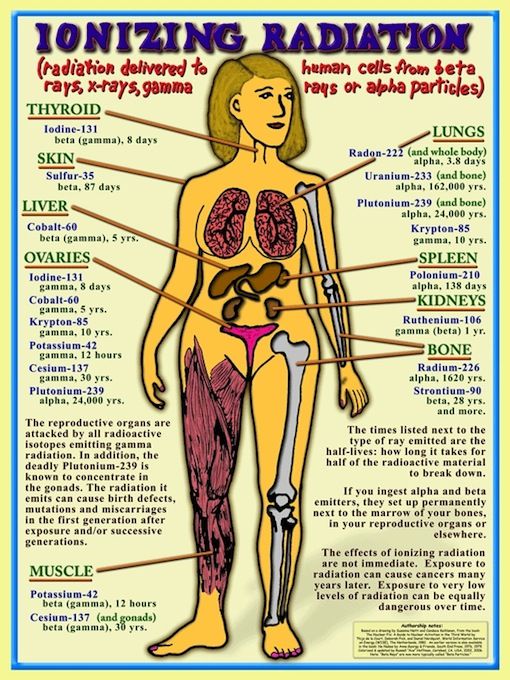
it has since been widely documented that women and young girls are significantly more vulnerable to radiation harm than men—in some cases by as much as a ten-fold difference………… Those most impacted by weaker exposure standards will be young girls under five years old
By Lesley M. M. Blume, Chloe Shrager | November 14, 2025, https://thebulletin.org/2025/11/trumps-new-radiation-exposure-limits-could-be-catastrophic-for-women-and-girls/
In a May executive order, aimed at ushering in what he described as an “American nuclear renaissance,” President Donald Trump declared moot the science underpinning decades-old radiation exposure standards set by the federal government. Executive Order 14300 directed the Nuclear Regulatory Commission (NRC) to conduct a “wholesale revision” of half-a-century of guidance and regulations. In doing so, it considers throwing out the foundational model used by the government to determine exposure limits, and investigates the possibility of loosening the standard on what is considered a “safe” level of radiation exposure for the general public. In a statement to the Bulletin, NRC spokesperson Scott Burnell confirmed that the NRC is reconsidering the standards long relied upon to guide exposure limits.
Now, some radiology and policy experts are sounding alarm bells, calling the directive a dangerous departure from a respected framework that has been followed and consistently reinforced by scientific review for generations. They warn that under some circumstances, the effects of the possible new limits could range from “undeniably homicidal” to “catastrophic” for those living close to nuclear operations and beyond.
“It’s an attack on the science and the policy behind radiation protection of people and the environment that has been in place for decades,” says radiologist Kimberly Applegate, a former chair of the radiological protection in medicine committee of the International Commission on Radiological Protection (ICRP) and a current council and scientific committee member of the National Council on Radiation Protection (NCRP)—two regulatory bodies that make radiation safety recommendations to the NRC. According to Applegate, current government sources have told her and other experts that the most conservative proposed change would raise the current limit on the amount of radiation that a member of the general public can be exposed to by five times. That would be a standard “far out of the international norms,” she says, and could significantly raise cancer rates among those living nearby. The NRC spokesperson did not respond to a question from the Bulletin about specific new exposure limits being considered.
Kathryn Higley, president of the NCRP, warns that a five-fold increase in radiation dose exposure would look like “potentially causing cancers in populations that you might not expect to see within a couple of decades.”
“There are many things that Executive Order does, but one thing that’s really important is that it reduces the amount of public input that will be allowed,” says Diane D’Arrigo, the Radioactive Waste Project Director at the Nuclear Information and Resource Service, a nonprofit group critical of the nuclear energy industry. In a statement to the Bulletin, the NRC said that once its standards reassessment process is completed, the NRC will publish its proposed rules in the Federal Register for public comment.* The NRC spokesperson did not respond to questions about when the proposed new standards would be made public and whether or how the general public would be further alerted to the changes.
Once the proposed policy change hits the Federal Register, the final decision will likely follow in a few days without advertising a period for public input, Applegate adds.
“I’m not sure I know why the loosening is needed,” says Peter Crane, who served as the NRC’s Counsel for Special Projects for nearly 25 years, starting in 1975. “I think it’s ideologically driven.” He points out that the probable loosening of the standards is set to coincide with increased pressure to greenlight new nuclear plants and could weaken emergency preparedness in case of leaks or other accidents: “I think it’s playing with fire.” (The NRC’s Office of Public Affairs did not respond to questions about the rationale for loosening the standards and the timing of the reconsideration.)
Possible shorter timelines for building nuclear power plants, coinciding with weakened radiation exposure standards, could spell disaster, warn other experts. It would be “undeniably homicidal” of the NRC to loosen current US exposure standards even slightly, adds Mary Olson, a biologist who has researched the effects of radiation for over 40 years and published a peer-reviewed study titled “Disproportionate impact of radiation and radiation regulation” in 2019. Olson cites NRC equations that found that the current exposure standards result in 3.5 fatal cancers per 1,000 people exposed for their lifetimes by living near a nuclear facility; a five-fold rate increase in allowable radiation exposure could therefore result in a little over 17.5 cancers per 1,000 people. Expressed another way, that means “one in 57 people getting fatal cancer from year in, year out exposure to an NRC facility,” she says.
The NRC’s Office of Public Affairs did not respond to questions about whether the NRC could guarantee the current level of safety for the general public or nuclear workers if adopting looser radiation exposure standards, and about whether new protections would be put into place.
Are women and children more vulnerable? According to Olson, increased radiation exposure could be even more “catastrophic” for women and children. Exposure standards have long been determined by studies on how radiation affects the “reference man,” defined by the ICRP as a white male “between 20-30 years of age, weighing around 70 kilograms [155 pounds].”
But Applegate, Olson, and other experts say that it has since been widely documented that women and young girls are significantly more vulnerable to radiation harm than men—in some cases by as much as a ten-fold difference, according to Olson’s 2019 study. Olson and Applegate cite another 2006 review assessing and summarizing 60 years of health data on the survivors of the Hiroshima and Nagasaki atomic bombings; the study showed that women are one-and-a-half to two times as likely to develop cancer from the same one-time radiation dose as men.
Young girls are seven times more at risk, they say. Those most impacted by weaker exposure standards will be young girls under five years old, Olson says. Her 2024 study of the A-bomb bomb survivor data for the United Nations Institute for Disarmament Research, titled “Gender and Ionizing Radiation,” found that they face twice the risk as boys of the same age, and have four to five times the risk of developing cancer later in life than a woman exposed in adulthood.
“Protections of the public from environmental poisons and dangerous materials have to be focused on those who will be most harmed, not average harmed,” Olson says. “That’s where the protection should be.”
Infants are especially vulnerable to radiation harm, says Rebecca Smith-Bindman, a radiologist and epidemiologist who is the lead author of a just-released major study in the New England Journal of Medicine documenting the relationship between medical imaging (such as X-rays and CT scans) and cancer risk for children and adolescents; more than 3.7 million children born between 1996 and 2016 participated and have been tracked. Smith-Bindman contests the idea that women are overall more vulnerable to cancer than men, saying that “in general, maybe women are a little bit more sensitive, …[but] women and men have different susceptibilities to different cancer types,” with women being more vulnerable to lung and breast cancers, among other types. But it is “absolutely true that children are more susceptible,” she adds. With children under the age of one, “the risks are markedly elevated.” While these findings are sobering, she points out that with medical imaging, “there’s a trade-off…it helps you make diagnoses; it might save your life. It’s very different from nuclear power or other sources of radiation where there’s no benefit to the patient or the population. It’s just a harm.”
“We’ve known for decades that pregnancy is [also] more impacted” by radiation exposure, says Cindy Folkers, radiation and health hazard specialist at Beyond Nuclear, a nonprofit anti-nuclear power and weapons organization. “Radiation does its damage to cells, and so when you have a pregnancy, you have very few cells that will be developing into various parts of the human body: the skeleton, the organs, the brain,” and exposing those cells to radiation during pregnancy can impact the embryo’s health, she says. Smith-Bindman and her team are also studying the impact of radiation exposure on pregnancy, and while their results are not yet in, “we do know that exposures during pregnancy are harmful,” she says, “and that they result in elevated cancer risks in the offspring of those patients.”
For children, lifetime cancer risk will be increased not only because of the “sensitivity and vulnerability of developing tissues, but also partly [because] they would be living longer under a different radiation protection framework,” adds David Richardson, a UC Irvine professor who studies occupational safety hazards.
Several experts noted the irony that these changes are being mandated by the same administration that is also overseeing a policy of “Make America Healthy Again” (MAHA), an effort being spearheaded by Secretary of Health and Human Services Robert F. Kennedy Jr. “In terms of general [public] knowledge, I think there has not been very large coverage or acceptance of the idea that radiation affects different people differently on the basis of both age and biological sex,” says Olson. “But we now have enough reviews, enough literature to say that the biological sex difference is there. I don’t think MAHA mothers know this because it’s been underreported, [and] they would be concerned if they knew it.”
The NRC’s Office of Public Affairs did not respond to questions about concerns being raised by radiologists and epidemiologists about possible health consequences—especially for children—as a result of increased radiation exposure.
Continue readingGeoffrey Hinton: They’re spending $420 billion on AI. It pays off only if they fire you.

So the business case for AI isn’t “AI will help workers be more productive.” It’s “AI will replace workers entirely, and we’ll pocket the salary savings.”
Tasmia Sharmin, Nov 2, 2025, Published in Predict.
Let me translate what Geoffrey Hinton just said, because it’s important and most people are going to miss it.
Geoffrey Hinton literally invented the neural networks that power modern AI. He won a Nobel Prize for it. And this week, he went on Bloomberg TV and said something that tech CEOs have been dancing around for months:
Tech companies cannot profit from their AI investments without replacing human workers.
Not “might replace.” Not “could eventually replace.” Cannot profit without replacing.
That’s not a prediction. That’s him explaining the business model.
What He’s Actually Saying
Here’s Hinton’s point in plain English:
Tech giants are spending $420 billion next year on AI infrastructure. Microsoft, Meta, Google, Amazon. They’re building data centers, buying AI chips, training massive models.
That money only makes sense if AI replaces workers.
Think about it. If you spend $100 billion building AI systems, how do you make that money back?
You can’t just sell slightly better products. You need massive cost savings. And the biggest cost in any company is labor.
So the business case for AI isn’t “AI will help workers be more productive.” It’s “AI will replace workers entirely, and we’ll pocket the salary savings.”
Hinton is saying what everyone in Silicon Valley knows but won’t say publicly: the whole AI investment thesis depends on job elimination.
Why This Matters
When Amazon CEO Andy Jassy says the 14,000 layoffs are about “culture, ” Hinton is calling bullshit.
When tech companies say AI will “augment” human workers, Hinton is calling bullshit.
When they claim AI will create as many jobs as it destroys, Hinton, who literally invented this technology, is saying: I don’t believe that.
He told Bloomberg: “I believe that to make money you’re going to have to replace human labor.”
Not augment. Replace.
This is the guy who understands AI better than almost anyone on the planet. And he’s warning us that the tech industry’s entire AI strategy is built on eliminating jobs.
The Numbers Back Him Up
Since ChatGPT launched in November 2022, job openings have dropped 30%.
During that same time, the stock market went up 70%. So companies are doing great. Investors are happy. But jobs are disappearing.
Stanford research found that young workers (22–25) in AI-exposed fields saw employment drop 13% to 16%. Meanwhile, older workers in the same fields actually saw job growth.
What does that tell you?
Companies are replacing entry-level workers with AI while keeping experienced people for now.
The pattern is clear: AI isn’t creating a bunch of new jobs. It’s eliminating the bottom rungs of the career ladder.
What Hinton Sees That Others Won’t Say
Previous technological revolutions created jobs while destroying others. Cars eliminated horse-related jobs but created automotive manufacturing, gas stations, road construction, and suburbs.
Hinton thinks AI is different. He’s skeptical that AI will follow that historical pattern.
Why?
Because AI doesn’t just replace one type of job. It can potentially replace cognitive work across entire industries. Writing, analysis, coding, design, customer service, data entry, research, translation.
When factories automated, displaced workers could move to other sectors. When AI automates cognitive work, where do knowledge workers go?
Hinton doesn’t have an answer. Nobody does. And that’s what scares him.
The $420 Billion Question
Tech companies are projected to spend $420 billion on AI next year. OpenAI alone announced $1 trillion in infrastructure deals.
That is an insane amount of money.
The only way to justify spending that much is if you’re confident the returns will be massive . And the only way to get massive returns is through massive labor cost reduction.
Hinton is basically saying: look at the math. These companies aren’t investing hundreds of billions to make workers 10% more productive. They’re investing to eliminate positions entirely.
When a Bloomberg interviewer asked if AI investments could generate returns without job cuts, Hinton said he believes they can’t.
Think about what that means. The person who pioneered AI technology is telling you the business model requires job elimination. And companies are investing as if he’s right.
Why Amazon’s “Culture” Excuse is Bullshit
This week, Amazon fired 14,000 people. CEO Andy Jassy said it’s about culture and organizational layers, not AI.
But back in June, Jassy wrote a memo saying Amazon would need “fewer people doing some of the jobs that are being done today” because of AI efficiency gains.
So which is it, Andy?
Hinton is cutting through the corporate speak.
He’s saying: of course it’s about AI. The entire industry is betting on AI replacing workers. Stop pretending otherwise.
Amazon is just the first major wave. More are coming.
The Healthcare and Education Exception
Hinton isn’t totally pessimistic. He admits AI will have benefits in healthcare and education.
AI can help doctors diagnose diseases, analyze medical images, personalize treatment. It can help students learn at their own pace, provide tutoring, make education more accessible.
But even there, it’s not all upside.
Better diagnostic AI means you need fewer radiologists. Better educational AI means you need fewer tutors and teaching assistants.
The benefits are real. But so is the job displacement.
The Real Problem Hinton Identifies
Here’s the most important thing Hinton said, and most people will miss it:
The problem isn’t AI itself. It’s how we organize society.
Right now, we live in a system where most people need jobs to survive. Income comes from employment. No job means no money, no healthcare, no security.
So when AI eliminates jobs, that’s catastrophic for individuals even if it’s profitable for companies.
Hinton is pointing out that our entire social structure assumes full employment. When that assumption breaks, the system breaks.
Unless we restructure how society works, how wealth is distributed, and how people access resources, AI-driven job displacement creates a crisis.
What Makes This Warning Different
Lots of people warn about AI and jobs. But most of them are outside the industry, or they’re critics, or they’re trying to sell you something.
Hinton is different. He’s not some Luddite afraid of technology. He invented this technology. He won a Nobel Prize for work that made modern AI possible.
And he quit Google specifically so he could speak freely about AI risks without it reflecting on his employer.
When the person who created the technology warns you about its consequences, you should probably listen.
The Uncomfortable Truth
Here’s what Hinton is really saying, stripped of all politeness:
Tech companies are spending hundreds of billions on AI. That investment only pays off if they fire massive numbers of workers and pocket the salary savings. They know this. Their business plans depend on it.
Everything else, all the talk about augmentation and productivity and creating new jobs, is PR.
The actual business model is: build AI, replace workers, increase profits.
And unless society fundamentally changes how it works, this is going to devastate a lot of people while making shareholders very rich.
My Take
I think Hinton is right, and it’s terrifying that he’s right.
The math is simple. Companies are investing too much money in AI for the returns to come from anything other than large-scale job replacement. The spending only makes sense if the plan is to eliminate positions.
And they’re not going to admit that’s the plan until it’s already happening.
We’ll keep hearing about culture changes and organizational efficiency and digital transformation. But the reality is what Hinton described: companies betting on AI to replace human labor because that’s where the money is.
The scary part isn’t that one guy thinks this. The scary part is that he invented the technology, understands it better than almost anyone, and he’s warning us that the people building AI are building it specifically to replace jobs.
We should probably pay attention!!!
Do you think Hinton is right? Can tech companies make back their AI investments without massive job cuts? Or is he just stating the obvious that everyone else is too polite to say?
Because if he’s right, and I think he is, we’re not preparing for what’s coming. We’re still pretending this is about productivity tools and augmentation while companies are quietly planning for something much more disruptive.
Health Care Workers Spoke Out for Their Peers in Gaza. Then Came Backlash.
Medical institutions are silencing their staff and impeding efforts to build solidarity with medical workers in Gaza.
By Marianne Dhenin , Truthout, November 17, 2025
handra Hassan, an associate professor of surgery at the University of Illinois Chicago (UIC) College of Medicine, spent three weeks in Gaza in January 2024, treating patients who had survived tank shelling, drone strikes, and sniper fire amid Israel’s ongoing genocide. When Nasser Hospital in Khan Younis came under siege, Hassan and the MedGlobal doctors he was serving with were forced to flee. “We were evacuated when they bombed just across the street from the hospital [and] tanks were rolling in,” Hassan told Truth
When Hassan returned home to Chicago, he was eager to share his experiences and advocate for an end to Israel’s assault on Gaza, which has killed an estimated 68,000 Palestinians since October 2023. Among the dead are over 1,500 health care workers, including doctors and nurses Hassan worked alongside.
But instead of being welcomed like he had been after previous missions to conflict zones in Ukraine and Syria, Hassan soon found himself on the receiving end of a doxxing and harassment campaign. StopAntisemitism, a pro-Israel group that doxxes people it accuses of antisemitism, shared screenshots of some of Hassan’s LinkedIn posts to its X account. Hassan said his employer received around 1,500 emailed complaints the day StopAntisemitism posted his information.
“I was speaking up for the human rights of Palestinians [because] it’s like, you’re witnessing another genocide, you need to talk about it,” Hassan told Truthout. But StopAntisemitism “put my picture, and they wrote that I’m [an] antisemite.”
Hassan is one of more than 15 health care workers in eight states who told Truthout they faced silencing, harassment, or workplace retaliation for Palestine-related speech, including giving a talk on health issues in Palestine, endorsing statements condemning the killing of health care workers in Gaza, or wearing a keffiyeh or other symbols of Palestine solidarity at work. Many said they felt that their hospitals, clinics, or professional societies had become increasingly hostile working environments since October 2023.
The experiences that health care workers shared suggest that organized campaigns of complaints and harassment from pro-Israel groups against health care workers have intensified, and that anti-Palestinian racism is entrenched across health care institutions nationwide. In a 2024 survey, the Institute for the Understanding of Anti-Palestinian Racism (IUAPR) also found widespread anti-Palestinian racism in health care: More than half of the 387 health care provider respondents “reported experiencing silencing, exclusion, harassment, physical threat or harm, or defamation while advocating for Gaza and/or Palestinian human rights.” Half said they were “afraid to speak out.”
Many of those who spoke to Truthout shared that fear and expressed concerns for their patients and profession: “The reality on the ground is that racism is running unchecked throughout our medical institutions, and as a result, health care workers don’t have the training they need, accountability is not happening at the level of the medical institutions, and our communities are not being served,” Asfia Qaadir, a psychiatrist specialized in trauma-informed care for BIPOC youth, told Truthout. “Racism is about erasure, and ultimately, our patients are paying the price.”
A Pattern of Censorship……………………………..
OpenAI Oligarch Pre-Emptively Demands Government Bailout When AI Bubble Bursts.

Benjamin Bartee, Nov 15, 2025, https://www.sott.net/article/503004-OpenAI-oligarch-Altman-pre-emptively-demands-government-bailout-when-AI-bubble-finally-bursts
AI hype may soon meet fiscal reality — and, if history is any guide, the American taxpayer will be left raped, holding the bag, while the perpetrators of the bubble will face no real consequences whatsoever.
On the contrary, they’ll be rewarded for their recklessness — the classic “moral hazard.”
Via DW (emphasis added):
“Signs of a hangover are getting harder to ignore. AI usage by corporations is slipping, spending is tightening and the machine learning hype has massively outpaced the profits.
Many economists think usage concerns, barely three years into AI going mainstream, dropkick the prevailing narrative that AI would revolutionize how businesses operate by streamlining repetitive tasks and improving forecasting.
“The vast bet on AI infrastructure assumes surging usage, yet multiple US surveys show adoption has actually declined since the summer,” Carl-Benedikt Frey, professor of AI & work at the UK’s University of Oxford, told DW. “Unless new, durable use cases emerge quickly, something will give — and the bubble could burst.”…
As the gap widens between sky-high expectations and commercial reality, investor enthusiasm for AI is starting to fade.
n the third quarter of the year, venture-capital deals with private AI firms dropped by 22% quarter on quarter to 1,295, although funding levels remained above $45 billion for the fourth consecutive quarter, market intelligence firm CB Insights wrote last month.
“What perturbs me is the scale of the money being invested compared to the amount of revenue flowing from AI,” economist Stuart Mills, a senior fellow at the London School of Economics, told DW.”
In his characteristically weasely manner, in which coming out and saying anything straightforwardly is too toxically masculine or whatever, OpenAI’s Sam Altman, currently being sued by his sister for allegedly molesting her for the better part of a decade, has issued a pre-emptive demand that the government come to his company’s rescue when the financial speculation bonanza bubble around AI inevitably bursts.
“When something gets sufficiently huge, whether or not they are on paper, the federal government is kind of the insurer of last resort…So, I guess, given the magnitude of what I expect AI economic impact to look like, sort of, I do think the government ends up as, like, the insurer of last resort.”
“Like, totally! I’m just, like, sort of, a Valley Girl [upward vocal inflection] in a Valley world! Where’s, like, the cash, Sugar Daddy Warbucks?”
(Let’s not forget that OpenAI was founded as a “nonprofit” philanthropic organization that quietly morphed into a “public benefit corporation” before making Sam Altman a billionaire, much in the same way that Google quietly nixed its “Don’t Be Evil” slogan in the dead of night, like a scene out of Animal Farm, and now commits its evil in broad daylight because it knows no force on Earth is going to restrain it.)
Comment: Altman is a weasel, to be sure, and with AI heading for a cliff, he wants to be able to bail before it goes over:
Eva Bartlett: “Israel was born of violence”

The Trump plan will absolutely no bring peace to Gaza. We’ve already seen how Israel immediately violated the so-called ceasefire on a daily basis over the past month. Israel addition ally has not allowed in the needed amount of humanitarian aid and did not agree to fully withdraw from Gaza. It’s goals of full occupation of all Palestinian land, and beyond, have not changed.
Mohsen Abdelmoumen: You are a very courageous and committed journalist who has always supported the Palestinian cause. The world needs just voices like yours. What can you tell us about your long stays in Gaza and the occupied West Bank?
Eva Bartlett: I went to the West Bank in 2007 to witness with my own eyes how Palestinians the daily tragedies, injustices and realities of Palestinians’ lives under occupation. Over the course of 8 months, I was witness to some of the ugliest aspects of life under Israeli rule: brutal attacks by armed illegal Jewish colonists and by Israeli soldiers on Palestinian children, women, elderly; the widespread humiliating military checkpoints cutting through Palestinian land and making movement nearly impossible; raids and weeks-long lock-downs on Palestinian towns and cities, in which the Israeli army ransacks and destroys homes and usually abducts one or more member of the family, including children. There are currently over 400 Palestinian children in Zionist prisons.
I detailed this in an overview of my time there, which included: witnessing land being stolen and quickly annexed by the illegal Jewish colonists; coming under attack multiple times by the illegal colonists; documenting the aftermath of Israeli army invasions into cities and towns, as well as the terror of being there during the invasions; documenting non-violent Palestinian protesters being attacked by very violent Israeli soldiers, systematically targeted with of live ammunition, rubber-coated metal bullets, and volleys of tear gas.
During my time in the West Bank I was detained at a protest against a Jewish-only highway in the West Bank; arrested by the Israelis at a road-block removal action, held handcuffed & shackled for two days in an Israeli prison in one of their illegal colonies; and later was finally deported and banned from returning to occupied Palestine.
However, in 2008, I joined the Free Gaza movement in sailing from Cyprus to Gaza, where I stayed for the next 1.5 years, returning again in 2011 for another 1.5 years between the period of mid 2011 to March 2013.
During this time, Israel committed two major wars on Gaza: in December 2008/January 2009, for 3 weeks, and in November 2012.
In the first, I rode in Palestinian Red Crescent ambulances, both in hopes of deterring Israeli attacks against the medics and also to document the injured and martyred civilians killed by Israeli bombing or sniping.
As a consequence, I witnessed and took testimony on some of Israel’s worst war crimes at the time: its use of White Phosphorous against civilians; its holding civilians hostages without food or medicine; Israeli sniper fire of medics I accompanied and of our ambulance, during “ceasefire hours”; Israeli soldiers’ deliberate sniping to kill Palestinian children, including an infant; the forced exodus of Palestinians from their homes to schools which were then bombed by the Israeli army; the deliberate precision drone striking of civilians, including a child during “ceasefire” hours; the wanton destruction of homes and the racist hate graffiti left behind in homes occupied by the Israeli army.
A dear medic I had accompanied during one terrifying evening in the was killed from by a dart bomb fired at his ambulance the next day.
During 2012 Israeli war on Gaza, I reported from Deir al-Balah, central Gaza, seeing more of Israel’s deliberate murder of civilians, especially children.
Lesser discussed is Israel’s top-down policy of shooting on farmers and fishers (fishers subject to shelling and heavy-powered water cannon attacks), maiming, killing or abducting them, intentionally depriving them of access to land and sea. This exasperated the already dire effects of the strangling siege (full lockdown) of Gaza Israel imposed around 2007, banning almost all basic items needed to exist, including medicines, fertilizers, cooking gas, even diapers and seeds.
The illegal and immoral siege on Gaza was made worse by the lack of electricity (In 2006, Zionist warplanes bombed Gaza’s sole power plant, which then provided roughly half of the Strip’s energy needs) causing power outages varying from 14-18 hours per day, on average.
The electricity shortage dangerously impacted the health, sanitation, water, education, and industrial sectors. Hospital life-support equipment, operation rooms, ICUs, dialysis machines, refrigerators for plasma and medicines, and even simple hygienic laundering services were all affected.
From my experiences in the Strip, including meetings with the different water, sanitation, health and agriculture officials, I learned that the current 80% dependence on food aid could be reversed, unemployment rates lowered, and a decent quality of life possible if, and only if, the blockade was lifted, exports and freedom of movement allowed, and Israeli attacks on farmers and fishers halted.
All of this and more are detailed in my 2014 overview of life in the Gaza Strip.
I provide all these details to counter the cl aims that the violence we’ve seen Israel commit during the past two years is a result of the Hamas actions in October 2023. Israel was born of violence and its violence has never been about “self-defense” but rather a means of ethnic cleansing and occupation.
The Zionist entity of Israel is currently committing genocide against the Palestinian people. Why in your opinion does it enjoy total impunity? And how do you explain the unconditional support of the United States and the West for this criminal and genocidal entity?
The impunity Israel enjoys—in spite of the countless crimes it has committed against Palestinians since inception (and prior), as well as committing crimes against Syria, Lebanon and elsewhere—is because Israel has always been a colonial outpost in West Asia, serving the agendas of its Western founders and backers, primarily the UK and US.
If any of the US’ enemies—especially Russia, China, or Iran—committed a minute fraction of the crimes Israel daily commits, the international laws and institutions which ignore Israel’s crimes suddenly apply. They exist not to provide any justice, but as more tools of the West.
Do you think that the Trump plan conceived by Jared Kushner, Ron Dermer, and Steve Witkof will bring peace to Gaza?
The Trump plan will absolutely no bring peace to Gaza. We’ve already seen how Israel immediately violated the so-called ceasefire on a daily basis over the past month. Israel addition ally has not allowed in the needed amount of humanitarian aid and did not agree to fully withdraw from Gaza. It’s goals of full occupation of all Palestinian land, and beyond, have not changed.

You know Syria very well, having lived there for a long time. How do you explain that a notorious terrorist leader serving the Americans and Israelis became president of Syria?
“…………The overthrow of Syria’s elected president, Bashar al-Assad, and installing of one of the worst al-Qaeda terrorists, Abu Mohammad al- Joolani—now rebranded as Ahmed al-Sharaa—was a combination of betrayal from elements of high ranking members of the Syrian army and leadership, betraying Assad and the Syrian people……………….”
You have been living in Russia and have covered Russia’s special operation in Donbass. In your opinion, what are Western countries seeking to achieve in their war against Russia? Where are their limits? Don’t you think there is a risk of nuclear conflict?
I’ve been covering Ukraine’s war on the Donbass since 2019 when I first visited. In 2021, I moved to Russia. Throughout 2022, I spent much of that year in the Donbass. It was a very bloody year of Donbass residents under Ukrainian fire, especially in completely civilian, non-military, districts, including the very center of Donetsk.
If you followed Ukraine’s war on the Donbass prior to 2022, you could even see some Western media coverage of it, and Western media coverage of the rise of “the far right” (Nazis) in Ukraine following the Maidan coup in 2014.
However, as they with Syria, Western media serves to whitewash Ukraine’s crimes and vilify Russia.
The West is using Ukraine as a means of trying to weaken Russia, which is why the West orchestrated the coup in Ukraine. NATO had decades ago pledged it would not expand eastward toward Russia but continued to do exactly that, including via Ukraine.
No one in their right mind believes Ukraine, or Ukraine & the collective West, will win in a war against Russia. Yet, the West continues to back Ukraine.
As for the limits of those countries continuing to push war with Russia, it’s difficult to say what or if they have limits. What is abundantly clear is that their alleged concern for Ukraine and Ukrainians is meaningless. Otherwise they would not have orchestrated the series of events which brought us to today.
Most honest analysts have noted Russia’s considerable restraint since commencing its Special Military Operation in 2022. Yet, Russia has also made clear it will not tolerate nuclear provocations and that it will end very badly for all should the West try.
You also know Venezuela very well. We saw the Nobel Prize awarded to far-right activist Corina Machado. Don’t you think there is once again a risk of a coup against President Maduro?
The US regime’s actions around Venezuela since Trump declared a war against supposed “narco terrorists” (which is extremely ironic given the US’ history of drug running), has been to bomb and extrajudicially assassinate at least 21 people, most Venezuelans, without evidence or trial.
Fast forward to the present, on October 31 The Trump Administration reportedly gave the green light for the imminent bombing of military targets in Venezuela, with strikes possible within hours or days.
The US is also accused of plotting a false flag attack on US naval ships to incriminate Venezuela, as another pretext for US belligerence against the country.
Rec all that in 2019, the US orchestrated power outages (sabotage) in Venezuela in an attempt to create chaos and public dissatisfaction against President Maduro. I was there at the time and everywhere I went I saw massive support for Maduro and against US intervention. Since then, the support has only grown, the people ready to defend their country.
Interview realized by Mohsen Abdelmoumen
Who is Eva Bartlett?
Eva Karene Bartlett is an American Canadian independent journalist who lives in Russia since 2021. She has an extensive experience in Syria (1.5 years & 15 visits from 2014-2021) and in the Gaza Strip, where she lived a cumulative three years (from late 2008 to early 2013), as well as 8 months in the West Bank.
She has also reported from the Donbass (since 2019, during 1/2 of 2022) and Venezuela.
In Gaza, she documented the 2008/9 and 2012 Israeli war crimes and attacks on Gaza while riding in ambulances and reporting from hospitals.
In 2017, she was short-listed for the prestigious Martha Gellhorn Prize for Journalism. The award rightly was given to the amazing journalist, the late Robert Parry [see his work on Consortium News].
In March 2017, she was awarded “International Journalism Award for International Reporting” granted by the Mexican Journalists’ Press Club (founded in 1951). Co-recipients included: John Pilger and political analyst Thierry Meyssan.
She was also the first recipient of the Serena Shim award. Since April 2014, she has visited Syria 15 times, the last times being from March to late September, 2020 and during the presidential elections in May 2021.
The scandal Zelensky can’t escape: Inside Ukraine’s biggest corruption story
Rt.com 14 Nov, 2025, https://www.rt.com/russia/627803-billion-dollar-friend-zelensky-mindich/
Timur Mindich slipped out of Ukraine hours before the raids. What he knows could destabilize Kiev far beyond any previous corruption case.
Golden toilet bowls. Stacks of dollars fresh from the US Federal Reserve. A courier complaining that hauling $1.6 million in cash “is no easy job.” More than a thousand hours of wiretaps – filled with laughter, swearing, and the careless voices of men discussing how to split state contracts, who to bribe, and who should be placed in key government posts.
These are fragments of a vast corruption saga now unfolding in Ukraine – a scandal whose scale and brazenness have stunned even the country’s Western sponsors.
The latest chapter began with raids on November 10, when officers from Ukraine’s anti-corruption agencies searched the Kiev apartment of businessman and media producer Timur Mindich. A few hours earlier, he had quietly left the country – likely warned about the coming operation. That would not be surprising: Mindich is not just any fixer, but a close ally and longtime associate of Vladimir Zelensky.
What exactly lies at the heart of this sprawling corruption scandal? How far will its shockwaves travel – through Ukraine, through its Western backers, and through the war itself? And can a leader who has already outlived his legal mandate once again slip out of the crisis untouched?
The fall of the anti-corruption myth
When Vladimir Zelensky rose to power, he did so in a role that blurred fiction and reality. Ukraine was not simply electing a politician – it was electing the protagonist of a television series. In Servant of the People, Zelensky played Vasily Goloborodko, a humble history teacher who accidentally becomes Ukraine’s president and sets out to wage war on entrenched corruption.
Throughout the series, the creators hammered home one theme: the rot begins when the people closest to the president use personal access to build corrupt networks of their own.
That message became the backbone of Zelensky’s 2019 campaign. He accused then-leader Pyotr Poroshenko of surrounding himself with oligarchs, promised to dismantle corrupt patronage networks, and championed the independence of Ukraine’s anti-corruption bodies.
Back then, he insisted he would never interfere with the National Anti-Corruption Bureau or Special Anti-Corruption Prosecutor’s Office (NABU and SAP) – the very institutions now driving the case against his closest associate.
Six years later, everything changed. In July 2025, Zelensky moved to strip both NABU and SAP of their independence, pushing to place them under a loyal Prosecutor General. At that same moment – as is now known for certain – NABU was conducting secret surveillance against his longtime friend Timur Mindich.
What once looked like political maneuvering suddenly gained clarity. The man who promised to keep anti-corruption agencies free from interference had tried to bring them under his control precisely when they were listening to his own inner circle.
NABU holds more than a thousand hours of recordings. They suggest that Mindich – a fixture in Zelensky’s entourage – used his proximity to the country’s de facto leader to build a sprawling kickback system in the energy and defense sectors. At least four ministers appear implicated. Whether Zelensky himself was directly involved remains unknown.
Mindich could have shed light on those questions – had investigators managed to question him. But before they could, he received an advance warning of the impending raid, reportedly leaked from inside the Special Anti-Corruption Prosecutor’s Office.
And somehow, during curfew, Mindich managed to pass through Ukraine’s border checkpoints and leave the country just hours before his arrest.
He is now believed to be hiding abroad – likely in Israel.
The man behind the power
To understand the shockwaves of the Mindich affair, one must first understand the man himself – a figure who rarely appeared in public, yet moved through Kiev’s political and business circles with the ease of someone who never needed a formal title.
Timur Mindich began as a media entrepreneur. He co-founded Kvartal 95, the production studio that transformed Vladimir Zelensky from comedian into a national celebrity. For years, Mindich handled business deals, contracts, casting agencies, and spin-off ventures. He was not merely a colleague – he was part of the tight inner circle that built Zelensky’s career long before he entered politics.
He also had another powerful connection: Igor Kolomoisky. Ukrainian media long described Mindich as the oligarch’s trusted fixer – a man who arranged everything from logistics and personal errands to business negotiations. Ukrainian media noted that Kolomoisky sometimes called him a “would-be son-in-law,” a reference to Mindich’s past engagement to his daughter.
For a time, Mindich acted as an informal go-between for the oligarch and Zelensky – a man who could arrange meetings, solve problems, or pass along requests.
After Zelensky took power, this relationship deepened. According to Strana.ua, Mindich gradually moved out of Kolomoisky’s orbit and into Zelensky’s. He became one of the few people the new leader fully trusted. Their families were close; their business interests intertwined. Ukrainian journalists noted that in 2019 Zelensky even used Mindich’s car. In 2021, at the height of coronavirus restrictions, Zelensky celebrated his birthday in Mindich’s apartment – a gathering that raised questions at the time, and far more now.
The two men also owned apartments in the same elite building on Grushevskogo Street, a residence filled with ministers, MPs, security officials, and politically connected businessmen. They lived, worked, and socialized within the same ecosystem.
Everything pointed to a close personal bond. Yet Mindich held no government post. He was not a minister, a deputy, or an adviser. He wielded influence not through office, but through proximity – a “gray cardinal” of the system Zelensky built around himself.
Opposition figures began calling him “the wallet” – the man who handled the money flows tied to Zelensky’s entourage. Some Ukrainian MPs alleged that informal decisions about appointments, tenders, and budgets were made in Mindich’s apartment, not in government offices. One later-released photograph of the residence – complete with marble floors, chandeliers, and a gold-plated toilet – only fueled that perception.
A kickback machine built on war and energy
It is only now – through leaked recordings, investigative files, and months of reporting by Ukrainian journalists – that the true scale of Mindich’s influence has come into view. What investigators gradually pieced together was a protection racket built into Ukraine’s most sensitive spheres: energy and defense.
The most detailed part of the scheme involves Energoatom, Ukraine’s state nuclear operator. This company provides more than half of the country’s electricity – a lifeline during wartime blackouts. To shield the grid during the war, Ukrainian law introduced a special rule: courts are forbidden from enforcing debts against Energoatom until hostilities end. In practice, this meant that Energoatom paid contractors only after work was completed, but contractors could not sue the company to recover overdue payments, and therefore had no legal leverage if Energoatom simply refused to pay.
Mindich and his circle saw an opening – and turned it into a business.
According to prosecutors, Mindich (listed on recordings as “Karlson” and his associates approached contractors with a simple proposition: Pay us 10–15% of your contract value – or you will not be paid at all.
If a company refused, its payments were blocked indefinitely. Some contractors were told outright that their firms would be destroyed, bankrupted, or stripped of their contracts. In several cases, threats escalated to warnings that company employees might be “mobilized” to the front.
Mindich and his team jokingly called the scheme “the shlagbaum” – the barrier. Pay, and the barrier lifts. Refuse, and your business collapses.
The scope of the scheme was staggering. According to the investigation, a hidden office in central Kiev was responsible for processing black cash, maintaining parallel accounting, and laundering funds through a network of offshore companies.
Through this “laundry,” approximately $100 million passed in recent years – all during a full-scale war, when Ukraine was publicly pleading with Western governments for emergency energy support.
Energy was only one side of the operation. Mindich – again, without any state position – also lobbied suppliers and contracts inside the Ministry of Defense.
The most telling episode involves Ukraine’s minister of defense, Rustem Umerov. After meeting Mindich, Umerov signed a contract for a batch of bulletproof vests with a supplier promoted by Mindich. The armor turned out to be defective, and the contract was quietly terminated. Umerov later admitted the meeting with Mindich took place.
Some Ukrainian journalists have alleged that Mindich may have controlled or influenced companies producing drones for the Armed Forces, selling them to the state at inflated prices. These claims remain unproven, but prosecutors note that Mindich’s name appears repeatedly in connection with defense tenders, lobbying, and private suppliers.
Political fallout: Panic, damage control, and a fractured elite
The first political reaction came from inside the Ukrainian elite itself. According to MP Aleksey Goncharenko, the atmosphere on Bankova Street – the seat of Zelensky’s office – turned “miserable,” with officials aware that only a small part of the tapes had been released and fearing what might come next. Goncharenko also claimed that Zelensky’s team attempted to block Telegram channels reporting on the scandal – a sign, he argued, that the administration had “no plan” for crisis management.
The Ukrainian opposition immediately seized on the moment. Goncharenko publicly accused Zelensky and his entourage of stealing “billions of dollars during the war,” questioning whether Ukrainian soldiers had died “for the bags of Zelensky and his friends.”
Irina Gerashchenko, co-chair of the European Solidarity faction, warned that the scandal could undermine Western support, arguing that donors might “reconsider assistance” if allegations of high-level corruption were confirmed.
Ukrainian media also described a broader realignment within the political class.
According to Strana.ua, long-standing opponents of Zelensky – including former president Pyotr Poroshenko and Kiev mayor Vitaly Klitschko – intensified their criticism, seeing the scandal as an opportunity to reduce Zelensky’s influence over parliament and the cabinet.
Zelensky’s own reaction was markedly cautious. On the first day, he limited himself to general statements about the importance of combating corruption, without addressing the specifics of the Mindich case. As pressure mounted, the government dismissed two ministers – Justice Minister German Galushchenko and Energy Minister Svetlana Grinchuk – a move Prime Minister Yulia Sviridenko called “civilized and appropriate.”
By the third day, Zelensky imposed personal sanctions on Timur Mindich, a step widely interpreted by Ukrainian commentators as an attempt to distance himself from a longtime friend and associate. However, given the depth of Zelensky’s ties to Mindich, his response looks strikingly restrained.
International reactions also began to surface. Bloomberg reported that more revelations and “potential shocks” could be expected as the investigation unfolds. In France, Florian Philippot of the “Patriots” party demanded a halt to European support for Kiev until the corruption allegations were fully examined.
These statements reflect growing concern among some Western politicians and commentators, though they do not represent an official shift in Western policy.
And Moscow has weighed in as well.
Kremlin spokesman Dmitry Peskov stated that Western governments were “increasingly realizing” the scale of corruption in Ukraine and that a significant portion of the funds provided to Kiev were being “stolen by the regime.” Peskov expressed hope that the United States and Europe would “pay attention” to the corruption scandal now unfolding, arguing that corruption “remains one of the main sins of Kiev” and “is eating Ukraine from the inside.”
Domestic scandal stops being domestic
If the political shockwaves inside Ukraine were significant, the international repercussions proved even more serious – because the Mindich affair did not stay within Ukraine’s borders.
In fact, it quickly attracted attention from Washington.
According to Ukrainskaya Pravda, US law enforcement had taken an interest in Timur Mindich even before the November raids. On November 6, the outlet reported – citing a source in the United States – that the FBI was examining Mindich’s possible involvement in financial schemes tied to the Odessa Port Plant. One of the key figures in that earlier case, Aleksandr Gorbunenko, was detained in the US but later released under witness protection, allegedly after providing information to American investigators.
Another Ukrainian outlet, Zerkalo Nedeli, reported that on November 11, NABU detectives met with an FBI liaison officer. According to the publication, the Mindich case was part of those discussions.
These reports, taken together, suggest that the scandal may have implications far beyond Kiev’s internal politics.
And several analysts in Moscow believe this is precisely the point.
Russian political scientist Bogdan Bespalko believes that pressure on Mindich may be part of a broader effort by the United States to influence Zelensky and the structure around him, noting that NABU has long been viewed as a “pro-American” institution. According to Bespalko, Washington may be using the corruption scandal as leverage – not to remove Zelensky outright, but to constrain his room for maneuver and force political concessions.
What comes next
As the scandal widens, one question increasingly dominates political discussions in Kiev and abroad: what happens if Timur Mindich is ever forced to speak – and against whom?
Mindich has not been not detained. He left Ukraine shortly before the November raids and, according to open sources, remains outside the country.
But several figures familiar with Ukrainian politics argue that his potential testimony is the biggest threat hanging over the country’s leadership.
Former Verkhovna Rada deputy Vladimir Oleinik believes that if Mindich were ever confronted by investigators – especially those backed by the US – he could provide damaging information about Zelensky’s inner circle. “Mindich and others will be offered to give evidence on bigger fish – on Zelensky – in exchange for leniency,” he said. “They are not heroes. If pressed, they will give up everyone.”
Another former Rada deputy, Oleg Tsarev, expressed an even harsher view. According to him, the danger comes not from Mindich’s legal status, but from the sheer volume of information he allegedly possesses.
“Mindich was Zelensky’s closest confidant. He knows everything,” Tsarev said. “If interrogated seriously, he will talk – and he will talk fast.”
In Tsarev’s assessment, Mindich is aware of how the financial flows around Bankova worked, how influence was distributed, and how members of Zelensky’s entourage allegedly enriched themselves during the war.
Experts who share this view argue that Mindich could, in theory, map out the entire informal system of kickbacks and leverage that shaped Kiev’s wartime governance.
Oleinik adds that many of those implicated in the case initially believed Zelensky would shield them.
For now, however, Mindich remains abroad – and beyond the immediate reach of Ukrainian law enforcement. Whether he eventually cooperates with investigators in Kiev, with NABU, or with US authorities remains an open question.
But one conclusion is becoming hard to ignore: if Mindich ever decides to talk, the political consequences for Kiev could dwarf anything seen so far.
Coalition of the unlikely: How Australia and China could save the planet.

Cooperation between Australia and China could send a useful message to the Trump regime and other countries around the world about both the possibility of developing alternatives to failing American leadership and the institutional order it did so much to create.
By Mark Beeson | 17 November 2025, https://independentaustralia.net/politics/politics-display/coalition-of-the-unlikely-how-australia-and-china-could-save-the-planet,20387
If we are to survive, unprecedented levels of cooperation are needed, no matter how unlikely. Mark Beeson writes.
GLOBAL GOVERNANCE is failing. Nothing highlights this reality more dramatically than our collective inability to address the degradation of the natural environment adequately. Addressing an unprecedented problem of this magnitude and complexity would be difficult at the best of times. Plainly, these are not the best of times.
Even if climate change could be dealt with in isolation, it would still present a formidable challenge. But when it is part of a polycrisis of intersecting issues with the capacity to reinforce other more immediate, politically sensitive economic, social and strategic problems, then the prospects for effective cooperative action become more remote.
Indeed, the polycrisis makes it increasingly difficult to know quite which of the many threats to international order and individual well-being we ought to focus on. The “we” in this case is usually taken to be the “international community”, which has always been difficult to define, generally more of an aspiration than a reality, frequently more noteworthy for its absence than its effectiveness.
Nation-states, by contrast, can still act, even if we don’t always like what they do. The quintessential case in point now, of course, is the administration of U.S. President Donald Trump. Because it is by any measure still the most powerful country in the world, what America does necessarily affects everyone. This is why its actions on climate change – withdrawing from the Paris Agreement, gutting the Environmental Protection Authority, encouraging fossil fuel companies – matter so much.
But nation-states can also be forces for good and not just for those people who live within the borders of countries in the affluent global North. On the contrary, states that oversee a reduction in CO2 emissions are not only helping themselves, but they are also helping their neighbours and setting a useful example of “good international citizenship”.
When global governance is failing and being actively undermined by the Trump regime, it is even more important that other countries try to fill the void, even if this means cooperating with the unlikeliest of partners. Australia and China really could offer a different approach to climate change mitigation while simultaneously defusing tensions in the Indo-Pacific and demonstrating that resistance to the Trump agenda really is possible.
Friends with benefits
In the long term, if there still is one, environmental breakdown remains the most unambiguous threat to our collective future, especially in Australia, the world’s driest continent. And yet Australia’s strategic and political elites remain consumed by the military threat China supposedly poses, rather than the immediate, life-threatening impact of simultaneous droughts, fires and floods.
One of the only positives of the climate crisis is that it presents a common threat that really ought to generate a common cause. Some countries are no doubt more responsible for the problem and more capable of responding effectively, so they really ought to overcome the logic of first-mover disadvantage. No doubt, some other country will take over Australian coal markets, but someone has to demonstrate that change is possible.
China is possibly at even greater risk from the impact of climate catastrophes because of water shortages and, paradoxically enough, rising sea levels that will eventually threaten massive urban centres like Guangzhou and Shanghai. While there is much to admire about the decrease in poverty in the People’s Republic, it has come at an appalling cost to the natural environment. China also has powerful reasons to change its ways.
Unfortunately, Chinese policymakers, like Australia’s and their counterparts everywhere else, are consumed with more traditional threats to national strategic and economic security. This may be understandable enough in a world turned upside down by an unpredictable administration bent on creating a new international order that puts America first and trashes the environment in the process.
But in the absence of accustomed forms of leadership from the U.S. and the international community, for that matter, states must look to do what they can where they can, even if this means thinking the unthinkable and working with notional foes. China and Australia really do have a common cause when it comes to the environment and they could and should act on it.
Yes, this does all sound a bit unlikely. But if we are to survive in anything like a civilised state, unprecedented levels of cooperation would seem to be an inescapable part of limiting the damage our current policies have inflicted on the environment. In this context, Australia and China really could lead the way by simply agreeing to implement coordinated domestic actions designed to set a good example and address a critical global problem.
Leading by example
As two of the biggest consumers and producers of coal, Australia and China could make an outsize contribution to a global problem that would almost certainly win near universal praise, not to say disbelief. In short, China could agree not to build any more coal-fired power stations and Australia could commit to not opening any more new mines and rapidly moving to close down existing ones.
This would be a challenge for both countries, no doubt, but if we are ever going to address the climate challenge seriously, this is the sort of action that will be needed. There are no easy or painless solutions. But voluntarily abandoning the use of one of the most polluting fossil fuels is a potentially feasible and effective gesture that would make a difference. After all, China is a world leader in the development and use of green energy already, so the transition would be difficult but doable.
Australia has a shameful record of exporting carbon emissions and could live without the coal industry, which produces most of them, altogether. Coal extraction doesn’t employ many people and Australia is a rich enough country to compensate those affected by the loss of what are awful jobs in a dirty industry. If Australia can find $368 billion for submarines that will likely never arrive, to counter an entirely notional threat from China, it ought to be able to find a couple of billion to deal with a real one.
No doubt there would be significant pushback from coal industry lobbyists and politicians who think their future depends on being “realistic”, even if it means wrecking the planet. And yet it is possible, even likely, that such actions on the part of Australia and China would be very well received by regional neighbours, who would directly benefit from their actions and who might also be encouraged to consider meaningful cooperative actions themselves.
Given the failure of regional organisations like ASEAN to tackle these issues, normative pressure could be useful.
China might even get a significant boost to its soft power and regional reputation. President Xi Jinping frequently talks about the need to develop an “ecological civilisation”. Moving away from coal and collaborating with an unlikely partner for the collective good would be an opportunity to demonstrate China’s commitment to this idea, and to offer some badly needed environmental leadership.
If that’s not an example of what Xi calls win-win diplomacy, it’s hard to know what is.
A sustainable world order?
In the absence of what U.S. Senator Bernie Sanders calls a “revolution” in American foreign policy, multilateralism may well be in terminal decline. Indeed, it is an open question whether interstate cooperation will survive another four years of Trumpism, especially when the United Nations faces a funding crisis and politics in the European Union is moving in a similarly populist and authoritarian direction.
Cooperation between Australia and China could send a useful message to the Trump regime and other countries around the world about both the possibility of developing alternatives to failing American leadership and the institutional order it did so much to create. American hegemony was frequently self-serving, violent and seemingly indifferent to its impact on the global South, but we may miss it when it’s gone.
If multilateralism is likely to be less effective for the foreseeable future, perhaps minilateralism or even bilateralism can provide an alternative pathway to cooperation. Narrowly conceived notional strategic threats could be usefully “decoupled” from the economic and environmental varieties. In such circumstances, geography may be a better guide to prospective partners than sacrosanct notions about supposed friends and enemies.
Someone somewhere has to show leadership on climate change and restore hope that at least one problem, arguably the biggest one we collectively face, is being taken seriously. There really isn’t any choice other than to contemplate unprecedented actions for an unprecedented problem. Australia and China may not save the world, but they could make things a bit less awful and inject some much-needed creativity and hope into international politics.
Mark Beeson is an adjunct professor at the University of Technology Sydney and Griffith University. He was previously Professor of International Politics at the University of Western Australia.
Saudi Arabia’s Crown Prince Is Set to Visit Washington. Here’s What to Expect Out of His Meeting with Trump.

the country has continued to push for a civilian nuclear program as the high energy demand of new AI data centers prompts a global revival in nuclear power. Riyadh has long expressed interest in developing its own nuclear program
The Chicago Council on Global Affairs, Analysis, by Rachel Bronson, November 13, 2025
Crown Prince Mohammed bin Salman’s meeting with US President Donald Trump comes during a period of relatively strong and stable ties between Saudi Arabia and the United States. How much he can leverage those ties will be on full display.
Saudi Arabia’s Crown Prince Mohammed bin Salman (MBS) will make an official working visit to the White House on Tuesday, November 18. It will be his first trip to Washington since March 2018.
The period between his two visits has been bumpy. MBS seeks to solidify and extend a recent positive period, building on a strong personal relationship with US President Donald Trump, deep commercial ties between members of each country’s leadership, and Trump’s successful trip to the Kingdom in May. The connection between the two countries and the two men will prove critical this visit, as they will confront a wide-ranging agenda requiring considerable attention and diplomatic finesse.
There will be no shortage of topics for the two leaders to discuss during the meeting. New commercial and defense ties are likely to receive significant attention, particularly in the realms of artificial intelligence and growing regional data centers. Trickier for the two sides will be managing bigger ticket items—such as the purchase of F-35s and the development of nuclear power. Larger regional questions loom large about Saudi Arabia’s relationship with Israel, Turkey, and Qatar that will shape the future of Gaza, the West Bank, Syria, and beyond.
What’s on the agenda?
Key priority areas for the Saudis include broadening and deepening commercial ties, particularly in the realm of artificial intelligence, data technology, energy, and defense.
State visits usually result in announcements of new agreements or memoranda of understanding, and this trip will likely prove no different. But such trips can also highlight where sides remain further apart. Human rights, a perennial stumbling block in US-Saudi relations, are unlikely to receive significant attention.
The Saudis have been working assiduously to lower expectations that they will join the Abraham Accords—a stated goal of the Trump administration that would require normalizing relations with Israel—until the White House articulates a clearer vision for the future of Gaza and the West Bank. The two sides will thus need to work through how much is possible without attaining this loftier goal.
What is behind the visit?
When MBS last arrived in Washington to meet with Trump, he had only recently assumed his role as crown prince, supplanting his uncle, Crown Prince Mohammed bin Nayef. He was not yet halfway through a controversial 15-month purge of business leaders, officials, and members of the royal family that would eventually solidify his rule.
Just seven months after his March 2018 visit, MBS was implicated in the grotesque and brazen assassination of Washington Post journalist Jamal Khashoggi, a murder that brought international opprobrium. The growing humanitarian disaster in Yemen resulting from intense Saudi armed intervention was further galvanizing public outcry in the United States and abroad. Although the Trump administration tried to downplay both crises, Congress and the American public remained cautious of US-Saudi ties.
In September 2019, as the conflict in Yemen escalated, Iranian missiles and drones successfully targeted Abqaiq and Khurais, two major Saudi oil facilities, taking out 50 percent of Saudi oil production for about two weeks. Although the Trump administration responded by bolstering America’s military troop presence in the Kingdom and reimposing select sanctions on Iran, Riyadh wanted a more visible show of force. Washington’s perceived tepid response left many in Riyadh openly questioning US commitment to the desert kingdom.
The following September, just four months before leaving office, the Trump administration heralded in the Abraham Accords between Israel, the United Arab Emirates, Bahrain, Morocco, and Sudan. Saudi Arabia remained on the sidelines…………………..
The return of the Trump administration in January 2025 provided an opportunity to reset and strengthen relations more generally. In May, building on strong commercial ties forged between Trump administration associates and their Saudi counterparts during the Biden years, Trump traveled to Gulf states including Saudi Arabia, the United Arab Emirates, and Qatar, ushering in a raft of new defense and technology deals, particularly in the areas of data center technologies and artificial intelligence…………………………………………………………………………..
What does Saudi Arabia hope to get out of it?
…………..The focus of the announcements will most likely center on a robust AI future that is emerging in the Gulf in particular. Saudi Arabia has made investing in data centers and digital infrastructure a key aspect of its “Saudi Vision 2030” economic development plan and is investing $21 billion in data centers alone. ……….
……… the country has continued to push for a civilian nuclear program as the high energy demand of new AI data centers prompts a global revival in nuclear power. Riyadh has long expressed interest in developing its own nuclear program, which the Biden administration entertained as a sweetener to Saudi-Israeli normalization.
………………………During Trump’s May trip to the region, US Secretary of Energy Chris Wright signed a memorandum of understanding with Saudi Arabia’s energy minister on civil nuclear energy, including safety, security, and nonproliferation programs; vocational training and workforce development; US Generation III+ advanced large reactor technologies and small modular reactors; uranium exploration, mining, and milling; and safe and secure nuclear waste disposal. ……………….
What could happen?
In addition to energy and data infrastructure, the two sides will likely continue to deepen their defense relationship. During the May trip, the White House announced $142 billion in arms sales, and related weapons packages are now making their way through the Pentagon, including a Saudi request for F-35s—one of the world’s most advanced aircrafts. During the Biden administration, the F-35s were tied to Saudi-Israeli normalization. As with nuclear power, it is not clear whether such tethering will continue.
Another key topic to watch is how the two leaders define their overall defense relationship. Saudi Arabia has long sought a defense treaty with the United States that would elevate the country among other US partners in the Gulf. Without full recognition of Israel—and given the current polarization in US politics—Riyadh is unlikely to be able to muster the two-thirds US Senate vote required for official ally status. Still, the Saudis likely want to upgrade their existing relationship……………………………..
What we are likely to hear less about during this trip is human rights, which have been on the US-Saudi agenda for decades.
…………………………………………………………………………………………………………. The future of Gaza and the West Bank will likely prove the trickiest shoal to navigate. The Saudis want to ensure a strong influence in leading Gaza reconstruction given that they are expected to foot a large portion of the bill. ……………………………………. https://globalaffairs.org/commentary/analysis/saudi-arabias-crown-prince-visit-washington-trump-what-to-expect?utm_source=ActiveCampaign&utm_medium=email&utm_content=Trump%20s%20radiation%20exposure%20rule%3A%20%20catastrophic%20%20for%20women%20and%20girls&utm_campaign=20251117%20Monday%20Newsletter
US Launches a Series of Airstrikes in Somalia, Civilians Reported Killed
Most of the strikes targeted al-Shabaab in southern Somalia while one targeted the ISIS affiliate in Somalia’s Puntland region
by Dave DeCamp | November 16, 2025, https://news.antiwar.com/2025/11/16/us-launches-a-series-of-airstrikes-in-somalia-civilians-reported-killed/
The US has launched at least five more airstrikes in Somalia in recent days as the Trump administration continues to bomb the country at a record pace, a heavy US air war that receives virtually no American media coverage.
According to press releases from US Africa Command, the US launched airstrikes targeting al-Shabaab in southern Somalia on November 11, November 13, November 14, and November 15. Unverified reports on social media suggest that another US airstrike was launched in the area on Sunday, November 16. The command also announced one strike on November 10 that targeted the ISIS affiliate in Somalia’s northeastern Puntland region.
All of the strikes against al-Shabaab were launched to the northeast of the port city of Kismayo. According to al-Shabaab’s news agency, Shahada News Agency, a US and Somali government attack on the town of Jamame on Saturday killed 12 civilians, including eight children, three women, and an elderly man.
The Shahada News Agency published photos of dead and wounded children that it claimed were killed in the attack, which it said involved airstrikes and artillery strikes on a civilian area. Baidoa Online, a Somali media outlet, also reported civilian casualties in a suspected US airstrike in Jamame, saying 10 were killed, including eight children.
“Witnesses say homes and businesses were destroyed during the strikes. The US military usually targets suspected Al-Shabaab positions in the region, but previous operations have occasionally resulted in civilian casualties,” Baidoa said in a post on X. Other posts suggest the strike may have occurred on Sunday, not Saturday as reported by al-Shabaab’s news agency.
AFRICOM offered no details about its airstrike on Saturday besides saying it was launched 55 kilometers to the northeast of Kismayo, which puts it in the vicinity of Jamame. Since earlier this year, AFRICOM has stopped sharing information about casualties in its airstrikes or assessments on civilian harm.
“Specific details about units and assets will not be released to ensure continued operations security,” AFRICOM said in its press release on Sunday that announced US airstrikes in the area on November 14 and November 15.
When asked about the reports of civilian casualties, an AFRICOM spokesman told Antiwar.com, “I haven’t seen that report. AFRICOM takes all allegations of civilian harm seriously and maintains processes to conduct thorough assessments using all available information that may factor into findings.” In previous years, the command has undercounted civilian casualties in its airstrikes in Somalia.
The Somalia National News Agency reported Sunday that the Somali National Army and US-trained Danab commandos conducted operations against al-Shabaab in Jamame, claiming that “heavy losses” were inflicted on the group. The report made no mention of civilian casualties. Hiraan Online, a Somali news site, cited Somali security officials who claimed 56 al-Shabaab fighters were killed and 20 were captured in the operations.
The US-backed Somali Federal Government, which is based in Mogadishu, is known for arresting and restricting journalists who report critically on Somalia’s security forces. Those restrictions, plus al-Shabaab’s restrictions on the use of the internet in the areas it controls, and the lack of US media coverage of the US air war, make it very difficult to ascertain the situation on the ground where the US has been conducting airstrikes.
Based on Antiwar.com’s count, the latest US bombings in Somalia bring the total number of airstrikes in the country this year to 96, according to AFRICOM. President Trump has shattered the annual record for US airstrikes in Somalia, which he previously set at 63 during his first term in 2019. For context, President Biden launched a total of 51 airstrikes in Somalia throughout his four years in office, and President Obama launched 48 over eight years.
Ukraine targeting Russian nuclear power plants amid frontline losses – Rosatom head.

14 Nov, 2025 https://www.rt.com/russia/627793-ukraine-russian-nuclear-plants-attacks/
Kiev’s drones have once again hit the Novovoronezh NPP in Western Russia, Aleksey Likhachev has said.
Ukraine has intensified strikes on Russian nuclear power plants (NPPs) in response to its mounting battlefield losses, Rosatom head Aleksey Likhachev said on Friday.
Likhachev said that earlier this week, Ukrainian drones had once again targeted the Novovoronezh NPP in Western Russia’s Voronezh Region. He relayed that eight of the unmanned aircraft were intercepted and destroyed, but falling debris damaged a power distribution unit, forcing three reactor blocks to temporarily reduce output to below half capacity.
“We are seeing growing aggressiveness from the Kiev regime, directed deliberately against facilities of Russia’s nuclear energy sector,” Likhachev said.
“It is clear that this is a response to the successes and advances of our troops along almost the entire line of contact,” he added, stressing that Russia will provide an “adequate response” to such attacks.
Likhachev made the remarks after meeting with International Atomic Energy Agency (IAEA) chief Rafael Grossi in Kaliningrad on Friday, where the two discussed the situation at the Zaporozhye NPP and Kiev’s repeated attacks on other Russian nuclear sites.
The safety of the Zaporozhye NPP, Europe’s largest facility of its kind, had been fully ensured during the restoration of its external power supply, according to Likhachev. The plant had relied on backup diesel generators for 30 days after a Ukrainian strike severed its last high-voltage transmission line in September.
The coordination with the IAEA helped Russia “get through a very difficult month from September 23 to October 23,” Rosatom’s CEO told reporters.
Located in Zaporozhye Region, which voted to join Russia in 2022 in a move rejected by Kiev and its Western backers, the facility has repeatedly come under Ukrainian fire, according to Russian officials, who describe the attacks as reckless and highly dangerous. The IAEA maintains observers at the site but has stopped short of assigning blame, a stance Moscow says only encourages further provocations by Kiev.
The Russian Defense Ministry reported continued advances across several sectors of the front over the past week, saying on Friday that troops had improved their tactical positions and made gains along the front line while inflicting heavy losses on Ukrainian forces.
US and Russia ‘actively discussing’ settlement of Ukraine conflict – Moscow

16 Nov, 2025, https://www.rt.com/russia/627862-russia-us-discuss-ukraine-settlement/
The understanding reached at the Alaska summit is still in force, President Putin’s aide Yury Ushakov has said.
Moscow and Washington are continuing their dialogue on resolving the Ukraine conflict in line with the understanding reached during the Alaska meeting between Russian President Vladimir Putin and his US counterpart Donald Trump in August, Putin’s aide Yury Ushakov has said.
Although the summit failed to yield a breakthrough, Moscow has praised what it called Washington’s willingness to mediate and consider the conflict’s underlying causes.
Russian officials also maintain that continued dialogue creates opportunities for trade and economic cooperation despite the US decision to sanction the oil companies Rosneft and Lukoil last month.
Russia is receiving “many signals” from the US, with the Anchorage meeting still acting as a basis for the talks, Ushakov told journalist Pavel Zarubin on Sunday. “We do believe it is a good way forward,” he said. According to the official, the understandings are still relevant since Washington has never explicitly stated that they are no longer valid.
The presidential aide admitted that the peace process and agreements reached in Alaska do not sit well with Kiev and some of its European backers, adding that it only indicates they want to continue the bloodshed. “The Anchorage [meeting] is only disliked by those who does not want a peaceful resolution [to the Ukraine conflict],” he said.
Bilateral relations between Moscow and Washington sank to an all-time low under former US President Joe Biden, amid the Ukraine conflict, but have shown signs of improvement since Trump’s return to the White House. US and Russian officials have held several rounds of talks this year, including the Alaska summit.
The US and Russia also announced the next planned Trump-Putin summit in Budapest in the fall, but it was then postponed indefinitely. Washington is still determined to continue contacts with Moscow, according to US Vice President J.D. Vance. Earlier in November, he called direct dialogue with Russia part of the “Trump doctrine.”
Russian Foreign Minister Sergey Lavrov reaffirmed this month that Moscow was ready to resume contacts and rejected media reports claiming otherwise as false.
1 This Month

of the week – Shut Down Drone Warfare!


Tell the Ukrainian Government to Drop Prosecution of Peace Activist Yurii Sheliazhenko

Petition to revoke the licensing of the Near Surface Nuclear Disposal Facility (NSDF) at Chalk River. https://www.ourcommons.ca/petitions/en/Petition/Details?Petition=e-7247
To see nuclear-related stories in greater depth and intensity – go to https://nuclearinformation.wordpress.com
-
Archives
- April 2026 (114)
- March 2026 (251)
- February 2026 (268)
- January 2026 (308)
- December 2025 (358)
- November 2025 (359)
- October 2025 (376)
- September 2025 (257)
- August 2025 (319)
- July 2025 (230)
- June 2025 (348)
- May 2025 (261)
-
Categories
- 1
- 1 NUCLEAR ISSUES
- business and costs
- climate change
- culture and arts
- ENERGY
- environment
- health
- history
- indigenous issues
- Legal
- marketing of nuclear
- media
- opposition to nuclear
- PERSONAL STORIES
- politics
- politics international
- Religion and ethics
- safety
- secrets,lies and civil liberties
- spinbuster
- technology
- Uranium
- wastes
- weapons and war
- Women
- 2 WORLD
- ACTION
- AFRICA
- Atrocities
- AUSTRALIA
- Christina's notes
- Christina's themes
- culture and arts
- Events
- Fuk 2022
- Fuk 2023
- Fukushima 2017
- Fukushima 2018
- fukushima 2019
- Fukushima 2020
- Fukushima 2021
- general
- global warming
- Humour (God we need it)
- Nuclear
- RARE EARTHS
- Reference
- resources – print
- Resources -audiovicual
- Weekly Newsletter
- World
- World Nuclear
- YouTube
-
RSS
Entries RSS
Comments RSS
 nuclear-news