Palestinians Will Not Let the Genocide Kill Their Hopes: The Forty-Seventh Newsletter (2025)
The Palestinian people continue to resist the inhuman Israeli occupation and genocide, turning art and culture into spaces of memory, dignity, and hope.
20 November 2025. Tricontinental: Institute for Social Research.
In the United Nations’ Humanitarian Situation Update #340 on the Gaza Strip (12 November 2025), there is a section on the distress experienced by more than 1 million Palestinian children in Gaza. The most common symptoms among children reported in the assessment are ‘aggressive behaviour (93 per cent), violence toward younger children (90 per cent), sadness and withdrawal (86 per cent), sleep disturbances (79 per cent), and education avoidance (69 per cent)’. Children account for about half the population in Gaza, where the median age is 19.6 years. They will struggle for a very long time to overcome these symptoms. There is no end in sight to the concrete conditions that produce them, namely the ongoing genocide and occupation.
Children face extraordinary attacks by the Israeli forces, some of which were documented in a recent report by Defense for Children International. For instance, on 22 October 2025, sixteen-year-old Saadi Mohammad Saadi Hasanain and a group of other children went to Saadi’s destroyed home to collect some of his belongings and firewood. Israeli quadcopters opened fire on them, forcing the children to scatter. Two of the boys escaped the attack; Saadi and another boy could not. The next morning, Saadi’s family found the body of the other boy, his head crushed. Beside him they found Saadi’s phone, his shoes, and his pants. Saadi’s shirt was tied around the body of the murdered boy. There is no news of Saadi, and his family fears he has been taken by Israeli forces.
Our latest dossier, Despite Everything: Cultural Resistance for a Free Palestine, includes a powerful line from the eighteen-year-old Gazan artist Ibraheem Mohana, who came of age during the genocide: ‘They started the war to kill our hopes, but we won’t let that happen’. We won’t let that happen. That refusal is a powerful sensibility.
The title of the dossier references the words of Palestinian actor and filmmaker Mohammad Bakri – despite everything, including the genocide, Palestinian culture will endure and will flourish. Not only will Palestinian culture survive the genocide, but it is the people’s cultural resources that will help heal the children and provide them with a pathway back to some level of sanity. Art is a safe refuge, a practice that allows a people to manage trauma that cannot be assimilated into their collective life. The trauma imposed on Palestinians is not necessarily an event but a process, a total way of life. Palestinian life, in fact, is marked by trauma. Art is a refuge from such trauma. No wonder that so many children who survive war and its afflictions on the body and mind can find a measure of healing through the therapy of art…………………………………………….
Art can be a refusal to be erased, a testimony against imperialist narratives, and an attempt to keep historical memory alive. ‘Whatever I can use to protect myself – paintbrush, pen, gun – they are tools of self-defence’, wrote the late Palestinian novelist and militant of the Popular Front for the Liberation of Palestine Ghassan Kanafani. Palestinian artists pointed out that South Africans produced murals, music, poetry, and theatre as part of the anti-apartheid struggle (which we documented in our dossier on the Medu Art Ensemble).
The imprint of the fight for human dignity is not only present on the battlefields of national liberation but equally in the hearts of the people who aspire to win their freedom, even as others seek to deny them that right. The struggle of the oppressed to win their freedom is a struggle to vitalise cultural resources into a democratic force of their own.’………………………………………..
Since 7 October 2023, Israeli bombs have fallen on the sites of Palestinian social reproduction (bakeries, fishing boats, agricultural fields, homes, hospitals) and institutions of Palestinian cultural life (universities, galleries, mosques, and libraries). One of these institutions is the Edward Said Public Library in northern Gaza, which attracted dozens of visitors every day. The poet Mosab Abu Toha founded the library in 2017 and, in 2019, decided to raise money for a second branch in Gaza City which had a computer lab where children and adults could learn to use computer programmes and design websites.
In November 2023, the Israelis bombed the Gaza Municipal Library. Over the following months, they also bombed Gaza’s public universities, destroying their libraries. By April 2024, thirteen public libraries had been erased. ……………………………………………………………………
Abu Toha built the Edward Said Public Library in the aftermath of the fifty-one-day bombardment of Gaza in 2014. During the bombardment, the poet Khaled Juma wrote perhaps one of the most powerful elegies for Palestinian survival:
Oh, rascal children of Gaza.
You who constantly disturbed me with your screams under my window,
You who filled every morning with rush and chaos,
You who broke my vase and stole the lonely flower on my balcony,
Come back –
And scream as you want,
And break all the vases,
Steal all the flowers.
Come back.
Just come back.
Just come back. https://thetricontinental.org/newsletterissue/palestine-children-art/
‘It’s like arguing with robots’: negotiators on the state of Cop30 talks.

Three representatives of developing countries speak candidly about meetings
behind closed doors in Belém. In the negotiating rooms at the Cop30
climate conference, representatives from vulnerable countries work to get
the best deal they can. Here, three of them reveal what happens behind
closed doors. ‘They don’t listen. They don’t want to listen’; ‘I get
very frustrated with the developed countries’ positions’; ‘Some are
saying: “Why even come to Cop?”’
Guardian 21st Nov 2025, https://www.theguardian.com/environment/2025/nov/21/cop30-climate-summit-brazil-negotiators-talks-developing-countries
Japan approves restart of world’s biggest nuclear power plant
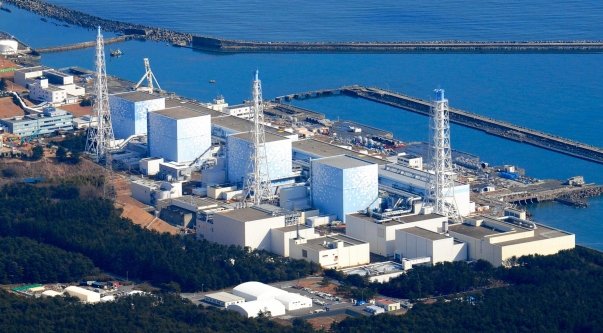
Reactor at Niigata to reopen more than a decade after Fukushima disaster as country returns to atomic energy. Japan has approved the restart of the world’s largest nuclear power plant more than a decade after its closure following the Fukushima disaster, as the country returns to atomic energy to address rising power costs.
The governor of Niigata prefecture approved the
reactivation of one reactor unit on Friday, clearing the last major hurdle
to restarting the Kashiwazaki-Kariwa plant. Japan has been gradually
restarting reactors, reopening 14 out of 54 that were closed. Another four
are waiting for local governments to give the green light and eight more
are pending regulatory approval, according to Yamashita.
FT 21st Nov 2025, https://www.ft.com/content/c5244861-0a72-42a7-87d6-b98497ad82ae
Trump’s Westinghouse nuclear deal comes with unresolved questions
Unpacking the unusual details of the administration’s $80 billion deal with the nuclear giant.
Alexander C. Kaufman, LATITUDE MEDIA, November 20, 2025
Last month, the Trump administration announced a deal to spend at least $80 billion to build at least 10 new large-scale Westinghouse reactors, a move that seemed to anoint a “national champion” in nuclear power. On its face, the agreement appeared to offer these new U.S. AP1000s — the type of reactor built at Southern Company’s Plant Vogtle in Georgia — with a guarantee of financing akin to direct funding from the Department of Energy’s Loan Programs Office.
But exactly how the $80 billion will be spent and when remains an open question.
The details are unusual. Rather than coming from the Energy Department, the Department of Commerce brokered the deal in what one Republican source described as an example of the administration’s internal “chaos.” Rather than coming from the federal budget, the $80 billion appears to be contingent upon Japan fulfilling its $550 billion investment in the U.S. that President Donald Trump negotiated in Tokyo last month. Rather than funneling the money through an entity such as the LPO, the disbursement process remains unclear.
“Without a sense of how this $80 billion is going to be used for nuclear in the U.S., it’s not going to give actual developers or owner-operators a chance to structure their own finances in response,” Advait Arun, a former Treasury Department analyst who now researches capital markets and energy finance at the Center for Public Enterprise think tank, told Latitude Media. “Is $80 billion going to go through LPO? Will it go through the White House? Are there other costs? There [are] all these different ways to imagine how the $80 billion will flow.”
Adding to the uncertainty, a top Energy Department official said this week the federal government may take ownership of the new reactors outright.
“The role of having the government involved in private markets is sacrosanct; you just don’t do it,” Carl Coe, the Energy Department’s chief of staff, said at a conference hosted by the Tennessee Advanced Energy Business Council. “But this is a national emergency.”
In a statement, Cameco, the Canadian uranium giant that owns a 49% stake in Westinghouse, said the initial agreement with the Trump administration set the stage to “negotiate and enter into definitive” contracts. Brookfield Asset Management, the private equity firm that owns the 51% share of the nuclear giant, told Latitude Media it expected to broker a binding contract by early next year. ……………………………………………………………………….
The big investor-owned utilities — Exelon, Duke, or Southern Company, for example — are arguably the ones with the resources to pursue a new nuclear deal. But so far, they have resisted building the plants themselves.
“I wouldn’t build a nuclear plant,” Calvin Butler, CEO of utility giant Exelon, told CNBC last week. “What I could do is lean in on combined-cycle gas turbines. What I could do is build community solar. What I could do is own battery storage.”
In an earnings call earlier this month, Duke CEO Harry Sideris said North Carolina’s biggest utility would need to sort out some insurance policy to manage cost overruns before embarking on its loose plans to build more than a gigawatt of new nuclear power by 2037.
“We still need to figure out what we’re going to do with cost overrun protection and how we’re going to protect our investors and our customers from overruns,” Sideris told investors on the call. “Nothing going forward until we have those other items resolved.”
Westinghouse is pursuing alternative ways to bring down the cost of new reactors. Earlier this week, the company debuted new artificial intelligence software it’s developing with Google to streamline construction and reduce the enormous cost of interest payments on loans from slow buildouts.
‘A shiny toy’
That the landmark Westinghouse agreement came through the Commerce Department rather than the Energy Department is a sign of the lack of coordination between agencies under the Trump administration, a Republican source with direct knowledge of the White House’s nuclear plans told Latitude Media.
“Everyone is running around the globe trying to make deals to bring a shiny toy back to the president,” said the source, who spoke on condition of anonymity.
The source said it was a situation of “the left hand not knowing what the right is doing,” and expressed doubt that the Japanese would direct that much funding toward a non-Japanese company in the U.S.
But that might be about to change. In late October, hard-right stalwart Sanae Takaichi took office as prime minister, pushing her plans to rebuild her country’s nuclear sector. More than half of Japan’s operable reactors are still offline as part of a nationwide shutdown that occurred after the 2011 Fukushima-Daiichi accident, but the new Takaichi administration is aiming to restart those reactors and build new ones………………. https://www.latitudemedia.com/news/trumps-westinghouse-nuclear-deal-comes-with-unresolved-questions/
Israel accelerates production of Iron Dome with US aid money.
By Tzally Greenberg, Nov 21, 2025, https://www.defensenews.com/global/mideast-africa/2025/11/21/israel-accelerates-production-of-iron-dome-with-us-aid-money/?utm_source=sailthru&utm_medium=email&utm_campaign=c4-overmatch
JERUSALEM — Israel will accelerate production of Iron Dome components with “billions of dollars” of U.S. aid money, the Israeli Defense Ministry said Nov. 20.
The announcement comes amid a tense ceasefire in Gaza and Lebanon, as Hezbollah continues to arm and strengthen itself in Lebanon and Hamas declares that it has no intention of giving up weapons. Israel used Iron Dome interceptors to intercept thousands of rockets fired from these two fronts during the two-year “Iron Swords” war.
Government officials here did not specify the exact amount of the purchase, but its Defense Ministry noted that the it will be made from the special U.S. aid package approved by Congress in April 2024 under the Biden administration, totaling at $8.7 billion.
This is the second purchase of interceptors from Rafael by the Israeli Defense Ministry in the past year that from that pot of money.
Israeli officials have said Iron Dome interceptors caught thousands of rockets fired from Gaza and Lebanon.
Iron Dome is an air defense system that intercepts short- and medium-range rockets and missiles, mortars, drones, helicopters and more. The Israeli Air Force claims that since the defense system began its operational service in 2011 it has shown a 95% interception success rate.
Rafael Advanced Defense Systems is the prime contractor for the Iron Dome defense system, collaborating with ELTA Systems – a division in Israel Aerospace Industries (IAI), and mPrest Systems.
Less for Health Care, More for the Pentagon
Even with U.S. health premiums set to double, senators gave essential health funds as a bonus to the $1 trillion Pentagon.
By Lindsay Koshgarian | November 20, 2025
The government shutdown ended with a failure to solve the problem of steeply rising health insurance premiums.
The GOP’s “Big Beautiful Bill,” which slashed programs like Medicaid and SNAP to fund tax cuts for the wealthy and a $1 trillion Pentagon, allows tax credits that reduce these health costs for ordinary people to expire at the end of this year.
As a result, millions of Americans who receive health insurance through the Affordable Care Act marketplace will see their health insurance premiums double (or worse). Democrats demanded a fix for the problem, but ultimately ended the shutdown without one.
But even in the midst of the shutdown, Senators were still busy. They approved a $32 billion increase for the Pentagon on a bipartisan basis, approving the increase by a vote of 77-20 as part of a larger bill, the National Defense Authorization Act……………………….
The Senate’s $32 billion increase comes on top of the previously passed $156 billion increase from the president’s Big Bad Bill. That already promised to push military spending over the $1 trillion mark — by a significant margin, the most we’ve ever spent on the Pentagon during peacetime.
The Senate’s additional $32 billion adds insult to injury. Much of that sum would go to shipbuilding and buying more F-35s, fighter jets which are considered outrageously expensive and often criticized as ineffective………………………….
But it’s not over — the House and Senate still need to reconcile their Pentagon funding levels. While that will likely happen behind closed doors, members of Congress will still be receptive to calls from their constituents. It’s not too late to defeat that $32 billion.
And then we can get to work using that money to save health care subsidies and keep millions of Americans from losing health insurance. https://otherwords.org/less-for-health-care-more-for-the-pentagon/
∙
TEPCO’s Kashiwazaki nuclear plant hit with another security flaw
Japan’s nuclear watchdog said Thursday another faulty antiterrorism measure
had been found at the Kashiwazaki-Kariwa nuclear complex, operated by Tokyo
Electric Power Company Holdings Inc. The Nuclear Regulation Authority
convened an emergency meeting to discuss responses to the latest discovery
that a TEPCO employee had made an unauthorized copy of a confidential
document in June and stored it in his desk at the complex in Niigata
Prefecture, northwest of Tokyo. TEPCO is preparing to restart a reactor at
the site for the first time since the 2011 crisis at its Fukushima plant.
Mainichi 21st Nov 2025, https://mainichi.jp/english/articles/20251120/p2g/00m/0bu/053000c
Iran says IAEA vote nullified inspections deal with UN watchdog
Iran’s foreign minister said an accord it reached with the UN nuclear
watchdog is now invalid after the agency’s 35-member Board of Governors
adopted a Western-backed resolution demanding greater transparency from
Tehran. The resolution demanded Iran allow international verification of
its enriched uranium stockpile and access to atomic sites hit in June by US
and Israeli strikes. “Today, in an official letter to the
Director-General of the Agency, it was announced that this understanding is
no longer valid and is considered terminated,” Abbas Araghchi said on
Thursday. He was referring to an interim agreement signed between Tehran
and the International Atomic Energy Agency in Cairo in September aimed at
eventually resuming inspections of sites stricken by the attacks.
Iran International 20th Nov 2025,
https://www.iranintl.com/en/202511205237
The USA: A democracy on life support

21 November 2025, Michael Taylor, https://theaimn.net/the-usa-a-democracy-on-life-support/
When a President Demands the Death Penalty for His Opponents, Democracy Is Already on Life Support
There are moments in political life so shocking, so fundamentally corrosive, that they should stop a nation in its tracks. President Trump calling for the death penalty for six political opponents is one of those moments – not because it’s surprising, but because it isn’t anymore.
A president of the United States, the supposed leader of the free world, now speaks about hanging adversaries with the ease of ordering a cheeseburger. No evidence, no process, no pretence of legality – just the authoritarian impulse spoken out loud: eliminate them.
And the true horror is not just in the words themselves, but in the silence that follows.
The Republican Party, once fond of quoting the Constitution like scripture, now treats Trump’s threats as if they’re merely colourful commentary instead of the political equivalent of arson. Speaker Mike Johnson nods along. Karoline Leavitt repeats the talking points with the fervour of someone auditioning for a ministry of propaganda. The party’s enablers treat this behaviour as normal, even patriotic – as though the Founding Fathers intended freedom of speech to include calling for the state-sanctioned killing of critics.
This is not strength. It’s not law and order. It’s a chilling preview of what happens when democratic norms collapse under the weight of one man’s ego and a movement’s cowardice.
Because authoritarianism isn’t built overnight. It creeps. It numbs. It desensitises.
First, the president jokes about locking up opponents.
Then he insists it wasn’t a joke.
Then he escalates.
And the people around him – out of loyalty, fear, or ambition – normalise it.
By the time a president demands executions for political rivals, the real danger is already well underway: a nation where threats replace arguments, silence replaces dissent, and loyalty replaces truth.
America has weathered dangerous leaders before. What’s new is the echo chamber that institutionalises the danger – politicians who imitate Trump’s rhetoric, media outlets that launder it into legitimacy, and supporters who cheer it as strength.
A democracy dies long before the first political prisoner does.
It dies when its citizens shrug.
It dies when its leaders cower.
It dies when a president crosses a moral line and nothing – absolutely nothing – happens in response.
If Trump’s calls for death penalties don’t spark a bipartisan alarm, then the alarm system itself is broken. And once that happens, the fall isn’t sudden. It’s already begun.
Israel Launches Major Attacks Across Gaza, Killing at Least 28 Palestinians, Including Many Children.

by Dave DeCamp | November 19, 2025 https://news.antiwar.com/2025/11/19/israel-launches-major-attacks-across-gaza-killing-at-least-24-palestinians-including-many-children/
The Israeli military launched strikes across Gaza on Wednesday, killing at least 28 Palestinians, including 17 women and children, as it continues to violate the US-backed ceasefire deal.
The Israeli military claimed that its forces came under fire in Khan Younis, southern Gaza, but provided no evidence, and according to Israeli media, there were no casualties among IDF troops, and the attack occurred on the Israeli-occupied side of the yellow line. Hamas later denied that its fighters fired on Israeli troops, and called the claim “a weak and exposed attempt to justify their ongoing crimes and violations.” Following the alleged incident, the IDF unleashed strikes on Gaza City.
The Palestinian news agency WAFA reported that one Israeli strike targeted the Ministry of Awqaf and Religious Affairs in southeastern Gaza City, killing at least 10 people, including two women and three children. Al Jazeera reported that a family of five in Gaza City’s Zeitoun neighborhood was wiped out by Israeli strikes.
In southern Gaza, WAFA reported that at least four Palestinians were killed by Israeli strikes on the al-Mawasi tent camp on the coast. The news agency also said that an Israeli attack on a neighborhood of Khan Younis killed two children.
The Israeli escalation came two days after the UN Security Council passed a resolution affirming President Trump’s so-called “ceasefire deal” that places the Gaza Strip under the control of the US-led board. Since the ceasefire was supposed to go into effect on October 10, the Trump administration has backed Israel’s continued attacks on Palestinians.
Gaza’s Health Ministry said earlier in the day that since October 10, Israeli forces have killed 280 Palestinians and injured 670. The strikes on Wednesday bring the total death toll during the “ceasefire” to more than 300.
US Reaches Initial Deal With Saudi Arabia on Nuclear Sharing.

The absence of a 123 Agreement — designed to prevent countries from manufacturing fuel which could be diverted to weapons — has implications across the region. Should Saudi Arabia win access to the full nuclear fuel cycle, other Middle Eastern countries including Iran and the United Arab Emirates may demand the same conditions.
By Ari Natter and Jonathan Tirone, November 20, 2025
Takeaways by Bloomberg AI
- US negotiations with Saudi Arabia on a nuclear technology-sharing deal have been completed, potentially allowing American companies to build reactors in the kingdom.
- A formal 123 Atomic Energy Act agreement, which includes non-proliferation requirements, has yet to be signed, according to a US Energy Department spokesman.
- The prospect of a deal has alarmed non-proliferation experts and some members of Congress who have raised concerns over weapons-grade material and the potential for Saudi Arabia to gain access to the full nuclear fuel cycle.
US negotiations with Saudi Arabia on a long-sought nuclear technology-sharing deal have been completed, potentially opening the door for American companies to build reactors in the kingdom.
Energy Secretary Chris Wright and his Saudi Arabian counterpart signed a joint declaration signifying the talks were finished, the Trump administration said Tuesday following a White House visit by the kingdom’s Crown Prince Mohammed bin Salman. A formal 123 Atomic Energy Act agreement, which customarily includes non-proliferation requirements, has yet to be signed, a US Energy Department spokesman confirmed.
If finalized, such an agreement between the two nations could inject new life into America’s atomic energy sector and provide a boost to Westinghouse Electric Co. and other US companies that want to construct plants or sell reactor technology to Saudi Arabia. Still, the prospect has alarmed non-proliferation experts and some members of Congress who have raised concerns over weapons-grade material.
The absence of a 123 Agreement — designed to prevent countries from manufacturing fuel which could be diverted to weapons — has implications across the region. Should Saudi Arabia win access to the full nuclear fuel cycle, other Middle Eastern countries including Iran and the United Arab Emirates may demand the same conditions.
“It does include fuel cycle activities,” International Atomic Energy Agency Director General Rafael Mariano Grossi told journalists after speaking by phone with Saudi Arabia’s Energy Minister Prince Abdulaziz bin Salman early Wednesday. The IAEA hasn’t been notified about whether or not there will be a 123 Agreement attached to the deal, Grossi said.
Both the Energy Department and the White House didn’t immediately respond to questions seeking clarity over whether the deal would include the so-called “gold standard,” barring the enrichment and reprocessing of spent uranium that Saudi Arabia has been reluctant to agree to in the past
………………..The declaration signed Tuesday “builds the legal foundation for a decades-long, multi-billion-dollar nuclear energy partnership with the Kingdom; confirms that the United States and American companies will be the Kingdom’s civil nuclear cooperation partners of choice; and ensures that all cooperation will be conducted in a manner consistent with strong nonproliferation standards,” the White House said in a fact sheet.
On Nov. 17, ahead of the Saudi crown prince’s visit to the White House, Israeli Energy Minister Eli Cohen told Channel 14 TV that he’s skeptical of an agreement.
“I think Israel should be opposed, because it would bring about a situation where there will constantly have to be monitoring and oversight, to check whether the nuclear civilian project is sliding toward the military side,” Cohen said “This will constantly have to be checked.”
Non-proliferation watch dog groups pointed to the fact that the formal agreement, known as 123 for the section of the US Atomic Energy Act that discusses transfers of nuclear equipment and material to other nations, wasn’t announced…………. https://www.bloomberg.com/news/articles/2025-11-19/us-reaches-intitial-deal-with-saudi-arabia-on-nuclear-sharing
Nordic nations’ Ukraine burden ‘unsustainable’ – Sweden.

Stockholm has criticized uneven cash injections from other bloc members, despite claims about backing Kiev “for as long as it takes”
RT Thu, 20 Nov 2025, https://www.sott.net/article/503063-Nordic-nations-Ukraine-burden-unsustainable-Sweden
It is unsustainable for Nordic countries to continue to pay a disproportionate amount to support Ukraine, Swedish Foreign Minister Maria Malmer Stenergard has said in an interview with Politico. Rifts are widening inside the EU over how – and whether – to keep funding Kiev, according to the outlet.
Currently, Nordic and Baltic countries continue to contribute the most to Kiev relative to GDP, while larger EU economies trail far behind in proportional terms – a disparity Stockholm says the EU can no longer ignore.
In an interview published on Thursday, Stenergard claimed “a few countries take almost all of the burden,” calling the imbalance “not fair” and “not sustainable in the long run.”
She noted that the Nordic countries, with fewer than 30 million people, are expected to provide a third of NATO’s military aid to Ukraine this year. “It’s not reasonable in any way. And it says a lot about what the Nordics do – but it says even more about what the others don’t do.”
Comment: The Swedish foreign minister forgets that the Nordic countries are doing it out of their own blindness to reality. If they feel it is unfair, then just stop handing over the Nordic taxpayers money to Ukraine.
Stenergard’s comments reflect mounting frustration in northern capitals despite continued rhetoric about backing Ukraine “for as long as it takes,” Politico reported.
Comment: They thought that “as long as it takes” wouldn’t last so long. In other words, it was just a nice sounding slogan without much thought to what it actually meant.
EU officials have reportedly circulated a document outlining three options for the bloc’s next package for Kiev – two involving increased cash injections from member states, and a third using proceeds from frozen Russian sovereign assets. Stenergard signaled that using the immobilized assets could be the only viable path, given resistance in parts of the bloc to deeper budget commitments.
Western nations froze about $300 billion in Russian central bank assets after the escalation of the Ukraine conflict in 2022. The EU has so far transferred over a billion from interest to Kiev.
The debate comes as Ukraine faces a $100 million corruption scandal uncovered this month, in which anti-corruption agencies accused Timur Mindich – a former business partner of Vladimir Zelensky – of siphoning kickbacks from contracts with nuclear operator Energoatom, a company heavily dependent on foreign aid
The scandal broke just as Kiev is pushing for a new €140 billion ($160 billion) loan backed by frozen Russian assets, a plan stalled for weeks amid legal worries and Belgian resistance, with Moscow dismissing any use of its assets as “theft.”
Comment: So the Swedes want to steal Russian assets because they couldn’t really afford to support the black hole of Ukraine forever. They are now realizing that the money they gave to Ukraine will never come back and there wont be Russian resources to plunder. If they steal Russian frozen assets in Belgium, then the Euro will be relegated to the history of failed fiat currencies.
US to “buy and own” new domestic reactors

November 20, 2025, https://beyondnuclear.org/us-to-buy-and-own-domestic-nuclear-reactors/
On November 19, 2025, Bloomberg news reported that the United States government will “buy and own” as many as ten new, large (1000 MWe and bigger) commercial nuclear reactors. The new nuclear power deal emerged out of President Trump’s October meeting with Japan’s first woman and ultra-conservative Prime Minister, Sanae Takaichi. According to the Trump White House, Japan pledged to invest a total of $550 billion in US infrastructure of which $332 billion will go into developing domestic energy projects. The Japan/US domestic energy infrastructure plan includes the licensing and construction of new large nuclear reactors (Westinghouse AP1000 pressurized water reactors as well as a new breed of small modular reactors [SMR]), new natural gas power plants, electric transmission projects and pipelines.
On November 13, 2025, Beyond Nuclear spotlighted “Make Atoms Great Again?” on the White House announcement of an agreement with Westinghouse Electric where the US Department of Energy (DOE) plans to buy an $80 billion government equity share for 20% of Westinghouse corporation’s future nuclear profits from its fleet expansion of the controversial AP1000 “advanced” pressurized water reactor. The AP1000 pressurized water reactor was to only new reactor design to launched construction projects in 2007 and only two of the new Westinghouse units are operable today in the US.
Vogtle Units 3 & 4 were stricken with extreme cost overruns and as a result have indefinitely stuck Georgia ratepayers and manufacturers with electric rate shock. Two additional AP1000 units (V.C. Summer 2 & 3) financially collapsed mid-construction in South Carolina and were abandoned with nearly $10 billion in sunk costs. The President and CEO of Santee Cooper at the time of project’s cancellation was quoted to observe in July 2017, “When you find yourself riding a dead horse, the best strategy is to dismount.” An effort to resuscitate the failed construction project is presently underway by the utility. The cost overruns, recurring delays and cancellations however resulted in the 2017 Westinghouse bankruptcy that shifted the corporation to new Canadian ownership.
The White House issued an October 28, 2025 “Fact Sheet: President Donald J. Trump Drives Forward Billions in Investments from Japan,” identifying,
“Critical Energy Infrastructure Investments: Up to $332 billion to support critical energy infrastructure in the United States, including the construction of AP1000 and small modular reactors (SMRs), in partnership with Westinghouse; construction of SMRs in collaboration with GE Vernova and Hitachi.”
State Finds No Exemption for Holtec on Nuclear Wastewater Release

Official advises DEP to uphold its earlier decision based on Ocean Sanctuaries Act
Christine Legere, the Provincetown Examiner, November 19 2025,
PLYMOUTH — Holtec International, the company that owns and is decommissioning the Pilgrim nuclear power station, has likely lost its appeal of a state environmental ruling that has prevented it from releasing nearly one million gallons of the power plant’s wastewater, which contains radionuclides and other contaminants, into Cape Cod Bay.
Salvatore Giorlandino, the Dept. of Environmental Protection’s chief presiding officer for the appeal, issued his 60-page recommendation on Nov. 6. It advises DEP Commissioner Bonnie Heiple to uphold her agency’s 2024 decision to deny Holtec’s request for an amendment to its discharge permit that would allow releasing the wastewater
The DEP’s 2024 decision was based on the state’s Ocean Sanctuaries Act, which prohibits the discharge of industrial waste into designated ocean sanctuaries. Cape Cod Bay carries that designation.
Giorlandino’s recommendation finds that Holtec does not qualify for any of the exemptions listed in the Ocean Sanctuaries Act, including an exemption for discharges related to the generation of electric power, since Pilgrim has not generated electricity since its shutdown in 2019.
The recommendation also discussed why preemption by federal law does not apply. Holtec had argued that the federal Atomic Energy Act would preempt the state law. But Giorlandino wrote that because the Nuclear Regulatory Commission has approved three methods of nuclear wastewater disposal investigated by Holtec in connection with the Pilgrim plant — discharge, shipment for disposal, and evaporation — Holtec has options beyond a discharge into the bay that would comply with both federal and state laws.
“If all three methods of disposal approved by the NRC were prohibited by state law, this case may have a different outcome,” Giorlandino noted.
The recommendation awaits Heiple’s final determination.
Making It a Federal Case
A dismissal of the appeal by Heiple likely won’t mark the end of the wastewater debate.
In an email on Nov. 14, spokesman Patrick O’Brien said Holtec is currently refraining from comment until the state decision is finalized. “But based on a recent federal court ruling, it is likely that we may go that route as well,” O’Brien said.
O’Brien was referring to a federal judge’s September ruling in favor of Holtec in a New York case related to Holtec’s plan to discharge 1.5 million gallons of wastewater into the Hudson River from the Indian Point nuclear power plant, which it also owns and is dismantling.
New York passed a state law, the “Save the Hudson Act,” in 2023, which prohibited the discharge of radioactive substances into the Hudson River in connection with the decommissioning of a nuclear power plant. But according to a report on the website of the clean water advocacy group Riverkeeper, the judge in the appeal ruled that federal laws relating to the regulation of nuclear waste discharges supersede state laws. The site noted that New York Attorney General Letitia James had notified the court that the state would appeal the ruling.
James Lampert, an attorney and member of the Nuclear Decommissioning Citizens Advisory Panel for Pilgrim, said that Giorlandino had considered the New York case in this ruling on Pilgrim. “I am pleased that he correctly found that a New York court decision that a New York statute prohibiting the discharge of radioactive waste into the Hudson River was preempted did not affect his decision here because, among other things, the facts in New York and Massachusetts are very different,” said Lampert in an email.
The difference, he wrote, is that the Ocean Sanctuaries Act has been in place since the early 1970s and prohibits all industrial waste discharges, not just discharges containing radioactive waste. New York’s law, only a few years old, limits its application to radioactive waste discharges.
Mary Lampert, who is also an NDCAP member and leads the community advocacy group called Pilgrim Watch and who is James Lampert’s wife, said she was not surprised that Holtec plans to continue its legal battle.
“Why would Holtec not appeal?” Lampert said by email. “Its legal fees all come out of the decommissioning trust fund, paid by ratepayers; not one dime comes out of Holtec’s pocket.”
Local Opposition Continues
Holtec first announced plans to discharge 1.1 million gallons of wastewater from Pilgrim into Cape Cod Bay in late 2021, triggering vigorous pushback from state, federal, and local officials, the fishing and tourist industries, and the public. At the time, Holtec said it had investigated alternatives to discharging the wastewater into the bay, including evaporating it, shipping it off site at a cost of $20 million, or storing it on the site. Releasing the wastewater into the bay was and remains the company’s top choice.
………………………………………………………Members of the NDCAP panel and the public have become increasingly concerned over the evaporation of the wastewater, which has not yet been treated to reduce radioactive contamination levels.
The Lamperts have said at NDCAP meetings that the evaporated water and its contaminants ultimately end up in Cape Cod Bay in the form of precipitation.
They are not the only ones to make that point.
Diane Turco, president of the Cape Downwinders advocacy group, said in an email that DEP’s denial of Holtec’s request to discharge the wastewater should also apply to its evaporation of the wastewater because “it’s falling into our environment and Cape Cod Bay.”
Andrew Gottlieb, an NDCAP member and executive director of the Association to Preserve Cape Cod, posted on his agency’s website that Holtec now has a choice. The company could forgo appeals and dispose of the wastewater legally and responsibly, Gottlieb wrote, or it could continue with “serial appeals” to give it time to evaporate the wastewater “into the air breathed by residents of southeast Massachusetts and the Cape.” https://provincetownindependent.org/featured/2025/11/19/state-finds-no-exemption-for-holtec-on-nuclear-wastewater-release/
The World’s Largest Nuclear Plant Inches Toward Restart After Key Approval.
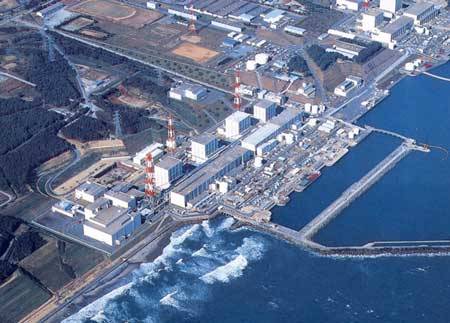
By Tsvetana Paraskova – Nov 19, 2025, https://oilprice.com/Latest-Energy-News/World-News/The-Worlds-Largest-Nuclear-Plant-Inches-Toward-Restart-After-Key-Approval.html
The Kashiwazaki-Kariwa nuclear power plant in Japan, the world’s largest in terms of nameplate capacity, could soon clear a major hurdle toward a partial restart as the governor of the prefecture hosting the plant is expected to give consent to startup, Japanese media reported on Wednesday.
Hideyo Hanazumi, the governor of the Niigata Prefecture, is set to announce on Friday an approval to the restart of two units of the 8-gigawatt (GW) nuclear power plant, Japan’s Kyodo news agency reports.
The governor’s approval is not enough for the plant operator, Tokyo Electric Power Company (TEPCO), to restart two reactors—the startup needs the approval of the Niigata Prefecture assembly, too. A session of the assembly is set to discuss TEPCO’s proposal in early December.
TEPCO, which also operated the nuclear power plant in Fukushima prior to the 2011 disaster, has planned for years to restart the Kashiwazaki-Kariwa plant in the Niigata prefecture.
Last month, TEPCO said that it carried out a full round of integrity checks at Kashiwazaki-Kariwa after fuel loading of Unit 6 was completed, confirming that primary facilities can sufficiently perform the functions required for reactor startup.
But the company faces backlash over its restart plans and proposal to “contribute monetarily to vitalizing the regional economy.” Local residents and anti-nuclear activists in Japan oppose the restart and have slammed TEPCO’s proposal as a “bribery” of the local residents to accept the restart of the plant.
Opinion polls suggest that local residents are split on whether TEPCO should be allowed to restart the nuclear power plant.
Japan’s newly elected Prime Minister, Sanae Takaichi, favors accelerating the restart of nuclear reactors as a way to reduce the G7 economy’s dependence on energy imports.
Before the Fukushima meltdown in 2011, nuclear energy accounted for about 30% of Japan’s electricity mix. The disaster prompted the closure of all reactors for safety checks. Since 2015, Japan has restarted 14 reactors out of 33, while 11 others are currently in the process of restart approval.
1 This Month

of the week – Shut Down Drone Warfare!


Tell the Ukrainian Government to Drop Prosecution of Peace Activist Yurii Sheliazhenko

Petition to revoke the licensing of the Near Surface Nuclear Disposal Facility (NSDF) at Chalk River. https://www.ourcommons.ca/petitions/en/Petition/Details?Petition=e-7247
To see nuclear-related stories in greater depth and intensity – go to https://nuclearinformation.wordpress.com
-
Archives
- April 2026 (103)
- March 2026 (251)
- February 2026 (268)
- January 2026 (308)
- December 2025 (358)
- November 2025 (359)
- October 2025 (376)
- September 2025 (257)
- August 2025 (319)
- July 2025 (230)
- June 2025 (348)
- May 2025 (261)
-
Categories
- 1
- 1 NUCLEAR ISSUES
- business and costs
- climate change
- culture and arts
- ENERGY
- environment
- health
- history
- indigenous issues
- Legal
- marketing of nuclear
- media
- opposition to nuclear
- PERSONAL STORIES
- politics
- politics international
- Religion and ethics
- safety
- secrets,lies and civil liberties
- spinbuster
- technology
- Uranium
- wastes
- weapons and war
- Women
- 2 WORLD
- ACTION
- AFRICA
- Atrocities
- AUSTRALIA
- Christina's notes
- Christina's themes
- culture and arts
- Events
- Fuk 2022
- Fuk 2023
- Fukushima 2017
- Fukushima 2018
- fukushima 2019
- Fukushima 2020
- Fukushima 2021
- general
- global warming
- Humour (God we need it)
- Nuclear
- RARE EARTHS
- Reference
- resources – print
- Resources -audiovicual
- Weekly Newsletter
- World
- World Nuclear
- YouTube
-
RSS
Entries RSS
Comments RSS
 nuclear-news