THE EUROPEANS: BLIND TO REALITY, DEAF TO ALL WARNINGS & HEADED FOR DISASTER
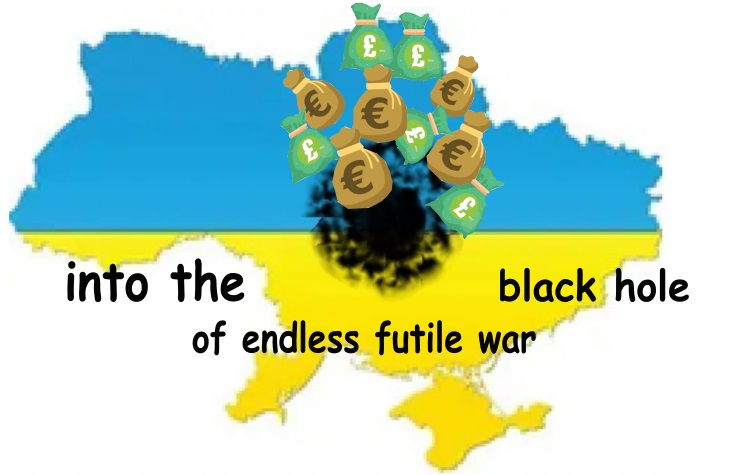
Will Merz, Macron and Starmer finally open their eyes on Ukraine before their war juggernaut hits the wall of hard reality? Can the future EVER forgive them for their endlessly fatal delaying tactics?
Aearnur, Dec 13, 2025, https://aearnur.substack.com/p/the-europeans-blind-to-reality-deaf?utm_source=post-email-title&publication_id=312403&post_id=181444169&utm_campaign=email-post-title&isFreemail=true&r=ln98x&triedRedirect=true&utm_medium=email
When one side cannot reconcile themselves to a relationship being over and refuses to accept this reality an entirely different scenario presents itself to one where both sides agree to part. Someone determined to pursue the relationship at all costs will blindly employ ever more radical measures, measures that worsen an already bad situation, toward potentially dangerous, even fatal levels.
The current crop of European leaders, primarily those of Germany, France and the UK cannot reconcile themselves to the fact of the Ukrainian regime losing the conflict with Russia. They cannot bear this reality and, until the last 24 hours have appeared ready to take ever more ultimately self-harming measures in an utterly futile quest to create an unattainable reality from pure fantasy.
Without the sanctions upon Russia working, without Russia’s trading partners turning their backs upon it, without the West’s so-called gamechanger weapons being effective and without NATO becoming directly involved, the Ukrainian regime in Kiev and its western sponsors were ALWAYS going to lose this conflict. Everything the West tried has failed. Everything the West could now try (which is extremely little) would also fail. Since the USA finally grasped the reality on the ground of the conflict in Ukraine the big question was then always going to be just how long the suicidally deluded Europeans would continue to futilely escalate matters. How long would the Europeans delay while Ukraine lost more men and more land before they finally bowed to reality and convinced the Kiev regime to settle?
Over the next few days we may finally see the Europeans finally accepting the inevitable. Their delay in doing this by not lending their pressure along with that of the U.S. on Zelensky has already cost tens of thousands, arguably hundreds of thousands of Ukrainian lives. By late-2023 it had become clear that Russia would prevail. Nothing on anything remotely approaching a fundamental level was working against an unassailable Russian ability to fight, destroy resistance or attacks from the enemy and to advance. The political, media, financial and military might of the West had completely failed. This was obvious to anyone who knew anything about the comparison of Russian material resources, manpower availability and industrial capacity to that of Ukraine and indeed by comparison with those of the entire collective west.
The inability of western politicians to confront the realities described above has brought them into massive disrepute across the global majority while at the same time vastly enhancing the status of the Russian nation and its endlessly insightful president.
The incompetence, general self-willed blindness and recklessness of western political elites over the question of Ukraine will go down in history as the conclusive ending of a multi-generational blight upon the world. Being unable to extricate themselves from unearned, self-awarded levels of entitlement led them to sacrifice at least a million Ukrainians on the alter of their overweening arrogance.
And for this they will never be forgiven.
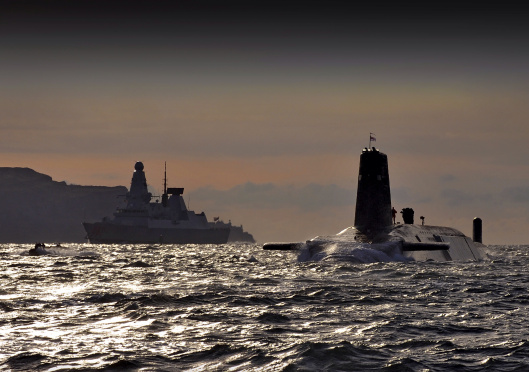
Submarines in for repairs at Rosyth could contain nuclear weapons
Dunfermline Press, 11th December, By Clare Buchanan, Local Democracy Reporter – Clackmannanshire and Fife
The Ministry of Defence says it will not reveal if nuclear weapons will be aboard submarines being repaired at Rosyth in future, and confirmed residents would be given potassium iodate tablets to block radiation in the event of an emergency.
The revelations came as members of Fife Council’s South and West Fife area committee were given an update on plans for Rosyth to be the temporary repair base for the UK’s new fleet of nuclear deterrent submarines.
While it was explained that “non-nuclear” repairs would be carried out from the dockyard when required, some vessels at the Fife yard could be carrying nuclear weapons – but an MoD spokesperson told councillors that they would not reveal whether or not they were.
Rosyth has been earmarked as a temporary contingent for the UK Government’s Dreadnought class of submarines – the first of which is expected to launch towards the end of the decade.
The proposals also include setting up an emergency planning zone, which could stretch more than a kilometre and includes a residential area…………………………………………………………………………………………………………………………………….When probed, Mr Brown also told councillors that policy would mean there would be no confirmation of if nuclear weapons were on board.
“My position is we do not comment on the condition of the boat whether it is armed or not,” he added…………………………………
Rosyth councillor Andrew Verrachia welcomed the plans…………………….“I don’t want to think about the public being frightened. If any more communication can be put out to the wider public because the last thing anyone wants is frightened, worried members of the public. This should be a good news story.”
Committee convener David Barratt was less pleased with the plans.
“Morally, and as a CND member, I find the existence of nuclear weapons abhorrent,” he said………… https://www.dunfermlinepress.com/news/25689904.submarines-repairs-rosyth-contain-nuclear-weapons/
American-owned consortium assumes control of Canada’s premier nuclear research facility.

THE GLOBE AND MAIL, Matthew McClearn, 12 Dec 25
An American-owned consortium has assumed responsibility for managing Canada’s premier nuclear research facility, Chalk River Laboratories, along with cleaning up the federal government’s sizable inventory of radioactive waste spread across the country.
After a three-month delay, Nuclear Laboratory Partners of Canada Inc. formally took control on Thursday of the organization that runs Chalk River, known as Canadian Nuclear Laboratories.
CNL manages the assets and liabilities of a federal Crown corporation called Atomic Energy of Canada Ltd. under an arrangement Ottawa describes as a “government-owned, contractor-operated” model………………………………………………….
Earlier this year, AECL said the consortium’s contract is worth about $1.2-billion annually. It has been called the federal government’s largest contract at the moment, although key federal authorities – including the Treasury Board Secretariat, Auditor-General and AECL – have been unwilling or unable to confirm that. The term of the contract will be six years but it can be extended for up to another 14 years.
The consortium’s American ownership has provoked controversy. Since assuming office, Prime Minister Mark Carney has espoused a Buy Canadian policy – a key part of his government’s response to mounting conflict with its dominant trading partner, the United States.
Corey Tochor, a Conservative member of Parliament for Saskatoon-University, accused AECL of “selling out our nuclear secrets” to American interests, during the first of three scheduled hearings held before the House of Commons standing committee on natural resources to examine the consortium’s American ownership.
“What we have real deep concerns [about] is that we’re letting a foreign country manage our medical isotopes,” Mr. Tochor said.
Earlier this month, Conservative MP Cheryl Gallant from Renfrew-Nipissing-Pembroke characterized the awarded contract as an “elbows-down” approach that left Americans in control of Canadian intellectual property…………………………………………………………….
The American-owned consortium is led by a large nuclear specialty manufacturer focused on military equipment and nuclear fuel called BWX Technologies Inc…………………………………..
The U.S.-led consortium takes over from another partnership known as Canadian National Energy Alliance, which held the contract for a decade. Its members recently included Montreal-based AtkinsRéalis Group Inc. and two American companies, Jacobs Engineering Group Inc. and Fluor Corp………………………….
The American consortium was declared the winner of a competitive procurement process in June and had originally been scheduled to take over in September. The transfer was delayed pending a review by the Competition Bureau, which is responsible for enforcing federal antitrust rules. Late last month the Competition Bureau issued a “no-action letter” confirming it will not oppose the contract, which allowed the transfer to proceed. https://www.theglobeandmail.com/business/article-nuclear-laboratory-partners-chalk-river-laboratories-cnl-atomic-energy/
Climateflation: the food system in crisis

Jonathon Porritt 11th Dec 2025
Someday soon, our mainstream media is going to blow the gaff on today’s self-appointed tribunes of the people who, often in the very same speech, will inveigh against the ever-rising cost of living (and the scourge of food inflation in particular) while robustly asserting that climate change is a myth—a middle-class obsession that imposes outrageous costs on working families.
I can’t say I much like the word, but the portmanteau ‘climateflation’ should provide a bit of a heads-up for these loathsome hypocrites. Food prices have been rising for all sorts of different reasons, and it’s not easy to attribute a particular percentage of these rises to the impact of climate change on food crops and supply chains. But figures of anywhere between 10% and 20% have been cited, with specific reference to extreme heat reducing crop yields around the world (all crops have their own heat tolerance limit), as well as the growing frequency of floods and droughts.
Major food retailers in both Europe and the US are much more exercised about the way this is translating into price rises for fruit and veg in particular, although the language they use often steers clear of pinning it explicitly on climate change. How about this for a classic euphemism from the British Retail Consortium: “seasonal food inflation driven by weather”!
……………………………………………. climateflation is already with us, with an average temperature increase of around 1.5°C since the Industrial Revolution. No surprise then that projections for future impacts (with average temperature increases of 2°C+) are getting truly scary. The European Central Bank looked at potential impacts by 2035, causing food prices in Europe to rise by between 1% and 3% every year, adding 0.3% to 1.2% to whatever the rate of inflation might be in any one year.
The reprehensible get-out for politicians is that even the most sophisticated climate models are still not much cop when it comes to projecting extreme weather events, let alone the movement of pathogens (pests and diseases) as the weather goes on getting warmer. It’s always after the event that the true scale of the damage becomes clear—as with the killer bacteria ‘xylella fastidiosa’ that has been ravaging Italy’s olives over the last decade, resulting in significant hikes in the price of olive oil. The prices of both chocolate and coffee have been similarly affected by different climate-induced factors.
All that’s bad enough, but we should be thanking our lucky stars we don’t live in one of the many countries directly affected by retreating glaciers. A report from UNESCO in March this year (the World Water Development Report) confirmed that the food and water supplies of around 2 billion people will be affected over the next two or three decades by what is now the fastest rate of glacier melting on record. We’re not just talking about food inflation here—we’re talking about life and death for hundreds of millions of people…………………………………………………………………….
The cruellest response to all this that we hear from the politicians is that farmers must ‘adapt.’ But there’s really not a lot the individual farmer can do as once-reliable weather patterns go berserk, as warmer temperatures steadily reduce moisture in the soil, and as demand for irrigation water steadily rises—even as food retailers remain as greedy and inflexible as ever.
So is that it then? Just factor in the inevitability of worsening climate inflation and invest in more food banks for those already struggling with the cost of food? Absolutely not! In fact, there are four big things the UK government needs to be focusing on right now:
- Get really serious about food security. (Professor Tim Lang’s report earlier this year (“Just In Case”) written for the National Preparedness Commission, provides the clearest possible warning of the vulnerability of the UK’s food system to external shocks).
- Regulate the hell out of all those companies profiting so handsomely from the sale of ultra-processed food.
- Encourage consumers to eat less meat.
- Reduce food waste — both at the farm gate (particularly in poorer countries) and post-consumer.
Uncomfortably, that means acknowledging that Big Ag (that drives or benefits from each of these meta-impacts on our health and the environment) poses as great a threat to the well-being of people and to our prospects as a species as Big Oil. Which is why you won’t find many politicians venturing into this increasingly controversial territory. https://jonathonporritt.com/climateflation-food-system-crisis/
Building energy resilience in an uncertain world

Satisfying the demand for energy via a resilient system is important, but the system can be made even less vulnerable by reducing that demand. As the Green Alliance report notes, “the most secure unit of energy is the unit that does not need to be consumed”.
Cutting demand is emerging as one of the most powerful and overlooked options for strengthening energy security.
Lucy Colback. Ft. Dec 12 2025
In a world of polarised politics and with a shift from globalisation to national self-interest, energy resilience is a growing concern for governments. Securing stable supply requires managing considerations such as where a country’s fuel is sourced, how energy is stored and distributed, and how the system is protected from attack.
…………………………………………………………………………………………………………. Ensuring a stable and resilient fuel and energy mix and reliable infrastructure secure against cyber and physical attacks, as well as climate-related events, are all factors that need to be addressed when building a system that can withstand shocks.
Diversification of sources
…………………………………………………………………………………………………At the very least, the bloc’s overall supply picture now looks more diversified.
Fuel
The global mix of energy sources is changing as governments and industry seek to reduce their reliance on fossil fuels and slow the effects of climate change. ……………………………………………………………………………………………………………………………………………..
the [nuclear] sector must overcome multiple challenges, including workforce shortages, complex construction that can lead to cost overruns and delays and public opposition over safety concerns.
Infrastructure challenges
………………………………………………………………………………………………………………….“If you can implement smart demand reduction, not just draconian consumption limits, but market structures that allow people to turn their thermostat down at times of peak load, or agglomerate these so-called distributed energy resources in smart ways, you can really take the edge off energy security challenges while maintaining affordability for consumers.”
Cyber challenges and physical attacks……………………………………………………………….
Demand side policies
Satisfying the demand for energy via a resilient system is important, but the system can be made even less vulnerable by reducing that demand. As the Green Alliance report notes, “the most secure unit of energy is the unit that does not need to be consumed
A joint UK Energy Demand Research Centre and UK Energy Research Centre report focuses solely on demand side measures not as a reactive solution to crises but a proactive part of any energy security strategy. It says that one-off subsidies such as the £51bn it cost in 2022-23 to fill holes in household budgets created by rising energy prices would have been better spent on insulating the nation against future shocks by implementing longer-term energy demand reduction policies. This does not mean absolute demand side reduction for its own sake without the consideration of growth. With the right strategy in place, economic activity need not be sacrificed to achieve lower energy consumption, it says.
Marie Claire Brisbois, an interdisciplinary researcher into power, politics and influence in energy, water and climate governance at University College London and an author of the report, says that “people become more secure as nationally we need less energy”. While implementing such policies might be a problem for energy companies, moving individuals from a state of energy poverty to energy security is “surely better for the nation” as a whole. Resistance seems to come from lobbying and pressure industries, says Brisbois, who believes that this frequently waters down solutions “so obvious as to be absurd”, such as better insulation, heat pumps and solar panels installed as standard for new homes.
Governments could take other measures, too, for instance discouraging the use of SUVs in cities such as London which were not designed for large vehicles. “Why aren’t we doing this?” asks Brisbois. “I’m not sure. Paris is taxing large vehicles so it’s not unprecedented. However, regulating size does limit choice in markets that are supposed to be ‘free’ and I’m sure car lobbies are active in pushing back against this.”
Consumers might be open to simple policies universally implemented, such as improved household appliance efficiency. An ongoing study run by the Energy Demand Research Centre and the charity Involve is investigating citizens’ receptiveness to a suite of demand side policies, including using more public transport rather than their own cars — an approach more people might countenance if they could trust the government to provide reliable and safe services. Such measures would reduce energy consumption at the household level while boosting economic productivity and employment, says Brisbois, noting this is corroborated by a recent paper in ScienceDirect. She also says that a four-day workweek for intellectual jobs would improve energy efficiency and has been proven to increase productivity
These would augment existing measures such as the electrification of the heat and transport sectors, which have already delivered relative demand reduction given their better fuel efficiency than fossil driven equivalents. Other consumer side policies such as distributed clean energy — solar generation on people’s homes, for instance — have been around in many places for two decades, alleviating the pressure on national networks and infrastructure.
A further plank is to implement demand side response, encouraging consumers to vary their electricity consumption to smooth out high and low demand periods or to install on-site storage, such as batteries, to redistribute energy proactively from trough to peak hours. Majkut at the CSIS says: “Digital tools — you could even extend this into artificial intelligence — provide us the ability to build energy resilience on the demand side as we think about the sort of market structures and traditional energy security tools we need on the supply side.”
Conclusion
………………………………………………………………………………………. .
Majkut says: “The demand spike in the power sector and the thin excess capacity in our electricity grid is definitely a reliability issue and could really challenge our tools for resilience. If we manage demand growth poorly, or if we close resources too quickly, we could have a lot more disruption than we have now.”
Trump’s ‘End of History’ Moment

History will thankfully go on once we see the end of them and the work of repairing the mess they are making begins.
December 13, 2025 , By Patrick Lawrence, ScheerPost, https://scheerpost.com/2025/12/13/patrick-lawrence-trumps-end-of-history-moment/
The Trumpster is not yet finished his first year back in the White House, and I cannot imagine how our crumbling republic will survive three more years of this man-child and the misfits and miscreants with whom he has surrounded himself. And it occurs to me lately that neither I nor anyone else is supposed to imagine any kind of future — good, bad, in the middle — beyond Jan. 20, 2029, when President Trump will no longer be president. The future will not be the point by then. By then we are supposed to be living in an imaginary past that we won’t have to imagine because the imaginary past will be the actual present.
It is not quite three months since Trump issued an executive order designating “antifa,” the more or less fictitious “organization” of antifascists, a “domestic terrorist organization.” In the Trump White House’s rendering, antifa “explicitly calls for the overthrow of the United States Government, law enforcement authorities and our system of law.” To this end, it organizes and executes vast campaigns of violence. It coordinates all this across the country. It recruits and radicalizes young people, “then employs elaborate means and mechanisms to shield the identities of its operatives, conceal its funding sources and operations in an effort to frustrate law enforcement, and recruit additional members.”
I didn’t take the executive order containing this kind of language the least bit seriously when it was issued Sept. 22. Antifa, so far as I understand it, does not actually exist. It is a state of mind, or it signifies a shared set of political sentiments vaguely in the direction of traditional anarchism — a hyper-individualistic ultra-libertarianism when translated into the American context.
Trump’s executive order describing antifa as an organized terrorist organization reminded me of nothing so much as those flatfooted fogies back in the Cold War years who, nostalgic for a simpler time but understanding nothing, went on about “outside agitators” as the root of America’s ills.
I was wrong in one respect, maybe more, about Trump and his adjutants and what they have in mind. These people are not flatfooted. They know exactly what they are doing and they are moving swiftly to get it done. It is time to take seriously, I mean to say, the wall-to-wall unseriousness of the Trump regime’s plans for a nation it would be impossible to live in were it ever to come to be. The saving grace here is they cannot possibly create the America they have in mind. But they will, I have to add, make an unholy mess on their way to failing.
Three days after the antifa executive order, The White House made public a National Security Presidential Memorandum titled “Countering Domestic Terrorism and Organized Political Violence.” NSPM–7, as this document is known, is formally addressed to Marco Rubio, Trump’s secretary of state, Treasury Secretary Scott Bessent, Attorney General Pam Bondi and Kristi Noem, the Homeland Security secretary.
This thing picks up where the one-page executive order leaves off. It cites various assassinations and attempted assassinations — Charlie Kirk, Brian Thompson, the United Healthcare chief executive, the two attempts on Trump’s life during his 2024 campaign — and fair enough, although casting political violence as terrorist violence is a sleight-of-hand too far. It is when NSPM–7 invokes recent protests against Immigration and Customs Enforcement agents and “riots in Los Angeles and Portland” that you sense the trouble to come.
From the first of the document’s five sections:
This political violence is not a series of isolated incidents and does not emerge organically. Instead, it is a culmination of sophisticated, organized campaigns of targeted intimidation, radicalization, threats, and violence designed to silence opposing speech, limit political activity, change or direct policy outcomes, and prevent the functioning of a democratic society. A new law enforcement strategy that investigates all participants in these criminal and terroristic conspiracies — including the organized structures, networks, entities, organizations, funding sources, and predicate actions behind them — is required.
What is required, it turns out, is an institutionalized surveillance operation that goes considerably beyond the Patriot Act. “This guidance,” Section 2 reads, “shall also include an identification of any behaviors, fact patterns, recurrent motivations, or other indicia common to organizations and entities that coordinate these acts in order to direct efforts to identify and prevent potential violent activity.”
And then NSPM–7 gets down to what the Trump regime is truly after:
Common threads animating this violent conduct include anti-Americanism, anti-capitalism, and anti-Christianity; support for the overthrow of the United States Government; extremism on migration, race, and gender; and hostility towards those who hold traditional American views on family, religion, and morality.
I am not letting the liberal wing of the ruling Late–Imperial War Party, commonly known as the Democrats, off the hook in this domestic terrorism business. Joe Biden banged on about this whenever it was politically expedient the whole of his discombobulated term, and we now witness the consequences of all his loose, opportunistic talk. In effect, Biden prefaced what the Trump regime is step-by-step codifying into law.
One of the more pernicious of the many objectionable features of NSPM–7 merits immediate note. This is the vagueness of its language. Whenever I see official documents of this kind my mind goes back to imperial China, whose mandarins were highly legalistic but kept written law purposely ambiguous so as to maximize the prerogatives of imperial power. A surfeit of laws, all of them to be interpreted in whatever way suited the throne.
As of last weekend we know how Pam Bondi, Trump’s patently fascistic AG, intends to interpret NSPM–7. This is by way of a Justice Department memorandum Ken Klippenstein, the exemplary investigative journalist, reported on (but did not actually publish in full) on Saturday, Dec. 6. This is Klippenstein’s exclusive. Here is the top of the piece he published in his Substack newsletter under the headline, “FBI Making List of American ‘Extremists,’ Leaked Memo Reveals:”
Attorney General Pam Bondi is ordering the FBI to “compile a list of groups or entities engaging in acts that may constitute domestic terrorism”… The target is those expressing “opposition to law and immigration enforcement; extreme views in favor of mass migration and open borders; adherence to radical gender ideology,” as well as “anti–Americanism,” “anti-capitalism,” and “anti–Christianity.”
By way of defining all these domestic terrorism threats, Klippenstein reports, the DoJ memorandum cites “extreme viewpoints on immigration, radical gender ideology, and anti-American sentiment.” As to enforcement, the memorandum authorizes the FBI to open a hotline by means of which ordinary Americans can report on other ordinary Americans, along with “a cash reward system” to go along with it. The agency is also to develop a legion of informants (“cooperators”); state and local governments are to be funded to develop their own programs in conformity with the DoJ’s directives. What the memorandum calls Joint Terrorism Task Forces are to “map the full network of culpable actors.”
This is more than what we now call an all-of-government surveillance and enforcement program that open-and-shut outlaws a variety of Constitutional rights. It is an all-of-society operation that prompts comparisons with regimes in history I never would have imagined summoning to mind in anything like this context. “Extremist viewpoints” are to be criminalized? I am an outlaw if I am critical of orthodox Christianity, if I am “hostile” to the nuclear family, to traditional morality and so on? Just how close to thought control does the Trump regime plan to sail?
Continue readingAUKUS Caucus

The AUKUS agreement allows any party to withdraw with one year’s notice. But here’s the lethal asymmetry: Australia’s payments are subsidies, not deposits; they are not refundable, and there is no guarantee that the submarines will ever be delivered.
How the AUKUS Caucus built a cargo cult and called it strategy.
14 December 2025 David Tyler Australian Independent Media
There’s a certain kind of Australian politician who never quite grew out of childhood. You know the type: Richard Marles, Tony Abbott, Christopher Pyne. Peter Pan to a man. Their eyes light up whenever a Pentagon staffer remembers their name. They sit bolt upright like kelpie pups on the back of the ute, ears pricked for master’s return. They mistake condescension for intimacy, patronage for partnership, obedience for relevance.
Marles, Pat Conroy (Defence Industry), and Brendan O’Connor (Veterans’ Affairs) along with “Rear Admiral-Albo” and Wayfinder Penny Wong make up the AUKUS Caucus: a dream team. Not bound by evidence, timelines, or arithmetic; only by faith. Faith that if Australia sends enough money, bases and deference across the Pacific, the Great Mate in the Sky will someday descend bearing nuclear submarines and strategic salvation.
Australia’s $368 billion imaginary friend.
The Cargo Cult Playbook
Cargo cults arise when isolated societies witness advanced powers arrive with miraculous technology. Locals build imitation runways; light signal fires hoping the planes will return. The AUKUS Caucus has updated the ritual for the modern age. Our runways are ports. The offerings are our sovereignty. The signal fires are AUSMIN pressers. And the planes, as ever, do not land.
Richard Marles, Labor’s embattled Defence Minister, is the cult’s high priest. Asked about implementation delays, he smiles wanly and intones the sacred words: “Full steam ahead.” Full steam ahead to where is never explained.
AUKUS is sold as strategic realism. In practice, it operates as faith: belief substituted for capacity, ritual for delivery, loyalty for leverage.
The Hegseth Problem
This week Marles and Wong flew to Washington for the annual, ceremonial abasement known as AUSMIN. Their opposite number is Pete Hegseth. Former Fox News shouter, veterans’ charity mismanager, and a chap once carried from a strip club by mates after trying to storm the stage. Now improbably directing US defence as Secretary of War.
Hegseth’s character matters because AUKUS asks us to entrust our strategic future to decision-makers whose judgment, attention span and institutional grip are already demonstrably strained. His own mother calls him as an “abuser of women” who “belittles, lies and cheats,” urging him to “get some help and take an honest look at yourself.”
When a nation stakes $368 billion on the judgment of a man disqualified by his own mother from trust, it has crossed from strategy into pathology.
8 December, Marles and Wong are pictured nodding earnestly as Hegseth endorses a $368 billion submarine fantasy he cannot possibly deliver. He barks approval of AUKUS as “pragmatic hard power.” Wong, cryptic as ever, merely echoes Trump’s mantra: “full steam ahead.” The boats are not coming, so who cares what fuels the boiler?
The Pragmatic Hard Power Con
Pragmatic hard power? It could be a new brand of laundry detergent. The absurdity runs deeper than performance.
Australia is trading real sovereignty for imaginary submarines.
AUKUS legislation effectively transfers operational priority and access over key Australian military bases to the US. The terminology is pure institutional dissemblance: “expanded US rotational presence” and “integrated command arrangements.” In plain English: we concede control over our own strategic assets. We slip a few lazy billion to US and British shipyards to “expedite” production; meaning we subsidise their accumulated backlogs. We bind our “defence posture” so thoroughly into US command that when Washington sneezes, Canberra catches cold.
But we do get to wave flags. Hum anthems. Pay invoices.
Each concession merits national debate. Yet, the AUKUS Caucus has sealed the deal without meaningful parliamentary inquiry, without detailed public costings, only an “oversight” committee denied subpoena power, denied independent costing, and so carefully neutered it might as well be chaired by a shredder.
The Legal Trap
And yes, the legal architecture is exactly what critics feared. Under the agreement, Australia provides $4.7 billion (with more coming) to US and UK submarine builders, and according to questioning in Senate Estimates, there is no clawback provision; Australia does not get its money back if the US fails to transfer nuclear submarines.
The AUKUS agreement allows any party to withdraw with one year’s notice. But here’s the lethal asymmetry: Australia’s payments are subsidies, not deposits; they are not refundable, and there is no guarantee that the submarines will ever be delivered.
The US and UK can walk away at any time. They keep the cash, the upgrades, the expanded industrial bases and the sovereign right to prioritise their own needs. Which, as serious countries, they will do.
Australia, meanwhile, is padlocked like a rental fridge in a share-house. Jiggle the handle all you like, but the thing won’t open unless the bloke with the key decides you’ve paid up.
A Big Perhaps
At some point, the more unsettling explanation has to be entertained. Perhaps the submarines are not delayed. Perhaps they are not even expected. Perhaps AUKUS is not failing at all, but performing exactly as intended. The money flows early and without clawback. The bases open. Command structures integrate. Strategic dependency is formalised. The submarines remain permanently over the horizon, always promised, never required. If this were a ruse designed to secure American basing access and regional posture while outsourcing the political pain to future governments, it would be hard to design it differently. Whether Australia’s political class believes its own story, or merely finds it convenient, becomes almost beside the point. The outcome is the same.
And whatever the truth of the submarines, Defence needs a bit of a rescue.
Defence’s House of Horrors
Marles’ predicament worsens when you look at Defence itself: a moral, administrative and institutional nightmare he inherited and, like his predecessors, Linda Reynolds and Peter Dutton, has failed to master. Could anyone? Australia’s predicament worsens also.
The Brereton inquiry exposed 39 unlawful killings in Afghanistan. The stain remains. Atop this moral wreckage sits administrative farce: a Defence official leaked confidential information before walking straight into a job with a private weapons contractor.
The Hunter class frigates tell the broader story. What began life as a $45 million per ship concept has metastasised into $2.6 billion per ship, with hundreds of millions in variations already locked in, and the program at least 18 months late due to design immaturity.
When Labor took office, 28 major Defence projects were running a combined 97 years behind schedule, with roughly a quarter of procurement unfunded. Over it all looms $368 billion we’ve agreed to throw at AUKUS, as a $60 billion annual defence budget swells toward $100 billion by 2034, absorbing failure without correcting it. (AUKUS costs are a guess, announced without consulting Treasury, Parliament or any other authority.)
What Do We Actually Get?
And what does Australia receive for this tithe?
- Not submarines.
- Not even capability.
- A promise.
Five SSN AUKUS boats to be built in Adelaide at some conveniently indeterminate date. Early 2040s if all goes well. If Britain remembers how to build submarines at scale. If the US has spare industrial capacity. If history pauses politely to accommodate our fantasy.
The BAE Systems Track Record
BAE Systems, cast as AUKUS’s industrial saviour, spent two decades struggling to deliver the UK’s Astute class submarines……………………………………………………..
The Pillar Two Mirage
When reality intrudes, the faithful point to Pillar Two, the sideshow of defence tech collaboration; AI, cyber and hypersonics; meant to suggest strategic depth where there is only debt. Scott Morrison dubbed it “AUKUS in Space,” as if adding a preposition and some stars transformed a lopsided submarine purchase into visionary strategy.
But the real achievement is rhetorical: substituting buzz-words for credible policy. In this sense, AUKUS is Scott Morrison’s most enduring legacy.
The Question Marles Won’t Answer
No-one likes a smart-arse but the pitiful Richard Marles still cannot explain why nuclear submarines are worth this ruinous spend when modern diesel-electric boats exist.
Modern diesel-electric submarines provide maximum range, endurance and stealth, operating underwater before having to resurface to snorkel and recharge batteries. Australia’s own Collins-class diesel submarines demonstrated during 2003 multinational exercises that they were comparable in underwater warfare to US Los Angeles-class nuclear-powered attack submarines, trading roles and achieving , successful attacks despite being smaller and less powerful……………………………………………………………………………………………………………………………………………………………………………………………..
The Runway at Dusk
For $368 billion, AUKUS is not a procurement program. It is a wager on dependency.
Australia is paying staggering sums for submarines that do not yet exist, to be built by industries in chronic difficulty, on timelines that belong to fantasy, while ceding real autonomy over real assets in the present. In return, we receive reassurance. Access. Attention. The comforting sense that someone larger, louder and more heavily armed is standing somewhere behind us………………………………………………………………………………
History will not ask whether the submarines eventually arrived. It will ask why a nation willingly surrendered so much, so early, for so little certainty in return. And it will judge us not by the promises we believed, but by the choices we made when the risks were already plain. https://theaimn.net/aukus-caucus/
Revelation that UK’s Geological Disposal Facility (GDF) could be robotic prompts question over employment.
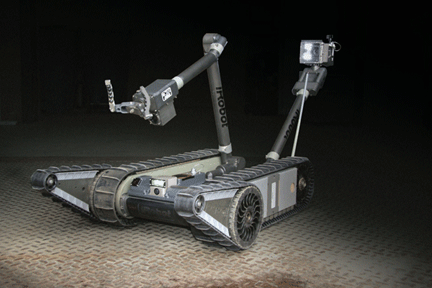
Where are the jobs? A question surely prompted by the revelation by New CivilEngineeri that NWS chief technical officer John Corderoy recently claimed that the organisation might build a future Geological Disposal Facility operated solely by an army of robots.
Due to become operational by the late 2050s, but this is a moveable feast, the GDF will be the final repository for Britain’s high-level legacy and future radioactive waste. Three Areas of
Focus in West Cumbria are currently being examined by Nuclear Waste Services as prospective locations for an approximately 1km2 surface facility to receive waste shipments prior to their being taken below ground and out through tunnels to engineered vaults deep under the Irish Sea bed.
Advocates for the GDF have raised as an economic benefit the generational employment that the facility might provide for local people over its (possibly) 150-year lifespan, but in his speech to the Nuclear Industry Association annual conference last week, Mr Corderoy conceded that with the advancement in robotics it might be possible to build a facility ‘that’s fully automated and run by robots on the ground’.
This also makes the NFLAs wonder if that would include dispensing with a human armed police force to patrol the perimeter and check entrants in favour of an AI version, as we presaged in our article of 16 October 2024:
Although, as Mr Corderoy rightly indicated, such a plan would mean ‘we don’t have to put humans in harm’s way deep underground’, for Nuclear Waste Services it would also mean a
workforce which toils without payment and without any expectation of a workplace pension, and which does not require catering, medical or welfare facilities, carparking, protective clothing, lit or heated workspaces, holidays, maternity or paternity leave, or time off for
sickness (aside from an occasional recharge, oil or parts change, or annual MOT). All representing significant cost savings for NWS.
Nor would robots be discovered leaving work
early or engaging in toxic workplace behaviour, nor would they become embroiled in an industrial dispute with their employer; things that cannot be said about some of the human
workforce at Sellafield in recent years.
The industry trades unions will also be horrified; for not only would it mean that their members, facing redundancy after the closure of storage facilities at Sellafield, would not be
able to access alternate operational jobs at the GDF site, but it would mean a loss of income to help sustain the salaries of officials as robots do not pay union subs.
Disappointing news from the High Court, to Together Against Sizewell C (TASC)

Together Against Sizewell C (TASC) are extremely disappointed to advise of today’s decision by the judge, to refuse permission for a judicial review in relation to Sizewell C’s secret additional sea defences. In TASC’s view, it is immoral to proceed with Sizewell C in the knowledge that the project, as approved in the development consent order, is not resilient to an extreme sea level rise scenario. This will result in future generations having to pick up the pieces from ill-thought out decisions made today.
Future generations need government to move forward with sustainable development, not questionable climate change solutions, such as Sizewell C, which come with hidden risks that have been denied public scrutiny, assessment and full consideration of alternatives.
TASC 12th Dec 2025, https://www.crowdjustice.com/case/sizewell-c-legal-challenge/
Fire safety failings hit Hinkley Point.

Nuclear Engineering International 10th Dec 2025
Improvements must be in place by June 2026, ahead of bulk installation of mechanical and electrical systems at unit 1.
The UK’s Office for Nuclear Regulation (ONR) has served a fire enforcement notice on Bylor JV (a joint venture of Laing O’Rourke and Bouygues Travaux Publics) after identifying significant fire safety shortfalls at the Hinkley Point C (HPC) nuclear construction site in Somerset.
ONR inspectors identified that Bylor had failed to implement appropriate arrangements for the effective planning, organisation, control, monitoring and review of preventive and protective measures following a focused fire safety intervention.
Bylor is delivering HPC’s main civil engineering works. ONR said many of the Bylor buildings on the site are currently at an advanced stage of construction and these shortfalls resulted in inadequate general fire precautions, including a lack of an adequate emergency lighting system………………….https://www.neimagazine.com/news/fire-safety-failings-hit-hinkley-point/?cf-view
US should exit lost Ukraine war, obsolete NATO

Walt Zlotow West Suburban Peace Coalition Glen Ellyn IL, substack.com/@waltzlotow 12 Dec 25
President Trump appears to relish killing innocents worldwide. He’s still enabling the Israeli genocide in Gaza that has killed over 100,000. He’s obliterated 20 little unarmed boats in the Caribbean killing over 80 hapless innocents. He’s bombed imagined bad guys in Somalia 111 times in 10 months. Why? Because he wants to and can.
But one killing field Trump wants out of is Ukraine. His predecessor Biden provoked the war there 4 years ago. It has largely destroyed Ukraine as a viable state with millions fled, dead, injured, with a shattered economy propped up by US, NATO treasure.
Trump is working with Russia to end the war largely on Russia’s sensible terms. No NATO for Ukraine which will remain neutral between Europe and Russia. No return of the seized territory containing the Russian speaking Ukrainians their government was systematically destroying. End of sanctions allowing reintegration of Russia into the European political economy.
This is good for Ukraine, good for Russia, good for Europe.
For Ukraine it ends further destruction which will alas, now be a rump state of its former self. Had Ukraine not allowed the US and NATO to sabotage the April, 2022 Istanbul peace agreement, Ukraine could have achieved peace then with no loss of territory and its economy largely intact.
For Russia, its security concerns regarding NATO encroachment allowing NATO nukes on its borders, and further destruction of Russian leaning Donbas Ukrainians will achieved be.
For Europe, peace will allow redirection of squandered treasure to the commons, ward off right wing political movements likely to topple pro war leaders, and buy cheap energy from Russia to revitalize their stagnant economies.
While Russia is on board, neither Ukraine nor Europe will have any of this sanity. Ukraine wants to fight on to regain lost territory that will forever be part of Russia. Hurling teens and grandfathers into the cauldron of lost war further cements Ukraine’s destruction.
European NATO pretends defeating Russia in Ukraine is critical to preventing Russia from attacking NATO countries in their imagined obsession Russia is recreating the Soviet Union.
Ukraine and Europe continue in their delusions in spite of Trump’s clear message that the war is lost and must be ended to prevent further disintegration of Ukraine. Neither Ukraine nor Europe has anywhere near the military resources to continue the war largely financed by the Russophobic Biden administration.
Trump must not weaver in his efforts to exit the money pit of senseless war in Ukraine. But he should go further and exit NATO, allowing Europe to provide for their own defense. No US Sugar Daddy might be just the tonic to dissuade foolish European leaders like UK’s Starmer, France’s Macron and Germany’s Merz from endlessly screaming ‘The Russians are coming, the Russian’s are coming.’
Congress is starting to recognize the need to exit NATO. House Republican Thomas Massie and Senate Republican Mike Lee have both introduced legislation to end US membership in NATO.
Their common sense justification is long overdue fresh air. Massie noted, “NATO was created to counter the Soviet Union, which collapsed over thirty years ago. Since then, U.S. participation has cost taxpayers trillions of dollars and continues to risk US involvement in foreign wars. Our Constitution did not authorize permanent foreign entanglements, something our Founding Fathers explicitly warned us against. America should not be the world’s security blanket—especially when wealthy countries refuse to pay for their own defense.”
Lee observed, “America’s withdrawal from NATO is long overdue. NATO has run its course – the threats that existed at its inception are no longer relevant 76 years later “If they were, Europe would be paying their fair share instead of making American taxpayers pick up the check for decades. My legislation will put America first by withdrawing us from the raw deal NATO has become.”
Trump must support this legislation as he works with Russia to end the carnage that addresses Russia’s valid security concerns. Ending this war and exiting NATO will bring peace to Europe and revitalize the economies of all combatants. It might also avert something infinitely more ominous…nuclear war.
A New UN Secretary-General Needs the Blessings of the US–or Get Vetoed.

“The new SG will need to be someone Trump allows, as he has a veto,”
By Thalif Deen, https://www.ipsnews.net/2025/12/a-new-un-secretary-general-needs-the-blessings-of-the-us-or-get-vetoed/?utm_source=email_marketing&utm_admin=146128&utm_medium=email&utm_campaign=A_New_UN_SecretaryGeneral_Needs_the_Blessings_of_the_US_or_Get_Vetoed_Sindh_Peoples_Housing_Redefine
UNITED NATIONS, Dec 11 2025 (IPS) – When there was widespread speculation that a UN Under-Secretary-General (USG), a product of two prestigious universities—Oxford and Cambridge—was planning to run for the post of Secretary-General back in the 1980s, I pointedly asked him to confirm or deny the rumor during an interview in the UN delegate’s lounge.
“I don’t think”, he declared, “anyone in his right mind will ever want that job”.
Fast forward to 2026.
As a financially stricken UN is looking for a new Secretary-General, who will take office beginning January 2027, the USG’s remark in a bygone era was a reflection of a disaster waiting to happen.
The current Secretary-General is facing a daunting task battling for the very survival of the UN, with a hostile White House forcing the world body to sharply reduce its staff, slash funding and relocate several UN agencies, moving them out of New York.
The bottom line: the incoming Secretary-General will inherit a virtually devastated United Nations.
Addressing the General Assembly last September, President Trump remarked, “What is the purpose of the United Nations? It’s not even coming close to living up to [its] potential.”
Dismissing the U.N. as an outdated, ineffective organization, he boasted, “I ended seven wars, dealt with the leaders of each and every one of these countries, and never a phone call from the United Nations offering to help in finalizing the deal.”
Whoever is elected, the new UN chief will have to faithfully abide by the ground rules of the Trump administration virtually abandoning what the UN stands for, including racial equality and gender empowerment (DEI)
“Diversity, equity and inclusion (DEI) policies that were adopted to address historical and structural injustices are being vilified as unjust,” says Volker Turk, UN High Commissioner for Human Rights.
In his 345-page book titled “Unvanquished: A US-UN Saga,” released in 1999, Boutros Boutros-Ghali, a former Secretary-General, points out that although he was accused by Washington of being “too independent” of the US, he eventually did everything in his power to please the Americans.
But when he ran for a second term, the US, which preaches the Western concept of majority rule, exercised its veto even though Boutros-Ghali received 14 of the 15 votes in the Security Council, including the votes of the other four permanent members of the Council, namely the UK, France, Russia and China.
In such circumstances, tradition would demand the dissenting US abstain on the vote and respect the wishes of the overwhelming majority in the Security Council. But the US did not.
Unlike most of his predecessors and successors, Boutros-Ghali refused to blindly play ball with the US despite the fact that he occasionally caved into US pressure at a time when Washington had gained a notoriety for trying to manipulate the world body to protect its own national interests.
Jesselina Rana, UN Advisor at CIVICUS’ UN Hub in New York and the steering committee of the 1 for 8 Billion campaign, told IPS when key international norms are being openly flouted by certain member states and the veto is used to undermine the very principles the UN was built on, will structural reforms alone be enough to restore trust in the institution?”
Can the UN80 process genuinely rebuild trust in multilateralism, she asked, when the process itself has been opaque and has lacked meaningful civil society participation?
“An accountable and transparent Secretary-General selection process requires stronger and more explicit support from member states.”
A process that is open and inclusive of civil society and grounded in feminist leadership will strengthen the UN’s ability to navigate today’s difficult geopolitical conditions and help rebuild trust in multilateralism, she argued.
After 80 years of male leadership, the next Secretary-General should be a woman with a proven record on gender equality, human rights, peace, sustainable development, and multilateralism, declared Rana.
Felix Dodds, Adjunct Professor at the Water Institute, University of North Carolina and Associate Fellow, the Tellus Institute, Boston, who has written extensively on the UN, told IPS the UN is experiencing challenging times, living through what are probably the most difficult times since the Cold War.
It may not be a bad idea to move some UN bodies. UNDP did a lot of that under Helen Clarke—being closer to the people you are working to help, maybe it is a cost-cutting issue, but it may also be something that should have been considered before.
“The new SG will need to be someone Trump allows, as he has a veto,” he pointed out.
“Of the candidates we looked at before, the only one that is realistic is Rebeca Grynspan from UNCTAD. She has shown herself to be a good bureaucrat and has led UNCTAD well, as she did for Costa Rica when she was the Deputy President, said Dodds, City of Bonn International Ambassador.
“We may be looking at a man again,” he said.
Clearly, the new secretary-general taking over in 2027 has a daunting task ahead. Whoever it is will have had to make concessions to the P5 on the size and reach of the UN. The present cuts may be just the first set to come down.
“A UN with a clearer mandate on what it will do may be a result. Stakeholders need to, of course, defend the UN as a critical body for multilateral affairs BUT they must at the same time be putting forward reforms that are simple and strengthen the area they are working on.”
There is no way we can get security reform through—it doesn’t mean it shouldn’t be proposed, but what is realistic in the areas being reformed is that stakeholders and governments can work together on it.
Ultimately, the driving force should be a more effective UN delivering on the ground. Do reform proposals do that? he asked.
“The organization has always worked in a world of political pressures. I agree the body should be a place for dialogue and protection of the most vulnerable. UN80 offers an opportunity for dialogue on realistic proposals. The question is, what are they in the different areas?” he said.
Dr. Stephen Zunes, Professor of Politics and International Studies at the University of San Francisco, where he serves as coordinator of the program in Middle Eastern Studies, told IPS following the Napoleonic Wars, the Council of Europe largely kept the peace until the Central Powers decided it no longer worked for them. The result was World War I.
The League of Nations then set up a framework to keep the peace until the Axis powers decided it no longer worked for them. The result of World War II, he said.
“We are now at a similar crossroads, where the United Nations system is being challenged by both Russia and the United States which–as demonstrated through the invasions of Iraq and Ukraine—no longer feel constrained by the prohibition against aggressive war.”
On the road with radioactive waste: Canada’s roads are not safe.

Transporting nuclear waste is inherently dangerous because it involves moving materials that remain hazardous to human health and the environment for centuries to millennia. Even under ideal conditions, risks cannot be fully eliminated — accidents, mechanical failures, weather events, security threats, or human error can all result in the release or exposure of radioactive materials.
Unlike other hazardous goods, radioactive waste cannot simply be cleaned up with standard emergency response measures; contamination can render land unusable, water unsafe, and ecosystems damaged for generations. Every shipment is a high-stakes event, and the impacts of even a single failure could be irreversible for the communities and lands along the transport route.
by Mayara Gonçalves e Lima, December 11, 2025
Canada is decommissioning a nuclear power plant for the first time, marking a new chapter in the country’s nuclear history. The decommissioning of Gentilly-1 in Bécancour, Quebec — on the St. Lawrence River in Wabanaki territory — is a milestone in the country’s reckoning with its radioactive legacy, setting a precedent that will influence how future projects are approached across Canada.
The implications extend far beyond Quebec. How Gentilly-1 is dismantled, how its waste is transported, and how oversight is conducted will set precedents for future decommissioning projects across the country.
For New Brunswick, these decisions will shape the expectations, policies, and protections in place when it comes time to decommission Point Lepreau — a process that will carry even higher stakes for this province.
The threat of radioactive waste on the move
Gentilly-1 recently entered its active dismantling phase, with the removal of remaining radioactive and structural components, including equipment, piping, cabling, and control panels from the service and turbine buildings.
Under the current dismantling plan, the resulting radioactive waste is expected to be transferred to Canadian Nuclear Laboratories at Chalk River, Ontario, for interim storage.
This planned transfer follows an earlier shipment of Gentilly-1 used fuel to Chalk River that occurred without publicity or demonstrated compliance with regulatory requirements.
Transporting nuclear waste is inherently dangerous because it involves moving materials that remain hazardous to human health and the environment for centuries to millennia. Even under ideal conditions, risks cannot be fully eliminated — accidents, mechanical failures, weather events, security threats, or human error can all result in the release or exposure of radioactive materials.
Unlike other hazardous goods, radioactive waste cannot simply be cleaned up with standard emergency response measures; contamination can render land unusable, water unsafe, and ecosystems damaged for generations. Every shipment is a high-stakes event, and the impacts of even a single failure could be irreversible for the communities and lands along the transport route.
These risks are compounded by the fact that current storage solutions for Gentilly-1 nuclear waste are only temporary. Neither Canada nor any country in the world has a permanent solution for radioactive waste — meaning the waste will eventually need to be moved again, effectively doubling both the risks and costs associated with its handling and transportation.
Bloc Québécois urges halt to radioactive waste shipments to Chalk River
On October 17, 2025, amid growing national debate over nuclear waste transport, the Bloc Québécois formally called on Federal Natural Resources Minister Tim Hodgson to immediately halt the transfer of radioactive materials from Gentilly-1 to the Chalk River Laboratories.
To reinforce their position, the Bloc Québécois has launched a petition allowing the public to voice their opposition to the project. It underscores the environmental risks of transporting radioactive waste and storing it so close to a major drinking water source, as well as the lack of meaningful consultation with Indigenous communities.
The Bloc’s petition also highlights a separate proposal for the Chalk River site: the construction of a nuclear waste landfill known as the Near Surface Disposal Facility (NSDF). This project also has become a major source of controversy. The Kebaowek First Nation, along with more than 140 municipalities in Quebec and Ontario, has voiced strong opposition to placing large volumes of radioactive waste near the Kichi Sibi (Ottawa River) and its tributaries.
Whistleblowers raise alarm over secretive transport practices
More than 60 groups, with the Passamaquoddy Nation among them, have endorsed a letter sent to the Prime Minister and key members of Cabinet on December 2, 2025, sounding the alarm about the federal government’s management of radioactive waste transport in Canada.
The signatories state that they are “blowing the whistle” on a practice that has remained largely hidden from public view: the movement of radioactive waste along public roads, bridges, and through First Nations territories without consultation, notification, or parliamentary oversight.
The letter focuses on Canadian Nuclear Laboratories’ decision to consolidate federally-owned radioactive waste at the Chalk River Laboratories site. The signatories emphasize that Chalk River is an unsuitable and inherently vulnerable location due to its proximity to the Ottawa River and its exposure to seismic activity.
In response to these escalating concerns, the signatories call for three concrete actions: an immediate cessation on shipments of radioactive waste to Chalk River; a full ban on the import of radioactive waste; and a strategic assessment under section 95 of the Impact Assessment Act to evaluate the cumulative and long-term risks of transporting radioactive waste on public highways.
Such an assessment, they argue, is essential to ensuring informed, democratic decision-making and to guiding future reviews of nuclear facilities, reactor decommissioning projects, and federal waste policies.
Canada’s radioactive waste crisis demands action
Canada urgently needs to halt the practice of transporting radioactive waste over public roads, through municipalities, across public bridges, and over Indigenous territories without meaningful consultation, public notification, or clear regulatory justification.
These shipments — often occurring quietly and without community awareness — pose risks that are collectively borne by the public while decisions are made by a small number of government and industry actors.
The lack of transparency erodes trust and fails to meet even the basic standards of democratic governance, environmental protection, or respect for Indigenous rights. Communities have the right to know when hazardous materials are moving through their homelands, and they deserve a real voice in determining whether and how such shipments occur.
The Age of Nuclear Waste is only beginning, and Canada is unprepared to manage the growing challenges of transporting, importing, and exporting radioactive materials.
As reactors age, decommissioning accelerates, and new nuclear projects emerge, waste shipments will only increase — but federal oversight remains fragmented, inconsistent, and insufficiently accountable to the public.
Without a coherent national policy grounded in precaution, transparency, and genuine consultation — especially with First Nations whose territories are routinely crossed — Canada risks locking in a legacy of poorly governed radioactive waste movements.
Canada must act now to establish responsible oversight and build a safer, more accountable framework before today’s shortcomings become tomorrow’s crises.
At times like these, we’re reminded that every chapter of Canada’s nuclear history carries lasting responsibilities: our nuclear past has left behind a trail of toxic legacy that no technology, no policy, and no promise can safely contain for the timescales required.
Mayara Gonçalves e Lima works with the Passamaquoddy Recognition Group Inc., focusing on nuclear energy. Their work combines environmental advocacy with efforts to ensure that the voice of the Passamaquoddy Nation is heard and respected in decisions that impact their land, waters, and future.
Venezuela charges Washington with ‘theft, piracy’ after seizure of oil tanker
The US had imposed sanctions on the vessel under claims it was involved in the Iranian oil trade.
The Cradle, DEC 11, 2025
Venezuela has accused the US government of “blatant theft” and “piracy,” following Washington’s seizure of a Venezuelan oil tanker off the Latin American country’s coast on 10 December.
The Venezuelan Foreign Ministry strongly condemned what it said was a “blatant theft and an act of international piracy, publicly announced by the President of the US, who confessed to the assault on an oil tanker in the Caribbean Sea.”
“Already in his 2024 campaign, [US President Donald Trump] openly stated that his objective has always been to keep Venezuelan oil without paying any consideration in return, making it clear that the policy of aggression against our country responds to a deliberate plan to plunder our energy wealth,” the Venezuelan Foreign Ministry added.
“The true reasons for the prolonged aggression against Venezuela have finally been revealed. It is not migration. It is not narcotics trafficking. It is not democracy. It is not human rights. It has always been about our natural wealth,” the statement went on to say.
Cuban President Miguel Diaz-Canel Bermudez also condemned Washington’s theft of the oil tanker.
“Cuba expresses its full support for the denunciation issued by the government of Venezuela and strongly condemns the assault on an oil tanker in the Caribbean Sea, carried out by the Armed Forces of the United States. This constitutes an act of piracy, a violation of international law, and an escalation in the aggression against that sister nation,” he said.
The US announced the seizure on Wednesday. The move caused a jump in oil prices and has fanned the flames of an already tense situation between Caracas and Washington – which has recently targeted the Latin American country with brutal strikes under the pretext of stopping the flow of drugs into the US.
Video footage of the seizure showed armed US soldiers descending onto the vessel from a helicopter. The Venezuelan oil tanker was subject to illegal US sanctions. ………………………………………………..
The seizure of the Venezuelan tanker comes as part of a massive military buildup in the Caribbean Sea and recent airstrikes on what Washington claims are “drug boats” responsible for the flow of Fentanyl into the US.
At least 87 people, among them innocent fishermen from Colombia, Ecuador, and Trinidad and Tobago, have been killed by the US attacks since September. https://thecradle.co/articles/venezuela-charges-washington-with-theft-piracy-after-seizure-of-oil-tanker
Nuclear Notebook: The changing nuclear landscape in Europe
Bulletin, By Hans M. Kristensen, Matt Korda, Eliana Johns, Mackenzie Knight-Boyle | December 10, 2025
Evolving nuclear weapons postures in Europe
Since Russia annexed Crimea in 2014 and invaded Ukraine in 2022, the rhetoric, prominence, operations, and infrastructures of nuclear weapons in Europe have changed considerably and, in many cases, increased. This trend is in sharp contrast with the two decades prior that—despite modernization programs—were dominated by efforts to reduce the numbers and role of nuclear weapons.
During this period, Russia has fielded several new nonstrategic nuclear weapons systems, increased military exercises, issued a long list of nuclear signals and threats, and upgraded its nuclear doctrine in a way that gives the impression that it has broadened the role of nuclear weapons and potentially lowered its nuclear threshold.
NATO, for its part, is also modernizing its nuclear forces and has further reacted by increasing its strategic bomber operations and nonstrategic nuclear posture, changing its strategic nuclear ballistic missile submarine operations, and talking more openly and assertively about the role and value of nuclear weapons.
Each side believes it has good reasons for beefing up the nuclear posture, but the combined effect is that the role and presence of nuclear weapons in Europe are increasing again after decades of efforts to curtail them. Unless the governments and parliaments of European countries increase efforts to halt this trend, the region is likely to descend further into growing nuclear weapons competition and posturing over the next decade.
In this Nuclear Notebook, we provide an overview with examples of how the nuclear postures in Europe are evolving, especially the infrastructures and operations. The overview is focused on nonstrategic nuclear weapons but also includes examples of how strategic nuclear forces are operated. The intention is to provide a factual resource for the public debate about the evolving role of nuclear weapons in Europe. As such, this notebook is not intended to be comprehensive but informative.
Nine countries currently operate nuclear forces in Europe: Belarus, Belgium, Germany, France, Italy, the Netherlands, Russia, the United States, and the United Kingdom. The latter has announced plans to acquire nonstrategic nuclear weapons (see Figure 1), and a tenth country (Türkiye) hosts nuclear weapons on its territory.
Nuclear developments involving the Russian Federation…………………………………………………………………………………………………………………………………..
Nuclear developments involving NATO………………………………………………………………………………………………………………
The United Kingdom…………………………………………………………………………………..
France…………………………………………………………………………………………………
………………………………………….. copious references……………..https://thebulletin.org/premium/2025-12/the-changing-nuclear-landscape-in-europe/
1 This Month

of the week – Shut Down Drone Warfare!


Tell the Ukrainian Government to Drop Prosecution of Peace Activist Yurii Sheliazhenko

Petition to revoke the licensing of the Near Surface Nuclear Disposal Facility (NSDF) at Chalk River. https://www.ourcommons.ca/petitions/en/Petition/Details?Petition=e-7247
To see nuclear-related stories in greater depth and intensity – go to https://nuclearinformation.wordpress.com
-
Archives
- April 2026 (91)
- March 2026 (251)
- February 2026 (268)
- January 2026 (308)
- December 2025 (358)
- November 2025 (359)
- October 2025 (376)
- September 2025 (257)
- August 2025 (319)
- July 2025 (230)
- June 2025 (348)
- May 2025 (261)
-
Categories
- 1
- 1 NUCLEAR ISSUES
- business and costs
- climate change
- culture and arts
- ENERGY
- environment
- health
- history
- indigenous issues
- Legal
- marketing of nuclear
- media
- opposition to nuclear
- PERSONAL STORIES
- politics
- politics international
- Religion and ethics
- safety
- secrets,lies and civil liberties
- spinbuster
- technology
- Uranium
- wastes
- weapons and war
- Women
- 2 WORLD
- ACTION
- AFRICA
- Atrocities
- AUSTRALIA
- Christina's notes
- Christina's themes
- culture and arts
- Events
- Fuk 2022
- Fuk 2023
- Fukushima 2017
- Fukushima 2018
- fukushima 2019
- Fukushima 2020
- Fukushima 2021
- general
- global warming
- Humour (God we need it)
- Nuclear
- RARE EARTHS
- Reference
- resources – print
- Resources -audiovicual
- Weekly Newsletter
- World
- World Nuclear
- YouTube
-
RSS
Entries RSS
Comments RSS
 nuclear-news