Trump Floundering Efforts to Shore Up US Hegemony
Michael Hudson The Unz Review, December 20, 2025
The National Security Strategy’s Drive to Shed the Costs of Imposing Its U.S. Unipolar Empire
The one area in which the National Security Strategy makes a claim to be realistic is to recognize that the United States cannot directly be seen to impose its control by force. This task is to be delegated more to client oligarchies and their governments, by assigning responsibility (and most important, the military costs) on a regionwide basis along lines similar to how the European Union’s foreign and domestic political policies have been made subordinate to NATO Cold War policy controlled by the United States.
Replacing at least the anti-Russian rhetoric of Biden’s and the EU’s support for the war against Russia, the NSS proposes dividing the world into spheres of influence for the major regional powers: the United States (monopolizing control of all of Latin America and the Caribbean for itself), Russia (with its Central Asian and other former Soviet republics, including what formerly was eastern Ukraine), and China over mainland Asian neighbors. A Pacific NATO-like arrangement to be shepherded (and financed) by Japan, with India as the wild card. The EU under NATO are dismissed as a waning power with little influence.
This plan is not really a division of spheres of regional influence at all, in the sense that World War II’s 1945 Yalta conference was. It does carve out a uniquely U.S. control over Latin America and the Caribbean. European and Asian countries are to keep away from investing in the major resources of these countries.[1] This is Trump’s travesty of the Monroe Doctrine. That doctrine called for a reciprocity with foreign countries: Europe would stay out of political control of Latin American countries, and the United States would not interfere in European affairs. But U.S. officials had no problem with the newly independent Latin American countries going deeply into debt to British and other foreign creditors who imposed debt dependency, much as France did with Haiti as the price of its buying its political freedom to abolish domestic slavery. The effect was for many of these countries obtained political freedom from colonialism only to fall into debt dependency. But the Monroe Doctrine was only concerned with direct political and military control.
The major U.S. violation of the original Monroe Doctrine has been to maneuvere to control Eurasian affairs. It has meddled in European elections, most notably in Italy and Greece after World War II by mounting right-wing challenges to their rising Communist parties. And it has ringed Eurasia with U.S. military bases and mounted regime change coups. The effect is that U.S. diplomats have been trying for eighty years to turn the entire world into a unipolar U.S. region of influence.
But the military and related costs of this effort have been largely responsible for the U.S. balance-of-payments deficit since the Korean War, and also the U.S. domestic budget deficit (at least until the neoliberal tax cuts on the revenue side of the budget). These costs are to be shifted onto foreign countries.
The costs of maintaining the U.S. diplomatic empire must be assigned on a region-wide basis under the leadership of particularly loyal U.S. proxies, much as is the case with NATO countries Europe under British, French and German dominance.
In Asia, U.S. diplomacy relies on the Quad (Japan, Australia, India and the United States) along with friendly governments in South Korea and the Philippines to prevent their economies and those of China and other countries in the region from obtaining oil and gas from Russia, Iran and Venezuela to install military basis ringing China. Much as U.S. neocons are trying to convince NATO allies that these adversaries pose an imminent military threat, Asian countries are being mobilized to support a separatist political movement in Taiwan.
………………………………………………………………………………………………………………………………………………………………………………………………………………………………… Trump’s drive to attract foreign financing to the U.S. debt market via cryptocurrency
In seeking to counter other countries’ moves away from the dollar, the most recent U.S. tactic is to try to surreptitiously get other countries to hold dollars by persuading them to invest in stablecoins – cryptocurrency that is invested in U.S. Treasury securities, not bonds of China or other countries…………………………………….
And a major aim of cryptocurrencies is, of course, to facilitate tax evasion and criminal activities through libertarian “privacy” (that is, secrecy from public authorities) and criminal management of such currencies themselves. The Trump Administration’s support for cryptocurrencies actually is a new version of the U.S. drive to promote offshore banking centers in the 1960s…………………………………………………………………………………………. https://www.unz.com/mhudson/trump-floundering-efforts-to-shore-up-us-hegemony/
The Real Story Behind the Russia–Ukraine War—and What Happens Next
local Ukrainian nationalists joined Hitler’s Wehrmacht in its depredations against Jews, Poles, Roma and Russians when it first swept through the country from the west on its way to Stalingrad; and then, in turn, the Russian populations from the Donbas and south campaigned with the Red Army during its vengeance-wreaking return from the east after winning the bloody 1943 battle of Stalingrad that turned the course of WWII.
As Washington sleepwalks deeper into conflicts that have nothing to do with genuine US security, the stakes for ordinary Americans grow higher by the day.
by David Stockman, Doug Casey’s International Man , 27 Dec 25
Notwithstanding the historic fluidity of borders, there is no case whatsoever that Russia’s invasion of Ukraine in February 2022 was “unprovoked” and unrelated to NATO’s own transparent provocations in the region.
The details are arrayed below, but the larger issue needs be addressed first.
Namely, is there any reason to believe that Russia is an expansionist power looking to gobble up neighbors which were not integral parts of its own historic evolution, as is the case with Ukraine?
After all, if despite Rubio’s treachery President Trump does manage to strike a Ukraine peace and partition deal with Putin you can be sure that the neocons will come charging in with a false Munich appeasement analogy.
The answer, however, is a resounding no!
Our firm rebuke of the hoary Munich analogy as it has been falsely applied to Putin is based on what might be called the double-digit rule. To wit, the true expansionary hegemons of modern history have spent huge parts of their GDP on defense because that’s what it takes to support the military infrastructure and logistics required for invasion and occupation of foreign lands.
For instance, here are the figures for military spending by Nazi Germany from 1935–1944 expressed as a percent of GDP. This is what an aggressive hegemon looks like in the ramp-up to war: German military spending had already reach 23% of GDP, even before its invasion of Poland in September 1939 and its subsequent commencement of actual military campaigns of invasion and occupation.
Not surprisingly, the same kind of claim on resources occurred when the United States took it upon itself to counter the aggression of Germany and Japan on a global basis. By 1944 defense spending was equal to 40% of America’s GDP, and would have totaled more than $2 trillion per year in present day dollars of purchasing power.
Military Spending As A Percent Of GDP In Nazi Germany
- 1935: 8%.
- 1936: 13%.
- 1937: 13%.
- 1938: 17%.
- 1939: 23%.
- 1940: 38%.
- 1941: 47%.
- 1942: 55%.
- 1943: 61%.
- 1944: 75%
By contrast, during the final year before Washington/NATO triggered the Ukraine proxy war in February 2022, the Russian military budget was $65 billion, which amounted to just 3.5% of its GDP.
Moreover, the prior years showed no build-up of the kind that has always accompanied historic aggressors. For the period 1992 to 2022, for instance, the average military spending by Russia was 3.8% of GDP– with a minimum of 2.7% in 1998 and a maximum of 5.4% in 2016.
Needless to say, you don’t invade the Baltics or Poland—to say nothing of Germany, France, the Benelux and crossing the English Channel—on 3.5% of GDP! Not even remotely.
Since full scale war broke out in 2022 Russian military spending has increased significantly to 6% of GDP, but all of that is being consumed by the Demolition Derby in Ukraine—barely 100 miles from its own border.
That is, even at 6% of GDP Russia has not yet been able to subdue its own historic borderlands. So if Russia self-evidently does not have the economic and military capacity to conquer its non-Ukrainian neighbors in its own region, let alone Europe proper, what is the war really about?
Continue readingRussia wants to build a nuclear power plant on the moon in the next few years .
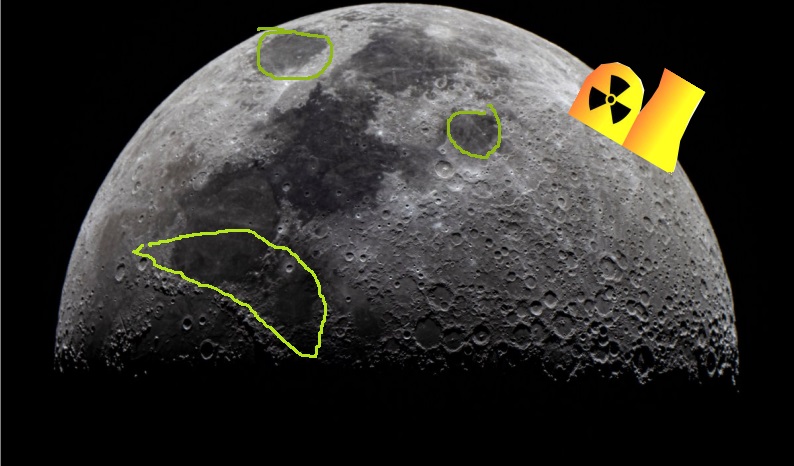
Project aims to supply energy for its lunar space programme
Guy Faulconbridge, Wednesday 24 December 2025, https://www.independent.co.uk/space/russia-china-space-race-moon-nuclear-power-b2890010.html
Russia is reportedly planning to establish a nuclear power plant on the moon within the next decade.
This ambitious project aims to supply energy for its lunar space programme and a joint research station with China, as global powers intensify their
efforts in lunar exploration.
Historically, Russia has held a prominent position in space, notably with Yuri Gagarin’s pioneering journey in 1961.
However, its dominance has waned in recent decades, with the nation now trailing behind the United States and, increasingly, China.
The country’s lunar aspirations faced a significant setback in August 2023 when its uncrewed Luna-25 mission crashed during a landing attempt.
Furthermore, the landscape of space launches, once a Russian speciality, has been revolutionised by figures such as Elon Musk, adding to the competitive pressure.
Russia’s state space corporation, Roscosmos, said in a statement that it planned to build a lunar power plant by 2036 and signed a contract with the Lavochkin Association aerospace company to do it.
Roscosmos said the purpose of the plant was to power Russia’s lunar programme, including rovers, an observatory and the infrastructure of the joint Russian-Chinese International Lunar Research Station.
“The project is an important step towards the creation of a permanently functioning scientific lunar station and the transition from one-time missions to a long-term lunar exploration program,” Roscosmos said.
Roscosmos did not say explicitly that the plant would be nuclear but it said the participants included Russian state nuclear corporation Rosatom and the Kurchatov Institute, Russia’s leading nuclear research institute.
The head of Roscosmos, Dmitry Bakanov, said in June that one of the corporation’s aims was to put a nuclear power plant on the moon and to explore Venus, known as Earth’s “sister” planet.
The moon, which is 384,400 km (238,855 miles) from our planet, moderates Earth’s wobble on its axis, which ensures a more stable climate. It also causes tides in the world’s oceans.
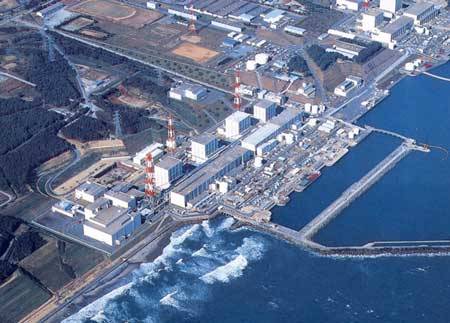
1A 15 years after Fukushima disaster locals fear return of Japan’s nuclear power.
Sarah Hooper, December 24, 2025, https://metro.co.uk/2025/12/24/15-years-after-fukushima-disaster-locals-fear-return-of-japans-nuclear-power-25764288/
Japan is returning to nuclear energy almost 15 years after the Fukushima disaster – but not everyone is convinced it’s a good idea.
The world’s largest nuclear power plant, Kashiwazaki-Kariwa, shut down most of its reactors after the deadly 2011 earthquake and tsunami.
The Fukushima nuclear disaster was triggered in March 2011 when four of the plant’s reactor buildings were damaged in the most powerful earthquake in Japan’s history, which had a magnitude of 9.0.
In the aftermath, Japan began the process of shutting down many of its nuclear power plants, including Kashiwazaki-Kariwa, north of Tokyo.
But as the country looks to become self-sufficient when it comes to energy, it’s rebooting many of the nuclear plants shut down after the tsunami.
Restarting nuclear facilities is a ‘significant move’ for Japan
Dr Leslie Mabon, a Senior Lecturer in Environmental Systems in the School of Engineering and Innovation at the Open University, has researched how nuclear facilities affect the environment and communities near Fukushima in Japan.
He told Metro that none of the reactors which are going to be restarted are in nuclear stations in Fukushima Prefecture, but restarting Kashiwazaki-Kariwa is a significant move
‘What is significant about this restart is not only the size of the plant – the largest in Japan – but also that it is operated by Tokyo Electric Power Company (TEPCO), who are also responsible for the Fukushima Dai’ichi plant that faced the meltdowns in 2011,’ he explained.
‘A crucial question at the heart of the controversy over nuclear restarts in Japan is: who does it benefit?’
Local governments and citizens living near nuclear plants have raised concerns about the safety of the plants, especially because the electricity produced won’t power their own communities.
‘Electricity from the plant primarily benefits those living in the Tokyo metropolitan area, some 200km south-east,’ Dr Mabon added.
‘Citizens and political figures in Niigata, and other regions like it, where restarts are on the horizon, may well be asking why they have to take up the risk for a power plant that benefits those living far away.’
An ageing and declining population in rural areas where the nuclear power plants are also located poses another problem.
‘Local and regional politicians face a very difficult balancing act between the jobs and economic benefits that hosting a nuclear plant brings on one hand, versus the concerns some of their citizens might have about safety and fairness on the other,’ he said.
Widespread outcry over nuclear power
Local residents aren’t supportive of the move, however, with dozens of protesters assembling outside after politicians voted to reopen the plant.
TEPCO, the energy company which will operate the plants, said in a statement: ‘We remain firmly committed to never repeating such an accident and ensuring Niigata residents never experience anything similar to 2011.’
Despite widespread outcry by residents – some 60% of whom don’t believe conditions to restart the plant have been met – it will reopen in January.
Local resident Ayako Oga was protesting after the vote – she was forced to relocate after the meltdown of the Fukushima plant placed her home inside the exclusion zone.
She said: ‘As a victim of the Fukushima nuclear accident, I wish that no one, whether in Japan or anywhere in the world, ever again suffers the damage of a nuclear accident.’
The 2025 nuclear year in review: Back to the Future Atomic Age

Bulletin, By François Diaz-Maurin | December 25, 2025
“……………………………………………………………… In many ways, 2025 resembled Back to the Future, and not only because Donald Trump—whom the trilogy’s villain Biff is admittedly based on—returned to the White House in January. Less than one year into his second term, President Trump has exhibited Cold War-era thinking several times already.
One week after entering the presidency, Trump announced his plan for a new, comprehensive missile-defense system that his administration later called Golden Dome and claimed would be built in three years at a cost of no more than $175 billion. Many missile defense experts have pointed to the project’s technical and policy flaws and called it a fantasy that will add to a long-running US missile defense debacle. The fantasy started with President Ronald Reagan’s dream of building a missile shield—which he called the Strategic Defense Initiative and that detractors called “Star Wars”—after record Soviet nuclear deployments in—wait for it—1985. Experts warned that the Golden Dome proposal is self-defeating, as it will prompt US adversaries to build more maneuverable missiles and use more decoys, rendering any national defense ineffective.
A few days after announcing his missile defense effort, President Trump told reporters about his desire to engage with Russia and China on denuclearization efforts. “There’s no reason for us to be building brand new nuclear weapons. We already have so many,” he said. “You could destroy the world 50 times over, 100 times over. And here we are building new nuclear weapons, and they’re building nuclear weapons, and China’s building nuclear weapons.” But New START, the only agreement constraining the number of strategic offensive weapons that the United States and Russia can deploy, is set to expire in less than two months. And as of writing, Moscow maintains that it hasn’t received any formal response.
Around the time of Trump’s denuclearization comments, his administration’s Department of Government Efficiency started firing new federal hires, including hundreds at the National Nuclear Security Administration (NNSA), the Energy Department agency responsible for the safety and security of the US nuclear arsenal. (Most of the NNSA employees fired were eventually rehired after a bipartisan uproar in Congress.) The NNSA and its network of national laboratories provide essential technical support to the State Department for nuclear arms control verification. In July, the Trump administration dissolved the State Department’s Bureau of Arms Control, Verification, and Compliance, which was responsible for policy, negotiation, and overall compliance reporting of arms control treaties.
In May, President Trump signed four executive orders on nuclear power to accelerate nuclear power plant construction in the United States and support new, smaller, and less-regulated reactor designs. One of the orders plans a “substantial reorganization” of the US Nuclear Regulatory Commission, a plan three former chairs of the NRC say would threaten the independence of the agency, possibly undermining the safety requirements for nuclear regulation.
The same month, a brief skirmish started at the border between India and Pakistan, which seemed to quickly escalate, prompting President Trump to call for restraint from both sides. As a ceasefire agreement that Trump said he helped broker was being announced, reports suggested that, during the conflict, Pakistan’s Prime Minister had convened the National Command Authority, apparently in response to India’s targeting of Pakistani military bases. The National Command Authority is responsible for Pakistan’s nuclear policy and operational decision-making. (Pakistan’s defense minister later denied that the meeting ever happened.)
Then came the worst international security crisis of the year.
In June, two days after Trump said Iran rejected the US proposal for a nuclear deal that included a demand that it stop enriching uranium on Iranian soil, Israel attacked Iran, targeting military leaders, nuclear facilities, and nuclear scientists. About a week later, the United States bombed three Iranian nuclear sites at Fordow, Natanz, and Isfahan. While Trump touted the attack as “very successful,” the status of Iran’s nuclear program remained unclear after the attack, and later reports suggested that Iran’s stockpile of enriched uranium may not have been destroyed. Some experts warned before the attack that destroying Iran’s enrichment plants would not eliminate the Iranian nuclear threat and that a US action might spur Iran to covertly sprint toward a nuclear weapon as quickly as possible.
In July, in a surprising congressional twist, the House passed the Radiation Exposure Compensation Act (RECA) reauthorization and expansion bill. As a result, communities affected by the 1945 Trinity nuclear test and uranium mining in areas of Idaho, Montana, New Mexico, Colorado, the Navajo Nation and all of Nevada, Utah, and Arizona, as well as downwinders in Guam exposed to fallout from the Pacific nuclear tests during the Cold War started receiving compensation for their radiation exposure this year. (These groups were not initially covered by RECA.)
As if the legacy of US nuclear testing wasn’t painful enough, President Trump suggested in October that the United States should return to nuclear testing, confusing experts who could not tell whether the president was referring to testing a nuclear delivery system (such as a missile) or testing an actual nuclear explosive device. Many experts had already explained how resuming nuclear explosive testing would be impractical and against US security interests.
There have been many other nuclear developments in 2025 that also pointed in the direction of more risk and more instability. But one stood out: In a shocking sign that shows how much the nuclear security landscape has been turned on its head, this past week, a member of Japan’s prime minister’s office who advises Prime Minister Sanae Takaichi on national security told reporters that Japan “should possess nuclear weapons.” These remarks came just months after Japan commemorated the 80th anniversaries of the Hiroshima and Nagasaki bombings.
Whether the world has already entered a new nuclear age marked by renewed arms racing is up for debate. But nuclear affairs have made a strong and undeniable comeback on the front pages of many newspapers this year—something unseen since the end of the Cold War. Even in Hollywood, film directors are daring to talk about nuclear risk once again with a plethora of new and upcoming releases, including this year’s much-remarked A House of Dynamite.
When it reconvenes in January, let’s hope the US administration comes back to the present and sets about a new start in nuclear arms control and diplomacy.
Of course, I couldn’t close this year-end review without mentioning the passing of way too many important figures from the nuclear nonproliferation and arms control community, including Bob Alvarez, Dick Garwin, Dan Hirsch, R. Rajaraman, and (late last year) Evgeny Velikhov. Each stood in their own way for the reduction of the risk from nuclear weapons and pushed for the diplomatic and science-based disarmament or arms control solutions that have been at the core of the Bulletin’s mission since 1945.
Here are five Bulletin nuclear stories that stood out in 2025—and that you should read…………………………………………………. https://thebulletin.org/2025/12/the-2025-nuclear-year-in-review-back-to-the-future-atomic-age/?utm_source=ActiveCampaign&utm_medium=email&utm_content=2025%20nuclear%20year%20in%20review&utm_campaign=20251225%20Thursday%20Newsletter%20%28Copy%29
Trump’s Nuclear Obsession
Karl Grossman – Harvey Wasserman, December 24, 2025 , https://www.counterpunch.org/2025/12/24/trumps-nuclear-obsession/
The Trump family is now directly investing in atomic energy. Its money-losing Truth Social company has become a part owner of a major fusion nuclear power project.
Among much more, the investments mean the Trump family stands to profit directly from White House attacks on wind, solar and other cheap, clean renewable energies which for decades have been driving fusion, fission and fossil fuels toward economic oblivion.
“A Trump-sponsored business is once again betting on an industry that the president has championed, further entwining his personal fortunes in sectors that his administration is both supporting and overseeing,” reported an article on the front page of the business section of the New York Times last week. “This one is in the nuclear power sector. TAE Technologies, which is developing fusion energy, said on Thursday that it planned to merge with Trump Media & Technology Group. President Trump is the largest shareholder of the money-losing social media and crypto investment firm that bears his name, and he will remain a major investor in the combined company.”
The headline of the piece: “Trump’s Push Into Nuclear Is Raising Questions.”
The primary asks have to do with economic conflicts of interest, and public safety.
“The deal, should it be completed,” the article continued, “would put Mr. Trump in competition with other energy companies over which his administration holds financial and regulatory sway. Already, the president has sought to gut safety oversight of nuclear power plants and lower thresholds for human radiation exposure.”
CNN reported: “Nuclear fusion companies are regulated by the federal government and will likely need Uncle Sam’s deep research and even deeper pockets to become commercially viable. The merger needs to be approved by federal regulators—some of whom were nominated by Trump.”
CNN quoted Richard Painter, chief White House ethics lawyer under President George W. Bush, as saying: “There is a clear conflict of interest here. Every other president since the Civil War has divested from business interests that would conflict with official duties. President Trump has done the opposite.” Painter is now a professor at the University of Minnesota Law School.
“Having the president and his family have a large stake in a particular energy source is very problematic,” said Peter A. Bradford, who previously served on the Nuclear Regulatory Commission, the agency meant to oversee the nuclear industry in the United States, in the Times article.
“The Trump administration has sought to accelerate nuclear power technology—including fusion, which remains unproven,” Bradford said. “That support has come in the form of federal loans and grants, as well as executive orders directing the NRC to review and approve applications more quickly.”
Still, the White House press secretary, Karoline Leavitt, said in a statement that “neither the president nor his family have ever engaged, or will ever engage, in conflicts of interest.” And the Times piece continued, “a spokeswoman for Trump Media” said the company was “scrupulously following all applicable rules and regulations, and any hypothetical speculation about ethics violations is wholly unsupported by the facts.”
It went on that “Trump’s stake in Trump Media, recently valued at $1.6 billion, is held in a trust managed by Donald Trump Jr., his eldest son. Trump Media is the parent company of Truth Social, the struggling social-media platform. The merger would set Trump Media in a new strategic direction, while giving TAE a stock market listing as it continues to develop its nuclear fusion technology.”
The Guardian quoted the CEO of Trump Media, Devin Nunes, the arch-conservative former member of the House of Representatives from California and close to Trump, who is currently chair of the President’s Intelligence Advisory Board, saying Trump Media has “built un-cancellable infrastructure to secure free expression online for Americans. And now we’re taking a big step forward toward a revolutionary technology that will cement America’s global energy dominance for generations.” Nunes is the would be co-CEO of the merged company.
A current member of the US House, Don Beyer, a Democrat from Virginia, said in a statement quoted in Politico that the deal raises “significant concerns” about conflicts of interest and avenues for potential corruption. “The President has consistently used both government powers and taxpayer money to benefit his own financial interests and those of his family and political allies. This merger will necessitate congressional oversight to ensure that the U.S. government and public funds are properly directed towards fusion research and development in ways that benefit the American people, as opposed to the Trump family and their corporate holdings.”
By federal law (the Price-Anderson Act of 1957) the US commercial atomic power industry has been shielded from liability in major accidents it might cause. The “Nuclear Clause” in every US homeowner’s insurance policy explicitly denies coverage for losses or damages caused, directly or indirectly, caused by a nuclear reactor accident.
As his company fuses with the atomic industry, Trump acquires a direct financial interest in gutting atomic oversight—which he has already been busy doing. In June Trump fired NRC Chairman Christopher T. Hanson. No other president has ever fired an NRC Commissioner.
. Earlier, more than 100 NRC staff were purged by Elon Musk’s DOGE operation. There has been a stream of Trump executive orders calling for a sharp reduction in radiation standards, expedited approval by the NRC of nuclear plant license applications, and a demand to quadruple nuke power in the United States—from the current 100 gigawatts to 400 gigawatts in 2050. Such a move would require huge federal subsidies and the virtual obliteration of safety regulations. Trump has essentially ordered the NRC to “rubber stamp” all requests from a nuclear industry in which he is now directly invested.
Trump’s Truth Social’s fusion ownership stake removes all doubt about any regulatory neutrality. No presently operating or proposed US atomic reactor can be considered certifiably safe.
Trump’s fusion investments are also bound to escalate Trump’s war against renewable energy and battery storage, the primary competitors facing the billionaire fossil/nuke army in which the Trump family is now formally enlisting. That membership blows to zero the credibility of any claim nuclear reactor backers might make that atomic energy can officially be considered safe.
Continue readingIsrael Is Preparing for a Permanent Presence in Gaza, Satellite Images Reveal
Since the ceasefire, Israel has constructed at least 13 new military outposts inside Gaza, consolidated existing military infrastructure, built roads, and destroyed more Palestinian property.
Forensic Architecture and Drop Site News. Dec 21, 2025
Since the so-called ceasefire came into effect in Gaza on October 10, Israel has been consolidating its control of over 50% of Gaza and—according to new research by Forensic Architecture—physically altering the geography of the land. Through a combination of the construction of military infrastructure alongside the destruction of existing buildings, Israel appears to be laying the groundwork to establish a permanent presence in the majority of the Gaza Strip.
Israel has constructed at least 13 new military outposts inside Gaza since the ceasefire—primarily located along the yellow line, in eastern Khan Younis, and near the border with Israel, according to analysis of satellite imagery by Forensic Architecture.
“Israel is doing what it always does, and what it historically has done best: establish ‘facts on the ground,’ incrementally rather than spectacularly, and make them permanent once those with influence to force it to reverse course either lose interest, decide that the cost of confronting Israel is not worth the price, or come out in open support of Israeli violations. Israel is in no rush and prepared to play the long game,” Mouin Rabbani, co-editor of Jadaliyya and a former UN official who worked as a senior analyst on Israel-Palestine for the International Crisis Group, told Drop Site after reviewing a summary of the Forensic Architecture findings.
The analysis also shows that, between October 10 and December 2, 2025, Israel has:
- Accelerated the growth and infrastructure development of 48 existing military outposts inside Gaza.
- Expanded a network of roads connecting military outposts inside Gaza to the Israeli road network, bases and settlements outside of Gaza.
- Continued construction that began in September 2025 of a new road in Khan Younis, re-routing the Magen Oz corridor to run within Israel’s area of control.
- Engaged in the systematic demolition and destruction of Palestinian property, particularly in eastern Khan Younis, targeting areas which haven’t already been destroyed. New military outposts and roads have emerged across this area.
………………………………………………………………………………………………………………………………………………………………………………………………………………………………………https://www.dropsitenews.com/p/gaza-israel-building-military-outposts-roads-permanent-presence-yellow-line
Israeli Cabinet Approves 19 New Apartheid Colonies in Occupied West Bank

“The ONLY reason Israel gets away with this naked thievery is US military and political support,” said one observer.
Brett Wilkins, Dec 21, 2025, https://www.commondreams.org/news/israel-19-new-settlements
Israel’s Cabinet on Sunday finalized approval of 19 new Jewish-only settler colonies in the illegally occupied West Bank, a move the apartheid state’s far-right finance minister said was aimed at thwarting Palestinian statehood.
Cabinet ministers approved the legalization of the previously unauthorized settler outposts throughout the occupied Palestinian territory, bringing the total number of new settlements in recent years to 69.
The move will bring the overall total number of exclusively or overwhelmingly Jewish settlements—which are illegal under international law—to more than 200, up from around 140 just three years ago.
Included in the new approval are two former settlements—Kadim and Ganim—that were evacuated in compliance with the now effectively repealed 2005 Disengagement Law, under which Israel dismantled all of its colonies in the Gaza Strip and four in the West Bank.
“This is righting a historic injustice of expulsion from 20 years ago,” Israeli Finance Minister Bezalel Smotrich—who is a settler—said on Sunday. “We are putting the brakes on the rise of a Palestinian terror state.”
“We will continue to develop, build, and settle the inherited land of our ancestors, with faith in the righteousness of our path,” Smotrich added.
Following an earlier round of approval for the new settlements last week, Palestinian presidential spokesperson Nabil Abu Rudeineh said, “All Israeli settlement activity is illegal and constitutes a violation of international law and international legitimacy resolutions.”
United Nations Secretary-General António Guterres earlier this month denounced Israel’s “relentless” settlement expansion.
Such colonization, said Guterres, “continues to fuel tensions, impede access by Palestinians to their land, and threaten the viability of a fully independent, democratic, contiguous, and sovereign Palestinian state.”
Israeli Prime Minister Benjamin Netanyahu and other Israeli officials—some of whom, including Smotrich, deny the very existence of the Palestinian people—have vowed that such a state will not be established.
While Netanyahu—who is wanted by the International Criminal Court for alleged war crimes and crimes against humanity in Gaza—is under pressure from right-wing and far-right government officials, settlers, and others to annex all of the West Bank, US President Donald Trump recently said that “Israel would lose all of its support from the United States if that happened.”
Some doubted Trump’s threat, with Democracy for the Arab World Now (DAWN) executive director Sarah Leah Whitson reacting to the new settlements’ approval by posting on X that “the ONLY reason Israel gets away with this naked thievery is US military and political support.”
Israel seized and occupied the West Bank including East Jerusalem along with Gaza in 1967, ethnically cleansing around 300,000 Palestinians. Many of these forcibly displaced people were survivors of the Nakba, the Jewish terror and ethnic cleansing campaign that saw more than 750,000 Palestinians flee or be forced from Palestine during the foundation of the modern state of Israel.
Since 1967, Israel has steadily seized more and more Palestinian land in the West Bank while building and expanding colonies there. Settlement population has increased exponentially from around 1,500 colonists in 1970 to roughly 140,000 at the time of the Oslo Accords in 1993—under which Israel agreed to halt new settlement activity—to around 770,000 today.
Settlers often attack Palestinians and their property, including in deadly pogroms, in order to terrorize them into leaving so their land can be stolen. Israeli colonists have also attacked Israel Defense Forces soldiers they view as standing in the way of their expansion.
In July 2024, the International Court of Justice—where Israel is currently facing a genocide case related to the Gaza war—found the occupation of Palestine to be an illegal form of apartheid that must be ended as soon as possible. The ICJ also ruled that Israeli settler colonization of the West Bank amounts to annexation, also a crime under international law. Article 49 of the Fourth Geneva Convention states that an “occupying power shall not deport or transfer parts of its own civilian population into the territory it occupies.”
As the world’s attention focused on Gaza during the past two years, Israeli soldiers and settlers have killed at least 1,039 Palestinians—at least 225 of them children—in the West Bank. This year, at least 233 Palestinians, including at least 52 children, have been killed so far, according to the United Nations Relief and Works Agency for Palestinian Refugees in the Near East.
On Saturday, Israeli occupation forces shot and killed two Palestinians in the northern West Bank, including a 16-year-old boy, Rayan Abu Muallah, who the Israel Defense Forces said was shot after he threw an object at its troops.
One excavator, 10,000 bodies, a sea of rubble: inside Gaza’s effort to retrieve and bury its dead
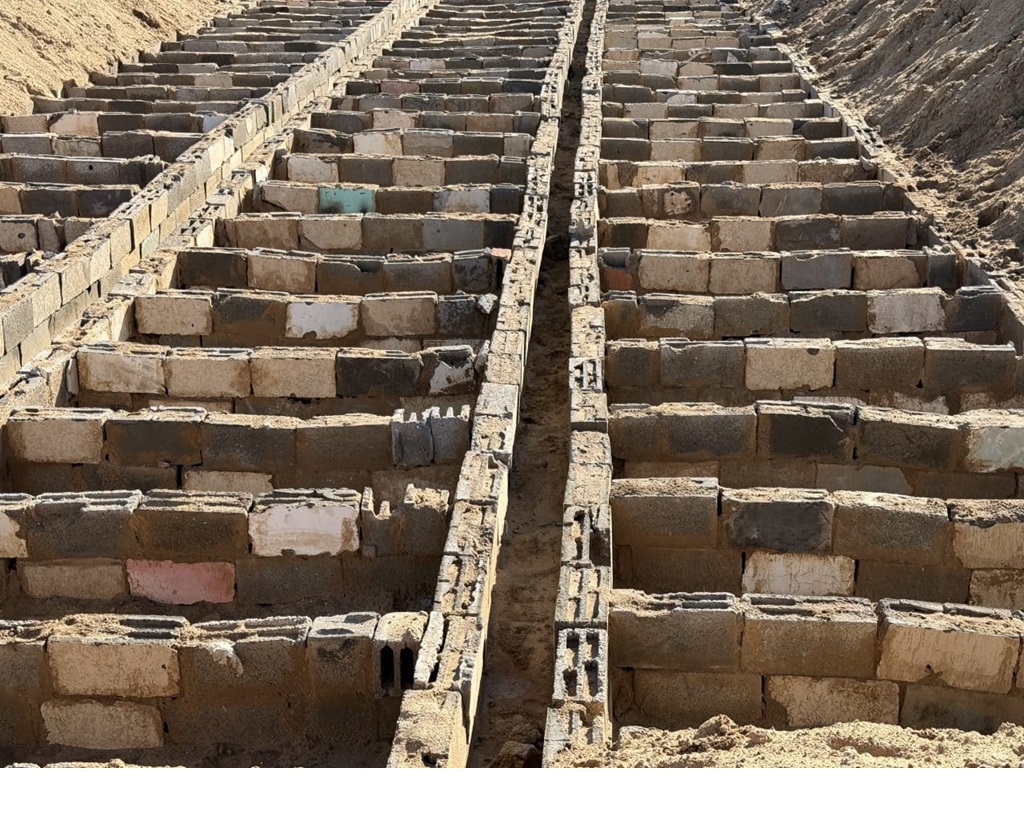
Under the relative calm of a ceasefire, Civil Defense crews in Gaza are undertaking the monumental feat of recovering thousands of bodies still trapped under the rubble.
By Tareq S. Hajjaj December 25, 2025 https://mondoweiss.net/2025/12/one-excavator-10000-bodies-a-sea-of-rubble-inside-gazas-effort-to-retrieve-and-bury-its-dead/
Fatima Salem waits outside anxiously, as rescue crews dig through the rubble of her family’s home in Gaza City on December 15th. With bated breath, she clings to the hope that all 60 of her family members – brothers, sisters, nieces, nephews, and grandchildren – who were buried under the rubble after an Israeli airstrike targeted their building, will be rescued.
But this was not a typical rescue operation, and Fatima was not waiting for signs of life. She knew everyone was dead. That’s because the airstrike on her family’s home happened almost exactly two years ago, on December 19, 2023, just two months into the genocide.
The 60 members of the Salem family are some of an estimated 10,000 Palestinians whose bodies remain trapped under the extensive rubble across the Gaza Strip. Due to two years of active Israeli bombardment, the targeting and killing of civil defense crews, and the lack of heavy duty machinery required to excavate the tons of concrete rubble, rescue missions in Gaza have been largely stalled.
But on December 15, the Civil Defense in the Gaza Strip announced the start of a long recovery process of bodies that have remained under the rubble for two years. The operations are focused only on the areas in the Gaza Strip not actively being occupied by the Israeli military, which accounts for roughly half of the territory.
The first rescue mission was for the Salem family in Gaza City.
“Here I lost every person dear to me; they are the closest people to me—my brothers and sisters and their families. I lost everyone in this place,” Fatima Salem cried. When she heard about the rescue mission, she rushed to the scene of the destroyed building, where the souls of her relatives had remained trapped for two years.
She said that her family was targeted on December 19, 2023, after they fled from northern Gaza to Gaza City due to the intensification of shelling and fighting in their residential area. They found refuge in a building whose residents had evacuated, and gathered there with their children and families. No one who was in the building at the time of the bombing survived.
“I want to see them, to embrace them, to bid them farewell,” she said as she stood before rows of bones and skulls wrapped in white plastic shrouds, laid out on the ground in front of her. Some have been identified by their present surviving relatives, while others have not yet been identified.
Omar Suleiman, a member of the forensic department at the Civil Defense, was working at the scene of the Salem family. He described a painstaking process of trying to identify and record the identities of the deceased, saying that crews are documenting descriptions of the condition of the bodies in terms of form, height, and the level of decomposition they have reached, along with preserving a DNA sample when possible.
According to videos published by the Civil Defense on its Telegram channel, what is recovered from the remains of the martyrs is sometimes only bones, not always complete skulls, but rather bones from the chest and the feet, making identification a difficult matter.
According to Suleiman, the level of decomposition in the bodies was very high, which made it difficult for families to identify them. The lack of tools and technology for advanced DNA testing has also made the identification process more difficult. He said that crews were working “with very limited tools and under difficult and exhausting conditions.”
Civil Defense crews say they recovered all the bodies from the building, all belonging to the martyrs of the Salem family, in addition to 17 more bodies buried in the vicinity around the building. After two years, Fatima Salem was finally able to bid farewell.
Thousands of bodies, limited resources
In Khan Younis in southern Gaza, on December 20, recovery operations began in areas of the city, starting with the martyrs of the Abu Hilal family. They were killed on August 13, 2025.
Huda Abu Hilal, in her 20s, was the sole survivor of a strike that targeted her family’s home on August 13, 2025. Though she was inside the building at the time, just before the airstrike, Huda’s mom had asked her to go downstairs for something. At that moment, the home was bombed, and everyone except Huda was killed.
“All my family was killed except me—my mother and father, my sisters, and their children—all of them were martyred,” she told Mondoweiss, adding that because her neighborhood remained under an evacuation order after the bombing, crews were not able to access her home to rescue her family.
At the site, Samah Hamad, head of the forensic department of the Civil Defense, described the challenge ahead for crews.
He said that in Khan Younis alone, there are 75 destroyed buildings with hundreds of bodies buried under the rubble that need to be recovered. Many of the buildings, he said, are located in the area behind the ‘yellow line’ that are inaccessible to Palestinian crews. But even in the areas that they can access, the rescue mission is slow moving.
Hamad notes that the slowdown in these operations is due to the fact that all crews in the Gaza Strip are working with very limited equipment, as only one large excavator is being used in multiple cities and areas in the Strip.
For the past two months since the ceasefire was announced, Huda said she would pass by the rubble of the home often, even if just to recite a prayer for her family still trapped beneath the rubble, hoping that they would be rescued soon.
“Now I can honor my martyred family by burying them, and we can move them to graves and make visiting them a habit,” Huda said.
Out of a superhero movie: Companies are coming up with plans to block out the sun.

Private companies are jumping into the race to deploy particles to the atmosphere to reduce global warming, prompting enthusiasm from investors and concerns from some scientists, Josh Marcus reports
Independent, 25 December 2025
A secretive team of scientists is working on an unprecedented plan to fill the atmosphere with tiny particles that imitate a volcanic eruption and block out the sun. It might save humanity, or it could spiral out of control. Thousands stand opposed to such a scheme, but these plans may move forward anyway.
This is not the plot of the next Marvel movie, but solar geoengineering, one of the very non-fictional frontiers of climate research.
In October, a start-up called Stardust Solutions announced it had raised $60 million to pursue technology that will bounce the sun’s light back into space using reflective, airborne particles.
It is the largest investment ever for a company pursuing such a strategy to cool our rapidly overheating planet, according to Politico, and builds off the firm’s previous $15 million funding series.
Stardust Solutions is one of a small but closely-watched group of companies and researchers pursuing such ideas in the hopes of making rapid gains on the climate crisis as international action remains perilously insufficient.
The basic idea is to limit how much of the sun’s energy reaches the Earth’s surface. While this won’t tackle the root cause of the climate crisis — still-rising greenhouse gas emissions from fossil fuels — “solar radiation modification” could reduce the global temperature and slow the melting of the polar ice caps, buying us all some much-needed time.
While the idea has been around since the mid-Sixties, small-scale outdoor experiments have only begun in the last two decades, including cloud seeding in Switzerland and testing salt spray’s impacts on the clouds above the Great Barrier Reef.
For every fledgling experiment, another project has been canceled in the face of public opposition. A 2024 effort spraying sea salt aerosols from a decommissioned air craft carrier in Alameda, California, was quickly shut down because of outrage from community members who said they were not consulted, while the Indigenous Saami people of Scandinavia were among those who opposed the aborted 2021 SCoPEx project in Sweden, arguing the plan to spray calcium carbonate dust into the atmosphere violated both their philosophy towards the Earth and would not be an impactful scientific strategy to stop the root causes of the climate crisis’
Despite these concerns, the daily glut of increasingly dire climate updates – including the recent news of the likely irreversible decline of ocean corals – has given new momentum to this once fringe idea.
A ‘human-safe’ particle spray
Stardust Solutions was founded in 2023 by Yanai Yedvab and Amyad Spector, nuclear physicists who met at an Israeli national laboratory, and particle physicist Eli Waxman, former chief scientist at the Israeli Atomic Energy Commission……………………………………………………………………………………………………………………………………………………………………………………… https://www.independent.co.uk/climate-change/dim-sun-climate-change-b2877722.html
Politico: Despite the war, France will build nuclear fuel in Germany with the help of a Russian company
Can the ambitious plan to phase out Russian nuclear fuel succeed with Russian expertise? Paris believes it can and is pressing Berlin for approval
Protothema, Newsroom, December 22, 2025
Takeawaysby Protothema AI
- A Franco-Russian joint venture plans to produce nuclear fuel components in Lingen, Germany, operated by Framatome
- The project faces scrutiny from German authorities due to security concerns and potential espionage risks
- Framatome is lobbying German officials for approval, arguing it is a European solution despite Russian components
- German regional authorities remain skeptical, citing past energy vulnerabilities with Russia
- A final decision on the Lingen plant’s approval is expected in the coming weeks.
A triangular relationship that is close to becoming a reality, despite the war in Ukraine and the sanctions imposed on Russia, will help France produce nuclear fuel for its reactors.
The Franco-Russian joint venture will manufacture nuclear fuel rods and other components in Lingen, Germany.

The plant will be operated by Framatome, a subsidiary of the French state-owned energy company EDF, using Russian components supplied by TVEL, part of the Kremlin-controlled nuclear giant Rosatom. TVEL will not be directly involved in the operation of the plant but will provide the Russian-made components necessary for producing the nuclear fuel.
The plant will not supply electricity directly; it will focus solely on producing nuclear fuel.
Framatome is putting intense pressure on the German authorities to approve the project, mobilizing the French government at the highest levels. The company argues that what is good for Framatome is good for Europe.
However, as Politico points out, the project comes at a time when the EU is attempting to ban all energy imports from Russia in response to Russia’s invasion of Ukraine. At the same time, the plan raises concerns among state and federal authorities about potential espionage and other security risks.
The French-Russian joint venture has not yet received approval from Berlin. A final decision is expected in the coming weeks, but no timetable has been set……………………………………………………
France–Russia Nuclear Cooperation
The cooperation between Framatome and Rosatom began in 2021, when the two parties signed a long-term partnership and established a joint venture in which Framatome owns 75% and TVEL 25%……………….. https://en.protothema.gr/2025/12/22/politico-despite-the-war-france-will-build-nuclear-fuel-in-germany-with-the-help-of-a-russian-company/
Netanyahu plans to brief Trump on possible new Iran strikes

Israeli officials believe Iran is expanding its ballistic missile program. They are preparing to make the case during an upcoming meeting with Trump that it poses a new threat.
Dec. 21, 2025, By Gordon Lubold, Courtney Kube, Dan De Luce and Carol E. Lee
WASHINGTON — Israeli officials have grown increasingly concerned that Iran is expanding production of its ballistic missile program, which was damaged by Israeli military strikes earlier this year, and are preparing to brief President Donald Trump about options for attacking it again, according to a person with direct knowledge of the plans and four former U.S. officials briefed on the plans.
Israeli officials also are concerned that Iran is reconstituting nuclear enrichment sites the U.S. bombed in June, the sources said. But, they added, the officials view Iran’s efforts to rebuild facilities where they produce the ballistic missiles and to repair its crippled air defense systems as more immediate concerns.
Trump and Israeli Prime Minister Benjamin Netanyahu are expected to meet later this month in Florida at the president’s Mar-a-Lago estate. At that meeting, the sources said, Netanyahu is expected to make the case to Trump that Iran’s expansion of its ballistic missile program poses a threat that could necessitate swift action.
They said part of his argument is expected to be that Iran’s actions present perils not only to Israel but also to the broader region, including U.S. interests. The Israeli leader is expected to present Trump with options for the U.S. to join or assist in any new military operations, the sources said.
Asked Thursday about a Dec. 29 meeting with Netanyahu, Trump told reporters, “We haven’t set it up formally, but he’d like to see me.” Israeli officials have announced a Dec. 29 meeting.
The Israeli government declined to comment. The Iranian Mission at the United Nations did not respond to a request for comment…………………..
Israel’s plans to brief Trump on — and give him the option to join — possible additional military strikes in Iran come as the president is considering military strikes in Venezuela, which would open a new warfront for the U.S., and as he is touting his administration’s bombing campaign against Iran’s nuclear program and success negotiating a ceasefire between Israel and Hamas.
In an address to the nation on Wednesday, Trump said told Americans he’s “destroyed the Iran nuclear threat and ended the war in Gaza, bringing for the first time in 3,000 years, peace to the Middle East.”
The Israeli concerns about Iran come as Tehran has expressed interest in resuming diplomatic talks with the U.S. aimed at curtailing its nuclear deal, which could potentially complicate Israel’s approaching Trump about new strikes………………….
The strikes the U.S. conducted in June against Iran, known as Operation Midnight Hammer, included more than 100 aircraft, a submarine and seven B-2 bombers. Trump has said they “obliterated” Iran’s nuclear enrichment sites, though some early assessments indicated the damage may not have been as extensive as the president has said.
Israeli forces at the same time struck several of Iran’s ballistic missile sites.
Israeli military strikes in April and October 2024 also damaged all of Iran’s S-300 air defense systems, the most advanced system the country operates, clearing the way for manned flights into Iranian airspace months later by dramatically reducing the threat to pilots………………………………………………….. https://www.nbcnews.com/politics/white-house/netanyahu-plans-brief-trump-possible-new-iran-strikes-rcna250112
EU launches inquiry into Czech funding plan for new nuclear
WNN, Tuesday, 23 December 2025
The European Commission “has doubts” that the proposed Czech funding plan for its proposed new nuclear units “is fully in line with EU State aid rules”.
In April last year the European Commission (EC), which is the executive arm of the European Union (EU), approved the funding plan for a single new nuclear reactor at the Dukovany nuclear power plant site in the Czech Republic.
In July last year Korea Hydro & Nuclear Power (KHNP) was selected for the project, and in October this year the Czech Republic officially notified the EC it had expanded its plans to two new nuclear units, each with a capacity of 976 MWe
What is the funding plan?
The EC says: “Czechia plans to support the construction of the new nuclear units through three measures: a low-interest repayable State loan of an initial amount currently estimated between EUR23 billion (USD27.1 billion) and EUR30 billion, which will cover the full construction costs; a two-way contract for difference with a proposed duration of 40 years to ensure stable revenues for the nuclear power plant; and a mechanism to protect EDU II in case of policy changes and adverse impacts, to address the risk arising from the longevity of exposure to policy changes.”
EDU II is Elektrárna Dukovany II, a company set up to develop and operate the new nuclear units, which is owned by the Czech state (80%) and the Czech Republic’s nuclear power plant operator ČEZ (20%).
The contract for difference effectively means that if electricity prices are below the agreed level, the nuclear project will receive a subsidy to make it up to the agreed price, and if electricity prices are above the agreed price, the nuclear project would pay money back to the government…………………………………………………..
The EC has doubts about whether it is fully in line with EU State aid rules and wants to ensure that “no more aid than necessary is ultimately granted. In particular, the Commission has doubts on whether the proposed package achieves an appropriate balance between reducing risks to enable the investment and maintaining incentives for efficient behaviour, while avoiding excessive risk transfer to the State”.
It also wants to look at the impact of the State aid measures on competition in the market “in particular, the Commission has concerns that several essential design elements of the CfD remain insufficiently specified, preventing the Commission from fully assessing whether the mechanism maintains efficient operational and maintenance incentives”.
…………………………………….. Asked about the status of any investigation into foreign state aid, a European Commission spokesperson told World Nuclear News on Tuesday: “The Commission’s assessment of a complaint by EDF under the Foreign Subsidies Regulation regarding the award of a tender to KNHP is ongoing. We do not comment on ongoing investigations.” https://www.world-nuclear-news.org/articles/eu-launches-inquiry-into-czech-new-nuclear-funding-plan
Warning Chernobyl nuclear plant radiation shield is at risk of collapse

By PERKIN AMALARAJ, FOREIGN NEWS REPORTER, 24 December 2025
A Russian strike could collapse the internal radiation shelter at the defunct Chernobyl nuclear power station in Ukraine, the plant’s director has warned.
Kyiv has accused Russia of repeatedly targeting the facility, the site of a 1986 meltdown that is still the world’s worst ever nuclear disaster, since Moscow invaded in February 2022.
A hit earlier this year punched a hole in the outer radiation shell, triggering a warning from the International Atomic Energy Agency (IAEA) that it had ‘lost its primary safety functions.’
In an interview with AFP, plant director Sergiy Tarakanov said fully restoring that shelter could take three to four years, and warned that another Russian hit could see the inner shell collapse.
‘If a missile or drone hits it directly, or even falls somewhere nearby, for example, an Iskander, God forbid, it will cause a mini-earthquake in the area,’ Tarakanov said.
The Iskander is Russia’s short-range ballistic missile system that can carry a variety of conventional warheads, including those to destroy bunkers.
‘No one can guarantee that the shelter facility will remain standing after that. That is the main threat,’ he added.
The remnants of the nuclear power plant are covered by an inner steel-and-concrete radiation shell – known as the Sarcophagus and built hastily after the disaster – and a modern, high-tech outer shell, called the New Safe Confinement (NSC) structure.
Our NSC has lost several of its main functions. And we understand that it will take us at least three or four years to restore these functions,’ Tarakanov added.
The IAEA said earlier this month an inspection mission found the shelter had ‘lost its primary safety functions, including the confinement capability, but also found that there was no permanent damage to its load-bearing structures or monitoring systems.’
Director Tarakanov said that radiation levels at the site remained ‘stable and within normal limits.’
Daily Mail 23rd Dec 2025, https://www.dailymail.co.uk/news/article-15409149/Warning-Chernobyl-nuclear-plant-radiation-shield-risk-collapse.html
Radioactive substance leaks from Fukui nuclear power plant in Japan
Jen Mills, Metro 24 Dec 2025
Radioactive water leaked from a disused power plant in Japan today during work to decommission it.
Parts of the Fugen nuclear plant in Fukui Prefecture are being dismantled, and while this took place, around around 20ml of water containing a ‘high’ amount of the radioactive isotope tritium leaked from a pipe.
Japanese broadcaster NHK One reported earlier that detailed investigations were underway to see if any workers were splashed with the water, though internal exposure via inhalation had been ruled out.
Citing the Nuclear Regulation Authority, they said no radioactive material had leaked outside the controlled area of the plant.
1 This Month

of the week – Shut Down Drone Warfare!


Tell the Ukrainian Government to Drop Prosecution of Peace Activist Yurii Sheliazhenko

Petition to revoke the licensing of the Near Surface Nuclear Disposal Facility (NSDF) at Chalk River. https://www.ourcommons.ca/petitions/en/Petition/Details?Petition=e-7247
To see nuclear-related stories in greater depth and intensity – go to https://nuclearinformation.wordpress.com
-
Archives
- April 2026 (57)
- March 2026 (251)
- February 2026 (268)
- January 2026 (308)
- December 2025 (358)
- November 2025 (359)
- October 2025 (376)
- September 2025 (257)
- August 2025 (319)
- July 2025 (230)
- June 2025 (348)
- May 2025 (261)
-
Categories
- 1
- 1 NUCLEAR ISSUES
- business and costs
- climate change
- culture and arts
- ENERGY
- environment
- health
- history
- indigenous issues
- Legal
- marketing of nuclear
- media
- opposition to nuclear
- PERSONAL STORIES
- politics
- politics international
- Religion and ethics
- safety
- secrets,lies and civil liberties
- spinbuster
- technology
- Uranium
- wastes
- weapons and war
- Women
- 2 WORLD
- ACTION
- AFRICA
- Atrocities
- AUSTRALIA
- Christina's notes
- Christina's themes
- culture and arts
- Events
- Fuk 2022
- Fuk 2023
- Fukushima 2017
- Fukushima 2018
- fukushima 2019
- Fukushima 2020
- Fukushima 2021
- general
- global warming
- Humour (God we need it)
- Nuclear
- RARE EARTHS
- Reference
- resources – print
- Resources -audiovicual
- Weekly Newsletter
- World
- World Nuclear
- YouTube
-
RSS
Entries RSS
Comments RSS
 nuclear-news