What Australians have NOT been told about the $368billion AUKUS nuclear submarine deal.

‘We will undoubtedly be a nuclear target,’ ‘I don’t think many of the people living in Perth realise that, if they weren’t a nuclear target before, they certainly will be when all these… submarines start arriving.

‘I would bet an awful lot of money that the AUKUS subs will be duds by the time they get here, if they ever do,’
‘They’ll probably be redundant because there’s been revolutions in drone technology which will be able to detect submarines more easily.
‘I would bet an awful lot of money that the AUKUS subs will be duds by the time they get here, if they ever do,’
By CAITLIN POWELL – NEWS REPORTER, 29 December 2025
An AUKUS critic has shed light on the fundamental dangers of the military deal, including the threat of Australia being a nuclear target, as the security pact receives support from Donald Trump – and a rising number of Australians.

Earlier this month, US Secretary of State Marco Rubio confirmed that AUKUS was going ‘full steam ahead’ after questions were raised when the Trump administration earlier announced it would review the deal.
The agreement, which would see Australia acquire nuclear-powered submarines, is expected to cost the country up to $368billion over three decades.
Just a few weeks before Rubio’s thumbs up, an Australia-wide survey of 2,045 people by the University of Technology Sydney (UTS) found support for the policy had increased.
The number of people who agreed that the trilateral deal with the US and UK could help keep Australia secure from a military threat from China surged compared to last year.
While 48 per cent agreed in 2024, that rose to 50 per cent in the 2025 survey. The poll also found that over two thirds (68 per cent) supported using AUKUS to deepen Australia’s cooperation with the US and UK on advanced technologies.
This included hopes for technology in cyber, AI and quantum computing.
But AUKUS critic and adjunct professor at the Australia-China Relations Institute, Mark Beeson, has said there are some major issues with the deal which most Australians are missing.
A major component of AUKUS will be a facility at the Australian Navy’s HMAS Stirling base in Perth’s south from 2027.
Up to 1,200 UK and US personnel, their families, and five nuclear-powered submarines will be stationed there.
‘We will undoubtedly be a nuclear target,’ Beeson said of the facility. ‘I don’t think many of the people living in Perth realise that, if they weren’t a nuclear target before, they certainly will be when all these… submarines start arriving.
‘This will be a sort of launch pad for whatever American strategic adventure they decide to take on next.’
The use of the area as base also raised another key issue for Professor Beeson: Australia’s sovereignty.
‘I think there are questions about the historical relationship we have with America,’ he said, referencing the poll.
The survey revealed that a growing trend among Australians is that they want Canberra to make foreign policy decisions without the US and UK.
Among those surveyed, 77 per cent said Australia should make its China foreign policy decisions independently, even when they differ from US preferences.
‘Australia would make absolutely no difference whatsoever to the outcome of any conflict or strategic stand-off between the United States and China – with or without four or five submarines,’ he said.
‘If the Chinese aren’t deterred by America’s overwhelming military power, they’re not going to be deterred by anything we can do.
‘We’re just a convenient piece of real estate in the southern hemisphere that they can use as sort of launching pad for whatever they decide to do next.
‘There are major implications for our independence and sovereignty.’
‘Australia would make absolutely no difference whatsoever to the outcome of any conflict or strategic stand-off between the United States and China – with or without four or five submarines,’ he said.
‘If the Chinese aren’t deterred by America’s overwhelming military power, they’re not going to be deterred by anything we can do.
‘We’re just a convenient piece of real estate in the southern hemisphere that they can use as sort of launching pad for whatever they decide to do next.
‘There are major implications for our independence and sovereignty.’
The reasoning for this, he said, is that by having the presence of American and British military on Australian soil, Canberra is no longer solely acting on behalf of Australians.
‘It limits the options available to Australian policymakers to make independent decisions that are in the national interest,’ he said.
‘Rather (we follow) some supposed mutual interest of Australia, Britain and the US.’
Professor Beeson highlighted that the poll displayed different views among Australians, with support for AUKUS but a desire for independence on policy.
‘I wasn’t surprised that there were a few contradictory sort of views amongst all that, because it is a complex set of issues,’ he said.
‘But some of it displays quite an encouraging degree of sophistication and not just wild panic about China, which is good.’
A final issue Professor Beeson raised was the capacity and timeline of the submarines promised to Australia.
‘I would bet an awful lot of money that the AUKUS subs will be duds by the time they get here, if they ever do,’ he said.
‘They’ll probably be redundant because there’s been revolutions in drone technology which will be able to detect submarines more easily.
‘It’s just such a ludicrous long term investment of a lot of money we don’t really have, and we could use on much better things.’
Investors Beware: 2 Nuclear Energy Stocks That May Be Radioactive to Your Portfolio

By Rich Smith – Dec 28, 2025,
https://www.fool.com/investing/2025/12/28/investors-beware-nuclear-stocks-are-radioactive/
Key Points
- Oklo and Nano Nuclear Energy have both outperformed the S&P 500 this year, though one’s done a lot better than the other.
- Both companies are years from making a profit and are at risk of running out of cash before they get there.
SMR nuclear stocks may use uranium for energy in the future — but they’re burning cash already today.
Nuclear power stocks went on a tear in 2025, with the Global X Uranium ETF (URA0.30%), for example, rising an incredible 72% year to date, crushing the return of the S&P 500.
Much of the credit for this performance goes to President Trump, who signed four executive orders in May promoting American nuclear power as a means of supplying artificial intelligence (AI) data centers with the electricity they need to operate. Of particular note was the president’s encouragement of the development of small modular reactors (SMRs), which has helped spur market-beating returns among SMR nuclear startups, including Nano Nuclear Energy (NNE7.20%) and Oklo (OKLO3.68%).
Of the two, investors clearly favor Oklo stock, which is up more than 247% over the past 12 months, over Nano Nuclear — which has gained only 15%. Yet once you dig into the numbers, a sneaking suspicion arises: Neither of these stocks may be able to keep their gains for long.
Get to know Oklo
Let’s start with the investor favorite, Oklo.
Oklo is designing what it calls a microreactor. This Aurora powerhouse will use High-Assay Low-Enriched Uranium (HALEU) fuel to produce anywhere from 1.5 to 75 megawatts of usable electrical power. The company will build Auroras in a factory and then transport them to their permanent site for installation.
As the company regularly reminds us, it’s the first SMR to have received a “site use permit from the U.S. Department of Energy for a commercial advanced fission plant,” and it was also the first to submit a “custom combined license application for an advanced reactor to the U.S. Nuclear Regulatory Commission.” The company also aims to develop fuel recycling technologies to lessen U.S. reliance on foreign suppliers of uranium for the advanced nuclear plants that Oklo hopes to build.
The company has won multiple contracts from the Department of Energy, both to help develop its technology into working reactors and to build and operate three fuel fabrication plants.
Oklo’s issues
Oklo expects its first reactor to go online and begin generating revenue in 2027, with the first GAAP profit to arrive in 2030, and a forecast for positive free cash flow in 2033. But here’s where the problem arises.
Oklo has amassed more than $920 million in cash to fund its work and is currently burning less than $40 million a year. So far, so good? Yet the nearer Oklo gets to completion, the more money it’s going to have to spend to set up fabs and actually build its reactors — more than $580 million total over the next three years, and then close to $1 billion each year for the next four years, according to analyst estimates from S&P Global Market Intelligence.
At that rate, Oklo’s going to run out of cash long before it turns free cash flow positive in 2033. It will need to either take on significant debt or sell substantial quantities of stock, diluting shareholders — and perhaps both.
Suffice it to say that’s not going to be good news for investors in the stock when it happens.
Nano Nuclear Energy
Nano Nuclear Energy’s similar in many respects. Like Oklo, it’s placing its nuclear bets in a scattershot manner, not focusing on just one aspect of the business — building microreactors for data centers — but also working to produce reactors for spacecraft, enrich and transport nuclear fuel, and provide “nuclear industry consulting services.”
An optimist might look at all this activity and commend Nano for trying to diversify its revenue streams. A pessimist may look at the same activities and see “diworsification” instead.
The more so when you consider Nano Nuclear’s financial situation. Like Oklo in having neither revenue nor profit today, Nano’s similarly expected to begin generating revenue only in 2027 — and profit not before 2033. Analysts aren’t even making the effort to calculate operating cash flow, capital spending, or free cash flow for Nano Nuclear more than a couple of years out, perhaps because they’re not convinced the company has the cash to go much further than that. (Nano has only about $200 million in the bank.)
Of the two, I suspect Nano’s in the weakest financial shape, and likely to fold soonest. But to be perfectly blunt, I doubt either of these nuclear stocks will end up making money for investors in the long run.
Trump’s team no longer trusts Netanyahu – Axios.
27 Dec 25, https://www.rt.com/news/630093-trump-team-distrust-netanyahu/
The US president’s close aides reportedly feel that the Israeli prime minister is deliberately stalling the Gaza peace process.
Officials in US President Donald Trump’s closest circle no longer believe that Israeli Prime Minister Benjamin Netanyahu can be trusted to push forward with the Gaza peace plan, Axios reported on Friday, citing insiders.
The future of Trump’s grand Gaza war settlement roadmap, unveiled in September, hinges on his upcoming meeting with the Israeli leader on Monday, according to the outlet.
Last week, US special envoy Steve Witkoff and the president’s son-in-law, Jared Kushner, met with officials from Egypt, Qatar, and Türkiye to finalize the next step of the plan, which envisions Hamas disarming and Israel pulling out of Gaza.
Netanyahu has privately expressed skepticism about the roadmap, but the plan cannot go ahead without his buy-in, Axios said.
“Bibi is trying to convince a one-man audience,” the outlet cited a White House official as saying. “The question is whether Trump will side with him or with his top advisers when it comes to Gaza.”
Key figures in Trump’s team have now lost trust in Netanyahu, fearing he is “slow-walking the peace process” and could resume the war with Hamas after taking steps to undermine the fragile ceasefire, according to Axios.
The Israeli PM has “lost” Vice President J.D. Vance, Secretary of State Marco Rubio, Chief of Staff Susie Wiles, and both Kushner and Witkoff, the outlet wrote, citing another US official.
“The only one he has left is the president, who still likes him, but even he wants to see the Gaza deal moving faster than it is right now.”
Trump is expected to press Netanyahu to move past the Gaza war, as well as raise the issue of Israel’s push into the occupied West Bank, according to Axios.
West Jerusalem officially approved the construction of nearly a dozen new controversial Israeli settlements in Palestinian territory earlier this week, drawing international condemnation.
On top of losing trust within the White House, Netanyahu’s government has taken a beating in the domestic approval polls. Only a quarter of Israeli Jews trust their government, and only 17% of the country’s Arabs, according to an Israel Democracy Institute poll published earlier this week.
What Lies Ahead for Ukraine’s Contested Zaporizhzhia Nuclear Power Plant?
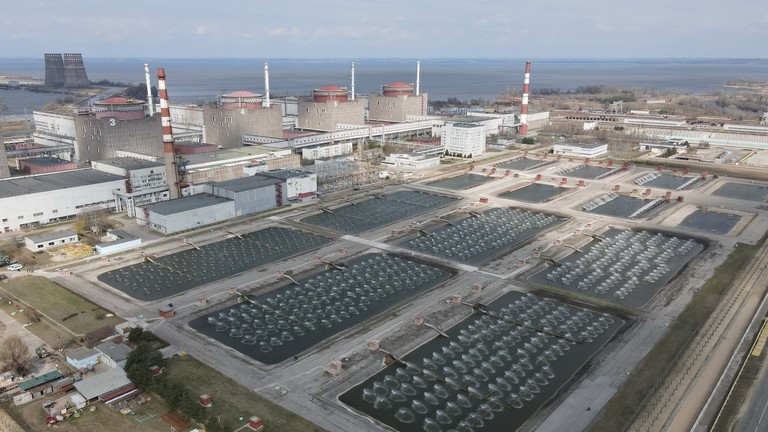
In the long term, there is the unresolved problem of the lack of water resources to cool the reactors after the vast Kakhovka hydro-electric dam was blown up in 2023, destroying the reservoir that supplied water to the plant.
Besides the reactors, there are also spent fuel pools at each reactor site used to cool down used nuclear fuel. Without water supply to the pools, the water evaporates and the temperatures increase, risking fire.
Asharq Al-Awsat, 29 Dec 25, https://english.aawsat.com/features/5223621-what-lies-ahead-ukraine%E2%80%99s-contested-zaporizhzhia-nuclear-power-plant
The Zaporizhzhia nuclear power plant, Europe’s largest, is one of the main sticking points in US President Donald Trump’s peace plan to end the nearly four-year war between Russia and Ukraine. The issue is one of 20 points laid out by Ukrainian President Volodymyr Zelenskiy in a framework peace proposal.
Here are some of the issues regarding the facility:
WHAT ROLE MAY THE US PLAY?
Russia took control of the plant in March 2022 and announced plans to connect it to its power grid. Almost all countries consider that it belongs to Ukraine but Russia says it is owned by Russia and a unit of Russia’s state-owned Rosatom nuclear corporation runs the plant.
Zelenskiy stated at the end of December that the US side had proposed joint trilateral operation of the nuclear power plant with an American chief manager.
Zelenskiy said the Ukrainian proposal envisages Ukrainian-American use of the plant, with the US itself determining how to use 50% of the energy produced.
Russia has considered joint Russian-US use of the plant, according to the Kommersant newspaper.
WHAT IS ITS CURRENT STATUS?
The plant is located in Enerhodar on the banks of the Dnipro River and the Kakhovka Reservoir, 550 km (342 miles) southeast of the capital Kyiv.
The Zaporizhzhia nuclear power plant has six Soviet-designed reactors. They were all built in the 1980s, although the sixth only came online in the mid-1990s after the collapse of the Soviet Union. It has a total capacity of 5.7 gigawatts, according to an International Atomic Energy Agency (IAEA) database.
Four of the six reactors no longer use Russian nuclear fuel, having switched to fuel produced by then-US nuclear equipment supplier Westinghouse.
After Russia took control of the station, it shut down five of its six reactors and the last reactor ceased to produce electricity in September 2022. Rosatom said in 2025 that it was ready to return the US fuel to the United States.
According to the Russian management of the plant, all six reactors are in “cold shutdown.”
Both Russia and Ukraine have accused each other of striking the nuclear plant and of severing power lines to the plant.
The plant’s equipment is powered by electricity supplied from Ukraine. Over the past four years these supplies have been interrupted at least eleven times due to breaks in power lines, forcing the plant to switch to emergency diesel generators.
Emergency generators on site can supply electricity to keep the reactors cool if external power lines are cut.
IAEA Director General Rafael Grossi says that fighting a war around a nuclear plant has put nuclear safety and security in constant jeopardy.
WHY DOES RUSSIA WANT ZAPORIZHZHIA PLANT?
Russia has been preparing to restart the station but says that doing so will depend on the situation in the area. Rosatom chief Alexei Likhachev has not ruled out the supply of electricity produced there to parts of Ukraine.
Oleksandr Kharchenko, director of the Energy Research Center in Kyiv, said Moscow intended to use the plant to cover a significant energy deficit in Russia’s south.
“That’s why they are fighting so hard for this station,” he said.
In December 2025, Russia’s Federal Service for Environmental, Technological and Nuclear Supervision issued a license for the operation of reactor No. 1, a key step towards restarting the reactor.
Ukraine’s energy ministry called the move illegal and irresponsible, risking a nuclear accident.
WHY DOES UKRAINE NEED THE PLANT?
Russia has been pummeling Ukraine’s energy infrastructure for months and some areas have had blackouts during winter.
In recent months, Russia has sharply increased both the scale and intensity of its attacks on Ukraine’s energy sector, plunging entire regions into darkness.
Analysts say Ukraine’s generation capacity deficit is about 4 gigawatts, or the equivalent of four Zaporizhzhia reactors.
Kharchenko says it would take Ukraine five to seven years to build the generating capacity to compensate for the loss of the Zaporizhzhia plant.
Kharchenko said that if Kyiv regained control of the plant, it would take at least two to three years to understand what condition it was in and another three years to restore the equipment and return it to full operations.
Both Ukrainian state nuclear operator Energoatom and Kharchenko said that Ukraine did not know the real condition of the nuclear power plant today.
WHAT ABOUT COOLING FUEL AT THE PLANT?
In the long term, there is the unresolved problem of the lack of water resources to cool the reactors after the vast Kakhovka hydro-electric dam was blown up in 2023, destroying the reservoir that supplied water to the plant.
Besides the reactors, there are also spent fuel pools at each reactor site used to cool down used nuclear fuel. Without water supply to the pools, the water evaporates and the temperatures increase, risking fire.
An emission of hydrogen from a spent fuel pool caused an explosion in Japan’s Fukushima nuclear disaster in 2011.
Energoatom said the level of the Zaporizhzhia power plant cooling pond had dropped by more than 15%, or 3 meters, since the destruction of the dam, and continued to fall.
Ukrainian officials previously said the available water reserves may be sufficient to operate one or, at most, two nuclear reactors.
Netanyahu Is Visiting Trump For The FIFTH Time This Year, And Other Notes.
Caitlin Johnstone, Dec 28, 2025, https://www.caitlinjohnst.one/p/netanyahu-is-visiting-trump-for-the?utm_source=post-email-title&publication_id=82124&post_id=182737899&utm_campaign=email-post-title&isFreemail=true&r=1ise1&triedRedirect=true&utm_medium=email
Benjamin Netanyahu will be meeting with President Trump again on Monday. This will be the pair’s fifth meeting in the United States this year, but of course it would be antisemitic to suggest that there’s anything strange about the US president meeting with the Israeli prime minister more frequently than with any other foreign leader on the planet.
NBC reports that Netanyahu is expected to discuss more attacks on Iran during the visit, citing concerns about “Iran’s efforts to rebuild facilities where they produce the ballistic missiles and to repair its crippled air defense systems.”
Which is just wild. They’ve stopped making up pretend nonsense about nuclear weapons and now they’re just going “We need to attack Iran because Iran is rebuilding its ability to stop us from attacking it.”
On Christmas Day, Donald Trump became the first American president ever to bomb Nigeria. While Trump claimed the Tomahawk missile strike was directed at ISIS targets with the goal of protecting Christians in the northwestern farming community of Jabo, locals told CNN that Islamic State has had no presence in the area and that Christians and Muslims coexist peacefully there. Residents also told Al Jazeera that the airstrikes resulted in no casualties, civilian or otherwise, meaning the bombing accomplished nothing besides terrifying some farmers and setting a precedent to normalize US airstrikes in yet another African nation.
Israel has ignited worldwide controversy by formally recognizing the breakaway Somali region known as Somaliland. I’ve seen a lot of people highlighting reports that Israel has been in communication with Somaliland as a potential location to which the population of Gaza might be deported in an ethnic cleansing operation of the Palestinian territory, noting that recognition could be a way of enticing Somaliland to agree to the arrangement.
Back in August the Times of Israel reported that “Israel is in talks with five countries or territories — Indonesia, Somaliland, Uganda, South Sudan and Libya — about potentially accepting resettled Palestinians from the Gaza Strip,” adding that “Somaliland is a breakaway region of Somalia that is reportedly hoping to secure international recognition through the deal.”
A German journalist named Anna Liedtke reports that she was raped by Israeli forces after she was abducted from the Global Sumud Flotilla while attempting to deliver aid to starving people in Gaza this past October. Unsurprisingly, as of this writing there appears to be a near-total media blackout on Liedtke’s story in the German press.
❖
Activist Greta Thunberg has been arrested by British police because in the UK it is considered an act of terrorism to hold a sign which says “I support the Palestine Action prisoners. I oppose genocide.”
Zionism is the single greatest threat to free speech in the western world.
New South Wales Premier Chris Minns defended his authoritarian crackdown on pro-Palestine protesters following the Bondi shooting by arguing that Australia doesn’t have the same free speech protections as the US.
“I acknowledge that we don’t have the same free speech rules that they have in the United States and I make no apologies for that, we have got a responsibility to knit together our community,” Minns said.
And of course Minns isn’t wrong when he says Australians don’t have any real free speech rights (Australia is the only western democracy without any kind of national bill of rights), but it is a bit odd to be openly proclaiming that this is a good thing because it means you’re allowed to stomp out criticism of Israel. Kinda feels like that’s saying the quiet part out loud.
It’s been so surreal watching in real time as Australians get manipulated into accepting the Zionist narrative about the Bondi Beach attack. As of this writing we have not been presented with the tiniest shred of evidence that anti-genocide protests had anything whatsoever to do with the massacre, but the nation is proceeding as though this is an established fact. NSW is banning the phrase “globalise the intifada” and passing laws allowing for demonstrations to be made illegal for up to three months while PM Anthony Albanese rolls out more policies to align with “antisemitism envoy” Jillian Segal’s plan to crush free speech in Australia. After being smashed in the face with an extremely aggressive mass media propaganda campaign to marry the Bondi attack to anti-genocide demonstrations in the minds of the public, a recent poll by the Resolve Political Monitor found that 53 percent of Australians now support a ban on pro-Palestine marches.
Again, this is happening in light of literally zero evidence that pro-Palestine demonstrations were even slightly responsible for the Bondi attack. None. Nothing. They’re suggesting that there is an association between the two, and they are lying. They’re rolling out pre-existing agendas to crush free expression in opposition to an active genocide, and they are doing so based on lies.
And Australians are just going right along with it, like a bunch of human livestock. We’re a whole damn continent full of bipedal sheep. Absolutely fucking pathetic.
I still can’t believe what evil, disgusting pigs Israel supporters are. The instant the Bondi shooting happened, their very first thought was “How can we use this to stomp out pro-Palestine demonstrations?” Not their third or fourth thought. Their first. They started pushing it instantly. Didn’t even wait for the bodies to cool, the sick fucks. All to stop people from protesting a genocide.
I am so angry at them right now. Absolute worst people in the world.
When the USSR and China saved humanity: How they won the World Anti-Fascist War.

December 28, 2025 , By Ben Norton, https://geopoliticaleconomy.com/2025/12/26/ussr-china-world-anti-fascist-war/
It was the Soviet Union and China that defeated fascism in WWII. Their heroic contribution was later erased by the West. In the First Cold War, the US recruited former Nazis.
2025 marked the 80th anniversary of the defeat of fascism in World War Two. Unfortunately, the history of this extremely important conflict is not very well understood today.
It was not the United States and its Western allies that defeated fascism in WWII. That is a myth that is promoted by Hollywood movies.
In reality, it was the Soviet Union and China that defeated fascism in WWII. However, their heroic contribution was later erased by the West, when the US waged the First Cold War against the global socialist movement.
The vast majority of Nazi casualties, approximately 80%, were on the Eastern Front, in the Third Reich’s savage, scorched-earth battles against the Soviet Red Army.
More than 26 million Soviets died in the Nazi empire’s genocidal war. Compare that to the just over 400,000 US Americans who died, and the roughly 450,000 Brits who lost their lives.
This means that 62 Soviets were killed for every US American who died in WWII. Yet, tragically, their sacrifice has been forgotten in the West – or, better said, erased from public consciousness for political reasons.
The fact that the USSR defeated Nazi Germany was even admitted by the inveterate anti-communist Winston Churchill, an explicit racist, colonialist, and erstwhile admirer of Hitler who oversaw the British empire’s extreme crimes, including a famine in Bengal in 1943.
In a speech in August 1944, Churchill acknowledged:
“I have left the obvious, essential fact to this point, namely, that it is the Russian Armies who have done the main work in tearing the guts out of the German army. In the air and on the oceans we could maintain our place, but there was no force in the world which could have been called into being, except after several more years, that would have been able to maul and break the German army unless it had been subjected to the terrible slaughter and manhandling that has fallen to it through the strength of the Russian Soviet Armies”.
Then, in October 1944, Churchill said, “I have always believed and I still believe that it is the Red Army that has torn the guts out of the filthy Nazis”.
Read more: When the USSR and China saved humanity: How they won the World Anti-Fascist War.In fact, the USSR wanted to crush fascism even earlier by proposing a surprise attack on Nazi Germany in 1939, weeks before Hitler invaded Poland. Soviet military officers made an official request to British and French officials to form an alliance against Nazi Germany in August 1939, but London and Paris were not interested. The USSR had a million troops ready to fight, but the Western European powers were not prepared.
What the capitalist countries in Western Europe and North America had hoped for was that Nazi Germany would attack the Soviet Union, which they considered their main enemy. This is why the Western imperial powers had long appeased Hitler, signing shameful deals like the 1938 Munich Agreement, which allowed the Nazi empire to expand in Europe.
What the Western capitalist “liberal democracies” and the fascist regimes shared in common was mutual hatred of communism. The rich oligarchs who controlled Western governments feared that they would lose their privileges if workers in their countries were inspired by the Bolshevik Revolution.
In the 1930s, the US State Department spoke positively of fascism as an alternative to communism, and the US chargé d’affaires in Germany praised the supposedly “more moderate section of the [Nazi] party, headed by Hitler himself … which appeal[s] to all civilized and reasonable people”.
It must be emphasized that, when the Japanese empire officially allied with Nazi Germany in 1936, the name of the deal they signed was the Agreement Against the Communist International, or the Anti-Comintern Pact. Benito Mussolini’s fascist regime in Italy subsequently signed the agreement in 1937, and the fascist regimes in Spain, Hungary, and other European countries joined in the following years. It was extreme, violent anti-communism that united all of these fascist powers.
While there is widespread ignorance about the Soviet Union’s leading role in crushing Nazi Germany in WWII, the heroic contribution that the people of China made to the defeat of the Japanese empire is even less well known.
For Europe, WWII began in 1939, when Nazi Germany invaded Poland. For the people of China, the war started much earlier, in 1931, when the Japanese empire invaded the Manchuria region of northern China.
For 14 years, the people of China resisted Japan’s aggression, as the imperial regime sought to colonize more and more Chinese territory.
By the end of the war in 1945, roughly 20 million Chinese had lost their lives. This means that approximately 48 Chinese were killed for every US American who died in WWII.
In China, WWII is known as the Chinese People’s War of Resistance Against Japanese Aggression, and it was part of a larger conflict called the World Anti-Fascist War.
China held an important event on 3 September 2025 commemorating the 80th anniversary of the defeat of fascism. It featured key leaders of countries that are today, once again, fighting against imperialism and fascism, including China’s President Xi Jinping, Russia’s President Vladimir Putin, the DPRK’s leader Kim Jong-un, Iran’s President Masoud Pezeshkian, and officials from other countries in Asia, Africa, and Latin America, including Cuba’s President Miguel Díaz-Canel and Nicaragua’s representative Laureano Ortega Murillo.
The United States has long taken credit for the defeat of the fascist Japanese empire, but this erases the enormous, heroic, 14-year contribution made by the Chinese people.
Although it is true that the United States was briefly allied with the USSR and China during WWII, and it did provide significant military assistance through its 1941 Lend-Lease Act, Washington immediately terminated that partnership in 1945.
In fact, even before WWII officially ended, the United States had already started to recruit fascists to help them wage the First Cold War. US intelligence agencies saved many Nazi war criminals in the infamous Operation Paperclip. Instead of facing justice, these genocidaires assisted Washington in its subsequent attacks on the Soviet Union and its communist allies in Eastern Europe.
Later, the CIA and NATO created Operation Gladio, in which they used fascist war criminals as foot soldiers of their new global imperialist war on socialism. The former top Nazi military officer Adolf Heusinger was appointed the chair of NATO’s military committee, and the ex Nazi Hans Speidel became commander of NATO’s land forces in Central Europe.
The United States even rehabilitated Nazi war criminal Reinhard Gehlen, who had directed Hitler’s military intelligence on the Eastern Front in WWII, and who later led the CIA-backed Gehlen Organization to help Washington wage its cold war against communists.
The United States did not defeat fascism; it rehabilitated and absorbed fascism into the capitalist empire that Washington built after WWII, centered in Wall Street and based on the dollar.
The contemporary German government published the results of a study in 2016, called the Rosenberg project, which sifted through classified documents from 1950 to 1973. It found that, at the height of the Cold War, the government of capitalist West Germany, which was a member of NATO, was full of former Nazis.
In fact, 77% of senior officials in West Germany’s Justice Ministry had been Nazis. Ironically, there had been a lower percentage of Nazi Party members in the Justice Ministry in Berlin when the genocidal dictator Adolf Hitler himself was in charge of the Third Reich.
Similarly, in Japan after WWII, US occupation forces released Japanese war criminals from prison and used them to construct an imperial client regime. The CIA helped to create and fund the powerful Liberal Democratic Party (LDP), which has essentially governed Japan as a one-party state, with few exceptions, since 1955.
Notorious war criminal Nobusuke Kishi had overseen genocidal crimes against humanity against the Chinese people as an administrator of the Japanese empire’s puppet regime of Manchukuo, in Manchuria, during WWII. After the war ended, the United States strongly supported Kishi, who led the LDP, established the de facto one-party state, and became prime minister of the country.
Still today, the Kishi dynasty is one of the most powerful families in Japan. Kishi’s grandson Shinzo Abe also led the LDP and served as prime minister from 2012 and 2020, closely allying Japan with the United States, while antagonizing China and rewriting the history of WWII.
In short, after the Soviet Union and China led the fight to defeat fascism in WWII, the US empire recruited fascists to fight its global war against socialism.
Today, it is extremely important to learn these facts and correct the historical record, because 2025 is the 80th anniversary of the end of WWII, and it is clear that the proper lessons have not been learned in the West.
The planet is still plagued by extreme imperial violence, and closer than ever to another world war.
The United States and Israel have been carrying out a genocide against the Palestinian people in Gaza, committing atrocities that are reminiscent of the fascists’ crimes against humanity in WWII.
Fascism has its roots in European colonialism. The genocidal tactics that the European empires used in Asia, Africa, and Latin America were later used by the fascists inside Europe.
Nazi leader Adolf Hitler was inspired by the genocidal crimes that the German empire had committed in southern Africa, and also by the genocide that the US colonialists had carried out against indigenous peoples in North America. The Nazis were likewise influenced by the US government’s racist laws against Black Americans, in its apartheid system known as Jim Crow.
Given the close links between fascism and Western imperialism, it is not surprising to see that, today, the US regime has become increasingly fascist. Politicians in Washington scapegoat immigrants and foreigners for the many domestic problems in their country, including the significant growth in inequality, poverty, and homelessness. They have no solutions other than more violence, racism, and war.
The increasing political desperation and instability in Washington is combining in a toxic mixture with the greed of US corporations in the military-industrial complex, which profit from war, and are thus incentivized to push for more conflict, not for peace.
The United States, as the leader of NATO, has already been waging a proxy war against Russia in Ukrainian territory, using the people of Ukraine as cannon fodder in an imperial war, tragically destroying an entire generation of Ukrainians in a vain attempt to maintain US global hegemony.
The US empire has also used its Israeli attack dog to wage war on the people of Iran, in an attempt to overthrow the revolutionary government in Tehran and impose a puppet regime, like the former king, the shah, who was propped up by Washington.
The number one target of the US empire today, however, is the People’s Republic of China. US imperialists fear that China is the only country powerful enough to not only challenge but to defeat Washington’s global hegemony.
The US empire is waging a Second Cold War against China, and it has weaponized everything in this hybrid war, imposing sanctions and tariffs to wage economic war, using its control over the dollar system in a financial war, and exploiting the media to spread disinformation and fake news as part of an information war.
Part of the US empire’s strategy in this information war is to erase the Chinese people’s major contribution to the defeat of fascism and imperialism in WWII.
This is why it is so crucial to defend the facts, and to teach the true history of WWII to people today. If we don’t correct the historical record, the fascists and imperialists of the 21st century will weaponize ignorance in order to carry out the same crimes that their ideological brethren committed in the 20th century.
Trump regulators ripped
by beyondnuclearinternational, https://beyondnuclearinternational.org/2025/12/28/trump-regulators-ripped/
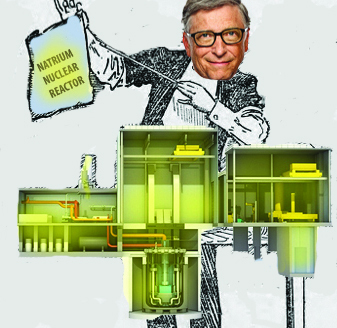
Rushed approval of Bill Gates’ reactor comes with risks, writes Brett Wilkins with Common Dreams
A leading nuclear safety expert has sounded the alarm over the Trump administration’s expedited safety review of an experimental nuclear reactor in Wyoming designed by a company co-founded by tech billionaire Bill Gates and derided as a “Cowboy Chernobyl.”
On December 1, the US Nuclear Regulatory Commission (NRC) announced that it has “completed its final safety evaluation” for Power Station Unit 1 of TerraPower’s Natrium reactor in Kemmerer, Wyoming, adding that it found “no safety aspects that would preclude issuing the construction permit.”
Co-founded by Microsoft’s Gates, TerraPower received a 50-50 cost-share grant for up to $2 billion from the US Department of Energy’s Advanced Reactor Demonstration Program. The 345-megawatt sodium-cooled small modular reactor (SMR) relies upon so-called passive safety features that experts argue could potentially make nuclear accidents worse.
However, federal regulators “are loosening safety and security requirements for SMRs in ways which could cancel out any safety benefits from passive features,” according to Union of Concerned Scientists nuclear power safety director Edwin Lyman.
The reactor’s construction permit application—which was submitted in March 2024—was originally scheduled for August 2026 completion but was expedited amid political pressure from the Trump administration and Congress in order to comply with an 18-month timeline established in President Donald Trump’s Executive Order 14300.
“The NRC’s rush to complete the Kemmerer plant’s safety evaluation to meet the recklessly abbreviated schedule dictated by President Trump represents a complete abandonment of its obligation to protect public health, safety, and the environment from catastrophic nuclear power plant accidents or terrorist attacks,” Lyman said in a statement on December 2.
Lyman continued:
“The only way the staff could finish its review on such a short timeline is by sweeping serious unresolved safety issues under the rug or deferring consideration of them until TerraPower applies for an operating license, at which point it may be too late to correct any problems. Make no mistake, this type of reactor has major safety flaws compared to conventional nuclear reactors that comprise the operating fleet. Its liquid sodium coolant can catch fire, and the reactor has inherent instabilities that could lead to a rapid and uncontrolled increase in power, causing damage to the reactor’s hot and highly radioactive nuclear fuel.
“Of particular concern, NRC staff has assented to a design that lacks a physical containment structure to reduce the release of radioactive materials into the environment if a core melt occurs. TerraPower argues that the reactor has a so-called “functional” containment that eliminates the need for a real containment structure. But the NRC staff plainly states that it “did not come to a final determination of the adequacy and acceptability of functional containment performance due to the preliminary nature of the design and analysis.
“Even if the NRC determines later that the functional containment is inadequate, it would be utterly impractical to retrofit the design and build a physical containment after construction has begun,” Lyman added. “The potential for rapid power excursions and the lack of a real containment make the Kemmerer plant a true ‘Cowboy Chernobyl.’”
The proposed reactor still faces additional hurdles before construction can begin, including a final environmental impact assessment. However, given the Trump administration’s dramatic regulatory rollback, approval and construction are highly likely.
Former NRC officials have voiced alarm over the Trump administration’s tightened control over the agency, which include compelling it to send proposed reactor safety rules to the White House for review and possible editing.
Allison Macfarlane, who was nominated to head the NRC during the Obama administration, said earlier this year that Trump’s approach marks “the end of independence of the agency.”
“If you aren’t independent of political and industry influence, then you are at risk of an accident,” she warned.
Brett Wilkins is a staff writer for Common Dreams. This article first appeared on Common Dreams whose content is available through a Creative Commons license.
‘Pay price for wrongdoing’: China Sanctions 20 US defence firms after Trump approves Taiwan arms sale
China on December 27 announced sanctions on 20 U.S. defense companies and 10 senior executives, including Palmer Luckey of Anduril Industries, following the Trump administration’s approval of an $11.1 billion arms package for Taiwan.
by Aditi, December 27, 2025 , https://www.financialexpress.com/world-news/pay-price-for-wrongdoing-china-sanctions-20-us-defence-firms-after-trump-approves-taiwan-arms-sale/4089711/
China announced sanctions against 20 US defence companies and 10 top executives on Friday — the latest in a series of tit-for-tat measures. The announcement came soon after the Trump administration approved a major weapons sale to Taiwan. The sanctions list includes well-known companies like Northrop Grumman and Boeing’s defence unit in St. Louis, as well as Palmer Luckey, founder of Anduril Industries.
China said it will freeze the assets of these companies in the country, block them from doing business with Chinese organisations, and prevent the executives from entering mainland China, Hong Kong, and Macau, according to a report from the Wall Street Journal. Both Washington and Beijing have also announced export controls, investment restrictions, visa and travel bans and curtailed use of sensitive technology over the past year.
The Chinese Foreign Ministry said the US arms sale “interferes in China’s internal affairs and seriously undermines China’s sovereignty and territorial integrity.” The sanctions were announced on December 27, and according to a Global Times report, took immediate effect. Officials said the US decision went against the one-China principle and the three China-US Joint Communiques.
China sanctions US defence firms over Taiwan arms sale
Under the new measures, China has imposed sanctions on 20 US defence-related companies that it claims are involved in supplying weapons to Taiwan in recent years. The companies named include Northrop Grumman Systems Corporation, L3Harris Maritime Services, Boeing in St. Louis, Gibbs & Cox, Advanced Acoustic Concepts, VSE Corporation, Sierra Technical Services, Red Cat Holdings, Teal Drones, ReconCraft, High Point Aerotechnologies, Epirus, Dedrone Holdings, Area-I, Blue Force Technologies, Dive Technologies, Vantor, Intelligent Epitaxy Technology, Rhombus Power, and Lazarus Enterprises.
China announced that all movable and immovable assets of these companies located within the country will be frozen. Chinese individuals and organisations have also been barred from doing business or cooperating with these firms in any form.
Sanctions extended to senior executives
In addition to companies, China has also imposed restrictions on 10 senior executives in the defence sector. Among them is Palmer Luckey, founder of Anduril Industries, along with top executives from companies such as L3Harris and VSE Corporation, according to ANI. According to the Foreign Ministry, these executives will face restrictions on assets located in China and activities related to the country.
Taiwan is a ‘red line’, says China
A spokesperson for the Chinese Foreign Ministry said the Taiwan issue is at the very core of China’s national interests and is a red line in China-US relations. The spokesperson warned that anyone attempting to provoke China on the Taiwan question would face a firm response. In a statement, the ministry said, “Anyone who attempts to cross the line and make provocations on the Taiwan question will be met with China’s firm response. Any company or individual who engages in arms sales to Taiwan will pay the price for the wrongdoing. No country or force shall ever underestimate the resolve, will and ability of the Chinese government and people to safeguard national sovereignty and territorial integrity.”
China claims Taiwan as part of its territory — contending that the autonomously governed island must eventually be reunified with the mainland. The United States does not officially recognise Taiwan as a sovereign nation under the ‘One China’ policy, but maintains unofficial ties with the administration.
US arms supply to Taiwan
The reaction from China comes after the administration of US President Donald Trump approved a major arms package for Taiwan last week. According to the US State Department, the proposed sales are valued at more than USD 10 billion and include medium-range missiles, howitzers, and drones.
According to Focus Taiwan, the potential sale involves eight arms packages, including HIMARS rocket systems, anti-tank missiles, and drones, with a total estimated cost of USD 11.1 billion.
Trump, Zelenskyy make ‘95% progress’, but ‘thorny issues’ remain – 5 key points
Aditi, 29 Dec 2025, https://www.financialexpress.com/world-news/trump-zelenskyy-make-95-progress-but-thorny-issues-remain-5-key-points/4090944/
Ukrainian President Volodymyr Zelensky met US President Donald Trump at Mar-a-Lago in Florida for high-stakes talks aimed at ending the nearly four-year Russia–Ukraine war.
Ukrainian President Volodymyr Zelenskyy met US President Donald Trump in Florida on Sunday as both leaders tried to push forward a possible peace deal to end the nearly four-year war between Russia and Ukraine. The meeting took place at Trump’s private club, Mar-a-Lago, in Palm Beach, where the US president is spending the holiday season. Both leaders described the talks as positive. Trump called the meeting “terrific,” while Zelenskyy said it was “great.”
This was Zelenskyy’s third visit to meet Trump this year, and expectations were high that the two would try to close major gaps in a peace plan that has been under discussion for months. Here are all the key points discussed.
Trump and Zelenskyy meet: Trump confident, but ‘thorniest’ issue unresolved
Trump seemed positive after the meeting, but also warned that the talks are complicated and fragile. Standing next to Zelenskyy, he said a deal could be clear “in a few weeks,” but stopped short of giving a firm timeline.
“We could have something where one item that you’re not thinking about is a big item, breaks it up. Look, it’s been a very difficult negotiation,” he said. Trump said he believes a peace agreement is close, possibly with around 95% agreement on key points, but admitted that final hurdles remain.
Speaking of the eastern Donbas region, which Russia has demanded that Ukraine surrender, is still an outstanding issue.
Trump acknowledged that this area is one of the “thorny issues” still unresolved. The US has suggested creating a “free economic zone” in parts of Donbas as part of a negotiated settlement, but details remain unclear.
“We’re getting closer to an agreement on that. And that’s a big issue,” he told reporters in a joint appearance with Ukrainian President Volodymyr Zelenskyy. “Certainly, that’s one of the big issues, and I think we’re closer.”
Trump and Zelenskyy meet: Territory still the hardest question
After the meeting, Zelenskyy made it clear that the issue of land remains the most difficult part of the talks. Speaking to reporters at Mar-a-Lago, he said Ukraine cannot simply give up territory. “You know our position,” Zelenskyy said, according to CNN. “We have to respect our law and our people. We respect the territory which we control.”
He added that any decision about land must be made by the people of Ukraine, not just leaders behind closed doors. Zelenskyy said a national referendum could be used to decide not only territorial questions, but other parts of the peace plan as well. “This is not the land of one person,” he said. “It is the land of our nation for many generations.”
He also said Ukraine’s parliament could be involved, but told reporters that Ukraine’s constitution does not allow territory to be handed over through a simple parliamentary vote. Only the public can approve such a move.
‘Russia wants to see Ukraine succeed,’ Trump says after meeting Zelenskyy
“Russia wants to see Ukraine succeed. Once it sounds a little strange, but I was explaining to the President, President Putin was very generous in his feelings toward Ukraine succeeding, including supplying energy, electricity, and other things at very low prices. So a lot of good things came out of that call today,” Trump told reporters standing next to Zelenskyy after the meeting.
Trump also said he would consider travelling to Ukraine if it helped secure a deal, including possibly speaking to Ukraine’s parliament. However, he suggested such a trip is unlikely. “I have no problem with travelling to Ukraine,” Trump said. “But I would like to get the deal done and not necessarily have to go.”
Trump and Zelenskyy meet: Ukraine and the United States are fully aligned
President Vladimir Putin has repeatedly said he wants four regions captured by Russian forces, along with Crimea, to be recognised as Russian territory. Crimea was illegally annexed by Russia in 2014. Russia is not ready to negotiate on its demands, Moscow has made it clear.
Putin has also demanded that Ukraine withdraw from some eastern areas that Russian forces have not even captured. Kyiv has rejected these conditions.
Despite the challenges, Zelenskyy said there has been strong progress on other parts of the peace plan. According to him, about 90% of the overall plan has broad agreement. On security guarantees and military issues, he said Ukraine and the United States are fully aligned. “We agree that security guarantees are a key milestone in achieving lasting peace,” Zelenskyy said.
He added that the two leaders discussed all aspects of a 20-point peace proposal during their talks.
Trump and Zelenskyy meet: Call with European leaders
During Zelenskyy’s visit, Trump and the Ukrainian president also held a phone call with several European leaders. The call lasted over an hour and included leaders from Britain, France, Germany, Italy, Poland and Norway, along with NATO’s secretary general and the president of the European Commission.
Finnish President Alexander Stubb said the leaders discussed “concrete steps” toward ending the war. European Commission President Ursula von der Leyen said there was good progress made.
The AI Arms Race Is Cracking Open the Nuclear Fuel Cycle
Oil Price By Michael Kern – Dec 28, 2025
- The abstract “cloud” of artificial intelligence possesses a massive, structural demand for 24/7 “baseload” power that is equivalent to adding Germany’s entire power grid by 2026, a need intermittent renewables cannot meet.
- Decades of underinvestment have resulted in a widening uranium supply deficit, with mined uranium expected to meet less than 75% of future reactor needs and an incentive price of $135/lb required to restart mothballed mines.
- Big Tech hyperscalers are privatizing energy security by locking in clean baseload nuclear power via long-term agreements, effectively making the public grid’s “service” secondary to the “compute-ready” requirements of major platforms.
We are seeing a violent collision between two worlds: the high-speed, iterative world of artificial intelligence and the slow, grinding, capital-intensive world of nuclear physics.
Data from a survey of over 600 global investors reveals that 63% now view AI electricity demand as a “structural” shift in nuclear planning. This isn’t a temporary spike or a speculative bubble. It is the physical footprint of every Large Language Model (LLM) query finally showing up on the global balance sheet.
For years, the energy narrative was dominated by “efficiency.” We were told that better chips would offset higher usage. That era is over. Generative AI doesn’t just use data; it incinerates energy to create it.
Why the “Efficiency” Narrative Failed
The “Reverse-Polish” reality of AI is that the more efficient we make the chips, the more chips we deploy, and the more complex the models become. This is Jevons Paradox playing out in real-time across the data centers of Northern Virginia and Singapore.
When you look at the energy density required for an AI hyperscale center, you aren’t looking at a traditional office building. You are looking at a facility that pulls as much power as a mid-sized city, but does so with a 99.999% uptime requirement.
Traditional demand models simply didn’t account for a single industry deciding to double its power footprint in less than five years. S&P Global Energy recently highlighted that data center electricity consumption could hit 2,200 terawatt-hours (TWh). …………………………………………………
Who Collects the Equity and Who Pays the Bill?
There is a massive shift happening in the power dynamics of infrastructure. For decades, nuclear power was a public service…state-funded, state-regulated, and built for the citizen.
Now, we are seeing the “Private Platform” era of nuclear energy. When a hyperscaler signs a twenty-year Power Purchase Agreement (PPA) with a nuclear utility, they are effectively “locking in” the best, [?] cleanest baseload power for private profit.
The question we aren’t asking: who pays for the grid upgrades to support this?
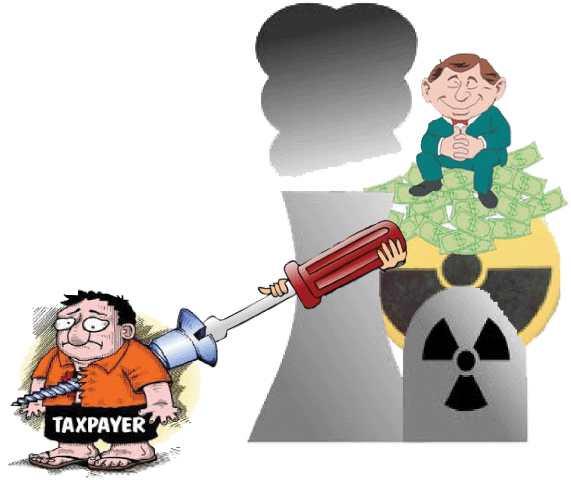
The hyperscalers want the green electrons to satisfy their net-zero pledges, but the physical copper and transformers required to move that power often fall on the rate-paying public or the state. We are witnessing the privatization of energy security.
If 63% of investors are right and AI is the new driver of nuclear planning, the “public service” aspect of the grid is about to become a secondary concern to the “compute-ready” requirements of Big Tech.
The equity is being collected by the tech platforms and the uranium miners. The risk is being socialized by the grid…………………………………………………………………………. https://oilprice.com/Alternative-Energy/Nuclear-Power/The-AI-Arms-Race-Is-Cracking-Open-the-Nuclear-Fuel-Cycle.html
Netanyahu to Press for ‘Another Round of War With Iran’ in Meeting With Trump This Week

Amid a growing rift between Israel and the White House, one foreign policy analyst says the meeting “will signal whether Washington is prepared to continue underwriting open-ended escalation.”
Stephen Prager, Dec 28, 2025, https://www.commondreams.org/news/trump-netanyahu-meeting-iran-war
As Israeli Prime Minister Benjamin Netanyahu heads to Mar-a-Lago to meet with US President Donald Trump on Monday, amid a growing rift with the president and his advisers, reports say he’ll seek to push the US back toward war with Iran.
Last week, NBC News reported that at the meeting, “Netanyahu is expected to make the case to Trump that Iran’s expansion of its ballistic missile program poses a threat that could necessitate swift action” and that “the Israeli leader is expected to present Trump with options for the US to join or assist in any new military operations.”
“Netanyahu plans to press Donald Trump for US backing for another round of war with Iran, now framed around Iran’s ballistic missile program,” said Sina Toossi, a senior fellow at the Center for International Policy. “Netanyahu’s pivot to missiles should therefore be read not as the discovery of a new threat, but as an effort to manufacture a replacement casus belli after the nuclear argument collapsed.”
He noted criticisms levied against Netanyahu by Yair Golan, chair of the Democrats, a center-left party in Israel, earlier this week: “How is it possible that last June, at the end of the war with Iran, Benjamin Netanyahu solemnly declared that ‘Israel had eliminated Iran’s nuclear threat and severely damaged its missile array’; and that this was a ‘historic victory’—and today, less than six months later, he is running to the president of the United States to beg for permission to attack Iran again?” Golan said.
Iran is just one of several areas the two will likely discuss on Monday. According to Israeli officials who spoke to the Washington Post, Netanyahu also reportedly wants Trump to “take a tougher stance on Gaza and require that Hamas disarm before Israeli troops further withdraw as part of the second phase of Trump’s 20-point peace plan.
The chief of Israel’s armed forces suggested earlier this week that its occupation of more than half of Gaza would be permanent, but walked those comments back after reported behind-the-scenes outrage in the White House. Meanwhile, Trump—invested in his image as a peacemaker—has reportedly balked at Israel’s routine violations of the ceasefire agreement he helped to broker in October.
Near-daily strikes have resulted in the death of at least 418 Palestinians, according to the Gaza Media Office. Meanwhile, Israel’s continued blockade of humanitarian aid has left hundreds of thousands of people—displaced from homes destroyed by Israeli bombing—to languish in the cold without tents. Desperately needed fuel, food, and medicine have entered the strip at far lower numbers than the ceasefire agreement required.
As Axios reported on Friday, Trump’s advisers increasingly fear that Netanyahu is intentionally slow-walking and undermining the peace process in hopes of resuming the war.
Netanyahu also seeks Trump’s continued backing of Israel’s territorial expansion in Syria. Earlier this month, the Israel Defense Forces (IDF) pushed through a UN-monitored demilitarized zone between Israeli and Syrian-held positions in the Golan Heights, which Israel illegally occupies.
This push into southern Syria went against the wishes of the Trump administration, which feared it could destabilize the Western-backed government that rules in Damascus following the ouster of former President Bashar al-Assad.
Israel has also routinely struck Lebanon in violation of the US-brokered ceasefire it signed with Hezbollah in late 2024, with bombings becoming a near-daily occurrence in December. Last month, the UN reported that at least 127 civilians, including children, had been killed in Israeli strikes since the ceasefire began.
“Netanyahu’s visit unfolds against a backdrop of unresolved fronts, with widening disputes with Washington over the second phase of the Gaza ceasefire, including postwar governance, reconstruction, and Turkish involvement,” Toossi said. “At the same time, Israel is seeking greater latitude to escalate again against Hezbollah in Lebanon, an end to US accommodation of Syria’s new leadership, and firm assurances on expanded military aid.”
“Taken together, Netanyahu’s visit is less about resolving any single crisis than about postponing strategic reckoning,” he continued. “The outcome will signal whether Washington is prepared to continue underwriting open-ended escalation, or whether this meeting marks the beginning of clearer limits on Israel’s regional strategy.”
Secretary of State Rubio Believes U.S. Recovered Alien Tech And Gave It To Private Military Contractors.

“We are headed toward massive disclosure,” says a senior advisor to America’s top diplomat and Trump’s National Security Advisor
Michael Shellenberger, Dec 03, 2025
Since May of this year, Marco Rubio has served in a dual role as President Donald Trump’s National Security Advisor and Secretary of State. The National Security Advisor is the President’s principal in-house advisor on all national security matters, chairs the National Security Council, coordinates the interagency process across the government, and briefs the President daily.
As Secretary of State, Rubio negotiates treaties, appoints and directs ambassadors, controls the $84 billion State Department and USAID budget, oversees 80,000 employees at more than 270 diplomatic posts worldwide, and has direct authority over diplomatic security, intelligence sharing, sanctions enforcement, and emergency evacuations of U.S. citizens abroad.
The last official to hold both such positions was Henry Kissinger from 1973 to 1975. For Rubio, who was also the former ranking member of the Senate Foreign Relations Committee and vice-chair of the Senate Select Committee on Intelligence, to play both roles reflects President Trump’s high confidence in him.
As such, it is significant that Rubio believes that elements within the US government have recovered technology from a nonhuman intelligence, reverse-engineered it, and let private military contractors take control of it in ways that could be undermining national security and result in a Pearl Harbor-like event.
“The real risk in transferring technology that is not useful to us today to a corporate entity over decades,” says Rubio, “is that the corporate entity comes to basically possess and control access to it for their own purposes, not for the purposes of national security.”
Nick Pope, who investigated Unidentified Anomalous Phenomena (UAP) for the UK Ministry of Defence, said, “It’s hard to overstate the significance of [Rubio’s] statement. Rubio’s remarks are so forthright that one could speculate they’re officially-authorized prelude to Disclosure, to test the waters ahead of an official, Presidential announcement.”…………………………………………….(Subscribers only) https://www.public.news/p/secretary-of-state-rubio-believes
∙
The West is spending big on nuclear plants again – and taking taxpayers along for the ride

One question separates announced but purely hypothetical nuclear power
plants from those that actually stand a chance of being built: Who’s
going to pay for them?
In China and Russia, which dominated reactor
construction for the past few decades, governments provided the funds.
Advanced economies placed much greater emphasis on private capital. That
approach was intended to impose greater commercial discipline and protect
the public purse but led to very few reactors being built in the West.
Yet in 2025, Western governments returned to funding nuclear plant
constructions. Prime Minister Mark Carney and Ontario Premier Doug Ford
stood shoulder-to-shoulder in October before a full-sized replica nuclear
reactor used for training, as they committed a combined $3-billion to a new
nuclear power station in the early stages of construction in Clarington,
Ont., next to the Darlington Nuclear Generating Station.
Globe and Mail 27th Dec 2025, Matthew McClearn, https://www.theglobeandmail.com/business/article-nuclear-plants-expansion-west-public-funding-taxpayers/
Donald Trump’s first step to becoming a would-be autocrat – hijacking a party
The Conversation, December 29, 2025, Justin Bergman, International Affairs Editor, Erica Frantz, Associate Professor of Political Science, Michigan State University, https://theconversation.com/donald-trumps-first-step-to-becoming-a-would-be-autocrat-hijacking-a-party-271849?utm_medium=email&utm_campaign=Latest%20from%20The%20Conversation%20for%20December%2029%202025%20-%203630637075&utm_content=Latest%20from%20The%20Conversation%20for%20December%2029%202025%20-%203630637075+CID_f48f66e694ca700aadd909617ad57a30&utm_source=campaign_monitor&utm_term=Donald%20Trumps%20first%20step%20to%20becoming%20a%20would-be%20autocrat%20%20hijacking%20a%20party
In this six-part podcast series, The Making of an Autocrat, we are asking six experts on authoritarianism and US politics to explain how exactly an autocrat is made – and whether Trump is on his way to becoming one.
Like strongmen around the world, Trump’s first step was to take control of a party, explains Erica Frantz, associate professor of political science at Michigan State University.
Trump began this process long before his victory in the 2024 US presidential election. When he first entered the political stage in 2015, he started to transform the Republican Party into his party, alienating his critics, elevating his loyalists to positions of power and maintaining total control through threats and intimidation.
And once a would-be autocrat dominates a party like this, they have a legitimate vehicle to begin dismantling a democracy. As Frantz explains:
Now, many Republican elites see it as political suicide to stand up to Trump. So, fast forward to 2024, and we have a very personalist Trump party – the party is synonymous with Trump.
Not only does the party have a majority in the legislature, but it is Trump’s vehicle. And our research has shown this is a major red flag for democracy. It’s going to enable Trump to get rid of executive constraints in a variety of domains, which he has, and pursue his strongman agenda.
Dungeness power station tipped for nuclear return as government ‘aware’ of interest
Dungeness power station tipped for nuclear return as government
‘aware’ of interest. The government has suggested Kent’s scrapped
nuclear power station could start generating energy again – despite being
decommissioned. Dungeness power station previously produced enough
electricity for a million homes a year before defuelling began in 2021.
But ministers say they are “aware” of interest from developers in
establishing new small modular reactors (SMRs) at the Romney Marsh site.
Last month, the government published its ‘nuclear energy generation’
policy, which outlines where nuclear reactors could be built without naming
specific locations. However, ministers have previously said Dungeness is
being considered for the new project. In September, Lord Patrick Vallance,
minister of state at the Department for Energy Security and Net Zero
(DESNZ), listed the Marsh headland as a potential location for new nuclear
power.
Kent Online 29th Dec 2025, https://www.kentonline.co.uk/romney-marsh/news/scrapped-power-station-tipped-for-nuclear-return-under-new-p-334408/
1 This Month

of the week – Shut Down Drone Warfare!


Tell the Ukrainian Government to Drop Prosecution of Peace Activist Yurii Sheliazhenko

Petition to revoke the licensing of the Near Surface Nuclear Disposal Facility (NSDF) at Chalk River. https://www.ourcommons.ca/petitions/en/Petition/Details?Petition=e-7247
To see nuclear-related stories in greater depth and intensity – go to https://nuclearinformation.wordpress.com
-
Archives
- April 2026 (57)
- March 2026 (251)
- February 2026 (268)
- January 2026 (308)
- December 2025 (358)
- November 2025 (359)
- October 2025 (376)
- September 2025 (257)
- August 2025 (319)
- July 2025 (230)
- June 2025 (348)
- May 2025 (261)
-
Categories
- 1
- 1 NUCLEAR ISSUES
- business and costs
- climate change
- culture and arts
- ENERGY
- environment
- health
- history
- indigenous issues
- Legal
- marketing of nuclear
- media
- opposition to nuclear
- PERSONAL STORIES
- politics
- politics international
- Religion and ethics
- safety
- secrets,lies and civil liberties
- spinbuster
- technology
- Uranium
- wastes
- weapons and war
- Women
- 2 WORLD
- ACTION
- AFRICA
- Atrocities
- AUSTRALIA
- Christina's notes
- Christina's themes
- culture and arts
- Events
- Fuk 2022
- Fuk 2023
- Fukushima 2017
- Fukushima 2018
- fukushima 2019
- Fukushima 2020
- Fukushima 2021
- general
- global warming
- Humour (God we need it)
- Nuclear
- RARE EARTHS
- Reference
- resources – print
- Resources -audiovicual
- Weekly Newsletter
- World
- World Nuclear
- YouTube
-
RSS
Entries RSS
Comments RSS
 nuclear-news