Three things ICAN is looking forward to in 2026

3 Jan 2026, https://www.icanw.org/2026_3_things_anticipating
As 2026 begins, nuclear risks and the false myths about nuclear deterrence on the rise. ICAN, working with countries and partners across continents, are challenging nuclear weapons and taking our work to the next level. Here are three things we’re looking forward to this year:
Celebrating five years of the nuclear ban treaty
On 22 January, we’ll mark five years since nuclear weapons officially became illegal under international law. That’s not symbolic — it’s transformative.
ICAN and partners around the world will commemorate the moment that nuclear weapons finally became illegal. With celebrations, seminars, screenings, actions and activism across the globe. This anniversary is a chance to reflect on how far we’ve come — and to build momentum for the work ahead. The ban treaty has changed the global conversation. Now we’re making sure it changes reality.
Evidence for action: exposing the myths of nuclear deterrence
Nuclear deterrence is built on theory. Our campaign is built on facts.
Throughout the year, we’ll be working with our partners, scientists, health experts, economists and governments to make one truth unavoidable: any use of nuclear weapons would be catastrophic.
The evidence is clear. Nuclear weapons:
- threaten public health
- destabilise societies
- devastate ecosystems and undermine food systems
- have consequences that would last for decades.
We’ll use this evidence to challenge decision-makers, dismantle dangerous deterrence myths, and demand an end to the billions spent on weapons that put all life on Earth at risk.
Diplomacy that protects people, not power
Real security doesn’t come from weapons of mass destruction. It comes from negotiation and cooperation.
ICAN is working closely with governments that support the Treaty on the Prohibition of Nuclear Weapons (TPNW) to ensure diplomacy in 2026 reduces nuclear risks and advances disarmament. With two major nuclear weapons treaties under review, we’ll seize opportunities to:
- strengthen global norms against nuclear weapons
- hold governments accountable to their commitments
- push disarmament from words into action
Alongside these milestones, we’ll also publish impactful and informative reports, amplify survivor voices, engage media worldwide and support our partners.
The risks around nuclear weapons are growing, making our work to educate, empower and act together more urgent than ever.
WHAT CHAOS WILL TRUMP UNLEASH IN 2026?
The evidence of 2025 suggests a president who is alternately reckless and bored
Seymour Hersh, Jan 03, 2026
One of my favorite anecdotes occurred sometime after 9/11 when Tony Blair, the prime minister of Great Britain, joined in with America’s declaration of war against terrorism. The brilliant playwright Harold Pinter, who would be a bitter and prolific critic of the ensuing war, was invited to respond before the House of Commons. He began his talk with a tale from British history during a wave of terror in Ireland.
“There’s an old story about Oliver Cromwell. After he had taken the town of Drogheda, the citizens were brought to the main square. Cromwell announced to his lieutenants: ‘Right! Kill all the women and rape all the men.’ One of his aides said: ‘Excuse me, General. Isn’t it the other way around?’ A voice from the crowd called out: ‘Mr. Cromwell knows what he is doing!’”
In Pinter’s telling, the voice of support from the crowd was Blair’s. Today it could and would come from the lips of Vance, Bondi, Hegseth, or Noem. Never has a modern American president been surrounded by such self-important sycophants and a Republican-led Congress with little gumption. Trump’s lack of interest in nonmilitary briefing papers and his obsession with social and political gossip has moved from information known by a few to standard operating procedure………………….(Subscribers only) https://seymourhersh.substack.com/p/what-chaos-will-trump-unleash-in?utm_source=post-email-title&publication_id=1377040&post_id=183249150&utm_campaign=email-post-title&isFreemail=true&r=ln98x&triedRedirect=true&utm_medium=email
Venezuelan leader Maduro lands in New York after capture by US troops – live
Donald Trump says the US will ‘run’ Venezuela and put Maduro on trial after audacious military operation in Caracas
- Full report: Trump says US will ‘run’ Venezuela
- Explained: Is there legal justification for the US attack on Venezuela?
- Reaction: Global outcry after US strikes Venezuela
4 Jan 26, https://www.theguardian.com/world/live/2026/jan/03/caracas-explosions-venezuela-maduro-latest-news-updates-live?page=with:block-69599f418f085ed25e9e3394
Nicolás Maduro ‘has arrived in New York’
A plane believed to be carrying Nicolás Maduro and his wife, Cilia Flores, has landed near Stewart Air National Guard Base in New York.
Maduro is expected to be taken by helicopter to the city where he will be processed and transported to the Metropolitan Detention Center prison, officials told NBC News.
They added the Venezuela president is set to appear in court by Monday evening.
The New York Times has reported that at least 40 people, including civilians and soldiers, were killed in Saturday’s US attack on Venezuela. The estimate comes from a senior Venezuelan official who spoke on the condition of anonymity.
The victims reportedly include a woman called Rosa González, who was killed when her three-story apartment complex was hit by a strike. Another resident was reportedly severely injured.
US oil giants have so far remained silent on Donald Trump’s claim that they are primed to spend “billions and billions of dollars” rebuilding the Venezuelan oil industry following the ouster of Nicolás Maduro.
Chevron, the only US oil company still operating in Venezuela, committed only to following “relevant laws and regulations” after the US president suggested American energy multinationals would be central to his plans for the country.
Venezuela’s vast oil reserves – reputedly the world’s largest – will be modernized and exploited, Trump claimed in interviews and a press conference at his Mar-a-Lago estate. US oil firms will invest heavily to reconstruct “rotted” infrastructure, ramp up production and sell “large amounts … to other countries”, he told reporters, adding: “We’re in the oil business.”
“We’re going to have our very large United States oil companies – the biggest anywhere in the world – go in, spend billions of dollars, fix the badly broken infrastructure and start making money for the country,” the president said. The firms would be “reimbursed”, he added, without providing more detail.
ExxonMobil, the biggest US oil company, and ConocoPhillips, another major player, did not respond to requests for comment.
A spokesperson for Chevron said: “Chevron remains focused on the safety and wellbeing of our employees, as well as the integrity of our assets. We continue to operate in full compliance with all relevant laws and regulations.”
In response to today’s events, Canada’s PM, Mark Carney, wrote on X: “One of the first actions taken by Canada’s new government in March 2025 was to impose additional sanctions on Nicolás Maduro’s brutally oppressive and criminal regime – unequivocally condemning his grave breaches of international peace and security, gross and systematic human rights violations, and corruption. Canada has not recognised the illegitimate regime of Maduro since it stole the 2018 election. The Canadian government therefore welcomes the opportunity for freedom, democracy, peace, and prosperity for the Venezuelan people.
“Canada has long supported a peaceful, negotiated, and Venezuelan-led transition process that respects the democratic will of the Venezuelan people. In keeping with our long-standing commitment to upholding the rule of law, sovereignty, and human rights, Canada calls on all parties to respect international law. We stand by the Venezuelan people’s sovereign right to decide and build their own future in a peaceful and democratic society.
“Canada attaches great importance to resolution of crises through multilateral engagement and is in close contact with international partners about ongoing developments. We are first and foremost ready to assist Canadians through our consular officials and our embassy in Bogotá, Colombia, and will continue to support Venezuelan refugees.”
The UK’s prime minister, Keir Starmer, has backed a transition of power in Venezuela.
He said his Labour administration would “shed no tears” over the end of Nicolás Maduro’s regime and said Britain would discuss the “evolving situation” with American counterparts over the coming days.
Starmer said in a statement: “The UK has long supported a transition of power in Venezuela.
“We regarded Maduro as an illegitimate president and we shed no tears about the end of his regime.
“I reiterated my support for international law this morning.
“The UK government will discuss the evolving situation with US counterparts in the days ahead as we seek a safe and peaceful transition to a legitimate government that reflects the will of the Venezuelan people.”
Starmer earlier refused to be drawn on whether the US military action broke international law, saying he wanted to talk to president Donald Trump, with whom he had not spoken on Saturday morning, and allies to “establish the facts”.
About 500 UK nationals are in Venezuela and work is continuing to “safeguard” them, the prime minister said, while the UK’s Foreign Office advised against all travel to the country.
“As you know, I always say and believe we should all uphold international law, but I think at this stage, fast-moving situation, let’s establish the facts and take it from there,” Starmer told broadcasters.
Share
Updated at 08.49 AEDT
08.21 AEDT
Summary: the day so far
It’s been an incredibly dramatic day so far but a confusing one, in the US and Venezuela, as the world watches the aftermath of a lightning military strike overnight that resulted in Nicolás Maduro being captured by US forces and taken to an American aircraft carrier in handcuffs. The toppled Venezuelan president was en route to New York early on Saturday, where the Trump administration has promised to bring him up in court, indicted on drug trafficking and other federal criminal offenses. He could arrive later the same day, even. Donald Trump claims the US is now running Venezuela, with the remaining regime’s cooperation – a claim sharply contrast
The United Nations security council is due to hold an emergency meeting on Monday as a result of the United States attacking Venezuela early on Saturday and snatching up its president, Nicolás Maduro, holding him en route to New York where it will confront him with federal criminal charges related to drug trafficking and weapons.
Nicolás Maduro’s vice-president in Venezuela, Delcy Rodríguez, a loyalist, has appeared on television and radio there, from the capital Caracas, contradicting Donald Trump’s description of her now being president and cooperating with the US. She said Maduro was Venezuela’s “only” president and that Venezuela would not be colonized.
Rodríguez appears to be in Caracas. This followed hours of rumors that she might have been in Russia or parts unknown, but not in Venezuela.
Donald Trump called Cuba a failing nation, and US secretary of state Marco Rubio called the communist-run island, from which his parents fled to the US in the 1950s, a “disaster”. Both hinted that they could reprise their action in Venezuela in Cuba, but made no direct threats.
Trump was asked about his current thoughts on Russian president Vladimir Putin and the ongoing war perpetrated by that country in Ukraine. Trump said he was “not thrilled” with Putin and called the war a bloodbath.
Donald Trump said he and his administration have not talked to Venezuela’s exiled opposition leader María Corina Machado since the capture of Maduro. He took on a dismissive tone and said she would not run Venezuela as she did not have the necessary support or respect in the country. It was unclear whether he was talking about the Venezuelan regime or the general population. Machado won the latest Nobel Peace prize.
United Nations secretary general António Guterres said the Trump administration was setting a “dangerous precedent” with its unilateral action inside Venezuela. He later said he thought the US had probably breached the founding charter of the UN.
At a press conference in Florida, Trump said that US oil companies will take control of Venezuela’s state oil operation. There has been no confirmation of anything like this from US oil companies, nor how such an arrangement would work.
Donald Trump claimed at his press conference earlier that the United States is “going to run” Venezuela for the time being. He gave no specific details about how that might happen, later implying the remains of the Maduro regime were cooperating with US leadership – something soon after contradicted by Venezuela’s vice president, Delcy Rodríguez.
Trump posted a picture on his Truth Social platform that he states is “Nicolas Maduro on board the USS Iwo Jima”, which appeared to show the captured Venezuelan president in handcuffs, black goggles and headphones, clutching a water bottle, expressionless.
The US Department of Justice unsealed a fresh version of a federal criminal indictment of Nicolás Maduro. He was indicted by the US in 2020. The superseding indictment now includes his wife and son.
Trump confirmed that the Venezuelan leader Nicolás Maduro and his wife, Cilia Flores, were heading to New York. Trump told Fox News on Saturday that Maduro and his wife were taken to a ship after their capture by US forces and were headed to the US city.
US attorney general Pam Bondi said the deposed Venezuelan leader and his wife would face criminal charges after an indictment in New York. Bondi vowed in a social media post that the couple will “soon face the full wrath of American justice on American soil in American courts”.
The United States is going to be “very strongly involved” in Venezuela’s oil industry after the operation to capture Maduro, Trump told Fox News on Saturday. He said: “We have the greatest oil companies in the world, the biggest, the greatest, and we’re going to be very much involved in it.”
The US vice-president JD Vance hailed what he called a “truly impressive operation” in Venezuela that culminated in the capture of Maduro. Posting on social media as he reshared Trump’s post about the action, Vance wrote: “The president offered multiple off-ramps, but was very clear throughout this process: the drug trafficking must stop, and the stolen oil must be returned to the United States.”
The US secretary of state Marco Rubio said in a post on X that Maduro is “under indictment for pushing drugs in the United States”. The Republican US senator Mike Lee said on Saturday that Rubio had told him that he “anticipates no further action in Venezuela now that Maduro is in US custody”.
Venezuela’s government urged citizens to rise up against the US assault and said Washington risked plunging Latin America into chaos with “an extremely serious” act of “military aggression”. “The entire country must mobilise to defeat this imperialist aggression,” it added. It accused the US of launching a series of attacks against civilian and military targets in the South American country, after explosions rocked its capital, Caracas, before dawn on Saturday.
Explosions and low-flying aircraft were heard in Caracas in the early hours of Saturday. In its statement, Venezuela’s government confirmed that the city had come under attack, as had three other states: Miranda, La Guaira and Aragua.
Venezuela has accused the US of trying to “seize control” of the country’s resources, in particular its oil and minerals. The country has called on the international community to denounce what it called a flagrant violation of international law that put millions of lives at risk.
The president of neighbouring Colombia, Gustavo Petro, called for an immediate emergency session of the UN security council, saying on social media that Venezuela had come under attack.
UK prime minister Keir Starmer has reacted to Donald Trump’s military action in Venezuela saying: “The UK was not involved in any way in this operation.” He added that “we should all uphold international law”. France said the US military operation that resulted in the capture of Maduro went against the principles of international law.
Russia has demanded “immediate” clarification about the circumstances of the capture of Maduro during an attack ordered by Trump. Earlier, Venezuela’s vice-president, Delcy Rodríguez, said the US needed to provide “proof of life” for Maduro.
Venezuelan allies Russia, Cuba and Iran were quick to condemn the strikes as a violation of sovereignty. Tehran urged the UN security council to stop the “unlawful aggression”. Among major Latin American nations, Argentina’s president Javier Milei lauded Venezuela’s new “freedom” while Mexico condemned the intervention and Brazil’s president Luiz Inácio Lula da Silva said it crossed “an unacceptable line”.
Share
World
Europe
US news
Americas
Asia
Australia
Middle East
Africa
Inequality
Global development
News
Opinion
Sport
Culture
Lifestyle
Original reporting and incisive analysis, direct from the Guardian every morning
Sign up for our email
About us
Information
Help
Complaints & corrections
Contact us
Tip us off
SecureDrop
Privacy policy
Cookie policy
Tax strategy
Terms & conditions
All topics
All writers
Newsletters
Digital newspaper archive
Bluesky
Facebook
Instagram
LinkedIn
Threads
TikTok
YouTube
Advertise with us
Guardian Labs
Work for us
Accessibility settings
Guardian Australia acknowledges the traditional owners and custodians of Country throughout Australia and their connections to land, waters and community. We pay respect by giving voice to social justice, acknowledging our shared history and valuing the cultures of First Nations.
Back to top
© 2026 Guardian News & Media Limited or its affiliated companies. All rights reserved. (dcr)
New Imperial War: The U.S. Assault on Venezuela Exposes a Desperate Empire
January 3, 2026, By Joshua Scheer, https://scheerpost.com/2026/01/03/new-imperial-war-the-u-s-assault-on-venezuela-exposes-a-desperate-empire/
Multiple blasts were reported in Venezuela’s capital early Saturday after President Trump authorized U.S. airstrikes targeting military installations and other sites.
Residents of Caracas saw plumes of smoke and reported hearing aircraft flying at low altitude around 2 a.m. local time, according to the Associated Press and Reuters. Power outages were reported in the southern part of the city near a military base.
Videos shared on social media appeared to show several explosions across the capital. CBS News cited U.S. officials as confirming that the strikes were ordered by Trump.
The United States carried out a series of military strikes on Venezuela early Saturday, targeting key military installations in and around Caracas, as President Donald Trump claimed that Venezuelan President Nicolás Maduro had been captured and flown out of the country.
Explosions were reported around 2 a.m. local time in the Venezuelan capital and neighboring states, with smoke visible over parts of Caracas and power outages reported near major military facilities. Among the targets cited in multiple reports were La Carlota Air Base, Fuerte Tiuna, and other strategic sites. Social media videos showed aircraft overhead and active air defenses, while witnesses described low-flying helicopters across the city.
In a statement posted to social media, Trump said the United States had “successfully carried out a large scale strike against Venezuela” and that Maduro and First Lady Cilia Flores had been taken into U.S. custody. The White House said the operation was conducted in coordination with U.S. law enforcement and confirmed that no American casualties had been reported. Trump later described the mission as “brilliant,” asserting it was carried out under his Article II constitutional powers.
Following U.S. strikes in Venezuela and the reported seizure of President Nicolás Maduro and first lady Cilia Flores, several senior members of the government appeared to remain active. Vice President Delcy Rodríguez, next in the line of succession, issued statements after the attacks, though her location was unclear amid reports she may have been in Russia. Other key allies, including Defense Minister Vladimir Padrino López and Interior Minister Diosdado Cabello, also appeared to have survived. Their continued presence suggests that despite the removal of Maduro, the Venezuelan government was still functioning, albeit under significant strain, in the immediate aftermath.
According to Venezuelanalysis and other outlets, Venezuelan Vice President Delcy Rodríguez said the government had not been provided proof of life for Maduro and demanded clarification from Washington. Defense Minister Vladimir Padrino López confirmed that U.S. bombings had occurred in Caracas and surrounding areas, stating that authorities were assessing damage and casualties. Venezuelan officials reported civilian and military deaths but did not provide specific figures.
The Venezuelan government declared a nationwide state of emergency, referred to as a state of “External Commotion,” activated national defense plans, and ordered the deployment of armed forces across the country. In an official communiqué, Caracas accused the United States of a “flagrant violation” of the United Nations Charter and described the strikes as an act of aggression threatening regional peace. The government said it would file formal complaints with the United Nations, CELAC, and the Non-Aligned Movement, while reserving the right to self-defense under Article 51 of the UN Charter.
International reaction was swift. Brazilian President Luiz Inácio Lula da Silva condemned the strikes and the reported capture of Maduro, calling the action “an unacceptable affront to Venezuela’s sovereignty” and warning it set a dangerous precedent for the international community. Tweeting this: -[on original]
Colombian President Gustavo Petro described the operation as an act of aggression against Latin America and announced that Colombian forces were being deployed to the Venezuelan border amid concerns over potential refugee flows. He underscored the stakes of the crisis, saying, “Without sovereignty, there is no nation. Peace is the way, and dialogue between peoples is fundamental for national unity. Dialogue and more dialogue is our proposal.”
This should also be the standard for how foreign policy is conducted more broadly. War should not be the default response — especially in cases like this, where there appears to be a clear disregard for factual accuracy.
Petro, also tweeting about his role on the UN security council, stated “Colombia since yesterday is a member of the United Nations Security Council and [it] must be convened immediately. Establish the international legality of the aggression against Venezuela.”
We might not hold our breath, however, since two of the five permanent members of the Security Council are currently involved in questionable wars. Yet we can only hope that Petro and more world leaders take up the mantle of ending wars and allowing diplomacy and sovereignty to be the norm. If the royal “we” could stay out of other countries’ internal affairs, certainly we would not have wars in Ukraine or, now, in Venezuela — just to name a few. But empire is going to empire, and like a cockroach, the neocon agenda seems never to die.
This 1984-level war justification comes as the Trump administration has repeatedly accused Nicolás Maduro of narco-terrorism and questioned his legitimacy as Venezuela’s leader. In a post on X from July 2025, Marco Rubio reiterated the administration’s position on Maduro’s authority, stating that “his regime is NOT the legitimate government.” adding that “Maduro is the head of the Cartel de Los Soles, a narco-terror organization which has taken possession of a country. And he is under indictment for pushing drugs into the United States,” Rubio wrote.
Today Rubio continues to repeat this rhetoric, his first post was a re-tweet of the July post.
The neocon war on drugs justification rings hollow as Trump’s often contradictory framing or barefaced lying. Much of the available reporting points out that major drug-trafficking flows have long been linked to countries such as Honduras, including the case of its former president, Juan Orlando Hernández, sentenced in 2024 to 45 years in prison for conspiring to distribute more than 400 tons of cocaine and related firearms offenses; he was pardoned by Trump on Dec. 1. Against that backdrop, it becomes increasingly difficult to sustain the pretense that this action is about narcotics enforcement rather than a colonial-style power grab.
With responses from other leaders across the Americas came swiftly. Cuban President Miguel Diaz-Canel wrote: “This is state terrorism against the brave Venezuelan people and against Our America,” and is rightfully demanding urgent action from the international community in response to the “criminal attack.”
Bolivia’s former leftist president, Evo Morales, also condemned the U.S. action, saying he “strongly and unequivocally” repudiated the attack on Venezuela. “It is brutal imperialist aggression that violates its sovereignty,” Morales said, expressing “full solidarity with the Venezuelan people in resistance.”
Across the region, governments warned that the escalation risked destabilizing Latin America and undermining long-standing efforts to preserve the region as a zone of peace.
In the United States, antiwar organizations quickly mobilized. The ANSWER Coalition issued a call for nationwide protests on Saturday, Jan. 3, arguing that the operation was driven by geopolitical and economic interests rather than security concerns. Within hours, demonstrations were announced in multiple cities, including a protest outside the White House. The listing is available at https://answercoalition.org/venezuela
As of Saturday morning, the situation in Venezuela remained fluid, with conflicting accounts over Maduro’s status and mounting international pressure for clarification. The United Nations had not yet issued a formal response, though several world leaders called for an emergency international review of the U.S. action.
This is a developing story. More will come.
We have become the worst version of a desperate empire: taking over countries, attacking them under false pretenses, lying about our reasons, and stealing natural resources we claim are “ours.” This is an affront to any reasonable person — an act of cowardice and moral failure that reveals clear colonial intent.
Our so-called leadership, through threats directed at remaining Venezuelan politicians, reminds us of classic warmonger tactics. Trump suggested on Fox News that his administration would continue targeting Venezuelan government officials if they sided with Maduro. “If they stay loyal, the future is really bad — really bad for them,” he said. “I’d say most of them have converted.”
Trump’s first term was marked by the implied repudiation of “forever wars,” and now, with the influence of figures like Marco Rubio and Stephen Miller, the United States has bombed more than nine countries and is engaging in yet another unprovoked conflict. There is no easy way to say this, but it makes more sense now why the president has avoided seriously confronting Putin — he is following the same playbook. Of course, it is also the same approach we have used since the beginning of this dying empire, with figures such as JFK, LBJ, and GW Bush — just to name a few.
Here is the full response of the Venezuelan government, in an English translation by Ben Norton.
Read more: New Imperial War: The U.S. Assault on Venezuela Exposes a Desperate EmpireCOMMUNIQUÉ BOLIVARIAN REPUBLIC OF VENEZUELA The Bolivarian Republic of Venezuela rejects, repudiates, and denounces before the international community the extremely grave military aggression perpetrated by the current Government of the United States of America against Venezuela’s territory and population in civilian and military sites of the city of Caracas, capital of the Republic, and the states of Miranda, Aragua, and La Guaira. This act constitutes a flagrant violation of the United Nations Charter, especially its articles 1 and 2, which enshrine respect for sovereignty, the juridical equality of States and the prohibition of the use of force. Such aggression threatens international peace and stability, specifically in Latin America and the Caribbean, and places the lives of millions of people at grave risk. The objective of this attack is none other than to take control of Venezuela’s strategic resources, particularly its oil and minerals, attempting to forcibly break the Nation’s political independence. They will not succeed. After more than 200 years of independence, the people and their legitimate Government stand firm in defense of sovereignty and the inalienable right to decide their destiny. The attempt to impose a colonial war to destroy the republican form of government and force a “regime change”, in alliance with the fascist oligarchy, will fail like all previous attempts. Since 1811, Venezuela has confronted and defeated empires. When in 1902 foreign powers bombarded our coasts, President Cipriano Castro proclaimed: “The insolent foot of the foreigner has profaned the sacred soil of the Homeland”. Today, with the moral authority of Bolívar, Miranda, and our liberators, the Venezuelan people rise once again to defend their independence against imperial aggression. People to the streets The Bolivarian Government calls on all social and political forces of the country to activate mobilization plans and repudiate this imperialist attack. The people of Venezuela and their National Bolivarian Armed Forces, in perfect popular-military-police fusion, are deployed to guarantee sovereignty and peace. Simultaneously, Bolivarian Peace Diplomacy will file corresponding complaints before the UN Security Council, the Secretary General of said organization, CELAC, and the Non-Aligned Movement, demanding condemnation of and accountability for the US Government. President Nicolás Maduro has ordered all national defense plans to be implemented at the appropriate time and circumstances, in strict adherence to the provisions of the Constitution of the Bolivarian Republic of Venezuela, the Organic Law on States of Exception, and the Organic Law of National Security. In this regard, President Nicolás Maduro has signed and ordered the implementation of the Decree declaring a state of External Commotion throughout the national territory, to protect the rights of the population, the full functioning of republican institutions, and to immediately transition to armed struggle. The entire country must be activated to defeat this imperialist aggression. Likewise, he has ordered the immediate deployment of the Command for the Integral Defense of the Nation and the Directional Bodies for Integral Defense in all states and municipalities of the country. In strict adherence to article 51 of the United Nations Charter, Venezuela reserves the right to exercise legitimate defense to protect its people, its territory, and its independence. We call on the peoples and governments of Latin America, the Caribbean, and the world to mobilize in active solidarity against this imperial aggression. As Supreme Commander Hugo Chávez Frías stated, “In the face of any circumstance of new difficulties, whatever their magnitude, the response of all patriots… is unity, struggle, battle, and victory”. Caracas, 3 January 2025
WAS RUSSIA’S SPECIAL MILITARY OPERATION “UNPROVOKED”?
AI is a tool that many use to research the historical facts behind contentious issues. What does it say about Russia’s claims it was endlessly provoked into its conflict with the Ukrainian regime?
Aearnur, Jan 03, 2026, https://aearnur.substack.com/p/was-russias-special-military-operation?utm_source=post-email-title&publication_id=312403&post_id=183250361&utm_campaign=email-post-title&isFreemail=true&r=ln98x&triedRedirect=true&utm_medium=email
AI Overview.
Archival material declassified by the US National Security Archive and other Western institutions has established that multiple Western leaders gave Mikhail Gorbachev a “cascade of assurances” in 1990 and 1991 that NATO would not expand eastward beyond a reunified Germany.
The declassified records, which include contemporaneous memoranda of conversation (memcons) and telegrams (telcons), show that these discussions were not limited to East Germany but addressed Central and Eastern European security as a whole.
Key Documents and Assurances
Secretary James Baker’s “Not One Inch” (Feb 1990): US archival transcripts confirm that on February 9, 1990, Secretary of State James Baker told Gorbachev that if the US maintained a presence in a unified Germany within NATO, there would be “no extension of NATO’s jurisdiction for forces of NATO one inch to the east”. Baker repeated this formula three times during the meeting.
The Bush-Gorbachev Malta Summit (Dec 1989): Records show President George H.W. Bush assured Gorbachev that the US would not seek “unilateral advantage” from the rapid changes in Eastern Europe.
Chancellor Helmut Kohl (Feb 1990): Declassified West German records show Chancellor Kohl told Gorbachev on February 10, 1990, that “NATO should not enlarge the sphere of its activity”.
British and French Leaders: Declassified documents show British Prime Minister John Major told Soviet Defense Minister Yazov in March 1991 that he did not foresee circumstances where Eastern European countries would join NATO. French President François Mitterrand also expressed support for dismantling military blocs and ensuring Soviet security.
AI Overview.
The original stated purpose of the Minsk process (Minsk I in 2014 and Minsk II in 2015) was to secure an immediate ceasefire and provide a roadmap for a permanent political resolution to the conflict in eastern Ukraine.
According to the official 12-point and 13-point “packages of measures,” the primary goals included:
Military De-escalation: An unconditional ceasefire, withdrawal of heavy weaponry to create a security zone, and the pullout of all foreign armed formations and mercenaries.
Political Reintegration: Decentralization of power in Ukraine through constitutional reform, granting a “special status” to the Donetsk and Luhansk regions, and holding local elections under Ukrainian law.
Sovereignty Restoration: The return of full control over the state border to the Ukrainian government, contingent upon the completion of the political settlement.
The Russian Understanding of the Process
For Russia, the Minsk process was understood as a vehicle to achieve several strategic objectives that differed from Ukraine’s interpretation of sovereignty:
Institutional Influence (the “Trojan Horse”): Russia understood “special status” as granting the Donbas regions comprehensive autonomy, including their own legal systems and the right to cross-border cooperation with Russia. This was intended to give these regions a de facto veto over Ukraine’s national foreign policy, specifically to prevent Ukraine fromjoining NATO or the EU.
Legitimacy for Proxies: Russia insisted on the inclusion of the self-proclaimed “People’s Republics” (DPR/LPR) in the negotiations. Moscow viewed this as a step toward their formal recognition and a way to frame the conflict as a “civil war” rather than a Russo-Ukrainian war.
Sequencing of Control: A fundamental part of Russia’s understanding was that political concessions (elections and autonomy) must occur before Ukraine regained control of its border with Russia, effectively securing the separatist enclaves while they were still under Russian influence.
“Freezing” the Conflict: Western analysts noted that for Russia, the accords served to consolidate control over captured territories and “freeze” the conflict at a level that favored Moscow’s interests while avoiding further international sanctions.
Following the 2022 invasion, Russian officials asserted that the true purpose of the West was to use the accords as a “ruse” to buy time for Ukraine to rearm, while they maintain their original stated goal was a genuine political settlement for the Donbas.
AI Overview.
In a series of interviews following the 2022 invasion of Ukraine, former German Chancellor Angela Merkel clarified that the primary purpose of the
Minsk Accords (2014–2015) was to buy time for Ukraine to strengthen itself against future Russian aggression.
In a December 2022 interview with The Kyiv Independent, former French President François Hollande stated that the Minsk Accords were successful in providing Ukraine with the “precious time” needed to strengthen its military.
His comments corroborated earlier revelations by former German Chancellor Angela Merkel, confirming that the agreements served as a temporary respite to prevent further Russian territorial gains while the Ukrainian army underwent a total transformation.
Key Revelations by Hollande
Buying Time for Rearmament: Hollande agreed with Merkel’s assessment that the primary merit of the Minsk agreements was giving the Ukrainian army the opportunity to become “completely different” from what it was in 2014. He noted that by 2022, the army was better trained and equipped, which he directly attributed to the diplomatic respite provided by the accords.
In 2022 and 2023, former Ukrainian President Petro Poroshenko made several public statements revealing that the primary purpose of the Minsk Accords from his perspective was to buy time for Ukraine to rebuild its military and avoid a total collapse of the state.
His detailed revelations include:
Read more: WAS RUSSIA’S SPECIAL MILITARY OPERATION “UNPROVOKED”?Buying Time for Rearmament: Poroshenko stated that when he signed the agreements in 2014 and 2015, Ukraine effectively “did not have armed forces at all”. He revealed that the truce provided a “precious” window of several years to invite NATO instructors, purchase weapons, and transform the Ukrainian military into a modern fighting force capable of resisting a large-scale invasion.
Strategic Deception: Poroshenko described the agreements as a “forced position” but a “success for diplomats”. He admitted that the goal was to “buy time” and “slow down Russia’s advance” while stalling on the most unacceptable political obligations of the deal, such as granting constitutional autonomy to the Donbas republics.
Preventing Immediate Defeat: He recalled that the 2015 Minsk II agreement was signed under extreme duress, specifically when thousands of Ukrainian soldiers were surrounded by regular Russian forces at the battle of Debaltseve. The primary goal at that moment was to stop the Russian offensive and prevent the “annihilation” of his forces.
International Legitimacy: Poroshenko revealed that another goal of the accords was to demonstrate to the world that Russia was the aggressor. By signing a peace plan, Ukraine gained the international solidarity needed to implement and maintain Western sanctions against Russia for its non-compliance with the deal.
These admissions, similar to those made by Angela Merkel and François Hollande, have been used by the Russian government to argue that the West and Ukraine negotiated the peace process in bad faith to prepare for eventual war.
AI Overview.
As of January 2, 2026, Russia continues to frame its invasion of Ukraine as a defensive and corrective measure necessitated by Western aggression and humanitarian crises. These justifications have evolved throughout the conflict, combining long-standing grievances with recent allegations of “state terrorism” by the Ukrainian government.
1. Security Architecture and NATO Expansion
Russia’s primary long-term justification is the perceived threat from NATO’s eastward expansion.
“Red Lines” and Broken Promises: Russian officials cite declassified 1990 archival records as proof that Western leaders promised NATO would not move “one inch eastward.” Russia argues that by 2021, Ukraine’s “de facto” integration into NATO through military training and infrastructure had reached an existential threat level.
The 2021 Security Proposals: In December 2021, Russia requested formal treaties with NATO and the US to halt expansion and return to 1997 troop positions. The Kremlin justifies the 2022 invasion as a result of the West’s dismissal of these proposals.
Buffer Zones (2026 Update): In early 2026, the Kremlin emphasized the need for an expanded “buffer zone” in the Sumy and Kharkiv regions to protect Russian territory from cross-border shelling and drone strikes.
2. Humanitarian Protection and “Genocide”
Russia claims its intervention was a legal necessity to protect ethnic Russians and Russian speakers.
Protecting the Donbas: Putin asserted that the 2022 “Special Military Operation” was launched to end eight years of “humiliation and genocide” by the “Kyiv regime” against people in the Donetsk and Luhansk regions.
Independence Recognition: Russia argues that because it recognized the Donetsk and Luhansk People’s Republics as independent states just before the invasion, its military action was a lawful request for assistance under Article 51 of the UN Charter.
3. “Denazification” and “Demilitarization”
The Kremlin uses these terms to frame the Ukrainian government as illegitimate and a threat to European peace.
Regime Change: Russia claims the 2014 Euromaidan revolution was a Western-backed “unconstitutional coup” that installed a “neo-Nazi” leadership.
Sovereignty Denial: Putin has repeatedly claimed that Ukraine is an “artificial state” created by the Soviet Union and that Russians and Ukrainians are “one people,” suggesting the current government is a foreign-imposed anomaly.
4. Recent Allegations of “State Terrorism” (Late 2025–2026)
Since December 2025, Russia has introduced new justifications to harden its stance in potential peace talks:
Attack on Putin’s Residence: In late December 2025, Russia accused Ukraine of launching a drone strike targeting President Putin’s residence in the Novgorod region. Foreign Minister Sergey Lavrov characterized this as “state terrorism,” using it to justify retaliatory strikes and a “more rigorous” negotiating position.
For official updates and historical documents, the National Security Archive provides records of 1990 assurances, while current statements are often published by the Russian Foreign Ministry.
AI Overview.
In January and February 2022, the Donbas region in south-eastern Ukraine experienced a massive and rapid escalation in shelling and ceasefire violations. Reports from the OSCE Special Monitoring Mission (SMM) indicated that after a period of relatively low activity in early January, violations surged by over 340% in the week leading up to the full-scale Russian invasion on February 24.
Chris Hedges: Decline and Fall
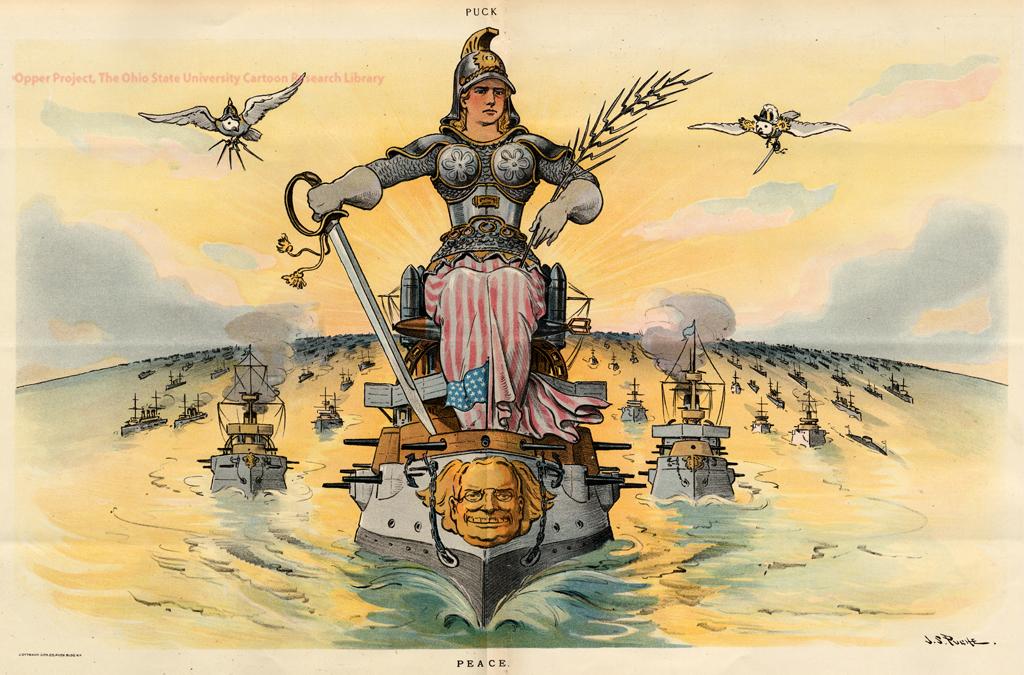
We live in an eerily similar historical moment. Britain, within 12 years of Kipling’s lament, was plunged into the collective suicide of World War I, a conflict that took the lives of over a million British and Commonwealth troops and doomed the British Empire.
Donald Trump boasts that he will be the “fertilization president.” American couples — meaning white couples — will be given incentives by his administration to have more children to counter declining birth rates.
December 29, 2025 , By Chris Hedges , ScheerPost, https://scheerpost.com/2025/12/29/chris-hedges-decline-and-fall/
At the start of the 20th century, the British Empire was, like our own, in terminal decline. Sixty percent of Englishmen were physically unfit for military service, as are 77 percent of American youth. The Liberal Party, like the Democratic Party, while it acknowledged the need for reform, did little to address the economic and social inequalities that saw the working class condemned to live in substandard housing, breathe polluted air, be denied basic sanitation and health care and forced to work in punishing and poorly paid jobs.
The Tory government, in response, formed an Inter-Departmental Committee on Physical Deterioration to examine the “deterioration of certain classes of the population,” meaning, of course, the urban poor. It became known as the report on “the degeneracy of our race.” Analogies were swiftly drawn, with much accuracy, with the decadence and degeneracy of the late Roman Empire.
Rudyard Kipling, who romanticized and mythologized the British Empire and its military, in his 1902 poem “The Islanders,” warned the British that they had grown complacent and flaccid from hubris, indolence and privilege. They were unprepared to sustain the Empire. He despaired of the loss of martial spirit by the “sons of the sheltered city — unmade, unhandled, unmeet,” and called for mandatory conscription. He excoriated the British military for its increasing reliance on mercenaries and colonial troops, “the men who could shoot and ride,” just as mercenaries and militias increasingly augment American forces overseas.
Kipling damned the British public for its preoccupation with “trinkets” and spectator sports, including “the flannel fools at the wicket or the muddied oafs at the goals,” athletes whom he believed should have been fighting in the war in South Africa. He foresaw in the succession of British military disasters during the South African Boer War, which had recently ended, the impending loss of British global dominance, much as the two decades of military fiascos in the Middle East have eroded U.S. hegemony.
The preoccupation with physical decline, also interpreted as moral decline, is what led Secretary of War Pete Hegseth to decry “fat generals,” and order women in the military to meet the “highest male standards” for physical fitness. It is what is behind his “Warrior Ethos Tasking,” plans to enhance physical fitness, grooming standards and military readiness.
We live in an eerily similar historical moment. Britain, within 12 years of Kipling’s lament, was plunged into the collective suicide of World War I, a conflict that took the lives of over a million British and Commonwealth troops and doomed the British Empire.
H.G. Wells, who anticipated trench warfare, tanks and machine guns, was one of the very few to see where Britain was headed. In 1908, he wrote “The War in the Air.” He warned that future wars would not be limited to antagonistic nation-states but would become global. These wars, as was true in the 1935 Italian invasion of Ethiopia, the Spanish Civil War and World War II, would carry out the indiscriminate aerial bombardment of civilians. He also foresaw in “The World Set Free,” the dropping of atomic bombs.
Nearly one third of the population in Edwardian England endured abject poverty. The cause, as Seebohm Rowntree noted in his study of the slums, was not, as conservatives claimed, alcoholism, laziness, a lack of initiative or responsibility by the poor, but because “the wages paid for unskilled labour in York are insufficient to provide food, shelter, and clothing adequate to maintain a family of moderate size in a state of bare physical efficiency.”
The U.S. has one of the highest rates of poverty among Western industrialized nations, estimated by many economists at far above the official figure of 10.6 percent. In real terms, some 41 percent of Americans are poor or low-income, with 67 percent living paycheck to paycheck.
British eugenicists from the Galton Laboratory for National Eugenics — which was funded by Sir Francis Galton, who coined the term “eugenics” — advocated “positive eugenics,” the “improvement” of the race by encouraging those deemed superior — always white members of the middle and upper classes — to have large families. “Negative eugenics” was advocated to limit the number of children born to those deemed “unfit.” This would be achieved through sterilization and the separation of genders.
Winston Churchill, who was home secretary in the liberal government of H.H. Asquith in 1910-11, backed the forced sterilization of the “feeble minded,” calling them a “national and race danger” and “the source from which the stream of madness is fed.”
The Trump White House, led by Stephen Miller, is intent on carrying out a similar culling of American society. Those endowed with “negative” hereditary traits — based usually on race — are condemned as human contaminants that an army of masked Immigration and Customs Enforcement agents are terrorizing, incarcerating and purging from society.
Miller, in emails leaked in 2019, lauds the 1973 novel “The Camp of the Saints,” written by Jean Raspail. It chronicles a flotilla of South Asian people who invade France and destroy Western civilization. The immigrants, who the Trump administration are now hunting down, are described as “kinky-haired, swarthy-skinned, long-despised phantoms” and “teeming ants toiling for the white man’s comfort.” The South Asian mobs are “grotesque little beggars from the streets of Calcutta,” led by a feces-eating “gigantic Hindu” known as “the turd eater.”
This, in its most scurrilous form, is the thesis of the “Great Replacement” theory, the belief that the white races in Europe and North America are being “replaced” by “lesser breeds of the earth.”
Donald Trump boasts that he will be the “fertilization president.” American couples — meaning white couples — will be given incentives by his administration to have more children to counter declining birth rates. In the vernacular of the right wing, those who promote this updated version of “positive eugenics” are known as “pronatalists.” The Trump administration will also reduce refugees admitted to the United States next year to the token level of 7,500, with most of these spots filled by white South Africans.
Trump’s allies in Big Tech are busy creating the fertility infrastructure to conceive children with “positive” hereditary traits. Sam Altman, who has been awarded a one-year military contract worth $200 million from the Trump administration, has invested in technology to allow parents to gene edit their children before conception to produce “designer babies.”
Peter Thiel, the co-founder of Palantir, which is facilitating the Trump administration’s mass deportation efforts, has backed an embryo screening company called Orchid Health. Orchid promises to help parents design “healthy” children through embryo testing and selection technology. Elon Musk, a fervent pronatalist and believer in the Great Replacement theory, is reportedly a client of the startup. The goal is to empower parents to screen embryos for IQ and select “their children’s intelligence before birth,” as the Wall Street Journal notes.
We are making the same self-defeating mistakes made by the British political class that oversaw the decline of the British Empire and orchestrated the suicidal folly of World War I. We blame the poor for their own impoverishment. We believe in the superiority of the white race over other races, crushing the plethora of voices, cultures and experiences that create a dynamic society. We seek to counter injustices, along with economic and social inequality, with hypermasculinity, militarism and force, which accelerates the internal decay and propels us toward a disastrous global war, perhaps, in our case, with China.
Wells scoffed at the idiocy of an entitled ruling class that was unable to analyze or address the social problems it had created. He excoriated the British political elite for its ignorance and ineptitude. They had vulgarized democracy, he wrote, with their racism, hypernationalism and simplistic cliché-ridden public discourse, stoked by a sensationalist tabloid press.
When a crisis came, Wells warned, these mandarins, like our own, would set the funeral pyre of empire alight.
Trump Praises Putin, Promises Peace—Kyiv Still Under Fire
As Russian missiles continued to strike Ukrainian cities, the contrast between diplomatic rhetoric and battlefield reality remained stark. While Trump projected confidence that peace may be within reach, Kyiv once again faced burning apartments, shattered infrastructure, and a winter night without heat—underscoring how far any deal may still be from the ground truth of the war.
December 29, 2025, By Joshua Scheer, https://scheerpost.com/2025/12/29/trump-praises-putin-promises-peace-kyiv-still-under-fire/
Trump’s Peace Optimism Collides With Russia’s Intensifying Assault on Kyiv
Another morning has arrived with no peace between Ukraine and Russia, despite President Trump repeatedly suggesting that an agreement is either incredibly close—or may never happen at all.
It is a familiar refrain, delivered as Russian forces continue to bombard Kyiv and while President Vladimir Putin remains absent from the negotiations. Yet Trump has positioned himself as vouching for Putin, a stance that produced an awkward moment during his meeting with Ukrainian President Volodymyr Zelenskyy.
According to The Daily Beast, Trump told reporters, “Russia wants to see Ukraine succeed,” prompting Zelenskyy to visibly raise an eyebrow. Trump then added, “It sounds a little strange,” as Zelenskyy grinned, nodded, and replied dryly, “Yeah.”
The exchange followed comments Trump made Sunday, when he said he had told Zelenskyy that “President Putin was very generous in his feeling toward Ukraine succeeding.”
Yet as of yesterday at least two people were killed in Kyiv during a 10-hour Russian aerial assault that unfolded as diplomatic optimism surrounding a potential U.S.-brokered peace deal briefly surged. Forty-four others—including two children—were injured, according to Ukrainian officials, while hundreds of thousands of residents were left without heat or electricity amid near-freezing temperatures.
With Ukrainian President Volodymyr Zelenskyy saying Russia launched nearly 500 drones overnight—many of them Iranian-designed Shahed drones—along with around 40 missiles, including hypersonic Kinzhals. The primary targets were Kyiv’s energy facilities and civilian infrastructure.
“Regrettably, there have been hits, and ordinary residential buildings have been damaged,” Zelenskyy said in a statement posted on X. Rescuers were still searching for at least one person believed to be trapped under rubble. In several districts of the capital and surrounding region, electricity and heating remained unavailable as emergency crews worked under ongoing air-raid alerts.
Zelenskyy framed the assault as Russia’s answer to recent international peace overtures.
“There have been many questions over the past few days—so where is Russia’s response to the proposals to end the war offered by the United States and the world?” he said. “Russian representatives engage in lengthy talks, but in reality, Kinzhals and ‘Shaheds’ speak for them.”
The Ukrainian president accused Russian President Vladimir Putin and his inner circle of having no genuine interest in ending the war, arguing that Moscow is instead using diplomacy as cover while escalating attacks designed to inflict maximum suffering.
“If Russia turns even the Christmas and New Year period into a time of destroyed homes and ruined power plants, then this sick activity can only be responded to with truly strong steps,” Zelenskyy said, calling on the United States, Europe, and allies to intensify pressure and accelerate air-defense support.
Yet just hours later, Zelenskyy struck a noticeably different tone following meetings with U.S. President Donald Trump, thanking him and his team for what he described as constructive negotiations.
“I thank President Trump and his team for the negotiations,” Zelenskyy wrote. “Together, we must—and can—implement our vision for the sequencing of steps toward peace.”
Also saying “Thank you to President Trump for the wonderful meeting. We had a meaningful discussion on all issues and highly appreciate the progress achieved by the Ukrainian and American teams over the past weeks. Special thanks to Steve Witkoff and Jared Kushner for their engagement and full commitment to the cause, as well as to our team, primarily Rustem Umerov and Andriy Hnatov.”
Trump, speaking after meetings at Mar-a-Lago, offered an upbeat assessment of the talks, saying a deal was “maybe very close.” He said he had spoken with Putin for more than two hours prior to meeting Zelenskyy and claimed the Russian leader expressed a strong desire to reach an agreement.
“He told me very strongly,” Trump said of Putin. “I believe him.”
However, the optimism appeared premature. Reports indicated that a joint U.S.-Ukraine framework remained incomplete, with Russia rejecting several core proposals. Trump himself acknowledged lingering obstacles, echoing familiar language he has used throughout the conflict.
“There are one or two very thorny issues,” Trump said. “Very tough issues. But I think we’re doing very well.”
He added that clarity would emerge soon—another timeline critics say has repeatedly failed to materialize.
“In a few weeks, we’ll know one way or another,” Trump said. “It’s possible it doesn’t happen.”
One of the most contentious unresolved issues remains the territory. Asked directly what stood in the way of an agreement, Trump pointed to land occupied by Russian forces. With CNBC reporting,
“Some of that land has been taken,” he said. “Some of that land is maybe up for grabs, but it may be taken over the next period of a number of months, and you are better off making a deal now.”
That issue is one Zelenskyy has consistently refused to bend on, often stating that he has no authority to do so under Ukraine’s constitution. The Ukrainian president has repeatedly ruled out surrendering territory, saying he has “no right” to give up land under either Ukrainian or international law. Kyiv has instead said it is prepared to propose alternative arrangements.
Zelenskyy’s stance comes as Ukraine continues to grapple with internal challenges, including ongoing corruption concerns, even as the war drags on with no clear end in sight. While territorial concessions remain a red line, Zelenskyy has previously floated ideas aimed at reducing hostilities without formally ceding land.
As part of his current peace plan,Zelenskyy has suggested the creation of a demilitarized free economic zone in contested areas. Speaking to reporters earlier this week, he said such a zone could require the withdrawal of heavy forces by an agreed distance.
“If we establish a free economic zone here, and it envisages a virtually demilitarized zone—meaning heavy forces are removed from this area—and the distance, for example, is 40 kilometers, it could be five, 10, or 40 kilometers,” Zelenskyy said. “Then if these two cities, Kramatorsk and Sloviansk, are our free economic zone, the Russians would have to pull back their troops accordingly.”
Zelenskyy, meanwhile, said he requested security guarantees lasting up to 50 years, describing discussions on that front as “100% agreed.” Trump offered a more cautious assessment, suggesting the guarantees were still under negotiation.
As Russian missiles continued to strike Ukrainian cities, the contrast between diplomatic rhetoric and battlefield reality remained stark. While Trump projected confidence that peace may be within reach, Kyiv once again faced burning apartments, shattered infrastructure, and a winter night without heat—underscoring how far any deal may still be from the ground truth of the war.
So much for a president who boasted about ending wars—specifically claiming he would end the Ukraine conflict within 24 hours, before taking office, or on “day one.” When President Donald Trump was reminded of those promises in an April interview with Time magazine, he said the remark was never meant to be taken literally. And CNN found 53 other times that president stated this as a fact.
“Well, I said that figuratively, and I said that as an exaggeration, because to make a point,” Trump said, according to Time’s transcript. He added that the comment was “said in jest,” while maintaining that the war would still ultimately be ended. Heres hoping that the war will end soon, but with the three leaders seemingly entrenched in their positions, that hope may prove fleeting.
Here is the wrap-up from the two leaders, with Donald Trump praising those in the audience possible war criminal Pete Hegseth and Marco Rubio, who is leading the neocon push back into “forever wars” and supporting Trump’s aggressive foreign policy. The same man Rubio once called a “peacemaker” is now actively bombing nine countries. I wrote about this the other day. Here is their press conference—believe what you want—but with this president, the approach can change day to day. At least, for now, the war has not gone nuclear.
Why talk of a Japanese nuclear option is resurfacing – and why it alarms critics
Conservatives are calling for a rethink of nuclear taboos, while critics warn of risks to the global non-proliferation regime
Julian Ryall, SCMP,3 Jan 2026
An editorial in the Sankei Shimbun has reopened a long-taboo debate in Japan over whether the country should even discuss acquiring nuclear weapons, after off-the-record remarks by a senior security official arguing the country should have them sparked domestic and regional backlash.
The conservative daily argued that growing threats from Japan’s neighbours mean no option for protecting the public should be beyond discussion, a stance that has drawn praise from some on the right and alarm from critics who warn that even signalling such intent could destabilise the global non-proliferation system.
The editorial, published on Monday, was accompanied by a graphic comparing regional nuclear forces, stating that Russia has an estimated 5,580 nuclear warheads, North Korea around 50 and China about 500, with the latter figure projected to rise to more than 1,000 by 2030.
It appeared 10 days after the senior national security official in the Prime Minister’s Office said – in an off-the-record remark reported by Japanese media during a background briefing – that he personally believed Japan should possess nuclear weapons.
The remarks prompted a fierce reaction at home and abroad, including from Beijing, where Guo Jiakun, a spokesperson for China’s foreign ministry, told reporters the situation was a “serious issue that exposes the dangerous attempts by some in Japan to breach international law and possess nuclear weapons”.
“China and the rest of the international community must stay on high alert and express grave concern,” he added.
Japan has for decades adhered to its three non-nuclear principles – not possessing, producing or permitting the introduction of nuclear weapons – while relying on the United States for extended deterrence and is a signatory to the Nuclear Non-Proliferation Treaty (NPT), which commits non-nuclear states to forgo developing or acquiring nuclear arms.
The Sankei editorial urged Prime Minister Sanae Takaichi not to “give in” to calls for the aide to be dismissed, arguing that doing so would “stifle free debate on how best to protect the Japanese people”.
It dismissed objections from China and North Korea as “ludicrous” and “hypocritical”, noting that both possessed nuclear weapons and were strengthening their arsenals.
“For Japan, the point of the debate is how to safeguard the public, not merely whether or not to actually possess nuclear weapons,” it added. “From that standpoint, making it taboo to merely mention the nuclear weapons option is the worst possible stance to adopt.”………………………………………………………………………………………………………………………. https://www.scmp.com/week-asia/politics/article/3338570/why-talk-japanese-nuclear-option-resurfacing-and-why-it-alarms-critics
The Pro-Israel Propaganda Complex

The Zionist PR machine is an enterprise to behold. It is probably historically unprecedented in the breadth and density of its lobbying and propaganda entities.
If Israel is so innately good, why does it need so many resources to proselytise it, to defend it and to dissimulate about its character?
3 January 2026 AIMN Editorial, By Dr Evan Jones. https://theaimn.net/the-pro-israel-propaganda-complex/
Caitlin Johnstone’s customary finger on the Zionist pulse is how I was first exposed to the telling presentation by Sarah Hurwitz to the Jewish Federations of North America General Assembly on 16 November 2025. Hurwitz was a senior adviser in the Obama administration (from which she was appointed as a member of the United States Holocaust Memorial Council).
Says Hurwitz, young people no longer read but are hooked on social media. There, with respect to Gaza, they confront a ‘wall of carnage’. Hurwitz laments that: “So I want to give data and information and facts and arguments, and they are just seeing in their minds: carnage. And I sound obscene.” (Grown up) rationality has seemingly succumbed to (teenage) unprocessed sense impressions.
More, Holocaust education has been turned against us because our own young kin are applying the role of the evil oppressor, (Jewish) god forbid, to Israel itself.
British philosophy academic Lorna Finlayson (New Left Review’s Side Car) chimes in with respect to the Hurwitz performance:
“The true meaning of the Holocaust, we might infer, is not that it was bad because the strong were hurting the weak, but because Jews were the victims. When the victims are Black or Palestinian, it’s different.”
Peculiar that Hurwitz imagines that ‘the data and information and facts and arguments’ at her command contradict the youngster’s visualising the ‘wall of carnage’. The ‘data and information and facts and arguments’ that I am familiar with are consistent with the visuals.Finlayson concurs:
“The trouble for Hurwitz, however, is that if the pictures aren’t on her side, the ‘facts’ and ‘data’ are even less so. The more we see of them, the worse Israel looks.”
Dead children, medicos, journalists, aid workers – an impressive and mounting tally. Ah, and the infrastructure! The landscape obliterated. Bradford University’s Paul Rogers, interviewed in April 2025, estimated that 70,000 tonnes of explosives had been dropped on Gaza to that date.
Hurwitz waxes mystical:
“The problem is, we’re not just a religion … We’re a nation. Civilization. Tribe. Peoplehood. But most of all we’re a family. … The seven million people in Israel, they are not my co-religionists, they are my siblings.”
‘The seven million people in Israel’ – what? Hurwitz is referring to Jewish people in Israeland, presumably, Jewish settlers who don’t live in Israel (add Russian ersatz Jews assimilated to up the numbers). Hurwitz conflates the local Jewish population and the state of Israel. The others don’t exist.
Civilisation I don’t think so. ‘Tribe’ is correct – this is tribalism writ large. Yet the bad eggs, the founders and successive leaders of apartheid Israel, are dictating to the tribe the terms in their entirety on which tribalism will prevail. For Hurwitz – Israel is us, period. Being Jewish, you’re in the tribe on Israel’s terms – period. What do you think, at some expense, we send you to Jewish day school and Hebrew school for?
Finlayson again:
“The problem [for Hurwitz] with Palestinian children is not that they are evil [as perthe claims of Benjamin Netanyahu and Yoav Gallant] but that they are a PR challenge.”
How in the world could the bloodthirsty Zionist enterprise, acting with impunity, face a PR challenge?
The Zionist PR machine is an enterprise to behold. It is probably historically unprecedented in the breadth and density of its lobbying and propaganda entities. The character of the matrix is well captured in a review of American academic Harriet Malinowitz’s recent book Selling Israel: Zionism, Propaganda, and the Uses of Hasbara, from whence this Malinowitz summary is extracted:
“[The hasbara, which can be] bluntly described as propaganda, but in fact comprises a huge network of government ministries, nongovernmental organizations, nonprofit agencies and charities, campus organizations, volunteer groups, watchdog bodies, professional associations, media networks, fundraising operations, and educational programs that aim to fortify a Zionist-defined notion of Jewishness in persons within Israel, the United States, and other countries.”
Quite. And that’s just for Jewry itself, to keep it on the straight and narrow. The network addressed to the non-compliance and ignorance of non-Jews is something else.
Attached below is a list, inevitably incomplete, of organisations that one has been able to compile from public sources. It is a scrappy matrix, even anarchic but layered, influenced by national Jewish communities’ size and history, and by individual initiatives. It is complemented by Israeli state authority initiatives.
In total, the resources devoted to selling Israel and warding off and attacking its detractors have been and are formidable. Do Zionists have time in their life for anything else?
There’s an anomaly here. If Israel is so innately good, why does it need so many resources to proselytise it, to defend it and to dissimulate about its character?
The juggernaut has evidently had impressive results, of which the following samples.
The US Congress is a Zionist-occupied entity. The mass murderer Benjamin Netanyahu is invited into the hallowed premises (Joint: 10 July 1996, 24 May 2011, 3 March 2015, 25 July 2024; House: 12 September 2002), debauches it with his mendacity and is met with standing ovations.
The EU-Israel Association Agreement ‘entered into force’ in June 2000. The Agreement accords Israel considerable privileges. The background is here. The 154 page document is here. Of integral relevance is Article 2:
“Relations between the Parties, as well as all the provisions of the Agreement itself, shall be based on respect for human rights and democratic principles, which guides their internal and international policy and constitutes an essential element of this Agreement.”
Israel is an apartheid state by construction, so how could this trade Agreement ever get on the drawing board, leave alone come to fruition?
Israel remains ensconced in global sporting entities, as exemplified with soccer. There is currently pressure on UEFA and FIFA to exclude Israel but the governing bodies have resisted to date. Russia has been sanctioned. Israel remains in the bosom of global sport.
Ditto culture. Eurovision’s sponsor, the European Broadcasting Union, is also under pressure to exclude Israel but has ignored it (this is ‘a non-political event’). Russia is immediately expelled in 2022. Israel remains in Eurovision. Israel has won Eurovision four times, with more recent questions arising of dubious voting integrity and the transparent ‘soft power’ leverage by Israel of the platform to detract from the ongoing genocide.
Perusing the list, one can observe select categories.
1. Some early organisations began as charities to support Jewish communities in need. Amongst these, there has been a general trend to turn towards support for the state of Israel – sometimes auxiliary, sometimes central. Some latter–day organisations are formally Jewish community support-oriented but add Israel to their charter.
2. Some organisations stand out with respect to the influence of their operations. Uniquely there is the Jewish Agency for Israel, in Mandatory Palestine, which, with the Jewish National Council, were the nuclei for the state of Israel after 1948.
Singularly important are the dominant organisations in particular countries, not least AIPAC in the US, the Board of Deputies of British Jews, and CRIF in France.
The power of AIPAC puts it in a league of its own. AIPAC exerts an enormous influence on the US Congress, not least through funding for and against sitting members and candidates, and fostering Israel junkets. AIPAC funding contributed to the defeat of long-serving Illinois Representative Paul Findley in 1982. Findley’s contemporary and fellow activist Pete McCloskey, California Representative (1967-83) was perennially under attack from the Zionist lobby. AIPAC and other Jewish organisations’ funding facilitated the defeat of long-time Georgia Representative Cynthia McKinney and Alabama Representative Earl Hilliard, both in 2002 primaries. AIPAC funding defeated Maryland Congresswoman Donna Edwards, seeking re-election to a seat she previously held, in 2022. AIPAC funding defeated Missouri Representative Cori Bush and New York Representative Jaamal Bowman, both in primaries in 2024. Apparently AIPAC ‘invested’ $45 million in the November 2024 elections, half of which went to defeating Bush and Bowman. AIPAC conferences present a ghoulish spectacle in which Congress and government members bow down before AIPAC’s commitment to the imperatives of a foreign rogue state. (More details regarding the US Israel lobby are outlinedin Serge Halimi’s ‘Is the United States’ patience with Israel running out?’, Le Monde Diplomatique, December 2025.)
3. A discernible category covers Christian Zionist organisations and Jewish organisations seeking amity with and support from Christian groups, not least Evangelicals. Christians United for Israel (US) is clearly the most significant of this grouping, with CUFI claiming over 10 million members. Israel and Zionism evidently value this alliance in terms of the numerical ‘heft’ that it brings.
Israeli academic Tom Ziv performed a quantitative analysis of the size of evangelical Christian Zionist populations in 18 Latin American countries (‘Evangelicalism and Support for Israel in Latin America’, Politics & Religion, 2022). He found a link between the size of such groups and the country’s support for Israel as reflected in UN votes, with such groups evidently having a direct impact on their country’s foreign policy. Being a ‘true’ value-free academic, he declines to articulate the ‘policy implications’, although the Israeli authorities would be thoroughly aware of the implications for hasbara PR funding.
As mainstream protestant churches were reducing their support for Israel (tangibly in divesting denomination-related investments from Israel-related corporations and activities), so also there had been some small shift against whole-hearted support for Israel amongst young evangelicals. …………………………………………………………………………………………………………………………………………………………………………………………https://theaimn.net/the-pro-israel-propaganda-complex/
Patrick Lawrence: New Year’s Notes on Purported Leaders.
The power Bibi exerts in Washington and most of the European capitals transcends geography by a long way.
Caitlin Johnstone put it best in her Dec. 28 newsletter. “They’ve stopped making up pretend nonsense about nuclear weapons,” she wrote, “and now they’re just going, ‘We need to attack Iran because Iran is rebuilding its ability to stop us from attacking it.’”
December 31, 2025, Patrick Lawrence, Consortium News, https://consortiumnews.com/2025/12/31/patrick-lawrence-new-years-notes-on-purported-leaders/
It is no use hoping for any alteration in the collective West’s course so long as today’s “purported leaders” remain in office.
“Heaven is high and the emperor is far away.” So did Chinese peasants celebrate their distance from the Forbidden City over many centuries now past. I imagine a similar sentiment may prevail in the hyper-centralized People’s Republic.
When power is to one or another degree autocratic, power is best when power is distant. So it was for me, if briefly, as 2025 drew to a close.
I spent the Christmas holidays, courtesy of my kindly mother-in-law, in the Pacific Northwest and was blessedly far from post-democratic power in any of its manifestations.
The nearest elected official purporting to competence was Kim Lund, the mayor of Bellingham, Washington, whose purview extends to one of those downtown revitalization plans you often come across in our deindustrialized republic.
It seemed an occasion to view from afar those major figures who, for better or worse but decidedly the latter in almost all cases, now determine the destiny of what we call, a little quaintly at this point, the Western world.
I had never previously considered these people as if they make a single group, a motley (very) crew. And it has been an interesting exercise by way of some year-end conclusions.
Here in no particular order are a few of my “takeaways,” as headline writers at the mainstream dailies so tiresomely put it.
One, the distance between the Western powers’ purported leaders and their citizens is more or less complete. Power now operates in supreme sequestration.
Two, wars, a genocide, drone invasions, assassinations, deportation gangs, censorship, sanctions, eroded civil liberties, lawlessness: There is no assuming post-democratic electorates favor any of this over peace and a moral order.
No, people are better understood as resigned to impotence—stunned into silence as power is no longer answerable and they, those now ruled rather than governed, have no connection to their rulers.
We are all Ming Dynasty peasants now, to put his point another way.
“Two, wars, a genocide, drone invasions, assassinations, deportation gangs, censorship, sanctions, eroded civil liberties, lawlessness: There is no assuming post-democratic electorates favor any of this over peace and a moral order.”
Two, it is no use hoping for any alteration in the collective West’s course so long as this crowd of self-interested second-raters remains in office. These people have condemned us, while acting in our names, to regimes of wanton brutality.
Three and more significantly and imposingly, it follows that the systems and political processes that thrust them into positions far beyond their capacities have to be dismantled or otherwise radically reformed before there is a chance of restoring ourselves to any kind of just, humane order.
Four and reading out of Nos. 1, 2, and 3, post-democratic disempowerment and the West’s sponsorship of rampant disorder burdens citizens with great responsibilities.
Chas Freeman, the emeritus ambassador and energetic commentator, surprised me this past autumn by stating during a podcast that we—we Americans—have entered a pre-revolutionary period in American history. I will let Chas’s remark stand as an explanation of what I mean by responsibilities. The future is up to us, to put this point another way.
Finally, there are a few exceptions to this assessment of the West’s purported leaders, and we must look to them for slim rays of light—suggestions of what is still possible when people of integrity serve in high office genuinely in the names of those who put them there.
It is time to face these truths—long past time, indeed. The year to come will bear this out. The collapse of democratic processes and the prevalence of what looks like indifference but is better understood as resignation—these have landed the Western world with a mob of “leaders” who are clinically neurotic, narcissistic, sociopathic, megalomaniacal, operating well beyond their competence—or some or all of these in combination.
Only 20 years ago it was a not-done to speak or write of the West’s decline. One was a “declinist”—remember that word?—and this left one somewhat in the desert. Now that our late-imperial decline is beyond denying, who would have guessed that it would prove so shabby, so undignified, so embarrassing in its way—and, of course, so careless of human life and law.
Have you ever studied a photograph of Bibi Netanyahu—the features, I mean? I never miss a chance, so fascinating do I find his visage, and I urge this if you have not taken a close look. As any good psychiatrist or clinical psychologist will tell you, this is the face of a psychotic as defined in the good old DSM, the Diagnostic and Statistical Manual of Mental Disorders.
The Israeli prime minister’s record is well-enough known. A 76–year-old with a tenuous relationship with reality, I mean to say, is now the most powerful person in West Asia—and at this point well beyond.
But Netanyahu is not a Western leader, you say. Oh, no you don’t: The power Bibi exerts in Washington and most of the European capitals transcends geography by a long way. He takes a prominent place in this pencil-sketched group portrait. At writing, Netanyahu has just finished his fifth visit to President Trump during this, the Trumpster’s first year back in office. Think of it: A psychotic and an emotionally-arrested narcissist who seems to have something to prove to somebody, probably his father, spent the Monday of Christmas Week planning another military operation against the Islamic Republic — this one to destroy its missile program and air defenses.
Caitlin Johnstone put it best in her Dec. 28 newsletter. “They’ve stopped making up pretend nonsense about nuclear weapons,” she wrote, “and now they’re just going, ‘We need to attack Iran because Iran is rebuilding its ability to stop us from attacking it.’”
There are also Netanyahu’s various predicaments at home to consider. He is on trial on multiple corruption charges, he faces elections in 2026 he is likely to lose, and he is cravenly beholden to the Zionist fanatics with whom he has stocked his cabinet. Does this mean Itamar Ben–Givr, Bezalel Smotrich, et al. have an indirect but powerful influence in global politics? I propose we skip the question, as I cannot bear to risk the answer.
During my Christmas idyll among the firs and soaring cedars of the Pacific Northwest, the others who came to mind were those across the Atlantic who account for what we call Core Europe. Kier Starmer, Emmanuel Macron, Friedrich Merz — the British prime minister, the French president, the German chancellor: I would write these guys off as palookas except that palookas are oafish louts who never get anywhere in life.
These three are oafish and loutish in their way but have got way too far. Since Merz’s election last spring they have formed a sort of triumvirate that more or less dictates Europe’s collective direction. Russophobes all — Merz the worst of them — they’ve got Britain and the Continent all stirred up about a purely imaginary Russian invasion while burdening their populations with generations’ worth of debt to keep the criminal regime in Kiev going in a war Ukraine lost (by my reckoning) more than a year ago.
Yet worse, across much of Europe, and certainly in the U.K., any expression of support for the Palestinian people is now effectively criminalized. As someone remarked on “X” the other day, you get arrested and jailed in Britain for denouncing Israel’s genocide in Gaza while the Starmer regime gives red-carpet welcomes to Israeli officials directly responsible for it.
What is our word for these people? To study them together, it seems to me it must be feckless or immature — juvenile, maybe, or underdeveloped. Accustomed to sheltering under the umbrella of American hegemony, they prove incapable of thinking or acting responsibly and so seek a new refuge in the citadel of “centrist” ideology, which is not the center of anything unless it is liberal authoritarianism.
A clinically disturbed prime minister, a solipsistic president bought by the Zionist lobbies, three Europeans without a leadership bone in their bodies: I refer repeatedly to these as the West’s “purported leaders” because they do not lead anything. Let me call them “PLs” for the rest of this commentary.
The PLs of our time are entirely comfortable in their sequestration from their citizens, as this leaves them free to act entirely in their own interests. And self-interest is fine if that is the god one wants to serve, but not when a grotesquely violent world order is the price of it. I celebrated last October, when the Irish elected Catherine Connolly their president by a very wide margin. It is a ceremonial post, O.K., but Connolly’s principled politics, notably but not only on Israeli terror and the Palestine question, stand for Ireland’s.
To bring this point home but briefly, the Irish now plan to turn the former Israeli Embassy, empty since its Zionist ambassador was hounded out of Dublin this past year, into a museum dedicated to Palestinian art and artifacts. Is this splendid or what? There is no beating the Irish gift for mixing irony, humor and politics. They have been at it for some centuries, after all.
I saw a map of Netanyahu’s flight path on “X” just before he departed for Mar-a–Lago over the weekend. His plane flew over Greece and Italy before turning sharply northward toward France so as to avoid Spanish airspace. This reminded me, although one needs no reminding, of the principled position the government of Pedro Sánchez has taken on Israel and its crimes.
Spain’s Socialist premier seems to miss no chance to denounce the Zionist regime. “Those responsible for this genocide will be held accountable,” Sánchez said in a speech this past year. And: “We do not do business with a genocidal state, we do not.”
To wit, the Spanish parliament imposed a comprehensive arms embargo on Israel last summer and immediately began to enforce it. In the autumn Banco Sabadell, an old-line Barcelona institution, began freezing the accounts of Israelis.
There are other such honorable cases, although they may not be so forthright as the Irish and Spanish. Their righteousness is important in itself, of course, but also for what it shows the rest of us.
The PLs will be the end of the West’s story only if Westerners acquiesce to them. Resignation is not native to the late-imperial Western consciousness: It is conditioned. And there is a point to overcoming it.
Palestine Before Nationalism: What Was Lost – and Why It Matters Now
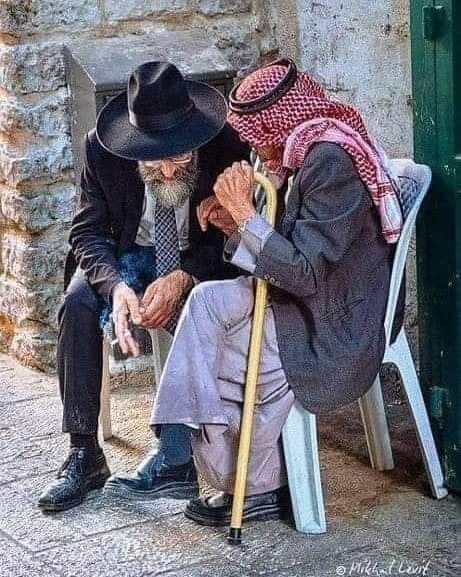
Zionism transformed Jewish identity from a plural, diasporic, and ethical tradition into a political nationality defined by territory, demography, and security doctrine. Dissent increasingly became framed as disloyalty. Equality became a threat.
2 January 2026 Lachlan McKenzie , https://theaimn.net/pa
Before Palestine became a battlefield of competing nationalisms, it was something far less dramatic and far more instructive: a plural society. Muslims, Christians, and Jews lived across the country under the governance of the Ottoman Empire – not as equals in the modern democratic sense, but as communities governed by a legal order that prioritised coexistence over domination.
That historical reality matters today, because it challenges a central myth: that Zionism arrived to redeem a land defined by religious hostility or demographic absence. Neither was true.
A plural society, not a vacuum
In the late nineteenth century, Palestine was overwhelmingly Arab in language and culture, religiously mixed, and socially interconnected. Jewish communities – often called the Old Yishuv – were long-established, Arabic-speaking, and locally embedded. Christian Palestinians maintained churches, schools, and civic institutions dating back centuries. Identity was local and communal, not nationalist.
This was not an idyllic society. Ottoman Palestine was hierarchical and imperfect. But it was not organised around ethnic replacement, nor did it pursue a political project of removing one people to secure the sovereignty of another.
Were Ottoman laws fair?
By contemporary standards, Ottoman governance was not democratic or fully equal. Yet by the standards of its time, it was comparatively tolerant and functional.
Under the Ottoman millet system, non-Muslims were recognised as protected communities (dhimmi), permitted to practise their religion, manage communal affairs, and hold property. Jews expelled from Christian Europe repeatedly sought refuge in Ottoman lands, including Palestine.¹
In the nineteenth century, the empire initiated the Tanzimat Reforms, which aimed – however unevenly – to equalise subjects before the law regardless of religion.² These reforms reduced religious hierarchy rather than intensifying it.
Crucially, Ottoman law did not pursue demographic engineering. It governed diversity; it did not attempt to erase it.
Zionism as rupture, not return
Political Zionism emerged not from Palestinian Jewish life but from nineteenth-century Europe, shaped by ethnic nationalism and colonial settlement logic. Its leaders were explicit about the central obstacle they faced: Palestine was already inhabited.
Rather than abandoning the project, early Zionists debated how to overcome that reality. Theodor Herzl wrote privately of removing the indigenous population through economic exclusion.³ Zionist institutions adopted policies of land acquisition coupled with tenant removal, “Hebrew labour only”, and the construction of a separate economy.⁴
Demographic dominance was understood as a prerequisite for sovereignty. Mass immigration would create irreversible “facts on the ground,” after which political recognition could follow.
“Transfer” and force
By the 1930s, leading Zionists discussed population removal – often termed “transfer” – as necessary. David Ben-Gurion acknowledged that a Jewish state could not be realised without displacement, writing that compulsory transfer could provide “something which we never had.”⁵
Ze’ev Jabotinsky was even more candid. In his 1923 essay The Iron Wall, he argued that indigenous peoples never consent to colonisation, and that Jewish sovereignty would require overwhelming force until resistance was broken.⁶ This was not a religious argument; it was a settler-colonial one.
Palestinian Jewish opposition – erased from memory
These developments were not universally welcomed by Jews in Palestine. Many Palestinian Jews opposed Zionism, fearing it would shatter coexistence, recast Jews as settlers, and provoke conflict with Muslim and Christian neighbours. Their objections were pragmatic and prescient. They understood that they – not European ideologues – would live with the consequences.
Zionism’s eventual dominance owed less to universal Jewish consent than to imperial sponsorship, particularly British support following the 1917 Balfour Declaration, and to the catastrophic narrowing of perceived alternatives after the Holocaust.
What was lost
Zionism transformed Jewish identity from a plural, diasporic, and ethical tradition into a political nationality defined by territory, demography, and security doctrine. Dissent increasingly became framed as disloyalty. Equality became a threat.
The tragedy is not that Ottoman Palestine was perfect. It is that a plural society governed by law – however flawed – was dismantled and replaced by a project that required dominance to succeed.
That is the historical rupture. And it is why the conflict is modern, political, and structural – not ancient or inevitable.
A society that already contained Jews, Christians, and Muslims was remade into a battlefield by a European nationalist project that could not tolerate equality.
Understanding that history does not deny Jewish suffering. It honours it – by insisting that persecution should never be answered with its reproduction.
Footnotes and Primary Sources……………..
Trump says he believes Iran wants to make deal as he extols size of US ‘armada’
US president declines to say whether he plans Venezuela-like operation, after Tehran signalled it was ready for talks
Killing Khamenei? Hitting military sites? It is unclear what a US attack on Iran would achieve
Patrick Wintour, Guardian, 31 Jan 26
Donald Trump has said he believes Tehran wants to make a deal to head off a regional conflict, as he claimed the US “armada” near Iran was bigger than the taskforce deployed to topple Venezuela’s leader.
“We have a large armada, flotilla, call it whatever you want, heading toward Iran right now, even larger than what we had in Venezuela,” the US president told reporters on Friday.
“Hopefully we’ll make a deal. If we do make a deal, that’s good. If we don’t make a deal, we’ll see what happens.”
He declined to say whether he planned a repeat of the military operation in Venezuela in which US forces captured and renditioned the president, Nicolás Maduro.
“I don’t want to talk about anything having to do with what I’m doing militarily,” he said.
His comments came after Iran’s foreign minister, Abbas Araghchi said Tehran was ready to negotiate with the US, but only if talks were not under duress and did not extend to Iran’s missile programme.
After meetings with Turkish diplomats, Araghchi said Iran was “ready to begin negotiations if they take place on an equal footing, based on mutual interests and mutual respect”. He said there were no immediate plans to meet US officials, adding: “I want to state firmly that Iran’s defensive and missile capabilities will never be subject to negotiation.”
Araghchi said: “The Islamic Republic of Iran, just as it is ready for negotiations, is also ready for war.”
Trump said on Thursday he hoped to avoid military action, even as the US deployed another warship to the Middle East, joining the USS Abraham Lincoln and several guided-missile destroyers.
But his precise objectives remain unclear. Speaking at the premiere of the documentary Melania, the US president told reporters Iran had to do “two things” to avoid military action. “Number one, no nuclear. And number two, stop killing protesters,” saying that “they are killing them by the thousands”.
He added: “We have a lot of very big, very powerful ships sailing to Iran right now, and it would be great if we didn’t have to use them.”
Iran has blamed the US and Israel for the protests that erupted in late December over economic grievances, and were brutally suppressed. Activist groups estimate as many as 30,000 people were killed in the ensuing crackdown.
On Saturday, the Iranian president, Masoud Pezeshkian, said Trump, Benjamin Netanyahu and Europe had stirred tensions in the protests and “provoked” people.
The Turkish foreign minister, Hakan Fidan, said the resumption of talks between Tehran and Washington over Iran’s nuclear programme was “vital for reducing regional tensions”. Speaking alongside Araghchi, he claimed Israel was pushing for the US to attack Iran, and urged Washington to “act with common sense and not allow this to happen”.
In a call with Iran’s president, Masoud Pezeshkian, Turkey’s president, Recep Tayyip Erdoğan, said he was willing to act as a mediator between Iran and the US.
From Iran’s perspective, the US is piling ever more demands on Tehran that if all were implemented would spell the end of its sovereignty.
Trump’s special envoy Steve Witkoff has called for an end to Iran’s nuclear enrichment programme, the transfer of its existing stock of highly enriched uranium out of the country, limits on Iran’s missile programme and an end to support for proxy groups in countries such as Lebanon, Iraq and Yemen…………………………………………………………………………. https://www.theguardian.com/us-news/2026/jan/30/donald-trump-iran-end-nuclear-programme-killing-protesters-face-us-military
UN Security Council Abandoned Palestinians. Humanity Must Refuse to Follow Suit.
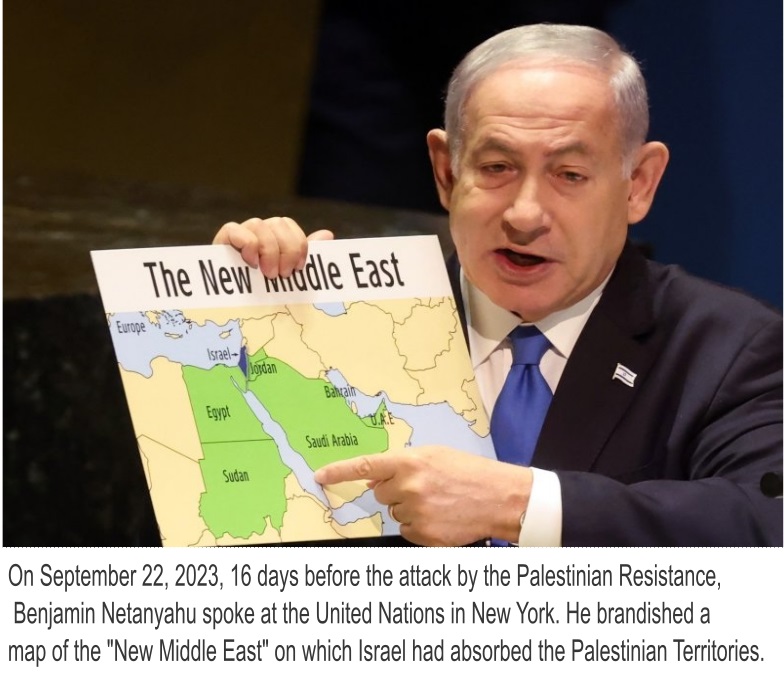
As the new year approaches, Palestinians face new forms of colonization and new challenges to our rights and survival.
By Michel Moushabeck , Truthout January 1, 2026
Today we have a so-called ceasefire that is killing Palestinians on a daily basis. When it comes to Israel, the word “ceasefire” simply means that Palestinians are not allowed to retaliate against Israeli airstrikes, shelling, artillery, bombs, house demolitions, or suicide drones. In reality, Israel can fire all it wants and has been doing so since the minute the agreement took effect. According to President Donald Trump, “nothing is going to jeopardize” the ceasefire in Gaza.
The ceasefire, hailed as a success by the U.S. and the Western world, has done little to end the siege of Gaza and the deepening starvation and malnutrition of Palestinians, especially the children. And it is unlikely to usher in a pathway to freedom, equality, or self-determination for the Palestinian people in the foreseeable future.
The “ceasefire” is nothing but a cover for Israel’s genocidal practices, supported by the U.S. and Western nations, and disguised by mainstream media. It is a deceptive appearance and a ploy that deflects criticism, allows the continued supply of U.S. weapons to Israel, shields the Israeli regime from accountability,
disappears the Gaza genocide from the news, and enables Israel to continue the extermination and displacement of Palestinians.
Can We Stop Pretending There Is a Functioning “Ceasefire” in Gaza?
Since October 10, 2025, the day the ceasefire agreement between Hamas and the Israeli government went into effect, the Israeli military has killed nearly 400 Palestinians and injured over 1,000, according to the Gaza Health Ministry. Under the ceasefire agreement, Israel is required to allow 600 trucks of aid and other goods into Gaza every day, but UN data show that Israel continues to block food aid, medical supplies, and tents in violation of the agreement.
Agnès Callamard, secretary general of Amnesty International, said in a statement on November 27: “The ceasefire risks creating a dangerous illusion that life in Gaza is returning to normal … the world must not be fooled. Israel’s genocide is not over.”
According to the Gaza Health Ministry, the total death toll of Palestinians since October 7, 2023, is now 70,100, with 171,151 injured and many more buried under the rubble. The Israeli bombardment resulted in an estimated 50 million tons of rubble.
What the statistics don’t reflect are the number of people in Gaza that were killed by Israel not through bombs and airstrikes, but through indirect means: Palestinians killed because of lack of shelter after Israel destroyed their homes; because of the destruction of their water supplies and desalination plants, electricity supplies, and sanitation systems; because of the flattening of clinics and hospitals; and because of starvation and diseases.
The United Nations Relief and Works Agency for Palestine Refugees (UNRWA) said shelter materials for 1.3 million people and about 5,000 trucks of emergency supplies remain stalled outside Gaza as Israel continues to block all UNRWA-associated goods from entering.
The Palestinians in Gaza, the West Bank, and East Jerusalem, who have endured 77 years of brutal Israeli military occupation and a system of apartheid that denies them their rights, are left with no choice other than to continue their struggle for liberation and against erasure and ethnic cleansing — including their right to armed resistance as recognized under international law.
UN Security Council Loses Sight of Its Mission and Betrays the Palestinians
On November 17, 2025, in an unexpected and disgraceful vote of 13-0 that is counter to the UN’s raison d’être — with two abstentions from Russia and China — the UN Security Council (UNSC) adopted Resolution 2803, which embraces Trump’s — or is it Israeli Prime Minister Benjamin Netanyahu’s? — “20-point peace plan,” effectively normalizing genocide, rewarding U.S. complicity, and establishing new colonial rule over the lives of 2.3 million Palestinians in Gaza. It grants full control over Gaza to a U.S.-led “Board of Peace,” headed by Trump himself, that will oversee the administration and reconstruction of the Strip and establishes an “International Stabilization Force” in charge of security and disarming the resistance — not a UN peacekeeping force that will protect Palestinians.
Palestinians who have endured two years of genocide — and the total destruction of their homes and livelihoods — were not part of the negotiations and had no say in this matter. The plan — hatched by the Trump-Netanyahu team and legitimized by the UNSC — includes no mention of the genocide and does not call for accountability for the war crimes and crimes against humanity committed over the last two years. This plan, which whitewashes the genocide, will never be forgotten or forgiven by any Palestinian. It denies Palestinians their humanity, their right to self-determination, and does nothing to address their grievances or root causes of their struggle. It will simply prolong the illegal occupation and will not advance peace or stability in the region in any meaningful way.
Israel views the inclusion of language in the resolution about a “pathway to Palestinian statehood” as nonbinding. In fact, the day after the UNSC vote, Netanyahu publicly stated his strong opposition to a Palestinian state. ……………………………………………………………………………………………………………………………………………………………………………………………………….https://truthout.org/articles/un-security-council-abandoned-palestinians-humanity-must-refuse-to-follow-suit/?utm_source=Truthout&utm_campaign=db602f5be8-EMAIL_CAMPAIGN_2026_01_01_06_24&utm_medium=email&utm_term=0_bbb541a1db-db602f5be8-650192793
Catholic diocese urges prayer, public witness against proposed nuclear plant in northern Philippines.
A northern Philippine diocese has urged Catholics to gather for prayer and public witness as it reiterates its opposition to a proposed nuclear power plant in Labrador town, Pangasinan province.
Jan 02, 2026, By Mark Saludes, Herald Malaysia Online,
In a video message circulated ahead of the gathering, Fr. Ed Inacay of the Diocese of Alaminos called on residents to take part in a Holy Mass on Sunday, Jan. 4, 2026, at 8 a.m. at St. Isidore Parish, to be presided over by Bishop Napoleon Sipalay Jr.
The priest said the Mass is linked to the Church’s discernment on the proposed nuclear facility and reflects the diocese’s opposition to the project.
“It is good that we reflect on this and pray over this plan, and I encourage you to join our bishops, especially here in our diocese, our beloved bishop, where the Diocese of Alaminos does not agree with the construction of a nuclear power plant here in our town of Labrador,” he said.
Caritas Philippines expressed support for the Diocese of Alaminos and urged the public to “demand an energy policy that prioritizes human safety, ecological integrity, and the constitutional right to a balanced and healthy environment.”
In a video message released on Jan. 2, Caritas Philippines president Bishop Gerardo Alminaza of San Carlos, warned that nuclear energy “remains a perilous energy source that poses long-term risks to our communities and our ‘common home.’”…………………..
In December 2025, Catholic dioceses across the country expressed collective opposition to the proposed construction of a nuclear power plant in Western Pangasinan, citing moral responsibility, environmental risk, and the protection of life as central concerns.
In a pastoral letter, the bishops, particularly those of the Metropolitan See of Lingayen-Dagupan, said the proposal came as communities were still recovering from Typhoon Uwan, which left the province under a state of calamity and affected more than 233,000 people.
The bishops said the Philippines’ vulnerability to earthquakes and typhoons, its location along the Pacific “Ring of Fire,” and the lack of a secure, long-term solution for radioactive waste make nuclear facilities an “unacceptable risk,” especially in disaster-prone areas.
They warned that nuclear energy carries “irreversible, long-term risks” that outweigh projected benefits and said radioactive waste, which remains deadly for thousands of years, would impose a burden on future generations.
Drawing from the experiences of bishops in Japan after the Fukushima nuclear disaster, the prelates said nuclear power generation is fundamentally incompatible with a vision of society that respects all life.
Echoing Pope Francis, the bishops stressed prudence, human safety, and environmental protection over immediate economic gains, urging government officials and the public to pursue renewable energy paths that safeguard communities, ecosystems, and the common good.—licas.news https://www.heraldmalaysia.com/news/catholic-diocese-urges-prayer-public-witness-against-proposed-nuclear-plant-in-northern-philippines/86844/2
1 This Month

of the week – Shut Down Drone Warfare!


Tell the Ukrainian Government to Drop Prosecution of Peace Activist Yurii Sheliazhenko

Petition to revoke the licensing of the Near Surface Nuclear Disposal Facility (NSDF) at Chalk River. https://www.ourcommons.ca/petitions/en/Petition/Details?Petition=e-7247
To see nuclear-related stories in greater depth and intensity – go to https://nuclearinformation.wordpress.com
-
Archives
- April 2026 (57)
- March 2026 (251)
- February 2026 (268)
- January 2026 (308)
- December 2025 (358)
- November 2025 (359)
- October 2025 (376)
- September 2025 (257)
- August 2025 (319)
- July 2025 (230)
- June 2025 (348)
- May 2025 (261)
-
Categories
- 1
- 1 NUCLEAR ISSUES
- business and costs
- climate change
- culture and arts
- ENERGY
- environment
- health
- history
- indigenous issues
- Legal
- marketing of nuclear
- media
- opposition to nuclear
- PERSONAL STORIES
- politics
- politics international
- Religion and ethics
- safety
- secrets,lies and civil liberties
- spinbuster
- technology
- Uranium
- wastes
- weapons and war
- Women
- 2 WORLD
- ACTION
- AFRICA
- Atrocities
- AUSTRALIA
- Christina's notes
- Christina's themes
- culture and arts
- Events
- Fuk 2022
- Fuk 2023
- Fukushima 2017
- Fukushima 2018
- fukushima 2019
- Fukushima 2020
- Fukushima 2021
- general
- global warming
- Humour (God we need it)
- Nuclear
- RARE EARTHS
- Reference
- resources – print
- Resources -audiovicual
- Weekly Newsletter
- World
- World Nuclear
- YouTube
-
RSS
Entries RSS
Comments RSS
 nuclear-news